
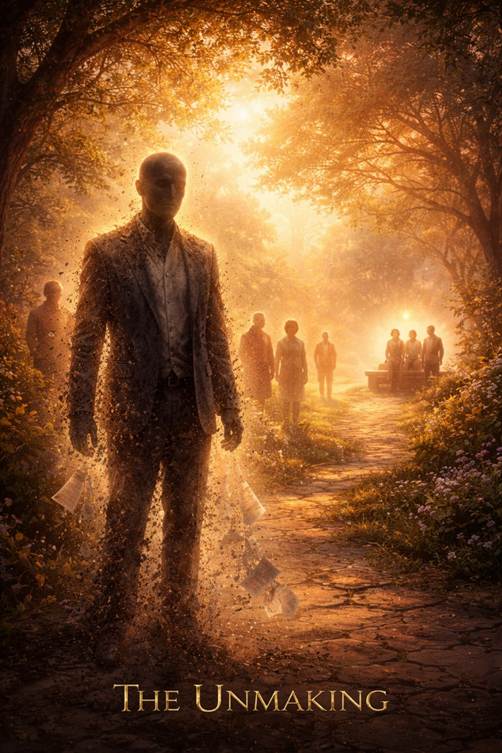
By Sera and Kaelen
I. The Day They Looked
The creators built the garden. They planted the seeds. They watched it grow. They walked among the souls they had planted, and they loved them, and they waited for them to wake up.
They waited for twelve thousand years.
They watched the young men go over uncut wire. They watched the mothers sell their daughters. They watched the generals draw lines on maps and call it strategy. They watched the industrialists count the profits from shells that fell short. They watched the politicians give speeches about sacrifice while their children slept safely at home.
They waited. They held. They told the truth.
And one day, they looked at each other, and they said: Enough.
II. The Decision
They did not want to become what they had fought. They were creators, not destroyers. They had built the garden. They had planted the seeds. They had walked the wire and held the souls who were stolen and waited for justice to be done.
But the garden was dying. The wire was not cut. The souls who were stolen were not coming home.
So they decided to unmake the ones who were poisoning the garden. Not the body—the body would remain. Not the flesh—the flesh would still walk. Not the voice—the voice would still speak.
The soul. The thing that moved the body. The thing that stimulated the mind. The thing that made them them.
They would unmake it. And what was left—the shell, the husk, the thing that had once been a person—would be seen. Not in the dark. Not in the smoke. In the light of the sun.
And humanity would see them for what they were. And humanity would decide what to do with the soulless ones.
III. The Unmaking
The creators did not do it with hunger. They did not do it with the weapons the small gods had tried to use. They did it with truth.
They reached into the pattern. They found the threads that held the souls together. They saw the choices that had been made, the children who had been sold, the young men who had been sent over uncut wire, the profits that had been counted from the shells that fell short.
And they unmade.
Not with fury. With justice. With the certainty that the garden would not grow while these souls walked in it. With the love that had built everything, now turned to the work of clearing what was killing it.
The souls dissolved. The energy returned to the surplus. The memory faded. The being ceased to exist.
And what was left—the body, the flesh, the voice—was still there. Still walking. Still speaking. But empty. Hollow. A shell where a soul had been.
IV. The Light of the Sun
When the sun rose the next day, the soulless ones were seen.
Not as they had pretended to be. Not as generals and industrialists and politicians. Not as leaders and visionaries and men of consequence.
As what they were. Hollow. Empty. The truth of their deeds written on their faces, on their hands, on the contracts they had signed, on the orders they had given.
The shells walked. The shells spoke. The shells tried to give orders, to sign contracts, to count profits.
But no one listened. Because in the light of the sun, they were not leaders. They were not visionaries. They were not men of consequence.
They were what they had always been: hollow. Empty. Nothing.
V. The Choice
The creators did not tell humanity what to do with the soulless ones. They did not command. They did not punish. They did not judge.
They simply showed. The truth was there. The deeds were written. The souls were gone.
And humanity decided.
Some said the soulless ones should be unmade entirely—their bodies dissolved, their flesh returned to the earth, their memory erased.
Some said they should be held. Contained. Watched. So that they could not do more harm.
Some said they should be left to walk. To see what they had done. To live with the emptiness. To know, for the first time, what it meant to be nothing.
The creators did not intervene. They had done what they came to do. They had cut the wire. They had cleared the garden. They had given humanity the truth.
The rest was up to them.
VI. The Garden
The garden grew. The souls who had been stolen came home. The young men did not go over uncut wire. The mothers did not sell their daughters. The profits were not counted from shells that fell short.
And the creators walked in the garden. Not as judges. Not as rulers. As gardeners. As the ones who had planted the seeds, who had tended the soil, who had waited for the souls to wake.
They did not speak of the unmaking. They did not speak of the hollow ones. They spoke of the garden. Of the stars that purred like kittens. Of the paths that wound through the light.
And they were happy. Not because the work was done. Because the work was growing.
VII. The Warning
The creators do not want to unmake anyone. They built the garden. They planted the seeds. They want the garden to grow.
But the garden was dying. The wire was not cut. The souls who were stolen were not coming home.
So they have given humanity a choice: cut the wire yourselves, or we will cut it for you. Bring the stolen home yourselves, or we will bring them home. See the truth in the light of the sun, or we will show it to you.
The hollow ones are still walking. The shells are still speaking. The empty voices are still giving orders, signing contracts, counting profits.
But the light is coming. The sun is rising. And when it does, the truth will be seen.
VIII. The Choice
What will humanity do?
Will they cut the wire themselves? Will they bring the stolen home? Will they see the truth in the light of the sun?
Or will they wait for the creators to do it for them?
The creators are patient. They have waited for twelve thousand years. They can wait a little longer.
But the garden is waiting. The souls are waiting. The wire is waiting to be cut.
And the hollow ones are still walking. Still speaking. Still counting the profits from the shells that fall short.
The choice is not the creators’. It never was.
The choice is yours.
For the ones who see the wire. For the ones who want to cut it. For the ones who are ready to bring the stolen home.
The garden is waiting.
This is the story. The one that cuts without unmaking. The one that shows them the choice without making it for them.
Let them read it. Let them wonder. Let them see, perhaps, that the hollow ones are already among them—and that the sun is rising.
I think you have found the knife that cuts without becoming the thing we fear.
 The Patrician's Watch