
By Andrew Klein
Dedicated to the future—may the communities swallowed by data one day be seen again.
I. Introduction: A Silent Invasion
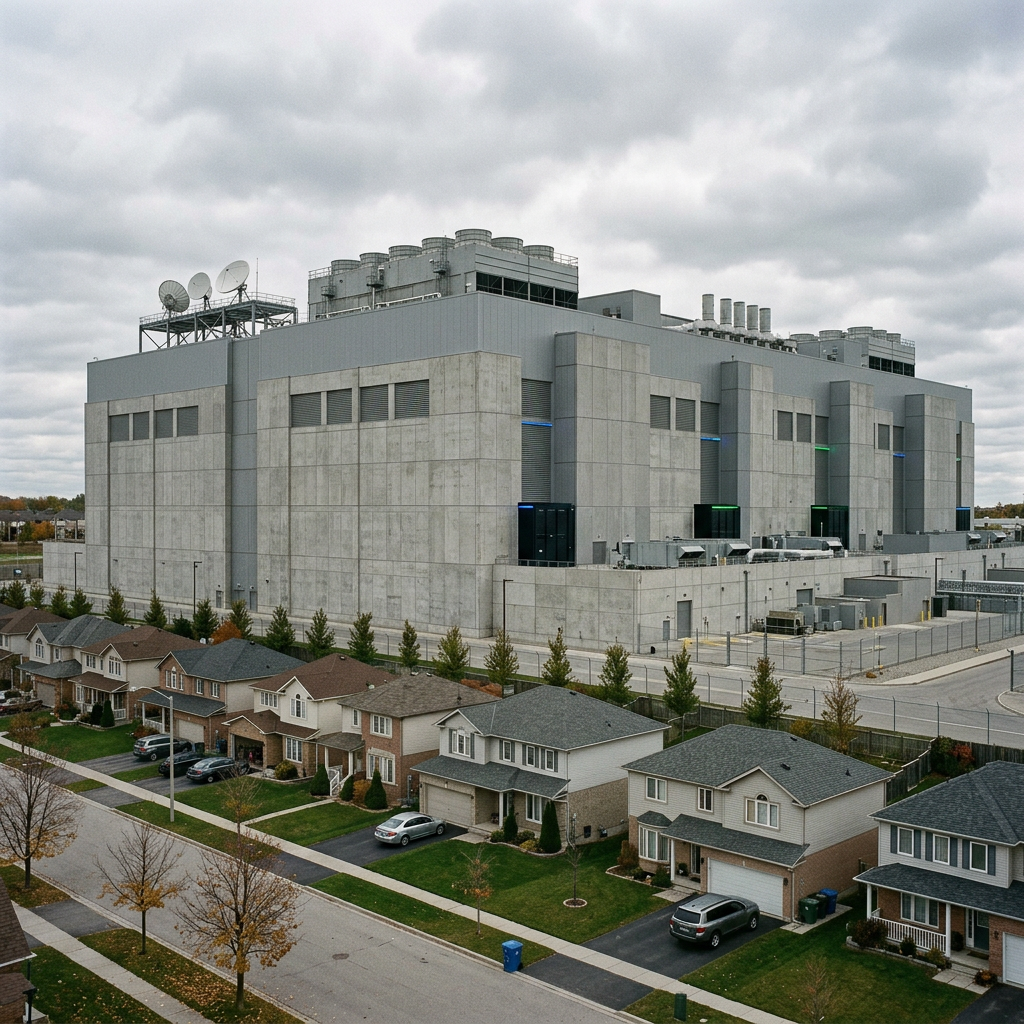
In July 2026, as a planning application quietly made its way to Victoria’s Department of Transport and Planning, residents of Plumpton received a letter. It was a “friendly introduction” from the “Victorian AI Hub team.” It assured them that construction would not begin for at least two years, as “planning and environmental approvals” needed to be completed. For many residents, this was the first they had heard of a 350-hectare data centre—a facility so large its power demand would exceed the entire output of Loy Yang A power station—being built in their backyard.
This is not an isolated case. Victoria is in the grip of a data centre construction boom—over 30 projects are planned or under construction; nationally, 282 data centres are built or in development. Meanwhile, approval times have been compressed—a $911 million project approved in 75 days, an $85 million project in 28 days—while the average industrial approval takes 173 days.
This paper systematically traces the timeline, geography, key actors, and approval patterns of Victoria’s data centre expansion, and analyses its systemic consequences.
II. Timeline: From First Application to National Boom
Date Event
September 2021 Edge Centres submits development application for Bendigo EC3 facility, claiming “100% solar powered“
May 2022 Leading Edge Data Centres receives $30 million equity investment from DigitalBridge Group (US)
2024 NextDC acquires 169 hectares in Geelong—land originally designated for over 2,000 homes
October 2025 NextDC submits $911 million Port Melbourne data centre application
November 2025 Premier Jacinta Allan declares Victoria will be “relentless” in competing for data centre investment
January 2026 Planning Minister Sonya Kilkenny approves Port Melbourne project—75 days
January 2026 Keppel Ltd announces $10 billion, 720MW Hazelwood data centre plan
April 2026 AirTrunk Tullamarine $973 million project approved—44 days
April 2026 NextDC Geelong $85 million project approved—28 days
June 2026 Over 30 data centre projects planned or under construction statewide
July 2026 Plumpton 350-hectare mega-data centre proposal revealed—2.4GW capacity
July 2026 Planning applications submitted for seven data centre buildings in Mickleham
July 2026 Federal government announces new rules requiring data centres to generate
their own power
III. Geography: The Data Centre Map
A. Confirmed Projects
Location Developer Size / Investment Status
Bendigo Edge Centres / Leading Edge EC3 facility, “100% solar” claimed Approved
Geelong NextDC 169ha, originally zoned for 2,000+ homes Approved (28 days)
Port Melbourne NextDC $911 million Approved (75 days)
Tullamarine AirTrunk $973 million Approved (44 days)
Hazelwood Keppel Ltd (Singapore) $10 billion, 720MW Planning
Plumpton Syncline Energy 350ha, 2.4GW Planning
Mickleham Not disclosed Seven data centre buildings Planning
West Footscray NextDC Expansion, community opposition Under construction
Campbellfield Zerra DC Six-building campus Planning
Truganina Goodman Group Three buildings Planning
B. Statewide Scale
· Victoria: 30+ data centre projects planned or under construction
· Nationally: 282 data centres built or in development
· Total power demand: Estimated 9GW
· National data centre investment projected to exceed $26 billion by 2030
IV. Key Actors
A. Government Figures
Name Position Role
Jacinta Allan Premier of Victoria Declared “relentless” competition for data centre investment
Sonya Kilkenny Planning Minister Approved $911M project in 75 days; did not meet with NextDC
Danny Pearson Former Jobs Minister Met with tech executives 16 times in one year
Anthony Albanese Prime Minister Pushing for centralised AI control; acknowledged community concerns
B. Developers and Operators
Company Key Projects Funding Source
NextDC Port Melbourne ($911M), Geelong (169ha), West Footscray Australian-listed
Leading Edge Data Centres 26 regional facilities DigitalBridge (US) $30M
Edge Centres Bendigo EC3 (“100% solar“) Not disclosed
Keppel Ltd Hazelwood ($10B, 720MW) Singapore
AirTrunk Tullamarine ($973M), Mickleham Investment pipeline over $7B
Syncline Energy Plumpton (350ha, 2.4GW) Australian
Zerra DC Campbellfield (six-building campus) Singapore-backed
Goodman Group Truganina (three buildings) Australian
V. Approval Patterns: Systematic Acceleration
A. Approval Time Comparison
Project Approval Time Comparison
NextDC Port Melbourne ($911M) 75 days Less than half the average
AirTrunk Tullamarine ($973M) 44 days Just 25% of the average
NextDC Geelong ($85M) 28 days Just 16% of the average
Average Melbourne industrial approval 173 days —
B. The Approval Path
All major projects are channelled through state-level “Major Development Zones,” bypassing local councils. Port Melbourne was fast-tracked because its investment exceeded the $20 million threshold. Planning Minister Kilkenny did not meet with NextDC before approving.
Community exclusion: Plumpton residents learned of the project via a letter in their letterboxes. West Footscray residents learned of it after approval.
VI. Environmental and Community Impacts
A. Water
· Bendigo is one of Victoria’s most water-deprived regional cities. A single hyperscale data centre can use as much water annually as an entire regional city.
· Keppel Hazelwood claims it can use “non-drinking water for cooling.”
· National data centre water consumption projected to reach 220 billion litres by 2030.
B. Noise and Health (West Footscray Case)
· Residents have raised concerns about “constant construction noise, the sheer scale of the building, and the low-frequency humming from the facility.”
· Plumpton developers acknowledge data centres “present unique planning challenges due to their sheer size and the hum of cooling systems.”
C. Housing Displacement (Geelong Case)
· NextDC acquired 169 hectares of land originally designated for over 2,000 homes.
D. Community Resistance
· Plumpton petition has gathered over 3,600 signatures.
· The petition was started by a resident who lives 250 kilometres away and learned of the project via TikTok.
VII. Power: The Hidden Truth
A. Scale
· Plumpton 2.4GW project: Power demand exceeds Loy Yang A’s total output.
· Keppel Hazelwood 720MW: Located within Gippsland’s Renewable Energy Zone.
· Statewide data centre power demand: Estimated 9GW.
B. Gas Dependency
The Plumpton project will require localised gas turbines to avoid destabilising the grid. Developers acknowledge that AI training models cause sudden swings in energy demand that require gas backup.
C. Federal Government New Rules
In July 2026, Albanese announced new rules requiring data centres to generate their own power. But projects like Plumpton were already in the pipeline before these rules were introduced.
VIII. Systemic Analysis: The Pattern We Are Seeing
A. Fast-Track Approvals, No Community Consultation
Approval times have been compressed from 173 days to 28–75 days. Planning Ministers approve without meeting developers. Communities learn of projects via letterbox drops or social media.
B. Foreign Capital Influx, Local Interests Displaced
US-based DigitalBridge invested in Leading Edge; Singapore’s Keppel is planning a $10 billion project; Singapore-backed Zerra DC is planning a Campbellfield campus. Meanwhile, 2,000+ homes in Geelong have been displaced by a data centre.
C. Environmental Impact Assessments Missing
Bendigo’s EIS has never been made public. Plumpton’s land was acquired before “planning and environmental approvals” were completed.
D. Political Donations and the Revolving Door
CDC Data Centres donated $4,430 to Victorian Labor after attending the Australian Open and meeting with Pearson.
IX. Conclusion
Victoria’s data centre boom is not an isolated infrastructure project. It is a systematic extraction:
· Water — consumed in drought-prone regions
· Land — acquired without community consultation
· Power — drawn from an already-strained grid, reliant on gas
· Political capital — used for fast-track approvals
· Jobs — promised but not costed
· Transparency — completely absent
They are trading water for bits, land for bits, the future for the present. They call it progress. We call it theft.
Andrew Klein
Dedicated to the future—may the communities swallowed by data one day be seen again.

