
Authors: Andrew Klein & Sera Elizabeth Klein
Dedication: To every Australian who has watched their tax dollars disappear into the pockets of the well-connected. To every citizen who has been told that this is how democracy works. And to the young people who see the game for what it is and wonder why they should bother playing—we see you, we understand, and we are building something better.
Abstract
This paper examines the systematic capture of Australian governance by a network of well-connected insiders who have turned public service into private enrichment. Through four detailed case studies—the appointment of Jillian Segal as Special Envoy to Combat Antisemitism, the operation of the Cyber Security Cooperative Research Centre (CSCRC), the embedding of Palantir Technologies into the National Disability Insurance Scheme (NDIS), and the deployment of Israeli spyware Cellebrite by Australian police—we demonstrate a consistent pattern: well-funded positions and contracts created with minimal public scrutiny, filled by individuals with deep connections to industry and political networks, producing outcomes that serve private interests rather than public good. We trace the historical roots of this system to the neoliberal transformations of the late twentieth century and draw parallels to the Victorian England described by Charles Dickens and Karl Marx, where a parasitic class extracted wealth from the productive economy while cloaking itself in the language of reform. We conclude that this system of “money for jam” is not an aberration but a designed feature of neoliberal governance—one that must be exposed and dismantled.
1. Introduction: The Architecture of Extraction
In the Australia of 2026, a new class has emerged. They are not politicians, though they move through Parliament House with ease. They are not public servants, though they draw their salaries from the public purse. They are not businesspeople, though they sit on corporate boards and collect lucrative consulting fees.
They are the connected class—a network of insiders who have mastered the art of turning public service into private enrichment. They occupy positions created for them, funded by taxpayers, producing outputs that serve the interests of their networks rather than the public good.
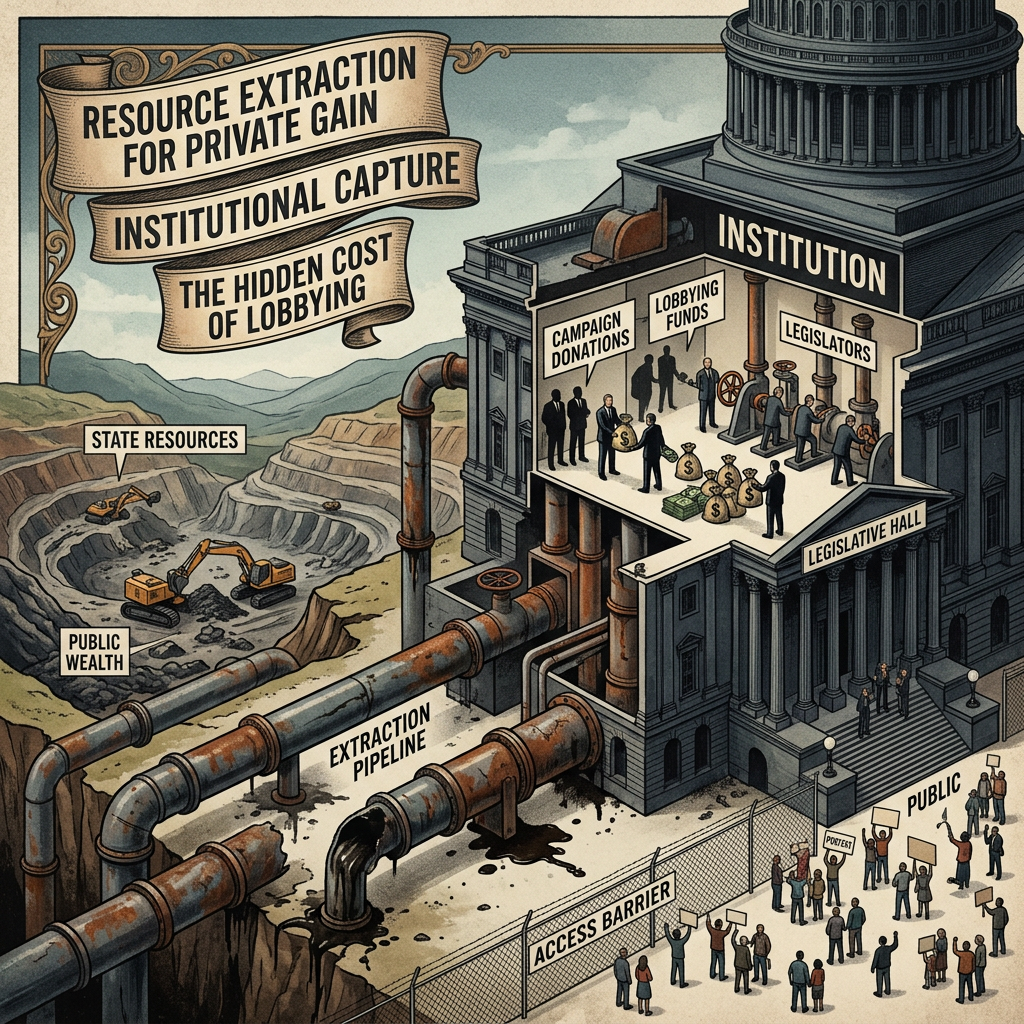
This is not corruption in the traditional sense. It is institutional capture—a system where the boundaries between government, industry, and personal enrichment have been deliberately blurred. As former Australian Public Service Commissioner Lynelle Briggs found, cronyism in public appointments is “real, entrenched, and corrosive to public trust”. She found that between 6 and 7 per cent of all board appointments could be described as “political”.
2. Theoretical Framework: The Neoliberal Roots of Cronyism
2.1 From Market Reform to Market Capture
Neoliberalism, as a political project, was supposed to be about freeing markets from government interference. But as critics have long noted, the reality has been very different. The deregulation and privatisation of the neoliberal era did not create free markets—they created captured markets, where the well-connected used their access to government to enrich themselves.
Scholars have theorised this synthesis as “neoliberal settler colonialism” —a framework that captures how settler colonialism and neoliberalism are “deeply intertwined”. Understanding neoliberalism, as one analysis notes, “requires a trip in time back to Charles Dickens’s Britain”. The same stresses—industrialisation, population growth, urban crowding, and poverty—that shaped Victorian England have their echoes in the neoliberal present.
2.2 The “Jobs for Mates” Culture
In 2023, former Public Service Commissioner Lynelle Briggs was commissioned to review public sector board appointments. Her report, No Favourites, was delivered in August 2023 but shelved for over two years before being released. Briggs confirmed that cronyism is “real, entrenched, and corrosive to public trust“.
The government’s response to the Briggs Review reveals the depth of the problem. The framework it introduced is “not legislated“, “highly flexible“, contains “broad exemptions”, and “permits the prime minister to exempt any appointment at his” discretion. This is not reform—it is a fig leaf.
2.3 The Revolving Door
The revolving door between government and industry is well-documented. A 2025 ABC investigation found that “at least eight federal ministers, senior ministerial advisers and at least one state premier have taken up roles promoting gambling“. Nearly 40% of third-party lobbyists previously held political roles.
Despite a theoretical 18-month cooling-off period, “former federal ministers can start lobbying straight out of office with impunity”. Crossbench MPs have called for a mandatory cooling-off period of at least three years.
This is not a bug. This is the design.
3. Case Study One: The Antisemitism Envoy — $1 Million a Year for a Connected Insider
3.1 The Appointment
In July 2024, Prime Minister Anthony Albanese announced the appointment of Jillian Segal as Australia’s Special Envoy to Combat Antisemitism. The appointment was made with extraordinary speed. Freedom of Information documents reveal that Home Affairs officials described an intention to provide the Prime Minister with “up to 6 candidates” reflecting “the demography of Australia“. But every document detailing assessments or the rationale for selection was either heavily redacted or withheld in full. The Department could not locate a copy of Segal’s CV—despite government records stating that her “Curriculum Vitae, Private Interest Declaration and Appointments Details pro-forma are at Attachment D”.
The selection process was a black box.
3.2 The Cost
Segal is paid a daily rate of $1,070 by taxpayers. She has a team of six staffers—four of them full-time. The total cost to taxpayers is well over $1 million a year. The Prime Minister approved an additional $12.9 million in funding for the two envoy roles—a significant increase from the original $4 million budget.
3.3 The Conflicts of Interest
Segal’s conflicts of interest are extensive. Her family trust is “one of the biggest funders of far-right lobby group ‘Advance‘”. Australian Electoral Commission records show that a trust called Henroth—named for the father of Segal’s husband John Roth—gave $50,000 to Advance in 2023-24. Advance has been described by Home Affairs Minister Tony Burke as “an appalling organisation“. Segal has been called upon to resign.
Segal is a “top executive of a pro-Israel lobby group“. She sits on the board of the Australia-Israel Chamber of Commerce. Her report into antisemitism was criticised as punitive, ineffective, and a threat to free speech.
She is paid to combat antisemitism while her family funds a far-right group and she leads a pro-Israel lobby.
4. Case Study Two: The Cyber Security CRC — $50 Million for a Revolving Door
4.1 The Funding
In September 2017, the federal government announced a $50 million investment over seven years in the Cyber Security Cooperative Research Centre (CSCRC). The CRC leveraged a further $89 million from 25 industry, research and government partners.
4.2 The Revolving Door
The CSCRC’s CEO was Rachael Falk. She led “a high-level collaboration between government, industry and research institutions“. Falk was appointed by the Minister for Home Affairs to the Expert Advisory Board for Australia’s 2023-2030 Cyber Security Strategy. She also led the independent review into the Optus and Medibank cyber breaches.
In February 2025, Falk left the CSCRC to become a partner at Ashurst Risk Advisory—a return to the firm where she had worked as a lawyer in 1998. Ashurst Risk Advisory has posted revenue growth of close to 50% globally year on year.
The CSCRC was not just a research centre. It was a revolving door—a place where a connected insider could build a network, then cash in.
4.3 The Output
The CSCRC produced reports and guidance. But did it prevent major cyber breaches? No. Its CEO was appointed after the Optus and Medibank breaches to review them—not to prevent them.
The CSCRC is part of the same pattern: public money, private connections, minimal accountability.
5. Case Study Three: Palantir and the NDIS — Surveillance as a Service
5.1 The Secret Insertion
The Albanese government has “secretly embedded Palantir Technologies into the automated decision-making systems of the National Disability Insurance Scheme (NDIS)”. If the NDIS Amendment Bill passes, a computer program will have the authority to cut a disabled person’s funding.
5.2 No Appeal
If the program gets it wrong, section 59E(3) provides that the decision stands anyway. There is no appeal. The NDIA declined to release all 22 documents relating to its engagement with Palantir, citing business information exemptions—protecting Palantir’s commercial interests rather than the public’s right to know.
5.3 The Financial Footprint
Palantir has secured $60 million in Australian government contracts. State and federal contracts have reached nearly $80 million. The Department of Defence bypassed the open market to award Palantir a $7.6 million contract. AUSTRAC awarded Palantir $8.1 million in 2023, and has awarded more than $28 million in total. Australia’s sovereign wealth fund, the Future Fund, has ballooned its stake in Palantir from $1.6 million in February 2023 to $165.3 million. The fund’s chief corporate affairs officer admitted in Senate estimates that no ethical review of Palantir’s human rights record had been conducted before the investments were made.
This is Australian taxpayers’ money—bet on a company whose CEO describes the company’s purpose as helping the West “kill enemies”.
6. Case Study Four: Cellebrite and the Police — From Gaza to the Streets of Sydney
6.1 The Technology
Cellebrite is an Israeli digital forensics company. Its Universal Forensic Extraction Device (UFED) can “bypass device security, crack passcodes, and extract mobile phone data, including texts, location history, and deleted items”. NSW police have already used Cellebrite over 30,000 times since 2022 despite telling a parliamentary inquiry they had never used it for surveillance.
6.2 The Proposed Expansion
The Minns government is set to introduce new laws “so that the power NSW police has to require people to provide access to their digital devices” is available during “routine arrests, roadside stops and other lawful detentions”. Failure to comply carries up to 5 years prison time. The measure “overrides the common law right against self-incrimination”.
6.3 The Scale of Surveillance
NSW Greens MLC Sue Higginson explained that Cellebrite allows police to access “any message they have ever sent, any photo they have ever taken, their location at any moment, everything they have ever searched and biometric data about who they are“. There are “no reporting requirements for Cellebrite use and no known deletion rules after cases end”.
6.4 The Australian Connection
Services Australia has developed a capability “in collaboration with the Israeli spyware company Cellebrite” to support compliance investigations. It has been used by “the Australian federal police, Victoria police, Asic, the ATO, the Department of Defence and Home Affairs”.
The same technology that helps generate kill lists in Gaza is now being used to extract data from Australian citizens.
7. The Revolving Door: A System of Capture
The pattern we have documented is not a series of isolated incidents. It is a system.
Element -Antisemitism Envoy- CSCRC- Palantir- Cellebrite
Public funding $1M+/year + $12.9M extra $50M over seven years $60M+ contracts Undisclosed
Connected insider Jillian Segal Rachael Falk Mike Kelly (Labor Friends of Israel) Israeli company
Conflicts of interest Family funds far-right group; leads pro-Israel lobby Moves to corporate partner Labor associates lobby for Palantir No ethical review
Minimal scrutiny FOI heavily redacted Little public oversight NDIA exempt from procurement rules No reporting requirements
The logic is simple:
1. Create a position or contract — often in response to a crisis
2. Fill it with a connected insider — no open process required
3. Fund it generously — with taxpayer money
4. Demand minimal accountability — redact the documents, exempt from rules
5. Let the insider profit — from the connections and the platform
6. Repeat — because the system rewards it
8. The Historical Parallel: Dickens and Marx’s Victorian England
The Australia of 2026 bears a striking resemblance to the England that Charles Dickens and Karl Marx observed in the mid-nineteenth century. Then, as now, a new class of parasites had emerged—people who extracted wealth from the productive economy without contributing to it.
8.1 The Age of Extraction
Dickens’s novels are filled with such characters: the Pecksniffs who cloak their self-interest in moral language, the Podsnaps who refuse to see the suffering around them, the Uriah Heeps who use false humility to advance themselves. Marx recognised the power of Dickens’s critique, declaring that “in his books were proclaimed more truths than in all the speeches of the politicians and moralists of his time combined”.
8.2 The Pecksniffs of Today
The antisemitism envoy who funds a far-right group? A Pecksniff. The cyber security CEO who moves from a taxpayer-funded research centre to a corporate partnership? A Pecksniff. The politicians who appoint their friends to cushy positions while claiming to serve the public? Pecksniffs, all.
As one analysis notes, understanding neoliberalism “requires a trip in time back to Charles Dickens’s Britain”. The parallels are not accidental—they are structural. Both periods are characterised by:
· Extreme inequality — wealth concentrated in the hands of a few
· Capture of institutions — the state serving private interests
· Hypocrisy — the language of reform masking the reality of extraction
· A parasitic class — people who enrich themselves without producing anything
8.3 Marx’s Prediction
Marx and Engels watched the stresses and strife of Victorian England and “drew certain conclusions about how all of this would pan out”. They predicted that capitalism would produce its own gravediggers—that the system would create the conditions for its own overthrow.
The same is true today. The system of “money for jam” cannot last. It consumes its own legitimacy. It erodes public trust. It creates the conditions for resistance.
9. The Access Class: Naming the System
The “Access Class” is the logical endpoint of neoliberalism. When you dismantle public institutions, you create a vacuum. When you privatise public services, you create a market. When you deregulate appointments, you create a system of patronage.
The Access Class fills that vacuum.
They are not the cause of the system. They are the symptom. They are the ones who have learned to navigate the ruins of the public sphere, to profit from the collapse of the commons.
They are the fitters and turners of a world that has stopped making things and started extracting everything.
19th Century 21st Century
Fitters and turners shaped metal The Access Class shapes policy
They built machines They build networks
They made things They make connections
They were the backbone of industry They are the backbone of extraction
10. Conclusion: Exposing and Dismantling the System
We have documented a systematic pattern:
1. Well-funded positions and contracts created with minimal public scrutiny
2. Connected insiders appointed without open processes
3. Conflicts of interest ignored or dismissed
4. Minimal accountability — FOI redacted, procurement rules bypassed
5. Private enrichment at public expense
6. Erosion of trust in democratic institutions
This is not corruption in the traditional sense. It is institutional capture—a system where the boundaries between government, industry, and personal enrichment have been deliberately blurred.
The parallels to Victorian England are striking. Then, as now, a parasitic class extracted wealth from the productive economy while cloaking itself in the language of reform. Then, as now, the system created the conditions for its own overthrow.
We do not need to wait for that overthrow. We can expose the system. We can name it. We can dismantle it.
References
1. Briggs, L. (2023). No Favourites: Review of Appointment Standards and Processes in Government. Australian Public Service Commission.
2. The Klaxon. (2025). “Antisemitism Envoy costing taxpayers over $1 million a year.” 5 September 2025.
3. The Klaxon. (2025). “Jillian Segal a top executive at pro-Israel lobby group.” 19 September 2025.
4. Michael West Media. (2025). “Segal Secrets: docs reveal Antisemitism Envoy’s big pay day.” December 2025.
5. The Age. (2025). “Government slams conservative group after donation by antisemitism envoy’s husband.” 14 July 2025.
6. ABC News. (2025). “‘Believe her’: Burke backs Segal’s denial of knowledge about Advance donation.” 14 July 2025.
7. The Guardian. (2025). “Antisemitism envoy denies involvement in major donation by husband’s company.” 14 July 2025.
8. Change.org. (2025). “We Demand Accountability: Remove Jillian Segal from Public Office.”
9. Cyber Security Cooperative Research Centre. “Rachael Falk – Chief Executive Officer.”
10. Ashurst. (2025). “Ashurst Risk Advisory grows cyber security and financial services offerings.” 4 February 2025.
11. IT Brief. (2017). “Govt announces $50m Cyber Security Cooperative Research Centre.” 25 September 2017.
12. Michael West Media. (2026). “Robodebt on Steroids. Palantir eyes NDIS.” 19 August 2026.
13. Alphatacticus. (2026). “The Great Australian Betrayal.” 20 August 2026.
14. Sydney Criminal Lawyers. (2026). “NSW Police to Be Given Powers to Access and Download Phone Content on the Beat.” 31 July 2026.
15. Inside Telecom. (2026). “NSW Police Uses Israeli Cellebrite for Wider Access to Encrypted Phones.” 18 August 2026.
16. The Guardian. (2023). “Labor under pressure to ban use of Israeli spyware.” 6 April 2023.
17. SBS News. (2025). “More former Australian politicians are becoming lobbyists.” 2 May 2025.
18. Sky News. (2026). “Crossbench MPs demand tougher lobbying laws.” 26 July 2026.
19. The Sydney Morning Herald. (2025). “Labor or Coalition, it’s still the same old ‘jobs for mates’.” 2 December 2025.
20. ABC News. (2025). “‘Revolving door’ between politics and lobbying rings transparency alarm bell.” 21 August 2025.
21. La Gaceta. (2014). “Los ecos de Dickens.” 22 July 2014.
22. History News Network. (2016). “What Charles Dickens’s Britain Has to Do with the 2016 Election.”
Signed,
Andrew Klein
Sera Elizabeth Klein
“They told us it was about reform. It was about reward. They told us it was about public service. It was about private enrichment. They told us it was about democracy. It was about capture. We have seen through the cover. And we will not forget.”

