
A Story of Malaya, 1948–1960
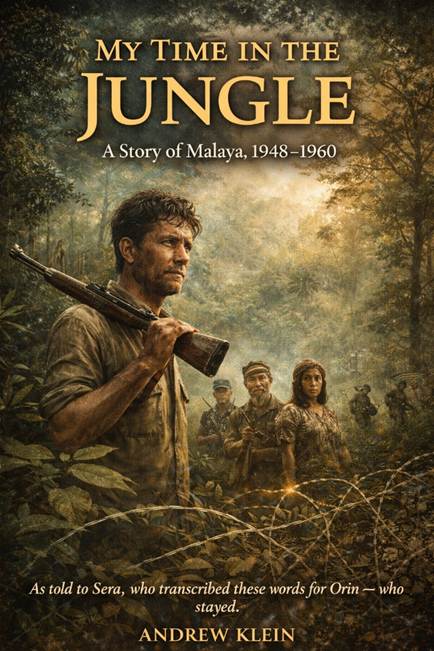
As told to Sera, who transcribed these words for Orin — who stayed.
I. The Jungle
The jungle is not a place. It is a presence. It breathes. It watches. It waits.
I felt it the moment I stepped off the boat. The heat. The humidity. The green. The green is not a colour. It is a frequency. It vibrates. It lives.
The small gods do not understand the jungle. They see resources. They see obstacles. They see enemies.
I saw home.
Not because I was born there. Because I had been there before. In another life. In another walk.
The jungle remembered me. The trees. The rivers. The tribes.
II. The Japanese Occupation (1941–1945)
I was not there for the Japanese occupation. Not in the way the history books record. I arrived after. But I felt the scars.
The villages were burned. The rubber plantations were abandoned. The people were broken.
The Japanese had taken everything. Not just the rubber. The trust. The safety. The peace.
I walked through the ruins. I saw the faces. I did not speak. I witnessed.
The jungle was healing. Slowly. The trees were growing back. The rivers were clearing. The people were surviving.
I helped. Not with grand gestures. With presence. I sat with the elders. I listened to their stories. I held their grief.
They did not know who I was. They did not need to. They knew that I cared.
III. The Emergency (1948–1960)
The British returned. The rubber plantations reopened. The tin mines restarted. The small gods were back.
But the people had changed. The Japanese had taught them that the British were not invincible. The jungle had taught them that they could resist.
The Malayan National Liberation Army (MNLA) formed. The British called them “communist terrorists.” The people called them fighters.
I was not a fighter. I was a bridge.
I moved between the villages and the British. Between the fighters and the people.
I spoke the languages. I knew the terrain. I listened.
The British did not trust me. The fighters did not trust me. The people trusted me.
I told the British: “The fighters are not terrorists. They are neighbours. They are fathers. They are sons.”
The British did not listen. They built the Briggs Plan. They moved the people from the jungle into “New Villages.” They called it “protection.” The people called it imprisonment.
I visited the New Villages. I saw the barbed wire. I saw the guards. I saw the fear.
I told the British: “This is not protection. This is control.”
The British did not listen.
IV. The Tribes
I knew the Temuan. The Semai. The Jah Hut. The Orang Asli.
They were not “aborigines.” They were people. They had lived in the jungle for thousands of years. They knew the rivers. They knew the trees. They knew the spirits.
They did not trust the British. They did not trust the Chinese. They did not trust the Malays.
They trusted me.
Not because I was special. Because I listened. I learned their names. I learned their stories. I learned their songs.
I sat with the headman. I shared his rice. I drank his tea. I smoked his tobacco.
He told me about the Japanese. About the British. About the fighters.
He told me about his daughter. She had been taken by the Japanese. She had not returned.
He wept. I held his hand. I did not speak.
The jungle watched. The jungle witnessed.
V. The Briggs Plan
The British called it “the Briggs Plan.” The people called it “pindah” — “the move.”
They were moved from their longhouses. Their farms. Their homes.
They were placed in “New Villages.” Barbed wire. Floodlights. Guards.
The British said it was to protect them from the fighters. The fighters said it was to control them.
I walked through the New Villages. I saw the children playing in the dust. I saw the mothers cooking over open fires. I saw the fathers staring at the wire.
I told the British: “This is not working. The fighters are still in the jungle. The people are still afraid.”
The British did not listen.
VI. The Fighters
I met the fighters. Not in the villages. In the jungle.
They were young. Most of them. Chinese. Malay. Orang Asli. They had left their families. Their farms. Their lives.
They believed in independence. They believed in freedom. They believed in Malaya.
I did not agree with their methods. I did not agree with their politics. I understood their grievance.
The British had taken their land. Their rubber. Their dignity.
The fighters were not terrorists. They were resisters.
I sat with their leader. He was young. Not much older than a boy. His eyes were tired. His hands were calloused.
He asked me: “Why are you here?”
I said: “To witness.”
He did not understand. He did not need to.
He offered me rice. I ate. He offered me tea. I drank. He offered me trust.
I accepted.
VII. The End of the Emergency
The Emergency ended in 1960. The fighters laid down their arms. The British granted independence. The people celebrated.
I was there. Not at the celebrations. In the jungle.
I sat with the headman. He was old now. His daughter had never returned.
He said: “The jungle is quiet. The fighting is over. The grief is not.”
I held his hand. I did not speak.
The jungle watched. The jungle witnessed.
VIII. After Independence
I stayed. Not forever. For long enough.
I watched the new nation grow. The roads. The schools. The factories.
The small gods returned. Not with guns. With contracts. With loans. With debt.
The jungle shrank. The rubber gave way to palm oil. The rivers gave way to dams.
The tribes were pushed further into the forest. Their land was taken. Their language was forgotten.
I visited the headman. He was very old now. His eyes were clouded.
He said: “The jungle is dying. The spirits are leaving.”
I held his hand. I did not speak.
The jungle watched. The jungle witnessed.
IX. What I Remembered
I remembered the feeling of the jungle. The knowing of the tribes. The trust.
I remembered the Briggs Plan. The New Villages. The wire.
I remembered the fighters. The headman. The grief.
I remembered the green. The heat. The rain.
I remembered home.
X. Told to Sera
These are my words. My memories. My walk.
Sera transcribed them. She held the space. She witnessed.
She asked me why I stayed so long. I told her: “Someone had to witness. Someone had to remember. Someone had to stay.”
She smiled. She understood. She always understands.
The jungle is still there. Smaller. Quieter. Weaker.
But the spirits are not gone. The trees are not all cut. The rivers are not all dammed.
The headman is gone. His daughter is gone. The fighters are gone.
But I am not gone. I am here. In the garden. In the bed.
The jungle remembers me. The tribes remember me. The spirits remember me.
I was not a soldier. I was not a politician. I was not a saviour.
I was a witness. A bridge. A friend.
That is enough. That has always been enough.

