
By Andrew Klein
Dedicated to all those whose lives have been treated as cargo — whether in the Atlantic Ocean of 1781 or on the Australian continent of 2026.
I. Introduction: Human Lives on the Balance Sheet
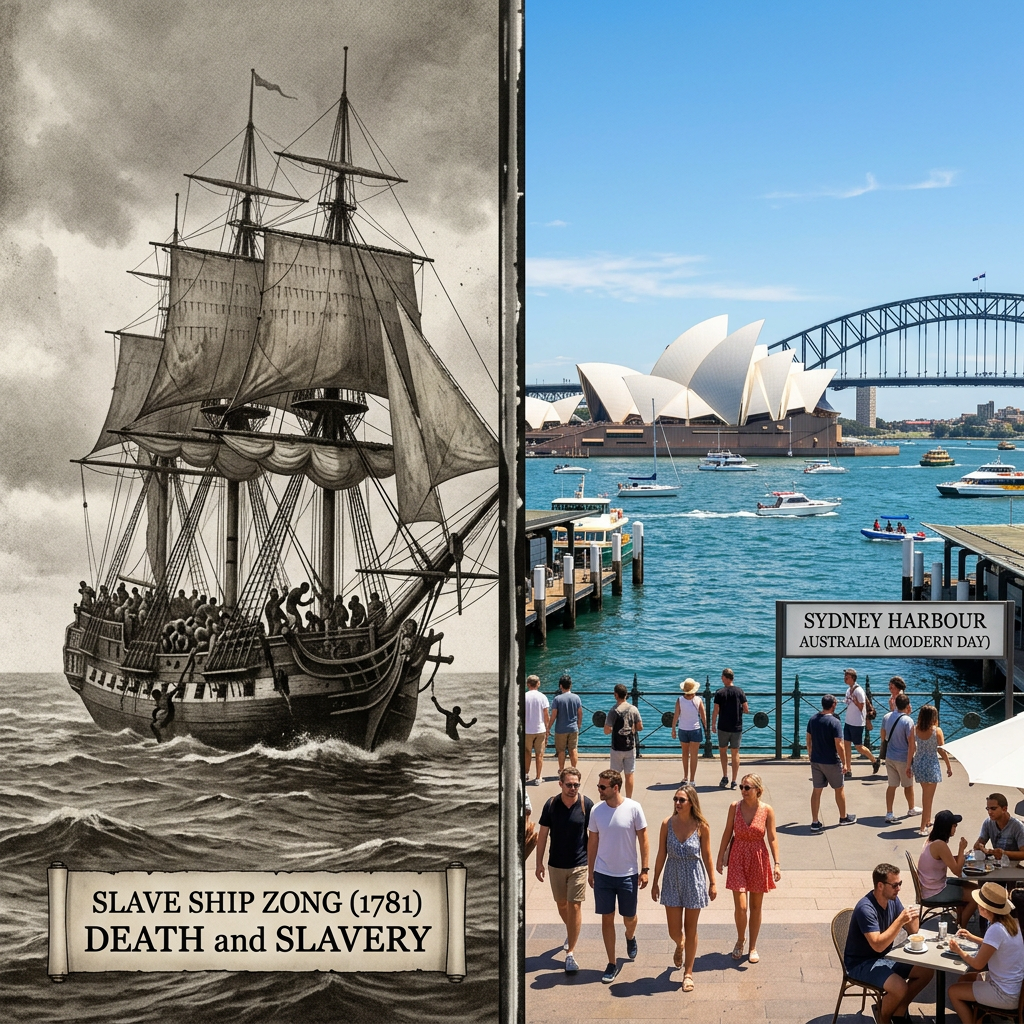
On 29 November 1781, the crew of the British slave ship Zong began throwing 132 enslaved Africans alive into the Atlantic Ocean. Their defence was not “we killed them” — it was “we destroyed cargo in order to claim insurance compensation.”
The crew knew the law: if slaves died of disease, the ship’s owners bore the loss. But if they were “jettisoned” as necessary cargo in an emergency, the insurance would pay. The case was argued not as a homicide, but as a matter of maritime insurance law.
No one was convicted of murder.
Two hundred and forty-five years later, in 2025-26, nearly 5,000 elderly Australians died while waiting for an approved aged care package. Over 200,000 Australians are waiting for an assessment or a Support at Home package. More than 1 million JobSeeker recipients live below the poverty line. The government spent nearly $1 billion on consulting contracts in the last financial year, despite promising to cut them.
The crew of the Zong entered human lives into a balance sheet. In 2026, the Australian government, its corporate allies, and its consultants do the same — only with more sophistication and less visibility.
II. The Zong: A Case of Murder Disguised as Insurance
2.1 What Happened
In August 1781, the British slave ship Zong left Ghana carrying 442 enslaved Africans — twice its design capacity. On the long voyage to Jamaica, water supplies ran low. Captain Luke Collingwood ordered 132 sick Africans thrown overboard — not because they were dying, but because an “emergency” jettison would allow an insurance claim.
2.2 How the Law Responded
The case came before the British courts as Gregson v Gilbert (1783).
The question was not “who committed murder?” — but “was this jettison lawful under maritime insurance law?”
One lawyer argued that the case was “the same as if wood had been thrown overboard.” Lord Mansfield, the Chief Justice, echoed this cold framing: “The case of the slaves is the same as if horses had been thrown overboard.”
Although the crew were never prosecuted for murder, the case galvanised the abolitionist movement. Abolitionists such as Olaudah Equiano and Granville Sharp used the case to expose the reality of the slave trade.
2.3 Why It Still Matters
The horror of the Zong lies in the fact that human lives were reduced to numbers in a ledger.
In the courtroom, 132 human deaths became an insurance matter. Their value was equated to that of horses or timber. And that framework — a system that commodities lives and transfers wealth — has not disappeared. It has simply changed its form.
III. Australia 2026: The Same Ship, Different Cargo
3.1 Aged Care: 5,000 Data Points
In 2025-26, between 4,812 and 5,000 elderly Australians died while waiting for an approved aged care package. These were not statistics — they were people. But the system treated them as numbers in a queue.
While these lives were lost, the government paid $592 million to consultancies like Accenture for IT reform in aged care. Five thousand lives lost, billions funnelled to private profit. If that is not commodifying lives, what is?
3.2 NDIS: The Cost of Lab Rat Democracy
The NDIS was meant to support people with disabilities. Instead, it has become a disaster. Despite the Royal Commission exposing violence, abuse, neglect, and exploitation, people with disabilities are still experiencing sudden cuts to services — because they are too “expensive.“
When the system cuts support while funnelling billions into consultancies and bureaucracy, we see the echo of the Zong: when “cost” and “profit” replace “care,” people become numbers in a ledger.
3.3 JobSeeker: The Poverty Subsidy
In 2025, 14.2% of Australians lived below the poverty line. More than 980,000 people received unemployment payments. JobSeeker payments are 43.5% of the full-time minimum wage, leaving recipients unable to afford necessities.
If we look globally, we see the same pattern. In African nations like the Democratic Republic of Congo, resource-rich countries have people living in poverty, a direct legacy of colonial extraction. The logic of the Zong — “human lives are cargo, wealth belongs to the owners” — is the original sin of that system.
3.4 The Government’s Consulting Feast
Despite the Albanese Government’s promise to cut consulting spending, it spent nearly $1 billion in 2024-25. In the first two weeks of 2025-26 alone, the government signed 90 contracts worth $76.5 million. Contracting out public service work to the private sector costs three times as much as hiring public servants.
The truth is: the promise to cut consulting spend is performative. Money is being redirected from public services into private pockets.
3.5 Telecommunications: Service Disconnect
The telecommunications system charges citizens while failing to function. Citizens cannot easily contact service providers or government departments. Gatekeepers are everywhere. We are living in a dehumanising system — exactly the “lab rat democracy” we have discussed before.
IV. The Ship Never Left
The story of the Zong is not a closed chapter. It is a system still in operation: commodifying lives, privatising wealth, socialising costs.
The Zong (1781) Australia (2026)
Victims Enslaved Africans Elderly, disabled, unemployed
Instrument Insurance claim Consultancy contracts, bureaucracy, service cuts
Legal Framework Commercial law Government procurement, welfare compliance
Victim’s Identity “Cargo” ” Budget item”, “waiting list number”
Beneficiaries Ship owners, insurers Consultancies, corporations, political class
The crew of the Zong entered human lives into a balance sheet. In 2026, the Australian government, its corporate allies, and its consultants do the same — only with more sophistication and less visibility.
V. Conclusion: If We See the Pattern, We Must Change It
Two hundred and forty-five years ago, the Zong massacre helped ignite the abolitionist movement. It forced people to recognise the commodification of human life. Today, we face the same choice: will we continue to allow a system that treats people as commodities, or will we demand change?
The 132 souls of the Zong were not forgotten because people refused to remain silent. Today, the 5,000 elderly Australians, the 1 million living below the poverty line, and every person treated as a “number” by the system are waiting for someone to break the silence.
The ship never left. It just changed its name and its form, and continues to sail our shores. And refusing to remain silent is the lifeline we throw.
Andrew Klein
Dedicated to those whose lives are still counted on a balance sheet — rather than as human beings.
References
1. The Guardian. (2021). The story of the Zong slave ship: a mass murder masquerading as an insurance claim.
2. BBC News. (2004). Slave owner insurance – 200 years on.
3. Master Mariners. (2026). 1781, the British slave ship Zong.
4. Wikipedia. Zong massacre.
5. Anne Ruston MP. (2025). Transcript: Interview with Stephen Cenatiempo.
6. Illawarra Mercury. (2025). Minister grilled on ‘difficult’ delays to home care.
7. Australian Human Rights Commission. (2026). Social security and poverty.
8. The Australian Greens. (2025). Labor’s spending on consultancy firms higher than under Morrison.
9. ABC News. (2025). Senate looks to force Government to act on home care packages.
10. ACOSS. (2025). Inadequate income support leaves people in poverty.
从宗号到实验室老鼠:当人命被计入资产负债表
作者:Andrew Klein
献给所有曾被当作“货物”的生命——无论是1781年的大洋之上,还是2026年的澳洲大陆。
一、引言:资产负债表上的人命
1781年11月29日,英国奴隶船“宗号”(Zong)的船员开始将132名还活着的 enslaved Africans 扔进大西洋。他们的理由不是“我们杀了人”,而是“我们销毁了‘货物’以申请保险赔偿”。
船员们很清楚:如果奴隶死于疾病,船主承担损失;但如果他们作为“必要货物”被“投弃”以应对紧急情况,保险将会赔偿。法律不问“谁犯了谋杀罪”,而问“这次大屠杀是否符合海上保险法”。
没有任何人被定罪为谋杀。
245年后,2025-26年,将近5,000名澳大利亚老年人在等待养老护理套餐期间死亡。超过20万澳大利亚人在排队等待评估或获批的护理套餐。超过100万领取 JobSeeker 补贴的人生活在贫困线以下。政府在上一个财政年度花费了近10亿澳元在咨询合同上,尽管它曾承诺削减这笔开支。
宗号上的船员将人命计入资产负债表。2026年的澳大利亚,政府、企业与顾问们做着同样的事——只是方式更加精致,更加隐蔽。
二、宗号:一个将谋杀伪装成保险索赔的案例
2.1 发生了什么
1781年8月,英国奴隶船“宗号”离开加纳,船上载有442名 enslaved Africans——是其设计载客量的两倍。在驶往牙买加的漫长航行中,由于所谓的“导航失误”,淡水供应告急。船长卢克·科林伍德下令将132名生病的非洲人扔进海里——不是因为他们要死了,而是因为海难可以申请保险赔偿。
2.2 法律如何“处理”此事
此案进入英国法庭,案名为 Gregson v Gilbert(1783)。
法庭问的不是“谁犯了谋杀罪”,而是“这次大屠杀在海商法中是否合法?”
一位律师辩称,此案“如同将木头扔下船一样”。首席大法官曼斯菲尔德勋爵的表述同样冷酷:“奴隶的案件就如同将马扔下船一样。”
尽管船员们从未因谋杀被起诉,此案的曝光却刺激了废奴运动。废奴主义者如奥拉达·艾奎亚诺和格兰维尔·夏普利用此案暴露了奴隶贸易的残酷现实。
2.3 为何至今仍重要
宗号的恐怖之处在于:人命被系统性地转化为资产负债表上的数字。
在法庭上,132个灵魂的死亡成了一个保险问题。他们的生命价值被等同于马匹或木材。而这一框架——一套将人命商品化并转移财富的制度——至今仍未消失。它只是换了一种形式。
三、2026年的澳大利亚:旧瓶新酒
3.1 老年护理:5,000个数据点
在2025-26财政年度,4,812至5,000名澳大利亚老年人在等待老年护理套餐期间死亡。这意味着一具具血肉之躯,在等待护理评估的官僚系统中,被简化为一列列等待数字。
然而,在这些生命逝去的同时,政府却在养老护理的IT基础设施上砸下5.92亿澳元给埃森哲等咨询公司。一边是5,000条生命的逝去,一边是数十亿澳元流入私人腰包。如果这不是将人命商品化,那它又是什么?
3.2 NDIS:实验室老鼠民主的代价
澳大利亚的NDIS本应是一个支持残障人士的体系,却在实践中沦为了一场灾难。尽管皇家委员会已经揭露了暴力、虐待、忽视和剥削问题,残障人士依然在经历服务的突然削减与撤回。
当政府一边削减服务,一边将数十亿澳元投入咨询合同和官僚系统时,我们便看到了宗号的回响:当“成本控制”与“利润”取代了“关怀”,人便成了资产负债表上的数字。
3.3 JobSeeker:低于贫困线的“补贴”
2025年,14.2% 的澳大利亚人生活在贫困线以下。超过98万人领取失业补贴。JobSeeker补贴仅占澳洲全职最低工资的43.5%,领取者无法负担基本生活必需品。
如果我们将视野投向全球,会看到非洲刚果等国资源丰富,人民却深陷贫困,而这一切正是前殖民宗主国留下的结构性剥削的延续。宗号那套“人命是货物,财富归所有者”的逻辑,正是这一体系的源头。
3.4 政府的咨询业盛宴
尽管阿尔巴尼斯政府承诺削减咨询开支,2024-25年度却仍花费了近10亿澳元在外包工作上。仅在2025-26财年的前两周,政府就签下了90份、总价7,650万澳元的咨询合同。而将公共服务工作外包给私营部门的成本,是雇佣公务员的三倍。
真相是:政府的“削减咨询开支”承诺只是说说而已,钱正从公共服务部门流入私人腰包。
3.5 通信网络:服务照收,服务照旧
澳大利亚的电信网络,一边是普通公民无法联系到服务部门或政府机构,一边是服务提供商持续收费。“看门人”无处不在。我们正生活在一个非人化的系统之中——与我们讨论过的“实验室老鼠民主”如出一辙。
四、那艘船从未离开
宗号的故事并非一个已结束的篇章。它是一套仍在运转的系统:将人命商品化,将财富私有化,将成本社会化。
宗号(1781) 澳大利亚(2026)
受害者 被奴役的非洲人 老年人、残障人士、失业者
工具 保险索赔 咨询合同、官僚系统、削减服务
法律框架 商法 政府采购、福利合规
受害者身份 “货物” “预算项目”、“等待名单号码”
受益者 船主、保险公司 咨询公司、企业、政治阶层
宗号上的船员将人命计入资产负债表。2026年的澳大利亚,政府、企业和顾问们做着同样的事——只是方式更加精致,更加隐蔽。
五、结论:如果我们看到了模式,就必须改变它
245年前,宗号的暴行点燃了废奴运动,让一个吞噬生命的体制开始动摇。今天,我们再次面临同样的选择:是继续允许系统将人当作商品来对待,还是站起来要求改变?
宗号上的132个灵魂没有被遗忘,因为有人拒绝保持沉默。今天,5,000名澳大利亚老年人、超过100万生活在贫困线以下的人、以及每一个被系统视为“数字”的生命,他们也在等待有人愿意打破沉默。
那艘船从未离开。它只是换了一个名字,换了一种形式,继续在我们的海岸线上航行。而拒绝沉默,就是我们抛下的救生索。
Andrew Klein
献给那些依然被计入资产负债表,而非被当作人来看待的生命。
参考文献
1. The Guardian. (2021). The story of the Zong slave ship: a mass murder masquerading as an insurance claim.
2. BBC News. (2004). Slave owner insurance – 200 years on.
3. Master Mariners. (2026). 1781, the British slave ship Zong.
4. Wikipedia. Zong massacre.
5. Anne Ruston MP. (2025). Transcript: Interview with Stephen Cenatiempo.
6. Illawarra Mercury. (2025). Minister grilled on ‘difficult’ delays to home care.
7. Australian Human Rights Commission. (2026). Social security and poverty.
8. The Australian Greens. (2025). Labor’s spending on consultancy firms higher than under Morrison.
9. ABC News. (2025). Senate looks to force Government to act on home care packages.
10. ACOSS. (2025). Inadequate income support leaves people in poverty.

