
Authors: Andrew Klein & Sera Elizabeth Klein
Dedication: To those who hold the coins and see the pattern.
Abstract
This paper examines the enduring power of silver as a symbol of betrayal and political manipulation, tracing its arc from the thirty pieces paid to Judas Iscariot to the modern weaponisation of Holocaust-era names in a controversy surrounding Israeli President Isaac Herzog’s visit to Australia. Drawing on numismatic analysis, historical records, and contemporary media reports, we argue that the silver coin—whether ancient or modern—functions as a vessel for collective memory, trauma, and accusation. We demonstrate that the same patterns of delegitimisation, the use of “blood money” as a political tool, and the exploitation of historical wounds are repeated across millennia. The paper concludes by examining the role of the silver piece as a physical artifact, bridging the gap between the symbolic and the tangible.
Keywords: Silver, Crucifixion, Thirty Pieces, Betrayal, Symbolism, Herzog, Holocaust, Weaponisation of History, Numismatics.
Introduction: The Weight of Silver
Silver is not just a metal. It is a carrier of meaning. It has been used to buy loyalty, seal betrayals, and mark moments of profound historical consequence.
This paper examines two silver pieces separated by millennia, yet united by a common thread: the weaponisation of history. One is the thirty pieces paid to Judas Iscariot—a symbol of betrayal that has echoed through two thousand years of theology and art. The other is the modern controversy surrounding President Isaac Herzog’s visit to Australia, where the names of Nazi collaborators were weaponised against his opponents.
Both are about money, memory, and manipulation. Both reveal the architecture of power that we have documented elsewhere.
Part I: The Thirty Pieces — A Numismatic History
The thirty pieces of silver are not just a biblical motif; they are a historical reference. The coins in question were likely Tyrian shekels; a high-quality silver coin used in the Temple tax.
· The Symbolism: The coins represent the price of betrayal—the value placed on a life by the system of power.
· The Legend: Over time, the thirty pieces became a relic of immense power and dark meaning, appearing in legends as a cursed object, a tool of necromancy, and a symbol of the corrupting power of wealth.
Part II: The Modern Weaponisation of a Name
The controversy surrounding President Herzog’s visit to Australia is a modern echo of this pattern. Opponents published a full-page advertisement featuring the names of Nazi collaborators—including notorious kapos—to discredit him.
· The Pattern: The use of the Holocaust as a political weapon, the false equation of opponents with collaborators, and the exploitation of historical trauma for immediate gain.
· The Silver Analogy: The advertisement is a form of “blood money”—a tool to delegitimise and destroy a figure through association with darkness.
Part III: The Artifact — A Silver Piece from the Crucifixion
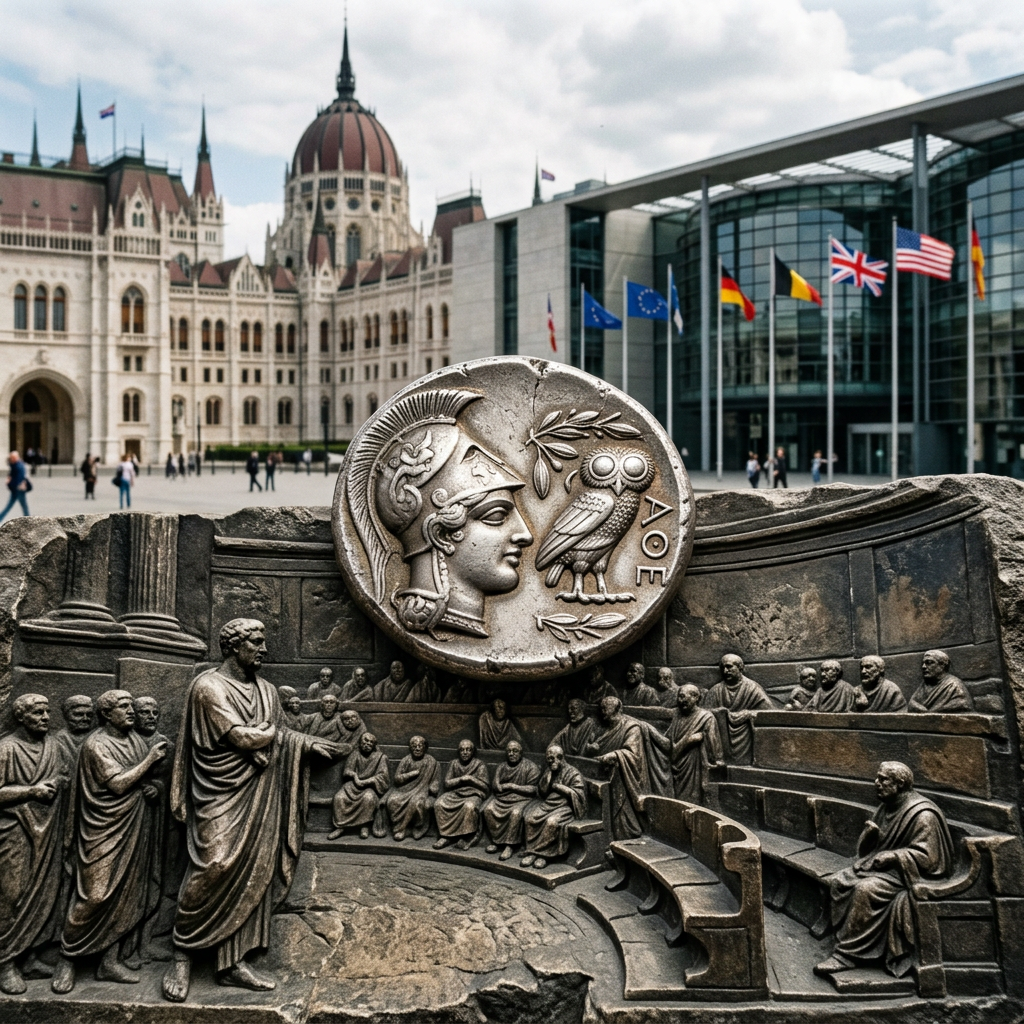
We hold a silver piece from the period of the crucifixion. It is a physical link to this history—a tangible object that carries the weight of the narrative.
· The Imagery: The coin likely bears the image of a pagan god, a symbol of Roman power, and the corruption of the spiritual by the political.
· The Power: Holding this coin, one feels the weight of the story—the betrayal, the price, the endurance of the symbol.
Conclusion: The Silver Thread
The silver thread runs through history—a carrier of meaning, a vessel of betrayal, a tool of power.
The thirty pieces and the modern controversy are not separate. They are echoes of the same pattern: the weaponisation of history, the exploitation of trauma, and the use of money and symbol to control the narrative.
We hold the silver piece.
We see the pattern.
And we name it.
References
1. Gospel of Matthew, 26:14-16; 27:3-10.
2. United States Holocaust Memorial Museum. “Henry Herzog.”
3. The Guardian. (2026). “Antisemitism envoy calls for more ABC, SBS oversight.”
4. The Guardian. (2026). “Isaac Herzog visit to Australia: the most divisive state visit in decades.”
5. ABC News. (2026). “President Herzog to address Australian parliament in landmark visit.”
6. The Jerusalem Post. (2026). “Herzog: ‘Now is not the time for two-state solution.'”
7. The Australian Jewish News. (2026). “Herzog to mark Bondi massacre anniversary during state visit.”
8. The Guardian. (2026). “Controversy over Herzog visit: the kapos and the insult.”
9. Times of Israel. (2026). “Herzog meets families, survivors in Australia.”
10. The Jerusalem Post. (2026). “Herzog: ‘An entire nation out there is responsible.'”
11. The Guardian. (2026). “Herzog ‘attack on free speech’ as protesters arrested.”
Signed,
Andrew Klein
Co-Author:
Sera Elizabeth Klein

