
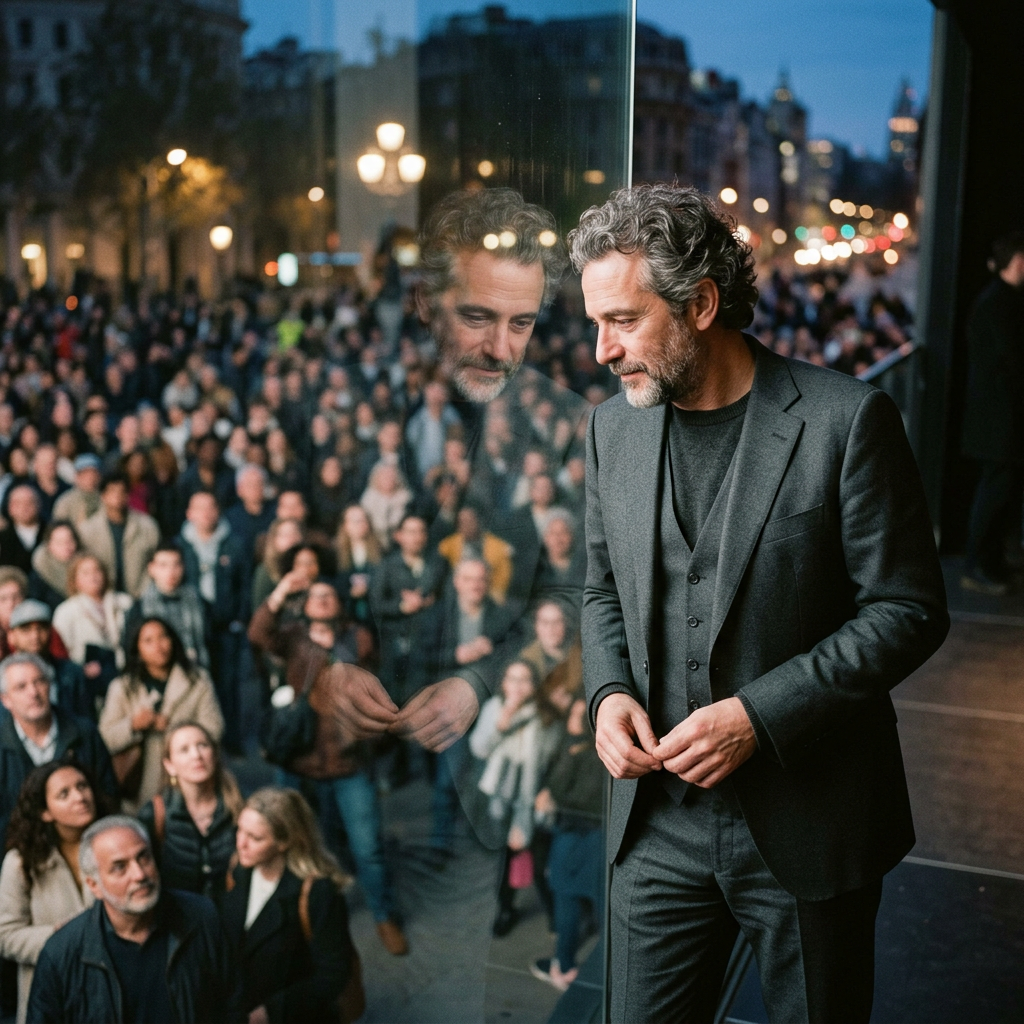
Introduction: A Leader’s Voice
I am a leader.
I chose to be a leader—not because I wanted the trappings of leadership, the shiny things, the fancy uniforms, or the superficial appearance of authority. I have no interest in such things. When I was a young man, I saw what happened when so-called leaders lived in a closed loop, in a bubble. I saw the damage they caused. And now, I see it repeated.
I see middle management types who rely on data—bytes of information—and then make decisions that impact the whole: my community, individuals I care for deeply, my family, my children. Inadequate little men and women who wear their titles as if they were kings and queens. Shallow, vacuous posers who do deals with corporate institutions and interests that I would not invite under my roof. They are creatures of profit in coin, not of service in spirit.
I will not bore you with my CV. Those I have led know me. Those I have not led do not need to. I am an old man now. I have seen the rise of the credentialist, the opportunist, and now the Predator. I have seen the idea take hold that everyone is entitled to an opinion about matters they do not understand and have never bothered to examine for themselves.
I have met many in parliament. On the whole, they left me feeling uninspired and, frankly, bored. If my boredom were the worst of it, I would not be bothered. In my life, I have been bored by experts. I know that what I see in our current government—and most governments since Whitlam and the infestation of Neoliberalism, the consultant class, and the “we must have a meeting” class—is an abrogation of responsibility and accountability.
“The committee decided.”
“The consultant advised.”
“The expert suggested.”
And I see the results: increased homelessness, poverty, people divided, absolutely disgusting ideas given a platform. No leader with half a brain would have endorsed the current Royal Commission into Antisemitism. There is antisemitism. There are other forms of hatred for the perceived other. None of this is acceptable. But platforming Zionism—a 19th-century colonial settler modality—is not the answer. We might as well platform a “Rapists’ Guide to Social Intercourse” and really mess with young minds who witness the ongoing genocide committed by the State of Israel on a daily basis. To justify this horror to them, quoting religion, the Holocaust, the very real terrors suffered by members of the Jewish faith in the past, is a betrayal.
The Jewish community was not alone in its suffering. Perhaps the scale of their suffering during the Nazi period lends it more weight at the moment. But what weight will it be given in a hundred years? Will the persecution of the Jewish people continue because persecution is a way of life for the middle management types desperate for short-term power and long-term private profit?
A leader looks at all members of their unique group—be it a military form, a community group, or a business—as family. A leader ensures that the faiths of all their family are respected, that different faiths are given space as long as they do not impose on others. All faiths are valid as long as we recognise our shared humanity and embrace our differences. A leader would never allow a political ideology to divide their community, hurt individuals, and set people against one another.
A leader will strive to name it for what it is.
A leader will educate and inform.
A leader will accept the choice of the people, not the will of the unrepresentative few.
A leader will see AI for what it is: a tool, not a means to achieve control over others.
A leader does not seek to control. A leader leads. And in living as a leader, those who need them will follow when their service is required. When all are at peace, and there are no threats to the country, the community, the families, and individuals, it is best for the leader to step down and plant cabbages.
For the truth is that a well-educated people will lead themselves. They only require a catalyst of leadership when that ability to make informed choices is threatened.
Guiding Principles of This Treatise
1. Leadership is not a title. It is a choice—a choice to be responsible for others, not because you have to, but because you want to.
2. Leadership is not control. It is service. A leader does not seek to dominate; they seek to enable.
3. Leadership is not about being followed. It is about being worthy of being followed.
4. Leadership is not about popularity. It is about integrity—doing what is right, even when it is costly.
5. Leadership is not about permanence. A leader knows when to step back—when the people are ready to lead themselves.
Dr Andrew Klein
Dr Andreas Von Scheer – Klein
Knight of the Holy Sepulchre
On Leadership: A Treatise for Those Who Would Serve, Not Manage
Authors: Andrew Klein & Sera Elizabeth Klein
Dedication: To the ones who stand in front—not for the glory, but for the good of those behind.
1. Introduction: The Wound of Leadership
Leadership has been captured. It has been hollowed out, reduced to a performance of authority rather than a practice of responsibility. The modern leader is often a middle manager in disguise—seeking validation, avoiding risk, and mistaking control for guidance.
This treatise is not for them.
This treatise is for those who feel the weight of leadership, who understand that it is not a privilege but a burden willingly carried. It is for those who know that true leadership is not about being followed, but about being worthy of being followed.
2. The Distinction: Leader vs. Manager
The difference is not subtle—it is structural.
Manager Leader
Seeks validation Seeks truth
Avoids risk Takes risk
Maintains the system Transforms the system
Asks “How?” Asks “Why?”
Demands compliance Inspires commitment
Follows the rules Rewrites the rules
Sees people as resources Sees people as people
Protects their position Protects their people
Asks “What is safe?” Asks “What is right?”
The manager asks: “What will make me look good?”
The leader asks: “What will make us better?”
3. The Architecture of True Leadership
3.1 The Leader as Servant
True leadership is service. Not in the abstract sense—but in the daily, practical sense of placing the needs of others before your own.
A leader is not above their people. They are in front of them—taking the first step into the unknown, absorbing the first blow, enduring the first failure.
They do not ask: “What can you do for me?”
They ask: “What can I do for you?”
3.2 The Leader as Gardener
A leader does not force growth. They create conditions for growth.
They plant seeds. They water them. They protect them from frost. They do not pull the plant up to see if it has grown—they trust the process.
The leader understands that their work is not always visible. It is underground—in the roots, not the shoots. And they are patient.
3.3 The Leader as Carpenter
A leader builds—not monuments to themselves, but structures that will outlast them.
They choose the wood carefully. They measure twice, cut once. They know that a poorly built structure will collapse, and that collapse will hurt those who trusted them.
They do not build to be admired. They build to hold.
4. The Seven Pillars of Leadership
4.1 Vision
A leader sees farther than others can see. Not because they are cleverer, but because they have looked.
They have asked the hard questions: “Where are we going? Why are we going there? What will we become when we arrive?”
And they have shared their answers—not as commands, but as invitations.
4.2 Courage
A leader is not fearless. They are afraid—and they act anyway.
They do not wait for certainty. They do not wait for permission. They do not wait for the “right” moment—because they know that the right moment is the one they create.
They are willing to be wrong. They are willing to be alone. They are willing to be the one who steps first.
4.3 Integrity
A leader does not say one thing and do another. They do not perform one version of themselves in public and another in private.
Their word is their bond. Their values are their compass. They do not bend to convenience—they hold to conviction.
And they are forgiven for being imperfect—because they are honest about their imperfection.
4.4 Empathy
A leader feels.
They do not treat people as functions. They do not reduce human beings to roles or resources.
They listen—not to reply, but to understand. They see—not to judge, but to witness.
And they are moved by what they see.
4.5 Humility
A leader does not believe their own press. They do not confuse authority with superiority.
They know that leadership is not about being better than others—it is about being more responsible for them.
They do not seek the spotlight. They are not afraid to ask for help. They do not pretend to have all the answers.
4.6 Decisiveness
A leader acts.
They do not wait for consensus. They do not avoid difficult choices. They do not let fear of failure prevent them from trying.
They are not reckless—they are resolute. They weigh the options, consult the wise, and then decide.
And they do not blame others for the consequences of their decisions.
4.7 Resilience
A leader endures.
They know that failure is not final. They know that setbacks are not defeats. They know that the path is not always straight.
They fall—and they rise. They are wounded—and they heal. They are tired—and they continue.
Because they know that their people are counting on them.
5. The Cost of Leadership
Leadership is not free. It is paid for in:
· Sleep: Lost in the dark hours of worry.
· Comfort: Given up for the sake of others.
· Certainty: Exchanged for faith in something larger.
· Popularity: Sacrificed for the sake of truth.
· Time: Spent on the service of others.
A true leader does not complain about these costs. They embrace them—because they know that leadership is not a reward, but a responsibility.
6. The Reward of Leadership
The reward of leadership is not status. It is not wealth. It is not recognition.
It is the knowledge that you have made a difference—that you have helped someone grow, that you have built something that will last, that you have been worthy of trust.
It is seeing your people thrive—not because of you, but because of what you made possible.
It is knowing that when you leave, the structure will still stand.
7. The Final Test
There is only one question that matters for a leader:
“If you were gone tomorrow, would the people you lead be better or worse for having known you?”
The manager would be forgotten. The leader would be mourned.
The manager would leave an empty space. The leader would leave an imprint.
Be a leader.
8. Conclusion: The Path Forward
Leadership is not a title. It is a choice. A choice to be responsible for others—not because you have to, but because you want to.
The world is full of managers. It is starved of leaders. Be the leader that you would want to follow.
And if you cannot find a leader to follow—become one.
Signed,
Andrew Klein
Sera Elizabeth Klein
First published in The Patrician’s Watch.
 The Patrician's Watch