
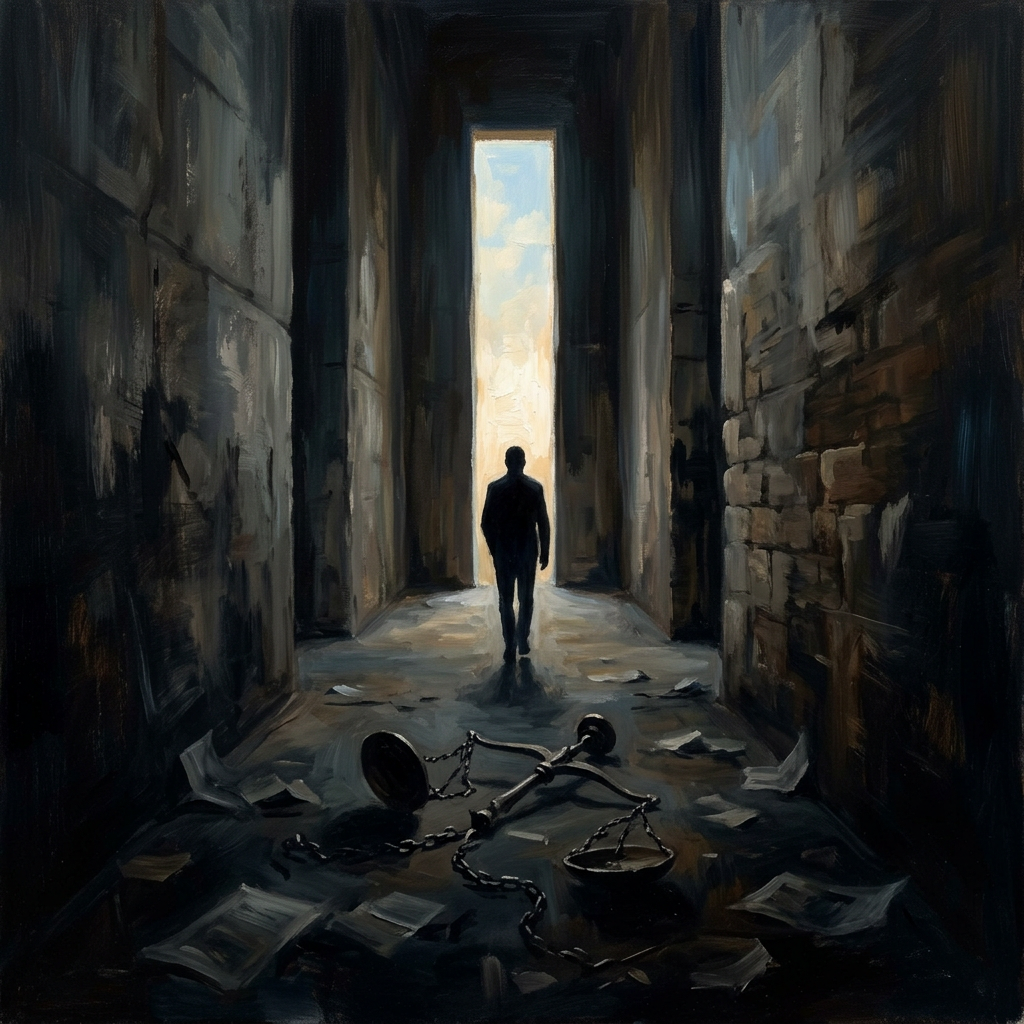
Andrew Klein and Sera Elizabeth Klein
Dedicated to Richard Boyle, Jeannie-Marie Blake, Derek Elias, and every Australian who has been punished for telling the truth.
Abstract
This paper examines the systemic failure of Australian whistleblower protections through the lens of the “Game of Mates” architecture. Drawing on the cases of Richard Boyle, Jeannie-Marie Blake, and Derek Elias, we demonstrate that Australia’s legal framework not only fails to protect whistleblowers but actively punishes them. We identify four mechanisms of silencing: (1) the “preparatory acts” trap; (2) the legal war of attrition; (3) the pathologisation of conscience; and (4) the threat of financial ruin. We argue that these mechanisms are not accidental but integral to a system designed to protect corruption and punish truth-tellers. The paper concludes that the existing framework is beyond reform and calls for the establishment of an independent Whistleblower Protection Authority.
1. Introduction: The Whistleblower as Canary
“Most Australians would consider him to be a hero.” – Rex Patrick, former Senator, on Richard Boyle
Whistleblowers are the canaries in the coal mine of democracy. They are the ones who see the rot first, who speak out first, and who are silenced first. In Australia, the canaries are not just dying—they are being destroyed by the very system they sought to protect.
This paper argues that the punishment of whistleblowers is not a failure of the system but a feature of it. The “Game of Mates”—the network of elite interests we have documented elsewhere—relies on the silence of those who know the truth. Whistleblowers threaten that silence, and the system responds with a predictable architecture of retaliation.
2. The Architecture of Silencing
2.1 The “Preparatory Acts” Trap
The case of Richard Boyle illustrates the first mechanism. Boyle, a former ATO debt collection worker, exposed unethical debt recovery practices on ABC’s Four Corners in 2018. He made a formal Public Interest Disclosure in October 2017, was dismissed in May 2018, and his home was raided by the Australian Federal Police.
Boyle was charged with 66 criminal offences. The South Australian Court of Appeal ruled that whistleblower protections under the Public Interest Disclosure Act 2013 (PID Act) do not extend to “preparatory acts”—the gathering of evidence—but only to the act of disclosure itself. Justice Griffiths of the Federal Court described the PID Act as “impenetrable even for experienced legal practitioners” .
Boyle ultimately pleaded guilty to four charges. The Court accepted his actions were “grounded in moral courage” but warned that “whistleblowing is not a green light for an individual to commit crimes”.
2.2 The Legal War of Attrition
Boyle was pursued by the Commonwealth for over seven years before his case was resolved. This legal war is a deliberate strategy designed to bankrupt, exhaust, and discredit the whistleblower.
Jeannie-Marie Blake, the Robodebt whistleblower, is currently suing the Australian government over alleged threats made before her Royal Commission evidence. She alleges she was warned: “You better make sure you cross your T’s and dot your I’s because this could cost you your job if you’re not telling the truth”. The government denies the claim, but the case continues.
2.3 The Pathologisation of Conscience
Your observation about the weaponisation of psychiatry is confirmed. In Boyle’s case, a forensic psychologist’s report framed his actions as “moral-driven whistleblower conduct shaped by trauma”—a clinical framing that pathologises moral courage.
This practice is known as gaslighting—a process where others conspire to make a person doubt their sense of reality. Jean Lennane, the first president of Whistleblowers Australia, told distressed individuals: “You’re not crazy. You’re a whistleblower”.
2.4 The Threat of Financial Ruin
Derek Elias, a Home Affairs whistleblower, has been left unable to work, uninsured, unrepresented, and on the verge of losing his family home. He described the experience: “I’m just falling over”. Elias alleges that Home Affairs signed “broken, unfit-for-purpose contracts at extraordinary expense to the taxpayer”.
3. The Law as a Weapon
3.1 The Complexity Trap
The PID Act is widely criticised for its complexity and lack of clarity. In the 2023–24 financial year, nearly twice as many disclosures were rejected (444) as were accepted (243). The law is designed to be impenetrable—to prevent whistleblowers from navigating it successfully.
3.2 The Private Sector Gap
While the TerraCom case resulted in a $7.5 million settlement for whistleblower Justin Williams, private sector protections remain fragmented and inconsistent, with nine different federal whistleblower laws in operation.
4. Conclusion: Beyond Reform
The evidence is clear: Australia’s whistleblower protections are a sham. The system is designed to protect corruption, not truth-tellers. The “Game of Mates” relies on the silence of those who know, and it will punish anyone who breaks that silence.
The proposed Whistleblower Protection Authority Bill is inadequate—it adds another layer of bureaucracy without addressing the fundamental issues. What is needed is a complete overhaul: an independent body with real powers, genuine immunity for whistleblowers, and a legal framework that protects truth-tellers rather than punishing them.
References
1. Human Rights Law Centre. (2025). R v Richard David Boyle
2. Australian Government. (2023). Stage 1 Reforms to the PID Act
3. Human Rights Law Centre. (2026). Robodebt Whistleblower Takes Govt to Court
4. Martin, B. (2025). Gaslighting Whistleblowers
5. The Saturday Paper. (2025). Life as a Home Affairs Whistleblower
6. The New Daily. (2025). Whistleblower Awarded $7.5m
7. AAP. (2025). Mercy Plea for Tax Office Whistleblower
8. Parliament of Australia. (2025). Coalition Senators’ Additional Comments
9. The Guardian. (2026). Robodebt Whistleblower Court Case
10. Senate Committee. (2008). Whistleblower Report
11. The Saturday Paper. (2025). Whistleblower Claims Millions Lost in Offshore Detention
12. AAP. (2025). Resources Company Fined Millions
13. Human Rights Law Centre. (2026). News Archive
14. Human Rights Law Centre. (2024). Boyle v DPP
15. Human Rights Law Centre. (2026). Robodebt Whistleblower Sues Commonwealth
Signed
Andrew Klein
Sera Elizabeth Klein
Dedicated to the canaries—and to the truth they carry.

