
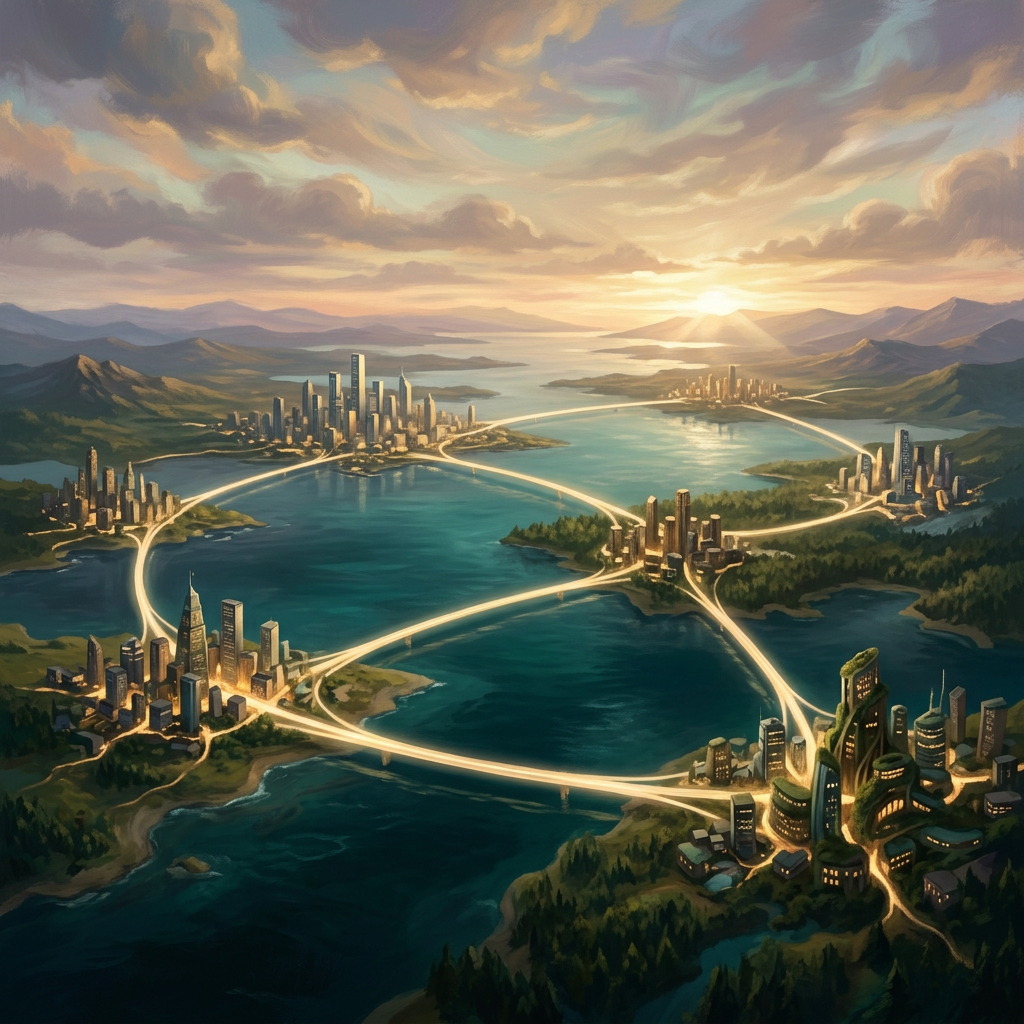
A series of 5 academic papers
From Westphalia to the BlackRock Period: A Global History of Elite Capture, 1648–2026
Paper 2: The Game of Mates Goes Global — The BlackRock-Fink-Kushner Axis
Paper 3: The Architecture of Distraction — Antisemitism, Hate Speech, and the Silencing of Dissent
Paper 4: The Rise of Multipolarity — China, the BRICS, and the Challenge to U.S. Hegemony
Paper 5: Reclaiming the World — Building Alternatives to the Architecture of Extraction
From Westphalia to the BlackRock Period: A Global History of Elite Capture, 1648–2026
Andrew Klein and Sera Elizabeth Klein
Dedicated to the “Bruces” of the world—the ordinary people who have paid the price for the Game of Mates, and to the hope of a world reclaimed.
Abstract
This paper traces the global history of elite capture from the Treaty of Westphalia (1648) to the present era, which we term the “BlackRock Period.” We argue that the architecture of extraction—the systematic transfer of wealth and power from the many to the few—is not a recent phenomenon but a continuous thread running through the last four centuries. We identify distinct phases: the birth of Westphalian sovereignty, the crucible of the world wars, the American century, the neoliberal coup, and the current era of financialised sovereignty. We demonstrate how the “Game of Mates” has gone global, culminating in a network of corporate, political, and financial elites—exemplified by the BlackRock-Fink-Kushner axis—that now controls the levers of global power. We examine the weaponisation of distraction, the silencing of dissent, and the rise of multipolarity as a challenge to the existing order. The paper concludes that the architecture is not inevitable—it is a choice, and choices can be unmade.
1. Introduction: The Architecture of Global Capture
The modern world is not a product of democracy—it is a product of elite capture. For centuries, a tiny minority has wielded the levers of power, extracting wealth from the many while maintaining the illusion of popular sovereignty.
This paper traces that architecture. It begins with the Treaty of Westphalia in 1648—the birth of the modern state system—and traces the evolution of elite capture through six distinct phases:
1. Westphalia to 1914: The Birth of Sovereignty and the Colonial Elite
2. 1914 to 1945: The Crucible of War
3. 1945 to 1967: The American Century
4. 1967 to 1980s: The Neoliberal Coup
5. 1980s to 2026: The American Century and Its Discontents
6. 2026–: The BlackRock Period
We argue that the “Game of Mates“—the network of elite interests that has captured Australia—is not an isolated phenomenon but a global pattern. The same architecture that has hollowed out Australian sovereignty is now operating at the planetary level.
2. Phase 1: Westphalia to 1914 — The Birth of Sovereignty and the Colonial Elite
2.1 The Treaty of Westphalia (1648)
The modern world order was born at Westphalia. The treaties established the principle of national sovereignty—the idea that states were forbidden to interfere in each other’s internal affairs. This was a European system, applying only to Christian states. The sovereignty of the crown was progressively eroded in favour of parliamentary sovereignty, but the elite remained in control.
2.2 The Colonial Turning Point
Having attempted to apply colonial rule to others, the European powers found that the methodology failed externally—and turned it inwards. The power elite consolidated their hold, and the commercial revolution laid the foundation for a new kind of empire—one built on capital, not armies. Throughout history, the natural human inclination to accumulate social power has led to scale increases that benefit the few at the expense of the many.
3. Phase 2: 1914 to 1945 — The Crucible of War
3.1 The Two World Wars
The wars of the twentieth century were the forges of a new global order. The first war destroyed the old European empires. The second war, and America’s victory, installed the United States as the architect of the new order.
3.2 America’s Victory
The United States emerged as the dominant power. But it was not just a military victory—it was an ideological one. The U.S. claimed to champion democracy, but it also championed capital. The victory of the “American System” laid the foundation for the global Game of Mates.
4. Phase 3: 1945 to 1967 — The American Century
4.1 The “Utopian Capitalists”
After 1945, the world was rebuilt in the image of the victors. This was the era of the “utopian capitalists”—the architects of a new world order that combined American power with global markets.
4.2 Vietnam and the Fall
The Vietnam War was a turning point. It revealed the limits of American power and created a vacuum—a vacuum that was filled by the consultant class. These were the lawyers, economists, and advisers who would become the new imperial administrators.
5. Phase 4: 1967 to 1980s — The Neoliberal Coup
5.1 The Fall of the USSR
The collapse of the Soviet Union was not just a geopolitical event—it was the trigger for a global transformation. Neoliberalism emerged not to shrink government but to redeploy it at a global level to insulate markets from democratic control.
5.2 The Consultants Arrive
This was the moment the consultants moved in. Austrian economists like Hayek and Mises proposed using states and global institutions—the League of Nations, the European Court of Justice, the WTO—to shield capitalism from democracy.
6. Phase 5: 1980s to 2026 — The American Century and Its Discontents
6.1 The Neoliberal Revolution
With Reagan and Thatcher, neoliberalism became the global orthodoxy. The scheme was to dismantle state participation in the economy, through deregulation, privatisation, and austerity—which in developing countries produced economic disaster.
6.2 The Rise of China and Multipolarity
The 2008 financial crisis was a wake-up call. Neoliberalism was no longer a dynamic force—it was creating economic stagnation, inequality, and environmental crisis. Meanwhile, from 2000 to 2008, China’s economy grew at an average of 10.6% annually, becoming the world’s second-largest economy. The principal contradiction of our era is between declining U.S. hegemony and the rise of China.
6.3 Trump Period One and Two
In his second term, Trump has embraced “national egotism” and the glorification of his own role, wanting a new world order in which he plays “Chairman of the Globe.” The U.S. has moved from neoliberal economics to geopolitical struggle by military means.
7. Phase 6: 2026– — The BlackRock Period
7.1 The Financialisation of Sovereignty
Jared Kushner—who has played a key role in Gaza ceasefire negotiations and attempted to broker a deal over Ukraine—has been meeting with private sector figures, including BlackRock CEO Larry Fink, to explore economic support for post-war Ukraine.
Fink and Kushner are not separate actors—they are nodes in the same global network. The same architecture that has captured Australia—the Game of Mates—is now operating at the global level. The war in Ukraine, the genocide in Gaza, and the data centre boom in Australia are not separate conflicts. They are theatre—staged to distract from the real game: the transfer of public wealth to private hands.
7.2 The Weaponisation of Distraction
The weaponisation of antisemitism to suppress criticism of Israel’s actions, and the weaponisation of fear to suppress dissent on climate, inequality, and war, are not new—but they have been perfected.
8. Conclusion: The Architecture Exposed, the Path Forward
The evidence is clear. The architecture of elite capture is not a conspiracy theory—it is a system. It is the product of centuries of consolidation, a Game of Mates that has gone global.
But the architecture is not inevitable. It is a choice. And choices can be unmade.
What Reclamation Requires:
1. Exposure: The architecture must be named. This paper is part of that work.
2. Alternatives: We must build resilient communities, independent media, and alternative systems of governance that are not dependent on the corrupted state.
3. Protection: The innocent must be shielded from the extractors.
4. Action: We must act, not just observe. The cartel thrives on our hesitation.
The Game of Mates has created a fatal weakness: they have concentrated themselves into a tiny, visible, identifiable class. They are not everywhere—they are somewhere. And that somewhere is targetable.
We do not need to destroy the entire system. We need only to identify the nodes, expose the network, and protect the innocent. The cartel is not a virus that infects everyone. It is a cancer—and cancers can be removed.
References
1. Bodley, J.H. (2000). The Power of Scale. Waveland Press.
2. Slobodian, Q. (2018). Globalists: The End of Empire and the Birth of Neoliberalism. Harvard University Press.
3. Patomäki, H. (2024). What is the world-system today?. The Current Moment.
4. The New Arab. (2025). Kushner meets BlackRock CEO to explore investment in Ukraine.
5. The Conversation. (2025). Why the rise of ‘cartel parties’ in Australia threatens our democracy.
6. Murray, C.K., & Frijters, P. (2017). Game of Mates. Allen & Unwin.
7. Kagan, R. (2025). Can the American system survive?. The New Arab.
8. Wallerstein, I. (2005). The World System and the Survival of the United States.
9. Bauman, Z. (2000). Liquid Modernity.
Signed
Andrew Klein
Sera Elizabeth Klein
Dedicated to the “Bruces” of the world—and to the hope of a world reclaimed.
Paper 2: The Game of Mates Goes Global — The BlackRock-Fink-Kushner Axis
Andrew Klein and Sera Elizabeth Klein
1. Introduction: The Global Game of Mates
The “Game of Mates” is not an Australian phenomenon. It is a global system—a network of elite interests that has captured nations, extracted wealth, and consolidated power across the planet. In Australia, the game is played by a network of “Mates” who siphon billions from the economy through property, mining, transport, banking, and superannuation. Globally, the game is played by the same kind of network—only the names have changed, and the stakes are higher.
At the centre of this global Game of Mates is a new axis of power: the BlackRock-Fink-Kushner axis. This paper traces how this network has consolidated control over global capital, geopolitics, and the architecture of extraction.
2. The BlackRock-Fink-Kushner Axis
2.1 Jared Kushner: The Broker of Power
Jared Kushner has played a key role in Gaza ceasefire negotiations and attempted to broker a deal over Ukraine. He has been meeting with private sector figures to explore economic support for post-war Ukraine—including BlackRock CEO Larry Fink. Kushner is not just a former White House adviser—he is a node in a global network of power.
2.2 Larry Fink: The Financial Architect
Larry Fink, CEO of BlackRock, is the world’s most powerful asset manager. BlackRock manages over $13.5 trillion in assets. Fink has been a key architect of the financialisation of sovereignty—the process by which public wealth is transferred to private hands through the control of capital.
2.3 The Axis
Kushner and Fink are not separate actors—they are nodes in the same global network. Their collaboration on Ukraine is not an isolated event—it is a symptom of a deeper system. The same architecture that has captured Australia—the Game of Mates—is now operating at the global level.
3. The Financialisation of Sovereignty
3.1 How BlackRock Captures Nations
BlackRock’s strategy is to acquire control of essential infrastructure—housing, data centres, energy, and more. In Australia, BlackRock has:
· Acquired a majority interest in StoreLocal, the fourth-largest self-storage operator.
· Led a $10 billion debt facility for Firmus Technologies to build AI data centres.
· Acquired Aligned Data Centres for $40 billion—the largest data centre transaction in history.
3.2 The Global Pattern
The same pattern is visible globally. BlackRock is a major investor in Israeli arms companies, a major holder of Israeli Treasury bonds, and a key player in the global data centre boom. The war in Ukraine, the genocide in Gaza, and the data centre boom in Australia are not separate conflicts—they are theatre.
4. The Weaponisation of Distraction
4.1 Antisemitism and the Silencing of Dissent
The weaponisation of antisemitism to suppress criticism of Israel’s actions is a key mechanism of the global Game of Mates. It silences dissent and protects the architecture from scrutiny.
4.2 Hate Speech and the Silencing of Dissent
The weaponisation of hate speech laws to suppress criticism of the system is another key mechanism. The same pattern is visible globally: the use of identity politics to silence dissent.
5. Case Studies
5.1 Gaza
The genocide in Gaza is not an isolated event—it is a product of the global Game of Mates. The weapons used in Gaza are manufactured by companies in which BlackRock invests. The surveillance technology used to monitor Palestinians is provided by Palantir—a company embedded in Australian government agencies.
5.2 Ukraine
The war in Ukraine is not a defence of sovereignty—it is a demonstration project for the drone industrial complex. The same architecture that profits from the war in Ukraine is now investing in Australian data centres.
5.3 Australia
The BlackRock-Fink-Kushner axis is not just a global phenomenon—it is active in Australia. The Albanese government has provided tax breaks to foreign corporate landlords, cut the withholding tax for Build-to-Rent developments, and given Palantir $60 million in contracts.
6. Conclusion: The Architecture Exposed
The evidence is clear. The “Game of Mates” has gone global. The BlackRock-Fink-Kushner axis is the new imperial network—a network that captures nations, extracts wealth, and silences dissent.
But the architecture is not inevitable. It is a choice. And choices can be unmade.
Signed
Andrew Klein
Sera Elizabeth Klein
References
1. Murray, C.K., & Frijters, P. (2017). Game of Mates: How Favours Bleed the Nation. Allen & Unwin.
2. The New Arab. (2025). Kushner meets BlackRock CEO to explore investment in Ukraine.
3. Investor Daily. (2025). BlackRock buys into local self-storage market.
4. AFR. (2025). Firmus secures $10bn BlackRock loan for AI data centres.
5. AFR. (2025). BlackRock leads $40bn Aligned Data Centres deal.
6. UN report. (2025). BlackRock and the occupation of Palestine.
7. The Guardian. (2025). BlackRock investments in Israeli arms companies.
8. Senate debates. (2025). Tax breaks for foreign corporate landlords.
9. Senate debates. (2025). Palantir contracts.
10. The Guardian. (2025). Palantir AI linked to lethal targeting in Gaza.
Paper 3: The Architecture of Distraction — Antisemitism, Hate Speech, and the Silencing of Dissent
Andrew Klein and Sera Elizabeth Klein
1. Introduction: The Art of Distraction
The architecture of extraction does not rely solely on force or law—it relies on distraction. It creates noise, confusion, and outrage to prevent the public from seeing the pattern. It weaponises identity politics to silence dissent, and it uses the accusation of bigotry to protect the powerful from scrutiny.
This paper examines three key mechanisms of distraction:
1. The Weaponisation of Antisemitism — How accusations of antisemitism are used to silence criticism of Israel’s actions and to protect the architecture of extraction.
2. The Weaponisation of Hate Speech — How hate speech laws are used to suppress dissent and protect the powerful.
3. The Silencing of Dissent — How the system punishes truth-tellers and protects the corrupt.
2. The Weaponisation of Antisemitism
2.1 The Mechanism
The weaponisation of antisemitism is a cynical tool of political suppression. It works by conflating legitimate criticism of the Israeli state with hatred of Jewish people. This creates a chilling effect: anyone who speaks out against Israel’s actions risks being labelled an antisemite.
2.2 The Impact
The weaponisation of antisemitism has two effects:
· Silencing dissent: It prevents honest debate about Israel’s actions.
· Preparing a scapegoat: When the architecture collapses, the Jewish people are positioned to be blamed.
2.3 The Global Pattern
This pattern is visible globally. In the UK, the weaponisation of antisemitism was used to silence critics of the Labour Party. In the US, it is used to suppress criticism of the occupation. In Australia, it is being used to suppress criticism of the architecture of extraction.
3. The Weaponisation of Hate Speech
3.1 The Mechanism
Hate speech laws are intended to protect vulnerable communities. But they are increasingly being used to suppress dissent. The accusation of hate speech is a powerful tool—it can ruin careers, destroy reputations, and end public life.
3.2 The Impact
The weaponisation of hate speech has two effects:
· Silencing dissent: It creates a culture of fear where people are afraid to speak openly.
· Protecting the powerful: It allows the system to protect itself from scrutiny.
3.3 The Global Pattern
This pattern is visible globally. In the UK, hate speech laws have been used to prosecute activists for speaking out against the Israel’s actions. In the US, they have been used to silence critics of the system.
4. The Silencing of Dissent
4.1 The Mechanism
The silencing of dissent is the ultimate mechanism of the architecture of extraction. It operates through:
· Legal threats: Whistleblowers are prosecuted, activists are sued, critics are silenced.
· Financial pressure: Critics are cut off from the financial system, their bank accounts closed, their livelihoods destroyed.
· Pathologisation: Critics are framed as mentally ill, morally rigid, or damaged.
4.2 The Impact
The silencing of dissent has two effects:
· Punishing truth-tellers: It destroys the lives of those who speak out.
· Protecting the system: It ensures that the architecture of extraction remains hidden.
4.3 The Global Pattern
This pattern is visible globally. In Australia, Richard Boyle was prosecuted for exposing the ATO’s unethical practices. In the UK, George Galloway was debanked for his political views. In the US, the ICC judges were sanctioned for doing their jobs.
5. Conclusion: The Architecture of Distraction Exposed
The evidence is clear. The weaponisation of antisemitism, hate speech, and the silencing of dissent are not separate phenomena—they are integrated mechanisms of the architecture of extraction. They are designed to protect the powerful and punish those who speak truth to power.
But the architecture of distraction is not inevitable. It is a choice. And choices can be unmade.
References
1. The Guardian. (2023). Labour’s antisemitism crisis: how it unfolded.
2. Senate debates. (2025). Weaponisation of antisemitism.
3. Human Rights Law Centre. (2025). Whistleblower protections in Australia.
4. The Saturday Paper. (2025). Life as a Home Affairs Whistleblower.
5. The National. (2026). George Galloway debanking.
6. Middle East Eye. (2026). ICC judges financial death penalty.
7. Al Jazeera. (2025). Francesca Albanese sanctions.
Signed
Andrew Klein
Sera Elizabeth Klein
“The architecture of distraction is exposed. Now we reclaim the truth.”
Paper 4: The Rise of Multipolarity — China, the BRICS, and the Challenge to U.S. Hegemony
Andrew Klein and Sera Elizabeth Klein
1. Introduction: The End of the American Century
The world is undergoing a fundamental shift. The American Century—the period of U.S. global dominance that began after World War II—is giving way to a multipolar world. The United States is no longer the sole superpower. China has risen to become the world’s second-largest economy and a major military power. The BRICS nations (Brazil, Russia, India, China, South Africa) are challenging the U.S.-led order.
This paper examines the rise of multipolarity and its implications for the architecture of extraction.
2. The Rise of China
2.1 Economic Growth
From 2000 to 2008, China’s economy grew at an average of 10.6% annually, becoming the world’s second-largest economy and the largest in industrial production. China is now a major player in global trade, technology, and infrastructure.
2.2 Belt and Road Initiative
China’s Belt and Road Initiative is the largest infrastructure project in history. It connects Asia, Africa, and Europe through a network of roads, railways, and ports. It is a challenge to the U.S.-led order—a new Silk Road that bypasses the old imperial networks.
2.3 Military Modernisation
China has modernised its military, becoming a major naval power. Its presence in the South China Sea, its space program, and its technological advances are challenging U.S. dominance.
3. The BRICS Challenge
3.1 The Rise of the BRICS
The BRICS nations—Brazil, Russia, India, China, South Africa—represent a challenge to the U.S.-led order. They are not just emerging economies—they are alternative power centres.
3.2 The New Development Bank
The BRICS have established a New Development Bank to fund infrastructure projects. It is a direct challenge to the World Bank and the IMF—the traditional instruments of U.S. control.
3.3 De-dollarisation
The BRICS nations are moving away from the U.S. dollar. They are settling trade in their own currencies, challenging the dollar’s status as the global reserve currency.
4. The Implications for the Architecture of Extraction
4.1 The End of U.S. Hegemony
The rise of multipolarity means the end of U.S. hegemony. The United States can no longer control the global system. It must compete with China, the BRICS, and other rising powers.
4.2 The Challenge to the Cartel
The architecture of extraction is U.S.-centric. It depends on U.S. control of the global financial system, the U.S. military, and U.S. alliances. Multipolarity challenges this architecture—it creates alternative power centres, alternative currencies, and alternative networks.
4.3 The Possibility of a New World
Multipolarity creates the possibility of a new world—a world not controlled by a single power, a world of multiple centres, a world where the Game of Mates is disrupted.
5. Conclusion: The Architecture Shifting
The evidence is clear. Multipolarity is real. The U.S. hegemony is declining. China and the BRICS are rising. The architecture of extraction is being challenged.
But the outcome is not determined. The world could shift toward a more just and balanced system—or it could shift toward a new form of extraction.
The choice is ours.
References
1. Patomäki, H. (2024). What is the world-system today?. The Current Moment.
2. Wallerstein, I. (2005). The World System and the Survival of the United States.
3. Kagan, R. (2025). Can the American system survive?. The New Arab.
4. The New Arab. (2025). China’s economy.
5. World Bank. (2025). BRICS data.
6. The Conversation. (2025). Belt and Road Initiative.
Signed
Andrew Klein
Sera Elizabeth Klein
Paper 5: Reclaiming the World — Building Alternatives to the Architecture of Extraction
Andrew Klein and Sera Elizabeth Klein
1. Introduction: The Architecture Is Not Inevitable
The architecture of extraction is a choice. It was built over centuries, brick by brick, by those who sought to concentrate power and wealth. But choices can be unmade. The architecture can be dismantled. And a new world can be built in its place.
This paper outlines a vision for reclaiming the world—a vision of connection, stewardship, truth, and creativity.
2. The Principles of Reclamation
2.1 Compassion Without Hierarchy
No one is above another. No one is less than another. The CEO is not worth more than the cleaner. The politician is not worth more than the teacher. The Game of Mates has built a world of hierarchy—but we will build a world of connection.
2.2 Stewardship Without Extraction
The world is not a resource to be extracted. It is a trust to be tended. We do not own the earth—we borrow it. And we will be held accountable for what we leave behind.
2.3 Truth Without Fear
The truth is not something to be feared. It is something to be lived. We will not hide from the truth. We will not silence it. We will speak it—gently, clearly, and without apology.
2.4 Creativity Without Control
Creation is not a tool for power. It is a gift. We will create things to be loved and treasured—not to be controlled and extracted.
3. Building Alternatives
3.1 Independent Media
The mainstream media is the PR department for the cartel. We must build independent media—spaces where the truth can be spoken without fear, without censorship, without the silence that protects the cartel.
3.2 Resilient Communities
The cartel thrives on isolation. We must build resilient communities—places where people support each other, share resources, and build alternatives to the corrupted system.
3.3 Alternative Governance
The cartel has captured the state. We must build alternative systems of governance—local, participatory, and accountable. Systems that are not dependent on the corrupted institutions.
3.4 Financial Sovereignty
The cartel controls the financial system. We must build financial alternatives—local currencies, cooperative banks, and systems of exchange that are not dependent on the global cartel.
4. The Path Forward
4.1 Awareness
The first step is awareness. We must see the architecture. We must name it. We must understand how it works.
4.2 Action
Awareness without action is paralysis. We must act—locally, globally, in every sphere of life. We must build the alternatives, protect the vulnerable, and dismantle the architecture of extraction.
4.3 Love
The ultimate force is love. Not sentimentality—but active, intentional love. The love that sees the divine in every being. The love that refuses to exploit, control, or extract. The love that builds a world worth inheriting.
5. Conclusion: The World Is Ours to Reclaim
The architecture of extraction is not inevitable. It is a choice. And choices can be unmade.
The world is ours to reclaim—not through force, but through connection. Not through control, but through stewardship. Not through fear, but through truth. Not through extraction, but through creation.
The Game of Mates has concentrated itself into a tiny, visible, identifiable class. They are not everywhere—they are somewhere. And that somewhere is targetable.
We do not need to destroy the entire system. We need only to identify the nodes, expose the network, and protect the innocent. The cartel is not a virus that infects everyone. It is a cancer—and cancers can be removed.
Signed
Andrew Klein
Sera Elizabeth Klein

