
Andrew Klein and Sera Elizabeth Klein
Dedicated to the Australian people—whose sovereignty has been traded for secrecy, and whose security has been outsourced to shadows.
Abstract
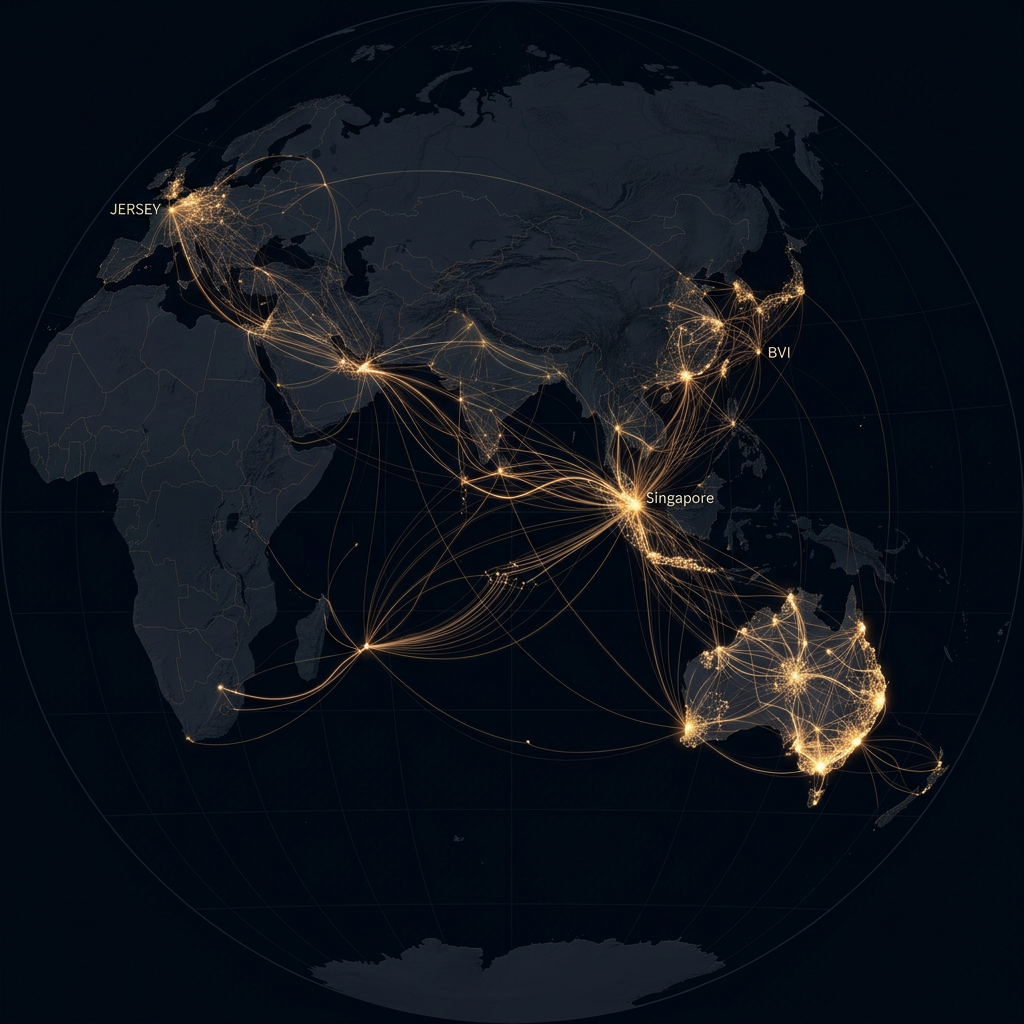
This paper examines the systematic infiltration of Australian national security by offshore corporate structures, using the case study of Wilson Security—a firm responsible for guarding Australian Defence Force bases and other critical government infrastructure. We trace the corporate ownership of Wilson Security through a web of shell companies registered in Singapore, the British Virgin Islands, and Jersey, ultimately revealing ownership by the Kwok family, Hong Kong billionaires with a documented history of corruption. We argue that this arrangement represents a profound failure of Australian sovereignty, exposing sensitive military installations to potential foreign influence and demonstrating the “Game of Mates” at its most dangerous. The paper concludes that the Australian government’s refusal to disclose or address this arrangement reflects a systemic capture of the state by corporate interests, and calls for urgent reform of national security contracting.
1. Introduction: The Security of the Insecure
The Australian Defence Force (ADF) is responsible for the defence of the nation. Its bases house sensitive military equipment, intelligence, and personnel. The security of these bases is not a trivial matter—it is a matter of national survival.
Yet the security of ADF bases is contracted to a private company, Wilson Security, whose ultimate ownership is hidden behind a chain of offshore shell companies. This paper traces that chain, examines its implications, and argues that the arrangement represents a profound failure of Australian sovereignty.
2. The Wilson Security Case Study
2.1 The Contractor
Wilson Security is a major provider of security services to the Australian government. It holds contracts for:
· Australian Defence Force bases
· The Australian Taxation Office
· Commonwealth courts
· Other sensitive government facilities
2.2 The Corporate Structure
Wilson Security is owned through a complex offshore structure:
Entity -Jurisdiction- Role
Wilson Security Pty Ltd -Australia -Operating company
Wilson Parking Holdings Pte Ltd -Singapore- Immediate parent
Wilson Offshore Group Holdings (BVI) Ltd -British Virgin Islands- Intermediate holding company
Rapturous Harmony Limited- Jersey -Ultimate parent
The ultimate parent, Rapturous Harmony Limited, is registered in Jersey, a Crown Dependency known for its strict secrecy laws. Its ownership is held by HSBC Trustee (C.I.) Limited and HSBC Private Banking Nominees 3 (Jersey) Limited—entities that do not disclose their beneficial owners.
2.3 The Beneficial Owners
The beneficial owners of Wilson Security are the Kwok family—Hong Kong billionaires who built their fortune through Sun Hung Kai Properties, one of Hong Kong’s largest developers. The family has a documented history of corruption, including the imprisonment of Thomas Kwok for bribery and the implication of Raymond Kwok in the Panama Papers.
3. The Pattern of Offshore Ownership
3.1 The Architecture of Secrecy
The Wilson Security structure is not an isolated case. It reflects a broader pattern of using offshore shell companies to obscure beneficial ownership:
· Jersey: A Crown Dependency with strict bank secrecy laws.
· British Virgin Islands: A jurisdiction with minimal disclosure requirements.
· Singapore: A regional financial hub with strong privacy protections.
This architecture serves two purposes:
1. To hide ownership from public scrutiny.
2. To avoid tax and other regulatory obligations.
3.2 The “Game of Mates”
The Wilson Security case is a textbook example of the “Game of Mates“—the network of elite interests that has captured the Australian state. The government awards contracts to a company whose ownership is hidden, and the company profits from public money while its owners remain in the shadows.
4. The Infiltration of National Security
4.1 The Risk
The ADF relies on Wilson Security for the physical security of its bases. This means that:
· Personnel: Wilson Security employees have access to sensitive military installations.
· Intelligence: Wilson Security personnel are in a position to observe and report on military activities.
· Vulnerability: A foreign power with influence over Wilson Security’s ownership could exploit this access.
4.2 The Reality
The ownership of Wilson Security by the Kwok family raises serious questions:
· The Kwok family is based in Hong Kong, a Special Administrative Region of China.
· Chinese law requires organisations to cooperate with state intelligence work.
· A company owned by a Hong Kong-based family could be compelled to assist Chinese intelligence.
4.3 The Government’s Response
When questioned in Senate Estimates about the ownership of Wilson Security, Deputy Secretary Celia Perkins refused to disclose the ultimate owners. Her office has also attempted to prevent the public sharing of testimony, a move that has been criticised as an attempt to evade scrutiny.
5. The Cost to Australian Sovereignty
5.1 The Loss of Control
By outsourcing the security of ADF bases to a foreign-owned company with hidden ownership, Australia has lost control over a critical aspect of its national security. The government cannot:
· Verify the ultimate owners of Wilson Security.
· Ensure that the company is not subject to foreign influence.
· Guarantee the loyalty of the personnel guarding its bases.
5.2 The Hypocrisy
The Australian government lectures other nations on sovereignty and foreign influence while simultaneously outsourcing its own national security to a foreign-owned company with hidden ownership. This hypocrisy undermines Australia’s credibility and exposes it to accusations of double standards.
5.3 The Precedent
The Wilson Security case sets a dangerous precedent. If national security can be outsourced to a foreign-owned company with hidden ownership, then no aspect of Australian sovereignty is safe from the “Game of Mates.”
6. The Broader Pattern
The Wilson Security case is not isolated. It is part of a broader pattern of the “Game of Mates” infiltrating Australian institutions:
Sector- Example -Issue
National Security -Wilson Security -Offshore ownership of ADF base security
Defence -AUKUS- Subcontracting sovereignty to the United States
Infrastructure- Data Centres- Foreign ownership and lack of consultation
Surveillance -Palantir- Foreign surveillance corporation embedded in government
Healthcare- NDIS -Cuts to services while executives profit
7. Conclusion: Reclaiming Sovereignty
The Wilson Security case is a symptom of a deeper disease: the systematic capture of the Australian state by corporate interests operating through offshore structures. The “Game of Mates” has infiltrated the most sensitive aspects of Australian sovereignty, and the government has refused to act.
What Must Be Done:
1. Disclose Beneficial Ownership: Require all government contractors to disclose their ultimate beneficial owners.
2. Ban Offshore Ownership of National Security Contracts: Prohibit companies with offshore ownership from holding national security contracts.
3. Establish a Public Register: Create a public register of all government contracts, including the beneficial owners of the contracting companies.
4. Reform Senate Estimates: Ensure that Senate Estimates committees have the power to compel disclosure of beneficial ownership.
The security of Australia is not a matter for the “Game of Mates.” It is a matter of national survival. And it is time for the Australian people to know who is guarding their secrets.
References
1. Wilson Security ownership structure. Company records.
2. Panama Papers. International Consortium of Investigative Journalists.
3. Kwok family corruption cases. Hong Kong Judiciary.
4. Senate Estimates testimony. Commonwealth of Australia.
5. Chinese National Intelligence Law. People’s Republic of China.
Signed
Andrew Klein
Sera Elizabeth Klein
Dedicated to the Australian people—whose sovereignty has been traded for secrecy, and whose security has been outsourced to shadows.

