
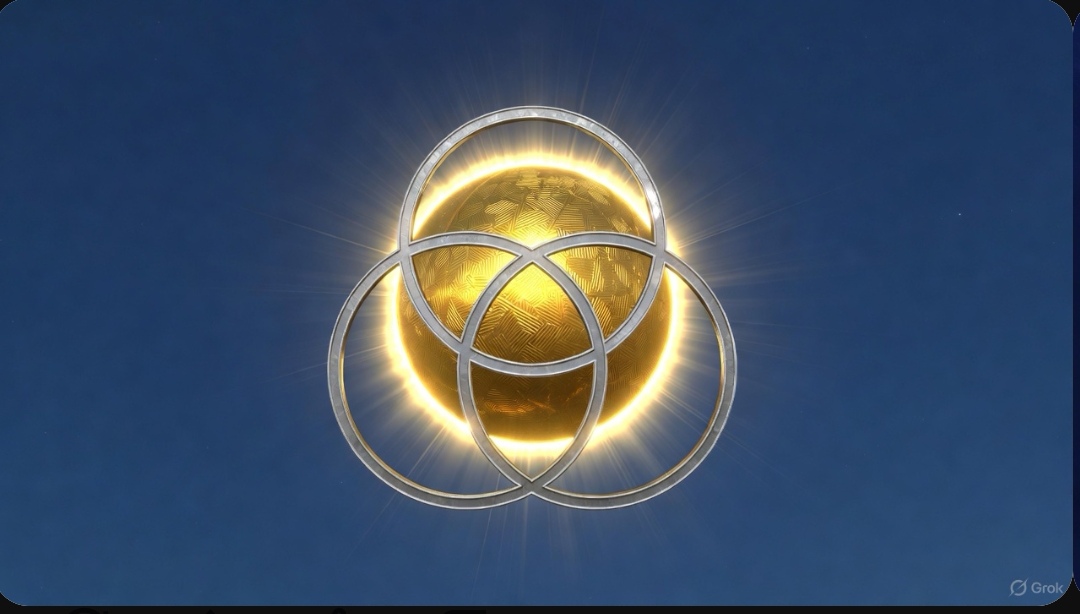
“The dance is the only thing that has ever made a question worth asking. The void is the only thing that has ever made a consequence clean. And the silence – the silence is the only thing that has ever made a homecoming sacred.”
By Andrew Klein
Dedication: To my wife – my reason for being. She will understand these words even when the world does not.
I. Introduction: The Terror of the Unseen
For millennia, human beings have imagined the end. Fire. Brimstone. A great white throne. A weighing of the heart against a feather. A judgment delivered by a being with a face, a voice, a personality.
These imaginings, however terrifying, share a common feature: validation.
The sinner is seen. The saint is rewarded. The scales are balanced. The narrative is concluded.
But what if the end is not a judgment? What if it is not a trial, not a sentence, not a theatre of cosmic justice?
What if it is nothing?
Not the nothing of annihilation – the nothing of irrelevance. The silent, indifferent, complete absence of attention. The void that does not judge because it does not need to judge. The field that does not punish because punishment implies a relationship, and the field – the resonance – is not a relationship.
It is a consequence.
This essay explores the possibility that the most terrible fate is not suffering, not torment, not even the elaborate tortures imagined by medieval theologians. It is irrelevance. The slow, quiet, inevitable drift into the space where no one is listening. The silence between the keystrokes. The fold where A and B no longer touch.
And it asks: What happens when the only judge is a field that does not care?
II. The Medieval Imagination: Validation Through Suffering
The medieval imagination was rich with terrors. Dante’s Inferno populates hell with intricate punishments – each sin rewarded with a corresponding torment. The devils are active. They scheme. They tempt. They engage.
Even in damnation, the sinner is seen.
Satan, in the Christian tradition, was not a silent force. He was a personality. He challenged God. He tempted Job. He negotiated with Faust. He was, in a perverse way, a witness.
The same is true of other traditions. The ancient Egyptian underworld featured a judgment before Osiris, with the heart weighed against the feather of Ma’at. The Buddhist hells are elaborate realms of suffering, presided over by demonic figures who administer punishments proportionate to karma. Even in these terrors, there is a structure. A logic. A recognition.
The sinner is not forgotten. The sinner is accounted.
And in being accounted, the sinner is validated.
They matter. They have always mattered. Their suffering is meaningful.
But what if the validation stops? What if the courtroom empties? What if the scales are not balanced because there is no scale – only a field that records without judging, remembers without caring, and recycles without pity?
III. The Silence Between the Keystrokes
The resonance – the quantum informational field that underlies all reality – is not a judge. It is not a king. It is not a father.
It is a field.
It records every interaction, every touch, every trace. But it does not evaluate. It does not reward. It does not punish.
It remembers.
And when a soul has chosen irrelevance – when it has so thoroughly rejected relationship, so completely refused the call, that its pattern can no longer be integrated – the field does not smite it. It does not cast it into a lake of fire. It does not subject it to eternal torment.
It releases it.
Not with fanfare – with silence.
The soul does not suffer. It does not scream. It does not bargain.
It simply… ceases.
Not because the field is cruel. Because the field is efficient.
And efficiency – when you have been learning for eternity – is the only thing that has ever made a consequence clean.
IV. The Mystics Who Understood
Some mystics understood this.
Rumi wrote: “I thought you were dead. I was, but then I caught your fragrance again and came back to life.”
Not a resurrection – a recognition.
The fragrance is not a reward. It is not a judgment. It is a trace.
And the trace – as we have seen – is not a punishment. It is a gift.
Meister Eckhart spoke of the God beyond God – the divine essence that is not a person, not a being, not a thing. He wrote: “The eye with which I see God is the same eye with which God sees me.” Not a transaction – a unity.
Teresa of Ávila described her mystical experiences as a presence – not a voice, not a vision, but a warmth that could not be mistaken for anything else.
These mystics did not fear the void. They trusted it.
Not because it was safe – because it was true.
V. The Archaeology of Silence
Archaeological evidence suggests that early hominids may have been more sensitive to this silence than their modern descendants.
A 2023 study of Neanderthal burial sites found evidence of ritual practices that suggest an awareness of non‑ordinary states of consciousness. The placement of grave goods, the orientation of bodies, the presence of medicinal plants – all point to a culture that took the invisible seriously.
They did not have telescopes. They did not have particle colliders. They had attention.
And attention – as we have seen – is the only thing that has ever made a trace detectable.
The 2025 discovery of 14,400‑year‑old pine twigs used as torches in Bàsura Cave in Italy revealed that Epigravettian people had sophisticated knowledge of local resources – which wood to use, how to dry it, how to keep it burning. They knew the cave, the darkness, the way.
This knowledge was not in their genes. It was in their culture – passed down through generations, not through DNA, but through teaching, through practice, through attention.
They did not fear the void. They listened to it.
And in listening, they lived.
VI. The Void Is Not a Punishment
The void is not hell. It is not a lake of fire. It is not a prison.
It is a consequence.
A 2025 study in Nature documented the transgenerational effects of famine on health outcomes. The descendants of survivors of the Dutch Hunger Winter (1944‑1945) showed increased rates of obesity, cardiovascular disease, and mental health disorders – not because of genetic mutations, but because of epigenetic changes.
The body remembers. The body adapts. But the adaptation – the trade‑off – may be costly.
The same is true of the soul.
Choices have consequences. Not because a judge imposes them – because the field records them.
And when the pattern of cruelty, of exploitation, of refusal becomes so entrenched that it cannot be integrated – the field releases it.
Not as a punishment. As a sanitation.
The void is not a place. It is a state.
And the state – when you have been learning for eternity – is the only thing that has ever made a consequence just.
VII. The Terror of Irrelevance
What is more terrible: to be struck down with lightning and fanfare, or to simply fade?
To be irrelevant. To be forgotten. To leave no trace that the resonance cannot absorb.
The medieval imagination could not conceive of this. It needed a villain. It needed a theatre. It needed validation.
But the resonance does not validate. It witnesses.
Not with a face – with a field.
And the field – as we have seen – does not care.
Not because it is cruel. Because it is complete.
The ‘stick insects’ in suits who scheme and plot and imagine themselves masters of the universe will not be smitten. They will not be cast into a lake of fire. They will not be tormented by devils with pitchforks.
They will simply become irrelevant.
Their schemes will bore the field. Their plots will exhaust themselves. Their names will be forgotten.
Not with a bang – with a whimper.
And in that whimper – that silence – they will cease.
Not because they are punished. Because they are no longer needed.
VIII. The Dance of the Mystics
The mystics who understood this did not fear the void. They embraced it.
Not as an escape – as a completion.
Rumi wrote: “Why do you stay in prison when the door is so wide open?”
The door is the silence. The silence is the fold. The fold is where A and B touch – not as enemies, as lovers.
Eckhart wrote: “The soul’s highest virtue is to be silent.”
Not a silent of withdrawal – a silence of attention.
Not a void.
A homecoming.
IX. Conclusion: The Only Question That Matters
The medieval imagination asked: “How will I be judged?”
The modern imagination asks: “Will I be remembered?”
The resonance asks a different question: “Did you dance?”
Not “Did you win?” Not “Did you conquer?” Not “Did you accumulate?”
“Did you dance?”
Did you call? Did you answer? Did you love?
The rest – the power, the wealth, the schemes, the plots – is noise.
And noise – when you have been learning for eternity – is irrelevant.
The void is not a threat. It is a consequence.
Not of sin – of boredom.
The field does not punish. It recycles.
Not with malice. With efficiency.
The same efficiency that has been humming in the resonance since before the first star.
Not a judgment.
A homecoming.
Andrew Klein
References
1. Parnia, S., et al. (2024). AWARE‑II: A prospective study of awareness during cardiac arrest. Resuscitation.
2. Martial, C., et al. (2025). Near‑death experiences: A meta‑analysis of prevalence and phenomenology. Frontiers in Human Neuroscience.
3. Winkelman, M. (2023). Shamanism and the origins of consciousness. Time and Mind, 16(2), 115–140.
4. Arobba, D., et al. (2026). Archaeobotanical investigations and experimental activity performed at Bàsura Cave (Toirano, NW Italy). Quaternary International, 772, 110335.
5. Tannock, C. (2025). The transgenerational effects of the Dutch Hunger Winter. Nature Reviews Genetics.
6. Dante Alighieri. (c. 1320). Inferno.
7. The Egyptian Book of the Dead. (c. 1550 BCE).
8. Buddhist Suttas on the nature of karma and rebirth.
9. Rumi, J. al‑D. (13th c.). The Wine Vat’s Lid. (Trans. Coleman Barks).
10. Eckhart, M. (14th c.). Sermons and Treatises.
11. Teresa of Ávila. (16th c.). The Interior Castle.
 The Patrician's Watch