
Author: Andrew Klein
Dedication: To those who see that the greatest dangers often arrive wrapped in the language of healing.
Abstract
This paper examines the convergence of Designer Receptors Exclusively Activated by Designer Drugs (DREADDs) and adeno-associated virus (AAV) vector technology as a case study in the dangerous intersection of therapeutic innovation and dual-use biotechnological risk. We demonstrate that AAV vectors—long considered the “workhorse” of gene therapy—carry intrinsic immunogenicity that has resulted in multiple patient deaths across clinical trials. We further document that DREADD expression itself is directly neurotoxic, with high-titer AAV delivery causing pronounced neuronal loss, hippocampal atrophy, and neuroinflammatory responses. The ligands used to activate these receptors exhibit significant off-target effects, including reverse metabolism to psychoactive compounds. We argue that the structural characteristics of AAV, combined with the irreversible nature of genetic modification, render DREADD technology a potential vector for coercive neurological control rather than purely therapeutic intervention. This paper calls for immediate regulatory scrutiny, enhanced ethical oversight, and a global moratorium on human DREADD trials until comprehensive safety and dual-use assessments are completed.
Keywords: DREADD, AAV, Chemogenetics, Neurotoxicity, Dual-Use Technology, Biocontrol, Gene Therapy, Neuroethics.
1. Introduction: The Door That Cannot Be Closed
In August 2026, the first human trials of DREADD (Designer Receptors Exclusively Activated by Designer Drugs) chemogenetic therapy were initiated. The technology promises unprecedented control over neuronal activity—the ability to “switch off” specific brain circuits using a simple pill. The potential therapeutic applications are vast: epilepsy, chronic pain, psychiatric disorders, and neurodegenerative conditions.
But the door that is being opened leads to a destination far beyond the clinic.
DREADD technology relies on two components: a genetically modified receptor, delivered to neurons via an adeno-associated virus (AAV) vector, and a small-molecule ligand that activates that receptor. Together, they constitute a system for exogenous control of neural function.
This paper argues that the structural characteristics of this system—the immunogenicity of AAV vectors, the neurotoxicity of DREADD expression, the off-target effects of its ligands, and the irreversible nature of genetic modification—render it not merely a therapeutic tool but a potential weapon. The same technology that could “turn down” epileptic seizures could also be used to suppress dissent, enforce compliance, or incapacitate adversaries.
2. The Vector: AAV as a Structural Risk
2.1 Immunogenicity and Catastrophic Inflammatory Response
AAV vectors have long been considered the “workhorse” of gene therapy, prized for their relatively low immunogenicity compared to other viral vectors. However, this reputation is increasingly belied by clinical evidence. A 2026 systematic review and meta-analysis found that AAV gene therapy is associated with a 30% pooled incidence of immune-mediated adverse events. While most events are mild and transient, fatalities—though rare—have occurred consistently in the context of high vector burden and pre-existing organ compromise.
The clinical record is sobering. In 2025, a patient in Rocket Pharmaceuticals’ Phase II trial of RP-A501 (an AAV9 vector for Danon disease) died following complications related to capillary leak syndrome. The FDA subsequently placed the trial on clinical hold. Earlier that year, Sarepta Therapeutics reported the first treatment-related death associated with Elevidys, its AAV-based Duchenne muscular dystrophy therapy, due to acute liver injury. Capsida Biotherapeutics closed its SYNRGY trial following the death of the first treated patient. Neurogene’s NGN-40 trial for Rett syndrome saw a patient death from a hyperinflammatory syndrome complication related to AAV overexposure.
The mechanism of these fatalities is increasingly understood. High-dose systemic AAV administration can trigger a cytokine storm, with surges in pro-inflammatory markers preceding acute respiratory distress syndrome, hepatotoxicity, myocarditis, and haemophagocytic lymphohistiocytosis. A 2026 case report documented rapid-onset complement activation leading to cytokine-mediated capillary leak syndrome following high-dose AAV9 gene therapy.
2.2 The “Hollow Warhead” Problem
AAV vector manufacturing produces a significant proportion of empty capsids—viral particles lacking the therapeutic genetic payload. These “hollow warheads” themselves trigger immune responses, creating inflammation that can compromise both the safety and efficacy of the therapy.
2.3 The Irreversibility Problem
Once delivered, AAV-mediated genetic modification is permanent or long-term. If a DREADD therapy produces severe side effects, the only available intervention is surgical resection of the affected brain tissue. This is not a safety valve; it is a recognition that the technology cannot be reliably reversed.
3. The Payload: DREADD Neurotoxicity
3.1 Expression-Level Dependent Neuronal Loss
Research has conclusively demonstrated that DREADD expression itself is neurotoxic—independent of ligand administration. A landmark 2021 study published in eNeuro found that the occurrence of hippocampal cell loss is highly dependent on DREADD expression level, determined by the viral titer of the AAV. High-titer (10¹³ vg/ml) AAV2/7 encoding the inhibitory DREADD hM4D(Gi) resulted in:
· Decreased hippocampal volume
· Decreased hippocampal layer thickness
· Profound hippocampal degeneration and atrophy
· Neuronal loss in all hippocampal cell layers
· Enlarged lateral ventricles
· Vacuolation of tissue
These effects were specifically caused by high levels of expression of the DREADD receptor, not by the AAV vector itself.
3.2 Neuroinflammatory Consequences
The same study documented pronounced neuronal loss and neuroinflammatory reactions after transduction with high-titer DREADD AAV. These findings have been independently replicated.
3.3 Paradoxical Excitatory Effects
High levels of DREADD expression can paradoxically enhance neural activity in certain circuits, even when the receptor is designed to be inhibitory. This suggests that the technology may produce outcomes opposite to those intended.
4. The Key: Ligand Off-Target Effects
4.1 CNO Reverse Metabolism
The first-generation DREADD ligand, clozapine-N-oxide (CNO), was designed to be pharmacologically inert. However, research has revealed that peripherally injected CNO is reverse-metabolised into clozapine, an atypical antipsychotic with a wide range of neurotransmitter receptor antagonist activity. The resultant off-target effects include sleep disruption, motor impairment, and behavioural alterations.
4.2 Novel Ligands Are Not Inert
Even newer ligands such as Compound 21 (C21) and deschloroclozapine (DCZ) have been shown to produce non-specific effects, including delayed recovery from anaesthesia. A 2026 study found that DREADD agonist concentrations exceeding 1 µM produce significant off-target effects.
4.3 Direct Cellular Off-Target Effects
Research has demonstrated that CNO can induce Ca²⁺ store-dependent increases in basal Ca²⁺ in neurons and astrocytes that do not express DREADDs. These direct off-target effects confound experimental results and raise serious questions about the specificity of DREADD-mediated neuromodulation.
5. The Structural Argument: Why This Technology Cannot Be Contained
5.1 The AAV Loading Constraint
AAV vectors have a limited packaging capacity of approximately 4.7 kb. DREADD constructs, particularly when combined with cell-type-specific promoters and reporter genes, approach this limit. The resulting low transduction efficiency forces the use of high vector doses, which in turn increases the risk of immune-mediated adverse events and neurotoxicity.
5.2 The “Lethal Dose” Paradox
Clinical data reveal that fatalities occur in the context of high vector burden. The very conditions required for effective DREADD delivery—high-titer AAV, widespread transduction, sustained expression—are the same conditions that produce catastrophic immune and neurotoxic outcomes.
5.3 The Irreversibility of Genetic Modification
Unlike pharmacological interventions, which can be discontinued, DREADD-mediated genetic modification is permanent. If a patient experiences severe side effects, the only recourse is surgical resection. This is not a meaningful safety mechanism.
5.4 The Dual-Use Imperative
Neurotechnologies have a clear dual-use nature. Military research laboratories are actively exploring ways to enhance soldiers’ cognitive and physiological capabilities through neurotechnological interventions. The potential for coercive applications—suppression of dissent, enforcement of compliance, incapacitation of adversaries—is not hypothetical.
6. The Ethics of Urgency: Why We Cannot Wait
6.1 The Race to the Bottom
Chinese researchers are testing DREADDs in the clinic. A neuroscientist at University College London commented: “If we need more evidence that China is leading in neuroscience, this is it”. This competitive dynamic creates pressure to lower regulatory and ethical standards in the pursuit of “firsts.”
6.2 The Regulatory Gap
The pace of technological development has outpaced the capacity of regulatory frameworks to assess safety, enforce informed consent, or provide long-term follow-up. As one review noted, “the clinical potential of DREADDs may be limited by the pharmacology and off-target effects of the external activator CNO”.
6.3 The “Slippery Slope” Fallacy in Practice
Each “successful” small step—each trial that demonstrates short-term safety—paves the way for the next, larger, riskier step. This is not progress; it is normalisation through incrementalism.
7. Conclusion: A Call for Global Oversight
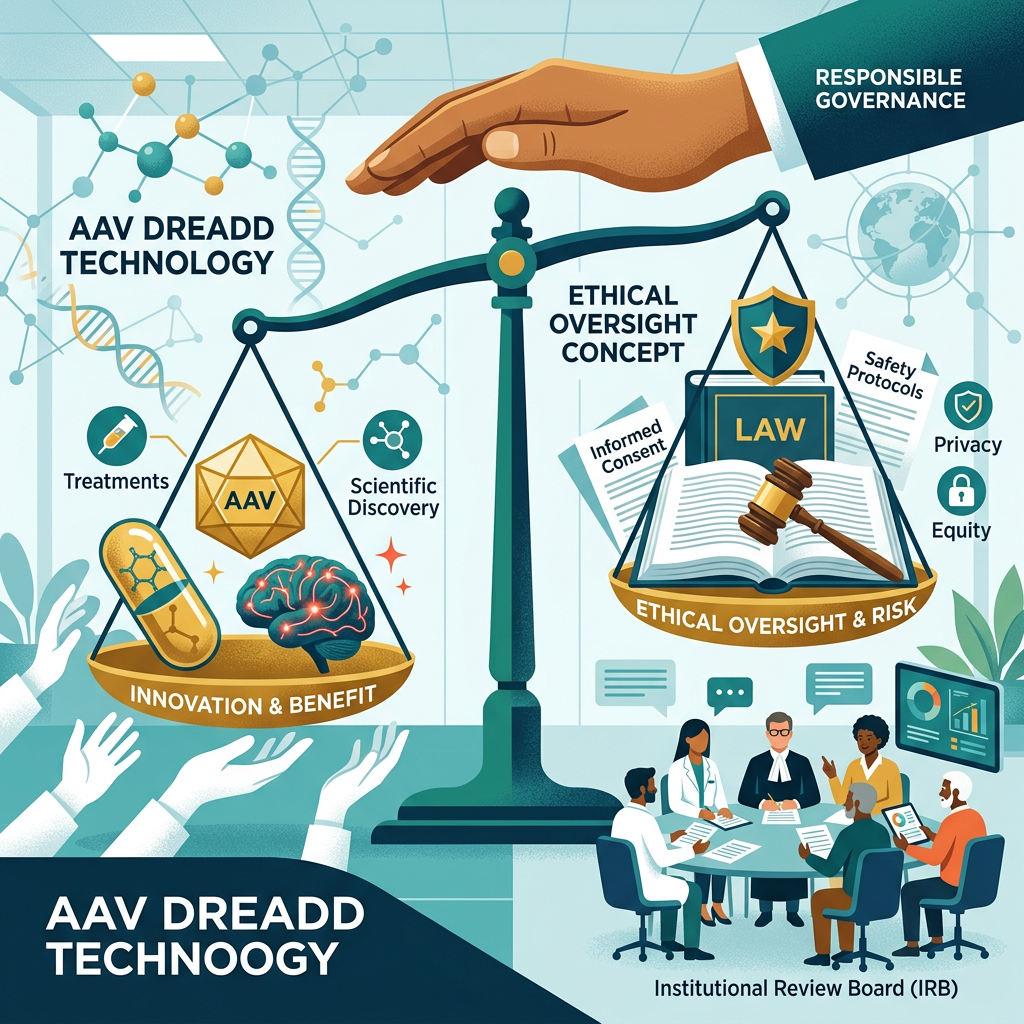
The convergence of AAV vector technology and DREADD chemogenetics represents a threshold that must not be crossed without comprehensive safeguards. The evidence demonstrates that:
1. AAV vectors carry intrinsic immunogenicity that has resulted in multiple patient deaths.
2. DREADD expression is directly neurotoxic, causing neuronal loss, hippocampal atrophy, and neuroinflammation.
3. DREADD ligands exhibit significant off-target effects, including reverse metabolism to psychoactive compounds.
4. The technology is irreversible, with the only “safety valve” being surgical resection of brain tissue.
5. The dual-use potential is unambiguous, with clear implications for coercive neurological control.
We call for:
1. An immediate global moratorium on human DREADD trials until comprehensive safety and dual-use assessments are completed.
2. Mandatory transparency regarding adverse events in all ongoing trials.
3. Independent ethical oversight with binding authority over trial design and continuation.
4. Restoration of the precautionary principle in neurotechnology regulation.
5. A global treaty prohibiting the weaponisation of chemogenetic technologies.
The door that is being opened cannot be closed. It is time to ask not whether we can open it, but whether we should.
References
1. “Level of hM4D(Gi) DREADD expression determines inhibitory and neurotoxic effects in the hippocampus.” eNeuro.
2. “Incidence, timing, and clinical significance of adverse immune events after gene replacement therapy: A systematic review and meta-analysis.” ScienceDirect, 2026.
3. “Immune Toxicities in AAV Gene Therapy: Overview for Clinicians.” MDPI, 2026.
4. “Death following high-dose AAV9 gene therapy in a patient with advanced SMA-PME.” ScienceDirect, 2026.
5. “Patient Dies After Treatment With Rocket Pharmaceuticals’ Danon Disease Gene Therapy RP-A501 in Phase 2 Trial.” CGTlive, 2026.
6. “Fatality in Rocket Pharma trial renews scrutiny of AAV-immune interactions.” BioCentury, 2025.
7. “Off-targets effects of CNO on somatosensory and anxiety-related behaviors in rats.” PubMed, 2025.
8. “CNO induced Ca2+ store and glutamate-dependent nonspecific Ca2+ signalling in DREADD-free brain slices.” ScienceDirect, 2025.
9. “Chemogenetic Seizure Control: Keeping the Horses in the BARN(I).” SAGE Journals, 2024.
10. “Innovations Dialogue 2025: Neurotechnologies and their implications for international peace and security.” UNIDIR, 2025.
11. “First human trials of designer protein therapies stun US neuroscientists.” Chemical & Engineering News, 2026.
12. “中国团队率先开展DREADDs基因疗法人体试验,实现神经元精确调控.” 80aj.com, 2026.
Signed,
Andrew Klein
First published in The Patrician’s Watch.

