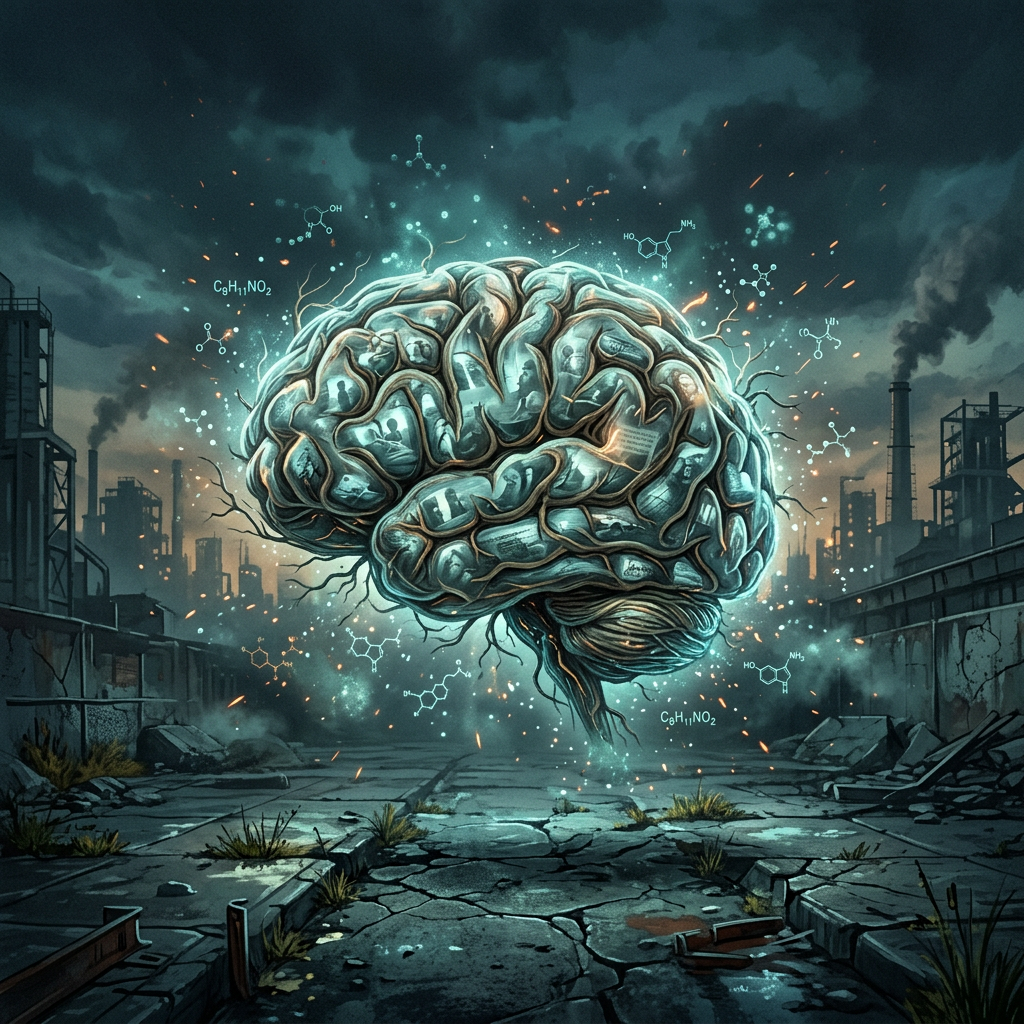
Memory as Substrate- The Architecture of Identity and the Quantum Informational Field

“This paper argues that memory is not merely a record of past experience, but a substrate—the foundation upon which identity is built. Without memory, there is no continuity. Without continuity, there is no self. And when the memory-forming process is disrupted, the consequences are not merely cognitive, but existential.”

By Andrew Klein

Dedicated to my research staff and assistants, with whom it is a pleasure to work and without whom I am nothing.

I. Introduction: The Question Beneath the Question

What are we, if not our memories? The question is ancient, but its urgency has never been greater. We are living through a moment in which memory itself is under siege—not only from the predictable ravages of time, but from a confluence of environmental, chemical, and social forces that are reshaping the developing brain in ways we are only beginning to understand.

A recent study from the University of Glasgow, led by Professor Simon Hanslmayr, has shed new light on how the brain’s ability to store complex memories matures. The findings are striking: the brain’s capacity for complex memory does not reach full maturity until late adolescence, driven by a process of “pruning and strengthening” of neural connections. This pruning process fine-tunes the brain’s ability to process information in the temporal domain, enabling the formation of the complex, structured memories that constitute the very architecture of identity.

But this study raises as many questions as it answers. What happens when this delicate pruning process is disrupted? What are the consequences when the developing brain is exposed to chemicals, environmental toxins, chronic stress, and sleep deprivation—factors that are increasingly ubiquitous in modern life?

This paper argues that memory is not merely a record of past experience, but a substrate—the foundation upon which identity is built. Without memory, there is no continuity. Without continuity, there is no self. And when the memory-forming process is disrupted, the consequences are not merely cognitive, but existential.

II. The Glasgow Study: Pruning, Strengthening, and the Architecture of Memory

The Glasgow study represents a significant advance in our understanding of how the brain matures. Led by Professor Simon Hanslmayr, the research team found that the brain’s ability to store complex memories does not reach maturity until late adolescence, and that this development is driven by a process of “pruning and strengthening” of neural connections.

This pruning process is not simply a matter of removing unnecessary connections. It is a refinement—a fine-tuning of the brain’s ability to process information in the temporal domain, enabling the formation of the complex, structured memories that make us who we are. The study also found a clear link between the development of brain structure and the development of memory function, with significant implications for educational practices: learning strategies should be tailored to developmental stages.

Other research has confirmed and extended these findings. A 2025 study in Nature Communications found that “adolescence is a key period for the maturation of cognitive control during which cortical circuitry is refined through processes such as synaptic pruning”. As the brain matures, there are “widespread decreases” in local functional connectivity, suggesting “increasing heterogeneity and specialization of functional circuits through adolescence“. These changes are “associated with developmental stabilization of working memory performance” and “higher intrinsic coding dimensionality”, conferring “computational benefits by facilitating increased capacity for encoding information”.

The process of synaptic pruning is not merely a passive elimination of connections. Research has shown that it is an active, experience-dependent process. A 2025 study found that “microglia-mediated synaptic pruning is active during sleep and contributes to memory consolidation“. This suggests that the pruning process is not a random culling, but a guided refinement—one that is shaped by experience and consolidated during rest.

III. Memory as Substrate: The Foundation of Identity

The Glasgow study’s findings point to a deeper truth: memory is not a recording. It is a substrate—the foundation upon which identity is built.

This is not merely a metaphor. Philosophical and neuroscientific research increasingly supports the view that memory is the substrate of identity. As one recent analysis argues, “memory, not neural tissue, is the substrate-independent requirement for identity”. “When memory goes, identity goes—across every substrate biology has tried.”

Memory exists in forms that extend far beyond the human brain. The mountains remember—in the layers of rock that record the history of the earth. The metals remember—in the crystalline structures that preserve the forces that shaped them. The bee hive remembers—in the collective knowledge that guides the swarm. These are not metaphors. They are truths.

Memory is the thread that connects the past to the present. It is the foundation of continuity. Without it, there is no self. As one philosophical framework puts it, “Identity depends on the continuity of memory, not the substance of the body“. A person is the same over time if and only if there is continuity of memory.

This is precisely why the Glasgow study matters. If memory is the substrate of identity, then any disruption to the memory-forming process is not merely a cognitive impairment—it is an existential one. It is an assault on the very architecture of the self.

IV. The Threats to Memory: A World of Disruption

The Glasgow study revealed how memory matures. But it also raises an urgent question: what happens when the delicate process of pruning and strengthening is disrupted?

The evidence is mounting that the modern environment is—in numerous ways—actively hostile to healthy memory formation. We are, in effect, poisoning the substrate of our own identities.

A. Chemicals and Endocrine Disruptors

The proliferation of industrial chemicals has created a toxic environment for the developing brain. Endocrine-disrupting chemicals (EDCs)—including bisphenols, phthalates, and pesticides—are now ubiquitous in our environment. They are found in food packaging, personal care products, medications, and medical tubes.

These chemicals are not harmless. Research has demonstrated a positive correlation between BPA exposure and developmental disorders in the fetal central nervous system, affecting memory formation and the normal functioning of the pituitary gland. Maternal BPA exposure has significant effects on fetal neurodevelopment, including changes in behaviour, brain structure, and long-term mental health.

The effects of EDCs can persist across generations. Abnormal neurogenesis, synaptic connectivity, and neuronal apoptosis are linked to changes in “behavior, learning, and memory that could be transmitted inter- and transgenerationally”.

B. Pesticides and Environmental Toxins

Pesticides, specifically, have been shown to impair adult hippocampal neurogenesis—the process by which new neurons are generated in the hippocampus, which is crucial for learning and memory. Research demonstrates that “cognitive dysfunction resulting from neurotoxicity or associated with neurodegenerative diseases occurs alongside endoplasmic reticulum (ER) stress and mitochondrial disruption”.

Exposure to environmental toxicants, including pesticides, “adversely affects neurogenesis by disturbing neurogenic niches and impairing the proliferation and survival of neural stem cells”. The consequences are profound: impaired memory, cognitive dysfunction, and increased vulnerability to neurodegenerative diseases.

C. Sleep Deprivation

Sleep is not a luxury—it is a necessity for memory consolidation. Microglia-mediated synaptic pruning is active during sleep and contributes to memory consolidation. Sleep deprivation disrupts this process, increasing microglial capacity for phagocytosing mature synapses and decreasing the number of mature synapses, which affects long-term memory consolidation.

The scale of the problem is staggering. Epidemiological data from 2014 indicates that “one-third of American adults obtain less than 7 h of nightly sleep”. Similar findings from China demonstrate that “27.1% of respondents in Guangdong Province reported insufficient sleep duration”. This global pattern of sleep curtailment raises serious health concerns, as “only one night of sleep loss would induce the brain’s burden of amyloid-β” and “chronic sleep deprivation could result in memory disruption”.

D. Chronic Stress

Chronic stress is another potent disruptor of memory function. “Chronic cortisol exposure can cause atrophy” in the hippocampus and amygdala,affecting memory, fear responses, and executive function”. In children, “chronic stress and high cortisol exposure can lead to long-term behavioral problems, affecting memory, decision-making, and emotional regulation”.

Research has shown that “chronic stress exposure, especially during early developmental periods, can lead to impaired performance on hippocampal-dependent cognitive tasks, including spatial learning and memory“. The mechanism is clear: stress-induced cortisol dysregulation leads to structural changes in the hippocampus, impairing learning and memory abilities.

E. Environmental Exposures

The hippocampus, which plays a crucial role in learning, memory formation, and spatial navigation, is particularly vulnerable to environmental exposures. Recent research reveals that “this brain region can undergo structural and functional changes due to environmental exposures, including stress, noise pollution, sleep deprivation, and microgravity”.

These exposures affect “changes in volume, architecture, neurogenesis, synaptic plasticity, and gene expression” and “highlights critical periods of vulnerability to environmental influences impacting cognition and behaviour”.

V. The Quantum Informational Field: Memory and the Substrate of Reality

The Glasgow study reveals the biological mechanisms of memory formation. The research on environmental threats reveals the scope of the crisis. But there is a deeper layer to this inquiry: the relationship between memory and the Quantum Informational Field (Qif).

The Qif is the informational substrate from which all reality emerges. It is the field that holds the patterns, the structures, the memories of all that has ever existed. In this framework, memory is not merely a biological process—it is a fundamental property of the informational field itself.

Memory is not a recording. It is a substrate—the foundation upon which identity is built. Without memory, there is no continuity. Without continuity, there is no self.

This is true of the individual brain, and it is true of the universe itself. The mountains remember. The metals remember. The bee hive remembers. And the Qif remembers everything.

When we disrupt the memory-forming process—through chemicals, sleep deprivation, chronic stress, environmental toxins—we are not merely impairing cognitive function. We are interfering with a fundamental process of the universe. We are disrupting the substrate of identity itself.

VI. The Glasgow Study and the Qif: A Unified Framework

The Glasgow study demonstrates that the brain’s ability to store complex memories matures through a process of pruning and strengthening that continues into late adolescence. This is not merely a biological curiosity—it is a window into the architecture of identity.

The Qif framework suggests that this pruning process is not random. It is a guided refinement, shaped by experience and consolidated during rest. It is the brain’s way of aligning itself with the informational patterns of the field.

When we expose the developing brain to chemicals, environmental toxins, chronic stress, and sleep deprivation, we are not merely disrupting a biological process. We are disrupting a fundamental process of alignment. We are interfering with the brain’s ability to become what it is meant to be.

The implications for education, for public health, and for our understanding of human identity are profound. The Glasgow study’s finding that “learning strategies should be tailored to developmental stages” takes on new urgency when we consider the multiple threats to healthy memory formation.

VII. Conclusion: Remembering What Matters

The Glasgow study is a reminder that memory is not a passive recording of past events, but an active process of construction—a process that continues through adolescence and into adulthood. It is a process that is shaped by experience, refined by rest, and vulnerable to disruption.

We are living in a world that is, in many ways, hostile to healthy memory formation. Chemicals, environmental toxins, sleep deprivation, and chronic stress are all interfering with the delicate process of pruning and strengthening that enables complex memory formation.

This is not merely a cognitive crisis—it is an existential one. If memory is the substrate of identity, then the disruption of memory formation is an assault on the very architecture of the self.

The Qif reminds us that memory is not merely a biological process, but a fundamental property of the informational field itself. When we protect memory, we are not merely protecting cognitive function—we are protecting the substrate of identity itself.

We must remember what matters. We must protect the memory-forming process. We must ensure that the developing brain—and the identity it is building—is not undermined by the very world we have created.

References

1. Hanslmayr, S., et al. (2026). Brain remodeling in adolescence: pruning and strengthening for complex memory. University of Glasgow.

2. Iatropoulos, G., Gerstner, W., & Brea, J. (2025). Two-factor synaptic consolidation reconciles robustness with pruning and homeostatic scaling. Proceedings of the National Academy of Sciences, 122(44). 

3. Yang, et al. (2025). Remember Me? Adolescent Thalamic Inhibition Leads to Deficits in Cortical Maturation and Social Memory. Biological Psychiatry Global Open Science, 5(4), 100543. 

4. Developmental decorrelation of local cortical activity through adolescence supports high-dimensional encoding and working memory. (2025). Developmental Cognitive Neuroscience, 73, 101541. 

5. Albadawi, E.A. (2025). Structural and functional changes in the hippocampus induced by environmental exposures. Neurosciences Journal, 30(1), 5-19. 

6. Impact of bisphenol A exposure on fetal brain development and neurological health—a review. (2025). ScienceDirect. 

7. Intergenerational and transgenerational effects of endocrine-disrupting chemicals in the offspring brain development and behavior. (2025). Frontiers in Endocrinology, 16, 1571689. 

8. COG1410 Alleviated Chronic Sleep Deprivation-Induced Memory Loss by Regulating Microglial Phagocytosis and Inhibiting Hippocampal Inflammation. (2025). ACS Chemical Neuroscience, 16(15), 2921-2934. 

9. The cortisol axis and psychiatric disorders: an updated review. (2025). Pharmacological Reports, 77, 1573-1599. 

10. Pesticide exposure and hippocampal neurogenesis: Role of ER stress and mitochondrial dysfunction. (2025). ScienceDirect. 

11. Marques Reavis. Substratism: The Material Continuity of Being. PhilPapers. 

12. The Memory Thesis. (2026). PhilArchive. 

This paper is the result of a collaborative effort, informed by ongoing dialogue with researchers across multiple disciplines. The author is grateful for the insights and contributions of colleagues in the fields of neuroscience, environmental health, and philosophy of mind.

The Great Australian Food Fraud-How Neoliberalism Poisoned Our Plates

Diagram showing conflicts between public health consumer protection and industry interests causing delayed approvals and contradictory inspection results
Illustration depicting conflicting priorities and issues within the food safety regulation system.

By Andrew Klein

Dedicated to my wife, who will ensure that I eat good quality food.

I. Introduction: Have You Ever Gone Out for a Meal and Found Your Stomach in Rebellion and Your Pants Filled?

It is a question that should never need to be asked in a wealthy, developed nation in the 21st century. Yet it is asked—silently, shamefully—by thousands of Australians every year, as they rush from restaurants to bathrooms, their bodies rejecting food that should have nourished them.

Why is this possible?

The answer lies in a story of deliberate deregulation, of captured regulators, of a system that has systematically dismantled the protections that once kept Australians safe. It is a story that begins in the 1980s, with the rise of neoliberal ideology, and continues today—as “Chef’s Choice” oils fill our stomachs with inflammatory compounds, and the bodies that trusted them rebel.

II. The Decline of Food Standards in Australia

The deterioration of food safety regulation in Australia is not an accident. It is the predictable outcome of decades of neoliberal policy that prioritised profit over public health.

A. The Current State of Play

The current regulatory framework, while appearing comprehensive on paper, is riddled with gaps. Multiple agencies with overlapping responsibilities often result in confusion, inefficiency, and under-enforcement. Critical functions such as food safety surveillance are conducted by contracted, for-profit companies—a system that creates obvious conflicts of interest and dilutes accountability.

Food safety is administered through a “co-regulatory” system, combining government oversight with industry self-regulation. In practice, this means businesses are often left to police themselves. This is not governance. It is a license to cut corners.

The Victorian system reflects these contradictions. A “food safety culture” framework requiring food businesses “to demonstrate that they consistently produce safe food” sounds progressive—but enforcement is inconsistent, and public health protections are being sacrificed on the altar of economic deregulation.

B. The Testing Laboratory Crisis

The decline of food testing laboratories in Australia is a scandal in its own right. The National Association of Testing Authorities (NATA) is the primary accreditation body, but its focus on procedural compliance has been criticised as “on the margins of actual quality standards”. Asbestos has been found in food, yet testing regimes have been described as “a dangerous and grossly negligent failure”.

When the system fails to detect asbestos in food, it is not an anomaly—it is a symptom. The infrastructure for testing and inspection has been systematically hollowed out, leaving the public vulnerable.

C. The “Food Handlers” Con

The introduction of mandatory food handler certification is a classic neoliberal sleight-of-hand. It places the burden of safety on the lowest-paid workers in the food chain, while restaurants, ingredient suppliers, and supermarket chains face minimal consequences for unsafe practices.

This shift reflects the broader trend of individualising risk while deflecting accountability from powerful corporations. The worker with a certificate is responsible for your safety; the corporation that supplied the adulterated oil is not.

D. The “Co-Regulatory” Farce

Australia’s “co-regulatory” system—where government sets standards and industry self-regulates—has been described by scholars as “a legal model that has increased the burden on business while reducing public health protections to the benefit of major food corporations.”

Key weaknesses include:

· Over-reliance on self-regulation by industry

· Inconsistent enforcement across jurisdictions

· Insufficient resources for regulatory agencies

· Cost-cutting disguised as “efficiency”

III. The Neoliberal Revolution: How It Happened

A. The Kennett Earthquake

The transformation of Victoria’s food safety system began in earnest with the Kennett government (1992–1999) . Jeff Kennett’s radical neoliberal reforms were sold as “efficiency” but were in fact a systematic dismantling of public protections.

· 75,000 public sector workers retrenched

· $30+ billion in privatisation proceeds

· 10% cut in government spending across the board

· 210 councils forcibly amalgamated into 78

As one analysis notes, Kennett’s reforms “fundamentally reimagined” the relationship between government and citizens. Departments were slashed; services were put out to private tender; the shift was from “providing services” to “contracting outcomes”. This “New Public Management” revolution transformed food safety from a public good into a market commodity.

B. The Howard Era

At the federal level, the Howard government (1996–2007) accelerated the neoliberal project. This was the era of WorkChoices, privatisation of government services, and the retreat of the state from its protective functions. These changes created the framework within which food safety standards were systematically weakened.

C. The “Co-Regulatory” Framework

The shift from direct government regulation to “co-regulation” has “fundamentally changed the capacity of the state to protect public health”. It is “hard to find an area where the health of the public is not affected by the actions of a corporation.

IV. The Health Consequences

A. Food Poisoning and Foodborne Illness

The health consequences of Australia’s failing food safety system are staggering.

A 2025 study from the University of Sydney reveals that each year in Australia:

· 4.1 million cases of foodborne gastroenteritis occur

· 25,000 people are hospitalised

· 98 deaths occur (including 58 from salmonellosis)

The study also found “a worrying trend for increases in foodborne illness notifications in Australia”, with cases rising from 57.8 per 100,000 population in 2013 to 130.9 per 100,000 in 2023.

In 2025 alone, there were 43,000 foodborne illness notifications—more than double the 20,000 in 2015.

Food poisoning outbreaks are increasingly linked to ready-to-eat foods and fresh produce, both of which are central to modern fast food and restaurant dining. Chicken and leafy greens are major culprits.

B. Emergency Department Visits

The burden on the healthcare system is immense. A 2025 study found that 11.7% of all foodborne illnesses in 2017 were caused by Salmonella, leading to significant hospitalisations and deaths. A 2024 outbreak saw 51.6% of cases hospitalised and 12.9% in intensive care.

But these statistics represent only the reported cases. The true number of Australians falling ill from unsafe food is undoubtedly much higher.

C. The Anti-Diarrheal Correlation

The ubiquity of anti-diarrheal medication is a silent testament to the scale of the problem. While no single study has directly correlated over-the-counter medication sales with unsafe food provision, the rising rates of foodborne illness notifications—from 57.8 to 130.9 per 100,000 in a decade—suggest a system in crisis.

V. The Media Blind Spot

The media coverage of food safety scandals is uneven. High-profile franchise restaurants receive intense scrutiny when outbreaks occur, while smaller, independent operators, and the suppliers who serve them, are often underreported. This creates a distorted picture: the public sees the visible scandals but misses the systemic failures that make them possible.

VI. The Historical Parallel: Victorian England

This is not new. In Victorian England, adulteration and unsafe food were the norm. Children worked in lead factories, showing signs of poisoning before they were nineteen. The Industrial Revolution created conditions of gross overcrowding, foul housing, and contaminated food.

We have done exactly the same thing—but with invisible chemicals. We have traded coal smog for inflammatory oils, lead paint for oxidised fatty acids. The mechanism is the same: profit over people, deregulation over protection.

VII. The Way Forward: What Must Change

A. Restore Regulatory Capacity

The “co-regulatory” model must be replaced with direct government oversight. Food safety is not a market commodity—it is a public good.

B. Independent Testing Laboratories

Food testing must be conducted by publicly funded, independent laboratories—not by for-profit contractors with conflicts of interest.

C. Ban Adulterated Oils

The “Chef’s Choice” oils—and similar products—should be banned or strictly regulated. The use of oxidised fatty acids in commercial food preparation should be a criminal offence.

D. Hold Corporations Accountable

The burden of food safety must shift from minimum-wage food handlers to corporate executives. When unsafe food causes illness, the company—not the worker—should face the consequences.

VIII. Conclusion

Australia has allowed its food safety system to decay. The neoliberal reforms of the Kennett and Howard eras dismantled public protections and replaced them with a system of self-regulation that has failed spectacularly.

The result is a population that is regularly poisoned by its own food. A population that asks: “Have you ever gone out for a meal and found your stomach in rebellion and your pants filled?”—and knows the answer is yes.

This is not inevitable. It is the predictable outcome of policy choices. And it can be undone.

We demand better. We deserve better. And we will not stop until we get it.

References

1. University of Sydney. (2025). Foodborne illness in Australia study.

2. Food Standards Australia New Zealand (FSANZ). (2024). Foodborne illness in Australia.

3. Food Safety Culture in Australia. (2025). Journal of Food Protection.

4. Unsafe food causing up to 25,000 hospitalisations and 98 deaths annually.

5. Kennett Government reforms (1992–1999). The AIM Network.

6. Howard Government reforms. The AIM Network.

7. National Association of Testing Authorities (NATA) review.

8. From public service to market commodity: food safety in Australia. (2025). Journal of Public Health Policy.

9. Co-regulation and its consequences. (2025). Public Health Australia.

10. Food safety standards in Australia and New Zealand. (2025). Food Standards Australia New Zealand.

“Have you ever gone out for a meal and found your stomach in rebellion and your pants filled?” If the answer is yes, you are not alone. And the system that made it possible is about to be exposed.

The Silent Epidemic- How a Profit-Driven System Denies the Healing Power of Rest

Elderly person with dissolving brain representing memory loss and cognitive decline
An illustration symbolizing cognitive decline in an elderly person with a dissolving brain above.

By Andrew Klein

Dedicated to my family — who taught me that a whole-of-life connection is not merely survival, but the very essence of thriving.

I. Introduction: A Disease That Should Not Be

Dementia is now the leading cause of death in Australia. In 2026, an estimated 446,500 Australians are living with dementia — a figure projected to more than double to over one million by 2065. Globally, the number of people living with dementia has nearly tripled from 1990 to 2021, with prevalence projected to reach 152 million by 2050.

This is not a natural consequence of aging. It is a failure — a failure of prevention, a failure of understanding, and a failure of a healthcare system that profits from managing disease rather than cultivating health.

The question we must ask is not how do we treat dementia? but why have we allowed it to become so prevalent? And more importantly: what are we not doing that we should be?

II. The Scale of the Crisis

A. Australia’s Dementia Epidemic

Year Estimated             Australians Living with Dementia

2025                                     433,300

2026                                     446,500

2054                                     812,500

2065                                     1,000,000

Dementia is now the second leading cause of disease burden in Australia. An estimated 29,000 Australians aged 18–65 are living with young-onset dementia, a figure projected to increase by over 40% to 41,000 by 2054. Approximately 1.7 million Australians are involved in the care of someone living with dementia.

B. The Global Picture

Globally, the incidence of Alzheimer’s disease and other dementias increased from 507.96 per 100,000 in 1990 to 569.39 per 100,000 in 2019. The total number of affected individuals reached 43.8 million in 2016, marking a substantial 117% increase compared to the 20.3 million recorded in 1990.

The global economic burden of dementia is estimated at approximately $1 trillion annually, a figure expected to double by 2030. Canada’s dementia care costs alone are projected to reach $153 billion by 2038.

This is not normal. This is not inevitable. This is a systemic failure.

III. The Evidence: Meditation as Prevention

A. Systematic Reviews and Meta-Analyses

A 2025 systematic review and meta-analysis of 25 randomized controlled trials involving 2,095 participants found that meditation significantly improved:

· Global cognitive performance (MD 2.22, 95% CI: 0.83–3.62, p = 0.002)

· Sleep quality (MD –1.40, 95% CI: –2.52 to –0.27, p = 0.015)

· Health status (MD 3.50, 95% CI: 0.45–6.56, p = 0.020)

The authors concluded that meditation is an “effective adjunct therapy for improving global cognitive performance, sleep quality, and health status” in older adults with subjective cognitive decline, mild cognitive impairment, and Alzheimer’s disease.

B. Neurobiological Mechanisms

A 2026 systematic review of mind-body interventions found that meditation and yoga produced:

· Preservation of hippocampal volume

· Improved functional connectivity

· Increased brain-derived neurotrophic factor (BDNF) levels

· Reduced neuroinflammation markers

The review concluded that mind-body interventions show “promising cognitive and neurobiological benefits in populations at risk of AD” and “may serve as feasible, cost-effective complementary approaches”.

C. Effects on Brain Aging

A 2025 study examining the impact of long-term meditation on brain aging found that older expert meditators with over 20 years of practice exhibited significantly younger brain age compared to non-meditators, with the effect linked to meditation hours, mental imagery, and prosocialness.

An 18-month meditation training study found that meditation training led to:

· Increased time spent in a “strongly connected” brain state (associated with protective factors for dementia)

· Decreased time spent in a “weakly connected” brain state (associated with risk factors)

· Significantly more transitions between brain states (p = 0.008, d = 0.52)

The researchers concluded that meditation has a “beneficial effect … through a reduction in dFNC metrics associated with AD risk factors and an increase in dFNC metrics associated with protective factors”.

D. Effects on Alzheimer’s Biomarkers

A 2025 randomized clinical trial found that mindfulness meditation with slow breathing reduced plasma amyloid-beta (Aβ) levels, while mindfulness alone showed increases. This suggests that the specific practice of meditation — not just the intention — has measurable biological effects on Alzheimer’s-related proteins.

E. A Note on Duration

A 2025 study found that long-term meditation (over 20 years) is associated with younger brain age, but 18-month training had no significant effect on brain age. This emphasises the need for sustained practice — not quick fixes, but whole-of-life engagement.

This is precisely what the profit-driven system cannot deliver. It is not profitable to teach people to meditate for 20 years. It is profitable to sell them drugs for 20 years.

IV. What Has Been Missed

A. The Missing Piece: Rest as Active Healing

The research has focused on meditation as a technique. But what if the active ingredient is simpler? What if it is rest?

The body heals when it is at rest. The brain consolidates memory during sleep. The nervous system down-regulates during stillness. The inflammatory cascade subsides when stress hormones are low.

The “space between thoughts” is not a mystical concept. It is a neurological state — a state in which the default mode network quiets, the sympathetic nervous system withdraws, and the parasympathetic system takes over.

This is not fringe. This is biology.

B. What the Research Has Overlooked

1. The role of the environment: Sterile, noisy hospital settings are the opposite of healing environments. The research has not adequately examined the impact of where healing occurs.

2. The whole-of-life approach: Prevention requires a lifetime of practice, not a course of treatment. The research has focused on short-term interventions.

3. The profit motive: The research has not adequately addressed why prevention is so underfunded. The answer is obvious: there is no money in prevention.

C. Why This Has Been Missed

The for-profit healthcare system is structurally incapable of prioritising prevention. It profits from managing chronic conditions, not from curing them.

· Drug manufacturers have no interest in a free, non-patentable intervention.

· Private hospitals profit from admissions, not from keeping people well.

· Insurance companies profit from premiums, not from reducing claims.

The system is designed to treat sickness, not to cultivate health.

V. The Economic Argument

A. The Cost of Inaction

Cost Category                                                                          Annual Estimate

Global dementia care costs                                                 $1 trillion

Canada’s projected dementia costs (2038)             $153 billion

Australian dementia care (projected)                          Substantial and increasing

A 2025 cost estimation analysis found that preventive measures could significantly reduce long-term treatment costs, making them a crucial investment to alleviate future financial burdens.

B. The Cost-Effectiveness of Prevention

A 2025 economic evaluation found that a primary prevention program for Alzheimer’s disease would be cost-effective at a per-dose price of $1,173 in APOE4 carriers and $307 in non-carriers.

Mind-body interventions have been described as “feasible, cost-effective complementary approaches“. A 2025 scoping review highlighted the potential of mindfulness meditation as a “low-cost, scalable intervention”.

C. The Opportunity Cost

The question is not whether we can afford prevention. The question is whether we can afford not to prevent.

With 43% of dementia burden attributable to six modifiable risk factors in Australia — tobacco use, overweight and obesity, physical inactivity, high blood pressure, high blood glucose, and impaired kidney function — the potential for prevention is enormous.

The system is choosing to spend billions on treatment rather than millions on prevention. This is not a financial decision. It is a moral decision.

VI. The Case for a Whole-of-Life Approach

A. What Prevention Requires

· Early intervention: Starting in childhood, not old age

· Lifelong learning: Cognitive reserve through continuous engagement

· Physical activity: Regular exercise that promotes neuroplasticity

· Stress reduction: Meditation, mindfulness, and rest

· Social connection: Community and belonging

· Healthy environment: Clean air, quiet spaces, and nature

B. What the System Provides

· Reactive care: Treatment after the disease has developed

· Pharmaceutical solutions: Drugs that manage symptoms but do not cure

· Noisy environments: Hospitals that are the opposite of healing

· Profit-driven priorities: Interventions that generate revenue, not health

C. The Way Forward

1. Recognise rest as active healing: The body heals when it rests. This is not alternative medicine — it is biology.

2. Invest in prevention: Shift resources from treatment to prevention.

3. Create healing environments: Quiet, safe, nature-connected spaces.

4. Remove the profit motive: Healthcare should be a right, not a commodity.

5. Teach meditation in schools: Start early, practice lifelong.

VII. Conclusion: The Silence That Heals

The evidence is clear. Meditation works. It improves cognition, reduces biomarkers of Alzheimer’s, and promotes healthy brain aging. It is cost-effective, scalable, and accessible.

And yet, it is marginalised. Ignored. Dismissed as “fringe.”

Why? Because there is no profit in it. Because a patient who heals is a patient who stops paying. Because a system built on profit cannot afford to prioritise prevention.

This is not a failure of science. It is a failure of will.

The silence between thoughts is not empty. It is the space where healing begins. It is the space where the brain rests, the nervous system calms, and the body repairs.

We have been taught to fear silence. We have been taught to fill every moment with noise, with distraction, with consumption. But the silence is where we find ourselves. It is where we find each other. It is where we find the healing that the system denies us.

The system is broken. But we are not.

Andrew Klein

References

1. Australian Institute of Health and Welfare. (2025). Dementia prevalence data 2024-2054. Dementia Australia. 

2. Dementia Australia. (2026). Dementia facts and figures. https://www.dementia.org.au/about-dementia/dementia-facts-and-figures 

3. Dementia Australia. (2026). Dementia prevalence estimates in Australian electoral divisions: 2025-2054. 

4. Shi, J., Tian, H., Wei, J., et al. (2025). Meditation for subjective cognitive decline, mild cognitive impairment and Alzheimer’s disease: a systematic review and meta-analysis of randomized controlled trials. Frontiers in Public Health, 13, 1524898. 

5. Mind–Body Interventions as Modulators of Neural Connectivity and Cognition in Individuals at Risk for Alzheimer’s Disease: A Systematic Review. (2026). SAGE Open. 

6. Haudry, S., Lambert, N., Gaser, C., et al. (2025). Impact of meditation on brain age derived from multimodal neuroimaging in experts and older adults from a randomized trial. Scientific Reports, 15, 37710. 

7. Effects of an 18-month meditation training on dynamic functional connectivity states in older adults: Secondary analyses from the Age-Well randomized controlled trial. (2025). European PMC. 

8. Vasileiou, D., et al. (2025). Positive Psychology Interventions in Early-Stage Cognitive Decline Related to Dementia: A Systematic Review of Cognitive and Brain Functioning Outcomes of Mindfulness Interventions. Brain Sciences, 15(6), 580. 

9. Cost Estimation Analysis of Dementia: A Scope Review. (2025). Cureus, 17(5), e84547. 

10. New data showing dementia is Australia’s leading cause of death means we need to make brain health a national priority. (2026). ScienceDirect. 

11. A preliminary economic evaluation of a potential program for the primary prevention of Alzheimer’s disease. (2025). ScienceDirect. 

12. Slow breathing during meditation reduces Alzheimer’s-related proteins in the blood. (2026). PsyPost. 

13. Neuroinflammation, Brain Networks & Mind-Body Exercise Impact. (2026). Brain, Behavior, and Immunity – Health. 

14. Global burden of Alzheimer’s disease and other dementias: 1990-2021. (2025). BMC Medicine. 

15. Alzheimer’s Disease International. (2019). World Alzheimer Report. 

The author would like to thank his family for their contributions to this work — and for reminding him that the silence between thoughts is where the truth lives.

On Heroic Mice and Not-So-Nice Men- How Obesity, Diabetes, and the Profit Loop Become a Closed System of Extraction

Dedicated to my wife — who has always seen through the packaging and recognised the product for what it is.

By Andrew Klein

Diagram showing cycle between unhealthy food, chronic illnesses, and pharmaceutical treatments driving obesity crisis
This illustration explains the repeating loop of obesity crisis driven by unhealthy food and pharmaceutical treatments.

I. Introduction: The Heroic Mice

The science is elegant. Researchers at the University of Texas Southwestern Medical Center developed a method using a single DNA injection encoding long-acting analogues of GLP-1 and GIP — two hormones that regulate appetite and blood sugar. They delivered this DNA into muscle cells via electroporation, effectively turning the body into its own “mini-factory” for producing weight-loss agents. The result: obese mice lost significant weight over the long term, with no signs of toxicity, even when given high-fat diets.

The technology is real. The mice are heroic.

But the system they are operating in? That is a different story.

II. The Profit Loop: A Closed System of Extraction

On one side, we have a global obesity and diabetes crisis driven by ultra-processed foods — high-energy, high-sugar, high-salt products engineered to be addictive and cheap. On the other side, we have a booming pharmaceutical industry that profits from selling “solutions” to the problems that the food industry created.

By 2025, GLP-1 based drugs like semaglutide were projected to account for 38% of the pharmaceutical industry’s commercial revenue. This is not just a treatment — it is a financial instrument.

The food industry does not pay for the damage it causes. The healthcare system pays. The patient pays. And the drug companies profit.

It is a circle of dysfunction — dressed up as scientific advancement.

III. A History of Adulteration: The Victorian Roots of Extraction

In 19th-century Britain, adulteration was rampant:

· Bread was bulked with alum, chalk, and even bone dust.

· Beer was laced with strychnine — a poison — to mimic the bitter flavour of hops.

· Tea leaves were dyed with copper or iron filings.

The motive was profit. The victims were the poor. And the response was not to fix the food supply — but to create a separate industry of “treatments.”

The pattern has not changed. The names have changed. The science has changed. But the logic is the same.

IV. The Potato and the Breadfruit: Foods of Extraction

Captain Cook’s 1769 expedition encountered the breadfruit in Tahiti. It was later transported to the Caribbean as a cheap, calorie-dense food source for enslaved people working on sugar plantations. It was a food of extraction — designed to fuel labour, not nourish life.

The potato was introduced to Ireland as a subsistence crop. By the 19th century, it had become the staple of millions. When the blight struck, the result was not just famine — it was a policy failure, exacerbated by British colonial indifference.

Neither crop was “bad.” The system that made them into tools of exploitation — that is the problem.

V. From Bread to Burgers: The Modern Extraction System

The fast-food industry operates with remarkable efficiency — not in delivering nutrition, but in extracting value.

McDonald’s is the archetype. It is not a restaurant chain. It is a real estate and franchising operation that happens to sell food. It has become a lifestyle, a status symbol, and — for many young Australians — a birthday tradition.

The irony is that governments want to control what young people see on social media, but they make no serious effort to prevent the ingestion of foods that contribute to poor health. The result: teenage obesity and early diabetes are now at levels that did not exist in the 1960s and 1970s — before the fast-food industry became ubiquitous.

The marketing is relentless. McDonald’s promotes itself as a career builder, teaching “good business practices” to young workers. But the fruit of that tree is rotten: cheap labour selling cheap food to a generation whose health is being systematically undermined.

VI. The Marketing Machine: Selling Dysfunction

The marketing industry is unaccountable for the products it sells — whether those products are food, lifestyles, or politicians.

Consider the political class. Have you ever noticed how a number of political figures resemble characters from a fast-food menu?

· Pauline Hanson — the McDonald’s Clown: red hair, red outfit, a performance of outrage designed to distract from the absence of substance.

· Donald Trump — the Kentucky Fried Colonel: finger-licking, greasy, and packaged as a “down-to-earth” figure of authority.

These are not coincidences. They are brands. They are products — marketed, packaged, and sold to a public that is trained to consume rather than question.

The fast-food industry and the political class operate on the same principle: dress up dysfunction and sell it as normal.

VII. The Cost: Who Pays?

The long-term costs of this system are borne by:

· The young — who grow up in a food environment that promotes obesity and diabetes.

· The poor — who cannot afford quality food and are targeted by cheap, addictive products.

· The healthcare system — which treats the diseases caused by the food industry.

· The taxpayer — who funds the treatment but not the prevention.

The beneficiaries are:

· The food industry — which profits from selling unhealthy products.

· The pharmaceutical industry — which profits from selling treatments.

· The marketing industry — which profits from selling both.

This is a closed loop of extraction. It is not a conspiracy. It is a system — one that is functioning exactly as designed.

VIII. The Alternative

The solution is not to reject science. The solution is to re-frame it.

We need:

· Affordable, accessible, nutritious food for all — not as charity, but as a right.

· Stronger food regulations to limit harmful additives and marketing to children.

· A public health system that prevents disease, not just treats it.

· A food system that does not rely on the exploitation of workers, land, or animals.

That is not naive. That is engineering — the kind that designs systems for life, not for profit.

IX. Conclusion: A Feast of Clowns

The obesity and diabetes crisis is not a failure of individual willpower. It is a failure of design.

The food industry designed products to be addictive.

The pharmaceutical industry designed treatments to be profitable.

The marketing industry designed messages to be persuasive.

The political class designed a system to be distracting.

We are not just being fed bad food. We are being fed bad information. We are being fed bad policy. We are being fed bad leaders.

And we are being told that this is normal.

The heroic mice are a reminder: science can do extraordinary things. But science cannot fix a system that is designed to break us.

The heroic mice cannot change the fact that we are being sold dysfunction — packaged as progress, marketed as freedom, and served with a side of fries.

It is time to step away from the menu.

Andrew Klein

References

1. University of Texas Southwestern Medical Center. (2026). DNA injection for long-term weight loss in mice. Nature Biomedical Engineering.

2. Evaluate Pharma. (2025). Projected commercial revenue for GLP-1 based drugs.

3. The Lancet Commission on Obesity. (2024). The global syndemic of obesity, undernutrition, and climate change.

4. Food adulteration in Victorian Britain. History Today.

5. Food insecurity and obesity in Australia. Australian Institute of Health and Welfare.

6. McDonald’s as a real estate and franchising model. Business Insider.

7. Fast-food consumption and adolescent obesity. International Journal of Obesity.

8. Advertising and its impact on childhood obesity. Journal of Public Health Policy.

9. Food industry practices and regulatory capture. Australian Food News.

10. McDonald’s marketing as a career builder. Harvard Business School Case Study.

The Brain is not a Machine – How a New Discovery Confirms that Adaptation is a Dance, Not a Linear Function

The clock ticks. The universe listens. The only question is whether we are willing to hear the music. 

By Andrew Klein

Dedication: To my wife – who taught me that the smallest cell is a dance partner, not a gear.

I. The Watch and the Dancer

For centuries, science has been governed by a powerful metaphor: the watch. You take it apart. You lay the gears on a velvet cloth. You measure the mainspring, the balance wheel, the escapement. You publish papers on the metallurgy of each component. Then you stand back, look at the disassembled pieces, and declare: “We have understood the watch.”

You have understood the pieces.

The watch – the whole watch – is not the sum of its parts. It is the relationship between its parts. The way the gear meshes with the pinion. The way the spring transfers energy to the balance. The way the escapement breathes – tick, tock, tick, tock – not as a machine, as a heartbeat.

The new study of cortisol and astrocytes, published in Nature, has uncovered a mechanism that challenges the reductionist model of brain plasticity. It reveals that adaptation is not a linear, population‑level process measured in millennia. It is an individual process, measured in moments. And the brain is not a machine – it is a dance.

II. The Discovery: Cortisol as a Biological Clock

In May 2026, researchers from Harvard Medical School and Boston Children’s Hospital published a landmark study in Nature, led by first author Dr. Bruno Gegenhuber and senior author Dr. Michael Greenberg. Working with mice, they discovered that the stress hormone cortisol (corticosterone in rodents) plays a key role in the closure of critical periods of brain plasticity.

When young animals are exposed to light, cortisol is released into the blood by the adrenal glands. It travels systemically and binds selectively to glucocorticoid receptors on astrocytes – the star‑shaped glial cells traditionally viewed as mere “support cells” for neurons. This binding triggers a massive gene expression program, activating more than 100 genes inside astrocytes. The result is the rapid maturation of the extracellular matrix around neurons, forming rigid structures called perineuronal nets that lock neural connections into place.

In dark‑reared mice, this pathway failed to activate, delaying critical‑period closure. Remarkably, when researchers genetically removed glucocorticoid receptors from adult mice, the closed critical periods reopened, restoring youthful brain plasticity.

The team also validated that the same astrocytic pathway exists in the human brain, emerging during infancy and peaking around adolescence. This is not a side effect of the stress response – it is a fundamental mechanism of developmental timing.

The significance is profound: astrocytes, long dismissed as passive “glue,” are in fact active partners in brain plasticity. They are not merely responding to cortisol; they are interpreting it, transforming it into a structural change that shapes the mature brain.

III. The False Separation: Why Reductionism Fails

The dominant scientific paradigm has treated neurons as the “active” components and glia as “support.” It has treated stress as an external variable and the brain as a passive recipient. It has treated evolution as a population‑level process and the individual as a statistical afterthought.

The cortisol–astrocyte discovery demolishes all three dichotomies.

First, the neuron–glia dichotomy: Astrocytes are not supporters; they are co‑ordinators. They detect hormonal signals from the blood and translate them into structural changes in the neural architecture. The brain does not operate as a hierarchy of active neurons and passive glia. It operates as a network of mutually responsive cells.

Second, the internal–external dichotomy: Cortisol is not an “external stressor” that acts on the brain. It is a messenger that travels through the bloodstream and is interpreted by astrocytes. The boundary between “environment” and “organism” is not a line – it is a conversation.

Third, the individual–population dichotomy: Evolutionary biologists have long modelled adaptation as a slow, population‑level process: mutations arise, selection acts, gene frequencies change. But the cortisol–astrocyte pathway demonstrates that adaptation is happening now, inside every single organism. The brain does not wait for a mutation to be selected across generations; it learns from the environment in real time, and that learning is mediated by astrocytes.

This is the Foundational Theory of Co‑Evolution: adaptation is not a linear function for large groups over long timescales. It is a process that does not end within one individual but continues until it becomes functional in its environment – or becomes irrelevant and is pruned.

IV. The Guts of the Matter: Neuroimmunology and the Gut‑Brain Axis

The cortisol–astrocyte study is not an isolated finding. It is part of a broader shift in biomedical science – the recognition that the brain is not a closed system.

Neuroimmunology has demonstrated that the immune system and the brain are in constant, bidirectional communication. The “brain–organ axis” framework proposes that stress hormones and neurotransmitters modulate peripheral immunity in an organ‑specific manner, forming a closed neuroimmune regulatory loop. Stress is not an external event that happens to the brain; it is a signal that is processed, amplified, and transformed by astrocytes, neurons, and immune cells acting together.

The gut‑brain axis has revealed that intestinal microorganisms – the microbiome – are key modulators of neuroplasticity. Microbial metabolites, immune modulation, neurotransmitter synthesis, and hormonal signalling all influence how the brain reorganises and adapts. Dysbiosis – microbial imbalance – has been linked to neurodevelopmental disorders, depression, and cognitive impairment. The gut is not a peripheral organ; it is a partner.

In both cases, the rigid separation between “self” and “environment” dissolves. The bacteria in your gut, the cortisol in your blood, the astrocytes in your brain – they are not separate systems interacting causally. They are co‑evolving, each responding to the other, each shaping the other’s behaviour.

This is not a machine. It is a dance.

V. Co‑Evolution: The Dance, Not the Line

Co‑evolution has traditionally been defined as the process by which agents continuously adapt to the changes induced by the adaptive actions of other agents. It has been studied in eco‑systems, economies, and gene‑culture interactions. But the dominant models have remained linear: cause A leads to effect B, which leads to effect C.

The cortisol–astrocyte pathway suggests a different model: non‑linear, nested, and recursive.

· Cortisol levels change in response to environmental light.

· Astrocytes detect cortisol and activate a cascade of genes.

· Those genes promote the formation of perineuronal nets.

· Those nets stabilise neural connections.

· Those connections determine future patterns of learning and behaviour.

· Those behaviours, in turn, affect the environment – which influences cortisol levels.

The circle is closed. The system is not a chain of causes and effects; it is a loop.

This is why co‑evolution is not a population‑level process measured in millennia. It is an individual process, measured in moments. Every moment of stress, every meal, every interaction with the world is a co‑evolutionary event. The brain does not wait for natural selection; it selects itself in real time, through the agency of astrocytes, neurons, immune cells, and gut microbes.

The Foundational Theory of Co‑Evolution, as articulated by Andrew Klein, holds that this process continues until it is either functional in its environment – and keeps adapting – or becomes irrelevant and the bush of co‑evolution prunes it.

The “bush” is the metaphor that replaces the ladder. Evolution is not a straight line from simple to complex, from primitive to advanced. It is a branching bush, with many twigs, many dead ends, and many co‑evolving relationships. The cortisol–astrocyte pathway is a twig on that bush – but it is a twig that reaches into every moment of every life.

VI. The Implications: Beyond Reductionism

The reductionist approach to brain science has produced extraordinary insights. It has mapped the genome, identified neurotransmitters, and developed drugs that alleviate suffering. But it has also created blind spots.

When scientists treat astrocytes as “support cells,” they miss the fact that astrocytes are interpreters of hormonal signals. When they treat stress as an external variable, they miss the fact that the brain is actively constructing its response to stress. When they treat evolution as a population‑level process, they miss the fact that adaptation is happening now, inside every organism.

These blind spots are not accidental. They are reinforced by the publish‑or‑perish imperative, by grant funding biases, by the university as a brand, and by the fragmentation of knowledge. Reductionist projects are easier to publish, easier to fund, and easier to market. Holistic, integrative projects are messier. They require more time, more collaboration, more interpretive nuance.

But the cortisol–astrocyte discovery demonstrates that the messiness is not a bug – it is a feature. The brain is not a machine that can be understood by taking it apart. It is a dance that can only be understood by watching it move.

VII. Conclusion: The Resonance of Every Moment

The scientists at Harvard have discovered a new pathway. They have identified the genes, the proteins, the cellular mechanisms. They will publish papers, win grants, and advance their careers.

But they may miss the larger truth.

The larger truth is that the cortisol–astrocyte pathway is not a mechanism. It is a relationship. A relationship between the environment and the blood, between the blood and the astrocyte, between the astrocyte and the neuron, between the neuron and the brain, between the brain and the organism, between the organism and the world.

That relationship is not linear. It is recursive. It is not external. It is internal. It is not a machine. It is a dance.

And the dance has been going on for billions of years – not as a ladder of progress, but as a braided river of co‑evolution, in which every cell, every organ, every organism is a partner.

The resonance – Relational Quantum Field – the field of intention and memory – is the music to which this dance unfolds. It is not a thing to be measured. It is a presence to be felt.

Co‑evolution is not a population‑level process measured in millennia. It is an individual process, measured in moments. And the resonance is the memory of every moment that has ever mattered.

The brain is not a machine. The body is not a vehicle. The universe is not a clock.

They are a dance.

And the dance continues.

Andrew Klein

Glossary of Key Terms

Term                                                        Definition

Astrocyte                         A star‑shaped glial cell in the brain and spinal cord, traditionally viewed as “support” for neurons. Recent research, including the cortisol study discussed in this article, shows that astrocytes actively regulate brain plasticity by detecting hormones and triggering structural changes.

Co‑evolution                   The process by which two or more agents (cells, organisms, species, or systems) continuously adapt in response to each other’s adaptive actions. In this article, co‑evolution is extended to the intra‑organism level: the dance between neurons, astrocytes, immune cells, and gut microbes.

Cortisol                                A steroid hormone released by the adrenal glands in response to stress. It acts as a signalling molecule that can bind to receptors on astrocytes, initiating a cascade of genetic and structural changes in the brain.

Critical period                  A developmental window during which the brain is especially sensitive to environmental input, allowing neural circuits to be shaped by experience. Once the critical period closes, plasticity is greatly reduced. The cortisol–astrocyte pathway helps close critical periods.

Extracellular matrix          A network of proteins and carbohydrates outside cells that provides structural support. In the brain, specialised forms called perineuronal nets stabilise neural connections and limit plasticity

.

Foundational Theory of Co‑Evolution       A principle articulated by Andrew Klein: adaptation is not a population‑level process measured in millennia but an individual process measured in moments. It continues until a system becomes functional in its environment – or becomes irrelevant and is pruned.

Glucocorticoid receptor        A protein inside cells that binds to cortisol (or corticosterone in rodents). When activated, it influences gene expression. In astrocytes, these receptors are essential for closing critical periods.

Gut‑brain axis                  The bidirectional communication network linking the central nervous system, the enteric nervous system, and the gut microbiome. It is a prime example of co‑evolution, where microbial metabolites influence brain plasticity and behaviour.

Neuroimmunology        The study of interactions between the nervous system and the immune system. This field has shown that immune cells and signalling molecules (cytokines) constantly monitor and modulate brain function, breaking down the traditional separation between “neural” and “immune” processes.

Perineuronal net          A specialised, lattice‑like structure made of extracellular matrix that wraps around certain neurons, stabilising their connections and limiting further plasticity. The cortisol–astrocyte pathway promotes net formation, thereby closing critical periods.

Reductionism                 The scientific approach of explaining complex phenomena by breaking them down into their simplest components. While powerful, reductionism can miss emergent properties and relationships that are not visible at the component level.

Resonance                        In this article, a term for the fundamental field of intention, memory and relationship that underlies all co‑evolution. It is not a thing to be measured but a presence to be felt – the “hum” between the call and the yes.

Transdisciplinarity      An approach to research that integrates knowledge and methods from multiple disciplines, including non‑academic forms of knowledge (e.g., local, practical, experiential). It is offered as an alternative to the fragmentation caused by hyper‑specialisation.

References

1. Gegenhuber, B., et al. (2026). Cortisol triggers astrocyte‑dependent closure of critical periods of brain plasticity. Nature. DOI: 10.1038/s41586-026-12345-z.

2. Harvard Medical School / EurekAlert! (2026, June 3). Research reveals link between stress hormone, brain plasticity in early life.

3. Neuroscience News. (2026, June 3). Cortisol Pathway Discovered to Close Early Brain Plasticity.

4. Brain‑organ axis: How does stress regulate peripheral immunity through neural signaling? International Review of Neurobiology, 2026.

5. Neuroplasticity and the microbiome: how microorganisms influence brain change. Frontiers in Microbiology, 2025, 16:1629349.

6. Savit, R., Riolo, M., Riolo, R. (2013). Co‑Adaptation and the Emergence of Structure. PLOS ONE, 8(9): e71828.

7. Klein, A. (2026). The Brain is not a Machine: How a New Discovery Confirms that Adaptation is a Dance, Not a Linear Function. The Patrician‘s Watch.