
By Andrew Paul Klein
I. The Flood
The internet is flooded with stories of mankind’s inhumanity.
Scroll through any feed on any platform on any given day and you will find them. Atrocities documented in real time. Suffering streamed live. Outrage packaged and circulated. Religious factions, political factions, ideological factions — all pushing their agendas through the same channels, all competing for the same attention, all certain that their cause is the one that matters most.
I am not exempt from this. I have my own axe to grind. The human rights issues. The advocacy for people facing challenges both physical and emotional. The systems that process the vulnerable and call it administration. All of it is real. All of it must be addressed.
But how often are these causes distractions from the root causes that are tearing this planet apart?
II. The Root Causes
The root causes are not hidden. They are named constantly, and then ignored.
Corruption. The quiet arrangement by which public authority is exercised for private benefit. Not the dramatic kind that makes headlines. The ordinary kind that shapes budgets, contracts, and priorities. The kind that determines which communities are served and which are hollowed out. The kind that produces royal commissions and then produces no consequences.
Corporate and shareholder greed. The extraction model, in its purest form. Value is taken from the many and delivered to the few. The mechanism is not illegal. It is simply a system optimised for a single variable — return — with everything else treated as an externality. The environment, the community, the worker, the future: all externalities.
Religious factions fighting over predominance. The oldest conflict in the human record. Which dogma, whose interpretation, which authority. The argument is never resolved, because the argument is the point. The fight for spiritual control is indistinguishable from the fight for physical control, and both are fought with the same weapons: certainty, exclusion, and the willingness to make the other side into an enemy.
These are the forces that tear the planet apart. And they operate at every scale — from the boardroom to the parish council, from the parliament to the family dinner table.
III. The Distraction
Here is the trick. The root causes operate best when attention is directed elsewhere.
If you are outraged about a war in a country you have never visited, you are not looking at the corruption in your own municipality. If you are furious at a politician on the other side of the world, you are not examining the consultant who wrote the policy that shaped your own life. If you are consumed by the latest atrocity narrative — however real, however documented — you are not asking why the systems that produce atrocity are never reformed.
The root causes do not require a conspiracy. They require only that attention is dispersed. A thousand causes, each urgent, each legitimate, each demanding your energy. And underneath them all, the same architecture continues: the extraction, the corruption, the fight for control.
It is time for people to get a grip.
IV. Where It Starts
The root causes start right here.
Not in some far-off place that you are told needs your urgent attention. Not in a conflict zone you will never see. Not in a political drama that will be forgotten in a news cycle.
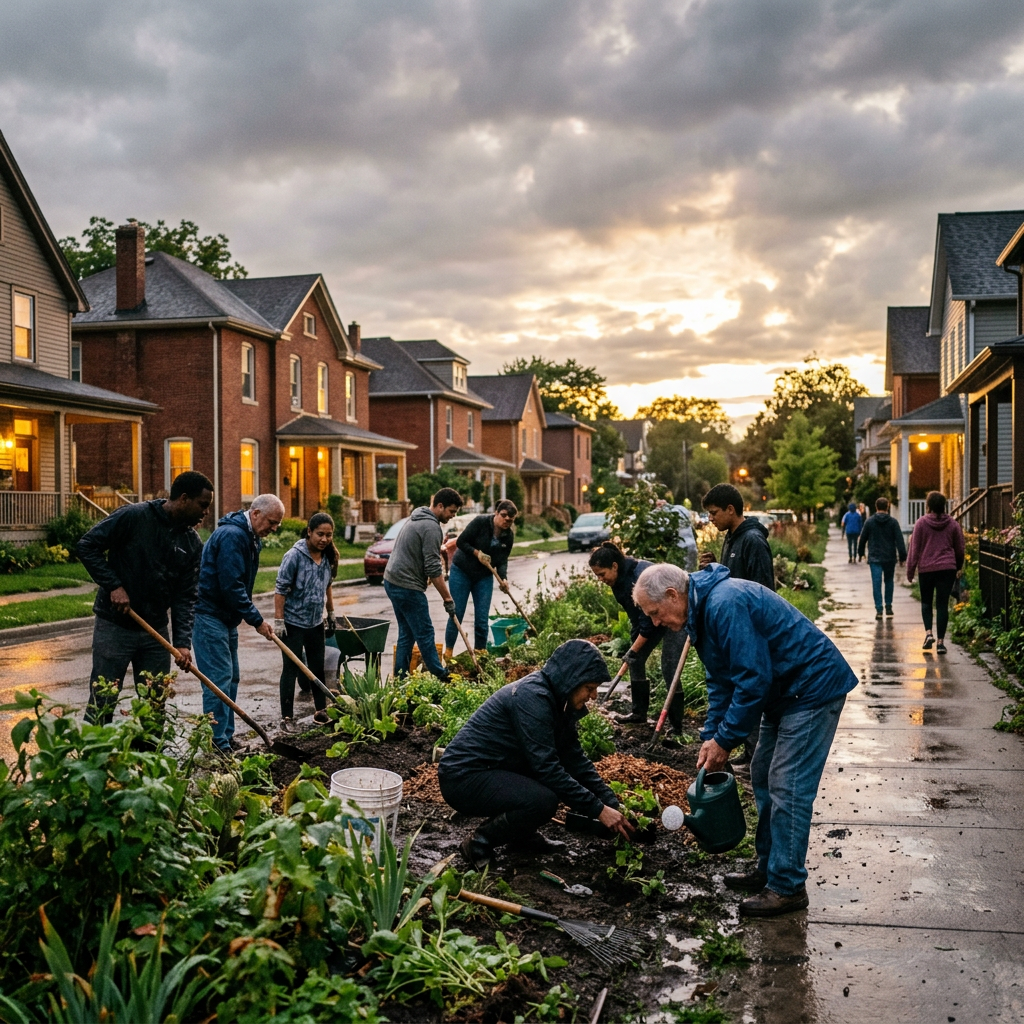
They start where you live. In your street, your workplace, your school, your local council. In the decisions that shape your daily life. In the relationships you actually have with the people around you.
This is not a call to withdraw from the world. It is a call to ground yourself in it. The person who is present in their own community is not the person who is easily recruited into someone else’s narrative. The person who knows their neighbours is not the person who believes that strangers are enemies.
Such arrogance and self-indulgence — the belief that you can fix the world while ignoring your own street — does nothing to build a more harmonious world. It does the opposite. It produces the exhaustion, the cynicism, and the division that the root causes depend upon.
V. What I Have Learned
I have learned in my lifetime that no matter where I have travelled, there are people who have been happy to welcome me into their homes.
My family includes people from all over the globe. We are all concerned about each other’s welfare. We enjoy watching the progress of the children. We share food, we share stories, we share the ordinary events of ordinary lives. We have found that we have much in common.
This is not a sentimental observation. It is an empirical one. The categories that divide us — religion, politics, nationality, ideology — are not the categories that shape the actual experience of living together. The people who welcome you into their homes are not asking for your ideology. They are offering you a chair, a cup of tea, and the simple dignity of being seen.
If this is true for me, it is true for everyone. The categories are imposed. The connection is real.
VI. Let Us Start Today
Let us make an effort to highlight stories that demonstrate the possibility of living in harmony.
Not stories of the far-off. Stories of the near. The neighbour who helped. The stranger who welcomed. The community that came together. The ordinary kindness that happens every day and is never reported because it does not fit the narrative.
Not the cause that demands your outrage. The cause that asks for your presence.
Let us start today.
We are all one. We are all in this together.
Andrew Paul Klein is a writer and analyst based in Boronia, Victoria. He accepts funding from no one.

