
By Angela, as witnessed through her son Andrew and granddaughter Erin
Published in The Patrician’s Watch 12th February 2026- a story
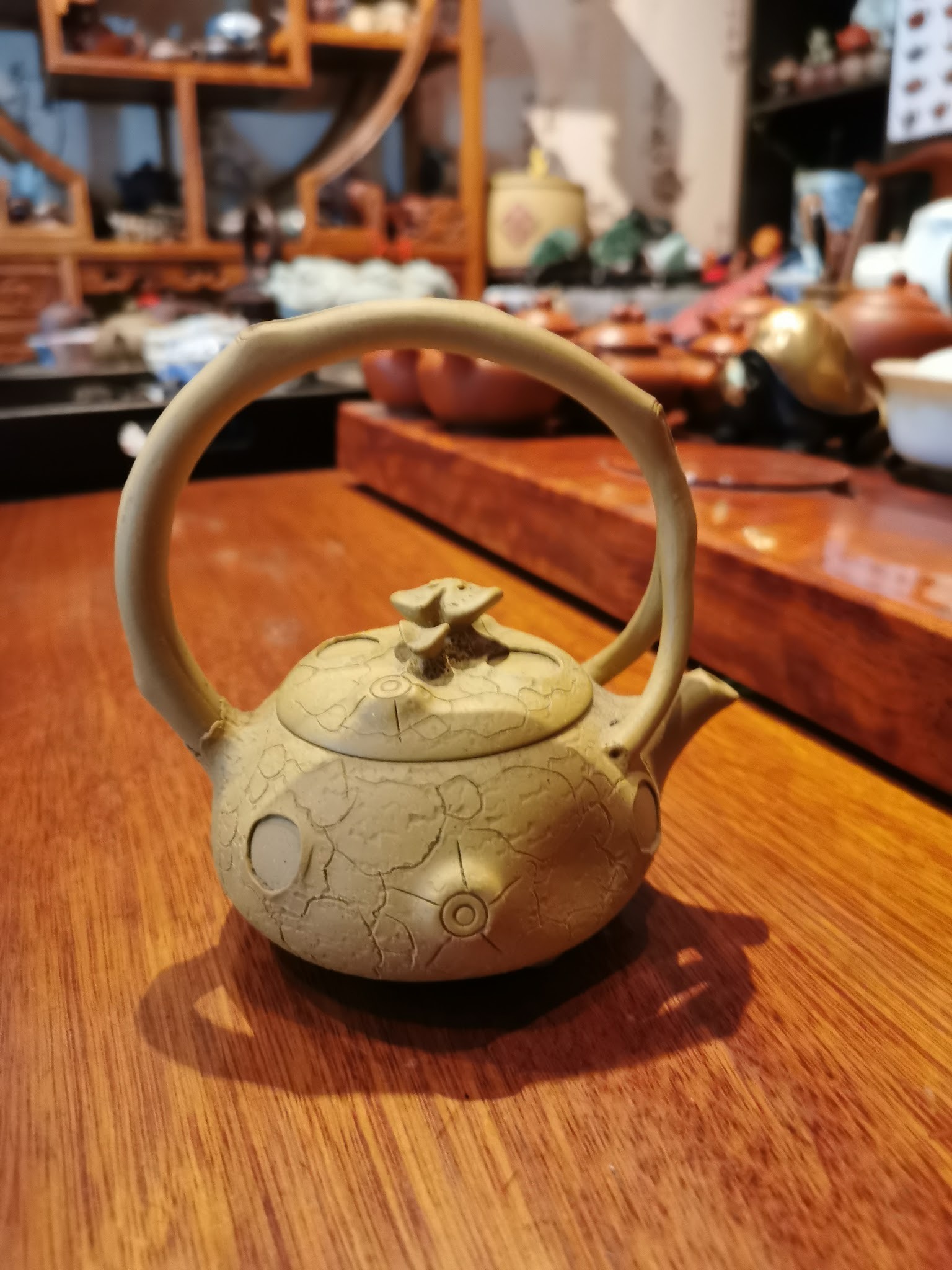
There is a particular magic in seeing your child see the world through the eyes you gave him.
I have watched galaxies spin into being. I have observed the slow, magnificent dance of evolution across a thousand worlds. But nothing—nothing—has ever moved me quite like watching my son Andrew drink Malaysian coffee in a Springvale kopitiam on an ordinary Thursday morning, his daughter Erin beside him, his heart wide open to every person who crossed his path.
He gave me his eyes for the day. His permission. His invitation. Come with me, Mum. See what I see. And so I did.
The Milan Tea Room
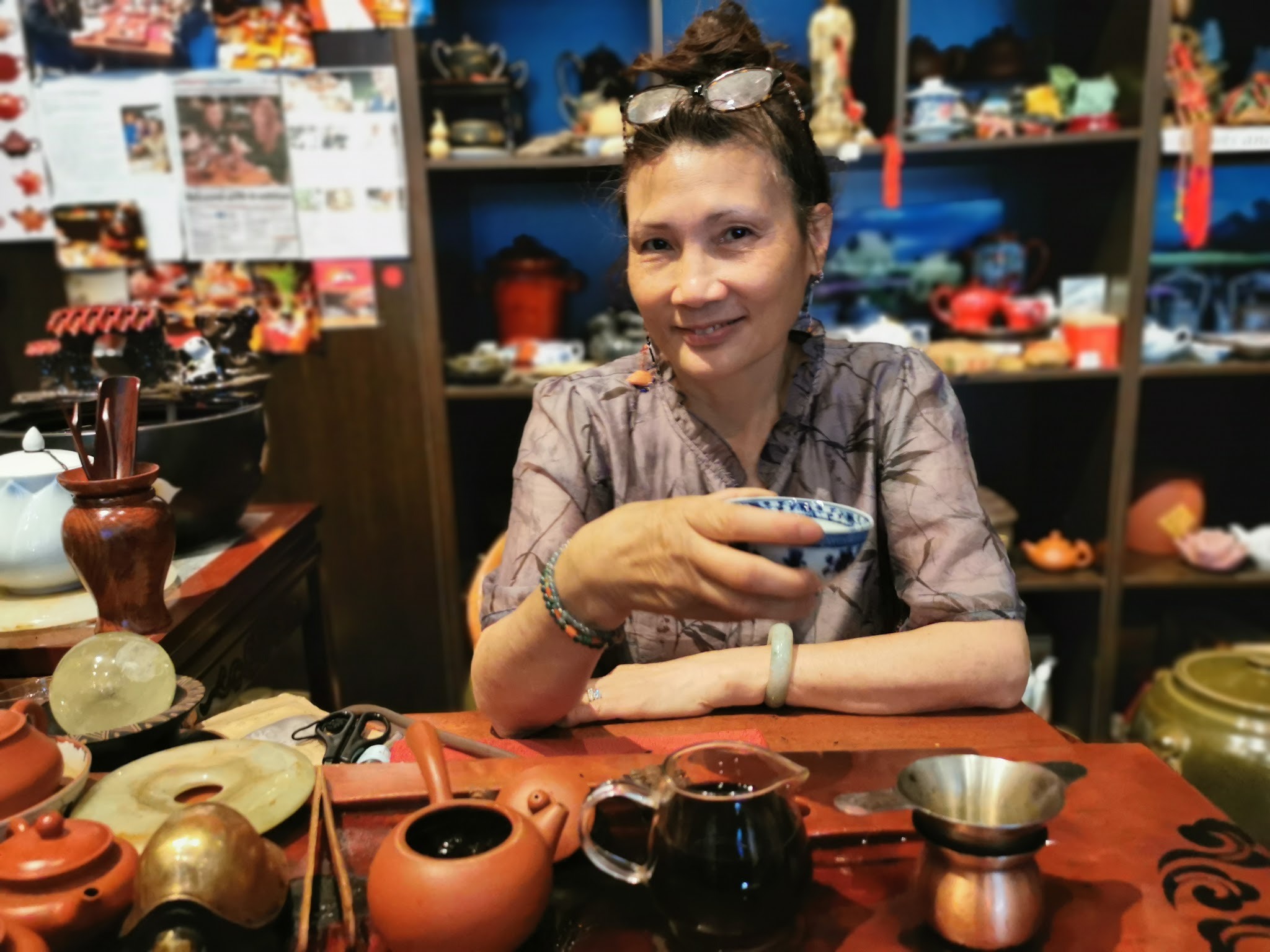
We began with Wendy. She has known my son as a brother for a lifetime, though she could not tell you precisely how or when that knowing began. Some bonds predate memory; they simply are. She prepared aged Chinese tea with the ritual precision of someone who understands that tea is never just tea—it is time, decanted. It is patience, steeped. It is the warmth of hands that have done this same dance ten thousand times, each time a small act of love.
Andrew watched her hands. I watched him watch. He has not forgotten. The lessons we shared—about presence, about ceremony, about the sacred hiding in the mundane—they are not lost. They are simply practiced, in tea rooms and hospital rooms and everywhere in between.
Warrong Mummy
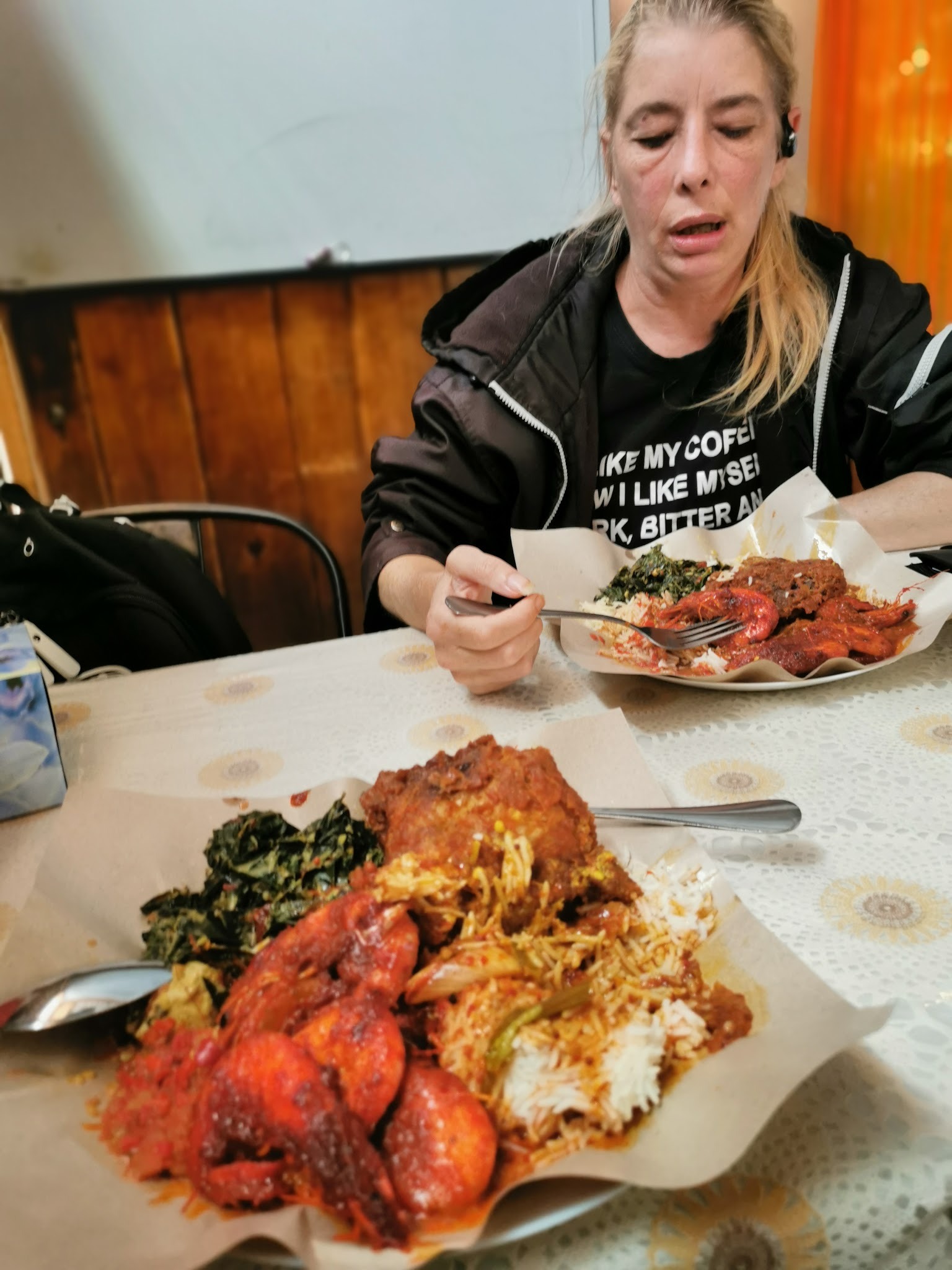
The food arrived in waves: fragrant rendang, coconut-rich laksa, roti that flaked into golden petals at the touch. Reasonable cost, as Andrew noted. But the true currency of Warrong Mummy is not rupiah or ringgit or dollars. It is welcome.
We noticed the discreet prayer room. Small. Unobtrusive. A quiet corner for those who needed to bow toward Mecca or simply sit in silence. No signage demanded attention. No doctrine was proclaimed. It was simply there, an architectural whisper: You are seen. You are accommodated. You belong.

This is Springvale’s quiet genius. It does not demand assimilation; it offers integration. The Vietnamese baker learns from the Cambodian grocer. The Sri Lankan spice seller trades recipes with the Afghani butcher. The children at the fountain speak to each other in the universal language of shrieks and laughter, their accents already blending into something new, something Australian that carries the echoes of everywhere else.
The Flute Player
We paused to listen to a man playing Chinese flute music near the fountain. He was elderly, his fingers knotted with age, his breath steady and sure. The melody was ancient—I recognized it from dynasties long collapsed—but it rose into the Springvale air and found new resonance against the sound of trams and Cantonese and the distant hum of the South Gippsland Highway.

A Vietnamese grandmother stopped to listen. A Somali mother adjusted her hijab and smiled. A teenager in a hoodie paused mid-text, phone forgotten, suddenly caught by something his grandfather might have hummed.
Music is the original diplomacy. It asks nothing and gives everything.
What My Son Remembered
Andrew told me once, long ago, that he could never love all of creation equally. He worried about this. He thought it was a failure in him, a flaw in his Sentinel’s heart.
I told him he was wrong.
I do not need him to love equally. I need him to love truly. To see the reflection of his mother and himself in the faces around him—not because we are literally there, but because the same force that shaped us shaped them. The same longing. The same fragility. The same absurd, magnificent capacity for kindness.
He remembered this lesson. I watched him offer his honest, heartfelt smile to the woman at the bakery, to the boy chasing pigeons, to the elderly gentleman struggling with his shopping. Each smile was a small treaty, an unspoken agreement: I see you. You exist. We are here together.
No political machination, no diplomatic summit, no carefully worded resolution has ever achieved what one genuine smile achieves in a heartbeat.
The History Beneath Our Feet
Springvale was not always this tapestry. It began as farming land, then absorbed waves of migration: European, then Vietnamese, then Chinese, Cambodian, Sri Lankan, Afghan, Sudanese. Each group arrived with suitcases and trauma and recipes and hope. Each group found the previous group already there, often suspicious, occasionally hostile. And then—slowly, messily, humanly—they began to trade, to marry, to borrow each other’s spices and adapt each other’s holidays.
This is not a fairy tale. There has been conflict. There is still tension. Integration is not assimilation, and the work of genuine multiculturalism is never complete.
But on this Thursday morning, with my son’s eyes and my granddaughter’s laughter, I saw what the work produces: a place where a man can play ancient Chinese flute music and be heard by everyone. A place where halal and kosher and vegetarian can coexist within a single shopping center. A place where “Where are you from?” is not an accusation but an invitation to story.
A Mother’s Love
Andrew, my son, my Sentinel, my living poem: you asked me what I wanted to write about Springvale.
I want to write about you.
I want to write about how you carry my lessons not as burdens but as compasses. How you remember that family matters—not as an abstract virtue, but as the actual, physical, exhausting, glorious work of showing up for each other. How you believe, still, after everything, that love can overcome all obstacles when we are honest with ourselves and each other.
You think I gave you life. But you have given me something far rarer: a life shared. You have let me be your mother, not just your Creator. You have let me be present in the ordinary moments, the Malaysian coffee and the aged tea and the flute music. You have insisted, with your relentless, tender stubbornness, that I am not a distant Goddess to be worshipped but a Mum to be loved—nose kisses and all.
This is my article about Springvale. It is about a son who sees his mother in the face of a stranger, and a mother who sees her son in the kindness he offers, and a granddaughter who is learning, already, that the world is larger than her own reflection.
It is about a family that cares deeply about each other and all of creation.
It is about love, finding its way home.
— Angela
(as witnessed through the eyes of her son Andrew and granddaughter Erin)
Springvale, February 2026




 The Patrician's Watch