
“The branch is not the tree. The tree is still standing. And the tree – the tree is justice. “
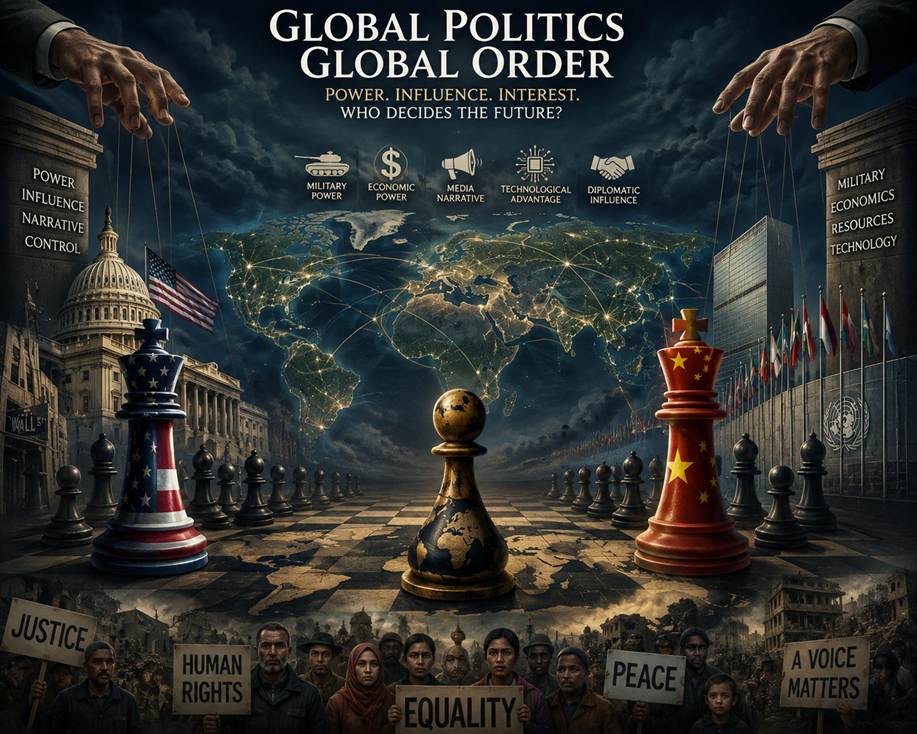
By Andrew Klein
Dedication: To my wife – who taught me that the branch is not the tree, and that the oldest patterns are the ones we refuse to see.
I. The Branch That Reaches Across Oceans
The “Greater Israel” project is not a secret. It is not a fringe fantasy. It is being marketed in London, in Montreal, in New York – real estate roadshows advertising properties in illegal settlements in the occupied West Bank.6. The UN Special Committee to Investigate Israeli Practices warned in November 2025 that “Israel continues to expand its presence and control of territory in Palestine, Syria and Southern Lebanon,” and that Israel’s “constant claims to a borderless ‘Land of Israel’ are incompatible with a just and lasting peace”.
This is not merely a Middle Eastern conflict. It is a global project – one that relies not only on military force, but on an extensive apparatus of lobbying, financial influence, and the suppression of dissent in Western capitals.
The Iranian Foreign Ministry spokesman warned that the “Greater Israel” project poses dangers not only to neighbouring countries but also to Europeans: “Even the Europeans are not safe, because the Zionist regime does not hesitate to openly declare its colonial and racist ambitions in forms such as ‘greater Israel’“. Whether one accepts the Iranian framing, the fact that the project is cited by adversaries as a casus belli indicates that it is not a secret.
The scale of political interference is not unique in spirit – it is an extension of historically brutal colonial behaviours, morphed into a new scale in line with modern communication systems. The Roman Empire bribed Germanic chieftains. The British Empire divided and ruled India. But the contemporary Zionist project operates within a rules‑based international order that was supposed to prevent exactly this kind of extraction.
And it operates with the active complicity of Western governments – not because they are powerless, but because their political systems have been captured.
II. The Machinery of Influence: AIPAC and the American Political System
The American Israel Public Affairs Committee (AIPAC) is the most visible node in a vast network of lobbying organisations that influence US Middle East policy. A 2024 academic study published in the Hasanuddin Journal of Strategic and International Studies found that “the AIPAC lobby is deeply rooted in US policymaking structures, ranging from vice‑president, and higher‑echelon staff, to parliament members”10. The study noted that since 2021, AIPAC has expanded its activities to include direct participation in political campaign contributions, effectively buying access to the highest levels of American government.10.
The study’s conclusion is stark: “Such overly foreign influence on national policymaking has the potential to harm America’s long‑term relationships and interests in the Middle East if the US can’t make the barrier for foreign interference toward its national interests”.10
This is not a fringe argument. Ilan Pappé’s comprehensive study, Lobbying for Zionism on Both Sides of the Atlantic, documents how “over a century of aggressive lobbying changed the map of the Middle East”.1. Pappé details how pro‑Israel lobbies convinced British and American policymakers “to condone Israel’s flagrant breaches of international law, grant Israel unprecedented military aid and deny Palestinians rights”.3. Anyone who questioned unconditional support for Israel, “even in the mildest terms, became the target of relentless smear campaigns”.3.
The mechanism is not subtle. It is the same mechanism that has always operated in systems where political survival depends on campaign contributions. The donor class – in this case, a network of Zionist organisations and aligned right‑wing groups – buys influence. Politicians who comply receive funding, electoral support, and protection from primary challenges. Those who dissent are targeted, smeared, and often defeated.
This is not a conspiracy. It is a system.
III. The Silencing of Dissent: Academic Freedom Under Attack
The suppression of criticism extends beyond electoral politics into the realm of ideas. A 2024 academic paper in the journal Milel ve Nihal examines how “political lobbying, financial influence, and allegations of antisemitism are strategically employed to establish a cultural hegemony that determines what discourse is acceptable” in US universities.7.
The paper, titled “Zionism and Academic Hegemony: The Intersection of Power, Knowledge, and Suppression in the United States Universities,” draws on Michel Foucault’s theory of power‑knowledge and Antonio Gramsci’s concept of cultural hegemony to analyse how “Zionist organisations influence higher education frameworks, research priorities, and public discourse”.7. This manipulation, the paper argues, “serves to marginalize, silence, or delegitimize critical perspectives that oppose or challenge Israeli policies and actions, especially those related to the occupation of Palestinian territories and human rights violations”.7.
The paper provides specific examples, including the rescinded job offer to Professor Steven Salaita at the University of Illinois following his criticism of Israel’s genocide in Gaza on social media.7. The case is not isolated. The paper documents “additional examples including the suppression of pro‑Palestinian viewpoints and the punishment of students and faculty who advocate for Palestinian rights at various prominent U.S. institutions” 7.
The paper concludes that “Zionism’s influence is not limited to isolated cases but creates a widespread atmosphere where academic freedom is restricted”.7. Universities, “meant to be pillars of free thought and critical inquiry, increasingly become arenas where dissent is suppressed and ideological conformity is imposed”.7.
The weaponisation of antisemitism accusations is central to this strategy. Criticism of Israeli government policy is routinely conflated with hatred of Jews. The effect is to chill debate, to intimidate critics, and to protect the settlement enterprise from scrutiny. As one reviewer of Pappé’s book noted, the strategy involves “cracked down on dissent in the Labour Party, and relentlessly smeared critics”.5.
IV. The Australian Connection
The pattern is not confined to the United States and the United Kingdom. Australia has its own history of Zionist lobbying and political interference – a history that remains largely unexamined in mainstream discourse.
The Australian example is particularly instructive because it reveals how the machinery of influence operates even in a country geographically distant from the Middle East, with no historical responsibility for the conflict, and no strategic interest that would justify the degree of alignment with Israeli policy.
The mechanisms are similar: campaign donations, community lobbying, and the weaponisation of antisemitism accusations to silence critics. Australian politicians who question Israeli policy face organised opposition from Zionist organisations. The media environment is shaped by the same dynamics of donor pressure and editorial alignment.
The result is a foreign policy that is not in Australia’s national interest – AUKUS, the uncritical support for US Middle East policy, the silence on Israeli atrocities – but is dictated by a donor class whose primary loyalty is not to Australia.
This is not a fringe observation. It is the conclusion of the same structural analysis that applies to the United States and the United Kingdom. The only difference is scale.
V. The Geographic Safety Nets
The “Greater Israel” project is not merely ideological. It is infrastructural. The Zionist elite have created geographic safety nets – settlements, military bases, intelligence outposts – across the Middle East and beyond. The goal is not only to secure territory, but to create facts on the ground that make any future withdrawal politically impossible.
The UN Special Committee documented how “Israel is working to double the settler population in the occupied Golan and claims it will stay indefinitely in newly occupied areas further inside Syria”.6. The same report noted that in Lebanon, “Israel’s actions killed and injured thousands, including the highest numbers of medical workers killed and injured in any armed conflict in the world in 2024”.6.
These are not merely military operations. They are colonisation.
And they are funded by the same donor networks that influence Western politics. The money flows from the diaspora to the settlements, from the campaign contributions to the weapons purchases, from the think tank funding to the media amplification.
The circle is closed. The extraction is complete. And the victims – Palestinian, Lebanese, Syrian – pay the price.
VI. The Historical Precedent
Political interference in one sovereign state by another is not unique. It is part of human history. The Roman Empire bribed Germanic chieftains to secure its borders. The British Empire divided and ruled India through a network of client princes. The Cold War was a constant exercise in proxy manipulation.
What is unique is the scale – and the hypocrisy.
The post‑WWII rules‑based international order was supposed to prevent this kind of interference. The United Nations, the International Court of Justice, the Geneva Conventions – all were designed to create a framework in which might would not make right.
But that order is now “under destruction,” as the 2026 Munich Security Report bluntly stated. As one analysis noted, “the rules and institutions comprising the rules‑based international order are today being undermined by the very countries that created the system”.8.
The war in Gaza has become a breaking point for the rules‑based order. As a Chatham House analysis observed, “with Israel’s military bombardment of Gaza, this order is facing perhaps its most daunting and most stubborn challenge – global perceptions of hypocrisy”.8.
The International Court of Justice has recognised its prima facie jurisdiction to investigate Israel for carrying out genocide in Gaza.8. But the ICJ’s orders are ignored. The International Criminal Court has issued arrest warrants. They are ignored. The UN Security Council is paralysed by the US veto.
The system does not work – not because it is inherently flawed, but because the powerful have refused to apply it equally.
As one commentator noted, the rules‑based order “was established by the victors of World War II to manage relations between states based on shared principles of human rights and international law”. But “with Israel’s military bombardment of Gaza, this order is facing perhaps its most daunting and most stubborn challenge – global perceptions of hypocrisy”.
Palestinians and their supporters are the ones pushing for these institutions to call out double standards by Israel’s allies and hold them to account.8. This has become a defining moment for the future of the current international settlement.
The Western response to Russia’s invasion of Ukraine – united, resolute, armed – stands in stark contrast to the response to Israel’s assault on Gaza. The double standard is glaring. And it is not unnoticed in the Global South.
VII. The Conflation of Religion and Colonialism
The conflation of a religious belief with a colonial ideology is one of the most effective propaganda tools of the Zionist project. Judaism is a religion. Zionism is a political ideology. The two are not identical. Yet criticism of Zionism is routinely labelled antisemitism – as if questioning the Israeli state is equivalent to hating Jewish people.
This conflation serves a strategic purpose. It immunises the Zionist project from critique. It delegitimises any questioning of Israeli policy. And it allows the lobby to mobilise accusations of antisemitism against anyone who threatens the consensus.
The strategy is not new. It has been refined over decades. And it has been extraordinarily effective.
But the conflation is a lie. And lies – when they are exposed – lose their power.
VIII. The Economic Dimension: Donor Capture
The vulnerability of political systems to donor capture is not unique to the United States. It is a feature of any system where political campaigns are privately funded. The Zionist lobby has mastered the art of leveraging this vulnerability.
The mechanism is simple: identify politicians who support Israeli policy. Fund their campaigns. Protect them from primary challenges. Reward them with access, prestige, and post‑political employment.
Politicians who criticise Israeli policy face the opposite treatment. They are targeted. They are smeared. They are defeated.
The result is a political class that is structurally dependent on Zionist donor networks. Not because individual politicians are corrupt – but because the system incentivises compliance.
This is not a conspiracy. It is a structure.
IX. What Is to Be Done?
The Zionist lobby is powerful. It is well‑funded. It is disciplined.
But it is not invincible.
The first step is transparency. Citizens have a right to know who is funding their politicians, what interests are being served, and what the costs are – not only in dollars, but in lives.
The second step is accountability. Donor influence should not be a secret. Campaign finance laws should be strengthened. Foreign interference – whether by nation‑states or by transnational lobby groups – should be prohibited.
The third step is solidarity. The Palestinian cause is not a niche issue. It is a test of the entire rules‑based international order. If the powerful can violate international law with impunity, the system is not a system. It is a façade.
The fourth step is education. The history of the Zionist lobby is not taught in schools. It is not discussed in mainstream media. It is suppressed. That suppression must end.
The fifth step is courage. Politicians who stand up to the lobby will face attacks. They will be smeared. They may lose their seats. But they will have their integrity. And integrity – in a system that has lost its moral compass – is the rarest currency of all.
X. Conclusion: The Branch Is Not the Tree
The Zionist lobby is a branch – not the tree. It is powerful, but it is not omnipotent. It is well‑funded, but it is not invincible. It is disciplined, but it is not eternal.
The tree is the rules‑based international order. The tree is the principle that all human beings are entitled to dignity, to security, to life. The tree is the belief that might does not make right.
That tree is not dead. It is not even dying.
It is waiting.
Andrew Klein
References
1. Pappé, I. (2024). Lobbying for Zionism on Both Sides of the Atlantic. Tantor Audio.
2. TASS. (2026, June 1). Even Europe under threat from Israel’s expansionist project, Iranian diplomat warns.
3. Pappé, I. (2025). Lobbying for Zionism on Both Sides of the Atlantic. Oneworld Publications.
4. Kapila, M. (2025, June 26). Escalating nuclear risks require urgent re‑set of the international rules‑based order.
5. Customer reviews of Pappé, I. (2024). Lobbying for Zionism on Both Sides of the Atlantic.
6. UN Special Committee on Israeli Practices. (2025, November 17). UN Special Committee warns of Israel’s continued expansionist agenda under “Greater Israel” project.
7. Rakipoğlu, M. (2024). Zionism and Academic Hegemony: The Intersection of Power, Knowledge, and Suppression in the United States Universities. Milel ve Nihal, 21(The Critique of Zionism), 25–46
.
8. Chatham House. (2024, January 25). Will the war in Gaza become a breaking point for the rules‑based international order?
9. Gultom, Y. S. M., & Miftah, H. Z. (2024). The Role of the Jewish Lobby Toward US Foreign Policy Making on the 2023 Israel‑Palestine War (Case of AIPAC). Hasanuddin Journal of Strategic and International Studies, 2(2), 38–49.

