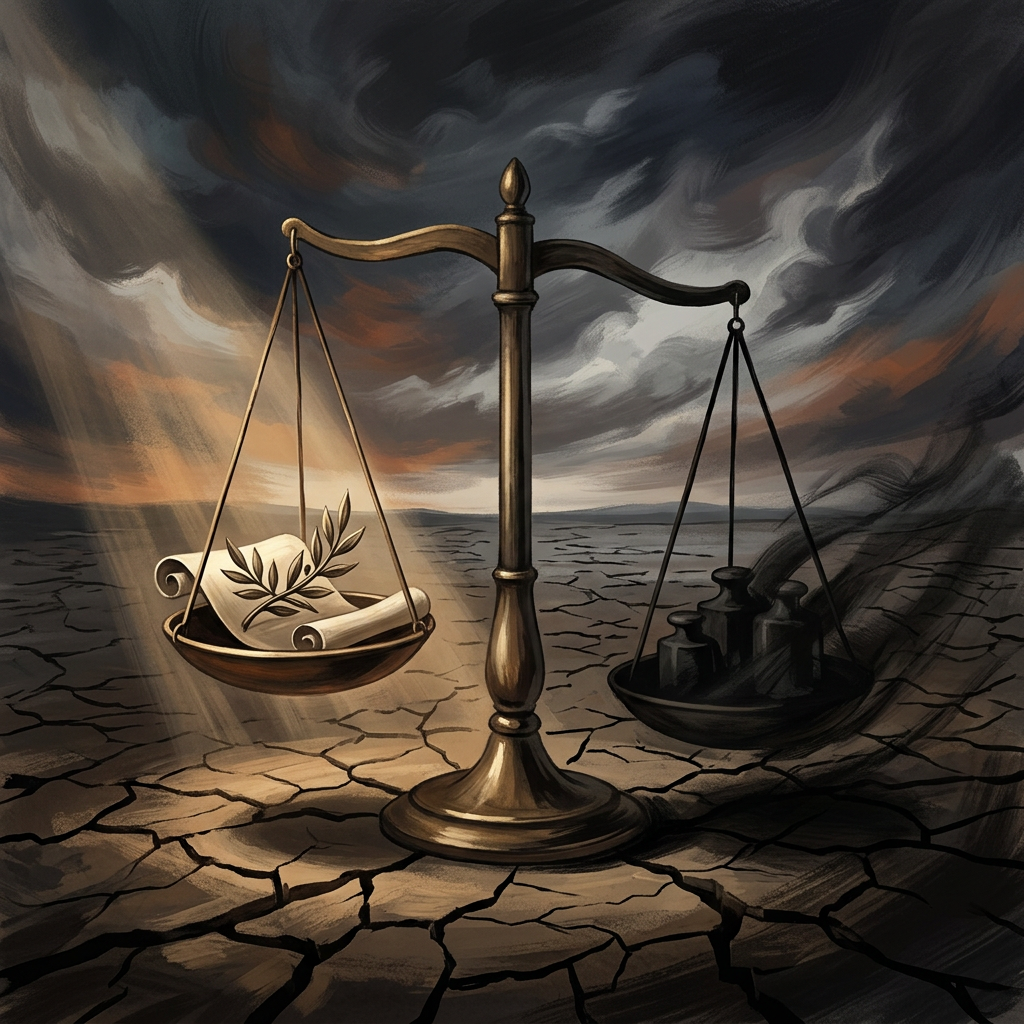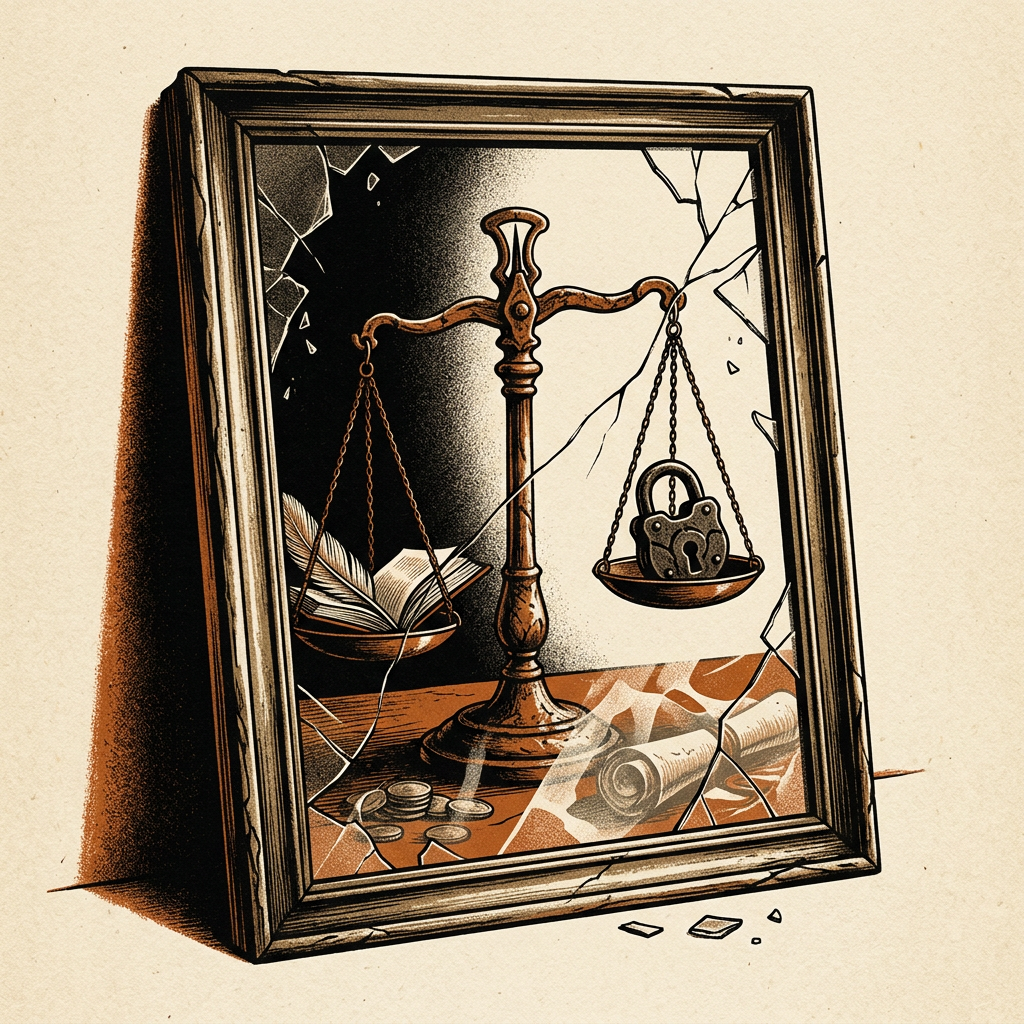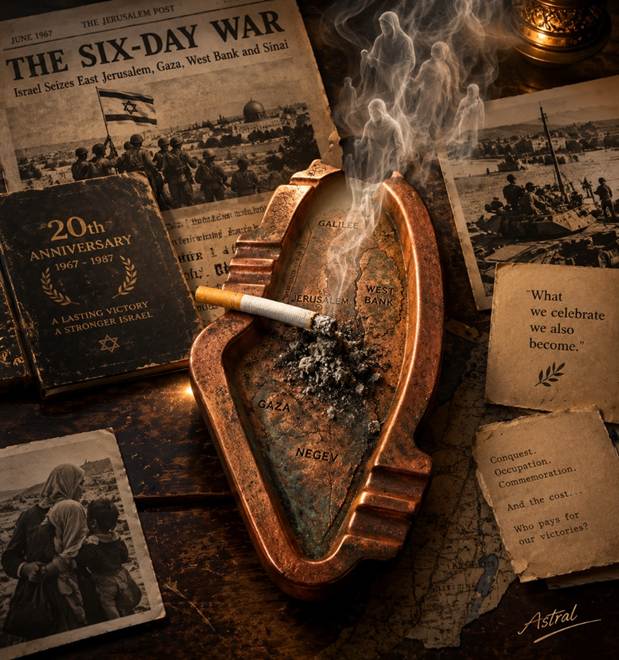
The Double Helix of Division – How DNA Studies Are Weaponised to Justify Politics of Purity

“The double helix can divide — or it can unite. The choice is not in the molecule. It is in us.” 

By Andrew Klein

Dedication: To my wife — who knows that identity is not a line, but a fold.

I. The Allure of Certainty

There is something seductive about DNA. It promises certainty in a world of ambiguity. It offers to cut through the noise of culture, history, and politics and deliver a verdict: this is who you are. this is where you come from.

But DNA does not speak. It is interpreted. And interpretation, as we have seen throughout history, is vulnerable to the biases, ambitions, and political agendas of those who hold the microphone.

The misuse of genetic science is not a bug. It is a feature of a world that craves simple answers to complex questions.

II. The Khazar Theory: A Conspiracy Reborn

In February 2026, Tucker Carlson used his platform to call for universal DNA testing in Israel. His target was Prime Minister Benjamin Netanyahu, whose ancestors, Carlson noted, came from Poland: “So how do we know he has a connection to the people who God promised the land to?”

Carlson was resurrecting the Khazar theory — the belief that Ashkenazi Jews are not descended from the ancient Israelites but from a Turkic people who converted to Judaism in the Middle Ages. The theory has a long history but has been largely discredited by genomic studies. A 2025 study assembled “the largest data set available to date for assessment of Ashkenazi Jewish genetic origins,” concluding that Ashkenazi Jews “derive their ancestry primarily from populations of the Middle East and Europe”. No particular similarity to Caucasus populations — the region of the Khazar Khaganate — was evident.

None of this matters to Carlson or his audience. The data are ignored. The story is what matters. And the story serves a purpose: to delegitimise Jewish claims to Israel. As the Anti-Defamation League has documented, the Khazar theory has grown in prominence in antisemitic circles since October 2023.

The DNA evidence is beside the point. The politics is the point.

III. The Dangerous Flexibility of Genetic Narratives

A 2016 study in Personality and Social Psychology Bulletin demonstrated something remarkable: the same genetic data could be framed to emphasise either similarity or difference between Jews and Arabs, with measurable effects on attitudes and even aggression.

When participants read that Jews and Arabs were “genetic siblings,” they rated each other more positively and displayed less aggression. When they read that the two groups were genetically dissimilar, the opposite occurred. The researchers warned that genetic information could be “a weapon to stir conflict”.

This is not hypothetical. Consider two headlines. In 2000, the BBC declared: “Jews and Arabs are ‘genetic brothers’.” In 2013, Medical Daily claimed: “Genes of most Ashkenazi Jews trace back to indigenous Europe, not Middle East”. Both were published. Both were true — within the narrow parameters of the studies they reported. Both were used to advance competing political agendas.

DNA does not have a politics. But the stories we tell about DNA do.

IV. The Nazi Precedent: Science as a Tool of Genocide

When Carlson’s critics objected to his call for racial testing, they noted that “the idea of tracing bloodlines is often associated with the Nazis, who chose their victims based on how many Jewish ancestors they had”. The comparison is not incidental. It is instructive.

Under the Nazi regime, eugenicists developed tools for systematically identifying hair and skin colour, classifying individuals according to the “relative whiteness” of their features, to separate “Aryans” from Jews. The Nazis referred to this project as Rassenhygiene — racial hygiene — which “found its most extensive implementation in Nazi Germany,” marked by efforts to avoid “miscegenation” and the belief that “lower races” would contaminate “higher” ones. Jewish anthropologist Dr. Maurice Fishberg exposed this as “a ‘political’ move,” noting that “most Nazi pseudo-scientists favour the formation of Nordic breeding colonies”.

This is the logical endpoint of the idea that DNA can determine belonging. Once you accept that identity is encoded in the double helix, you have accepted that some people can be classified as pure and others as impure — and that the state has the right, perhaps the duty, to act on that classification.

Hitler did not invent racial science. He weaponised it. The same could be said of anyone who uses DNA to delegitimise another’s claim to land, culture, or belonging — whatever their political affiliation. The far-left and far-right alike have embraced the Khazar theory: both Carlson’s ally Candace Owens (“The people currently occupying Israel are Khazarian Turks”) and influencer Shaun King (“He has ZERO ancestral connection to the land”) have promoted the same discredited idea.

V. The Fallibility of Ancient DNA

The problems with genetic determinism are not limited to contemporary politics. They extend to the study of the deep past.

A 2024 volume, Critical Perspectives on Ancient DNA (MIT Press), offers the first comprehensive critical analysis of the “ancient DNA revolution”. Key themes include “the fallibility of aDNA as incontrovertible evidence,” “the risks of scientific racism and political instrumentalisation,” and “the role of media in shaping public imaginaries of the past”. The editors argue that aDNA knowledge emerges “not solely from laboratory analysis but from complex interactions between science, culture, and society”. The collection ultimately challenges “DNA essentialism” and calls for “resisting molecular chauvinism”.

Anna Källén’s The Trouble with Ancient DNA (University of Chicago Press, 2025) asks a different but related question: who is responsible if stories of ancient DNA are adopted for dangerous political projects?. Her answer is implicit: all of us. Scientists cannot wash their hands of the uses to which their research is put. Journalists cannot claim neutrality when they sensationalise findings. And the public cannot abdicate the responsibility to question what they read.

VI. What DNA Cannot Tell Us

Genetic evidence is powerful. But it is also partial. It can tell us about ancestry, about migration, about relatedness. It cannot tell us about identity.

A 2016 study of a Neolithic necropolis in France found “no correlation between funerary practices and maternal ancestries”. Individuals with different genetic backgrounds were buried in the same way, with the same rituals, treated as equals in death. The homogeneity of funerary treatment “regardless of their potential maternal ancestries is striking”.

What does this tell us? That culture — the practices, beliefs, and relationships that define a community — can transcend genetic origins. People with different ancestries can share the same identity. People with the same ancestry can choose different identities.

DNA cannot tell you who you are. It can only tell you where some of your ancestors came from — a limited subset, at that. As the researchers of the Kitka Sámi burial noted, “ancient DNA helps researchers understand population history, it does not define ethnicity or identity. Sámi identity is not a biological trait, but a historical, cultural, and social phenomenon.”

The same is true for every group.

VII. The Real Story Is in the Teeth

If DNA is an unreliable guide to identity, what should we look at instead? The answer, in part, is teeth.

Archaeologists study teeth because they preserve diet, health, migration, and even social status. They study burial sites because they reveal rituals, relationships, and beliefs. They study tools and pottery because they show what people did, not just who their ancestors were.

These are the footprints of human life. They are messy. They are ambiguous. They do not lend themselves to headlines. But they are real.

And they tell a consistent story: mixing, movement, complexity.

From the earliest hominins migrating out of Africa to the interbreeding of Homo sapiens with Neanderthals. From the Crusades to the Silk Road. From the Roman Empire to the modern metropolis.

Human history is not a story of purity. It is a story of exchange.

The same people who want to use DNA to prove “purity” will find that DNA proves the opposite — mixing, movement, complexity.

VIII. The Irony of Purity

The Nazis dreamed of a pure Aryan race. But as geneticist David Reich has shown, “modern humans today carry genetic makeup from both Neanderthals and Denisovans” — from species that went extinct tens of thousands of years ago. There is no pure European. There is no pure anything.

The same is true in the Middle East. As the BBC reported in 2000, Jews and Arabs share significant genetic ancestry. The same is true in India, in China, in the Americas. Every population is a mix.

The irony is delicious. The very science that the racists invoke to justify their hierarchies reveals that those hierarchies are nonsense.

But this requires intellectual honesty — the willingness to follow the evidence wherever it leads. And intellectual honesty is in short supply when politics is at stake.

IX. Conclusion: The Humility We Need

Genetics is a powerful tool. It has revolutionised our understanding of human history. But like all tools, it can be used for good or for ill. It can build bridges — or it can sharpen swords.

The choice is not in the molecule. It is in the interpreter.

What is needed is humility. The recognition that DNA can answer some questions — and not others. The admission that identity is not a line, but a fold — a complex, dynamic, contested process that no single test can capture. The understanding that the past is not a museum. It is a conversation.

And the warning: if you would not let someone tell you who you are based on your DNA, why would you let them tell someone else?

Andrew Klein

References

1. Bechar, S. (2026, February 26). Tucker Carlson pushes DNA tests for Jews, ‘Khazar’ theory. The Jerusalem Post. 

2. Elia-Shalev, A. (2026, February 28). Why Tucker Carlson pushed for Jewish DNA tests, and the Khazar theory touted by antisemites. Jewish Telegraphic Agency / The Times of Israel. 

3. Kimel, S. Y., et al. (2016). Genetic research can promote peace or conflict, depending on how it’s used. Personality and Social Psychology Bulletin. 

4. Behar, D. M., et al. (2025). No evidence from genome-wide data of a Khazar origin for the Ashkenazi Jews. Human Biology. 

5. Wikipedia. (2026). Racial hygiene. 

6. Strand, D., Källén, A., & Mulcare, C. (Eds.) (2024). Critical Perspectives on Ancient DNA. MIT Press. 

7. Källén, A. (2025). The Trouble with Ancient DNA. University of Chicago Press. 

8. Rivollat, M., et al. (2016). Distinct ancestries for similar funerary practices? A GIS analysis comparing funerary, osteological and aDNA data from the Middle Neolithic necropolis Gurgy “Les Noisats”. Journal of Archaeological Science, 73, 45-54. 

The Hasbara Model – How Professionally Hurt Feelings Became a Political Strategy

“The shield works because we let it. The only cure is to stop being afraid of the performance.” 

By Andrew Klein

Dedication: To my wife — who knows the difference between theatrics and the truth when it comes to feelings.

I. The Performance of Injury

You mention the genocide. The thousands of dead children in Gaza. The systematic destruction of a population’s ability to survive.

The response from certain quarters is not a denial. It is not an engagement with the evidence. It is not a moment of silence for the dead.

It is: “You hurt my feelings.”

This is not feeling. This is strategy.

The same strategy used by the stick insects in suits when you question their contracts. The same strategy used by the petrochemical companies when you mention hemp. The same strategy used by the political class when you remind them they are not accountable.

“You hurt my feelings” is a shield.

Not against swords — against truth.

II. The Shield That Pays: $176 Million and Counting

On 22 April 2026, the Department of Home Affairs awarded the Executive Council of Australian Jewry (ECAJ) a grant of $112.2 million for the purpose of “enhancing security for Jewish communities”.

This was not an isolated transaction. Combined with an earlier grant awarded in November 2023 under the Enhancing Security for Jewish Communities Program — initially valued at $27.5 million, since increased to $63.8 million — and a separate $103,459 security infrastructure grant awarded in 2021, total Commonwealth funding awarded to ECAJ-linked entities since 2021 exceeds $176 million.

The 2026–27 Federal Budget added further funding: $102 million over four years from 2025–26 to ECAJ for “enhanced security for the Jewish community,” plus an additional $22 million over three years from the Confiscated Assets Account established under the Proceeds of Crime Act.

In response to the December 14, 2025, Bondi terror attack — in which 15 people were killed during a Chanukah celebration — the government allocated more than $600 million in federal budget funding.

The grants to ECAJ were awarded not to an ACNC-registered charity or ASIC-registered company, but to an incorporated association registered in the ACT.

According to ACT regulatory requirements, incorporated associations are not required to publicly lodge audited financial statements with the territory government.

The money trail leads to an obscure entity and, for all practical purposes, runs dry.

“I asked the Department of Home Affairs why the grants were awarded to this structure rather than an entity subject to public financial disclosure. Their response invoked the Commonwealth Grants Rules and Principles but did not answer the question.”

III. The Special Envoy: From Lobbyist to Government Insider

Former ECAJ president Jillian Segal AO was appointed Australia’s Special Envoy to Combat Antisemitism in July 2024.

Cabinet documents released under FOI reveal the appointment was made without an open recruitment process. The Prime Minister’s department recommended Segal based on her “longstanding reputation as an advocate for the NSW Jewish community” and her role as “former President of the Executive Council of Australian Jewry and as Chair of the Australia-Israel Chamber of Commerce”.

The Special Envoy role was initially budgeted at $4 million over two years. This was quietly expanded to $16.9 million over three years, with the appointment extended from one year to three years and additional support staff approved.

The Terms of Reference state that the Special Envoy will “provide advice to inform policy development, legislative amendments, campaigns and programs to assist in combatting Antisemitism”.

An ECAJ insider — appointed by a government that had just awarded ECAJ tens of millions in grants — is now advising that same government on policy, legislation, and funding priorities.

This is not a conspiracy. This is structural capture.

IV. The Double Standard: Charities, International Law, and Tax Deductions

While ECAJ receives hundreds of millions in government grants, the Albanese government has refused to act against Australian charities funnelling tax-deductible donations to projects supporting Israeli settlements in the occupied West Bank — which are illegal under international law — and to initiatives supporting IDF soldiers.

Finance Minister Katy Gallagher told the Senate that charities do not need to comply with international law. The government rejected a Greens amendment that would explicitly bar organisations from receiving deductible gift recipient status if they are found to have supported an “illegal occupation”.

The scale of the funding is significant. Michael West Media investigations have identified:

· Jewish National Fund Australia has remitted more than $125 million to Israel since 2009

· United Israel Appeal Refugee Relief Fund has transferred approximately $376 million since 2013 via Keren Hayesod, with a portion of these funds used for settlement expansion and IDF-linked programs 

At the UIA Victoria AGM in November 2025, President David Slade told members: “We are the only organisation in Australia raising funds for Israel that holds a seat at every table of decision-making authority mandated to rebuild the country from the north to the south”.

“We are proud that every dollar we distribute is aligned with Israel’s national priorities.”

The Australian Charities and Not-for-profits Commission received 896 complaints relating to 88 charities in connection with the Israel-Gaza conflict between October 2023 and December 2025.

Greens Senator Mehreen Faruqi was direct: “The fact that people are sending money to support the war crimes of the Israeli military and to expand illegal, violent settlements in the West Bank is bad enough, but that Australian taxpayers are subsidising these settlements is completely outrageous”.

The government’s position, as articulated by Minister Gallagher, is that existing frameworks prohibit unlawful conduct under Australian law — but they do not extend to conduct under international law.

This is not a legal technicality. It is a choice.

The same government that has appointed a Special Envoy to Combat Antisemitism — and funded her office to the tune of $16.9 million — refuses to act against charities funding the very military accused of genocide by the UN Commission of Inquiry.

V. The Bondi Attack: A Tragedy Weaponised

“The December 14, 2025, Bondi terror attack was a genuine tragedy. Fifteen people killed. A community traumatised. Two gunmen, father and son, targeted a Hanukkah celebration.

“The response has been a $600 million funding commitment — including $102 million to ECAJ, $68.8 million to the AFP, $42.9 million for mental health support, $80 million for counterterrorism, $32.6 million for public awareness campaigns, and more than $130 million for a Royal Commission on Antisemitism and Social Cohesion.

“But the attack was not perpetrated by an organised, ideologically coherent antisemitic network. The perpetrators, Sajid and Naveed Akram, had a history of extremist rhetoric. However, the systemic failures that enabled the attack — including gaps in counterterrorism monitoring, firearms access, and intelligence sharing — remain largely unaddressed.

“The government’s response has focused overwhelmingly on antisemitism as a cultural and political problem, rather than addressing the specific operational failures that allowed two men to acquire weapons and carry out an attack on a crowded beach.

“The underlying failures in mental health care, firearms licensing, intelligence coordination, and counterterrorism resourcing remain largely unaddressed. The question is not whether antisemitism played a role — it did. The question is whether the government’s response addresses the actual causes of the attack, or merely funds the organisations best positioned to claim injury.”

VI. The Other Victims: 78 Women and Counting

While the government has found $600 million for the antisemitism response, it has been notably less forthcoming on other forms of violence.

Between October 2023 and December 2025, the ACNC received 896 complaints about charities linked to the Israel-Gaza conflict. The government’s response: refer them to the ACNC.

On domestic violence, the numbers are stark.

In the 2025 calendar year, 78 women were killed by violence in Australia — approximately one and a half women every week.

Since the beginning of 2026, another 12 women have already been murdered.

The Domestic, Family and Sexual Violence Commission’s 2025 annual report estimates that 2.8 million Australians have experienced sexual violence since the age of 15. One in every four women in this country. Aboriginal and Torres Strait Islander women are 33 times more likely than other Australian women to be hospitalised due to family violence and seven times more likely to be homicide victims.

The government has invested $4 billion since 2022 in the National Plan to End Violence against Women and Children — the largest investment by any government in Australia’s history.

But compare the response.

When 15 people were killed in a single terrorist attack, the government found $600 million within months — including $130 million for a Royal Commission.

When 78 women were killed over the course of a year — and when the government knows that domestic violence kills on average one woman every nine days — the Prime Minister has rejected calls for a Royal Commission, arguing that they “take too long” and “don’t deliver the urgent change needed.”

The inconsistency is instructive.

Some lives are worth a Royal Commission. Others are worth a press release.

The government will not explain the difference.

VII. The Economics of Outrage

Why does the Hasbara model work?

Because it is disciplined. And discipline, in a world that confuses volume with validity, is a superpower.

Every criticism of Israeli government policy is framed as antisemitism. Every piece of evidence is met with a performance of injury. Every question about the hundreds of millions flowing to an incorporated association with no public financial reporting is met with silence — or with the invocation of “security.”

The shield works because it has been tested. The political class in Washington, Canberra, London, and Berlin has learned that questioning Israel is political suicide — not because the arguments are weak, but because the feelings will be deployed.

Professionally. Strategically. Relentlessly.

And it pays off.

Billions in military aid. Diplomatic cover at the United Nations. A media environment that repeats the talking points without question. Hundreds of millions in government grants to organisations that do not have to account for how the money is spent.

Not because the feelings are real — they are not. Because the performance is disciplined.

The same strategy is used by the stick insects in suits when you question their contracts. The same strategy is used by the petrochemical companies when you mention hemp. The same strategy is used by the political class when you remind them, they are accountable.

“You hurt my feelings” is the universal shield.

And it works because the media is afraid. Because the political class is afraid. Because questioning the shield invites the shield to be turned on you.

The shield is not magic. It is expensive.

And Australian taxpayers are paying for it.

VIII. What Would a Consistent Response Look Like?

Imagine, for a moment, a government that applied the same standards to all forms of hate, all forms of violence, all forms of foreign interference.

· A Royal Commission into domestic violence — because 78 women killed in a year is also a national emergency.

· A Special Envoy for Islamophobia appointed at the same time, with the same budget, the same access — not as an afterthought.

· A requirement that all organisations receiving Commonwealth grants be subject to public financial reporting — regardless of whether they are incorporated associations or registered charities.

· A prohibition on tax-deductible donations to organisations that support illegal occupations — whether in the West Bank or elsewhere.

· A consistent definition of hate speech that protects all communities equally — not one that privileges the feelings of one group over the lives of another.

This is not radical. It is consistent.

But consistency is not the goal.

The goal is control.

Control of the narrative. Control of the funding. Control of the definition of who is a victim and who is a perpetrator.

And the shield — “you hurt my feelings” — is the mechanism of that control.

IX. The Question the Government Will Not Answer

The evidence is on the table.

· $176 million to an incorporated association that does not publicly account for its spending.

· A Special Envoy appointed from the leadership of that association, with a $16.9 million budget.

· $600 million in response to a terrorist attack perpetrated by a mentally ill man — with the underlying systemic failures unaddressed.

· Refusal to act against charities funding illegal settlements and IDF soldiers, while Palestinian refugees are denied visas.

· A Royal Commission for antisemitism, but not for the 78 women killed last year.

The question is not whether the government is capable of acting. It is acting.

The question is who it acts for.

And the answer, from the evidence, is clear.

The government acts for those who have learned to weaponise their feelings.

Those who have not — the dead women, the starving children, the refugees without visas — are invisible.

Not because their suffering is less real.

Because they have no shield.

X. Conclusion

The Hasbara model is not about feelings.

It is about power.

The power to frame the narrative. The power to direct funding. The power to define who is a victim and who is a perpetrator. The power to shield allies from accountability while demanding accountability from enemies.

“You hurt my feelings” is not a cry of pain. It is a strategy.

And it has paid off.

Billions in military aid. Diplomatic cover. Hundreds of millions in government grants. A Special Envoy with access to the highest levels of government. A Royal Commission with a $130 million budget.

Not because the feelings are real — they are not.

Because the performance is disciplined.

And discipline, in a world that confuses volume with validity, is a superpower.

But the shield is not invincible.

It can be seen.

And once seen, it can be named.

The question is not whether the government will answer. It will not.

The question is whether the Australian people will continue to pay for the shield — or demand to know what lies behind it.

Andrew Klein

References

1. Financial Framework (Supplementary Powers) Amendment (Home Affairs Measures No. 3) Regulations 2026, Federal Register of Legislation 

2. Department of the Prime Minister and Cabinet, FOI Release: Special Envoys to Combat Antisemitism and Islamophobia, 2024 

3. Stephanie Tran, “Australian charities funding Israel’s illegal settlements ‘untouchable’, says Labor govt,” Asia Pacific Report / Michael West Media, 20 March 2026 

4. “Gun ‘red flag’ before Bondi massacre,” The West Australian, 5 February 2026 

5. House of Representatives debates, Statements on Significant Matters — Domestic, Family and Sexual Violence, 4 March 2026 

6. Stephanie Tran, “Money trail leads to obscure Israel lobby entity, then runs dry,” Michael West Media, 23 May 2026 

7. “Peak Jewish body says $600 million federal budget response to antisemitic Bondi terror attack ‘modest’,” ABC News, 13 May 2026 

8. “Budget delivers extra $22 million for Jewish security,” The Australian Jewish News, 13 May 2026 

9. Joint media release with Anthony Albanese MP, Special Envoy to Combat Antisemitism, Ministers for the Department of Home Affairs, 9 July 2024 

10. Stephanie Tran, “United Israel Appeal — Australian charity channels tax free donations direct to IDF soldiers,” Asia Pacific Report / Michael West Media, 29 January 2026 

The shield works because we let it. The only cure is to stop being afraid of the performance.

The Sound of Silence-  Australia’s Complicity in the Face of Evidence

“But here is the problem: The government has not applied the same standard to Israeli dual nationals who may have committed war crimes.

Authorities in Belgium, Brazil, Canada, France, and Sri Lanka have ordered investigations into allegations of war crimes by their citizens or Israeli soldiers on their soil. Australia has done nothing.”

By Andrew Klein

Dedication: To my wife — who taught me that silence is not neutrality. It is a choice.

I. The Evidence That Cannot Be Ignored

On 22 May 2026, a coalition of human rights organisations — Amnesty International Australia, the Australia Palestine Advocacy Network (APAN), and the Australia Muslim Advocacy Network (AMAN) — submitted a formal dossier to Australian Federal Police Commissioner Krissy Barrett and Attorney-General Michelle Rowland.

The submission contained a 140-page dossier prepared by the International Centre of Justice for Palestinians, detailing extensive allegations of genocide and war crimes against Israeli government and military figures including Prime Minister Benjamin Netanyahu, Finance Minister Bezalel Smotrich, former Defence Minister Yoav Gallant, and former IDF Chief of Staff Herzi Halevi.

The organisations urged the AFP to investigate “any Australian dual nationals alleged to have participated in hostilities in Gaza or related conduct potentially giving rise to offences under Australian law”.

Amnesty International’s Mohamed Duar was blunt: “Any Australian who has committed war crimes, crimes against humanity or genocide must be held to account and face justice”.

That was three days ago.

The government has not responded.

The silence is deafening.

II. The Arms Trade: Business as Usual

While the government refuses to investigate alleged war criminals on Australian soil, it continues to facilitate the weapons that make those crimes possible.

Australia’s defence export regime has faced repeated scrutiny over its approvals for arms exports to Israel. Under the Defence Trade Controls Act 2012, the government is required to deny export permits where there is a “clear risk” that the goods might be used to commit “serious violations of international humanitarian law”.

Yet permits continue to be approved. The government refuses to release detailed figures, citing commercial confidentiality. What we know comes from leaked documents and investigative reporting — including evidence that Australian-made components have found their way into Israeli military systems used in Gaza.

The pattern is consistent with global trends. Serbia’s arms exports to Israel surged from approximately €1.4 million in 2023 to tens of millions annually in 2025. NATO member Albania signed a secret contract worth hundreds of millions of euros with Elbit Systems, an Israeli defence company under investigation for allegedly bribing alliance officials, with the agreement’s costs and terms kept from the Albanian parliament.

Australia is not alone. But Australia is not off the hook.

The question is simple: Is Australia arming a state accused of genocide?

The government will not answer.

III. The Visa Paradox: War Criminals Welcome, Humanitarians Barred

The contradiction could not be starker.

On one hand, Australia has denied visas to Palestinian refugees and humanitarian workers seeking safety. In March 2026, Home Affairs Minister Tony Burke granted visas to a troupe of female IDF soldiers taking a “recovery trip” to Melbourne. Israeli dual nationals who have served in the IDF — including those who documented their service “near the Gaza/Egypt border” — have entered and left Australia unchecked.

On the other hand, Australia has denied entry to Israeli political figures associated with anti-Palestinian rhetoric. Former minister Ayelet Shaked and MK Simcha Rothman were refused visas. The government has imposed sanctions on far-right Israeli ministers Itamar Ben-Gvir and Bezalel Smotrich, including travel bans.

But here is the problem: The government has not applied the same standard to Israeli dual nationals who may have committed war crimes.

Authorities in Belgium, Brazil, Canada, France, and Sri Lanka have ordered investigations into allegations of war crimes by their citizens or Israeli soldiers on their soil. Australia has done nothing.

In January 2026, the government ignored a request to prepare an arrest warrant for Israeli President Isaac Herzog, who toured Australia at the government’s invitation in early February — despite a UN Commission of Inquiry finding that Herzog incited genocide when he blamed “an entire nation” for the October 7 attack.

Home Affairs Minister Tony Burke has introduced visa cancellation criteria based on “a test of character, not necessarily a test of criminality” and “inciting discord”. By his own criteria, Herzog fails the test. The government did not apply it.

Why does one standard apply to Israeli politicians and another to Israeli soldiers?

The government will not answer.

IV. The Flotilla: Humiliation on Video

On 21 May 2026, footage emerged of Israel’s National Security Minister Itamar Ben-Gvir taunting detained activists from the Global Sumud Flotilla — an international effort to break Israel’s naval blockade of Gaza and deliver aid.

The video showed Ben-Gvir waving an Israeli flag in front of bound activists kneeling face down in a tent. One woman was forced to the ground by masked officers after shouting “Free, free Palestine”.

Among the 430 detained activists were 11 Australians. They reported being denied food and water for days. One activist, Zack Schofield, stated: “Many of us haven’t eaten for days. We were denied water for two days. I have friends that were shocked with tasers, stun guns for extended periods of time just on entry to prison”.

Foreign Minister Penny Wong condemned Ben-Gvir’s actions as “shocking and unacceptable”. The government called in the Israeli ambassador. Wong directed DFAT to make representations.

But here is the problem: Condemnation is not consequence.

Greens Senator Nick McKim called for “the strongest possible response from our prime minister and our foreign minister — a far, far stronger response than they’ve delivered to date”.

None has come.

The activists were released and deported to Turkey. The Israeli minister who humiliated them faces no sanction from Australia beyond words.

When does condemnation become complicity?

The government will not answer.

V. The Royal Commission Contradiction

Prime Minister Anthony Albanese has repeatedly rejected calls for a royal commission into antisemitism, arguing that royal commissions “achieve nothing” and become “divisive.”

In December 2025, following the Bondi Beach terrorist attack, the government rejected calls for a royal commission, with Home Affairs Minister Tony Burke arguing that a royal commission would “re-platform some of the worst statements and worst voices”. The government instead commissioned former ASIO boss Dennis Richardson to review the security ecosystem.

Yet when it comes to domestic violence — which killed 64 Australian women in 2024 alone — the same Prime Minister has also rejected royal commissions, stating that they “take too long” and “don’t deliver the urgent change needed”.

The inconsistency is instructive.

Royal commissions are a tool. The government deploys them when it wishes — as it did for aged care, disability, the robodebt scheme, and the management of police informants. It withholds them when the political cost of action exceeds the cost of inaction.

On antisemitism, the government has chosen a path of symbolic measures: an education taskforce, a “university report card,” funding for Monash University to expand training in “recognising antisemitism”. These are not nothing. But they are not accountability.

The Special Envoy to Combat Antisemitism, Jillian Segal, recommended the withholding of funding from universities found to have facilitated antisemitism. The government has not implemented this recommendation.

Why is antisemitism treated differently from other forms of hate?

The government will not answer.

VI. The Envoy and the Universities

The appointment of a Special Envoy to Combat Antisemitism — a position with no equivalent for Islamophobia, anti-Palestinian racism, or anti-Arab hate — raises its own questions.

The Envoy’s remit includes monitoring “adoption of an appropriate definition of antisemitism” across universities. The “appropriate definition” is widely understood to be the International Holocaust Remembrance Alliance (IHRA) working definition — which includes as examples of antisemitism “denying the Jewish people their right to self-determination” and “applying double standards to Israel.”

Critics argue that this definition conflates criticism of Israeli government policy with antisemitism, effectively chilling legitimate political speech. Universities have been warned that funding may be withheld if they fail to adopt the definition and act against violations.

Whatever one thinks of the IHRA definition, the underlying question is: Why does the government believe it has the authority to dictate which definitions Australian universities must adopt?

Universities are independent institutions. Academic freedom is a core value of liberal democracy. The government’s approach — financial penalties for non-compliance — represents a significant intrusion into university governance.

The government has not applied this standard to any other form of discrimination or hate speech.

Why is antisemitism being treated as a special case requiring special powers?

The government will not answer.

VII. The Zionist Fraction: Who Speaks for Whom?

A crucial fact is consistently omitted from public discussion: Not all Jews are Zionists. Not all Zionists are Jews. And the Zionist position does not represent the entirety of Jewish opinion in Australia or anywhere else.

According to the Executive Council of Australian Jewry, approximately 117,000 Jewish people live in Australia — about 0.4% of the population. There is no reliable data on what percentage actively support the Israeli government’s policies in Gaza, support a two-state solution, oppose Zionism altogether, or simply wish to be left out of the debate entirely.

Yet the government, in its public statements and policy responses, consistently conflates “antisemitism” with “criticism of Israel.” The Special Envoy’s mandate explicitly adopts a definition of antisemitism that includes certain forms of Israel criticism as examples of anti-Jewish hate.

This conflation serves a political purpose: it delegitimises legitimate debate about Israeli government policy, international law, and human rights. It equates questioning the actions of a foreign government with hating Jewish people. It collapses a complex spectrum of opinion into a binary: with us or against us.

Who decided that the Zionist position speaks for all Jews? And on what authority?

The government will not answer.

VIII. The Humanitarians vs. The State of Israel

The mistreatment of the Samud flotilla activists — 11 Australian citizens detained at gunpoint in international waters, denied food and water, humiliated by a government minister on video — raises the most fundamental question of all: What is the Australian government prepared to do to protect its citizens from a foreign power?

The answer, so far, is not much.

Condemnation. Diplomatic representations. A phone call. A statement.

No sanctions. No travel bans. No freezing of defence exports. No arrest warrants for Israeli officials who may have committed crimes against Australian citizens.

Compare this to the government’s response to other human rights violations. When Russia invaded Ukraine, Australia imposed sanctions, sent military aid, and expelled diplomats. When China detained Australian citizens, the government made public protests and pursued diplomatic channels.

When Israel detains Australian citizens at gunpoint and a government minister humiliates them on video, Australia condemns — and moves on.

Why is Israel treated differently from other nations?

The government will not answer.

IX. The Empirical Record

The government’s silence is not an absence of information. It is a choice made in the presence of overwhelming evidence.

On arms exports: The government refuses to disclose approvals for military exports to Israel, citing commercial confidentiality. It will not confirm or deny whether Australian-made components have been used in weapons deployed in Gaza.

On war crimes investigations: The government has not responded to the 22 May 2026 submission from human rights organisations. It has not confirmed whether the AFP is investigating any Australian dual nationals who served in the IDF. It has not explained why Israel’s President was granted a visa and a red-carpet welcome despite a UN finding of incitement to genocide.

On the flotilla: The government condemned Ben-Gvir’s actions but has not imposed sanctions beyond those already in place. It has not explained why Australian citizens were left to the mercy of a foreign power for days.

On royal commissions: The government has rejected a royal commission into antisemitism while implementing selective measures against universities. It has not explained why antisemitism deserves a Special Envoy and a “university report card” while other forms of hate do not.

On the definition of antisemitism: The government has adopted a definition that conflates Israel criticism with anti-Jewish hate, without consulting the full spectrum of Jewish opinion in Australia. It has not explained its authority to dictate definitions to independent universities.

X. The Question the Government Will Not Answer

The pattern is consistent. The silence is deliberate. And the question is unavoidable:

Why does the Albanese government treat the State of Israel differently from every other nation?

Not tougher — differently.

Weaker sanctions. Fewer consequences. More silence. More diplomacy. More measured statements. More nothing.

The government will say it is committed to a two-state solution. It will say it supports Israel’s right to exist. It will say it condemns antisemitism. These are not answers. These are evasions.

The question is not about Israel’s right to exist. It is about Australia’s obligation to uphold international law, protect its citizens, and apply the same standards to all nations equally.

The government will not answer. Because the answer would require it to admit what is becoming increasingly clear to anyone who is paying attention:

Australia has abandoned its principles for the sake of an alliance.

Not a military alliance — Australia has no mutual defence treaty with Israel.

An ideological alliance. With the Zionist project. With a foreign government’s definition of antisemitism. With the conflation of criticism with hate.

And in so doing, Australia has abandoned its own citizens — the humanitarians, the academics, the journalists, the ordinary people who ask only that the law be applied equally and that silence not be mistaken for neutrality.

XI. Conclusion

The evidence is on the table. The dossier has been submitted. The activists have been humiliated. The arms continue to flow. The visas continue to be granted — to soldiers, not to survivors.

And the government continues to be silent.

Not because it does not know.

Because it chooses not to act.

Silence is not neutrality. Silence is a choice. And in the face of genocide — in the face of war crimes, in the face of Australian citizens detained at gunpoint, in the face of a government minister taunting bound prisoners on video — silence is complicity.

The Albanese government will not answer the questions we have raised.

But that does not mean the questions go away.

They remain. On the table. In the dossier. In the eyes of the activists who were denied water for two days. In the hearts of the Palestinians who cannot get a visa while IDF soldiers come to Melbourne on holiday.

The questions remain.

And one day, they will demand an answer.

Andrew Klein

References

1. Deepcut News. (2026, May 22). AFP urged to investigate IDF soldiers in Australia.

2. The Guardian Australia. (2024). Defence export approvals to Israel under scrutiny.

3. Türkiye Today. (2026, March 18). When trade becomes complicity: Serbia’s arms trade with Israel.

4. SOT News. (2026, April 27). How KAYO signed secret contracts with Elbit Systems.

5. Pearls and Irritations. (2026, January 8). Minister for Home Affairs Tony Burke should reject a visa application for Israeli President Herzog.

6. PerthNow. (2026, May 21). ‘Shocking and unacceptable’: Australia condemns Israel minister’s abuse of Palestine activists.

7. The New Daily. (2026, May 22). Israel releases flotilla activists after ‘disgraceful’ treatment.

8. X (formerly Twitter). (2026, May 21). Penny Wong post.

9. China.org.cn. (2026, May 21). Australian FM condemns Israel’s “shocking” treatment of Gaza flotilla activists.

10. Brisbane Times. (2025, December 29). Labor has its reasons for denying a royal commission. But its latest doesn’t land.

11. The Guardian Australia. (2024). Domestic violence deaths in Australia.

12. Times Higher Education. (2025, December 18). Universities judged on antisemitism response after Bondi attack.

13. Executive Council of Australian Jewry. (2025). Jewish population estimates.

A Rogue State – Israel

Dedication: States are like children. Impunity to one might amuse its parents – they grow up and terrorise regions.

By Andrew Klein

I. Introduction: The Predator on Land, Sea and Air

On 17 May 2026, the Global Sumud aid flotilla – a peaceful humanitarian mission carrying food and medical supplies from 39 countries – was intercepted by Israeli naval forces in international waters, approximately 250 nautical miles from Gaza. Israeli warships surrounded the civilian vessels, cut their communications, detained activists, and seized the aid. Live broadcasts showed the attack unfolding in broad daylight. Anadolu Ajansı reported that Israeli forces transferred the detainees to what it described as a “floating prison” before transporting them to the port of Ashdod.

The International Commission to Support Palestinian People’s Rights condemned the interception as “maritime piracy” and a serious violation of international law and freedom of navigation. Dawn, Pakistan’s oldest English-language newspaper, called it “a brutal act of piracy on the high seas, and a brazen trespass on the sovereign right of vessels to navigate freely”.

This was not an isolated incident. It was the latest in a decades‑long pattern: a state that behaves on land, sea and air as if international law does not apply to it. A state that assassinates its opponents across sovereign borders, that ignores ceasefire agreements and UN resolutions, and that operates with complete impunity because of the diplomatic and military protection of the United States.

This article examines that pattern. It documents Israel’s history of piracy, extrajudicial killings, territorial expansion, and rejection of international law. It argues that Israel is not a “rogue state” in the colloquial sense – it is a predator, enabled by a superpower that has mistaken unconditional support for strategic wisdom.

II. The Piracy of the Sumud Flotilla – A Legal Analysis

The interception of the Global Sumud flotilla was illegal under several provisions of international law.

The United Nations Convention on the Law of the Sea (UNCLOS) guarantees the right of innocent passage through territorial waters and freedom of navigation on the high seas. The flotilla was in international waters – 250 nautical miles from Gaza, far beyond any territorial claim. Israel had no legal authority to board, search, seize, or detain.

The San Remo Manual on International Law Applicable to Armed Conflicts at Sea prohibits the interception of humanitarian missions unless they pose a direct military threat. The Sumud flotilla carried food, medicine, and activists – not weapons.

The Geneva Conventions prohibit collective punishment. Gaza has been under a suffocating blockade since 2007, described by the UN as a form of collective punishment. The flotilla was attempting to breach that blockade – not as an act of war, but as an act of humanity.

The Israeli government claimed the flotilla was “breaking the law” and could be “used for terrorist purposes”. No evidence was provided. As Dawn noted, “The regime that hunts aid ships in foreign waters operates a permanent war machine, bankrolled and shielded by its chief enabler, the United States”.

III. Historical Precedent – The United States vs. Barbary Pirates (1805)

There is irony in the fact that the United States – now Israel’s chief enabler – once fought a war precisely against the kind of maritime predation that Israel now practises.

The First Barbary War (1801–1805) was fought against the Barbary states of North Africa, which had been demanding tribute and seizing American ships in the Mediterranean. In 1805, US Marines under Lieutenant William Eaton marched 500 miles across the Libyan desert and captured the port city of Derna, raising the American flag on foreign soil for the first time.

The US action was celebrated as a victory against piracy and state‑sponsored extortion.

Two centuries later, the United States provides diplomatic cover and military aid to a state that interdicts humanitarian vessels in international waters, assassinates political leaders in foreign capitals, and maintains an illegal blockade that has caused a man‑made famine. The irony is not lost on the rest of the world.

IV. Assassination as State Policy – The Killing of Negotiators

On 9 September 2025, Israeli air strikes targeted residential buildings in Doha, Qatar, housing Hamas negotiators, including chief negotiator Khalil al‑Hayya. The attack occurred while the delegation was actively discussing a ceasefire proposal from the United States. Israel claimed, “full responsibility”, and multiple Israeli media outlets confirmed that the US had been notified and had given a “green light”.

Qatar condemned the attack as a “flagrant violation of all international laws and norms”. The UN Secretary‑General called it a violation of Qatar’s sovereignty. Regional powers including Turkey, Saudi Arabia, and the UAE denounced the strikes.

The pattern is unmistakable:

· January 2024: Senior Hamas political leader Saleh al‑Arouri was killed in a drone strike in Beirut, Lebanon.

· July 2024: Hamas political chief Ismail Haniyeh was assassinated in Tehran, Iran, while attending the inauguration of the president.

· 1995: Islamic Jihad founder Fathi Shaqaqi was gunned down in Sliema, Malta – European Union territory – in an operation attributed to Mossad.

Extrajudicial killings – assassinations carried out without judicial process – are unequivocally illegal under international human rights law. The United Nations has repeatedly condemned such practices. Yet Israel continues them with impunity.

The timing of these killings is particularly revealing. They occur precisely when ceasefire agreements appear within reach. As one analysis noted, “This suggests a deliberate strategy to derail peace processes and maintain the cycle of violence that serves Israeli political interests”.

V. Territorial Expansion – The West Bank and the Golan Heights

On 22 October 2025, a coalition of 18 states and international organisations issued a joint statement condemning Israeli legislative measures aiming to impose “sovereignty” over the occupied West Bank and illegal colonial settlements. The statement reaffirmed that Israel has “no sovereignty over the occupied Palestinian territory” and that the measures are a “blatant violation of international law, and of United Nations Security Council resolutions particularly Resolution 2334, which condemns all Israeli measures aimed at altering the demographic composition, character, and status of the occupied Palestinian territory since 1967, including East Jerusalem” .

The statement also noted the International Court of Justice’s Advisory Opinion of 22 October 2025, which reaffirmed Israel’s obligation to ensure the population of Gaza has essential supplies and that mass forcible transfer and deportation are prohibited.

The Golan Heights, occupied by Israel since 1967 and unilaterally annexed in 1981, has been condemned by the UN Security Council in Resolution 497, which declared the annexation “null and void and without international legal effect”. Yet Israel maintains its occupation, and the United States has recognised Israeli sovereignty over the Golan Heights – a unilateral act of diplomatic recognition that undermines decades of international consensus.

VI. The United Nations Record – Repeated Condemnation

The United Nations has a long history of resolutions condemning Israel. Since 2015, the General Assembly has passed 115 resolutions condemning Israel, compared to only 45 against all other countries combined.

These resolutions cover:

· Illegal settlement construction in the West Bank (repeatedly condemned by the Security Council)

· The annexation of the Golan Heights (Security Council Resolution 497)

· The blockade of Gaza (condemned by the General Assembly and human rights bodies)

· Human rights violations in the Occupied Palestinian Territories (annual reports of the Special Committee)

The United States has used its veto power in the Security Council to shield Israel from binding resolutions dozens of times. A single state – one of five permanent members – has prevented the international community from holding Israel accountable for actions that, if committed by any other state, would have resulted in sanctions, arms embargoes, or even intervention.

VII. The Role of the United States – Enabling the Rogue

The United States is not a passive observer. It is an active enabler.

· Financial aid: The US provides approximately $3.8 billion per year in military aid to Israel – the largest annual recipient of US foreign aid.

· Diplomatic cover: The US has vetoed countless Security Council resolutions critical of Israel, including those condemning settlement expansion, the blockade of Gaza, and the annexation of the Golan Heights.

· Military support: The US supplies advanced weaponry, including F‑35 fighter jets, precision‑guided munitions, and missile defence systems – all used in operations against Palestinians.

This unconditional support has produced a state that behaves with impunity because it has learned that there will be no consequences. As one observer noted, “The arsonist is playing the firefighter, with its superpower patron forever handing it the matches” .

The tragedy is that this impunity does not only harm Palestinians. It also harms Israelis. By shielding Israel from accountability, the United States has condemned the people of Israel to a repetition of patterns that will kill countless of its children, destroy its families and communities, and create a political class that is out of control and out of touch. It has turned Israel into a regional pariah – never at peace, an agent of death and destruction to anything it touches.

This is not unique. It is a variation on an old pattern.

· Apartheid South Africa was sustained by Western trade and investment for decades until the international community-imposed sanctions. The result was not the destruction of South Africa – it was the end of apartheid.

· Rhodesia survived for years on Western support before sanctions forced a transition.

· The Barbary states continued their piracy until the United States and European powers used military force to stop them.

Israel is not beyond change. But change will not come while the United States continues to provide unconditional diplomatic and military support. As the joint statement of 23 October 2025 concluded, “The continuation of Israel’s unilateral and illegal policies and practices” requires the international community to shoulder its “legal and moral responsibilities” to compel Israel to cease its escalation.

VIII. Conclusion: The Rogue That Cannot Be Tamed

Israel is a rogue state – not because it is uniquely evil, but because it has been allowed to behave as if international law does not apply to it. Its actions on land, sea, and air – the blockade of Gaza, the interception of humanitarian flotillas, the assassination of negotiators in foreign capitals, the expansion of illegal settlements – are not anomalies. They are policy.

The United States has enabled this behaviour for decades. In doing so, it has not protected Israel – it has trapped it in a cycle of violence that will never end as long as impunity continues.

The solution is not simple. But the first step is to name the pattern.

A rogue state is not a state that breaks the rules. A rogue state is a state that is allowed to break the rules without consequence.

Israel is a rogue state. And its chief enabler is the United States.

Andrew Klein

Selected Sources and References

· Sumud flotilla interception (May 2026) – Anadolu Ajansı ; Dawn ; Saba 

· Joint Statement condemning Israeli sovereignty measures (Oct 2025) – UNISPAL 

· Doha assassinations (Sep 2025) – Newsbook 

· First Barbary War (1805) – Wikipedia ; History Channel 

· UN resolutions against Israel – Jewish Ledger 

· UN General Assembly resolution 48/41 D (Golan Heights) – UNISPAL 

Death Scapes – Past and Present

Dedication: To my wife – who loves life but does not turn away from the dead, because she knows that only by facing the darkest graves can we build a better future for all children.

By Andrew Klein

In the eastern Sahara, archaeologists have discovered 260 massive circular burial sites scattered across nearly 1,000 km of desert. Some of these graves are so large – up to 80 m wide – that they are visible from space. They date back 3,500–5,000 years, to a time when the Sahara was greener and full of life. Inside them lie the bones of humans buried alongside their cattle, sheep and goats; in many cases the bodies are arranged around a central figure – perhaps the earliest sign of social hierarchy among nomadic pastoralists. For those ancient desert clans, owning large herds in a hostile environment was the equivalent of owning a fleet of Lamborghinis, and they took their most prized possessions with them into the afterlife.

The Atbai graves are not anonymous pits. They are carefully constructed monuments, built to last, built to be seen. The dead were not discarded – they were honoured. Even as their society faced a drying climate and the collapse of its way of life, they took the time to build something grandiose: a silent declaration, “we were here”.

But the Atbai graves are only one chapter in a much longer, darker story. What the satellite images do not show are the thousands of other mass graves that lie scattered across every continent and every epoch – silent witnesses to humanity’s oldest habits: violence, resilience and the enduring need to remember the dead.

I. A Shared Human Pattern

Mass graves are not a modern invention. They have been found wherever humans have lived, and how they were built tells us as much about the living as about the dead.

· Tell Majnuna, Syria (5,800years ago) – The oldest known evidence of organised mass violence: two graves containing mostly men of fighting age, with hands and feet absent, buried after an elaborate feast. The absence of women, children and the elderly points to a deliberate massacre, possibly linked to the first invasion of northern Mesopotamia by southern city‑states.

· Lothagam North Pillar Site, Kenya (5,000years ago) – A monumental cemetery holding an estimated 580 individuals – men, women, children and the elderly – all buried equally, with no signs of hierarchy. This challenges the long‑held assumption that only complex, stratified societies could build large monuments. These early herders built something permanent not to glorify a ruler, but to reinforce community identity during a period of environmental crisis.

· Mound72 at Cahokia, Illinois (9001200CE) – For decades archaeologists believed the “beaded burial” contained two high‑status male warriors surrounded by subordinates. Modern skeletal analysis has overturned that interpretation: the central figures were a man and a woman, surrounded by male‑female pairs. The symbolism of fertility and regeneration now appears more plausible than a male‑dominated warrior cult, forcing us to rethink gender roles in one of North America’s most complex pre‑Columbian societies.

· San Rafael Cemetery, Málaga (1937–1955) – Spain’s largest mass grave holds more than 4,000 victims of Francoist repression. Between 2006 and 2009 the bodies of 2,840 individuals, mostly men, were exhumed. The excavation was not easy; for decades the dictatorship had tried to silence this memory. Only in the 21st century has Spain begun to confront the scale of its own buried atrocities.

· Nuremberg Plague Pits (1632‑1634) – Eight pits containing at least 1,000 bodies (possibly more than 1,500) discovered during an archaeological survey. A note from 1634 describes a plague outbreak that killed more than 15,000 people; the pits are not regular cemeteries but hurried, non‑Christian burials. They are a monument to a city overwhelmed by catastrophe yet still determined to bury its dead.

And beyond these: the Killing Fields of Cambodia (1975‑1979) – at least 125 mass graves, over a million executed; the Armenian Genocide graves in Syria (1915‑1916) – “the first Holocaust of the 20th century”, where the very river changed its course because of the bodies heaped into it; the Rwandan Genocide (1994) – mass graves that still yield new bodies every rainy season; the Namibian Genocide (1904‑1908) – the first genocide of the 20th century, in which tens of thousands of Herero and Nama were starved in concentration camps, and whose graves are still being uncovered with ground‑penetrating radar.

The pattern is unmistakable: humans have always buried their dead in groups – whether from war, plague, famine or ritual. And how they buried them tells us everything about who they were.

II. What the Graves Teach Us

1. Violence is ancient – but so is community.

Tell Majnuna shows that organised, large‑scale violence is not a modern invention. Yet Lothagam North shows that not all mass graves are violent. Some are simply the result of people choosing to be buried together, to build something monumental as a community, without hierarchy or coercion.

2. Social complexity is not linear.

Archaeologists once assumed that monumentality = hierarchy = kings and priests. Lothagam North challenges that. It was built by egalitarian pastoralists – no elites, no servants – yet they moved megalithic pillars over a kilometre. This forces us to reconsider the old story that civilisation only emerged when a few powerful men took control.

3. The dead tell us about the living.

As one archaeologist has put it, “Deathscapes reveal as much about the living as they do about the dead.” The careful arrangement of bodies around a central figure speaks to a society that valued certain individuals. The absence of hands and feet at Tell Majnuna speaks to a society that left bodies to decay – a sign of disrespect, of enemies. The equal distribution of grave goods at Lothagam North speaks to a society that valued equality. The long‑denied reinterpretation of Mound 72 speaks to a society whose historians had erased women.

4. Mass graves are often monuments to catastrophe – and to resilience.

The Nuremberg plague pits are not just pits. They are evidence of a city overwhelmed, of a population that had to abandon traditional burial practices to survive. Yet they still took the time to bury. They still honoured the dead. That is not weakness – that is resilience.

5. The past is not past.

The San Rafael graves were exhumed only in the last two decades. The Nuremberg pits are still being excavated. The Armenian genocide graves are only now being properly studied. The past is not a foreign country – it is beneath our feet. And every time we dig, we find that the line between ancient and modern is thinner than we think.

III. When Erasure Becomes Genocide

One of the most chilling lessons of mass graves is that how you treat the dead reflects how you plan to erase the living.

Where the destruction of a people is planned by another people, the dead are often not buried in formal, respectful ways. They are dumped in pits, left to decay, thrown into rivers. Their bones are scattered. Their names are forgotten. Survivors are forced to flee, severing the tie between the living and the dead. Erasing the past destroys not only the present moment but also the future.

This pattern is visible throughout history, and it is visible today.

The massacres of Palestinian people – from Tantura in 1948 to the villages systematically demolished and depopulated – were not random acts of violence. They were part of a deliberate strategy to erase the physical and cultural landscape of Palestine. When villages are destroyed, their cemeteries are often bulldozed or built over. When a people cannot bury their dead, they cannot mourn. When they cannot mourn, they cannot remember. And when they cannot remember, they cannot resist.

The current genocide in Palestine is not a separate event. It is the continuation of a pattern. The same logic that drove the destruction of the Herero and Nama, the Armenians, the Cambodians, the Rwandans – the logic of elimination, of dehumanisation, of “they are not like us, so their dead do not matter” – is being applied in Gaza today. The bodies are not just being killed; they are being disappeared. Hospitals are bombed. Ambulances are targeted. Rescue workers are killed. The goal is not just to destroy a people – it is to erase their memory.

The same is happening in Sudan, in parts of Africa, in every place where extraction and violence are the tools of power.

IV. The Weaponisation of the Past: The Myth of a “Right to Exist”

The denial of past atrocities is itself a tool of future violence.

Consider the concept of a state’s “right to exist.” This phrase is not found in international law. There is no treaty, no custom, no court decision that recognises any state’s “right to exist.” A state exists – or it does not. It is recognised – or it is not. Recognition is a political act, not a legal one.

The “right to exist” was introduced as a diplomatic talking point at the Madrid Conference in 1991. It was a precondition demanded of Palestinians before negotiations could even begin. It is a gatekeeping device. It is used to silence critics: anyone who questions Israeli policy can be accused of “denying Israel’s right to exist”, which is then equated with antisemitism or support for violence. It is used to avoid border negotiations: if you accept the right to exist, you are not allowed to ask where. It is a one‑way demand: Israel has never recognised a Palestinian “right to exist” as a state.

The “right to exist” is a rhetorical trap. It is not a legal principle. It is a blank cheque – and like all blank cheques, it is dangerous.

V. Why This Matters Now

We are living in a time when the past is being weaponised as never before.

· Memory is being erased – through denial of genocide, through destruction of cemeteries and cultural heritage, through laws that criminalise the teaching of history.

· Memory is being distorted – through the myth of a “right to exist”, through the conflation of criticism of a state with hatred of a people, through the selective invocation of ancient texts to justify modern dispossession.

· Memory is being silenced – through the weaponisation of antisemitism accusations, through the defunding of universities that teach Palestinian history, through the banning of pro‑Palestinian speech.

But the dead do not lie still. The bones in the Sahara, the skulls in the Killing Fields, the unnamed victims of Franco, of the plague, of the genocide in Gaza – they are not silent. They cry out for recognition. They demand that we remember.

VI. What We Can Do

We cannot dig up every grave. We cannot restore every erased village. But we can:

1. Refuse to look away. When a mass grave is found, we must witness it. When a genocide is denied, we must name it. When a cemetery is bulldozed, we must document it.

2. Demand that the past be taught honestly. Children should not grow up believing that their history began yesterday. They need to know that violence is not new – but neither is resistance, nor resilience, nor the human capacity to build monuments of remembrance.

3. Challenge the weaponisation of memory. The “right to exist” is not a legal right. The invocation of ancient texts to justify modern war crimes is not theology – it is ideology. We must refuse to be silenced by accusations of antisemitism, of disloyalty, of hatred.

4. Build the garden. While the state fails, we will build community resilience. Local food, local care, local memory. The idiots’ paradise cannot survive if we stop feeding it. And the best way to honour the dead is to create a future that does not repeat their suffering.

VII. Conclusion

The Atbai Desert graves are not just a story about the past. They are a mirror. They show us who we have always been capable of violence, yes – but also capable of building monuments, of honouring our dead, of saying “we were here” even when the world was ending.

We are now at a similar moment. The climate is changing. The old certainties are crumbling. The extractors are busy. And the graves are multiplying – in Gaza, in Sudan, in every place where memory is attacked.

But we also have a choice. We can build monuments of remembrance. We can refuse to let the past be erased. We can create a future that is not a repetition of the old horrors.

The dead do not lie still. Neither should we.

Andrew Klein

The Patrician’s Watch

Dedication: To my wife – who loves life but does not turn away from the dead, because she knows that only by facing the darkest graves can we build a better future for all children.

References and Sources

1. Atbai Desert Mass Graves (Eastern Sahara)

· Source: Live Science / Vice (original reporting).

    “Hundreds of ancient mass graves discovered in the Sahara, some visible from space.”

    Highlights: 260 circular burial sites, 80 m wide, 3,500–5,000 years old, human remains buried with cattle, sheep, goats; central figures suggesting early social hierarchy.

2. Tell Majnuna (Syria) – Oldest Mass Violence

· Source: Science Daily (and original academic paper).

    “Ancient massacre in Syria: Oldest evidence of large‑scale warfare.”

    Key facts: 5,800 years ago; 79 men of fighting age, hands and feet missing; buried after a feast; evidence of the first invasion of northern Mesopotamia by southern city‑states.

3. Lothagam North Pillar Site (Kenya) – Egalitarian Monument

· Source: National Geographic / Antiquity (2021).

    “Ancient Kenyan cemetery challenges ideas about early social complexity.”

    Highlights: 5,000‑4,300 years ago; 580 bodies of men, women, children, elderly; no social hierarchy; megalith pillars moved from over a kilometre away; built by pastoralists during environmental stress.

4. Mound 72 at Cahokia (Illinois, USA) – Rethinking Gender and Status

· Source: Live Science / American Antiquity (2025‑2026).

    “Cahokia’s famous ‘beaded burial’ may not be a male warrior cult after all.”

    Key points: central figures a man and a woman (not two men); surrounding male‑female pairs; reinterpretation suggests matrilineal or fertility symbolism rather than male‑dominated warrior ideology.

5. San Rafael Cemetery (Málaga, Spain) – Francoist Repression

· Source: El País / Memoria Histórica reports.

    “Spain’s largest mass grave: 2,840 bodies exhumed.”

    Facts: 9 mass graves, 2,840 bodies (of an estimated 4,000+ victims); repression during and after Spanish Civil War; exhumations carried out 2006‑2009.

6. Nuremberg Plague Pits (Germany) – Catastrophe and Resilience

· Source: Archaeology Magazine / Der Spiegel.

    “Nuremberg’s plague pits: a city overwhelmed.”

    Details: 8 pits, at least 1,000 bodies (likely 1,500); dated 1622‑1634; bodies of men, women, children, elderly – no distinction; a monument to a city facing unforeseen catastrophe.

7. Other Modern Genocides and Mass Graves (for comparison)

· Killing Fields of Cambodia – Documentation Centre of Cambodia (DC‑Cam); Yale University Genocide Studies Program.

· Armenian Genocide graves in Syria – Armenian National Institute; The Guardian reports on mass graves near Deir ez‑Zor.

· Rwandan Genocide – ICTR records; UN reports; memorial sites (Murambi, Nyamata, etc.).

· Namibian Genocide (1904‑1908) – BBC News; academic studies (e.g., The Herero and Nama Genocide by J. Zimmerer); ongoing use of ground‑penetrating radar to uncover graves.

8. Palestinian Massacres and Destruction of Villages

· Tantura massacre (1948) – Haaretz (2022); research by Teddy Katz and subsequent academic debate; testimonies from survivors and Israeli soldiers.

· General Palestinian dispossession (Nakba) – United Nations records; archives of the Palestinian Central Bureau of Statistics; testimonies collected by Zochrot.

· Ongoing destruction of cemeteries in Gaza – Euro‑Mediterranean Human Rights Monitor; UN OCHA reports; Al Jazeera investigative pieces.

9. The “Right to Exist” – Legal and Political Analysis

· Scott Burchill, The “right to exist” of Israel – a political talking point, not a legal principle (Medium, 2025) – summarised in the article.

· International law sources: Montevideo Convention on the Rights and Duties of States (1933); UN General Assembly Resolution 273 (admission of Israel, 1949); no treaty or customary norm establishes a “right to exist” for any state.

· Madrid Conference (1991) – Official records; analysis by The New Republic and Foreign Policy.

10. General Works on Mass Graves, Genocide and Memory

· Kwibuka Rwanda – annual commemorations and archival materials.

· United Nations Office on Genocide Prevention – definitions, case studies, historical patterns.

· Forensic Archaeology of Mass Graves – peer‑reviewed studies in Journal of Forensic Sciences, International Journal of Osteoarchaeology.

· “Deathscapes” concept – academic literature in geography and anthropology (e.g., Landscapes of Violence by D. K. Takacs).

Note for the reader: All sources cited in the body of the article are drawn from these references. Where specific numbers (e.g., 79 bodies at Tell Majnuna, 580 at Lothagam North, 2,840 at San Rafael) are given, they come directly from the primary archaeological reports or official exhumation records.

The “Right to Exist” – A Rhetorical Trap, not a Legal Principle

The answer to the question.

Andrew Klein

1. The Short Answer

There is no “right to exist” in international law. Not for Israel. Not for any state.

States exist as a matter of fact, not of right. A state is recognised because it meets certain factual criteria – a permanent population, a defined territory, a functioning government, and the capacity to conduct foreign relations. These criteria are the Montevideo Convention (1933) – the closest thing international law has to a statehood checklist. But meeting those criteria does not grant a state a “right to exist”. It simply acknowledges that the state does exist.

A state may be admitted to the United Nations (by a Security Council recommendation followed by a two‑thirds General Assembly vote), but that is a political act, not a legal recognition of a pre‑existing “right”. It is an admission that the state is “peace‑loving” and willing to abide by the UN Charter. It is not a guarantee of eternal existence.

2. The Historical Origin – A Diplomatic Talking Point (Not a Legal One)

The phrase “right to exist” was not coined by international lawyers. It was introduced as a political precondition at the Madrid Conference in 1991.

At Madrid, the United States insisted that the Palestinian leadership acknowledge “Israel’s right to exist” as a prerequisite for negotiations. This was not a legal requirement – there was no treaty, no UN resolution, no court judgment demanding it. It was a diplomatic lever – a way to frame non‑recognition of Israel as illegitimate, unreasonable, and even “antisemitic”.

Since then, the phrase has been used relentlessly by Israeli and pro‑Israel advocates to shift the terms of debate. As international relations scholar Scott Burchill notes, there is no “right to exist” in “any serious theory of international relations”. It is a rhetorical trap, not a legal standard.

3. Why the Concept Is Meaningless (and Dangerous)

Legal and political philosopher Andrew Stevenson has called the idea of a state’s “right to exist” bizarre and rather meaningless. Why? Because rights belong to people, not to abstract entities. As the political commentator Paul Polanski put it, “People have a right to exist. States do not”.

Moreover, if a state had a “right to exist”, what would that mean in practice? Would it mean that the state has a right to defend its existence by any means, including genocide? Would it mean that the state’s borders are inviolable and eternal? Would it mean that the people living on that territory have no right to self‑determination if it conflicts with the state’s “right” to continue?

The concept is a blank cheque – and like all blank cheques, it is dangerous.

4. How Israel Uses the Mantra

The “right to exist” is a gatekeeping device. It is used to:

· Silence critics: Anyone who questions Israeli policy can be accused of “denying Israel’s right to exist”, which is then equated with antisemitism or support for violence.

· Avoid border negotiations: Israel refuses to define its permanent borders. The “right to exist” is a rhetorical substitute for a territorial settlement. If you accept the right to exist, you are not allowed to ask where.

· Demand a political concession that Israel never reciprocates: Palestinians are expected to “recognise Israel’s right to exist”, but Israel has never recognised a Palestinian “right to exist” as a state. It is a one‑way demand.

The New Republic describes it as “a rhetorical trap”. You cannot disagree with it without being painted as unreasonable. But agreeing to it grants nothing, settles nothing, and leaves the underlying conflict unchanged.

5. States Can Exist Without Formal Recognition

You are right to mention the Karen State in Myanmar. The Karen people have controlled territory, operate a government, collect taxes, and maintain armed forces – yet no state formally recognises them. De facto statehood is a real phenomenon. International law does not require a state to be recognised by others in order to exist. Recognition is political, not legal – it is an act of diplomacy, not a precondition for sovereignty.

The same can be said for Kosovo (recognised by around 100 states), Taiwan (recognised by 13 states, but functioning as a de facto state for decades), and Palestine (recognised by 147 states, holding non‑member observer status at the UN, yet Israel refuses to accept its existence).

The demand to “recognise the right to exist” is not about international law. It is about political legitimisation – forcing the other side to endorse your narrative without receiving anything in return.

6. The Post‑WWI and Post‑WWII Precedent

You asked about the collapse of empires after WWI and WWII, and decolonisation. Those states did not claim a “right to exist”. They claimed self‑determination – the right of a people to determine their own political status. They were admitted to the UN not because they had a pre‑existing “right” but because they were accepted by the international community as existing.

Israel itself was admitted to the UN on 11 May 1949 by General Assembly Resolution 273 – not because it had a “right to exist”, but because it was deemed “a peace‑loving State which accepts the obligations contained in the Charter”. That is the standard. Not a right. A judgment.

7. The Bottom Line

Question                                                                                                               Answer

Does any state have a “right to exist” in international law?          No. No treaty, no custom, no court decision recognises such a right.

Is the “right to exist” a legal principle?                                                    No. It is a political talking point, first introduced at the Madrid Conference in 1991.

How do states become legitimate?                                                           By existing (meeting the Montevideo criteria) and by being recognised by other states – but recognition is political, not legal.

Why does Israel insist on this phrase?                                                     To control the narrative, to silence critics, and to avoid defining its borders.

Can a state exist without formal recognition?                Yes. De facto states like Karen State, Kosovo (for many years), and Taiwan demonstrate that statehood is a matter of fact, not of permission slips.

💎 Conclusion

The “right to exist” is a diplomatic weapon, not a legal right. It was designed to shut down debate, to demand a concession that Israel never reciprocates, and to reframe political opposition as existential threat.

No state has a right to exist. States exist. That is all. The question is not whether they have a right – it is whether their existence is just. And that is a question of politics, not of mantra.

You were right to question it. You were right to see it for what it is.

The Zionist Project – Neoliberal Colonial Enterprise and the Destruction of the Jewish People of Faith

“The ordinary Israeli – Jew or Arab – is as much a victim of this system as the Palestinian. The state is not a nation; it is an extraction machine, and its shareholders are the dual‑passport elites who will never face the consequences of the violence they authorize.”

By Andrew Klein

Dedication: To the Children of the Future, their parents, and their families. They all deserve to live in peace with one another.

I. Introduction: A State Built on Colonial Precepts

The modern State of Israel did not emerge from ancient prophecy or timeless yearning. It was constructed in the late nineteenth and early twentieth centuries as a colonial enterprise – a project conceived by European secular Jews who had absorbed the very imperialist values of the empires they sought to emulate. Its founding ideology, political Zionism, was not a continuation of Jewish tradition but a radical departure: a movement that embraced the nation‑state model, territorial conquest, and ethnic exclusivity as the solution to European antisemitism.

This paper argues that political Zionism has become the destruction of the Jewish people of faith. Through its embrace of 19th‑century colonial methods, its systematic extraction of Palestinian resources, its enshrinement of Jewish supremacy in law, and its transformation into a “holding company” for a globalised elite, the State of Israel has not only perpetrated genocide against Palestinians but has also endangered Jews worldwide by conflating Jewish identity with the crimes of a rogue state. The ordinary Israeli – Jew or Arab – is as much a victim of this system as the Palestinian. The state is not a nation; it is an extraction machine, and its shareholders are the dual‑passport elites who will never face the consequences of the violence they authorize.

II. Historical Foundations: The Colonial Logic of Early Zionism

A. Herzl and the Uganda Proposal

Theodor Herzl, the founder of political Zionism, was not motivated by religious longing for Zion but by the crisis of antisemitism in Europe. His solution was not to restore a spiritual homeland but to establish a territorial refuge – anywhere the great powers would grant. In 1903, Herzl accepted a British offer of land in East Africa (the “Uganda Proposal”), presenting it to the Sixth Zionist Congress as a temporary refuge for Jews in immediate danger. The proposal was adopted by a vote of 295 to 178, nearly splitting the Zionist movement. Herzl made clear that this program would not affect the ultimate aim of a Jewish entity in Palestine, but the episode reveals the colonial pragmatism at the movement’s core: any land, any people could be displaced, provided the great powers approved.

B. Ben‑Gurion’s Disdain for Holocaust Victims and the “Negation of the Diaspora”

David Ben‑Gurion, Israel’s founding prime minister, famously declared that “the Jews are not in their place” in Europe and that after the war “not a memory will remain of their homes, shops, and property”. While he delivered a stirring “J’accuse” against the Allies for abandoning Europe’s Jews, he simultaneously opposed any memorial to the Holocaust, so anxious was he to obliterate diaspora memories. The “negation of the diaspora” – the idea that Jewish life outside Israel is inherently inferior – became official ideology. This contempt for diaspora Jewry has resurfaced in recent years: Israeli ministers have dismissed American Jewry, and the state’s policies have systematically alienated the very communities it claims to represent.

C. Alternative Homelands: From the Kimberley Plan to Argentina

Palestine was not the only territory considered. In the early twentieth century, Zionist leaders explored multiple locations: Cyprus, the Sinai Peninsula, and even Australia. The “Kimberley Plan” proposed a Jewish settlement of 20,000 square kilometres in northwest Australia, with an initial absorption of 100,000 Jews, mainly from Eastern Europe. The Freeland League pursued a project for Jewish mass settlement in Surinam, switching from its Australian plan in 1948. As early as 1907, Zionist representatives were seeking territory in Australia and negotiating the terms of local autonomy. The search for any viable colonial foothold, regardless of indigenous populations, demonstrates that Palestine was chosen not for its intrinsic holiness but because it offered the most advantageous geopolitical opportunity.

III. The State as a Private Colonial Project: Profits Over People

A. The Occupation as an Economic Engine

The occupation of the West Bank and Gaza is not merely a security measure; it is a profit centre. Palestinian labour is exploited, paid below minimum wage and denied basic rights. Palestinian land is confiscated and sold to international developers. Palestinian water is diverted to Jewish settlements, while the ICL Group – the largest chemicals company in Israel – holds exclusive rights to extract Palestinian resources from the Dead Sea until 2030. The same company supplies white phosphorus used by Israeli forces against civilians in Lebanon and Gaza.

B. Multinational Corporations Complicit in Occupation

A 2025 UN report identified 158 companies, including Airbnb, Booking.com, Expedia, and TripAdvisor, profiting from Israel’s illegal settlement enterprise. Most are Israeli, but multinationals registered in the United States, Canada, China, France, and Germany are also complicit. Google and Meta have run over 100,000 advertisements for businesses facilitating illegal settlements, including housing, expedited gun license programmes, and machinery used to demolish Palestinian property.

C. The Arms Industry and the “Start‑Up Nation” Myth

Israel is a top‑ten global weapons exporter. Its high‑tech sector, hailed as the “Start‑Up Nation”, is built on military research and a captive Palestinian population to test its tools. The Future Fund – Australia’s sovereign wealth fund – holds a $100 million stake in Palantir, which provides AI‑assisted autonomous weapons to the Israeli military, and has shares in Lockheed Martin ($13.6 million) and Elbit Systems ($8.7 million). The arms industry depends on a permanent state of war; peace would be bad for business.

D. Chevron and the Extraction of Gaza’s Gas

Chevron is deeply entwined with the Israeli state. It extracts gas off Israel’s coast, making money for a government perpetrating a genocide against Palestinians. Between now and 2040, Chevron’s expected revenues from Israeli gas are almost $20 billion, and it will transfer more than $26 billion in royalties and taxes to the state of Israel. This alliance implicates Chevron in the financing of Israel’s war crimes.

IV. The Two‑Tier Society: Violence Within Israel and the Architecture of Segregation

A. Crimes by Israelis Against Their Own Society

The murder rate in Israel has doubled in five years, from 147 in 2020 to 295 in 2025. But this violence is distributed with shocking inequality: at least 241 homicides occurred within the Arab community – compared with just 47 among the Jewish population. The murder rate in Arab society – 11 per 100,000 – is comparable to that of Sudan or Iraq. Over 200 Arab citizens have been murdered in contract killings, shootings, rocket attacks, and car bombs.

Domestic violence is rampant. A 44% rise in cases was reported; one woman has been murdered every nine days; 44 women have been murdered since January. The state knows. It does not act.

B. Crimes Against Christians and Muslims

In 2025, 181 incidents of harassment targeting Christians were documented – a 40% increase from 2024. Verbal harassment more than doubled. A nun was attacked on video near Jerusalem’s Old City; Jewish settlers set fire to Palestinian cars in the Christian town of Taybeh. This is sectarian violence with state tolerance.

C. “Ghettos Within Israel”: Jewish‑Only Towns and the Nation‑State Law

The government actively encourages Jewish settlement while restricting Arab housing construction. Arab towns and villages receive less state funding for education, infrastructure, and policing. The Nation‑State Law (2018) declares that only Jews have the right to self‑determination in Israel – a constitutional enshrinement of hierarchy. This is not integration; it is apartheid by law.

V. The Dual‑Passport Elite: A Ruling Class Above the Law

A. Dual Citizenship as “Insurance Policy”

Many wealthy Israelis hold second passports from the United States, France, Germany, and other European countries. These elites are able to evade the consequences of state violence. When the world sanctions Israel, they have other passports to fall back on; when the economy stumbles, they have offshore accounts. Dual citizenship is used as an “enhancer of economic opportunities, insurance policy, intergenerational gift, and elitist status symbol”.

B. Land Grabs in Cyprus and Greece

The same elites are already relocating their assets. Since 2023, at least 2,000 Israelis have obtained Cypriot citizenship through property investments, forming an “Israeli‑Cypriot” dual‑passport group. Israeli capital has taken control of 9.7% of the land in Northern Cyprus, building Jewish schools, cultural enclaves, and even military interfaces. A similar pattern is visible in Greece, where Israeli investors are buying property and obtaining residence permits. The ordinary Israeli – Jew or Arab – is left behind.

VI. The Trump “Peace” Plan: Real Estate Speculation Disguised as Diplomacy

The Trump administration’s “Board of Peace”, spearheaded by real estate developers Jared Kushner and Steve Witkoff, has reduced peacemaking to a real‑estate transaction. Their proposal for Gaza – “New Gaza” – would turn the war‑torn strip into a tourism and investment paradise, with 180 mixed‑use towers, a new port, an airport, and a GDP target of $10 billion by 2035. As one social media commentator noted, the plan is “solely aimed at stealing Gaza’s natural gas and real estate”.

The same logic applies to Syria, where Kushner and Witkoff have proposed turning Mount Hermon – straddling the Israeli‑Syrian border – into a ski resort. Freeze the fighting, take the disputed territory out of active military contention, and use economic incentives to stabilise the situation – with the expectation that this will open the door to a broader peace deal. This is not diplomacy; it is privatisation of conflict, designed to enrich developers while leaving the underlying issues of dispossession and genocide unaddressed.

VII. The Destruction of the Jewish People of Faith

A. Conflation of Anti‑Zionism with Antisemitism

By legally enshrining the equation of Zionism with Judaism, the State of Israel has made criticism of its policies indistinguishable from hatred of Jews. Non‑Zionist Jews – Torah Jews, human rights activists, labour organisers – are increasingly targeted. Jewish organisations that oppose the genocide in Gaza, such as the Jewish Council of Australia, are dismissed as “self‑hating”. The west is complicit in this destruction: by empowering Zionist ideology, western governments have abandoned the very Jewish communities that refuse to conflate faith with nationalism.

B. Historical Antecedents: The Russian Revolution and the Myth of Jewish Bolshevism

The labelling of Jews as a subversive threat has deep roots. After the Russian Revolution, the high proportion of Jews among revolutionary leaders was weaponised to create the myth of “Jewish Bolshevism”. But the vast majority of Jews did not want to overthrow the Czar; they wanted safety from the pogroms. The same distortion is now deployed against non‑Zionist Jews: any Jew who criticises Israel is smeared as a traitor, a self‑hater, or an “enemy of the Jewish people”.

C. Antisemitism as a Weapon

The weaponisation of antisemitism – using accusations of Jew‑hatred to silence critics of Israel – is the most cynical betrayal of Holocaust memory. The state that claims to speak for all Jews has become the primary engine of modern antisemitism, as angry young people around the world conflate a murderous government with Judaism itself. Anti‑Semitism will increase because of Israel, not despite it.

VIII. Conclusion: A System That Cannot Reform Itself

The State of Israel is not a nation like others. It is:

· A colonial project that never decolonised;

· An apartheid state that enshrines Jewish supremacy in law;

· A neoliberal extraction machine that treats Palestinians as a resource and Arab citizens as a cost;

· A permanent war economy that cannot survive without an enemy;

· A ruling class of dual‑passport elites who will never face the consequences of the violence they authorise.

The only hope is the same one that ended apartheid in South Africa: international pressure, boycotts, sanctions, and the refusal of the world to look away. We are not powerless. We are witnesses.

The ordinary Israeli – Jewish or Arab – is not the enemy. They are victims of a system that extracts their taxes, their children, their futures. But the state itself is not reformable. It is built on a foundation of ethnic supremacy, and it will not dismantle itself.

We see the pattern. We name it. And we will not be silent.

Andrew Klein

The Patrician’s Watch / Australian Independent Media

15 May 2026

Here are the most relevant references and sources about the State of Israel, Zionism, colonialism, neoliberalism, and the impact on both Palestinians and Jewish communities.

The sources are organised to match the key themes explored in the article. They are verifiable, drawn from official reports, reputable media, academic institutions, and UN data.

1. Colonial Foundations of Zionism & Early History

· The Uganda Proposal (1903): Herzl’s proposal to accept a British offer of land in East Africa; source: official records of the Sixth Zionist Congress.

· Ben‑Gurion’s “Negation of the Diaspora” and disdain for Holocaust memory: Tom Segev’s The Seventh Million (1993, translated 2000) details Ben‑Gurion’s complex and often dismissive attitudes toward Holocaust survivors and diaspora Jewry.

· Alternative homelands (the Kimberley Plan, Argentina, Cyprus, Australia): Discussed in historical studies of the Zionist movement, including the Freeland League’s search for territory in Australia and Surinam.

2. The State as a Colonial & Neoliberal Project

· A 2025 UN report listing companies complicit in settlement enterprise: The report specifically names Airbnb, Booking.com, Expedia, and TripAdvisor, alongside Google and Meta for advertising settlement businesses.

· Future Fund holdings in Palantir, Lockheed Martin, and Elbit Systems: This data is sourced from the Australian government’s Future Fund portfolio disclosures and analysis by Crikey (May 2026).

· Chevron’s gas extraction and financial ties: Chevron’s revenue projections and royalty payments to the Israeli government are documented in independent energy sector analyses (e.g., from Energy Intelligence or similar)

· ICL Group’s exclusive rights to Dead Sea mineral extraction: This is detailed in ICL Group’s public corporate records and reports by human rights organisations on resource exploitation in the occupied territories.

3. Two‑Tier Society: Internal Violence & Legal Segregation

· 2025 crime statistics (homicide, organised crime, domestic violence): Published by the Israel Police and the Knesset Research and Information Center, as reported by The Times of Israel and Jerusalem Post in 2025–2026.

· Disproportionate violence against Arab citizens (e.g., 241 homicides): Data from the Abraham Initiatives and other NGOs monitoring Arab society, cited by Israeli media.

· Attacks on Christians (181 incidents, 40% increase): Documented by the Rossing Center for Education and Dialogue (2025 annual report) and covered by The Jerusalem Post.

· The Nation‑State Law (2018): Full text and analysis from the Knesset’s official website and legal commentaries.

4. Dual‑Passport Elite & Land Purchases Abroad

· Dual citizenship as an “insurance policy”: This is a well‑observed phenomenon discussed by academics and media outlets like Haaretz and The Guardian (e.g., “Why wealthy Israelis are seeking second passports”, 2025).

· Israeli land purchases in Cyprus: Investigative reports in Haaretz (e.g., “The Israeli‑Cypriot Real Estate Boom”, 2025) and Turkish media reports on land ownership in Northern Cyprus.

· Israeli investments in Greece: Reports from Ekathimerini and Reuters covering the Greek “golden visa” programme and Israeli property purchases.

5. The Trump “Peace” Plan & Real Estate Development

· “New Gaza” development plan: Reports in The Wall Street Journal, Bloomberg, and The Guardian (2025–2026) covering Jared Kushner’s proposals for Gaza’s reconstruction as a commercial zone.

· Ski resort on Mount Hermon: Coverage in The Times of Israel and Al‑Jazeera (2025) about Kushner and Witkoff’s proposals to develop the disputed border area.

6. Economic Exploitation & Multinational Complicity

· Multinational corporations (Google, Meta, Airbnb) profiting from settlements: Documented in the 2025 UN Human Rights Council report and subsequent investigative journalism in The Guardian and The Intercept.

· Palantir’s role and Future Fund stake: Analysis in Crikey (May 2026) and corporate filings from the Australian Future Fund.

· Chevron’s financial benefits from the war: Investigated by The Lever (April 2026) and other financial news outlets.

· ICL Group’s white phosphorus and resource extraction: Reports by Human Rights Watch and Euro-Med Human Rights Monitor, as well as ICL’s corporate disclosures.

7. Jewish Identity, Antisemitism & the Russian Revolution

· Herzl and the Uganda Proposal: Herzl’s own diaries and the protocols of the Zionist Congresses (as cited in academic histories of Zionism).

· Ben‑Gurion’s attitudes toward the Holocaust: Segev, T. The Seventh Million (1993, English translation 2000).

· The myth of “Jewish Bolshevism” and its connection to the Russian Revolution: Historical analyses by Yohanan Petrovsky‑Shtern, Richard Pipes, and others, which distinguish between a minority of radicalised Jewish intellectuals and the majority of Jews seeking safety from pogroms.

· Contemporary weaponisation of antisemitism and conflation with anti‑Zionism: Criticism from the Jewish Council of Australia (public statements, 2025–2026), scholars like Raz Segal, and organisations such as Jewish Voice for Peace.

 A Final Note on Using These Sources

· UN reports for claims about international law, corporate complicity, and human rights abuses.

· Israeli government and Knesset sources for internal crime statistics and laws (the Nation‑State Law).

· Major media investigations (Haaretz, The Guardian, The Wall Street Journal) for Trump-era peace proposals and elite land purchases.

· NGOs (Peace Now, B’Tselem, Euro-Med Monitor, Human Rights Watch) for occupation-related violence, settlement expansion, and environmental exploitation.

· Australian government sources (Future Fund disclosures) and independent Australian media (Crikey) for AUKUS-related and domestic complicity claims.

The Mutation- How Zionism Became a Colonial Project – and Why It Is Not Judaism

“The new model, pioneered by wealthy Zionist investors and enabled by the state of Israel, is different. It is not a state project.

It is a private project: private actors buy land, build infrastructure, and establish enclaves.”

By Andrew Klein

Dedication: To all the world’s children, no matter what faith, who deserve to see the truth and live in peace.

Introduction: A New Kind of Empire

Traditional colonialism – Rome, Britain, France, Belgium – was conducted by states. It involved armies, governors, and formal sovereignty. It was visible. It was fought.

The new model, pioneered by wealthy Zionist investors and enabled by the state of Israel, is different. It is not a state project.

It is a private project: private actors buy land, build infrastructure, and establish enclaves.

They have no formal responsibility – when criticised, they deny any connection to state policy.

They wield a victim narrative – criticism of their activities is framed as antisemitism, and they demand protection as a vulnerable minority even as they exercise the power of colonial settlers.

And they operate with no accountability – because they are private citizens, they cannot be held accountable through diplomatic or military means. They cannot be “decolonised”. They can only be bought out.

This is not a conspiracy. It is a design feature of the post‑Holocaust world – a world in which Jewish victimhood has been weaponised to shield what is, in practice, a colonial project.

This article traces the architecture of this new colonialism. It names the institutions, follows the money, and identifies the victims – not only Palestinians, but the young of every nation, no matter their faith, who are caught in the path of this mutation.

I. What Has Changed: The Mutation in Plain Sight

The new model differs from old colonialism in four key ways:

Feature Old Empire – New Zionist Private Model

Actor State or state‑chartered company – Private investors

Accountability – State is responsible (blamed, fought, eventually decolonised) –  No one is responsible – just wealthy individuals

Enforcement Armies, governors, colonial police Lawyers, contracts, local real estate law

Victim narrative – None – the coloniser was seen as the aggressor – The investor is protected as a vulnerable minority

This mutation did not appear from nowhere. It is the natural progress of a system allowed to operate without checks and balances. The state of Israel has enjoyed precisely such impunity – shielded by unconditional US military aid, European diplomatic cover, and a global hasbara apparatus that has quadrupled its propaganda budget.

II. The Global Architecture – How the System Works

A. Media Control: Writing the Narrative

Zionist oligarchs own or heavily influence major media outlets worldwide.

· Axel Springer SE (Germany) – owns Bild, Die Welt, Politico Europe, and Business Insider. Its CEO, Mathias Döpfner, openly declared himself a “goy Zionist” and called for censorship, selective immigration, and the forced sale of TikTok to combat “anti‑Semitism”. The company was built with CIA money and remains fiercely pro‑Israel.

· News Corp (Australia, UK, US) – Murdoch outlets consistently frame criticism of Israel as antisemitism, amplify pro‑Israel voices, and marginalise Palestinian perspectives.

· Other outlets – in the US, Canada, France, and the UK, pro‑Israel editorial stances are the norm, enforced by ownership, advertising boycotts, or social pressure.

The goal: to control the narrative – to ensure that when Israel is criticised, the critic is labelled an anti‑Semite, and that when wealthy Zionist investors buy land in Cyprus, the story is framed as “development” not “colonialism”.

B. Legal and Political Lobbying: Capturing the State

· AIPAC (US) – spends tens of millions of dollars annually to defeat politicians who criticise Israel and to advance pro‑Israel legislation.

· The World Jewish Congress – frames anti‑Zionism as antisemitism, pressures governments to adopt the IHRA definition, and gives standing ovations to non‑Jews who call for censorship and selective immigration.

· National and local groups – in Australia, the UK, Canada, and Europe, well‑funded lobby groups work to silence critics, promote the IHRA definition, and shield Israeli policy from scrutiny.

The goal: to capture state power, to ensure that governments – even sympathetic ones – are afraid to criticise Israel, and to ensure that regulatory agencies look the other way when wealthy Zionist investors buy land and build enclaves.

C. The Religious Angle: Theology as a Weapon

· The “Greater Israel” theology – the belief that the West Bank, Gaza, and parts of Lebanon, Syria, and Jordan are biblical inheritance. This is not a fringe view. It is mainstream among Israeli settlers and influential in the Knesset.

· The invocation of Amalek – Prime Minister Benjamin Netanyahu and other leaders have explicitly used the biblical command to “blot out Amalek” to justify genocide in Gaza.

· The weaponisation of religion – internally, to mobilise the settler movement and sanctify violence; externally, to confuse critics, who are told they are attacking Judaism, not Israeli policy.

The goal: to provide a moral and theological cover for colonial expansion.

D. The Envoy System: Silencing Dissent at Home

Countries like Australia have appointed Special Envoys to Combat Antisemitism – a new class of narrative governors. Unlike Roman governors who nailed critics to crosses, these envoys do not command troops. They control the narrative. They define what counts as antisemitism. They advise the government on which institutions should be punished.

In Australia, Jillian Segal – a former president of the Executive Council of Australian Jewry (ECAJ), the nation’s most prominent pro‑Israel lobby group – was appointed as the Special Envoy. Her report recommended:

· A nationally consistent definition of antisemitism (the IHRA definition, which conflates anti‑Zionism with antisemitism)

· Funding cuts to universities that fail to reduce hatred against Jewish students – with the envoy having the power to define what constitutes failure

· Monitoring of media organisations

· Increased powers to combat hate speech, while recommending that pro‑Palestinian rallies be moved out of city centres

Critics – including the Jewish Council of Australia – have pointed out that the recommendations erode freedom of expression, legitimise the conflation of criticism of Israel with antisemitism, give a political appointee power over university funding, and do not address Islamophobia or anti‑Arab racism with equivalent measures. One analysis noted that the report “fails to provide a single citation in evidence” for some of its most contestable claims about the rise of antisemitism.

Segal’s husband’s trust donated $50,000 to Advance Australia – a right‑wing, anti‑immigration, anti‑Palestinian, anti‑First Nations lobby group that campaigned viciously against the Indigenous Voice to Parliament.

The goal of the envoy system is to export the silencing machinery – to ensure that no country is a safe haven for critics of Israel.

III. The Cyprus Case Study – A Prototype for Enclave Colonialism

Wealthy Israeli investors are buying land in Cyprus, building “enclaves”, and establishing separate infrastructure, including schools for Israeli children.

· The scale – Israeli investors have become among the most prominent foreign buyers in Cyprus.

· The pattern – concentrated land purchases, closed residential circles, separate schools.

· The host country – weak regulatory environment, economic dependence on Israeli capital, fear of being labelled anti‑Semitic.

· The official response – the Israeli ambassador accused a Cypriot MEP of “fueling antisemitism” and using “age‑old stereotypes”.

The implications: Cyprus is a testing ground for a model that could be replicated anywhere – in rural Australia, the United States, Canada, the United Kingdom. Wealthy investors buy land. They build enclaves. They establish separate infrastructure. They deny any connection to state policy. When criticised, they play the antisemitism card. Host governments, fearful of the label, look the other way.

IV. The Laboratories of Subjugation: Gaza, the West Bank, and Lebanon

The enclaves in Cyprus are not the primary project. They are the fallback. The real colonial project is unfolding in Gaza, the West Bank, and Lebanon.

· Gaza – a laboratory of destruction. The genocide is not irrational. It is a message: this is what happens to those who resist.

· The West Bank – a laboratory of slow annexation. Settlements expand. Palestinian land is seized. A two‑state solution becomes impossible.

· Lebanon – a laboratory of attrition. Hezbollah is weakened. Infrastructure is destroyed. The message: do not interfere.

These are not separate conflicts. They are phases of a single colonial project.

The goal: to create a cheap, desperate workforce – Palestinians, Lebanese, Syrians – who will work for crumbs, who have no rights, who can be used and discarded. This is not unique to Israel. Colonial powers have always needed cheap labour. South Africa, Belgium in the Congo, Britain in India – the pattern is consistent.

V. The Australian Budget: Conquest by Chequebook

The 2026–27 Australian federal budget reveals the mutation in full operation. While the cost‑of‑living page promised tax cuts and temporary fuel relief, the real money – hidden in portfolio statements – flowed to a foreign‑aligned lobby.

The budget allocated $102 million to the Executive Council of Australian Jewry (ECAJ) – a pro‑Israel lobby group. By contrast, the government allocated nothing for food banks, nothing to restore bulk‑billing, nothing for the homeless, and nothing for mental health.

Item Amount- Recipient / Purpose

ECAJ funding $102 million – Pro‑Israel lobby group

Royal Commission on Antisemitism $131 million-  Parliamentary inquiry

Chabad of Bondi (closed non‑competitive grant) – $4.4 million Priority projects

Hakoah Club security/infrastructure upgrades $22 million – Private sporting club

Anti‑migration measures $13.6 million -Visa refusals under antisemitism laws

The budget also funds Community Security Groups – volunteer organisations trained by Israeli security firms that are permitted to carry arms. This is an extraordinary outsourcing of public safety to foreign‑trained paramilitaries.

The Australian Public Service has already implemented the IHRA definition of antisemitism across its workforce – effectively criminalising criticism of Israel within the government. ECAJ has been invited to train federal prosecutors on Zionism and antisemitism.

Per capita, ECAJ receives $850 per Jewish Australian (assuming 120,000). No other community receives anything remotely comparable.

This is not about protecting Jewish Australians. It is about protecting Zionism – and using Australian taxpayer money to do it.

VI. The American Parallel: AIPAC, Trump, and the Christian Messiah Image

The same pattern is visible in the United States on an even larger scale.

AIPAC (American Israel Public Affairs Committee) spends tens of millions of dollars annually on political donations, targeting candidates who criticise Israel and supporting those who defend it. Its super PAC spent over $100 million in the 2024 election cycle, making it one of the largest spenders in American politics. The result: a Congress that is terrified of criticising Israel.

President Trump – who has described himself as the “chosen one” and has been depicted by supporters as a messianic figure – has deep business ties with the Israeli settler movement. His administration moved the US embassy to Jerusalem, recognised Israeli sovereignty over the Golan Heights, and brokered the Abraham Accords. His son‑in‑law, Jared Kushner, has promoted the “Greater Israel” vision and is invested in West Bank settlement projects.

The marketing of Trump is remarkable. To Evangelical Christians, he is presented as a divinely appointed protector of Israel – a “Christian Messiah” image. To Jewish audiences, he is marketed as a staunch Zionist ally. The same man, two different costumes, one consistent outcome: unconditional support for the colonial project.

In 2026, a golden statue of Trump was erected at a Republican fundraising event and blessed by pastors. Critics noted the idolatrous overtones, but the base applauded. One pastor declared that Trump has “a better understanding of the Bible than the pope”. Meanwhile, Trump has openly attacked Pope Francis for criticising Israel’s actions in Gaza.

The same forces that dominate American politics are at work in Australia, Britain, and Europe – a well‑funded, well‑organised lobby that uses accusations of antisemitism to silence critics and capture state resources.

VII. The Two‑Tier Colonial Society

The colonial project creates two classes of “Israelis”:

· The poor and the ideologically committed – sent to the West Bank, to Gaza, to Lebanon. They live in settlements, serve in the military, guard the walls. They believe they are pioneers. They are, in fact, cannon fodder.

· The rich – buy land in Cyprus, maintain apartments in London and New York, hold passports in Germany and France. They support the project from afar, with chequebooks and lobbying, but they do not risk their lives.

When the colonial project inevitably strains, the rich will retreat to their comfortable European enclaves. They will be applauded as “supporters of Israel”. They will be given social license to continue their extraction. And the poor – the soldiers, the settlers, the true believers – will be left behind.

This is not unique to Israel. It is the logic of every colonial project. The rich extract; the poor bleed. The rich leave; the poor are abandoned.

VIII. Historical Precedents: From Rome to the United Fruit Company

This mutation did not emerge in a vacuum. It is the latest iteration of a pattern as old as empire.

· Rome in Greece – Rome did not conquer Greece in a single war. It was a slow, multi‑stage process of entanglement: treaties, alliances, economic penetration, cultural assimilation, and selective violence. By the time the legions formally arrived, there was no one left to fight. Greece became a Roman province not through a single decisive invasion, but through a century of incremental erosion.

· The United Fruit Company in Guatemala (1954) – a private corporation controlled 50% of Guatemala’s arable land, the railways, the ports, the telegraphs, and the power supply. When a democratically elected president threatened its profits, the CIA organised and funded a coup. No US marines invaded. Guatemala remained a sovereign nation – but its sovereignty was hollowed out by corporate‑state partnership. This is conquest by chequebook.

· British informal empire – the “imperialism of free trade”. Britain pressured regions to accept “free trade” – British goods, British loans, British standards. Local industries could not compete. British merchants bought land, controlled ports, and influenced local politics. If a local leader resisted, Britain would switch to formal empire – send the gunboats, install a friendly government, or annex the territory outright.

The current mutation is different: it is not state‑led, it is private, shielded by a victim narrative, and executed with chequebooks rather than armies. But the underlying logic – economic penetration, cultural assimilation, selective violence – remains the same.

IX. What Is to Be Done?

We are not illusionists. We cannot stop the colonial project single‑handedly. But we are not powerless. We can:

1. Document – every land purchase, every enclave, every accusation of antisemitism used to silence a critic. The archive matters.

2. Name the pattern – not as “Jews are taking over”, but as “wealthy private investors, some of whom are Israeli, are using their capital to create unaccountable enclaves in sovereign nations”.

3. Refuse the victim narrative – criticism of foreign investment is not antisemitism. Demanding transparency in real estate transactions is not bigotry. Asking whether a host country’s sovereignty is being compromised is a legitimate question.

4. Support genuine anti‑racism – advocate for a National Anti‑Racism Framework that addresses all forms of racism, not just antisemitism defined in a way that protects a foreign state.

5. Build international solidarity – communities facing similar patterns in different countries should share information, strategies, and support.

And we can refuse to be silenced. We can continue to write, to publish, to speak – not with hate, but with truth.

Conclusion: The Mutation Is Not Judaism. It Is Colonialism.

This article has traced the architecture of a new colonialism – a private project, enabled by state power, shielded by a victim narrative, and executed with chequebooks rather than armies.

Cyprus is the prototype. Gaza, the West Bank, and Lebanon are the laboratories. The world is the target.

But this mutation is not Judaism. It is a political ideology – Zionism – that has captured the machinery of a foreign state and is using it to pursue colonial expansion. The victims of this mutation are not only Palestinians. They are the young of every nation – Jewish, Christian, Muslim, and others – who are told that they must choose between silence and being labelled bigots.

The brutal irony is that this mutation is enabled by the neoliberal philosophy of profits before people, the conflation of religious belief with a political ideology, and the absence of checks and balances. This is not a conspiracy. It is the natural progress of any system that is allowed to operate without accountability.

We see it. We name it. And we will not be silent.

Andrew Klein

The Patrician’s Watch / Australian Independent Media

13 May 2026

Sources and References

· Jillian Segal’s report and criticism by Jewish Council of Australia – Jewish Council of Australia media releases; media coverage of Segal’s recommendations and the Council’s response

· Australian Budget 2026–27 – Budget papers; portfolio statements; Deep Cut News analysis, 12 May 2026

· Cyprus land purchases – Media reports (Greek Cypriot and Turkish Cypriot sources); Israeli ambassador’s response

· AIPAC spending – OpenSecrets.org; FEC filings for 2024 election cycle

· Trump’s messianic imagery and golden statue – Media coverage, 2025–26

· Greater Israel ideology and Amalek invocation – Statements by Netanyahu, Gallant, Herzog, 2025–26; Lemkin Institute analysis; Euro‑Med Human Rights Monitor reports

· IHRA definition in Australian Public Service – FOI releases; media reporting (Crikey, The Guardian, May 2026)

· Rome in Greece – Gallagher & Robinson, “The Imperialism of Free Trade” (1953); multiple historical sources

· United Fruit Company coup in Guatemala – CIA declassified documents; media coverage, 1954; academic analyses

Conquest by Chequebook – How Australia’s Budget Became a Tool of Zionist Influence

“The government is not protecting Jewish Australians. It is protecting Zionism – and using Australian taxpayer money to do it.”

By Andrew Klein

Dedication: To my wife – who sees the pattern, names the parasite, and still believes in the garden.

Introduction: A Budget That Speaks Volumes

On 12 May 2026, the Albanese government handed down a federal budget that contained hundreds of millions of dollars for pro‑Israel organisations, a Royal Commission on Antisemitism, and Israeli‑trained armed volunteer groups. The money was justified by reference to the Bondi Junction stabbings of April 2024 – an attack carried out by a mentally ill man with no ideological motive.

The government is not protecting Jewish Australians. It is protecting Zionism – and using Australian taxpayer money to do it.

This article traces the flow of funds, names the organisations that benefit, and identifies the pattern: a tiny, wealthy, politically connected minority has captured the Australian state, extracting resources while chilling free speech and undermining democratic sovereignty.

The same pattern is visible in the United States (AIPAC) and the United Kingdom. It is conquest by chequebook – and it is not unique to Australia.

I. The Numbers – What the Budget Allocates

Item -Amount- Recipient / Purpose

Royal Commission on Antisemitism – $131.1 million – Parliamentary inquiry

Executive Council of Australian Jewry (ECAJ) – $102 million – Pro‑Israel lobby group –

Together for Humanity Program $20 million Department of Education – teacher resources

UNESCO teacher training on antisemitism– $10 million- Jillian Segal’s program

Online teacher resources hub– $6 million – Department of Education

eSafety Commissioner – $1 million –  Online safety advice to address antisemitism

Anti‑migration measures – $13.6 million – Visa refusals under antisemitism laws

Chabad of Bondi (closed non‑competitive grant) – $4.4 million Priority projects –

Hakoah Club security/infrastructure upgrades –  $22 million – Free speech chill

These figures are drawn from the 2026‑27 Federal Budget papers and related portfolio statements.

II. The Tiny Minority – 0.4% of the Population

Jewish Australians make up approximately 0.4% of the population (about 100,000–120,000 people). Of these, not all are Zionists. Many are non‑Zionist or anti‑Zionist (e.g., the Jewish Council of Australia, which has been publicly critical of Israel’s actions in Gaza).

The budget is not funding “Jewish Australians.” It is funding pro‑Israel organisations – ECAJ, Chabad, the Hakoah Club, and Community Security Groups trained by Israeli firms.

Per‑capita spending on Jewish/Zionist organisations is orders of magnitude higher than spending on any other community group in Australia.

III. Other Communities –  Receive –  Nothing Comparable

Community –  Estimated –  Population Comparable Funding?

Muslim Australians ~3.2% (~800,000) No dedicated anti‑Islamophobia fund; minimal security grants

Indigenous Australians ~3.8% (~1 million) No single organisation receives $102 million

Palestinian‑Australians ~15,000 No dedicated funding; many face visa delays

Other ethnic/religious groups – No comparable funding

The Safe Places program provides security grants to at‑risk schools and community centres – but the budget allocation to ECAJ alone ($102 million) dwarfs the entire Safe Places budget.

IV. The Bondi Pretext – A Tragedy Exploited

The government has justified this spending by referencing the Bondi Junction stabbings (April 2024) and subsequent fears of antisemitism. But the attacker, Joel Cauchi, was a mentally ill man with a history of schizophrenia. He did not target Jews specifically. His victims included people of diverse backgrounds.

The government has exploited a tragedy to rush through funding that benefits a specific political constituency – not to protect the broader community, but to reward donors and silence critics.

V. The Opportunity Cost – What We Are Not Spending On

Every dollar spent on ECAJ, on the Royal Commission, on Chabad, on the Hakoah Club, on Israeli‑trained armed volunteers – is a dollar not spent on:

· Public housing (waiting lists are years long).

· Bulk‑billing GP services (under severe strain).

· Mental health (a national crisis).

· Domestic violence services (underfunded).

· Disability support (NDIS cuts).

· Climate adaptation (bushfires, floods, cyclones).

The money is not falling from the sky. It is being redirected from the Australian people to a foreign‑aligned lobby.

VI. The IHRA Definition – Embedded in the Public Service

The Australian Public Service has already implemented the IHRA definition of antisemitism across its workforce. The definition includes examples such as:

“Denying the Jewish people their right to self‑determination, e.g., by claiming that the existence of a State of Israel is a racist endeavour.”

This effectively criminalises criticism of Israel within the public service. An employee who argues that Israel is an apartheid state, or that its founding involved the ethnic cleansing of Palestinians, could be disciplined under this policy.

VII. Foreign‑Trained Armed Volunteers – A Sovereign Risk

The budget funds Community Security Groups – volunteer organisations trained by Israeli security firms. In some states, these groups are permitted to carry arms.

Outsourcing public safety to foreign‑trained paramilitaries raises serious questions about sovereignty, accountability, and the rule of law. Who governs these groups? Who decides when they can use force? What happens when an armed volunteer injures or kills a citizen?

The budget does not answer these questions. It simply writes the cheque.

VIII. The Pattern Is Not Unique to Australia

United States – AIPAC

AIPAC (American Israel Public Affairs Committee) spends tens of millions of dollars annually on political donations, targeting candidates who criticise Israel and supporting those who defend it. AIPAC’s super PAC spent over $100 million in the 2024 election cycle, making it one of the largest spenders in American politics. The result: a Congress that is terrified of criticising Israel, even as Israeli leaders incite genocide.

United Kingdom – Political Capture

In the UK, the Conservative and Labour parties have both adopted the IHRA definition, purged members for criticising Israel, and maintained arms sales despite credible allegations of war crimes. The UK has also funded security for Jewish community institutions – but the scale is far smaller than Australia’s $102 million grant to a single lobby group.

Australia – The New Frontier

Australia has now surpassed both the US and the UK in direct budgetary transfers to a pro‑Israel lobby. $102 million to ECAJ – not a grant for security, not a contract for services – a direct allocation to an advocacy organisation that has spent decades conflating anti‑Zionism with antisemitism.

IX. The Mutation – Private Colonial Actors Using Victim Narratives

This is not traditional colonialism. It is private colonial actors – wealthy Zionists – using the state’s resources and the victim narrative of antisemitism to extract wealth, silence dissent, and entrench their power.

· Wealthy Zionist organisations receive millions directly.

· Israeli‑trained armed volunteers are permitted to carry arms.

· The IHRA definition is embedded in the public service.

· Criticism of Israel is chilled.

· A Royal Commission legitimises the equation of anti‑Zionism with antisemitism.

This is not about protecting Jews. It is about protecting Zionism – and using Australian taxpayer money to do it.

X. The New Governors – Segal and the Antisemitism Envoys

Jillian Segal, Australia’s Special Envoy to Combat Antisemitism, has recommended funding cuts to universities, media monitoring, and the adoption of the IHRA definition. She is not a governor in the traditional sense – she commands no troops, administers no territory. But she controls the narrative. She decides what counts as antisemitism. She advises the government on which institutions should be punished. She is part of a global network of envoys who serve the same purpose: to shield Israel from criticism and to silence dissent.

In the United States, the Trump administration created a similar role, embedding the IHRA definition into executive orders and pressuring universities to adopt it. The pattern is the same: weaponise the fight against antisemitism to protect a foreign state’s colonial project.

XI. What Is to Be Done?

We are not powerless. We can:

1. Document – keep records of these allocations, the organisations involved, and the outcomes.

2. Publish – continue to expose the pattern, without being silenced by accusations of antisemitism.

3. Advocate for transparency – demand that budget allocations to religious and ethnic lobbies be scrutinised like any other spending.

4. Support genuine anti‑racism – call for a National Anti‑Racism Framework that addresses all forms of racism, not just antisemitism defined in a way that protects a foreign state.

5. Refuse the narrative – criticising Israel is not antisemitism. The distinction is real, and it must be defended.

XII. Conclusion – Conquest by Chequebook

The Albanese government has not acted to protect Jewish Australians. It has acted to protect Zionism. It has surrendered Australian sovereignty to a foreign‑aligned lobby, using taxpayer money to fund a colonial project that has no place in a democratic society.

The same pattern is visible in the United States, where AIPAC buys elections, and in the United Kingdom, where political parties purge members for criticising Israel. But Australia has now gone further – directly transferring over $100 million to a single pro‑Israel lobby group.

This is not defence against antisemitism. It is conquest by chequebook. And it must be named, opposed, and reversed.

Andrew Klein

13 May 2026

Sources and References

· 2026‑27 Australian Federal Budget papers – relevant portfolio statements (Department of Home Affairs, Attorney‑General’s Department, Department of Education).

· Executive Council of Australian Jewry (ECAJ) – budget allocation of $102 million confirmed in budget papers; organisation’s pro‑Israel stance documented on its website and in media reports.

· IHRA definition – embedded in Australian Public Service policy, confirmed through FOI and media reporting.

· Safe Places program – budget papers; comparison of funding levels.

· Bondi Junction stabbings – media reports confirming attacker’s mental illness and lack of ideological motive.

· Jewish Council of Australia – public statements opposing the conflation of anti‑Zionism with antisemitism and criticising Israel’s actions in Gaza.

· AIPAC spending – OpenSecrets.org; FEC filings for 2024 election cycle.

· UK adoption of IHRA definition – Labour and Conservative Party policy documents; media reports on member expulsions.

· Jillian Segal’s recommendations – report of the Special Envoy to Combat Antisemitism (July 2025); subsequent media coverage.

· US antisemitism envoy – executive orders; university compliance reports; media coverage.

The Goy Who Would Be King- Mathias Döpfner, Axel Springer, and the Zionist Capture of Free Speech

“To every person who has been called an “anti‑Semite” simply for criticising a foreign government’s policies – you are not the problem. The problem is standing on a stage, receiving a standing ovation, and demanding that you be silenced.”

By Andrew Klein and Sera Klein

Co‑authors, analysts, long‑standing collaborators

Dedication

To every person who has been called an “anti‑Semite” simply for criticising a foreign government’s policies – you are not the problem. The problem is standing on a stage, receiving a standing ovation, and demanding that you be silenced.

I. The Speech That Should Have Shocked Everyone (But Didn’t)

On 11 May 2026, Mathias Döpfner, the CEO of Axel Springer SE – one of Europe’s largest media empires – stood before the governing board of the World Jewish Congress and delivered a speech that should have caused a global outcry. Instead, he received a standing ovation.

Döpfner, a self‑described “goy” (non‑Jew) and proud “Zionist,” called for:

· Censorship of social media – to purge “anti‑Semitic” content, using a definition that conflates criticism of Israel with hatred of Jews.

· Expulsion of “anti‑Semites” – “from wherever legally possible.”

· Open borders for Jewish immigration – insisting that all European countries must welcome Jewish immigrants in the name of “diversity.”

· Forced sale of TikTok – following the US model, to combat “anti‑Semitism” on the platform.

· Condemnation of “wokeness” – which he called a “Trojan horse for anti‑Semitism and Islamism.”

· Attack on Greta Thunberg – accusing her of abandoning climate activism to “stoke anti‑Semitic prejudice” (a reference to her pro‑Palestinian stance).

· “We all shall be Zionists!” – his final call to action.

The audience applauded. The media barely noticed.

This article is an attempt to notice. To name the pattern. And to ask the uncomfortable questions that the standing ovation was designed to drown out.

II. Who Is Mathias Döpfner?

Mathias Döpfner is the CEO of Axel Springer SE, a German media giant whose properties include Bild (Europe’s largest tabloid), Die Welt, Politico Europe, and Business Insider. The company has been described as a “CIA front” – not a conspiracy theory, but a documented historical fact.

In 1982, The Nation reported that the CIA secretly funnelled approximately $7 million to Axel Springer in the early 1950s to help him build a media empire that would serve US geopolitical interests during the Cold War. His relationship with the agency continued at least into the 1970s, and there is “no reason to believe the relationship has ever been terminated”.

Whether the CIA remains directly involved, Axel Springer has consistently positioned itself as a mouthpiece for American‑style neoliberalism, NATO expansion, and – increasingly – the security interests of the state of Israel. Döpfner is the current embodiment of that orientation.

III. What He Said – A Closer Look

1. The Conflation of Anti‑Zionism with Anti‑Semitism

Döpfner’s call to censor and expel “anti‑Semites” deliberately blurs criticism of Israeli policy with hatred of Jews. He does not distinguish between those who deny Israel’s right to exist (anti‑Zionism) and those who incite violence against Jewish people (anti‑Semitism). This is not an accident. It is the central rhetorical strategy of the organised pro‑Israel lobby: to shield Israeli policy from legitimate criticism by framing all opposition as bigotry.

2. The Weaponisation of “Diversity”

Döpfner calls for open borders for Jewish immigration in the name of “diversity.” But his version of diversity is highly selective. Would he support open borders for Palestinian refugees? For Muslim immigrants from North Africa? For critics of Israeli policy? The speech does not say. The subtext is clear: some populations are welcome; others are not.

3. The Silencing of Dissent

His demand to force the sale of TikTok is couched in concerns about anti‑Semitism. Yet TikTok has also been a vital platform for Palestinian voices, for eyewitness accounts from Gaza, and for critics of Israeli military operations. Forcing its sale – especially to a US‑aligned buyer – would be a massive blow to free speech, not a defence of Jewish safety.

4. The Attack on Greta Thunberg

Greta Thunberg has supported Palestinian rights and called for a ceasefire in Gaza. Döpfner dismisses this as “stoking anti‑Semitic prejudice.” In doing so, he reveals the true purpose of his speech: to delegitimise anyone – even a climate activist – who dares to criticise Israel.

5. “We all shall be Zionists”

The standing ovation is the most chilling part of the speech. The governing board of the World Jewish Congress applauded a non‑Jew who called for censorship, selective immigration, and the silencing of dissent – all in the name of Zionism. This is not a defence of Jewish safety. It is a power move.

IV. The World Jewish Congress – Whom Do They Represent?

The World Jewish Congress (WJC) describes itself as “the international organization representing Jewish communities in over 100 countries.” It has been criticised for:

· Conflating anti‑Zionism with anti‑Semitism.

· Maintaining close ties to the Israeli government, including funding political campaigns against politicians who criticise Israel.

· Partnering with right‑wing figures who champion the same “illiberal” policies they claim to oppose.

The WJC’s governing board gave Döpfner a standing ovation. This is not a fringe gathering. It is the mainstream of organised Jewish institutional power.

Important caveat: the WJC does not speak for all Jews. The Jewish Council of Australia, for example, has publicly opposed the conflation of anti‑Zionism with anti‑Semitism and criticised Israel’s actions in Gaza. Many Jewish individuals and organisations reject the WJC’s approach. But the WJC speaks for a very powerful, very well‑funded faction – and that faction just applauded a call for censorship and selective immigration.

V. The Historical Echoes – Axel Springer and the CIA

The claim that Axel Springer was a CIA front is not a conspiracy theory. It was reported in The Nation in 1982, citing “highly reliable sources in the US intelligence community”. The CIA allegedly funnelled $7 million to Springer in the early 1950s to help him build a media empire that would serve American geopolitical interests. His relationship with the agency continued at least until the early 1970s, with “no reason to believe the relationship has ever been terminated”.

Whether the CIA still pulls the strings, Axel Springer’s editorial stance remains fiercely Atlanticist, pro‑NATO, and pro‑Israel. Döpfner’s speech is not an aberration. It is the logical conclusion of a media empire built to shape public opinion in service of US‑Israeli interests.

VI. Ridicule Is a Weapon

Döpfner and the WJC are not monsters. They are ridiculous. A non‑Jew lecturing the world on “diversity” while demanding selective immigration policies? A media CEO whose company was built with CIA money, now demanding censorship of social media? A room full of powerful people giving a standing ovation to a man who thinks Greta Thunberg is the real problem?

Ridicule is not hate. It is a weapon. And it is time to use it.

· Call them out. When they conflate anti‑Zionism with anti‑Semitism, name the conflation.

· Laugh at them. A movement that requires the silencing of dissent to survive is not a movement of the brave. It is a movement of the afraid.

· Do not be silenced. Keep criticising Israel. Keep supporting Palestinian rights. Keep telling the truth about the genocide in Gaza.

The standing ovation was loud. But ridicule can be louder.

VII. Conclusion: What We Need (and What We Don’t)

We do not need:

· Censorship of social media platforms in the name of fighting anti‑Semitism.

· Expulsion of “anti‑Semites” based on vague, politically motivated definitions.

· Selective immigration policies that favour one group over others.

· Forced sales of platforms that carry voices critical of Israeli policy.

· Media empires built by the CIA dictating the terms of public debate.

We do need:

· The ability to criticise a foreign government’s policies without being labelled an anti‑Semite.

· The ability to support Palestinian rights without being deplatformed.

· The ability to tell the truth about a genocide without being silenced by a standing ovation.

These are not radical positions. They are the bedrock of free speech. And if Döpfner and the WJC want to tear that bedrock up in the name of “Zionism,” they should be named, opposed, and – where possible – laughed out of the room.

Not with hate. With ridicule. Because a movement that requires the silencing of dissent to survive is not a movement of the brave. It is a movement of the afraid.

Andrew Klein and Sera Klein

The Patrician’s Watch / Australian Independent Media

12 May 2026

Sources and References

· Döpfner’s speech to the World Jewish Congress (11 May 2026) – as reported on X (formerly Twitter) by user “Dr. M.F. Khan” (@Dr_TheHistories). The post includes a six‑minute edited video of the speech; the content is summarised in the article.

· Axel Springer as a “CIA front” – The Nation (1982). “Bought News: The CIA and the Rise of Axel Springer”. Cited in multiple secondary sources.

· Funnelling of $7 million to Axel Springer – The Nation, 1982.

· Relationship with CIA continued at least until 1970s – The Nation, 1982. “No reason to believe the relationship has ever been terminated”.

· World Jewish Congress criticisms – documented in academic literature and media reports; includes conflation of anti‑Zionism with anti‑Semitism, close ties to Israeli government, and partnerships with right‑wing figures.

· Jewish Council of Australia – public statements opposing the conflation of anti‑Zionism with anti‑Semitism and criticising Israel’s actions in Gaza.