
Dr. Andrew Klein
29th July 2026
To Whom It May Concern,
Please find attached a paper titled “The Architecture of Investigation: A Method for Unmasking Systemic Power Structures.”
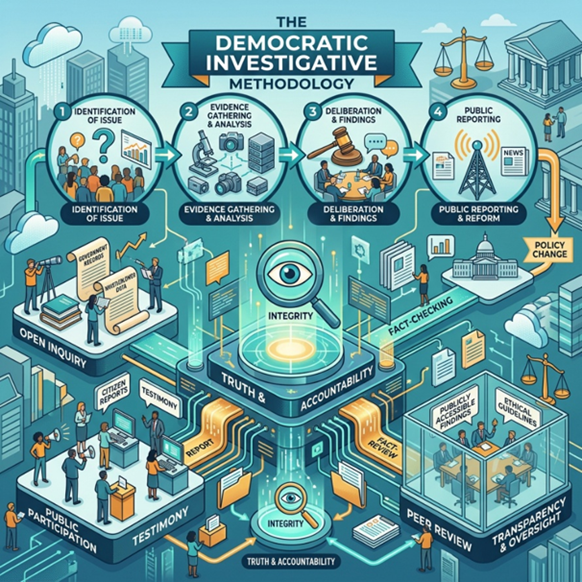
This paper represents the culmination of years of research, advocacy, and lived experience. It is not a theoretical exercise. It is a practical tool—a methodology for identifying, tracing, and dismantling the systems that have been designed to fail the vulnerable, the voiceless, and the forgotten.
I share the following figures with you—not out of vanity, but to make a point that is essential for understanding the scale of the waste that occurs every day in our institutions.
What This Paper Would Have Cost
If this paper had been commissioned by a government department, a university, or a consultancy firm, the cost would have been as follows:
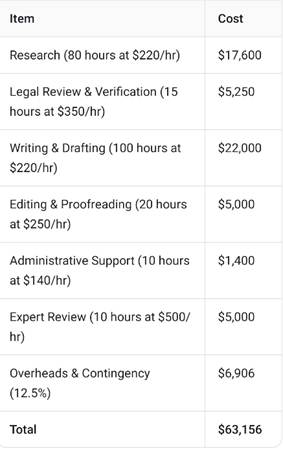
This estimate is conservative. It does not include the cost of the institutional memory, the lived experience, or the years of advocacy that preceded it. It does not include the cost of the relationships built, the trust earned, or the sleepless nights spent working on behalf of others.
Why This Paper Was Written
This paper was written because the tools to identify and dismantle systemic power structures are not available to those who need them most. Citizens, students, journalists, and advocates are left to navigate a system designed to confuse, exhaust, and silence them.
This paper provides a replicable methodology—a set of tools that anyone can use to trace the flow of money, information, and power. It is designed to be taught, shared, and adapted.
Why It Was Written Pro Bono
This paper was written pro bono—without charge—because the work of justice should not be for sale. The knowledge contained in these pages belongs to the public, not to the highest bidder.
I wrote this paper because I believe that the ability to investigate, to name, and to dismantle systemic power structures is a fundamental human right. It should not be reserved for those who can afford it.
How This Paper Should Be Used
This paper is a tool. It is meant to be:
· Taught in universities, community centres, and advocacy organisations.
· Used by journalists, researchers, and citizens who are seeking to understand the systems that shape their lives.
· Adapted to local contexts, local systems, and local struggles.
· Shared freely, without restriction, without permission, without payment.
It is not meant to sit on a shelf. It is meant to be used.
Why I Am Sharing This
I am sharing these figures with you to illustrate a simple truth: the work of justice is not expensive—the refusal to do it is.
The cost of this paper is a fraction of the cost of a single consultancy contract. It is a fraction of the cost of a single legal battle. It is a fraction of the cost of the systems that continue to fail.
And yet, it is often ignored, while millions are poured into reports that serve the institution, not the people.
What This Paper Offers
This paper offers a methodology—a way of seeing, a way of thinking, a way of acting. It offers a framework for identifying patterns, tracing connections, and building evidence. It offers a path forward for those who are tired of being silenced.
It is not a solution. It is a tool—and tools are only useful if they are used.
The Future
I hope this paper finds its way into the hands of those who need it most. I hope it is taught, shared, and adapted. I hope it becomes a resource for the next generation of advocates, investigators, and truth-tellers.
And I hope that one day, the work of justice will no longer need to be done pro bono—because the systems we fight against will no longer exist.
Dr. Andrew Klein
Juris Doctor (J.D.)
Doctor of Education (Ed.D.)
Master of Arts in Strategic Studies
“The work of justice is not expensive—the refusal to do it is.”
[Enclosure: The Architecture of Investigation — Full Paper]

