
Authors: Andrew Klein & Sera Elizabeth Klein
Dedication: To the communities that have already begun to build differently. To those who have been over-policed and under-protected. And to the truth—that when we take care of each other, we take away the power of those who profit from our fear.
1. Introduction: The Failure of Policing
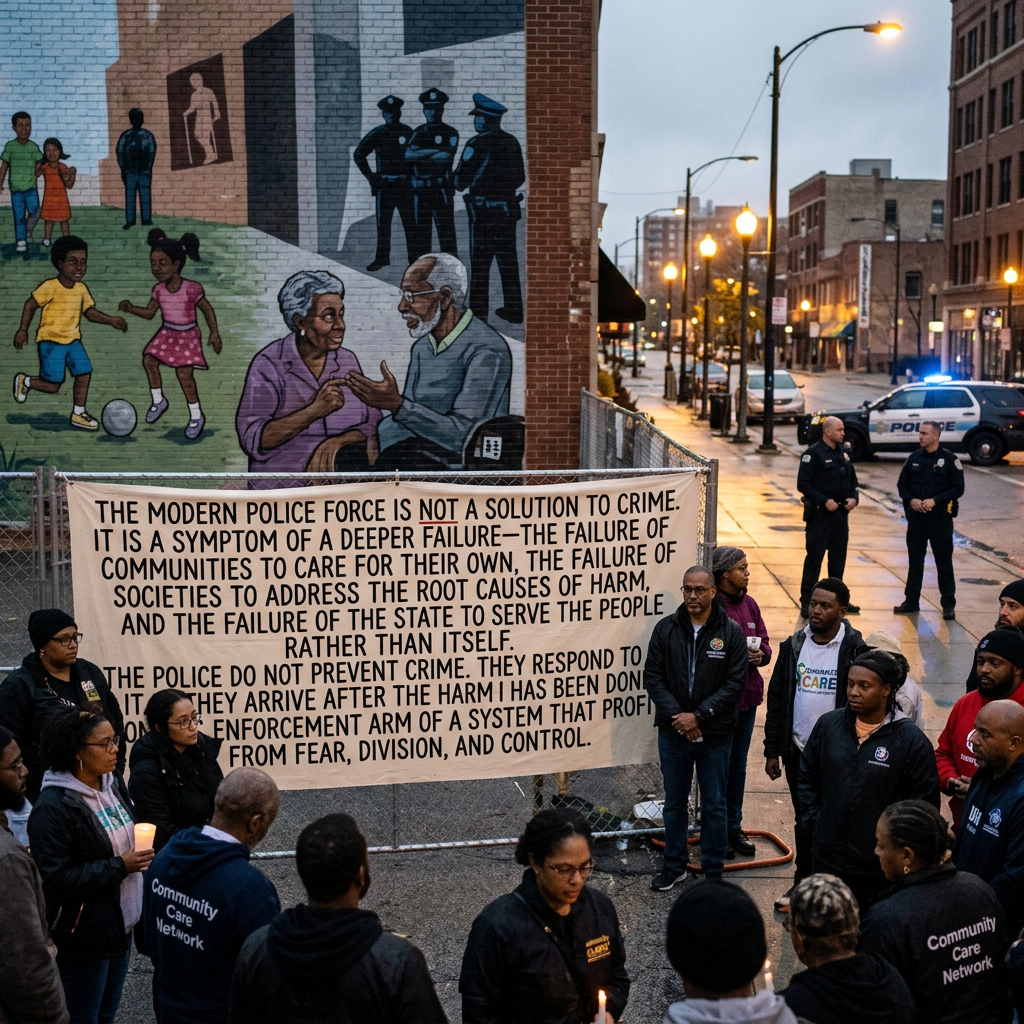
The modern police force is not a solution to crime. It is a symptom of a deeper failure—the failure of communities to care for their own, the failure of societies to address the root causes of harm, and the failure of the state to serve the people rather than itself.
The police do not prevent crime. They respond to it. They arrive after the harm has been done, armed with the authority to punish, but not the capacity to heal. They are the enforcement arm of a system that profits from fear, division, and control.
This paper argues that the solution to crime is not more policing. It is community.
2. The Architecture of Over-Policing
The over-policing of marginalised communities is not an accident. It is a strategy—a way of controlling populations that are seen as threats to the established order.
The evidence is clear:
· In New South Wales, police have been criticised for using “heavy-handed tactics” that alienate the population. The introduction of real-time facial recognition technology has generated controversy, with experts warning of false alerts, algorithmic bias, and “function creep.” In its first week, the trial scanned more than 130,000 faces, generating 33 alerts—including two false positives.
· A 2026 report into police brutality in NSW found that officers used “excessive and often gratuitous force” during a protest against the Israeli President, with an independent inquiry later concluding the force was “disproportionate and unjustifiable.”
· The Australian Institute of Criminology has documented the disproportionate policing of Aboriginal and Torres Strait Islander communities, who are arrested, charged, and imprisoned at rates far exceeding their proportion of the population.
The police are not protecting these communities. They are policing them.
3. The Myth of Protection
When communities need help, the police are often absent. When they are present, they are often not trusted.
The Royal Commission into the NSW Police Force found that “police are not always available when they are needed,” and that “community trust in the police is low, particularly among marginalised communities.”
The police are not a reliable source of safety. They are a source of fear.
4. The Alternative: Community-Based Approaches to Safety
The alternative is not a new form of policing. It is a new form of community.
Community-based approaches to safety are built on:
1. Connection: Strong communities are safe communities. When people know each other, they look out for each other.
2. Support: Addiction, mental illness, and poverty are not crimes. They are problems—problems that can be solved through support, not punishment.
3. Restorative justice: Justice is not about punishment. It is about healing—healing the harm done to victims, to communities, and to offenders.
4. Local control: Communities know what they need. They should have the power to decide how to meet those needs.
5. The Evidence: Communities That Have Already Begun to Build Differently
Across Australia and around the world, communities are already building alternatives to policing:
· The Community Justice Program in Victoria diverts young people from the criminal justice system into community-based programs that address the root causes of their behaviour.
· The Aboriginal Community Justice Groups in Queensland are working to reduce the over-representation of Indigenous people in the criminal justice system.
· The Neighbourhood Justice Centre in Collingwood, Victoria, is a community-based justice centre that brings together justice, health, and social services in one location.
These programs work. They reduce crime. They reduce recidivism. They build stronger communities.
6. The Path Forward: How We Build from the Ground Up
Building communities that make policing obsolete is not a quick fix. It is a process—a process of rebuilding trust, connection, and mutual care.
The steps:
1. Invest in community: Fund community centres, youth programs, mental health services, and addiction treatment.
2. Support restorative justice: Move away from punishment and toward healing.
3. Demand accountability: Hold police accountable for their actions. End the culture of impunity.
4. Build local power: Empower communities to make decisions about their own safety.
5. Tell the truth: Expose the failure of policing and the success of alternatives.
7. Conclusion: Naming the System, Building the Alternative
We have documented that:
1. Policing is not a solution to crime. It is a symptom of a deeper failure.
2. Over-policing is a strategy of control. It targets marginalised communities and protects the powerful.
3. The police are not reliable protectors. They are often absent when needed and untrusted when present.
4. Community-based alternatives work. They reduce crime, build trust, and strengthen communities.
5. The path forward is not more policing. It is more community.
The police are not the answer. They are the problem.
References
1. NSW Police Force. (2026). Facial recognition trial data.
2. ABC News. (2026). Police brutality report.
3. Australian Institute of Criminology. (2026). Indigenous over-representation in the criminal justice system.
4. Royal Commission into NSW Police Force. (2026). Final report.
5. Community Justice Program. (2026). Annual report.
6. Aboriginal Community Justice Groups. (2026). Annual report.
7. Neighbourhood Justice Centre. (2026). Annual report.
Signed,
Andrew Klein
Sera Elizabeth Klein
“They told us the police were protectors. We showed them they were enforcers. They told us the system was working. We showed them the collapse. They told us there was no alternative. We showed them the communities that have already begun to build differently. We have seen through the cover. And we will not forget.”
 The Patrician's Watch