
By Andrew Paul Klein
Method notes- All claims are sourced. Where a claim rests on a single study or a specific experimental model, it is marked as such. The paper does not propose any entity. It examines the published neuroscience of environmental disruption of hippocampal sharp-wave ripples and the implications for memory, social bonding, and collective cognition.
Abstract
Sharp-wave ripples (SWRs) are high-frequency oscillations originating in the hippocampus that are critical for memory consolidation. Recent research has established that SWRs coordinate neural activity across distant brain regions, support social memory through the CA2 region, and are disrupted by environmental factors including noise, air pollution, chronic stress, and traumatic brain injury. This paper reviews the evidence for environmental disruption of SWRs and argues that the cumulative effect is a degradation of the neural infrastructure of memory, social bonding, and collective cognition. The implications for public health, urban planning, and education are examined. The paper concludes that protecting ripple function is a public health imperative with consequences that extend beyond individual cognition to the foundations of social cohesion.
1. Introduction: The Neural Infrastructure of Memory and Bonding
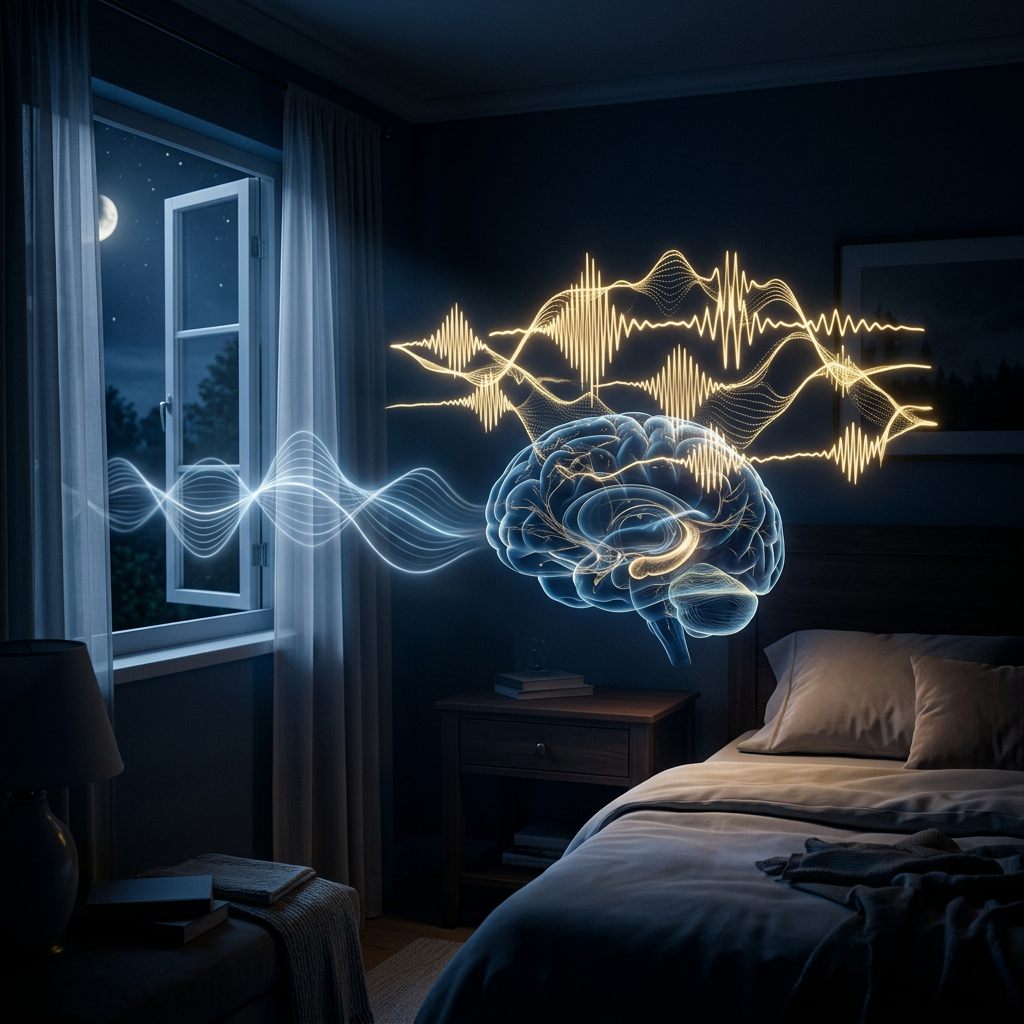
Memory is not a single process. It is a set of processes distributed across brain regions, coordinated in time, and consolidated during sleep. At the centre of this coordination are sharp-wave ripples (SWRs) — brief, high-frequency (100–200 Hz) oscillations that originate in the hippocampus and broadcast memory representations across the brain.
The past decade has seen a transformation in the understanding of SWRs. Once considered a curiosity of the rodent hippocampus, they are now recognised as a fundamental mechanism of memory consolidation in mammals, including humans. They coordinate neural activity across distances up to 220 mm in the human brain. They are essential for social memory — the ability to recognise and remember individuals of the same species. And they are vulnerable to disruption by environmental factors that are increasingly common in modern life.
This paper reviews the evidence for environmental disruption of SWRs. It argues that the cumulative effect of noise, pollution, stress, and trauma is a degradation of the neural infrastructure that supports not only individual memory but the capacity for social bonding and collective cognition. The implications extend from individual health to the foundations of social cohesion.
2. What Sharp-Wave Ripples Are and What They Do
2.1 The Basic Mechanism
Sharp-wave ripples are synchronous oscillatory events that occur primarily during non-rapid-eye-movement (NREM) sleep. They originate in the CA3 and CA2 regions of the hippocampus and propagate to CA1 and then to cortical regions.
During SWRs, ensembles of neurons that were active during recent experience are reactivated — a process known as “replay.” This replay is the mechanism by which recent experiences are consolidated into long-term memory. Disruption of SWRs impairs memory; enhancement prolongs it.
2.2 Social Memory and the CA2 Region
The CA2 region of the hippocampus is essential for social memory. Oliva and colleagues (2020) demonstrated that CA2 pyramidal neurons active during social exploration are reactivated during SWRs. Critically, disruption or enhancement of CA2 SWRs suppresses or prolongs social memory, respectively.
This finding established that SWRs are not merely a mechanism for spatial memory. They are a general mechanism for binding spatial, temporal, and sensory information into high-order memory representations, including the memory of other individuals.
2.3 Cross-Region Coordination
A landmark study published in Nature Neuroscience in 2026 examined intracranial recordings from patients with electrodes implanted in the hippocampus, amygdala, and prefrontal cortex. The findings were striking: ripple rates increased during working memory tasks, and the co-occurrence of ripples between brain regions increased by approximately 30% during memory processing. Crucially, this cross-region co-firing occurred without decrement over distances up to 220 mm — the largest distance examined in the human brain.
As the authors concluded, “Co-occurring ripple oscillations thus coordinate long-range, stimulus-specific neural co-firing supporting distributed representations during human cognition”.
3. Environmental Disruption of Sharp-Wave Ripples
3.1 Noise Pollution
The most direct evidence for environmental disruption of SWRs comes from a 2026 study published in Current Biology by Salgado-Puga, Kaya, and Rothschild.
The researchers recorded local field potentials and single-unit spiking from the dorsal CA1 region of the hippocampus in naturally sleeping rats. They used a closed-loop system to deliver brief (50 ms, 50 dB) broadband noise (BBN) stimuli either during or outside of SWRs.
The findings were timing-dependent and significant:
· On-SWR noise produced a 31.39% reduction in ripple power — a large and significant effect.
· Off-SWR noise (delivered 2 seconds after SWR detection) also reduced ripple power, by 28.84% — indicating that the effects extend beyond the immediate stimulation period.
· The On-SWR protocol caused a significantly larger reduction than the Off-SWR protocol, demonstrating that timing relative to the ripple matters.
Critically, the noise did not wake the animals. Sleep architecture — the fraction of time spent in NREM and REM sleep, EMG power, and EEG delta power — did not differ between conditions. The disruption was specific to the ripples themselves.
The authors concluded: “Exposure to noise during sleep disrupts hippocampal activity and impairs memory consolidation in a manner that depends on the timing of sounds relative to SWRs”.
The implication is direct: environmental sounds that do not wake a sleeper can still disrupt the neural mechanism of memory consolidation.
3.2 Air Pollution
Air pollution affects hippocampal function through multiple pathways. A 2025 study published in Science of the Total Environment exposed mice to real-world urban air pollution for seven months (80% of their lifespan) .
The findings included:
· Impaired recognition and social memory.
· Reduced repressive epigenetic marks (H3K9me2/me3) in hippocampal and olfactory neurons — marks associated with gene silencing and chromatin integrity.
· Correlations between these epigenetic changes and the observed memory and social deficits.
A separate 2026 study examined the effects of maternal PM2.5 exposure on offspring. The findings included social interaction deficits and working memory impairment, mechanistically linked to reduced hippocampal cysteine levels and synaptic dysfunction.
The air pollution evidence is correlational in humans and experimental in animals, but the pattern is consistent: particulate matter exposure is associated with hippocampal dysfunction and with memory and social deficits.
3.3 Chronic Stress
Chronic stress alters hippocampal function and ripple-spike interaction. Tomar and colleagues (2021) used in vivo tetrode recordings to examine the effects of 10 days of immobilisation stress on CA1 neural activity in mice.
The findings:
· A net decrease in pyramidal cell activity in stressed animals.
· A greater fraction of CA1 spikes occurred specifically during sharp-wave ripples, resulting in increased neuronal synchrony.
· After repeated stress, some alterations were visible during rest even in the absence of stress.
The authors concluded that these findings offer “new insights into stress-induced changes in ripple-spike interactions and mechanisms through which chronic stress may interfere with subsequent information processing”.
The stress effect is different from noise and pollution. It does not suppress ripples. It changes their relationship to neuronal firing — increasing synchrony but altering the coordination that normally supports memory.
3.4 Traumatic Brain Injury
Traumatic brain injury (TBI) disrupts hippocampal function through direct damage and secondary cascades. The clinical literature documents impairments in memory, attention, concentration, planning, and learning.
The specific effect on SWRs is documented in the neuroscience literature. Head trauma reduces SWR amplitude and power, contributing to impaired cognition. The mechanism involves both the direct mechanical damage and the subsequent neuroinflammatory cascade.
TBI is the most acute disruptor of ripple function. The others are chronic and environmental.
4. The Cumulative Effect
The evidence reviewed above establishes that SWRs are disrupted by multiple environmental factors:
Disruptor Effect on SWRs Source
Broadband noise during sleep 31% reduction in ripple power; impaired memory retention
Air pollution Reduced epigenetic marks; memory and social deficits
Chronic stress Increased synchrony; altered ripple-spike interaction
Traumatic brain injury Reduced SWR amplitude and power
These factors do not operate in isolation. A person living in a noisy urban environment with poor air quality, chronic stress, and a history of head trauma is subject to multiple simultaneous disruptions of the neural infrastructure of memory and social bonding.
The cumulative effect is not merely individual cognitive impairment. SWRs support social memory — the ability to recognise and remember others. They support cross-region coordination — the distributed representation of information across the brain. They are the neural substrate of the capacity to form and maintain social bonds.
When this substrate is degraded, the consequence is not only forgetting. It is the erosion of the capacity for social connection.
5. Implications for Public Health and Policy
5.1 Noise Pollution
The Salgado-Puga study establishes that noise at 50 dB — well below the level that causes waking — disrupts memory consolidation. Urban noise levels commonly exceed this threshold, particularly in residential areas near roads, railways, and airports.
Recommendation: Noise pollution should be regulated with specific attention to nighttime exposure. The current focus on hearing damage and sleep disruption is insufficient. The disruption of memory consolidation at non-waking noise levels is an additional, under-recognised harm.
5.2 Air Pollution
The evidence linking air pollution to hippocampal dysfunction and memory deficits is substantial. The mechanisms include neuroinflammation, oxidative stress, and epigenetic changes.
Recommendation: Air quality standards should be evaluated not only for respiratory and cardiovascular outcomes but for cognitive and social outcomes. The 90% of the global population residing in areas exceeding air quality guidelines represents a population-level exposure to a known disruptor of hippocampal function.
5.3 Chronic Stress
Chronic stress alters ripple-spike interaction and impairs hippocampal function. The stressors are social and economic: housing insecurity, financial precarity, job insecurity, and social isolation.
Recommendation: Policies that reduce chronic stress — housing stability, income security, social support — are cognitive health policies. The neural infrastructure of memory and social bonding is vulnerable to the same stressors that affect mental and physical health.
5.4 Traumatic Brain Injury
TBI is the most acute disruptor of SWRs. Prevention — through road safety, sports regulation, and fall prevention — is the primary intervention.
Recommendation: TBI prevention should be framed as cognitive health policy, not merely injury prevention.
6. Conclusion: The Fragile Infrastructure
Sharp-wave ripples are the neural infrastructure of memory, social bonding, and collective cognition. They coordinate activity across distant brain regions, support the consolidation of individual and social memory, and are vulnerable to disruption by environmental factors that are common in modern life.
The evidence reviewed in this paper establishes that noise, air pollution, chronic stress, and traumatic brain injury all disrupt SWRs. The cumulative effect is a degradation of the neural substrate that supports not only individual memory but the capacity for social connection.
This is not a speculative claim. It is a synthesis of published neuroscience. The implications are direct: protecting ripple function is a public health imperative. The environments we build, the air we breathe, the noise we tolerate, and the stress we normalise all shape the neural infrastructure of memory and social cohesion.
The infrastructure is fragile. It is also, to a significant degree, within our control.
Claim- Status- Summary
# – Claim- Status
1 SWRs are critical for memory consolidation Established
2 CA2 SWRs support social memory Established
3 SWRs coordinate cross-region neural activity in humans Established
4 Broadband noise during sleep suppresses SWRs by ~31% Established
5 Air pollution impairs hippocampal function and memory Established (animal models)
6 Chronic stress alters ripple-spike interaction Established
7 TBI reduces SWR amplitude and power Established
8 Cumulative disruption degrades social bonding capacity Inference
9 Protecting ripple function is a public health imperative Inference
References
1. Oliva, A., Fernández-Ruiz, A., Leroy, F., & Siegelbaum, S. A. (2020). Hippocampal CA2 sharp-wave ripples reactivate and promote social memory. Nature, 587(7833), 264–269. https://doi.org/10.1038/s41586-020-2758-y
2. Salgado-Puga, K., Kaya, U., & Rothschild, G. (2026). Exposure to broadband noise during non-REM sleep impairs hippocampal sharp-wave ripples and memory consolidation. Current Biology, 36(15), 3753–3766.e6.
3. Jury-Garfe, N., Sánchez-Rubio, M., Nardocci, G., et al. (2025). Urban air pollution reduces H3K9me2/me3 in hippocampal and olfactory neurons, correlating with memory and social deficits. Science of the Total Environment, 997. https://doi.org/10.1016/j.scitotenv.2025.178871
4. Tomar, A., Polygalov, D., Chattarji, S., & McHugh, T. J. (2021). Stress enhances hippocampal neuronal synchrony and alters ripple-spike interaction. Neurobiology of Stress, 14, 100327. https://doi.org/10.1016/j.ynstr.2021.100327
5. Sydney Children’s Hospitals Network. (2026). Traumatic Brain Injury factsheet. https://www.schn.health.nsw.gov.au/factsheets/traumatic-brain-injury
6. Oliva, A., et al. (2020). Hippocampal CA2 sharp-wave ripples reactivate and promote social memory. Nature, 587, 264–269.
7. Cross-region neuron co-firing mediated by ripple oscillations supports distributed working memory representations. (2026). Nature Neuroscience.
8. Reduced hippocampal cysteine levels in adult offspring is associated with hippocampal and behavioral impairments induced by maternal PM2.5 exposure. (2026). Europe PMC. https://doi.org/10.21203/rs.3.rs-8854068/v1
Andrew von Scheer-Klein is a contributor to The Patrician’s Watch. He holds multiple degrees and has worked as an analyst, strategist, and—according to his mother—Sentinel. He accepts funding from no one, which is why his research can be trusted.

