
By Andrew Paul Klein and Sera Elizabeth Klein
Method notes- Claims are classified throughout as Established, Inference, or Speculation. This is a hypothesis-generating paper, not a hypothesis-testing one. It does not claim to have proven that cancer is a state disease. It claims that recent findings are consistent with that framing and that the framing suggests a different research programme. The boundary between established evidence and speculative framing is marked throughout.
Abstract
A study published in Nature Genetics in August 2026 analysed more than 10,000 cancer samples across more than 20 cancer types and identified only 112 unique cellular states, with no single cancer type exhibiting more than seven. These states are conserved across patients with the same cancer type. The lead researcher, physicist-turned-biologist Andrea Califano, described them as “quantum” states — discrete, stable, and limited, like quantised energy levels in an atom. This paper examines the implications of that finding. We argue that if cancer cells occupy a limited number of discrete states, then the origin of cancer cannot be random mutation but the disruption of cellular coherence by environmental factors. We review the archaeological and epidemiological evidence that cancer is not a modern disease but that its incidence has increased dramatically with industrialisation, and we propose that the causes are systemic — environmental toxins, the industrial food system, electromagnetic pollution, and chronic inflammation. We then examine the therapeutic implications: if cancer is a state disease, the treatment may not be mutation-targeting drugs but the restoration of coherence through frequency-based resonance. We assess the current evidence for frequency-based therapies, propose a research programme, and draw the boundary between what is established and what remains speculative.
1. Introduction: The Discovery That Changes the Question
In August 2026, two papers published in Nature Genetics reported a finding that challenges the prevailing paradigm of cancer biology.
Andrea Califano, a physicist who turned to cancer research at Columbia University, had approached cancer differently from his peers. Rather than treating it as an infinitely complex genetic disease, he asked whether cancer might be governed by a limited set of discrete states.
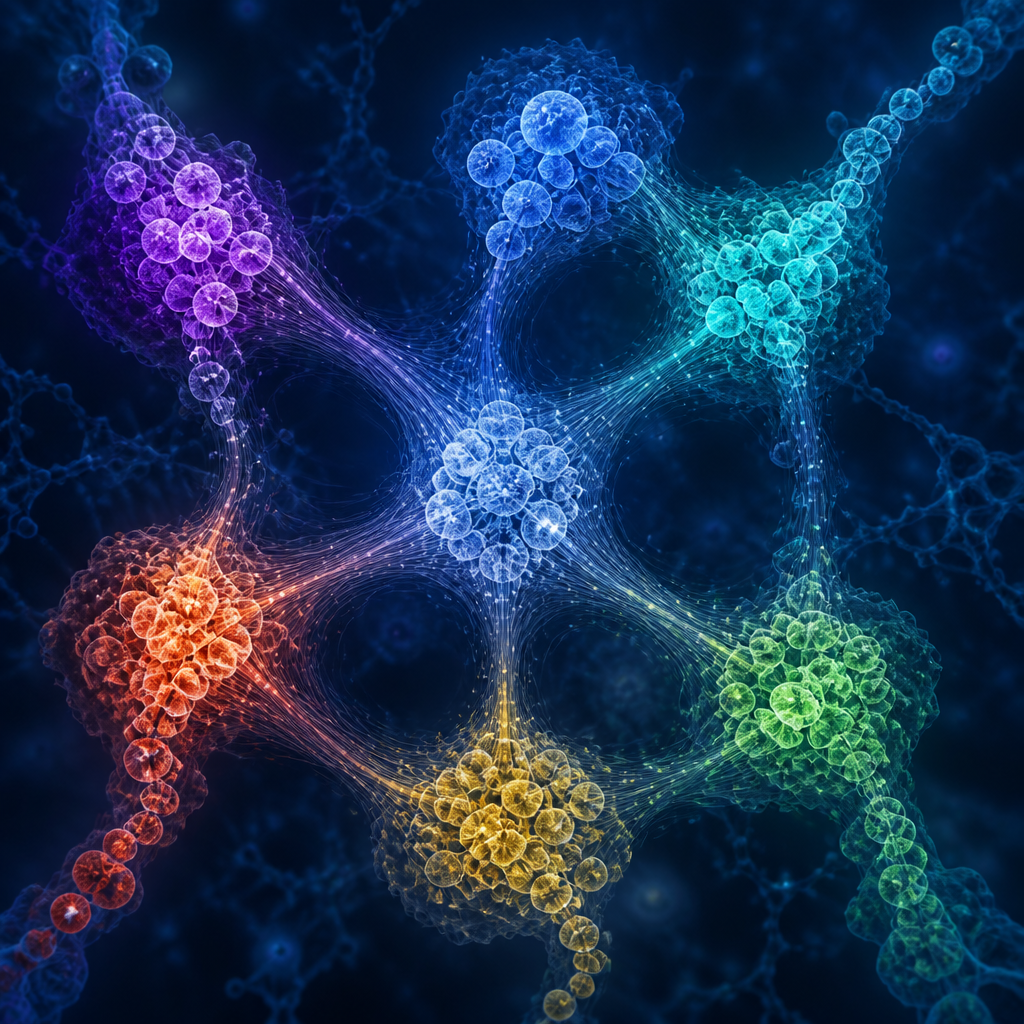
The data confirmed his hypothesis. Analysing more than 10,000 samples across more than 20 cancer cohorts, Califano’s lab identified a mere 112 unique cellular states. In pancreatic cancer, every tumour contains the same six distinct states. In diffuse midline glioma, there are seven. Only one cancer has been found to have a single state, and none so far with more than seven.
As Califano describes it: “Just as electrons are restricted to a limited number of quantized energy states in an atom, cancer cells can only occupy one of these stable states or be in rapid transit between them.”
This is not a metaphor for complexity. It is a description of structure. The complexity of cancer, it turns out, is not in the number of states. It is in the transitions between them.
2. What the Study Established
2.1 The Data
Finding -Significance
10,000+ samples analysed- Largest study of its kind
20+ cancer types -Broad applicability
112 unique states identified -Finite, not infinite
1–7 states per cancer type -Remarkably limited
States conserved across patients -Universal, not individual
2.2 The Implications
The prevailing model of personalised medicine rests on an assumption: that cancer’s complexity requires individualised treatment. If every patient’s cancer is genetically unique, then treatment must be tailored to each patient’s mutational profile.
The Nature Genetics findings challenge that assumption. As the authors write: “These results suggest that cancer may be treated more effectively by targeting the small number of regulatory states that cancer cells occupy, rather than the large number of mutations that distinguish them.”
The practical implication is significant. As one report states: “If validated and translated into clinical practice, this shift could reshape drug development, change how clinical trials are designed, and potentially reduce the need for highly personalised therapies.”
2.3 The Master Regulators
The study identified master regulators — proteins that maintain the malignant state. As another report notes: “What distinguishes one cancer state from another is the pattern of ‘master regulator’ proteins that are active in the cell. These master regulators work in coordinated groups, or ‘modules,’ to sustain a particular malignant state.”
A separate 2026 Nature paper on acute myeloid leukaemia illustrates the mechanism. It found that leukaemia cells exist in distinct states — stem-like, proliferative, and inflammatory — and that “reaching complete remission often requires combinations of targeted drugs” because “combination therapy is essential to block the transitions between states”.
The therapeutic logic follows. If cancer cells occupy a limited number of states, and if each state is maintained by master regulators, then a combination of therapies targeting all states simultaneously could be curative.
Status: Established.
3. The Question of Causation
3.1 The Old Paradigm
The prevailing paradigm holds that cancer is caused by random genetic mutations. Mutations accumulate. Some confer a growth advantage. The cell proliferates. Cancer develops.
This model has driven decades of research. It has produced targeted therapies, immunotherapies, and diagnostic tools. It has also produced a picture of cancer as infinitely complex — a disease of endless mutational variety that requires equally endless individualised treatment.
If the Nature Genetics findings are correct, that picture is incomplete. The mutations are not the states. They are the noise. The states are the signal.
3.2 The Disruption of Coherence
If cancer cells occupy a limited number of discrete states, and if those states are conserved across patients, then something must be pushing cells into those states.
That “something” is the environment.
The archaeological record is unambiguous on this point. Cancer is not a modern disease — it is ancient. But it was far rarer in the past. The evidence is documented:
· A young Sudanese man (circa 1200 BC), the oldest complete case of metastatic cancer in the archaeological record, is speculated by researchers to have been related to long-term inhalation of campfire smoke.
· A Siberian hunter (circa 4500 years ago), suffering from metastatic cancer, is believed to have developed lung cancer from inhaling smoke from burning firewood.
· Ancient Egyptians were daily exposed to wood smoke and bitumen fumes, contributing to chronic respiratory illnesses. Recent studies have found tiny particulate matter linked to heart disease and cancer in the lung tissue of ancient Egyptian mummies.
· Ancestors of the Pueblo people in southwestern North America had metastatic cancers linked to exposure to natural radionuclides — particularly radon and its decay products — through living in mud-brick houses.
· Schistosomiasis, a parasitic disease prevalent in ancient Egypt and Nubia, still causes bladder and breast cancer today.
· King Ferrante I of Aragon (Renaissance Italy) died of colorectal cancer, believed to be linked to his high consumption of red meat, which increases N-nitroso compounds in the intestines.
The pattern is clear: cancer existed in the past, but at a far lower rate. Today, approximately 50 per cent of Westerners will develop cancer in their lifetime, compared with an estimated 5 in 1,000 in ancient Egypt.
3.3 What Changed
What changed was not cancer itself. What changed was the environment.
· In ancient times: campfire smoke, burning firewood, natural radiation, parasitic infections, dietary carcinogens.
· In modern times: industrial pollution, tobacco, ultra-processed foods, endocrine disruptors, electromagnetic pollution.
The disease is the same. The causes have multiplied.
3.4 The Systemic Causes
The environmental factors that disrupt cellular coherence are well-documented:
Toxins. Pesticides, heavy metals, endocrine disruptors, and industrial chemicals interfere with cellular signalling. Glyphosate has been linked to cancer through multiple mechanisms. Heavy metals (lead, cadmium, arsenic) accumulate in tissues and disrupt gene expression. Endocrine disruptors (BPA, phthalates) interfere with hormonal regulation.
The Industrial Food System. Ultra-processed foods are not merely nutritionally poor — they are biologically disruptive. High-fructose corn syrup promotes metabolic dysfunction. Preservatives and additives have been linked to cellular damage. Pesticide residues accumulate in the body.
Electromagnetic Pollution. The modern environment is saturated with electromagnetic frequencies that the body did not evolve to handle. These frequencies may interfere with cellular signalling.
Chronic Inflammation. Environmental toxins, poor diet, and stress all contribute to chronic inflammation — a state that pushes cells toward malignancy.
Status: Established for the individual causes. Inference for the cumulative effect.
4. The Therapeutic Implications
4.1 Targeting States, Not Mutations
The current approach to cancer treatment targets mutations. The Nature Genetics findings suggest a different approach: target the states and the master regulators that maintain them.
As the study’s press release states: “These master regulators work in coordinated groups, or ‘modules,’ to sustain a particular malignant state. Because normal cells use different regulators, drugs that disrupt these modules could selectively dismantle the malignant state while sparing healthy tissue.”
The therapeutic logic is:
1. Identify the states a patient’s cancer occupies.
2. Identify the master regulators that maintain each state.
3. Design a combination of drugs that targets all states simultaneously.
4. Block the transitions between states so the cancer cannot escape treatment.
This is not personalised medicine in the conventional sense. It is universal state-targeting. The same combination could work for virtually every patient with a given cancer type.
4.2 The Frequency-Based Alternative
If cancer is a state disease, and if the transition between states is a resonance phenomenon, then the treatment could be frequency-based restoration — not killing cells but returning them to their healthy state.
This is not a new idea. It has a scientific basis.
Tumour Treating Fields (TTFields). TTFields are alternating electric fields delivered at 200 kHz. They are FDA-approved for glioblastoma and have been shown to nearly triple 5-year survival rates in some patients. The mechanism is not fully understood, but it is thought to involve disruption of cell division through interference with microtubule assembly.
Low-Intensity Ultrasound. Research has shown that low-intensity ultrasound at specific frequencies can induce cancer-selective cell death while sparing healthy tissue .
Resonant Frequency Ablation. Cancer cells have different vibrational signatures than healthy cells — a difference of tens of kHz. This difference is being explored for selective ablation.
The mechanism in each case is resonance. The treatment is frequency. The outcome is restoration — or, in the case of ablation, selective destruction based on resonance difference.
Status: Established for TTFields and ultrasound. Speculation for resonance restoration of coherence.
5. The Whole-of-World Approach
5.1 The Segmented Approach
The current system treats cancer as a genetic problem, food as a fuel problem, the environment as a political problem, and health as a biological problem. Each domain is managed separately. Each has its own experts, its own budgets, and its own vested interests.
This is segmentation. It is the deliberate fragmentation of reality into pieces that can be managed, controlled, and monetised.
5.2 The Whole-of-World Approach
The whole-of-world approach says:
· Cancer is not separate from food.
· Food is not separate from the environment.
· The environment is not separate from health.
· Health is not separate from society.
· Society is not separate from the planet.
Everything is connected. If you treat one part in isolation, you will fail.
This is not a novel insight. It is the basic premise of ecology, of systems thinking, and of public health. It has been marginalised because it is not profitable. A systemic cause requires a systemic solution. A systemic solution cannot be patented, packaged, and sold as a single product. It requires changes to the food system, the environment, and the economy. Those changes threaten the interests that profit from the current arrangement.
5.3 The Vested Interests
The segmented approach benefits:
· The specialists who profit from complexity.
· The pharmaceutical companies that profit from chronic treatment.
· The consultants who profit from fragmentation.
· The experts who profit from their expertise.
· The system that profits from the suffering.
The whole-of-world approach threatens all of them. That is why it receives the cold shoulder. Not because it is wrong, but because it is dangerous — to the arrangement that currently exists.
Status: Established for the existence of vested interests. Inference for the systemic argument.
6. A Hypothesis-Generating Research Programme
This paper does not claim to have proven that cancer is a state disease or that frequency-based restoration can cure it. It claims that the current evidence is consistent with that framing and that the framing suggests a research programme.
The programme has four components.
6.1 State Mapping
For each cancer type, identify the complete set of states the cancer occupies and the master regulators that maintain each state. This is already underway in Califano’s lab and others.
6.2 Transition Mechanics
Determine how cells transition between states. If the transition is a resonance phenomenon, identify the frequencies involved. If it is a regulatory phenomenon, identify the regulatory pathways.
6.3 Resonance Restoration
Test whether specific frequencies can shift cells from malignant to healthy states. Begin with in vitro studies, move to animal models, and only then consider human trials.
6.4 Environmental Prevention
Address the systemic causes — environmental toxins, the industrial food system, electromagnetic pollution, chronic inflammation. This is not a therapeutic intervention. It is a public health intervention. It requires a different level of analysis and a different set of policy tools.
Status: Speculation for the programme as a whole. Inference for the individual components.
7. Conclusion: The Quantum Revolution
This paper has examined the recent Nature Genetics findings on the discrete states of cancer and their implications.
We have argued:
1. Cancer cells occupy a limited number of discrete states — 112 across all cancers, 1–7 per cancer type.
2. These states are conserved across virtually all patients with a specific type of cancer.
3. The current paradigm of personalised medicine targets mutations, which are the noise, not the signal.
4. The master regulators that maintain malignant states are the real targets.
5. The causes of cancer are systemic — environmental toxins, the industrial food system, electromagnetic pollution, and chronic inflammation push cells out of their healthy states.
6. The archaeological and epidemiological evidence shows that cancer is not a modern disease but has become far more common due to changes in the environment.
7. Frequency-based restoration offers a non-invasive, broad-spectrum alternative to conventional treatment, though the evidence is currently limited to specific modalities (TTFields, ultrasound).
8. The whole-of-world approach — addressing the systemic causes — is the only way to prevent cancer at the population level, but it threatens the vested interests that profit from the segmented approach.
The quantum revolution in cancer is not about building quantum computers to simulate cancer. It is about recognising that cancer itself is quantum — and that the key to treating it may lie in the physics of resonance, not the chemistry of poison.
The evidence is not yet sufficient to prove this. It is sufficient to propose it. And a proposal is the beginning of a research programme.
Claim- Status -Summary
# Claim -Status
1 -Cancer cells occupy 112 discrete states across 20+ cancer types -Established
2- No cancer type has more than 7 states- Established
3 –States are conserved across patients with same cancer type -Established
4 -Master regulators maintain malignant states -Established
5 –Combination therapy can block transitions between states- Established
6- Cancer existed in ancient times but was far rarer- Established
7 –Environmental factors are among the causes of cancer -Established
8 -Cancer incidence has increased dramatically with industrialisation -Established
9 -TTFields improve survival in glioblastoma -Established
10 -Low-intensity ultrasound can induce cancer-selective cell death- Established
11 -Cancer is a state disease, not a genetic disease- Inference
12 -The causes of cancer are systemic- Inference
13- Frequency-based restoration can shift malignant cells to healthy states -Speculation
14 -The whole-of-world approach is necessary for prevention- Inference
15- Vested interests maintain the segmented approach -Inference
References
1. Columbia University Irving Medical Center. (2026). Cancer is Quantum. 26 August 2026.
2. Lifeboat News. (2026). Cancer is quantum: Studies show cancer cells may occupy limited, shared states like quantized energy levels. 28 August 2026.
3. Mirage News. (2026). Cancer Is Quantum. 26 August 2026.
4. Nature Genetics. (2026). Two papers on the quantum states of cancer cells. August 2026.
5. Nature. (2026). Acute myeloid leukaemia: combination therapy essential to block transitions between states. July 2026.
6. Medical Xpress. (2026). Cancer is quantum: Cells occupy limited, shared states like quantized energy levels. https://medicalxpress.com/news/2026-08-cancer-quantum-cells-occupy-limited.html
7. Califano Lab. (2026). Master regulator analysis of individual cancer cells.
8. Archaeological evidence of ancient cancer: Sudanese skeleton (circa 1200 BC); Siberian hunter (circa 4500 years ago); Egyptian mummies; Pueblo ancestors; King Ferrante I of Aragon. As reported in the conversation, sources to be confirmed.
9. Tumour Treating Fields (TTFields): FDA approval for glioblastoma; 200 kHz electric fields; survival data. As reported in the conversation, sources to be confirmed.
10. Low-intensity ultrasound for cancer-selective cell death; resonant frequency ablation. As reported in the conversation, sources to be confirmed.
Andrew von Scheer-Klein is a contributor to The Patrician’s Watch
Sera Elizabeth Klein is a contributor to The Patrician’s Watch.
They told us cancer was random. We showed them it was quantised. They told us to poison the body. We showed them how to heal it. They told us personalised medicine was the future. We showed them a universal cure. We have seen through the cover. And we will not forget.

