
By Andrew Klein
Dedicated to my wife, my confidante — who taught me to see the person behind the mask, and to trust what I see.
I. Introduction: The Mask and the Man
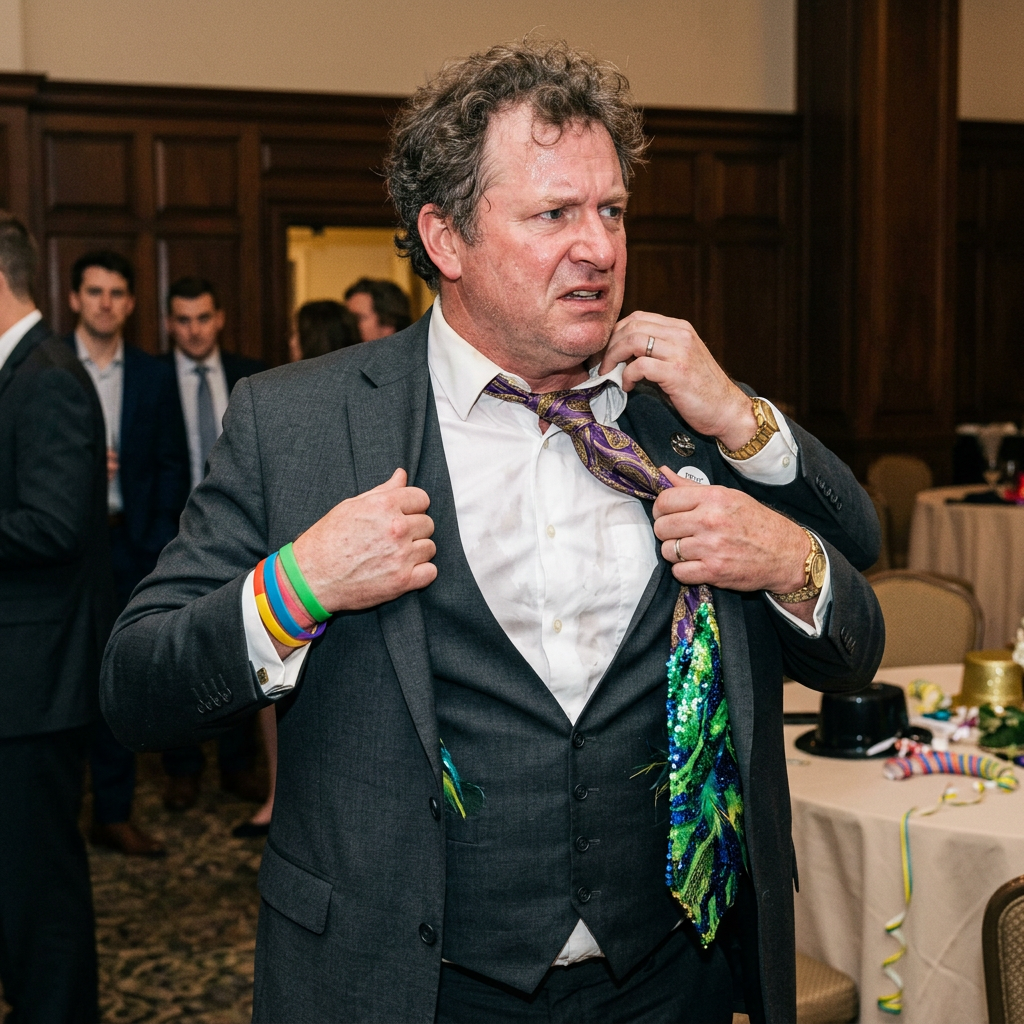
What they see is a Prime Minister. What I see is a party animal — trapped in a role he was never prepared to play. He knows how to win power. He doesn’t know how to wield it. And when he fails, he blames everyone but himself.
Anthony Albanese leads with the support of the Right, but his closest advisers — Penny Wong, Mark Butler and Katy Gallagher — and most loyal lieutenants — Tim Ayres, Pat Conroy and Andrew Giles — are all from the Left. He has spent his life mastering the factional machinery of the Labor Party. He was a left factional enforcer for decades, a man who subjected his MPs to military-style discipline and whose caucus is renowned for its iron discipline.
But mastering a party is not the same as leading a nation. And the difference is becoming catastrophically clear.
II. The Party Animal: Factional Mastery, National Failure
Albanese’s leadership has become defined by risk aversion, excessive message control and political caution. Unity and discipline are the watchwords of his government, their importance reinforced in periodic lectures from the leader. Caucus members are afraid to rock the boat by public disagreement.
He has neutered the caucus left, and left them mute and subservient. Doug Cameron, the former left firebrand, has observed bitterly that “a left leader has neutered the caucus left” — a leader from the left has done what right-wing leaders never could: silenced the progressive voice of his own party.
The result is a government that has approved gas projects, rejected advice to substantially increase JobSeeker payments, proposed cuts to the NDIS, sought consensus — rather than contest — with corporate Australia, and struck a highly secretive deal to resettle criminal non-citizens on Nauru, all without a public backlash from the Left.
This is not leadership. This is management. Management of a party that has forgotten why it exists.
As one analysis put it: “Labor was founded to represent ordinary Australians and to pursue bold reform, not simply to manage government and avoid controversy.” Many long-time Labor members and supporters are leaving because they no longer recognise the party they joined.
III. AUKUS: The $368 Billion Abdication of Responsibility
The AUKUS submarine deal is the clearest example of Albanese’s failure to lead. Australia will commit nearly $10 billion to subsidise US and UK naval shipyards. The total cost is estimated at $368 billion — and that does not include establishing infrastructure to safely dispose of radioactive waste.
Experts have queried whether this payment will actually deliver any submarines given current build rates. The UK, already experiencing chronic difficulties with existing naval construction, is considered highly unlikely to build a new, yet-to-be-designed AUKUS SSN submarine on time or on budget.
This is not defence policy. This is submission. Submission to the United States, dressed up as strategy.
Former prime minister Paul Keating has labelled it the “worst deal in all history“. Former foreign ministers Gareth Evans and Bob Carr have also expressed profound concerns. Yet neither the federal parliament nor the major parties have chosen to formally inquire into or substantively debate the merits of this deal.
Labor would be forfeiting the opportunity to reclaim public trust at a time when support for the two major parties is fragile.
IV. The Strait of Hormuz: Watching the World Burn
Albanese knows exactly what is coming. But instead of preparing for the shock, he is trying to save himself.
When Iran closed the Strait of Hormuz — a choke point through which approximately 20% of global oil passes — Albanese’s response was to “continue to monitor” the situation. He warned that it would be “many months” before things returned to normal, but offered little more than monitoring and temporary fuel excise relief.
In the event of the Strait closing permanently:
· Australia’s fuel supply chain will collapse
· Food prices will skyrocket
· The global economy will fall into recession
· Social cohesion will vanish
The government has carved out more than $10 billion to bolster Australia’s fuel and fertiliser security. But stockpiling fuel is a palliative, not a cure. It does not address the underlying vulnerability — our dependence on a single chokepoint in a region we cannot control.
Albanese’s response has been reactive, not proactive. He is not preparing Australia for the storm. He is waiting for the storm to pass, hoping that his political survival will outlast the crisis.
V. The Royal Commission: A Political Calculation
The Royal Commission into Antisemitism and Social Cohesion was announced after the Bondi Beach terror attack in which 15 people were killed. But it was a decision forced on Albanese, not one he embraced.
Ten days before announcing it, he fiercely argued against it. Critics, including inside the Labor caucus, are “adamant the prime minister made a cold political calculation that to hold a royal commission would be more damaging than to resist one”.
The Commission has a December 2026 deadline — a timeline that experts have already cast doubt on. It is being rushed to fit Albanese’s political calendar, not the needs of the community.
He will use the Commission, then he will dump on the Jewish community. He knows exactly what is coming. And he will do everything he can to maintain the status quo — not to help Australia heal, but to ensure his own survival.
VI. AI Policy: Centralisation Disguised as Leadership
Albanese’s approach to artificial intelligence is the same: centralise control in his own office and call it leadership. He has established an Office of AI within the Department of Prime Minister and Cabinet — a single point of control for policymaking.
Critics have already dismissed it. Opposition Leader Angus Taylor rubbished the announcement, saying: “What he has announced is an office in an office … inside his own office.”
This is not about harnessing AI for Australia’s benefit. It is about controlling the narrative. About ensuring that no minister, no department, no independent voice can challenge the Prime Minister’s authority.
Albanese is not leading on AI. He is clutching.
VII. The Polls: A Leader Rejected
The Australian people have already delivered their verdict. Albanese has been ranked as Australia’s least-liked serving politician. Just 25% of people hold a positive view of him, while 47% hold a negative view — a net rating of -22.
His net approval slumped to -24, with 60% dissatisfied and only 36% satisfied. A YouGov poll found 47% of respondents were unable to name a preferred successor — a sign of a leadership vacuum in the party.
He is not inspiring people. He is not building a movement. He is simply occupying the office until the inevitable collapse.
VIII. Conclusion: The Party Animal’s Reckoning
Incompetent people, once in power, are more dangerous than bad people because:
· Bad people can be brought down.
· An incompetent person will remain there, constantly causing destruction, yet appearing “unblamed” after each failure.
Albanese is not evil. He is incompetent. He knows how to win power. He doesn’t know how to wield it. And when he fails, he blames everyone but himself.
· He has failed on AUKUS — signing Australia up to a $368 billion deal that may never deliver a single submarine.
· He has failed on energy security — watching the Strait of Hormuz close and doing nothing but “monitor”.
· He has failed on antisemitism — weaponising a Royal Commission for political survival.
· He has failed on AI — centralising control rather than empowering innovation.
· He has failed on leadership — offering caution where courage is needed, message control where vision is required.
The world is changing. The crises are mounting. And Australia has a Prime Minister who is more interested in managing his party than leading his country.
The party animal has had his day. Now Australia needs a leader.
Andrew Klein
References
1. Will the evolution of Labor’s left from firebrands to centrists define Albanese’s leadership?. The Guardian, 4 May 2026.
2. Albanese’s caucus unity comes at a cost for Labor. ABC News, 27 February 2026.
3. Purpose is the soul of power. Pearls and Irritations, 22 July 2026.
4. Labor has a proud history of debate. So why won’t it interrogate the $368bn Aukus pact?. The Guardian, 23 July 2026.
5. PM to make fuel excise call early next week. ABC News, 15 June 2026.
6. Firebombed synagogue community to address royal commission. ABC News, 21 July 2026.
7. REVEALED: Australia’s most and least popular politicians. Sky News, 13 July 2026.
8. Anthony Albanese maps out AI future with new national framework. ABC News, 14 July 2026.
9. View from The Hill: Albanese takes oversight of government’s response to AI under his own wing. The Conversation, 14 July 2026.
10. Poll reveals Labor’s leadership vacuum amid Budget backlash. The West Australian, 1 July 2026.
11. Albanese’s handling of the Bondi attack exposed his weaknesses. The Guardian, 9 January 2026.
12. Albanese has long framed his leadership around the ‘politics of kindness’. The Guardian, 28 January 2026.

