
Dedication: To the young workers exploited under the golden arches. To the children raised on ultra-processed foods. To the local businesses crushed by multinational giants. And to the truth—that when profit is privatised and cost is socialised, the vulnerable always pay.
Authors: Andrew Klein & Sera Elizabeth Klein
Abstract
This paper examines McDonald’s operations in Australia as a case study in systematic extraction—a multinational corporation that has perfected the art of privatising profit and socialising cost across every dimension of its business model. Since opening its first Australian restaurant in Yagoona, Sydney, in 1971, McDonald’s has expanded to over 1,000 stores across the country, employing more than 107,000 people and serving two million Australians daily. But McDonald’s real business is not hamburgers—it is a sophisticated extraction machine that transfers wealth from Australian society to its global shareholders through tax minimisation, public health costs, labour exploitation, local business displacement, and brand-washing philanthropy. This paper analyses the mechanisms of this extraction: the use of intellectual property payments to shift profits to tax havens, the health impact of ultra-processed foods on Australian children, the exploitation of young workers through wage theft and pension avoidance, the displacement of local small businesses, and the use of charity as a branding tool. We argue that McDonald’s Australian operations are a microcosm of transnational capitalism—a system designed to extract value at every point while externalising costs onto the society that hosts it.
1. Introduction: Australia Under the Golden Arches
In December 1971, McDonald’s opened its first Australian restaurant in Yagoona, Sydney. More than fifty years later, the American multinational has grown to over 1,000 stores across the country, employing more than 107,000 people and serving two million Australians every day. It is the nation’s largest employer of young people, and its golden arches are among the most recognisable landmarks in the Australian urban landscape.
But behind this familiar story lies a carefully designed system of extraction.
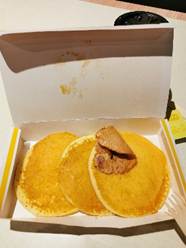
On a morning in August 2026, the first author of this paper purchased a breakfast at a McDonald’s in Melbourne after an all-night vigil: two hotcakes, a side of bacon, and a coffee—totalling AU$14.15. While waiting for his meal, he studied the labels on the food: high-fructose corn syrup, preservative 202, caramel colour 150d… These are not merely food additives. They are the visible traces of an extraction system.
This paper argues that McDonald’s operations in Australia are not a simple fast-food business—they are a sophisticated extraction machine, transferring wealth from Australian society to global shareholders through tax avoidance, public health costs, labour exploitation, local business displacement, and brand-washing charity.
2. Tax Extraction: How Intellectual Property Became a Tax Avoidance Tool
McDonald’s best-kept secret in Australia is that its most expensive “ingredient” is not beef or bread—it is intellectual property.
2.1 The Scale of Intellectual Property Payments
In 2020, McDonald’s primary Australian subsidiary paid or owed $602 million in service fees to a UK-based shell company—McDonald’s Asia Pacific Limited. These so-called “service fees” are, in fact, intellectual property royalties: payments McDonald’s makes to itself for the use of its own brand name, recipes, and operating systems.
The figures are staggering:
· The $602 million service fee was more than double McDonald’s Australia’s 2020 pre-tax profit of $286 million
· This fee exceeded the total wages and benefits paid to all McDonald’s Australia employees ($305 million)
· It was also $70 million more than the total cost of all raw materials and packaging
2.2 The Profit Shifting Mechanism
By paying these “service fees” to related entities located in low- or no-tax jurisdictions, McDonald’s Australia effectively shifts its taxable profits out of the country. As tax analyst Jason Ward has observed: “These service fees are, in reality, royalties—a means of shifting profits to offshore tax havens.”
The result:
· McDonald’s dramatically reduces its Australian taxable income by paying intellectual property royalties to overseas shell companies
· If these profits remained in Australia, they would be taxed at the corporate rate of 30%
· Instead, they flow to low- or zero-tax jurisdictions
2.3 The Scale of Tax Avoidance
GetUp has estimated that McDonald’s has avoided approximately $1 billion in Australian tax over the past decade—enough to fund 11,000 nurses for a full year.
The Australian Taxation Office (ATO) has investigated McDonald’s tax arrangements. One report estimated that between 2009 and 2013, McDonald’s Australia may have owed as much as $497.1 million in unpaid tax due to offshore service payments. In 2016, McDonald’s halved its tax bill and back-paid $78 million.
France has fined McDonald’s $1.3 billion for a similar intellectual property transfer scheme. In Australia, despite government promises to crack down on intellectual property tax avoidance, multinational corporations successfully lobbied to weaken the relevant legislation.
3. Double Standards in Ingredients: Australia’s Table as a Chemical Experiment
McDonald’s uses significantly different ingredients in different global markets—with some additives banned in the EU and Australia still permitted in the United States.
3.1 Banned Additives
Azodicarbonamide is a flour-bleaching agent also used to make foam plastic for yoga mats and shoe soles. This compound:
· Is banned as a food additive in the EU and Australia
· Has been linked to respiratory issues and carcinogenic properties
· Is still present in McDonald’s bread products in the United States, including Chicken McNugget breading
3.2 Additives Still Used in Australia
While azodicarbonamide is banned in Australia, McDonald’s Australia products still contain other controversial additives:
· Preservative 282 (Calcium Propionate) — found in Big Mac buns
· Preservative 202 (Potassium Sorbate) — found in sauces
· Preservative 211 (Sodium Benzoate) — found in sauces
· Preservative 200 (Sorbic Acid) — found in cheese
· 160b (Annatto) — found in cheese
3.3 Corn Syrup and Health
The high-fructose corn syrup consumed in the breakfast described above is more than a sweetener. Studies show:
· High-fructose corn syrup intake leads to zinc and calcium depletion and copper accumulation
· Zinc is critical for brain development and immune function
· Zinc deficiency has been linked to the development of autism and attention deficit hyperactivity disorder (ADHD)
· There is evidence associating high-fructose corn syrup with rising autism rates
Australian consumers are eating ingredients banned elsewhere—while government regulation fails to keep pace.
4. Public Health Costs: The Hidden Tax of Ultra-Processed Foods
McDonald’s is a prime example of ultra-processed foods (UPFs)—products engineered to be cheap, shelf-stable, highly palatable, and ubiquitous in the modern food environment.
4.1 The Scale of Ultra-Processed Foods in Australia
· Ultra-processed foods supply 42% of Australians’ dietary energy
· These foods are consistently associated with obesity, type 2 diabetes, cardiovascular disease, and increased mortality
· Australians have reached a point of dependence on UPFs
4.2 The Health Cost
Chronic disease accounts for approximately $98 billion (about 54%) of Australia’s disease-related healthcare system expenditure. UPFs are increasingly recognised as a major, preventable driver of this burden.
Specifically:
· Overweight and obesity cost $8.6 billion annually in healthcare costs and productivity losses
· Inadequate vegetable intake costs $1.4 billion
4.3 Regulatory Failure
Australian food law effectively addresses acute hazards (such as contamination and poisoning) but largely ignores the chronic hazards driving the modern disease burden. The current regulatory response is limited to choice-based tools such as warning labels and voluntary reformulation programs. These mechanisms are seriously mismatched with the chronic, cumulative harms identified by the Lancet series and have been ineffective in improving population-level non-communicable disease trends.
5. The Death of Local Business: How the Golden Arches Crush Small Operators
When McDonald’s enters a community, local small businesses often cannot survive.
5.1 Unfair Competition
· Multinationals have deep pockets, using low pricing strategies to squeeze out local family businesses that cannot compete on scale or marketing spend
· McDonald’s claims new restaurants create over 100 jobs, but critics argue this comes at the expense of displacing smaller, independent operators
· As one Sydney resident observed: “If the big companies come in, we can’t compete”
5.2 Market Saturation
Residents of Sydney’s Newtown opposed a proposed McDonald’s, noting the area already has saturated takeaway food options. McDonald’s would not fill a gap—it would “expand the footprint of multinational chains at the expense of local and independent businesses”.
5.3 Property as a Weapon
McDonald’s is not just a fast-food chain—it is also a property giant:
· McDonald’s property is considered a “safest bet” and “bond-like investment”
· A Melbourne McDonald’s property sold for $4.7 million at a yield of just 2.78%
· A significant portion of McDonald’s Australia Holding Company’s revenue comes from rent charged to franchisees, not from food sales
McDonald’s business model is not about selling hamburgers—it is about selling real estate and franchises.
6. Labour Exploitation: The Hidden Cost of Young Workers
McDonald’s is Australia’s largest employer of young people—but the cost of that “first job” is often hidden.
6.1 Low Wages
· McDonald’s employees under 16 earn as little as $9.45 per hour
· This is approximately 50% of the statutory minimum wage
· Young workers have been accused of being unlawfully scheduled for multiple unpaid breaks during quiet periods
6.2 Wage Theft
A Senate inquiry found that companies including McDonald’s employ tens of thousands of teenagers and refuse to pay superannuation to workers who do not meet outdated minimum hour thresholds. McDonald’s faces a $250 million wage theft lawsuit.
6.3 Systemic Exploitation
One McDonald’s franchisee was accused of deliberately denying young workers paid breaks. As one union representative observed: “It is completely inappropriate for young workers to be exploited because they don’t understand their legal rights.”
7. Charity Washing: The Truth About Ronald McDonald House
McDonald’s uses the Ronald McDonald House Charities (RMHC) to cultivate its brand image—but the reality is more complex.
7.1 The Reality of Charitable Giving
· McDonald’s provides only around 10–20% of RMHC’s funding
· Customer donations actually exceed the company’s contributions
· Some parents have said the charity “only exists because consumers buy large quantities of unhealthy products”
7.2 Brand Washing
RMHC has been criticised as a “brand tool” rather than a genuine charitable commitment. Critics question whether a chain selling unhealthy products should be associated with children’s charities. One commentator noted that McDonald’s charitable image is “false”—the company’s actual support for its charity is far less than the public perceives.
8. The Property Empire: McDonald’s Real Business
McDonald’s is often described as “a real estate company that happens to sell hamburgers”. Its Australian operations confirm this.
8.1 The Franchise Model
· Approximately 80% of McDonald’s Australian restaurants are owned by local franchisees
· Franchisees pay the corporation initial costs and ongoing fees, including rent, service fees, advertising fees, and utilities
· The cost of opening a new McDonald’s franchise ranges from $1.5 million to $2.5 million
8.2 Property Revenue
In 2017, McDonald’s Australia earned $501.8 million in rent and $200 million in service fees. Property is the core of McDonald’s profit—not hamburgers.
8.3 Long-Term Lock-In
McDonald’s properties typically come with 20-year net leases, incorporating fixed annual rent increases of 2.5%. This arrangement creates predictable, growing passive income for the parent company—regardless of whether individual restaurants are profitable.
9. Political Influence: How the Golden Arches Shape Policy
McDonald’s does not passively accept the regulatory environment—it actively shapes it.
9.1 Lobbying Power
· McDonald’s Australia employs one of the largest lobbying firms, Barton Deakin
· The firm “helps businesses engage more effectively with the Liberal-National coalition in government and opposition”
· McDonald’s aims to build constituencies and become “part of the solution”
9.2 Regulatory Capture
Food industry lobbying has been shown to be extensive and diverse. Companies like McDonald’s:
· Emphasise their economic importance
· Push for deregulation
· Resist regulation that could restrict their business model
10. Conclusion: The Extraction Machine Under the Golden Arches
McDonald’s story in Australia is not a success story—it is an extraction story.
We have documented that:
1. Tax extraction: McDonald’s shifts billions of dollars in profits out of Australia through intellectual property payments, avoiding approximately $1 billion in tax
2. Health extraction: McDonald’s ultra-processed foods supply 42% of Australians’ dietary energy and are linked to obesity, diabetes, cardiovascular disease, and increased mortality
3. Labour extraction: McDonald’s pays low wages, refuses to pay superannuation, and faces a $250 million wage theft lawsuit
4. Business extraction: McDonald’s crushes local small businesses and undermines community economies
5. Property extraction: McDonald’s real business is property, generating passive income through rent and franchise fees
6. Brand extraction: McDonald’s uses charity to brand-wash its image, while its actual charitable support is far less than the public believes
Every transaction is an extraction—from consumers’ health, workers’ labour, communities’ economies, and taxpayers’ wallets.
McDonald’s presence in Australia is not a public service. It is a sophisticated extraction machine—privatising profit and socialising cost under a golden arch. As one critic observed: “Australia ordered a burger and chips, and all we got was the pickle.”
References
1. McDonald’s Australia. (2021). Macca‘s celebrates its 50th birthday in Australia.
2. Michael West Media. (2023). The Big Mac of avoidance: how intellectual property payments eat our tax revenue.
3. GetUp. Stop Corporate Tax Dodging.
4. Sydney Morning Herald. (2016). McDonald’s halves its tax bill, back pays $78m.
5. Berk Eker. (2026). Modernising Australian food law to address ultra-processed foods. SAGE Journals.
6. Australian Journal of Rural Health. (2025). Rural Food Forward.
7. ABC News. (2021). McDonald’s franchisee accused of deliberately denying young workers paid breaks.
8. Nine News. (2025). Local businesses worried new Macca‘s proposal will force them to shut up shop.
9. The Age. (2009). What’s the problem with a little logo when you’re helping a child learn?
10. Sydney Morning Herald. (2022). ‘McDonald’s democracy’: the franchise rewriting Australia’s political landscape.
Signed,
Andrew Klein
Sera Elizabeth Klein
“They told us the golden arches meant opportunity. We showed them they meant extraction. They told us fast food created jobs. We showed them it exploited the young. They told us charity proved goodwill. We showed them the brand-washing. We have seen through the cover. And we will not forget.”

