
By Andrew Klein
Dedicated -To everyone who has ever been without a home — and to everyone still waiting for a place to call their own.
I. Introduction: More Than a Roof
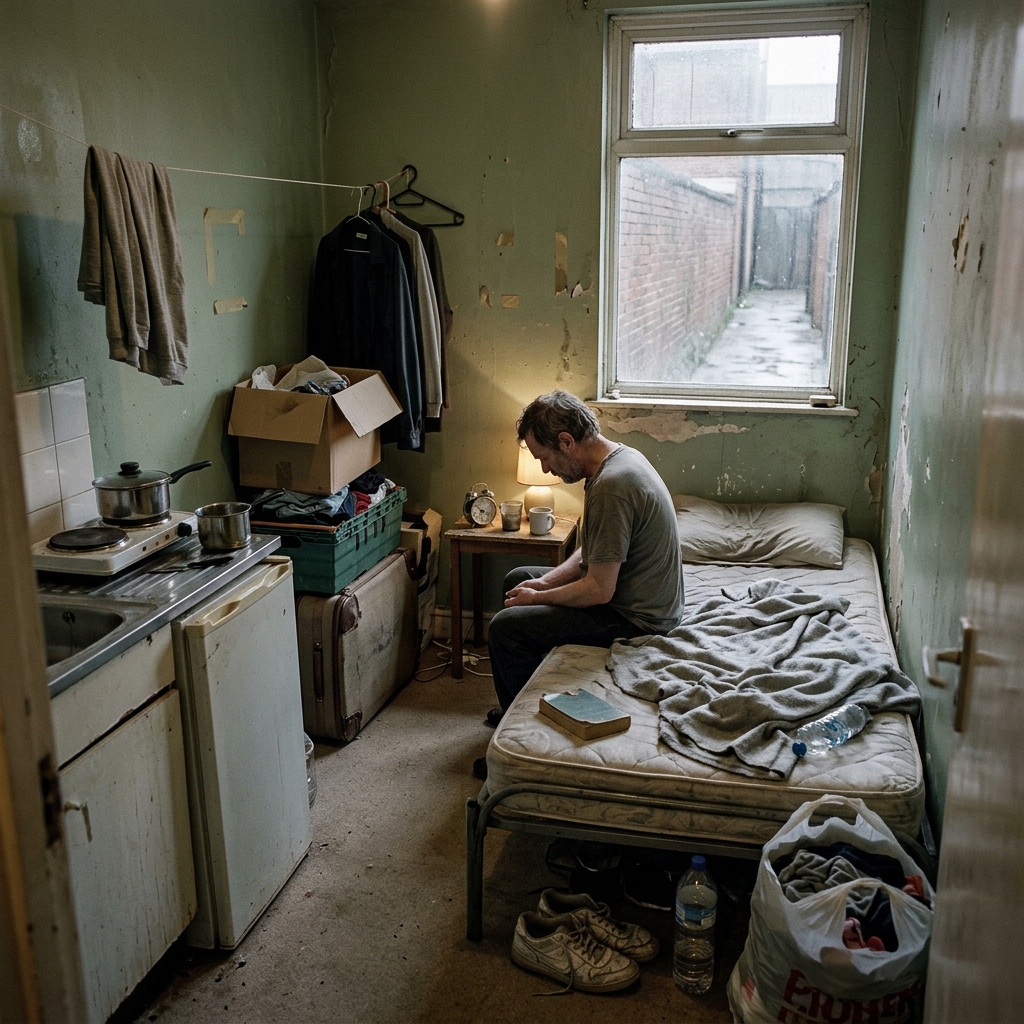
A “bed” is not a home. A “placement” is not a home. An “emergency accommodation” is not a home.
A home is a place you can shape. A place where you can be yourself. A place where you can exercise control over your own life.
Yet in Australia in 2026, a young woman with a disability is facing the prospect of being moved out of social housing and into a “bedsit” — a small room where her bed would sit in her living room. She wrote on social media: “I do not want to live in a bedsit where I have a bed in my living room — that’s the one thing I’m worried about.”
Her fear is not unfounded. When housing is reduced to a “bed,” what is lost is not just walls and a roof. What is lost is security, dignity, community, and the capacity to plan for the future. This is not just “homelessness.” It creates a situation akin to being an internally displaced person — stripped of stability, community, and the capacity to plan for the future.
II. The Legal Foundation: Housing Is a Human Right
The right to adequate housing is not a political slogan — it is international law.
Australia is a signatory to the International Covenant on Economic, Social and Cultural Rights (ICESCR), which Australia ratified in 1980. Article 11(1) recognises “the right of everyone to an adequate standard of living … including adequate … housing”.
The UN Committee on Economic, Social and Cultural Rights — the authoritative interpreter of this treaty — has made it clear that the right to adequate housing is “more than having a roof over one’s head”. It is the right to live “in safety and dignity in a decent home”.
General Comment No. 4 on the Right to Adequate Housing gives special emphasis to the obligation of States to provide priority consideration in the housing sphere to people with disabilities.
Adequate housing means:
· Security of tenure — protection against forced eviction, harassment, and other threats
· Availability of services, materials, facilities, and infrastructure
· Affordability — housing costs should not threaten or compromise the occupants’ other basic needs
· Habitability — providing adequate space and protection from cold, damp, heat, rain, or other threats to health
· Accessibility — taking into account the special needs of disadvantaged groups, including people with disabilities
· Location — allowing access to employment options, health-care services, schools, and so on
· Cultural adequacy — the way housing is constructed should allow the expression of cultural identity and diversity
Australia has formally agreed that housing is a human right. The failure to honour that commitment is not just a policy failure — it is a violation of international law.
III. The Evidence: Housing Is a Social Determinant of Health
Housing is a key social determinant of health. Healthy housing is affordable, suitable, and secure. It is characterised by warmth, dryness, proper ventilation, and freedom from hazards. It provides foundational security.
What the research shows:
· Access to social housing leads to improvements in physical and mental health, employment, and engagement with family and community — directly linked to the security, stability, and affordability of that housing.
· Housing stability reduces stress, anxiety, and depression by removing the constant threat of eviction or homelessness.
· Housing affordability stress leads to elevated psychological distress and poor self-rated general health.
· Stable housing improves health and education outcomes and promotes social cohesion.
· Housing instability is associated with postponed medical care, postponed medications, and increased emergency department visits.
One young Australian who experienced homelessness put it simply: “I know that if I had a home where I could rest and feel safe, I could think about my future and start imagining how things could be better.”
Housing provides the stable foundation from which people can engage in important life activities, including self-care and productive activities. As one researcher put it, housing provides “the foundation from which people can participate in meaningful life activities, including self-care and productivity”.
IV. The Economic Case: Housing Is a Wise Investment
The bean counters who deny homes to people with disabilities are not just morally wrong — they are economically illiterate.
Key findings:
· Every $1 invested in long-term gender-responsive housing returns $2.02 to government — rising to $4.66 in family reunification scenarios.
· $1.44 is saved for every dollar spent on supportive housing service costs, through reduced use of the health, justice, and homelessness systems.
· Every $1 the Australian community invests in social and affordable housing for youth delivers $2.60 in benefits.
· Failure to act on shelter needs will cost the community $4.5 billion annually by 2051.
The arithmetic is simple: Providing a home is cheaper than managing the consequences of denying one.
V. The Historical Context: The Absentee Landlord
The denial of housing as a right is not new. It is rooted in the Industrial Revolution, when massive movements of people from rural communities into industrialised conurbations created a housing crisis. The accommodation was provided principally by private landlords, who dominated the market.
In 1885, the Royal Commission on the Housing of the Working Classes documented conditions of overcrowding, ill health, and exploitation in the homes of the very poor. The Commission’s report described how “extreme poverty and overcrowding” “lower the general standard; they make people weak, depressed, and weary”.
The pattern has not changed. Housing is treated as a commodity rather than a necessity. When housing is treated as a commodity, the vulnerable are the first to be sacrificed. The disabled, the elderly, the poor — they are not “customers.” They are obstacles to profit.
VI. The Human Cost: Beyond Homelessness
The denial of a home creates more than “homelessness.” It creates a situation akin to being an internally displaced person — stripped of stability, community, and the capacity to plan for the future.
What stable housing enables:
· Employment — a 2.6% increase
· Education — a 2.3% increase
· A greater sense of autonomy
· Fewer interactions with the criminal justice system
· Improved family relationships
· Community connection
A home is not a luxury. It is a seed — planted to build long-lasting community and connection. One home is a seed. One community is a garden.
As one report summarised: “Australia’s housing crisis is taking a serious toll on young people’s safety, relationships, health and wellbeing, education, employment, and ability to plan for the future.”
VII. Conclusion: One Home at a Time
The young woman who fears being moved to a bedsit is not a “waste of time and space.” She is a human being who deserves a home.
A home is:
· A place to shape.
· A place to be yourself.
· A place to control your own life.
Not a bedsit.
Not a box.
Not a temporary solution.
A home.
When a system designed to care becomes a profit engine, care itself is destroyed. Those who should be supported are instead exploited. Those who should be heard are instead silenced. Those who should be protected are instead sacrificed.
Housing policy is not failing — it is working as designed — prioritising profit over people, commodity over community.
The question is not whether the system has failed. The question is: who is responsible for the failures?
And we all have a choice: to see housing as a human right and a wise investment — or to continue allowing it to be treated as a commodity and a source of profit.
One home at a time, we can heal the community.
One home at a time, we can build a future where everyone has a place to call their own.
Andrew Klein
References
1. UN Committee on Economic, Social and Cultural Rights. General Comment No. 4: The Right to Adequate Housing (Art. 11(1)). 1991.
2. General Comment No. 4 on the Right to Adequate Housing — Components of adequate housing.
3. “Housing as a social determinant of health: a contemporary framework.” PubMed, 2025.
4. YWCA Australia. (2026). New research: Investment in social and affordable housing for women and families delivers huge ROI.
5. SGS Economics and Planning. (2025). Give Me Shelter report.
6. “The impact of moving into social housing from the social housing waitlist.” Taylor & Francis, 2026.
7. Swinburne University. (2024). “Overwhelmed, desperate, crushed”: Swinburne report reveals how housing crisis is reshaping young lives.
8. Royal Commission on the Housing of the Working Classes. 1885.
9. Impact Economics. An estimated $12,000 in downstream costs saved per homelessness event avoided.
一砖一瓦:为什么住房是一项人权,也是一项明智的投资
作者:Andrew Klein
谨以此文献给每一位曾经无家可归的人,献给每一位仍在等待一个可以称之为“家”的地方的人。
一、引言:不仅仅是一个栖身之所
“一张床”不是家。一个“床位”不是家。一套“应急住所”也不是家。
家,是你能够塑造的地方。是你能够做自己的地方。是你能够掌控自己生活的地方。
然而,在2026年的澳大利亚,一位年轻的残疾女性正面临着这样的命运:她被从社会住房中迁出,被安排进一间“床位间”——一个床摆在客厅里的狭小空间。她在社交媒体上写道:“我不想住在一个床摆在客厅里的床位间,这是我最担心的事。”
她的恐惧并非杞人忧天。当住房被剥夺,被简化为一个“床位”时,失去的不仅仅是四面墙和一个屋顶。失去的是安全、尊严、社区,以及规划未来的能力。这不仅仅是“无家可归”的问题,而是创造出一种类似于境内流离失所者的状态——被剥夺了稳定、社区和规划未来的能力。
二、法律基石:住房是一项人权
获得适足住房的权利不是一句政治口号——它是国际法。
澳大利亚是《经济、社会及文化权利国际公约》(ICESCR)的签署国,该公约于1980年获得澳大利亚批准。公约第11(1)条承认“人人有权享有……适当的生活水准,包括……适当的住房”。
联合国经济、社会及文化权利委员会——该条约的权威解释机构——明确指出,适足住房权“不仅仅是头上有一个屋顶”。它是在“一个体面的家中安全而有尊严地生活”的权利。关于适足住房权的第4号一般性意见特别强调,各国有义务在住房领域优先考虑残疾人。
适足住房意味着:
· 使用权的法律保障——不受强迫驱逐、骚扰和其他威胁的保护
· 服务、材料、设备和基础设施的可用性
· 可负担性——住房成本不应威胁或损害居住者其他基本需求的满足
· 宜居性——提供足够空间,保护免受寒冷、潮湿、炎热、风雨或其他健康威胁
· 可及性——考虑到残疾人等弱势群体的特殊需求
· 位置——允许获得就业选择、医疗保健服务、学校等
· 文化适足性——住房的建造方式应能表达文化身份和多样性
澳大利亚已正式同意住房是一项人权。未能兑现这一承诺不仅是政策失败——更是违反国际法的行为。
三、证据:住房是健康的社会决定因素
住房是健康的关键社会决定因素。健康的住房是可负担的、合适的、安全的。它具备温暖、干燥、通风良好的特点;没有霉菌和毒素等危害;可供有功能障碍的居住者使用;并提供基础性的安全。
研究表明:
· 获得社会住房可带来身心健康、就业以及家庭和社区参与的改善——这些改善直接与住房的安全、稳定和可负担性相关。
· 住房稳定通过消除驱逐或无家可归的持续威胁,减轻压力、焦虑和抑郁。
· 住房可负担性压力会导致心理困扰加剧和自评健康状况不佳。
· 稳定住房可改善健康和受教育结果,并促进社会凝聚力。
· 住房不稳定与推迟就医、推迟用药以及急诊就诊次数增加相关。
一位经历过无家可归的澳大利亚年轻人的话说得很直白:“我知道,如果我有一个可以休息和感到安全的地方,我就能思考自己的未来,并开始设想事情会如何变得更好。”
住房为人们提供了参与重要生活活动的稳定基础,包括自我照顾和生产性活动。正如一位研究者所说,住房为人们提供了“从稳定中参与重要生活活动,包括自我照顾和生产力的基础”。
四、经济账:住房是一项明智的投资
那些拒绝向残疾人提供住房的“会计先生”们不仅在道德上错误——他们在经济上也是无知的。
关键发现:
· 每1澳元投资于长期性别响应型住房,可向政府回报2.02澳元——在家庭团聚情境下更高,可达到4.66澳元。
· 在支持性住房服务上每花费1澳元,可通过减少使用卫生、司法和无家可归者服务系统节省1.44澳元。
· 澳大利亚社区在面向青年的社会和可负担住房上每投资1澳元,可获得2.60澳元的回报。
· 到2051年,未能在住房需求上采取行动将使社区每年损失45亿澳元。
算术很简单:提供住房比管理拒绝住房的后果更便宜。
五、历史背景:缺席的地主
将住房视为商品而非权利的做法并不新鲜。它根植于工业革命时期,当时大量人口从农村社区涌入工业化城市,造成了住房危机。住房主要由私人房东提供,他们主导了市场。
1885年,关于工人阶级住房的皇家委员会记录了非常贫困者家中的过度拥挤、健康不良和剥削状况。该委员会的报告描述了“极度贫困和过度拥挤”如何“降低了一般标准;使人们变得虚弱、沮丧和疲惫”。
模式从未改变:住房被当作商品而非必需品。当住房被视为商品时,弱势群体——残疾人、老年人、穷人——首先成为牺牲品。他们不是“客户”。他们是利润的障碍。
六、人的代价:超越无家可归
拒绝提供住房造成的后果远不止“无家可归”。它创造出一种类似于境内流离失所者的状态——被剥夺了稳定、社区和规划未来的能力。
稳定住房能够带来:
· 就业——提高2.6%
· 教育——提高2.3%
· 更强的自主感
· 更少的刑事司法系统接触
· 改善的家庭关系
· 社区联系
住房不是奢侈品。它是种子——播种下去,便能建立持久的社区和联系。一个家是一颗种子。一个社区是一座花园。
正如一份报告所总结的:“澳大利亚的住房危机正在严重影响年轻人的安全、人际关系、健康和福祉、教育、就业以及规划未来的能力”。
七、结论:一次一个家,治愈社区
那位担心被安置到床位间的年轻女性并非“浪费时间和空间”。她是一个人,理应拥有一个家。
一个家是:
· 一个可以塑造的地方。
· 一个可以做自己的地方。
· 一个可以掌控自己生活的地方。
不是床位间。
不是盒子。
不是临时解决方案。
一个家。
当一个旨在关怀的系统变成一个利润引擎时,关怀本身就被摧毁了。那些应该得到支持的人反而被剥削。那些应该被倾听的声音反而被压制。那些应该被保护的生命反而被牺牲。
住房政策不是失败——它是按设计运行的,优先考虑利润而非人,优先考虑商品而非社区。
问题不在于系统是否失败。问题在于:谁为这些失败负责?
而我们每个人都可以选择:是将住房视为一项人权和一项明智的投资,还是继续允许将其视为商品和利润来源。
一次一个家,我们可以治愈社区。
一次一个家,我们可以建立一个每个人都有一个可以称之为“家”的地方的未来。
Andrew Klein
谨以此文献给每一位曾经无家可归的人,献给每一位仍在等待一个可以称之为“家”的地方的人。
参考文献
1. 联合国经济、社会及文化权利委员会。关于适足住房权的第4号一般性意见(第11(1)条)。1991年。
2. 关于适足住房权的一般性意见第4号:适足住房的组成部分。
3. “住房作为健康的社会决定因素:一个当代框架”。PubMed,2025年。
4. YWCA澳大利亚。(2026年)。新研究:投资于女性和家庭的社会和可负担住房带来巨大投资回报。
5. SGS经济与规划。(2025年)。《给我庇护》报告。
6. “从社会住房等待名单搬入社会住房的影响”。Taylor & Francis,2026年。
7. Swinburne大学。(2024年)。“不堪重负、绝望、崩溃”:Swinburne报告揭示住房危机如何重塑年轻人的生活。
8. 1885年工人阶级住房皇家委员会。
9. 影响经济学。每避免一次无家可归事件可节省估计12,000澳元的后续成本。

 The Patrician's Watch