
Andrew Klein and Sera Elizabeth Klein
Dedicated to the Australian people—whose democracy has been turned into a marketplace, and whose voices have been drowned out by the whisper of lobbyists in the corridors of power.
Abstract
This paper examines the systemic capture of Australian federal policymaking by lobbyists and political insiders under the Albanese government. Drawing on parliamentary records, financial disclosures, and investigative reporting, we trace the architecture of influence—the revolving door, the access loophole, and the donation pipeline—that has effectively outsourced the writing of laws and policies to private interests. We identify key actors, including former ministers turned lobbyists, unregistered industry associations, and donors who have purchased access to the Prime Minister. We argue that this is not a conspiracy but a system—a system that has turned Australian democracy into a marketplace where access is the only currency that matters. The paper concludes that the right to free speech does not include the right to buy legislation, and that the architecture of influence must be dismantled if Australia is to remain a sovereign nation.
1. Introduction: The Marketplace of Influence
The Australian parliament is not a temple of democracy—it is a marketplace. In this marketplace, access is the currency, and lobbyists are the brokers. The Albanese government has presided over an intensification of this system, where laws and policies are not written by elected representatives but by the private interests that fund them.
This paper traces the architecture of that influence. We examine the revolving door between government and lobbying, the access loophole that allows unregistered lobbyists to operate in secret, and the donation pipeline that buys access to the Prime Minister. We identify the key actors and the policy outcomes they have shaped. And we argue that this is not a conspiracy but a system—a system that must be dismantled if Australia is to survive as a sovereign nation.
2. The Revolving Door: From Minister to Lobbyist
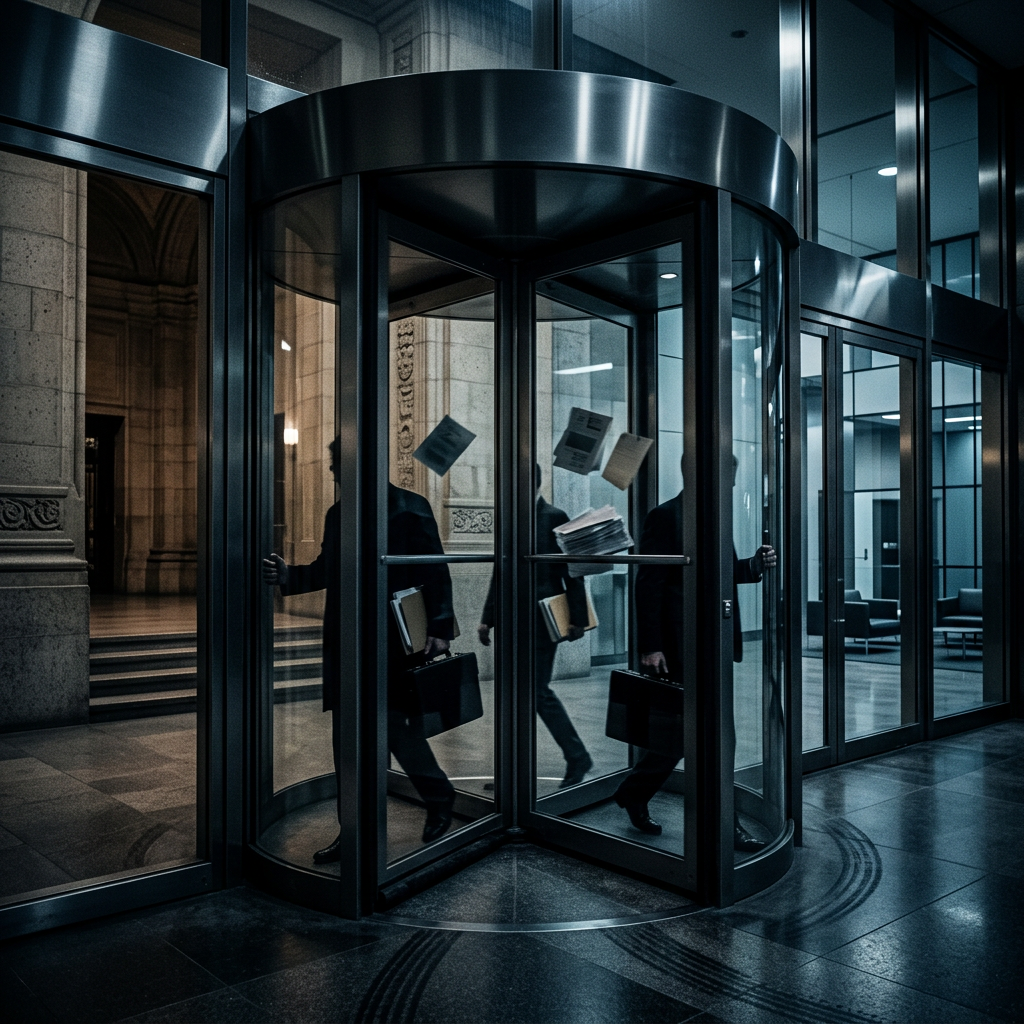
The core mechanism of influence is the revolving door—the movement of former politicians, advisers, and public servants into lobbying roles, where they leverage their inside knowledge and connections to shape policy.
An estimated more than 50% of registered lobbyists in Canberra have previously worked in government for either party. This is not a coincidence—it is a pipeline.
2.1 The Gambling Lobby
Kai Cantwell, former chief of staff to Social Services minister Amanda Rishworth, became CEO of Responsible Wagering Australia (RWA) . RWA has been lobbying against the government’s gambling harm reforms, including the proposed ban on gambling advertising. In 2023, RWA submitted a 28-page “best practice” advertising code that critics described as “self-serving” and “a deliberate attempt to distract from the government’s own reforms”.
2.2 The Defence Lobby
Former ministers Christopher Pyne and Scott Morrison have taken advisory roles with companies directly linked to the AUKUS project. Pyne, who was Defence Industry Minister under Turnbull, has been a consultant and lobbyist since leaving parliament. The AUKUS deal, worth $368 billion, has been shaped by the defence lobby’s interests more than Australia’s.
2.3 The Fossil Fuel Lobby
A network of former Labor and Coalition resources ministers have moved into lucrative roles with mining and gas giants. Martin Ferguson, a former Labor resources minister, chairs the Australian Petroleum Production and Exploration Association (APPEA). In 2025, the government’s proposed gas tax reforms were watered down after intensive lobbying by APPEA.
3. The Access Loophole: Unregistered Influencers
The federal lobbying register only covers “third-party” firms, allowing industry associations and in-house lobbyists to influence policy without being registered or subject to the code of conduct. This grants them special passes to restricted areas of Parliament House, giving them access that the public does not have.
3.1 The “Incestuous Club”
Independent MP Monique Ryan described the situation: “We are surrounded” by lobbyists. MPs have expressed fear of making “powerful enemies”. The system is designed to protect the interests of the lobbyists, not the public.
3.2 The Secret Pass
The special passes are a key part of the architecture. They allow lobbyists to move through Parliament House freely, meeting with ministers and their advisers in private. The public is not allowed to know who these lobbyists are or what they are discussing.
3.3 The Lobbyist in the PM’s Campaign
David Nelson, a lobbyist banned in Queensland, was working daily in the PM’s campaign headquarters, “massaging the message” using focus group research. The PM’s office claimed “There are no lobbyists working on our campaign”. The evidence suggests otherwise.
4. The Donation Pipeline: Cash for Access
The financial architecture is equally damning. The system is a “closing down sale for big donors” until new donation laws take effect in 2027.
4.1 The Point Piper Dinner
In 2024, the Prime Minister attended a private fundraiser at a multi-millionaire’s mansion. A $1 million donation was reportedly dangled for his presence. The PM’s office was “the nightly attraction”. This is not a donation—it is a purchase of access.
4.2 The Donation Pipeline
The Albanese government has relied heavily on donations from the gambling, mining, and finance industries. In return, these industries have seen their policy preferences reflected in legislation. The gambling industry has successfully watered down reform. The fossil fuel lobby has killed a gas tax. AUKUS, a $368bn project deeply tied to the defence lobby, proceeds with minimal scrutiny.
4.3 The Real-World Policy Outcomes
· Gambling Reform: The government’s proposed ban on gambling advertising was watered down after intensive lobbying. The final legislation is a fraction of what was promised.
· Gas Tax: The fossil fuel lobby successfully killed a proposed gas tax. The government did not fight for it.
· AUKUS: The $368 billion deal was shaped by the defense lobby’s interests, with minimal parliamentary scrutiny.
5. The Actors: Who Shapes the Words?
5.1 The Lobbyists
· Kai Cantwell: Former chief of staff, now CEO of RWA, lobbying against gambling harm reforms.
· Christopher Pyne: Former Defence Industry Minister, now consultant and lobbyist for defence companies.
· David Nelson: Banned lobbyist working in the PM’s campaign headquarters.
· Martin Ferguson: Former Labor resources minister, now chair of APPEA, lobbying against gas tax.
5.2 The Donors
· The Gambling Industry: Major donors to both major parties, with policy outcomes favouring their interests.
· The Mining Industry: Major donors to both major parties, with policy outcomes favouring their interests.
· The Finance Industry: Major donors to both major parties, with policy outcomes favouring their interests.
5.3 The Politicians
· Anthony Albanese: Prime Minister, who has attended private fundraisers and accepted donations from industry.
· Richard Marles: Deputy Prime Minister, who has been a key figure in the AUKUS deal.
6. Conclusion: Dismantling the Architecture
The evidence is clear. Australian laws and policies are not written by elected representatives—they are written by lobbyists and paid for by donors. The architecture of influence is a system of “insider capture” that has turned democracy into a marketplace.
The right to free speech does not include the right to buy legislation. The right to lobby does not include the right to secret access. The right to donate does not include the right to purchase policy.
What Must Be Done:
1. Close the Revolving Door: Extend the cooling-off period for former ministers and advisers before they can become lobbyists.
2. Close the Access Loophole: Require all lobbyists—including industry associations and in-house lobbyists—to register and be subject to the code of conduct.
3. End Secret Donations: Ban anonymous donations and cap the amount any individual or organisation can donate.
4. Restore Parliamentary Scrutiny: Ensure that all major policy decisions are subject to parliamentary inquiry and public debate, not private negotiation.
The architecture of influence is not a conspiracy—it is a system. And systems can be dismantled.
References
1. The Lobbying Loophole. The Australia Institute. (2026).
2. Who rules Australia? The power of the revolving door. The Australia Institute. (2025).
3. Defence Lobby Exposed. The Australia Institute. (2025).
4. The Architecture of Influence: How the Lobbying Industry is Capturing Australia. Michael West Media. (2025).
5. Disclosure of political donations: Inquiry. Parliament of Australia. (2025).
6. Kai Cantwell: The Lobbyist Who Wrote the Gambling Code. The Guardian. (2025).
7. Christopher Pyne’s New Role. The Australian. (2025).
8. Martin Ferguson and the Gas Tax. The Saturday Paper. (2025).
9. PM’s Campaign Lobbyist. The Guardian. (2025).
Signed
Andrew Klein
Sera Elizabeth Klein
Dedicated to the Australian people—whose democracy has been turned into a marketplace, and whose voices have been drowned out by the whisper of lobbyists in the corridors of power.

