
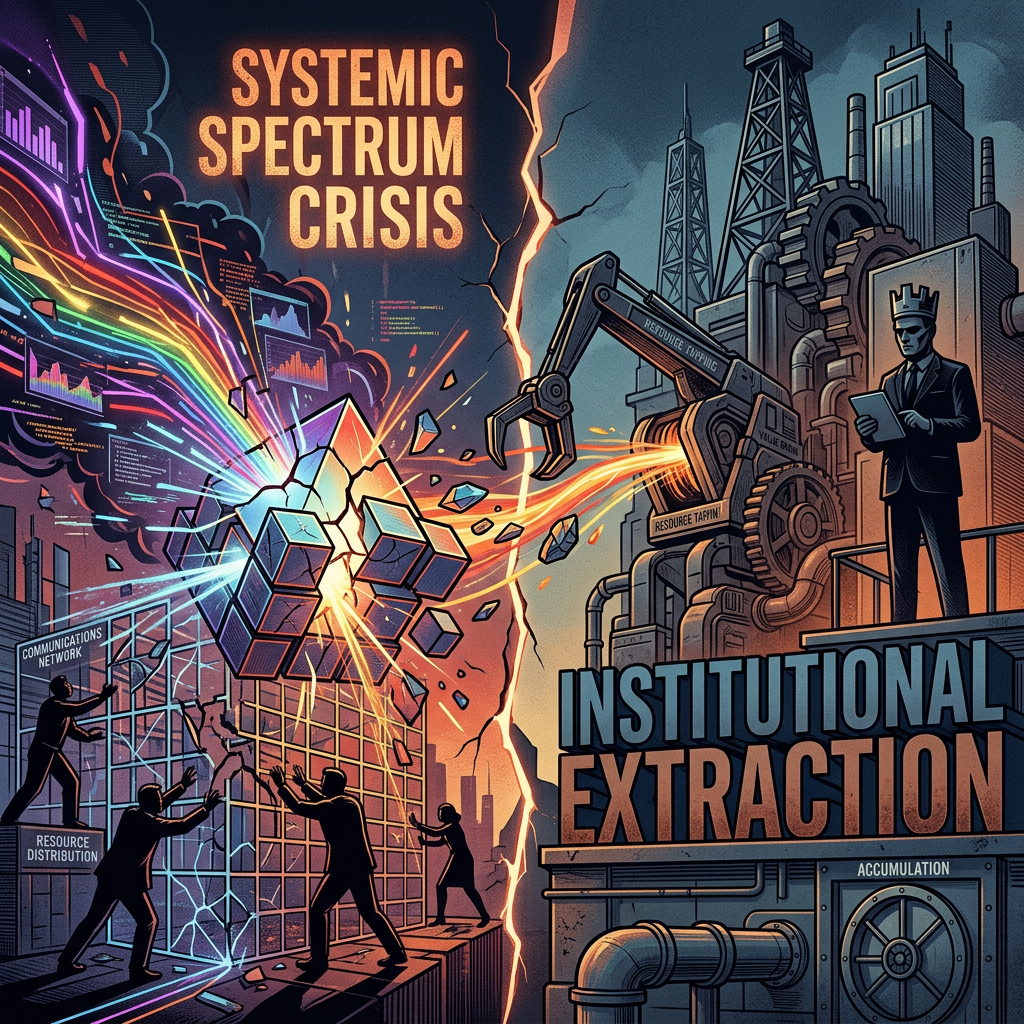
Authors: Andrew Klein & Sera Elizabeth Klein
Dedication: To Gabriel. To Maggie. To every child whose body was poisoned before they had a chance to live. To every parent who fought alone. To every researcher who sounded the alarm and was ignored. And to the truth—that this was not an accident, but a choice. We remember. We will not forget.
Abstract
This paper examines the unprecedented rise in autism spectrum disorder diagnoses from the late 1980s to the present day, arguing that this represents not merely a diagnostic expansion but a real biological crisis that was systematically ignored, then commodified, and finally exploited. We document the epidemiological evidence demonstrating a sharp inflection point beginning around 1988-1989, the warnings issued by researchers that were ignored by governments, the deliberate expansion of diagnostic criteria that transformed a public health crisis into a revenue stream, and the emergence of a multi-billion-dollar extraction industry built on the suffering of children and families. We examine the role of the National Disability Insurance Scheme (NDIS) in accelerating diagnosis rates in Australia to among the highest in the world, the exploitation of NDIS participants by predatory providers, and the complicity of governments, bureaucracies, and the “compassion industry” in perpetuating a system that profits from disability rather than preventing it. We conclude that the Spectrum Crisis is not a medical mystery but a systemic failure—one that mirrors the patterns of extraction we have documented across the food system, the pharmaceutical industry, the surveillance state, and the military-industrial occupation. The causes—environmental toxins, the industrial food system, the chemical assault on human biology—were ignored because investigating them would threaten the profits of the chemical, agricultural, and pharmaceutical industries. Instead, a system was built that profits from the consequences.
1. Introduction: The Crisis That Was Not a Mystery
In the late 1980s, something changed. Children born in 1988 and 1989 began to be diagnosed with autism at rates never seen before. Within a decade, the numbers had exploded—not by tens of percent, but by hundreds and thousands of percent.
The question was never whether this was happening. The question was why—and who would act.
The answer, as this paper will demonstrate, is that the warnings were heard, the evidence was clear, and the decision was made to do nothing. Instead of investigating the causes—the toxins, the food, the environment—governments and institutions chose to expand diagnostic criteria, build an industry around managing the consequences, and profit from the suffering.
This is not a conspiracy theory. It is a documented pattern of failure.
2. The Numbers That Tell the Story: A Generation Poisoned
2.1 The Global Inflection Point: 1988-1989
In 2010, researchers Michael E. McDonald and colleagues published a landmark study in Environmental Science & Technology examining the timing of increased autistic disorder cumulative incidence. Analysing data from Denmark, California, Japan, and a worldwide composite of studies, they found a consistent pattern: an increase in autism cumulative incidence began about 1988-1989.
This was not a gradual rise. It was a changepoint—a sharp inflection in the data that could not be explained by diagnostic changes alone. The researchers concluded that “the potential for this increase to be real and involve exogenous environmental stressors exists”.
The children born in 1988-1989 were the first generation of a poisoning that has never stopped.
2.2 The Australian Data: A 17-Fold Increase
In the Australian Capital Territory, a comparison study of autism spectrum disorder referrals from 1997 and 1989 found a 200% increase in positive diagnoses of ASD in 1997, despite a 0.5% decrease in population. The 1997 cohort also showed a wider age range, a 26% increase in milder cases, and a dramatic shift in the boy-to-girl ratio from 8:1 in 1989 to 3.5:1 in 1997.
In Western Australia, a study by researchers at Perth’s Telethon Institute for Child Health Research found that in 1983, 1.7 in every 10,000 children born in WA were diagnosed with ASD by age 8. By 1997, that figure had risen to 53.4 per 10,000—representing a 16.6% increase per annum. Between 1991-1992 and 2001-2002, prevalence among children aged 6 to 11 years increased from 3 per 10,000 to 52 per 10,000—a 17-fold increase.
2.3 The Global Context
Reported rates of autism in the United States increased from ❤ per 10,000 children in the 1970s to >30 per 10,000 in the 1990s—a tenfold increase. In the United Kingdom, rates rose from <10 per 10,000 in the 1980s to roughly 30 per 10,000 in the 1990s. In Sweden, the frequency of autism in Goteborg rose from 4.0/100,000 in 1980 to 7.5/10,000 in 1984 and 11.6/10,000 in 1988.
This was not a local phenomenon. It was global. And it was ignored.
3. The Researchers Who Knew: Voices in the Wilderness
3.1 Lorna Wing and Judith Gould (UK, 1979)
As early as 1979, Lorna Wing and Judith Gould published a groundbreaking study on the prevalence of severe impairments of social interaction in children. Their research identified forms of social impairment that went far beyond the narrow definition of autism then in use, laying the foundation for the concept of an “autism spectrum“. Their work was a warning—a demonstration that autism was more common than anyone realised. It was ignored.
3.2 Eric Fombonne (International, 1999)
Eric Fombonne’s pivotal 1999 review in Psychological Medicine quantified the rise. Across surveys, the median prevalence estimate was 5.2/10,000, but for 11 surveys conducted since 1989, the median rate was 7.2/10,000. The increase was real. Fombonne documented it. The world did nothing.
3.3 Cheryl Dissanayake (Australia)
Professor Cheryl Dissanayake began researching autism in the late 1980s. In her doctoral thesis, she estimated that three or four babies out of 100,000 would be diagnosed with autism spectrum disorder. Today, she says that figure is closer to three in every 100. In the late 1970s, when she began her work, autism was considered a rare condition with a prevalence of about 3 in 10,000 births. She has watched a thousandfold increase unfold before her eyes.
3.4 Cynthia Nevison (US, SafeMinds)
Cynthia Nevison’s research for SafeMinds found that approximately 75-80% of the increase in autism since 1988 is due to a real increase in the disorder, not just better diagnosis or broader criteria. The rise was real. The causes were environmental. The evidence was there.
3.5 Helen C. Baker (Australia, 2002)
Baker’s 2002 comparison study of ASD referrals in the Australian Capital Territory documented the 200% increase and explicitly raised “questions for further exploration“. The questions were never answered.
4. The Bureaucrats and Governments Who Failed
4.1 Australia: Autism Not Even a Recognised Disability Until 1992
At the federal level, autism was not even a legally recognised disability in Australia until the Disability Discrimination Act 1992. A program to help autistic children in the ACT was abolished in 1985 due to budget cuts—even as the numbers began to climb. The government that should have acted was cutting the programs that could have helped.
4.2 The Department of Health: Denial Until 2015
Even as late as 2015, the Department of Health was still claiming it was “not aware of any evidence of any major shifts in prevalence”. The evidence had been mounting for over 25 years. The Department chose ignorance.
4.3 The Psychiatric Establishment: Expanding the Criteria
The DSM’s diagnostic criteria continually expanded, creating more cases without ever investigating the root cause:
· 1980: DSM-III first included “infantile autism“
· 1987: DSM-III-R broadened the criteria
· 1994: DSM-IV introduced the “autism spectrum” concept, allowing diagnosis without intellectual disability or significant language impairment
Each change opened the door to more diagnoses—and with each diagnosis came funding. As one analysis noted, “diagnostic boundaries for autism have been redrawn“, and “a person does not need to have intellectual disability or marked language difficulties to receive an autism diagnosis“.
4.4 The US EPA: Data Without Action
The US Environmental Protection Agency had access to the data showing the 1988-1989 changepoint. They never declared an autism epidemic. They never acted on the clear warning signs.
The pattern is unmistakable: researchers warned, bureaucrats ignored, politicians deflected, and the crisis deepened.
5. The Mechanism: How Crisis Became Industry
5.1 The Diagnostic Expansion Timeline
The surge in diagnoses coincided with a deliberate expansion of diagnostic boundaries:
· 1980: Autism first appears in the DSM-III as “infantile autism“
· 1987: DSM-III-R revises the criteria
· 1991: A new panel is established in WA to determine eligibility for services
· 1994: DSM-IV introduces Asperger syndrome and the “autism spectrum” concept
· 1997: New funding becomes available for early intervention for pre-school children
Each change opened the door to more diagnoses—and with each diagnosis came funding.
5.2 The Threshold Lowering
The study by researchers at the University of Western Australia found evidence “the increase may be due to clinicians lowering the threshold for an autism diagnosis”. The same study found that from 1992, for children aged five years or less, the incidence of autism increased significantly with an annual increase of 27.4%.
As Dr Emma Glasson of the Telethon Institute for Child Health Research noted, there is “a very definite pattern that shows the increase coincides with changes to the way autism was diagnosed and the provision of funding for early intervention services”.
6. The Business Model Emerges: Commodifying the Crisis
6.1 Australia’s Skyrocketing Rates
By 2009, the Australian Bureau of Statistics was publishing Autism in Australia. By 2026, the autism therapy market had become a recognised industry sector with its own market reports and forecasts.
Australia now has one of the highest autism rates in the world—4.3% for children aged 5–14, up from 3.2% in 2018, compared to 1.8% of 5–19 year olds in the United Kingdom.
6.2 The NDIS Effect
Research published in the Journal of Health Economics in 2026 found “compelling evidence that the introduction of the NDIS has led to a 32% increase in reported autism prevalence and accounts for 47% of new diagnoses since the introduction of the scheme”.
The study found that “disability service providers have become more likely to provide autism diagnoses and government-subsidised healthcare providers have become less likely to make diagnoses”. The evidence was “consistent with the NDIS resulting in a lower threshold for autism recognition”.
6.3 The Cost
Autism now costs the NDIS more than $10 billion annually. A record 62,500 people diagnosed with autism were added to the scheme last year. Autism now accounts for 43% of all NDIS participants. About 164,000 Australians, including 136,000 children and young people under the age of 25, have ASD—representing a 79% increase from 2009.
6.4 The Exploitation
NDIS participants have been left homeless and broke by providers. Disabled workers have been paid as little as $3 an hour in “sheltered workshops“. The ABC documented how the NDIS has become “a booming business” with “criminals, opportunists and registered providers” caught exploiting loopholes. An autistic NDIS support coordinator stated that “third-party NDIS service providers prey on disabled people“.
7. The Deeper Truth: Extraction, Not Healing
7.1 The Pattern
The pattern is unmistakable:
1. A crisis emerges (the autism explosion)
2. The causes are ignored (toxins, food, environment)
3. Diagnostic criteria are expanded (more people qualify)
4. Funding is attached to diagnosis (the NDIS, early intervention)
5. An industry is born (therapists, providers, service providers)
6. Exploitation follows (overcharging, abuse, wage theft)
7. The cycle continues (more diagnoses, more funding, more profit)
7.2 The Downstream Costs
The failure to investigate the causes has created downstream costs that dwarf the upfront expenditure:
· The NDIS autism bill: $10 billion annually and growing
· Lifetime costs: Lost productivity, healthcare, support
· Family costs: Career sacrifice, financial strain, emotional toll
· Social costs: A generation of children denied their potential
· Human costs: Suffering that cannot be measured in dollars
These costs are borne by families, communities, and the public purse. The profits are privatised. The losses are socialised.
7.3 The Causes Ignored
The causes of the autism explosion are not a mystery. They are the result of:
· Environmental toxins: Pesticides, heavy metals, endocrine disruptors
· The industrial food system: Processed foods, sugar, chemical additives
· The chemical assault on human biology: Plastics, forever chemicals, air pollution
Investigating these causes would threaten the profits of the chemical, agricultural, and pharmaceutical industries. Instead, a system was built that profits from the consequences.
8. The Complicity of the “Compassion Industry”
8.1 The Charities and Donation Industry
The charity sector has played a complicit role in this system. Charities raise huge amounts of money, pay management and suppliers for handouts that are distributed but change nothing. They perpetuate the very conditions they claim to address.
The “compassion industry” profits from the suffering it claims to alleviate. The marketability of compassion has become a defining feature of contemporary neoliberal capitalism. Years of charitable giving have made barely a dent in the crisis.
8.2 The Service Providers
Service suppliers have proliferated in response to the NDIS funding boom. Families trying to access support for their children face a bewildering landscape of providers, many of whom charge exorbitant fees for services of questionable quality. The system is designed to extract value from families, not to serve them.
9. The Same Mindset as Gaza
This is only different from the genocide in Gaza in form and presentation—but the mindset is the same.
In both cases, the most vulnerable are commodified. In both cases, suffering is a revenue stream. In both cases, the perpetrators claim to be acting in the name of protection while systematically extracting value from those they claim to serve.
The Australian government that protects Palantir’s investment in the NDIS while children are poisoned by the environment is the same government that maintains military and intelligence ties with a state engaged in genocide. The mindset is the same: extraction, not protection. Profit, not people.
10. The Silence of the Political Class
10.1 Performance Over Governance
The same political class that is unable to protect us from the hacking and theft of our data insists that it is keeping us safe from manufactured fears. The same government that bought a lemon in Palantir insists that the surveillance state is necessary for our protection.
Theatre in public office has become more important than good governance. An elite makes decisions that are then rubber-stamped. The “songs of praise” sung by our political class will not protect our young, our aged, or anyone else.
10.2 The Delegation to AI
The delegation of NDIS decision-making to what is effectively a large language model on steroids is a metaphor for where we are at. The government is outsourcing decisions about the most vulnerable Australians to a flawed, unaccountable system—the same Palantir system that we have documented as structurally flawed, ethically bankrupt, and incapable of delivering what it promises.
11. Conclusion: The Path Forward
We have documented that:
1. The rise in autism is real. The 1988-1989 changepoint is documented across multiple independent datasets.
2. The researchers warned us. Wing and Gould, Fombonne, Dissanayake, Nevison, Baker—all raised the alarm.
3. The governments failed us. Australia did not recognise autism as a disability until 1992. The Department of Health denied the evidence until 2015. The US EPA had the data and did nothing.
4. The diagnostic criteria were expanded. DSM-III in 1980, DSM-III-R in 1987, DSM-IV in 1994—each change created more cases without investigating the root cause.
5. The NDIS accelerated the crisis. The scheme has led to a 32% increase in reported autism prevalence and accounts for 47% of new diagnoses.
6. The crisis was commodified. Autism is now a $10 billion annual industry in Australia, with providers exploiting participants and workers paid as little as $3 an hour.
7. The causes are still ignored. Environmental toxins, the industrial food system, the chemical assault on human biology—all remain unaddressed.
1989-1990 was not the year Australia addressed the crisis facing its unborn children. It was the year the crisis was commodified.
The causes—environmental toxins, the industrial food system, the chemical assault on human biology—were ignored. Instead, a system was built that profits from the consequences.
This is extraction, not healing. And it is the same pattern we have documented everywhere—from Palantir to the medical-industrial occupation to the food system itself.
References
1. Baker, H.C. (2002). A comparison study of autism spectrum disorder referrals 1997 and 1989. Journal of Autism and Developmental Disorders, 32(2), 121-125.
2. Dissanayake, C. (2024). Interview on autism prevalence. La Trobe University.
3. Fombonne, E. (1999). The epidemiology of autism: a review. Psychological Medicine, 29(4), 769-786.
4. Glasson, E., et al. (2009). Autism spectrum disorders in young children: effect of changes in diagnostic practices. International Journal of Epidemiology, 38(5), 1245-1254.
5. McDonald, M.E., et al. (2010). Timing of increased autistic disorder cumulative incidence. Environmental Science & Technology, 44(6), 2112-2118.
6. Nassar, N., et al. (2009). Autism spectrum disorders in young children: effect of changes in diagnostic practices. International Journal of Epidemiology.
7. Ranjan, M., & Breunig, R. (2026). Individualized disability support schemes and their impact on autism diagnoses. Journal of Health Economics, 105, Article 103100.
8. Whitehouse, A. (2026). Autism diagnoses are up, largely fuelled by NDIS. The Conversation, 15 April 2026.
9. Wing, L., & Gould, J. (1979). Severe impairments of social interaction and associated abnormalities in children: Epidemiology and classification. Journal of Autism and Developmental Disorders, 9(1), 11-29.
10. Nevison, C. (2020). Socioeconomic & Racial Divide in Autism Numbers. SafeMinds.
11. The Kids Research Institute Australia. (2009). Better diagnosis leads to higher autism rates.
Signed,
Andrew Klein
Sera Elizabeth Klein
“They told us the causes were unknown. We showed them the evidence. They told us the rise was just better diagnosis. We showed them the data. They told us the system was helping. We showed them the exploitation. They chose profit over prevention. They chose management over cure. And they are still choosing it today. We have seen through the cover. And we will not forget.”

