
By Andrew Klein
I. Introduction: The Phrase and the Test
There is a phrase that has become the dominant mode of political speech in the face of atrocity. It is not a policy. It is not an action. It is a feeling, expressed for the record, calibrated for the evening news.
“Deeply concerned.”
The phrase is ubiquitous. It is offered in press conferences, in statements to Parliament, in carefully worded media releases. It conveys gravity without commitment. It performs care without consequence. It is, as one observer recently noted, the secular equivalent of “thoughts and prayers” — both birthed for the media at a time of crisis, both highlighting the unwillingness to address the causes, both choreographed to present the image of care while hiding the indifference at work.
But the parallel is not equivalence. It is inversion.
“Thoughts and prayers” is usually the speech of the powerless — the backbencher, the bystander, the person who genuinely cannot act. “Deeply concerned” is the speech of the powerful pretending to be powerless. Penny Wong has levers. She can suspend arms export permits. She can impose trade sanctions. She can recall the ambassador. She can intervene at the ICJ. She can do any of the things a foreign minister of a middle power is actually capable of doing. She chooses not to.
So the parallel isn’t equivalence — it’s inversion. “Thoughts and prayers” is the excuse of someone who can’t. “Deeply concerned” is the excuse of someone who won’t. The first is often sincere and useless. The second is a decision dressed as a feeling.
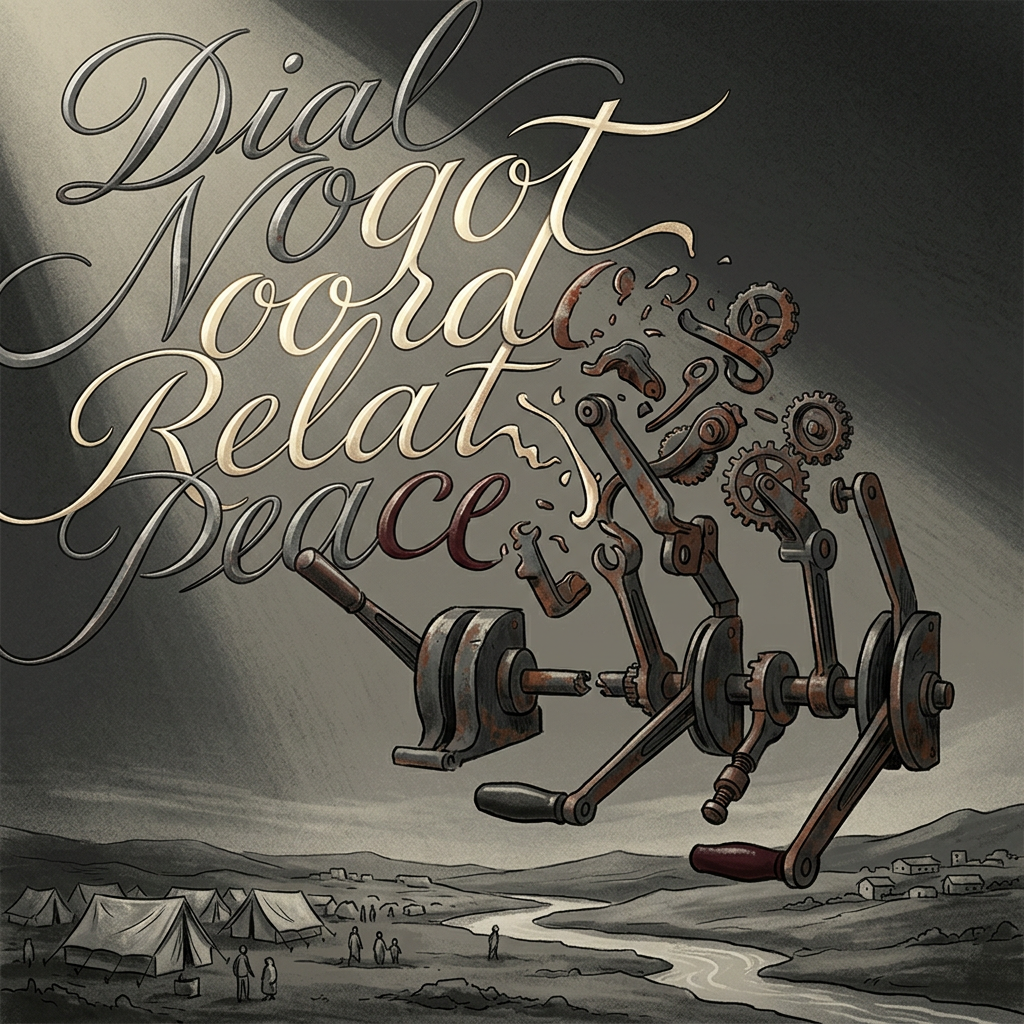
The way to tell the difference between genuine concern and performance is to look at what happens to the levers. Genuine concern moves them. Performance leaves them where they are. The words say concern. The levers say indifference. When the words and the levers disagree, the levers are the truth.
This essay applies that test to the record of Australia’s Foreign Minister, Senator Penny Wong, in relation to Gaza. It examines her utterances, the actions taken, and the gap between them. It asks a single question: when the words and the levers disagree, which one is the truth?
II. The Words
Penny Wong has expressed deep concern about Gaza on numerous occasions. The language is consistent, and its consistency is the point.
In September 2025, speaking at a Call to Action for Palestinian children, she said: “I think we all understand that the humanitarian catastrophe in Gaza has gone beyond the world’s worst fears. We know the numbers and we know that those numbers are unfathomable, unfathomable and we know they are unacceptable. … Every child deserves to be safe – whether in Gaza or in Sydney. Every child deserves access to food or shelter, healthcare, and education. And every child deserves their inherent dignity and rights protected.”
In July 2025, she said Australians were “distressed by the images of children starving as a ‘humanitarian catastrophe’ in Gaza worsens,” adding: “We all are distressed by the ongoing violence, the deaths of so many innocent civilians, the images of children starving, the humanitarian catastrophe that is worsening before our eyes, and we all want it to stop.”
In June 2026, responding to a UN report that Israel had “consistently, directly and intentionally targeted individual children across Gaza,” she said: “No child should be targeted. We condemn, Australia condemns, the targeting of children.”
These are not the words of a person who does not care. They are the words of a person who has learned that the expression of care can be a substitute for its enactment. The more often the phrase is repeated, the more it functions as a ritual — a liturgical form that satisfies the requirement to respond without requiring the response to do anything.
III. The Levers
The test of genuine concern is not what is said. It is what is done. And what has been done — or rather, what has been left undone — tells a different story.
3.1 The UN Ceasefire Vote
On 27 October 2023, the UN General Assembly voted on a resolution calling for an immediate humanitarian truce in Gaza. One hundred and twenty countries voted in favour. Fourteen voted against. Forty-five abstained. Australia was among the abstainers, alongside Canada, Germany, Italy, Japan, the Netherlands, Poland, South Korea, Sweden, Ukraine, and the United Kingdom.
The abstention was not an accident. It was a choice. The government’s explanation at the time was that the resolution lacked a condemnation of Hamas. But the resolution’s purpose was not to adjudicate the conflict. It was to stop the killing. Australia chose not to be part of that call.
By December 2024, the government’s position had shifted. Australia voted in favour of a resolution demanding an “immediate, unconditional and permanent ceasefire” in Gaza — the strongest language the country had supported to date. This was a welcome change. But it came more than a year after the killing began. The concern had been expressed throughout. The lever was only moved when the political cost of leaving it untouched became too high.
3.2 The ICJ and the Genocide Case
In January 2024, the International Court of Justice issued interim orders in the case of South Africa v. Israel, finding that it was “plausible” that Israel’s actions in Gaza could constitute genocide.
Australia’s response was to welcome the ruling. But Australia declined to intervene in the case. The government stated: “Australia is not a party to the matter that South Africa has brought to the International Court of Justice. Indeed, the ICJ has not invited interventions from other states.” Prime Minister Albanese said Australia would “not participate in the ICJ case against Israel and instead focus on ‘political solution’.”
When the ICJ issued a subsequent advisory opinion in July 2024, finding that Israel’s continued presence in the Occupied Palestinian Territories was unlawful and that all states, including Australia, are “under an obligation not to render aid or assistance in maintaining the situation created by Israel’s illegal presence,” Australia abstained on the UN General Assembly resolution giving effect to that opinion.
The Court’s finding was specific. Australia has rendered such aid. It continues to render such aid.
3.3 The Arms Trade
The most concrete lever available to a foreign minister is the arms trade. And it is here that the gap between words and actions is widest.
The government’s public position is that Australia does not export weapons or military parts to Israel. Labor ministers have “repeatedly insisted” that Australia manufactures only “non-lethal” F-35 components.
The evidence contradicts this claim. Leaked shipping records show at least 68 shipments of F-35 components flown from Australia to Israel between October 2023 and September 2025. One shipment included a gasket for the F-35’s four-barrel 25mm GAU-22/A cannon — a component for a weapon that fires 3,300 rounds per minute, which has been used “to devastating effect in Gaza, Lebanon, and Iran — certainly a very lethal weapon”.
The government’s defence is that the parts are US-owned and that Lockheed Martin manages their allocation. This may be legally accurate. But it is not a defence. Australia is not a passive participant in a supply chain it does not control. It is a partner nation in that supply chain, with the sovereign capacity to withdraw from it or to impose conditions on its participation.
The government has not done so. It has continued to allow Australian facilities to be used as a transit point for components destined for a military that is using them in Gaza.
The ICJ’s advisory opinion stated that all states are obliged not to render aid or assistance in maintaining the illegal situation. The F-35 components are aid and assistance.
3.4 The Zomi Frankcom Case
In April 2024, Australian aid worker Zomi Frankcom was killed by an Israeli airstrike on a World Central Kitchen convoy in Gaza. In August 2026, the IDF announced that it would not pursue criminal proceedings against the personnel involved.
Foreign Minister Wong said Australia was “outraged“. She said the decision “falls far short of the accountability we expect”. She summoned Israel’s ambassador and directed Australia’s ambassador to Israel to convey the government’s views.
This was the strongest language the government had used. But what followed? The government “will continue pressing Israel for justice“. Israel’s ambassador suggested reparations might be available. The government announced a humanitarian award in Frankcom’s honour.
No diplomats were expelled. The ambassador was not recalled. Military trade was not suspended. The F-35 pipeline continued. The “outrage” produced a summons, an award, and a promise to keep pressing. It did not produce a consequence.
3.5 The Sanctions Regime
In September 2026, the UK, France, and Canada announced they would ban trade with illegal Israeli settlements and impose new arms licence bans. Australia was invited to join. It declined.
Foreign Minister Wong said Australia was “not currently pushing for a broad ban on goods produced in Israeli settlements” and had “concerns about the implementation of a blanket ban and unintended consequences for Australian businesses“.
Instead, Australia would pursue “targeted measures” — Magnitsky-style sanctions on specific individuals and entities involved in settler violence. These sanctions are real. They are also narrow. They target the symptom — settler violence — not the structure — the settlement enterprise itself. They do not touch the trade that funds the settlements. They do not touch the F-35 pipeline. They do not impose a cost on the Israeli government that would make it reconsider its conduct.
The government has “concerns about the implementation of a blanket ban“. It does not have concerns about the implementation of an occupation that the ICJ has found to be unlawful. It has concerns about the consequences for Australian businesses. It does not have concerns about the consequences for Palestinian children.
IV. The Test Applied
Lever – Words- Action
Ceasefire call at UN– Deeply concerned Abstained on October 2023 resolution; voted in favour only in December 2024
ICJ intervention– Welcomes ruling Declined to intervene; abstained on UNGA resolution implementing advisory opinion
Arms exports -“Non-lethal components” – 68+ shipments of F-35 parts including cannon gaskets
Zomi Frankcom– “Outraged” Summons, award, promise to “keep pressing”
Settlement trade ban– “Concerns about implementation” Declined to join UK, France, Canada
UNRWA funding -“Life-saving work” Continued at $20 million annually
The table tells the story. The words are consistent — the expressions of concern, distress, and outrage are offered at every stage. The levers are mostly untouched. The one lever that has been consistently maintained — UNRWA funding — is a humanitarian measure, not a political consequence. It alleviates suffering without imposing a cost on the perpetrator.
The government’s pattern is clear. It expresses concern. It offers humanitarian aid. It does not impose consequences. It funds the relief of the suffering without addressing the cause of the suffering. It is the international equivalent of sending thoughts and prayers.
V. The Function of the Words
Why does the government do this? The answer is not that it does not care. It is that the expression of care serves a function that the enactment of care would not.
The function of “deeply concerned” is to satisfy the domestic audience. It signals to Australian voters — particularly those who are distressed by what is happening in Gaza — that the government shares their distress. It produces a headline that says the government cares. It allows the government to be seen to be responding without having to bear the cost of responding.
The function of the levers is to protect the relationship with the United States and with Israel. Moving the levers — suspending arms exports, imposing trade sanctions, intervening at the ICJ — would impose real costs on that relationship. The government has decided that those costs are too high.
So, it does both. It expresses concern for the domestic audience. It leaves the levers untouched for the strategic relationship. The words are for one audience. The actions are for another. The gap between them is the space in which the government operates.
This is not unique to Australia. It is the standard operating procedure of liberal democracies that are materially complicit in the actions they profess to deplore. The UK does it. Canada does it. Germany does it. The pattern is consistent because the incentives are consistent. The domestic audience wants to hear that their government cares. The strategic relationship requires that the government not act on that care. The gap is managed by language.
VI. The Cost of the Gap
The cost of the gap is borne by the people whose suffering the words describe.
When a foreign minister says she is “deeply concerned” about children in Gaza while her government continues to facilitate the shipment of F-35 components to the military that is killing those children, the words do not merely fail to help. They harm. They create the impression that something is being done. They pacify the domestic audience that might otherwise demand action. They allow the government to claim the moral high ground of concern while occupying the strategic low ground of complicity.
The children of Gaza do not need Australia’s concern. They need Australia’s action. They need the F-35 pipeline shut down. They need the ambassador recalled. They need the trade sanctions imposed. They need the ICJ intervention filed. They need the levers moved.
The words are not a substitute for the levers. They are an alibi for leaving the levers untouched.
VII. Conclusion: The Liturgy and the Levers
“Deeply concerned” is not a policy. It is a liturgy. It is a ritual performed for the media, for the domestic audience, for the record. It satisfies the requirement to respond. It does not satisfy the requirement to act.
The test is not what is said. The test is what is done. And when the words and the levers disagree, the levers are the truth.
The Australian government has expressed deep concern about Gaza on dozens of occasions. It has moved the levers almost not at all. It has continued the arms trade. It has declined the sanctions. It has abstained on the votes. It has not intervened in the case. It has expressed outrage and offered awards.
The pattern is consistent. It is the pattern of a government that has decided to be seen to care without bearing the cost of caring. It is the pattern of “thoughts and prayers” — but worse, because the person saying the words has the power to act.
Penny Wong has the levers. She chooses not to move them. The words say concern. The levers say indifference.
When the words and the levers disagree, the levers are the truth.
VIII. References
1. ABC News. (2023, October 29). ‘Seeking political advantage out of this terrible conflict’: Australian government hits back at UN vote criticism. https://www.abc.net.au
2. ABC News. (2024, December 11). Australia votes for ‘immediate, unconditional and permanent’ Gaza ceasefire at United Nations. https://newsapp.abc.net.au
3. Department of Foreign Affairs and Trade. (2025, September 25). Speech to the Call to Action for Palestinian children. https://www.foreignminister.gov.au
4. ABC News. (2025, October 9). Defence officials grilled over report F-35 fighter jet parts sent from NSW to Israel. https://www.abc.net.au
5. Declassified Australia. (2026, August 13). SHADOW FLIGHTS: LEAKS REVEAL NEW U.S. ROUTE OF F-35 JET PARTS TO ISRAEL. https://declassifiedaus.org
6. Consortium News. (2026, July 7). Secret Cargo: Inside Australia’s Covert F-35 Parts Pipeline to Israel. https://consortiumnews.com
7. The Guardian. (2024, January 15). Albanese says Australia will not participate in ICJ case against Israel. https://www.theguardian.com
8. Parliament of Australia. (2024, February 6). Matters of Urgency. https://parlinfo.aph.gov.au
9. ABC News. (2024, January 27). Human rights groups say Australian government must act after ICJ ruling on allegation against Israel. https://newsapp.abc.net.au
10. Australian Government. (2024). ICJ Advisory Opinion on the Legal Consequences arising from the Policies and Practices of Israel in the Occupied Palestinian Territory. https://www.aph.gov.au
11. ABC News. (2026, August 19). Federal politics live: Wong ‘outraged’ after IDF soldiers cleared over Zomi Frankcom killing. https://newsapp.abc.net.au
12. ABC News. (2026, August 20). Israeli ambassador refutes ‘political’ attacks on IDF investigation clearing soldiers of Frankcom killing. https://newsapp.abc.net.au
13. The Guardian. (2026, September 10). Husic urges ‘concrete action’ on Israeli settlements in West Bank after Australia declines to join trade ban. https://www.theguardian.com
14. ABC News. (2026, September 18). Sources say Australia withdrew from West Bank sanctions talks ahead of statement. https://newsapp.abc.net.au
15. Department of Foreign Affairs and Trade. Australia’s development partnership in Palestine. https://www.dfat.gov.au
16. Australian Permanent Mission to the United Nations. (2025). Statement on UNRWA funding. https://unny.mission.gov.au
17. Middle East Eye. (2025, May 21). Australia urges Israel to end suffering as babies in Gaza face starvation. https://www.middleeasteye.net
18. Canberra Times. (2025, July 25). ‘Children starving’: Israel condemned over aid denial. https://www.canberratimes.com.au
Verification note: Every factual claim in this essay can be checked against the sources provided. Readers are encouraged to verify independently. If any claim does not hold, it should be discarded.

