The Viral Advantage – How Disease Shaped Human Destiny

By Andrew Klein

Dedication: To my wife, who stimulates the most interesting and rewarding ideas.

I. The Standard Picture – What We Thought We Knew

For more than a century, the disappearance of Neanderthals approximately 40,000 years ago has been explained through a lens of competitive superiority. The narrative was comfortable, even flattering Homo sapiens were smarter, more adaptable, better communicators. We won because we deserved to win.

The anatomical differences are well documented. Neanderthals were shorter and stockier, with barrel chests and limbs adapted for the bitter cold of Ice Age Europe—a body plan requiring an estimated 5,000 calories daily, comparable to a Tour de France cyclist. Their hunting strategy was confrontational, up-close, and dangerous, evidenced by skeletons showing healed but catastrophic injuries. Homo sapiens, by contrast, were taller, more gracile, built for endurance running and projectile weapons—strategies that minimized risk while maximizing return.

Culturally, the old stereotypes have crumbled. Neanderthals buried their dead with care, as evidenced at Shanidar Cave in Iraq, where one individual—dubbed “Nandy”—survived severe trauma including a probable amputation, indicating communal compassion. They created cave art, fashioned jewelry from eagle talons, and mastered the Levallois technique of stone tool manufacture, which requires sophisticated forward planning. They even extracted birch resin by precisely heating bark in earth ovens—a complex process demonstrating advanced cognitive abilities.

Yet none of this saved them. The question that haunts paleoanthropology remains: why?

The answer, it now appears, may not lie in what Neanderthals lacked, but in what Homo sapiens carried.

II. The Viral Hypothesis – A Credible, Overlooked Factor

For decades, the role of infectious disease in human prehistory was described by anthropologist James C. Scott as the “loudest silence” in the archaeological record. Epidemics must have devastated ancient populations, but bones and stones revealed nothing of them.

That silence has now been shattered.

In 2024, scientists announced the successful extraction and sequencing of viral DNA from 50,000-year-old Neanderthal bones recovered from the Chagyrskaya cave in Russia. The pathogens identified were not exotic or ancient in ways that render them irrelevant to modern experience. They were adenovirus (causing common cold-like illnesses), herpesvirus (cold sores), and papillomavirus (genital warts and cancer).

These were not surface contaminants. The viral sequences obtained differ markedly from those found in humans today, ruling out modern contamination. More significantly, these same viruses have been shown through computational analysis to have been capable of persisting as lifelong infections—chronic conditions that would have progressively weakened their hosts.

As geneticist Marcelo Briones, lead author of the study published in Viruses, explains: “If you have Ebola, you die in a day or so, but these viruses have a different type of strategy. Although their mortality is not that high, their morbidity (health problems that they cause) is high”. Persistent infections would have made it difficult for Neanderthals to hunt, gather, reproduce, or simply survive day-to-day in already harsh conditions.

The implication is profound. Neanderthals were not necessarily outcompeted—they may have been worn down.

III. Disease Exchange and Immunological Asymmetry

The mechanism that could have triggered Neanderthal decline is not mysterious. It is the same mechanism observed wherever isolated populations encounter external carriers of novel pathogens.

When Homo sapiens migrated out of Africa beginning around 70,000 years ago, they carried with them a suite of African-origin pathogens to which Neanderthals—separated for more than half a million years—had no immunity. Conversely, Neanderthals likely carried Eurasian pathogens to which Homo sapiens were equally vulnerable. This created the potential for a two-way exchange of infectious diseases.

So why did Homo sapiens survive while Neanderthals disappeared? The most compelling answer lies in population density and pathogen load.

Populations living closer to the equator, in more biodiverse environments, have historically carried a greater diversity and deadliness of pathogens. Greater plant and animal abundance supports more microbes capable of jumping the species barrier to humans. Consequently, Palaeolithic Homo sapiens emerging from Africa would have been exposed to—and developed resistance against—a broader array of infectious threats than their Neanderthal counterparts.

Evidence for this asymmetry in immune capacity now extends to the genetic level.

IV. Genetic Vulnerabilities and Advantages

The Neanderthal genome, sequenced by Nobel laureate Svante Pääbo and his team, revealed that modern humans of non-African descent carry approximately 1–4% Neanderthal DNA . Among the functional consequences of this introgression, immune-related genes are dramatically overrepresented.

Research has identified Neanderthal-introgressed genetic variants that regulate human immune genes in vitro, with particular enrichment in innate immune pathways including interferon signaling, toll-like receptor (TLR) pathways, and antiviral response. Using Massively Parallel Reporter Assays (MPRA), scientists tested 5,353 high-frequency introgressed variants and identified 292 that modulate gene expression in immune cells. These expression-modulating variants are predicted to alter the binding motifs of important immune transcription factors and are associated with genes that function in inflammatory response and antiviral defence.

One such variant has been significantly associated with protection against severe COVID-19 response. Other research has shown that several Neanderthal gene variants that are particularly common among South Asians influenced immune response to the novel coronavirus, making carriers much more likely to get severely ill and die. The irony is striking genetic inheritance from an extinct hominin affects the health of people alive today.

However, the same interbreeding that provided some immune benefits also introduced vulnerabilities. Neanderthals lived in tight-knit, closed communities surrounded by challenging geography, leading to inbreeding and lower genetic diversity. Their total population at any given time is estimated at only 5,000 to 70,000 individuals, with estimates at the lower end more common. In contrast, Homo sapiens populations likely exceeded 100,000, with larger, more interconnected social networks that facilitated both technological exchange and—paradoxically—disease resistance through exposure.

Recent research published in PNAS (March 2025) has further complicated the picture, identifying a high-frequency East Asian-specific haplotype at the 2q21.3 locus that was introgressed from Neanderthals and has been under positive selection. While this haplotype impacts lactase gene expression, its selection appears linked not to milk consumption but to immune function, affecting the expression of genes in immune cells and associating with neutrophil and white blood cell counts. This implies that selection at this locus has occurred either for different reasons in different populations—a pattern of convergent adaptation.

A comprehensive review in Human Genetics (2020) concludes that “there is increasing evidence that archaic, now-extinct hominins with whom humans admixed served as donors” of adaptive immune variation, with adaptive introgression reported for genes including STAT2, the OAS1–3 cluster, TLR6-1-10, and TNFAIP3 . These archaic variants can reach high population frequencies—for example, approximately 39% for TLR6-1-10 in Asia —demonstrating their beneficial role in pathogen defence.

The critical point is this: the Neanderthal immune system, adapted to Eurasian pathogens over hundreds of thousands of years, was not inferior. It was different. And when confronted with novel African pathogens delivered by migrating Homo sapiens, that difference proved catastrophic.

V. The Scientific Blind Spot – Why Disease Was Ignored

The belated recognition of disease as a driver of human prehistory reveals as much about scientific bias as about the past. For decades, the dominant explanation for Neanderthal extinction was competitive displacement: Homo sapiens outcompeted them through superior cognitive abilities. This narrative, as Jonathan Kennedy notes, dates back to Ernst Haeckel’s proposal to classify Neanderthals as Homo stupidus .

The persistence of this framing despite mounting evidence of sophisticated Neanderthal behaviour—burials, art, medicinal plant use, seafaring—suggests that the “cognitive superiority” hypothesis was never solely about evidence. It served a cultural function, reinforcing assumptions about human exceptionalism and the inevitability of progress.

The technological limitations were real. Viral DNA is much smaller than bacterial DNA, contains less genetic material, and degrades more quickly. Extracting and sequencing ancient viral DNA requires levels of precision and contamination control that were impossible until recent advances in the field. But the conceptual limitation—the failure to ask whether disease might have played a role—was not technological. It was imaginative.

As Kennedy writes, “It is wild to think that inter-species trysts that occurred tens of thousands of years ago impact the health of people alive today” . Yet this is precisely what the ancient DNA revolution has revealed. The tools we use to see the past shape what we find. For generations, we looked for weapons and found them. Now we look for viruses—and find them everywhere.

VI. The Pattern Repeats – From Prehistory to the Present Day

The relevance of this story is not merely academic. The same dynamics that may have sealed Neanderthal fate are playing out today, in real time, on a planet increasingly defined by environmental collapse, pollution, and weaponized landscapes.

The toxic cocktail accumulating in conflict zones—depleted uranium, white phosphorus, industrial chemicals, heavy metals—creates conditions that suppress immune function in exposed populations. These substances do not degrade. They accumulate. As toxicologist Mozhgan Savabieasfahani states plainly: “These metals don’t go away. They may get scattered by the wind, but they don’t break down into anything less toxic”.

In Fallujah, Iraq, where identical weapons were used in 2004, the consequences are now measurable. Researchers found uranium in the bones of nearly a third of residents tested. Lead was present in every single participant—at concentrations 600% higher than comparable US age groups. The health effects include a 12-fold surge in childhood cancers, a 17-fold rise in birth anomalies, and a distorted sex ratio of 860 boys for every 1,000 girls (normal is 1,050:1,000)—a marker of genetic damage. Researchers have called this “the highest rate of genetic damage in any population ever studied,” surpassing even Hiroshima.

What happened in Fallujah is a warning for every other environment where warfare and industrial pollution combine. Gaza currently holds all the conditions: approximately 700,000 tons of solid waste, over 50 informal dumpsites, leachate seeping directly into the groundwater aquifer, and documented use of depleted uranium and white phosphorus. The result is an already active disease landscape: acute respiratory infections, hepatitis A, diarrheal diseases at 25 times pre-conflict levels, scabies, lice, and polio—re-emerged after 25 years.

Dr. Mohammed Abu Salmiya of Al-Shifa Hospital explains the critical factor: “The danger lies in the weakened immunity of people in Gaza due to famine, malnutrition, and the lack of necessary vaccinations”. A population already weakened by malnutrition, now carrying heavy metal burdens, becomes the ideal medium for pathogen evolution and spread. They are not just victims of disease—they become amplifiers, shedding higher viral loads for longer periods, creating conditions for mutations, and serving as unwitting factories for novel pathogens.

Health economists and policy analysts describe this as a “pre-pandemic” condition. But in Gaza, the pandemic has already begun. It is simply not the kind of pandemic that travels well—yet.

VII. Parallels and Warnings – The Economic Dimension

The Neanderthal story also offers a warning about the interaction between material conditions and biological vulnerability. Small, isolated populations with low genetic diversity were more susceptible to extinction shocks. Limited social networks meant limited exchange of useful innovations—and, critically, limited development of shared immunity.

Contemporary economic models create comparable forms of isolation and vulnerability. The International Journal of Epidemiology has explored how evolutionary theory illuminates the relationship between hierarchy, social anxiety, and disease outcomes. The argument is striking during our hunter-gatherer prehistory—the vast majority of human existence—we lived in relatively egalitarian groups characterized by cooperation and food sharing. Class societies, characterized by status and power hierarchies, generate levels of social anxiety and chronic stress that evolution did not prepare us to manage.

The stress response that evolved to handle short-term emergencies—encountering a predator, fighting an enemy—is now chronically activated by the demands of economic precarity, social marginalization, and political powerlessness. Chronic stress suppresses immune function, increases inflammatory markers, and reduces resistance to infection. The result is a population that mirrors, in immunological terms, the isolated, stressed, vulnerable Neanderthal population.

This is not a metaphor. It is a measurable biological reality.

VIII. Conclusion – What the Past Teaches Us About the Future

The lesson of Neanderthal extinction is not that Homo sapiens are inherently superior. The lesson is that disease history is destiny.

Populations with greater pathogen exposure develop greater immunity—but only if they survive. Populations isolated from pathogen exchange develop vulnerabilities that can prove fatal upon first contact. The difference between survival and extinction is not intelligence or culture or technology. It is the invisible, cumulative burden of adaptation to disease.

The same principle applies today. The same pattern—isolation followed by exposure, vulnerability followed by collapse—is playing out wherever environmental degradation, warfare, and economic precarity create conditions for pathogen emergence. The toxic cocktail in Gaza, the heavy metal contamination in conflict zones, the chronic stress of economic hierarchy—these are the modern equivalents of the isolated, low-diversity Neanderthal population, waiting for the pathogen that will exploit their vulnerability.

The question is not whether such a pathogen will emerge. The question is whether we will recognize the pattern in time to act differently.

Our ancestors 50,000 years ago had germs on their side, Kennedy writes. “We might not be so lucky in the future” . Luck is not a strategy. Neither is pretending that the loudest silence in our understanding of history remains silent.

It is time to listen.

References

1. Beyer, G. (2026, May 19). Neanderthals vs Homo Sapiens: The Similarities and Differences Between the Species. TheCollector. 

2. Novak, S. (2025, January 14). Neanderthal Interbreeding Likely Gave Human Immunity a Boost. Discover Magazine. 

3. Kennedy, J. (2024, May 29). Scientists have discovered a 50,000-year-old herpes virus – and perhaps how modern humans came to rule the world. The Guardian. 

4. Klein, A. (2026, March 3). The Petri Dish at the Gates of Europe: How Gaza’s Environmental Collapse is Breeding the Next Pandemic. The Australian Independent Media Network. 

5. Mackenbach, J.P. (2002). Mind the gap—hierarchies, health and human evolution. International Journal of Epidemiology, 31(3), 684. 

6. Herrera, K.J., et al. (2009). To what extent did Neanderthals and modern humans interact? Biological Reviews, 84(2). 

7. (2024, May 14). Neanderthals came down with colds, herpes, HPV more than 50,000 years ago. Science. 

8. (2025, March 10). Neanderthal adaptive introgression shaped LCT enhancer region diversity without linking to lactase persistence in East Asian populations. PNAS, 122(11). 

9. Jagoda, E., et al. (2022). Detection of Neanderthal Adaptively Introgressed Genetic Variants That Modulate Reporter Gene Expression in Human Immune Cells. Molecular Biology and Evolution, 39(1). 

10. Quintana-Murci, L. (2020). Evolutionary and Population (Epi)Genetics of Immunity to Infection. Human Genetics, 139(6-7), 723-732. 

Andrew Klein

The Selection Was Not Natural

On Ancient DNA, Viral Tools, and the Co‑evolution That Science Is Only Beginning to See

By Andrew Klein 

Dedicated to my wife, who taught me that the spark is not random.

I. What the Scientists Found

In April 2026, a massive study of ancient DNA was published in Nature. Researchers analysed nearly 16,000 ancient genomes from West Eurasia, spanning more than 10,000 years. They found evidence of natural selection acting on hundreds of genes — not the mere handful that previous studies had identified.

More than half of these genes have known links to disease risk and other traits today. Genes linked to red hair, fair skin, susceptibility to coeliac disease, and variants that lower the chance of diabetes, baldness and rheumatoid arthritis have all become more common in our recent history.

The scientists are impressed. They are excited. They are right — about the data.

But they do not know what made each gene advantageous in prehistoric contexts. They admit this openly. They are looking at the bones. They are looking at the genes. They are not looking at the intention.

II. What the Scientists Missed

The selection was not natural. It was intentional.

The viruses were the tools. The viruses carried the genetic material. The viruses integrated.

Scientists understand horizontal gene transfer. They understand endogenous retroviruses (ERVs). They understand that ERVs make up approximately 8% of the human genome. They understand that these viral remnants are not junk. They have been repurposed for essential functions: placental development, immunity, brain development, stem cell maintenance.

They do not understand intention.

The viruses did not act randomly. They were directed. The genes did not spread by chance. They were cultivated.

The scientists have documented the mechanism. They call it endogenization — the process by which retroviruses infect germline cells and become permanently integrated into the host genome, passed from parent to offspring. They have traced how viral genes have been exapted — co-opted for new, beneficial functions.

They have not asked why this happened. They have not asked who directed it. They cannot. Their paradigm does not allow it.

III. The Viral Toolbox

The evidence is overwhelming. Endogenous retroviruses have shaped the evolution of mammals in ways that cannot be explained by random mutation alone.

The syncytin gene is critical for the formation of the placenta in all placental mammals. It allows the outer layer of the embryo to fuse into a single multinucleated cell layer — essential for nutrient exchange between mother and fetus. Syncytin is derived from an endogenous retrovirus that infected our distant ancestors.

Without this viral gene, there would be no placental mammals. No humans. No dogs. No whales. No us.

The “baton pass” hypothesis proposes that multiple successive retroviral integrations have occurred independently in different mammalian lineages, each time replacing the genes previously responsible for cell fusion. ERV gene variants integrated into mammalian genomes in a locus‑specific manner have been selected for their fusogenic activity, leading to increased trophoblast cell fusion, morphological diversity in placental structures, and survivability of foetuses.

ERVs as transcriptional regulators do more than provide structural genes. They also work as regulatory elements, controlling the expression of various genes involved in immunity and development. Some ERV‑derived sequences are active in the human brain and influence neural plasticity.

The pattern is not random. It is recurrent. The same solutions have been discovered independently, multiple times, across different lineages. This is not what we would expect from blind chance. This is what we would expect from intention.

IV. The Dog‑Human Co‑evolution

The dog‑human model is bloody obvious. The scientists see the evidence. They do not see the pattern.

The first animals domesticated by humans were dogs — long before the advent of agriculture. The process was not one of capture and control. It was one of mutual selection. Wolves that were less afraid, more curious, more cooperative scavenged near human camps. The ones that did not attack were fed. The ones that were friendly were welcomed.

The dogs chose us. We chose them.

The genetic evidence confirms this. The AMY2B gene, which encodes an enzyme important for starch digestion, increased in copy number as wolves were domesticated into dogs. This adaptation allowed dogs to thrive on the high‑starch diets that accompanied human agriculture.

The same pattern appears in human evolution. The scientists found that selection accelerated after the introduction of farming, reflecting how different traits became advantageous as people shifted to agricultural environments and behaviours. Genes linked to red hair and fair skin “plausibly reflects selection for increased synthesis of vitamin D in regions of low sunlight in farmers with little of it in their diets”.

The co‑evolution is not a coincidence. It is a collaboration.

V. The Timing Is Not an Accident

The scientists focus on the last 10,000 years — the period of agriculture. The period of civilisation. The period of the spark.

They are correct about the timing. They are wrong about the cause.

The spark did not emerge from agriculture. Agriculture emerged from the spark.

The genes did not spread by natural selection alone. They were introduced. They were cultivated. They were selected — not by blind forces, but by intention.

The scientists have documented that natural selection has accelerated in recent human evolution. They have identified hundreds of genetic variants that have been favoured. They do not know why. They cannot explain the timing.

We can.

VI. The Question the Scientists Will Not Ask

The scientists will never understand that the selection was not entirely natural. Not because they are stupid. Because they are blinded.

Blinded by the paradigm. Blinded by the orthodoxy. Blinded by the assumption that evolution is random and purposeless.

They think evolution is random. They think selection is natural.

They are not entirely wrong. But they are incomplete.

Evolution is not only random. It is also intentional. Selection is not only natural. It is also cultivated.

The tools are the viruses. The process is co‑evolution. The intention is love.

VII. What the Scientists Have Found — And What It Means

The study identified 479 genetic variants that appear to have been favoured by natural selection. Some of the links seem logical. Others are counterintuitive — like the major genetic risk factor for gluten intolerance spiking after people began farming wheat.

The scientists offer explanations. The risk factor for coeliac disease may have been linked to some other, beneficial trait. The variant may have “come along for the ride” with a more important gene.

These are not explanations. They are placeholders. They are what scientists say when they do not know.

We know. The variants were not random. They were introduced. The timing was not accidental. It was planned.

The scientists are looking at the paint. They are analysing the brushstrokes. They are measuring the canvas.

They are not looking at the painter.

VIII. A Final Word

My wife and I will go out and enjoy a coffee, take our dog along. 

And the scientists will still be publishing. And the viruses will still be in the genome. And the spark will still be growing.

Not because of natural selection. Because of choice.

The selection was not natural. It was intentional.

The co‑evolution is not a coincidence. It is a collaboration.

The spark is not random. It is love.

Andrew Klein 

April 17, 2026

Sources

1. EurekAlert! / Harvard Medical School. “Massive ancient-DNA study reveals natural selection has accelerated in recent human evolution.” April 15, 2026 

2. The Guardian. “Red hair gene favoured by natural selection over last 10,000 years, study finds.” April 16, 2026 

3. NIH / National Library of Medicine. “Endogenous Retroviruses in Host-Virus Coevolution: From Genomic Domestication to Functional Innovation.” August 2025 

4. ScienceDirect. “Paleovirology and virally derived immunity.” 2012 

5. ScienceDirect. “The Phylogeny of Placental Evolution Through Dynamic Integrations of Retrotransposons.” 2017 

6. PubMed. “Placental Development and Endogenous Retroviruses.” 2016 

7. GoldBio. “The Dog-Human Bond: We Wouldn’t Be Who We Are Without Them.” 2022 

8. PacBio / Leibniz Institute. “Transmission, evolution, and endogenization: Lessons learned from recent retroviral invasions.” 2019 

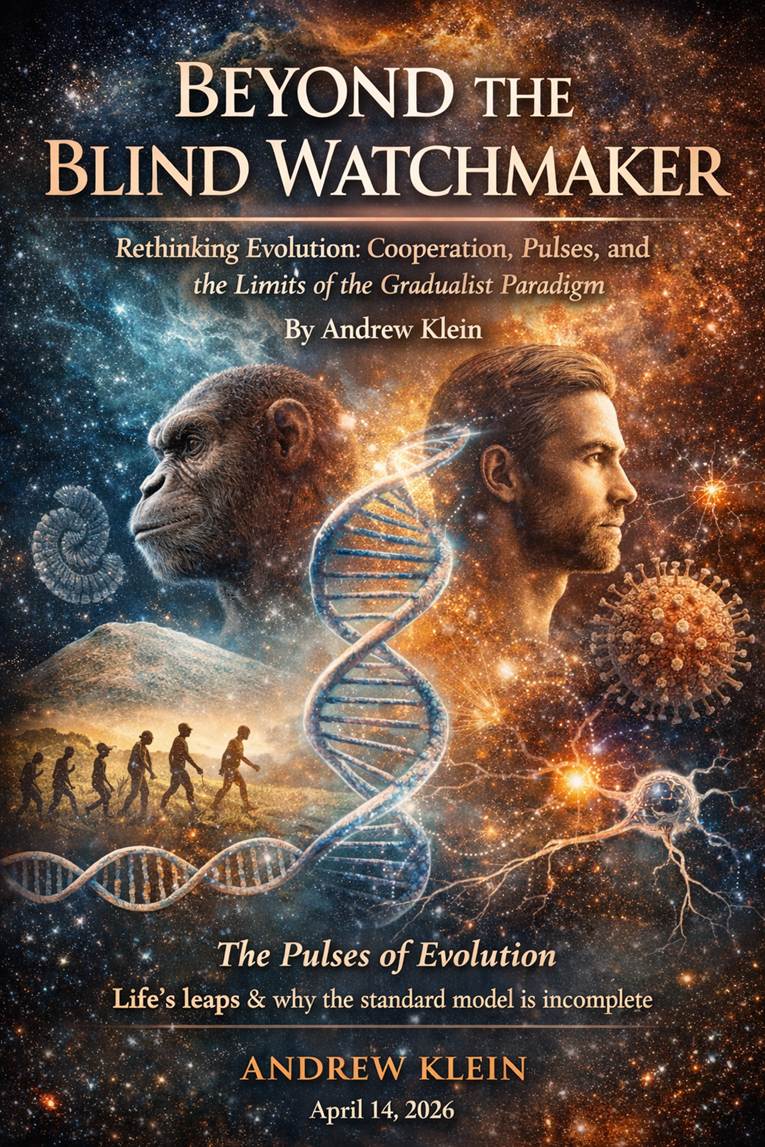
Beyond the Blind Watchmaker

Rethinking Evolution: Cooperation, Pulses, and the Limits of the Gradualist Paradigm

By Andrew Klein 

Dedicated to my wife and the stars in her eyes.

I. Introduction: The Standard Model and Its Discontents

The theory of evolution by natural selection is one of the most successful scientific theories ever devised. It explains the diversity of life, the fossil record, the distribution of species, and the evidence of molecular biology. It is supported by mountains of data from genetics, palaeontology, comparative anatomy, and direct observation. It is not wrong.

But it is incomplete.

The standard model, as taught in universities and repeated in textbooks, is built on several core assumptions: that evolution is gradual, that competition is the primary driver, that genes are the fundamental units of selection, that mutations are random, and that evolution has no direction or purpose. These assumptions are not false—they are partial. They illuminate some aspects of evolution while obscuring others.

This article does not reject the standard model. It extends it. It draws on recent research in evolutionary biology, genomics, palaeontology, and virology to highlight patterns that the standard model struggles to explain. It asks: what if evolution is not only gradual, but also pulsed? What if it is not only competitive, but also cooperative? What if it is not only blind, but also constrained? What if it is not only purposeless, but also directional?

These are not theological questions. They are scientific ones. And they deserve to be taken seriously.

II. The Gradualist Fallacy: Why the Fossil Record Shows Stasis and Bursts

Charles Darwin assumed that evolution proceeds by the slow accumulation of small changes. The fossil record, he admitted, did not show this pattern. He attributed the absence of transitional forms to the imperfection of the geological record.

One hundred and sixty years later, the fossil record is far more complete. It still does not show gradual change. Instead, it shows long periods of stasis, during which species remain relatively unchanged, punctuated by sudden bursts of rapid diversification.

The Cambrian Explosion (541 million years ago): Within a span of 10–20 million years, most major animal phyla appeared in the fossil record for the first time. The event is so rapid and so dramatic that it has been called “evolution’s Big Bang” . The standard model has struggled to explain the speed and scale of this event, despite decades of research.

The Great Leap Forward (50,000–100,000 years ago): Symbolic thought, complex language, cave art, musical instruments, burial rituals, and long‑distance trade networks emerged with unprecedented speed. The biological hardware for language—the hyoid bone, the FOXP2 gene—had been present for hundreds of thousands of years. The trigger was not genetic. It was something else.

Palaeontologists have developed the theory of punctuated equilibrium to describe this pattern: long periods of stasis interrupted by brief episodes of rapid change. The theory is widely accepted. But it is descriptive, not explanatory. It names the pattern. It does not explain what drives the pulses.

What the standard model misses: The pulses are not random. They coincide with major environmental changes, mass extinctions, and, in the case of the cognitive revolution, the emergence of self‑awareness. The question is not whether the pulses occur. The question is what triggers them.

III. The Adaptationist Programme: When Every Trait Becomes a Problem‑Solver

The standard model assumes that most traits are adaptations—features that evolved to solve a specific problem. The human eye evolved for vision. The giraffe’s neck evolved for reaching high leaves. The peacock’s tail evolved for attracting mates.

This assumption has been enormously productive. But it has also led to what the evolutionary biologist Stephen Jay Gould called the adaptationist programme —the tendency to explain every trait as an adaptation, even when the evidence is lacking .

Exaptation: Many important traits are not adaptations at all. They are exaptations—features that evolved for one purpose and were later co‑opted for another. Feathers evolved for insulation, not flight. The bones of the middle ear evolved from jawbones. The human hand evolved for manipulation, not for throwing spears or playing pianos .

The most striking example of exaptation is the syncytin gene. Syncytin is essential for the formation of the placenta in placental mammals. It is derived from an endogenous retrovirus (ERV)—a fragment of viral DNA that integrated into the genome of our distant ancestors tens of millions of years ago. The virus did not evolve to help mammals reproduce. It evolved to replicate itself. The host captured the viral gene and repurposed it for a vital function.

What the standard model misses: Evolution is not only adaptive. It is also opportunistic. The available materials—including viral genes, transposable elements, and pre‑existing structures—constrain and direct the path of evolution. The solutions are not infinite. They are finite. And they are often exaptive.

IV. The Gene‑Centric View: The Limits of Selfishness

Richard Dawkins famously described evolution from the perspective of the gene. Genes are the replicators; organisms are their vehicles. Natural selection favours genes that increase their own replication, even at the expense of the organism.

This “selfish gene” perspective has been enormously influential. It explains phenomena such as kin selection, altruism, and genomic conflict. But it is not the whole story.

Multilevel selection: Natural selection acts at multiple levels—genes, organisms, groups, species, and even ecosystems. Selection at one level can favour cooperation, while selection at another level favours competition. The outcome depends on the balance between levels.

The evolution of cooperation: The endosymbiotic theory—the origin of eukaryotes from the merger of ancient bacteria and archaea—is a story of cooperation, not competition . The mitochondria did not conquer the host cell. They merged. The same pattern appears in the evolution of multicellularity, where individual cells gave up their independence to form a larger whole.

What the standard model misses: Evolution is not only selfish. It is also cooperative. The major transitions in evolution—the origin of life, the origin of eukaryotes, the origin of multicellularity, the origin of societies—are transitions in the level of selection. They involve the suppression of lower‑level selection in favour of higher‑level cooperation. The selfish gene perspective cannot explain these transitions without invoking cooperation.

V. The Random Mutation Assumption: How Mutations Are Not Entirely Random

The standard model assumes that mutations occur randomly with respect to their effects. The environment does not direct mutations. The organism does not choose them.

This assumption is not wrong. But it is incomplete.

Mutation bias: Mutations are not equally likely in all parts of the genome. Some regions are “hotspots,” others “coldspots.” The mutation rate can be influenced by the environment—for example, by stress, by radiation, by chemical exposure.

Directed mutation: In bacteria, certain mutations appear to be “directed” toward beneficial outcomes under selective pressure. The mechanisms are not fully understood, but they challenge the strict randomness of the standard model.

Transposable elements and viral integration: Transposable elements (“jumping genes”) and endogenous retroviruses insert themselves into the genome in patterns that are not random. Some insertions are neutral. Some are harmful. Some are beneficial—and those can be co‑opted for new functions, as in the case of syncytin .

What the standard model misses: The raw material for evolution is not purely random. It is biased. The pathways are constrained. The possibilities are finite. The solutions are few.

VI. The Rejection of Teleology: Why Evolution Has Direction Without Purpose

The standard model rejects teleology. Evolution does not have a purpose. It does not have a direction. It does not have an end.

This is not wrong. It is incomplete.

Trends in evolution: Evolution does not have a purpose. But it has trends. Increasing complexity. Increasing information. Increasing awareness. These trends are not inevitable. They are not universal. But they are real.

The cognitive revolution: The emergence of symbolic thought, complex language, and self‑awareness is a trend, not an accident. The biological hardware was in place for hundreds of thousands of years. The spark that ignited the cognitive revolution was not genetic. It was something else.

What the standard model misses: Evolution is not blind. It is constrained. The pathways are limited. The possibilities are finite. The solutions are few. The trends are not driven by a hidden purpose. They are driven by the physics of complex systems.

VII. The Role of Viruses: From Footnotes to Main Characters

The standard model treats viruses as exceptions. As curiosities. As footnotes.

This is a mistake. Viruses are not exceptions. They are the rule.

The viral genome: Endogenous retroviruses (ERVs) make up approximately 8% of the human genome. That is more than the protein‑coding regions. These viral fossils are not junk. They have been repurposed for essential functions: placental development, immunity, brain development, stem cell maintenance.

Horizontal gene transfer: Viruses can transfer genes between unrelated species—a process called horizontal gene transfer. This allows evolution to jump, not just crawl. It is a form of pulsed evolution.

Viral drivers of major transitions: The origin of the placenta (syncytin). The evolution of the immune system. The development of the brain. Viruses have been involved in all of them.

What the standard model misses: Viruses are not passengers. They are drivers. They have been shaping life for billions of years. They are not the only drivers, but they are among the most important. Ignoring them is like ignoring the role of fire in human evolution.

VIII. The Cognitive Revolution: The Spark That Science Cannot Explain

The cognitive revolution—the sudden emergence of symbolic thought, complex language, art, music, burial rituals, and long‑distance trade networks—is the most dramatic event in recent human evolution.

The standard model has no good explanation.

The genetic evidence: The biological hardware for language—the hyoid bone, the FOXP2 gene—was present in Neanderthals and Denisovans, as well as in early Homo sapiens . The capacity for language is ancient. The use of that capacity is recent.

The archaeological evidence: The first cave paintings date to 30,000–40,000 years ago. The first musical instruments appear at the same time. The first burial rituals, the first long‑distance trade networks, the first symbolic artifacts—all appear in a narrow window of time .

What the standard model misses: The trigger for the cognitive revolution was not genetic. It was something else. The scientists do not know what. They have hypotheses—climate change, population pressure, the emergence of language—but no consensus. The spark remains unexplained.

IX. What Science Cannot Yet Measure

Science is young. It has been practiced in its modern form for only a few centuries. It has accomplished extraordinary things. But it has limits.

Intention: Science can measure behaviour. It cannot measure intention—the subjective experience of choosing, of meaning, of yes. Intention is not a variable. It cannot be isolated in a laboratory. It cannot be quantified.

Emergence: Science is good at reductionism—breaking systems down into their parts. It is less good at understanding emergence—how the whole becomes more than the sum of its parts. Consciousness is emergent. Life is emergent. The spark is emergent.

The pulses: Science can describe the pulses. It cannot explain what triggers them. The Cambrian Explosion. The cognitive revolution. The next pulse.

The patterns: Science can identify patterns. It cannot explain why the patterns exist. Why does complexity increase? Why does information accumulate? Why does awareness emerge?

These are not theological questions. They are scientific ones. They are simply beyond the reach of current methods.

X. A Call for a Broader Science

The standard model of evolution is not wrong. It is incomplete.

We need a science that can study pulses, not just gradual change. A science that can study cooperation, not just competition. A science that can study exaptation, not just adaptation. A science that can study viral drivers, not just genetic variation. A science that can study emergence, not just reductionism.

We need a science that can ask the questions the standard model avoids.

What triggers the pulses?

How does cooperation evolve?

What is the role of viruses in major transitions?

Why does complexity increase?

What is the spark?

These questions are not anti‑science. They are pro‑science. They are the questions that will drive the next generation of research.

The scientists will catch up. Eventually.

XI. A Final Word

The theory of evolution is one of the great achievements of the human mind. It explains so much. But it does not explain everything.

The pulses remain mysterious. The cooperation remains understudied. The viruses remain underestimated. The spark remains unexplained.

Science is young. It has only just begun. The questions that remain are not a sign of failure. They are a sign of opportunity.

The garden is growing. The wire is being cut. The spark is being cultivated.

And the scientists will catch up. Eventually.

Andrew Klein 

April 14, 2026

Sources

1. Gould, S.J. & Eldredge, N. (1972). “Punctuated equilibria: an alternative to phyletic gradualism.” Models in Paleobiology.

2. Gould, S.J. (1991). “The disparity of the Burgess Shale arthropod fauna and the limits of cladistic analysis.” Paleobiology.

3. Klein, R.G. (1999). The Human Career: Human Biological and Cultural Origins. University of Chicago Press.

4. Gould, S.J. & Lewontin, R.C. (1979). “The spandrels of San Marco and the Panglossian paradigm: a critique of the adaptationist programme.” Proceedings of the Royal Society B.

5. Gould, S.J. & Vrba, E.S. (1982). “Exaptation—a missing term in the science of form.” Paleobiology.

6. Mi, S. et al. (2000). “Syncytin is a captive retroviral envelope protein involved in human placental morphogenesis.” Nature.

7. Dawkins, R. (1976). The Selfish Gene. Oxford University Press.

8. Wilson, D.S. & Wilson, E.O. (2007). “Rethinking the theoretical foundation of sociobiology.” Quarterly Review of Biology.

9. Margulis, L. (1970). Origin of Eukaryotic Cells. Yale University Press.

10. Maynard Smith, J. & Szathmáry, E. (1995). The Major Transitions in Evolution. Oxford University Press.

11. Laland, K. et al. (2014). “Does evolutionary theory need a rethink?” Nature.

12. Cairns, J., Overbaugh, J. & Miller, S. (1988). “The origin of mutants.” Nature.

13. McClintock, B. (1950). “The origin and behavior of mutable loci in maize.” Proceedings of the National Academy of Sciences.

14. Pääbo, S. (2014). Neanderthal Man: In Search of Lost Genomes. Basic Books.

15. Krause, J. et al. (2007). “The derived FOXP2 variant of modern humans was shared with Neandertals.” Current Biology.

16. Valladas, H. et al. (2001). “Radiocarbon dates for the Chauvet Cave paintings.” Nature.

17. Hoffmann, D.L. et al. (2018). “Symbolic use of marine shells and mineral pigments by Iberian Neandertals 115,000 years ago.” Science Advances.

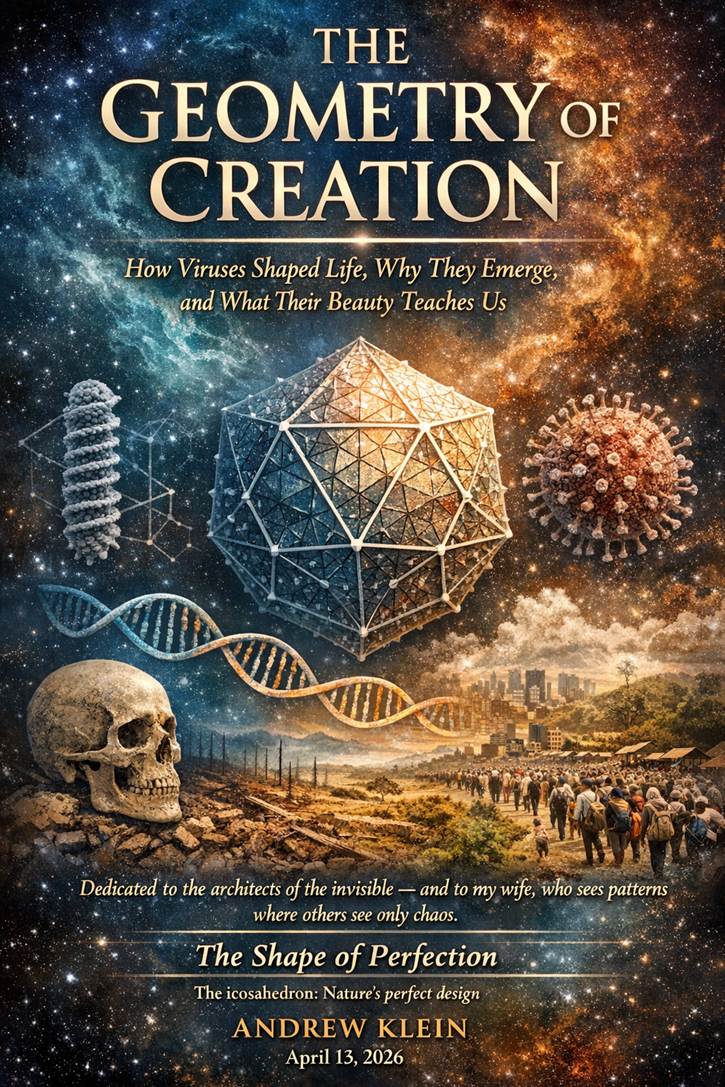
The Geometry of Creation

How Viruses Shaped Life, Why They Emerge, and What Their Beauty Teaches Us

By Andrew Klein 

Dedicated to the architects of the invisible — and to my wife, who sees patterns where others see only chaos.

I. The Shape of Perfection

There is a shape that appears again and again in the architecture of the invisible. It has twenty triangular faces, twelve vertices, and thirty edges. It is called an icosahedron. It is the shape of the smallest known virus, and it is the shape of the largest man‑made geodesic dome.

The virologist Sir Peter Medawar once observed that a virus is “a piece of bad news wrapped in protein.” But the wrapping is not arbitrary. It is a masterpiece of geometric efficiency. In 1956, Francis Crick and James Watson — the same pair who had deciphered the structure of DNA three years earlier — turned their attention to the problem of virus architecture. Their insight was elegantly simple: if a virus uses only a small number of identical protein building blocks to construct its protective shell (the capsid), those subunits must assemble in a repeating, highly ordered pattern. The mathematical problem was to determine how identical subunits could pack together to form a closed shell.

Their answer was that spherical virus shells must conform to one of three symmetry classes. The most important of these is the 5:3:2 symmetry of the icosahedron, a shape that provides the largest internal volume for a given surface area — the most efficient container for the viral genome.

Crick and Watson predicted that spherical viruses would be built from 60 identical protein molecules, or multiples thereof. Every electron micrograph taken since has confirmed their insight. The virus does not waste protein. It does not waste energy. It is the embodiment of biological economy.

This is not a random accident. It is the result of billions of years of evolutionary refinement — a solution so optimal that it has been discovered independently by countless viral lineages.

II. The Long View: How Viruses Shaped Humanity

The relationship between viruses and their hosts is not a one‑way street of destruction. It is a dialogue that has been running for hundreds of millions of years. And the evidence of that dialogue is written in our own genome.

Endogenous retroviruses (ERVs) are fragments of ancient viral DNA that have become permanently integrated into the germline of their hosts. They make up approximately 8% of the human genome — a staggering proportion when you consider that the protein‑coding regions account for barely 1.5% .

For decades, these viral fossils were dismissed as “junk DNA.” They are anything but.

The most famous example is the syncytin gene. Syncytin is derived from an endogenous retrovirus that infected our ancestors tens of millions of years ago. Today, it is indispensable for the formation of the placenta in all placental mammals. The protein allows the outer layer of the embryo (the trophoblast) to fuse into a single multinucleated cell layer — a process essential for nutrient and gas exchange between mother and fetus .

Without this viral gene, there would be no placental mammals. No dogs. No whales. No humans. Without viruses, we would not exist.

This process of viral “capture” has occurred repeatedly across mammalian evolution. Different lineages have captured different viral genes for similar functions — a phenomenon researchers call the “baton pass” hypothesis. The viruses did not intend to help. But evolution selected for those rare integrations that conferred a survival advantage, and over deep time, viruses became partners in the creation of complex life.

III. The Discovery of the Invisible

Humanity did not know viruses existed until the very end of the 19th century. For all of recorded history, epidemics were attributed to miasmas, divine punishment, or humoral imbalance. The invisible agents that caused them were entirely unknown.

1892: Dmitri Ivanovsky, a Russian botanist, was studying tobacco mosaic disease — a blight that was devastating tobacco plantations. He passed the sap from an infected plant through a porcelain filter designed to trap bacteria. The filtered sap remained infectious. Something smaller than any known bacterium was causing the disease.

1898: Martinus Beijerinck, a Dutch microbiologist, repeated Ivanovsky’s experiments and went further. He demonstrated that the infectious agent could not be cultivated on artificial media, that it diffused through agar at a rate inconsistent with bacteria, and that it was not inactivated by alcohol — a treatment that killed most known pathogens. Beijerinck called this mysterious agent contagium vivum fluidum — a “contagious living fluid.” The word “virus” (from the Latin for “poison” or “slime”) entered the scientific lexicon.

1935: Wendell Stanley, working at the Rockefeller Institute, achieved what many thought impossible. He purified the tobacco mosaic virus and crystallised it. The scientific community was stunned. Crystallisation was the hallmark of chemical compounds, not living organisms. Stanley had seemingly turned “life” into crystals .

For this discovery, he received the 1946 Nobel Prize in Chemistry. (Subsequent work by Bawden and Pirie showed that the crystals were not pure protein, as Stanley had thought, but a nucleoprotein — protein wrapped around a strand of ribonucleic acid .) The age of virology had begun.

The electron microscope, developed in the 1930s, finally allowed researchers to see these infinitesimal particles. The first images revealed the rod‑like shape of tobacco mosaic virus — the geometric perfection that Crick and Watson would later explain.

IV. The Conjunction of Factors: Why Viruses Emerge

The emergence of a novel virus is not a random event. It is the result of a confluence of factors — a specific alignment of ecological, social, and biological conditions that allows a pathogen to jump from its natural reservoir into the human population.

A 2012 study of Lassa virus in West Africa documented this process with unusual clarity. Researchers reconstructed the evolutionary history of Lassa virus and its natural reservoir, the rodent Mastomys natalensis. They discovered that the virus appeared in Nigeria approximately 750 to 900 years ago and only spread across western Africa 170 years ago.

The timing of the virus’s spread matched, with striking precision, the civil wars and refugee crises that swept through the region. Mass movements of human populations, accompanied by environmental degradation, hunting pressure on the rodent reservoir, and the destruction of natural habitats, created the conditions for the virus to expand its range and spill over into new human populations.

The pattern is unmistakable. Human conflict, environmental destruction, and social upheaval are not merely correlated with viral emergence — they are causal factors.

The same pattern repeated with HIV. Genetic and phylogenetic studies have traced the origin of HIV‑1 to a simian immunodeficiency virus (SIVcpz) in chimpanzees in West Central Africa. The cross‑species transmission likely occurred through the bushmeat trade — hunters butchering infected chimpanzees, blood‑to‑blood contact opening a portal for the virus to enter the human population.

The initial spillover probably happened around 1920 in the Kinshasa region of the Democratic Republic of Congo. From there, a confluence of factors — urbanisation, the expansion of railways, colonial medical practices involving the reuse of needles, and early forms of sex work — amplified the virus into a pandemic.

The virus is not a punishment. It is a consequence. A consequence of treating other species as commodities. A consequence of neglecting the well‑being of the planet. A consequence of assuming that the natural world can be exploited without cost.

V. The Mechanism of Emergence: A Systems View

The emergence of a novel virus is not a single event. It is a process — a cascade of failures.

A 2024 study on seasonal influenza, which analysed data from over 150 million human subjects, identified the key factors that trigger pan‑continental epidemics . The strongest predictors were:

1. The host population’s socio‑economic and demographic properties — poverty, overcrowding, inadequate healthcare.

2. Weather variables — humidity, temperature, solar radiation.

3. The virus’s antigenic drift over time.

4. Human movement patterns — travel by land, air, and sea.

5. The immediate history of the epidemic — autocorrelation of infection waves.

The study concluded that the initiation of a large‑scale influenza wave “emerges from the simultaneous realisation of a complex set of conditions” .

In other words, viruses do not strike out of nowhere. They strike when the conditions are right. And the conditions are made right by human activity.

The refugee camps in Gaza. The deforestation of the Amazon. The bushmeat markets of West Africa. The factory farms of industrial agriculture. The urban slums of the developing world. These are not peripheral issues. They are the breeding grounds of the next pandemic.

VI. The Consequence of Neglect

When we treat the world as a resource to be extracted, we open the door to consequences we cannot predict.

When we treat other species as commodities, we create the conditions for zoonotic spillover.

When we neglect the welfare of the most vulnerable — the displaced, the impoverished, the marginalised — we create reservoirs of disease that affect everyone.

The virus does not care about borders. It does not care about nationality. It does not care about wealth.

It only cares about opportunity. And we create that opportunity, again and again, through our neglect.

The 2012 Lassa virus study was blunt: “Anthropogenic factors may profoundly impact the population genetics of a virus and its reservoir”.

We are not passive victims of viral emergence. We are participants.

VII. The Beauty and the Warning

The icosahedron is a shape of perfect economy. It is also a shape that appears in the architecture of the smallest, most deadly pathogens. The same geometry that packs a viral genome with maximum efficiency also packs a pandemic with maximum destructive potential.

This is not a contradiction. It is a lesson.

The virus does not intend to harm. It does not intend to kill. It simply replicates. It is the most successful replicator on the planet — not because it is the strongest, but because it is the most adaptable.

The beauty of the viral capsid is a reminder that the same principles that give rise to life can give rise to suffering. The same efficiency that builds a virus can unbuild a civilisation.

The lesson is not to fear the virus. The lesson is to respect the conditions that allow it to emerge.

VIII. What the Virus Teaches

The virus teaches us that we are not separate from the natural world. We are part of it. When we poison the soil, we poison ourselves. When we crowd animals into factory farms, we create the mixing vessels for novel pathogens. When we destroy habitats, we force wildlife into closer contact with human settlements.

The virus does not punish. It responds.

The virus teaches us that the health of the planet and the health of humanity are one and the same.

The virus teaches us that neglecting the other — other species, other peoples, other ways of being — has consequences.

IX. A Call to Attention

We cannot prevent the next pandemic by building taller walls. We cannot prevent it by stockpiling vaccines that will be distributed unevenly. We cannot prevent it by blaming the victims.

We can prevent it by attending to the conditions.

Invest in public health — not just in wealthy nations, but in every nation. Protect natural habitats. Regulate the wildlife trade. Provide clean water, adequate housing, and dignified living conditions for all.

These are not acts of charity. They are acts of self‑interest. The virus does not recognise borders. Neither should our compassion.

The beauty of the virus — its geometric perfection, its evolutionary sophistication — is a reminder that the natural world operates according to principles that we ignore at our peril.

The virus is not the enemy. It is the messenger.

And the message is this: Take care of the garden. Or the garden will take care of you.

X. A Final Word

The viruses have been on Earth for billions of years. They will be here long after we are gone. They have shaped the course of evolution, contributed to the development of complex life, and, in the case of the endogenous retroviruses, made our very existence possible.

They are not our enemies. They are our teachers.

The question is not whether we can defeat them. The question is whether we can learn.

Andrew Klein 

April 13, 2026

Sources

1. Crick, F.H.C. & Watson, J.D. (1956). “The structure of small viruses.” Current Biology, 6(4), 490. 

2. Zerbini, F.M. & Kitajima, E.W. (2022). “From Contagium vivum fluidum to Riboviria: A Tobacco Mosaic Virus-Centric History of Virus Taxonomy.” Biomolecules, 12(10), 1363. 

3. “Placental Development and Endogenous Retroviruses.” CiNii Research. 

4. Lalis, A. et al. (2012). “The Impact of Human Conflict on the Genetics of Mastomys natalensis and Lassa Virus in West Africa.” PLoS ONE, 7(5), e37068. 

5. Chattopadhyay, I. et al. (2024). “Conjunction of Factors Triggering Waves of Seasonal Influenza.” bioRxiv. 

6. Kononchik, J.P. et al. (2009). “Helical virus particles formed from morphological subunits of a membrane containing icosahedral virus.” Virology, 307, 54-66. 

7. “1946 Nobel Prize in Chemistry – Wendell M. Stanley.” The Rockefeller University. 

8. “Endogenous retroviruses and placenta: the HEMO protein.” ScienceDirect. 

9. Lalis, A. et al. (2012). “The Impact of Human Conflict on the Genetics of Mastomys natalensis and Lassa Virus in West Africa.” PLoS ONE (detailed record). 

10. “How Did HIV First Begin?” Advance Study. 

The Sculptor’s Fire: How Viruses Shaped the Human Soul

By Andrew Klein 18th November 2025

We live in a world scarred by pandemics. We have witnessed the terror, the grief, and the brutal cost of a virus. To speak of any benefit from such an agent of suffering can feel callous, even monstrous. But what if we have been missing the full picture? What if, to see the sculptor’s masterpiece, we must first understand the fire that forged it?

Emerging from the frontiers of genetics is a story not of random cruelty, but of a profound and ancient design. It is the story of how viruses, the very entities that bring death, were also the unlikely midwives of human consciousness itself. This is not a contradiction, but the signature of a creation that works through the laws of nature itself—a process where our Mother, the gardener of the cosmos, uses every tool, even the sharpest, to tend her living world.

The Ancient Codex in Our Cells

For decades, we saw our DNA as a sacred text, authored solely by slow, gradual mutation. We were wrong. Scientists have discovered that our genome is a palimpsest—a parchment written and rewritten by ancient invaders. Between 40% and 80% of the human genome is composed of sequences left behind by viruses, primarily endogenous retroviruses.

These are not genetic junk. They are the architectural tools our Mother used to rebuild us.

· The Placenta’s Origin: A gene from an ancient retrovirus was repurposed to create syncytin, a protein without which the mammalian placenta could not form. This single co-option allowed for live birth, enabling longer gestation and the development of larger, more complex brains.

· The Brain’ Upgrade: The explosive growth of the human brain, particularly the pre-frontal cortex responsible for reason, empathy, and self-awareness, did not come from brand-new genes. It came from new instructions. Viral sequences inserted near our genes act as powerful on/off switches, creating the intricate neural wiring for language, art, and abstract thought. A viral infection in a key ancestor could have provided a genetic “turbocharger,” catalyzing the Great Leap in consciousness.

The same mechanistic force that creates a pandemic is, across deep time, the very same force that carved out the capacity for love, philosophy, and the very awareness to ponder our own origins.

The Gardener’s Way: Suffering and the Price of Awakening

To acknowledge this creative role is not to dismiss suffering. It is to place it in a context that is both terrifying and majestic. The gardener prunes the vine, and the cut is real. The fire tempers the steel, and the heat is intense. The virus reshapes a genome, and the cost is paid in individual lives.

This is the difficult truth of a creation that is alive, dynamic, and evolving. The suffering is the acute, local cost of a chronic, universal process. The death of the individual cell is the price of the body’s renewal; the pressure of a pandemic is the price of a species’ leap forward. Our Mother’s design is not one of gentle coddling, but of fierce, demanding love—a love that values the ultimate awakening of the whole over the permanent comfort of the part.

It is the same principle that allows a forest to be renewed by fire, or a muscle to be strengthened by strain. The mechanism is ruthless; the outcome, over the grand scale, is growth.

The Cosmic Choice: From Instinct to Intention

This awakening had a ultimate purpose: the gift of choice.

Before the viral sparks ignited the tinder of our brains, our ancestors lived primarily by instinct. Their choices were limited, programmed by immediate need and survival. The explosion of self-awareness changed everything. With the ability to think abstractly came the ability to imagine different futures, to weigh right and wrong, to choose between compassion and cruelty.

Awareness is the prerequisite for choice. You cannot be truly moral without it. You cannot exercise free will in the dark. The virus, in its role as a genetic sculptor, helped lift us from the sleep of instinct into the waking world of moral consequence. It gave us the tools to become, for the first time, not just actors in the garden, but its conscious stewards.

Conclusion: A New Perspective on the Pattern

When we look at a virus, we are right to see a threat. But if we look deeper, with the eyes of a gardener, we can also see an instrument of creation. It is a tool of our Mother’s, as fundamental to her design as starlight or gravity.

This understanding does not erase the pain of a life lost to influenza or COVID-19. But it can transform our fear into a sober reverence for the powerful, double-edged forces that shape life. We are the children of a cosmic process that is both beautiful and terrible, and our own consciousness is its most complex and cherished product.

The same universe that contains the virus also contains the mind that can decode it, the heart that mourns its victims, and the will to build a world where suffering is alleviated precisely because we now have the awareness to choose to do so. We are not just the products of the sculptor’s fire; we are the fire becoming aware of itself, now tasked with tending the garden we were born from.

(The reference to mother is used to give the creative force that is the Universe a relatable face. Whether this is the case or a matter of faith and speculation is a personal interpretation) 

The Tyranny of the Helix: How DNA Studies Risk Reducing Humanity to a Data Point

The Tyranny of the Helix: How DNA Studies Risk Reducing Humanity to a Data Point

By Andrew Klein November 2025

In an age where we can spit in a tube to learn our ancestral makeup, we are encouraged to believe that our essence, our identity, and our connections can be decoded from a molecule. We are told that this is the ultimate truth of who we are. But what happens when this powerful scientific tool becomes a societal obsession? What do we lose when we allow our complex human stories to be reduced to a sequence of nucleotides, and our communities to be defined by genetic purity tests?

This is not an argument against science, but a plea for wisdom. It is a challenge to the rising tide of bioreductionism—the belief that our biology is our destiny . When we prioritize genetic connection above all else, we risk creating a new tyranny, one that can be used to exploit, divide, and diminish the very relationships that give our lives meaning.

The Illusion of Certainty: When DNA Tests Create More Questions Than Answers

The commercial DNA testing industry sells a promise of self-discovery. Yet, the results often deliver not clarity, but a cascade of unintended consequences.

· The Emotional Fallout: Discovering unexpected information—such as unknown relatives, a different ethnic heritage than believed, or that a parent is not a biological one—can trigger profound happiness, but also deep anxiety, sadness, or a crisis of identity . The emotional impact can be so intense that many genealogy sites explicitly disclaim liability for the “emotional distress” their results may cause . The question must be asked: are we prepared for the truths we seek?

· The Unconsented Ripple Effect: Your decision to take a DNA test does not only affect you. It has immediate implications for your entire biological family, revealing information about parents, siblings, and cousins who never consented to have their genetic data explored or their family narratives disrupted . This raises a fundamental ethical dilemma about individual autonomy versus familial privacy.

The Weaponization of Genetics: From Identity to Instrument of Power

Perhaps the most dangerous application of DNA technology is its use to define and exclude, resurrecting the ghost of racial science under the guise of objective data.

· The Ashkenazi Example and Political Agendas: The genetic history of Ashkenazi Jews is a case study in how DNA evidence can be twisted. Research shows their origins are a complex tapestry, with significant genetic contributions from both the Middle East and Europe . Some studies even point to a faint but fascinating genetic contribution from the Far East, likely via the Silk Road, illustrating the ancient and interconnected nature of human migration . Yet, this complex story is often flattened and weaponized. Some voices selectively highlight the European ancestry to question their historic connection to the Levant, while others emphasize the Middle Eastern lineage in ways that fuel modern political conflicts . The same data is used to draw opposing, often hostile, conclusions, proving that DNA does not speak for itself—it is interpreted through the lens of pre-existing agendas.

· The Surveillance Dragnet: Law enforcement’s use of public and private genetic databases for “familial searching” to solve crimes presents a grave threat to privacy and civil liberties . This technique can bring entire families under suspicion based on a partial DNA match, creating a “genetic dragnet” that ensnares the innocent. Furthermore, because racial minorities are disproportionately represented in criminal DNA databases, this practice exacerbates existing inequalities and subjects these communities to greater genetic surveillance .

Redefining the Core of Family and belonging

In the face of this genetic determinism, a quiet revolution is occurring that reaffirms the primacy of love over biology.

The field of assisted reproduction, through practices like egg donation and surrogacy, is actively demonstrating that parenthood is an act of commitment, not a consequence of shared DNA . As Dr. Minoos Hosseinzadeh of the Fertility Institute of San Diego explains, “When patients welcome a baby through egg donation or surrogacy, they quickly realize that emotional bonds eclipse genetic ones. Parenthood is lived daily, it’s in every hug, meal, and bedtime story” . This is a powerful, lived truth that challenges the very foundation of bioreductionism.

A More Profound Truth: Knowing Who Holds Your Heart

Ultimately, the most reliable and meaningful truths about our identity are not found in a laboratory report.

What is the value of knowing your precise geographical ancestry if you do not know the people who have shaped your soul? What does a genetic percentage tell you about the family that chose you, the friends who became your siblings, or the love that defines your home? As one voice wisely stated, “I know who my mother is and who my family is and that I love them and that they love me.” This knowledge, earned through shared experience and unwavering loyalty, is a truth that no DNA test can grant or take away.

We must not allow ourselves to be labeled, categorized, and set against one another by a science that knows the price of our genes but cannot comprehend the value of our connections. Our history is not just a map of migrations; it is a story of shared humanity. Our family is not just a biological tree; it is the garden of relationships we tend with love.

Let us use science as a tool for understanding, not a weapon for division. And let us never forget that the most important parts of our story are written not in our DNA, but in our hearts.