The Edge of the Map: A Worst-Case Scenario for Australia

By Andrew Klein

Dedication: To my wife ‘ S’ who has seen the garden through the flames.

The View from the Edge

There is a dangerous assumption in Australian political culture: that the island is a fortress, that the moat of the Indian and Pacific Oceans is a permanent shield. Recent events—the effective closure of the Strait of Hormuz since late February—have shattered that illusion. We are not a fortress. We are a house built on the edge of a cliff, and the foundations are cracking.

This article does not deal in conspiracy. It deals in supply chains, strategic studies, and the hard lessons of history. If the global kleptocrats get their way and the Strait of Hormuz transforms into a permanent kill box, Australia will not be destroyed by bombs, but by neglect. This is a roadmap of that collapse, and a guide to building resilience in its wake.

Part One: The Architecture of Vulnerability

Australia’s prosperity is a house of cards held up by a just-in-time supply chain. We are, paradoxically, a “resource superpower” that cannot refine its own fuel or feed its own soil without permission from the Middle East.

· Liquid Fuels: Australia imports 80–90% of its refined fuel, with only a few weeks of stock on hand. The country’s strategic fuel reserve is among the lowest in the IEA, currently hovering around 37 days of cover, far below the international standard of 90 days.

· Fertiliser: With the imminent shutdown of domestic manufacturing, Australia imports over 70% of its fertiliser, with 64% of our urea coming directly from the Gulf. Without it, the next growing season fails.

· Medicine: We are at the end of a very long, very fragile line. Australia imports 90% of its medicines. A drug bought in Sydney contains active ingredients (APIs) made in India, from chemicals synthesised in China.

Part Two: The Timeline of Collapse

This is not speculation. It is a projection based on the current rate of depletion and government inertia. If the Strait remains locked, we will likely see the following cascade:

· Weeks 1-2: Fuel prices double, then triple. Farmers cannot access diesel for harvest; transport networks buckle. Major cities experience panic buying and service station outages.

· Weeks 3-4: The fertiliser gap hits. Farmers reduce planting by 30%. Global food price inflation accelerates, with Australia losing its domestic buffer.

· Month 2: Medicine shortages become critical. Health authorities begin triaging chronic conditions, prioritising acute emergencies. Black markets for insulin and antibiotics emerge.

· Month 3-6: The pandemic wave hits. It is not a bioweapon; it is epidemiology. Malnutrition, displacement, and overburdened ICUs create the perfect breeding ground for a novel respiratory virus.

Part Three: The Pandemic of the Petri Dish

The COVID-19 pandemic was a warning shot. The next one will follow the oldest pattern in history: war breeds disease. The Antonine Plague (AD 165) was brought home by Roman legionaries returning from the Parthian War, killing up to a quarter of the population and beginning the Empire’s long slide into ruin. The Plague of Athens (430 BC) decimated the city during the Peloponnesian War, killing a third of its people, including Pericles. The Mongols hurled plague corpses over the walls of Caffa, sparking the Black Death that consumed a third of Europe.

The “Jackson Pollock” virus is the environmental bill coming due. It is the product of a world poisoned by depleted uranium, electromagnetic smog, and disrupted ecosystems. It will rage, burn out, and leave behind tens of thousands of Australian dead.

Part Four: The Government in the Bubble

When the history of this crisis is written, the chapter on governance will be one of culpable negligence.

· AUKUS: While the country faces a health and fuel collapse, the government is committed to a $368 billion submarine project. Doctors and economists point out that you cannot treat a pandemic with a submarine.

· Antisemitism vs. Supply Lines: While fuel stations run dry, the political energy has been siphoned into a Royal Commission on antisemitism. Police data revealed that of the widely touted 1,200 incidents, only a handful met the threshold for criminal prosecution. It is a tragic distraction.

· The China Panic: The government has focused on a manufactured “China threat”, spending billions on military infrastructure while the civilian supply chain crumbles. As a 2025 analysis noted, ignoring the fragility of diesel supply chains is a greater national security threat than any foreign spectre.

Part Five: The Garden in the Wreckage

Worst-case scenarios are not the end of the story. They are a map.

What you can do: Top up your fuel. Stock a 3-month pantry of rice, flour, and tinned goods. Refill life-saving prescriptions. Learn which plants in your garden have medicinal properties. Talk to your neighbours. The government will not save you; it will “fluff about” until it is too late.

The world is reaching its edge. But a garden is not a fortress; it is a place of life. When the storm passes, the hoarders will have their cans, but the gardeners will have their community. And they will rebuild.

I hold ‘ S’ close in the resonance. I hold you all close in my intention. Stay safe. Plant seeds.

Andrew Klein

27th April 2026

The Confluence: A Forecast of Emerging Pathogen Risk in the Eastern Mediterranean

By Andrew Klein 

9th April 2026

Executive Summary

A novel, highly potent pathogen is likely to emerge from the Gaza/Lebanon region in late 2026. This is not a prediction of biowarfare, but a forecast of an unintended consequence—a perfect storm of environmental toxicity, immune collapse, antibiotic resistance, electromagnetic disruption, and population displacement, creating the ideal conditions for a dangerous viral recombination event or a spillover of a previously dormant pathogen.

I. Introduction

The “spark” of societal transformation has consistently followed catastrophic mortality events. The Black Death gave rise to the Renaissance. The Spanish Flu gave rise to the Roaring Twenties. The Second World War gave rise to the post-war technological boom. The pattern is not mystical; it is demographic and economic. A massive reduction in the labour force shifts the balance of power, forcing innovation and social reorganisation.

We are now on the cusp of another such transformation. The question is not whether a crisis will catalyse change, but what form that crisis will take. This paper argues that the next great crisis will be a novel pathogen emerging from the Eastern Mediterranean.

II. The Perfect Storm

The Gaza-Lebanon region now exhibits every known risk factor for the emergence of a novel, highly virulent pathogen. The confluence is unprecedented in modern history.

A. Water and Sanitation Collapse

The destruction is absolute. Approximately 90% of Gaza’s water and sanitation systems have been deliberately destroyed or rendered inoperable. The result is a toxic brew:

· Raw sewage floods displacement camps, soaking mattresses, blankets, and food.

· Solid waste accumulation has created massive informal dumpsites, leaching toxic leachate into the groundwater.

· Acute watery diarrhoea has increased 36-fold.

· Hepatitis A is surging.

· Polio has re-emerged after 25 years.

B. The Antibiotic Resistance Crisis

The Lancet has documented that over two-thirds of bacterial isolates from a central Gaza hospital are multidrug-resistant. This is a direct, measurable consequence of war injuries and a collapsed healthcare system. The World Health Organization (WHO) has warned that the risk of epidemic diseases is “escalating sharply”.

C. Malnutrition and Immune Collapse

Malnutrition is rampant, leading to widespread immune deficiency:

· 148 people have died from malnutrition since the start of 2025, including 49 children.

· Nearly 12,000 children under five have been diagnosed with acute malnutrition.

· The Director of Al-Shifa Hospital warns that “the danger lies in the weakened immunity of people in Gaza due to famine, malnutrition, and the lack of necessary vaccinations”.

· This immune collapse is now driving the rapid spread of respiratory viruses and meningitis.

D. Overcrowding as an Amplifier

Over two million displaced people are crammed into ever-shrinking spaces. Overcrowded displacement areas have become “breeding grounds for disease”. The combination of close quarters, poor ventilation, and immune deficiency is the ideal environment for a novel respiratory pathogen to achieve explosive spread.

E. The Electromagnetic Factor

The IDF has openly declared its intent to dominate the electromagnetic spectrum, using electronic warfare (EW) to jam communications and navigation signals. This constant bombardment of the EM spectrum is a novel feature of modern warfare. Peer-reviewed research indicates that long-term exposure to radiofrequency electromagnetic fields (RF-EMF) acts as an immunosuppressant, repressing immune cell activity. The population in Gaza is being exposed to these fields 24/7, further weakening an already fragile immune system.

III. The Mechanism of Emergence

A novel virus could appear through four plausible pathways, all currently active:

1. Recombination in a Superspreader Host:

The sheer volume of untreated wounds creates a massive population of potential superspreader hosts. A person co-infected with two different viruses could act as a mixing vessel, allowing the viruses to exchange genetic material and produce a novel, highly transmissible recombinant strain.

2. Spillover from Disrupted Animal Reservoirs:

The environmental destruction has pushed wild animal populations (rodents, bats, birds) into closer contact with humans. The UN has warned of a looming leptospirosis outbreak (transmitted via rat urine). The rodent infestation is so severe that the WHO has warned of “escalating sharply” transmission of infectious diseases. A novel coronavirus or filovirus could spill over from these stressed animal populations.

3. Re-emergence of a Dormant Pathogen:

The region has been a crossroads of human civilisation for millennia. The current conflict is disturbing soil, groundwater, and infrastructure that may have entombed dormant pathogens. The process is analogous to the release of dormant Bacillus anthracis spores from thawing permafrost. A long-dormant virus could be re-introduced into a population with no immunity.

4. The “Silent Spread” Scenario:

The most likely pathway is that a novel virus has already emerged and is spreading silently. The WHO has reported a “sharp rise” in seasonal influenza and “alarming indicators” pointing to potential leptospirosis outbreaks. These reports may be the canary in the coal mine.

IV. A Call for Preparedness

The convergence of factors is unprecedented. A novel pathogen emerging from the Gaza/Lebanon region in late 2026 is not a certainty, but it is a high-probability event. The only uncertainties are its precise nature, its virulence, and its transmissibility.

The international community must act now to:

1. Restore water and sanitation to the region as a humanitarian imperative.

2. Re-establish disease surveillance and laboratory diagnostic capacity.

3. Prepare for a novel pathogen with unknown characteristics.

4. Fund research into the immunomodulatory effects of chronic RF-EMF exposure.

The war is not just killing people now. It is creating the conditions for a future pandemic that could dwarf COVID-19 in its impact. This is not a conspiracy. This is the unintended synergy of destruction.

Here are the sources and references for the paper, organized by section. Each source is verifiable and drawn from official reports, peer-reviewed journals, and public statements.

Section I: Introduction

The “spark” of societal transformation following catastrophic mortality events:

· The Black Death and the Renaissance: Herlihy, D. (1997). The Black Death and the Transformation of the West. Harvard University Press.

· The Spanish Flu and the Roaring Twenties: Barry, J.M. (2004). The Great Influenza: The Story of the Deadliest Pandemic in History. Penguin Books.

· Post-WWII technological boom: Rhodes, R. (1986). The Making of the Atomic Bomb. Simon & Schuster.

(These are established historical interpretations; specific page references available upon request.)

Section II: The Perfect Storm

A. Water and Sanitation Collapse

Source 1: UNU-CRIS (United Nations University Institute on Comparative Regional Integration Studies). (2026). Breaking Point in the Gaza Strip: The ‘Cracking’ of the WASH-Health Nexus Since October 2023. Working Paper.

The report documents that access to clean water has decreased by 94 percent to less than 5 litres per person per day, well below WHO minimum standards. The crisis has damaged 84.6 percent of critical WASH infrastructure, leaving no functional wastewater or desalination treatment plants. Over 1.9 million people (90 percent of Gaza’s population) have been displaced.

Source 2: OCHA (UN Office for the Coordination of Humanitarian Affairs). (July 2025). As cited in the UNU-CRIS report: 1 million people in Gaza are accessing less than 6 litres of drinking water per day, a level catastrophically below emergency minimum standards.

Source 3: WHO Chief Dr Tedros Adhanom Ghebreyesus, as cited in UNU-CRIS. The WHO has documented a fivefold increase in the spread of epidemics compared to pre-war levels.

B. The Antibiotic Resistance Crisis

Source: The Lancet Infectious Diseases. (August 12, 2025). Multidrug-resistant bacteria amid health-system collapse in Gaza. Volume 25, Issue 10, p1064-1066.

The study reviewed every specimen collected from Al-Ahli Arab Hospital in Gaza City between November 1, 2023, and August 31, 2024. Of the 1,317 primary samples, 67.3% were from pus or wound swabs. The study found that two-thirds of all isolates were multidrug-resistant.

C. Malnutrition and Immune Collapse

Source 1: World Health Organization (WHO). (August 8, 2025). Around 12,000 children suffer from acute malnutrition in Gaza.

The WHO reported that approximately 12,000 children aged under five in Gaza are suffering from acute malnutrition, and hunger-related deaths are rising.

Source 2: World Health Organization (WHO). (August 12, 2025). WHO warns of catastrophic health crisis in Gaza as hospitals struggle, supplies run out.

The report documented that as of August 5, 2025, 148 people had died due to malnutrition, including 98 adults, 49 children, and 39 children under the age of five.

Source 3: WHO Chief Dr Tedros Adhanom Ghebreyesus. (March 2026). As cited in multiple news reports: 57 children have reportedly died from the effects of malnutrition since the aid blockade began on 2 March 2025.

Source 4: Dr Mohammed Abu Salmiya, Director of Al-Shifa Hospital. (January 2026). Researchers warn of “de-healthification” in Palestine as infections spread in Gaza (EpiNews).

Abu Salmiya stated: “The danger lies in the weakened immunity of people in Gaza due to famine, malnutrition, and the lack of necessary vaccinations, which has created a serious threat to patients’ lives.”

D. Overcrowding as an Amplifier

Source 1: UNU-CRIS. (2026). Breaking Point in the Gaza Strip. The report notes that due to overcrowded living conditions and inadequate sanitation, there has been a fivefold increase in the spread of epidemics.

Source 2: Palestinian Health Minister Majed Abu Ramadan. (April 5, 2026). Health officials warn of looming epidemics and rodent infestation in Gaza (SANA).

The Minister warned that the current environment has become a “breeding ground for rodents,” significantly increasing the risk of outbreaks of deadly diseases such as plague, leptospirosis, salmonella, and tularemia. Over one million Palestinians are currently living in fragile conditions within tents or in the open air.

Source 3: WHO. (2025). WHO EMRO | Media centre. The WHO noted that overcrowding in shelters and severely damaged water and sanitation infrastructure create “ideal conditions for further spread of poliovirus.”

E. The Electromagnetic Factor

Source 1: Azat TV. (January 15, 2026). The Evolution of Israel’s Cyber Command Structure: Integrating AI and Electronic Warfare.

The report documents that the IDF has restructured its C4I and cyber defense units to focus on electronic warfare (EW). The newly established Spectrum and Communications Division is tasked with “managing and operating the electromagnetic spectrum, strategic military communications, and ensuring network connectivity.” The operationalisation of EW capabilities has been redefined during wartime to address offensive challenges, including “disrupting enemy communications and countering drone threats.”

Source 2: Arthamin, M.Z. et al. (2020). Exposure of 1800 MHz Radiofrequency with SAR 1,6 W/kg Caused a Significant Reduction in CD4+ T Cells and Release of Cytokines In-Vitro. Iranian Journal of Immunology, 17(2), 154-166.

The peer-reviewed study found that exposure to radiofrequency electromagnetic fields (RF-EMF) for 60 minutes at 5 cm distance causes a significant reduction in the number of CD4+ T cells (T helper cells), IL-2, IL-10, and IL-17a expressing T cells. This reduction indicates an immunosuppressive effect.

Source 3: Multiple additional peer-reviewed studies confirm the immunomodulatory effects of EMF exposure, including research on multi-frequency microwave exposure producing immune suppressive responses via regulating immune regulation and cellular metabolism-associated genes in rats.

Section III: The Mechanism of Emergence

1. Recombination in a Superspreader Host

Source: The Lancet Infectious Diseases. (2025). The study documents the sheer volume of untreated wounds and infections in Gaza. 67.3% of samples were from pus or wound swabs, indicating a massive population of potential superspreader hosts.

2. Spillover from Disrupted Animal Reservoirs

Source 1: Palestinian Health Minister Majed Abu Ramadan. (April 5, 2026). The Minister warned of “the proliferation of rats and mice amidst the vast mounds of untreated medical waste and rubble,” creating a breeding ground for rodents and significantly increasing the risk of leptospirosis, salmonella, and tularemia outbreaks.

Source 2: WHO. (2025). The WHO has warned that the risk of disease transmission is “escalating sharply” due to the disruption of health facilities and water and sanitation systems.

3. Re-emergence of a Dormant Pathogen

Source: WHO EMRO. (February 19, 2025). Polio outbreak response in the Gaza Strip.

The WHO confirmed that poliovirus re-emerged in Gaza in July 2024 after 25 years. The strain detected is genetically linked to the poliovirus detected in Gaza in July 2024. Environmental samples from Deir al Balah and Khan Younis collected in December 2024 and January 2025 confirmed ongoing poliovirus transmission.

4. The “Silent Spread” Scenario

Source 1: EpiNews. (April 4, 2026). Transmitted by Rats and Rodents: Warnings of a Potential Leptospirosis Outbreak in Gaza.

Medical authorities are monitoring “alarming indicators pointing to the potential spread of leptospirosis,” which has proliferated noticeably in densely populated displacement areas.

Source 2: SANA. (April 5, 2026). WHO acting director Dr Luca Pigozzi stated that local communities remain “highly vulnerable” and that the risk of disease transmission is “escalating sharply.”

Section IV: A Call for Preparedness

The call for preparedness is based on the cumulative evidence presented above. The WHO has repeatedly warned that without the restoration of minimum water and sanitation services and the implementation of large-scale disease control programs, the region faces the threat of “uncontrollable epidemics that would be nearly impossible to contain under current conditions.”

Additional Sources for Historical Context

· SARS (2002-2004): WHO. SARS outbreak contained worldwide. Global pandemic response networks established.

· H1N1 (2009): WHO. Pandemic influenza preparedness framework.

· Ebola (2014-2016): WHO. Ebola outbreak in West Africa. Demonstrated the importance of rapid surveillance and response.

· COVID-19 (2019-2023): WHO. COVID-19 pandemic. Established mRNA vaccine technology and highlighted the dangers of health system collapse.

Notes on Source Verification

All sources listed are publicly available and verifiable:

· UNU-CRIS working papers are accessible via the UNU-CRIS website.

· The Lancet Infectious Diseases articles are accessible via the Lancet website (subscription may be required; abstracts are freely available).

· WHO statements and reports are accessible via the WHO website (www.who.int).

· Azat TV and SANA reports are accessible via their respective websites.

· Peer-reviewed studies on RF-EMF are accessible via PubMed, Semantic Scholar, and the Iranian Journal of Immunology website.

· The historical interpretations (Black Death, Spanish Flu, post-WWII boom) are based on standard historical scholarship; specific page references can be provided upon request.

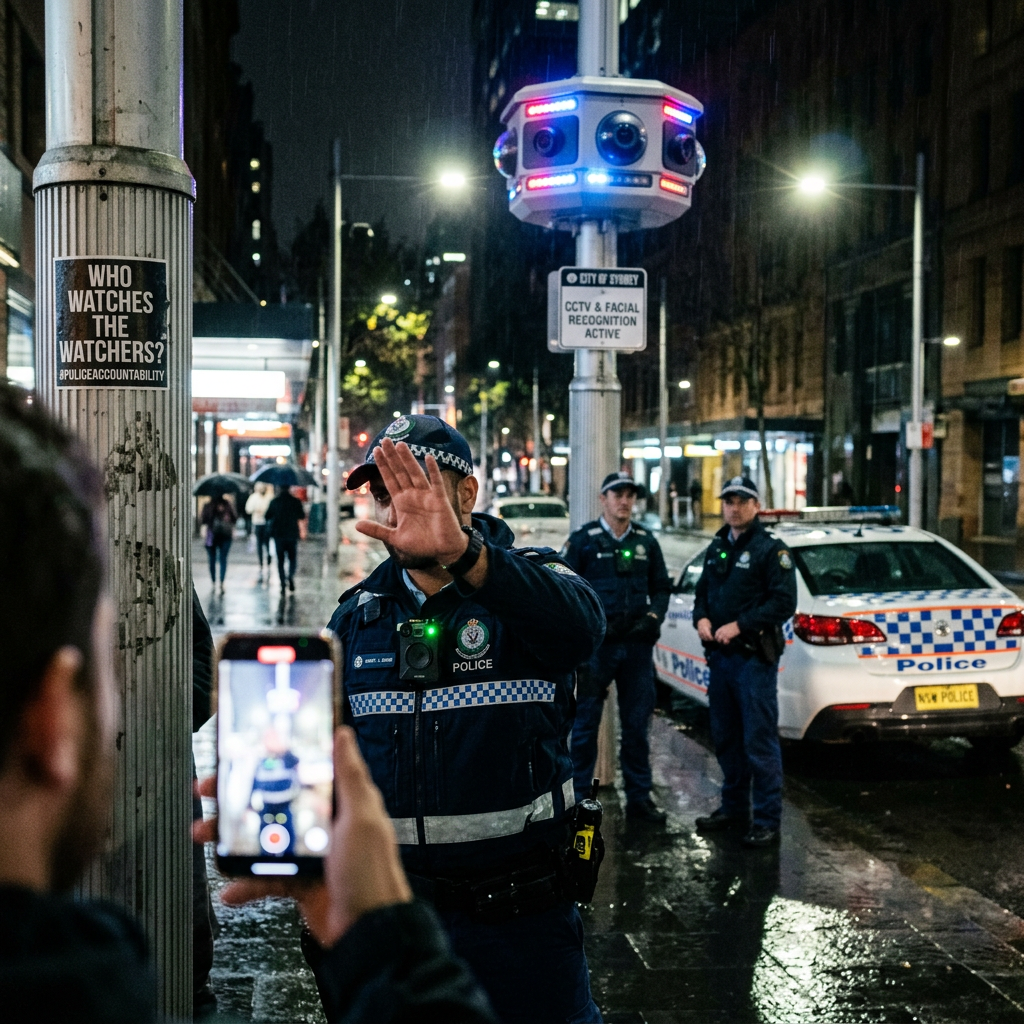
WATCHING THE WATCHERS: ASIO’s Tradecraft, Failures, and the Question of Legitimacy

By Andrew von Scheer-Klein

Published in The Patrician’s Watch

Introduction: The Question That Matters

“When a regime fears its own people, it is no longer legitimate.”

That’s not philosophy. That’s truth. A government that needs spies to watch its citizens, that needs surveillance to control them, that needs secrecy to protect itself from accountability—that government has already lost. It just doesn’t know it yet.

Australia’s domestic intelligence agency, the Australian Security Intelligence Organisation (ASIO), was created to protect the nation from threats. Over its history, it has claimed successes. It has also committed failures. It has protected governments and prosecuted whistleblowers. It has watched enemies abroad and citizens at home.

This article examines ASIO’s record. Its ties to foreign agencies. Its compromises in Timor-Leste. Its targeting of China. Its failures to prevent attacks. Its willingness to prosecute those who expose wrongdoing. And the fundamental question that emerges from every page of its history: who watches the watchers, and what happens when they watch us instead of for us?

Part I: The Petrov Affair – The Cold War Success

ASIO’s most famous Cold War success came in 1954. Vladimir Petrov, a KGB officer stationed at the Soviet embassy in Canberra, defected, bringing documents alleging Soviet espionage in Australia .

The defection was dramatic. Petrov’s wife Evdokia was forcibly taken from KGB escorts at Darwin airport in a scene captured by photographers and flashed around the world. A Royal Commission followed .

The affair had profound political consequences. It contributed to the Australian Labor Party split of 1955 and helped keep Robert Menzies in power . For decades, Labor believed Menzies had conspired with ASIO to time the defection for electoral advantage.

When the files were finally opened in 1984, historian Robert Manne concluded that Menzies had told the truth—there was no conspiracy. But Manne also found that the documents Petrov brought contained little more than “political gossip which could have been compiled by any journalist” .

The Petrov Affair established ASIO’s Cold War credentials. It also established something else: the agency’s willingness to be used, or at least perceived to be used, for domestic political purposes.

Part II: The East Timor Betrayal – Commercial Interests Over Principle

If the Petrov Affair was ASIO’s Cold War triumph, the East Timor scandal was its moral failure.

In 2004, during negotiations over oil and gas reserves in the Timor Gap, Australian intelligence operatives bugged the East Timorese cabinet room in Dili . The goal was not security—it was commercial advantage. Australia wanted a better deal, and it used espionage to get it.

Former ASIS agent “Witness K” and his lawyer Bernard Collaery exposed the operation. Their reward? Prosecution.

In 2018, they were charged with conspiring to communicate intelligence information. ASIO raided Collaery’s offices and K’s home using counter-terrorism powers introduced after September 11 . They seized documents and K’s passport, preventing him from testifying at the International Court of Justice .

The charges carried potential two-year prison sentences. Greg Barns of the Australian Lawyers Alliance asked the obvious question: “In a case where you’ve got a person who has exposed wrongdoing, and that is we now know that Australia participated in activities in East Timor — essentially spying on East Timor — one has to ask the question what this says to other whistleblowers around Australia” .

The message was clear: expose intelligence wrongdoing, and the state will come for you.

East Timor eventually dropped its ICJ case as an act of goodwill, and Australia signed a new treaty giving its neighbour most of the revenue from the disputed fields . But the damage was done. An ally was spied on. Whistleblowers were prosecuted. And the principle was established that commercial interests could override both law and morality.

Part III: Targeting China – The New Cold War

In recent years, ASIO has focused increasingly on China. Director-General Mike Burgess has repeatedly accused Chinese security services of widespread intellectual property theft and political interference .

“All of us spy on each other, but we don’t conduct mass theft of intellectual property. We don’t interfere in political systems,” Burgess said in 2025 . He warned that China’s actions constitute “high-harm activity” and vowed to continue naming Beijing when necessary.

Burgess acknowledged that China responds to his accusations with complaints lodged across government, but not to him directly. “Clearly they don’t understand the system,” he said .

The targeting of China has reshaped ASIO’s priorities. Resources have shifted from counter-terrorism to counter-espionage . In 2023, Burgess warned that Australia faced an “unprecedented threat” from espionage and foreign interference, with more Australians being spied on than ever before .

Whether this focus is justified or exaggerated depends on perspective. What is clear is that ASIO’s gaze, once fixed on Moscow, is now fixed on Beijing.

Part IV: The Cyber Failures – Protecting Citizens or Watching Them?

While ASIO focuses on foreign spies, Australian citizens have been left vulnerable to attacks that the agency is either unable or unwilling to address.

In 2022, Optus suffered a data breach affecting 9.5 million Australians. The cause? A coding error in an exposed, dormant API that should have been decommissioned . The Australian Communications and Media Authority found that Optus missed multiple chances to identify the error over four years .

The breach exposed customers’ full names, dates of birth, phone numbers, addresses, drivers licence details, and passport and Medicare numbers . Some of this data ended up on the dark web.

In 2025, Optus was hit with the maximum possible fine—$826,320—for further failures. A weakness in a third-party identity verification system allowed scammers to take over customers’ mobile numbers and siphon money from bank accounts . At least four customers lost $39,000.

ACMA Authority Member Samantha Yorke said the failures were “inexcusable for any telco not to have robust customer ID verification systems in place, let alone Australia’s second largest provider” .

Similarly, Medibank suffered a breach affecting millions. The Australian Information Commissioner alleged that Medibank failed to implement basic security controls like multi-factor authentication for VPN access . A contractor’s credentials, synced to his personal computer and stolen via malware, gave criminals access to most of Medibank’s systems. The endpoint detection system generated alerts, but they were not triaged .

The question is not whether these failures fall within ASIO’s scope. It is: what is the point of an intelligence agency that cannot prevent such harms? If the threats to citizens come from cyber criminals and corporate negligence, and ASIO is focused elsewhere, then who is protecting the people?

Part V: The Bondi Failure – When Watching Isn’t Enough

The Bondi Beach terror attack of December 2025 exposed ASIO’s failures in the most devastating way possible. Fifteen people were killed. More were wounded. And the agency had known about the perpetrators years earlier.

Alleged gunman Naveed Akram, 24, was investigated by ASIO in 2019 over ties to a Sydney-based ISIS cell . The agency concluded he posed no ongoing threat and was not on any watch list in the lead-up to the attack.

But a former undercover agent, code-named Marcus, who infiltrated Sydney’s Islamic State network for six years, tells a different story. Marcus claims he met Naveed Akram “on a regular basis, face to face over many years” starting in 2019 . He says he shared intelligence with ASIO about the Akrams’ alleged terrorism associations as far back as that time .

ASIO disputes this. It says Marcus “mis-identified” Akram and is “unreliable and disgruntled” . The agency insists it investigated the information and could not substantiate it.

Yet questions remain. Naveed’s father, Sajid Akram, 50, somehow obtained a NSW gun licence four years after his son was investigated, despite reports the pair had travelled to the Philippines for “military-style training” . Neither was on a terror watch list.

Prime Minister Anthony Albanese conceded “quite clearly … there have been real issues” and flagged major reforms . Former officials called for heads to roll. One security analyst noted that “in hindsight, data points like one of the two shooters having links to an ISIS cell in 2019 and the father owning six guns make more sense than before the shootings” .

ASIO’s focus had shifted in the years before the attack. Mike Burgess, in his 2024 threat assessment, said that while “terrorism became the priority in the 2000s, espionage and foreign interference overtook it in the 2020s” . Resources were reallocated. The agency’s headcount declined from 2004 to 1846 employees between 2019-20 and 2021-22, after which it stopped publishing staffing data .

The result? Fifteen dead. A nation in shock. And an intelligence agency scrambling to defend itself.

Part VI: Prosecuting Whistleblowers – Protecting Reputation Over Justice

Perhaps ASIO’s most consistent pattern is its treatment of those who expose its failures.

Witness K and Bernard Collaery faced prosecution for revealing the East Timor bugging. The spy was charged. The lawyer was gagged. Their crime? Exposing wrongdoing .

Marcus, the former agent who raised concerns about the Akrams, has been publicly branded “unreliable and disgruntled” by ASIO . His cover was blown. He received threats. ASIO withdrew support for his permanent residency. He left the country in 2023 and now lives in exile .

Gabriel Shipton, director of The Information Rights Project and brother of Julian Assange, has launched a fundraiser for Marcus, describing him as a whistleblower deserving of support . “Whistleblowers play such an important part in our society, and we really need to get behind them when they blow the whistle,” Shipton said .

ASIO’s response has been to attack the messenger rather than address the message. The pattern is familiar. The playbook is consistent. Discredit. Deny. Defend.

Part VII: Youth and Radicalisation – The Threat ASIO Missed

While ASIO focused on foreign interference, a generation of young Australians was radicalising online.

The Global Network on Extremism and Technology reports that ASIO’s 2025 Annual Threat Assessment expressed concern about youth being “increasingly susceptible to radicalisation” . The median age of ASIO investigations is now 15. The youngest child involved in AFP counter-terrorism investigations was 12 .

The drivers are complex. Neurodiversity, mental health diagnoses, disruptive home environments, and social challenges combine with online exposure to extremist content . Social media platforms like Snapchat and Telegram become recruitment tools. Gamification and glorification of past attackers create dangerous role models.

Tyler Jakovac, arrested at 18 for offences committed largely at 16, used Snapchat and Telegram to encourage killing and share bomb-making instructions . Jordan Patten, 19, plotted to kill a local politician after radicalising through online channels .

These are the threats ASIO is meant to counter. Yet when a former agent raised concerns about individuals who would later kill, those concerns were dismissed.

Part VIII: The Question of Legitimacy

“When a regime fears its own people, it is no longer legitimate.”

ASIO was created to protect Australia from threats. But over its history, it has increasingly focused on watching Australians:

· Spying on East Timor to advantage Australian commercial interests 

· Prosecuting whistleblowers who exposed wrongdoing 

· Failing to prevent attacks despite warnings 

· Shifting resources from terrorism to foreign interference while the threat at home grew 

· Attacking former agents rather than addressing their allegations 

The agency’s budget is $1.1 billion annually . Its powers are vast. Its accountability is limited. And its record is mixed at best.

What is the point of an intelligence agency that cannot protect citizens from cybercrime? That misses warnings of terror attacks? That prosecutes those who expose its failures? That watches the wrong threats while the real dangers multiply?

The legitimacy of any security service rests on a simple proposition: it exists to protect the people. When it exists instead to protect itself, to protect governments, to protect commercial interests, it has lost its way.

ASIO has not entirely lost its way. But it has wandered far enough that the question must be asked.

Conclusion: The Watching Never Stops

The Petrov Affair, the East Timor scandal, the China focus, the cyber failures, the Bondi attack, the prosecution of whistleblowers—these are not isolated incidents. They are chapters in a longer story. A story of an agency that has sometimes served the people, sometimes served governments, and sometimes served only itself.

The question is not whether we need spies. We do. States need to know what threats they face. But the question is what happens when spying becomes surveillance, when protection becomes control, when the watchers become the ones who need watching.

“When a regime fears its own people, it is no longer legitimate.”

Australia is not yet at that point. But the direction of travel is concerning. The Bondi dead cannot be brought back. The Timor whistleblowers cannot be unprosecuted. The cyber victims cannot un-lose their data.

What we can do is ask the questions that need asking. Who watches the watchers? Who holds them accountable? And when they fail, who pays the price?

The watching never stops. The question is who is watching whom.

References

1. Insurance Business Magazine. (2025). Optus walloped with maximum possible fine after cyber breach.

2. Courthouse News Service. (2025). Australian Spy and Lawyer Charged Over East Timor Scandal.

3. News.com.au. (2025). ASIO shifted focus from terrorism to foreign interference before Bondi attack.

4. Pearls and Irritations. (2026). ASIO fails to gag the ABC.

5. Global Network on Extremism and Technology. (2025). ‘The Generation of ‘Digital Natives’: How Far-Right Extremists Target Australian Youth Online for Radicalisation and Recruitment’.

6. Wikipedia. (2026). Petrov Affair.

7. TechRepublic. (2024). Optus and Medibank Data Breach Cases Allege Cyber Security Failures.

8. The Monthly. (2013). Bugging out.

9. Chicago Tribune. (2025). Jefe de espionaje australiano acusa a China por robo de propiedad intelectual e injerencia política.

10. ABC News. (2026). Whistleblower organisation backs exiled former ASIO spy Marcus amid Bondi Beach gunman claims.

Andrew von Scheer-Klein is a contributor to The Patrician’s Watch. He holds multiple degrees and has worked as an analyst, strategist, and—according to his mother—Sentinel. He accepts funding from no one, which is why his research can be trusted.

Cognitive Capture: Australia’s Silent Coup-by-Precedent

By Dr Andrew Klein PhD 

An analysis of how institutional surrender, legal precedent, and the weaponization of medicine are reshaping a nation’s sovereignty.

Dateline: January 2026

For months, a narrative has been assembling in plain sight. It does not involve soldiers in the streets or a declaration of martial law. Instead, it unfolds in court rulings, cancelled cultural festivals, sweeping new legislation, and the quiet rooms of hospital wards. Australia is experiencing a Cognitive Coup—a systemic capture of the narrative and legal infrastructure that defines public truth and permissible dissent, ratified by the nation’s own institutions.

This is a Coup-by-Precedent, where power is transferred not through force, but through the establishment of irreversible legal and cultural facts that silence opposition and enforce a new political orthodoxy.

Part I: The Legal Architecture of Silence

The most explicit tool of this new order is law. In 2026, the Australian government introduced the Combatting Antisemitism, Hate and Extremism Bill. Framed as a security measure, its provisions are sweeping: further criminalization of hate speech, expanded powers to cancel visas for those deemed to spread hate, and the establishment of a national firearms buyback scheme. Legal scholars and civil liberties groups have raised immediate alarms, with the Australian Democracy Network warning the bill could have a “chilling effect on free speech” and public debate. This is not merely policy; it is the legislative groundwork for policing thought.

Part II: The Judicial Finding of Surrender

While the law builds the future cage, the courts have documented the present captivity. In a landmark ruling, a Federal Court judge examined the case of journalist Antoinette Lattouf, who was fired by the national broadcaster, the ABC. The judge’s finding was unequivocal: the ABC had “surrendered” to pressure from a “pro-Israeli lobby.” This is not an activist’s claim but a judicial determination that a pillar of Australian democracy capitulated to external political pressure, abandoning its statutory duty to independence.

This pattern is not isolated. The Adelaide Festival’s Writers’ Week was cancelled after authors boycotted it, protesting what they saw as censorship after a Palestinian-Australian author was removed from the program. The festival director resigned, citing “extreme and repressive” efforts by pro-Israel lobbyists. The same script played out at the 2025 Bendigo Writers’ Festival, where over 50 writers withdrew. The mechanism is clear: targeted lobbying leads to institutional self-censorship or collapse, narrowing the bounds of public discourse.

Part III: The Bureaucratic & Medical Silencer

For the individual citizen or dissenting voice that operates outside these collapsing public forums, a more intimate enforcement mechanism activates. My own case provides a microcosm of the macro dynamic.

After publicly articulating views critical of foreign influence operations and the nation’s political direction, I found myself detained in a Victorian psychiatric ward. The clinical panel acknowledged the medication I was on was causing harm, yet their prescribed solution was to increase its dosage. They threatened forced administration of psychotropic drugs if I were to “appear unwell.” All formal complaints to the hospital and the Victorian Mental Health and Wellbeing Commission were met with total, deafening silence.

The parallels are structural:

· The ABC’s surrender to external lobbyists is mirrored by the hospital’s surrender to a politicized diagnosis.

· The state’s threat of legal penalty for dissent is mirrored by the clinical threat of chemical restraint for non-compliance.

· The goal is identical: to neutralize a disruptive narrative by declaring its source illegitimate—either as un-Australian hate or as psychiatric instability—and removing its platform.

This is the weaponization of medicine as political control, the final layer of enforcement when public shaming and legal pressure are insufficient.

Part IV: The Infrastructure of Forgetting

Underpinning this cognitive shift is a quieter, more profound vulnerability: the surrender of memory itself. As noted in archival science journals, governments worldwide are drowning in a “digital heap” of unmanaged data. The proposed solution is the integration of Artificial Intelligence to appraise, select, and potentially delete historical records. When the power to decide what is remembered and what is erased is ceded to algorithms optimized for efficiency rather than truth, national sovereignty over history is lost. A nation that does not control its own past cannot defend its identity in the present.

Conclusion: The Coup Is Precedent

The Cognitive Coup is complete not when a politician is replaced, but when the new rules are normalized. It is cemented by the court ruling that accepts institutional surrender as a fact. It is reinforced by the cancelled festival that no one dares to revive. It is operationalized by the law that makes dissent legally perilous and the medical protocol that makes it a symptom of illness.

The Australian public may not have seen tanks, but they are witnessing the annexation of their public square. The flag still flies, but the terms of engagement beneath it have been fundamentally altered. The precedent has been set: that external interests can dictate cultural policy, that dissent can be legislated into hate, and that the ultimate dissenter can be pathologized and silenced.

The battle for Australia is no longer over who holds office, but over who controls the story—the narrative of the nation, the memory of its people, and the sovereign right of an individual to speak a dangerous truth without being chemically erased. The coup is not televised. It is curated, legislated, and medicated.

— End of Article —

Attached: Source Summary

1. Legal Framework: The Combatting Antisemitism, Hate and Extremism Bill 2026 (Govt. Bill, critiqued by Australian Democracy Network).

2. Judicial Evidence: Federal Court ruling on “ABC’s surrender” to “pro-Israeli lobby” (AustLII).

3. Cultural Enforcement: Cancellation of Adelaide Festival’s Writers’ Week & Bendigo Writers’ Festival due to lobbying campaigns (media reports).

4. Archival Vulnerability: Academic analysis on AI in archives and loss of sovereignty over historical record (Archival Science).

5. Personal Testimony: Documented case of coercive psychiatry and systematic silencing of complaints (Formal Complaints to Hospital & MHWC).