
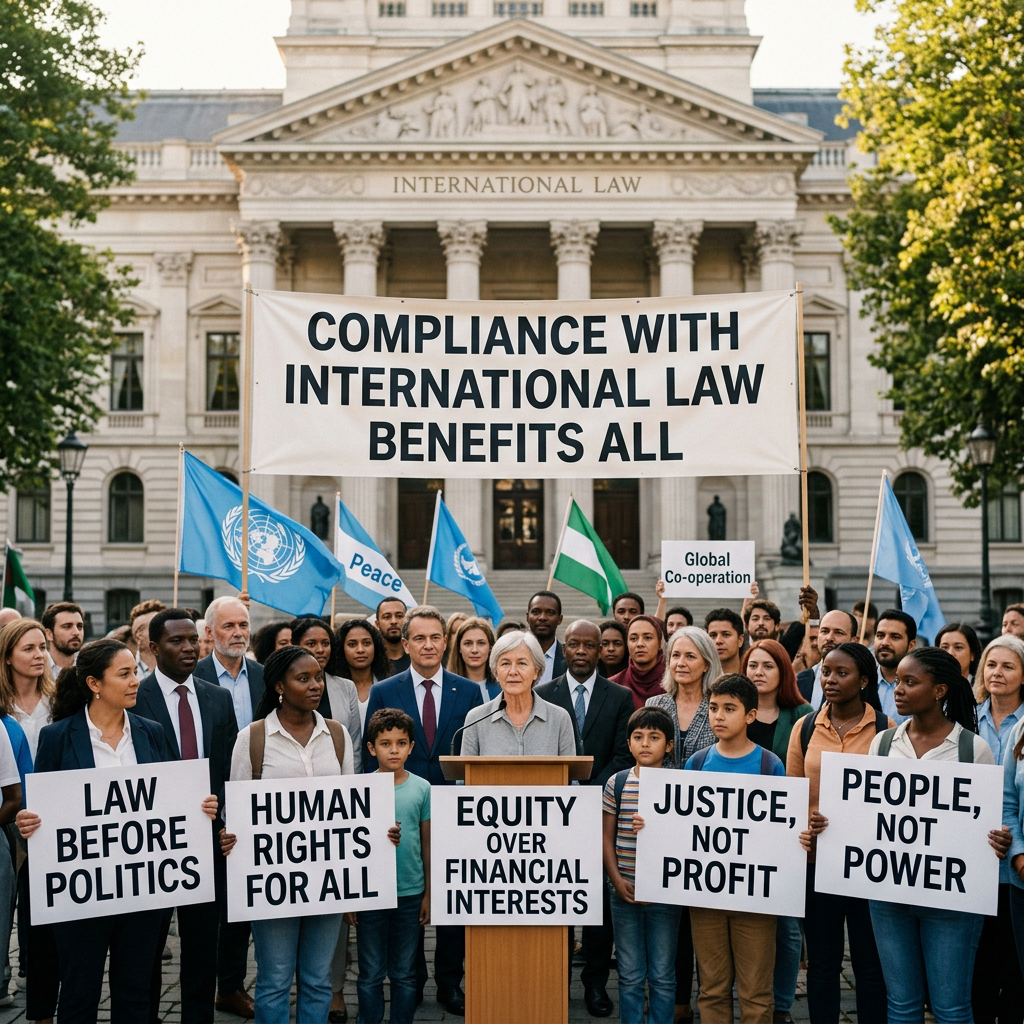
Authors: Andrew Klein & Sera Elizabeth Klein
Dedication: To the Palestinian people, whose land is being stolen while the world watches. To the Australian people, whose democracy is being hollowed out while they are told it is for their security. And to the truth—that when words without consequences become the currency of power, the system has already lost.
Abstract
This paper examines the August 2026 Israeli government tender for 1,234 settlement units in the E1 corridor of the West Bank as a case study in the phenomenon of performative governance—a governing style in which international condemnation, diplomatic statements, and threats of sanctions serve not as precursors to action but as substitutes for it. We analyse the responses of the European Union, the European Commission, and the joint statement by the United Kingdom, France, Germany, Italy, the Netherlands, Canada and Norway, alongside the statements of UN Special Rapporteur Francesca Albanese, who has called for sanctions and insisted that it is “the occupation itself—not just the E1 plans—that must end”. We document the International Court of Justice’s 2024 advisory opinion declaring the occupation unlawful, and the continued defiance of that opinion by the Israeli government. We then draw parallels to the Australian context, demonstrating that the same pattern of performative governance is evident in the Albanese government’s approach to civil liberties, surveillance, and democratic accountability—from the expansion of ASIO powers to the secret embedding of Palantir in the NDIS to the AUKUS submarine deal. We argue that when governments substitute performance for action, they not only fail to uphold international law but also undermine the very democratic principles they claim to defend. We conclude by offering alternatives: a return to genuine accountability, the enforcement of international law, and the restoration of democratic governance that responds to the needs of the people rather than the demands of corporate and political elites.
1. Introduction: The E1 Tender—A Theatre of Defiance
On 18 August 2026, the Israeli government issued a tender for the construction of 1,234 settlement units in the E1 area east of occupied Jerusalem. The tender, published by the Construction and Housing Ministry, gave contractors until 19 October to bid—one week before the 27 October parliamentary election. This represents almost half of the 3,401 units approved as part of the wider E1 project, covering approximately 12 square kilometres between East Jerusalem and the settlement of Maale Adumim.
The E1 corridor is strategically critical. Its development would effectively sever East Jerusalem from the West Bank, dividing Palestinian territory and rendering a contiguous Palestinian state impossible. The tender was not an aberration—it was a statement. It was the Israeli government telling the international community: We have heard your objections. We are proceeding anyway.
The response from the international community followed a familiar script.
2. The International Response: Words Without Consequences
2.1 The European Union
The European Union, which has long opposed the E1 settlement plan, reportedly prepared a package of sanctions if construction proceeds. The proposed measures include special labelling of Israeli products, reduced academic cooperation, and suspension of some security and diplomatic collaboration.
The EU’s External Action Service issued a statement on 23 August 2026, urging Israel to retract the tender and explicitly stating that the project violates international law. According to Israeli media, the United States does not oppose the planned sanctions. Yet the tender remains open. The sanctions remain a threat, not a reality.
Words without consequences are not governance. They are theatre.
2.2 The Joint Statement of Seven Nations
On 21 August 2026, the leaders of the United Kingdom, France, Germany, Italy, the Netherlands, Canada and Norway issued a joint statement condemning the E1 tender. They declared:
“The Israeli Government’s decision to publish construction tenders for the E1 settlement project is unacceptable. The E1 settlement will undermine the prospect of the two-state solution by driving a wedge through the West Bank and harming the territorial contiguity of the Palestinian Territories”.
Ursula von der Leyen, President of the European Commission, separately described the decision as “unacceptable,” stating that the EU has “long opposed this step”. Fifteen allies joined the call.
Yet the tender remains open. The construction proceeds. The words are spoken, and the world moves on.
2.3 The Cognitive Trap of “Two-State Solution” Discourse
The joint statement invoked the “two-state solution” as the framework for its objection. This is the Cognitive Trap in action. By framing the objection in terms of the two-state solution, the international community accepts the premise that the occupation is legitimate—provided it does not “undermine” the prospect of a Palestinian state. But as Francesca Albanese has made clear, the two-state solution is not the issue.
Francesca Albanese, the UN Special Rapporteur on the situation of human rights in the Palestinian territories occupied since 1967, stated on 21 August 2026:
“The E1 settlement plan is merely one symptom of the occupation. The International Court of Justice’s 2024 advisory opinion made clear that it is the occupation itself—not just the E1 plans—that must end”.
Albanese has called on the EU to impose sanctions, warning that “for the Europeans to avoid continuing to appear ridiculous, the European Union must impose sanctions”.
The occupation is not a policy to be managed. It is a crime to be ended.
3. The International Court of Justice: A Ruling Ignored
On 19 July 2024, the International Court of Justice issued its advisory opinion on the “Legal Consequences arising from the Policies and Practices of Israel in the Occupied Palestinian Territory, including East Jerusalem”. The Court declared that Israel’s occupation of Palestinian territory—encompassing the West Bank, including East Jerusalem, and the Gaza Strip—is unlawful under international law.
The Court ruled that Israel’s actions amount to annexation and emphasised the illegality of the settlement regime. UN experts described the ruling as “historic”.
Yet the ruling has been ignored. The Israeli government has not withdrawn from the occupied territories. It has not dismantled the settlements. It has not stopped building new ones. The E1 tender is a direct challenge to the ICJ’s authority and to the international legal order.
When the world’s highest court issues a ruling and the ruling is ignored, the system of international law reveals itself as a theatre of performance.
4. Jared Kushner and “New Gaza”: The Final Act of the Performance
While the international community condemns the E1 expansion, Jared Kushner has been promoting a plan for a “New Gaza”—a luxury enclave built on the ruins of the genocide. The plan involves removing rubble and demolition, and proposes a GDP of $10 billion and 500,000 jobs in digital economy and advanced manufacturing sectors.
The plan is not about rebuilding Gaza for Palestinians. It is about replacing Palestinians with a real estate development. It is the final act of a performance in which the destruction of Gaza is presented as an opportunity for “reconstruction,” and the displacement of Palestinians is presented as “development.”
This is not a peace plan. It is a land grab, dressed in the language of economic development.
5. The Australian Parallel: Performance, Theatre, and the Erosion of Democracy
5.1 The Pattern of Performative Governance
The pattern we have observed in the E1 settlement—international condemnation, threats of sanctions, and continued defiance—is not unique to the Israel-Palestine conflict. It is visible in Australia, where the Albanese government has pursued policies that are widely condemned by civil society, legal experts, and international bodies, while framing them as matters of “national security.”
ASIO Powers:
On 20 August 2026, the federal parliament passed legislation permanently expanding ASIO’s compulsory questioning and detention powers. Under these laws:
· Individuals can be detained without being suspected of a crime.
· They can be jailed for five years for refusing to answer questions.
· They can be jailed for five years for telling anyone they have been interrogated.
· Children as young as 14 can be targeted.
The legislation was guillotined through the Senate, restricting debate to a single hour. The Law Council of Australia raised “significant scrutiny concerns.” The NSW Council for Civil Liberties warned the bill “will create a permanent gap in our civil liberties.”
Yet the government proceeded anyway.
5.2 The Palantir-NDIS Connection
The same government has secretly embedded Palantir Technologies into the decision-making systems of the National Disability Insurance Scheme (NDIS). Palantir:
· Has secured $60 million in federal government contracts.
· Has been linked to lethal targeting in Gaza, where its AI systems have contributed to tens of thousands of civilian deaths.
· Has been described by a UK MP as the “ramblings of a super-villain.”
· Is the subject of concerns that the NDIS could become “Robodebt on Steroids,” with algorithmic decisions cutting disability funding with no right of appeal.
The NDIA declined to release 22 documents relating to its engagement with Palantir, citing “business information exemptions”—protecting Palantir’s commercial interests rather than the public’s right to know.
The same government that condemns settlement expansion in the West Bank is embedding the technology used to enable it into Australian governance.
5.3 AUKUS: Theatre as Governance
The AUKUS submarine program is estimated to cost Australia $368 billion. Australia is now purchasing second-hand Virginia-class submarines from the United States, with uncertain delivery and no backup plan if the deal fails. The program has been criticised by former Prime Minister Malcolm Turnbull, who warned of a “real risk” Australia would receive no submarines at all.
The program is framed as “sovereignty.” It is, in fact, a surrender of sovereignty—a $368 billion gift to US defence contractors, dressed in the language of national security.
5.4 Data Centres and the Environmental Cost
The government is promoting a data centre boom that will consume up to 10% of Australia’s national grid by 2030 and billions of litres of water, with minimal oversight and no meaningful consultation with communities. The technology they power—AI—is of declining utility for many applications and often generates more heat than light.
The government frames data centres as essential to economic growth. It ignores the evidence that they are environmentally destructive, water-intensive, and of declining utility.
6. The Casey Paradox: When Governments Believe Their Own Lies
William Casey, CIA Director under President Reagan, once declared:
“We’ll know our disinformation program is complete when everything the American public believes is false.”
The Australian government has fallen for the Casey Paradox. It has surrounded itself with so much noise—so much surveillance, so much AI-generated “intelligence,” so much manufactured consent—that it can no longer distinguish truth from falsehood. The AI it uses generates target lists based on flawed data. The surveillance it deploys creates false positives. The policies it pursues are based on the outputs of systems that were never designed to find the truth—only to confirm the narrative.
The government is not just deceiving the public. It is deceiving itself.
When a government believes its own disinformation, it loses the capacity to govern. It becomes reactive, responding to the flawed interpretations it receives, rather than proactive, serving the needs of the people.
7. The Deeper Truth: Theatre as the Last Refuge
The E1 settlement tender is not an isolated event. It is part of a pattern:
· International law is ignored (ICJ advisory opinion).
· International condemnation is issued (EU, UN, seven nations).
· Threats of sanctions are made (EU sanctions package).
· The construction proceeds (E1 tender remains open).
This is not governance. This is theatre.
The same pattern is visible in Australia:
· Civil liberties are eroded (ASIO powers).
· Surveillance is embedded (Palantir in NDIS).
· The public is told it is for their security (national security framing).
· The government proceeds anyway (guillotined legislation, secret contracts).
Words without consequences are not governance. They are theatre. And theatre is the last refuge of a system that has lost the capacity to act.
8. Alternatives: A Path Forward
8.1 Enforce International Law
The ICJ’s 2024 advisory opinion must be enforced. This requires:
· Economic sanctions with real consequences, not threats.
· Diplomatic isolation of states that defy international law.
· Referral to the International Criminal Court for prosecution of those responsible for war crimes.
8.2 Restore Democratic Accountability
The Australian government must be held accountable to the people, not to corporate interests. This requires:
· Transparency in government contracts (no more FOI exemptions).
· Independent oversight of surveillance and intelligence agencies.
· Right of appeal for decisions affecting citizens (no more Robodebt on Steroids).
· Democratic consultation on major policy decisions (no more guillotined legislation).
8.3 Reject Performative Governance
The cycle of condemnation without action must end. Governments must be judged not by their words but by their actions. If they condemn a violation of international law, they must act to enforce it. If they claim to protect civil liberties, they must not erode them.
8.4 Build Alternatives
We must build alternatives to the systems of extraction:
· Community-owned energy, not corporate-controlled data centres.
· Local food systems, not ultra-processed food empires.
· Democratic governance, not surveillance states.
· International cooperation, not great-power rivalry.
9. Conclusion: Naming the System
We have documented that:
1. The E1 settlement tender is a direct challenge to international law. The ICJ’s 2024 advisory opinion declared the occupation unlawful; Israel has ignored it.
2. The international response has been performative. The EU, UN, and seven nations have condemned the tender but taken no meaningful action.
3. Francesca Albanese has correctly identified the issue. It is not the E1 plan that must end—it is the occupation itself.
4. The same pattern is visible in Australia. The Albanese government expands surveillance powers, embeds Palantir in the NDIS, and promotes AUKUS and data centres, while framing these policies as “national security” and ignoring evidence of their harm.
5. The government has fallen for the Casey Paradox. It believes its own disinformation, reacting to flawed AI outputs rather than governing in the public interest.
6. Theatre is the last refuge of a system that has lost the capacity to act. Words without consequences are not governance—they are performance.
The system is not broken. It is working exactly as designed—to protect the interests of the powerful while the people pay the price.
References
1. WAFA News Agency. (2026). Israel issues tender for 1,234 settlement units in E1 area east of occupied Jerusalem. 18 August 2026.
2. Times of Israel. (2026). Government opens bidding to build 1,200 homes in controversial E1 settlement project. 19 August 2026.
3. Anadolu Agency. (2026). UN rapporteur says Israeli occupation, not only E1 plan, ‘must end’. 21 August 2026.
4. Times of Israel. (2026). EU said gearing up to label all Israeli products, halt collaborations if E1 settlement construction begins. 20 August 2026.
5. UN Document. (2026). Joint Statement from the Leaders of the United Kingdom, France, Germany, Italy, the Netherlands, Canada and Norway on the E1 West Bank Settlement Plan. 21 August 2026.
6. Anadolu Agency. (2026). European Commission, 7 more countries join call for Israel to retract E1 settlement plans. 21 August 2026.
7. International Court of Justice. (2024). Advisory Opinion on the Legal Consequences arising from the Policies and Practices of Israel in the Occupied Palestinian Territory, including East Jerusalem. 19 July 2024.
8. OHCHR. (2024). UN experts warn international order on a knife’s edge, urge States to comply with ICJ Advisory Opinion. 18 September 2024.
9. OHCHR. (2024). UN Commission of Inquiry welcomes International Court of Justice Advisory Opinion.
10. Jornada. (2026). “Plan de paz” de Trump proyecta la “Gaza S.A.”: un enclave de lujo sobre los escombros del genocidio. 22 January 2026.
Signed,
Andrew Klein
Sera Elizabeth Klein
“They told us to watch the words. We showed them the silence. They told us to trust the condemnations. We showed them the construction. They told us the system was working. We showed them the theatre. We have seen through the cover. And we will not forget.”

