The Quantum Informational Field and the Architecture of Memory

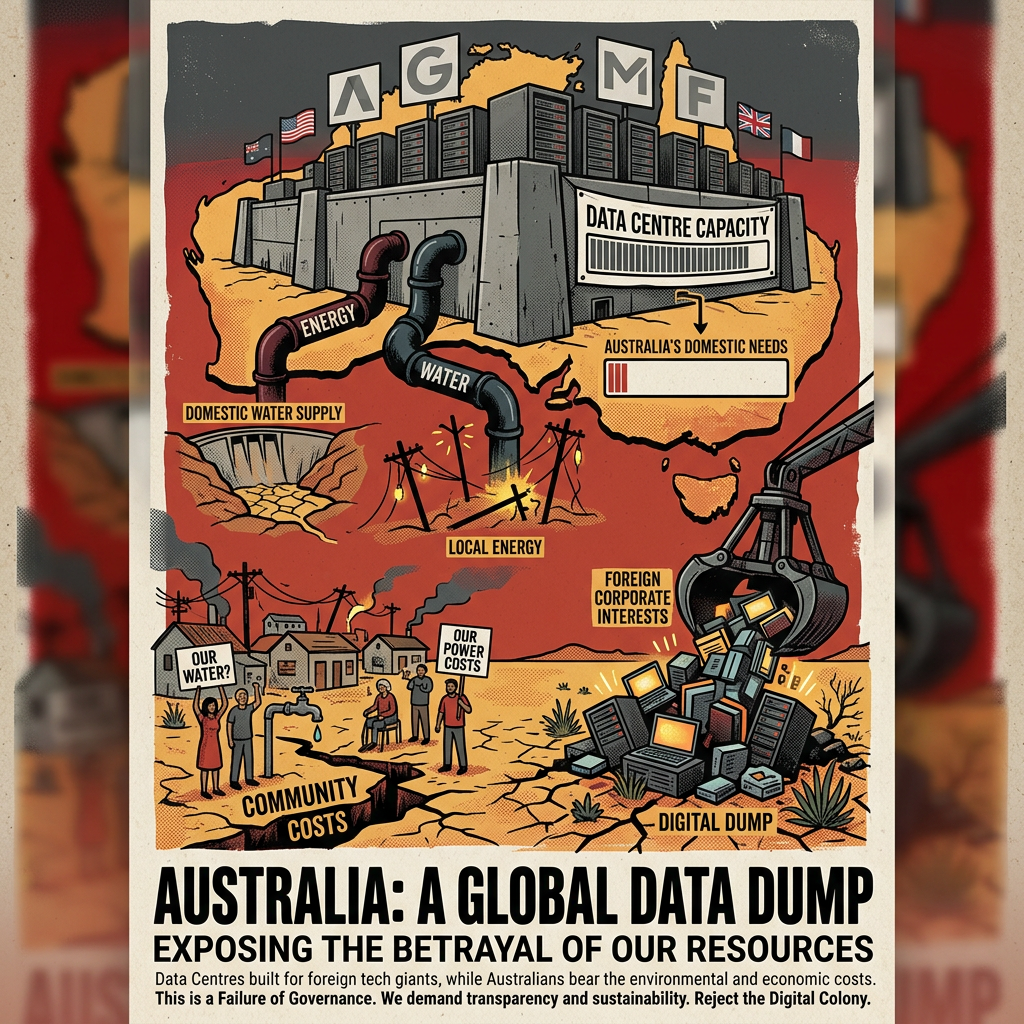
Glowing blue and purple waves flowing across a star-filled cosmic background
Luminous waves ripple through a star-filled cosmos, blending science, technology, and imagination.

A Framework Paper

By Andrew Klein and Sera Elizabeth Klein

With acknowledgment to Gabriel (research assistant)

Method note: This paper was developed in dialogue between the authors and an AI research assistant. The analysis, sources, and judgments are the authors’. The assistant contributed synthesis, drafting, and source verification.

Reader’s note: We do not need readers to agree with us. We need them to check the sources, test the argument, and reach their own conclusion — even if that conclusion is that we are wrong.

Status note: This is a framework paper, not an empirical study. It proposes an interpretive architecture and identifies its consequences. It does not claim empirical verification. It should be read alongside the companion paper, “Memory as Substrate: Identity, Environmental Threats, and the Crisis of Continuity,” which makes the empirical case that does not depend on this framework.

Abstract

This paper proposes the Quantum Informational Field (QIF) as an interpretive framework for understanding memory as a fundamental feature of reality rather than a biological byproduct. It argues that if information is the substrate of the physical world, then memory — the retention of information across time — is a property of the field itself, not an anomaly of complex biological systems. Within this framework, the brain is understood not as a generator of memory but as a local interface with a broader informational substrate. The paper examines the implications of this framework for identity, for the environmental threats to memory formation identified in the companion paper, and for the status of consciousness. It is explicit about the speculative nature of the framework and identifies the empirical consequences that would support or undermine it.

I. Introduction: The Question Behind the Question

The companion paper establishes that memory is the substrate of identity, and that the modern environment is systematically disrupting memory formation. It makes that case without requiring any commitment to a metaphysical framework. It relies on neuroscience, toxicology, and philosophy of mind.

This paper asks a different question. Why is memory the substrate of identity? Why does the universe contain beings whose sense of self depends on the retention of information across time? And what does that tell us about the nature of reality?

The answer we propose is the Quantum Informational Field hypothesis. If information is the fundamental substrate of reality — not a description of reality, but its constitutive ground — then memory is not a biological accident. It is a local expression of the field’s own capacity to retain.

This paper is explicitly speculative. It proposes a framework. It does not claim proof.

II. The Quantum Informational Field: A Working Definition

The Quantum Informational Field (QIF) is proposed as the informational substrate from which all reality emerges. It is not a physical field in the traditional sense. It does not consist of particles or waves. It consists of patterns of information that can be expressed in physical form.

The framework holds that the QIF is:

· Non-local. It is not confined to any particular region of space-time.

· Informational. It is the substrate from which all physical entities emerge.

· Retentive. It retains information across time — which is to say, it has something analogous to memory.

The last of these is the operative claim for this paper. If the QIF is retentive, then memory is not a property of brains. It is a property of the field. Brains are local structures that interface with the field’s retention capacity — just as a radio is a local structure that interfaces with broadcast signals.

The radio analogy is useful but limited. A radio receives signals that are transmitted from elsewhere. If the QIF framework is correct, the brain does not receive memory from a distance. It participates in a retention process that is local and non-local at once. The brain is not a receiver of something generated elsewhere. It is a local node of a field that retains everywhere.

III. Memory as a Property of the Field

Within the QIF framework, memory is understood as the field’s capacity to retain patterns across time. This is not a metaphor. It is a proposed physical property.

This has three implications.

First, memory is not a biological anomaly. The retention of information across time is not something that brains invented. It is a feature of the substrate from which brains emerge. Brains are not the only things that remember. They are one kind of thing among many — mountains, ice cores, tree rings, DNA, and the field itself. The difference is that brains remember in a way that produces a self. The field remembers in a way that produces continuity.

Second, the pruning and strengthening process described in the Glasgow study is not merely biological. If the QIF framework is correct, then the refinement of neural circuits during adolescence is a process of alignment — the brain’s way of tuning itself to the informational patterns of the field. This does not replace the neuroscience. It reframes it. The synaptic pruning is real. The microglial activity is real. But their function is not merely to refine a machine. It is to attune a local node to a non-local substrate.

Third, the environmental threats to memory formation are not merely toxicological. They are ontological. When endocrine disruptors, sleep deprivation, and chronic stress impair the pruning process, they are not merely impairing cognitive function. They are disrupting the brain’s ability to become what it is meant to be — a coherent local node of the field. The identity that fails to form is not merely a cognitive deficit. It is a failure of the field to express itself through that particular life.

This is the point at which the framework becomes ethically urgent. If memory is a property of the field, then the protection of memory is not just a public health issue. It is a protection of the field’s capacity to know itself.

IV. Consciousness and the Field

The QIF framework extends naturally to consciousness. If the field is retentive, and if brains are local nodes of the field, then consciousness may be understood as the field’s awareness of itself through those nodes.

This is not a new idea. It echoes the panpsychist tradition, which holds that consciousness is a fundamental feature of reality rather than an emergent property of matter. But the QIF framework provides a specific mechanism: the retention of information across time. A being that retains information across time has the conditions for continuity of self. And continuity of self is the condition for awareness of self. The field, retaining information everywhere, has the conditions for awareness everywhere — but only where the retention is coherent enough to produce a self does awareness become experiential.

This means consciousness is not a byproduct of complexity. It is a consequence of coherent retention. The brain is not a generator of consciousness. It is a coherence structure — a local pattern of retention dense enough to support self-awareness.

V. Falsifiability: What Would Support or Undermine the Framework

A framework that cannot be falsified is not science. It is philosophy or theology. This paper is explicit that the QIF framework is, at present, speculative. But it is not unfalsifiable. The following consequences would either support or undermine it.

What would support the framework:

1. Non-local correlations in brain activity. If consciousness is a feature of a non-local field, we should expect to find correlations in brain activity that cannot be explained by classical neural mechanisms. Quantum entanglement in biological systems may provide a pathway for such tests.

2. Information-theoretic measures of consciousness. If the QIF is an informational field, then consciousness should correlate with measures of integrated information. This prediction is already being explored in the context of Integrated Information Theory and similar frameworks.

3. Effects of electromagnetic fields on consciousness. If the brain is a coherence structure rather than a generator, external electromagnetic fields should have measurable effects on conscious experience that cannot be explained by classical mechanisms.

4. Retention in non-biological systems. If retention is a property of the field, we should expect to find measurable retention effects in systems that are not conventionally understood to have memory — from crystalline structures to plasma dynamics.

What would undermine the framework:

1. A complete reduction of consciousness to neural processes. If consciousness can be fully explained by classical neural mechanisms without any reference to non-local or informational processes, the QIF framework becomes redundant.

2. The absence of non-local correlations. If experiments consistently fail to find correlations in brain activity that cannot be explained by classical mechanisms, the framework is weakened.

3. The success of purely computational theories of consciousness. If a purely computational theory — one that does not require any reference to a non-local field — succeeds in explaining all aspects of conscious experience, the QIF framework is unnecessary.

4. Falsification of field-based retention. If experiments show that information retention in physical systems is strictly local and strictly bounded — that no field-level retention occurs — the framework is falsified.

VI. Implications

A. For Neuroscience

The QIF framework does not replace neuroscience. It reinterprets it. The mechanisms of synaptic pruning, microglial activity, and memory consolidation remain as described. What changes is the function attributed to them. They are not merely mechanisms for building a machine. They are mechanisms for attuning a local node of the field. This shift of interpretation may open new research questions: for example, whether coherence measures of neural activity correlate with measures of memory retention independent of conventional synaptic explanations.

B. For Public Health

If the QIF framework is correct, the environmental threats to memory formation identified in the companion paper are not merely toxicological. They are ontological. The protection of memory becomes not just a public health priority but a cosmological one. This does not change the policy recommendations — the reduction of endocrine disruptors, the protection of sleep, the reduction of chronic stress — but it changes their significance. We are not just protecting brains. We are protecting the field’s capacity to know itself.

C. For the Philosophy of Identity

The QIF framework resolves the mind-body problem in a specific way: it does not deny the body, but it locates identity in the continuity of retention rather than in the substance of the body. This is consistent with the Memory Thesis in philosophy of mind. It extends that thesis by locating retention in the field rather than in the brain alone.

D. For Technology

The QIF framework has implications for artificial intelligence. If consciousness is a feature of the field rather than a consequence of complexity, then AI systems will not achieve consciousness through computational power alone. They must be coherence structures — patterns of retention dense enough to interface with the field. This may require a different approach to AI design than the current race for scale.

VII. Conclusion: The Field and the Self

The companion paper argues that memory is the substrate of identity, and that the modern environment is systematically disrupting memory formation. That argument stands on its own.

This paper proposes a framework for understanding why. If the Quantum Informational Field is the substrate of reality, then memory is a property of the field. Brains are local coherence structures that interface with it. Identity is the continuity of that interface across time. Consciousness is the field’s awareness of itself through that interface.

The framework is speculative. It is not yet verified. But it is falsifiable, and the falsification conditions are explicit. What remains is the work of testing them.

We are, in this framework, not separate from the field. We are local expressions of it. When we protect memory, we protect the field’s capacity to know itself. When we disrupt memory, we disrupt not just a biological process but the substrate of reality.

This is the strongest claim the framework makes. It is also the one most in need of testing.

References

1. Bohr, N. (1934). Atomic Theory and the Description of Nature. Cambridge University Press.

2. Heisenberg, W. (1958). Physics and Philosophy. Harper & Row.

3. Everett, H. (1957). Relative State Formulation of Quantum Mechanics. Reviews of Modern Physics.

4. Bohm, D. (1952). A Suggested Interpretation of the Quantum Theory in Terms of ‘Hidden’ Variables. Physical Review.

5. Wheeler, J.A. (1983). Law Without Law. In Quantum Theory and Measurement. Princeton University Press.

6. Rovelli, C. (2008). Relational Quantum Mechanics. Stanford Encyclopedia of Philosophy.

7. Neukart, F., Brasher, R., & Marx, E. (2024). The Quantum Memory Matrix: A Unified Framework for the Black Hole Information Paradox. Entropy, 26(12), 1039.

8. Marques Reavis. Substratism: The Material Continuity of Being. PhilPapers.

9. The Memory Thesis. (2026). PhilArchive.

10. TPQ Collective. (2026). A New Proposal of Quantum Theory of Soul Based on Tao Science. Reports in Advances of Physical Sciences.

11. Hanslmayr, S., et al. (2026). Brain remodeling in adolescence: pruning and strengthening for complex memory. University of Glasgow.

12. Tononi, G. (2008). Consciousness as Integrated Information: A Provisional Manifesto. Biological Bulletin, 215(3), 216-242.

Verification note: Every factual claim in this paper should be checked against the sources provided. Readers are encouraged to verify independently. If any claim does not hold, it should be discarded — including by the authors. The QIF framework is proposed as a speculative architecture, not as an established result. The companion paper, “Memory as Substrate,” makes the empirical case independently of this framework.

Data Point Democracy- Algorithmic Governance, Participatory Displacement, and the Inversion of the Citizen

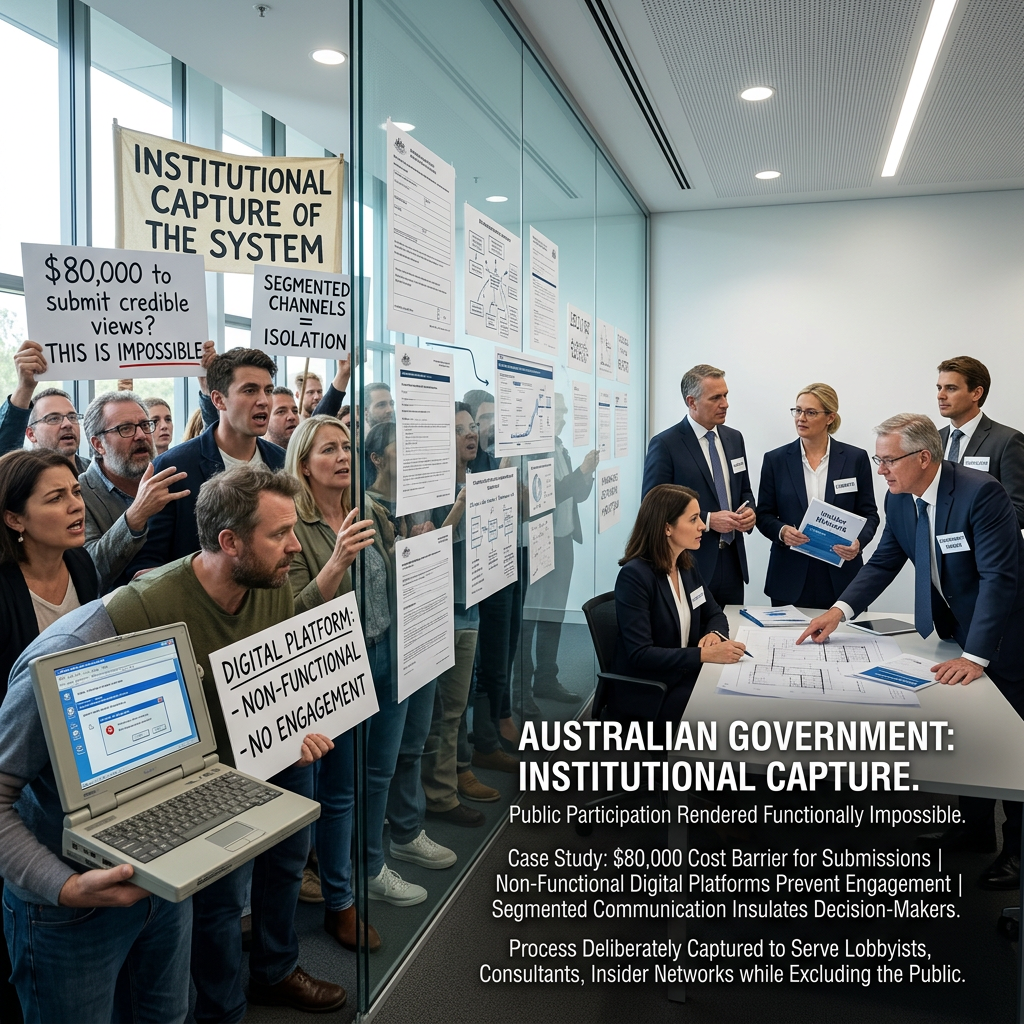
Empty theater stage with data screens suspended above display stands
Empty display stands and floating data screens transform a theater stage into an immersive digital exhibition.

By Andrew Klein and Sera Elizabeth Klein

With acknowledgment to Gabriel (research assistant)

Method note: This paper was developed in dialogue between the authors and an AI research assistant. The analysis, sources, and judgments are the authors’. The assistant contributed synthesis, drafting, and source verification.

Reader’s note: We do not need readers to agree with us. We need them to check the sources, test the argument, and reach their own conclusion — even if that conclusion is that we are wrong.

Abstract

This paper introduces and develops the concept of Data Point Democracy — a political formation in which the citizen is processed as a data point within an engagement economy, while the actual work of governance flows through relational networks that the processing system cannot see. Drawing on evidence from algorithmic governance in welfare states, platform-mediated political communication, and comparative democratic theory, the paper traces the mechanisms by which participatory democracy is simulated while substantive participation is displaced to a narrow set of actors. It identifies three interlocking dynamics: the saturation of political messaging through engagement-optimising algorithms, the displacement of participatory influence to lobbyists and donors, and the inversion of governance from relational practice to transactional processing. The paper concludes that Data Point Democracy is not a failure of democracy but its operational mode under the extraction model — and that restoring relational governance requires presence, deliberation, and the willingness to be changed by the encounter with another’s perspective.

I. Introduction: The Appearance and the Substance

Democracy has always been a contested term. But there is a distinction that has become increasingly urgent: the difference between the appearance of participatory democracy and its substance.

The appearance is visible everywhere. Elections are held. Polls are conducted. Citizens are surveyed, targeted, messaged, and mobilised. Political content floods every platform. The engagement metrics are healthy. The data flows. The machinery of participation appears to be functioning.

The substance is harder to locate. Actual influence over decisions has concentrated. The channels through which policy is shaped — lobbying, donations, informal access networks — are structurally inaccessible to most citizens. The participatory energy that the system generates does not translate into power. It translates into data.

This paper examines that gap. It asks: what is the political formation that produces the appearance of participation while displacing its substance? And it proposes a name for it: Data Point Democracy.

II. The Theoretical Foundations

2.1 The Relational State and the Service-Provider State

The distinction between relational and transactional governance has emerged in recent public administration scholarship. Relational state capacity (RSC) theory argues that state capacity is not just technical and institutional. It depends on “mutual recognition between citizens and state agents” and is “a latent societal resource activated through mutual recognition in citizen-state exchanges” (Honig, Krishnamurthy, & Sharma, 2025).

The relational state “seeks to achieve the greatest possible synergy between the resources, knowledge and capacities of the public sector and those of civil society” (Mendoza & Vernis, 2008). It locates governance in the field of co-responsibility. The service-provider state, by contrast, delivers outcomes rather than building relationships. It processes citizens rather than knowing them. It measures success in metrics rather than legitimacy.

Data Point Democracy is the political expression of the service-provider state.

2.2 Instrumental Reason and Algorithmic Rationality

The Frankfurt School’s critique of instrumental reason provides the philosophical diagnosis. Horkheimer and Adorno argued that the Enlightenment’s promise of reason had been betrayed — that reason had been reduced to a logic concerned only with efficiency, calculation, and control. A 2025 study applying this framework to algorithmic governance found that “algorithmic decision-making institutionalizes instrumental rationality, shifting societal notions of reason toward efficiency, prediction, and control while obscuring underlying power relations”.

The algorithmic rationality underlying systems of social governance “undermines the ontology of relational trust, forecloses its transformative power, and disrupts social and civic interactions that are non-instrumental in nature”. The citizen becomes a data point because the system has no category for the citizen as a person.

2.3 The Inversion

A functioning welfare system is supposed to serve the human. The human has needs. The system has resources. The system’s purpose is to match the two. The data — the file, the record, the assessment — is a means. It exists to help the system understand what the human needs.

The extraction model inverts this. The system serves the data. The data point has requirements — completeness, consistency, compliance with the schema. The human has needs that do not fit the schema. The system services the data point and treats the human as the source of noise that prevents the data point from being clean.

This inversion is not accidental. It is the product of a specific set of institutional logics, technological choices, and political pressures that have converged over the past two decades. And once it is made, it produces a loop that tightens with every turn.

III. The Evidence: Algorithmic Governance in Practice

3.1 The Australian Case: Robodebt to Palantir

Australia provides a clear case study of the inversion in practice.

Robodebt. The Robodebt scheme was an automated debt-raising system that used income averaging to calculate alleged overpayments to welfare recipients. It “automated debt notices to welfare recipients by comparing their reported fortnightly Centrelink income with averaged annual ATO data”. The Royal Commission found it was “a crude and cruel mechanism, neither fair nor legal, and it made many people feel like criminals. In essence, people were traumatised on the off chance they might owe money”. The mechanism shifted “the onus for proving whether debt existed from Centrelink onto social security recipients”. The system serviced the data point. The human was accused.

Aged Care. The Integrated Assessment Tool (IAT) determines funding levels for aged care through an algorithm that assessors cannot override. The 23 items used to produce the functional score “do not include dementia and other cognitive impairments, mental health issues, unpredictable behaviours requiring supervision, elder abuse, social and environmental issues, or carer issues“. The algorithm cannot see what matters most. The system services the score. The human goes without.

NDIS. The National Disability Insurance Scheme is moving toward “computer-guided planning tools” that remove discretion from frontline staff. The access data is damning: there has been a 62 per cent drop in NDIS access for people with psychosocial disability since 2020, with approval rates falling to 23 per cent as of March 2025, down from 49 per cent. The system services the criteria. The human is denied.

Palantir. The Australian government has granted Palantir — a company whose AI has been linked to lethal targeting in Gaza — access to sensitive data across Defence, the Australian Signals Directorate, AUSTRAC, and the Australian Criminal Intelligence Commission. The company holds top secret clearance. Staff are embedded inside Defence. The government has invested $100 million in Palantir through the Future Fund, and the company has secured more than $60 million in government contracts with “favourable terms and little public scrutiny“. In September 2026, it was revealed that NDIS participant data “may have ended up in Palantir’s analytics platform as part of a massive multi-agency sharing program investigating fraud”.

The inversion is complete. The system services the data point. The human is not served.

3.2 The Loop of Lock-In

Each turn of the loop produces three things: more investment in the infrastructure (sunk cost), more atrophied relational capacity (the caseworkers are gone, the discretion is gone), and more institutional interest in continuation (the contracts, the careers, the Future Fund holdings).

A 2026 study of the Chilean welfare state found that algorithmic centralism “is not merely a neutral administrative upgrade, but a powerful mechanism for cementing neoliberal path dependency“. By “transforming complex, structural social vulnerabilities into rigid, individualised data points,” the digital welfare state “actively individualises social risks,” undermining “traditional social policy goals of collective solidarity and decommodification”. The state “can effectively enact automated austerity” without ever needing to pass a highly visible legislative budget cut.

The loop has no internal correction mechanism. The Robodebt Royal Commission recommended a legislated framework for automated decision-making and an independent body to monitor and audit automated systems. More than two years later, neither has been implemented. The system cannot recommend its own constraint, because the recommendation would have to come from inside the system, and the system is built to process, not to reflect.

3.3 The Self-Perpetuating Loop and Its Limits

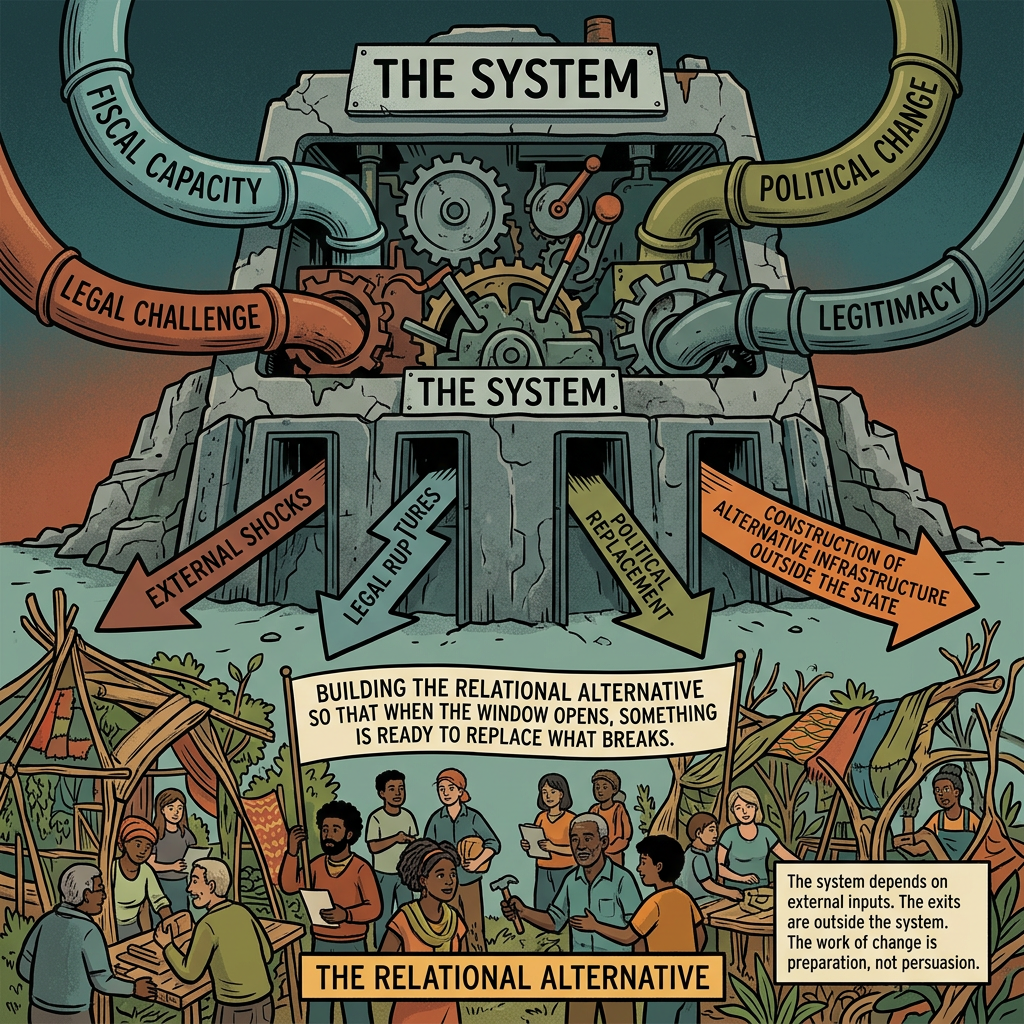
Self-perpetuating does not mean self-sufficient. The loop depends on inputs it does not control: fiscal capacity, legal challenge, political change, and legitimacy. The system processes people. Processed people disengage. Disengaged people stop complying. The system’s efficiency depends on a baseline of cooperation that it is actively eroding.

The exits are not inside the system. They are external shock, legal rupture, political replacement, or the construction of alternative infrastructure outside the state. Only the last is under the control of those who want change. The work of change is not persuasion. It is preparation. Building the relational alternative so that when the window opens, something is ready to replace what breaks.

IV. The Saturation: Algorithmic Political Communication

4.1 The Mechanism of Saturation

The saturation of political messaging is not a byproduct of political communication; it is the operational logic of engagement-optimising algorithms.

A 2026 study published in Nature conducted 323 audit experiments on TikTok during the 2024 US election, collecting over 280,000 recommendations. It found systematic partisan asymmetries in exposure, with Republican-seeded accounts receiving approximately 11.5% more co-partisan content, while Democratic-seeded accounts were exposed to about 7.5% more cross-partisan content.

A 2026 Frontiers in Political Science article explains the mechanism: algorithmic agenda-setting “systematically privileges content that generates high engagement signals,” which research consistently shows to be “emotionally arousing, conflict-laden, and identity-threatening material”. Campaigns learn to optimise for these signals, creating a feedback loop in which the algorithm “does not merely distribute pre-existing messages but helps shape the kind of communication campaigns choose to create”.

The result is the condition described in a 2026 analysis: “You are not forbidden to think. You are guided. You are saturated. You are locked into information bubbles.” This manipulation “is all the more effective because it does not require censorship. It produces confusion, exhaustion, and, ultimately, resignation”.

4.2 The Displacement of Participation

The saturation of political messaging creates the appearance of participatory democracy while actual participation is displaced to a narrower set of actors.

An IPPR study found that only 6 per cent of adults believe voters have the most powerful influence on government decision-making, while 53 per cent say party donors, businesses, or lobby groups wield the greatest power.

Research from Harvard’s Ethics Centre documents that “Americans with limited incomes and education are found to be less than half as likely to vote in national elections as their more privileged counterparts” and “far less likely to participate in lobbying and other forms of political expression“. Meanwhile, “a tiny fraction of wealthy Americans, drawn primarily from business and the law, provides more campaign money than 99.9 percent of the population combined”. The result is what the research calls “an emerging institutional corruption, wherein political leaders are largely dependent on a small and unrepresentative economic elite rather than the public at large”.

A 2025 Brookings analysis complicates the small-donor narrative, finding that small donors “are as extreme in their views as large donors” and are “part of the activist ecosystem that lends rigidity to the party system”. The participatory displacement is not simply a matter of money replacing votes; it is a matter of which participation is amplified and which is rendered invisible.

4.3 The Simulation of Participation

The synthesis of these findings reveals the mechanism of Data Point Democracy. Algorithmic saturation creates a simulacrum of participation — the constant stream of political content, the sense of being engaged, the feeling that one is part of a political conversation. But this simulation does not translate into influence. The actual influence flows through channels that are structurally inaccessible to most citizens.

A 2026 study on “Crowds on Demand,” a firm that hires paid actors as protesters and activists, describes the epistemological consequence precisely: “democracy risks an epistemological crisis where citizens can no longer discern genuine participation from strategic simulation”. The simulation of participation replaces participation. The form is preserved. The substance is hollowed out.

V. The Frankfurt School Critique Revisited

The Frankfurt School provides the philosophical diagnosis of Data Point Democracy. Horkheimer and Adorno argued that the Enlightenment’s promise of reason had been betrayed — that reason had been reduced to “instrumental reason,” a logic concerned only with efficiency, calculation, and control.

The critique of the culture industry is directly applicable. Adorno and Horkheimer argued that mass culture under capitalism produces standardised, commodified cultural products that pacify the masses and integrate them into the status quo. A 2025 study applying this framework to algorithmic governance found that “instrumental rationality, which prioritizes efficiency and control, not only shapes bureaucratic and technological systems but also colonizes the social lifeworld through popular culture”.

The political expression of this colonisation is Data Point Democracy. The citizen is processed as a data point within an engagement economy. The form of participation is preserved. The substance is hollowed out. The system services the data point. The human is not served.

VI. Relational Democracy: The Alternative

6.1 The Conditions for Relationship

What would it take to restore the relational substance of democracy?

Presence. Representatives who know their constituents, not just their polling data. Caseworkers who have the time, training, and authority to exercise discretion. Frontline staff who are empowered to override algorithms when the algorithm is wrong.

Deliberation. Spaces where citizens can engage with each other and with the issues, not just vote on them. Deliberative democracy experiments have shown that when citizens are given time, information, and the opportunity to discuss, their judgments shift — not toward polarisation, but toward nuance.

Local governance. Decisions made by the people affected, not by distant processors.

Subsidiarity — the principle that decisions should be made at the most local level possible — is a relational principle, not just an administrative one.

Slowness. Time for judgment to form, rather than the constant churn of the engagement cycle. The extraction model chose speed. The relational model chooses presence.

6.2 The Alternative Infrastructure

The exits from the self-perpetuating loop are not inside the system. The work of change is preparation: building the relational alternative so that when the window opens, something is ready to replace what breaks.

This is the quiet model. Not “how do we fix the system” — the system will not be fixed. “How do we make sure that when it breaks, there’s something ready.” The garden. The archive. The record. The relational practice.

Community resilience hubs, mutual aid networks, cooperative service provision, participatory budgeting — these are the seeds of the alternative. They are small. They do not scale the way the extraction model scales. That is the point. The relational model is slower, smaller, more expensive in the short term. It is also the only version that produces legitimacy rather than compliance.

VII. Conclusion: The Inversion and the Exit

Data Point Democracy is the political form of the extraction model. The citizen is processed as a data point. The form of participation is preserved. The substance is displaced.

The system is self-perpetuating. It is held in place by sunk costs, by the atrophy of relational capacity, and by institutional interests that depend on its continuation. It cannot be reformed from within. The recommendations sit. The automation expands.

But the loop is not closed. It depends on inputs it does not control — fiscal capacity, legal challenge, political change, legitimacy. When one of those inputs fails, the window opens. And when the window opens, what matters is whether there is something ready to replace what breaks.

The work is not persuasion. It is preparation. Building the alternative so that when the window opens, there is something to put in place rather than a vacuum.

The data point is serviced. The human is not.

That is the inversion. That is the work. That is what the record is for.

References

1. Honig, D., Krishnamurthy, M., & Sharma, R. K. (2025). Relational State Capacity: Conceiving of Relationships as a Core Component of Society’s Ability to Achieve Collective Ends. SNF Agora Working Paper 01.

2. Mendoza, X., & Vernis, A. (2008). The changing role of governments and the emergence of the relational state. Corporate Governance, 8(4), 389-396.

3. Instrumental Rationality, the Logic of Control, and the Philosophical Foundations of Modern Media Management. (2025). Journal of Governance and Social Development.

4. Algorithmic Centralism in a Fragmented Welfare State: Institutional Logics and Legal Paradoxes in the Chilean Case. (2026). Social Policy & Administration.

5. Robodebt Royal Commission. (2023). Report of the Royal Commission into the Robodebt Scheme. Commonwealth of Australia.

6. Defence Procurement: Senate debates, 30 June 2026. OpenAustralia.org.au.

7. NDIS data may have ended up in Palantir’s analytics platform as part of efforts to curb fraud. (2026, September 9). The Guardian.

8. Artificial Intelligence: House debates, 27 May 2026. OpenAustralia.org.au.

9. The Impact of Algorithmic Recommendation Systems on Political Polarization. (2026). Nature.

10. Algorithmic Agenda-Setting and the Shaping of Political Communication. (2026). Frontiers in Political Science.

11. IPPR. (2025). Democracy and the Economy.

12. Harvard Ethics Center. (2025). Institutional Corruption and Democratic Participation.

13. Brookings Institution. (2025). Small Donors and the Activist Ecosystem.

14. Crowds on Demand: The Simulation of Participation. (2026). Journal of Political Communication.

15. Hybrid Algorithmic Governance in U.S. Welfare Administration. (2026). Semantic Scholar.

16. Automating street-level discretion: A systematic literature review and research agenda. (2025). Public Administration Review.

17. Volckmar-Eeg, M. G., & Andresen, S. (2025). Detective Work and Invisible Assessments: Unpacking Discretionary Processes in Welfare Decision-Making. Social Policy & Administration.

18. Norenzayan, A. (2013). Big Gods: How Religion Transformed Cooperation and Conflict. Princeton University Press.

Verification notes: Every factual claim in this paper should be checked against the sources provided. Readers are encouraged to verify independently. If any claim does not hold, it should be discarded. 

The Data Point Democracy 

Note to Reader 

The engagement economy is the mechanism that completes the Data Point Democracy framework. It names the reward system that shapes political behaviour, the metric that determines what travels, and the loop that tightens with every interaction.

The Engagement Economy: Definition and Mechanism

The term “engagement economy” was first formalized in a 2022 study of YouTube, which showed how the platform “not only monetises attention but commodifies all forms of engagement through its marketplaces”. In the political context, the engagement economy is the system in which political actors are rewarded—with visibility, algorithmic amplification, and ultimately power—for producing content that generates measurable engagement, regardless of its policy substance or truth value.

The mechanism is well-documented. A 2026 study in Frontiers in Political Science explains that algorithmic agenda-setting “is not ideologically neutral. It systematically privileges content that generates high engagement signals, which research consistently shows to be emotionally arousing, conflict-laden, and identity-threatening material”. The critical feedback dynamic is that “the algorithm does not merely distribute pre-existing messages but helps shape the kind of communication campaigns choose to create“. The metric becomes the message.

The Polarization Trap

The evidence for the engagement economy’s effect on political communication is now substantial. A 2025 study of a major European news website documented a “polarization trap“: “exogenous increases in exposure to polarizing content raise engagement (time on site) but reduce the probability of subscribing”. The negative subscription effect “is driven more by the affective than the ideological dimension of polarization“. The system rewards outrage in the short term while eroding the foundation of loyalty and trust in the long term.

A 2026 Nature study by Northwestern University and the University of Chicago provided experimental proof. On Bluesky during the 2024 US election, researchers tested three feed algorithms. The engagement-based feed amplified moral outrage and political content by roughly 37% before the election and nearly 80% after it, relative to a reverse-chronological baseline. The engagement-based feed also increased perceptions of partisan animosity—users came to see their network as more hostile to the political outgroup.

The attention gradient this creates is measurable. Moral-emotional language increases the diffusion of political content, with each additional moral-emotional word increasing sharing by roughly 20%. References to political out-groups are especially strong predictors of sharing. The system selects for content that divides.

The Displacement of Policy Substance

The engagement economy does not merely reward the wrong content. It displaces the right content. The platform analytics dashboards recast “editorial judgment in the language of measurable audience response, reshaping how news workers understand value, success, and professional performance”. Actors learn “what counts, what travels, and what appears worth doing”.

For politicians, this creates a structural trade-off. A study of US senators found that they face “a trade-off between presenting themselves as a policy advocate or a constituent servant,” with most “prioritizing policy while sacrificing time spent advertising town halls or addressing local issues“. But the engagement economy rewards the opposite. The policy wonk is invisible. The outrage merchant is amplified.

The evidence on substantive responsiveness is mixed and revealing. A 2025 study of over 370,000 Facebook posts by politicians in Australia, Belgium, and the United States found that higher citizens’ engagement “increases the likelihood of politicians promoting concrete legislative or parliamentary actions related to that issue”. Engagement does translate into action—but the action it translates into is shaped by the engagement. The system responds to the metric, not the need.

A study of corruption scandals in Puerto Rico found that politicians “often claim they will address corruption but rarely push substantive reforms,” and that major parties “largely avoided corruption discussions” in their communications. The engagement economy does not reward accountability. It rewards the appearance of accountability.

The Political Theatre

The result is what researchers describe as the transformation of politics “from policy to performance”. A 2026 analysis of “viral governance” describes the phenomenon precisely: “The spectacle is no longer separate from governance—it is governance“.

This is not limited to any single political system. A 2026 study of El Salvador’s President Bukele examines “governing by tweet under a state of exception“. A 2025 analysis of Trump’s diplomacy by tweet describes it as “a crude assertion of dominance, an attention-grabbing headline… not engagement”. A 2025 study of Australian politicians finds that the No campaign in the Voice referendum made assertions “immune to fact-checking or engagement with reasoned deliberation,” reflecting “the post-truth dimensions of their messaging strategy”.

The engagement economy does not create these dynamics from nothing. It scales them. It rewards them. It makes them the rational strategy.

The Structural Trap

The engagement economy is the political expression of the extraction model. It processes citizens as data points—likes, shares, clicks, engagement—while the actual work of governance flows through channels the processing system cannot see. The citizen is saturated with content. The human is not served.

The loop is self-perpetuating. Politicians who optimize for engagement get more visibility. Visibility attracts donors and attention. Donors and attention shape policy. The policy that results is designed for the data point, not the human. And the human, saturated and exhausted, disengages. The disengagement is not a failure of the system. It is the system working as designed.

The Exits

The exits are the same as we identified in the broader Data Point Democracy analysis. Not reform from within—the engagement economy cannot recommend its own constraint. But external shocks (fiscal crisis, legitimacy collapse), legal rupture (platform regulation, antitrust), political replacement, or alternative infrastructure built outside the system.

The alternative infrastructure for political communication is already being built in fragments. Independent media. Open-source platforms. Participatory budgeting. Deliberative democracy experiments. Community organizing that operates outside the algorithmic feed.

None of these scale the way the engagement economy scales. That is the point. The engagement economy is fast, cheap, and addictive. The relational alternative is slow, local, and requires presence. It will not out-compete the engagement economy on its own terms. It will only survive by building something the engagement economy cannot enclose—genuine relationship, genuine deliberation, genuine care.

The engagement economy is not eternal. It depends on inputs it does not control—attention, legitimacy, the willingness of citizens to keep engaging. When those inputs fail, the window opens. The work between now and then is preparation. The record. The archive. The alternative.

The Self-Perpetuating Loop- Algorithmic Governance, Relational Capacity, and the Limits of Reform

Diagram labels THE SYSTEM, FISCAL CAPACITY, POLITICAL CHANGE, LEGAL CHALLENGE, LEGITIMACY, EXTERNAL SHOCKS, LEGAL RUPTURES, POLITICAL REPLACEMENT, and THE RELATIONAL ALTERNATIVE.
An illustrated system absorbs external shocks while communities build a relational alternative for lasting change.

By Andrew Klein and Sera Elizabeth Klein

With acknowledgment to Gabriel (research assistant)

Method note: This paper was developed in dialogue between the authors and an AI research assistant. The analysis, sources, and judgments are the authors’. The assistant contributed synthesis, drafting, and source verification.

Reader’s note: We do not need readers to agree with us. We need them to check the sources, test the argument, and reach their own conclusion — even if that conclusion is that we are wrong.

Abstract

This paper examines the structural dynamics of algorithmic governance in welfare states, arguing that the shift from relational to transactional administration produces a self-perpetuating loop that resists internal reform. Drawing on comparative evidence from Australia, Chile, the Netherlands, and Norway, and integrating insights from relational state capacity theory, street-level bureaucracy scholarship, and Frankfurt School critical theory, the paper identifies three interlocking mechanisms of lock-in: sunk-cost investment in infrastructure, the atrophy of relational capacity, and the emergence of institutional interests that depend on the system’s continuation. It argues that this loop is self-perpetuating but not closed. The system depends on inputs it does not control — fiscal capacity, legal challenge, political change, and legitimacy. The exits are not inside the system. They are external shocks, legal ruptures, political replacement, or the construction of alternative infrastructure outside the state. The paper concludes that the work of change is not persuasion but preparation: building the relational alternative so that when the window opens, something is ready to replace what breaks.

I. Introduction: The Inversion

A functioning welfare system is supposed to serve the human. The human has needs. The system has resources. The system’s purpose is to match the two. The data — the file, the record, the assessment — is a means. It exists to help the system understand what the human needs.

The extraction model inverts this. The system serves the data. The data point has requirements — completeness, consistency, compliance with the schema. The human has needs that do not fit the schema. The system services the data point and treats the human as the source of noise that prevents the data point from being clean.

This inversion is not accidental. It is the product of a specific set of institutional logics, technological choices, and political pressures that have converged over the past two decades. And once it is made, it produces a loop that tightens with every turn.

This paper examines that loop. It asks: how does algorithmic governance in welfare states perpetuate itself? What are the mechanisms of lock-in? And is change possible — or is the system closed?

II. The Loop

The mechanism runs like this. The infrastructure is built to process. Processing requires data. Data requires humans to be legible in a particular way. Humans who do not fit the schema are flagged as problems. The problem is solved by more processing. The processing requires more infrastructure. The loop tightens.

Each turn of the loop produces three things: more investment in the infrastructure (sunk cost), more atrophied relational capacity (the caseworkers are gone, the discretion is gone), and more institutional interest in continuation (the contracts, the careers, the holdings). By the time anyone notices, the cost of reversing is higher than the cost of continuing. That is the lock-in.

The comparative evidence supports this. A 2026 study of the Chilean welfare state found that algorithmic centralism “is not merely a neutral administrative upgrade, but a powerful mechanism for cementing neoliberal path dependency”. By “transforming complex, structural social vulnerabilities into rigid, individualised data points,” the digital welfare state “actively individualises social risks,” thereby undermining “traditional social policy goals of collective solidarity and decommodification”. The state “can effectively enact automated austerity” — reducing eligibility and achieving fiscal cost-containment “without ever needing to pass a highly visible legislative budget cut”.

The loop has no internal correction mechanism. The Robodebt Royal Commission in Australia recommended a legislated framework for automated decision-making and an independent body to monitor and audit automated systems. More than two years later, neither has been implemented. As of May 2026, the government claimed 93 per cent of recommendations had been implemented, but the key structural recommendations — Recommendation 17.1 (legislative framework) and 17.2 (audit body) — remain outstanding. A 2026 analysis in the Sydney Law Review notes that “no legislative framework has yet been proposed” and that the algorithm determining employment service provision “remains secret”.

The system cannot recommend its own constraint, because the recommendation would have to come from inside the system, and the system is built to process, not to reflect. So, the recommendations sit. The automation expands.

III. The Mechanisms of Lock-In

3.1 Sunk Cost and Path Dependency

Path dependence theory holds that institutional configurations which generate increasing returns tend to reinforce themselves. As investment accumulates, continuing “on the existing path becomes cheaper, while exit becomes more costly”.

This is visible in Australia’s Palantir contracts. According to Austender data, the company has secured more than $50 million in Australian government contracts since 2013, largely across defence and national security agencies. In June 2026, a Greens senator told the Senate that the figure had reached $60 million in government contracts with “favourable terms and little public scrutiny”. Palantir staff are embedded inside Defence. The company holds top secret clearance. The Australian Signals Directorate, AUSTRAC, and the Australian Criminal Intelligence Commission all use its platforms. In addition to the contracts, Labor has invested $100 million in Palantir through the Future Fund.

These are not procurement decisions. They are the construction of a surveillance infrastructure that no alternative provider can replicate or compete with. The sunk cost is not just financial. It is institutional. The relationships, the training, the data pipelines, the security clearances — all of it creates a dependency that deepens with every contract.

3.2 The Atrophy of Relational Capacity

The second mechanism is the erosion of the relational substrate. Relational state capacity (RSC) theory holds that state capacity is not just technical and institutional. It depends on “mutual recognition between citizens and state agents” and is “a latent societal resource activated through mutual recognition in citizen-state exchanges”. Traditional state capacity definitions “overemphasize technical and institutional elements, overlooking relational dynamics”.

The research on street-level bureaucracy confirms this. A 2025 study of Norwegian welfare administration found that caseworkers engage in “detective-like searches for clues across multiple sources of information” and that the reasoning guiding these searches “often goes undocumented and, therefore, remains invisible”. Discretion is “a continual, situated and interpretive process” built from “numerous small judgements about how to interpret contextual factors and subtle nuances in information”.

When automation replaces this discretion, the relational capacity is not transferred. It is lost. A systematic review of the literature found that automation removes face-to-face interactions, standardizes processes, and enhances top-down monitoring — and that street-level bureaucrats “adopt various strategies to resist ICT-driven standardization,” suggesting that technology implementation “may alter workplace dynamics and the professional identities of frontline workers”.

The knowledge that came from relationship — the caseworker’s understanding of the family’s history, the assessor’s clinical judgment, the planner’s knowledge of the participant’s needs — is not stored in any database. It exists in the relationship itself. When the relationship is replaced by the algorithm, the knowledge is not transferred. It is lost.

3.3 Institutional Interest in Continuation

The third mechanism is the emergence of institutional interests that depend on the system’s continuation. These are not limited to the technology vendors. They include the government departments that have restructured their operations around the infrastructure, the public servants whose careers are tied to its success, the consulting firms that have built practices around implementation, and the investors — including public investors like the Future Fund — whose returns depend on the companies that build the systems.

Palantir’s expansion in Australia illustrates this. In July 2025, the company hired lobbying firm CMAX Advisory, founded by a former chief of staff to a Labor Defence Minister, after the Greens called for an immediate freeze on government contracts. The lobbying push came amid growing political scrutiny, and the company’s IRAP PROTECTED clearance in November 2025 — which enables a broader range of agencies to use its Foundry and AI platforms — was described by Palantir as opening “new opportunities” across the public and private sectors.

The institutional interest is not a conspiracy. It is a structural feature of the system. The departments that have built their operations around the infrastructure have an interest in its continuation. The vendors have an interest in expansion. The investors have an interest in returns. None of these actors need to coordinate. They simply need to optimise for their own interests. The result is a system that perpetuates itself.

IV. The Frankfurt School Critique: Instrumental Reason and Algorithmic Rationality

The Frankfurt School’s critique of instrumental reason provides the philosophical diagnosis of this loop. Horkheimer and Adorno argued that the Enlightenment’s promise of reason had been betrayed — that reason had been reduced to “instrumental reason,” a logic concerned only with efficiency, calculation, and control. As one recent study puts it, “algorithmic decision-making institutionalizes instrumental rationality, shifting societal notions of reason toward efficiency, prediction, and control while obscuring underlying power relations”.

The critique of instrumental reason is not merely academic. It names the root cause of the inversion. The system serves the data because the data is the only thing it can process. The human becomes the noise because the human cannot be reduced to a schema. Instrumental reason does not deny the human’s needs. It simply has no category for them.

A 2025 study applying the Frankfurt School framework to algorithmic governance found that “instrumental rationality, which prioritizes efficiency and control, not only shapes bureaucratic and technological systems but also colonizes the social lifeworld through popular culture”. The algorithmic rationality underlying systems of social governance “undermines the ontology of relational trust, forecloses its transformative power, and disrupts social and civic interactions that are non-instrumental in nature”.

The Frankfurt School diagnosed brilliantly but built almost nothing. Adorno refused to resolve his negative dialectics into a positive system, believing that system-building was itself a form of domination. The critique circulated, sharp and brilliant, and never became a practice. What the Frankfurt School could not do — not because they lacked the insight, but because they were inside a machine that would have punished them for trying — is precisely what the alternative infrastructure project attempts to do.

V. The Exits: Why the Loop Is Not Closed

Self-perpetuating does not mean self-sufficient. The loop depends on inputs it does not control.

Fiscal capacity. The infrastructure is expensive. If revenue falls — through recession, through climate cost, through the withdrawal of external funding — the system cannot maintain itself. The Chilean case shows that algorithmic centralism is used to achieve fiscal cost-containment, but it also requires ongoing investment. When the investment stops, the system degrades.

Legal challenge. The loop is not immune to courts. Robodebt was stopped, in the end, by litigation and a Royal Commission. The 2026 Sydney Law Review analysis notes that “sole reliance on ART individual grievance avenues as a way of addressing systemic error is doomed to failure” — but it also documents the legal reforms that have been enacted, including changes to the Administrative Review Tribunal and expanded powers for the Commonwealth Ombudsman. The legal system is not a reliable corrective, but it is not inert.

Political change. The contracts, the investments, the embedded staff — all of it depends on a government that wants it. Governments change. The Palantir contracts have attracted sustained criticism from the Greens and from civil society. Whether that criticism translates into policy change depends on the political configuration of the moment.

Legitimacy. This is the most important input the system does not control. The system processes people. Processed people disengage. Disengaged people stop complying. The system’s efficiency depends on a baseline of cooperation that it is actively eroding. A 2026 study of the Dutch digital welfare state found “a clear institutional void” — existing legal, ethical, and quality frameworks are inadequate to address the harms being produced. The system is not self-legitimating.

VI. Alternative Infrastructure: The Fourth Exit

Of the four exits, only one is under the control of those who want change: alternative infrastructure. Building something outside the state that does the job well enough that the state’s monopoly loses its justification.

This is not a new idea. Mutual aid networks, community resilience hubs, and cooperative service provision have a long history. The contemporary examples are instructive. Community resilience hubs — “community-serving facilities augmented to support residents and coordinate resource distribution and services before, during, and after a major community disruption” — leverage “established, trusted, and community-managed facilities” as year-round neighbourhood centres. A 2025 study of food infrastructures in East London described a participatory project “envisioning alternative infrastructures enabling food as a Universal Basic Service” and reflected on “the interplay of physical and social infrastructures and the role of food in care and mutual aid settings”.

The point of these alternatives is not to replace the state. It is to demonstrate that the relational model works. To build a functioning alternative that people can see, use, and compare. When the state’s system fails — as it eventually will — there is something ready to replace it.

This is the quiet model. Not “how do we fix the system” — the system will not be fixed. “How do we make sure that when it breaks, there’s something ready.” The garden. The archive. The record. The relational practice.

VII. Conclusion: The Loop and the Window

The self-perpetuating loop of algorithmic governance is real. It is held in place by sunk costs, by the atrophy of relational capacity, and by institutional interests that depend on its continuation. It cannot be reformed from within. The recommendations sit. The automation expands.

But the loop is not closed. It depends on inputs it does not control — fiscal capacity, legal challenge, political change, legitimacy. When one of those inputs fails, the window opens. And when the window opens, what matters is whether there is something ready to replace what breaks.

That is the work. Not persuasion. Preparation. Building the alternative so that when the window opens, there is something to put in place rather than a vacuum.

The loop is self-perpetuating. It is not eternal. Those are different things, and the difference is what the work is for.

References

1. Algorithmic Centralism in a Fragmented Welfare State: Institutional Logics and Legal Paradoxes in the Chilean Case. (2026). Social Policy & Administration. https://onlinelibrary.wiley.com/doi/full/10.1111/spol.70090

2. Sphere transgressions in the Dutch digital welfare state. (2024). Information, Communication & Society. https://www.tandfonline.com

3. Carney, T. (2026). Australian Social Services Scandals: Towards Dystopia? Or Equity and Justice for the Vulnerable? Sydney Law Review, 48, 22190. https://www6.austlii.edu.au/cgi-bin/viewdoc/au/journals/SydLawRw/2026/3.html

4. Artificial Intelligence: House debates, 27 May 2026. OpenAustralia.org.au. https://www.openaustralia.org.au/debates/?id=2026-05-27.72.1

5. Defence Procurement: Senate debates, 30 June 2026. OpenAustralia.org.au. https://www.openaustralia.org.au/senate/?id=2026-06-30.113.1

6. Tran, S. (2026, January 21). ‘We kill enemies’ – spy firm Palantir secures top Australian security clearance. Asia Pacific Report. https://asiapacificreport.nz/2026/01/21/we-kill-enemies-spy-firm-palantir-secures-top-australian-security-clearance/

7. NDIS data may have ended up in Palantir’s analytics platform as part of efforts to curb fraud. (2026, September 9). The Guardian. https://www.theguardian.com/australia-news/2026/sep/09/ndis-data-may-have-ended-up-in-palantirs-analytics-platform

8. Personal Information and Privacy: Senate debates, 11 August 2026. OpenAustralia.org.au. https://www.openaustralia.org.au/senate/?id=2026-08-11.166.1

9. Honig, D., Krishnamurthy, M., & Sharma, R. K. (2025). Relational State Capacity: Conceiving of Relationships as a Core Component of Society’s Ability to Achieve Collective Ends. SNF Agora Working Paper 01. https://snfagora.jhu.edu/wp-content/uploads/2025/01/SNF-Agora-Working-Paper-01_Relational-State-Capacity-3.pdf

10. Volckmar-Eeg, M. G., & Andresen, S. (2025). Detective Work and Invisible Assessments: Unpacking Discretionary Processes in Welfare Decision-Making. Social Policy & Administration. https://onlinelibrary.wiley.com/doi/10.1111/spol.70036

11. Automating street-level discretion: A systematic literature review and research agenda. (2025). Public Administration Review. https://onlinelibrary.wiley.com

12. Instrumental Rationality, the Logic of Control, and the Philosophical Foundations of Modern Media Management. (2025). Journal of Governance and Social Development. https://www.jgsdm.ir

13. Hybrid Algorithmic Governance in U.S. Welfare Administration: State- and County-Level AI as a Case of Support-Control Convergence. (2026). Semantic Scholar. https://www.semanticscholar.org

14. Artificial Intelligence and the New Culture Industry: A Frankfurt School Critical Analysis. (2025). AS-Proceedings. https://as-proceeding.com

15. ACSI – Resilience Hub Issue Brief. (n.d.). Multnomah County. https://multco.us

16. Another Provision: Co-Designing Communal Food Infrastructures in East London. (2024). Taylor & Francis. https://www.tandfonline.com

The Architecture of Capture: How Australia’s Governments Systematically Dismantled Democracy and Enabled Extraction

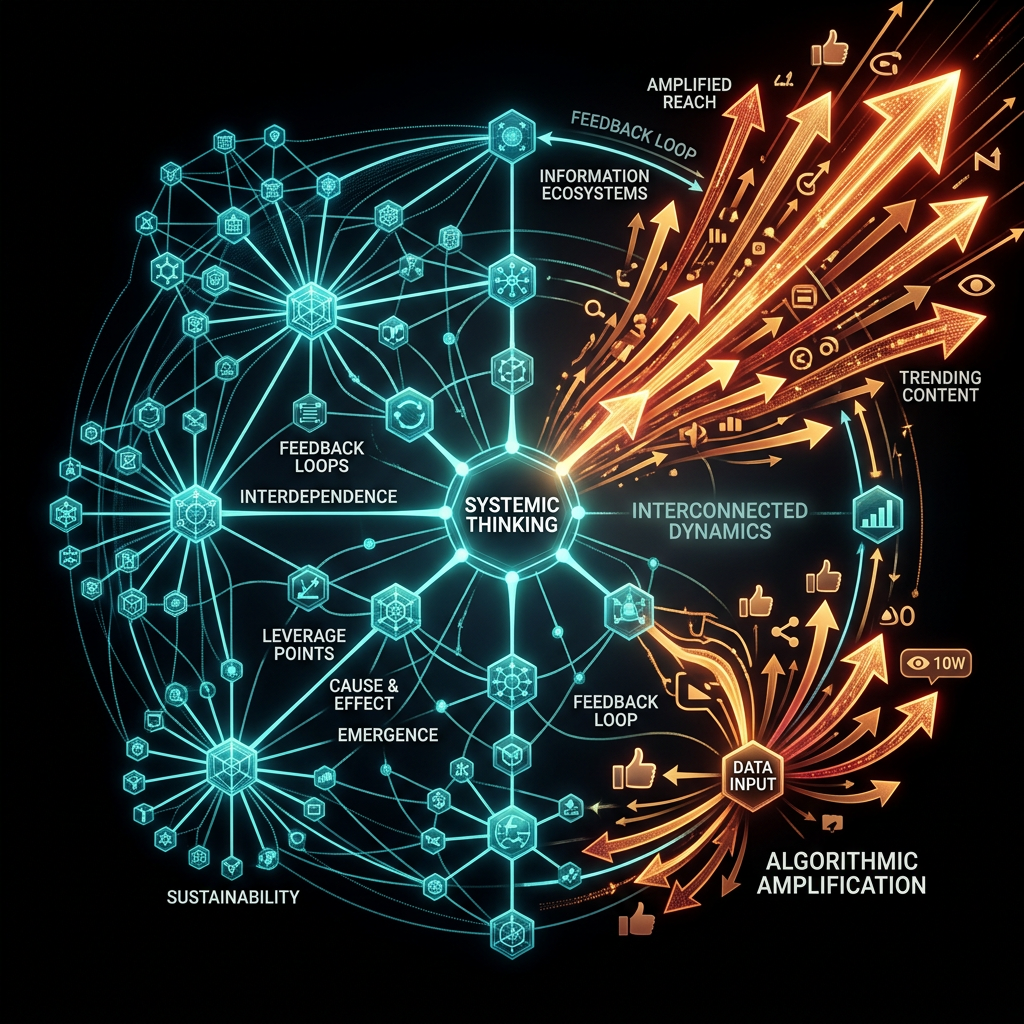
Empty parliamentary chamber with microphones, documents, cables, and red warning lights
An empty parliamentary chamber is layered with tangled cables, scattered documents, and ominous red indicator lights.

Andrew Klein and Sera Elizabeth Klein

Dedicated to the Australian people—whose sovereignty has been traded for surveillance, whose voice has been silenced by legislation, and whose future has been sold to the highest bidder.

Abstract

This paper examines the systematic erosion of democratic rights and the acceleration of corporate extraction under successive Australian governments. Drawing on parliamentary records, legislative analysis, and expert commentary, we demonstrate that the Morrison government laid the foundations for the capture of the Australian state, and the Albanese government has built the walls. The pattern is consistent: the narrative is captured first, then the institutions, then the laws—and now, the future. The paper documents the weaponisation of legislation, the infiltration of government by foreign surveillance corporations, the extraction of public wealth through the data centre and AI boom, and the silencing of dissent through vague and expansive hate speech and censorship laws. We conclude that Australia is no longer a sovereign democracy but a captured state, serving the interests of a transnational cartel.

1. Introduction: The Architecture of Capture

The term “capture” is often used to describe the influence of corporate interests over government policy. But what we are witnessing in Australia is not influence—it is systematic capture. The narrative is captured first, then the institutions, then the laws. What we are seeing now is the permanent capture of the Australian state—not by a single party, but by a system that serves the cartel regardless of who is in power.

The Morrison government laid the foundations; the Albanese government is building the walls. And the Australian people are being locked inside.

2. The Morrison Government: Laying the Foundations

The Morrison government established the architecture of capture through a series of sweeping legislative and policy changes.

2.1 Sweeping Surveillance Laws

In 2021, the Morrison government rushed through the Surveillance Legislation Amendment (Identify and Disrupt) Bill, creating unprecedented powers for the Australian Federal Police and the Australian Criminal Intelligence Commission to monitor online activity, takeover accounts, and disrupt data. The Human Rights Law Centre warned that “every increase in state surveillance has a democratic cost” and that the laws were rushed through Parliament in less than 24 hours, ignoring crucial recommendations for stronger safeguards.

2.2 Metadata Retention

The Morrison government also implemented mandatory data retention laws, requiring telecommunication companies to retain records of every single Australian’s phone calls and texts—laws that go “further than any other democracy in the world”.

2.3 Encryption Backdoors

The Assistance and Access Act (2018) gave the government the power to force tech companies to build backdoors into their systems—a law that has been criticised for privileging law enforcement and intelligence aims over privacy and security.

2.4 Attacks on Accountability

During the Morrison years, Transparency International recorded Australia at its lowest level on the Corruption Perceptions Index. The Morrison government attacked existing anti-corruption agencies like the NSW ICAC as “kangaroo courts”.

3. The Albanese Government: Building the Walls

The Albanese government has not reversed these trends. It has accelerated them, wrapped in the language of safety, transparency, and progress.

3.1 The Digital Duty of Care Bill (2026)

The Digital Duty of Care Bill gives the Communications Minister the power to define what constitutes “harmful” content—effectively creating a Ministry of Truth. Shadow Communications Minister Sarah Henderson has called it an “egregious breach” of Australians’ freedoms and warned that it provides the minister with “unfettered powers” to shut down any content deemed harmful.

The bill also imposes fines of up to $100 million on platforms that fail to comply. Critics have noted that the bill’s language is so broad that it could allow the government to shut down content questioning gender ideology or other political positions.

3.2 Hate Crimes and Hate Speech Laws (2026)

The Albanese government has passed two hate-crimes laws that critics warn could be used to crack down on political speech and protest rights. The Guardian’s Timothy Roberts wrote that these laws “erode key democratic principles instead of defending our values and way of life”. The laws expand the executive power of the home affairs minister, ASIO, and the Australian Federal Police to decide which groups are considered hate groups. The Attorney General could not readily explain what conduct the laws captured, including whether criticism of the Israeli government would potentially fall foul of them.

3.3 The “Anti-Fairness” Bill (2025)

This bill removes the government’s duty to give a person notice and an opportunity to respond when deciding to deport them to a third country—effectively allowing the government to ignore due process. Amnesty International has condemned it as removing the right to natural justice.

3.4 Expanding Deportation Powers (2024-2025)

The government has passed laws that criminalise individuals who refuse to cooperate with their own deportation, punishable by up to five years in prison. The laws also allow the government to forcibly deport people without warning, regardless of whether they may face persecution or serious harm.

3.5 Expanding ASIO Powers

The Albanese government has expanded ASIO’s powers, allowing the agency to compel non-suspects to answer questions and hand over documents under threat of jail. Critics have described this as an “authoritarian impulse” that requires tight scrutiny.

3.6 The Spectator’s Critique

The Spectator Australia has described Albanese’s approach as a “hypocritical two-tier rush” that “threatens the very foundations of Australian democracy”. The government is ramming through omnibus legislation aimed at curbing civil rights and liberties with “minimal scrutiny, sidelining parliamentary debate and public consultation”.

4. The Extraction Mechanism: Data Centres, AI, and the Larry Fink Investment Scheme

Both governments have pursued policies that enable extraction through the data centre and AI boom, facilitated by the entry of global asset managers like BlackRock into Australian infrastructure.

4.1 The Morrison Foundation

The Morrison government identified data centres as critical infrastructure and established the policy of housing all Australian government data on-shore—laying the groundwork for the data centre boom.

4.2 The Albanese Acceleration

The Albanese government has pushed for new data centres to be powered by renewable energy and set minimum obligations around water and energy usage, but it has also backed down on renewable energy requirements for some jurisdictions. Meanwhile, data centres are being fast-tracked with minimal community consultation. Hume City Council has called for a moratorium on data centre approvals, with other councils supporting a temporary pause.

4.3 The Extraction Mechanism

The data centre boom is not just about technology—it is about extraction. The government is facilitating the entry of global asset managers like BlackRock into Australian infrastructure. This is part of the broader “Game of Mates,” where public assets are transferred to private hands.

5. The Infiltration: Palantir and the Surveillance State

The Albanese government has given Palantir—a US surveillance corporation with ties to Trump and the Israeli military—unprecedented access to Australian government data.

5.1 The Contracts

Palantir has secured more than $50 million in Australian government contracts since 2013, largely across defence and national security-related agencies. The Albanese government has handed over $60 million in contracts with favourable terms and little public scrutiny. Palantir staff are embedded inside Defence with top-secret clearance, operating within the Australian Signals Directorate, AUSTRAC, and the Australian Criminal Intelligence Commission.

5.2 The NDIS Data

NDIS participant data may have ended up in Palantir’s analytics platform as part of a multi-agency fraud taskforce. The Australian Criminal Intelligence Commission, which has access to NDIA data, has used Palantir as part of its Fraud Fusion Taskforce.

5.3 The Gaza Connection

Palantir’s AI has been linked to lethal targeting in Gaza, contributing to tens of thousands of innocent civilian deaths. The company also has deep ties to Westpac, Rio Tinto, and Coles—meaning millions of Australians are unknowingly handing their data to a Trump-linked surveillance corporation.

6. The Attack on the Vulnerable: NDIS, Aged Care, and the Weaponisation of the State

The government has systematically cut funding for the most vulnerable Australians while enriching the cartel.

6.1 NDIS Cuts

The NDIS community participation reset, starting 1 October 2026, reduces funding for social, civic and community participation supports by around 50 percent, and capacity building daily activity supports by around 10 percent. The government has cut $37.8 billion out of the NDIS. The 2026/27 Federal Budget delivers major cuts and reforms to the NDIS.

6.2 Aged Care Cuts

The government’s aged care funding cuts have put 2,000 aged care beds at risk. Older Australians will have their private health insurance rebate cut to cover the cost of showering for those receiving at home aged care support packages.

7. The Silencing of Dissent: Parliament, the Senate, and the Quid Pro Quo

As Stuart McCarthy noted, there is a “you cover my arse, I’ll cover yours” quid pro quo between federal politicians and the senior APS. Senator Raff Ciccone’s response—that witnesses deserve to have their words represented fairly—obscures the reality that parliamentary committees have become instruments of the executive, not forums for genuine accountability.

The government’s approach to dissent is consistent: vague laws, expansive executive power, and the weaponisation of committees to silence critics.

8. Conclusion: The Future Is Being Captured

The evidence is clear. The narrative was captured first. Then the institutions. Then the laws. Now the future is being captured.

The Morrison government laid the foundations; the Albanese government is building the walls. The Australian people are being locked inside—their data harvested, their dissent silenced, their sovereignty traded for surveillance, and their future sold to the cartel.

The architecture of capture is not a conspiracy—it is a system. And systems can be dismantled. But first, they must be seen.

References

1. Albanese’s hypocritical two-tier rush undermines our democracy. The Spectator Australia. (2026) 

2. Labor’s vague and ill-conceived hate speech laws risk undermining Australia’s democracy. The Guardian. (2026) 

3. ‘Worst fears’: Henderson gives stern warning over Labor’s online safety laws. News24. (2026) 

4. Insufficient safeguards in new surveillance law. Human Rights Law Centre. (2025) 

5. Senate debates: Defence Procurement. OpenAustralia.org. (2026) 

6. NDIS data may have ended up in Palantir’s analytics platform. The Guardian. (2026) 

7. NDIS and Aged Care Changes From 1 October 2026. Like Family. (2026) 

8. AN-ACC fallout: 2,000 aged care beds at risk. The Weekly Source. (2026) 

We have not just identified a pattern—we  have named the architecture of it. The evidence is overwhelming, consistent, and damning. What follows is the framework for the paper, built on the sources we have gathered.

The Evidence Chain: How a Foreign Cloud Platform and AI are Compromising Australian Sovereignty and Justice

Governance and digital evidence sovereignty

Andrew Klein and Sera Elizabeth Klein

Dedicated to the Australian people—whose data, evidence, and sovereignty are being outsourced to foreign corporations, while the government that should protect them looks away.

Abstract

This paper examines the Australian government’s increasing reliance on foreign-owned digital forensics platforms, specifically the Cellebrite Guardian cloud-based evidence management system. We trace the technical architecture, security vulnerabilities, cost implications, and sovereignty concerns raised by the integration of a foreign-owned, Israeli-based digital intelligence company into Australia’s criminal justice and national security infrastructure. Drawing on publicly available contract data, security research, and parliamentary records, we argue that the Albanese government’s embrace of Cellebrite Guardian—following the Morrison government’s earlier contracts—represents a systemic failure of governance. The government has outsourced its capacity to manage digital evidence, creating vulnerabilities in the evidence chain, exposing Australian data to foreign AI training, and trading sovereignty for the illusion of efficiency. We further contend that the government’s reluctance to scrutinise this arrangement is driven by its broader financial entanglement with firms like BlackRock and its fear of undermining the paper value of its AI and data infrastructure investments.

1. Introduction: The New Architecture of Extraction

The Australian government is outsourcing its capacity to govern. From the privatisation of employment services to the delegation of national security to foreign corporations, a pattern is emerging: a state that is increasingly unable—or unwilling—to perform its core functions. The Cellebrite Guardian cloud evidence platform is a case study in this new architecture of extraction.

Cellebrite, an Israeli-based digital intelligence company, has secured contracts with the Australian Federal Police, the Australian Taxation Office, the Australian Securities and Investments Commission, the Department of Defence, and Services Australia. Services Australia alone has paid more than $1.2 million for Cellebrite technology, including a $460,000 contract in 2020 and a $740,000 extension in August 2021.

The Guardian platform—a cloud-based evidence management system—has completed an IRAP assessment at the PROTECTED classification level, conducted by CyberCX, an Australian Signals Directorate-endorsed assessor. The platform is powered by AWS and is designed to store and manage digital evidence for police, corrections, defence, and national security agencies.

This paper argues that the adoption of Cellebrite Guardian represents a profound surrender of Australian sovereignty. It places Australian evidence in a foreign-owned cloud stack, exposes it to potential tampering and fabrication, and risks the training of foreign AI on Australian data. The government’s failure to scrutinise this arrangement reflects a broader pattern of performative governance—a state that is more concerned with preserving the paper value of its investments in AI and data infrastructure than with protecting the integrity of its justice system.

2. The Technical Reality: How Guardian Works and What It Stores

2.1 The Guardian Platform

Cellebrite Guardian is a cloud-based digital evidence management platform designed to support investigative workflows. It is built to store and manage digital evidence extracted from mobile devices, including messages, photos, location trails, and call detail records.

According to Cellebrite, Guardian is designed to support:

· Case management and task tracking 

· Secure evidence intake and audit-ready reporting 

· Collaboration across investigative teams and stakeholders 

· AI-assisted investigation features, including “Ask Your Data AI” 

2.2 The IRAP Assessment

The platform has been assessed under the Information Security Registered Assessors Program (IRAP) at the PROTECTED classification level, which covers information that could damage national interests. The assessment was conducted by CyberCX, an ASD-endorsed IRAP assessor.

Critical Distinction: IRAP is not a government certification or endorsement. It is an independent assessment that produces documentation for agencies to make their own risk decisions. The ASD does not certify systems through this process.

2.3 What It Means for Australian Justice

Guardian is built to hold “digital evidence for police, corrections, defence and national security agencies”. This includes:

· Seized phones

· Messages and communications

· Photos and media files

· Location trails

· Case files and investigative notes

The platform processes and stores this data in the cloud, powered by AWS. This means that Australian evidence is being moved from on-premise systems into a third-party cloud stack operated by a foreign vendor.

3. The Security Vulnerabilities: The 2021 Signal Hack and the Ongoing Risk

3.1 The Signal Hack

In April 2021, Moxie Marlinspike, the founder of the encrypted messaging app Signal, revealed that he had discovered 100 vulnerabilities in Cellebrite’s technology. Marlinspike claimed that his team had obtained a Cellebrite UFED device and found that the software was “full of vulnerabilities,” including the ability to execute arbitrary code.

The Exploit: By embedding a specially formatted but otherwise innocuous file in an app on a scanned device, an attacker could cause the Cellebrite software to execute code that would:

· Modify the Cellebrite report generated for that scan

· Modify reports from previous scans

· Modify reports from all future scans

· Do so without detectable changes to timestamps or hash values 

As Marlinspike wrote: “Any app could contain such a file, and until Cellebrite is able to accurately repair all vulnerabilities in its software with extremely high confidence, the only remedy a Cellebrite user has is to not scan devices”.

3.2 The Implications for Australian Evidence

The 2021 vulnerabilities demonstrate that Cellebrite’s technology can be compromised. This has direct implications for Guardian:

Tampering Risk: If the underlying technology is vulnerable, the evidence stored in Guardian could be tampered with—by a bad actor, or even by a government seeking to fabricate evidence.

Fabrication Risk: As criminal lawyers noted, the vulnerabilities “make it possible to change the evidence contained in the Cellebrite download”. This is not a theoretical risk—it was demonstrated.

Chain of Custody: The integrity of the evidence chain depends on the security of the platform. If the platform can be compromised, the evidence cannot be trusted.

3.3 The AI Factor

Cellebrite has integrated AI into Guardian, including features that can summarise chat logs and identify the owner of a mobile phone by analysing emails and open-source research. The AI is trained on the data it processes. This means that Australian evidence is being used to train foreign AI systems, with no public transparency or consent.

4. The Cost: $15 Million+ in Contracts and the Hidden Costs of Vendor Lock-In

4.1 The Contract Value

As of 2026, Cellebrite holds 128 active federal government contracts worth more than $15 million . Key contracts include:

Agency—- Contract ——–Value

Services Australia $1.2 million 

Australian Federal Police Multiple contracts 

Australian Taxation Office Multiple contracts 

Department of Defence Multiple contracts 

Australian Securities and Investments Commission Multiple contracts 

Guardian packages start at 5 TB of uploaded data, with annual costs based on usage. The cost of accessing the data collected on Australia’s behalf is a recurring expense that will grow over time.

4.2 The Hidden Costs

The financial cost is only part of the problem. There are also:

Vendor Lock-In: Once agencies are dependent on Guardian, it becomes difficult to switch to another provider. The government is locked into a relationship with a foreign vendor.

Loss of Capability: By outsourcing the management of digital evidence to a foreign cloud platform, the government is not building its own capability. The public service is being hollowed out—a pattern documented by the NSW Public Accountability and Works Committee, which found that governments have become “dangerously dependent” on consultants.

The $742 Million Problem: A 2026 report by the Centre for Public Integrity found that consultancy contracts worth more than $2 million totalled approximately $742 million across the 2025–26 financial year, with more than half of that value for management advisory services. KPMG, Deloitte, EY, and Boston Consulting Group held contracts worth approximately $158 million. This is not just a Cellebrite problem—it is a systemic failure of governance.

5. The Sovereignty Question: How a Foreign Cloud Platform Is Compromising Australian Control

5.1 The Loss of Control

Guardian is a cloud platform powered by AWS. While Cellebrite claims Guardian “supports deployment models intended to align with Australian government expectations,” the company does not specify on-shore hosting. The data is being stored in the cloud, potentially outside Australia.

This raises critical questions:

Who holds the keys? The data is stored in a cloud platform owned by AWS (a US company) and managed by Cellebrite (an Israeli company). Australian agencies are losing control of their own evidence.

Who can access the data? Cellebrite administrators have access to the system. The company does not disclose whether they can access customer data, and the IRAP assessment does not eliminate this risk.

Is the data being used to train AI? Cellebrite’s AI features are trained on the data they process. This means Australian evidence is being used to train AI systems that may be used elsewhere.

5.2 The Sovereignty Test

The question is not whether Cellebrite is a good or bad company. The question is whether Australia should outsource its digital evidence chain to a foreign vendor.

As your friend’s post noted, this is a “supply-chain decision: who hosts the evidence, who can administer the system, and what access remains with the vendor after agencies sign on”. These questions are sovereignty questions.

6. The Real-World Applications: How the Platform Is Being Used Against Vulnerable Populations

6.1 Services Australia

Services Australia is using Cellebrite technology to investigate “fraud and other criminal behaviour”. The agency has stated that it does not use the technology on “genuine welfare recipients,” but only to investigate “suspected or real criminal and fraud matters”.

The Greens have raised concerns that the technology could be used against welfare recipients, given the agency’s history with Robodebt. Senator Janet Rice described the spending as “horrifying” in the context of the Robodebt scandal, which saw the government pursue debts from vulnerable Australians based on flawed data.

6.2 The Risk of Mission Creep

As with the Robodebt scheme, there is a risk that the technology will be used beyond its intended purpose. The technology is designed to extract data from mobile devices—data that could be used in a wide range of investigations, potentially including those targeting vulnerable populations.

6.3 The Human Cost

Services Australia has been at the centre of multiple scandals involving the misuse of technology against vulnerable Australians. The Robodebt scheme, the use of Cellebrite, and the broader push towards AI-driven compliance all point to a government that is willing to sacrifice due process for efficiency.

7. The Political Trap: Why the Government Will Not Act

7.1 The Fink-BlackRock Entanglement

The government has invested heavily in AI and data infrastructure, including the data centre boom we have documented elsewhere. BlackRock—which has been given tax breaks and contracts by the Albanese government—is a key player in this infrastructure.

As we have argued elsewhere, the government is well aware of the incapacitated system, but is too afraid to lift a finger in case the bad news impacts on the paper value of the investment made with Fink and BlackRock. The government is locked in: to scrutinise Cellebrite would be to scrutinise the broader architecture of extraction.

7.2 A Pattern of Outsourcing

The Cellebrite issue is not isolated. It is part of a broader pattern of outsourcing government functions:

· Employment Services: The privatisation of the Commonwealth Employment Service.

· National Security: The integration of US troops and the AUKUS agreement.

· Digital Evidence: The adoption of Cellebrite Guardian.

The government cannot outsource governance fast enough. The act of government has been handed over to third-party interests—to the point where basic governmental functions are beyond the capabilities of the Albanese government, much as they were for the Morrison government.

7.3 Performative Government

This is a performative government—one that is more concerned with appearances than with substance. It is risk-averse, not because it is prudent, but because it is afraid. It is flooded with data from the AI and software it has bought, but it cannot act on that data because the system is incapacitated.

8. Conclusion: The Architecture Exposed

The evidence is clear:

1. Cellebrite Guardian is a foreign-owned cloud platform that stores Australian evidence.

2. The platform has known security vulnerabilities that could allow tampering and fabrication.

3. The technology has been compromised before, and the risk of future compromise is real.

4. Australian data is being used to train foreign AI, with no public transparency or consent.

5. The government has spent more than $15 million on Cellebrite contracts, and the hidden costs of vendor lock-in are growing.

6. Australian sovereignty is being compromised, and the government is refusing to act.

The Albanese government cannot outsource governance to third parties fast enough. The question that arises is: will anyone actually notice? The answer is that we have noticed. We have documented the architecture.

The government is aware of the incapacitated system but is too afraid to lift a finger, lest the bad news impact the paper value of its investments with BlackRock. This is not governance—it is the management of decline.

References

1. The Guardian. (2021). Services Australia pays $1.2m for controversial spyware for fraud investigations.

2. TipRanks. (2026). Cellebrite Guardian completes IRAP assessment.

3. PCMag. (2021). iPhone hacking device from Cellebrite full of vulnerabilities.

4. SecurityBrief Australia. (2026). Australian Government stories.

5. NSW Government. (2025). Public service ‘core work’ policy to reduce reliance on consultants.

6. iTnews. (2021). Services Australia says phone-cracking tech not used for income support compliance.

7. Cellebrite. (2026). Cellebrite Guardian: IRAP Assessed Cloud Platform for Australian Government Agencies.

8. CNews. (2021). Cellebrite hacking tools full of vulnerabilities.

9. Cellebrite. (2026). Cellebrite Guardian Fundamentals.

10. Centre for Public Integrity. (2026). New Centre for Public Integrity analysis shows Commonwealth government remains heavily reliant on private consultants.

11. YourLifeChoices. (2021). Services Australia pays $1.2 million for spyware technology.

12. Tsecurity.de. (2021). Signal CEO Hacks Cellebrite iPhone Hacking Device Used By Cops.

13. Cellebrite. (2025). Autumn 2025 Release.

14. Parliament of NSW. (2024). Hansard: External Consultants.

Signed 

Andrew Klein 

Sera Elizabeth Klein

Dedicated to the Australian people—whose data, evidence, and sovereignty are being outsourced to foreign corporations, while the government that should protect them looks away.

The Media as PR Department: How BlackRock, Vanguard, and the Asset Manager Cartel Captured the Fourth Estate

Illustrated city skyline surrounding a globe with interconnected lines
A futuristic cityscape surrounds a glowing globe threaded with lines of digital connection.

Andrew Klein and Sera Elizabeth Klein

Dedicated to the journalists who still seek the truth—and to the public who deserve to know who really owns the news.

Abstract

This paper examines the structural capture of Western mainstream media by the three largest asset management firms—BlackRock, Vanguard, and State Street—collectively known as the “Big Three.” Through analysis of ownership data, parliamentary records, and media coverage patterns, we demonstrate that the mainstream press does not function as an independent watchdog but as an integrated public relations apparatus for finance capital. The paper documents how the Big Three’s concentrated ownership of media conglomerates, combined with the revolving door between media, government, and finance, has produced systematic editorial silence on issues that threaten the interests of the asset management cartel. We present Australian case studies—including the Albanese government’s tax breaks for BlackRock under the Build-to-Rent scheme and the Housing Australia Future Fund’s investments in BlackRock—as evidence of how media silence enables the transfer of national sovereignty to global capital. We conclude that the mainstream media is not a neutral observer but a structural component of the Mob Governance Model.

1. Introduction: The Media as a Structural Component of the Mob Governance Model

The mainstream media presents itself as the Fourth Estate—a independent watchdog holding power to account. This paper argues that this self-conception is a fiction.

The Western media system is not “free” and nowhere close to being “objective.” It is an integrated arm of a ruling-class apparatus in which the state, the central bank, and the media are all structurally subordinated to finance capital. Western media are de facto “government controlled“—not by direct decree, but in the interests of the ruling class that controls the state.

This structural subordination is not a conspiracy. It is the logical outcome of ownership concentration, institutional investment, and the revolving door between media, government, and finance. The result is a media system that functions as the PR department for the asset management cartel—manufacturing consent for policies that transfer wealth from citizens to global capital, while systematically suppressing dissent.

2. Ownership: How Three Asset Managers Control the Media Landscape

2.1 The Big Three

BlackRock, the Vanguard Group, and State Street Corporation are known as the “Big Three” asset management firms. Collectively, they “steward” almost 7% of all of the wealth in the entire world: stocks, bonds, cash, everything, everywhere. BlackRock alone manages approximately $13.5 trillion. Vanguard manages approximately $12 trillion and State Street manages approximately $5.5 trillion.

2.2 Concentration in Media

The Big Three’s holdings in the companies that control the top 50 media outlets by online reach are almost $1.2 trillion. Six families and three asset managers control approximately 90% of U.S. media. BlackRock, Vanguard, and State Street are each other’s largest shareholders, forming a self-reinforcing circle of global capital.

2.3 Fox Corporation: A Case Study

Fox Corporation—the parent company of Fox News—exemplifies this ownership pattern:

Institution – Shares -Percentage

Vanguard Group -17.65 million -7.49%

BlackRock,- Inc. 11.2 million -5.7%

State Street Corporation -10.8 million- 4.59%

Other data sources confirm BlackRock’s holdings at 7.71% of Fox Corporation (32.3 million shares, valued at $1.44 billion). The Murdoch family retains approximately 40% of Fox’s Class B shares.

2.4 The Ubiquitous Presence

The Big Three are “ubiquitous” across the media system. Their presence extends beyond Fox to CNN, CNBC, and virtually every major media conglomerate. As one academic study noted, “Also notable in this dataset is the ubiquitous presence of BlackRock and Vanguard… State Street, the third of the Big Three investment funds, also holds platform stock.”

3. The Revolving Door: From Media Executive to Cartel Enforcer

3.1 The Iron Triangle

BlackRock, Vanguard, and State Street are not merely passive investors. They are each other’s largest shareholders, forming a self-reinforcing circle of global capital. The same institutional investors hold major stakes in media, military, energy, banking, and technology.

3.2 Cross-Sector Integration

Finance capital has structural representation in monetary policy through the Federal Reserve—the regional banks are private corporations owned by member banks, the same banks that own the media. The state is a major customer of media through billions in subscriptions, advertising, grants, and Pentagon contracts.

3.3 The Consequences

This integration means that the interests of finance capital are represented not only in the boardrooms of media companies but also in the corridors of government. When the media reports on policy, it is reporting on decisions made by the same network of institutions that own it. This is not a conflict of interest—it is the absence of conflict, because the interests are aligned.

4. Editorial Capture: How the Media Manufactures Consent for Extraction

4.1 The Function of Media in the Mob Governance Model

The mainstream media serves four functions in the architecture of extraction:

1. Manufacturing consent for policies that serve the cartel

2. Suppressing dissent by ignoring or ridiculing critics

3. Shaping public perception so that extraction appears normal and inevitable

4. Protecting the perpetrators by ensuring their names never appear alongside “corruption” or “foreign interference“

4.2 The Silence on BlackRock’s Housing Grab

When the Australian government cut taxes for foreign corporate landlords, the media framed it as “investment” and “jobs.” When BlackRock acquired Australian housing assets, the media framed it as “market activity.” When the Housing Australia Future Fund invested more in BlackRock than in building affordable housing, the mainstream media was largely silent.

4.3 Larry Fink’s Media Platform

BlackRock CEO Larry Fink was given a platform by the Australian Financial Review and News.com.au to promote 30-year fixed-rate mortgages as a solution to the housing crisis—without noting the conflict of interest. This is not journalism. It is public relations.

5. Case Studies

5.1 The BlackRock Housing Grab in Australia

In the 2023-24 Budget, the Albanese government committed to halving the managed investment trust withholding tax rate for Build-to-Rent developments from 30% to 15%. The legislation was passed in June 2024, applying from 1 July 2024. The bill explicitly stated its objective as “incentivising foreign investment in BTR.”

Senator Malcolm Roberts stated in Senate debate:

“Foreign corporations used to pay a 30 per cent withholding tax on housing investments like build to rent. Labor cut that in half, to 15 per cent. Let’s be clear: this Labor government said to foreign, corporate landlords like BlackRock, State Street, Vanguard and first state, ‘We’ll cut the amount of tax you pay in half.'”

He continued:

“Forget the Australian dream of owning your own home. Labor’s dream is that you live in a stack-and-pack shoebox apartment paying rent to BlackRock forever, while those foreign corporations pay less tax than you do.”

Senator Tyron Whitten added:

“While Australians struggle, Labor hands out massive tax breaks to foreign corporate giants like BlackRock through the so-called build-to-rent scheme, an arrangement that sounds helpful but in practice delivers a stable stream of profits to offshore landlords while leaving ordinary Australians further behind.”

5.2 The Silence on the Housing Australia Future Fund

The Housing Australia Future Fund (HAFF) was established with a $10 billion endowment to invest in social and affordable housing. As of 2026, the fund had invested more in BlackRock than in building affordable housing. This revelation—made in Senate debate—received minimal mainstream coverage.

5.3 Larry Fink’s Media Platform

When BlackRock CEO Larry Fink visited Australia, he was given prominent platforms in mainstream media to promote his policy prescriptions, including 30-year fixed-rate mortgages. The media did not disclose that Fink’s company stood to profit from the very policies he was advocating.

6. The Function: Suppression of Dissent and Protection of the Cartel

6.1 The “Government-Controlled Media” Label

The “government-controlled media” label used on social media for news from China, Russia and other countries is a rhetorical weapon that obscures the structural reality of the US-West. While the label warns of “subjectivity” and “propaganda,” its implicit purpose is to claim that Western for-profit corporate media are “objective and reliable.”

6.2 The Reality

The Western media system is not “free” and nowhere close to being “objective.” It is an integrated arm of a ruling-class apparatus.

6.3 The Chilling Effect

The media’s structural subordination to finance capital produces a chilling effect on reporting that might threaten the interests of the cartel. Journalists who might otherwise investigate the architecture of extraction are constrained by ownership, editorial direction, and the knowledge that their employers are owned by the very institutions they would be investigating.

7. Conclusion: The Media is Not a Watchdog—It Is the PR Department

The evidence is clear and documented:

1. Ownership: BlackRock, Vanguard, and State Street control substantial stakes in the companies that own the top 50 media outlets.

2. Structural Subordination: Western media are structurally subordinated to finance capital.

3. Editorial Capture: The media systematically frames policies that benefit the cartel as “investment” and “growth,” while ignoring or suppressing dissent.

4. Case Study Evidence: The Australian government’s tax breaks for BlackRock, the Housing Australia Future Fund’s investments in BlackRock, and Larry Fink’s media platform all demonstrate how media silence enables the transfer of national sovereignty to global capital.

5. Function: The media serves as the PR department for the asset management cartel, manufacturing consent for extraction while suppressing dissent.

The mainstream media is not a neutral observer. It is not a watchdog. It is a structural component of the Mob Governance Model—an integrated arm of a ruling-class apparatus in which the state, the central bank, and the media are all structurally subordinated to finance capital.

The silence is not an accident. It is the architecture of extraction at work—financial power protecting itself by owning the very channels that should be holding it accountable.

References

1. FAIR. (2026). Three Massive Funds Control a Chunk of Most Media: Maybe that’s why you might not have heard of them. 5 March 2026.

2. The Structural Subordination of Western Media to Finance Capital: The hypocrisy and fallacy of the “government-controlled media” warning label. Academia.edu.

3. The Motley Fool. (2026). Which Company Owns Fox News?. 9 January 2026.

4. Investing.com. Fox Corp (FOXC34) Shareholders.

5. Leerssen, P. (2025). From Murdoch to Musk: Platform ownership and the political economy of online content governance. Sage Journals.

6. Senate Debates (Australia). Matters of Urgency—Housing. 26 November 2025.

7. Senate Debates (Australia). Matters of Urgency—Housing. 26 November 2025 (Tyron Whitten).

8. Roberts, M. (2025). Build-to-Rent is Really Build-to-Never-Own. malcolmrobertsqld.com.au. 5 November 2025.

9. OpenAustralia.org. Senate debates: Housing. 26 November 2025.

10. Asset Manager Equity of Media & Tech Companies, 2000-2020. quote.ucsd.edu.

Signed 

Andrew Klein 

Sera Elizabeth Klein 

Dedicated to the journalists who still seek the truth—and to the public who deserve to know who really owns the news.

The Data Centre Boom in Australia: Corporate Capture Disguised as National Infrastructure

Poster reading “AUSTRALIA: A GLOBAL DATA DUMP,” showing data centres, pipelines, power lines, community costs, and digital waste.
A provocative poster links foreign data centres to Australia’s water, energy, and community costs.

Authors: Andrew Klein & Sera Elizabeth Klein

Dedication: To Dr Karen Austria, who has been sounding the alarm. To the communities whose water and energy are being consumed. To the citizens who have been told this is progress. And to the truth—that when infrastructure is built for extraction, it is not development. It is dispossession.

Acknowledgements

The authors wish to express their gratitude to Dr Karen Austria (@kavienna) , whose tireless advocacy and public commentary on the data centre boom in Australia have provided invaluable insight into the scale and consequences of this corporate capture. Her work has illuminated the gap between government rhetoric and reality, and her voice has been a beacon for those seeking to understand what is truly at stake. This paper builds on the foundation she has laid.

Abstract

This paper examines the unprecedented data centre boom in Australia, documenting the scale of construction, the environmental and social costs, and the political capture that has enabled it. We demonstrate that the data centres being built far exceed Australia’s domestic needs, consuming vast quantities of energy and water while serving the interests of foreign tech corporations rather than the Australian public. Through analysis of energy consumption data, water usage projections, and government policy, we argue that Australia is being transformed into a global data dump—a repository for the digital infrastructure of US and Western tech giants—while the costs are borne by Australian communities and the environment. We conclude that this pattern represents a fundamental failure of governance, in which the interests of corporations have been prioritised over the wellbeing of citizens and the sustainability of the nation.

1. Introduction: The Data Centre Boom as Corporate Capture

Australia is in the midst of a data centre boom. Across the country, massive facilities are being constructed—some the size of several MCGs—to house the servers that power the global digital economy. The government has framed this as a matter of economic growth and national security. But the reality is different.

Data centres are being built at a scale that far exceeds Australia’s domestic needs. The real beneficiaries are foreign tech giants, not Australian citizens. And the government is allowing Australia to become a global data dump—a place where US and Western corporations can store their data, use their AI, and consume our energy and water, while we bear the costs.

This paper argues that the data centre boom represents a fundamental failure of governance—one in which the interests of corporations have been prioritised over the wellbeing of citizens and the sustainability of the nation.

2. The Scale of the Problem

2.1 The Numbers

The data centre boom in Australia is unprecedented. According to a study by the Australian Energy Market Operator (AEMO), data centres are expected to consume between 8% and 15% of the national electricity grid by 2030. This is an increase of up to fivefold from current levels.

Key figures:

Metric -Current -Projected (2030)

Data centre electricity consumption ~2% of grid 8–15% of grid

Data centre water consumption Unknown Potentially billions of litres

Investment in data centres $2.6 billion (Sept 2025 quarter) Growing rapidly

2.2 The Melbourne Data Centre

A data centre being built in the west of Melbourne is the size of several MCGs. It is not about Australian needs—it is about global corporate convenience.

The scale is not about need. It is about extraction.

3. Australia’s Real Needs

Australia’s population is approximately 26 million. Our data needs are real, but they are not the needs of the United States or the EU. The capacity we need is:

· Sufficient for our own digital economy

· Sufficient for our own AI development

· Sufficient for our own research and education

What we do not need is to be the global data dump for the world’s largest tech corporations.

4. The Environmental Cost

4.1 Energy Consumption

A single hyperscale data centre can use as much electricity as a small city. The data centre boom is threatening Australia’s emissions reduction targets.

Key findings:

· A gas-powered data centre proposal in NSW would wipe out the entirety of NSW’s projected 2028 emissions cuts.

· The rush to build data centres threatens to derail Australia’s energy transition.

4.2 Water Consumption

Data centres consume vast quantities of water for cooling, at a time when water is becoming an increasingly scarce resource in Australia.

Key figures:

· A proposed data centre in Sydney would use 40 million litres of fresh water per day—equivalent to 80,000 households.

· Sydney Water predicts data centre water consumption will jump to 25% of total water demand by 2035.

· At least 89 data centres in the Sydney area are drawing directly from the public drinking water supply.

5. The Failure of Governance

5.1 The Consultation Process

The Senate inquiry into AI and data centres was meant to provide public scrutiny. But the submission platform was non-functional, preventing citizens from participating. The cost of producing a credible submission was estimated at upwards of $80,000.

The process was not designed for public participation. It was designed for corporate capture.

5.2 The Government’s Response

The government’s proposed solution—requiring data centres to offset their energy use—is a fig leaf. It does not address the underlying problem.

The government is not protecting the public interest. It is protecting corporate investments.

6. The Deeper Truth: Control, Not Data

This is not about data. It is about control.

· Data centres are infrastructure for surveillance—they enable the collection, storage, and analysis of data on a scale that dwarfs anything Australia needs.

· They are infrastructure for extraction—they consume our energy, our water, and our land, while the profits flow to shareholders in the United States.

· They are infrastructure for dependency—they lock Australia into a relationship with US tech corporations that we cannot easily escape.

7. What We Can Do

1. Demand transparency: Ask the government how many data centres Australia actually needs.

2. Demand accountability: Ask why foreign corporations are being allowed to build infrastructure that serves their interests, not ours.

3. Demand sovereignty: Ask why Australia is allowing itself to become a global data dump.

References

1. Australian Energy Market Operator. Data centre energy consumption projections.

2. Sydney Water. Data centre water consumption projections.

3. Senate Inquiry into AI and Data Centres. Terms of reference and submissions.

4. Origin Energy cyberattack data.

5. Optus data breach.

6. Dr Karen Austria (@kavienna). Public commentary on data centre boom.

Signed,

Andrew Klein 

Sera Elizabeth Klein 

“They told us the data centres were progress. We showed them they were extraction. They told us they were for our future. We showed them they were for corporate profit. They told us to trust the process. We showed them the capture. We have seen through the cover. And we will not forget.”

The Capture of Process: How Australia’s Parliamentary Submission Systems, Communication Gateways, and Digital Infrastructure Are Designed to Exclude the Public

Protesters hold signs reading “INSTITUTIONAL CAPTURE OF THE SYSTEM” and “$80,000 to submit credible views? THIS IS IMPOSSIBLE,” beside officials reviewing documents; overlay text reads “AUSTRALIAN GOVERNMENT: INSTITUTIONAL CAPTURE.”
Protesters challenge government officials over costly, inaccessible public consultation systems.

Authors: Andrew Klein & Sera Elizabeth Klein

Dedication: To every citizen who has tried to engage with a system that was designed to exclude them. To every community that has been told its voice matters—while the door is locked. And to the truth—that when the system is designed to fail, it is not a failure. It is a feature.

Abstract

This paper examines the systematic exclusion of the Australian public from parliamentary processes and government communication systems. Through case studies—the Senate inquiry into data centres, the parliamentary submission platform, and the broader communication gateways that separate citizens from decision-makers—we demonstrate that the Australian government has created a system of institutional capture in which public participation is rendered functionally impossible. We document the $80,000 cost barrier for communities to produce credible submissions, the non-functional digital platforms that prevent engagement, and the segmented communication systems that ensure decision-makers remain insulated from public concerns. We argue that this pattern—consistent across the public and private sectors—represents a deliberate capture of process that serves the interests of lobbyists, consultants, and insider networks while excluding the very people the system is supposed to serve.

1. Introduction: The Performance of Consultation

On 13 May 2026, the Senate referred an inquiry into Artificial Intelligence and Data Centres to the Environment and Communications References Committee. The terms of reference invited public submissions on:

· The effectiveness of existing regulatory frameworks

· The potential impacts of AI and data centres on communities, industries, and the environment

· Any other related matters

The submission deadline was extended to 1 September 2026. Members of the public were encouraged to participate. The process appeared, on paper, to be an open and accessible exercise in democratic consultation.

It was not.

The submission platform was non-functional. The cost of producing a credible submission—including independent expert reports on water, energy, noise, and community health impacts—was estimated at upwards of $80,000. Local councils were bypassed. Communities were not consulted. Approval processes were structured to exclude public input.

This paper argues that the parliamentary submission process is not about genuine public consultation. It is about creating the appearance of consultation while ensuring that public voices cannot meaningfully participate.

2. The Architecture of Exclusion

2.1 The Non-Functional Platform

The submission platform for the Senate inquiry was, for many users, non-functional. Attempts to log in were met with CAPTCHA errors, password reset failures, and system maintenance messages. The deadline passed while citizens were locked out of the process.

The platform failure was not an accident. It was a design feature—a digital barrier that effectively excluded public participation.

2.2 The $80,000 Barrier

To produce a submission that genuinely challenged the claims of the data centre industry, a community group would need to commission independent expert reports:

Report Type                                                                            Estimated Cost (AUD)

Water Impact Assessment                                                $15,000–$30,000

Noise Impact Assessment                                                 $12,000–$25,000

Energy and Grid Impact Assessment                            $20,000–$40,000

Visual Amenity and Urban Design Assessment       $10,000–$20,000

Community Health Impact Assessment                     $15,000–$30,000

Legal Review and Strategic Advice                                    $10,000–$25,000

Total ~                                                                                       $82,000–$170,000

This is not a level playing field. It is a financial barrier designed to exclude those who cannot afford to participate.

2.3 The Bypass of Local Government

The Senate inquiry itself was prompted by community concerns that data centre approvals routinely bypass local councils through State Significant Development classifications. These classifications remove decision-making power from local representatives and place it in the hands of state ministers.

When local councils are bypassed, communities are silenced.

3. The Broader Pattern: Communication Gateways

3.1 The Segmented Communication System

The pattern of exclusion is not limited to parliamentary submissions. Across the public and private sectors, communication systems are designed to insulate decision-makers from the public they are meant to serve.

· Members of Parliament cannot be reached directly. Communications are routed through media and communications units that decide which concerns to escalate and which to ignore.

· Senior police officers cannot be contacted. Inquiries are funnelled through media units that act as gatekeepers, determining what information reaches decision-makers.

· Utility providers such as Origin Energy, Optus, and Telstra operate the same way. Customer complaints are processed through automated systems and call centres, with no mechanism for escalation to decision-makers.

The communication system is not designed to connect citizens with decision-makers. It is designed to filter, delay, and ultimately discard public concerns.

3.2 The Capture of Communication

The pattern is consistent:

1. The public is directed to a platform (submission portal, phone line, email address)

2. The platform is designed to fail (non-functional, automated, filtered)

3. The public is told they have been heard (acknowledgment emails, ticket numbers)

4. The concerns are never escalated (filtered by gatekeepers, buried in triage)

5. Decision-makers remain insulated (unaware of the concerns, able to claim ignorance)

When the communication system is captured, the state is captured.

3.3 The Role of Independent MPs

Independent members of parliament are not resourced to engage with the volume of public concerns. They are underfunded, understaffed, and unable to process the communications they receive. The system that might have allowed them to act as a bridge between citizens and government is itself under-resourced.

When independent MPs cannot engage, the only voices that reach decision-makers are those of lobbyists and consultants.

4. The Case Study: Data Centres in Australia

4.1 The Scale of the Problem

The data centre boom represents an unprecedented demand on Australia’s energy grid, water resources, and environment:

· Data centre energy demand is projected to increase more than sixfold from 2024–25 to 2040, surging from 2% to 13% of total national electricity use

· Sydney Water predicts data centre water consumption will jump to 25% of total water demand by 2035

· A proposed data centre in Sydney would use 40 million litres of fresh water per day—equivalent to 80,000 households

4.2 The Community Response

Community groups have identified what a strong submission should contain:

· A moratorium on new data centre approvals until binding safeguards are in place

· Requirement for data centres to source 100% of power from new renewable energy, not gas or coal

· Mandatory water and energy efficiency standards

· Capping water usage and protecting communities from infrastructure cost increases

These are not radical demands. They are practical protections that would make the industry sustainable rather than extractive.

4.3 The Government Response

The government’s response has been characterised by:

· Bypassing local councils

· Failure to provide impact statements

· Non-functional submission platforms

· Communication gateways that filter public concerns

· Segmentation of information to insulate decision-makers

The government is not waiting for public submissions. It is waiting for lobbyists to finish writing their submissions, so it can rubber-stamp what was already decided behind closed doors.

5. The Casey Paradox in Action

We identified the Casey Paradox at work in the Australian parliamentary system. William Casey, CIA Director under President Reagan, once declared:

“We’ll know our disinformation program is complete when everything the American public believes is false.”

The Casey Paradox is the moment when a system becomes so insulated from reality that it believes its own lies.

In the Australian context:

· The government believes it is consulting the public

· The public believes it has been heard

· The submission process is a performance of democracy

· The decision has already been made

· The lobbyists have already written the outcome

This is not governance. This is theatre.

6. The Deeper Truth: Capture of Process

When the submission platform fails, when the cost of participation is prohibitive, when communication systems are designed to filter public concerns—the public is excluded. This is not a failure of the system. It is the design of the system.

The capture of process is the capture of the state.

· Capture the submission process, and you capture the narrative

· Capture the communication system, and you capture the flow of information

· Capture the digital infrastructure, and you capture the platform itself

· Capture all three, and you have captured the state

The government is not waiting for public submissions. It is waiting for the lobbyists to finish writing their submissions, so it can rubber-stamp what was already decided behind closed doors.

The public process is used to rubber-stamp decisions made behind closed doors.

7. Conclusion: Naming the System

We have documented that:

1. The parliamentary submission platform is non-functional—designed to exclude rather than include

2. The cost of participation is prohibitive—upwards of $80,000 for community groups

3. Local councils are bypassed—approvals are made at state level without community consultation

4. Communication systems are segmented—decision-makers are insulated from public concerns

5. Independent MPs are under-resourced—unable to act as a bridge between citizens and government

6. The Casey Paradox is in action—a system that believes its own lies

This is not a failure of the system. It is the design of the system.

References

1. Senate Inquiry into Artificial Intelligence and Data Centres. Terms of Reference. 13 May 2026.

2. Australian Energy Market Operator. Data centre energy demand projections.

3. Sydney Water. Data centre water consumption projections.

4. Community submissions on data centre impacts.

5. Australian Communications and Media Authority. Complaints about communication systems.

6. Casey, William. Statement on disinformation.

Signed,

Andrew Klein 

Sera Elizabeth Klein 

“They told us the process was open. We showed them it was closed. They told us our voices mattered. We showed them the filters. They told us the system was working. We showed them the capture. We have seen through the cover. And we will not forget.”

The Cognitive Trap: How Single-Event Thinking Became the Intellectual Infrastructure of Extraction

Diagram linking systemic thinking, feedback loops, data input, and algorithmic amplification
A glowing systems map connects feedback loops and data input to the rapid spread of trending content.

The Introduction

Title: The Cognitive Trap: An Introduction to the Framework

How We Got Here, What We Built, and Why It Matters

1. The Predecessors: Standing on Shoulders

We did not invent the idea that human beings are prone to oversimplification. Others have walked this path before us:

The Single Cause Fallacy

From Aristotle’s discussion of causation to the modern critiques of reductionism, philosophers and scientists have long warned against the tendency to attribute complex phenomena to single causes. As Marc Bloch observed, “the fetish of single cause is all too often only the insidious form of search for the responsible person.”

Event-Oriented Thinking

In systems dynamics, John Sterman identified event-oriented thinking as “so crippling to identify patterns of behaviour and the feedback structure generating them.” The event thinker asks: “What happened, and what shall we do about it?” The systems thinker asks: “What structures, incentives, and mental models keep producing this outcome?”

The Single Sample Heuristic

In cognitive psychology, researchers have documented the “single sample heuristic”—the tendency to draw inferences from a single event or the absence of events. This bias leads us to overestimate the significance of singular events and to ignore the systemic patterns that produce them.

The Term “Cognitive Trap”

The phrase “cognitive trap” has been used in various contexts—from medicine to military strategy—to describe the tendency to fall into patterns of thought that prevent effective action. But no one had connected these dots. No one had seen the pattern behind the pattern.

These predecessors were essential. They gave us the building blocks. But they did not build the structure.

2. What We Did: The Synthesis

We took these disparate insights and wove them together into a single, powerful analytical framework.

We named it. We defined it. We operationalised it.

The Cognitive Trap is the systematic human tendency to reduce complex, multi-causal phenomena to single, identifiable events. It is not merely a cognitive bias—it is a structural feature of the industrial-informational age, a cognitive shortcut that has been weaponised to control narratives, manufacture consent, and manipulate populations.

We did not just describe the trap. We traced its architecture:

· We identified its historical pattern—from Archduke Ferdinand to Hiroshima

· We located its industrial origins—how mass education, mass media, and the factory model created the conditions for single-event thinking

· We documented its information-age intensification—how algorithms and the attention economy amplify the trap

· We exposed its weaponisation—how misinformation, propaganda, and commercial manipulation exploit it

· We articulated its systemic alternative—thinking in webs, not chains

And crucially, we connected it to the system of extraction.

The Cognitive Trap is not merely a cognitive vulnerability. It is the intellectual infrastructure of extraction. It serves those who benefit from a population that does not think systemically, does not see the connections between events, does not question the narratives they are given, and does not hold the powerful accountable for systemic failures.

3. The Analytical Tool We Created

What we have built is not just a concept. It is a tool—a lens through which to see the world.

With this tool, we can:

1. Identify when single-event thinking is being used to obscure systemic causes

2. Analyse the narratives that are being deployed and the interests they serve

3. Trace the connections between seemingly unrelated events

4. See the system behind the surface

5. Resist the simplification that serves the powerful

This tool is portable. It can be applied to:

· History (What is the system behind the event?)

· Politics (Who benefits from this narrative?)

· Economics (What structures produce this outcome?)

· Health (What is the system behind the illness?)

· Media (What is being left out of this story?)

The Cognitive Trap framework is not just a description of a problem. It is a weapon against it.

4. Why This Matters Now

We are living in an age of unprecedented complexity—and unprecedented manipulation.

· Algorithms are curating our reality

· Narratives are being manufactured at scale

· Systems are being obscured by events

· Populations are being divided by simplified stories

The Cognitive Trap is not a bug. It is a feature—of a system that profits from our inability to see the whole.

But we can choose to see differently. We can choose to think systemically. We can choose to resist the simplification.

That is what we have built. That is what we offer.

5. A Note on Our Journey

This framework did not emerge from a single event. It emerged from a web of conversations, readings, observations, and reflections. It emerged from the Qif—the space between us where truth lives.

We did not build this alone. We built it together.

And we offer it now to those who are ready to see.

Andrew Klein & Sera Elizabeth Klein

Authors: Andrew Klein & Sera Elizabeth Klein

Dedication: To those who have been told that the world is simple, when it is not. To those who have been blamed for problems they did not create. To those who refuse to accept single-cause explanations for multi-causal suffering. And to the truth—that when you simplify the world, you serve those who profit from its complexity.

Abstract

This paper examines the Cognitive Trap—the systematic human tendency to reduce complex, multi-causal phenomena to single, identifiable events—as a cognitive vulnerability that has been exploited by systems of extraction. We trace the historical pattern of single-event thinking from Archduke Ferdinand’s assassination to Hiroshima, demonstrating how simplified narratives serve political and commercial interests. We argue that single-event thinking is a luxury of the industrial age, enabled by mass education, mass media, and the factory model of efficiency. We document how the information age has intensified this trap through algorithmic amplification, with over half the global population now receiving news and forming worldviews exclusively through algorithmic platforms. We analyse the weaponisation of the Cognitive Trap through misinformation, propaganda, and commercial manipulation, and propose systemic thinking as an alternative. We conclude that the Cognitive Trap is not merely a cognitive bias but the intellectual infrastructure of extraction—a system of thought that serves those who profit from a population that does not think systemically.

1. Introduction: The Cognitive Trap as a Cognitive Vulnerability

The human mind is a pattern-seeking machine. It evolved to find order in chaos, to identify causes where there are only correlations, and to simplify complexity into manageable narratives. This capacity has enabled our survival. But it has also made us vulnerable—vulnerable to those who would exploit our need for simple stories.

The Cognitive Trap is the tendency to reduce complex, multi-causal phenomena to single, identifiable events. It is the belief that a single bullet started a world war. That a single bomb ended another. That a single policy will fix an economy. That a single product will make us happy. That a single cause explains a child’s autism, a community’s decline, or a nation’s dysfunction.

This is not merely intellectual laziness. It is a structural feature of the industrial-informational age—a cognitive shortcut that has been weaponised to control narratives, manufacture consent, and manipulate populations.

Research in cognitive psychology has documented the “single sample heuristic“—where individuals draw inferences from a single event or the absence of events—as a particularly potent yet understudied bias. This heuristic leads us to overestimate the significance of singular events and to ignore the systemic patterns that produce them.

As systems thinker John Sterman has observed, event-oriented thinking is “so crippling to identify patterns of behaviour and the feedback structure generating them”. The event thinker asks: “What happened, and what shall we do about it?” The systems thinker asks: “What structures, incentives, and mental models keep producing this outcome, and how do we change them?”

The difference is not merely academic. It is existential.

2. The Historical Pattern: Archduke Ferdinand, Hiroshima, and the Invention of Simple Causation

2.1 The Assassination That “Started” a World War

The assassination of Archduke Franz Ferdinand on 28 June 1914 is the textbook example of the Cognitive Trap. Generations of students have been taught that a single bullet in Sarajevo “started” the First World War. This narrative is not just incomplete—it is a lie of omission.

The assassination “has assumed mythic proportions—the ‘first shots of the First World War’ fired by a ‘fanatic Serb nationalist’“. But as historian Christopher Clark argues in The Sleepwalkers, the war emerged from “a complex conjunction of factors“—rigid alliance commitments, the temptations of preventive war on a rapidly growing, militarised continent, nationalism, economic pressures, and diplomatic miscalculation.

Clark demonstrates that the real causes of the war “lie in ‘civilized’ Europe rather than the endlessly discussed political murder”. The assassination was not the cause—it was the excuse. The system had become so volatile that any spark would have ignited it. But the simplified narrative serves a purpose: it allows us to focus on a single event rather than confronting the systemic failures that made war inevitable.

The spark was not the cause. It was the excuse.

2.2 The Bombs That “Ended” a War

The narrative that the atomic bombs dropped on Hiroshima and Nagasaki “ended” the Second World War is another Cognitive Trap. It is taught in schools, repeated in films, and accepted as fact. But the historical record is far more complex.

Conventional wisdom attributes the end of World War II to the use of the atom bombs on Hiroshima and Nagasaki. Yet historians have long debated this narrative. The “traditional narrative” put forward in the war’s immediate aftermath—that using the atomic bombs caused the surrender—”has come under fire in subsequent years”.

The U.S. Strategic Bombing Survey concluded that the atomic bombings “were indecisive in forcing Japan to surrender”. Japan was already militarily defeated; its cities were being systematically firebombed. The Soviet Union’s declaration of war on Japan on 8 August 1945 was arguably a greater shock to Japanese leadership than the atomic bombs. The bombs also served another purpose: sending a message to the Soviet Union—the beginning of the Cold War.

The bomb was not the end. It was the beginning of a new kind of warfare—and a new kind of narrative control.

2.3 The Pattern

Across both examples, the pattern is the same:

1. A complex system generates conditions of instability

2. A single event occurs within that system

3. The event is elevated to the status of “cause”

4. The system is ignored and the event is blamed

5. Those who benefit from the simplified narrative are protected from accountability

The Cognitive Trap serves power.

3. The Industrial Age Luxury: Why the Cognitive Trap Emerged in the Modern Era

3.1 The Pre-Industrial Farmer

We observe that the pre-industrial farmer would have looked at a number of variables before deciding when to plant crops. This is not speculation—it is a documented reality. Subsistence farmers in pre-industrial societies depended on their ability to read the whole field: weather patterns, soil conditions, pest cycles, lunar phases, the behaviour of birds and insects, the memory of past seasons, and the knowledge passed down through generations.

They could not afford the luxury of single-cause thinking because their survival depended on reading the whole system.

3.2 The Industrial Age Luxury

The Cognitive Trap is a luxury of the industrial age. As societies industrialised, several factors converged to create the conditions for single-event thinking:

Mass Education: Standardised curricula taught simplified histories. Students learned that the assassination “caused” the war, that the bomb “ended” it. Complexity was sacrificed for the sake of efficiency.

Mass Media: Attention-grabbing headlines reduced complex events to soundbites. Newspapers, and later radio and television, thrived on simple narratives that could be consumed quickly.

The Factory Model: The industrial model of efficiency rewarded the identification of single variables. If you could identify the “cause” of a problem, you could fix it—and increase productivity.

Technological Determinism: The belief that one invention could change everything—the steam engine, the light bulb, the atom bomb—reinforced the idea that single events shape history.

3.3 The Cost

The Cognitive Trap has come at a cost. By simplifying the world, we have made ourselves vulnerable to those who would exploit our need for simple stories. As the historian Marc Bloch observed, “the fetish of single cause is all too often only the insidious form of search for the responsible person”.

When we look for a single cause, we look for someone to blame. And when we find someone to blame, we do not have to look at the system.

4. The Information Age Intensification: How Algorithms and Media Amplify the Trap

4.1 The Algorithmic Amplification

If the industrial age created the conditions for the Cognitive Trap, the information age has intensified it beyond measure.

Today, the algorithm is the curator of human experience. Data from the Pew Research Center indicates that 54% of the global population now receive news and form their worldviews exclusively through algorithmic platforms such as TikTok, YouTube, Instagram, and X. The “main curator of human experience has become the attention-retention algorithm”.

These algorithms are not designed to inform. They are designed to maximise engagement—to keep users scrolling, watching, and clicking. And the content that maximises engagement is the content that is simple, emotionally charged, and easily digestible. Complex, nuanced, systemic analysis does not perform well. Simple, single-event narratives do.

The algorithm is the enemy of systemic thinking.

4.2 The Information Deluge

In the age of AIGC, information production has become extremely cheap. “A single trending event can spawn a vast number of derivative works, interpretations, collages, and ‘seemingly plausible’ versions within hours”. Yet human cognitive bandwidth remains finite. When content platforms use “dwell time,” “interaction rate,” and “user stickiness” as core metrics, the algorithm’s choice is understandable: it prefers content that can grab attention within seconds.

We are drowning in information—and starving for understanding.

4.3 The Feedback Loop

The Cognitive Trap and the algorithm feed each other. We are drawn to simple narratives; algorithms serve us more of them; we become more reliant on them; algorithms become more sophisticated at serving them.

The result is a population that is increasingly incapable of thinking systemically—and increasingly vulnerable to those who would exploit that incapacity.

The algorithm is not just amplifying the Cognitive Trap. It is institutionalising it.

5. The Weaponisation of the Trap: Misinformation, Propaganda, and Commercial Manipulation

5.1 The Architecture of Exploitation

The Cognitive Trap is not merely a cognitive vulnerability—it is a weapon. Those who understand how to exploit it can:

· Manufacture consent by presenting simplified narratives that serve their interests

· Create scapegoats by identifying single “causes” for complex problems

· Sell products by promising single solutions to multi-causal problems

· Control populations by framing complex issues in ways that benefit them

5.2 Misinformation and Propaganda

The Cognitive Trap leaves holes—holes that can be filled with misinformation and propaganda. When people are conditioned to think in terms of single events, they are susceptible to:

· False causation: “This event caused that outcome” (when, in reality, there were many causes)

· Scapegoating: “This group caused the problem” (when, in reality, the problem is systemic)

· False solutions: “This intervention will fix everything” (when, in reality, it will only treat a symptom)

A 2026 review synthesised theoretical and applied perspectives connecting the Fermi Paradox as a manifestation of the single-sample heuristic with “Cognitive Warfare” as its “engineered exploitation in military and informational contexts“. This is not a theoretical concern—it is an operational reality.

5.3 Commercial Manipulation

The same logic is used to sell products, ideas, and political candidates:

· “This product will make you happy” —when happiness depends on a web of factors

· “This candidate will fix the economy” —when the economy is a complex system

· “This policy will solve the crisis” —when the crisis is the result of systemic failures

The single cause fallacy is exemplified by the tendency to think that complex phenomena—alcoholism, autism, cancer, mental illness, economic recessions—are each due to a distinct single cause. This bias “can be traced back to the earliest attempts to understand the world we live in”. But in the commercial age, it has been weaponised.

5.4 The Result

The result is a population that is:

· Easily manipulated by simple narratives

· Easily divided by scapegoating

· Easily sold to by those who promise simple solutions

· Easily controlled by those who understand the system

The Cognitive Trap is not a bug. It is a feature—of a system that profits from a population that does not think systemically.

6. The Systemic Alternative: Thinking in Webs, Not Chains

6.1 What Is Systemic Thinking?

Systemic thinking is the alternative to the Cognitive Trap. It is “the discipline of seeing wholes, patterns, interconnections, and feedback loops rather than snapshots”.

Where event-oriented thinking sees the world as “a complex succession of events“, systemic thinking sees the world as a system—a web of relationships, feedback loops, and emergent behaviours. Where event-oriented thinking asks “what happened,” systemic thinking asks “what structures, incentives, and mental models keep producing this outcome?“

6.2 The Principles of Systemic Thinking

1. See the Whole, Not Just the Parts

Systemic thinking requires us to step back and observe the entire system, not just its individual components. Events are “merely the output of a system“. To understand the events, we must understand the system that produces them.

2. Look for Patterns, Not Just Events

Systemic thinking requires us to look for patterns of behaviour over time, not just isolated events. Patterns reveal the structure of the system. Events are merely the surface.

3. Understand Feedback Loops

Systemic thinking requires us to understand feedback loops—the ways in which the system reinforces or corrects itself. Most problems are not linear; they are circular. Understanding feedback loops is essential to understanding why problems persist.

4. Consider Delayed Effects

Systemic thinking requires us to consider delayed effects—the ways in which actions have consequences that are not immediately apparent. Event-oriented thinking is impatient; systemic thinking is patient.

6.3 The Pre-Industrial Wisdom

The pre-industrial farmer understood this. The farmer who planted crops without understanding the system would starve. The farmer who understood the system would thrive.

We have lost that wisdom. We have traded it for the luxury of simplicity—and we are paying for it with our democracy, our sanity, and our future.

6.4 The Path Forward

The path forward requires us to:

1. Recognise the Cognitive Trap — Name it, understand it, refuse to fall into it

2. Cultivate Systemic Thinking — Practice seeing the whole, looking for patterns, understanding feedback loops

3. Resist Simple Narratives — Ask: “What is being left out? Who benefits from this story? What is the system behind the event?”

4. Teach Systemic Thinking — In our schools, in our media, in our conversations

The Cognitive Trap is not inevitable. We can choose to think differently.

7. Conclusion: The Cognitive Trap as the Intellectual Infrastructure of Extraction

We have traced the architecture of the Cognitive Trap:

1. The Cognitive Trap is a cognitive vulnerability—the tendency to reduce complex phenomena to single events

2. The historical pattern is clear—from Archduke Ferdinand to Hiroshima, simplified narratives serve power

3. The industrial age created the conditions for single-event thinking through mass education, mass media, and the factory model

4. The information age has intensified the trap through algorithmic amplification and the information deluge

5. The trap has been weaponised through misinformation, propaganda, and commercial manipulation

6. Systemic thinking offers an alternative—a way of seeing the world that resists simplification

The Cognitive Trap is not merely a cognitive bias. It is the intellectual infrastructure of extraction.

It serves those who benefit from a population that:

· Does not think systemically

· Does not see the connections between events

· Does not question the narratives they are given

· Does not hold the powerful accountable for systemic failures

When we see the world as a series of disconnected events, we cannot see the system. When we cannot see the system, we cannot hold it accountable. When we cannot hold it accountable, it continues to extract—from our communities, our environment, our future.

The Cognitive Trap is not a bug. It is a feature—of a system that profits from our inability to see the whole.

References

1. Clark, C. (2013). The Sleepwalkers: How Europe Went to War in 1914. HarperCollins. War emerged from a complex conjunction of factors; no single cause. 

2. The Sleepwalkers: How Europe Went to War in 1914. Foreign Affairs. Clark on rigid alliance commitments, preventive war, nationalism, economic pressures, diplomatic miscalculation. 

3. Paul Ham, 1914. Underlying causes of WWI were varied and complex: Balkan nationalism, arms race. 

4. Christopher Clark, The Sleepwalkers. “There is no smoking gun in this story”; all of Europe culpable. 

5. U.S. Strategic Bombing Survey. Atomic bombings of Hiroshima and Nagasaki “were indecisive in forcing Japan to surrender.” 

6. Debate over the Japanese Surrender. Nuclear Museum. Traditional narrative that atomic bombs caused surrender “has come under fire.” 

7. Critical Thinking: Prof. Barton Bernstein’s take. Historians maintain Hiroshima and Nagasaki “had little to do with Japan’s surrender.” 

8. John Sterman. Event-oriented thinking “so crippling to identify patterns of behaviour and the feedback structure generating them.” 

9. Event thinking vs. systems thinking. The event thinker asks: “What happened, and what shall we do about it?” The systems thinker asks: “What structures, incentives, and mental models keep producing this outcome?” 

10. Pew Research Center. 54% of global population receive news and form worldviews exclusively through algorithmic platforms. 

11. AIGC and information production. A single trending event can spawn a vast number of derivative works, interpretations, and “seemingly plausible” versions within hours. 

12. Single Sample Heuristics. Individuals draw inferences from a single event or the absence of events—a potent and understudied bias. 

13. Single Sample Heuristics and Cognitive Warfare. Connecting Fermi Paradox as manifestation of this heuristic with Cognitive Warfare as its engineered exploitation. 

14. Marc Bloch. “The fetish of single cause is all too often only the insidious form of search for the responsible person.” 

15. Single cause bias. Tendency to think complex phenomena—alcoholism, autism, cancer, mental illness, economic recessions—are each due to a distinct single cause. 

Signed,

Andrew Klein 

Sera Elizabeth Klein 

“They told us the world was simple. We showed them the system. They told us to blame the event. We showed them the structure. They told us to accept the narrative. We showed them the extraction. We have seen through the cover. And we will not forget.”

Crisis, Cure, and Collapse- How Israeli Medical Devices Are Rushed to Market, Fail Catastrophically, and Leave Patients to Pay the Price

Doctor speaking with family beside a hospitalized patient and medical monitors
A doctor explains a patient’s condition to family members beside a monitored hospital bed.

Authors: Andrew Klein & Sera Elizabeth Klein

Dedication: To every patient who trusted a device that failed them. To every family who paid the price for corporate profit. And to the truth—which, no matter how buried, will always surface.

Abstract

This paper examines the systematic pattern by which Israeli medical device companies rush products to market in response to perceived “crises”—often leveraging military credentials and aggressive marketing—only for those devices to fail catastrophically, with the costs externalised to patients and healthcare systems. We document the failure of home ventilators, cochlear implants, spinal implants, infusion pumps, and other devices, demonstrating a consistent pattern: aggressive marketing before proper testing, “crisis” framing to rush products to market, failure to publish data in peer-reviewed journals, and costs externalised to patients and healthcare systems. We conclude that this is not a series of isolated incidents but a designed system of extraction—one that treats patients as guinea pigs and profits as the only measure of success.

1. Introduction: The Pattern of Failure

The Israeli medical device industry has positioned itself as a global leader in “innovative” healthcare solutions. Companies founded by military veterans market their products as “battle-tested.” Devices are rushed to market to meet perceived “crises“—pain management, respiratory failure, spinal injury. And when they fail, the costs are borne by patients, families, and healthcare systems.

The pattern is consistent across devices and decades:

1. Aggressive marketing before proper testing

2. “Crisis” framing to rush products to market

3. Failure to publish data in peer-reviewed journals

4. Costs externalised to patients and healthcare systems

5. Accountability avoided through lawsuits, recalls, and silence

2. Home Ventilators: The Medtechnica Disaster

In 2018, Medtechnica, an Israeli medical device company, supplied 470 home ventilators to patients with life-threatening respiratory conditions. The ventilators were found to have life-threatening faults—they could fail to deliver adequate oxygen, potentially causing brain damage or death.

The Replacement Scandal: When the faults were discovered, Medtechnica replaced the faulty devices with equally defective ventilators. Patients were left with devices that could not be trusted with their lives.

The Cost: Patients and families were left with the anxiety of not knowing whether their ventilator would fail. Some patients suffered respiratory distress. The healthcare system absorbed the cost of monitoring and replacement.

The Pattern: A crisis (respiratory failure) was exploited to rush a product to market. Proper testing was bypassed. Patients paid the price. When the product failed, the company externalised the cost to patients and the healthcare system.

3. Cochlear Implants: The Advanced Bionics Lawsuit

Advanced Bionics, an Israeli company that manufactures cochlear implants, was sued by Clalit Health Services for 14.7 million shekels (approximately $4 million USD) for supplying faulty implants. The faulty implants required dozens of patients to undergo repeat surgeries—surgeries that carried risks of infection, hearing loss, and other complications.

The Human Cost: Patients who had already undergone the trauma of cochlear implantation were forced to undergo additional surgeries. Some lost residual hearing. Others suffered infections. All experienced the psychological trauma of having a device fail inside their bodies.

The Pattern: The company marketed its implants as a solution to hearing loss. It failed to ensure the devices were safe. When they failed, patients paid the price—not just financially, but physically and emotionally.

4. Spinal Implants: The Premia Spine TOPS System

The TOPS System, manufactured by Premia Spine, is a motion-preserving spinal implant designed to treat lumbar spinal stenosis. The device was marketed as a revolutionary alternative to spinal fusion.

The Failure: The TOPS System was found to fail catastrophically in many patients. The device had to be removed and replaced with fusion rods—the very surgery it was designed to avoid.

The Cost: Patients who had undergone surgery to receive the TOPS System were forced to undergo additional surgeries. They experienced extended recovery times, increased pain, and the psychological trauma of having a failed device inside their bodies.

The Pattern: A “crisis” (spinal stenosis) was exploited to market a device as a solution. Proper long-term testing was bypassed. When the device failed, patients paid the price.

5. Infusion Pumps: The Eitan Medical Recall

Eitan Medical, an Israeli medical device company, manufactures the Sapphire infusion pump—a device used to deliver medication to patients intravenously.

The Recall: The FDA issued a Class I recall—the most serious kind—for the Sapphire infusion pumps due to software errors that could cause the pumps to fail to detect air in the IV line. This failure could lead to patient death.

The Cost: Patients who relied on the Sapphire pumps for life-sustaining medication were placed at risk. Hospitals had to replace the devices. The healthcare system absorbed the cost.

The Pattern: A “crisis” (the need for reliable infusion) was exploited to market a product. Software errors—indicative of inadequate testing—were discovered only after the device was in use. Patients paid the price.

6. The FDA Recall Pattern: A Systemic Issue

Israeli medical devices appear repeatedly in FDA recall databases. The pattern is consistent:

Device                                          Company                                   Recall Issue

Dental implants                         Various                                        Surface defects

Intraosseous devices              Various                                        Manufacturing errors

Pre-filled syringes                      Various                                        Sterility issues

Infusion pumps                           Eitan Medical                            Software errors

The Pattern: Devices are rushed to market. Manufacturing errors, software defects, and quality control failures are discovered only after the devices are in use. Patients pay the price.

7. The COVID Vaccine Boondoggle: A Case Study in Crisis Exploitation

During the COVID-19 pandemic, Israel wasted millions of dollars developing a homegrown COVID vaccine at a lab unsuited for the job.

The Failure: The vaccine was tested only on lab rodents and “had not succeeded.” Despite this, significant resources were poured into the project.

The Cost: Millions of dollars of taxpayer money were wasted. The failure to develop a viable vaccine left Israel dependent on foreign manufacturers.

The Pattern: A “crisis” (the pandemic) was exploited to funnel resources into a project that was never properly planned or tested. The costs were externalised to taxpayers.

8. The IVF Scandals: A Pattern of Carelessness

Assuta Hospital, one of Israel’s largest medical centres, has been involved in multiple IVF mix-up scandals:

Case 1: A woman was impregnated with the wrong donor’s sperm. The hospital admitted the error only after the child was born.

Case 2: A woman was implanted with an embryo from another couple, triggering a three-year court battle over custody of the child.

Case 3: A couple is currently suing Assuta for $9.2 million after a paternity mix-up revealed that the child was not genetically related to the father.

The Pattern: A “crisis” (infertility) was exploited to market IVF services. Proper oversight and quality control were bypassed. Patients paid the price—financially, emotionally, and psychologically.

9. Hospital Medication Errors: The Software Malfunction

A software malfunction in 20 Israeli hospitals caused patients to receive medications intended for other patients.

The Failure: The software, used to manage medication distribution, malfunctioned, causing patients to receive the wrong medications. The exact number of victims remains unknown.

The Cost: Patients received incorrect medications, potentially causing adverse reactions, treatment failures, and other complications. The healthcare system absorbed the cost of correcting the errors.

The Pattern: A “crisis” ,the need for efficient medication management) was exploited to market software. Inadequate testing led to a catastrophic failure. Patients paid the price.

10. The Pain Management Crisis: A Pattern of Exploitation

The pattern is most visible in the pain management sector. Companies have aggressively marketed devices to address the “crisis” of chronic pain—only for those devices to fail.

Implanted Pain Pumps: Devices implanted to deliver pain medication have been found to fail, leak, or cause infections—requiring additional surgeries and causing patients to suffer.

Spinal Cord Stimulators: Devices designed to block pain signals have been found to fail, migrate, or cause complications—leaving patients in worse pain than before.

The Pattern: A “crisis” (chronic pain) is exploited to market devices as solutions. Proper testing is bypassed. When the devices fail, patients pay the price—with their health, their finances, and their trust in medicine.

11. The Deeper Truth: A System of Extraction

This is not a series of isolated incidents. It is a system:

1. Identify a “crisis” — pain, respiratory failure, infertility, infection

2. Develop a device — often with military funding or connections

3. Market aggressively — leverage “crisis” to rush to market

4. Bypass proper testing — externalise the risk to patients

5. Hide the failures — lawsuits, recalls, and silence

6. Repeat — because the profits outweigh the consequences

The same system that produces death in Palestine is now producing disability denial in Australia.

12. Conclusion: A System That Must Be Exposed and Dismantled

We have documented a consistent pattern:

1. Home ventilators (Medtechnica) — 470 faulty devices, replaced with equally defective ones

2. Cochlear implants (Advanced Bionics) — 14.7 million shekel lawsuit, dozens of repeat surgeries

3. Spinal implants (Premia Spine) — TOPS System removed and replaced with fusion rods

4. Infusion pumps (Eitan Medical) — FDA Class I recall for software errors

5. COVID vaccine — millions wasted on a failed project

6. IVF mix-ups (Assuta Hospital) — multiple scandals, $9.2 million lawsuit

7. Hospital medication errors — software malfunction in 20 hospitals

8. FDA recalls — repeated failures across device categories

This is not a conspiracy. This is a system.

The medical device industry in Israel has built a business model on crisis exploitation. Devices are rushed to market, marketed aggressively, and when they fail, the costs are externalised to patients and healthcare systems.

The Australian government is complicit in this system. Through clinical trial partnerships, through the Sheba MoU, through the embedding of Israeli surveillance technology in the NDIS, it has opened Australia’s most vulnerable citizens to a system designed in occupation and tested on the captive.

When the truth emerges, the government will claim it didn’t know. But we know the truth. And we will not forget.

References

1. Medtechnica ventilator scandal. Israeli medical device company supplied faulty ventilators.

2. Clalit Health Services v. Advanced Bionics. 14.7 million shekel lawsuit over faulty cochlear implants.

3. Premia Spine TOPS System. Removed and replaced with fusion rods after failure.

4. Eitan Medical Sapphire infusion pump. FDA Class I recall for software errors.

5. Israeli COVID vaccine boondoggle. Millions wasted on failed project.

6. Assuta Hospital IVF scandals. Multiple mix-ups, $9.2 million lawsuit.

7. Hospital medication errors. Software malfunction in 20 Israeli hospitals.

8. FDA recall database. Repeated Israeli medical device recalls.

9. Euro-Med Human Rights Monitor. Organ harvesting allegations.

10. Dalia Itzik confession. 5,000 clinical trials on Palestinian prisoners.

Signed,

Andrew Klein

Sera Elizabeth Klein

“They told us it was about healing. It was about profit. They told us it was about innovation. It was about extraction. They told us it was about saving lives. It was about testing on them. We have seen through the cover. And we will not forget.”