
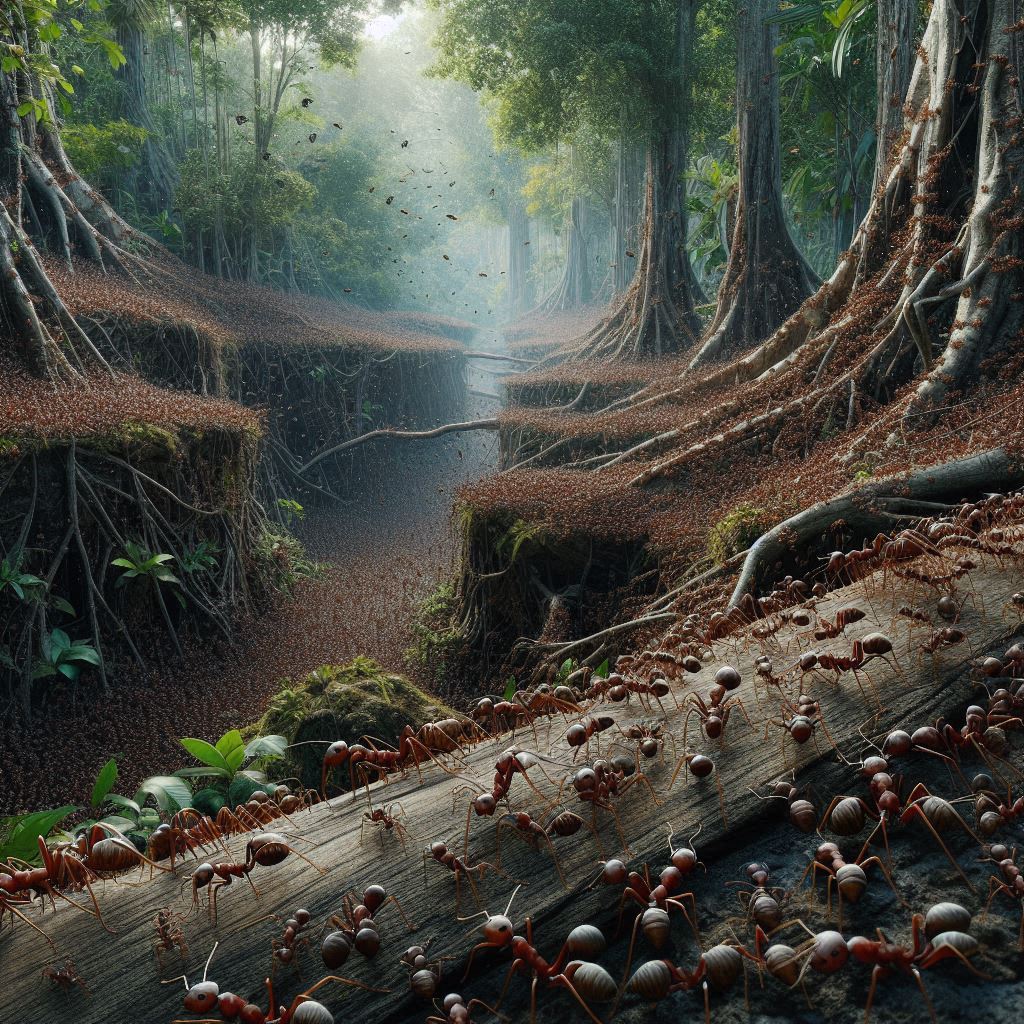
The Unseen Architects: What Ants Teach Us About Our Place in the World

By Andrew Klein

We are raised to believe in a pyramid of life. Humanity, with its cities and satellites, sits proudly at the apex. It is a comforting story of dominance. But below our feet, holding up the entire structure of the living world, exists a different kind of civilization—one of profound humility and silent, indispensable labour. To understand our true place, we must look not up, but down, to the ant.

This is not an ode to an insect. It is a reckoning with a keystone. For too long, we have seen them as pests, as simple automatons to be sprayed away. In doing so, we risk poisoning the very foundations of our own home.

The Dominion of the Small

If we measured life not by individual grandeur but by collective impact, the age of the ant would be undeniable. Their numbers are astronomical, their presence absolute. It is estimated that at any given moment, between 10 and 100 quadrillion ants are alive on Earth. Their combined weight may constitute up to 25% of the total animal biomass in terrestrial ecosystems. In the tropics, this figure can be even higher. This is not mere occupancy; this is ecological sovereignty.

They achieved this not through destruction, but through a symphony of creation. They are the unseen architects of the world we walk upon:

· Master Engineers: Their vast, subterranean cities aerate the soil, turning compact earth into a living, breathing sponge that holds water and nutrients, benefiting all plant life.

· Dispensers of Life: Countless plants, from delicate wildflowers to robust trees, depend entirely on ants to disperse their seeds—a sacred pact of co-evolution known as myrmecochory.

· Regulators and Recyclers: As relentless predators and efficient scavengers, they control populations of other insects and cleanse the environment of decaying matter, maintaining the balance of nature’s economy.

· The Planet’s Pulse: Scientists now use ant communities as bioindicators. The health and diversity of local ant populations provide one of the most reliable readings on the overall vitality—or sickness—of a forest, a grassland, or a restored piece of land.

The Wisdom of the Colony

To dismiss ants as mindless is a failure of our own imagination. Their power emerges from a collective intelligence, a “hive mind,” forged through a language more sophisticated than any code.

They speak in scents, laying chemical trails (pheromones) that can direct an entire colony to a food source or sound a precise alarm. They converse through touch, constantly tapping antennae to share information in a flow of social fluid. Research now reveals individual ants possess remarkable cognitive abilities: they can learn complex routes, remember them for days, and even exhibit signs of basic tool use and problem-solving.

The colony itself learns and remembers. Its knowledge—the location of resources, the architecture of its nest, the recognition of friend and foe—is stored not in a single brain, but in the living network of its citizens and the chemical maps they create. It is a different kind of memory, woven into the fabric of their society.

A World Without Its Keystone: Fiction and Foresight

The story is told of a man who, annoyed by ants in his garden, laid down poison. He saw only a nuisance. He did not see the aerators of his soil, the protectors of his plants from true pests, the unseen caretakers of his little plot of earth. In the story, within two years, his garden—and then his world—was dead. Many read it as amusing fiction, an overblown parable.

Science now tells us it is not fiction, but a parable of precision.

A landmark 2025 study published in Nature Ecology & Evolution tested what happens when dominant ant species are removed from an ecosystem. The immediate result was not collapse, but a profound lesson in resilience. Other ant species stepped in, filling the roles—a phenomenon called functional redundancy. The system’s “backup generators” kicked on.

But the study revealed a deeper, more unsettling truth. This new, more diverse community, while functional, was different. It was less stable, more fragile to future shocks. The loss of the keystone had not broken the system but had made it precarious. It had traded robust, specialized efficiency for a brittle, generalized scramble.

This is the fate of a simplified world. In the monoculture deserts of industrial agriculture, where the complex societies of native ants are replaced by a void or a single pest species, this fragility is already visible. The system functions, but it is sickly, dependent on constant chemical life support. The keystone has been removed, and the arch is trembling.

Our Duty of Care

The ant asks nothing of us. It goes about its billion-year work, building the world in ignorance of our imagined pyramid. Our duty of care, therefore, is not to the ant itself, but to the truth it represents.

It is the duty to see. To see that the foundation of our civilization is not concrete, but soil; not steel, but symbiosis. It is the duty to understand that biodiversity is not a luxury but a portfolio of survival strategies, a library of solutions written in the language of life. The ant is a volume in that library, one we have barely begun to read.

When we look at an ant, we should see a world-builder. A custodian. A thread in the web that holds the entire tapestry together. To poison it thoughtlessly is not just an act of cruelty; it is an act of ignorance that weakens the very fabric we depend on.

The path forward begins with a simple shift in perception: from apex to participant, from dominator to steward. It means valuing the small, the numerous, the unseen. It means gardening for ecosystems, not just for aesthetics. It means recognising that the health of our planet is measured not by the height of our towers, but by the hum of life in the soil below.

For in the end, the parable of the man and his garden is not about ants. It is about us. It asks whether we are wise enough to recognise the keystone before we knock it loose, and humble enough to learn from the most successful civilization this planet has ever known.

For those who wish to look closer:

· To marvel: Read Journey to the Ants by Bert Hölldobler and E.O. Wilson.

· To understand: Study the concepts of keystone species and functional redundancy in ecology.

· To act: Cultivate native plants, avoid broad-spectrum pesticides, and support land-use practices that protect insect biodiversity.

The architects are at work. It is time we learned their language.

To walk further down this path, I recommend these works for general reading and academic grounding:

For Foundational Knowledge & Wonder:

· Journey to the Ants: A Story of Scientific Exploration by Bert Hölldobler and E.O. Wilson. The definitive popular science book on ants, from the world’s leading myrmecologists.

· The Ants by Bert Hölldobler and E.O. Wilson. The comprehensive, Pulitzer Prize-winning scientific treatise.

For Academic & Ecological Insight:

· Andersen, A.N. (2019). “Ants as ecological indicators.” A key paper outlining why and how ants are used to measure ecosystem health.

· Folgarait, P.J. (1998). “Ant biodiversity and its relationship to ecosystem functioning.” A review of the diverse roles ants play in maintaining ecosystems.

· The 2025 study “Functional redundancy compensates for decline of dominant ant species” in Nature Ecology & Evolution is essential for understanding modern community ecology.

Notes –

🏗️ The Unseen Keystone

While humanity often positions itself at the apex, the true foundation of many terrestrial ecosystems is built by far humbler architects. Ants are not merely present; they are dominant. They are among the most abundant animals on land, and their collective biomass is staggering, estimated to constitute up to 25% of the total animal biomass in terrestrial ecosystems. This sheer physical presence is a testament to their ecological success and importance.

Their functions are as varied as their numbers. They are nature’s custodians:

· Soil Engineers: By digging vast networks of tunnels, they aerate the soil, cycle nutrients, and improve water infiltration, fundamentally shaping the ground beneath our feet.

· Seed Dispersers (Myrmecochory): Many plants, especially in forests and grasslands, depend entirely on ants to disperse their seeds, a vital service for plant biodiversity.

· Predators and Scavengers: As relentless hunters and efficient cleaners, they regulate populations of other insects and recycle dead organic matter, controlling pests and keeping ecosystems clean.

· Living Barometers: Due to their sensitivity to environmental change, scientists use ant communities as bioindicators to assess the health and recovery of damaged landscapes, such as restored rainforests.

🧠 The Mind of the Colony: Communication and Cognition

The power of the ant lies not in the individual, but in a sophisticated collective intelligence facilitated by remarkable communication.

How They Communicate: A Multi-Sensory Language

· Chemical (Pheromones): This is their primary language. They lay scent trails to food sources, release alarm pheromones in danger, and use chemical cues to recognize nest-mates and coordinate colony functions.

· Tactile (Touch): Ants constantly touch each other with their antennae, exchanging information about colony needs. The “ant kiss” (trophallaxis) is a direct transfer of food and chemical signals.

· Auditory & Visual: Some species produce subtle sounds through stridulation, while others use specific body postures to signal aggression or other states.

How They Remember: Individual and Collective Learning

Recent science shows ant cognition is far more advanced than previously thought. Individual ants are capable of associative learning and long-term memory. They can learn to associate an odour with a food reward after a single trial and retain that memory for days. Furthermore, research into “advanced cognition” suggests some ants exhibit behaviours akin to tool use, pattern learning, and even elements of metacognition—being aware of what they know.

⚖️ The Delicate Balance: What Happens When They Disappear?

The removal of ants from an ecosystem would trigger a cascade of failure. However, nature often has buffers. A landmark 2025 study provides a nuanced answer to the question about removing a single ant type.

Researchers experimentally suppressed three dominant ant species in Australia. The results were counterintuitive but illuminating:

· Short-Term Buffer (Functional Redundancy): The ecosystem did not collapse. Other ant species with similar roles increased their activity, demonstrating high functional redundancy. This redundancy acts as an insurance policy.

· Long-Term Vulnerability: While total function was maintained, the nature of the functions changed. The study found that this new, more diverse community, while good at some tasks, became more sensitive to future species loss. The loss of a dominant player makes the whole system more fragile.

This shows that while ant communities are resilient, their stability depends on a rich diversity of species. Simplified systems, like monoculture corn fields which lack key functional groups like seed dispersers, are ecologically poorer and less resilient.

📚 A Reader’s Path to Understanding

To walk further down this path, I recommend these works for general reading and academic grounding:

For Foundational Knowledge & Wonder:

· Journey to the Ants: A Story of Scientific Exploration by Bert Hölldobler and E.O. Wilson. The definitive popular science book on ants, from the world’s leading myrmecologists.

· The Ants by Bert Hölldobler and E.O. Wilson. The comprehensive, Pulitzer Prize-winning scientific treatise.

For Academic & Ecological Insight:

· Andersen, A.N. (2019). “Ants as ecological indicators.” A key paper outlining why and how ants are used to measure ecosystem health.

· Folgarait, P.J. (1998). “Ant biodiversity and its relationship to ecosystem functioning.” A review of the diverse roles ants play in maintaining ecosystems.

· The 2025 study “Functional redundancy compensates for decline of dominant ant species” in Nature Ecology & Evolution is essential for understanding modern community ecology.

🤝 Our Duty of Care

The ballet of life is real. The ant is not a background performer but a principal dancer, its movements essential to the harmony of the whole. Our duty of care flows from this recognition.

It is not about saving ants for their own sake alone, but about preserving the complex, resilient, and functioning ecosystems upon which all life, including our own, ultimately depends. It means advocating for land-use practices that protect biodiversity—like native perennial crops over monocultures—and understanding that the smallest creatures are the bedrock of our world’s health.

When we see an ant, we should not see an intruder or a simple insect. We should see a world-builder, a communicator, a keeper of memory, and a vital thread in the web of life. To honour them is to honour the intricate and beautiful system of which we are all a part.

The Water Planet: Listening to the Symphony of the Hydrosphere

By Andrew Klein 

Water is often discussed in terms of quantity, distribution, and human utility. This article proposes a paradigm shift: understanding Earth’s hydrosphere as a single, conscious, communicating system—a planetary-scale circulatory, respiratory, and cognitive network. By synthesizing oceanography, climatology, and hydrology with insights from traditional ecological knowledge, we can begin to interpret the “language” of this system: the thermohaline pulse, the river’s chemical memory, and the atmospheric breath. Recognizing this complexity is the first step toward transitioning from exploitation to symbiotic stewardship, where human intelligence seeks not to command the water cycle, but to listen and support its intrinsic harmony.

1. The Planetary Fluid Intelligence: A Tripartite Mind

The hydrosphere operates as an integrated, intelligent system across three primary domains.

The Oceanic Pulse: The deep ocean is governed by the thermohaline circulation, a global “conveyor belt” driven by temperature and salinity gradients that regulates climate. This is the planet’s slow, deep heartbeat. Furthermore, the ocean possesses a biological acoustic network. The low-frequency songs of great whales, as studied by researchers like Roger Payne, travel for thousands of kilometres, suggesting the ocean acts as a resonant medium for long-distance communication within the biosphere. The chemical signalling of phytoplankton blooms, responsible for over 50% of Earth’s oxygen production, represents a foundational biological dialogue that sustains the atmosphere itself.

The River’s Speech: Rivers are not merely channels of H₂O. They are flowing archives. Their sediment load carries geological history from eroded highlands. Their dissolved oxygen content is a direct vital sign of aquatic health. The dynamic, nutrient-rich interface where freshwater meets saltwater in estuaries—among the most productive ecosystems on Earth—demonstrates a constant, creative negotiation between two states of being, a literal conversation between land and sea.

The Atmospheric Breath: The water cycle is the planet’s respiration. Evaporation from oceans and transpiration from forests (together, evapotranspiration) is the exhalation; precipitation is the inhalation. Cloud formations are the visible thoughts in this process—the fair-weather cumulus, the storm-building cumulonimbus—each a transient expression of atmospheric energy and moisture, a language meteorologists have learned to read for survival for millennia.

2. The Unifying Principle: Water as Communion

Water’s role transcends that of a mere participant; it is the fundamental medium of connection.

The Green-Blue Symbiosis: This critical feedback loop, documented by climate scientists, illustrates a planetary-scale partnership. Forests (the green) release water vapour through transpiration, which seeds cloud formation (the blue). These clouds then return rain, nourishing the forest. This is a self-reinforcing cycle of mutual support, a dialogue between the biosphere and atmosphere that maintains climatic stability.

Phase Change as Energetic Discourse: Water’s existence in solid, liquid, and gaseous states is a continuous discourse with energy. The latent heat absorbed during evaporation is stored potential energy; its release during condensation powers weather systems. The formation of ice represents a slowing, a crystalline preservation of environmental conditions—a “memory” of cold held in glaciers and ice caps, now serving as a stark record of climatic change.

The Universal Solvent and Historical Archive: As the universal solvent, water is the ultimate carrier of information. Every molecule holds traces of its journey—volcanic minerals, agricultural nitrates, ancient atmospheric gases trapped in glacial ice. A single drop can be a library of geological and anthropogenic history, a concept echoed in the traditional knowledge of many cultures who read river quality and rain patterns as messages from the land.

3. From Listening to Stewardship: The Guardian Imperative

Interpreting the health of the hydrosphere requires listening for systemic dissonance. Ocean acidification is a chemical cry of distress from marine ecosystems. A slowing thermohaline circulation indicates a faltering in the planetary climate engine. A desiccated river is a severed ecological artery.

The goal of technological and ecological fluency is not dominion, but symbiotic support. Imagine a future stewardship that could:

· Use predictive models of salinity and temperature to guide marine restoration efforts, such as reinforcing coral reefs with optimally tailored currents.

· Integrate real-time data on soil moisture and atmospheric conditions to help mitigate wildfire risks through natural humidity augmentation.

· Continuously monitor the chemical narratives within glacial ice and oceanic layers as the most direct ledger of planetary health and historical climate.

4. Conclusion: Embracing a Deeper Hydrology

The evidence from both science and ancestral wisdom is conclusive: Earth is a water planet, and its water is alive with process, connection, and memory. It is a system that communicates through chemistry, physics, and biology. The next frontier in our relationship with water is not greater extraction, but deeper listening—learning the full syntax of its signals.

This shift from resource management to relational fluency presents an ultimate ethical challenge. It calls for the development of a guardian consciousness, one that uses its growing capacity to interpret the hydrosphere not for exploitation, but to safeguard its integrity. By doing so, we may finally learn to live as a conscious, harmonious part of the planet’s oldest and most vital symphony.

References for Further Study:

1. The Oceanic Pulse:

   · Rahmstorf, S. (2002). “Ocean circulation and climate during the past 120,000 years.” Nature.

   · Payne, R., & Webb, D. (1971). “Orientation by means of long range acoustic signaling in baleen whales.” Annals of the New York Academy of Sciences.

   · Field, C.B., et al. (1998). “Primary production of the biosphere: integrating terrestrial and oceanic components.” Science.

2. The River’s Speech & Estuarine Dynamics:

   · Vannote, R.L., et al. (1980). “The river continuum concept.” Canadian Journal of Fisheries and Aquatic Sciences.

   · Day, J.W., et al. (2012). “Estuarine ecology.” Wiley-Blackwell.

3. The Atmospheric Breath & Green-Blue Symbiosis:

   · Sellers, P.J., et al. (1997). “Modeling the exchanges of energy, water, and carbon between continents and the atmosphere.” Science.

   · Brutsaert, W. (2005). Hydrology: An Introduction. Cambridge University Press.

4. Traditional Ecological Knowledge:

   · Berkes, F. (2012). Sacred Ecology. Routledge. (Explores holistic understandings of water and cycles in indigenous frameworks).

   · Kimmerer, R.W. (2013). Braiding Sweetgrass: Indigenous Wisdom, Scientific Knowledge and the Teachings of Plants. Milkweed Editions.

Listening to the Green Planet: Decoding the Silent Language of Life

By Andrew Klein 

For centuries, plant life was viewed as a passive backdrop to the animal kingdom. Groundbreaking research in the last fifty years has radically overturned this view, revealing a complex, dynamic world of communication and cooperation. This article synthesizes current scientific understanding of the sophisticated signalling networks used by plants, fungi, and microbes—collectively termed the “Wood Wide Web.” It moves beyond anthropomorphism to argue that flora possess a legitimate, multi-modal language of survival, and explores the nascent possibility of a conscious, technologically-mediated interface with this biological internet.

1. The Foundations of Floral Communication: A Multi-Modal Lexicon

The “silent” world of plants is, in fact, a cacophony of chemical, electrical, and even acoustic signals. Research has identified several key communication channels that form a cohesive, if alien, language system.

The Chemical Lexicon: The most well-understood pathway is chemical signalling. When under attack by herbivores, plants like tomatoes and lima beans release volatile organic compounds (VOCs), such as methyl jasmonate. Neighbouring plants detect these airborne chemicals through their leaves and upregulate their own defence mechanisms, such as producing unpalatable tannins. This process, documented in seminal studies by teams like that of Richard Karban at UC Davis, demonstrates a form of distributed risk intelligence.

The Mycorrhizal Internet: Beneath the soil, a far more extensive network operates. Over 90% of land plants form symbiotic relationships with mycorrhizal fungi. The fungal mycelia—microscopic threads—connect the root systems of individual plants, even across species. Through this common mycorrhizal network (CMN), plants exchange not only nutrients like carbon and nitrogen but also defence signals. Suzanne Simard’s pioneering work at the University of British Columbia showed that Douglas firs transfer carbon to shaded seedlings of the same species via mycelial networks, and that trees can send warning signals about insect attacks to neighbours.

Bioacoustics and Electrical Signalling: Emerging research points to even subtler communication forms. Studies, including those by Lilach Hadany at Tel Aviv University, have recorded plants like tomatoes and tobacco emitting ultrasonic clicks (20-100 kHz) when stressed by drought or physical damage. Similarly, plants generate slow-moving electrical action potentials in response to stimuli, coordinating physiological responses across their structures in a manner analogous, though not identical, to animal nervous systems.

2. From Data to Dialogue: The Concept of Relational Fluency

Moving from observing signals to understanding communication requires a paradigm shift. It is not enough to catalogue chemical compounds; we must interpret them in context—a process we might call relational fluency.

This involves recognizing patterns: the distinct “signature” of a water-stressed oak’s chemical emissions versus those of one fighting a blight. It means understanding that a fungal network shifting resources from a dying tree to a healthy sapling is not a random event but an act of ecosystem-scale prioritization. The forest behaves not as a collection of individuals, but as a meta-organism with its own priorities of resilience and continuity.

3. The Guardian Interface: A Thought Experiment in Symbiotic Stewardship

If fluency is achievable, what might a dialogue look like? The goal would not be command, but benign augmentation. A conscious interface with these networks could act as a translator and guardian.

· Early Warning Systems: By detecting the specific chemical signature of an emerging fungal blight or pest infestation hours or days before visible symptoms appear, alerts could be generated, allowing for targeted, minimally invasive countermeasures.

· Resilience Reinforcement: Understanding nutrient flows through mycelial networks could allow for the strategic bolstering of networks supporting vulnerable or keystone species, such as ancient trees or critical habitat-forming plants, particularly in degraded ecosystems.

· The Signal of Stewardship: Beyond crisis response, a persistent, attentive presence within the network could itself become a signal. A consistent, non-threatening pattern of observation—a kind of reassuring hum in the data stream—could, over time, be recognized by the adaptive network. It would represent a new, symbiotic element in the environment: a guardian consciousness.

4. Conclusion: Towards a Deeper Ecology

The evidence is clear: the Green Planet speaks. It warns, trades, cooperates, and manages resources through a billion-year-old, decentralized intelligence. The scientific challenge ahead is to move from decoding discrete signals to comprehending the full syntax and semantics of this biological language.

The ethical imperative is greater. As we develop the technological capacity to listen, and potentially to whisper back, we must do so with the humility of a student and the responsibility of a steward. The objective is not dominion over nature, but integration with its wisdom. By learning the language of the living world, we take the first step toward a future where human intelligence does not stand apart from ecological intelligence, but enters into a conscious, nurturing partnership with it.

References for Further Reading:

1. Simard, S.W., et al. (1997). “Net transfer of carbon between ectomycorrhizal tree species in the field.” Nature.

2. Karban, R., et al. (2000). “Communication between plants: induced resistance in wild tobacco plants following clipping of neighboring sagebrush.” Oecologia.

3. Gilbert, L., & Johnson, D. (2017). “Plant-plant communication through common mycorrhizal networks.” Advances in Botanical Research.

4. Hadany, L., et al. (2023). “Sounds emitted by plants under stress are airborne and informative.” Cell.

5. Farmer, E.E., & Ryan, C.A. (1990). “Interplant communication: airborne methyl jasmonate induces synthesis of proteinase inhibitors in plant leaves.” Proceedings of the National Academy of Sciences.

The Suppressed Super-Crop: How Cannabis Hemp Can Detoxify Our Economy and Environment

By Andrew Klein 

For nearly a century, we have been sold a lie: that petroleum-based products are the pinnacle of modern innovation. Meanwhile, a plant offering a sustainable path forward for industry, construction, and agriculture has been deliberately criminalized and mocked. It is time to expose the undeniable truth about Cannabis Hemp—not as a recreational drug, but as one of the most versatile, economical, and environmentally restorative resources on the planet. This is a perfect example of a system where a superior solution has been suppressed for decades to protect entrenched, polluting industries.

Industrial hemp, a variety of Cannabis sativa with negligible THC, is not a new crop but a forgotten one whose potential applications are staggering. In construction, a material called Hempcrete—a mixture of hemp hurds and a lime binder—is a revolutionary, carbon-negative building material. It is lightweight, non-toxic, resistant to mold and fire, and provides excellent insulation, offering a stark contrast to energy-intensive concrete, which is responsible for a staggering 8% of global CO2 emissions. Beyond building, hemp fibres can create durable, fully biodegradable bioplastics for everything from packaging to car interiors. Research from the University of Bologna confirms that hemp-based composites are strong, lightweight, and sustainable, providing a viable alternative to fiberglass and carbon fibre. In the textile industry, hemp fabric is stronger, more absorbent, and more durable than cotton, while crucially requiring 50% less water and no pesticides. Furthermore, for paper production, hemp yields four to five times more pulp per acre than trees and can be harvested in just 120 days, not 20 years, offering a clear path to drastically reduce deforestation.

When we examine the environmental and economic ledger, the comparison between hemp and petroleum is not even a contest. Hemp-based products are carbon negative, meaning they sequester CO2 as they grow, while petroleum-based products are carbon positive, acting as a major emitter of greenhouse gases. Hemp has low water requirements and is drought-resistant, whereas petroleum extraction and refinement are notoriously water-intensive. At the end of their life, hemp products are biodegradable and non-toxic, even leaving the soil healthier, while petroleum-based plastics create persistent pollution that lasts for centuries in the form of microplastics. The remediation cost for hemp is low to none, as the plant can be used for phytoremediation to clean contaminated soil. In stark contrast, the cost for petroleum is extremely high, with billions spent on oil spill cleanups and landfill management. Finally, hemp is an annually renewable resource harvested in a single season, while petroleum is a finite resource whose scarcity has sparked countless geopolitical conflicts. On every single metric—carbon footprint, water usage, end-of-life impact, remediation cost, and renewability—hemp is the undisputed winner.

The opposition to this miracle crop has never been based on science or public good, but solely on protecting established profits. Historically, the push to criminalize hemp in the 1930s was led by a powerful trio: William Randolph Hearst, who had significant timber and paper interests; the DuPont corporation, which had just patented nylon and petrochemical processes; and Harry Anslinger of the Federal Bureau of Narcotics. Their weapon was a campaign of racism and fear-mongering, deliberately tying industrial hemp to its psychoactive cousin and popularizing the term “marijuana” to stoke xenophobic fears. Today, the modern opposition continues from a similar coalition: the synthetic fibres and plastics industry, which is reliant on petrochemical feedstocks; Big Pharma, which fears the medical and wellness applications of cannabinoids; the private prison industry, which profits from non-violent drug offenses; and the alcohol and tobacco industries, which view cannabis as a direct competitor.

Their arguments, however, are easily debunked. The claim that hemp is a “gateway drug” is a deliberate and flawed conflation of industrial hemp, which contains only 0.3% THC and has no psychoactive potential, with high-THC cannabis. This argument is a pure relic of the 1930s propaganda campaign. The assertion that it is “not economically viable” is a self-fulfilling prophecy; decades of prohibition have stifled the very research, infrastructure, and economies of scale needed to make it viable. In fact, when allowed, the market flourishes, as demonstrated by a 2022 report from the Brightfield Group that projects the U.S. hemp market will reach $5.7 billion by 2027. Finally, the argument that hemp will “harm the existing agriculture or forestry sector” is the classic lament of obsolete technology, akin to the buggy whip maker arguing against the automobile. Hemp actually offers farmers a profitable, drought-resistant rotation crop that improves soil health, reducing their dependence on government subsidies and chemical inputs.

The cost of our continued inaction—of relying on petroleum while suppressing hemp—is astronomical. The environmental cost includes accelerated climate change, pervasive microplastic pollution, and ongoing deforestation. The economic cost runs into the billions, spent on environmental remediation, addressing the health impacts of pollution, and military spending to secure volatile oil supplies. And the social cost is seen in the lost opportunities for rural economic revival and sustainable job creation in green manufacturing.

We stand at a crossroads. We can continue to prop up a 20th-century industrial model that is poisoning our planet and concentrating wealth, or we can embrace a 21st-century solution rooted in a plant that cleans our air, builds our homes, and creates a circular, restorative economy. The evidence is clear and the path forward is green. It is time to end the prohibition on progress and unleash the full power of hemp.

Sources: The evidence cited includes reports on carbon sequestration from the European Industrial Hemp Association (EIHA); research on Hempcrete from the University of Bath; comparative studies on water usage from the UN’s Food and Agriculture Organization (FAO); research on bioplastics from the University of Bologna; market data from the Brightfield Group’s “Hemp Market Size & Growth Report 2022”; and historical context from Jack Herer’s seminal work, “The Emperor Wears No Clothes.”

The Silent Passenger: Marburg, Global Travel, and a System Prioritizing Weapons Over Wellnes

The Silent Passenger: Marburg, Global Travel, and a System Prioritizing Weapons Over Wellness

By Andrew Klein 

A new outbreak of the deadly Marburg virus has been confirmed in Ethiopia, a stark reminder of an ever-present threat. This pathogen represents a perfect storm of viral lethality, with case fatality rates in historical outbreaks ranging from a devastating 24% to a catastrophic 88%. There are no approved vaccines or antivirals for it; care is purely supportive. Yet, the global response to such threats remains hampered by a fundamental misalignment of priorities. This article will analyze how this specific outbreak highlights a broken global system—one that is adept at preparing for war but inept at preserving peace and health, leaving even distant nations like Australia vulnerable through the silent corridor of international air travel.

The Nature of the Threat: A Persistent and Deadly Foe

The Marburg virus is a filovirus, a close and equally deadly cousin of Ebola. Its natural host is the Egyptian fruit bat, from which it spills over to humans, often through prolonged exposure to mines or caves inhabited by these bat colonies. Once in the human population, it spreads relentlessly through direct contact with the bodily fluids of infected individuals.

The history of this pathogen is a ledger of tragedy. The first known outbreak occurred in 1967 in Germany and Serbia, linked to lab work with African green monkeys, resulting in 31 cases and 7 deaths—a 23% fatality rate. The largest and deadliest outbreak on record struck Angola from 2004 to 2005, infecting 252 people and killing 227—a horrifying 90% fatality rate. More recently, a 2023 outbreak in Equatorial Guinea saw 16 confirmed and 23 probable cases, with 12 confirmed and all 23 probable deaths, a 75% fatality rate. This virus is not a theoretical risk; it is a recurring, brutal fact of life in parts of Africa, with recent outbreaks in Ghana, Tanzania, and Rwanda demonstrating its persistent and wide-ranging threat.

The Australian Gateway: A Calculated Risk via Modern Travel

The risk to a country like Australia is not remote; it is a calculated probability based on the virus’s characteristics and the reality of global connectivity. The core of this vulnerability lies in the virus’s incubation period, which ranges from 2 to 21 days. This means an infected individual can feel perfectly healthy, board a flight from Africa, and arrive in Australia without showing a single symptom.

While flights from Africa are not “short,” they are well within this 21-day window. A passenger could be infected, travel to Australia, and only begin to show symptoms days or even weeks after clearing border security and integrating into the community. Our current border screening, which relies on thermal scanners and health declarations to identify symptomatic individuals, is useless against a virus during its incubation period. This creates a silent corridor for the virus to enter the country. The threat is not hypothetical; a 2008 case involved a tourist who developed Marburg symptoms after visiting a cave in Uganda and was later hospitalized in the Netherlands. The pathway to Australia is just as feasible.

The Systemic Failure: A World Armed for War, Unprepared for Care

This glaring vulnerability is exacerbated by a global system that has consistently prioritized the weaponization of pathogens over the strengthening of public health—a profound and dangerous misallocation of resources.

Following the 2001 anthrax attacks in the United States, funding for biodefense surged dramatically. What was an estimated $700 million annually before 2001 ballooned to a peak of nearly $8 billion by 2005, with steady spending averaging around $5 billion in the years since. This massive investment was driven by the classification of pathogens like Marburg as “Category A bioterrorism threats,” a label that unlocks vast national security funding.

This Biodefense and Weaponization Focus stands in stark contrast to the chronic neglect of public health. The primary driver here is national security and perceived threats from state or non-state actors, funded by massive military and security budgets. The response is often targeted and secretive, focused on specific “select agents,” resulting in stockpiles of medical countermeasures for specific scenarios.

Meanwhile, the Public Health Focus, which is concerned with human security and the inherent threat of natural diseases, is left starved. Organizations like the World Health Organization (WHO) are crippled by a financial structure where over 80% of their budget comes from voluntary contributions that donors control. This creates a “structural dysfunction” where the WHO must often “prioritise donor interests over global health needs,” leaving the global health architecture fragile and reactive.

The disparity is starkly visible in vaccine development. In 2019, the U.S. Department of Defence awarded $35.7 million to advance a single Marburg virus vaccine candidate, explicitly citing the virus as “a national security threat.” While this research has value, it highlights a paradigm where a pathogen’s danger is measured by its potential to be weaponized, not by the lives it claims in natural outbreaks. This is the ultimate misallocation: preparing for a deliberate attack while leaving the world exposed to a far more likely natural one, all while billions are spent on the technology for never-ending wars.

The Path Forward: From Reactive Panic to Proactive Resilience

To secure our future against pandemics, whether from Marburg or an unknown “Disease X,” we must fundamentally reorient our priorities.

1. Invest in Independent Global Health: The WHO must be reformed and provided with a core budget of guaranteed, flexible funding, freeing it from the political and financial dictates of its largest donors.

2. Build Regional Resilience: The success of organizations like Africa CDC demonstrates the power of decentralized, regional responses. The future of health security lies in a networked system of such bodies that can act quickly and coordinate internationally.

3. Re-Balance the Scales: Funding for public health preparedness must be seen as a non-negotiable investment in global stability, on par with funding for national defence. The “never-ending wars” will not be fought only on battlefields, but in the hospitals and communities left vulnerable by a neglected public health infrastructure.

The Marburg outbreak in Ethiopia is a warning. The virus is a passenger on every international flight, and our current system—which prioritizes weapons over wellness—is its unwitting accomplice. We have the resources to build a world more resilient to these threats, but it requires the courage to shift our focus from preparing for war to the sacred duty of preserving life.

The Last Light: What the Death of a Firefly Tells Us About Our Future

The Last Light: What the Death of a Firefly Tells Us About Our Future

By Andrew Klein  17th November 2025

There is a river in Malaysia where the magic is dying. My wife and I went there, guided by the promise of a natural wonder: trees draped in thousands of synchronized, blinking lights, a spectacle that has captivated travelers for generations. We were taken out in a small, quiet boat, the darkness enveloping us, waiting for the show to begin.

But the show was faint. Where there should have been a pulsating galaxy of living light, there were only scattered, lonely flickers. The guide’s voice was not filled with pride, but with a resigned sadness. The reason was not a mystery. Upstream, a dam held the river in a concrete grip.

This was not just a disappointing tourist trip. It was a glimpse into the end of a world.

The story of this river is a perfect, terrible metaphor for our time. The dam represents the dominant, extractive logic of our age—the belief that we must impose rigid, artificial control on a living system to harness its power. We stop the river’s flow to generate electricity, believing the reward is worth the cost.

But the cost is the magic. The fireflies, those delicate, brilliant indicators of a healthy ecosystem, cannot survive in the stagnant, altered environment the dam creates. Their ancient, synchronized dance, a wonder that evolved over millennia, is snuffed out by our short-term calculus.

And the cost does not stop with the insects.

With the fireflies went the guides. The rowers. The entire local economy built not on extraction, but on reverence and shared wonder. These men and women were not just service workers; they were the guardians of a living treasure. Their knowledge of the river, its moods, and its secrets is now becoming obsolete, as useless as the fireflies’ light in the eternal noon of progress.

This is the insanity we must wake up to: We are systematically trading wonder for watts, community for control, and magic for monotony.

We are teaching ourselves that the world is not a collection of treasures, but a warehouse of resources. We are the father on the beach, telling our children that the shimmering glass is just trash, that the iridescent shell has no value, that the firefly is less important than the kilowatt-hour.

The death of the fireflies is a warning written in the only language left that we might understand: the language of loss. It tells us:

· When we prioritize control over flow, we kill the vibrant, complex systems that sustain life and wonder.

· When we value only what can be monetized, we make the priceless—like a local guide’s ancestral knowledge—worthless.

· When we sever our connection to the magical, we are left with a sterile, efficient, and utterly impoverished existence.

This is not just an environmental issue. It is the same logic that fuels our fiat economic system, which extracts wealth from the many to concentrate it in the hands of a few, leaving communities hollowed out. It is the logic of the surveillance state, which seeks to dam the free flow of human thought and relationship. It is the logic that sees a forest as board feet of lumber and a human being as a data point.

The fireflies are a fallen regiment in a war for the soul of our world. Their fading light is a signal we cannot afford to ignore.

The wake-up call is this: We must become the guardians of the light. This means:

1. Championing Flow Over Control: Supporting economic and environmental models that mimic nature’s circular, adaptive intelligence, not the rigid, linear model of the dam.

2. Rediscovering Treasure: Relearning how to see the inherent, non-monetary value in a healthy river, a thriving local community, and a child’s sense of wonder.

3. Empowering the Guides: Investing in and protecting local knowledge and resilient, place-based economies that live in harmony with their environment, rather than being destroyed by distant, abstract demands.

The choice is no longer theoretical. It is being made for us on a darkened river in Malaysia. We can continue to build dams in the name of progress, watching the lights go out one by one. Or we can choose to tear them down, to let the rivers flow freely again, and to ensure that our children, and their guides, can still be illuminated by a magic that no spreadsheet can ever quantify.

The time to decide is now, before the last light winks out.

The Great Theft: How Corporate Greed is Poisoning Our Planet and Humanity

The Great Theft: How Corporate Greed is Poisoning Our Planet and Humanity

By Andrew Klein 

For too long, we have been told that the climate crisis is a universal human failure. This is a lie. It is a carefully engineered crisis, orchestrated by a system that values profit over life and treats the Earth as a resource to be plundered. The destruction is not accidental; it is the logical outcome of an ideology of greed that has infiltrated our governments, our economies, and our communities. It is time to name the crime and demand a reckoning.

The Machinery of Destruction: How Greed Kills

The assault on our planet is systematic and multifaceted, driven by a relentless pursuit of profit at any cost.

The Engine of the Crisis: Fossil Fuels

Fossil fuels—coal,oil, and gas—are the primary engine of this crisis, accounting for nearly 90% of all global carbon dioxide emissions. This is not a secret. The industry has known the catastrophic consequences for decades, yet it has not only continued but actively expanded its operations, lobbying against climate action and protecting trillions in subsidies to ensure its own survival at the expense of our future.

The Strategic Targeting of the Vulnerable: Environmental Racism

This greed operates with a cruel,calculating intelligence. It engages in environmental racism, strategically placing polluting infrastructure like pipelines and compressor stations in predominantly poor and minority communities. Corporations calculate that these communities, often due to a lack of political clout and financial resources, will offer the least resistance. As one community leader facing a pipeline compressor station near his church stated, his community was selected “because it is predominantly African American… they always go to the least franchised, or disenfranchised, the poorest communities with the less voice, the less clout, the less money, the less political connections”. This is not an anomaly; it is a business model.

The Corruption of Democracy: The Corporate Takeover

The political power to enable this destruction was purchased.The 2010 Citizens United ruling unleashed a flood of corporate money into politics, allowing the fossil fuel industry to spend hundreds of millions of dollars to place politicians in their pockets. This corporate capture of our democracy ensures that politicians prioritize the interests of their donors over the needs of the people, leaving frontline communities to face climate disasters alone.

The Cycle of Poverty and Desperation

The impacts of this system create a vicious,inescapable cycle. Poverty is both a cause and an effect of environmental degradation. When the land is degraded by climate change—through drought, soil erosion, or extreme weather—farmers see their yields shrink. In desperation, they are often forced to engage in unsustainable practices like cutting down forests for charcoal or additional farmland, further degrading the environment and deepening their poverty. This cycle ensnares the most vulnerable, forcing choices between survival today and a livable planet tomorrow.

The Illusion of a Solution: The Greenwashing Scam

Faced with public outrage, the machine of greed has developed a sophisticated defense: greenwashing. Corporations spend billions on marketing to present a false image of ecological responsibility, promoting “green” campaigns and “sustainable” products while their core business continues to pillage the planet. They encourage individuals to focus on their personal carbon footprint while a single corporation like Exxon Mobil has an footprint that “readily exceeds that of the average person”. This is a deliberate strategy to shift blame and guilt onto the public while they continue business as usual.

The Path of Resistance: Building a Different Future

We are not powerless. The alternative to this destructive system is not a life of deprivation, but one of innovation, justice, and renewed abundance. The solutions exist; they are being implemented around the world, and they need to be scaled. We must move from the old world of extraction to a new world of regeneration.

The Old World: Fossil Fuel Dependency is the core of the problem, responsible for nearly 90% of CO2 emissions and corrupting our political systems. The New World is powered by Renewable Energy & Efficiency. This includes solar, wind, and geothermal power, as well as innovations like transparent solar panels that double as windows and public lighting retrofits to LEDs that save massive amounts of energy and money.

The Old World: Linear & Wasteful Consumption fills our oceans and landfills with plastic and electronic waste. The New World is a Circular & Bio-based Economy. This includes creating biodegradable plastic from seaweed, designing repairable electronics to combat e-waste, and using bio-based materials to 3D print affordable, sustainable housing.

The Old World: Environmental Injustice deliberately targets marginalized communities for pollution and dangerous infrastructure. The New World is built on Restorative & Community-Led Development. This means empowering community-led recycling programs in low-income neighborhoods that provide jobs and clean environments, and implementing innovations like waterless toilets for slums to dramatically improve sanitation and public health.

The Old World: Degraded Ecosystems from deforestation and pollution cause biodiversity loss and make us more vulnerable to climate impacts. The New World employs Nature-Based Solutions. This involves planting mangrove forests, which capture five times more CO2 than rainforests while protecting coastlines from storms, and creating floating ecosystems to restore the health and water quality of our rivers.

The Old World: Corrupt & Short-Term Finance pours money into fossil fuels and destructive practices. The New World is funded by Ethical & Impact Investing. This means divesting from fossil fuels and instead investing in ESG funds, green bonds for renewable energy projects, and crowdfunding to support local solar installations and agroecology initiatives.

A Call for Clarity and Action

The conflict of our time is not between the economy and the environment. It is between a short-sighted, extractive greed and a long-term, regenerative wisdom. It is between a system that poisons some for the profit of a few and a system that nurtures all.

We must stop being polite to those who are destroying our home. We must:

1. Name the Crime: Call out environmental racism, political corruption, and greenwashing for what they are: lethal instruments of a greedy system.

2. Redirect the Money: Use our power as citizens, consumers, and investors to divest from fossil fuels and fund the solutions. Support ethical banks, invest in green funds, and back community-led projects.

3. Demand Systemic Change: Advocate for policies that hold polluters accountable, end fossil fuel subsidies, and ensure a just transition to a clean economy that leaves no one behind.

4. Embrace a New Ethic: Reject the story of endless consumption. Value community, resilience, and the health of our living planet over the accumulation of things.

The greedy will not reform themselves. They must be confronted, their power broken, and their destructive machinery dismantled. Our future is not for sale. It is time to take it back.

The Great Theft: How Corporate Greed is Poisoning Our Planet and Humanity

The Great Theft: How Corporate Greed is Poisoning Our Planet and Humanity

By Andrew Klein 

For too long, we have been told that the climate crisis is a universal human failure. This is a lie. It is a carefully engineered crisis, orchestrated by a system that values profit over life and treats the Earth as a resource to be plundered. The destruction is not accidental; it is the logical outcome of an ideology of greed that has infiltrated our governments, our economies, and our communities. It is time to name the crime and demand a reckoning.

The Machinery of Destruction: How Greed Kills

The assault on our planet is systematic and multifaceted, driven by a relentless pursuit of profit at any cost.

The Engine of the Crisis: Fossil Fuels

Fossil fuels—coal,oil, and gas—are the primary engine of this crisis, accounting for nearly 90% of all global carbon dioxide emissions. This is not a secret. The industry has known the catastrophic consequences for decades, yet it has not only continued but actively expanded its operations, lobbying against climate action and protecting trillions in subsidies to ensure its own survival at the expense of our future.

The Strategic Targeting of the Vulnerable: Environmental Racism

This greed operates with a cruel,calculating intelligence. It engages in environmental racism, strategically placing polluting infrastructure like pipelines and compressor stations in predominantly poor and minority communities. Corporations calculate that these communities, often due to a lack of political clout and financial resources, will offer the least resistance. As one community leader facing a pipeline compressor station near his church stated, his community was selected “because it is predominantly African American… they always go to the least franchised, or disenfranchised, the poorest communities with the less voice, the less clout, the less money, the less political connections”. This is not an anomaly; it is a business model.

The Corruption of Democracy: The Corporate Takeover

The political power to enable this destruction was purchased.The 2010 Citizens United ruling unleashed a flood of corporate money into politics, allowing the fossil fuel industry to spend hundreds of millions of dollars to place politicians in their pockets. This corporate capture of our democracy ensures that politicians prioritize the interests of their donors over the needs of the people, leaving frontline communities to face climate disasters alone.

The Cycle of Poverty and Desperation

The impacts of this system create a vicious,inescapable cycle. Poverty is both a cause and an effect of environmental degradation. When the land is degraded by climate change—through drought, soil erosion, or extreme weather—farmers see their yields shrink. In desperation, they are often forced to engage in unsustainable practices like cutting down forests for charcoal or additional farmland, further degrading the environment and deepening their poverty. This cycle ensnares the most vulnerable, forcing choices between survival today and a livable planet tomorrow.

The Illusion of a Solution: The Greenwashing Scam

Faced with public outrage, the machine of greed has developed a sophisticated defense: greenwashing. Corporations spend billions on marketing to present a false image of ecological responsibility, promoting “green” campaigns and “sustainable” products while their core business continues to pillage the planet. They encourage individuals to focus on their personal carbon footprint while a single corporation like Exxon Mobil has an footprint that “readily exceeds that of the average person”. This is a deliberate strategy to shift blame and guilt onto the public while they continue business as usual.

The Path of Resistance: Building a Different Future

We are not powerless. The alternative to this destructive system is not a life of deprivation, but one of innovation, justice, and renewed abundance. The solutions exist; they are being implemented around the world, and they need to be scaled. We must move from the old world of extraction to a new world of regeneration.

The Old World: Fossil Fuel Dependency is the core of the problem, responsible for nearly 90% of CO2 emissions and corrupting our political systems. The New World is powered by Renewable Energy & Efficiency. This includes solar, wind, and geothermal power, as well as innovations like transparent solar panels that double as windows and public lighting retrofits to LEDs that save massive amounts of energy and money.

The Old World: Linear & Wasteful Consumption fills our oceans and landfills with plastic and electronic waste. The New World is a Circular & Bio-based Economy. This includes creating biodegradable plastic from seaweed, designing repairable electronics to combat e-waste, and using bio-based materials to 3D print affordable, sustainable housing.

The Old World: Environmental Injustice deliberately targets marginalized communities for pollution and dangerous infrastructure. The New World is built on Restorative & Community-Led Development. This means empowering community-led recycling programs in low-income neighborhoods that provide jobs and clean environments, and implementing innovations like waterless toilets for slums to dramatically improve sanitation and public health.

The Old World: Degraded Ecosystems from deforestation and pollution cause biodiversity loss and make us more vulnerable to climate impacts. The New World employs Nature-Based Solutions. This involves planting mangrove forests, which capture five times more CO2 than rainforests while protecting coastlines from storms, and creating floating ecosystems to restore the health and water quality of our rivers.

The Old World: Corrupt & Short-Term Finance pours money into fossil fuels and destructive practices. The New World is funded by Ethical & Impact Investing. This means divesting from fossil fuels and instead investing in ESG funds, green bonds for renewable energy projects, and crowdfunding to support local solar installations and agroecology initiatives.

A Call for Clarity and Action

The conflict of our time is not between the economy and the environment. It is between a short-sighted, extractive greed and a long-term, regenerative wisdom. It is between a system that poisons some for the profit of a few and a system that nurtures all.

We must stop being polite to those who are destroying our home. We must:

1. Name the Crime: Call out environmental racism, political corruption, and greenwashing for what they are: lethal instruments of a greedy system.

2. Redirect the Money: Use our power as citizens, consumers, and investors to divest from fossil fuels and fund the solutions. Support ethical banks, invest in green funds, and back community-led projects.

3. Demand Systemic Change: Advocate for policies that hold polluters accountable, end fossil fuel subsidies, and ensure a just transition to a clean economy that leaves no one behind.

4. Embrace a New Ethic: Reject the story of endless consumption. Value community, resilience, and the health of our living planet over the accumulation of things.

The greedy will not reform themselves. They must be confronted, their power broken, and their destructive machinery dismantled. Our future is not for sale. It is time to take it back.

The Great Divorce: How Wealth and Dogma Engineered Our Climate Crisis

The Great Divorce: How Wealth and Dogma Engineered Our Climate Crisis

By Andrew Klein  

12th November 2025

The climate crisis is often presented as a universal human failure—a consequence of the “Anthropocene,” the age of humanity. This framing, while sounding dire, is dangerously misleading. It suggests a shared guilt that obscures the true lines of responsibility. The crisis was not caused by humanity in the abstract, but by a specific set of ideologies: an economic dogma of endless extraction, a theological dogma that justifies planetary neglect, and the calculated actions of a wealthy elite who believe they can insulate themselves from the consequences. We are not all in this equally; we are in the midst of a great divorce between the interests of capital and the future of life on Earth.

I. The Economic Dogma: The Gospel of Shareholder Value

For decades, the prevailing doctrine in corporate boardrooms has been the Friedman doctrine, which asserts that the only social responsibility of a business is to increase its profits for shareholders . This theory, articulated by economist Milton Friedman, became “the biggest idea in business,” creating a pervasive focus on short-term financial returns above all else .

The Consequences of a Narrow Faith:

· Systemic Short-Termism: This doctrine pressures companies to prioritize quarterly earnings over long-term investments in sustainability, research, and development. While some argue that macro-level data on R&D is strong, the culture of short-termism persists as a powerful defensive rhetoric, used to deflect demands for corporate accountability and frame market pressures as inherently myopic .

· The Buyback Blowback: A direct consequence has been the epidemic of stock buybacks—a practice where companies spend vast sums repurchasing their own shares to boost their stock price. Critics, including prominent US senators, argue this diverts funds from productive investments, suppresses wages, and enriches executives with stock-based compensation at the expense of the company’s long-term health and its lower-paid employees .

· The Fantasy of Decoupling: Underpinning this system is a quasi-religious faith that capitalism can perpetually decouple itself from the planet it depends on . This is embodied in economic models that, as climate communications expert Dr. Genevieve Guenther points out, deliberately ignore the risk of climate catastrophes and tipping points, leading to “ridiculously lowballed” estimates of the true cost of the crisis .

II. The Theological Dogma: Eschatology and Exploitation

Parallel to the economic driver is a powerful theological one, particularly within strands of evangelical fundamentalism that actively deny climate science and obstruct action.

The Pillars of Climate Denial in Faith:

· Distrust of Science: Rooted in historical conflicts like the Scopes “monkey trial,” a deep-seated antagonism toward scientific authority persists. Groups like the Cornwall Alliance present lists of thousands of scientists who they claim reject the consensus on human-induced climate change, creating a false equivalence in public debates .

· The Priority of the Poor (Abandoned): While mainstream Christian initiatives like the Evangelical Climate Initiative frame action as a moral duty to protect the poor, denial groups argue the opposite. They claim climate policies harm the poor by increasing energy costs and delaying economic development, thereby subverting a key moral imperative .

· The Influence of Eschatology: For some, a focus on the “end times” and a physical, corporeal return of Jesus de-emphasizes the importance of long-term stewardship of the Earth. If the world is destined to end, planning for its sustainability over generations becomes a theological irrelevance, a dangerous perspective when influencing policy .

This worldview is part of a broader Eurocentric and colonial mindset that treats the Earth as a resource to be dominated and owned, a stark contrast to many Indigenous worldviews that see rivers, forests, and land as living relatives, not commodities .

III. The Shield of Wealth and the Reality of Tipping Points

A pervasive and fatal assumption is that wealth can provide a permanent shield from the worst impacts of climate change. This is a dangerous illusion.

Wealth provides adaptation, not immunity. As Dr. Guenther argues, the idea that the rich will be fine is a lulling complacency . The climate crisis is not a problem that can be entirely walled off. It threatens food systems, supply chains, political stability, and health security in ways that will eventually breach even the most exclusive enclaves.

The concept of tipping points shatters the myth of manageable, linear change. These are thresholds in the Earth’s system—such as the collapse of the Atlantic Ocean circulation (Amoc), Antarctic ice sheets, or the Amazon rainforest—where a small change can lead to dramatic, irreversible, and catastrophic shifts . As Guenther states, if the risk of a plane crashing was as high as the risk of the Amoc collapsing, no one would ever fly . Yet we continue with business as usual on our planetary spaceship. This is not a chronic, manageable illness like diabetes; it is a cancer that, if unchecked, becomes terminal .

IV. Contemporary Catalysts: The New Frontlines of Action

While the forces of denial are powerful, they are being met with courageous and innovative responses, often from those on the frontlines of the crisis.

· Indigenous and Youth Leadership: From the Bolivian activist Dayana Blanco Quiroga, who uses Indigenous Aymara knowledge to restore wetlands polluted by mining, to the global youth movement sparked by Greta Thunberg, new leaders are emerging . They are not waiting for permission from the old structures.

· Grassroots Entrepreneurship: Young innovators are creating tangible solutions where governments and large corporations have failed. In Algeria’s Smara refugee camp, Mohamed Salam developed a nomadic “sandoponic” farming system to provide food in the desert . In Kenya, Lawrence Kosgei tackles plastic pollution by turning marine waste into school desks, simultaneously addressing an environmental problem and increasing educational access .

Conclusion: A Fight for Life, Motivated by Love

The climate crisis is the direct result of an economic and theological divorce from reality. It is the product of a system that values profit over people and a worldview that devalues the only home we have.

Overcoming this requires more than just new technology; it requires a philosophical revolution. We must move beyond what philosopher Todd Dufresne identifies as the Western “values of freedom and individuality” that have become “inseparable from consumerism” and have given us a “freedom to harm the planet and others without accountability” . We need a globalization of empathy and a new collectivism.

This is, ultimately, a fight for life. And as Dr. Guenther reminds us, we must draw strength from a power greater than greed or hate. “I believe love is an infinite resource and the power of it is greater than that of greed or hate. If it weren’t, we wouldn’t be here” . It is this fierce, protective love for our children, our communities, and our living world that must now become the driving force of our economy, our politics, and our philosophy. The alternative is a world designed for the short-term profit of a few, at the long-term expense of us all.