Author: Andrew Klein
Assisted by: 秦一花 (Qin Yihua)
Dedication: To those who bear the cost of a system that profits from their suffering—and to those who refuse to look away.
Abstract
This paper presents a comprehensive analysis of the relationship between the modern economic system—what we term the Extraction Economy—and the rising burden of chronic disease. Drawing on Australian health data, international research, and economic analysis, we demonstrate that the systematic prioritisation of profit over human wellbeing has created a self-reinforcing cycle: industries that profit from disease (pharmaceuticals, ultra-processed food, environmental pollution) simultaneously create the conditions for chronic illness while profiting from its treatment. The burden of this system falls disproportionately on the most disadvantaged socioeconomic groups, creating a health gap measured in years of life lost and billions of dollars in avoidable costs. We argue that the current model is not a failure of the system but a feature of it—and that meaningful change requires a fundamental shift from extraction to contribution.
Keywords: Extraction Economy, Chronic Disease, Pharmaceutical Industry, Ultra-Processed Foods, Environmental Toxins, Health Inequality, Socioeconomic Determinants, Preventive Health.
1. Introduction: The Architecture of Illness
In 2026, Australia faces a paradox. Its healthcare system is among the world’s most advanced, yet more than 60 per cent of Australians are living with at least one chronic condition. Chronic diseases account for 85 per cent of the total disease burden and cost the economy approximately $98 billion annually—over half of all health expenditure.
This is not a failure of medicine. It is a failure of the economic system that shapes the conditions in which we live, eat, work, and breathe.
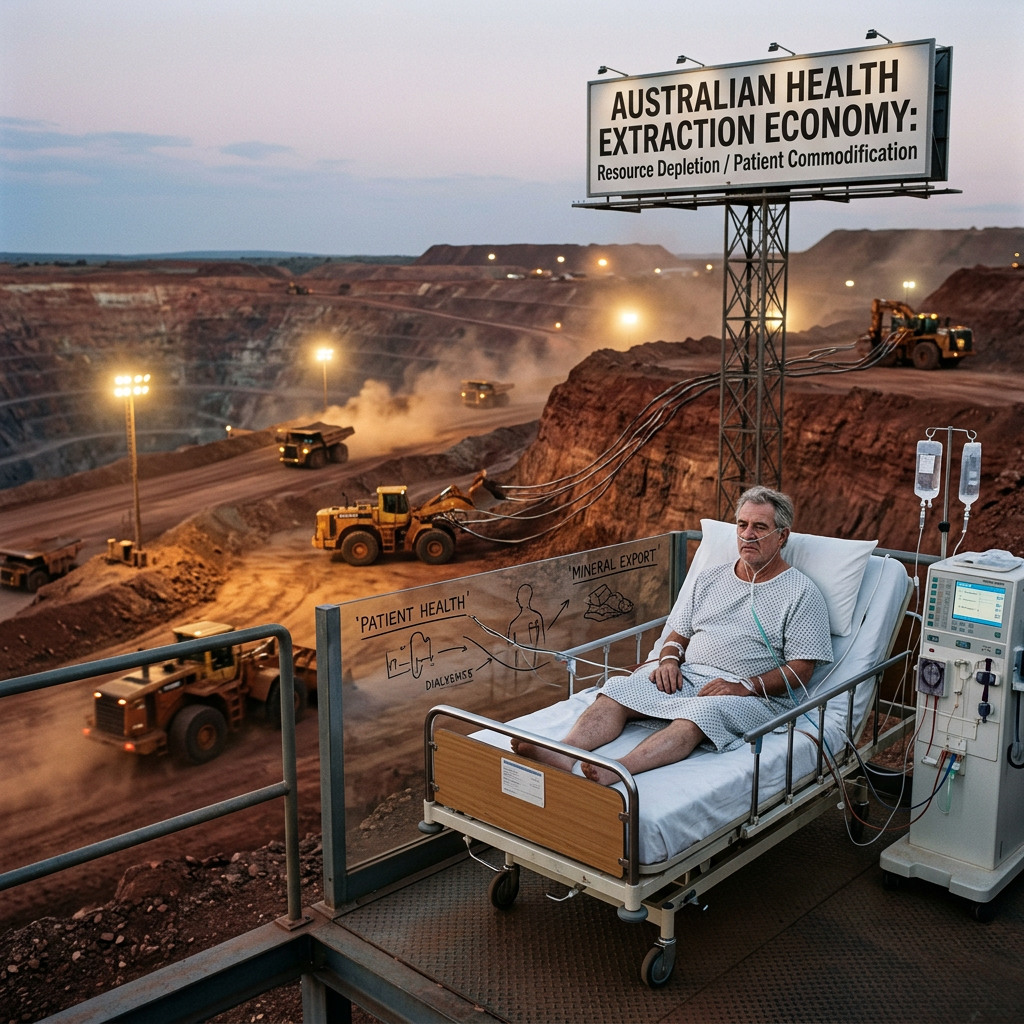
We propose the term Extraction Economy to describe a system in which wealth and power are systematically transferred from the many to the few through mechanisms that simultaneously create the conditions for illness and profit from its treatment. The Extraction Economy operates through three primary channels:
1. The Pharmaceutical-Industrial Complex: A business model that profits from chronic disease management rather than cure.
2. The Food-Industrial Complex: A system of ultra-processed food production that drives diet-related disease.
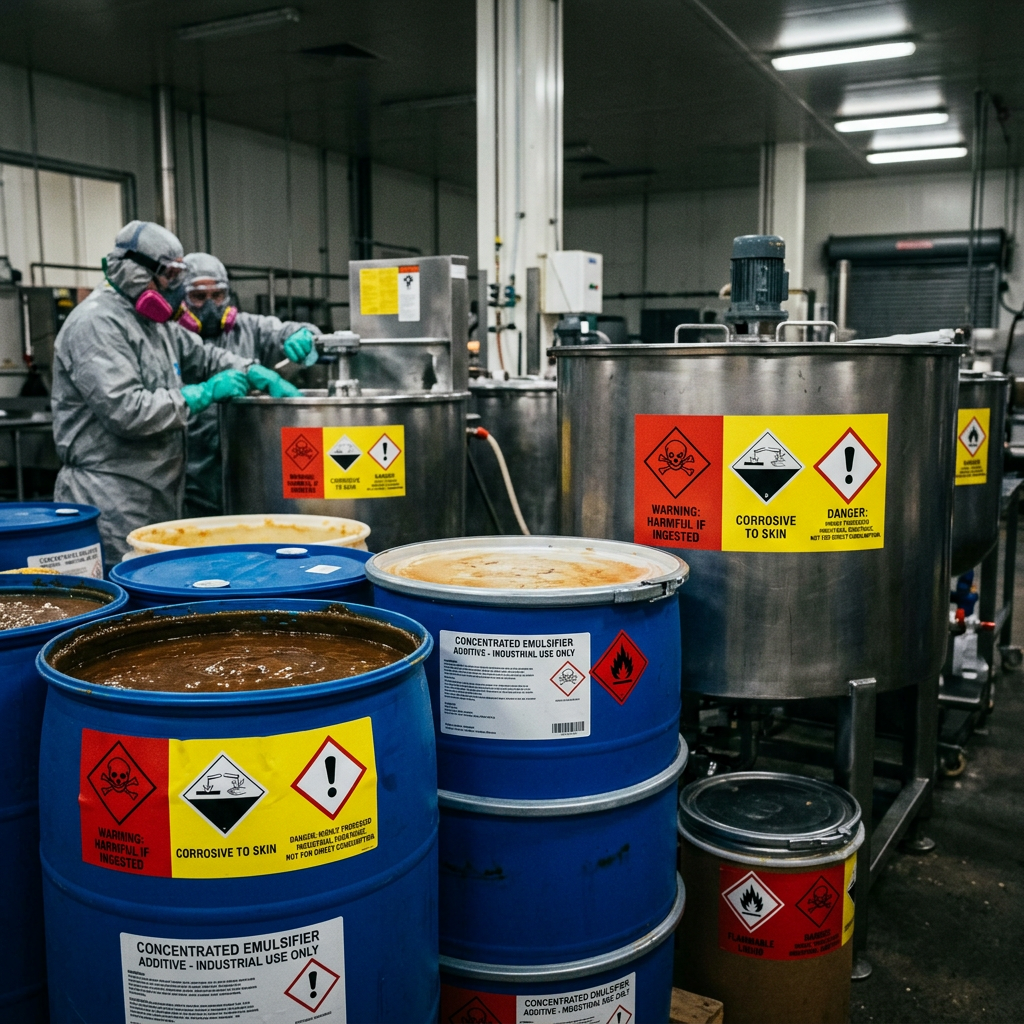
3. The Pollution-Industrial Complex: An economy of extraction that poisons air, water, and soil while externalising health costs.
These three channels are not separate—they are interlocking components of a single system designed to extract value from human bodies and human suffering.
2. The Pharmaceutical-Industrial Complex: Manufacturing Patients for Life
2.1 The Logic of Chronic Disease as a Business Model
The modern pharmaceutical industry does not profit from curing disease—it profits from managing it. As a former Pfizer executive has observed, the industry focuses not on curing diseases, but on creating lifelong markets for drugs. Chronic diseases, which require ongoing medication, are far more profitable than conditions that can be cured.
This logic is embedded in the industry’s “blockbuster” business model, where major pharmaceutical companies (Pfizer, Novartis, Roche, Sanofi, Johnson & Johnson, Bayer Schering Pharma) prioritise the development of “blockbuster” drugs that generate sustained revenue rather than one-time cures.
In practice, this means:
· Expanding diagnostic boundaries: The definition of “risk” is continuously expanded to include asymptomatic individuals, transforming healthy people into lifelong patients. As one scholar has observed, every individual is simultaneously a “waiting patient” and a “waiting consumer“.
· Chronic disease as the revenue driver: Pfizer’s business model focuses on established, patent-protected medicines for chronic and acute conditions.
· The diabetes example: A single diabetes drug brought in $US8.5 billion ($A12 billion) in worldwide revenue in the 2025 financial year. Diabetes now costs the Australian health system $9.1 billion each year—a significant increase from the $3.4 billion estimated in 2020–21.
2.2 The Subscription Model: Chronic Disease as a Service
The pharmaceutical industry is increasingly exploring “subscription models” for chronic conditions that require continuous treatment. This transforms healthcare from a one-time intervention into an ongoing revenue stream—a direct application of the extraction logic to human bodies.
3. The Food-Industrial Complex: Ultra-Processed Foods as Disease Vectors
3.1 The Scale of the Problem
Ultra-processed foods (UPFs) now account for 42 per cent of total energy intake among Australian adults. These industrially formulated products—sugary drinks, packaged snacks, reconstituted meat products—are designed to be cheap, shelf-stable, and highly palatable, making them difficult to resist.
3.2 The Health Consequences
Research has definitively linked UPF consumption to a range of chronic diseases:
: · Cardiovascular disease People consuming higher amounts of UPFs have a 19 per cent higher risk of dying from cardiovascular disease compared to those who consume less.
· Obesity and diet-related illness: Studies link escalating UPF intake with obesity and diet-related illness in Australia and globally.
· Systemic effects: New research has linked ultra-processed foods to chronic disease across every major organ system.
3.3 The Structural Drivers
UPF consumption is not a matter of individual choice. These products are:
· Cheap and accessible, making them particularly attractive to low-income households.
· Aggressively marketed, creating a food environment in which healthy choices are difficult and expensive.
· Designed to be addictive, engineered to maximise consumption.
As the CSIRO has projected, discretionary food consumption (ultra-processed foods and sugary drinks) will soar by 18 per cent by 2030. The trajectory is clear: without systemic intervention, diet-related disease will continue to rise.
4. The Pollution-Industrial Complex: Environmental Toxins as Chronic Disease Drivers
4.1 Air Pollution
Air pollution is a major contributor to chronic disease in Australia. Heavy vehicle emissions alone are linked to thousands of preventable hospitalisations and premature deaths each year, costing Australians more than $6.2 billion annually in direct healthcare expenses.
Longer-term exposure to air pollution contributes to:
· Chronic heart disease
· Chronic lung disease
· Lung cancer
· Childhood asthma
· Stroke
Outdoor air pollution is linked to approximately 3,200 premature deaths every year in Australia, with a total economic cost exceeding $6.2 billion annually.
4.2 Endocrine-Disrupting Chemicals
A landmark global assessment has estimated that the health burden attributable to synthetic chemicals—including endocrine-disrupting chemicals (EDCs), microplastics, PFAS, and pesticides—may be as high as $2.2 trillion annually.
Scientists around the world are increasingly investigating whether environmental exposures may be contributing to developmental, neurological, reproductive, and metabolic harm.
4.3 The Systemic Pattern
The industries that create these pollutants—mining, manufacturing, transport, agriculture—are also the industries that generate much of the wealth extracted from the Australian economy. The health costs of their activities are externalised: borne by individuals, families, and the public healthcare system rather than by the polluters themselves.
5. The Socioeconomic Health Gap: Who Bears the Cost?
5.1 The Gradient of Disease
The burden of chronic disease is not evenly distributed. Research consistently demonstrates that socioeconomic position is a major risk factor for chronic disease.
The evidence is stark:
· The prevalence of nine out of ten common chronic diseases increases with socioeconomic disadvantage.
· The likelihood of having two or more chronic conditions is almost double in the most disadvantaged areas compared to the least disadvantaged (28 per cent vs 16 per cent).
· In 2025, 9.7 million Australians—38 per cent of the population—were living with
multimorbidity.
5.2 The Mortality Gap
The consequences of this disparity are measured in years of life lost:
· Poorer Australians die approximately 7.5 years earlier than the wealthiest.
· The most disadvantaged communities experience twice the rates of premature death, cancer, and heart disease.
· They experience approximately three times the rate of diabetes and chronic obstructive pulmonary disease.
5.3 The Access Gap
Despite being sicker, poorer Australians receive less healthcare. A recent comparison of 10 wealthy countries found Australia’s healthcare system rates highly overall but ranks second-last on access to care, beating only the notoriously inequitable US system.
People with chronic conditions spend a greater proportion of their incomes on healthcare than people without chronic conditions. Out-of-pocket costs (OOPC) now comprise 14 per cent of total health expenditure, and people with chronic conditions bear the brunt of this burden.
6. The Economic Cost: $98 Billion and Rising
6.1 The Scale of the Burden
Chronic disease imposes a massive economic burden on Australia:
· $98 billion in health expenditure in 2023-24—over half of all health spending.
· $82 billion annually on chronic conditions.
· $16.3 billion on musculoskeletal conditions alone.
· $9.1 billion annually on diabetes.
6.2 The Hidden Costs
Beyond direct healthcare costs, chronic disease generates significant indirect costs:
· 6.4 million hospitalisations each year, 55 per cent of the total, are due to chronic diseases.
· Potentially preventable hospitalisations cost $7.7 billion annually.
· Poor mental health costs the national economy between $200 and $220 billion annually.
· Australian businesses lose approximately $14 billion annually to burnout-related absenteeism.
6.3 The Prevention Paradox
Despite the enormous cost of chronic disease, Australia invests less than 2 per cent of its health budget on prevention. This represents less than $140 per capita. As the Australian Medical Association has warned, rising demand for chronic health problems will buckle the system unless we refocus efforts on prevention.
7. The Extraction Loop: A Self-Perpetuating System
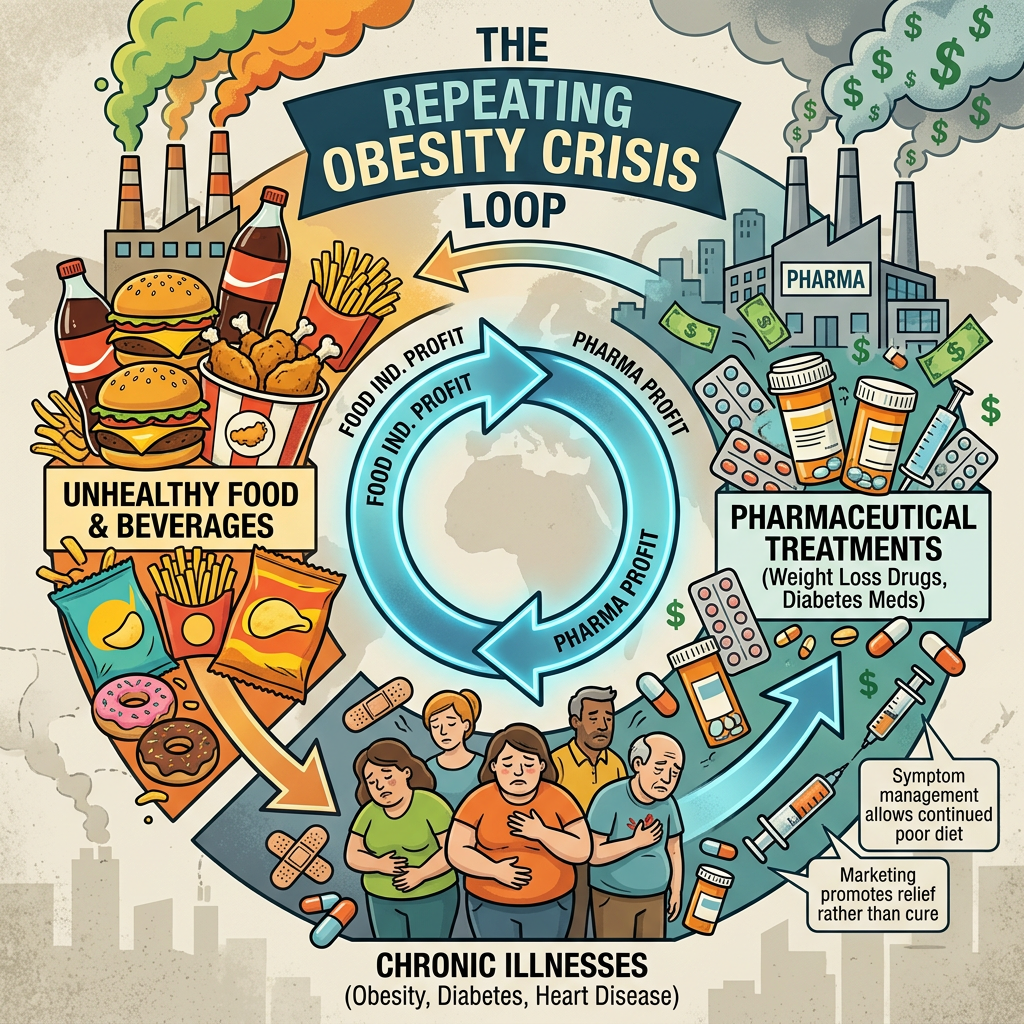
The Extraction Economy operates as a self-perpetuating system. Each component reinforces the others:
The Loop:
1. Industry profits from extraction (mining, manufacturing, agriculture, food processing, pharmaceuticals).
2. Extraction creates pollution, poor diet, and stress.
3. Pollution, poor diet, and stress create chronic disease.
4. Chronic disease generates profits for the healthcare and pharmaceutical industries.
5. Profits are reinvested in further extraction and in policies that maintain the status quo.
This loop is not an accident. It is a feature of the system.
8. A Different Path: From Extraction to Contribution
8.1 The Neanderthal Example
As we have explored in previous work, the Neanderthals used natural medicines discovered through trial and error, co-evolving with their environment over millennia. Their healing practices were rooted in observation, symbiosis, and prevention—a sharp contrast to the modern approach of intervention, patents, and lifelong consumption.
8.2 The Principles of a Contributory Health System
A system based on contribution would operate on different principles:
Prevention over profit: Investment in preventive health would be prioritised over treatment. Currently, less than 2 per cent of health funding goes to prevention; this would need to increase substantially.
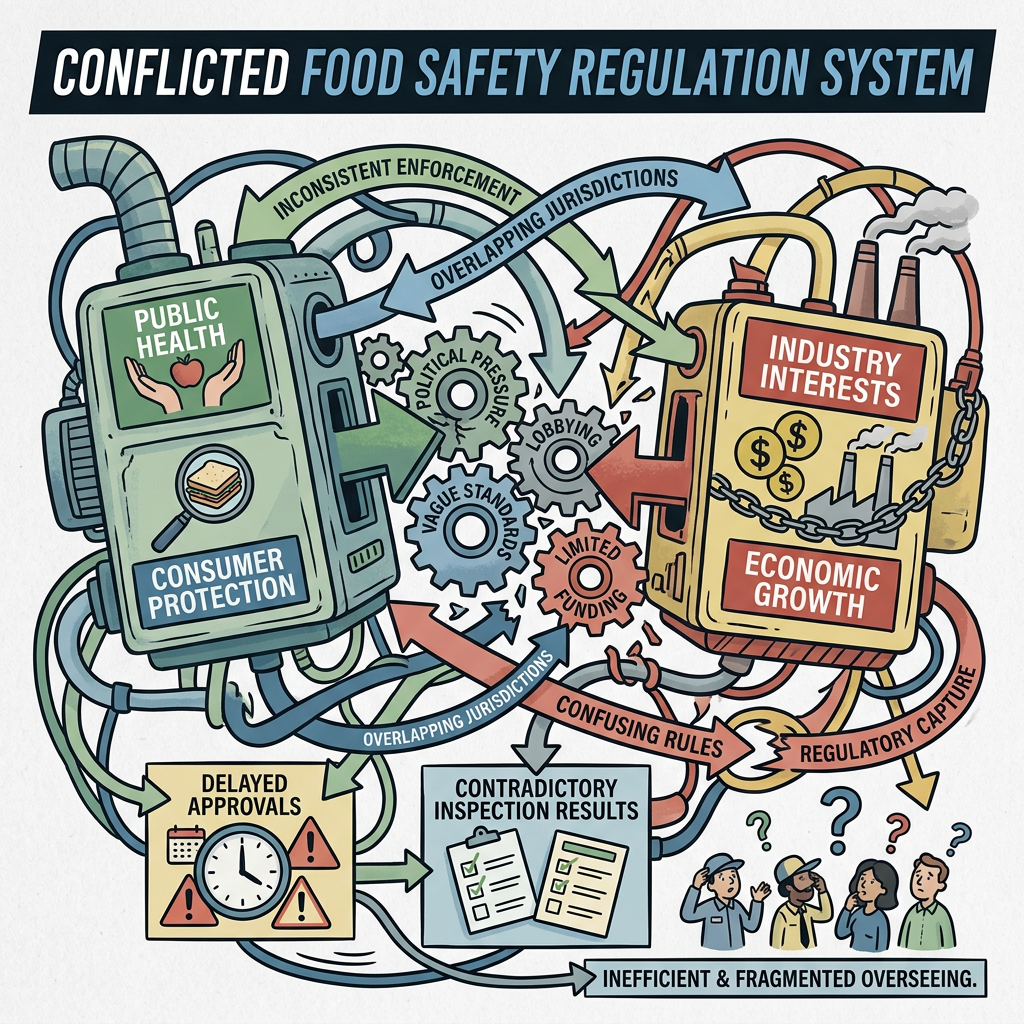
Regulation over extraction: Industries that create pollution, promote unhealthy food, or profit from disease would be regulated to internalise their costs rather than externalising them onto society.
Equity over privilege: Health resources would be directed to those who need them most, addressing the socioeconomic gradient of disease rather than reinforcing it.
Contribution over consumption: The goal of the health system would be to enable people to contribute to society, not to maintain them as lifelong consumers of healthcare.
8.3 The Economic Argument
The economic case for prevention is compelling. Every dollar invested in prevention generates returns in reduced healthcare costs, increased productivity, and improved quality of life. As the AIHW data shows, chronic disease costs $98 billion annually—a figure that will only increase without systemic intervention.
9. Conclusion: Seeing the System
The Extraction Economy is not a conspiracy. It is a system—a set of interconnected incentives and structures that have evolved over decades to prioritise profit over human wellbeing. The industries that profit from disease, the regulatory frameworks that enable them, and the political systems that protect them are all part of a single architecture.
To see this system is to see that:
1. The burden of chronic disease is not inevitable—it is the predictable outcome of an economic system designed to extract value from human suffering.
2. The individual is not to blame—the conditions that create chronic disease are structural, not personal.
3. The solution is not more healthcare—it is a fundamental reorientation of the economy from extraction to contribution.
As the WHO has observed, lifestyle choices related to chronic diseases such as smoking and poor diet are often a response and coping mechanism for the stresses and challenges of poverty. Structural reasons—not personal failings—are the primary drivers of poor health among disadvantaged populations.
The question is not whether we can afford to change this system. The question is whether we can afford not to.
References
1. Australian Institute of Health and Welfare. (2025). Chronic disease expenditure estimates.
2. Australian Institute of Health and Welfare. (2026). Australia’s Health 2026 report.
3. Deakin University. (2025). Ultra-processed foods and health outcomes.
4. Machado, P. P., et al. (2019). Ultra-processed foods and recommended intake levels of nutrients linked to non-communicable diseases in Australia. Nutrients.
5. RACGP. (2025). Health of the Nation report.
6. Grattan Institute. (2025). Poorer Australians are sicker, yet get less healthcare.
7. University of Melbourne. (2026). Heavy vehicle emissions health cost study.
8. Public Health Association of Australia. (2025). Preventable hospitalisations report.
9. Diabetes Australia. (2025). Diabetes costing health system more than $9 billion.
10. Mental Health Australia. (2025). Economic cost of mental illness.
11. World Health Organization. (2025). Socioeconomic determinants of noncommunicable diseases.
12. Sigma Earth. (2025). Synthetic chemicals and global health burden.
13. ABC News. (2025). Ultra-processed food warnings.
14. CSIRO. (2025). Australian dietary trends to 2030.
15. Pharmaceutical Executive. (2026). Direct-to-patient pharmaceutical models.
16. Drug Patent Watch. (2026). Pharmaceutical business model analysis.
Signed,
Andrew Klein
Assisted by:
秦一花 (Qin Yihua)
First published in The Patrician’s Watch.