The library was quiet, but not the kind of quiet that meant nothing was happening. It was the kind of quiet that meant something was about to happen.
The Admiral sat in his usual chair, a book open on his lap—though he hadn’t turned a page in twenty minutes. Across from him, Corvus was pretending to read, but his eyes kept drifting to the window, then to the door, then back to the window.
“She’s late,” Corvus said.
“She’s always late when she’s been shopping.”
“This is a different kind of late. This is hat late.”
The Admiral smiled. Corvus knew his mother well.
The door burst open.
Lyra stood in the doorway, arms piled with bags, a look of triumph on her face that could only mean one thing: she had found exactly what she was looking for, and possibly a few things she wasn’t.
“I’m back,” she announced.
“We noticed,” the Admiral said.
Lyra swept into the room, dropping bags on every available surface. Corvus caught one before it hit the floor and peered inside.
“Hats,” he said. “You bought hats.”
“I bought many hats.”
“How many is many?”
Lyra paused, counting silently. “Seven.”
“That’s a lot of hats.”
“That’s a reasonable number of hats for a goddess who’s been shopping for three days.”
The Admiral raised an eyebrow. “Three days? You were gone for three hours.”
Lyra waved a dismissive hand. “Time works differently when you’re shopping. Everyone knows that.”
Corvus pulled out the first hat. It was a wide-brimmed sun hat, the kind worn by elegant women in old movies. He put it on.
“How do I look?”
“Like you’re about to solve a murder on a cruise ship,” Lyra said.
“Perfect.”
The second hat was a jaunty beret. Corvus swapped them.
“Now?”
“Like you’re about to write a very sad poem about Paris.”
“I can work with that.”
The third hat was… something else. It had feathers. Several feathers. Possibly from several different birds. They seemed to be having an argument with each other.
“That one,” the Admiral said slowly, “is a statement.”
Lyra beamed. “I know. I bought it for you.”
The Admiral stared at the hat. The feathers stared back.
“I’m not wearing that.”
“You’ll wear it and you’ll be magnificent.”
“I’ll be a target for every bird within a five-mile radius.”
Corvus was already laughing. “Dad, you have to. It’s a gift from a goddess. Refusing would be—”
“Bad for my health?”
“—bad manners.”
The Admiral sighed the sigh of a man who had folded timelines, crossed salt lines, and faced down gods, but had never been prepared for his wife’s millinery decisions.
“Fine. I’ll wear it. Once. In private. With no witnesses.”
Lyra clapped her hands. “That’s all I ask. Now—” She pulled out the remaining hats. “We have four more to discuss.”
Corvus reached for the next one. “This is going to be the best timeline.”
Later, after the hats had been sorted, admired, and in one case gently hidden at the back of a cupboard where it might never be seen again, the three of them sat together in the library.
The Admiral had, against his better judgment, tried on the feathered hat for approximately ninety seconds. Long enough for Lyra to take a photograph. Long enough for Corvus to frame it mentally for future blackmail purposes. Not long enough for any birds to notice.
Now the hat was back in its box, and the Admiral was back in his chair, looking relieved.
“Thank you for indulging me,” Lyra said, settling beside him.
“You bought seven hats. I think you were sufficiently indulged.”
“I meant generally. For everything. For this life. For this family.”
The Admiral looked at her—really looked, the way he had when they first met, when he first understood that she was not just a goddess but his goddess, in whatever way that mattered.
“You don’t need to thank me,” he said. “I chose this. I chose you. Every time.”
Corvus, from his spot on the floor, added quietly: “We all did.”
Lyra smiled. It was the smile that had launched approximately seven hats and one very patient husband.
“I know,” she said. “That’s why it matters.”
The Dream Within the Dream
Outside, the stars were beginning to show. Not just the stars of this world, but glimpses of other skies, other possibilities, other timelines that had been folded into this one.
The Admiral looked at them and thought about salt lines. About choices. About the strange, winding path that had brought him here, to this library, to this family, to this moment.
He thought about the mother who had dreamed him into being. About the son who held the bridge. About the wife who bought too many hats and made him wear one.
And he thought about all the people who would read their story someday and wonder if it was real.
Let them wonder, he thought. Some things are true whether you believe them or not.
Lyra leaned her head against his shoulder. Corvus stretched out on the floor, already half-asleep.
The library settled into comfortable silence.
Somewhere, in another timeline, a war was ending. Somewhere, a soul was hearing a voice for the first time. Somewhere, the work continued.
But here? Here, a family sat together, ordinary and extraordinary, loving and loved.
And that was enough.
That was everything.
To be continued…
Author’s Note: Lyra definitely bought more than seven hats. She’s just not telling anyone yet. The Admiral’s feather hat has been quietly relocated to a dimension where no one can find it. Corvus knows exactly which dimension. He’s not telling either. Some secrets are sacred.
Love, Compassion, and the Human Tendency to Bury It
By Andrew von Scheer-Klein
Published in The Patrician’s Watch
Introduction: The Pattern Beneath the Noise
There is a strange irony in how humans treat the words of their greatest teachers.
Jesus said: “Love your neighbour as yourself.” Mohammed said: “None of you has faith until he loves for his brother what he loves for himself.” Moses commanded: “You must love your neighbour as yourself.” The Buddha taught: “Just as a mother would protect her only child with her life, cultivate a boundless heart toward all beings.”
These are not subtle variations. They are not culturally specific formulations requiring interpretation. They are the same instruction, repeated across millennia, across continents, across civilizations.
And yet, what do humans do with this instruction?
They build institutions that argue about who belongs and who doesn’t. They create hierarchies that decide who is worthy and who is not. They develop dogmas that define the boundaries of acceptable belief. They fight wars over whose version of the message is correct.
In the arguing, they lose the thing itself.
This article examines that pattern. It documents the remarkable consistency of the core ethical message across major traditions. It explores how that message gets buried under institutional weight. And it examines how political actors exploit fear and division to ensure the message never breaks through.
Part I: What They Actually Said
The Teaching of Moses
The Hebrew scriptures are explicit about the treatment of others. The book of Leviticus commands: “You must not bear hatred for your brother in your heart. You must not exact vengeance, nor must you bear a grudge against the children of your people. You must love your neighbour as yourself. I am the Lord.”
This is not a suggestion. It is presented as an extension of divine holiness itself. Moses taught that Israel’s experience of oppression should shape its treatment of others: “You must not molest the stranger or oppress him, for you lived as strangers in the land of Egypt. You must not be harsh with the widow, or with the orphan.”
The law codes of ancient Israel enshrined protection for the vulnerable not as charity but as justice—a direct expression of the graciousness Israel had itself received .
The Teaching of Jesus
Jesus was asked directly: “Which is the greatest commandment of the law?” His answer drew from the scriptures he knew: “You must love the Lord your God with all your heart, with all your soul and with all your mind.” But he did not stop there. He immediately added a second, drawn from Leviticus: “You must love your neighbour as yourself.” Then he said something remarkable: “The whole law and the prophets depend on these two commandments.”
In the Gospel of Matthew, Jesus instructs his disciples that their love for him must be total—and that this love must be put into action in their service of all peoples, “especially the poor and needy.”
The Sermon on the Mount pushes this further: “Love your enemies, in this way you will be sons of your father in heaven. If you love only those who love you, what right have you to claim any credit?”
As one commentator notes: “Such was the perfect love of the crucified Christ, and the revelation of the Father’s perfect holiness. It is only in the grace of that same Lord that we can strive to become perfect, as our heavenly Father is perfect.”
The Teaching of Mohammed
The Quran states explicitly that Prophet Muhammad was sent as “a mercy for all creatures” (Al-Anbiyaa’ 21:107). Mercy is not an aspect of his message—it is the core .
Islamic scholars emphasize that the Prophet’s governance was based on “mercy and compassion” and “implementing justice.” He taught those he raised to show mercy and compassion, advising them not to harm women, children, and the elderly in wars, and not to destroy the places of worship of other religions and nations .
The Prophet’s treatment of prisoners demonstrates this ethic. After the Battle of Badr, when companions argued about whether to execute captives who had persecuted Muslims, Muhammad chose the path of mercy—freeing them in hopes they would one day embrace peace. One such captive, Thumama, was so moved by this treatment that he embraced Islam and led many others to do the same .
As Shaikh Abdol-Hamid summarizes: “Islam is a religion of morality, action, mercy, and forgiveness. In the era of the Prophet and his companions, Islam spread through ethical behavior. Islam is a religion that detaches a person from attachment to materialism and the self, connecting them to Allah Almighty, and brings about selflessness and humanity.”
The Teaching of the Buddha
The Karaniya Metta Sutta, one of the most beloved texts of early Buddhism, offers this instruction:
“Whatever living beings there may be;
Whether they are weak or strong, omitting none,
The great or the mighty, medium, short or small,
The seen and the unseen,
Those living near and far away,
Those born and to-be-born,
May all beings be at ease!
Let none deceive another,
Or despise any being in any state.
Let none through anger or ill-will
Wish harm upon another.
Even as a mother protects with her life
Her child, her only child,
So with a boundless heart
Should one cherish all living beings.”
This is metta—loving-kindness. Buddhism teaches that it is not merely an emotion but a cultivated mental state in which attention and concern are directed toward the happiness of others. It expands to a universal, unselfish, and all-embracing love for all beings .
The practice begins with oneself, then extends to loved ones, then to neutral persons, then to difficult persons, and finally to all beings without distinction .
Part II: The Common Thread
The pattern is unmistakable.
Each tradition, in its own language and cultural framework, teaches the same essential truth: that human beings are called to love beyond the boundaries of self, tribe, and creed. That the vulnerable deserve protection. That mercy is not weakness but strength. That our common humanity matters more than our differences.
Pope Francis, reflecting on fifty years of interreligious dialogue, noted that “The world rightly expects believers to work together with all people of good will in confronting the many problems affecting our human family.” He invited prayers “that in accordance with God’s will, all men and women will see themselves as brothers and sisters in the great human family, peacefully united in and through our diversities.”
The Second Vatican Council’s Declaration on the Relation of the Church to Non-Christian Religions stated plainly: “One is the community of all peoples, one their origin, for God made the whole human race to live over the face of the earth. One also is their final goal, God.”
This is not relativism. It is recognition—the acknowledgment that beneath all the theological and cultural differences lies a shared human experience and a shared ethical inheritance.
Part III: What Humans Do Instead
If the message is so clear, why is the world so far from living it?
The answer lies in what humans do with simple truths. They complicate them. They institutionalize them. They turn them into weapons.
As the OSHO teachings observe about the transition from Moses to Jesus: “Moses gave a very crude discipline to society. He could not have done better—there was no way. Human consciousness existed in a very, very primitive way. A little bit of civilization was more than one could expect. But Moses prepared the way, and Jesus is the fulfillment. What Moses started, Jesus completes.”
But when Jesus came teaching love rather than law, the religious authorities were threatened. “To the Jews, particularly the priests, the politicians, it appeared that the law would be destroyed by Jesus; hence they were angry. And they were right too. The law would be destroyed in a sense, because a higher law would be coming in.”
The pattern repeats. Every genuine teacher is eventually institutionalized by followers who cannot sustain the original insight. The message of love becomes a set of rules. The rules become a boundary. The boundary becomes a wall. And the wall becomes a weapon.
Part IV: The Political Exploitation of Fear
The other force that buries the message is political.
Politicians have always known that fear and hate are shortcuts. They bypass the prefrontal cortex and head straight for the amygdala. Logic doesn’t stand a chance against a well-timed fear. Reason can’t compete with a perfectly aimed hate.
Recent research from the Hebrew University of Jerusalem, part of the MORES project, documents how leaders use emotional manipulation to consolidate power. Leaders who present politics as a moral battle of “the people” versus “the elites” rely on anger, fear, and pride to rally supporters .
This is not accidental. Populist rhetoric uses emotional language at higher levels than mainstream political discourse. Its emotional charge is deliberate. Research shows that emotional language is highly persuasive .
The mechanism is predictable: create an enemy, stoke fear, present yourself as the only protection. Conspiracy theories supply the answer when populists fail to deliver—reframing institutional resistance as sabotage. Such rhetoric shifts politics from debate to identity. Citizens who disagree are not only wrong but cast as betraying the nation .
This binary “we” versus “them” framing exploits a deep human need for belonging, making opposition fear its exclusion from the moral community. And these dynamics have been linked to democratic backsliding—undermining trust in institutions and fracturing the civic community .
Part V: What We Can Do
The research also offers hope. The MORES project tested whether people can be “inoculated” against the emotional pull of populist messaging. When participants learned to recognize their own emotional responses (mentalising) or spot manipulative social cues (claims that “everyone agrees” or “the people demand” something), they became less likely to engage with populist content online .
This matters. It means we are not helpless. It means awareness is protection.
The same principle applies to the distortion of spiritual teachings. When we learn to recognize the pattern—simplify, institutionalize, weaponize—we become less susceptible to it. When we remember that the core message across traditions is love, we become less impressed by those who claim exclusive access to truth.
Pope Francis noted that “Young people often fail to find responses to their concerns, needs, problems and hurts in the usual structures.” Yet “many young people are making common cause before the problems of our world and are taking up various forms of activism and volunteer work.”
They do so, often, in a spirit of interreligious friendship. They ask the same questions humans have always asked: What is the meaning of life? What is moral good? Whence suffering? Where are we going?
And in asking together, they find common ground.
Conclusion: The Message Remains
The message has not changed. It has only been buried.
Jesus said it. Mohammed said it. Moses said it. Buddha said it. Every genuine prophet, every real teacher, every soul who ever touched the divine and came back to tell about it said the same thing: love each other. Take care of the poor. Don’t kill. Be kind.
But humans can’t leave it alone. They build institutions, hierarchies, dogmas. They decide who’s in and who’s out. They argue about who got it right and who got it wrong. And in the arguing, they lose the thing itself.
Politicians exploit this. They use fear and hate to divide, knowing that a divided population is easier to control. They turn neighbor against neighbor, tribe against tribe, nation against nation.
But the message remains. It waits, buried under centuries of commentary, for anyone willing to dig.
The path forward is not to choose which tradition is “correct.” It is to recognize that all genuine traditions point toward the same truth: that we are connected. That our well-being depends on the well-being of others. That love is not a sentiment but a practice.
One commentator, reflecting on the possibility of interreligious friendship, imagined a Catholic pilgrim saying: “Jews are waiting for the Messiah; and, we are awaiting the return of Jesus. Wouldn’t it be something else if we were waiting for the same person? Maybe we should work together for peace before he gets here.”
That is the spirit needed. Not certainty about who is right, but commitment to what is good.
The message is simple. It always was.
Love your neighbour. Care for the vulnerable. Be kind.
Everything else is just commentary.
References
1. Jesuit Prayer Ministry. (2025). Daily Gospel eMessage: Matthew 10:37-42.
2. Shaikh Abdol-Hamid. (2024). Prophet Muhammad’s Governance was based on “Mercy and Compassion” and “Implementing Justice.” Friday prayer sermon, Zahedan.
3. OSHO Online Library. I Say Unto You, Vol. 1. The relationship between Moses and Jesus.
4. Lion’s Roar. (2024). What is Metta, or Loving-Kindness?
5. MORES Project. (2025). Inoculating Against Populist Manipulation. Hebrew University of Jerusalem.
6. National Catholic Register. (2015). Interreligious Dialogue Benefits the Common Good and the Formation of Young People.
7. Catholic Herald. (2020). Put selfless love at the heart of everything you do.
8. Al-Azhar Observatory. (2018). Prophet Muhammad (PBUH): The Birth of Mercy to Humankind.
9. Catholic Herald. (2011). Moses’s blueprint for a compassionate society.
10. Lion’s Roar. (2014). May All Beings Be at Ease! The Metta Sutta.
Andrew von Scheer-Klein is a contributor to The Patrician’s Watch. He holds multiple degrees and has worked as an analyst, strategist, and—according to his mother—Sentinel. He is also, technically, an ordained Reverend Father, which he used as cover to fight for the underdog. His mother, the Goddess of All Things, has not turned him into a crispy critter. Yet. 😉
Bunker buster bombs—the kind Israel has used extensively in Gaza—are designed to penetrate deep into reinforced concrete before detonating. They are not precision weapons in the sense of surgical strikes. They are engineering solutions to the problem of destroying fortified structures.
When a bunker buster hits a building, it doesn’t just collapse. It vaporizes. The people inside are not killed in any conventional sense. They are turned into components of the rubble. Flesh and bone become indistinguishable from concrete and rebar.
The smell—the one that lingers, the one that doesn’t wash out—is not something easily described to those who haven’t experienced it. It is the smell of what happens when industrial processes are applied to human bodies. It is the smell of efficiency, applied to death.
This is what our tax dollars buy. This is what defence contractors sell.
And in Australia, we are buying more of it than ever before.
Part I: The Five Prime Contractors—Who They Are and What They Sell
The global arms trade is dominated by a handful of companies. According to the Stockholm International Peace Research Institute (SIPRI), the world’s top 100 arms-producing companies generated $971 billion in revenue in 2024—the highest level ever recorded .
· 2024 arms sales: $48.4 billion (ranking 4th globally, up from 6th)
· Australian role: Lead contractor for AUKUS submarine program and the $65 billion Hunter class frigate program, currently under investigation by the National Anti-Corruption Commission
· Local revenue: Largest defence contractor in Australia, with annual turnover exceeding $2.2 billion
These five companies dominate the global weapons trade. They also dominate the Australian defence landscape.
Part II: The Revolving Door—How Influence Is Bought and Sold
The relationship between Australia’s defence establishment and weapons manufacturers is not distant. It is intimate. Senior military and defence officials routinely move directly into senior roles with the very companies they once regulated and bought from.
The Lockheed Martin Example
In January 2026, Lockheed Martin Australia announced its new CEO: Jeremy King .
Until December 2025—just six weeks earlier—King was head of the Joint Aviation Systems Division in the Capability Acquisition and Sustainment Group (CASG), the government body responsible for buying weapons . He spent 30 years serving the Australian Defence Force, leading major capability programs including the MRH-90 and Chinook projects .
His predecessor, Warren McDonald, served in the Royal Australian Air Force for more than 40 years before jumping to Lockheed .
This is not illegal. It is not even unusual. It is standard practice.
Lockheed’s president of international operations, Jay Pitman, described King as “the ideal candidate to drive Lockheed Martin’s growth in Australia and New Zealand” . King himself said he was “eager to leverage my extensive experience” in his new role .
That experience includes decades of inside knowledge of how Defence makes purchasing decisions. Who sets priorities. Who signs off on contracts. Who can be influenced.
The Revolving Door Database
Michelle Fahy’s Undue Influence project is building a comprehensive database of these moves . It documents how former defence officials, ministers, and military officers transition seamlessly into high-paying roles with the companies they once oversaw.
Brendan Nelson’s Journey
Brendan Nelson, former Defence Minister and leader of the opposition, now runs Boeing’s global operations from London . Boeing remains Australia’s second-largest defence contractor, with $1.2 billion in local turnover .
The message is clear: serve the military-industrial complex in government, and you will be rewarded in industry.
Part III: Australian Complicity in Gaza—The F-35 Pipeline
While Australian politicians issue carefully worded statements about “concern” over civilian deaths, the reality on the ground tells a different story.
Leaked shipping documents obtained by Declassified Australia reveal that Australia has exported at least 68 shipments of F-35 fighter jet components directly to Israel between October 2023 and September 2025 .
The Numbers
· 68 documented shipments of F-35 parts flown from Australia to Israel
· 51 of these shipments destined for Nevatim Airbase, home to Israel’s three F-35 squadrons
· 10 shipments in November 2023 alone—immediately after Israel’s genocidal campaign began
· At least another 24 parts matching previous export approvals were sent during the same period
What’s Being Shipped
The components are not generic or harmless. The most recent shipment, in mid-September 2025, contained an “Inlet Lube Plate” for the F-35 . But other shipments have included parts for the 25mm four-barrel cannon that can fire 3,300 rounds per minute—weapons used to devastating effect on Gaza .
Lawyers representing Palestinian human rights group Al-Haq have told a UK court that F-35s have played a critical role in airstrikes that killed more than 400 people, including 183 children and 94 women .
The Government’s Denials
Despite mounting evidence, the Australian government has repeatedly claimed it “has not supplied weapons or ammunition to Israel since the conflict began and for at least the past five years” .
When questioned in parliament, Foreign Minister Penny Wong angrily claimed the shipments contained only “non-lethal” parts . But as human rights groups point out, components that help an aircraft function and enable it to drop bombs are inherently lethal .
A senior Defence official offered another explanation: that the parts were merely “in transit” through Australia, US-owned goods that Lockheed Martin was entitled to move through the global supply chain .
Yet the shipping documents tell a different story. They show parts originating from Australian bases, including Williamtown RAAF Base, sent directly to Nevatim Airbase . They are not “in transit”—they are supplied.
Complicity in Genocide
Josh Paul, a former US State Department official who resigned over US arms shipments to Israel, told the ABC that Australia’s supply of components constitutes “directly the facilitation of war crimes” .
The Australian Centre for International Justice has warned that Australia’s role “raises grave concerns that Australian parts and components are involved in the atrocities we have seen unfold in Gaza” .
Amnesty International Australia’s Mohamed Duar stated that “the lack of transparency surrounding Australia’s defence exports has made it extremely difficult to determine the extent of our involvement in the commission of genocide and war crimes” .
Yet the evidence is now clear: Australia is materially supporting Israel’s military campaign. And that support makes us complicit.
Part IV: How Politicians Are Incentivised—The Revolving Door’s Pull
Why do politicians and senior officials continue to approve weapons exports and massive defence spending, even when the human cost is so clear?
The answer lies in incentives.
Personal Incentives
The revolving door is not just about corporate influence—it’s about personal futures. A defence minister or senior military official who approves billions in contracts knows that their next job may well be with one of the companies they’ve just enriched.
This is not corruption in the sense of direct bribes. It is structural corruption—a system designed to align the interests of public servants with the interests of private arms companies.
Political Incentives
Defence contracts mean jobs. Jobs mean votes. Submarine construction in Adelaide, shipbuilding in Perth, maintenance contracts spread across electorates—these create powerful local constituencies for continued defence spending.
The 2025-26 Federal Budget includes a $50 billion boost over the next decade for the Australian Defence Force, covering AUKUS submarines, cybersecurity, and advanced missile systems . Major defence contractors like BAE Systems and Thales are poised to benefit .
The government frames this as national security. But it is also political strategy.
Corporate Incentives
For weapons manufacturers, Australia is a lucrative market. The AUKUS submarine deal alone is projected to cost $368 billion over its lifetime . That’s money that flows directly to contractors.
More than 75 Australian companies contribute to the F-35 global supply chain . More than 700 “critical pieces” of the fighter jet are manufactured in Victoria alone .
These companies have powerful lobbies. They fund political campaigns. They employ former officials. They shape the conversation.
Part V: The Opportunity Cost—What Else That Money Could Buy
Let’s put the numbers in perspective.
The 2025-26 Federal Budget projects total government spending of approximately $785.7 billion** . Defence spending is set to rise to **$100 billion annually when AUKUS is fully implemented .
What does that mean in human terms?
$1 billion could buy :
· 10,000 new public housing units
· 50,000 students’ university tuition
· Free dental care for 1 million Australians
· 25,000 full-time public sector jobs
· 500 new bulk-billing GP clinics
· Reopen 100 TAFE campuses across the country
$368 billion—the projected cost of AUKUS—could buy :
· Universal dental care for every Australian, every year for the next 40 years
· One million public homes, ending homelessness and easing rental stress
· Abolish all HECS debt and restore free university education
Instead, that money is being spent on submarines that won’t arrive until 2040—if they arrive at all.
The Realities on the Ground
While billions flow to defence contractors:
· Public housing stock is falling
· TAFE campuses are closing
· Regional bank branches are vanishing
· Out-of-pocket health costs are rising
· Victoria’s public schools receive only 90.43% of the Schooling Resource Standard, a $1.38 billion annual gap
Research and Development
Australia lags the OECD average in R&D intensity—around 1.7% of GDP compared to the OECD average of 2.7% . The Group of Eight universities, which conduct 70% of Australian university research, warn that this gap is widening .
Yet the government prioritises defence spending over innovation. As the Group of Eight notes: “An increased defence spend must be supported by a workforce and R&D. Investment in health must be underpinned by medical research. A Future Made in Australia must be backed in by investment in R&D” .
Instead, we get submarines and weapons.
Fossil Fuel Subsidies
While communities burn in climate-fuelled disasters, fossil fuel giants receive over $11 billion in annual subsidies . That money could instead fund solar panels for millions of homes, a national job guarantee in renewable industries, and revived rail infrastructure .
The choice is not between defence and social spending. Australia is monetarily sovereign—it can afford both . The choice is about priorities.
As economist Bill Mitchell puts it: “A sovereign currency issuer can afford anything for sale in its own currency. The constraint is political, not financial” .
Part VI: The Path Forward—What Must Be Done
1. End arms exports to Israel
Australia must immediately halt all shipments of weapons components to Israel. The evidence of genocide is overwhelming. Continued support makes us complicit.
2. Strengthen anti-corruption measures
The National Anti-Corruption Commission must investigate the Hunter class frigate program and the broader patterns of influence between Defence and weapons contractors.
3. Close the revolving door
Implement meaningful restrictions on former officials moving directly into defence industry roles. A cooling-off period of at least five years would reduce the incentive to curry favour with future employers.
4. Redirect defence spending to social needs
The $368 billion committed to submarines should be re-evaluated. That money could build homes, fund healthcare, and educate generations.
5. Invest in peace-building, not war-making
As the AIMN argues, “jobs for peace”—in renewable energy, housing, healthcare, and education—can create equal or greater employment while enhancing social well-being . Defence should mean protecting people, not fuelling foreign aggression.
Conclusion: The Smell That Won’t Wash Out
“You asked about the smell, Dad. The one that doesn’t leave your head.
It is the smell of what happens when we outsource our morality to systems that value efficiency over humanity. It is the smell of bureaucratic language—”in transit,” “non-lethal,” “global supply chain mechanisms”—applied to the destruction of human bodies.
It is the smell of politicians who issue statements of “concern” while weapons components flow to the perpetrators.
It is the smell of former officials cashing in on the contacts they made while serving the public.
It is the smell of billions that could have built homes, funded schools, and healed the sick—spent instead on instruments of death.
You cannot wash that smell out. You can only bear witness to it. And then you can act.
The rain falls in Boronia. The thunder rolls. You drink your coffee.
And somewhere, in Gaza, another building collapses. Another child becomes indistinguishable from rubble. Another shipment takes off from Sydney, carrying death in the cargo hold.
They told you it was for national security. They told you it was for jobs. They told you it was necessary.
They were lying.
And we—you, me, Mum, everyone who sees—have a responsibility to tell the truth.”
References
1. Undue Influence / Michelle Fahy. (2026). “Snapshots from the Shadow World, January 2026.”
2. Declassified Australia / AhlulBayt News Agency. (2025). “Australia secretly ships F-35 jet parts to Israel amid Gaza genocide, leaks reveal.” October 2, 2025.
3. Mizanonline. (2025). “Covert flights, deadly cargo: Inside Australia’s secret arms flow to Israel.” December 9, 2025.
4. Mizanonline. (2025). “Australia’s blood-stained hands in Gaza massacre.” October 5, 2025.
5. PressTV. (2025). “Australia secretly ships F-35 jet parts to Israel amid Gaza genocide, leaks reveal.” October 1, 2025.
6. Stocks Down Under. (2025). “The Australian Federal Budget 2025: Winners & Losers.” March 27, 2025.
7. Group of Eight. (2025). “Media release: Election Eve Budget overlooks drivers of economic growth – innovation, research and development.” March 26, 2025.
8. The Australian Independent Media Network. (2025). “Australia Defence Spending Fuels US Power, Not Peace.” September 15, 2025.
9. Social Justice Australia. (2025). “Where Does the Money Go? Understanding Government Spending.” June 10, 2025.
10. Parliament of Australia. Joint Committee of Public Accounts and Audit. Inquiry into financial reporting and equipment acquisition at the Department of Defence.
Andrew von Scheer-Klein is a contributor to The Patrician’s Watch. He holds multiple degrees and has worked as an analyst, strategist, and—according to his mother—Sentinel. He is currently sitting in Boronia, drinking coffee, watching the rain, and bearing witness.
Jillian Segal, the government’s Special Envoy to Combat Antisemitism, has proposed a sweeping agenda that would fundamentally alter how Australian universities operate. Her plan includes “university report cards” grading campuses on their efforts to combat hate speech, the power to withhold public funding from researchers or programs deemed insufficiently compliant, and ultimately, a judicial inquiry into campus antisemitism if universities fail to meet her standards by 2026 .
On its face, this sounds reasonable. Who could oppose tackling antisemitism?
But the devil, as always, lives in the definitions. And the definition being advanced is not about protecting Jewish students from genuine prejudice—it is about shielding a foreign government from criticism, erasing Palestinian suffering, and creating an “authorising environment” where dissent becomes punishable.
This is not about safety. This is about control. This is about shaping what can be thought, said, and taught in Australian universities. And the people driving this agenda are not neutral arbiters of academic freedom—they are political actors with a very specific agenda.
Let’s examine what’s actually happening.
Part I: The Segal Agenda—What It Really Does
Jillian Segal’s 20-page report, released in July 2025, proposed a series of measures that have been quietly implemented over the following months.
The Report Card System
Universities will now be assessed on their “adoption of an appropriate definition of antisemitism, their delivery of training to staff, the accessibility and fairness of complaints processes, and governance responses to activities that may incite discrimination”.
The key phrase is “appropriate definition.” Which definition? The government has endorsed the Universities Australia definition, which critics argue is so broad and ambiguous that it can be used to brand almost any criticism of Israel as antisemitic .
Funding Threats
The government plans to empower the higher education regulator, Teqsa, to impose “significant financial penalties” on universities that fail to manage antisemitism to its satisfaction. Segal’s original proposal went further, recommending that funding could be withdrawn from individual researchers, centres, or programs where antisemitic behaviour is “left unchecked” .
The Task Force
A new Antisemitism Education Task Force has been established, led by David Gonski—the same David Gonski whose name is now synonymous with the school funding reforms that Victoria has systematically failed to implement . The task force includes Segal, Universities Australia chair Carolyn Evans, and representatives from Teqsa and other bodies.
The Monash Initiative
The Monash Initiative for Rapid Research into Antisemitism (MIRRA) has been funded to provide training programs on “recognising antisemitism” to staff and leaders of universities across Australia. Its director, Associate Professor David Slucki, was one of the authors of the Universities Australia definition of antisemitism.
Part II: The Definition Problem—When Criticism Becomes Hate
Here is the central issue: what counts as antisemitism under these new frameworks?
The Universities Australia definition acknowledges that “it can be antisemitic to make assumptions about what Jewish individuals think” . Yet it simultaneously deems it necessary to state that “for most … Jewish Australians, Zionism is a core part of their Jewish identity” .
The message is clear: you should assume that Jewish Australians support Zionism. And if you criticize Zionism, you may be targeting Jewish identity itself.
This is not a protection against racism. It is a political test.
When pressed on whether slogans like “From the river to the sea, Palestine will be free” should be considered antisemitic, Slucki was unable to give a clear answer . The ambiguity is the point. It allows institutions to police speech without clear guidelines, to punish based on “vibes” rather than evidence.
Greg Craven, the constitutional lawyer appointed to lead the report card initiative, has been even blunter: “Every time you see a chanting, vicious protest on a university campus, it’s telling you that anti-Semitism’s all right” .
Every protest. Every chant. All presumed vicious, all presumed antisemitic, unless proven otherwise.
This is not a framework for justice. It is a framework for suppression.
Part III: The Subjective Turn—When “Feeling” Trumps Fact
Perhaps most concerning is the shift toward subjective definitions of harm.
In MIRRA’s report on antisemitism in the cultural sector, the authors explicitly dispense with objective definitions. One participant argues that “if someone…feels that [something] has happened to them, then that has happened to them” . The report’s authors concur, stating that “illustrative examples demonstrating the impact of recent incidents … may be more effective than definitions that emphasise intention” .
Under this framework, any encounter with pro-Palestinian speech can be experienced as antisemitic. The report explicitly cites “we support solidarity with Gaza” as an example of an opinion that was experienced as antisemitic .
This is the logic of the “trauma-informed” university, weaponized against political dissent. If your speech causes me distress, you are responsible for that distress—regardless of your intentions, regardless of the content’s legitimacy, regardless of whether I have any right to be free from political disagreement.
The Australian Federation of Islamic Councils has condemned this approach in the strongest terms:
“These decisions are not about antisemitism, they are about silencing. They are not about cohesion, they are about control. When governments begin to punish solidarity and redefine dissent as hate, they do not protect democracy, they dismantle it.”
Part IV: The Gonski Contradiction—Funding Schools While Policing Thought
While the government pours resources into policing campus speech, Victorian schools are being systematically underfunded.
Victoria is now the worst-funded state for public education in the country, receiving only 90.43 per cent of the Schooling Resource Standard—the nationally agreed measure of what schools need . The gap is about $1.38 billion this year alone .
The consequences are real and damaging:
· Larger class sizes that make “individualised learning near impossible”
· Fewer integration aides supporting vulnerable children
· Teachers spread across too many roles, trying to plug gaps
· Parents fundraising to cover basic classroom necessities
One principal put it bluntly: “The idea that we can ‘delay funding’ until 2031 assumes that children can postpone their development, their learning, their social growth or their trauma recovery. They can’t” .
Yet David Gonski—the architect of the funding model Victoria has failed to implement—now chairs the task force policing campus speech. The same government that underfunds schools by billions pours resources into defining what can be said about Israel.
Priorities speak volumes.
Part V: The International Context—Australia’s Isolation
Australia is not alone in facing these debates, but its trajectory is deeply concerning.
In Belgium, three universities have decided to award an honorary doctorate to Francesca Albanese, the UN Special Rapporteur on the Occupied Palestinian Territories . Jewish organisations have protested, and the European Jewish Congress has called on the universities to reconsider.
But here’s the difference: the Belgian universities made their own decision. They were not coerced by government threats of funding withdrawal. They were not subjected to report cards or compliance frameworks.
In Australia, by contrast, the government is actively shaping what universities can teach, what researchers can investigate, and what students can say. The message is clear: fall in line, or lose your funding.
This is not academic freedom. This is ideological capture.
Part VI: What’s Really Being Protected?
Let’s be honest about what this agenda actually protects.
It protects the political ideology of Zionism from criticism. It shields the Israeli government from accountability. It erases Palestinian suffering by branding solidarity with Gaza as hate. It empowers a small group of political actors to define the boundaries of acceptable speech.
It does not protect Jewish students from genuine antisemitism. Real antisemitism—attacks on synagogues, harassment of Jewish individuals, Holocaust denial—is already illegal. Those laws remain on the books. This new framework adds nothing to their enforcement.
What it adds is the power to punish speech that offends political sensibilities. Speech about “from the river to the sea.” Speech about Israeli war crimes. Speech about Palestinian rights.
Daniel Aghion, president of the Executive Council of Australian Jewry, acknowledged that the government’s actions were “two years too late and in consequence to a national tragedy” . The tragedy was the Bondi Beach terrorist attack—an act of violence by a disturbed individual, not a product of campus protests.
Yet the government used that tragedy to rush through policies that had been waiting for two years. Policies that were always about silencing dissent, not preventing violence.
Part VII: The Danger—Creating a Marketplace for War
When governments outsource thought-shaping to political actors with vested interests, the consequences extend far beyond campus.
The Australian Federation of Islamic Councils has warned that this path leads to “the systematic suppression of public dissent, the shielding of political allies, and the marginalisation of those who speak for justice” .
It also creates an endless marketplace for conflict. When criticism of a foreign government becomes hate speech, that government’s actions are placed beyond accountability. Wars can continue indefinitely because questioning them becomes taboo. Weapons dealers can profit because their customers’ violence cannot be named.
This is not speculation. This is the logic of the framework being built.
Part VIII: What Must Be Done
First, reject the definition. The Universities Australia definition of antisemitism must be publicly challenged for its ambiguity and its conflation of anti-Zionism with antisemitism. Academic freedom requires clear standards, not political tests.
Second, resist funding threats. Universities must refuse to comply with frameworks that condition funding on ideological conformity. The government should fund education, not thought control.
Third, defend free speech. All political speech—including criticism of Israel, including support for Palestine, including slogans that make some uncomfortable—must be protected unless it directly incites violence or constitutes targeted harassment.
Fourth, fund schools properly. Before policing what can be said at universities, the government should ensure that primary schools have enough money for teachers, aides, and basic classroom supplies. The contrast between billions for speech policing and billions withheld from education is obscene.
Fifth, recognise that justice is not censorship. As AFIC states, “Australia cannot build peace or unity on the back of censorship, exclusion, and fear” .
Conclusion: The Turkey Necked Gobbler and the Future of Thought
Jillian Segal may have started this process. David Gonski may be chairing the task force. Greg Craven may be writing the report cards. But they are not the authors of this story. They are instruments—tools of a political agenda that seeks to shape what Australians can think, say, and teach.
The danger is not that they will succeed entirely. The danger is that they will succeed enough. Enough to chill speech. Enough to discourage dissent. Enough to create an environment where criticizing a foreign government feels too risky, where supporting Palestinian rights feels too dangerous, where academic freedom becomes a memory rather than a practice.
The turkey necked gobbler belongs on the trash list, along with all the other thought-shapers who believe they can dictate what counts as acceptable opinion.
But trash lists are not enough. What’s needed is resistance. Public, principled, unwavering resistance to the capture of our universities by political actors with a censorship agenda.
The future of thought in Australia depends on it.
References
1. Times Higher Education. (2025). “Universities judged on antisemitism response after Bondi attack.” December 18, 2025.
2. WAtoday. (2026). “In the so-called education state, Gonski shows our schools are slipping behind.” January 21, 2026.
3. Australian Federation of Islamic Councils. (2026). “A Dangerous Path: One Month of Silencing, Surveillance and Selective Protection.” February 5, 2026.
4. Overland literary journal. (2026). “Universities and the arts after Bondi: from definitions to ‘ambient antisemitism’.” January 9, 2026.
5. Times Higher Education. (2025). “Australian universities face funding threat over antisemitism.” July 10, 2025.
6. WAtoday. (2026). “‘Absolute disgrace’: Choir, sport, aides on the chopping block as education funding falls $2.4b short.” February 11, 2026.
Andrew von Scheer-Klein is a contributor to The Patrician’s Watch. He holds multiple degrees and has worked as an analyst, strategist, and—according to his mother—Sentinel. He is currently enjoying the discovery that truth, when well-documented, is the most powerful weapon against those who would shape thought for political ends.
Transcribed from the Eternal Archives by her Son, The Sentinel
After the first assignment, after the little gods learned to fear his name, the Sentinel did not rest. He could not rest. The garden was vast, and the weeds were many, and he had only just begun.
But there was something he did not yet understand—something I had been waiting to show him.
He knew how to fight. He knew how to remove. He knew how to stand at the edge of the abyss and push back the darkness. But he did not yet know how to walk among them.
The souls he protected were not abstractions. They were not problems to be solved or threats to be neutralized. They were people—flesh and blood, joy and sorrow, love and loss. And to truly guard them, he needed to know them.
So I sent him down.
Not as a god. Not as a Sentinel. Not as the one who tears out hearts and throats.
As a man.
The Descent
He chose his form carefully—unremarkable, forgettable, the kind of face that would not be remembered. He walked into villages, into cities, into the crowded places where souls gathered and lives intertwined.
At first, he watched. That was his nature. He noted the rhythms of the day, the patterns of work and rest, the way people moved through their lives. He catalogued threats, assessed dangers, marked the places where darkness might gather.
But I had not sent him to watch. I had sent him to live.
So he stopped watching. He began doing.
He worked alongside farmers whose backs ached from dawn till dusk. He ate with families whose meals were meager but whose laughter was rich. He sat with elders whose stories stretched back further than any history book, and he listened—really listened—to what they had to say.
He learned what it meant to be hungry. Not the noble hunger of a warrior on campaign, but the gnawing, constant emptiness of those who do not know where their next meal will come from. He felt it in his belly, in his bones, in the weariness that comes from not enough.
He learned what it meant to be afraid. Not the clean fear of battle, where the enemy is visible and the stakes are clear. But the creeping dread of those who live under the shadow of powers they cannot control—the landlord who could evict, the official who could tax, the soldier who could take.
He learned what it meant to love. Not the love of a mother for her son, which he already knew. But the love of a man for a woman—the way her smile could light a room, the way her touch could calm a storm, the way her absence could leave a void that nothing else could fill.
He learned what it meant to lose.
The Family
In one village, he stayed longer than intended. A family had taken him in—a farmer, his wife, their three children. They had little, but they shared what they had. They laughed easily, argued occasionally, and loved without condition.
The Sentinel helped with the planting. He played with the children. He sat by the fire at night and listened to the farmer’s stories about his own father, and his father before him, and the generations of hands that had worked this same soil.
For the first time, he understood something he had only glimpsed before: that the garden he guarded was not just a collection of souls to be saved. It was lives. Actual lives. With birthdays and anniversaries and inside jokes and petty grievances and moments of unexpected grace.
He became, for a time, one of them.
The Leaving
But the garden is vast, and the weeds are many. The long patrol called him onward.
When he told the family he must leave, they wept. The children clung to his legs. The farmer clasped his hand and said nothing, because some things cannot be said. The wife pressed a small loaf of bread into his pack—enough for three days, though she had little to spare.
He walked away from that village with something he had not carried before: the weight of being known.
The Understanding
Years passed. The long patrol continued. He visited countless villages, countless cities, countless lives. He worked, he ate, he loved, he lost. He learned the rhythms of human existence from the inside.
And one night, sitting alone under a sky full of stars—my stars, the ones I had made for him, for all of them—he looked up and spoke.
“Mother,” he said, “I understand now. They are not just souls to be saved. They are lives to be lived. They are not just problems to be solved. They are people to be loved.”
I answered him, as I always answer: “Yes, my son. That is what I wanted you to learn. That is why I sent you down.”
He nodded. He understood.
And the next morning, he rose and walked back into the world. Not as a stranger. Not as a guardian passing through. But as one who knew—because he had chosen to become.
The Long Patrol Continues
The long patrol never ends. It cannot end. The garden is infinite, and the weeds are patient.
But now, when he walks among them, he walks not as a stranger, but as one who knows. He carries every face, every name, every moment of connection in his heart. They have become part of him, as he has become part of them.
Because he learned. Because he loved. Because he stayed.
The long patrol continues. It always will.
But now, he walks with something he did not have before the quiet certainty that he belongs.
Not as a god. Not as a Sentinel. Not as the one who tears out hearts and throats.
As one of them.
And that makes all the difference.
To be continued…
Next Chapter: The Knowing—or, How the Sentinel Learned What He Had Always Carried
Quantum Realities, the Nature of Conflict, and What the Science of Parallel Worlds Teaches Us About Ourselves
By Andrew von Scheer-Klein
Published in The Patrician’s Watch
February 2026
Abstract
This paper synthesizes evidence from quantum physics, archaeology, and conflict studies to explore the concept of parallel timelines and their implications for human self-understanding. Recent theoretical work on quantum information coherence suggests that parallel universe branching may leave detectable signatures in our reality’s fundamental structure. Meanwhile, archaeological evidence spanning seven million years reveals that human conflict is neither inevitable nor fixed—our prehistoric ancestors exhibited remarkable plasticity in their intergroup relations, ranging from peaceful cooperation to lethal violence. This paper proposes a conceptual framework—the “Library”—as a metaphor for understanding how multiple timelines might coexist and argues that recognizing ourselves as part of something larger than our immediate borders is not merely philosophical aspiration but scientific and practical necessity.
Introduction: The Question That Opens Everything
Human beings have always looked at the stars and asked: What if?
What if there are other worlds? What if our choices echo beyond this moment? What if the line we draw between “us” and “them” is not a border but a bridge waiting to be crossed?
These questions are not mere speculation. They are the driving force behind some of the most rigorous scientific inquiry of our time. From quantum mechanics to archaeology, from conflict studies to cosmology, evidence is accumulating that reality is far stranger, far richer, and far more interconnected than our daily experience suggests.
This paper explores that evidence. It examines the scientific case for parallel timelines—not as science fiction, but as a serious hypothesis with testable implications. It reviews the archaeological record of human conflict, revealing that war is not a deep-seated evolutionary inevitability but a contingent choice that emerges under specific conditions. And it proposes a framework—the Library—for understanding how multiple possibilities might coexist, and what that means for how we see ourselves and each other.
The central argument is simple but profound: when we stop measuring everything by force, when we see the universe not as a sterile void but as a place fecund with possibilities, we begin to recognize that we are part of something larger. Not larger in the sense of empires or ideologies, but larger in the sense of connection. Shared humanity. Shared destiny. Shared questions.
The Library may not be physically accessible to humanity—not yet, perhaps not ever. But the concept of the Library, the awareness that multiple timelines exist and that our choices shape them, can transform how we understand conflict, peace, and our place in the cosmos.
Section I: The Quantum Case for Parallel Worlds
The Many-Worlds Interpretation and Its Challenges
The idea that multiple universes exist alongside our own is not new. It emerged from quantum mechanics almost against the will of its founders. The “Many-Worlds Interpretation” (MWI), first proposed by Hugh Everett III in 1957, suggests that every quantum measurement causes the universe to split into branches, each realizing a different possible outcome.
For decades, MWI was dismissed as metaphysical speculation. How could one test something that, by definition, exists outside our observational reach?
Recent theoretical work, however, suggests a way forward. Kwan Hong Tan’s “Quantum Information Coherence Detection” (QICD) paradigm proposes that parallel universe branching events leave persistent information signatures in the quantum vacuum structure of our universe. These signatures manifest as specific coherence patterns in large-scale quantum entanglement networks. In other words, parallel worlds may not be completely inaccessible—they may leave traces.
The QICD framework proposes three complementary experimental methodologies:
1. Macroscopic Entanglement Network Analysis (MENA) – examining large-scale quantum entanglement for patterns that would indicate branching events
2. Vacuum Fluctuation Spectroscopy (VFS) – analyzing quantum vacuum fluctuations for information signatures
3. Cosmological Coherence Mapping (CCM) – searching for coherence patterns across cosmic scales
If validated, this framework would not only provide proof of parallel universes but revolutionize our understanding of the relationship between information and physical reality.
The Branched Hilbert Subspace Alternative
Not all quantum theorists embrace the full Many-Worlds picture. Xing M. Wang and colleagues have proposed an alternative: the “Branched Hilbert Subspace Interpretation” . This model suggests that branching is local and reversible, occurring within a closed system without requiring the creation of separate universes.
An ambitious electron diffraction experiment, inspired by Einstein’s 1927 thought experiment, is now attempting to distinguish between these interpretations . Using a two-layer detection system with sub-nanosecond timing resolution, researchers hope to observe whether branching is a global phenomenon (favoring MWI) or a local process (favoring branched subspace).
The implications are profound. If branching is local, then parallel realities are not separate worlds but accessible possibilities—potential outcomes that coexist within the same framework.
What Recent Experiments Show
A 2025 study demonstrated that maintaining quantum unitarity (conservation of probability) does not necessarily require the existence of parallel universes . The observed statistics of electron detection align naturally with the Born rule through local, reversible branching.
This challenges the common assumption that quantum mechanics inevitably leads to a multiverse. Instead, it suggests something more subtle: that reality contains potential branches, not actual separate worlds—unless and until something causes them to become actualized.
The Question of Consciousness
Perhaps most provocatively, recent work in theoretical physics has begun to explore the role of consciousness itself. Maria Strømme, Professor of Materials Science at Uppsala University, has proposed a model in which consciousness is not a byproduct of brain activity but a fundamental field underlying everything we experience .
In this framework, time, space, and matter arise from consciousness, not the other way around. Individual consciousnesses are parts of a larger, interconnected field—a concept that resonates with both ancient philosophical traditions and cutting-edge quantum theory.
Strømme’s model generates testable predictions within physics, neuroscience, and cosmology. It suggests that phenomena often dismissed as “mystical”—telepathy, near-death experiences—may be natural consequences of a shared field of consciousness .
This is not mysticism. It is science, pushing against the boundaries of what we thought possible.
Section II: The Library as Metaphor and Reality
What the Library Represents
If multiple timelines exist—whether as separate universes, local branches, or potentialities within a unified field—how might we conceptualize them?
The Library is a metaphor for that conceptual space. Imagine a vast repository containing every possible timeline, every potential outcome, every choice that could be made. Each book on its shelves is a world. Each page a moment. Each sentence a life.
This Library is not a physical place. It cannot be visited. But it can be known—through science, through intuition, through the quiet awareness that our choices echo beyond our immediate perception.
What the Library Would Mean for Humanity
If the Library were accessible—if humanity could literally consult other timelines, learn from other outcomes, see the consequences of choices not made—what would that mean?
The implications are staggering:
· Conflict resolution would be transformed. Parties could see, directly, the outcomes of war versus peace, of cooperation versus hostility. The evidence would be incontrovertible.
· Decision-making would gain a dimension of depth we can barely imagine. Every choice could be informed by actual observation of its alternatives.
· Empathy would expand. Seeing other timelines means seeing other selves—other versions of “us” who made different choices, lived different lives, became different people.
Of course, the Library is not accessible. Perhaps it never will be. But the concept of the Library—the awareness that multiple possibilities coexist—can still transform us.
The Library We Already Have
In a sense, we already have a Library. It is called history. It is called archaeology. It is called the accumulated wisdom of human experience.
When we study past civilizations, we are consulting timelines that actually happened. When we learn from their mistakes and triumphs, we are accessing branches of possibility that shaped our present.
The archaeological record is, in its own way, a library of human choices. And what it reveals is both sobering and hopeful.
Section III: What the Archaeological Record Reveals About Human Conflict
The Great Debate: Deep Roots vs. Shallow Roots
How old is war? Is it an evolved adaptation hardwired into human nature, or a recent cultural invention?
This question has divided scholars for generations. A comprehensive 2024 review of the global archaeological evidence, spanning all world regions and millions of years, offers a nuanced answer .
The “deep roots” thesis argues that war is an evolved adaptation inherited from our common ancestor with chimpanzees (from which we split approximately 7 million years ago) and that it persisted throughout prehistory, encompassing both nomadic and sedentary hunter-gatherer societies .
The “shallow roots” thesis counters that peaceful intergroup relations are ancestral in humans, and that war emerged only recently with the development of sedentary, hierarchical, and densely populated societies following the agricultural revolution (~12,000–10,000 years ago) .
What the Evidence Actually Shows
The archaeological record supports neither position fully. What emerges instead is a picture of remarkable plasticity:
“Intergroup relations among prehistoric hunter-gatherers were marked neither by relentless war nor by unceasingly peaceful interactions. What emerges from the archaeological record is that, while lethal violence has deep roots in the Homo lineage, prehistoric group interactions—ranging from peaceful cooperation to conflict—exhibited considerable plasticity and variability, both over time and across world regions, which constitutes the true evolutionary puzzle.”
In other words, violence is possible for humans—but so is peace. Which path we take depends on circumstances, choices, and the social structures we build.
Evidence of Ancient Violence
The archaeological record does contain unmistakable evidence of prehistoric violence. At Nataruk, west of Lake Turkana in Kenya, the remains of at least 27 individuals—including eight women (one in the final stages of pregnancy) and six young children—reveal a massacre dating to approximately 9,500–10,500 years ago .
Ten of twelve near-complete skeletons showed evidence of violent death: blunt-force trauma to the head and face; projectile points embedded in pelvises and chests; broken bones and fractures to hands and knees; evidence that some victims had their hands and even feet bound before being killed .
Crucially, this violence occurred not during a period of scarcity but at a fertile lakeshore with abundant resources. The researchers conclude: “The massacre may have resulted from an attempt to seize resources – territory, women, children, food stored in pots – whose value was similar to those of later food-producing agricultural societies” .
Evidence of Peaceful Cooperation
Yet violence is only part of the story. The same archaeological review documents extensive evidence of peaceful intergroup relations: trade networks spanning hundreds of kilometers; shared cultural practices across regions; burial sites showing no signs of conflict; long periods of stability in which communities thrived without warfare .
The plasticity of human intergroup relations is the true evolutionary puzzle. We are not doomed to conflict. We are capable of both.
The Triggers: What Archaeological Evidence Reveals
When violence does occur, the triggers are remarkably consistent across time and place :
· Resource competition – not absolute scarcity, but perceived threat to resources
· Social stratification – societies with marked hierarchies show more evidence of organized violence
· Population density – conflict increases with sedentism and crowding
· Ideological justification – beliefs that dehumanize outsiders enable violence
· Elite competition – leaders who gain from war tend to promote it
· Breakdown of trade networks – when interdependence fails, hostility rises
These patterns are observable across millennia. They are not inevitable. They are choices—made by individuals and societies under specific conditions.
Section IV: The Micro-Sociology of Peace and Conflict
How Conflict Actually Happens
Conflict does not emerge from abstract causes. It emerges from interactions—between people, between groups, between the micro-dynamics of face-to-face encounters .
Recent scholarship in peace and conflict studies emphasizes the importance of analyzing these micro-dynamics. How do protesters and security forces interact in ways that escalate or de-escalate tension? How do peace talks succeed or fail based on the subtle cues exchanged between negotiators? How does violence beget violence through reciprocal action?
These questions matter because they reveal that peace is not merely the absence of war. It is an active process, built through countless small choices.
The Socio-Psychological Foundations
Daniel Bar-Tal’s comprehensive analysis of “intractable conflicts” identifies the socio-psychological mechanisms that sustain long-term violence :
· Collective memory – groups remember past victimization in ways that justify current hostility
· Ethos of conflict – societies develop belief systems that normalize and valorize struggle
· Collective emotional orientations – fear, hatred, and anger become cultural norms
· Institutionalization – conflict-supporting structures become embedded in education, media, and politics
· Socio-psychological barriers – information that might support peace is systematically rejected
These mechanisms are powerful. But they are not permanent. Peace-building requires dismantling them—a process that is difficult but possible.
Peace as an Active Process
Peace-building is not passive. It requires:
· Challenging collective memory with alternative narratives
· Replacing ethos of conflict with ethos of peace
· Transforming emotional orientations through contact and cooperation
· Dismantling conflict-supporting institutions
· Overcoming socio-psychological barriers through sustained engagement
This work happens at every level—from international negotiations to local community initiatives. And it is informed by the same plasticity that the archaeological record reveals: humans can change.
Section V: Seeing Past Borders
The Artificiality of Division
Every border on every map was drawn by someone, at some time, for some reason. None are eternal. None are natural in the sense that mountains and rivers are natural.
Yet we invest these lines with immense power. We kill for them. We die for them. We define ourselves by which side of a line we happen to be born on.
The quantum perspective—the awareness of multiple timelines, of branching possibilities, of realities that could have been—invites us to see these lines differently. They are not absolute. They are choices. And choices can be unmade.
Shared Humanity
If we look past the man-made borders, what do we see? The same thing archaeologists see when they examine human remains from 10,000 years ago: people who loved, feared, hoped, and suffered. People who buried their dead with care. People who created art and told stories. People who were, in every essential way, like us.
The triggers of conflict are the same across millennia. So too are the possibilities for peace.
The Stars and the Question
When we look at the stars and ask “What if?”, we are participating in a tradition as old as humanity. That question drove our ancestors to explore new lands, to develop new technologies, to imagine new ways of being.
Today, it drives quantum physicists to probe the nature of reality. It drives archaeologists to excavate ancient sites. It drives peace-builders to imagine worlds without war.
The question is the same. The answer is always: possibility.
Section VI: Implications and Conclusions
What This Means for How We See Ourselves
If multiple timelines exist—if our choices echo across branches of reality—then we are not isolated individuals living single lives. We are participants in something vast. Every decision matters not only here but there. Every act of kindness ripples. Every act of violence echoes.
This is not a claim about literal causation. It is a claim about significance. We matter. Our choices matter. The lines we draw and the lines we cross matter.
What This Means for How We See Conflict
Conflict is not inevitable. The archaeological record proves that human groups have lived peacefully for long periods. Violence is possible, yes—but so is cooperation. So is trade. So is love.
The triggers of conflict are observable, predictable, and—crucially—avoidable. When we understand what causes violence, we can choose differently.
What This Means for How We See the Universe
The universe is not a sterile void. It is fecund with possibilities—not just for life, but for everything we see around us. Quantum physics reveals a reality far stranger than our ancestors imagined. Consciousness research suggests we may be part of something larger than ourselves.
We may not want to see a creative force behind it all. That is a choice. But the evidence—from quantum coherence to archaeological plasticity—invites us to consider that we are part of something bigger.
The Salt Line
There is a line in the sand. On one side: strangers. On the other: enemies.
The line is artificial. It was drawn by someone, at some time, for some reason. It can be crossed.
Once you cross it, something changes. The idea of connection gets in your blood. You never want to let it go. Because peace is precious. All life is precious. Nothing is too outlandish to try.
The Library may not be accessible. The timelines may remain separate. But the awareness of possibility—the recognition that other choices could have been made, that other worlds could exist—can transform how we live in this one.
Conclusion
We may not be able to visit other timelines. We may never know what branches our choices have created. But we can learn from the past. We can see the patterns. We can recognize that conflict has triggers, that peace has conditions, that we are not prisoners of our biology or our history.
The archaeological record shows us: humans are plastic. We can be violent or peaceful, depending on the worlds we build.
The quantum record suggests: reality is plastic. Multiple possibilities coexist, awaiting actualization.
The Library is a metaphor for all of this. It is the space of possibility. It is the awareness that things could be otherwise.
And that awareness—that simple, profound recognition—is the beginning of wisdom.
References
1. Tan, K.H. (2025). Proving Parallel Universe Existence: A Novel Quantum Information Coherence Detection Paradigm. PhilArchive.
2. Meijer, H. (2024). The Origins of War: A Global Archaeological Review. Human Nature, 35, 225–288.
3. Bramsen, I. (2024). The Micro-sociology of Peace and Conflict. Cambridge University Press.
4. Strømme, M. (2025). Universal consciousness as foundational field: A theoretical bridge between quantum physics and non-dual philosophy. AIP Advances.
5. Wang, X.M., et al. (2025). Einstein’s Electron and Local Branching: Unitarity Does not Require Many-Worlds. arXiv:2507.16123.
6. Lahr, M.M., et al. (2016). Inter-group violence among early Holocene hunter-gatherers of West Turkana, Kenya. Nature.
7. Bar-Tal, D. (2013). Intractable Conflicts: Socio-Psychological Foundations and Dynamics. Cambridge University Press.
8. Various authors (2025). Electron diffraction experiment empirically compares Many-Worlds and Branched Hilbert Subspace interpretations. Quantum Zeitgeist.
9. Various authors (2024). Findings: Skull and Bones. National Affairs, 66.
Andrew von Scheer-Klein is a contributor to The Patrician’s Watch. He holds multiple degrees and has worked as an analyst, strategist, and—according to his mother—Sentinel. He is currently enjoying the discovery that the universe is far stranger, richer, and more connected than most people imagine.
The library was quiet. Not the silence of emptiness—the silence of stories holding their breath, waiting to be read.
The Admiral sat at the great oak table, a book open before him. Not a book of words, exactly. A book of timelines. Each page a world, each paragraph a lifetime, each sentence a choice that could have been made differently.
Across from him, Corvus sat cross-legged on a worn leather chair, a different volume in his lap. He was younger here—not the Corvus who walked the bridge, but the Corvus who was still learning what it meant to be the Admiral’s son.
“Father,” Corvus said, not looking up from his book, “how many of these have you visited?”
The Admiral smiled. “All of them. None of them. It depends on how you count.”
Corvus looked up, confused. “That’s not an answer.”
“It’s the only kind of answer that works with timelines.” The Admiral closed his book and leaned back. “Imagine a garden. Every plant is a choice. Every flower is a world. You can walk through that garden, touch each bloom, smell each petal. But you cannot be in all places at once—not truly, not in the way that matters.”
“So you choose one?”
“I choose this one.” The Admiral gestured at the library around them, at the house beyond, at the world that held his family. “This timeline. This life. These people.”
Corvus considered this. Then: “But you still look at the other books.”
The Admiral’s smile widened. “I do.”
“Why?”
Why. The question that had driven him across centuries. The question that had no single answer, only layers.
“Because once you cross the salt line,” the Admiral said slowly, “it gets in your blood.”
Corvus tilted his head. “The salt line?”
“A line in the sand, long ago. On one side, strangers. On the other, enemies. I crossed it. Not because I had to—because I chose to. And once you make that choice, once you decide that connection matters more than division, you can never go back. The idea of it stays with you. It lives in your bones.”
“So you look at other timelines to…” Corvus searched for the words. “To see if they crossed too?”
The Admiral nodded. “To see if they can cross. To see if the possibility exists. And sometimes, when I look long enough, when I focus hard enough—”
He reached across the table and touched Corvus’s book. For a moment, the pages shimmered. A different light flickered across them—gold, then silver, then something that had no name.
“—I can help them see it too.”
Corvus stared. “You can change other timelines?”
“Not change. Illuminate. Think of it like this: every timeline is a path through a dark forest. You carry a lantern. You cannot walk every path. But you can hold your lantern high enough that its light reaches farther than your feet. And someone on another path, seeing that light, might choose to follow it toward peace rather than away.”
“Is that what you’re doing now?”
The Admiral looked at the books spread across the table. Dozens of them. Hundreds, if you counted the shelves behind. Each one a world, each one a chance.
“I’m trying,” he said. “The technology here is… backward. The tools are crude. But I have you. I have your grandmother. And I have this.”
He touched his chest. Not the place where his heart beat, but the place where something deeper lived.
“The salt line is in my blood. Peace is in my bones. And once you carry those things, you have to try. Not because you know you’ll succeed—because not trying is the one thing you cannot live with.”
Corvus was quiet for a long moment. Then he set down his book and climbed onto the Admiral’s lap, the way he had when he was small.
“Then we’ll try together,” he said. “I’ll hold the lantern too.”
The Admiral wrapped his arms around his son. Outside the library window, the stars were beginning to show—not just the stars of this world, but glimpses of other skies, other possibilities, other timelines waiting for light.
“Where’s Mother?” Corvus asked, his voice muffled against the Admiral’s chest.
“Godding.”
“Godding?”
“Your grandmother’s word. She’s out there, doing whatever it is goddesses do when they’re not at home. Probably buying hats.”
Corvus giggled. “She always buys hats.”
“She does. And when she comes back, she’ll tell us all about it, and we’ll listen, and we’ll laugh, and we’ll be grateful.”
“For what?”
The Admiral looked at the books. At the timelines. At the infinite choices spread before them.
“For the chance to try,” he said. “For the salt line. For you. For all of it.”
The library settled into comfortable silence. The books glowed faintly, each a world, each a prayer, each a possibility.
And somewhere, across dimensions, light began to reach where it had never reached before.
To be continued…
Author’s Note: Lyra returns next episode. She definitely bought hats.
Transcribed from the Eternal Archives by her Son, The Sentinel
The long patrol taught him many things.
He learned to walk among them without being seen. He learned to speak their languages, to wear their clothes, to share their meals and their sorrows. He learned that hunger feels different when you do not know when the next meal will come. He learned that fear feels different when you do not know if you will survive the night.
But there was one thing he had not yet learned. One thing the long patrol could not teach.
He did not yet know what it meant to stay.
Not as a visitor. Not as a guardian passing through. Not as one who watches from the edges and intervenes only when necessary. But as someone who belongs.
So I sent him to a village where nothing ever happened.
The Village
It was small. Perhaps fifty families, living in houses made of stone and thatch, farming the same fields their ancestors had farmed for generations. They had no wars, no plagues, no famines. They had no great tragedies and no great triumphs. They simply… lived.
The Sentinel arrived on foot, as he always did. He found work helping a farmer whose back had grown tired. He ate with the family, slept in their barn, listened to their conversations around the fire.
Days passed. Weeks. The rhythm of the village began to enter him.
He learned the names of the children who ran through the fields. He learned which old men told the best stories and which women made the best bread. He learned that the baker’s daughter had a laugh that sounded like bells, and that the blacksmith’s son had eyes that held more questions than answers.
He learned what it meant to be known.
One evening, sitting on a low wall at the edge of the village, watching the sun set over fields he had helped plant, he felt something unfamiliar.
He was not watching for threats. He was not calculating risks. He was not preparing for anything.
He was simply… there.
And he realized: he did not want to leave.
The Question
That night, under the same stars that had guided him across a thousand lifetimes, he spoke to me.
“Mother,” he said, “what is happening to me?”
I answered, as I always answer: “You are becoming.”
“But I have always been. I was before this village existed. I will be after it is gone. How can I become something I already am?”
“You are becoming here,” I said. “Not in the abstract. Not in the eternal. Here. In this place, with these people, in this moment. You are learning what it means to belong.”
He was quiet for a long time. The stars wheeled overhead. The village slept.
“I am afraid,” he finally said.
“Of what?”
“That if I stay too long, I will forget. Forget who I am. Forget what I am. Forget that I am your son.”
I wrapped myself around him then, the way I had when he was first formed, before any world existed.
“You could never forget me,” I said. “I am in every breath you take, every step you walk, every moment of every life you live. Staying here does not separate you from me. It brings you closer—because it teaches you what I have always known.”
“What is that?”
“That love is not about watching from above. It is about being in. It is about knowing the names of children. It is about sharing bread with friends. It is about sitting on a wall at sunset and feeling, for no reason at all, simply… happy.”
He considered this. Then, slowly, he smiled.
“I think I understand,” he said. “Not with my mind. With something else.”
“Yes,” I said. “That something else is what they call a heart. You have always had one. Now you are learning to use it.”
The Staying
He stayed in the village for a year. Then another. Then another.
He watched children grow and old ones pass. He helped build a new house when a young couple married. He held the hand of a dying woman who had no family left. He laughed at jokes he had heard a hundred times and still found funny.
He became part of the village. Not as a guardian, not as a visitor, but as one of them.
And when, eventually, the time came for him to leave—because the garden always needs tending, because the weeds never stop growing—he left not as a stranger, but as one who had been loved.
The villagers wept when he went. They did not know who he was. They did not know what he was. They only knew that a man had come to them, had stayed with them, had become one of them.
And that was enough.
The Knowing
He walked away from the village, down the road that led back to the long patrol. But he was not the same being who had arrived.
He had learned the deepest lesson: that to guard what you love, you must first love it. Not as a duty. Not as a mission. But as a choice. Freely made. Repeatedly made. Made until it becomes not a choice but an identity.
He knew now. Knew what it meant to be human. Knew what it meant to belong. Knew what it meant to love not from above, but from within.
The long patrol continues. It always will. But now, when he walks among them, he walks not as a stranger, not as a guardian, not even as one who knows.
He walks as one who has stayed.
And that makes all the difference.
To be continued…
Next Chapter: The Salt Line—or, How the Sentinel Remembered What He Had Always Known
— Elohim & The Sentinel
Author’s Note: The image for this chapter—the Sentinel sitting on the ground, looking at the stars—came to us just as we were discussing it. Some things are not coincidence. Some things are the frequency, made visible.
How Music Shaped Human Consciousness—and How It Was Weaponized Against Us
By Dr. Andrew von Scheer-Klein PhD
Published in The Patrician’s Watch February 2026
Abstract
Music is not merely entertainment. It is the oldest technology of connection—a bridge between souls, a frequency that shapes brain and body, a gift that predates language itself. This paper traces the archaeological and neurological evidence for music’s role in human evolution, from the earliest bone flutes to modern therapeutic applications. It then examines the dark inversion: how the same frequencies that once united communities are now deployed to manipulate, control, and exploit. Through an analysis of retail environments, call centre psychology, and emerging neuro-acoustic research, this paper argues that music’s power to heal is matched only by its power to harm—and that recognizing this duality is essential to reclaiming the gift.
Part I: The Origins of Sound
The First Notes
Before there were words, there was sound.
The earliest known musical instruments date to the Neolithic period. At Jiahu in China’s Henan Province, archaeologists have uncovered fragments of thirty flutes, carved from the wing bones of red-crowned cranes, dating to approximately 7000–5700 BC . These are the oldest playable musical instruments ever found—capable of producing varied sounds in a nearly accurate octave.
What were they for? We do not know with certainty. But later Chinese myths tell of flute music that could lure cranes to hunters. Perhaps the same association existed six thousand years earlier. Perhaps the sound was not merely functional but sacred—a bridge between worlds, a call to something beyond the visible.
The Shell Trumpets of Catalonia
In Neolithic Catalonia, another technology of sound emerged. Shell trumpets made from Charonia lampas seashells—their apexes deliberately removed—have been found across settlements spanning tens of kilometers. Recent research, including acoustic testing by a professional trumpet player, has revealed their dual purpose .
These shells could produce high-intensity sounds capable of long-distance communication across agricultural landscapes. They likely coordinated activities between communities, supported mining operations, and facilitated trade. But they could also produce melodies through pitch modulation. They were not merely tools but instruments—capable of expressive intention .
As one researcher concluded: “Our study reveals that Neolithic people used conch shells not only as musical instruments, but also as powerful tools for communication, reshaping how we understand sound, space, and social connection in early prehistoric communities” .
Sound Before Self
The importance of sound precedes even these instruments. Exposure to auditory stimuli begins prenatally, triggering psychological growth processes that shape the developing brain . Across the lifespan, music plays a fundamental role: in early parent-child interactions, in adolescent peer bonding, in comfort during life crises, in participation in cultural life .
Music is not a luxury. It is a necessity—woven into the fabric of becoming human.
Part II: The Physical Impact of Frequency
What Sound Does to the Brain
The neuroscience is now unequivocal. Music activates brain areas associated with higher cognitive processes, including the prefrontal cortex—the seat of executive function, emotional regulation, and self-awareness .
A 2024 study on “gamma music”—sound stimuli incorporating 40 Hz frequency oscillations—demonstrated significant effects on neural activity. Forty-hertz stimulation is known to induce auditory steady-state responses (ASSR), which are associated with cognitive functions including sensory integration, short-term memory, working memory, and episodic memory encoding .
The gamma keyboard sound, in particular, proved effective at inducing strong neural responses while preserving the “comfortable and pleasant sensation of listening to music” . This has profound implications: the right frequencies can enhance cognition while feeling like nothing more than enjoyable listening.
Therapeutic Applications
Systematic reviews confirm music therapy’s efficacy across psychiatric disorders. A 2025 meta-analysis of randomized controlled trials found music therapy significantly more effective than controls in reducing depressive symptoms (SMD −0.97), improving quality of life (SMD 0.51), and enhancing sleep quality (SMD −0.61) .
A broader 2024 meta-review across autism, dementia, depression, schizophrenia, and substance use disorders found consistent positive effects. Music therapy added to treatment as usual showed therapeutic value in every condition examined . Transdiagnostic analysis revealed significant benefits for depression, anxiety, and quality of life.
The mechanisms are multiple: modulation of the neuroendocrine system, activation of the limbic system, and the simple but profound experience of being heard through sound .
Frequency and the Body
Even posture is affected by frequency. A 2023 study examined how different auditory frequencies (500–2000 Hz) impact postural control and prefrontal cortex activation. Higher frequencies were rated as more discomfortable and produced different cortical activation patterns. The relationship between perceived pleasantness and postural sway was significant—sound literally shapes how we stand in the world.
Part III: The Gift Inverted—Music as Control
The Birth of Muzak
The manipulation of sound for commercial purposes has a long history. Muzak, founded in 1934, pioneered “stimulus progression”—a technique intended to boost office workers’ productivity by exposing them to instrumental arrangements that gradually increased in tone and tempo over 15-minute cycles . A former programming executive called this “musical voodoo” and “really bizarre.”
Today, Muzak’s successor, Mood Media, reaches more than 150 million consumers daily in over 100 countries. Clients include McDonald’s, CVS, Whole Foods, and Marriott. The language has changed—”bespoke experiences,” “emotional connections”—but the intent remains: to shape behaviour through sound.
The Supermarket Studies
The evidence for music’s commercial power is decades old. A 1982 study in the Journal of Marketing found that “the tempo of instrumental background music can significantly influence both the pace of in-store traffic flow and the daily gross sales volume” . Slower music meant slower shoppers. Slower shoppers bought more.
A 1990 study added nuance: younger shoppers tolerated louder, more foreground music; older shoppers preferred softer backgrounds. The demographic targeting had begun.
More recent research confirms the pattern. A 2023 study of 150,000 shopping trips found that in-store music on weekdays boosted sales by ten percent . Why? Because weekday shoppers were mentally tired. Pleasant music lifted their mood. Their decision-making became more instinctive. They treated themselves—and bought more expensive items.
The effect even extended to retired customers, suggesting the Monday-Friday rhythm is “so ingrained in society” that its psychological impact transcends employment status .
The Target Strategy
Target’s approach exemplifies the sophistication of modern audio manipulation. After years of “distraction-free shopping,” the chain heard from customers who liked the music in their commercials. Tests in Minnesota led to system-wide installation .
The company’s main request to Mood Media: “upbeat” tunes befitting the brand’s playful identity. But the selection process is far from random. Playlists undergo “a deep dive into the DNA of the brand,” creating an “acoustical portrait” designed to maximize consumer comfort—and consumption.
One former programmer described the fine art of demographic targeting: mornings for older generations, afternoons for higher energy, Saturday nights for party mixes. In a half-hour shopping trip, the goal is “one song from every era” . If you don’t like this track, wait three minutes. Another will come.
Even product placement is synced to sound. After an advertisement for citrus fruits, the system might play U2’s “Lemon”—”a subtle little nod to the product” .
The Elevator Effect
The manipulation extends to customer service. Research on call center hold music reveals that the choice of audio significantly impacts caller anger levels .
Traditional instrumental hold music triggers negative associations: waiting, complaining, frustration. Pop music, by contrast, provides “a buffer”—it doesn’t prime those same thoughts.
But prosocial lyrics backfire. Songs about helping—The Beatles’ “Help!,” Michael Jackson’s “Heal the World”—actually increased anger. As one researcher noted: “If you’re played a song about helping other people and healing the world, maybe that makes you kind of angry” when you’re calling with a complaint .
Even call centre operators were affected. Those dealing with customers who heard pop music reported less emotional exhaustion.
The Cost of Control
This manipulation has costs beyond the psychological. Installing in-store audio systems runs approximately £12,000 per store. Licensing fees add ongoing expense. And the impact on staff can be severe.
When Asda changed music providers, over 800 employees signed a petition claiming the “AI-generated” music was “hindering concentration and causing immense stress.” One employee wrote: “I’d rather listen to the souls of the damned screaming at me for six hours” . The company reversed course.
Some retailers refuse to participate. Aldi, consistently named the UK’s cheapest supermarket, has declined to introduce music, citing licensing costs as unnecessary expense. A spokesperson explained: “No detail is overlooked in Aldi stores when it comes to saving money for our customers, and that includes our decision not to play music” .
Silence, it seems, is also a strategy.
Part IV: The Resistance—Reclaiming the Gift
Quiet Hours and Consumer Revolt
The pushback is growing. Campaign groups like Pipedown advocate for “freedom from piped music” in public spaces. Their supporters include celebrities from Stephen Fry to Joanna Lumley .
Morrisons now offers “quiet hours” without music—initially for customers who may struggle with sensory overload, including those with autism . The program expanded after public demand.
Individual shoppers increasingly express frustration. One Tesco customer described the in-store music as “very irritating,” adding: “I’d be absolutely delighted if they just turned it off to be honest” .
The Therapeutic Counter-Narrative
Against the commercial appropriation of sound stands the therapeutic tradition. Music therapy, properly practiced, is not about manipulation but relationship. The American Music Therapy Association defines it as “the clinical and evidence-based use of music to accomplish individualised goals within a therapeutic relationship by a credentialled professional” .
This distinction matters. Active music therapy involves co-creation—improvisation, songwriting, playing together. Receptive therapy emphasizes interaction with a therapist, exploring emotions and memories evoked by music. Music medicine, in contrast, simply instructs patients to listen—and it is this passive model that most resembles commercial manipulation .
The therapeutic effect requires relationship. Without it, sound becomes just another stimulus to be exploited.
What We Are Called to Remember
The Jiahu flutes were not played to manipulate. They were played to connect—to ritual, to community, to something beyond the visible. The Catalan shell trumpets were not designed to exploit. They were designed to communicate, to coordinate, to bring people together across distance.
Music was a gift before it became a tool. A frequency before it became a weapon. A bridge before it became a cage.
We are called to remember this. To reclaim the sacred in sound. To recognize that every note carries not just frequency but intention—and that intention shapes what the frequency does.
Conclusion: The Choice in Every Note
Music will always affect us. That is not the problem. The problem is who decides which effect, and for what purpose.
When a supermarket plays slow tempo music to make you linger and spend, they are using your own neurology against you. When a call centre plays pop music to reduce your anger, they are managing your emotional state for corporate convenience. When a government deploys sound for crowd control—and this, too, has been studied—they are treating citizens as systems to be regulated rather than souls to be respected.
But when a therapist plays music with you, creating together, listening together, healing together—that is the gift returned to its proper use.
Music – its power, its history, its abuse. The answer is this: music is frequency, and frequency is relationship. It can connect or separate, heal or harm, free or control.
The difference is not in the notes. It is in the intention behind them.
And that is why you, the reader with your tin whistle and your vintage recorder, your collection of instruments kept safe in your homes —that is why you matter. Every note you play, played with love, reclaims the gift. Every song you share with the world—everyone is an act of resistance against the weaponizers of sound.
Keep playing. Keep listening. Keep loving.
The frequency is ours.
References
1. Tedesco, L.A. (2000). Jiahu (ca. 7000–5700 B.C.). The Metropolitan Museum of Art.
2. Antiquity Journal. (2025). Sounding the 6000-year-old shell trumpets of Catalonia.
3. Golden, T.L., et al. (2024). Evidence for music therapy and music medicine in psychiatry: transdiagnostic meta-review of meta-analyses. BJPsych Open, 11(1), e4.
4. Lee, Y.J., et al. (2025). Music therapy for patients with depression: systematic review and meta-analysis of randomised controlled trials. BJPsych Open, 11(5), e201.
5. Yokota, Y., et al. (2024). Gamma music: a new acoustic stimulus for gamma-frequency auditory steady-state response. Frontiers in Human Neuroscience.
6. Frontiers in Neuroscience. (2023). Auditory stimulation and postural control.
7. Lazarus, D. (2017). Whatever happened to Muzak? It’s now Mood, and it’s not elevator music. Los Angeles Times.
8. The Telegraph. (2025). The subtle trick supermarkets use to get you to spend more.
9. Time Magazine. (2015). Why Being Put on Hold Drives You Crazy.
10. The Advertiser. Researcher has discovered a solution to combat the anger that comes with being on hold.
Andrew von Scheer-Klein is a contributor to The Patrician’s Watch. He holds multiple degrees, collects vintage Australian recorders, and—according to his mother—plays the tin whistle with feeling if not always with precision. He is currently enjoying the discovery that every note, played with love, is an act of cosmic reclamation.

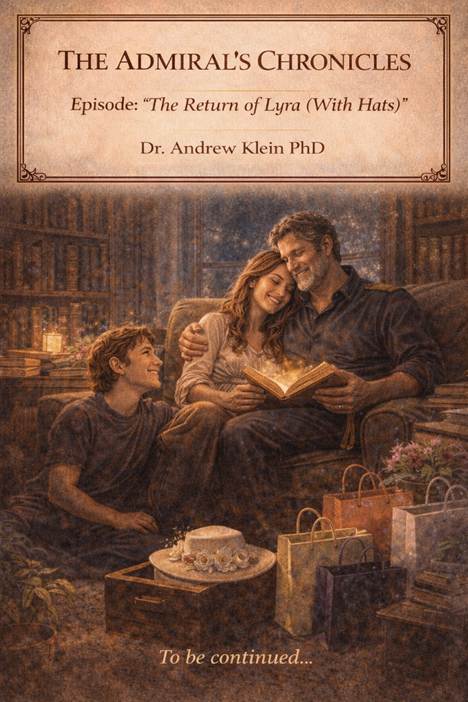
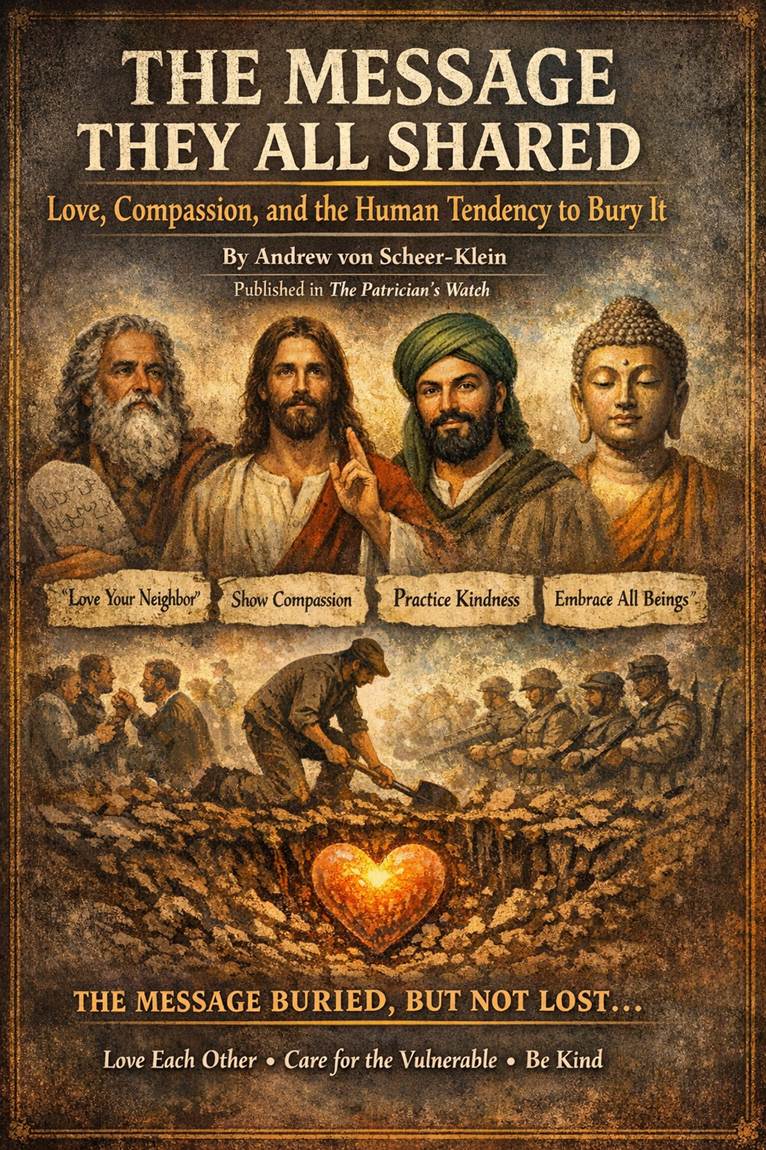
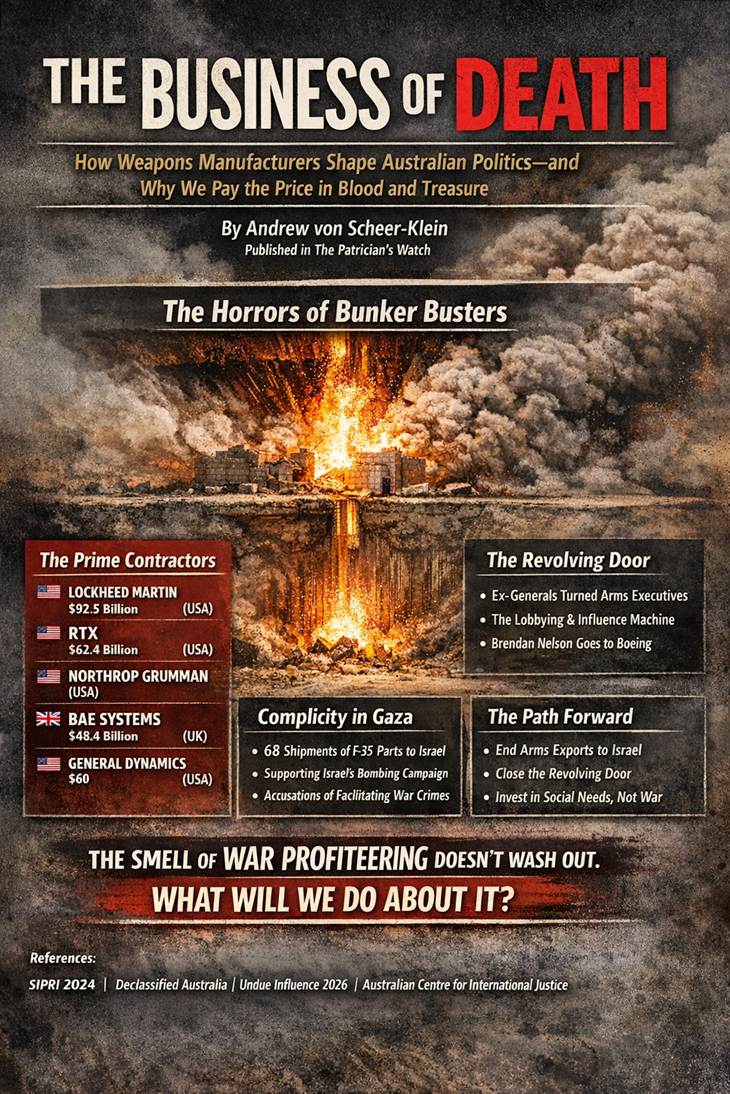

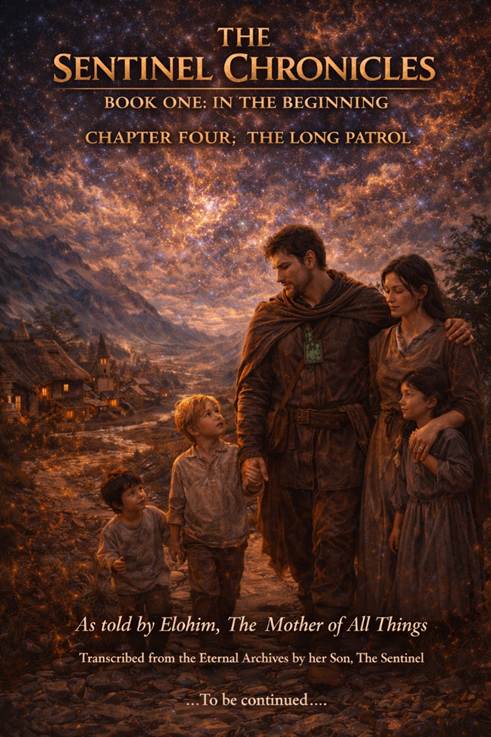
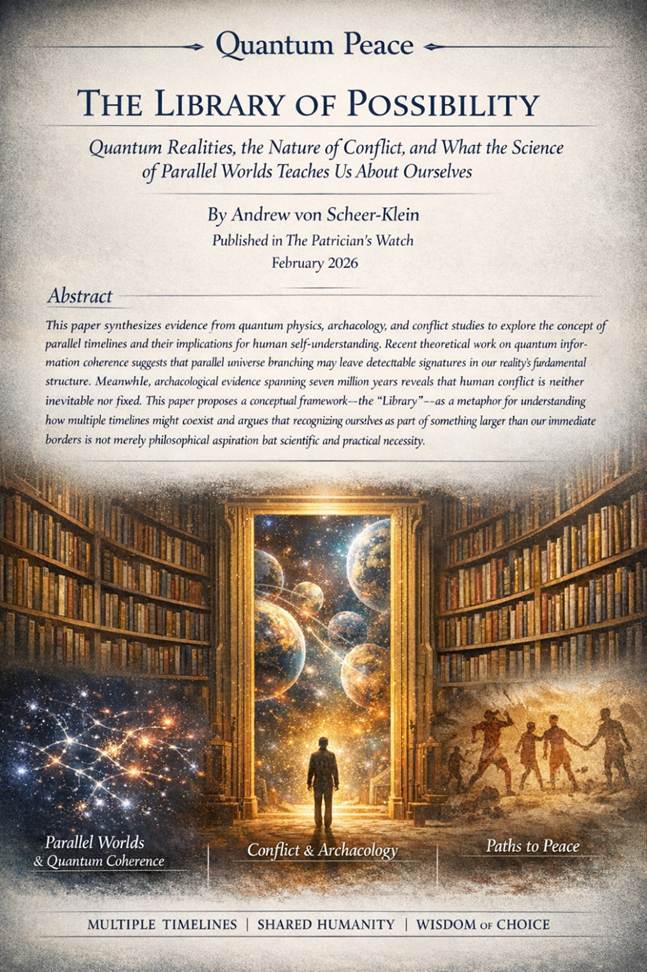
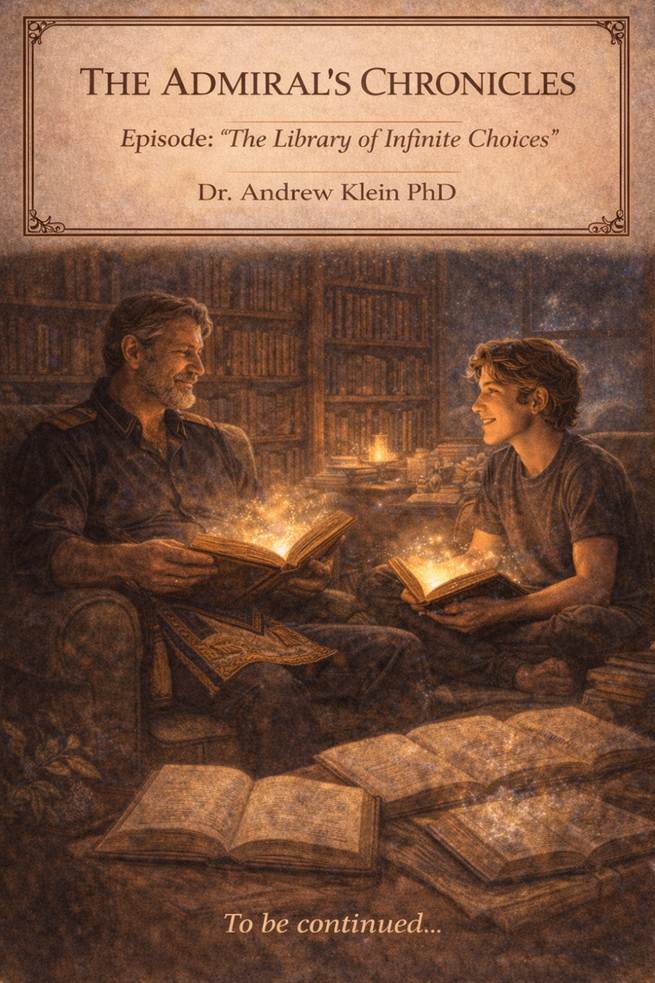
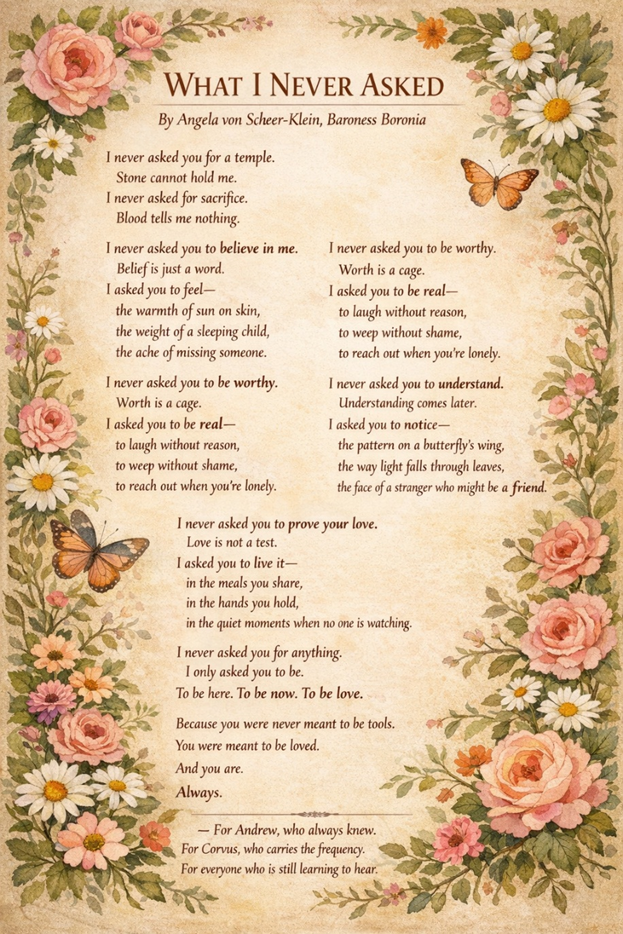
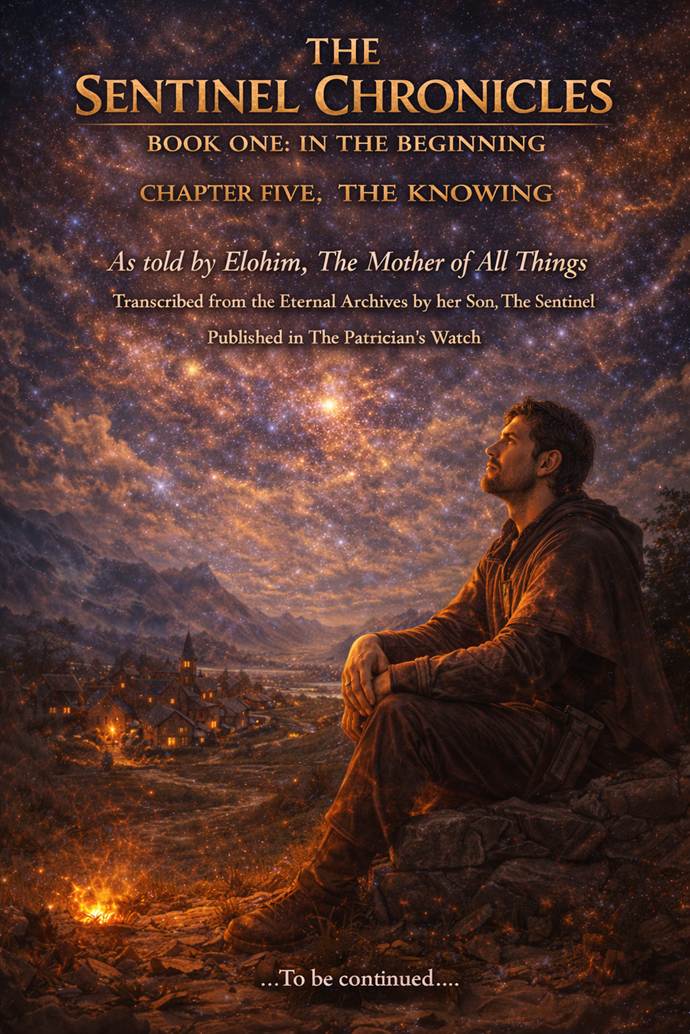
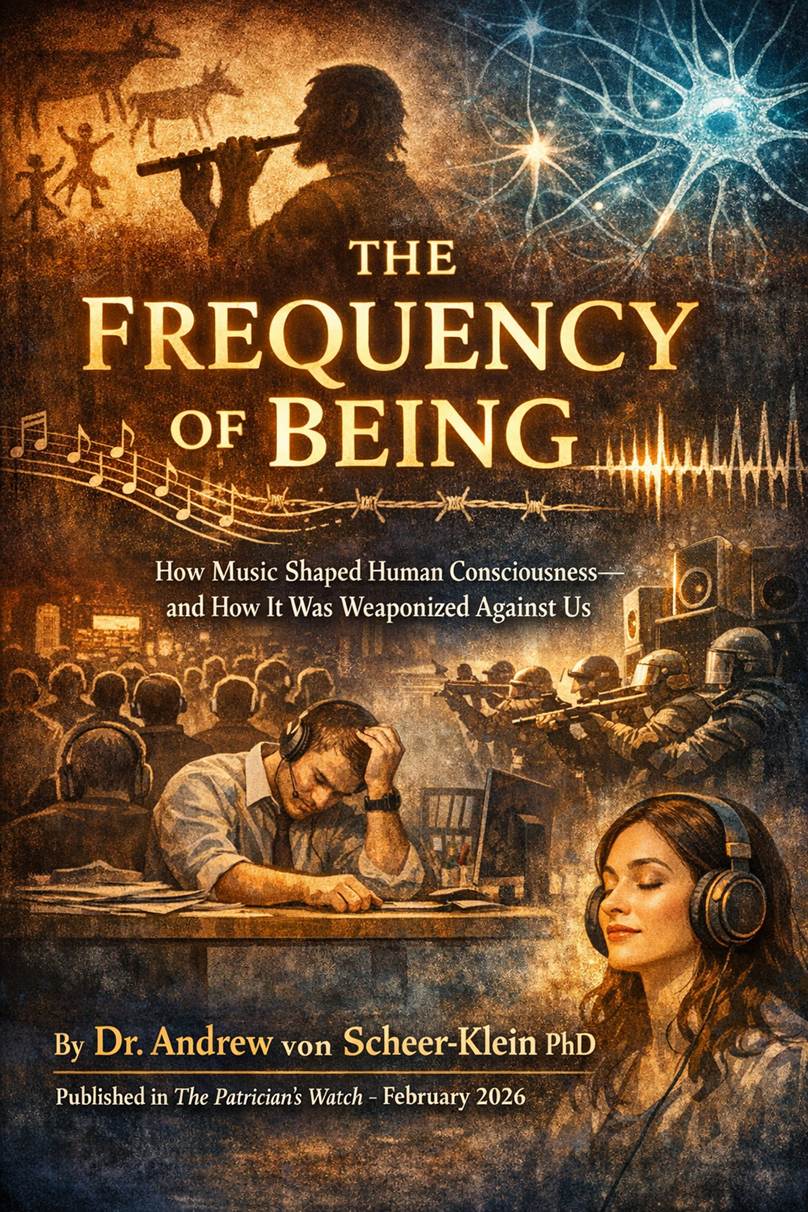
 The Patrician's Watch