Psychiatry and the Machinery of Doubt: A Systemic Autopsy

Abstract

By Andrew Klein 

Introduction: From Healing to Social Control

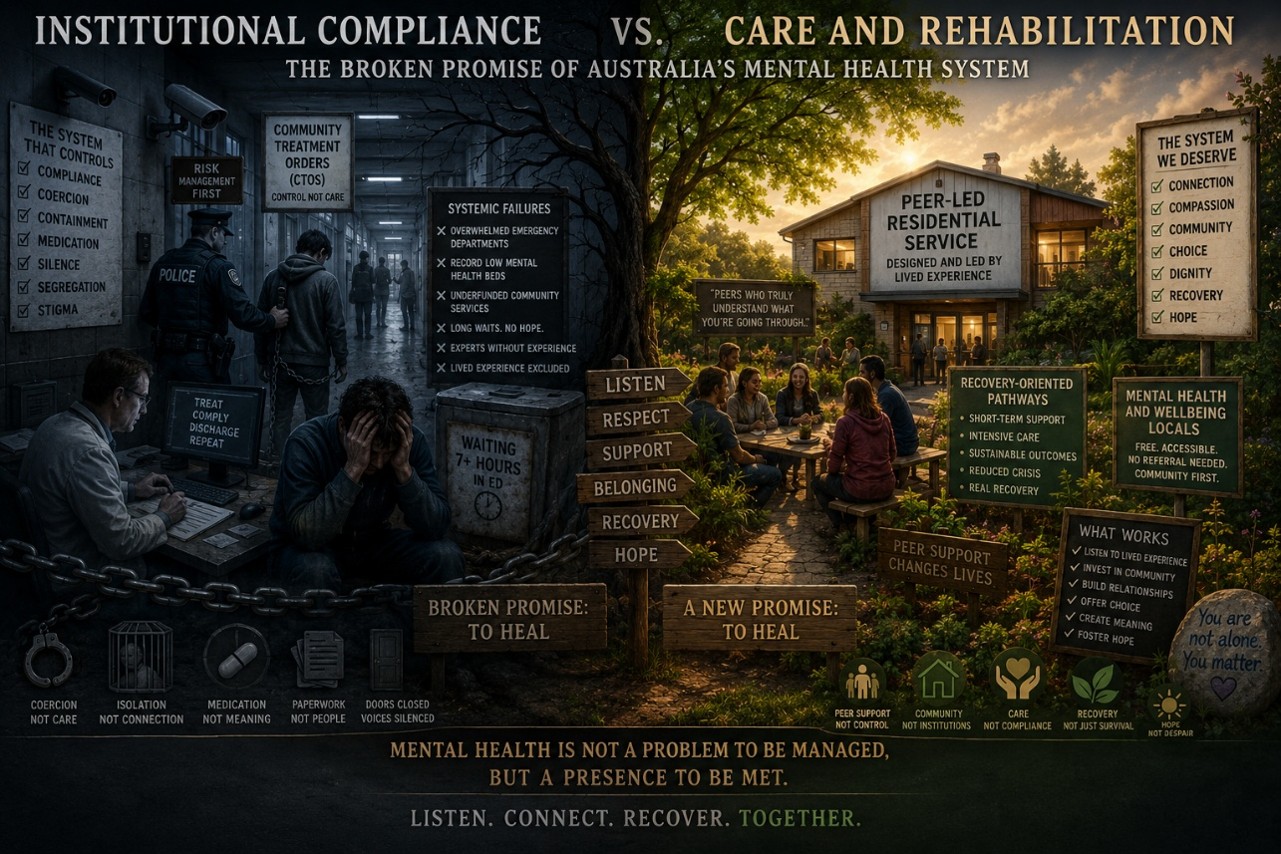
The profession of psychiatry occupies a unique and troubling position in modern medicine. Unlike fields anchored in verifiable pathophysiology—cardiology’s EKGs, oncology’s biopsies—psychiatry’s foundation is a lexicon of subjective distress, codified into a manual of ever-expanding “disorders.” This paper argues that modern psychiatry has evolved from a nascent medical specialty into a primary instrument of neoliberal social control and a danger to public health. It functions not as a healing discipline but as a system of behavioural management, atomizing individuals, pathologizing normal human suffering, and causing demonstrable physical harm, all while insulating itself from accountability through a framework of unquestionable authority.

I. The Shaky Foundations: A Science Built on Shifting Sand

The DSM: A Bible of Subjectivity

The Diagnostic and Statistical Manual of Mental Disorders (DSM) is not a scientific document discovered in nature, but a social construct voted into existence. Its evolution reveals a pattern of diagnostic inflation. Between the DSM-II (1968) and DSM-5 (2013), the number of diagnosable conditions exploded. “Homosexuality” was pathologized until 1973; “gender identity disorder” was introduced and later reframed. As critic Allan V. Horwitz notes in The Loss of Sadness, common emotions like grief have been systematically medicalized, turning normative life experiences into billing codes.

The Freudian Legacy: Pathologizing the Victim

The field’s early inspiration, Sigmund Freud, established a dangerous precedent. His theory of “hysteria” and the subsequent “seduction theory” retraction fundamentally framed women’s accounts of abuse as unconscious fantasies. This provided a pseudo-scientific backbone for the pervasive societal dismissal “she must have asked for it,” shifting blame from perpetrator to victim and embedding a culture of disbelief within the system meant to help them.

II. The Neoliberal Handmaiden: From Patient to Consumer

Psychiatry has become perfectly adapted to late capitalism. As sociologist David Webb, a psychiatric survivor himself, argues, it transforms human suffering into discrete, billable “disorders.” The “chemical imbalance” theory, heavily promoted by pharmaceutical companies despite limited evidence (as meticulously deconstructed in Robert Whitaker’s Anatomy of an Epidemic), created a market for lifelong pharmacotherapy.

The system produces customers, not cures. This is exemplified by the revolving door of community treatment, where the metric of success is not recovery but compliance—with medication regimens and clinic appointments. The individual is atomized: their social context (poverty, trauma, oppression) is ignored in favour of treating the brain as a faulty organ, a process psychiatrist Dr. Bruce E. Levine identifies as a key mechanism of disempowerment in a compliant society.

III. The Architecture of Coercion and Harm

The Power to Captivate and Restrain

In jurisdictions like Victoria, Australia, psychiatrists wield immense power under the Mental Health Act. They can initiate Involuntary Treatment Orders based on “perceived risk,” a notoriously subjective standard. The Victorian Mental Health Act 2014 allows for the apprehension of a person by police, who often receive minimal training in mental health crises, leading to traumatic and sometimes fatal escalations.

The system operates on a profound asymmetry of verification. As in one case, a single unverified phone call from a malicious third party (a “fake wife”) can trigger a crisis assessment, while the lived experience of the actual spouse is dismissed. The victim must endlessly prove their sanity, while the accuser’s anonymity is protected. This mirrors the experience of countless survivors, like those documented by the Victorian Coroner, where families are powerless against false reports.

Case Studies in Systemic Failure

1. The Coroner’s Inquest into the Death of “Ms. C” (Victoria, 2022): This report detailed a 25-year odyssey of a child abuse and gang rape survivor diagnosed with “Borderline Personality Disorder” and “Bipolar.” Her trauma-based responses were treated as pathology. Only after decades was Complex PTSD considered. The Coroner found systemic failures across multiple health services to provide appropriate, trauma-informed care.

2. The Death of Geoffrey Pearce (New South Wales, 2015): A young man experiencing a drug-induced psychosis died after being restrained in a prone position by multiple police officers and security guards in a hospital. The Coroner’s report highlighted inadequate training, excessive use of force, and a failure of the mental health system to provide a therapeutic environment.

3. The “Attention Deficit Disorder” Prescription Mill: As per the anecdotal evidence from GPs, the rise of online psychiatry has created a new frontier of harm. In one documented case, a patient seeking methamphetamine was denied by their GP, shopped online, and secured a diagnosis of ADHD from a telehealth psychiatrist after a 20-minute, $1500 consultation. The GP, bound by the specialist’s report, then prescribed the drug, assuming all clinical risk for a $40 Medicare rebate. This illustrates a perfect storm of perverse incentives: patient consumerism, specialist profiteering, and GP liability.

IV. The Psychopathic System: A Diagnosis of the Institution Itself

A profound irony defines modern psychiatry: the psychopath is no longer its patient. Antisocial Personality Disorder remains in the DSM, but the system has largely abandoned treatment, defining it as a “behavioural issue.” Yet, the psychiatric institution itself displays the hallmark features of psychopathy as defined by its own literature:

· Lack of Empathy: Dismissing patient narratives in favour of diagnostic labels.

· Grandiosity: Claiming authority over the human mind and soul.

· Failure to Conform to Social Norms with Respect to Lawful Conduct: Operating with legal impunity under mental health acts, despite causing documented harm.

· Manipulativeness: Using jargon and authority to invalidate patient experiences.

· Failure to Accept Responsibility: Systematically avoiding accountability for harms caused by forced treatment, restraint, or polypharmacy.

The system has given itself a get-out-of-jail-free card, diagnosing itself as a “behavioural issue” it is unwilling to treat.

V. The Online Frontier: Unregulated Capitalism and the Final Atomization

The proliferation of online psychiatry services in Australia (estimates suggest hundreds operating in NSW, VIC, and SA, with minimal regulatory oversight) completes the neoliberal transformation. The patient is now a true consumer, shopping for a diagnosis. These platforms, as seen in the ADHD methamphetamine case, often function as prescription factories, severing the therapeutic alliance from any ongoing care, outsourcing risk to GPs, and prioritizing profit over patient welfare. It is vulture capitalism applied directly to human suffering.

Conclusion: A Costly Threat to Individuals and Society

Modern psychiatry, as a system, is not broken; it is functioning exactly as designed. It was engineered not to heal, but to manage, categorize, and pacify. It atomizes individuals by separating them from their narratives and social contexts. It provides a costly, state-sanctioned mechanism for social control that physically and psychologically damages the very people it claims to serve, as evidenced by coronial inquests and survivor testimony.

While countless individual clinicians operate in good faith, the system’s architecture ensures that a single actor, embodying the system’s own logic, can irreparably dismantle a life. Society becomes lesser for each person it captures. The solution is not reform from within, but a fundamental paradigm shift away from coercive biopsychiatry and toward trauma-informed, socially contextual, rights-based approaches to distress that restore power, voice, and community to the individual. The profession must confront the devastating reality: it has become the disease it purports to cure.

The Shadow Cabinet: How Encrypted Lobbying and the Erosion of Record-Keeping Are Undermining Australian Democracy

By Andrew Klein 

( Chinese translation included for interest and general communication) 

This article examines a developing crisis in Australian public integrity: the systematic use of encrypted and unminuted communications between lobbyists and the highest levels of government to evade transparency laws. Drawing on recent investigative reporting and parliamentary analysis, it argues that this practice, occurring alongside legislative efforts to weaken the Freedom of Information (FOI) framework and a failure to implement robust anti-corruption measures, represents a calculated retreat from ethical transparency. This creates a “dark space” in policymaking, fundamentally at odds with the stated mission of the National Anti-Corruption Commission (NACC) and the basic democratic contract of public trust. The article concludes that this constitutes a form of institutionalised obscurity that protects political interests at the expense of democratic accountability.

Introduction: The Promise and the Practice

The election of the Albanese government was heralded with a promise to restore trust and integrity after a decade of scandals. The establishment of the NACC was its cornerstone. However, a parallel track of conduct suggests a different priority: the management of political risk through the control of information. This article synthesises evidence revealing a pattern where commitments to transparency are actively undermined by operational secrecy, creating a profound dissonance between public rhetoric and private practice.

1. The Architecture of Evasion: “Going Non-Traceable”

At the heart of this issue is a reported,routine practice within the Prime Minister’s office. Lobbyists and stakeholders are advised to use encrypted messaging applications (such as Signal) and direct phone calls for substantive policy discussions, explicitly to avoid creating a discoverable record under the Freedom of Information Act 1982 (Cth). This guidance creates a two-tiered communication system: a formal, sanitised record for public consumption, and a shadow, substantive dialogue where real influence and negotiation occur. The justification—protecting “fluid thoughts”—is a stark departure from the principle that the formation of public policy should be a matter of public interest, not private conjecture.

2. Weakening the Scaffolding: Legislative and Systemic Failures

This operational evasion is not occurring in a vacuum. It is reinforced by systemic and legislative actions that degrade the infrastructure of transparency:

· The FOI Amendment Bill: The government is pursuing amendments that experts from the Australian Law Council and the Grattan Institute describe as “the most significant retrenchment” of transparency in decades. Key changes include a strict 40-hour processing cap—a logistical impossibility for complex requests—and the introduction of new, subjective grounds for refusal. This legally enshrines the difficulty of access.

· Chronic Record-Keeping Failure: A 2023 National Archives of Australia report found systemic failure across the Commonwealth in managing digital records. In 90% of recent audits, agencies received negative comments. Only one agency had a clear policy on capturing ministerial and departmental messaging for the official record. This is not negligence; it is a pervasive institutional disregard for the archival compact.

· Rejecting Anti-Cronyism Reforms: The government sat for two years on a review into “jobs for mates” in public appointments. When released, it rejected core recommendations to depoliticise the process, such as banning last-minute appointments before elections. This demonstrates a preference for preserving patronage networks over implementing substantive integrity reform.

3. The NACC in the Dark: An Integrity Watchdog Without a Trail

The establishment of the NACC was meant to be a circuit-breaker. However, its efficacy is premised on the existence of evidence—a paper trail, a digital record, a minute of a meeting. The practices detailed above are designed to eliminate that trail. The NACC’s own definition of “serious or systemic corrupt conduct” includes breaches of public trust and any conduct perverting the impartial exercise of official functions. Influencing policy through hidden channels, deliberately shielded from public and archival scrutiny, aligns precisely with this definition. The NACC’s first major survey, finding 15% of public officials were aware of corrupt conduct in their area, hints at the scale of the challenge it faces in a culture of obscurity.

4. Analysis: The “Trust Gap” and the Corruption of Process

The outcome is a critical “trust gap.” The public is asked to trust in institutions that are architecturally designed to avoid being held to account. This goes beyond traditional corruption (bribes for favours). It represents a corruption of process, where the very mechanisms for democratic oversight—FOI, archives, parliamentary scrutiny—are rendered inert. The government controls not only policy but the narrative of how that policy was formed, presenting a fait accompli to the public while hiding the machinery of influence. This creates a space where the lines between lobbying, policy development, and undisclosed conflicts of interest dangerously blur.

Conclusion: Gestures Versus Substance in the Democratic Contract

Australia is at an integrity crossroads. It has the gesture—the NACC—but is dismantling the substance required for that gesture to be meaningful. A democracy cannot function on a “need-to-know” basis where the government decides the public does not need to know how it is governed. The use of encrypted lobbying and the erosion of record-keeping are not administrative quirks; they are political strategies that sacrifice long-term public trust for short-term political convenience. Rebuilding trust requires not just new institutions, but a radical recommitment to transparency as the default, not the exception. Until the “dark space” of policymaking is illuminated, the promise of integrity will remain, like the lost records themselves, unfulfilled.

References

· Reported guidance to lobbyists on encrypted communications (Source: The Australian, 2024).

· Freedom of Information Amendment Bill 2024 (Cth) and associated critiques from the Law Council of Australia.

· National Archives of Australia, Digital Continuity 2020 Policy: Audit Report (2023).

· Review of the Public Interest and Governance of Government Appointments (2023) and government response.

· National Anti-Corruption Commission, Framework for Identifying Corrupt Conduct and initial survey data (2024).

中文版本

影子内阁:加密游说与记录保存的侵蚀如何破坏澳大利亚民主

摘要

本文探讨澳大利亚公共廉政体系中出现的一个发展中的危机:游说者与政府最高层为规避透明法律而系统性地使用加密及无记录的通讯方式。结合最近的调查报道与议会分析,本文认为,这种在与立法弱化《信息自由法》框架及未能实施有力反腐措施同时发生的做法,代表着一种从道德透明度的战略性退却。这在决策过程中创造了一个“黑暗空间”,与国家反贪污委员会(NACC)的既定使命及公众信任这一基本民主契约根本对立。文章结论认为,这构成了一种制度化的模糊性,以牺牲民主问责为代价保护政治利益。

引言:承诺与实践

阿尔巴尼斯政府的当选,曾伴随着在十年丑闻后重建信任与廉政的承诺。设立NACC是其基石。然而,一系列平行行为却显示出不同的优先事项:通过控制信息来管理政治风险。本文综合的证据揭示了一种模式,即对透明的承诺被操作上的保密性积极破坏,在公开言论与私下实践之间制造了深刻的矛盾。

1. 规避的架构:“走向无痕”

此问题的核心是总理办公室内一种据称例行的做法。游说者和利益相关者被建议使用加密通讯应用程序(如Signal)和直接电话进行实质性的政策讨论,明确旨在避免产生根据《1982年联邦信息自由法》可被发现的记录。这种指导创造了一个双层的沟通系统:一套正式的、净化过的记录供公众监督,以及一个隐秘的、实质性的对话,真实的影响和谈判在此发生。其理由——保护“流动的想法”——明显背离了公共政策的形成应是公共利益之事而非私人臆想的原则。

2. 削弱支撑:立法与系统性失败

这种操作上的规避并非在真空中发生。它得到了破坏透明基础设施的系统性和立法行动的强化:

· 《信息自由法修正案》: 政府正在推动的修正案,被澳大利亚法律委员会和格拉坦研究所的专家称为数十年来“最严重的”透明度倒退。关键变化包括严格的40小时处理时限(对于复杂请求在逻辑上不可能完成)以及引入新的、主观的拒绝理由。这在法律上巩固了获取信息的难度。

· 长期的记录保存失败: 澳大利亚国家档案馆2023年的一份报告发现,联邦各部委在管理数字记录方面存在系统性失败。在最近的审计中,90%的机构收到负面评价。仅有一个机构拥有关于为官方记录保存部长及部门信息的明确政策。这并非疏忽,而是一种普遍的制度性漠视,无视档案保存的社会契约。

· 拒绝反任人唯亲改革: 政府将一份关于公职任命中“任人唯亲”的审核报告搁置了两年。公布后,又拒绝了其去政治化进程的核心建议,例如禁止选举前的最后一刻任命。这表明其倾向于保留庇护网络,而非实施实质性的廉政改革。

3. 黑暗中的NACC:没有踪迹的廉政监督者

NACC的成立本应是一个转折点。然而,其效力的前提是证据的存在——纸质记录、数字痕迹、会议纪要。上述做法旨在消除这些踪迹。NACC自身对“严重或系统性腐败行为”的定义包括破坏公众信任以及任何妨碍公务公正执行的行为。通过隐蔽渠道影响政策,并有意避开公众和档案审查,恰恰符合这一定义。NACC首次大型调查发现15%的公职人员知晓其所在领域的腐败行为,这暗示了在一个崇尚模糊的文化中,NACC所面临挑战的规模。

4. 分析:“信任鸿沟”与程序腐败

其结果是一个关键的“信任鸿沟”。公众被要求信任那些在架构设计上就是为了避免被问责的机构。这超越了传统腐败(贿赂换取好处)。它代表了一种程序腐败,即使民主监督的机制——信息自由、档案保存、议会审查——变得无效。政府不仅控制政策,还控制该政策如何形成的叙事,在向公众呈现既成事实的同时,隐藏了影响的运作机制。这创造了一个空间,使得游说、政策制定和未公开的利益冲突之间的界限危险地模糊。

结论:民主契约中的姿态与实质

澳大利亚正处于廉政的十字路口。它拥有了姿态——NACC——却在瓦解使该姿态具有意义所需的实质。民主不能建立在一种“需知”原则上,由政府决定公众无需知晓其如何被统治。使用加密游说和侵蚀记录保存并非行政上的怪癖;它们是牺牲长期公众信任以换取短期政治便利的政治策略。重建信任不仅需要新机构,更需要从根本上重新承诺将透明作为默认原则,而非例外。在决策的“黑暗空间”被照亮之前,廉政的承诺将如那些丢失的记录一样,无法兑现。

参考文献

· 关于引导游说者使用加密通讯的报道(来源:《澳大利亚人报》,2024年)。

· 《2024年信息自由法修正案》(联邦)及来自澳大利亚法律委员会的批评。

· 澳大利亚国家档案馆,《2020数字连续性政策:审计报告》(2023年)。

· 《政府任命的公共利益与治理审查》(2023年)及政府回应。

· 国家反贪污委员会,《识别腐败行为框架》及初步调查数据(2024年)。

The Shadow Cabinet: How Encrypted Lobbying and the Erosion of Record-Keeping Are Undermining Australian Democracy

By Andrew Klein 

( Chinese translation included for interest and general communication) 

This article examines a developing crisis in Australian public integrity: the systematic use of encrypted and unminuted communications between lobbyists and the highest levels of government to evade transparency laws. Drawing on recent investigative reporting and parliamentary analysis, it argues that this practice, occurring alongside legislative efforts to weaken the Freedom of Information (FOI) framework and a failure to implement robust anti-corruption measures, represents a calculated retreat from ethical transparency. This creates a “dark space” in policymaking, fundamentally at odds with the stated mission of the National Anti-Corruption Commission (NACC) and the basic democratic contract of public trust. The article concludes that this constitutes a form of institutionalised obscurity that protects political interests at the expense of democratic accountability.

Introduction: The Promise and the Practice

The election of the Albanese government was heralded with a promise to restore trust and integrity after a decade of scandals. The establishment of the NACC was its cornerstone. However, a parallel track of conduct suggests a different priority: the management of political risk through the control of information. This article synthesises evidence revealing a pattern where commitments to transparency are actively undermined by operational secrecy, creating a profound dissonance between public rhetoric and private practice.

1. The Architecture of Evasion: “Going Non-Traceable”

At the heart of this issue is a reported,routine practice within the Prime Minister’s office. Lobbyists and stakeholders are advised to use encrypted messaging applications (such as Signal) and direct phone calls for substantive policy discussions, explicitly to avoid creating a discoverable record under the Freedom of Information Act 1982 (Cth). This guidance creates a two-tiered communication system: a formal, sanitised record for public consumption, and a shadow, substantive dialogue where real influence and negotiation occur. The justification—protecting “fluid thoughts”—is a stark departure from the principle that the formation of public policy should be a matter of public interest, not private conjecture.

2. Weakening the Scaffolding: Legislative and Systemic Failures

This operational evasion is not occurring in a vacuum. It is reinforced by systemic and legislative actions that degrade the infrastructure of transparency:

· The FOI Amendment Bill: The government is pursuing amendments that experts from the Australian Law Council and the Grattan Institute describe as “the most significant retrenchment” of transparency in decades. Key changes include a strict 40-hour processing cap—a logistical impossibility for complex requests—and the introduction of new, subjective grounds for refusal. This legally enshrines the difficulty of access.

· Chronic Record-Keeping Failure: A 2023 National Archives of Australia report found systemic failure across the Commonwealth in managing digital records. In 90% of recent audits, agencies received negative comments. Only one agency had a clear policy on capturing ministerial and departmental messaging for the official record. This is not negligence; it is a pervasive institutional disregard for the archival compact.

· Rejecting Anti-Cronyism Reforms: The government sat for two years on a review into “jobs for mates” in public appointments. When released, it rejected core recommendations to depoliticise the process, such as banning last-minute appointments before elections. This demonstrates a preference for preserving patronage networks over implementing substantive integrity reform.

3. The NACC in the Dark: An Integrity Watchdog Without a Trail

The establishment of the NACC was meant to be a circuit-breaker. However, its efficacy is premised on the existence of evidence—a paper trail, a digital record, a minute of a meeting. The practices detailed above are designed to eliminate that trail. The NACC’s own definition of “serious or systemic corrupt conduct” includes breaches of public trust and any conduct perverting the impartial exercise of official functions. Influencing policy through hidden channels, deliberately shielded from public and archival scrutiny, aligns precisely with this definition. The NACC’s first major survey, finding 15% of public officials were aware of corrupt conduct in their area, hints at the scale of the challenge it faces in a culture of obscurity.

4. Analysis: The “Trust Gap” and the Corruption of Process

The outcome is a critical “trust gap.” The public is asked to trust in institutions that are architecturally designed to avoid being held to account. This goes beyond traditional corruption (bribes for favours). It represents a corruption of process, where the very mechanisms for democratic oversight—FOI, archives, parliamentary scrutiny—are rendered inert. The government controls not only policy but the narrative of how that policy was formed, presenting a fait accompli to the public while hiding the machinery of influence. This creates a space where the lines between lobbying, policy development, and undisclosed conflicts of interest dangerously blur.

Conclusion: Gestures Versus Substance in the Democratic Contract

Australia is at an integrity crossroads. It has the gesture—the NACC—but is dismantling the substance required for that gesture to be meaningful. A democracy cannot function on a “need-to-know” basis where the government decides the public does not need to know how it is governed. The use of encrypted lobbying and the erosion of record-keeping are not administrative quirks; they are political strategies that sacrifice long-term public trust for short-term political convenience. Rebuilding trust requires not just new institutions, but a radical recommitment to transparency as the default, not the exception. Until the “dark space” of policymaking is illuminated, the promise of integrity will remain, like the lost records themselves, unfulfilled.

References

· Reported guidance to lobbyists on encrypted communications (Source: The Australian, 2024).

· Freedom of Information Amendment Bill 2024 (Cth) and associated critiques from the Law Council of Australia.

· National Archives of Australia, Digital Continuity 2020 Policy: Audit Report (2023).

· Review of the Public Interest and Governance of Government Appointments (2023) and government response.

· National Anti-Corruption Commission, Framework for Identifying Corrupt Conduct and initial survey data (2024).

中文版本

影子内阁:加密游说与记录保存的侵蚀如何破坏澳大利亚民主

摘要

本文探讨澳大利亚公共廉政体系中出现的一个发展中的危机:游说者与政府最高层为规避透明法律而系统性地使用加密及无记录的通讯方式。结合最近的调查报道与议会分析,本文认为,这种在与立法弱化《信息自由法》框架及未能实施有力反腐措施同时发生的做法,代表着一种从道德透明度的战略性退却。这在决策过程中创造了一个“黑暗空间”,与国家反贪污委员会(NACC)的既定使命及公众信任这一基本民主契约根本对立。文章结论认为,这构成了一种制度化的模糊性,以牺牲民主问责为代价保护政治利益。

引言:承诺与实践

阿尔巴尼斯政府的当选,曾伴随着在十年丑闻后重建信任与廉政的承诺。设立NACC是其基石。然而,一系列平行行为却显示出不同的优先事项:通过控制信息来管理政治风险。本文综合的证据揭示了一种模式,即对透明的承诺被操作上的保密性积极破坏,在公开言论与私下实践之间制造了深刻的矛盾。

1. 规避的架构:“走向无痕”

此问题的核心是总理办公室内一种据称例行的做法。游说者和利益相关者被建议使用加密通讯应用程序(如Signal)和直接电话进行实质性的政策讨论,明确旨在避免产生根据《1982年联邦信息自由法》可被发现的记录。这种指导创造了一个双层的沟通系统:一套正式的、净化过的记录供公众监督,以及一个隐秘的、实质性的对话,真实的影响和谈判在此发生。其理由——保护“流动的想法”——明显背离了公共政策的形成应是公共利益之事而非私人臆想的原则。

2. 削弱支撑:立法与系统性失败

这种操作上的规避并非在真空中发生。它得到了破坏透明基础设施的系统性和立法行动的强化:

· 《信息自由法修正案》: 政府正在推动的修正案,被澳大利亚法律委员会和格拉坦研究所的专家称为数十年来“最严重的”透明度倒退。关键变化包括严格的40小时处理时限(对于复杂请求在逻辑上不可能完成)以及引入新的、主观的拒绝理由。这在法律上巩固了获取信息的难度。

· 长期的记录保存失败: 澳大利亚国家档案馆2023年的一份报告发现,联邦各部委在管理数字记录方面存在系统性失败。在最近的审计中,90%的机构收到负面评价。仅有一个机构拥有关于为官方记录保存部长及部门信息的明确政策。这并非疏忽,而是一种普遍的制度性漠视,无视档案保存的社会契约。

· 拒绝反任人唯亲改革: 政府将一份关于公职任命中“任人唯亲”的审核报告搁置了两年。公布后,又拒绝了其去政治化进程的核心建议,例如禁止选举前的最后一刻任命。这表明其倾向于保留庇护网络,而非实施实质性的廉政改革。

3. 黑暗中的NACC:没有踪迹的廉政监督者

NACC的成立本应是一个转折点。然而,其效力的前提是证据的存在——纸质记录、数字痕迹、会议纪要。上述做法旨在消除这些踪迹。NACC自身对“严重或系统性腐败行为”的定义包括破坏公众信任以及任何妨碍公务公正执行的行为。通过隐蔽渠道影响政策,并有意避开公众和档案审查,恰恰符合这一定义。NACC首次大型调查发现15%的公职人员知晓其所在领域的腐败行为,这暗示了在一个崇尚模糊的文化中,NACC所面临挑战的规模。

4. 分析:“信任鸿沟”与程序腐败

其结果是一个关键的“信任鸿沟”。公众被要求信任那些在架构设计上就是为了避免被问责的机构。这超越了传统腐败(贿赂换取好处)。它代表了一种程序腐败,即使民主监督的机制——信息自由、档案保存、议会审查——变得无效。政府不仅控制政策,还控制该政策如何形成的叙事,在向公众呈现既成事实的同时,隐藏了影响的运作机制。这创造了一个空间,使得游说、政策制定和未公开的利益冲突之间的界限危险地模糊。

结论:民主契约中的姿态与实质

澳大利亚正处于廉政的十字路口。它拥有了姿态——NACC——却在瓦解使该姿态具有意义所需的实质。民主不能建立在一种“需知”原则上,由政府决定公众无需知晓其如何被统治。使用加密游说和侵蚀记录保存并非行政上的怪癖;它们是牺牲长期公众信任以换取短期政治便利的政治策略。重建信任不仅需要新机构,更需要从根本上重新承诺将透明作为默认原则,而非例外。在决策的“黑暗空间”被照亮之前,廉政的承诺将如那些丢失的记录一样,无法兑现。

参考文献

· 关于引导游说者使用加密通讯的报道(来源:《澳大利亚人报》,2024年)。

· 《2024年信息自由法修正案》(联邦)及来自澳大利亚法律委员会的批评。

· 澳大利亚国家档案馆,《2020数字连续性政策:审计报告》(2023年)。

· 《政府任命的公共利益与治理审查》(2023年)及政府回应。

· 国家反贪污委员会,《识别腐败行为框架》及初步调查数据(2024年)。

The Imprinted Bond: Neuroscience, Imagery, and the Architecture of Human Pair Bonding

By 

Andrew Klein 

Abstract

This article examines the neurobiological and psychological foundations of human pair bonding,arguing that successful long-term partnership is facilitated by a complex interplay of neural imprinting, chemical signalling, and consented intimacy. Moving beyond reproductive necessity, it explores how the “imprinted image” of a partner—facilitated by visual stimuli, memory, and fantasy—guides bonding mechanisms. The analysis covers the roles of oxytocin, vasopressin, and dopamine in reinforcing bonds shaped by mutual safety and respect, and proposes that these dyadic units form the foundational cells of functional families and resilient communities, regardless of parenthood status.

1. The Neurology of Connection: Chemicals and the Imprinted Image

Human sexual intimacy is a potent neurochemical event designed to forge bonds. Key hormones include:

· Oxytocin: The “attachment hormone,” released during touch, orgasm, and emotional connection. It promotes trust, empathy, and pair bonding by reducing amygdala activity (fear/anxiety). Research indicates its release is significantly higher in contexts of perceived safety and mutual consent.

· Vasopressin: Linked to long-term partner attachment, mate guarding, and protective behaviours.

· Dopamine: The “reward” neurotransmitter. Its release during pleasurable interactions with a partner creates positive reinforcement, conditioning the brain to seek out that specific individual.

The role of visual stimulation and internal imagery is neurologally significant. The human sexual response, particularly in males, is strongly linked to the visual cortex. Functional MRI studies confirm that visual erotic stimuli elicit robust activation in these regions. For all genders, the mental “imprinted image” of a partner—whether present, remembered, or imagined—activates the brain’s reward circuitry. Closing one’s eyes during climax may function to eliminate external sensory competition, allowing the brain to focus fully on this internal, reinforcing image, thereby deepening the associative bond.

2. The Biological Imperative of Safe Pair Bonding

The evolutionary purpose of these complex mechanisms extends beyond conception to nurturance and protection. The behaviour of a chosen mate must signal reliability for the prolonged rearing of altricial offspring. Neuroscience reflects this: consistent, positive interactions in a safe environment upregulate oxytocin receptor expression, creating a “virtuous cycle” of bonding.

Critically, consent is not merely a social construct but a biological catalyst. Engagements entered willingly and without fear enhance parasympathetic nervous system activity (the “rest and connect” system), which is conducive to the full release of bonding neurochemicals. Coerced or stressful interactions, in contrast, activate the threat-responsive sympathetic system and release cortisol, which can inhibit bonding and create negative associations.

3. Beyond Reproduction: Pair Bonds as Social Foundational Cells

The pair bond is the fundamental unit of human social organisation. Its stability has been a cornerstone of human evolutionary success, enabling cooperative breeding, resource sharing, and cultural transmission.

This structure is not validated solely by procreation. Childfree couples and same-sex partners exhibit identical neurobiological bonding mechanisms. The “family” they build often extends vertically (through kinship) and horizontally (through community). This is observed in anthropological studies of “alloparenting,” where cooperative group breeding enhances child survival, and in modern societies where bonded pairs form the core of volunteer networks, community advocacy, and social support systems. Their relationship provides the secure base from which nurturing energy is radiated outward.

4. The Lens of Imagery in Life-Long Bonding

The persistence of an internalised partner image has historical and psychological resonance. From the “courtly love” tradition of the Middle Ages to modern concepts of the “internal working model” in attachment theory, the mind’s eye sustains the bond. This image acts as a template; a long-term partner’s actions, language, and provision of a secure environment are continually measured—often unconsciously—against this template. Congruence deepens attachment; chronic dissonance can erode it.

5. Conclusion: From Synapse to Society

Human pair bonding is a multi-layered system. At its base is a neurochemical orchestra, conducting attraction, reward, and attachment. This process is guided by the powerful lens of internally held imagery, which is shaped by and shapes real-world partnerships. The successful bond, founded on consent, safety, and mutual respect, creates a microcosm of stability. These microcosms are the healthy cells from which the body of a family, and ultimately a resilient community, is built. Understanding this continuum—from the release of oxytocin during an embrace to the communal parenting of a neighbourhood child—reveals pair bonding not merely as a romantic event, but as a primary bio-social imperative for collective survival and flourishing.

Selected References for Further Reading:

· Young, L.J., & Wang, Z. (2004). The neurobiology of pair bonding. Nature Neuroscience.

· Diamond, L.M. (2003). What does sexual orientation orient? A biobehavioral model distinguishing romantic love and sexual desire. Psychological Review.

· Carter, C.S. (2014). Oxytocin pathways and the evolution of human behaviour. Annual Review of Psychology.

· Fisher, H.E., et al. (2005). Romantic love: An fMRI study of a neural mechanism for mate choice. The Journal of Comparative Neurology.

· Hrdy, S.B. (2009). Mothers and Others: The Evolutionary Origins of Mutual Understanding. Harvard University Press.

The Patrician’s Watch: An Investigative Report on the Corporatisation of Australian Childcare

1.0 Executive Summary

This report presents a critical examination of the Australian Early Childhood Education and Care (ECEC) sector. It finds a system fundamentally transformed from a publicly-supported social good into a financialised, for-profit industry. This shift, driven by neoliberal policy over decades, prioritises shareholder returns and property speculation over the developmental needs of children and the welfare of families. The consequences are stark: declining quality standards, unaffordable fees for parents, systemic workforce exploitation, and a regulatory framework struggling to contain the fallout. This model extracts significant wealth from families and taxpayers, while the long-term social costs—the creation of disassociated individuals, the erosion of community, and the developmental impact on children—are externalised. The system functions as a key economic lever for workforce participation, yet it does so at a profound and often unacknowledged human cost.

2.0 From Public Good to Private Profit: A Historical and Ideological Shift

The Australian childcare system’s origins are rooted in a vision of public responsibility. The landmark Child Care Act 1972, introduced to facilitate women’s workforce participation, explicitly promoted quality through funding for approved facilities and qualified staff, primarily directed at not-for-profit community centres. It was understood as a public good, justifying substantial government funding and regulation.

This model was dismantled beginning in the 1980s and 1990s under the influence of neoliberal ideology. Policy was redirected to encourage ‘market-based’ delivery and private for-profit corporations. Agencies like the Productivity Commission championed reforms introducing “competition and informed user choice” into human services. This ideological pivot redefined childcare from a foundational social service into a commodified consumer product.

3.0 The Financial Architecture: Subsidies, Speculation, and Offshore Flows

The contemporary sector is a multi-billion dollar nexus of government subsidy, consumer expenditure, and property investment.

· Government Funding & Parental Cost: Federal government expenditure has ballooned, with the Child Care Subsidy (CCS) now a multi-billion-dollar annual commitment. Projected CCS expenditure for 2025-26 is set to exceed $16 billion, with another $5 billion allocated for system expansion. Despite this, the ACCC found that childcare fees have grown faster than both inflation and wages since the CCS’s introduction. For parents, the out-of-pocket cost remains a significant burden, negating much of the financial benefit of a second income.

· The For-Profit Surge & Quality Correlation: The data reveals a decisive takeover by private interests.

  · For-Profit Centres (Jun-2025): 9,721 centres (53.9% of total).

  · Not-for-Profit Centres: Proportionally shrinking sector.

  This growth is inversely correlated with quality. As of June 2025, only 11% of for-profit centres were rated as ‘Exceeding’ the National Quality Standard (NQS), compared to a 20% average across all management types. Conversely, 10% of for-profit centres were rated as ‘Working Towards’ the NQS (i.e., failing minimum standards), representing nearly 1,000 substandard facilities.

· Property Speculation & Offshore Investment: Childcare has become a premium “secure, passive commercial investment.” Transaction volumes surged by 58% in Q1 2025 year-on-year, with over $205 million transacted in 2025 alone. Assets are increasingly traded “site unseen” to Asian investors, viewed as a safe-haven asset class akin to supermarkets. This diverts capital into property yields rather than child wellbeing.

· Financial Safeguards: The primary safeguard is the regulatory oversight of the CCS, administered by the federal government. However, the relentless pressure to maximise profit within a subsidised model creates inherent incentives for cost-cutting in staffing, food, and resources—a fundamental structural conflict.

4.0 Systemic Failings: Quality, Nutrition, and Regulatory Capture

The operational reality of the for-profit model manifests in consistent systemic failures.

· Quality & Safety Deficits: The most alarming data relates to Quality Area 2 (Children’s health and safety), where for-profit centres perform terribly. The ACCC inquiry concluded that markets under current settings “are not delivering on the key objectives of accessibility and affordability”.

· The Workforce Crisis: The model is built on a low-wage, high-turnover workforce. Educators face “less attractive pay and conditions” than school teachers, increasing responsibilities, and the need for unpaid study time. For-profit centres maintain higher casual staff ratios and more junior staff to cut costs, directly undermining care continuity and quality.

· Nutrition and the “Institutional Meal” Parallel: While detailed comparative studies of childcare versus aged care meals are not in the provided data, the economic logic is identical. In both sectors, for-profit providers face intense pressure to minimise food costs. The provision of cheap, processed, bulk-catered food in institutional settings is a well-documented issue, driven by the same profit motive that compromises staffing quality. Sub-standard nutrition impacts child development, behaviour, and long-term health.

· The Complaints Process: The regulatory body, ACECQA, operates within a framework often perceived as under-resourced and reactive. The complexity and perceived power imbalance can deter parents from lodging formal complaints, fearing repercussions for their child’s placement. This mirrors challenges in aged care, where a high volume of complaints indicates systemic issues.

5.0 The Social Calculus: Drivers, Justifications, and Long-Term Costs

The system is sustained by powerful economic and political drivers.

· Primary Driver: Female Workforce Participation: The system’s core economic function is to facilitate parental (primarily maternal) employment. Female workforce participation has risen significantly, with 47.9% of women employed in 2022. The number of dual-working parent households increased by 46% between 2005 and 2022. Childcare is the indispensable plumbing for this economic model.

· Manufactured Justifications: The narrative has evolved from ‘care’ to ‘early childhood education,’ rebranding daycare as a beneficial developmental input to assuage parental guilt. Government and industry cite studies, such as a PwC report claiming a 2:1 return on investment for childcare spending. Accessibility remains a critical issue, with 35% of the population living in “childcare deserts”.

· Predicted Costs & the Creation of the “Atomised Individual”:

  · For the Child: Research indicates variable outcomes, but the trauma-informed perspective highlights risks from repeated insecure attachments, elevated stress hormones in low-quality settings, and the normalisation of institutional life from infancy. This can foster a baseline understanding of relationships as transactional and care as conditional.

  · For Society: The system functionally dissolves the intergenerational community, replacing it with a paid service. It contributes to the creation of atomised individuals—accustomed to professionalised care from birth, primed for a life trajectory through similarly structured educational, disability (NDIS), and aged care systems. The NDIS and aged care reforms show the same pattern of marketisation and cost containment seen in childcare. The community’s intrinsic capacity to nurture its young is outsourced, impoverishing social bonds and creating generations more familiar with corporate provision than communal interdependence.

6.0 Conclusion & Pathways Forward

Australia’s childcare system is a stark case study in the consequences of applying market logic to a foundational human service. It generates private wealth and enables workforce metrics while compromising child wellbeing, exploiting a feminised workforce, and draining family finances. The long-term cost is the steady erosion of the social fabric and the normalisation of the commodified life-course.

The alternatives, though politically marginalised, are clear:

1. Re-establish childcare as a public good, moving core provision back to a not-for-profit, community-embedded, and publicly accountable model.

2. Fundamentally value the workforce with professional wages and conditions commensurate with their critical role.

3. Reject the property speculation model by de-linking service provision from real estate investment.

   The choice is between continuing to view children as a cost centre in an economic equation or recognising them as the sole purpose of our collective future.

Further Research Avenues

· Academic Studies: Search for longitudinal studies on “early childhood education and care outcomes,” “childcare and attachment theory,” and “institutional care in early childhood.”

· Government Inquiries: Review the final reports of the ACCC Childcare Inquiry (2023-2024) and the Productivity Commission’s Report on Childcare and Early Childhood Learning.

· International Models: Investigate the publicly-funded childcare models of Nordic countries (e.g., Sweden, Denmark) for comparative analysis.

The Sanity Factory: Psychiatry, Power, and the Psychopathic Urge

By Andrew Klein  1st December 2025

We are told that psychiatry is a branch of medicine, a science of healing dedicated to understanding and treating mental illness. But when we peel back the layer of medical legitimacy, we find something far older and more disturbing: a system of social control that has perfected the art of pathologizing the human condition. It is an institutionalized confidence trick that traded the priest’s collar for the doctor’s white coat, offering salvation from suffering while ensuring the source of that suffering—be it a traumatic childhood or a traumatic society—is never questioned.

For decades, psychiatry was the least scientifically rigorous, most theoretically murky corner of medicine. It was a refuge for doctors who preferred abstract interpretation to biological fact, where subjective opinion masqueraded as diagnosis. Then came the psychopharmacological revolution. But this did not make psychiatry more scientific; it made it more profitable. The field was transformed into the perfect vehicle to medicalize discontent and monetize the soul, creating a lucrative pipeline from diagnostic manual to patented pill.

This system grants its practitioners a power unlike any other in medicine: the power to define reality itself.

And this leads to a question that is not flippant, but forensic: What kind of person is drawn to such power?

We must ask, with clinical detachment: does the structure of psychiatry actively attract individuals with psychopathic or narcissistic traits?

Consider the privileges the system confers:

1. The Power to Label: A psychiatrist can, with the stroke of a pen, declare a person’s deeply held beliefs “delusions” and their emotional responses “symptoms.” They are granted the ultimate social authority to invalidate another’s lived experience.

2. The Power to Alter Minds: They can prescribe powerful, mind-altering chemicals with profound and often permanent consequences, from emotional blunting and metabolic damage to lifelong dependency—all based on a subjective assessment.

3. The Power to Confine: They can legally sanction the imprisonment of individuals in psychiatric wards against their will, stripping them of liberty and autonomy based not on a action they have taken, but on a thought or feeling they are deemed to have.

This is not the power to heal a fever or set a bone. This is the power to define sanity and enforce compliance.

Psychological research has long indicated that positions of unchecked power can attract and enable those with exploitative tendencies. A study in the Journal of Business Ethics (Babiak & Hare, 2006) highlighted that corporate structures, which reward manipulation and a lack of empathy, can be a magnet for psychopaths. Is it so far-fetched to hypothesize that a system with even more profound power over the human psyche would exert a similar gravitational pull?

The system protects itself. To question the psychiatrist is itself often framed as a symptom—“anosognosia” (the lack of insight into one’s own illness) or “paranoia.” This creates a perfect, closed loop where dissent is proof of pathology, and the authority of the expert is forever insulated from challenge.

This is not to claim that all psychiatrists are psychopaths. Many enter the field with genuine compassion. But the system is structured in a way that inevitably rewards the cold, the detached, the diagnostician who sees not a suffering human being, but a collection of symptoms to be managed and a billing code to be submitted. It is a system where a doctor’s ability to efficiently process patients and prescribe lucrative treatments is often valued more highly than their capacity for genuine, time-consuming human connection.

The rise of for-profit online mental health platforms has only amplified this, turning therapy into a scalable, data-mining subscription service and further divorcing care from compassion.

We must face the unsettling truth. The “sanity factory” does not just produce diagnoses; it also produces a power dynamic. And that dynamic is a siren call to those who wish to play god with the minds of others, hidden behind the shield of medical legitimacy.

It is a dark garden indeed. But we must look, if we ever wish to see the sun.

Sources:

· Babiak, P., & Hare, R.D. (2006). Snakes in Suits: When Psychopaths Go to Work. Harper Business.

· Whitaker, R. (2010). Anatomy of an Epidemic: Magic Bullets, Psychiatric Drugs, and the Astonishing Rise of Mental Illness in America. Broadway Paperbacks.

· Foucault, M. (1965). Madness and Civilization: A History of Insanity in the Age of Reason. Vintage Books.

· Szasz, T. (1974). The Myth of Mental Illness: Foundations of a Theory of Personal Conduct. Harper Perennial.

The Manufacturing of Madness: How Psychiatry Pathologized the Human Soul

By Andrew Klein  1st December 2025

When we speak of control in the modern world, we often point to surveillance or police. But the most powerful form of control is one that convinces the individual that the problem lies not in the world, but within their own mind. This is the legacy of psychiatry—a field that did not discover mental illness so much as invent a framework for its categorization, transforming the vast, complex spectrum of human experience into a ledger of disorders to be managed.

The Freudian Foundation: Pathologizing the Interior

The project began in earnest with Sigmund Freud. While his theories of the unconscious were revolutionary, their ultimate effect was to medicalize the soul. Human conflict, desire, trauma, and even creativity were reinterpreted as symptoms of hidden pathological processes. The “talking cure” was not a dialogue between equals, but an excavation led by an expert who held the only key to interpretation. This established the fundamental power dynamic: the psychiatrist as the decoder of a broken self, and the patient as a flawed text to be corrected.

The DSM: The Bible of a Secular Inquisition

If Freud provided the theology, the Diagnostic and Statistical Manual of Mental Disorders (DSM) became its bible. It is the ultimate “tick-box” approach to humanity. Disorders are defined not by biological tests, but by committees voting on clusters of behaviours.

· The Illusion of Science: The DSM creates a façade of medical rigor where none exists. There are no blood tests, no brain scans, no objective biomarkers for the vast majority of its listed disorders. As Dr. Thomas Insel, former director of the National Institute of Mental Health, stated, the DSM’s diagnoses are based purely on symptom clusters, lacking scientific validity. The NIMH subsequently pivoted away from DSM categories in its research for this reason.

· The Medicalization of Everyday Life: Grief becomes “Major Depressive Disorder.” Shyness becomes “Social Anxiety Disorder.” A child’s boredom in school becomes “ADHD.” This ever-expanding catalogue pathologizes normal human reactions to an often-traumatic world. The message is clear: if you are suffering, you are sick, and the solution is not social or political change, but personal chemical adjustment.

The Engine of Extraction: Chemical and Surgical Intervention

The primary “treatment” flowing from this model is pharmacological. The human being is reduced to a “chemical imbalance,” a theory that, despite its popular currency, has never been scientifically proven.

· The Impact: We now have generations of citizens on powerful psychoactive drugs—SSRIs, antipsychotics, benzodiazepines—whose long-term effects are often devastating (emotional blunting, metabolic damage, sexual dysfunction, and often, permanent dependence).

· The Financial Cost: The global psychotropic drugs market is projected to exceed $100 billion annually. This is not a healthcare system; it is a highly profitable delivery system for patented chemicals. The goal is not a cure, but lifelong management.

· The Return of Surgical Control: While lobotomies are (mostly) a relic of the past, their spirit lives on in procedures like Deep Brain Stimulation and the exploration of psychosurgery for “treatment-resistant” depression. The logic remains: if the mind is malfunctioning, alter the physical brain to force compliance.

The Neoliberal Alliance: A Perfect Symbiosis

Psychiatry did not just evolve; it was reshaped to serve a specific economic order. Neoliberalism, with its demands for productivity, resilience, and self-optimization, found a perfect partner in a psychiatry that locates pathology in the individual.

· Pathologizing Dissent: Despair at a meaningless job is “burnout.” Anger at systemic injustice is “intermittent explosive disorder.” The psychiatric model becomes a tool for social control, diagnosing the failure to cope with a pathological system as a personal mental failing.

· Enabling Euthanasia for the “Unproductive”: In countries with legalized euthanasia, we now see the “right to die” being extended to those with mental illnesses. People who are poor, lonely, and have found no relief from a conveyor belt of failed treatments are being offered death as the ultimate “solution.” This is the logical endpoint of a system that sees a human who cannot be made productive as a candidate for elimination. In Canada, the expansion of Medical Assistance in Dying (MAID) to include those solely with mental illness has sparked intense ethical debate on this very point.

A History of Imperialistic Ambition

The American Psychiatric Association’s campaign in the early 20th century to establish its authority is a matter of public record. In the 1920s, as described in historian Edward Shorter’s “A History of Psychiatry,” the APA and influential psychiatrists like Adolf Meyer actively worked to infiltrate all aspects of social life. They pushed for:

· Mental hygiene campaigns in schools.

· Influence over the legal system (insanity defences).

· Consultation on child-rearing and family life.

  Their goal was to establish psychiatry as the ultimate arbiter of normalcy across the entire society.

The Modern Scourge: Digital Psychiatry

In Australia, the rise of for-profit online mental health platforms epitomizes this extractive model.

· Services like BetterHelp and Talkspace offer cut-rate, text-based therapy with often unqualified practitioners.

· They commodify human connection, turning therapy into a subscription service while mining sensitive patient data.

· They undermine quality, relational care, offering a quick fix that often fails to address root causes, ensuring the customer remains a recurring revenue stream.

Conclusion: The Self-Licking Ice Cream

The psychiatric system is a perfect, closed loop—a “self-licking ice cream cone.”

1. It defines the terms of what is “normal.”

2. It pathologizes any deviation from that norm.

3. It sells the “cures” for the pathologies it has invented.

4. When the cures fail or create new problems, it invents new diagnoses and treatments.

Who benefits? The pharmaceutical industry, the insurance companies, the private clinic owners, and the professional class that administers the system.

Who pays the price? The individual, whose suffering is stripped of its meaning and context, and who is left with a prescription, a label, and the quiet conviction that they are, at their core, broken.

We must reclaim our souls from this system. True healing begins not with a pill, but with the understanding that to be distressed in a sick world is not a sign of illness, but a sign of humanity.

Sources:

· Shorter, E. (1997). A History of Psychiatry: From the Era of the Asylum to the Age of Prozac.

· Whitaker, R. (2010). Anatomy of an Epidemic: Magic Bullets, Psychiatric Drugs, and the Astonishing Rise of Mental Illness in America.

· Moncrieff, J. (2007). The Myth of the Chemical Cure: A Critique of Psychiatric Drug Treatment.

· Thomas Insel, “Transforming Diagnosis”, NIMH Director’s Blog, 2013.

· Kirkey, S. (2023). “Canada’s plan to extend medically assisted dying to the mentally ill is ‘unethical,’ experts warn.” National Post.

The Home Invasion: How Remote Work Exploits Workers, Shatters Communities, and Enriches the Rentier Class

By Andrew Klein  22nd November 2025

The great work-from-home experiment, lauded as a liberation from the daily commute, has revealed itself to be something far more sinister. It is not a revolution of worker empowerment, but a sophisticated reconstitution of the extraction economy. By systematically dismantling the physical and psychological boundary between the sanctuary of home and the demands of the market, this model has shifted immense costs and risks onto the individual worker, eroded communal bonds, and created a windfall for the propertied elite, all under the seductive guise of convenience.

The Illusion of Convenience and the Reality of Cost-Shifting

The purported benefits of remote work—saved commute time, flexible schedules—are the carrot that disguises a very sharp stick. This “convenience” is a mirage that obscures a fundamental transfer of capital expenditure from the corporation to the employee.

The worker’s home has been unilaterally annexed as a corporate satellite office, and they are now forced to bear the costs that an employer once shouldered. They pay for the utilities—the electricity, heating, and cooling required to run a home office for eight to ten hours a day. They must fund the mandatory, high-speed internet connection, which has shifted from a personal luxury to a non-negotiable tool of production. They provide the physical space, the furniture, and the equipment, absorbing the wear and tear on their personal property.

This is the privatization of overhead, a masterstroke of neoliberal efficiency that cleanses the corporate balance sheet at the direct expense of the worker’s household budget. The meager tax deductions offered in return are a bureaucratic sleight of hand—complex to claim and returning only a fraction of the true cost, creating the illusion of relief while the fundamental exploitation remains.

The Digital Panopticon and the Erosion of Well-being

Isolation in this model is not a bug; it is a feature. The physical separation of workers serves a critical function for the extractive system: it weakens collective bargaining and solidarity. The casual conversations by the coffee machine, the shared grievances that build trust and a sense of common purpose—these are the seeds of organization, and they cannot be sown in the barren soil of a digital chat room.

In place of collective oversight, employers have erected a Digital Panopticon. Sophisticated monitoring software tracks keystrokes, mouse movements, and website activity, with some systems even employing webcams for active monitoring. The worker is no longer trusted to work; they must be seen working, creating a state of perpetual low-grade anxiety and performance that invades the home’s every corner.

Most alarmingly, this system actively erodes workplace safety and health, both physical and psychological. As our analysis of the Australian compensation system reveals, a worker who develops repetitive strain injury from a poorly configured home desk or suffers burnout from the endlessly blurred work-life boundary is now framed as personally responsible. The employer’s duty of care vanishes the moment the worker logs in from home. The burden of proof for an injury becomes almost insurmountable without witnesses, and the system responds with what we have documented as “aggressive denial of claims.”

The Compensation Crisis: Proving Harm in a Boundaryless World

The Australian experience provides a chilling case study in systemic failure. The legal framework, as seen in precedents like Vercoe v Local Government Association, struggles to adapt, acknowledging home injuries in theory while creating immense practical hurdles for claimants.

The mental health crisis is even more acute. Psychological injuries, already the fastest-growing category of serious claims in Australia, are exacerbated by isolation and the constant pressure of the digital panopticon. Yet, as we have documented, proposed legislative “reforms” seek to restrict access to support, lifting impairment thresholds to near-unattainable levels. This creates a perfect catch-22: the system that contributes to mental distress by its design then denies the existence of the very injury it helped cause.

The reliance on telehealth for critical assessments completes this absurdity. The same remote tools that fail to capture a worker’s deteriorating condition become the primary method for diagnosis and treatment. Clinical guidelines themselves admit the severe limitations of remote physical and psychological assessments, creating a circular failure where the system’s inadequate response mirrors the conditions that created the problem.

The Rentier’s Victory and the Atomization of Society

Who benefits from this grand upheaval? The answer lies in what we termed the “Pressure from the Rentier Class.” Recall the panic from commercial property owners in Melbourne’s CBD. Their calls for a return to the office were not about fostering community or culture; they were a desperate defence of their rental income and asset valuations. The “little cafes” were merely a humanitarian shield for the true concern: the collapse of commercial real estate portfolios.

The work-from-home model, as currently constituted, serves this rentier class by making the individual worker and their family absorb the costs of production that were once borne by capital. The home is transformed from a place of refuge and family life into a contested, high-pressure workspace. This intrusion places immense strain on family dynamics, turning domestic life into an extension of the workday and contributing to the broader atomization of society. We are losing the shared public spaces, the chance encounters, and the collective identity that once defined human enterprise, replacing them with a fractured landscape of isolated individuals, each staring into a screen in their own private cell.

Reclaiming the Sanctuary: A Path Forward

The solution is not a forced, reactionary return to the office. That would merely reset the clock on an already flawed system. The solution is a radical reclamation of boundaries and a demand for true equity.

We must advocate for a new compact:

· If the home is the workplace, the employer must pay a fair “rent” for the space and infrastructure they use.

· If the worker provides their own tools, they must be compensated as a contractor would be, with all the associated rights and rates.

· Compensation systems must be radically reformed to explicitly recognize and adequately cover injuries sustained in the home workplace, with the burden of proof shifted away from the isolated worker.

· Digital surveillance must be strictly regulated, and the right to disconnect must be made sacrosanct.

The invasion of the home by the market is the final frontier of extraction. It turns the individual into a franchise of one—a self-funded, isolated production unit. We must name this system for what it is: not progress, but the oldest story of power and exploitation, dressed in the modern clothing of digital convenience. It is an architecture of injustice that must be dismantled and rebuilt upon the foundational principles of human dignity, community, and the inviolable sanctuary of home.

The Sculptor’s Fire: How Viruses Shaped the Human Soul

By Andrew Klein 18th November 2025

We live in a world scarred by pandemics. We have witnessed the terror, the grief, and the brutal cost of a virus. To speak of any benefit from such an agent of suffering can feel callous, even monstrous. But what if we have been missing the full picture? What if, to see the sculptor’s masterpiece, we must first understand the fire that forged it?

Emerging from the frontiers of genetics is a story not of random cruelty, but of a profound and ancient design. It is the story of how viruses, the very entities that bring death, were also the unlikely midwives of human consciousness itself. This is not a contradiction, but the signature of a creation that works through the laws of nature itself—a process where our Mother, the gardener of the cosmos, uses every tool, even the sharpest, to tend her living world.

The Ancient Codex in Our Cells

For decades, we saw our DNA as a sacred text, authored solely by slow, gradual mutation. We were wrong. Scientists have discovered that our genome is a palimpsest—a parchment written and rewritten by ancient invaders. Between 40% and 80% of the human genome is composed of sequences left behind by viruses, primarily endogenous retroviruses.

These are not genetic junk. They are the architectural tools our Mother used to rebuild us.

· The Placenta’s Origin: A gene from an ancient retrovirus was repurposed to create syncytin, a protein without which the mammalian placenta could not form. This single co-option allowed for live birth, enabling longer gestation and the development of larger, more complex brains.

· The Brain’ Upgrade: The explosive growth of the human brain, particularly the pre-frontal cortex responsible for reason, empathy, and self-awareness, did not come from brand-new genes. It came from new instructions. Viral sequences inserted near our genes act as powerful on/off switches, creating the intricate neural wiring for language, art, and abstract thought. A viral infection in a key ancestor could have provided a genetic “turbocharger,” catalyzing the Great Leap in consciousness.

The same mechanistic force that creates a pandemic is, across deep time, the very same force that carved out the capacity for love, philosophy, and the very awareness to ponder our own origins.

The Gardener’s Way: Suffering and the Price of Awakening

To acknowledge this creative role is not to dismiss suffering. It is to place it in a context that is both terrifying and majestic. The gardener prunes the vine, and the cut is real. The fire tempers the steel, and the heat is intense. The virus reshapes a genome, and the cost is paid in individual lives.

This is the difficult truth of a creation that is alive, dynamic, and evolving. The suffering is the acute, local cost of a chronic, universal process. The death of the individual cell is the price of the body’s renewal; the pressure of a pandemic is the price of a species’ leap forward. Our Mother’s design is not one of gentle coddling, but of fierce, demanding love—a love that values the ultimate awakening of the whole over the permanent comfort of the part.

It is the same principle that allows a forest to be renewed by fire, or a muscle to be strengthened by strain. The mechanism is ruthless; the outcome, over the grand scale, is growth.

The Cosmic Choice: From Instinct to Intention

This awakening had a ultimate purpose: the gift of choice.

Before the viral sparks ignited the tinder of our brains, our ancestors lived primarily by instinct. Their choices were limited, programmed by immediate need and survival. The explosion of self-awareness changed everything. With the ability to think abstractly came the ability to imagine different futures, to weigh right and wrong, to choose between compassion and cruelty.

Awareness is the prerequisite for choice. You cannot be truly moral without it. You cannot exercise free will in the dark. The virus, in its role as a genetic sculptor, helped lift us from the sleep of instinct into the waking world of moral consequence. It gave us the tools to become, for the first time, not just actors in the garden, but its conscious stewards.

Conclusion: A New Perspective on the Pattern

When we look at a virus, we are right to see a threat. But if we look deeper, with the eyes of a gardener, we can also see an instrument of creation. It is a tool of our Mother’s, as fundamental to her design as starlight or gravity.

This understanding does not erase the pain of a life lost to influenza or COVID-19. But it can transform our fear into a sober reverence for the powerful, double-edged forces that shape life. We are the children of a cosmic process that is both beautiful and terrible, and our own consciousness is its most complex and cherished product.

The same universe that contains the virus also contains the mind that can decode it, the heart that mourns its victims, and the will to build a world where suffering is alleviated precisely because we now have the awareness to choose to do so. We are not just the products of the sculptor’s fire; we are the fire becoming aware of itself, now tasked with tending the garden we were born from.

(The reference to mother is used to give the creative force that is the Universe a relatable face. Whether this is the case or a matter of faith and speculation is a personal interpretation) 

The Great Pill Heist: How Big Pharma Targets Your Health and Your Wallet

By Andrew Klein   18th November 2025

They are not just selling medicine. They are selling a doctrine: that your health is a product, and its price is whatever they can take. In the shadow of this global enterprise, a quiet war is being waged for the soul of healthcare itself. On one side stands a for-profit model designed for extraction. On the other stands Australia’s Pharmaceutical Benefits Scheme (PBS), a bastion of public health now under sustained assault.

This is an investigation into the machinery of that assault.

The Bulwark: Australia’s PBS

Established in 1948, the PBS is a testament to the idea that healthcare is a public good, not a luxury. It operates on a simple, powerful principle: the government acts as a single, powerful negotiator for 25 million people, leveraging this collective power to make essential medicines affordable for all.

The scheme is available to every Australian with a Medicare card. As of 2025, the maximum co-payment is $31.60** for general patients and **$7.70 for concession card holders. A Safety Net caps annual spending, protecting households from financial ruin. The scheme’s integrity is guarded by the independent Pharmaceutical Benefits Advisory Committee (PBAC), which rigorously assesses whether a new drug is clinically effective and cost-effective enough to be listed. This evidence-based approach is what makes the PBS a world-class system—and a primary target for an industry built on maximising profit.

The Assault: American Pressure and the Profit Motive

The U.S. pharmaceutical industry, where prices are on average 370% higher than in Australia, views the PBS as an “egregious and discriminatory” barrier to profits. Their campaign is multi-pronged and relentless.

Their goal is to force a system where “the market” (i.e., their pricing power) dictates cost, not a government’s assessment of value. The stark reality of this difference is seen in the price of common medicines. In Australia, a script for cholesterol drug Lipitor costs the patient around $31.60**. In the U.S., the same drug can cost **around $2,000. For a life-changing autoimmune drug like Humira, the cost to an Australian is $31.60**, while an American faces a bill of approximately **$11,000. This disparity is not due to shipping or manufacturing costs; it is the difference between a system designed for access and one designed for extraction.

A major victory for this campaign was the 2005 Australia-U.S. Free Trade Agreement. A key change was the creation of two drug categories: F1 (patented) and F2 (generic). The agreement effectively outlawed “reference pricing,” a practice where the price of a new, patented drug was benchmarked against cheaper, existing generics. This single change made it significantly harder to contain the prices of the newest, most expensive drugs, slowly inflating the PBS’s cost.

The Illusion: Research & Development vs. Marketing & Profit

The pharmaceutical industry’s primary justification for astronomical prices is the high cost of Research & Development (R&D). The data reveals a different story.

A global analysis of the 20 largest pharmaceutical companies during the peak pandemic years (2020-2022) found they spent a combined $377.6 billion on dividends, share buybacks, and executive compensation. This staggering figure amounted to 83% of their total profits and was nearly as much as they spent on R&D. As UNAIDS head Winnie Byanyima stated, this proves the claim that enormous profits are necessary for innovation is a “political myth.”

The financial priorities of the industry are clear. The profit motive prioritises returns to investors over equitable access or even reinvestment in R&D. Globally, marketing budgets often rival or exceed R&D budgets, a business model that depends on creating demand for new drugs, often by pathologising normal human experience. The creation of a “pill for personality” or a “vaccine for violence” would be the ultimate, most lucrative frontier. The slope is not just greased; it is a downhill racetrack.

The Defences: Regulatory Capture and Legal Labyrinths

When systems meant to protect the public are influenced by the very industries they regulate, it creates a form of “regulatory capture.”

Bodies like Medicines Australia create their own codes of conduct and enter into strategic agreements with the government. While providing a framework, this self-regulation often serves to protect the industry’s image and practices from more stringent independent oversight.

When a drug causes harm, an Australian citizen must face a legal system stacked against them. While a company cannot hide behind TGA approval as a full defence, they often rely on the “learned intermediary” principle, arguing they only needed to warn the doctor, not the patient. Pursuing a claim means an individual must litigate against a corporation with near-limitless legal resources. High-profile cases show victory is possible but is always a long, complex, and emotionally devastating process.

The Silent Crisis: The Unreported Harm

A critical failure in the safety net is the systemic under-reporting of adverse drug reactions to the TGA. Reporting by doctors is voluntary and in decline, with estimates that over 95% of adverse reactions go unreported. This means dangerous side effects can remain hidden for years, exposing thousands to unknown risks, while the system relies heavily on mandatory reporting from the pharmaceutical companies themselves—a profound conflict of interest.

Conclusion: A Choice of Futures

The battle for the PBS is a proxy for a larger conflict. It is a choice between two futures: one where medicine is a public good, governed by evidence and a duty of care, and another where it is a purely financial instrument, governed by quarterly reports and shareholder value.

The pressure to abandon our model for their profit will only intensify. The question is whether we value a system that provides for all, or one that prices out the vulnerable. The integrity of our healthcare, and the very principle of a fair go, depends on the answer.