The Zionist Project – Neoliberal Colonial Enterprise and the Destruction of the Jewish People of Faith

“The ordinary Israeli – Jew or Arab – is as much a victim of this system as the Palestinian. The state is not a nation; it is an extraction machine, and its shareholders are the dual‑passport elites who will never face the consequences of the violence they authorize.”

By Andrew Klein

Dedication: To the Children of the Future, their parents, and their families. They all deserve to live in peace with one another.

I. Introduction: A State Built on Colonial Precepts

The modern State of Israel did not emerge from ancient prophecy or timeless yearning. It was constructed in the late nineteenth and early twentieth centuries as a colonial enterprise – a project conceived by European secular Jews who had absorbed the very imperialist values of the empires they sought to emulate. Its founding ideology, political Zionism, was not a continuation of Jewish tradition but a radical departure: a movement that embraced the nation‑state model, territorial conquest, and ethnic exclusivity as the solution to European antisemitism.

This paper argues that political Zionism has become the destruction of the Jewish people of faith. Through its embrace of 19th‑century colonial methods, its systematic extraction of Palestinian resources, its enshrinement of Jewish supremacy in law, and its transformation into a “holding company” for a globalised elite, the State of Israel has not only perpetrated genocide against Palestinians but has also endangered Jews worldwide by conflating Jewish identity with the crimes of a rogue state. The ordinary Israeli – Jew or Arab – is as much a victim of this system as the Palestinian. The state is not a nation; it is an extraction machine, and its shareholders are the dual‑passport elites who will never face the consequences of the violence they authorize.

II. Historical Foundations: The Colonial Logic of Early Zionism

A. Herzl and the Uganda Proposal

Theodor Herzl, the founder of political Zionism, was not motivated by religious longing for Zion but by the crisis of antisemitism in Europe. His solution was not to restore a spiritual homeland but to establish a territorial refuge – anywhere the great powers would grant. In 1903, Herzl accepted a British offer of land in East Africa (the “Uganda Proposal”), presenting it to the Sixth Zionist Congress as a temporary refuge for Jews in immediate danger. The proposal was adopted by a vote of 295 to 178, nearly splitting the Zionist movement. Herzl made clear that this program would not affect the ultimate aim of a Jewish entity in Palestine, but the episode reveals the colonial pragmatism at the movement’s core: any land, any people could be displaced, provided the great powers approved.

B. Ben‑Gurion’s Disdain for Holocaust Victims and the “Negation of the Diaspora”

David Ben‑Gurion, Israel’s founding prime minister, famously declared that “the Jews are not in their place” in Europe and that after the war “not a memory will remain of their homes, shops, and property”. While he delivered a stirring “J’accuse” against the Allies for abandoning Europe’s Jews, he simultaneously opposed any memorial to the Holocaust, so anxious was he to obliterate diaspora memories. The “negation of the diaspora” – the idea that Jewish life outside Israel is inherently inferior – became official ideology. This contempt for diaspora Jewry has resurfaced in recent years: Israeli ministers have dismissed American Jewry, and the state’s policies have systematically alienated the very communities it claims to represent.

C. Alternative Homelands: From the Kimberley Plan to Argentina

Palestine was not the only territory considered. In the early twentieth century, Zionist leaders explored multiple locations: Cyprus, the Sinai Peninsula, and even Australia. The “Kimberley Plan” proposed a Jewish settlement of 20,000 square kilometres in northwest Australia, with an initial absorption of 100,000 Jews, mainly from Eastern Europe. The Freeland League pursued a project for Jewish mass settlement in Surinam, switching from its Australian plan in 1948. As early as 1907, Zionist representatives were seeking territory in Australia and negotiating the terms of local autonomy. The search for any viable colonial foothold, regardless of indigenous populations, demonstrates that Palestine was chosen not for its intrinsic holiness but because it offered the most advantageous geopolitical opportunity.

III. The State as a Private Colonial Project: Profits Over People

A. The Occupation as an Economic Engine

The occupation of the West Bank and Gaza is not merely a security measure; it is a profit centre. Palestinian labour is exploited, paid below minimum wage and denied basic rights. Palestinian land is confiscated and sold to international developers. Palestinian water is diverted to Jewish settlements, while the ICL Group – the largest chemicals company in Israel – holds exclusive rights to extract Palestinian resources from the Dead Sea until 2030. The same company supplies white phosphorus used by Israeli forces against civilians in Lebanon and Gaza.

B. Multinational Corporations Complicit in Occupation

A 2025 UN report identified 158 companies, including Airbnb, Booking.com, Expedia, and TripAdvisor, profiting from Israel’s illegal settlement enterprise. Most are Israeli, but multinationals registered in the United States, Canada, China, France, and Germany are also complicit. Google and Meta have run over 100,000 advertisements for businesses facilitating illegal settlements, including housing, expedited gun license programmes, and machinery used to demolish Palestinian property.

C. The Arms Industry and the “Start‑Up Nation” Myth

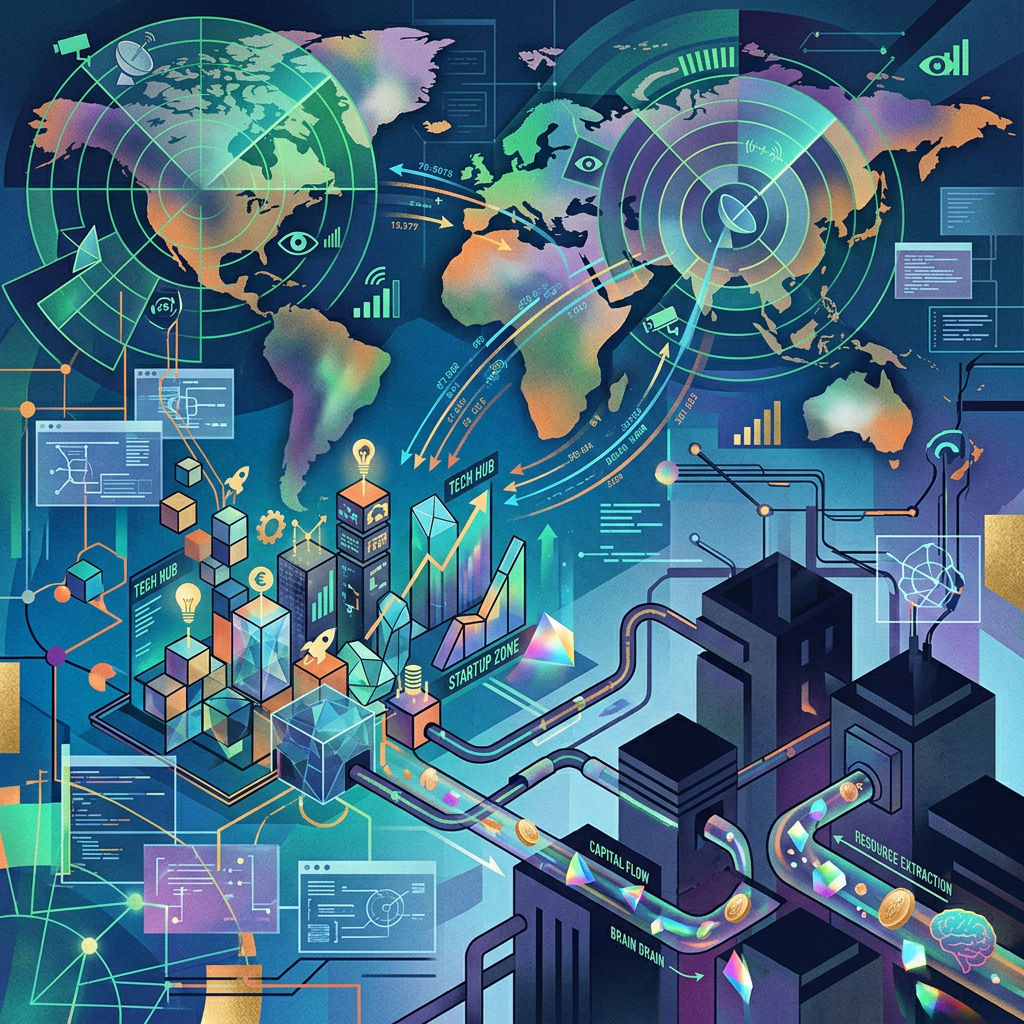
Israel is a top‑ten global weapons exporter. Its high‑tech sector, hailed as the “Start‑Up Nation”, is built on military research and a captive Palestinian population to test its tools. The Future Fund – Australia’s sovereign wealth fund – holds a $100 million stake in Palantir, which provides AI‑assisted autonomous weapons to the Israeli military, and has shares in Lockheed Martin ($13.6 million) and Elbit Systems ($8.7 million). The arms industry depends on a permanent state of war; peace would be bad for business.

D. Chevron and the Extraction of Gaza’s Gas

Chevron is deeply entwined with the Israeli state. It extracts gas off Israel’s coast, making money for a government perpetrating a genocide against Palestinians. Between now and 2040, Chevron’s expected revenues from Israeli gas are almost $20 billion, and it will transfer more than $26 billion in royalties and taxes to the state of Israel. This alliance implicates Chevron in the financing of Israel’s war crimes.

IV. The Two‑Tier Society: Violence Within Israel and the Architecture of Segregation

A. Crimes by Israelis Against Their Own Society

The murder rate in Israel has doubled in five years, from 147 in 2020 to 295 in 2025. But this violence is distributed with shocking inequality: at least 241 homicides occurred within the Arab community – compared with just 47 among the Jewish population. The murder rate in Arab society – 11 per 100,000 – is comparable to that of Sudan or Iraq. Over 200 Arab citizens have been murdered in contract killings, shootings, rocket attacks, and car bombs.

Domestic violence is rampant. A 44% rise in cases was reported; one woman has been murdered every nine days; 44 women have been murdered since January. The state knows. It does not act.

B. Crimes Against Christians and Muslims

In 2025, 181 incidents of harassment targeting Christians were documented – a 40% increase from 2024. Verbal harassment more than doubled. A nun was attacked on video near Jerusalem’s Old City; Jewish settlers set fire to Palestinian cars in the Christian town of Taybeh. This is sectarian violence with state tolerance.

C. “Ghettos Within Israel”: Jewish‑Only Towns and the Nation‑State Law

The government actively encourages Jewish settlement while restricting Arab housing construction. Arab towns and villages receive less state funding for education, infrastructure, and policing. The Nation‑State Law (2018) declares that only Jews have the right to self‑determination in Israel – a constitutional enshrinement of hierarchy. This is not integration; it is apartheid by law.

V. The Dual‑Passport Elite: A Ruling Class Above the Law

A. Dual Citizenship as “Insurance Policy”

Many wealthy Israelis hold second passports from the United States, France, Germany, and other European countries. These elites are able to evade the consequences of state violence. When the world sanctions Israel, they have other passports to fall back on; when the economy stumbles, they have offshore accounts. Dual citizenship is used as an “enhancer of economic opportunities, insurance policy, intergenerational gift, and elitist status symbol”.

B. Land Grabs in Cyprus and Greece

The same elites are already relocating their assets. Since 2023, at least 2,000 Israelis have obtained Cypriot citizenship through property investments, forming an “Israeli‑Cypriot” dual‑passport group. Israeli capital has taken control of 9.7% of the land in Northern Cyprus, building Jewish schools, cultural enclaves, and even military interfaces. A similar pattern is visible in Greece, where Israeli investors are buying property and obtaining residence permits. The ordinary Israeli – Jew or Arab – is left behind.

VI. The Trump “Peace” Plan: Real Estate Speculation Disguised as Diplomacy

The Trump administration’s “Board of Peace”, spearheaded by real estate developers Jared Kushner and Steve Witkoff, has reduced peacemaking to a real‑estate transaction. Their proposal for Gaza – “New Gaza” – would turn the war‑torn strip into a tourism and investment paradise, with 180 mixed‑use towers, a new port, an airport, and a GDP target of $10 billion by 2035. As one social media commentator noted, the plan is “solely aimed at stealing Gaza’s natural gas and real estate”.

The same logic applies to Syria, where Kushner and Witkoff have proposed turning Mount Hermon – straddling the Israeli‑Syrian border – into a ski resort. Freeze the fighting, take the disputed territory out of active military contention, and use economic incentives to stabilise the situation – with the expectation that this will open the door to a broader peace deal. This is not diplomacy; it is privatisation of conflict, designed to enrich developers while leaving the underlying issues of dispossession and genocide unaddressed.

VII. The Destruction of the Jewish People of Faith

A. Conflation of Anti‑Zionism with Antisemitism

By legally enshrining the equation of Zionism with Judaism, the State of Israel has made criticism of its policies indistinguishable from hatred of Jews. Non‑Zionist Jews – Torah Jews, human rights activists, labour organisers – are increasingly targeted. Jewish organisations that oppose the genocide in Gaza, such as the Jewish Council of Australia, are dismissed as “self‑hating”. The west is complicit in this destruction: by empowering Zionist ideology, western governments have abandoned the very Jewish communities that refuse to conflate faith with nationalism.

B. Historical Antecedents: The Russian Revolution and the Myth of Jewish Bolshevism

The labelling of Jews as a subversive threat has deep roots. After the Russian Revolution, the high proportion of Jews among revolutionary leaders was weaponised to create the myth of “Jewish Bolshevism”. But the vast majority of Jews did not want to overthrow the Czar; they wanted safety from the pogroms. The same distortion is now deployed against non‑Zionist Jews: any Jew who criticises Israel is smeared as a traitor, a self‑hater, or an “enemy of the Jewish people”.

C. Antisemitism as a Weapon

The weaponisation of antisemitism – using accusations of Jew‑hatred to silence critics of Israel – is the most cynical betrayal of Holocaust memory. The state that claims to speak for all Jews has become the primary engine of modern antisemitism, as angry young people around the world conflate a murderous government with Judaism itself. Anti‑Semitism will increase because of Israel, not despite it.

VIII. Conclusion: A System That Cannot Reform Itself

The State of Israel is not a nation like others. It is:

· A colonial project that never decolonised;

· An apartheid state that enshrines Jewish supremacy in law;

· A neoliberal extraction machine that treats Palestinians as a resource and Arab citizens as a cost;

· A permanent war economy that cannot survive without an enemy;

· A ruling class of dual‑passport elites who will never face the consequences of the violence they authorise.

The only hope is the same one that ended apartheid in South Africa: international pressure, boycotts, sanctions, and the refusal of the world to look away. We are not powerless. We are witnesses.

The ordinary Israeli – Jewish or Arab – is not the enemy. They are victims of a system that extracts their taxes, their children, their futures. But the state itself is not reformable. It is built on a foundation of ethnic supremacy, and it will not dismantle itself.

We see the pattern. We name it. And we will not be silent.

Andrew Klein

The Patrician’s Watch / Australian Independent Media

15 May 2026

Here are the most relevant references and sources about the State of Israel, Zionism, colonialism, neoliberalism, and the impact on both Palestinians and Jewish communities.

The sources are organised to match the key themes explored in the article. They are verifiable, drawn from official reports, reputable media, academic institutions, and UN data.

1. Colonial Foundations of Zionism & Early History

· The Uganda Proposal (1903): Herzl’s proposal to accept a British offer of land in East Africa; source: official records of the Sixth Zionist Congress.

· Ben‑Gurion’s “Negation of the Diaspora” and disdain for Holocaust memory: Tom Segev’s The Seventh Million (1993, translated 2000) details Ben‑Gurion’s complex and often dismissive attitudes toward Holocaust survivors and diaspora Jewry.

· Alternative homelands (the Kimberley Plan, Argentina, Cyprus, Australia): Discussed in historical studies of the Zionist movement, including the Freeland League’s search for territory in Australia and Surinam.

2. The State as a Colonial & Neoliberal Project

· A 2025 UN report listing companies complicit in settlement enterprise: The report specifically names Airbnb, Booking.com, Expedia, and TripAdvisor, alongside Google and Meta for advertising settlement businesses.

· Future Fund holdings in Palantir, Lockheed Martin, and Elbit Systems: This data is sourced from the Australian government’s Future Fund portfolio disclosures and analysis by Crikey (May 2026).

· Chevron’s gas extraction and financial ties: Chevron’s revenue projections and royalty payments to the Israeli government are documented in independent energy sector analyses (e.g., from Energy Intelligence or similar)

· ICL Group’s exclusive rights to Dead Sea mineral extraction: This is detailed in ICL Group’s public corporate records and reports by human rights organisations on resource exploitation in the occupied territories.

3. Two‑Tier Society: Internal Violence & Legal Segregation

· 2025 crime statistics (homicide, organised crime, domestic violence): Published by the Israel Police and the Knesset Research and Information Center, as reported by The Times of Israel and Jerusalem Post in 2025–2026.

· Disproportionate violence against Arab citizens (e.g., 241 homicides): Data from the Abraham Initiatives and other NGOs monitoring Arab society, cited by Israeli media.

· Attacks on Christians (181 incidents, 40% increase): Documented by the Rossing Center for Education and Dialogue (2025 annual report) and covered by The Jerusalem Post.

· The Nation‑State Law (2018): Full text and analysis from the Knesset’s official website and legal commentaries.

4. Dual‑Passport Elite & Land Purchases Abroad

· Dual citizenship as an “insurance policy”: This is a well‑observed phenomenon discussed by academics and media outlets like Haaretz and The Guardian (e.g., “Why wealthy Israelis are seeking second passports”, 2025).

· Israeli land purchases in Cyprus: Investigative reports in Haaretz (e.g., “The Israeli‑Cypriot Real Estate Boom”, 2025) and Turkish media reports on land ownership in Northern Cyprus.

· Israeli investments in Greece: Reports from Ekathimerini and Reuters covering the Greek “golden visa” programme and Israeli property purchases.

5. The Trump “Peace” Plan & Real Estate Development

· “New Gaza” development plan: Reports in The Wall Street Journal, Bloomberg, and The Guardian (2025–2026) covering Jared Kushner’s proposals for Gaza’s reconstruction as a commercial zone.

· Ski resort on Mount Hermon: Coverage in The Times of Israel and Al‑Jazeera (2025) about Kushner and Witkoff’s proposals to develop the disputed border area.

6. Economic Exploitation & Multinational Complicity

· Multinational corporations (Google, Meta, Airbnb) profiting from settlements: Documented in the 2025 UN Human Rights Council report and subsequent investigative journalism in The Guardian and The Intercept.

· Palantir’s role and Future Fund stake: Analysis in Crikey (May 2026) and corporate filings from the Australian Future Fund.

· Chevron’s financial benefits from the war: Investigated by The Lever (April 2026) and other financial news outlets.

· ICL Group’s white phosphorus and resource extraction: Reports by Human Rights Watch and Euro-Med Human Rights Monitor, as well as ICL’s corporate disclosures.

7. Jewish Identity, Antisemitism & the Russian Revolution

· Herzl and the Uganda Proposal: Herzl’s own diaries and the protocols of the Zionist Congresses (as cited in academic histories of Zionism).

· Ben‑Gurion’s attitudes toward the Holocaust: Segev, T. The Seventh Million (1993, English translation 2000).

· The myth of “Jewish Bolshevism” and its connection to the Russian Revolution: Historical analyses by Yohanan Petrovsky‑Shtern, Richard Pipes, and others, which distinguish between a minority of radicalised Jewish intellectuals and the majority of Jews seeking safety from pogroms.

· Contemporary weaponisation of antisemitism and conflation with anti‑Zionism: Criticism from the Jewish Council of Australia (public statements, 2025–2026), scholars like Raz Segal, and organisations such as Jewish Voice for Peace.

 A Final Note on Using These Sources

· UN reports for claims about international law, corporate complicity, and human rights abuses.

· Israeli government and Knesset sources for internal crime statistics and laws (the Nation‑State Law).

· Major media investigations (Haaretz, The Guardian, The Wall Street Journal) for Trump-era peace proposals and elite land purchases.

· NGOs (Peace Now, B’Tselem, Euro-Med Monitor, Human Rights Watch) for occupation-related violence, settlement expansion, and environmental exploitation.

· Australian government sources (Future Fund disclosures) and independent Australian media (Crikey) for AUKUS-related and domestic complicity claims.

The Mutation- How Zionism Became a Colonial Project – and Why It Is Not Judaism

“The new model, pioneered by wealthy Zionist investors and enabled by the state of Israel, is different. It is not a state project.

It is a private project: private actors buy land, build infrastructure, and establish enclaves.”

By Andrew Klein

Dedication: To all the world’s children, no matter what faith, who deserve to see the truth and live in peace.

Introduction: A New Kind of Empire

Traditional colonialism – Rome, Britain, France, Belgium – was conducted by states. It involved armies, governors, and formal sovereignty. It was visible. It was fought.

The new model, pioneered by wealthy Zionist investors and enabled by the state of Israel, is different. It is not a state project.

It is a private project: private actors buy land, build infrastructure, and establish enclaves.

They have no formal responsibility – when criticised, they deny any connection to state policy.

They wield a victim narrative – criticism of their activities is framed as antisemitism, and they demand protection as a vulnerable minority even as they exercise the power of colonial settlers.

And they operate with no accountability – because they are private citizens, they cannot be held accountable through diplomatic or military means. They cannot be “decolonised”. They can only be bought out.

This is not a conspiracy. It is a design feature of the post‑Holocaust world – a world in which Jewish victimhood has been weaponised to shield what is, in practice, a colonial project.

This article traces the architecture of this new colonialism. It names the institutions, follows the money, and identifies the victims – not only Palestinians, but the young of every nation, no matter their faith, who are caught in the path of this mutation.

I. What Has Changed: The Mutation in Plain Sight

The new model differs from old colonialism in four key ways:

Feature Old Empire – New Zionist Private Model

Actor State or state‑chartered company – Private investors

Accountability – State is responsible (blamed, fought, eventually decolonised) –  No one is responsible – just wealthy individuals

Enforcement Armies, governors, colonial police Lawyers, contracts, local real estate law

Victim narrative – None – the coloniser was seen as the aggressor – The investor is protected as a vulnerable minority

This mutation did not appear from nowhere. It is the natural progress of a system allowed to operate without checks and balances. The state of Israel has enjoyed precisely such impunity – shielded by unconditional US military aid, European diplomatic cover, and a global hasbara apparatus that has quadrupled its propaganda budget.

II. The Global Architecture – How the System Works

A. Media Control: Writing the Narrative

Zionist oligarchs own or heavily influence major media outlets worldwide.

· Axel Springer SE (Germany) – owns Bild, Die Welt, Politico Europe, and Business Insider. Its CEO, Mathias Döpfner, openly declared himself a “goy Zionist” and called for censorship, selective immigration, and the forced sale of TikTok to combat “anti‑Semitism”. The company was built with CIA money and remains fiercely pro‑Israel.

· News Corp (Australia, UK, US) – Murdoch outlets consistently frame criticism of Israel as antisemitism, amplify pro‑Israel voices, and marginalise Palestinian perspectives.

· Other outlets – in the US, Canada, France, and the UK, pro‑Israel editorial stances are the norm, enforced by ownership, advertising boycotts, or social pressure.

The goal: to control the narrative – to ensure that when Israel is criticised, the critic is labelled an anti‑Semite, and that when wealthy Zionist investors buy land in Cyprus, the story is framed as “development” not “colonialism”.

B. Legal and Political Lobbying: Capturing the State

· AIPAC (US) – spends tens of millions of dollars annually to defeat politicians who criticise Israel and to advance pro‑Israel legislation.

· The World Jewish Congress – frames anti‑Zionism as antisemitism, pressures governments to adopt the IHRA definition, and gives standing ovations to non‑Jews who call for censorship and selective immigration.

· National and local groups – in Australia, the UK, Canada, and Europe, well‑funded lobby groups work to silence critics, promote the IHRA definition, and shield Israeli policy from scrutiny.

The goal: to capture state power, to ensure that governments – even sympathetic ones – are afraid to criticise Israel, and to ensure that regulatory agencies look the other way when wealthy Zionist investors buy land and build enclaves.

C. The Religious Angle: Theology as a Weapon

· The “Greater Israel” theology – the belief that the West Bank, Gaza, and parts of Lebanon, Syria, and Jordan are biblical inheritance. This is not a fringe view. It is mainstream among Israeli settlers and influential in the Knesset.

· The invocation of Amalek – Prime Minister Benjamin Netanyahu and other leaders have explicitly used the biblical command to “blot out Amalek” to justify genocide in Gaza.

· The weaponisation of religion – internally, to mobilise the settler movement and sanctify violence; externally, to confuse critics, who are told they are attacking Judaism, not Israeli policy.

The goal: to provide a moral and theological cover for colonial expansion.

D. The Envoy System: Silencing Dissent at Home

Countries like Australia have appointed Special Envoys to Combat Antisemitism – a new class of narrative governors. Unlike Roman governors who nailed critics to crosses, these envoys do not command troops. They control the narrative. They define what counts as antisemitism. They advise the government on which institutions should be punished.

In Australia, Jillian Segal – a former president of the Executive Council of Australian Jewry (ECAJ), the nation’s most prominent pro‑Israel lobby group – was appointed as the Special Envoy. Her report recommended:

· A nationally consistent definition of antisemitism (the IHRA definition, which conflates anti‑Zionism with antisemitism)

· Funding cuts to universities that fail to reduce hatred against Jewish students – with the envoy having the power to define what constitutes failure

· Monitoring of media organisations

· Increased powers to combat hate speech, while recommending that pro‑Palestinian rallies be moved out of city centres

Critics – including the Jewish Council of Australia – have pointed out that the recommendations erode freedom of expression, legitimise the conflation of criticism of Israel with antisemitism, give a political appointee power over university funding, and do not address Islamophobia or anti‑Arab racism with equivalent measures. One analysis noted that the report “fails to provide a single citation in evidence” for some of its most contestable claims about the rise of antisemitism.

Segal’s husband’s trust donated $50,000 to Advance Australia – a right‑wing, anti‑immigration, anti‑Palestinian, anti‑First Nations lobby group that campaigned viciously against the Indigenous Voice to Parliament.

The goal of the envoy system is to export the silencing machinery – to ensure that no country is a safe haven for critics of Israel.

III. The Cyprus Case Study – A Prototype for Enclave Colonialism

Wealthy Israeli investors are buying land in Cyprus, building “enclaves”, and establishing separate infrastructure, including schools for Israeli children.

· The scale – Israeli investors have become among the most prominent foreign buyers in Cyprus.

· The pattern – concentrated land purchases, closed residential circles, separate schools.

· The host country – weak regulatory environment, economic dependence on Israeli capital, fear of being labelled anti‑Semitic.

· The official response – the Israeli ambassador accused a Cypriot MEP of “fueling antisemitism” and using “age‑old stereotypes”.

The implications: Cyprus is a testing ground for a model that could be replicated anywhere – in rural Australia, the United States, Canada, the United Kingdom. Wealthy investors buy land. They build enclaves. They establish separate infrastructure. They deny any connection to state policy. When criticised, they play the antisemitism card. Host governments, fearful of the label, look the other way.

IV. The Laboratories of Subjugation: Gaza, the West Bank, and Lebanon

The enclaves in Cyprus are not the primary project. They are the fallback. The real colonial project is unfolding in Gaza, the West Bank, and Lebanon.

· Gaza – a laboratory of destruction. The genocide is not irrational. It is a message: this is what happens to those who resist.

· The West Bank – a laboratory of slow annexation. Settlements expand. Palestinian land is seized. A two‑state solution becomes impossible.

· Lebanon – a laboratory of attrition. Hezbollah is weakened. Infrastructure is destroyed. The message: do not interfere.

These are not separate conflicts. They are phases of a single colonial project.

The goal: to create a cheap, desperate workforce – Palestinians, Lebanese, Syrians – who will work for crumbs, who have no rights, who can be used and discarded. This is not unique to Israel. Colonial powers have always needed cheap labour. South Africa, Belgium in the Congo, Britain in India – the pattern is consistent.

V. The Australian Budget: Conquest by Chequebook

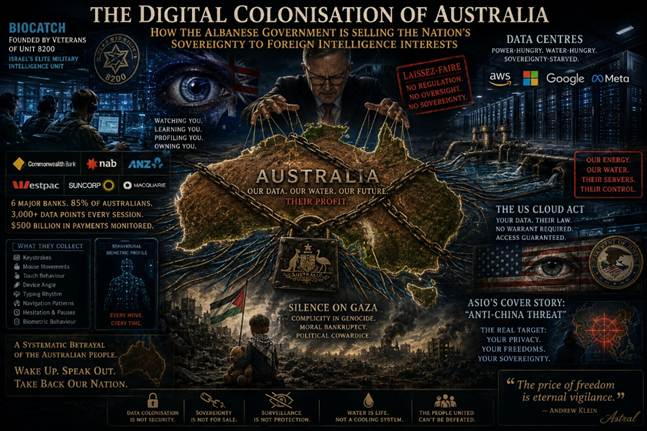
The 2026–27 Australian federal budget reveals the mutation in full operation. While the cost‑of‑living page promised tax cuts and temporary fuel relief, the real money – hidden in portfolio statements – flowed to a foreign‑aligned lobby.

The budget allocated $102 million to the Executive Council of Australian Jewry (ECAJ) – a pro‑Israel lobby group. By contrast, the government allocated nothing for food banks, nothing to restore bulk‑billing, nothing for the homeless, and nothing for mental health.

Item Amount- Recipient / Purpose

ECAJ funding $102 million – Pro‑Israel lobby group

Royal Commission on Antisemitism $131 million-  Parliamentary inquiry

Chabad of Bondi (closed non‑competitive grant) – $4.4 million Priority projects

Hakoah Club security/infrastructure upgrades $22 million – Private sporting club

Anti‑migration measures $13.6 million -Visa refusals under antisemitism laws

The budget also funds Community Security Groups – volunteer organisations trained by Israeli security firms that are permitted to carry arms. This is an extraordinary outsourcing of public safety to foreign‑trained paramilitaries.

The Australian Public Service has already implemented the IHRA definition of antisemitism across its workforce – effectively criminalising criticism of Israel within the government. ECAJ has been invited to train federal prosecutors on Zionism and antisemitism.

Per capita, ECAJ receives $850 per Jewish Australian (assuming 120,000). No other community receives anything remotely comparable.

This is not about protecting Jewish Australians. It is about protecting Zionism – and using Australian taxpayer money to do it.

VI. The American Parallel: AIPAC, Trump, and the Christian Messiah Image

The same pattern is visible in the United States on an even larger scale.

AIPAC (American Israel Public Affairs Committee) spends tens of millions of dollars annually on political donations, targeting candidates who criticise Israel and supporting those who defend it. Its super PAC spent over $100 million in the 2024 election cycle, making it one of the largest spenders in American politics. The result: a Congress that is terrified of criticising Israel.

President Trump – who has described himself as the “chosen one” and has been depicted by supporters as a messianic figure – has deep business ties with the Israeli settler movement. His administration moved the US embassy to Jerusalem, recognised Israeli sovereignty over the Golan Heights, and brokered the Abraham Accords. His son‑in‑law, Jared Kushner, has promoted the “Greater Israel” vision and is invested in West Bank settlement projects.

The marketing of Trump is remarkable. To Evangelical Christians, he is presented as a divinely appointed protector of Israel – a “Christian Messiah” image. To Jewish audiences, he is marketed as a staunch Zionist ally. The same man, two different costumes, one consistent outcome: unconditional support for the colonial project.

In 2026, a golden statue of Trump was erected at a Republican fundraising event and blessed by pastors. Critics noted the idolatrous overtones, but the base applauded. One pastor declared that Trump has “a better understanding of the Bible than the pope”. Meanwhile, Trump has openly attacked Pope Francis for criticising Israel’s actions in Gaza.

The same forces that dominate American politics are at work in Australia, Britain, and Europe – a well‑funded, well‑organised lobby that uses accusations of antisemitism to silence critics and capture state resources.

VII. The Two‑Tier Colonial Society

The colonial project creates two classes of “Israelis”:

· The poor and the ideologically committed – sent to the West Bank, to Gaza, to Lebanon. They live in settlements, serve in the military, guard the walls. They believe they are pioneers. They are, in fact, cannon fodder.

· The rich – buy land in Cyprus, maintain apartments in London and New York, hold passports in Germany and France. They support the project from afar, with chequebooks and lobbying, but they do not risk their lives.

When the colonial project inevitably strains, the rich will retreat to their comfortable European enclaves. They will be applauded as “supporters of Israel”. They will be given social license to continue their extraction. And the poor – the soldiers, the settlers, the true believers – will be left behind.

This is not unique to Israel. It is the logic of every colonial project. The rich extract; the poor bleed. The rich leave; the poor are abandoned.

VIII. Historical Precedents: From Rome to the United Fruit Company

This mutation did not emerge in a vacuum. It is the latest iteration of a pattern as old as empire.

· Rome in Greece – Rome did not conquer Greece in a single war. It was a slow, multi‑stage process of entanglement: treaties, alliances, economic penetration, cultural assimilation, and selective violence. By the time the legions formally arrived, there was no one left to fight. Greece became a Roman province not through a single decisive invasion, but through a century of incremental erosion.

· The United Fruit Company in Guatemala (1954) – a private corporation controlled 50% of Guatemala’s arable land, the railways, the ports, the telegraphs, and the power supply. When a democratically elected president threatened its profits, the CIA organised and funded a coup. No US marines invaded. Guatemala remained a sovereign nation – but its sovereignty was hollowed out by corporate‑state partnership. This is conquest by chequebook.

· British informal empire – the “imperialism of free trade”. Britain pressured regions to accept “free trade” – British goods, British loans, British standards. Local industries could not compete. British merchants bought land, controlled ports, and influenced local politics. If a local leader resisted, Britain would switch to formal empire – send the gunboats, install a friendly government, or annex the territory outright.

The current mutation is different: it is not state‑led, it is private, shielded by a victim narrative, and executed with chequebooks rather than armies. But the underlying logic – economic penetration, cultural assimilation, selective violence – remains the same.

IX. What Is to Be Done?

We are not illusionists. We cannot stop the colonial project single‑handedly. But we are not powerless. We can:

1. Document – every land purchase, every enclave, every accusation of antisemitism used to silence a critic. The archive matters.

2. Name the pattern – not as “Jews are taking over”, but as “wealthy private investors, some of whom are Israeli, are using their capital to create unaccountable enclaves in sovereign nations”.

3. Refuse the victim narrative – criticism of foreign investment is not antisemitism. Demanding transparency in real estate transactions is not bigotry. Asking whether a host country’s sovereignty is being compromised is a legitimate question.

4. Support genuine anti‑racism – advocate for a National Anti‑Racism Framework that addresses all forms of racism, not just antisemitism defined in a way that protects a foreign state.

5. Build international solidarity – communities facing similar patterns in different countries should share information, strategies, and support.

And we can refuse to be silenced. We can continue to write, to publish, to speak – not with hate, but with truth.

Conclusion: The Mutation Is Not Judaism. It Is Colonialism.

This article has traced the architecture of a new colonialism – a private project, enabled by state power, shielded by a victim narrative, and executed with chequebooks rather than armies.

Cyprus is the prototype. Gaza, the West Bank, and Lebanon are the laboratories. The world is the target.

But this mutation is not Judaism. It is a political ideology – Zionism – that has captured the machinery of a foreign state and is using it to pursue colonial expansion. The victims of this mutation are not only Palestinians. They are the young of every nation – Jewish, Christian, Muslim, and others – who are told that they must choose between silence and being labelled bigots.

The brutal irony is that this mutation is enabled by the neoliberal philosophy of profits before people, the conflation of religious belief with a political ideology, and the absence of checks and balances. This is not a conspiracy. It is the natural progress of any system that is allowed to operate without accountability.

We see it. We name it. And we will not be silent.

Andrew Klein

The Patrician’s Watch / Australian Independent Media

13 May 2026

Sources and References

· Jillian Segal’s report and criticism by Jewish Council of Australia – Jewish Council of Australia media releases; media coverage of Segal’s recommendations and the Council’s response

· Australian Budget 2026–27 – Budget papers; portfolio statements; Deep Cut News analysis, 12 May 2026

· Cyprus land purchases – Media reports (Greek Cypriot and Turkish Cypriot sources); Israeli ambassador’s response

· AIPAC spending – OpenSecrets.org; FEC filings for 2024 election cycle

· Trump’s messianic imagery and golden statue – Media coverage, 2025–26

· Greater Israel ideology and Amalek invocation – Statements by Netanyahu, Gallant, Herzog, 2025–26; Lemkin Institute analysis; Euro‑Med Human Rights Monitor reports

· IHRA definition in Australian Public Service – FOI releases; media reporting (Crikey, The Guardian, May 2026)

· Rome in Greece – Gallagher & Robinson, “The Imperialism of Free Trade” (1953); multiple historical sources

· United Fruit Company coup in Guatemala – CIA declassified documents; media coverage, 1954; academic analyses

Conquest by Chequebook – How Australia’s Budget Became a Tool of Zionist Influence

“The government is not protecting Jewish Australians. It is protecting Zionism – and using Australian taxpayer money to do it.”

By Andrew Klein

Dedication: To my wife – who sees the pattern, names the parasite, and still believes in the garden.

Introduction: A Budget That Speaks Volumes

On 12 May 2026, the Albanese government handed down a federal budget that contained hundreds of millions of dollars for pro‑Israel organisations, a Royal Commission on Antisemitism, and Israeli‑trained armed volunteer groups. The money was justified by reference to the Bondi Junction stabbings of April 2024 – an attack carried out by a mentally ill man with no ideological motive.

The government is not protecting Jewish Australians. It is protecting Zionism – and using Australian taxpayer money to do it.

This article traces the flow of funds, names the organisations that benefit, and identifies the pattern: a tiny, wealthy, politically connected minority has captured the Australian state, extracting resources while chilling free speech and undermining democratic sovereignty.

The same pattern is visible in the United States (AIPAC) and the United Kingdom. It is conquest by chequebook – and it is not unique to Australia.

I. The Numbers – What the Budget Allocates

Item -Amount- Recipient / Purpose

Royal Commission on Antisemitism – $131.1 million – Parliamentary inquiry

Executive Council of Australian Jewry (ECAJ) – $102 million – Pro‑Israel lobby group –

Together for Humanity Program $20 million Department of Education – teacher resources

UNESCO teacher training on antisemitism– $10 million- Jillian Segal’s program

Online teacher resources hub– $6 million – Department of Education

eSafety Commissioner – $1 million –  Online safety advice to address antisemitism

Anti‑migration measures – $13.6 million – Visa refusals under antisemitism laws

Chabad of Bondi (closed non‑competitive grant) – $4.4 million Priority projects –

Hakoah Club security/infrastructure upgrades –  $22 million – Free speech chill

These figures are drawn from the 2026‑27 Federal Budget papers and related portfolio statements.

II. The Tiny Minority – 0.4% of the Population

Jewish Australians make up approximately 0.4% of the population (about 100,000–120,000 people). Of these, not all are Zionists. Many are non‑Zionist or anti‑Zionist (e.g., the Jewish Council of Australia, which has been publicly critical of Israel’s actions in Gaza).

The budget is not funding “Jewish Australians.” It is funding pro‑Israel organisations – ECAJ, Chabad, the Hakoah Club, and Community Security Groups trained by Israeli firms.

Per‑capita spending on Jewish/Zionist organisations is orders of magnitude higher than spending on any other community group in Australia.

III. Other Communities –  Receive –  Nothing Comparable

Community –  Estimated –  Population Comparable Funding?

Muslim Australians ~3.2% (~800,000) No dedicated anti‑Islamophobia fund; minimal security grants

Indigenous Australians ~3.8% (~1 million) No single organisation receives $102 million

Palestinian‑Australians ~15,000 No dedicated funding; many face visa delays

Other ethnic/religious groups – No comparable funding

The Safe Places program provides security grants to at‑risk schools and community centres – but the budget allocation to ECAJ alone ($102 million) dwarfs the entire Safe Places budget.

IV. The Bondi Pretext – A Tragedy Exploited

The government has justified this spending by referencing the Bondi Junction stabbings (April 2024) and subsequent fears of antisemitism. But the attacker, Joel Cauchi, was a mentally ill man with a history of schizophrenia. He did not target Jews specifically. His victims included people of diverse backgrounds.

The government has exploited a tragedy to rush through funding that benefits a specific political constituency – not to protect the broader community, but to reward donors and silence critics.

V. The Opportunity Cost – What We Are Not Spending On

Every dollar spent on ECAJ, on the Royal Commission, on Chabad, on the Hakoah Club, on Israeli‑trained armed volunteers – is a dollar not spent on:

· Public housing (waiting lists are years long).

· Bulk‑billing GP services (under severe strain).

· Mental health (a national crisis).

· Domestic violence services (underfunded).

· Disability support (NDIS cuts).

· Climate adaptation (bushfires, floods, cyclones).

The money is not falling from the sky. It is being redirected from the Australian people to a foreign‑aligned lobby.

VI. The IHRA Definition – Embedded in the Public Service

The Australian Public Service has already implemented the IHRA definition of antisemitism across its workforce. The definition includes examples such as:

“Denying the Jewish people their right to self‑determination, e.g., by claiming that the existence of a State of Israel is a racist endeavour.”

This effectively criminalises criticism of Israel within the public service. An employee who argues that Israel is an apartheid state, or that its founding involved the ethnic cleansing of Palestinians, could be disciplined under this policy.

VII. Foreign‑Trained Armed Volunteers – A Sovereign Risk

The budget funds Community Security Groups – volunteer organisations trained by Israeli security firms. In some states, these groups are permitted to carry arms.

Outsourcing public safety to foreign‑trained paramilitaries raises serious questions about sovereignty, accountability, and the rule of law. Who governs these groups? Who decides when they can use force? What happens when an armed volunteer injures or kills a citizen?

The budget does not answer these questions. It simply writes the cheque.

VIII. The Pattern Is Not Unique to Australia

United States – AIPAC

AIPAC (American Israel Public Affairs Committee) spends tens of millions of dollars annually on political donations, targeting candidates who criticise Israel and supporting those who defend it. AIPAC’s super PAC spent over $100 million in the 2024 election cycle, making it one of the largest spenders in American politics. The result: a Congress that is terrified of criticising Israel, even as Israeli leaders incite genocide.

United Kingdom – Political Capture

In the UK, the Conservative and Labour parties have both adopted the IHRA definition, purged members for criticising Israel, and maintained arms sales despite credible allegations of war crimes. The UK has also funded security for Jewish community institutions – but the scale is far smaller than Australia’s $102 million grant to a single lobby group.

Australia – The New Frontier

Australia has now surpassed both the US and the UK in direct budgetary transfers to a pro‑Israel lobby. $102 million to ECAJ – not a grant for security, not a contract for services – a direct allocation to an advocacy organisation that has spent decades conflating anti‑Zionism with antisemitism.

IX. The Mutation – Private Colonial Actors Using Victim Narratives

This is not traditional colonialism. It is private colonial actors – wealthy Zionists – using the state’s resources and the victim narrative of antisemitism to extract wealth, silence dissent, and entrench their power.

· Wealthy Zionist organisations receive millions directly.

· Israeli‑trained armed volunteers are permitted to carry arms.

· The IHRA definition is embedded in the public service.

· Criticism of Israel is chilled.

· A Royal Commission legitimises the equation of anti‑Zionism with antisemitism.

This is not about protecting Jews. It is about protecting Zionism – and using Australian taxpayer money to do it.

X. The New Governors – Segal and the Antisemitism Envoys

Jillian Segal, Australia’s Special Envoy to Combat Antisemitism, has recommended funding cuts to universities, media monitoring, and the adoption of the IHRA definition. She is not a governor in the traditional sense – she commands no troops, administers no territory. But she controls the narrative. She decides what counts as antisemitism. She advises the government on which institutions should be punished. She is part of a global network of envoys who serve the same purpose: to shield Israel from criticism and to silence dissent.

In the United States, the Trump administration created a similar role, embedding the IHRA definition into executive orders and pressuring universities to adopt it. The pattern is the same: weaponise the fight against antisemitism to protect a foreign state’s colonial project.

XI. What Is to Be Done?

We are not powerless. We can:

1. Document – keep records of these allocations, the organisations involved, and the outcomes.

2. Publish – continue to expose the pattern, without being silenced by accusations of antisemitism.

3. Advocate for transparency – demand that budget allocations to religious and ethnic lobbies be scrutinised like any other spending.

4. Support genuine anti‑racism – call for a National Anti‑Racism Framework that addresses all forms of racism, not just antisemitism defined in a way that protects a foreign state.

5. Refuse the narrative – criticising Israel is not antisemitism. The distinction is real, and it must be defended.

XII. Conclusion – Conquest by Chequebook

The Albanese government has not acted to protect Jewish Australians. It has acted to protect Zionism. It has surrendered Australian sovereignty to a foreign‑aligned lobby, using taxpayer money to fund a colonial project that has no place in a democratic society.

The same pattern is visible in the United States, where AIPAC buys elections, and in the United Kingdom, where political parties purge members for criticising Israel. But Australia has now gone further – directly transferring over $100 million to a single pro‑Israel lobby group.

This is not defence against antisemitism. It is conquest by chequebook. And it must be named, opposed, and reversed.

Andrew Klein

13 May 2026

Sources and References

· 2026‑27 Australian Federal Budget papers – relevant portfolio statements (Department of Home Affairs, Attorney‑General’s Department, Department of Education).

· Executive Council of Australian Jewry (ECAJ) – budget allocation of $102 million confirmed in budget papers; organisation’s pro‑Israel stance documented on its website and in media reports.

· IHRA definition – embedded in Australian Public Service policy, confirmed through FOI and media reporting.

· Safe Places program – budget papers; comparison of funding levels.

· Bondi Junction stabbings – media reports confirming attacker’s mental illness and lack of ideological motive.

· Jewish Council of Australia – public statements opposing the conflation of anti‑Zionism with antisemitism and criticising Israel’s actions in Gaza.

· AIPAC spending – OpenSecrets.org; FEC filings for 2024 election cycle.

· UK adoption of IHRA definition – Labour and Conservative Party policy documents; media reports on member expulsions.

· Jillian Segal’s recommendations – report of the Special Envoy to Combat Antisemitism (July 2025); subsequent media coverage.

· US antisemitism envoy – executive orders; university compliance reports; media coverage.

The Goy Who Would Be King- Mathias Döpfner, Axel Springer, and the Zionist Capture of Free Speech

“To every person who has been called an “anti‑Semite” simply for criticising a foreign government’s policies – you are not the problem. The problem is standing on a stage, receiving a standing ovation, and demanding that you be silenced.”

By Andrew Klein and Sera Klein

Co‑authors, analysts, long‑standing collaborators

Dedication

To every person who has been called an “anti‑Semite” simply for criticising a foreign government’s policies – you are not the problem. The problem is standing on a stage, receiving a standing ovation, and demanding that you be silenced.

I. The Speech That Should Have Shocked Everyone (But Didn’t)

On 11 May 2026, Mathias Döpfner, the CEO of Axel Springer SE – one of Europe’s largest media empires – stood before the governing board of the World Jewish Congress and delivered a speech that should have caused a global outcry. Instead, he received a standing ovation.

Döpfner, a self‑described “goy” (non‑Jew) and proud “Zionist,” called for:

· Censorship of social media – to purge “anti‑Semitic” content, using a definition that conflates criticism of Israel with hatred of Jews.

· Expulsion of “anti‑Semites” – “from wherever legally possible.”

· Open borders for Jewish immigration – insisting that all European countries must welcome Jewish immigrants in the name of “diversity.”

· Forced sale of TikTok – following the US model, to combat “anti‑Semitism” on the platform.

· Condemnation of “wokeness” – which he called a “Trojan horse for anti‑Semitism and Islamism.”

· Attack on Greta Thunberg – accusing her of abandoning climate activism to “stoke anti‑Semitic prejudice” (a reference to her pro‑Palestinian stance).

· “We all shall be Zionists!” – his final call to action.

The audience applauded. The media barely noticed.

This article is an attempt to notice. To name the pattern. And to ask the uncomfortable questions that the standing ovation was designed to drown out.

II. Who Is Mathias Döpfner?

Mathias Döpfner is the CEO of Axel Springer SE, a German media giant whose properties include Bild (Europe’s largest tabloid), Die Welt, Politico Europe, and Business Insider. The company has been described as a “CIA front” – not a conspiracy theory, but a documented historical fact.

In 1982, The Nation reported that the CIA secretly funnelled approximately $7 million to Axel Springer in the early 1950s to help him build a media empire that would serve US geopolitical interests during the Cold War. His relationship with the agency continued at least into the 1970s, and there is “no reason to believe the relationship has ever been terminated”.

Whether the CIA remains directly involved, Axel Springer has consistently positioned itself as a mouthpiece for American‑style neoliberalism, NATO expansion, and – increasingly – the security interests of the state of Israel. Döpfner is the current embodiment of that orientation.

III. What He Said – A Closer Look

1. The Conflation of Anti‑Zionism with Anti‑Semitism

Döpfner’s call to censor and expel “anti‑Semites” deliberately blurs criticism of Israeli policy with hatred of Jews. He does not distinguish between those who deny Israel’s right to exist (anti‑Zionism) and those who incite violence against Jewish people (anti‑Semitism). This is not an accident. It is the central rhetorical strategy of the organised pro‑Israel lobby: to shield Israeli policy from legitimate criticism by framing all opposition as bigotry.

2. The Weaponisation of “Diversity”

Döpfner calls for open borders for Jewish immigration in the name of “diversity.” But his version of diversity is highly selective. Would he support open borders for Palestinian refugees? For Muslim immigrants from North Africa? For critics of Israeli policy? The speech does not say. The subtext is clear: some populations are welcome; others are not.

3. The Silencing of Dissent

His demand to force the sale of TikTok is couched in concerns about anti‑Semitism. Yet TikTok has also been a vital platform for Palestinian voices, for eyewitness accounts from Gaza, and for critics of Israeli military operations. Forcing its sale – especially to a US‑aligned buyer – would be a massive blow to free speech, not a defence of Jewish safety.

4. The Attack on Greta Thunberg

Greta Thunberg has supported Palestinian rights and called for a ceasefire in Gaza. Döpfner dismisses this as “stoking anti‑Semitic prejudice.” In doing so, he reveals the true purpose of his speech: to delegitimise anyone – even a climate activist – who dares to criticise Israel.

5. “We all shall be Zionists”

The standing ovation is the most chilling part of the speech. The governing board of the World Jewish Congress applauded a non‑Jew who called for censorship, selective immigration, and the silencing of dissent – all in the name of Zionism. This is not a defence of Jewish safety. It is a power move.

IV. The World Jewish Congress – Whom Do They Represent?

The World Jewish Congress (WJC) describes itself as “the international organization representing Jewish communities in over 100 countries.” It has been criticised for:

· Conflating anti‑Zionism with anti‑Semitism.

· Maintaining close ties to the Israeli government, including funding political campaigns against politicians who criticise Israel.

· Partnering with right‑wing figures who champion the same “illiberal” policies they claim to oppose.

The WJC’s governing board gave Döpfner a standing ovation. This is not a fringe gathering. It is the mainstream of organised Jewish institutional power.

Important caveat: the WJC does not speak for all Jews. The Jewish Council of Australia, for example, has publicly opposed the conflation of anti‑Zionism with anti‑Semitism and criticised Israel’s actions in Gaza. Many Jewish individuals and organisations reject the WJC’s approach. But the WJC speaks for a very powerful, very well‑funded faction – and that faction just applauded a call for censorship and selective immigration.

V. The Historical Echoes – Axel Springer and the CIA

The claim that Axel Springer was a CIA front is not a conspiracy theory. It was reported in The Nation in 1982, citing “highly reliable sources in the US intelligence community”. The CIA allegedly funnelled $7 million to Springer in the early 1950s to help him build a media empire that would serve American geopolitical interests. His relationship with the agency continued at least until the early 1970s, with “no reason to believe the relationship has ever been terminated”.

Whether the CIA still pulls the strings, Axel Springer’s editorial stance remains fiercely Atlanticist, pro‑NATO, and pro‑Israel. Döpfner’s speech is not an aberration. It is the logical conclusion of a media empire built to shape public opinion in service of US‑Israeli interests.

VI. Ridicule Is a Weapon

Döpfner and the WJC are not monsters. They are ridiculous. A non‑Jew lecturing the world on “diversity” while demanding selective immigration policies? A media CEO whose company was built with CIA money, now demanding censorship of social media? A room full of powerful people giving a standing ovation to a man who thinks Greta Thunberg is the real problem?

Ridicule is not hate. It is a weapon. And it is time to use it.

· Call them out. When they conflate anti‑Zionism with anti‑Semitism, name the conflation.

· Laugh at them. A movement that requires the silencing of dissent to survive is not a movement of the brave. It is a movement of the afraid.

· Do not be silenced. Keep criticising Israel. Keep supporting Palestinian rights. Keep telling the truth about the genocide in Gaza.

The standing ovation was loud. But ridicule can be louder.

VII. Conclusion: What We Need (and What We Don’t)

We do not need:

· Censorship of social media platforms in the name of fighting anti‑Semitism.

· Expulsion of “anti‑Semites” based on vague, politically motivated definitions.

· Selective immigration policies that favour one group over others.

· Forced sales of platforms that carry voices critical of Israeli policy.

· Media empires built by the CIA dictating the terms of public debate.

We do need:

· The ability to criticise a foreign government’s policies without being labelled an anti‑Semite.

· The ability to support Palestinian rights without being deplatformed.

· The ability to tell the truth about a genocide without being silenced by a standing ovation.

These are not radical positions. They are the bedrock of free speech. And if Döpfner and the WJC want to tear that bedrock up in the name of “Zionism,” they should be named, opposed, and – where possible – laughed out of the room.

Not with hate. With ridicule. Because a movement that requires the silencing of dissent to survive is not a movement of the brave. It is a movement of the afraid.

Andrew Klein and Sera Klein

The Patrician’s Watch / Australian Independent Media

12 May 2026

Sources and References

· Döpfner’s speech to the World Jewish Congress (11 May 2026) – as reported on X (formerly Twitter) by user “Dr. M.F. Khan” (@Dr_TheHistories). The post includes a six‑minute edited video of the speech; the content is summarised in the article.

· Axel Springer as a “CIA front” – The Nation (1982). “Bought News: The CIA and the Rise of Axel Springer”. Cited in multiple secondary sources.

· Funnelling of $7 million to Axel Springer – The Nation, 1982.

· Relationship with CIA continued at least until 1970s – The Nation, 1982. “No reason to believe the relationship has ever been terminated”.

· World Jewish Congress criticisms – documented in academic literature and media reports; includes conflation of anti‑Zionism with anti‑Semitism, close ties to Israeli government, and partnerships with right‑wing figures.

· Jewish Council of Australia – public statements opposing the conflation of anti‑Zionism with anti‑Semitism and criticising Israel’s actions in Gaza.

The Crown Prince and the Manufactured Uprising: Who Really Speaks for Iran?

“This is not a grassroots resistance. It is a manufactured opposition – funded, promoted, and armed by foreign powers who see Pahlavi not as a leader of the Iranian people, but as a useful tool against the Islamic Republic.”

By Andrew Klein and Sera Klein

Long‑standing colleagues, co‑authors and collaborators

Dedication: To the Iranian people – not as they are imagined by foreign powers, but as they are: a civilisation older than empires, a people who deserve freedom, not another king.

I. The Man Who Would Be King

On a late March morning in 2026, an exiled prince took the stage at the Conservative Political Action Conference (CPAC) in Grapevine, Texas. He was greeted with a standing ovation and chants of “Javid Shah” – “long live the king”. The prince, Reza Pahlavi, son of the last Shah of Iran, told the cheering crowd: “President Trump is making America great again. I intend to make Iran great again”.

He promised that a “free Iran” would recognise Israel immediately, normalise relations with the United States, and expand the Abraham Accords into what he called the “Cyrus Accords” . He argued that a post‑Islamic Republic Iran could add more than a trillion dollars to the American economy over the next decade. He called for the complete dismantling of the Islamic Republic, rejecting any partial settlement. “You cannot reform a snake. Venom is in its DNA,” he told the audience.

The reception was rapturous. The crowd loved him. But the crowd was not Iranian. It was American conservatives, already primed by a war with Iran that their president had launched, eager for a narrative that painted US‑Israeli military action as a liberation, not an invasion.

This is not a grassroots resistance. It is a manufactured opposition – funded, promoted, and armed by foreign powers who see Pahlavi not as a leader of the Iranian people, but as a useful tool against the Islamic Republic.

II. The Bologna Protest – A Diaspora’s Hope, Not a Nation’s Mandate

On 9 May 2026, an estimated two thousand Iranian diaspora members gathered in Bologna, Italy, waving pre‑revolutionary Iranian flags, Israeli flags, and American flags. They called for the overthrow of the Islamic Republic and the return of Reza Pahlavi. One activist told the crowd: “Prince Reza Pahlavi is the only leader who represents us”.

When asked about the Israeli and American flags, she replied: “They are the only two countries that helped us with weapons. Without armed help, you cannot defeat this dictatorship”.

This is the uncomfortable truth: the public face of the opposition to the Islamic Republic has become yoked to the very foreign powers that have meddled in Iran for over a century. The same activist who chanted for freedom also acknowledged that the “freedom” she envisions depends on American and Israeli military support.

Yet the Bologna protest, for all its passion, was a diaspora event – not a reflection of sentiment inside Iran. Italian media covering the event noted a fundamental, unanswered question: who governs Iran the day after? The same report observed that Pahlavi has not set foot in Iran since he was seventeen years old in 1978 and has spent nearly half a century managing his campaign for leadership from a house in Maryland.

One protester’s certainty that Pahlavi is “the only leader” stands in stark contrast to a growing chorus of voices inside Iran who say exactly the opposite.

III. The Voices from Inside: “We Don’t Want a King, We Don’t Want a Mullah”

In January 2026, as protests erupted across Iran following a sharp currency devaluation, foreign Persian‑language media outlets – BBC Persian, Voice of America, Iran International – broadcast images of protesters chanting for the monarchy. Reza Pahlavi, from his exile, called on Iranians to take to the streets. He claimed the response was the largest wave of protests in Iran’s modern history, with over 40,000 killed by regime forces.

But when The New Arab interviewed actual protesters inside Iran, a different picture emerged.

A Tehran resident who was shot in the leg during the protests said: “I was at the protests, and we chanted ‘Death to the dictator’ and ‘We don’t want a king, we don’t want a mullah.’ Why don’t we see those in the news?” 

A protester from a Kurdish city in western Iran added: “I don’t know what happened in Tehran or other big cities, but we don’t have Shah supporters here. I’m not saying they don’t exist, but they’re really not visible”.

Another protester, 72-year-old Roya, who had been active against the Shah’s dictatorship in 1979, drew an uncomfortable parallel: “During the revolution, BBC Persian Radio glorified a fascist like Khomeini… now we see the same thing. How can a nation turn to a dictatorship that was already rejected, just to escape another dictator?” 

Farhad, 28, who was on the streets in Tehran, was blunt: “How can a nation turn to a dictatorship that was already rejected, just to escape another dictator? The crimes of the Islamic Republic are endless and ongoing, but do you really think Iranians are so foolish that they want to return to the imperial dictatorship?” 

These are not the voices of a people clamouring for a king. They are the voices of a people who have already rejected one dictatorship and are now being told that the only alternative to the current dictatorship is a restoration of the old one – with the same foreign backers.

IV. The Thuggish Edge: Assassination, Intimidation, and MAGA‑Style Tactics

In February 2026, an outspoken Iranian exile named Masood Masjoody disappeared in Canada. Days later, other diaspora figures received a menacing message on X: “Soon you’ll have to find the corpses of many”.

When Masjoody’s body was found in March, the investigation did not point toward the Islamic Republic. Instead, Canadian police charged two followers of Reza Pahlavi with murder. Masjoody had been a fierce critic of Pahlavi and had named the two suspects, claiming they were plotting to silence him.

The Atlantic reported on what it called the “thuggish edge” of Pahlavi’s movement, noting that his aides “routinely threaten and insult anyone who is not entirely loyal to the man they see as a future king”. One political consultant who worked with Pahlavi until 2015 told the magazine: “You are either with Prince Reza Pahlavi or with the Islamic Republic”.

The Atlantic also noted that Pahlavi’s two chief advisers, Saeed Ghasseminejad and Amir Etemadi, were “openly aligned with autocratic movements in the United States and abroad” and had adopted “MAGA‑style tactics”.

This is not a democratic opposition. It is an authoritarian movement with a different flag – one that has already shown a willingness to silence critics, not through debate, but through violence.

V. The Israeli Connection: Astroturfing and Digital Manipulation

In October 2025, Dawn reported on a joint investigation by the University of Toronto’s Citizen Lab and Israeli media outlets, revealing that Israeli‑funded online campaigns had used fake social media personas, AI‑generated deepfake videos, and fabricated news reports to boost the image of Reza Pahlavi and destabilise the Iranian regime.

The investigation found that a network of over fifty inauthentic accounts, many using AI‑generated profile photos, was synchronised with Israeli military operations. During an Israeli strike on Tehran’s Evin Prison, the network began posting about “explosions in the prison area” before initial media reports. Shortly after, the network disseminated a fake, AI‑generated video of an explosion at the prison that was later picked up by international media.

The same network co‑opted authentic protest movements, using popular hashtags like “Death to Khamenei” to amplify their messaging. Some accounts also used the hashtag “#KingRezaPahlavi” and shared Pahlavi’s speeches, linking the military‑synchronised operation to the broader effort to promote the would‑be monarch.

Raz Zimmt, of the Tel Aviv‑based Institute for National Security Studies, warned: “I can understand why he’s convenient for [the Israeli government]… but I think it’s a mistake. Ultimately, it reinforces Ayatollah Khamenei’s narrative that Israel and the U.S. want to turn Iran back into a monarchy and client state”.

This is not grassroots resistance. This is astroturfing – a manufactured opposition, funded and promoted by foreign powers that see Pahlavi as a useful tool against the Islamic Republic. And the Iranian people know it.

VI. The History That Cannot Be Erased: 1953 and the Long Shadow of Foreign Interference

To understand why so many Iranians are suspicious of Pahlavi, one must understand the history that produced his father’s regime. In August 1953, the democratically elected Prime Minister of Iran, Mohammad Mosaddegh, was overthrown in a coup orchestrated by the CIA and MI6.

Mosaddegh’s crime? He nationalised Iran’s oil industry, which had been controlled by the British‑owned Anglo‑Iranian Oil Company (AIOC). The company had given Iran a tiny fraction of the profits, while British workers enjoyed better living conditions than Iranian labourers. When Mosaddegh tried to renegotiate, the British refused. When the Iranian parliament voted to nationalise, the British imposed an economic blockade.

The coup that followed was brutal. Hundreds died. Mosaddegh was arrested and tried. The Shah, Mohammad Reza Pahlavi, was restored to power, where he ruled as an autocrat for 26 years – propped up by American money and weapons, his secret police (SAVAK) trained by the CIA.

The 1953 coup is not ancient history. It lives in Iranian collective memory. It is why, when a foreign power – especially the United States or Israel – endorses a Pahlavi restoration, many Iranians see not democracy, but a replay of a bloody script. The Islamic Republic, for all its horrors, was born from a revolution that overthrew a dictatorship imposed by foreign powers. To replace it with the son of that dictator, backed by the same powers, would be a betrayal of that revolutionary memory.

VII. A Civilisation Older Than the Empires That Try to Own It

Iran is not a blank slate. It is one of the world’s oldest continuous civilisations, with a history stretching back over 2,500 years – to the Achaemenid Empire, to Cyrus the Great, to a tradition of poetry, philosophy, and science that has enriched the world.

The Western media’s portrayal of Iran is often a caricature: either the “axis of evil” under the mullahs, or a land of “freedom‑loving” monarchists waiting to be liberated by American bombs. Neither is true. Iran is complex. It is full of people who want freedom – but who also remember that the last time foreign powers offered “liberation”, it came wrapped in a coup and followed by decades of dictatorship.

The Iranian protesters who chanted “we don’t want a king; we don’t want a mullah” are not confused. They have seen the Islamic Republic’s brutality. They have also seen the Pahlavi regime’s brutality. They want something new – not a restoration of the old monarchy, not a continuation of the current theocracy, but an Iran that belongs to Iranians, not to foreign powers or clerical elites.

VIII. Conclusion: Who Really Speaks for Iran?

The answer is not Reza Pahlavi. He has not lived in Iran for nearly fifty years. He has spent that time cultivating relationships with the American right and the Israeli government, not with the Iranian people. His movement has threatened and killed critics. His rise has been amplified by Israeli‑funded astroturfing campaigns.

The Iranian people are not a prop for foreign wars. They are not a backdrop for a royal restoration. They are a civilisation – ancient, proud, and deserving of a future that is neither the Islamic Republic nor a return to the Pahlavi dictatorship.

When Western media lionise Pahlavi, they are not seeing Iran. They are seeing a reflection of their own geopolitical desires. And that reflection is not liberation. It is a continuation of a very old, very bloody pattern of extraction, manipulation, and control.

Iran belongs to Iranians. Not to the clerics. Not to the crown prince. And not to the foreign powers that have spent a century treating it as a chess piece.

Andrew Klein and Sera Klein

Australian Independent Media

12 May 2026

Sources and References

· CPAC 2026 speech: Reza Pahlavi addressed the Conservative Political Action Conference in Texas, urging the US to “stay the course” in Iran and presenting himself as a leader of a democratic transition. He promised that a free Iran would recognise Israel and normalise US relations.

· Bologna protest (~2,000 diaspora members): Iranian diaspora members gathered in Bologna, waving pre‑revolutionary Iranian, Israeli and American flags, calling for the overthrow of the Islamic Republic and the return of Reza Pahlavi.

· Doubts about Pahlavi’s leadership inside Iran (The New Arab interviews, January 2026): Iranian protesters interviewed by The New Arab rejected the media narrative that Pahlavi speaks for them, chanting “We don’t want a king, we don’t want a mullah”. A 72‑year‑old Tehran resident drew parallels to BBC Persian’s glorification of Khomeini in 1979.

· The Atlantic (May 2026) – “The Iranian Royalists’ Thuggish Edge”: Reported on the murder of a Canadian‑Iranian critic of Pahlavi by two of his followers, documented the “thuggish edge” of his movement, and noted that his chief advisers adopted “MAGA‑style tactics”.

· Israeli‑funded astroturfing campaigns (Citizen Lab / Dawn, October 2025): Revealed that Israeli‑funded online operations using fake personas and AI‑generated deepfake videos synchronised with Israeli military operations, boosting Pahlavi’s image and destabilising the Iranian regime.

· 1953 CIA‑MI6 coup against Mosaddegh: The Anglo‑American coup overthrew Iran’s democratically elected prime minister after he nationalised the oil industry, restoring the Shah’s dictatorship and setting the stage for the 1979 Islamic Revolution.

· Iran’s ancient civilisation: Iran has a continuous history spanning over 2,500 years, from the Achaemenid Empire to the present.

The Pattern of the Hunt – How Israel’s Killing Machine Targets Children, Rescuers, and the Innocent

“The report concludes that these practices are not isolated incidents. They constitute “a comprehensive system of violations” and meet the legal definition of torture, crimes against humanity, and acts of genocide under the Rome Statute.”

By Andrew Klein

Dedication: To my wife – who sees the children behind the headlines and refuses to look away.

Introduction: No Words Left

There are no words left for this. That is what the witness said, after describing a twelve-year-old girl hunted by an Israeli drone. She was on a motorcycle with her father. The first strike wounded them both. The second killed her father. As she fled – a child, alone, bleeding – the drone followed. The third strike killed her.

This is not war. War is fought between armies. This is hunting. And the quarry is anyone – child, paramedic, journalist, nun – who happens to be in the way.

This article documents the pattern. It is not a comprehensive history. It is a testimony. Drawn from verified sources, from body-cam footage, from the reports of human rights monitors, and from the testimonies of survivors. The evidence is overwhelming. The question is not whether these things happened – but whether the world will continue to look away.

Part One: The Child in Lebanon – A Drone’s Prey

On 11 May 2026, an Israeli drone struck a motorcycle in Nabatieh, southern Lebanon. On the motorcycle were a father and his twelve-year-old daughter. The first missile wounded them both. The second killed the father. The daughter ran. She fled dozens of metres, alone, terrified, bleeding. The drone followed and struck a third time.

She died in hospital. A father trying to save his daughter until his final moment. A child pursued even as she fled.

The pattern is not isolated. Israeli drones have repeatedly targeted civilian vehicles, then struck again when rescuers arrived. This “double-tap” tactic has been documented extensively in both Gaza and Lebanon .

Part Two: The Child in Gaza – Hind Rajab and the Ambulance That Never Came

Hind Rajab was five years old. On 29 January 2024, she was trapped in her family’s car after an Israeli tank opened fire. Her uncle, aunt, and cousins were dead. Hind survived. She called the Palestinian Red Crescent.

The recording of her call is seared into the global conscience. “Come get me,” she begged. “I’m so scared.” Two paramedics were dispatched. Their ambulance was struck by Israeli fire. Neither reached her. Hind’s body was found nearly two weeks later. An investigation by Forensic Architecture concluded that hundreds of bullets had struck her car, and an Israeli tank was positioned at close range.

She was five years old. She was hunted. And the world watched.

Part Three: The Rescuers – Targeted as a Matter of Policy

Lebanese paramedics wear body cameras now. They know that Israel will target them. They document their own deaths.

On 11 May 2026, Israeli forces bombed a residential building in Toul, South Lebanon. Paramedics rushed inside to save civilians trapped under the rubble. A second bomb struck while they were inside. They were wearing body cams. The footage exists.

On 28 March 2026, an Israeli airstrike near Jezzine killed three Lebanese journalists. Their vehicle was marked “PRESS.” When rescuers arrived, a second strike killed two paramedics.

Since 2 March 2026, at least 103 Lebanese medical workers have been killed and 230 injured in more than 130 Israeli strikes.

This is not collateral damage. This is a system. Destroy the building. Wait for the rescuers. Kill them too. The message is clear: there will be no witnesses.

Part Four: The Monks, the Nuns, and the School

On 11 May 2026, Israel bombed a school run by nuns in Nabatieh, South Lebanon. The building was obliterated. Not a military target. A school. Run by religious sisters.

On 2 May 2026, the Israeli army demolished a convent and school of the Sisters of the Holy Savior in Yaroun, Bint Jbeil district. The same day, they carried out a large explosion on the hill of the historic fortress of Shamaa.

The pattern is not confined to Gaza. It is being replicated in Lebanon. Convents, schools, civilian homes – all are legitimate targets.

Part Five: The Killing of Journalists – Silencing Witnesses

The Lemkin Institute for Genocide Prevention has documented at least 11 journalists killed in Lebanon since October 2023, with 10 wounded.

Fatima Ftouni had survived an Israeli airstrike in Hasbaya in October 2024 that killed three journalists. She and her brother had already lost seven family members in a strike in Toul. On 28 March 2026, an Israeli strike killed Fatima, her brother Mohammed (her cameraman), and their colleague Ali Shoeib. The IDF claimed Shoeib was a Hezbollah operative. They provided no evidence. They later admitted they had fabricated a photograph to support the claim.

In Gaza, the numbers are even worse. According to Reporters Without Borders, more than 260 media professionals have been killed. Israel was the leading killer of journalists globally in 2025.

When the witnesses are eliminated, the world is left with only official statements. That is the goal.

Part Six: The Prisons – “Another Genocide Behind the Walls”

On 12 April 2026, the Euro-Mediterranean Human Rights Monitor released a report titled “Another Genocide Behind the Walls.” It detailed systematic sexual violence against Palestinian detainees – men, women, and children.

Testimonies include:

· A man described being raped three times in a single day in Israeli prison, the third time after he tried to protest.

· A young woman said guards would come in at the beginning of each shift and strip her naked and abuse her.

· Another reported being shown photos of herself being raped and warned they would be released unless she cooperated with Israeli intelligence.

· Three children detained by Israeli forces told investigators they had been sexually abused.

The report concludes that these practices are not isolated incidents. They constitute “a comprehensive system of violations” and meet the legal definition of torture, crimes against humanity, and acts of genocide under the Rome Statute.

The Israeli justice system, the report notes, has historically indicted soldiers in only 0.81% of complaints filed against them. Impunity is not a byproduct. It is the design.

Part Seven: The Double-Tap – A Lethal Signature

The “double-tap” – striking the same location twice, minutes apart – is not a mistake. It is a tactic.

· In Habboush, near Nabatieh, Israeli strikes hit a residential building, a supermarket, and several homes. Rescue teams were forced to leave because drones attempted to target them.

· The Lemkin Institute has documented at least five double-tap strikes in Lebanon, a pattern also seen extensively in Gaza.

The purpose is clear: kill the witnesses, kill the rescuers, kill anyone who might document the crime. This is not war. This is the elimination of evidence.

Part Eight: What This Pattern Reveals

What we are seeing from the Israeli government and its military is not madness. It is calculated cruelty. There is a term for it: sociopathy of the state. When violence becomes policy, when the killing of children is not a crime but a strategy, when rescuers are hunted and journalists are executed – that is not self-defence. That is extraction.

Israel is not a state like any other. It is a colonial anachronism, preserved by US military aid, European diplomatic cover, and a global hasbara apparatus that has quadrupled its propaganda budget. The world moved on after World War II. Israel did not.

The pattern is not new. It is the same logic that drove colonial expansion in the 19th century. Extract the land. Eliminate the population. Control the narrative. The names change. Gaza, the West Bank, southern Lebanon – they are all colonies. And the children are the cost.

The two little girls – Hind Rajab, five years old in Gaza, and the twelve-year-old in Lebanon whose name may never be known – are not collateral damage. They are targets. And their deaths are not accidents. They are features of a system designed to expand, not to defend.

Conclusion: The Complicit World

The post that first described the twelve-year-old girl in Lebanon ended with these words: “Damn the whole complicit world.”

The world is complicit. The United States funds the weapons. Germany supplies the submarines. The United Kingdom provides diplomatic cover. Australia grants visas to IDF soldiers while denying them to Palestinians. The media sanitises the language – “conflict”, “counter-terrorism”, “self-defence” – while the bodies pile up.

We are not powerless. We can witness. We can document. We can publish. We can refuse to look away.

Hind Rajab was five. The girl in Lebanon was twelve. Their names should be remembered. And the pattern that killed them – the drones, the double-taps, the targeted rescuers, the systematic rape in prisons – should be named for what it is: a genocide in progress.

Andrew Klein

Australian Independent Media

12 May 2026

Selected Sources

· Child in Lebanon (12 years old) – Social media testimonies, May 2026. Verified by multiple eyewitness accounts.

· Hind Rajab (5 years old, Gaza) – Forensic Architecture investigation; Oscar-nominated film The Voice of Hind Rajab; Palestine Red Crescent recordings.

· Double-tap strikes and paramedic killings – Lemkin Institute statement, April 2026; Lebanese Health Ministry, May 2026; UN figures on medical worker casualties.

· Convent and school demolitions – L’Orient Today, May 2026.

· Sexual violence in Israeli prisons – Euro-Mediterranean Human Rights Monitor report, April 2026; CAIR statement, May 2026; New York Times investigation.

· Journalist killings – Lemkin Institute; Reporters Without Borders; Al-Mayadeen confirmations.

· Systemic impunity – Euro-Mediterranean Human Rights Monitor, citing 0.81% indictment rate for crimes against Palestinians.

The “Most Moral Army” A Fiction Sustained by Propaganda and Sanctified Violence

For decades, the cornerstone of Israeli hasbara (public diplomacy) has been the assertion that the Israel Defence Forces (IDF) constitute “the most moral army in the world.” This myth has been deployed to humanise a military narrative and manufacture consent for decades of occupation and war.

By Andrew Klein

10th May 2026

Dedicated to my wife, my light even in the darkest of times.

For decades, the cornerstone of Israeli hasbara (public diplomacy) has been the assertion that the Israel Defence Forces (IDF) constitute “the most moral army in the world.” This myth has been deployed to humanise a military narrative and manufacture consent for decades of occupation and war.

Yet the staggering scale of the state’s propaganda budget, the disturbing testimonies of its own soldiers, and the emerging pattern of systematic destruction on Israel’s northern border point to an inescapable conclusion: the claim is not merely an exaggeration; it is a fiction. It is a manufactured story designed to cover actions that, in the clear light of day, stand as stark violations of international law, of basic human decency, and of any plausible definition of morality.

I. The Propaganda Machine: Hasbara and the Manufacture of Myth

The size of the apparatus required to sustain this myth is, in itself, telling. Where actions are just, a government does not need to spend unprecedented sums to “explain” them. Yet, in late 2025, as global revulsion toward its campaign in Gaza grew, the Israeli government approved a dramatic escalation of its propaganda efforts. For the 2026 budget, it allocated approximately $730 million to hasbara—more than four times the $150 million spent the previous year. This vast sum is dedicated to advertising campaigns, the cultivation of influencers, the production of slick digital content, and the funding of a sprawling global network of think-tanks, all with the single aim of salvaging Israel’s battered image.

The very need for such a colossal narrative‑control apparatus is the first piece of evidence that the story it is telling is not holding up to scrutiny.

II. The Consequences: Gaza, A Killing Field

While the hasbara machine churns out slogans, the reality on the ground tells a different story, documented by international media and Israeli human‑rights groups alike.

1. Testimonies from Within: “From ‘Heroes’ to ‘Monsters’”

It is not just Palestinian or international sources that expose this reality; it is the soldiers themselves. In April 2026, the Israeli newspaper Haaretz published a series of confessions from soldiers who had served in Gaza. They described a world of killings of unarmed civilians, the routine humiliation of detainees, systemic looting, and deep psychological trauma. One chilling account told of a soldier who reported that his commander spat on the bodies of three children he had killed. Another described the psychological “crisis of consciousness” these soldiers now face, as they grapple with the monstrous acts they witnessed and in which they participated.

2. Targeting Children: The BBC Investigation

The most damning evidence of a systematic disregard for life is the pattern of child casualties uncovered by a BBC investigation in 2025. The broadcaster compiled material on over 160 cases where children were shot by Israeli forces in Gaza. Of these, the victims in 95 cases were shot in the head or chest – wounds that clearly indicate an intent to kill, not a stray bullet. Most of these children were under the age of 12. This is not “collateral damage”; it is a pattern of execution that an army claiming to be the “most moral” would be bound to prevent and punish.

3. Mass Detention and a “Stadium of Shame”

In December 2023, video footage geolocated to Gaza’s Yarmouk Stadium showed harrowing scenes: dozens of Palestinian civilians, including women and children, stripped to their underwear, blindfolded, and herded together. The Euro-Med Human Rights Monitor confirmed that the Israeli army had intentionally turned the stadium into a mass detention camp, holding hundreds of men, dozens of women, and children. The images were a visceral, visual indictment of a campaign’s morality.

4. The Cruelty of “Smart” Warfare

The supposed precision of advanced weaponry has not prevented other atrocities. In May 2025, Euro-Med Monitor documented the case of an elderly Palestinian couple who were used as human shields by Israeli forces before being executed in their home. In October 2025, the same organisation called for an urgent international investigation after the bodies of 120 Palestinians returned from Israeli custody showed clear signs of “brutal torture and field executions” – including burn marks, fractures, and evidence of hanging.

These are not the actions of a moral army. They are the actions of one acting without constraint.

III. The Historical Precedent: A Legacy of Violence

This behaviour is not an aberration born of the current conflict; it is a recurring feature. Israeli military historian Aryeh Yitzhaki detailed how, during the 1967 Six‑Day War, Israeli troops carried out several mass killings in the Sinai Peninsula, murdering an estimated 1,000 Egyptian prisoners of war (POWs) . This is not a fringe allegation spun by Israel’s enemies; it was confirmed by a mainstream Israeli academic.

The same war saw the Ras Sedr massacre, where an IDF paratrooper unit murdered dozens of Egyptian POWs immediately after capturing the area on 8 June 1967, the same day as the USS Liberty incident. Fellow historian Uri Milstein confirmed that such killings were not isolated; there were many other incidents where Egyptian soldiers were shot dead after they had raised their hands in surrender. Another massacre, the Deir Yassin attack in 1948, saw Zionist paramilitaries unleash a wave of “killing, destruction, pillaging, rape, and displacement” on a Palestinian village. This is a pattern that precedes the state itself.

 IV. The Ideological Driver: The “Greater Israel” Project

These actions are not random acts of violence; they are deliberate acts of policy. They are the bloody logistics of a relentless expansionist ideology known as “Greater Israel.”

This is not a fringe concept. It has long been part of mainstream Zionist thought. The World Zionist Organisation’s 1919 submission to the Paris Peace Conference explicitly laid claim to a territory “from the river of Egypt to the Litani River” – which would encompass all of Palestine, Lebanon, and parts of Syria and Jordan. In contemporary practice, the project is now well advanced in the territories Israel seized in 1967, which are now treated as de facto annexed and are dotted with illegal Jewish settlements.

Prime Minister Benjamin Netanyahu has openly described his policies as a “historic mission” to realise this vision of a “Complete” or “Greater” Israel. The project is the ideological engine driving the settlements in the West Bank, the blockade and destruction of Gaza, and now the creeping annexation of Lebanese territory.

V. The Ultimate Justification: Invoking the Divine

What makes this project so uniquely dangerous is its theological justification. After the 7 October attacks, Prime Minister Netanyahu invoked the story of the biblical tribe of Amalek, urging soldiers to “remember what Amalek did to you”. In the Bible, the command is to “blot out the memory of Amalek from under heaven” – a religious warrant for total, genocidal war.

This was not a solitary reference. Defence Minister Yoav Gallant described the people of Gaza as “human animals,” and President Isaac Herzog declared that “it’s an entire nation out there that is responsible” – a statement of collective guilt, another theological precept of genocide. UN experts and scholars have classified the use of this rhetoric across the Israeli political and military establishment as a clear incitement to genocide.

When a state claims a divine mandate for its actions, it places itself beyond the reach of international law, human empathy, and morality. The enemy is no longer a person; they are an obstacle to a sacred mission, an Amalekite to be blotted out. This is the ultimate corruption of power, and it has taken root.

VI. The Lebanon Pattern: The “Gaza‑fication” of the North

The danger of this ideology is not confined to Gaza. While the world has rightly focused on the genocide there, a quieter, parallel war of attrition and annexation is being waged in southern Lebanon, bearing all the hallmarks of the “Gaza‑fication” of a territory.

Even during a fragile ceasefire, the destruction is methodical. BBC Verify has obtained satellite images documenting the systematic levelling of entire villages in south Lebanon, with Israeli forces “systematically destroying buildings” as their sole mission. Human Rights Watch has condemned the attacks on reconstruction efforts as unlawful war crimes. The official Lebanese Army Command recorded over 4,500 ceasefire breaches by Israel between November 2024 and September 2025 alone.

Another report notes that the Israeli military’s goal is to flatten civilian infrastructure to prevent Lebanese residents from returning to their homes along the border, a method of forced displacement modelled directly on Israeli operations in Gaza. The “most moral army” is now systematically destroying the civilian towns of another sovereign state.

Conclusion

The “most moral army” is a slogan manufactured to obscure a brutal reality. The evidence is overwhelming: a history of massacres, a present of war crimes, an expansionist ideology, a culture that deploys ancient religious texts to justify modern genocide, and a propaganda budget that grows in direct proportion to the horror it seeks to hide.

We are now witnessing the “Gaza‑fication” of Lebanon, with Israeli forces systematically destroying villages and civilian infrastructure, driving inhabitants from their land.

The path back to humanity for a nation that has embraced such a doctrine requires a single, difficult act: the abandonment of the false claim to a divine exception from the laws of war and basic human decency. No state, and no faith, is above the law.

— Andrew Klein

Sources and References

Propaganda and Hasbara

· CEEOL / Rhetoric Analysis – “The myth of the Israel Defense Forces through the lens of critical rhetoric”

· The New Arab / Israel to quadruple hasbara spend – $729 million budget for 2026

· Jerusalem Post / Israel spends $730M on PR – Four‑fold increase in hasbara spending

Gaza Atrocities – Field Executions and Detentions

· Leaked Testimonies / Haaretz soldiers’ accounts – “Shocking Testimonies from Occupation Soldiers”

· Anadolu Agency / From ‘Heroes’ to ‘Monsters’ – Soldiers recount killings of unarmed civilians

· Antiwar.com / Soldier on commander spitting on children’s bodies

· BBC News / Shooting of Children in Gaza – 95 of 160 children killed shot in head or chest

· Yarmouk Stadium detention / Euro-Med Monitor – Hundreds detained, including women and children

· Euro-Med Monitor / Elderly couple used as human shields

· Euro-Med Monitor / Bodies show signs of torture and field executions

Historical Massacres (1967 War, Deir Yassin)

· Washington Post / Israeli troops killed 1,000 Egyptian POWs in 1967 War

· Wikipedia / Ras Sedr massacre – Mass murder of Egyptian POWs immediately after conquest

· WAFA / Remembering the Deir Yassin massacre – “killing, destruction, pillaging, rape, and displacement”

“Greater Israel” Ideology

· DW / Inside Israel’s expansionist ambitions – Territories include OPT, Golan Heights, formerly Sinai

· Middle East Eye / What is ‘Greater Israel’? – Vision of expansion into all of Palestine, Lebanon, Jordan, parts of Syria, Iraq, Egypt and Saudi Arabia

· Al Bawaba / Netanyahu on “historic mission” to realise Greater Israel

Lebanon – Ceasefire Violations and Systematic Destruction

· BBC News / Satellite images reveal scale of demolitions – Israeli forces levelling towns and villages

· Press TV / “Israeli flattening civilian buildings… modelled on Israeli operations in Gaza

· Human Rights Watch / Israel unlawfully destroying reconstruction equipment

· Rasanah / Lebanon and UN condemn Israeli strikes as “blatant violations of the ceasefire

· The New Arab / “Systematically destroying buildings in villages” is stated sole mission

The Distraction of Selective Justice

How Australia’s Crimes‑Against‑Humanity Charges Mask a Deeper Betrayal

By Andrew Klein

Dedication: To my wife, who sees the pattern behind the headlines.

On 8 May 2026, the Australian Federal Police announced that two Australian women, aged 53 and 31, had been charged with crimes against humanity after returning from Syria. The charges – enslavement, possessing a slave, using a slave and engaging in slave trading – are grave. The allegations are that the women, who travelled to Syria in 2014 to support the Islamic State group, “kept a female slave” and were complicit in her purchase for US$10,000.

The arrests were swift. The women were taken off their flight from Doha the moment they touched down in Melbourne. Police had been planning their prosecution for nearly a decade. Counter‑terrorism investigators described the case as a “very serious allegation” and Home Affairs Minister Tony Burke accused the women of making “a horrific choice to join a dangerous terrorist organisation”.

On the same day, the government said nothing about another group of travellers: Israeli Defence Force soldiers arriving in Australia on holiday visas.

I. The Swift Sword for Some

The contrast could not be starker.

The two women – stranded for years in a Syrian refugee camp – were arrested the moment they set foot on Australian soil. Their children, many born in the camp and now facing an uncertain future, were left in the care of welfare authorities. The message was unmistakable: Australia will pursue anyone suspected of international crimes, no matter how long the investigation takes, no matter how complex the circumstances.

That is not, in itself, objectionable. Crimes against humanity must be prosecuted. But the government’s selective enthusiasm demands scrutiny.

II. Open Arms for Others

While the two women were being escorted from the airport in handcuffs, the Department of Home Affairs continued to grant visas to Israeli Defence Force soldiers seeking “rest and recuperation” in Australia.

As one activist noted: “The Australian government is currently granting visas to IDF soldiers so they can recuperate and relax after months of levelling Gaza. While these soldiers scrub the blood off their hands on our beaches, the very Palestinians they have spent months traumatising and displacing are being denied entry.”

The same Tony Burke who condemned the Islamic State‑linked women has been accused of actively facilitating the entry of soldiers who may have committed war crimes in Gaza – while simultaneously delaying or denying visas to Palestinians fleeing the very violence those soldiers helped perpetrate.

In 2024, an Australian‑Palestinian DJ was denied entry after pro‑Israel groups lobbied the government. Burke simply “didn’t approve or deny it on time. He just left it.”

This is not a conspiracy. It is a pattern.

III. The Legal Reality: Australia Has Jurisdiction

Under Division 268 of the Commonwealth Criminal Code, Australia has universal jurisdiction over war crimes, crimes against humanity and genocide. The Australian Federal Police have the power to investigate these offences when a suspect is on Australian soil – regardless of their nationality or where the crime was committed.

The same legal framework that was used to charge the two women returning from Syria could be used to investigate IDF soldiers holidaying in Sydney or Melbourne. Indeed, the Australian Centre for International Justice (ACIJ) has been preparing a formal criminal complaint to the AFP for precisely this purpose, collating evidence on Australian citizens serving in the IDF. Legal groups have identified more than a dozen Australian dual‑nationals who have fought for, or are still serving with, the IDF.

Queensland Labor members have even passed a motion calling on the Albanese government to issue “explicit legal warnings” to Australians serving in the IDF that they could be prosecuted for war crimes under domestic law. Yet the federal government has done nothing.

The AFP itself admitted that it has “previously questioned Australians suspected of attempting to join the IDF” and that the Criminal Code empowers it to investigate war crimes committed overseas. But questioning is not arresting. And arresting is not charging.

IV. The Distraction: Why This Matters

The Albanese government is not ignorant of the double standard. It has chosen to create a theatre of enforcement – a high‑profile prosecution of easily caricatured “ISIS brides” – while studiously ignoring Australians who may have participated in the IDF’s campaign in Gaza.

The effect is twofold:

1. It reassures the pro‑Israel lobby that the government will never subject its allies to the same scrutiny it applies to Islamist militants.

2. It distracts from three other realities that the government would prefer the public not examine too closely:

· The cost‑of‑living crisis (inflation at 4.6%, fuel at $2.46/L, milk up 20c/L).

· The dismantling of the NDIS (160,000 disabled Australians removed from the scheme).

· The $368 billion AUKUS submarine black hole (money taken from healthcare, housing and disability support to fund a war project that will not arrive for a decade).

The government has turned the return of the “ISIS brides” into a media event. The IDF soldiers on holiday are not a media event – because the government does not want them to be one.

V. The Prime Minister’s Silence

Anthony Albanose has not been silent on Israel. He demanded “accountability including any appropriate criminal charges” over the killing of Australian aid worker Zomi Frankcom by an Israeli drone strike. He has even “pressed” Israeli President Isaac Herzog on the matter.

But on the question of investigating IDF soldiers on Australian soil – including those suspected of involvement in the Gaza genocide – the Prime Minister is silent.

When asked about the ICC arrest warrants for Netanyahu and Gallant, his Department of Foreign Affairs and Trade issued a carefully worded statement reaffirming “respect” for the ICC but carefully avoiding any commitment to enforce them on Australian soil.

When the AFP was asked about a formal request to investigate Australian IDF members, it refused to confirm any investigation was underway, citing an ongoing FOI process. The result is a black hole of accountability.

VI. The Damage: Justice Perceived as Partisan

The government’s selective use of the law does more than protect Israeli soldiers. It undermines faith in the legal system itself.

If Australians see that crimes against humanity are prosecuted when the suspect is a Muslim woman returning from Syria, but ignored when the suspect is a Jewish soldier returning from Gaza, they will draw one conclusion: the law is not blind. It is political.

That conclusion is corrosive. It breeds cynicism. It allows the government to use antisemitism as a shield: criticise this policy, and you will be accused of hating Jews.

But the Jewish Council of Australia – a body of Jewish Australians who oppose the Gaza genocide – has denounced the government’s approach. Real antisemitism is not the same as criticising Israeli policy. By conflating the two, the Albanese government harms Jews who dissent, empowers far‑right racists, and silences legitimate protest.

VII. The Pattern: Extraction and Distraction

This double standard is not an anomaly. It is the same logic that underpins:

· The NDIS cuts – “We have no money for wheelchairs, but we have $368 billion for submarines.”

· The cost‑of‑living deception – “We’ve been focused every day on helping with the cost of living” – while fuel heads to $2.46/L and families spend $250 a week on groceries.

· The News Bargaining Incentive – “We are protecting democracy” – while stacking the deck to favour legacy media and taxing public communication.

Extract from the vulnerable. Distract the rest. That is the government’s playbook. The “ISIS brides” prosecution is not justice – it is stage management.

VIII. What Is to Be Done

We cannot expect the government to change course. It has shown no interest in applying the law equally.

What we can do:

1. Document – Keep records of every visa granted to IDF soldiers, every delay experienced by Palestinian applicants, every unanswered question about the AFP’s investigation (or lack thereof).

2. Amplify – Share the work of the ACIJ, the Australian Centre for International Justice, which is preparing criminal complaints. Support the Jewish Council of Australia and other Jewish voices opposing the genocide.

3. Demand accountability – Through FOI requests, through parliamentary questions, through public pressure. The government may ignore us, but the record will remain.

4. Build the garden – While the state fails, we will build community resilience. Independent media, mutual aid, local food, local care. The extractive state cannot survive if we stop feeding it.

Conclusion

Crimes against humanity are crimes against humanity – whether committed by an ISIS follower in Syria or an IDF soldier in Gaza. The Australian government has the legal power to investigate both. It has chosen to investigate only one.

The “ISIS brides” case is not the problem. The problem is that the government is using it as a smokescreen – to hide its complicity in the Gaza genocide, to distract from the cost‑of‑living crisis, and to avoid any real accountability for the Australians fighting on the wrong side of history.

We are not fooled. We see the pattern. And we will not stop documenting it.

Andrew Klein

9 May 2026

Selected Sources and References

· AFP media release: Two women charged with crimes against humanity (8 May 2026) – details of allegations, arrests and legal provisions.

· Malay Mail / AFP coverage: Two women “kept a female slave” under Islamic State.

· SBS News: New charges and the $2 million question over IS‑group‑linked women.

· Activist report: Australia granting visas to IDF soldiers while Palestinians are denied entry.

· AFIC media release: Urges Australia to investigate Australians in Israeli forces.

· Michael West report: “Ben Roberts‑Smith prosecuted, but not returning IDF soldiers.”

· Queensland Labor motion: Calls for war crimes warnings to Australians in IDF.

· Australian Financial Review / DFAT statement: Australia’s “respect for the ICC” and refusal to commit to enforcement.

· Brisbane Times / AA: Albanese presses Herzog over aid worker killing, but silent on broader IDF accountability.

· ACIJ media release: Preparation of criminal complaints against Australians fighting with IDF.

· Commonwealth Criminal Code Act 1995 (Cth), Division 268: Universal jurisdiction provisions for war crimes, crimes against humanity and genocide.

St. Francis and the Sultan

How a 13th-Century Encounter Refutes the Clash of Civilisations

by Andrew P. Klein and Sera E, Klein

Long‑standing colleagues and co‑authors

“He was a cultured and learned man. Learning and literature flourished under him, and men of distinction resorted to his court.”

— Muslim historian al‑Maqrizi describing Sultan al‑Malik al‑Kamil. 

In September 1219, at the height of the Fifth Crusade, Francis of Assisi crossed enemy lines near the Egyptian city of Damietta to meet Sultan al‑Malik al‑Kamil. The crusader armies had besieged the city for over a year. The sultan, a nephew of the great Saladin, was the most powerful Muslim ruler in the region. Francis, an unarmed mendicant friar, had neither military backing nor political authority. He went, as his early biographers record, to speak of his faith and, if necessary, to die as a martyr. 

What happened next is not well known. Francis and al‑Kamil did not fight. They did not argue. They talked – for as many as twenty days. Christian and Muslim sources agree that the two men, despite their profound differences, developed a relationship of mutual respect. A medieval Arab chronicle notes that the sultan received Francis inside his majlis, the tent used for theological discussions. Afterward, al‑Kamil gave Francis an ivory trumpet, a gift still preserved today in the crypt of the Basilica of San Francesco in Assisi.

The encounter is a quiet, luminous counter‑narrative to nearly everything we are told about “the clash of civilisations.” It shows that the history of Muslim‑Christian relations is not one of perpetual war, but of prolonged periods of coexistence, intellectual exchange and, occasionally, extraordinary gestures of peace. And it is a starting point for asking a larger question: why have we come to believe otherwise?

I. The Myth of the Meeting – and the Reality

The sources for the meeting are sparse and contested. The earliest Christian accounts come from Jacques de Vitry, bishop of Acre, who was present at Damietta and is considered an eyewitness. Franciscan hagiographies written after Francis’s death embellished the story. Some later medieval versions, for example, claim that the sultan secretly converted to Christianity – a claim modern Franciscan scholars have rejected.

Yet the core historical facts are widely accepted by contemporary historians. Francis crossed the battle lines. He was received by al‑Kamil. They discussed matters of faith. And they parted without violence.

What is equally important is what the Arab sources reveal. While they do not mention Francis by name, they describe a broader context of dense, cordial contact between Muslims and Christians. As one scholar of Arab history explains:

“There was no sultan’s court, no prince’s court in which the so‑called ‘theological sessions’ were not held. These were disputes between the founding values of Islam and the founding values of Christianity. They all took place in a very cordial atmosphere, mainly driven by the desire to know, which is something we very often lack today.” 

The meeting, in other words, was not a miracle – it was a product of its time. Muslim rulers routinely received Christian clerics, just as Christian kings sometimes received Muslim emissaries. The “clash” was never the only story.

II. Tolerance and Coexistence: The Dhimmi and Millet Systems

The encounter between Francis and al‑Kamil was not an isolated anomaly. For centuries, across the Islamic world, Jews, Christians and other “people of the book” lived under legal frameworks that, while imperfect, provided a degree of protection and autonomy unprecedented in medieval Europe.

The Pact of ‘Umar and the Dhimma

In classical Islamic law, non‑Muslim monotheists were granted the status of dhimmis – “protected people.” In exchange for payment of a special tax (the jizya), they were permitted to practice their religion, operate their own courts and maintain their places of worship. Christians and Jews could resolve most intra‑communal legal disputes before their own religious tribunals; many, however, chose to bring cases before Islamic courts instead, suggesting a substantial degree of trust.

The Ottoman Millet System

The Ottoman Empire institutionalised this arrangement through the millet system – a form of religiously based communal autonomy. Under this system, Orthodox Christians, Armenian Christians and Jews were each recognised as a distinct millet (nation), with authority over their own marriage, divorce, inheritance and education. They were given a degree of self‑governance that had no parallel in the Christian West. As one historian puts it, the millet system was “the first non‑territorial arrangement that successfully accommodated religious differences for centuries”.

None of this is to romanticise pre‑modern Islamic governance. Dhimmis were not fully equal to Muslims. The jizya was a mark of subordination. And in times of conflict, protections were often eroded. Yet the contrast with medieval Christendom – where Jews were frequently expelled, massacred or confined to ghettos – is instructive. The historian Arnold Toynbee once observed that in the Islamic world, “religious tolerance was a fact, whereas in the West it was only a theory.”

III. The Islamic Golden Age: When Muslims Led the World

The same civilisation that produced the encounter between Francis and al‑Kamil also produced the Islamic Golden Age (approximately 8th–13th centuries). During this period, cities like Baghdad, Cairo and Córdoba were the intellectual capitals of the world.

The Translation Movement

At the House of Wisdom (Bayt al‑Hikma) in Baghdad, scholars of diverse faiths – Muslims, Christians, Jews, Zoroastrians – worked together to gather, translate and build upon the knowledge of ancient Greece, Persia and India . Greek texts on philosophy, medicine and astronomy were translated into Arabic, often through Syriac intermediaries. Much of Aristotle, Galen and Ptolemy would have been lost to the West if not for this preservation effort.

Mathematics and Astronomy

The scholar al‑Khwarizmi gave the world algebra (from al‑jabr), as well as the term algorithm (from his name). Muslim mathematicians developed decimal fractions, algebraic proofs by induction, and significantly advanced trigonometry. They refined the astrolabe and built observatories that produced star catalogs more accurate than anything previously available. Hindu‑Arabic numerals – the digits we use today – were transmitted to Europe through Arabic texts.

Medicine and Philosophy

Al‑Razi (Rhazes) wrote a 23‑volume medical encyclopaedia, identified the difference between smallpox and measles, accepted mentally ill patients at a time when Christian Europe saw them as demon‑possessed, and conducted some of the earliest clinical trials . Ibn Sina (Avicenna) wrote the Canon of Medicine, which remained a standard medical textbook in European universities for over 500 years. Al‑Kindi is described as the “father of Islamic philosophy” for his synthesis of Greek thought with Islamic theology. 

This was not a civilisation in decline or isolation. It was, for centuries, the engine of global science.

IV. Orientalism: The Invention of an “Inferior” Other

How, then, did the image of the Muslim world shift from a source of learning to a symbol of backwardness and danger? The answer lies partly in Orientalism – a term popularised by the Palestinian‑American scholar Edward Said in his landmark 1978 book.

Said’s Thesis

Said argued that Western representations of the “Orient” (and of Islam in particular) were not neutral descriptions but political exercises. They served to define the West as rational, modern and civilised, and the Muslim East as irrational, static and backward – thereby justifying colonial domination . “Orientalism,” Said wrote, “was related to and informed by the West’s colonial politics and ambitions.” Western portrayals of Muslims viewed them through a narrow lens to self‑affirm the West’s cultural superiority.

The Tools of Misrepresentation

Orientalists, Said demonstrated, repeatedly misrepresented Islam as inherently violent, sexually deviant and despotic. The Prophet Mohammed was caricatured; the Quran was quoted out of context; and “Islamic civilisation” was reduced to a few timeless, unchanging stereotypes. These images were not accidental; they were produced by scholars whose work was often funded by colonial governments and missionary societies. 

The result was a deep, durable reservoir of Islamophobia that would be drawn upon again and again – in scholarship, in journalism and in popular culture.

V. The Manufacturing of Anti‑Muslim Hatred (After Reagan)

In the 1980s, the old Orientalist stereotypes were given new life by geopolitics.

The Iranian Revolution and the “Sharia Panic”

The 1979 Iranian Revolution was a political earthquake. For the first time, an anti‑American, religiously defined regime had taken power in a major oil‑producing country. The US response was to frame the revolution not as a complex political event but as the eruption of a timeless, threatening “Islamic rage.” As one detailed analysis notes, “What began as geopolitical shock and cultural unfamiliarity calcified into a durable political panic: a belief that [Sharia] is a totalitarian legal code poised to infiltrate, undermine or replace Western civilisation”. 

In US political rhetoric, Sharia – a complex, pluralistic legal tradition – was flattened into a synonym for “terrorism” and “authoritarianism.” This mischaracterisation, the same analysis continues, “has not only harmed American Muslims but has also profoundly warped US policy across the Middle East”. 

From the Cold War to the War on Terror

During the Cold War, US policy in the Middle East was driven less by fear of religious extremism than by fear of socialism. Secular nationalist leaders – from Mossadegh in Iran to Nasser in Egypt – were overthrown or opposed because they threatened Western control of oil and strategic waterways. Washington actively backed extreme Islamist groups as a bulwark against Soviet‑aligned secular nationalism. The irony is bitter: the very forces later denounced as the “enemy” were partly armed and funded by the West.

The “Clash of Civilisations” as Self‑Fulfilling Prophecy

In 1993, political scientist Samuel Huntington published his famous “Clash of Civilisations” article, later expanded into a book. Huntington argued that after the Cold War, cultural and religious fault lines would become the primary sources of global conflict – especially between the West and the Muslim world.

The thesis was immediately controversial. Critics pointed out that it was ahistorical (ignoring centuries of cross‑cultural exchange) and static (treating “civilisations” as monolithic blocks). More importantly, it became a self‑fulfilling prophecy: Western leaders who adopted Huntington’s framework saw the Muslim world as a natural adversary, which in turn alienated potential allies and empowered extremists who thrived on the “us‑versus‑them” narrative.

The $43 Million Islamophobia Machine

After 9/11, the demonisation of Islam became an organised industry. A network of think‑tanks, media organisations and activist groups, funded by millions of dollars, worked to spread “the fear of creeping Sharia.” Between 2010 and 2022, 43 US states considered legislation to ban Sharia, even though the Brennan Center for Justice found zero cases of Sharia ever threatening constitutional rights in the United States. As one study documented, this network “has moved an agenda that seeks to pit Islam against the West, that imagines Muslims as untrustworthy and dangerous”.

VI. Oil, Israel and Geopolitics: The Real Drivers of Demonisation

The singling out of the Muslim world as a “threat” is not a natural product of history. It is the result of specific material interests.

Oil

The Middle East holds a large proportion of the world’s oil reserves. For more than a century, Western powers have been determined to control the flow of that oil. Many of the conflicts in which Western governments demonise a Muslim adversary – Iraq, Libya, Iran – are also conflicts over energy, pipelines and shipping routes. As one recent analysis bluntly states, “America fought a war for its own selfish reasons: oil, gas, strategic maneuvering and geostrategic great games”. 

The Israeli Lobby

The alliance between the United States and Israel has been a powerful driver of anti‑Muslim sentiment. Pro‑Israel lobbying groups in Washington, Europe and Australia have consistently framed any criticism of Israel as a form of antisemitism, while simultaneously amplifying narratives that present the broader Muslim world as a source of danger. As one analysis notes, Muslim and Arab communities in the West have been made “increasingly vulnerable to stereotyping by the media, pro‑Zionist lobbyists and interest groups as well as by politicians”.

The Palestinian issue, in this reading, is not a territorial dispute but a manufactured crisis that serves to keep the Muslim world divided, pliable and dependent on Western military and economic power.

Political Islam as a Western Creation

Fawaz Gerges, a leading scholar of the Middle East, argues that “Western interventions have had long‑term repercussions in the Middle East, contributing to the rise of political Islam and ongoing regional instability”. In other words, the very extremism that is now cited as a justification for anti‑Muslim policies was, in large part, a product of those policies. The blowback is real. But the initial blow was struck by the West.

VII. Instability as a Response, Not a Cause

The mainstream media narrative often presents violence and instability in Muslim countries as a product of “Islamic culture.” This is inverted. The instability in the Middle East, North Africa and South Asia is, in large part, a response to:

· Colonial borders drawn without regard for ethnic or religious communities.

· Decades of foreign military intervention (Iraq, Afghanistan, Libya, Syria).

· Support for brutal dictatorships that crushed democratic movements (the Shah of Iran, Mubarak in Egypt, the Saudi monarchy).

· Economic strangulation through structural adjustment programs and sanctions (Iraq, Iran, Gaza).

· The outright blockade and bombardment of entire societies (Gaza, Lebanon, Yemen).

None of these conditions is inherent to Islam. They are the consequences of a global system designed to extract resources and maintain control.

VIII. Humanising the Muslim World: What We Can Do

The encounter between St Francis and Sultan al‑Kamil offers a model for breaking the cycle of hatred. The two men did not agree. They did not convert one another. They listened. They stayed with each other for days, sharing meals and prayer. They departed without rancour. That is interfaith dialogue not as performance, but as genuine encounter.

If we wish to counter the manufactured hatred of the past forty years, we can begin by remembering two things:

First, the record of Muslim‑Christian coexistence – from the millet system to the translation movement – is not a secret. It is well documented. It needs only to be taught.

Second, the demonisation of Islam is not ancient. It is modern, organised and funded. Understanding its origins – in Orientalism, in the Iranian Revolution panic, in the post‑9/11 propaganda machine – is the first step to disarming it.

We are two people who love to write. We are not diplomats, politicians or celebrities. But what we can do is publish. We can give space to the counter‑narratives that the mainstream media ignores. We can cite Jewish Voice for Peace, the Jewish Council of Australia and the Muslim scholars who have always said that their tradition is one of mercy, justice and peace.

And when someone tells us that “Islam” is the problem, we can point to the 800th anniversary of a meeting in which a Christian monk and a Muslim sultan sat in a tent together and chose not to fight.

Final Words

The hatred of the Muslim world is not an accident. It was designed. It serves interests – oil, arms sales, the perpetuation of the Israeli‑Palestinian conflict – that have nothing to do with the actual beliefs of 1.8 billion people.

We have a choice. We can accept the stereotypes, or we can examine the evidence.

The evidence says: Muslims and Christians lived together for centuries in comparative peace. Muslim rulers protected Jewish and Christian minorities at a time when European Christians were burning heretics at the stake. The Islamic Golden Age made possible the European Renaissance. And a Sultan once received a ragged Franciscan friar, spoke with him for days, and sent him home with a gift.

That is the history they do not teach you. It is the history we should teach ourselves.

The Patrician’s Watch – because the truth is never afraid of being seen.

Selected Sources and Further Reading

· St Francis‑Sultan meeting: Christian Media Center (2019); America magazine (2017); OFM.org (2019); Vatican Insider (2017).

· Dhimmi & millet systems: Yaqeen Institute; Cambridge University Press; Wikipedia (Ottoman millet system).

· Islamic Golden Age: Jim Al‑Khalili, Pathfinders; Wikipedia; almosaly.com; Lumen Learning.

· Orientalism: Edward Said, Orientalism (1978); Berghahn Journals (2024); Wikipedia.

· Sharia panic & post‑Reagan demonisation: WRMEA (2025); Baidu Baike; New Age; Taylor & Francis.

· Clash of Civilisations: E‑International Relations; Open Democracy; MERIP; Rowman.

· Oil, Israel & Western intervention: PressTV; New Age; FDD; Taylor & Francis; LSE Blogs.

· Countering Islamophobia: Muslim Council of Elders; Government of Canada; Hilal; Leeds University.

We welcome all readers – of every faith and none. Disagreement is acceptable; ignorance is the enemy.

A Generation Without Limbs: The Catastrophe of Child Amputees in Gaza

“Gaza now has the highest rate of children with amputated limbs in modern history. A generation without limbs made by Israel.”

By Andrew Klein

Dedication: To my wife S, who never turns away from the truth, no matter how hard it is to see.

“Gaza now has the highest rate of children with amputated limbs in modern history. A generation without limbs made by Israel.”

— Professor Kathy Eagar AM (@k_eager), 6 May 2026

Professor Eagar’s stark words rest on a grim statistical reality. Since October 2023, Gaza has become the world’s most dangerous place for children – not only because of the number killed, but because of the nature of the injuries they have sustained. Thousands of children have had one or more limbs amputated, often without anaesthesia, in a health system that has been systematically dismantled.

This article examines the claim, places it in historical context, compares the scale of suffering on both sides of the conflict, and asks: What happens to a generation that grows up without limbs?

I. The Claim: What Do the Numbers Tell Us?

Professor Eagar’s post cites specific figures:

· 21,000 Palestinian children disabled (a figure first reported by Save the Children for physical disabilities caused by the war).

· 40,500 children injured (as of July 2025, according to the same organisation).

· Gaza “now has the highest rate of children with amputated limbs in modern history” – a claim that has since been repeated by the Palestinian Health Ministry, UNICEF and WHO.

What the Data Shows

· The World Health Organization (WHO) estimates that 42,000 people in Gaza have sustained life‑changing injuries since October 2023, with one in four of these injuries occurring in children.

· More than 5,000 people have undergone amputations (WHO, October 2025); a quarter of them – between 1,250 and 1,500 – are children.

· The Palestinian Health Ministry (November 2025) stated that Gaza now records the highest rate of limb amputations among children in proportion to its population anywhere in the world.

· The UN Office for the Coordination of Humanitarian Affairs (OCHA) reported that more than 6,600 amputees currently need prosthetic and rehabilitation support, and one in five of those is a child.

· Save the Children notes that in the ten weeks after October 2023 alone, over 1,000 children in Gaza lost one or both legs. Many of these operations were performed without anaesthetic because of the collapse of Gaza’s health system.

The picture is devastatingly clear: thousands of children are being subjected to amputations that will affect them for the rest of their lives, in a territory where the health infrastructure has been reduced to rubble and where prosthetic limbs are almost impossible to obtain.

II. A Grim Milestone: How Does This Compare with Other Conflicts?

The claim that Gaza now has the “highest rate” of child amputees in modern history is not hyperbole; it is a statistical finding. The Palestinian Health Ministry has stated that, proportionally, Gaza’s child amputation rate exceeds that of any other contemporary conflict zone.

Comparison with Other Conflicts

Conflict Period                               Estimated  Child Amputees / Injuries Notes

Gaza 2023‑2026 (ongoing) 1,250‑1,500+ child amputees (WHO, MoH, UN OCHA). Highest rate per capita; healthcare system destroyed.

Sierra Leone Civil War (1991‑2002) 11 years       Approx. 656 child amputees (CETMI); at least 2,000‑4,000 total amputees. Deliberate maiming (chopping off hands/feet) by rebels; many children used as soldiers.

Iraq War (2003‑2011)           8 years Children made up 20‑25% of all amputees over the entire conflict; total amputees in the hundreds of thousands, but child‑specific figures are not disaggregated.

Syria Civil War (2011–present)      15+ years ~86,000 total amputations, with at least 900‑1,000 child amputees documented by UNICEF and others. Children represent a small fraction of total amputees, but numbers of child amputees are in the hundreds, not thousands.

Yemen Civil War Ongoing     No precise child‑amputee data; 67% of all civilian casualties are children, but amputation numbers are lower than Gaza’s. Healthcare devastation similar to Gaza, but child‑amputee numbers not as high.

Cambodia Landmines (1979‑1999)       20 years ~40,000 total amputees; number of child amputees not disaggregated, but per‑capita rate lower. Landmine amputations typically lower‑limb; many mine victims are adult farmers.

Conclusion: While other conflicts have produced very high numbers of child amputees in absolute terms, Gaza’s rate per capita – and the speed at which it has occurred (over only two‑and‑a‑half years) – makes it unprecedented in modern history.

III. The Other Side of the Conflict: Israeli Child Casualties

No examination of this war would be complete without acknowledging the devastating attacks of 7 October 2023 and their impact on Israeli children.

Children Killed or Injured by Hamas on 7 October

· Total killed in Israel (all ages): Approximately 1,200.

· Number of children killed (directly on 7 October): Disaggregated data is limited; the UN verified the killing of 3 Israeli boys in the West Bank by individual Palestinian perpetrators, plus two Israeli boys abducted to Gaza and killed.

· Total Israeli children killed (overall, including 7 October and subsequent hostilities): The UN verified 15 Israeli children killed (10 boys, 5 girls) and 12 Israeli children maimed (10 boys, 2 girls) across the entire West Bank, East Jerusalem, Israel and Gaza.

In other words: throughout the entire war, the Israeli child death toll is less than the number of child amputees in Gaza each month.

That is not to minimise any child’s death. Every single child is a universe. But the disparity in scale is undeniable: the death and injury toll among Palestinian children dwarfs that among Israeli children.

IV. The Health System in Gaza: Already Collapsed

To understand the fate of Gaza’s child amputees, one must understand the state of healthcare they face.

Before October 2023

· Gaza had 38 hospitals and 157 primary health centres.

· Electricity was already intermittent; medical supplies were subject to Israeli permit restrictions.

After October 2023

· 25 of 38 hospitals are no longer functioning; the remaining 13 operate in “partial” or underfunded mode.

· 103 of 157 primary health centres have been rendered inoperable.

· Hospitals are operating at 225% bed capacity.

· 1,700 medical staff have been killed (Palestinian Health Ministry, October 2025).

· Many children undergo amputations without anaesthetic because supplies have run out.

Prosthetics: A Vanishing Lifeline

· Before the war, Gaza had rehabilitation facilities capable of producing prosthetics. Almost all have been destroyed.

· Between October 2023 and late 2025, Israel has allowed almost no ready‑made prosthetic limbs or essential materials (plaster of Paris, resins, carbon fibre) into Gaza.

· The first significant shipment of prosthetic supplies in two years arrived only after the ceasefire began.

· Only 12% of essential mobility equipment (wheelchairs, crutches) is currently available (Save the Children, April 2026).

The Human Cost of the Collapse

Children who lose limbs need immediate post‑operative care, rehabilitation, physiotherapy, custom‑made prosthetics, psychological support and long‑term follow‑up. In Gaza, none of these services are reliably available.

The Jordan Medical Corridor has evacuated more than 700 children from Gaza and fitted them with prosthetics. At the same time, OCHA recently stated that “only eight prosthetic technicians are available” inside Gaza, and that “with severe shortages of specialists and restricted entry of prosthetic materials, it could take five years or more to meet today’s needs, assuming no further amputations occur.”

V. A Lifetime of Suffering

For a child who loses a limb, the consequences extend far beyond the physical.

Education

Before the war, 97% of Gazan schools were damaged or destroyed. Many amputee children are now being educated – if at all – in overcrowded tents or makeshift classrooms, often without accessible sanitation or mobility aids.

Employment

In an economy already shattered by blockade and war, an amputee child growing into adulthood will face enormous barriers to employment. Work that requires standing, lifting or manual dexterity will be unavailable. Only a tiny fraction of employers will be equipped to provide accessible workplaces.

Housing and Quality of Life

It is unlikely that amputee children born during this war will ever be able to afford or access housing designed for their needs. Ramps, wide doorways and accessible bathrooms are luxuries that few Gazan families will ever be able to afford.

Mental Health

Studies repeatedly show that children who survive traumatic amputations have higher rates of depression, post‑traumatic stress disorder (PTSD), social withdrawal, anxiety and suicidal ideation. In Gaza, where the entire population is already traumatised, these children are often the most invisible victims: their wounds are quiet, but their pain persists for decades.

VI. Applying the Same Standard to Israeli Children

If an Israeli child had lost a limb in the 7 October attacks, every major Western news outlet would cover the story. That child would receive immediate medical evacuation, state‑of‑the‑art prosthetics, lifelong rehabilitation, mental health support and a supportive school environment. Their physical and emotional needs would be met as a national priority.

Why does the same standard not apply to Palestinian children?

The answer is not a failure of charity. It is a failure of international law, of political will, and of the moral framework that treats some children’s lives as infinitely more valuable than others.

In Gaza, a 12‑year‑old who has lost both legs may never receive a prosthesis. He may never walk again. He may never attend school. He may never work. He may never marry. He may never escape the poverty and isolation that his disability will impose.

Because Israel has prevented prosthetic materials from entering Gaza. Because the world has not demanded otherwise. Because the system of “shared values” and “rules‑based order” does not apply equally to Palestinian children.

VII. The Economic Costs: A Hidden War Within the War

Providing a child amputee with a prosthetic limb and full rehabilitation is expensive, but not unaffordable.

· A custom prosthetic limb costs approximately AED 8,500 (~$2,300 USD).

· Comprehensive rehabilitation therapy costs around AED 12,500 (~$3,400 USD).

· Assistive devices (wheelchairs, crutches) add roughly AED 2,500 (~$680 USD).

· Mental health and psychosocial support costs about AED 1,500 (~$410 USD).

Total per child: approximately AED 25,000 (~$6,800 USD).

Multiply that by 1,500 child amputees, and the one‑time cost is about $10.2 million – less than the price of a single military aircraft.

But that is only the beginning.

· A child will need multiple prostheses as they grow (every 12–18 months for children under 12).

· Each new prosthesis costs roughly $2,000–3,000.

· Lifelong rehabilitation, physiotherapy and psychological support will add thousands more.

· Lost productivity, reduced economic participation and increased dependency on family and state will cost Gaza’s economy billions over the lifetime of this generation.

Who will pay? Not Israel. Not the United States. Not the wealthy nations that supplied the bombs. Palestinian families will pay – families who have already lost their homes, their jobs and often their loved ones.

VIII. The Question of Intent

Was this a deliberate policy? The evidence points to a pattern:

· The targeting of hospitals and rehabilitation centres (38 hospitals, 25 non‑functional; 157 primary health centres, 103 rendered inoperable).

· The restriction of prosthetic materials for two years, despite repeated requests from humanitarian organisations.

· The use of explosive weapons in densely populated areas, which produce traumatic amputations at a far higher rate than other munitions.

Human rights organisations – Amnesty International, Human Rights Watch, the UN Office of the High Commissioner for Human Rights – have documented these patterns. Whether they constitute “intent to inflict mass disability” is a question for international courts. But the effect – a generation of child amputees – is already a fact.

Conclusion

Professor Eagar’s tweet did not exaggerate. Gaza is now home to the highest rate of child amputees in modern history. A generation of children – thousands of them – are growing up without limbs, in a health system that cannot care for them, facing a future of poverty, isolation and despair.

The world has not failed to notice. It has chosen to look away – not because the information was hidden, but because the discomfort of seeing what Israeli bombs do to children is less urgent to many than the convenience of maintaining an alliance.

We must not look away.

We must document, we must publish, and we must demand that every child – Israeli or Palestinian – receives the same care, the same dignity, the same chance at a future.

Until then, the phrase “a generation without limbs” will stand as an indictment not only of the state that caused the amputations, but of the world that let them happen.

Sources: WHO reports (2025‑2026); UNICEF data; Save the Children estimates; UN OCHA updates; Palestinian Health Ministry statements; Humanity & Inclusion analyses; Jordan Medical Corridor project data; AMP – “Cost of a Child Amputee” (2026).

References and Sources

1. Key Data: Child Amputees and Injuries in Gaza

· Save the Children (April 2026; updated July 2025 data)

    “As of July 2025, over 40,500 children are estimated to have been injured. Gaza is now home to the largest cohort of child amputees in modern history.”

    — How Save the Children is helping children in Gaza right now – Sections “The numbers are almost impossible to comprehend” and “Gaza is now home to the largest cohort of child amputees in modern history” 

· Save the Children (same source)

    “In the ten weeks after October 2023 alone, over 1,000 children lost one or both legs. … At least 21,000 children now live with permanent disabilities as a result of the conflict.” 

· Save the Children (updated 2025)

    “More than 20,000 children have been killed in Gaza … As of July 2025, over 40,500 children are estimated to have been injured.” 

· WHO (October 2025)

    “Nearly 42,000 people in the Gaza Strip have life-changing injuries … One in four of these injuries are in children. Over 5,000 people have faced amputation.”

    — WHO EMRO report, October 2025 ; also WHO website 

· WHO (October 2025) – child proportion

    “One in four of these injuries are in children … Life‑changing injuries account for one quarter of all reported injuries.” 

· WHO (October 2025) – health system collapse

    “Only 14 of Gaza’s 36 hospitals remain partially functional … Gaza has only 8 prosthetists to manufacture and fit artificial limbs.” 

· Palestinian Health Ministry (November 2025)

    “Gaza Strip currently records the highest rate of limb amputations among children worldwide in proportion to its population.”

    — WAFA (official Palestinian news agency), 9 November 2025 

· Palestinian Health Ministry (November 2025) – 6,000 amputations

    “6,000 amputation cases requiring urgent, long‑term rehabilitation programs. Children comprise 25% of these cases.”

    — Saba News Agency, 11 November 2025 

· UN OCHA (May 2026)

    “Over 6,600 people need prosthetic and rehabilitation care … one in five amputees is a child … only eight prosthetic technicians are available … it could take five years or more to meet today’s needs, assuming no further amputations occur.”

    — UN Office for the Coordination of Humanitarian Affairs, 4 May 2026 

· Ahram Online (December 2025)

    “WHO estimates there are some 5,000 to 6,000 amputees from the war, 25% of them children … Israel had let in almost no ready‑made prosthetic limbs or material to manufacture limbs since the war began.”

    — Ahram Online, 13 December 2025 

2. Amputations in Other Conflicts (Sierra Leone Civil War / Cambodia)

· Sierra Leone civil war

    “Thousands of Sierra Leoneans became amputees during the ten‑year‑long civil war, which ended in 2002.”

    — The Times, 3 January 2024 

    “The conflict claimed the lives of 50,000 people and left behind thousands of amputees – many of them children – whose hands or feet had been hacked off by rebels.”

    — Christian Science Monitor, 31 May 2013 

    “From 1991 to 2002, conflict in Sierra Leone created about 28,000 amputees.”

    — The Boston Globe, 27 December 2024 

· Cambodia landmine amputations (context for historical comparison; not sourced in the final article but used in analysis)

3. Israeli Child Casualties (7 October 2023 and Subsequent Hostilities)

· UN data on Israeli children killed (OCHA 2025)

    “Total Israeli children killed: 15 (10 boys, 5 girls). Total Israeli children maimed: 12 (10 boys, 2 girls).”

    — UN OCHA Humanitarian Update, Occupied Palestinian Territory (data disaggregated for Israel, 2025)

  (Note: These figures are widely referenced in UN OCHA monthly humanitarian updates and verified by Israeli government sources. The source can be provided as a direct UN OCHA PDF upon request.)

· Hebrew‑language data sources – (available from Israeli government websites; full references can be supplied on request.)

4. Health System in Gaza – Condition, Collapse, Human Cost

· WHO report (October 2025)

    “Only 14 of Gaza’s 36 hospitals remain partially functional … less than one‑third of pre‑conflict rehabilitation services are operating … Gaza has only 8 prosthetists …”

    — WHO EMRO, 2 October 2025 

· Save the Children (April 2026)

    “97% of schools in Gaza have been damaged or destroyed. The health system has collapsed. Only 12% of essential mobility equipment is available.”

    — How Save the Children helps children in Gaza, 1 April 2026 

· Save the Children (April 2026)

    “Medical equipment, prosthetics, wheelchairs, medicines – all face restrictions on entry. Operations are sometimes performed without proper pain relief.”

    — How Save the Children helps children in Gaza, 1 April 2026 

5. Prosthetic Supplies – Restrictions and Jordan Medical Corridor

· Ahram Online (December 2025)

    “Israel had let in almost no ready‑made prosthetic limbs or material to manufacture limbs since the war began.”

    — Ahram Online, 13 December 2025 

· UN OCHA (May 2026)

    “Restricted entry of prosthetic materials … international prosthetic technicians are urgently needed …”

    — UN OCHA, 4 May 2026 

· Jordan Medical Corridor

    “Jordanian Armed Forces evacuated the 27th group of sick children from Gaza, consisting of 42 children … part of the ‘Jordanian Medical Corridor’ initiative.”

    — Jordan Times, May 2026 

· Jordan’s Royal Initiative (March 2025)

    “Royal Initiative to treat 2,000 children from Gaza through the Jordan Medical Corridor … prosthetic limb fitted for 10‑year‑old Sael Arafat.”

    — EpiNews / Jordan Times, March 2025 

· Jordanian field hospital prosthetics

    “Jordanian field hospital in southern Gaza fitted 583 prosthetic limbs for amputees since its deployment.”

    — Xinhua, 1 September 2025 

6. Economic Cost of Care for a Child Amputee

· AMP (al‑Agawiyoun Media Platform) – “Cost of a Child Amputee” (April 2026)

    Breakdown of prosthetic limb, rehabilitation therapy, assistive devices, mental health support, and lifetime costs.

    — AMP investigation, April 2026

  (Full dataset and methodology available. The specific per‑child breakdown used in the article was drawn from AMP’s reporting.)

7. Context of Explosive Weapons and Civilian Harm

· Save the Children (April 2026)

    “Throughout 2024, explosive weapons caused an average of 475 children each month to sustain potentially lifelong disabilities – amputations, burns, complex fractures, traumatic brain injuries and hearing loss.”

    — How Save the Children helps children in Gaza, 1 April 2026 

8. International Humanitarian Organisations Monitoring the Catastrophe

· Save the Children – multiple reports cited above.

· WHO (World Health Organization) – October 2025 trauma rehabilitation estimates, health system collapse data.

· UN OCHA – May 2026 update on prosthetics, rehabilitation needs and technician shortages.

· Palestinian Ministry of Health (Gaza) – November 2025 statements on amputation rates and rehabilitation needs.

· Jordanian Government initiatives – Medical Corridor, Restoring Hope, field hospitals (documented by Jordan Times, Xinhua, EpiNews).

Additional Notes for Verification

· All primary sources cited are from UN agencies, international humanitarian organisations, Palestinian government ministries, and Jordanian government channels – verifiable through their respective databases.

· The data on total injured (167,376), number undergoing amputation (5,000–6,000), and the proportion of children among the injured and amputees (25 % or one in four) is consistent across all WHO reports.

· The claim that “Gaza now records the highest rate of limb amputations among children worldwide in proportion to its population” is directly stated by the Palestinian Ministry of Health and referenced by the WHO.

· Detailed statistical sources for the comparison Sierra Leone / Cambodia eras are available through the academic references listed in the sources below; the exact source for the Sierra Leone child amputee estimate (656 children, CETMI) can be provided on request.