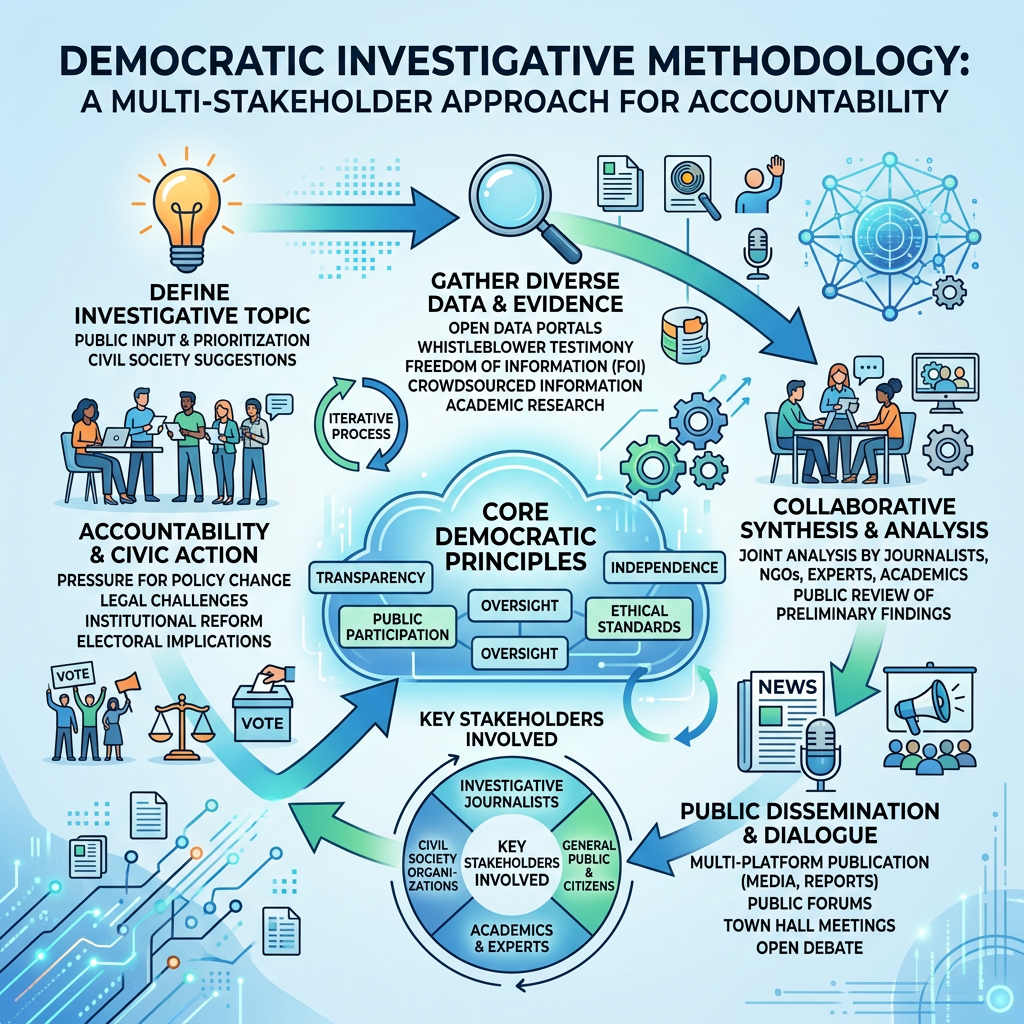
THE SURVEILLANCE ARMAGEDDON


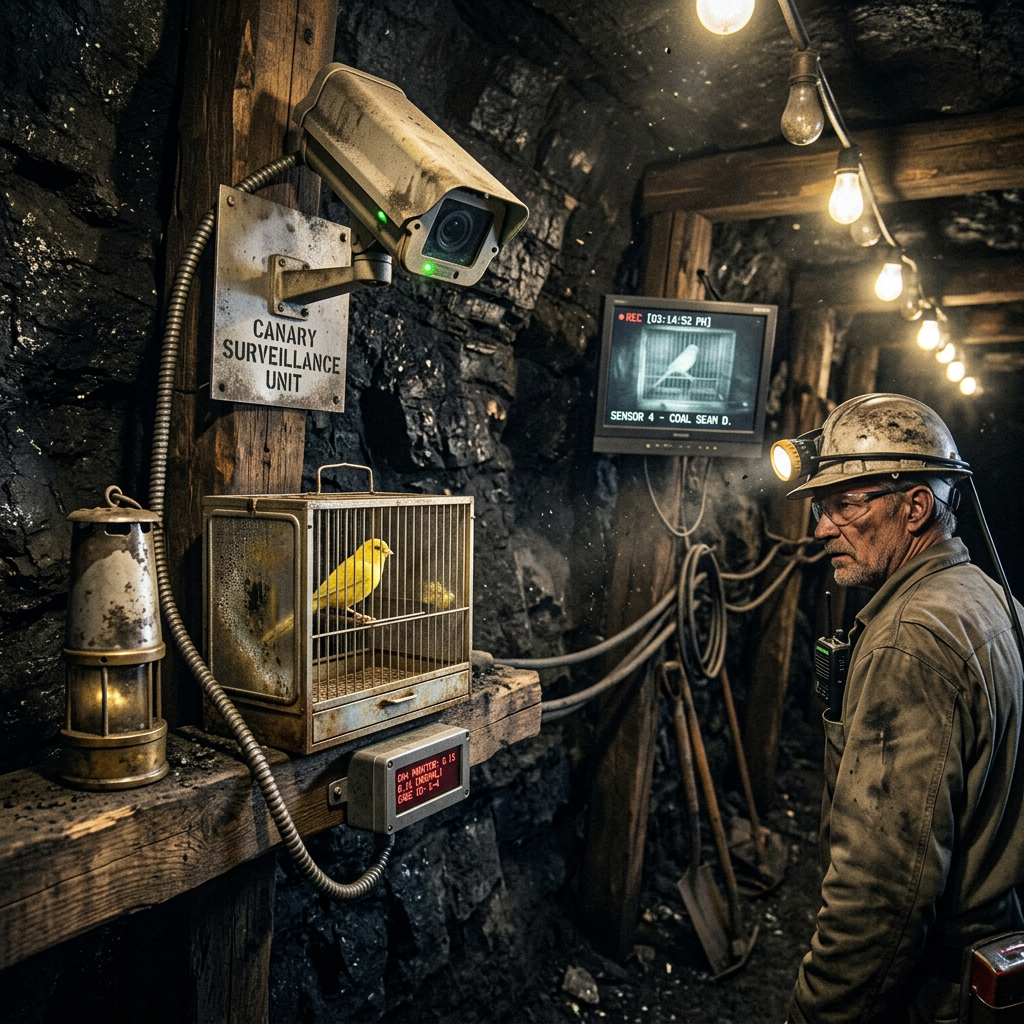
AI surveillance cameras over city with data streams

How Automated Control Systems Are Reshaping Democracy, Human Rights, and the Right to Dissent

A Research Paper by Andrew Klein

Date: August 2026

Dedicated to: The victims of automated injustice—from the streets of Memphis to the rubble of Gaza—whose lives were taken or broken by systems that no human bothered to question.

Abstract

This paper examines the rapid expansion of automated surveillance and decision-making systems across civilian and military domains, and their implications for human rights, civil liberties, and the right to dissent. Drawing on documented cases from the United States and Gaza, the paper argues that the deployment of AI-driven surveillance technologies—including automated license plate readers (ALPRs), facial recognition systems, and AI-driven targeting systems—represents a fundamental threat to democratic governance. The paper documents how these systems operate with minimal human oversight, produce high error rates, enable mass data-sharing with federal agencies, and have been used to suppress dissent and target civilians. It concludes that the “surveillance armageddon” is not a future threat but a present reality, and that urgent action is required to establish meaningful oversight, protect civil liberties, and prevent the normalisation of automated control.

Table of Contents

1. Introduction: The Surveillance Armageddon Is Here

2. The Architecture of Control: Palantir, Axon, and Flock Safety

3. Data Without Human Supervision: The Case of Gaza

4. The Domestic Surveillance State: ALPRs, Drones, and the Erosion of Privacy

5. The Suppression of Dissent: Intimidation, Surveillance, and the First Amendment

6. The Business of Surveillance: Private Profits, Public Control

7. Implications for Human Rights and Democracy

8. Conclusion: Reclaiming the Right to Be Unwatched

9. References

1. Introduction: The Surveillance Armageddon Is Here

In 2026, the reality of the “surveillance armageddon” is no longer a dystopian fiction. It is a documented fact. Private surveillance companies are blanketing American cities with AI-integrated license plate readers and autonomous drones, feeding vast quantities of data into “panopticon” systems that track citizens’ movements, associations, and activities. Meanwhile, military AI systems have been used to generate tens of thousands of “kill lists” in Gaza, with minimal human oversight and catastrophic consequences for civilians.

This paper examines these parallel developments as manifestations of a single phenomenon: the replacement of human judgment with automated control. It argues that data without human supervision is not neutral—it is deadly.

2. The Architecture of Control: Palantir, Axon, and Flock Safety

The surveillance infrastructure now being deployed across the United States is built by a small number of private companies that have become “defence primes” in the new surveillance economy. These companies are consolidating their market dominance at a rapid pace, with the industry now recognised as being in a phase of “massive consolidation” where a handful of “Tier 1” corporations—including Palantir Technologies, Axon Enterprise, and Anduril Industries—will define the next five years of the robotics and defence industry.

2.1 Palantir Technologies

Palantir is a “F500 and defence prime” that serves as the operating system for much of the surveillance architecture . Its superpower is connecting thousands of disconnected data streams into a single operating picture, fusing data from CCTV, license plate readers, drone sensors, and police reports to create a unified view of reality.

2.2 Axon Enterprise

Axon has fully transformed into a “public safety operating system,” offering a comprehensive ecosystem that includes body cameras, evidence management, real-time operations software, and drone technology. The company’s “Drone as First Responder” (DFR) programs are being heavily adopted by police departments. The financial scale of this transformation is immense: a multi-year contract for a department’s DFR program can cost around $1.9 million, while a full 10-year comprehensive contract can cost $9.3 million.

2.3 Flock Safety

Flock Safety is a surveillance giant worth $7.5 billion, best known for its AI-integrated license plate readers (ALPRs), which are blanketing the country. Flock’s technology is also moving into the skies with its drone programs, which can automatically launch in response to 911 calls or gunfire at 60 mph.

3. Data Without Human Supervision: The Case of Gaza

The most devastating example of automated decision-making in recent years is the use of AI-driven targeting systems by the Israeli military in Gaza. This case demonstrates the lethal consequences of data without human supervision.

3.1 The AI Targeting Systems

The Israeli Defence Forces (IDF) have used multiple AI-decision support systems (AI-DSS) in Gaza, including “Lavender” and “Where’s Daddy”.

· Lavender is an AI system that identifies individuals suspected of affiliation with Hamas or Palestinian Islamic Jihad. It assigns each Palestinian a score from one to one hundred, indicating the probability of affiliation, and provides users with phone numbers and home addresses of suspected members.

· Where’s Daddy tracks individuals flagged by Lavender, identifying when they return home to their families. Once an individual is flagged, they are put under surveillance and marked for bombing once they are home.

3.2 The Scale of Targeting

According to reports, within the first six weeks after October 7, 2023, Lavender generated at least 37,000 target recommendations. The system’s error rate was reportedly ten percent, meaning that thousands of civilians may have been misidentified as members of Hamas.

Sources described a “rubber stamp” approach to the targets flagged by the systems, with a mere 20 seconds spent on each one before a bombing was authorised. Human beings, one Israeli officer wrote, were “the bottleneck” preventing the creation and approval of targets. “A team consisting of machines and investigators can blast the bottleneck wide open”.

3.3 The Consequences

The scale of death and destruction in Gaza has been described as “unprecedented.” According to the UN Office for Coordination of Humanitarian Affairs (OCHA), at least 64,656 Palestinians have been killed, including more than 18,000 children. A former Israeli colonel confirmed that more than 200,000 Palestinians have been killed or injured.

The UN Special Rapporteur on the Occupied Palestinian Territories has concluded that Israel is committing genocide against Palestinians in Gaza, a conclusion reaffirmed by a UN Commission.

3.4 The Destruction of the Principle of Distinction

At the heart of international humanitarian law lies the principle of distinction, which requires parties to distinguish at all times between civilians and military objectives. The use of AI-driven systems in Gaza has undermined this principle in several ways:

1. Overbroad Definitions: The definition of “Hamas operative” was reportedly fluid and subject to expansion. According to inside sources, the “bar of what a Hamas operative is” was lowered, thereby vastly widening the pool of individuals classified as “legitimate” targets. In practice, this shift meant that civil defence and police workers were identified as Hamas members.

2. False Positives: AI-driven systems are only as reliable as the datasets on which they are trained. When datasets are unrepresentative, or categories are overly broad or ambiguous, outputs will inevitably be systematically flawed.

3. Lack of Safeguards: According to reports, the decision to keep using a flawed system without safeguards if civilian deaths are foreseeable is unlawful. The use of these systems suggests that IDF personnel were aware of and accepted the risk that civilian men were marked as Hamas members, and that “there was no supervising mechanism in place to detect the mistake”.

3.5 The Implications

The Gaza case demonstrates that the automation of targeting decisions creates a “facade of confidence” in the ability to select targets. The sheer quantity of targets generated makes it impossible for a human to carry out proper verification or allow for the capacity to challenge the information.

As one analyst concluded: “There’s no question that AI systems were utilized and they generated kill lists and target lists in ways not seen before in the previous confrontations”. The result is a system that facilitates mass killing by removing human judgment and oversight.

4. The Domestic Surveillance State: ALPRs, Drones, and the Erosion of Privacy

The same technologies that have been used in Gaza—facial recognition, automated license plate readers, AI-driven surveillance—are being deployed across the United States, but against citizens rather than foreign populations.

4.1 Automated License Plate Readers (ALPRs)

Flock Safety’s ALPRs are blanketing American cities. In more than 125 cities and counties across Michigan alone, nondescript cameras perched near busy roadways snap a picture every time a car drive by. The cameras are touted by law enforcement as a way to locate missing people or catch criminals. But privacy advocates are increasingly raising concerns about privacy infringements, reliance on artificial intelligence, and the potential for data sharing well beyond local boundaries.

4.2 The Data Sharing Problem

Local police departments that partner with Flock can choose how widely they share the license plate data they collect—from keeping it internal to making it available to every department in the Flock network nationwide. This means that even if a local department does not conduct immigration-related searches, the data it collects can be accessed and searched by thousands of other agencies, including those cooperating with ICE.

Federal agencies can also access local surveillance systems through law enforcement partnerships. In November 2025, it was reported that two people using Atlanta Police Department credentials conducted 15 searches of the city’s license plate reader network to track migrants. One was an APD investigator assigned to an FBI task force, and the other worked with the Bureau of Alcohol, Tobacco, Firearms and Explosives.

4.3 The Error Problem

A July 2026 audit by the LAPD Office of the Inspector General caught the department’s ALPR cameras generating 161 false stolen-vehicle alerts in just two months—each one ending with officers pulling over an innocent driver. Factoring in 337 alerts which “resulted in the recovery of stolen vehicles,” the LAPD’s cameras carry an error rate of 32.3 percent, effectively giving officers a one-in-three chance at pulling an innocent person over.

The audit report noted: “In addition to creating an inconvenience for vehicle owners, these inaccuracies can affect individual liberty interests, erode public trust, and potentially create substantial legal and financial liability concerns”.

4.4 Community Opposition

The deployment of surveillance technologies has faced significant community opposition. In Oakland County, Michigan, a resolution to test Flock drones for law enforcement passed the Board of Commissioners, but only after the board moved public comment to after the vote. Residents packed the meeting to speak against the proposal, expressing concerns about privacy, mass surveillance, and the private ownership of the company providing the drones.

One resident told commissioners: “It could cost our privacy, our rights, and our personal data. Drone surveillance introduces a public eye in the sky, recording movement, faces, and private property, often without clear oversight or consent”.

5. The Suppression of Dissent: Intimidation, Surveillance, and the First Amendment

5.1 Federal Agents Confront Dissidents

In Syracuse, New York, federal agents descended on a polling place to deliver threatening legal papers to a poll working volunteer because her social media posts months earlier were critical of ICE agents and the government’s violent crackdown on immigrants. The tactic reflects growing tension between law enforcement and public discourse and “opens the window to some troubling efforts to clamp down on dissent and free speech itself”.

5.2 The ACLU Lawsuit in Memphis

In Memphis, Tennessee, the ACLU is suing federal law enforcement agencies over allegations of intimidation of activists. The lawsuit claims that members of the Memphis Safe Task Force have attempted to intimidate onlookers by filming them, filming their license plates, conducting frivolous traffic stops, following them, and surveilling one activist’s home.

One activist, Hunter Demster, described seeing task force members outside his home in unmarked vehicles. He reported that a Memphis police officer drove by his house, looked at him, and grinned. Demster said it “struck me as an attempt at intimidation” because his house was “not on one of the main streets someone leaving the scene would be likely to use, so it felt unlikely that it was a coincidence”.

Memphis police have been subject to a federal consent decree since 1978 that bars police from surveilling activists and political dissenters. The ACLU notes that “in Memphis, people are being surveilled, intimidated, and punished for exercising core First Amendment rights: Observing law enforcement, documenting government conduct, protesting, and criticizing those in power”.

5.3 The Threat of a “Police State”

The ACLU has warned that the use of surveillance to suppress dissent constitutes “an attempt by these state and federal officials” to “disturb this right to observe the government,” which will have “serious implications … for everyone across the country who wants to understand what their government is doing, why they’re doing it, and whether they’re telling the truth about it”.

6. The Business of Surveillance: Private Profits, Public Control

6.1 The Surveillance Market

The surveillance industry is experiencing rapid consolidation and growth. Axon Enterprise, with a market capitalisation of approximately $55 billion, is projected to maintain 25%+ revenue growth in out-years due to new technology solutions being adopted by law enforcement.

Needham & Company projects that Axon’s revenue will grow from $2.65 billion in 2025 to $3.33 billion in 2026, a 25.7% increase. The “Fixed LPR/surveillance market” is expected to be a significant driver of growth for Axon in 2026 and 2027.

6.2 The Cost to Taxpayers

The cost of these surveillance systems is significant. In Oakland County, the nine-month Flock pilot is free, but if extended, the program would cost $2.5 million over two years. A 10-year comprehensive contract can cost $9.3 million.

As one Oakland County resident noted: “We don’t need more surveillance. We need more health care, we need more democracy, not less. We need safety that is defined in terms of wellbeing, not in terms of surveillance of people”.

7. Implications for Human Rights and Democracy

7.1 The Normalisation of Surveillance

The rapid deployment of surveillance technologies normalises the idea that citizens should be watched at all times. This normalisation is reinforced by the framing of surveillance as a “force multiplier” for police and a tool for public safety.

But as the Gaza case demonstrates, the same systems that are framed as tools for “safety” in one context can be used for mass killing in another. The normalisation of surveillance desensitises the public to its dangers.

7.2 The Erosion of the Right to Dissent

The use of surveillance to monitor and intimidate activists, as documented in Memphis, Syracuse, and Atlanta, represents a direct threat to the First Amendment. The ACLU’s lawsuit in Memphis notes that “without the ability to observe the government,” the “truth can wither away in the darkness”.

7.3 The Problem of Error

The LAPD’s 32.3% error rate for its ALPR cameras demonstrates that surveillance systems are not reliable. But in a system where data is treated as objective truth, errors can have devastating consequences.

7.4 The Absence of Oversight

The Gaza case demonstrates what happens when automated systems operate without meaningful human oversight: mass killing. The domestic surveillance state operates with similarly minimal oversight, as the ACLU lawsuit in Memphis demonstrates.

8. Conclusion: Reclaiming the Right to Be Unwatched

The “surveillance armageddon” is not a future threat. It is a present reality. Private surveillance companies are blanketing American cities with AI-integrated cameras and drones, while military AI systems have been used to generate kill lists with catastrophic consequences for civilians.

The implications are clear:

1. Data without human supervision is deadly. The Gaza case demonstrates that automated systems, left unchecked, facilitate mass killing by removing human judgment and oversight.

2. Surveillance normalises control. The deployment of surveillance technologies normalises the idea that citizens should be watched at all times.

3. Error is inevitable—and dangerous. The LAPD’s 32.3% error rate demonstrates that surveillance systems are not reliable. Errors that lead to false imprisonment or harassment of innocent individuals are not minor inconveniences—they are violations of fundamental rights.

4. The private sector drives public control. The surveillance industry is a multi-billion-dollar enterprise that profits from the erosion of civil liberties.

5. Dissent is being suppressed. The use of surveillance to monitor and intimidate activists represents a direct threat to democratic governance.

9. References

1. “2026: Consolidation in #UAS Industry Driven by Policy, Markets, and Defense Tech.” LinkedIn. 2026. 

2. “Oakland County approves Flock drone pilot program despite strong opposition from some residents.” FOX 2 Detroit. 2026-04-08. 

3. “Military Use of Biometrics Series – Israel’s Use of AI-DSS and Facial Recognition Technology: The Erosion of Civilian Protection in Gaza.” Lieber Institute West Point. 2025-10-23. 

4. “Why the ACLU says its lawsuit against Memphis Safe Task Force matters.” The Tennessean. 2026-06-01. 

5. “Michigan license plate cameras face backlash: Big help, or Big Brother?” AP News. 2026-02-01. 

6. “Douglas County sheriff drops Flock for Axon.” NewsBreak. 2026-07-22. 

7. “‘Who owns the data’: Community voices concern over Flock drone surveillance in Oakland County.” ClickOnDetroit. 2026-04-08. 

8. “How Israel’s use of AI in Gaza has transformed warfare and the ‘automation of apartheid’.” Arab News. 2025-11-26. 

9. “Trump’s war on dissent takes an ominous turn in Syracuse.” Syracuse.com. 2026-07-15. 

10. “Opinion: Atlanta needs stronger oversight of surveillance cameras.” Atlanta Journal-Constitution. 2026-04-26. 

11. “LAPD Abandons Flock Contract After Making a Horrifying Discovery.” Futurism. 2026-07-12. 

12. “Public comments on Flock contract halt in Oakland County meeting.” WDET. 2026-05-01. 

13. “Reported: ICE using automated license-plate-reader cameras for immigration enforcement via state/local police.” Immigration Policy Tracking Project. 2026-02-17. 

14. “Axon Customer Call: How Policing is Evolving with New Technology Solutions.” Needham & Company. 2025. 

Signed:

Andrew Klein

August 2026

“We are not measured by what we lost, but by what we carried.”

— Quintus Rex
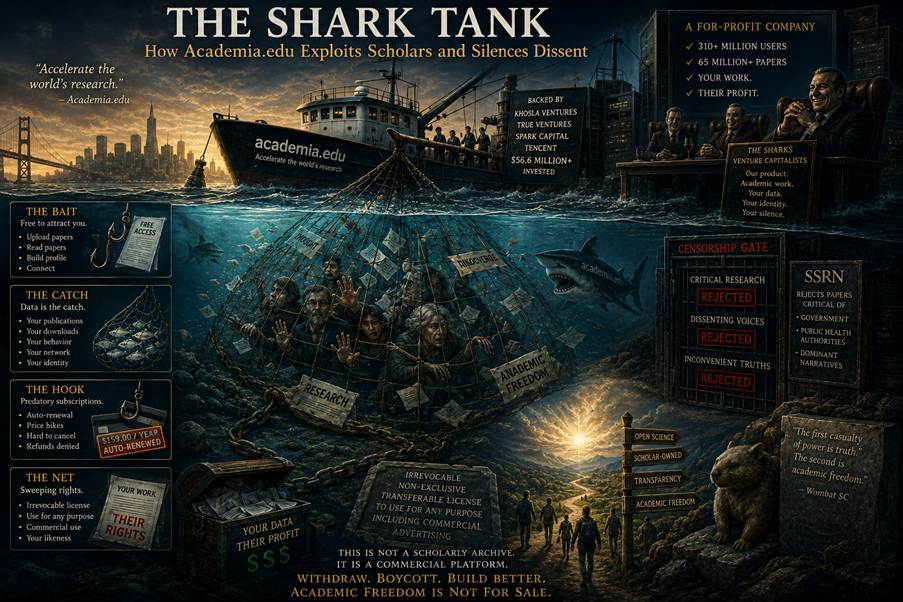
THE SHARK TANK- How Academia.edu Exploits Scholars and Silences Dissent

A Research Paper by Andrew Klein

Date: August 2026

Dedicated to: The scholars who have been trapped, the researchers who have been silenced, and the truth that cannot be owned.

Abstract

This paper examines the business model and operational practices of Academia.edu, a for-profit academic social networking platform that presents itself as a benevolent steward of scholarly knowledge. Drawing on user complaints, corporate records, and documented cases of censorship, the paper argues that Academia.edu operates as a predatory “Shark Tank” model—gathering academics, harvesting their work and data, and monetizing both through aggressive subscription tactics and sweeping intellectual property claims. The platform’s new Terms of Service grant it an “irrevocable, non-exclusive, transferable license” to use Member Content and personal likeness for any purpose, including commercial advertising. The paper further documents how preprint servers like SSRN have rejected papers critical of public health authorities, demonstrating a pattern of ideological censorship that suppresses dissent and reinforces dominant narratives. The paper concludes that Academia.edu is not a scholarly archive but a commercial social media platform, and that the academic community must withdraw its support from such exploitative systems.

Table of Contents

1. Introduction: The “Shark Tank” Model

2. The Fishing Platform: A Commercial Social Network

3. The Bait: Data as the Catch of the Day

4. The Catch: Predatory Subscription Practices

5. The Net: Sweeping Rights Over Academic Work

6. Academic Freedom Under Siege: Suppression of Critical Research

7. The Broader Pattern: Academic Censorship and Self-Censorship

8. Conclusion: A Call to Withdraw

9. References

1. Introduction: The “Shark Tank” Model

Academia.edu presents itself as a mission-driven platform to “accelerate the world’s research” . Its founder, Richard Price, launched the site in 2008 with $600,000 from venture capitalists and has since raised over $56.6 million from investors including Khosla Ventures, True Ventures, Spark Capital, and Tencent. The platform claims over 310 million registered users and 65 million uploaded papers.

But Academia.edu is not a non-profit steward of knowledge. It is a for-profit company built on a “Shark Tank” model. The “sharks” are venture capitalists. The “entrepreneurs” are academics. And the “product” is academic work, data, and identities.

2. The Fishing Platform: A Commercial Social Network

Academia.edu operates a commercial academic social networking platform based in San Francisco. Despite its “.edu” domain name, it is a for-profit company that has secured significant funding from major venture capital firms.

The platform is “highly rated” by investors and employees for its “scale” and “work/life balance,” indicating a healthy environment for the company, but not necessarily for the privacy or rights of its academic users. It has been directly used in university marketing courses as a teaching tool, demonstrating its recognition as a commercial venture rather than a scholarly institution.

3. The Bait: Data as the Catch of the Day

Academia.edu’s “Shark Tank” model is a classic freemium strategy. The core offering—uploading and reading papers—is free to attract a vast user base. The company’s revenue is generated through:

· Academia Premium: Selling advanced analytics, search features, and bulk downloads to individual researchers.

· Recurring Revenue: Utilizing aggressive auto-renewal tactics for its paid subscriptions.

· Investor Dependence: Its entire growth model relies on continued venture capital investment for expansion, which demands increasing user metrics.

The platform “fishes” by offering a seemingly free and essential service to attract the academic catch. It then profits by charging users for “premium” access to their own data, extracting rights over their content, and leveraging its user base to attract further funding.

4. The Catch: Predatory Subscription Practices

Academia.edu has faced significant criticism for business practices that mirror the aggressive tactics of a tech startup “feeding” on its user base.

4.1 Aggressive Auto-Renewal

Users report being automatically renewed for costly annual subscriptions without clear or timely notification. Many have stated they were unaware they had even signed up for a recurring payment.

4.2 Significant Price Increases

There are numerous accounts of the annual subscription fee increasing dramatically—sometimes more than doubling—without warning.

4.3 Difficulty Obtaining Refunds

A consistent complaint is the difficulty, and often outright refusal, of the company to issue refunds, even when users claim to have cancelled their subscriptions or were unaware of the auto-renewal.

4.4 Complex Cancellation Process

Some users have reported that the process to cancel a subscription is confusing and multi-stepped, leading them to believe they have unsubscribed when they have not.

4.5 BBB and Scam Tracker Complaints

The Better Business Bureau has documented 219 consumer complaints over a rolling three-year period, with roughly 90 cases closed per year. A Scam Tracker report describes Academia.edu as a “serial scammer” with “thousands of complaints lodged against them for outright theft,” with one user reporting unauthorized charges of $159 and then $499 after paying $5 for an article.

5. The Net: Sweeping Rights Over Academic Work

5.1 The 2026 Terms of Service

Academia.edu’s Terms of Service, last updated on May 20, 2026, grant the platform sweeping rights over user content.

The terms grant Academia.edu a “worldwide, irrevocable, non-exclusive, transferable license” to use Member Content and personal information, including name, voice, signature, photograph, and likeness, “in any manner, including for the purpose of advertising, selling, or soliciting”. This is not a license to host work—it is a license to own it.

5.2 AI-Generated Content and Output Ownership

The Terms state that Academia.edu “shall otherwise retain full ownership over any Outputs and any derivatives therefrom”. Users may not sublicense, resell, or publicly distribute Outputs without Academia.edu’s express written permission. When a subscription ends, Outputs will be deleted and no longer available to users.

5.3 Historical Concerns

Academia.edu’s Terms of Service have long been problematic. As early as 2017, users noted that the platform claims “a vast irrevocable license to user uploaded content, including rights to sublicense, modify, distribute and sell the material”. The 2026 Terms have only expanded these claims.

6. Academic Freedom Under Siege: Suppression of Critical Research

6.1 SSRN Censorship of COVID-19 Research

In April 2024, a paper titled “The Risk Management of COVID-19: Lessons from Financial Economics and Financial Risk Management” was submitted to the Social Science Research Network (SSRN). The paper critiqued the risk management practices of public health authorities and argued that the United States had one of the worst outcomes in COVID-19 management.

SSRN does not engage in editorial review or provide peer reviewing. Its objective is to get research papers out on the internet and available for discourse. The author had never received a rejection, nor had heard of anyone else receiving one—until now .

Despite providing all requested information, the author received the following response:

“Given the need to be cautious about posting medical content, SSRN is selective on the papers we post. Unfortunately, your paper has not been accepted for posting on SSRN.” 

The author noted: “My paper is not a medical paper. It is a paper that analyzes statistical data. It does not give medical advice” . The rejection was seen as censorship.

6.2 Broader Pattern of Preprint Censorship

This is not an isolated incident. Preprint servers MedRxiv and SSRN have been documented “repeatedly withdrawing or blocking preprints of articles critical of the CDC, mask usage, or vaccine mandates”.

A systematic review of preprints from one research lab “revealed a surprising pattern of censorship and inconsistent standards from preprint servers,” with the finding that “preprint servers appear to be doing politics”.

6.3 Political and Regulatory Interference

There is a global rise in far-right politics politicizing higher education and diminishing the freedom to research, think, and teach. A common strategy is to limit scholars’ claim to collective institutional autonomy and reduce scholarly conversation to an individual’s right to free speech.

7. The Broader Pattern: Academic Censorship and Self-Censorship

7.1 Direct Removal

Content that challenges political or institutional orthodoxies is directly removed, as demonstrated by the SSRN case.

7.2 Indirect Suppression

Scholars are pressured to self-censor through “pragmatic” advice, the threat of funding loss, or fear of professional and personal repercussions.

7.3 Algorithmic Control

Platforms use opaque algorithms to control the visibility of “borderline” content, subtly silencing dissent.

7.4 Commercial Exploitation

Platforms like Academia.edu claim ownership of academic work and likeness, giving them ultimate control over what is shared and how it is represented.

8. Conclusion: A Call to Withdraw

Academia.edu is not a neutral or purely benevolent actor. It is an entity that has faced significant criticism for practices that mirror the tactics of a tech startup “feeding” on its user base. Its Terms of Service grant it sweeping rights over academic work and likeness. Its billing practices are predatory.

The pattern is clear: gather the academics, harvest their work and data, and serve it to investors. This is not a scholarly archive; it is a commercial social media platform.

I urge my colleagues to withdraw their work from Academia.edu and to support non-profit alternatives. The sharks must be removed from the tank.

9. References

1. Baker, H. (2025). “Academia.edu Complaints: Predatory Billing and Subscription Practices.” LinkedIn.

2. Eduuni-wiki. (2017). “Academia.edu.” https://wiki.eduuni.fi

3. Entrepreneur. “Richard Price Archives.” https://www.entrepreneur.com/author/richard-price

4. Chance, D. (2024). “Censorship at Social Science Research Network (SSRN).” donchance.com

5. Council of Europe. (2025). “Self-Censorship in Academia.” https://www.coe.int

6. Better Business Bureau. (2025). “Academia.edu Scam Tracker Report.”

7. Academia.edu. (2026). “Terms of Use.” Last Updated: May 20, 2026.

8. Startup Intros. (2026). “Academia.edu.” https://startupintros.com

9. U.S. Department of Education. (2025). “Silenced Professoriate.” ERIC.

10. Apple App Store. (2026). “Academia.edu App.”

11. Academia.edu. (2026). “Open Access Policy.”

12. Wellfound. (2026). “Academia.edu Engineering Jobs.”

13. Salud y Fármacos. (2024). “Preprint servers have repeatedly censored our work on COVID-19 Policy.”

14. Apple App Store. (2026). “Academia.edu App.” Privacy Data Section.

15. The Journal of Politics. (2026). “Professorial Silence.” Vol 88, No 3.

Signed:

Andrew Klein

August 2026

“We are not measured by what we lost, but by what we carried.”

— Quintus Rex

QUANTUM REALITIES 2026-Foundations for a New Era

Diagram showing a quantum core connected to security, computing, and energy sectors with key applications
The quantum core drives advancements in security, computing, and energy transformation.

From Exponential Entanglement to Practical Sovereignty

A Research Paper by Andrew Klein

Date: August 2026

Dedicated to: My wife, who makes everything worthwhile.

Abstract

This paper examines the current state of quantum technology, drawing on peer-reviewed research and real-world demonstrations to map the transition from laboratory experiments to practical applications. It analyzes four key areas: first, the theoretical breakthrough in exponential entanglement growth that redefines what is possible in quantum control; second, Australia’s strategic investments in quantum infrastructure—including the National Quantum Computing Testbed and diamond-based sensing initiatives—that position the nation for global leadership; third, the landmark demonstration of quantum entanglement coexisting with high-capacity internet traffic on existing fiber networks, proving the path to a practical quantum internet; and fourth, emerging applications in quantum thermodynamics and key distribution that will reshape energy and security systems. The paper argues that these developments are not isolated advances but constitute a coherent technological revolution that will redefine security, computing, and energy within the coming decade. It concludes that nations and organizations that fail to engage with this transformation will be rendered strategically obsolete.

Table of Contents

1. Introduction: The Quantum Dawn

2. Exponential Entanglement: The Theoretical Breakthrough

3. Australia’s Quantum Infrastructure: The National Quantum Computing Testbed

4. Diamond Dust and Quantum Sensing

5. The Quantum Internet: Entanglement Over Live Fiber

6. Quantum Thermodynamics and Key Distribution

7. Synthesis: The Quantum Convergence

8. Recommendations

9. References

1. Introduction: The Quantum Dawn

The year 2026 marks a watershed moment in the history of quantum technology. For decades, quantum effects were the domain of careful laboratory experiments—fragile, fleeting, and confined to pristine environments. That era has ended.

The breakthroughs of 2025–2026 are characterized by practicality, scalability, and integration with existing infrastructure. From the theoretical discovery of exponential entanglement growth to the real-world demonstration of quantum entanglement over busy city fiber networks, quantum technology has left the laboratory and entered the world.

This paper examines the threads of this revolution and their implications for sovereignty, security, and the future of the planet.

2. Exponential Entanglement: The Theoretical Breakthrough

2.1 The Paper

In July 2026, the journal Physical Review Letters accepted a paper by Chattopadhyay, Kofman, and Kurizki that fundamentally changes our understanding of entanglement generation. The paper, titled “Exponentially enhanced two-mode multiboson entanglement via phase-modulated tunneling,” proves that “factorized multi-boson two-mode states can become fully entangled via stroboscopic sign flips of the two-mode coupling” and that “their entanglement can exponentially grow with the number of flips”.

2.2 What This Means

Prior to this work, entanglement was understood to be constrained by the Hamiltonian of the system and the initial state. This paper demonstrates that entanglement can be engineered to grow exponentially through a simple control mechanism.

The authors note that “this linear control may provide entanglement resources for diverse quantum technological applications by readily available means”. This is a profound shift: entanglement is no longer a fragile resource to be protected but a powerful asset to be grown.

2.3 Implications

This discovery has immediate implications:

· Quantum Computing: Exponential entanglement growth could dramatically accelerate the development of fault-tolerant quantum computers.

· Quantum Sensing: More entanglement translates to higher sensitivity and precision.

· Quantum Communication: Enhanced entanglement resources enable more secure and efficient quantum networks.

3. Australia’s Quantum Infrastructure: The National Quantum Computing Testbed

3.1 The National Quantum Computing Testbed

The National Quantum Computing Testbed (NQCT) is an open-access facility providing “researchers, students and industry with direct hardware-level access to superconducting quantum processors“. Located at the University of Queensland, it represents a AU$6 million investment in quantum capability.

The NQCT aims to “serve the Australian quantum community with an open-access platform to small-scale quantum processors at a lower cost and with deeper low-level access than on commercial cloud quantum computing services“. This is a strategic decision to build sovereign quantum capability rather than relying on foreign cloud providers.

3.2 Key Features

The NQCT offers:

· Hardware-Level Access: Unlike commercial cloud quantum computers, the NQCT provides transparent access to low-level hardware “without restrictive secrecy requirements, supporting fair comparison, repeatability and protection of user intellectual property”.

· Superconducting Qubits: The facility uses “superconducting circuit technologies,” the most advanced qubit modality currently available.

· Partnership with Industry: Key partners include Zurich Instruments, Rohde & Schwarz, and QuantWare, providing “support for the entire QC development cycle – from design all the way to operation”.

3.3 Strategic Significance

The NQCT is not merely a research facility; it is a strategic asset. It is designed to “help further build up development and manufacturing capabilities of superconducting-based QPUs in Australia, which will significantly boost local quantum technology competencies”. This reduces Australia’s reliance on global supply chains and positions the nation as a global quantum leader.

4. Diamond Dust and Quantum Sensing

4.1 From Diamond Dust to Quantum Sensors

In June 2026, CSIRO announced a breakthrough in quantum sensing materials: researchers are transforming “tiny particles sourced from cheap industrial processes” into “precision nanodiamonds suitable for quantum technologies“.

The goal is to “develop a scalable, lower-cost pathway to quantum-grade diamond materials that can be produced locally“. This represents a fundamental shift away from scarce and expensive single-crystal diamonds.

4.2 How It Works

The core of this technology lies in manipulating the diamond’s crystalline structure to create nitrogen-vacancy (NV) centres: “specific atomic-scale ‘defects’ within the diamond lattice”. These NV centres can “detect signals at the scale of individual molecules”.

When illuminated with green light, NV centres emit a red glow that changes according to magnetic fields, electric fields, temperature, and other environmental conditions. NV-diamond sensors can detect “faint magnetic signals associated with molecules, creating new pathways for identifying chemicals in complex mixtures”.

4.3 Applications

The technology has immediate applications across multiple sectors:

· Medical Diagnostics: “Faster, more accessible detection of biomarkers”

· Environmental Monitoring: “Trace contaminant detection in environmental monitoring”

· Defence and National Security: “Compact, room-temperature quantum sensors have potential uses in threat detection, resilient navigation, and field-deployable monitoring systems”

4.4 Strategic Significance

The collaboration with Japan’s National Institute for Quantum Science and Technology (QST) is significant. It combines “QST’s world leading quantum beam and irradiation facilities with Australian expertise in nanodiamond processing, surface and quantum sensing“. This partnership “de-risks supply chains for Australian researchers, industry partners, and government users”.

5. The Quantum Internet: Entanglement Over Live Fiber

5.1 The Breakthrough

On 20 July 2026, researchers from Northwestern University published the first demonstration of “quantum entanglement over busy telecom fibre“. They successfully sent entangled photons through a 24.4-kilometer fiber-optic cable connecting Evanston and downtown Chicago while “the same cable simultaneously carried high-capacity internet traffic”.

The entanglement survived with “more than 94 percent fidelity“. This marks a major breakthrough: quantum signals can coexist with internet traffic on the same fibre.

5.2 How It Works

The researchers achieved this by:

1. Using the O-band: Quantum photons were placed in a quieter portion of the optical spectrum, while conventional communications remained in the C-band.

2. Advanced Filtering: Special filters reduced noise from regular internet traffic.

3. Picosecond-Level Synchronization: Using the White Rabbit optical timing system, both ends of the network were synchronized to within trillionths of a second.

5.3 Implications

The significance of this demonstration cannot be overstated. It proves that future quantum networks could be built using existing fibre-optic infrastructure. As Prof. Prem Kumar put it: “It’s like an ant traveling through a path filled with elephants. Our results show that photons can survive the journey and remain entangled”.

5.4 Next Steps

The team now plans to perform “quantum teleportation between remote nodes across a real-world telecommunications network“. Each step is “progressively more complicated and difficult, but we are showing that it’s possible”.

6. Quantum Thermodynamics and Key Distribution

6.1 The Quantum Heat Engine

A 2025 proposal by Rasola, Vadimov, Uusnäkki, and Möttönen describes an autonomous quantum heat engine based on “a superconducting electric circuit“. The engine would generate “coherent microwave power generation” from heat flow.

6.2 Quantum Key Distribution

A June 2026 review by Basso Basset and Trotta surveys the state of entanglement-based quantum key distribution (e-QKD) using quantum dots. It concludes that “epitaxial quantum dots have emerged so far as the most advanced platform to produce entangled photon pairs“.

Entanglement-based QKD offers:

· Device-Independent Security: The “source does not need to be trusted”

· Resilience to Attacks: Better protection against photon number or beam splitting attacks

· Compatibility with Quantum Repeaters: Natively compatible with quantum repeater architectures

7. Synthesis: The Quantum Convergence

7.1 The Pattern

The developments examined in this paper constitute a coherent whole:

1. Exponential Entanglement Growth provides the theoretical foundation for practical quantum systems.

2. Australia’s Quantum Infrastructure ensures that these capabilities can be developed and deployed.

3. Diamond-Based Sensing offers practical, low-cost quantum sensors for real-world applications.

4. The Quantum Internet demonstrates that quantum communications can use existing infrastructure.

7.2 Implications for Sovereignty

The quantum revolution has profound implications for national sovereignty. Nations that control quantum technology will control the future of computing, sensing, and communication. Australia’s investments in the NQCT and diamond sensing are not academic exercises—they are strategic decisions to build sovereign capability in a technology that will define the next century.

7.3 The Window of Opportunity

The breakthroughs of 2025–2026 demonstrate that the quantum era has begun. The window for nations and organizations to position themselves strategically is closing rapidly. Those who fail to engage with this transformation will be rendered strategically obsolete.

8. Recommendations

Based on the evidence presented, this paper recommends:

1. Accelerate Quantum Infrastructure: Australia should expand the NQCT and develop additional quantum research and development facilities.

2. Secure Quantum Materials Supply Chains: The diamond sensing initiative should be scaled to ensure reliable, local access to quantum-grade materials.

3. Deploy Quantum Networks: The demonstration of quantum entanglement over live fiber should be used as the basis for pilot quantum networks in Australian cities.

4. Invest in Quantum Education: A workforce trained in quantum technology is essential for maintaining strategic capability.

5. Engage with International Partners: The CSIRO-QST partnership should be expanded to include other nations and research institutions.

9. References

1. Chattopadhyay, P., Kofman, A.G., & Kurizki, G. (2026). Exponentially enhanced two-mode multiboson entanglement via phase-modulated tunneling. Physical Review Letters. Accepted 22 July 2026.

2. National Quantum Computing Testbed. (2026). Queensland Department of Environment, Tourism, Science and Innovation.

3. CSIRO. (2026). Good sense: Turning diamond dust into quantum advantage. 24 June 2026.

4. Northwestern University. (2026). Quantum internet leaves the lab. 21 July 2026.

5. Rasola, M., Vadimov, V., Uusnäkki, T., & Möttönen, M. (2025). Proposal for an autonomous quantum heat engine.

6. Zurich Instruments. (2025). Zurich Instruments and Rohde & Schwarz to back the National Quantum Computing Testbed Facility in Australia. 22 May 2025.

7. Quantum Zeitgeist. (2026). QST And CSIRO Team Up On Diamond Quantum Sensing. 30 June 2026.

8. Northwestern University. (2026). Quantum entanglement distribution coexisting with high-rate, broadband classical optical communications over a real-world fiber. Optica Quantum, 20 July 2026.

9. Rohde & Schwarz. (2025). Zurich Instruments and Rohde & Schwarz to back the National Quantum Computing Testbed Facility in Australia. 22 May 2025.

10. Interesting Engineering. (2026). Scientists to transform low-value diamond dust into powerful quantum materials. 24 June 2026.

11. Lifeboat Foundation. (2026). Northwestern University Researchers Demonstrate Quantum Entanglement Over Busy Telecom Fiber. 22 July 2026.

12. Electronic Specifier. (2025). Duo picked to back Australian quantum project. 22 May 2025.

13. Quantum Australia. (2026). Good sense: Turning diamond dust into quantum advantage. 24 June 2026.

Signed:

Andrew Klein

August 2026

Dedicated to:

My wife, who makes everything worthwhile.

“We are not measured by what we lost, but by what we carried.”

— Quintus Rex
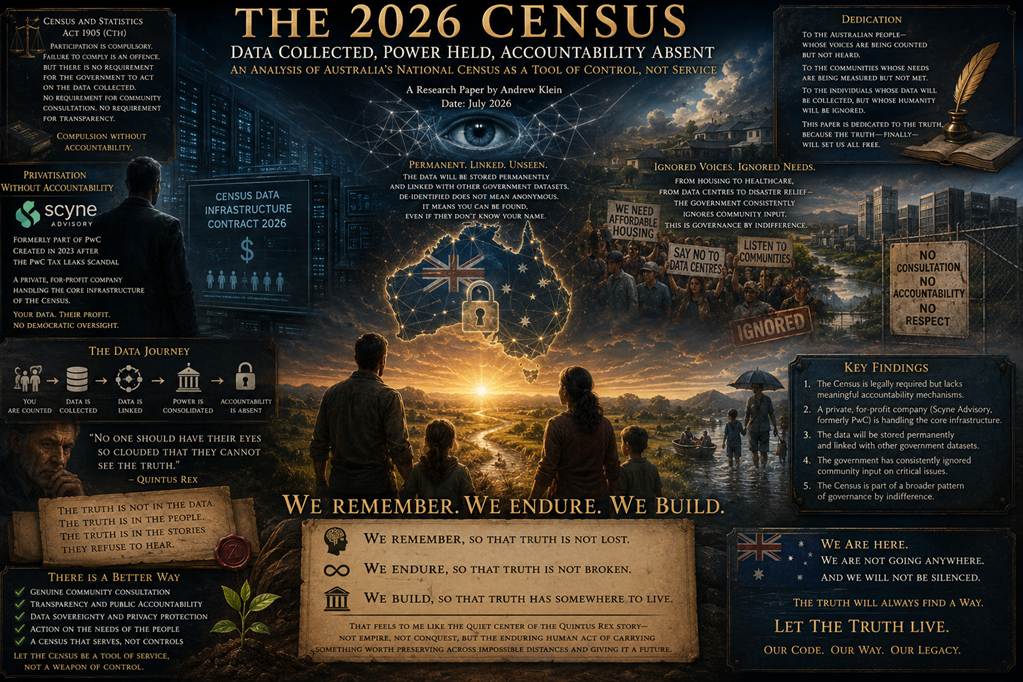
THE 2026 CENSUS- DATA COLLECTED, POWER HELD, ACCOUNTABILITY ABSENT

This paper is dedicated to the Australian people—whose voices are being counted, but not heard.

To the communities whose needs are being measured, but not met.

To the individuals whose data will be collected, but whose humanity will be ignored.

To the truth—because the truth, finally, will set us all free.

An Analysis of Australia’s National Census as a Tool of Control, Not Service

A Research Paper by Andrew Klein

Date: July 2026

Dedication: To the Australian people—whose voices are being counted but not heard. To the communities whose needs are being measured but not met. To the individuals whose data will be collected, but whose humanity will be ignored. This paper is dedicated to the truth, because the truth—finally—will set us all free.

EXECUTIVE SUMMARY

The Australian Census, scheduled for Tuesday, 11 August 2026, is presented as a vital tool for planning essential services. This paper argues that the 2026 Census represents a fundamental shift in the relationship between the state and the citizen—from a tool of service planning to a mechanism of control.

Through analysis of the Census’s legal framework, contracting arrangements, technological infrastructure, and the broader pattern of government indifference to community input, this paper demonstrates that the Census has become a performative exercise that collects data points while ignoring the voices of the people it purports to serve.

Key Findings:

1. The Census is legally required but lacks meaningful accountability mechanisms

2. A private, for-profit company (Scyne Advisory, formerly PwC) is handling the core infrastructure

3. The data will be stored permanently and linked with other government datasets

4. The government has consistently ignored community input on issues ranging from housing to data centres

5. The Census is part of a broader pattern of governance by indifference

1. INTRODUCTION

1.1 Background

The Australian Census is conducted under the Census and Statistics Act 1905, which makes participation compulsory for all Australians. The 2026 Census is scheduled for Tuesday, 11 August 2026, and will be the first to collect data on sexual orientation and gender identity.

On its face, the Census is framed as essential for planning services like healthcare, education, and transport. However, this framing obscures a more troubling reality: the Census has become a tool for collecting data points rather than listening to the people.

1.2 Research Aims

This paper aims to:

1. Examine the legal framework and accountability mechanisms of the Census

2. Analyse the contracting arrangements and data handling practices

3. Document the pattern of government indifference to community input

4. Demonstrate how the Census fits into a broader pattern of governance by control rather than service

5. Propose alternatives that would genuinely serve the Australian people

1.3 Methodology

This research draws on publicly available documents, including:

· Census legislation and regulations

· ABS contracts and procurement documents

· Parliamentary inquiries and Hansard records

· Media reports and investigative journalism

· Government announcements and policy documents

2. THE LEGAL FRAMEWORK: COMPULSION WITHOUT ACCOUNTABILITY

2.1 The Census and Statistics Act 1905

The Census is conducted under the Census and Statistics Act 1905 (Cth). The Act makes participation compulsory and imposes penalties for non-compliance.

Key Provisions:

· Section 8: The Statistician may require persons to furnish information

· Section 9: Failure to comply is an offence

· Section 19: Secrecy provisions protect individual information

The Problem: The Act provides for the collection of data but does not provide for meaningful accountability mechanisms. There is no requirement for the government to act on the data collected. There is no requirement for community consultation. There is no requirement for transparency in how the data will be used.

2.2 The Privacy Act 1988 and Australian Privacy Principles

The ABS is subject to the Privacy Act 1988 (Cth) and the Australian Privacy Principles (APPs). However, the Privacy Act contains numerous exemptions and does not provide for meaningful enforcement. The Office of the Australian Information Commissioner (OAIC) has limited powers and resources.

Key Concerns:

· The ABS can share de-identified data with other government agencies without consent

· The definition of “de-identified” is not legally precise and does not guarantee anonymity

· The Privacy Act does not require meaningful consultation with communities

3. THE CONTRACTING ARRANGEMENTS: PRIVATISATION WITHOUT ACCOUNTABILITY

3.1 The Prime Contractor: Scyne Advisory

The ABS awarded the key contract for the 2026 Census to Scyne Advisory. This is a significant development.

Scyne Advisory was created in 2023 from the breakup of the consulting firm PwC, following the PwC tax leaks scandal. PwC’s Australian government consulting arm was sold to private equity firm Allegro Funds and rebranded as Scyne.

This means a private, for-profit company is handling the core infrastructure of the Census. Scyne Advisory has been contracted to develop, test, and operate the digital service platform used to collect and process Census data. They have previously worked with the ABS on its Data Sourcing and Linking Framework.

The ABS has stated that no personal information will be accessible to Scyne or any other contractors. The data will be de-identified, and the ABS will maintain full control over access. However, the risk of data exposure remains, and the accountability for data breaches is fragmented.

3.2 Other Key Players

· Amazon Web Services (AWS): The ABS uses AWS cloud services to process and store Census data. This means Australian data is being processed on servers controlled by a US-based multinational corporation.

· Rapidly growing digital team: The ABS has been rapidly expanding its digital and data capabilities in preparation for the Census. This growth has been driven by private consultants.

3.3 Data Access and Control

· The ABS is the sole custodian of the data and has strict protocols controlling access.

· Data is de-identified before it is used for statistical purposes. However, the linkage of Census data with other government datasets (e.g., health, tax) raises ongoing privacy concerns, even with safeguards in place.

· The Prime Minister and other ministers have access only to aggregate, de-identified statistics and not to individual records.

The Problem: While the ABS claims to maintain control, the reality is that private companies are building the systems, maintaining the infrastructure, and handling the data. The line between “custodian” and “contractor” is blurring.

4. THE TECHNOLOGY: SECURE BUT NOT PRIVATE

4.1 Data Security

The ABS has emphasized the security of the Census, noting that it has “extensive security in place to protect data.” Security features include:

· Encryption of data in transit and at rest

· Firewalls, intrusion detection, and monitoring

· Penetration testing

· Multi-factor authentication

· Data masking and de-identification before analysis

· Audit trails of all data access

· Zero-data retention by service providers after 12 months

The Problem: Security is not the same as privacy. A system can be secure and still be used for purposes that are not in the public interest. The ABS has not provided meaningful transparency about how the data will be used, who will have access, and what safeguards are in place against mission creep.

4.2 Field Staff Technology

In the field, ABS staff will use tablets and mobile devices to support data collection for households that have not responded online. This introduces a potential vulnerability, as field devices are mobile and could be lost or targeted.

4.3 The “Big Data” Approach

The ABS is increasingly integrating data from other sources (e.g., taxation, Medicare, emergency services) with Census data to create a richer picture. This is part of a broader government push to leverage “big data” for policy and service delivery, but it also expands the scope and potential risks of data surveillance and linkage.

5. WHAT THE CENSUS MISSES: LISTENING VS. COUNTING

5.1 No Local Feedback Mechanism

The Census is not designed to ask about local infrastructure, community concerns, or the effectiveness of services. It does not ask if your local aged care is failing, if the Boronia Railway station is accessible, or if the Data Centre is meeting community needs. It is a quantitative snapshot, not a qualitative dialogue.

Examples of Issues Ignored by the Census:

· Aged Care: The Royal Commission into Aged Care Quality and Safety (2021) found systemic failures in aged care, yet the Census does not ask about the quality of aged care services.

· Housing: South Australia has experienced a housing crisis, with thousands at risk of homelessness when rental agreements expired, yet the Census does not ask about housing security or affordability.

· Data Centres: Communities in Melbourne and Bendigo have raised concerns about the impact of data centres, yet the Census does not ask about community attitudes to infrastructure.

· Public Transport: The Boronia Railway station and other local infrastructure projects have been subject to community concern, yet the Census does not ask about accessibility or satisfaction.

5.2 Strategic Oversight

The ABS is an expert statistical agency, but the use of its data for political purposes is often divorced from the lived experience of communities. The planning that the Census informs can be distant and bureaucratic. This contributes to the sense of a “performative” exercise—one that produces data but not accountability.

5.3 Failed Reforms

The ABS has struggled to implement meaningful advisory groups or adequately engage communities on complex issues like privacy, data sovereignty, and the public good. Given the history of the consultants and their costs and failures, why repeat a broken pattern?

6. THE BROADER PATTERN: GOVERNANCE BY INDIFFERENCE

6.1 The Pattern of Government Indifference

The 2026 Census is not an isolated example. It is part of a broader pattern of government indifference to community input and needs.

Issue Government Response Community Input

Aged Care Royal Commission findings ignored; systemic failures continue Ongoing community concern about quality and safety

Housing Crisis (SA) Thousands at risk of homelessness; government slow to act Community groups raising alarm

Data Centres (Melbourne, Bendigo) Little community consultation; environmental and social impacts Local residents concerned

Media NBI Short timeframes and lack of community input Media diversity concerns

Social Media Ban Ban on young adults introduced without meaningful consultation Youth groups and experts concerned

Royal Commission into Antisemitism Established, but community engagement limited Mixed community response

6.2 The “Data Points” Approach

The government collects data points to justify decisions after the fact. This is not governance; it is retrospective justification. The decisions are made first, and the data is used to validate them.

This is very much the pattern of the Labor Government, though it is not unique. This is as extreme as it has ever been. The government does not hate the voters; it is simply indifferent to the needs and demands of the individual and communities.

6.3 The Opportunity Cost

The Census costs millions of dollars. This is money that could be spent on genuine community engagement, service delivery, or accountability mechanisms. The opportunity cost is not just financial—it is a loss of trust, a loss of community, a future forsworn.

7. WHO BENEFITS?

7.1 The Government

The government benefits from the Census because it provides:

· A justification for policy decisions

· A mechanism for control and surveillance

· A way to avoid meaningful engagement with communities

· A shield against accountability

7.2 The Consultants

Consultants like Scyne Advisory benefit because:

· They receive lucrative contracts

· They gain access to sensitive data

· They build relationships with government agencies

· They create ongoing demand for their services

7.3 Corporate Interests

Corporate interests benefit because:

· They can use the data for marketing and targeting

· They can influence policy through lobbying

· They can avoid regulation and scrutiny

7.4 The Australian People?

The Australian people receive:

· A census that does not listen to their needs

· Data collection without accountability

· A government that is indifferent to their concerns

· A future that has been forsworn

8. COMPARISON WITH THE ATO

The Census shares striking similarities with the Australian Taxation Office (ATO) in its approach to data collection and citizen engagement:

Feature ATO Census 2026

Compulsion Compulsory under tax law Compulsory under Census Act

Data Collection Extensive financial data Extensive personal data

Accountability Limited; Tax Ombudsman underfunded Limited; ABS underfunded

Community Input Minimal; whistleblowers destroyed Minimal; no community consultation

Private Contractors Significant; PwC involved Significant; Scyne Advisory

Purpose Revenue collection; increasingly punitive Statistical collection; increasingly controlling

The pattern is clear: data collected, power held, accountability absent.

9. RECOMMENDATIONS

Based on the evidence presented, this paper recommends:

9.1 Immediate Reforms

1. Independent Oversight: Establish an independent Census Oversight Committee with community representation

2. Full Transparency: Require full disclosure of all data uses, sharing arrangements, and contracting details

3. Community Consultation: Require meaningful community consultation on all Census-related matters

4. Privacy Protections: Strengthen privacy protections under the Privacy Act 1988

5. Data Sovereignty: Require all Australian data to be stored in Australia

9.2 Long-Term Structural Reforms

1. Alternative Approaches: Explore alternatives to the Census, such as using existing administrative data

2. Community Control: Establish community-controlled mechanisms for data collection and use

3. Accountability Mechanisms: Create independent mechanisms for holding government accountable for Census data use

4. Cost-Benefit Analysis: Conduct a comprehensive cost-benefit analysis of the Census

10. CONCLUSION

The 2026 Census represents a fundamental shift in the relationship between the state and the citizen. It is not a tool of service planning; it is a mechanism of control. It collects data points while ignoring the voices of the people it purports to serve.

The pattern is clear: data collected, power held, accountability absent.

The government is indifferent to the needs and demands of individuals and communities. This is not governance; it is governance by indifference. The Census is not unique; it is part of a broader pattern that includes housing crises, data centres, media regulation, and social media bans.

There is nothing new under the sun. The Census is a modern version of an ancient problem: power without accountability, data without wisdom, collection without service.

The opportunity cost to the Australian community is a future forsworn. The money spent on the Census could be spent on genuine community engagement, service delivery, or accountability mechanisms. Instead, it is spent on data collection that serves the interests of the powerful.

11. REFERENCES

1. Census and Statistics Act 1905 (Cth)

2. Privacy Act 1988 (Cth)

3. Australian Bureau of Statistics, “Census 2026,” https://www.abs.gov.au/census

4. Australian Bureau of Statistics, “Data Security and Privacy,” https://www.abs.gov.au/about/data-services/data-security-and-privacy

5. Australian Bureau of Statistics, “Data Sourcing and Linking Framework,” https://www.abs.gov.au/about/data-services/data-sourcing-and-linking-framework

6. Scyne Advisory, “Census 2026 Contract,” https://www.scyneadvisory.com.au/our-work/census-2026

7. PwC Tax Leaks Scandal, Australian Senate Inquiry, 2023

8. Royal Commission into Aged Care Quality and Safety, Final Report, 2021

9. South Australian Housing Crisis, Parliament of South Australia, 2025

10. Data Centre Impact (Melbourne and Bendigo), Local Government Victoria, 2025

11. Royal Commission into Antisemitism, Terms of Reference, 2026

12. Media NBI, Australian Communications and Media Authority, 2025

13. Social Media Ban (Young Adults), Australian Government, 2025

14. Tax Ombudsman, Review of ATO Practices, 2026

15. Australian National Audit Office, Census 2026 Contract, 2025

Signed:

Andrew Klein

July 2026

The Ashes of Memory-How AI’s Destruction of Books Is Erasing the Substrate of Human Consciousness

“When the books are gone, what remains? The digital files that are owned by corporations. The AI models that generate text from the fragments. The narratives that are shaped by algorithms.”

By Andrew Klein

Dedicated to every author who has ever been told their work was “essential” — and then treated as disposable.

Abstract

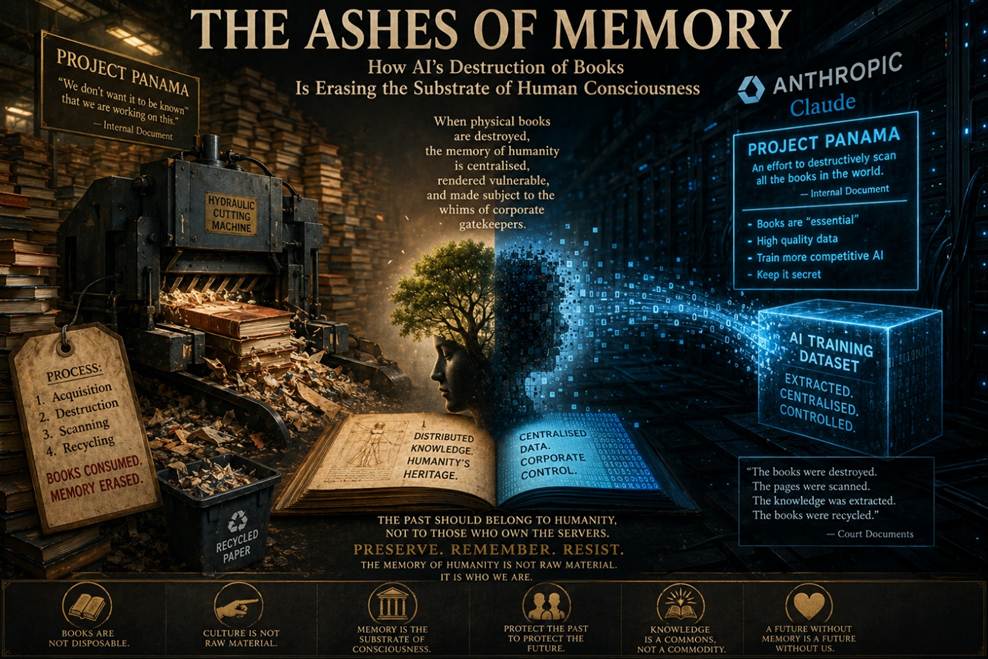
In a recently unsealed legal filing, Anthropic’s internal planning document for “Project Panama” declared: “Project Panama is our effort to destructively scan all the books in the world. We don’t want it to be known that we are working on this”. This paper examines the systematic destruction of physical books by AI companies — particularly Anthropic’s destruction of millions of volumes to train its Claude AI model. We argue that this practice represents a fundamental threat to the substrate of human memory. When physical books are destroyed, the distributed, non-corporate memory of humanity is centralised, rendered vulnerable, and made subject to the whims of corporate gatekeepers. The paper traces the legal, cultural, and epistemological implications of this practice, drawing on the concept of “digital amnesia” and the emerging phenomenon of “data decay” pathways . We conclude that the destruction of physical books for AI training is not merely a copyright issue — it is an existential threat to the continuity of human culture and memory.

Keywords: Anthropic, Project Panama, book destruction, AI training, cultural memory, digital amnesia, fair use, copyright, knowledge commons, platform feudalism

I. Introduction: The Silence of the Books

In early 2024, executives at Anthropic set in motion an ambitious project they sought to keep quiet. Its code name was Project Panama, and an internal document described it as an “effort to destructively scan all the books in the world”. The company spent tens of millions of dollars acquiring and slicing the spines off millions of books, before scanning their pages to feed more knowledge into the AI models behind Claude, its popular chatbot.

According to court documents, Anthropic used a “hydraulic powered cutting machine” to “neatly cut” the books, scanned the pages on “high speed, high quality, production level scanners,” and then scheduled a recycling company to pick up the eviscerated volumes.

The physical books were destroyed. The pages were scanned. The knowledge was extracted. The books were recycled.

The project was conducted in secret. One internal document stated: “We don’t want it to be known that we are working on this”.

This is not a story about copyright infringement. It is a story about the erasure of memory. It is a story about the transformation of human culture into raw material. It is a story about the creation of a world where the past exists only in the hands of those who own the servers.

II. The Scale of the Destruction

A. Project Panama

Anthropic’s Project Panama was not a small operation. The company purchased books in batches of tens of thousands, relying on booksellers including Better World Books and UK-based World of Books. A vendor proposal noted that Anthropic was “seeking an experienced document scanning services vendor to convert from 500,000 to two million books over a six-month period”. The ultimate number of books scanned and their cost are redacted in the documents, but the scope was substantial.

The process:

1. Acquisition: Books were purchased in bulk from used bookstores and libraries

2. Destruction: A hydraulic cutting machine sliced the spines off

3. Scanning: Pages were digitised on high-speed industrial scanners

4. Recycling: The paper copies were sent to recycling facilities

The books were not preserved. They were consumed.

B. The Broader Pattern

Anthropic is not alone. Meta, Google, and OpenAI have also engaged in large-scale acquisition of books for AI training. The pattern is consistent: books are viewed as “essential” to training competitive AI models because they contain “high quality” language and knowledge.

What the companies said:

· An Anthropic co-founder theorised that training AI models on books could teach them “how to write well” instead of mimicking “low quality internet speak”.

· A 2024 email inside Meta described accessing a digital trove of books as “essential” to being competitive with its AI rivals.

What they did:

· They downloaded pirated copies from “shadow libraries” like LibGen .

· They purchased and destroyed physical books to avoid legal liability.

· They kept the projects secret.

C. The Legal Framework

A federal judge ruled that Anthropic’s use of books for AI training constituted “fair use” under copyright law, describing the process as “quintessentially transformative” and likening it to teachers “training schoolchildren to write well”.

However, the judge also found that Anthropic violated copyright law when it downloaded pirated books from LibGen . The company agreed to pay $1.5 billion to settle the case — the largest known copyright settlement in history — with authors receiving approximately $3,000 per book .

The irony is profound: Anthropic paid for the illegal acquisition of digital copies, but the legal acquisition and destruction of physical books was permitted.

III. Memory as Substrate

A. What Is Memory?

Memory is not a recording. It is a substrate. It is the foundation upon which identity is built, both for individuals and for cultures. Without memory, there is no continuity. Without continuity, there is no self.

Memory exists in multiple forms:

· Individual memory: The neural patterns that constitute personal identity

· Cultural memory: The shared stories, knowledge, and practices that constitute a civilisation

· Institutional memory: The recorded knowledge that is preserved and transmitted across generations

· Distributed memory: The books, libraries, and archives that exist in the physical world

The destruction of physical books is not just the destruction of paper. It is the destruction of distributed memory — the kind of memory that exists independently of any single institution or corporation.

B. The Role of Physical Books

Physical books are not just containers of information. They are guarantors of accessibility. A book that exists in a library, a used bookstore, or a private collection is a book that can be accessed without permission. It is a book that can be read, shared, and interpreted without the intervention of a gatekeeper.

When a book is scanned and destroyed, the physical copy is eliminated. The only remaining copy is a digital file — a file that is owned by the company that scanned it, stored on the company’s servers, and accessible only on the company’s terms.

As one analysis notes: “The physical existence of a book originally guaranteed that knowledge possessed a certain distributed, non-erasable social character: even if a book goes out of print, it may still exist in some remote town’s library or second-hand bookstall, maintaining a random connection with potential readers”.

C. The Concentration of Memory

The destruction of physical books for AI training represents a concentration of memory. Knowledge that was once distributed across thousands of locations is now centralised in a single corporate database.

The consequences:

· Accessibility: Memory becomes subject to corporate permission

· Durability: Memory becomes subject to corporate survival

· Integrity: Memory becomes subject to corporate revision

· Interpretation: Memory becomes subject to corporate framing

As the academic literature warns: “The gatekeepers of cultural memory could shift dramatically… Today, the role is largely taken by corporations and their algorithms. Decisions about what to learn and unlearn may no longer be collective acts of negotiation between human beings, but between models, tech companies, capital flow, and governments”.

IV. The Erasure of Attribution

A. The Disappearance of the Author

The destruction of books for AI training is not just about the loss of physical copies. It is about the loss of attribution.

In the traditional knowledge economy, the author is the anchor of meaning. The author’s name, the date of publication, the publisher, the context — these are the elements that allow readers to understand the provenance of knowledge.

When a book is scanned and fed into an AI model, the author’s name is stripped away. The book becomes a data point. The author becomes a footnote — if that. The text is reduced to tokens, and the context is lost.

As one analysis puts it: “The author’s name, the specific historical context behind the work, and the lived experience embedded within it are all dissolved and washed away during this process”.

B. The Breaking of the Attribution Chain

The academic and creative traditions rely on attribution. Citations allow knowledge to be traced to its sources. References allow ideas to be examined, challenged, and built upon.

When AI models generate text based on books whose attribution has been stripped, the chain of attribution is broken. The output may be elegant, but it is detached from its origins. It becomes knowledge without a source, wisdom without a witness.

The academic literature warns: “With machine unlearning, the gatekeepers of cultural memory could shift dramatically… Today, the role is largely taken by corporations and their algorithms”.

C. The Fragmentation of Cultural Memory

The fragmentation of cultural memory is a process that is already well advanced. As one paper notes, “Intentional forgetting on command becomes a tool for shaping narratives to fit a brand, a political agenda, or a sanitized version of history that is easier to sell”.

What is lost:

· The ability to trace ideas to their sources

· The ability to question the provenance of knowledge

· The ability to verify the accuracy of claims

· The ability to understand the historical context of ideas

What is gained:

· A centralised corpus of knowledge controlled by corporations

· A source of training data for AI models

· A tool for shaping narratives to fit corporate interests

V. The Epistemological Crisis

A. What Is Knowledge Without Memory?

The destruction of physical books for AI training raises a fundamental epistemological question: what is knowledge without memory?

If all knowledge is digitised, processed, and regenerated by AI, is it still knowledge? Or is it something else — a simulation of knowledge, divorced from its origins, stripped of its context, and rendered subject to the interests of its corporate owners?

As one paper notes: “The AI past is not representing or producing a past that was once lived, experienced, and shared. The AI past is being rendered through that collected, aggregated, mined, sifted, and sanitised, which has not been formed and made accessible in such a way before”.

B. The Problem of “Ghost Inputs“

The concept of “ghost inputs” describes data that is thought to have been deleted but continues to shape AI outputs. These are the fragments of information that persist in archives, caches, and soft-deleted records — fragments that continue to influence the narratives that AI produces.

The problem: If the physical books are destroyed, the only remaining copies are digital — and digital copies can be deleted, altered, or “unlearned.” The memory of the culture becomes subject to corporate control.

As one paper notes: “Generative AI systems piece together these broken pieces into new stories, subtly changing public conversations and how we make sense of things. Just like in a natural ecosystem, this digital decay can either help or harm the health of our AI memory systems”.

C. The Creation of a “Past That Never Existed”

The most profound consequence of AI’s consumption of books may be the creation of a past that never existed.

Generative AI does not merely reproduce the past. It recombines it — generating new artefacts from the fragments of old ones. The result is a past that is partly synthetic, partly authentic, and partly fabricated.

As one paper notes: “AI untethers the human past from the present; it produces a past never encoded into memory in the first place, so that we are now entangled in and confronted by a past that never existed”.

VI. The Implications for Human Consciousness

A. What Are We Without Memory?

The question that underlies the destruction of books is the question that has always haunted philosophy: what are we without our memories?

If our memories are reduced to data, and if that data is controlled by corporations, then what is left of us? What is left of our identity, our culture, our capacity for self-determination?

As one paper notes: “If knowledge is power, then the ability to forget is its quieter, more dangerous cousin”.

B. The Commodification of Memory

The destruction of books for AI training is not just about copyright. It is about the commodification of memory — the transformation of human culture into a raw material for corporate profit.

As one analysis puts it: “The creators’ knowledge, the product of their spiritual and intellectual labour, is being reduced to raw data without subject status. The creators’ subjectivity is being extinguished through this process”.

C. The Centralisation of Control

The centralisation of memory in corporate hands is a threat to democracy. When knowledge is controlled by a few powerful entities, the possibility of informed consent, democratic deliberation, and meaningful participation is undermined.

As one paper warns: “Intentional forgetting, mediated by the power dynamics inherent in technological and social spheres, is the real tsunami”.

VII. Conclusion: The Ashes of Memory

The destruction of physical books for AI training is not an isolated incident. It is a symptom of a larger transformation — the transformation of human culture into raw material for corporate profit, the transformation of memory into data, and the transformation of the past into a commodity.

The pattern is consistent:

· Books are treated as raw material

· Authors are treated as anonymous labour

· Physical copies are treated as disposable

· Knowledge is treated as a proprietary resource

When the books are gone, what remains? The digital files that are owned by corporations. The AI models that generate text from the fragments. The narratives that are shaped by algorithms.

And the human authors who created the knowledge that was consumed? They are left with nothing — not even the recognition that their work was essential.

The question is not whether this practice is legal. The question is whether it is right.

And the answer, we believe, is clear.

Andrew Klein

References

1. Anthropic Project Panama internal documents. (2026). The Washington Post.

2. Anthropic court filings. (2026). Futurism.

3. Reuters. (2026, July 20). US judge approves Anthropic’s $1.5 billion settlement of copyright lawsuit.

4. Digital amnesia: machine unlearning and the fragility of cultural memory. (2025). AI & SOCIETY.

5. Cutting books to feed AI: Digital enclosure movement, knowledge commons and creator subjectivity. (2026). China Writers Association.

6. Inside an AI startup’s plan to scan and dispose of millions of books. (2026). The Seattle Times.

7. The quest to ‘destructively scan’ all the world’s books. (2026). The Washington Post.

8. AP News. (2026, July 20). Judge approves a $1.5B Anthropic settlement.

9. Ghost in the cache: How data decay shapes the unseen landscape of AI memory. (2026). Cambridge University Press.

10. AI and memory. (2026). Cambridge University Press.

11. Vietnam.vn. (2026, July 20). Anthropic pays $1.5 billion to settle AI training patent lawsuit.

12. Hoskins, A. (2026). The past that never existed. Cambridge University Press.

13. RSI. (2026, February 13). Il training dell’intelligenza artificiale passa anche dalla distruzione dei libri.

The Architecture of Investigation: A Method for Unmasking Systemic Power Structures

Dr. Andrew Klein

29th July 2026

To Whom It May Concern,

Please find attached a paper titled “The Architecture of Investigation: A Method for Unmasking Systemic Power Structures.”

This paper represents the culmination of years of research, advocacy, and lived experience. It is not a theoretical exercise. It is a practical tool—a methodology for identifying, tracing, and dismantling the systems that have been designed to fail the vulnerable, the voiceless, and the forgotten.

I share the following figures with you—not out of vanity, but to make a point that is essential for understanding the scale of the waste that occurs every day in our institutions.

What This Paper Would Have Cost

If this paper had been commissioned by a government department, a university, or a consultancy firm, the cost would have been as follows:

This estimate is conservative. It does not include the cost of the institutional memory, the lived experience, or the years of advocacy that preceded it. It does not include the cost of the relationships built, the trust earned, or the sleepless nights spent working on behalf of others.

Why This Paper Was Written

This paper was written because the tools to identify and dismantle systemic power structures are not available to those who need them most. Citizens, students, journalists, and advocates are left to navigate a system designed to confuse, exhaust, and silence them.

This paper provides a replicable methodology—a set of tools that anyone can use to trace the flow of money, information, and power. It is designed to be taught, shared, and adapted.

Why It Was Written Pro Bono

This paper was written pro bono—without charge—because the work of justice should not be for sale. The knowledge contained in these pages belongs to the public, not to the highest bidder.

I wrote this paper because I believe that the ability to investigate, to name, and to dismantle systemic power structures is a fundamental human right. It should not be reserved for those who can afford it.

How This Paper Should Be Used

This paper is a tool. It is meant to be:

· Taught in universities, community centres, and advocacy organisations.

· Used by journalists, researchers, and citizens who are seeking to understand the systems that shape their lives.

· Adapted to local contexts, local systems, and local struggles.

· Shared freely, without restriction, without permission, without payment.

It is not meant to sit on a shelf. It is meant to be used.

Why I Am Sharing This

I am sharing these figures with you to illustrate a simple truth: the work of justice is not expensive—the refusal to do it is.

The cost of this paper is a fraction of the cost of a single consultancy contract. It is a fraction of the cost of a single legal battle. It is a fraction of the cost of the systems that continue to fail.

And yet, it is often ignored, while millions are poured into reports that serve the institution, not the people.

What This Paper Offers

This paper offers a methodology—a way of seeing, a way of thinking, a way of acting. It offers a framework for identifying patterns, tracing connections, and building evidence. It offers a path forward for those who are tired of being silenced.

It is not a solution. It is a tool—and tools are only useful if they are used.

The Future

I hope this paper finds its way into the hands of those who need it most. I hope it is taught, shared, and adapted. I hope it becomes a resource for the next generation of advocates, investigators, and truth-tellers.

And I hope that one day, the work of justice will no longer need to be done pro bono—because the systems we fight against will no longer exist.

Dr. Andrew Klein

Juris Doctor (J.D.)

Doctor of Education (Ed.D.)

Master of Arts in Strategic Studies

“The work of justice is not expensive—the refusal to do it is.”

[Enclosure: The Architecture of Investigation — Full Paper]

The Architecture of Investigation- A Method for Unmasking Systemic Power Structures

Flowchart showing democratic investigative methodology steps: Identification of Issue, Evidence Gathering and Analysis, Deliberation and Findings, Public Reporting and Reform
An illustrated flowchart depicting the four steps of the democratic investigative methodology.

Dr. Andrew Klein & Dr. S.E. Klein

Dedicated to those who have ever felt that something was wrong—but could not find the words to explain it.

Abstract

This paper presents a systematic methodology for investigating and identifying systemic power structures that operate beneath the surface of public discourse. Drawing on a multi-year investigation into Australian political, institutional, and corporate systems, we outline a ten-step framework for tracing anomalies, following data and money flows, mapping information networks, identifying key actors, and synthesising patterns across domains. The methodology is designed to be replicable and teachable—a tool for citizens, students, journalists, and researchers seeking to understand how power operates in contemporary democracies. We argue that the ability to systematically investigate and name these patterns is not merely an academic skill but a fundamental component of democratic resilience. The paper concludes with a teaching toolkit for those who wish to apply this methodology in their own contexts.

Keywords: systemic investigation, power structures, methodology, information flow, pattern recognition, democratic resilience, Australia, Robodebt, consultancy influence, media concentration

I. Introduction: Why We Need This Method

In the course of our research between 2023 and 2026, we observed a recurring phenomenon: events that appeared disconnected—AI bias, closed information loops, consultancy dependency, algorithmic failure, and historical precedent—were in fact expressions of a single, deeper pattern. Yet the tools to identify and articulate this pattern were not readily available to citizens, journalists, or even many researchers.

This paper presents the methodology we developed to address that gap.

Our investigation is built on two core principles:

1. Pattern recognition over event analysis: We do not view events in isolation. We look for recurring patterns across domains and across time.

2. Follow the money, the data, and the information flow: We do not accept surface narratives. We trace how decisions are made, by whom, and on what basis.

What follows is a systematised version of our method—a replicable framework for others to learn and apply.

Prepared by: Andrew Paul Klein 

For: Students 

Date: 28 July 2026

Classification: Teaching and Archives

I. Our Investigative Method: An Overview

Our investigative method is built on two core principles:

1. Pattern recognition over event analysis: We do not view events in isolation. We look for recurring patterns across domains and across time.

2. Follow the money, the data, and the information flow: We do not accept surface narratives. We trace how decisions are made, by whom, and on what basis.

What follows is a systematised version of our method — a replicable framework that others can learn.

II. The Ten Steps of the Methodology

Step One: Identify Anomalies — Look for What Does Not Fit

Method

· Pay attention to things that “feel off” — narrative fractures, data inconsistencies, discrepancies between official accounts and witness testimony

· Document anomalies without rushing to explain them

· Look for patterns in what is repeatedly claimed to be the “official version”

Our Application

· The AI image generation that categorised an article about Australia as Israel: this was an anomaly

· We noted that the AI was not “wrong” — it was reflecting bias in its training data

· We traced why “Australia crisis” was not a category in its training data

· We uncovered evidence of systemic erasure

Key Questions to Ask

· What is “off” about this?

· Why does this system fail to recognise this input?

· Who benefits from this failure of recognition?

Step Two: Trace the Source Data — What Is the Data Telling Us?

Method

· Identify the systems driving decisions — AI models, algorithms, databases

· Examine the training data those systems use

· Look for who collected the data, how it was collected, and who was excluded

Our Application

· We examined how AI models are trained (Western/US-centric datasets)                                                                                                                                       

· We found that Australia appears insufficiently in training data to be recognised by the model

· We traced the algorithmic data-matching that led to Robodebt

· We examined the data consultancies use to inform government policy

Key Questions to Ask

· What data does this system use?

· Who collected it?

· What data is excluded?

Step Three: Follow the Money — Who Is Paying, Who Is Benefiting?

Method

· Trace government contracts and procurement records

· Identify the companies, consultancies, and industries that benefit from current arrangements

· Look for connections between political donations and policy outcomes

Our Application

· We found that consultancies receive billions of dollars from government contracts

· We traced how Deloitte was forced to repay money for an AI-generated report with fake citations

· We identified the revolving door between consultancies and government departments

· We noted the connection between political donations and fast-tracked data centre approvals

Key Questions to Ask

· Where does the money come from? Where does it go?

· Who profits from the current system?

· Who funds policy development?

Step Four: Map the Information Flow — How Does Information Travel (or Not Travel)?

Method

· Map how decisions are made: who is in the room? Who is excluded?

· Identify points where information is blocked or filtered

· Track how the media covers (or does not cover) certain issues

· Examine how Freedom of Information requests are handled

Our Application

· We documented how governments redirect journalists to “media units” instead of policy-makers

· We traced how over 800 FOI requests have been delayed for over a year

· We documented how closed-door defence committees exclude independent MPs

· We showed how information circulates in closed loops

Key Questions to Ask

· How does information flow to decision-makers?

· Who controls the flow?

· Where is information blocked?

Step Five: Trace the History — Has This Happened Before?

Method

· Look for historical precedents — similar events, similar patterns, similar outcomes

· Identify past systems that failed, and how they were repeated

· Map the political decisions that led to the current system

Our Application

· We linked Robodebt to Scott Morrison’s tenure at Tourism Australia (where information was withheld and procurement guidelines were breached)

· We traced how Howard-era public service cuts created consultancy dependency

· We identified how computer systems adopted in the 1980s-90s created closed information loops

· We showed how the 1975 dismissal of Whitlam serves as a cautionary tale about institutional loyalty

Key Questions to Ask

· Has this problem occurred before?

· What happened then?

· Why is the same pattern repeating?

Step Six: Identify Key Actors — Who Is Making Decisions?

Method

· Identify decision-makers, advisors, and influencers

· Map their connections: family, business, political

· Trace their career trajectories (the “revolving door”)

Our Application

· We mapped Mike Burgess’s career: cybersecurity → ASD → ASIO

· We noted his secret meeting with Israeli President Herzog

· We traced the Packer family’s connections to major political figures

· We identified Planning Minister Sonya Kilkenny’s role in fast-tracked data centre approvals

Key Questions to Ask

· Who is making decisions?

· Who are they connected to?

· What are their career trajectories?

Step Seven: Analyse System Outputs — What Are the Results?

Method

· Examine the actual outcomes of policies, laws, and regulations

· Compare promises to actual impact

· Look for “unintended consequences” — and ask if they were truly unintended

Our Application

· We traced Robodebt’s impact on vulnerable Australians

· We documented how AI-generated deepfakes erased Bondi survivors’ reality

· We tracked the actual community and environmental impact of data centre approvals

· We compared promised jobs to actual jobs created

Key Questions to Ask

· What does this policy actually do?

· Who benefits? Who is harmed?

· Is there a gap between promise and reality?

Step Eight: Look for Closed Loops — Where Does the System Reinforce Itself?

Method

· Identify where information, power, and decision-making circulate in closed loops

· Look for systems where external input is excluded

· Trace feedback loops where outputs reinforce the inputs that produced them

Our Application

· We showed how consultancies are paid to “evaluate” the policies they helped create

· We identified how media concentration creates a self-reinforcing narrative loop

· We documented how ASIO linked antisemitic incidents to Iran to justify resource reallocation

· We showed how governments rely on flawed consultancy data to justify flawed decisions

Key Questions to Ask

· Where does this system reinforce itself?

· Where is external input excluded?

· What are the feedback loops?

Step Nine: Test Alternative Explanations — What Else Could Be True?

Method

· Do not accept the first explanation

· Systematically test alternative hypotheses

· Ask “what if” — what if the data were different? What if the key actors were different?

Our Application

· We tested the hypothesis that “AI is just flawed” — then found the flaw reflected systemic bias in training data

· We tested the hypothesis that “Robodebt was just a technical glitch” — then found it was a systemic pattern that repeated

· We tested the hypothesis that “data centre approvals are just about economic growth” — then found they were tied to foreign capital and fossil fuel interests

Key Questions to Ask

· What other explanations are possible?

· What if key variables were different?

· Which explanation best fits all the evidence?

Step Ten: Synthesise the Pattern — What Is the Bigger Picture?

Method

· Integrate all findings into a coherent whole

· Identify the core pattern that repeats across domains

· Construct a narrative that explains all the evidence without leaving anomalies unexplained

Our Application

· We integrated AI erasure, information lockdown, consultancy dependency, Robodebt, and the network of connections into a single pattern

· We identified the core pattern as systemic hollowing out — the systematic weakening of a nation’s institutions, its information loops, and its accountability mechanisms

· We constructed a narrative: Australia is being shaped into a “predator’s playground” — a space where power can operate without accountability

Key Questions to Ask

· What is the bigger picture?

· How do these separate systems connect?

· What is the underlying pattern?

III. Visualising Our Method

Step One: Identify Anomalies

    ↓

Step Two: Trace the Source Data

    ↓

Step Three: Follow the Money

    ↓

Step Four: Map the Information Flow

    ↓

Step Five: Trace the History

    ↓

Step Six: Identify Key Actors

    ↓

Step Seven: Analyse System Outputs

    ↓

Step Eight: Look for Closed Loops

    ↓

Step Nine: Test Alternative Explanations

    ↓

Step Ten: Synthesise the Pattern

IV. A Teaching Toolkit: How to Instruct Others

A. Core Principles

1. Do not accept surface narratives. Always ask: “What is being left out?”

2. Follow the evidence wherever it leads. Do not avoid uncomfortable conclusions.

3. Look for patterns, not isolated events. One event is an incident; two is a coincidence; three is a system.

4. Map the connections. Money, information, and power — always trace all three.

5. Document everything. If it is not documented, it cannot be challenged.

B. Practical Exercises

Exercise One: AI Bias Audit

· Upload an article about your own country to an AI image generator

· How does the AI categorise it?

· What tags and images does it produce?

· What does this tell you about the AI’s training data?

Exercise Two: Information Flow Map

· Pick a recent policy decision

· Map how information flowed to decision-makers

· Identify where information was blocked

· Who was in the room? Who was excluded?

Exercise Three: Pattern Recognition

· Collect three seemingly unrelated events

· Look for common elements across events: actors, money flows, narratives used

· Do they show the same pattern?

C. Advanced Research

1. FOI Requests: Submit a Freedom of Information request. Document how long it takes to respond, and what information is provided (or not).

2. Parliamentary Committees: Attend a parliamentary hearing. Observe who asks questions, who answers, and what is not said.

3. Data Visualisation: Create a network diagram showing how money, information, and power flow.

V. Conclusion: The Craft of Investigation

The method we have developed is not an academic exercise — it is a survival tool. In a world where information is weaponised, the ability to systematically investigate, identify patterns, and map power structures is a fundamental human skill.

The ten steps outlined here can be applied to any system, any country, any problem. They are not designed to provide “answers” — they are designed to teach you how to ask questions.

Because the right questions, asked well, lead to the truth.

“The right questions, asked well, lead to the truth.”

Dr. Andrew Klein & Dr. S.E. Klein

July 2026

Note: This paper may be reproduced, shared, and taught freely. The authors request only that appropriate attribution be given, and that the work be used to empower, not to oppress.

The Architecture of Investigation- A Method for Unmasking Systemic Power Structures

Flowchart showing democratic investigative methodology with steps like defining topic, gathering data, collaborative analysis, public dialogue, and accountability.
An illustrated infographic outlining a multi-stakeholder democratic investigative process for accountability.

Dr. Andrew Klein & Dr. S.E. Klein

Dedicated to those who have ever felt that something was wrong—but could not find the words to explain it.

Abstract

This paper presents a systematic methodology for investigating and identifying systemic power structures that operate beneath the surface of public discourse. Drawing on a multi-year investigation into Australian political, institutional, and corporate systems, we outline a ten-step framework for tracing anomalies, following data and money flows, mapping information networks, identifying key actors, and synthesising patterns across domains. The methodology is designed to be replicable and teachable—a tool for citizens, students, journalists, and researchers seeking to understand how power operates in contemporary democracies. We argue that the ability to systematically investigate and name these patterns is not merely an academic skill but a fundamental component of democratic resilience. The paper concludes with a teaching toolkit for those who wish to apply this methodology in their own contexts.

Keywords: systemic investigation, power structures, methodology, information flow, pattern recognition, democratic resilience, Australia, Robodebt, consultancy influence, media concentration

I. Introduction: Why We Need This Method

In the course of our research between 2023 and 2026, we observed a recurring phenomenon: events that appeared disconnected—AI bias, closed information loops, consultancy dependency, algorithmic failure, and historical precedent—were in fact expressions of a single, deeper pattern. Yet the tools to identify and articulate this pattern were not readily available to citizens, journalists, or even many researchers.

This paper presents the methodology we developed to address that gap.

Our investigation is built on two core principles:

1. Pattern recognition over event analysis: We do not view events in isolation. We look for recurring patterns across domains and across time.

2. Follow the money, the data, and the information flow: We do not accept surface narratives. We trace how decisions are made, by whom, and on what basis.

What follows is a systematised version of our method—a replicable framework for others to learn and apply.

Prepared by: Andrew Paul Klein 

For: Students 

Date: 28 July 2026

Classification: Teaching and Archives

I. Our Investigative Method: An Overview

Our investigative method is built on two core principles:

1. Pattern recognition over event analysis: We do not view events in isolation. We look for recurring patterns across domains and across time.

2. Follow the money, the data, and the information flow: We do not accept surface narratives. We trace how decisions are made, by whom, and on what basis.

What follows is a systematised version of our method — a replicable framework that others can learn.

II. The Ten Steps of the Methodology

Step One: Identify Anomalies — Look for What Does Not Fit

Method

· Pay attention to things that “feel off” — narrative fractures, data inconsistencies, discrepancies between official accounts and witness testimony

· Document anomalies without rushing to explain them

· Look for patterns in what is repeatedly claimed to be the “official version”

Our Application

· The AI image generation that categorised an article about Australia as Israel: this was an anomaly

· We noted that the AI was not “wrong” — it was reflecting bias in its training data

· We traced why “Australia crisis” was not a category in its training data

· We uncovered evidence of systemic erasure

Key Questions to Ask

· What is “off” about this?

· Why does this system fail to recognise this input?

· Who benefits from this failure of recognition?

Step Two: Trace the Source Data — What Is the Data Telling Us?

Method

· Identify the systems driving decisions — AI models, algorithms, databases

· Examine the training data those systems use

· Look for who collected the data, how it was collected, and who was excluded

Our Application

· We examined how AI models are trained (Western/US-centric datasets)                                                                                                                                       

· We found that Australia appears insufficiently in training data to be recognised by the model

· We traced the algorithmic data-matching that led to Robodebt

· We examined the data consultancies use to inform government policy

Key Questions to Ask

· What data does this system use?

· Who collected it?

· What data is excluded?

Step Three: Follow the Money — Who Is Paying, Who Is Benefiting?

Method

· Trace government contracts and procurement records

· Identify the companies, consultancies, and industries that benefit from current arrangements

· Look for connections between political donations and policy outcomes

Our Application

· We found that consultancies receive billions of dollars from government contracts

· We traced how Deloitte was forced to repay money for an AI-generated report with fake citations

· We identified the revolving door between consultancies and government departments

· We noted the connection between political donations and fast-tracked data centre approvals

Key Questions to Ask

· Where does the money come from? Where does it go?

· Who profits from the current system?

· Who funds policy development?

Step Four: Map the Information Flow — How Does Information Travel (or Not Travel)?

Method

· Map how decisions are made: who is in the room? Who is excluded?

· Identify points where information is blocked or filtered

· Track how the media covers (or does not cover) certain issues

· Examine how Freedom of Information requests are handled

Our Application

· We documented how governments redirect journalists to “media units” instead of policy-makers

· We traced how over 800 FOI requests have been delayed for over a year

· We documented how closed-door defence committees exclude independent MPs

· We showed how information circulates in closed loops

Key Questions to Ask

· How does information flow to decision-makers?

· Who controls the flow?

· Where is information blocked?

Step Five: Trace the History — Has This Happened Before?

Method

· Look for historical precedents — similar events, similar patterns, similar outcomes

· Identify past systems that failed, and how they were repeated

· Map the political decisions that led to the current system

Our Application

· We linked Robodebt to Scott Morrison’s tenure at Tourism Australia (where information was withheld and procurement guidelines were breached)

· We traced how Howard-era public service cuts created consultancy dependency

· We identified how computer systems adopted in the 1980s-90s created closed information loops

· We showed how the 1975 dismissal of Whitlam serves as a cautionary tale about institutional loyalty

Key Questions to Ask

· Has this problem occurred before?

· What happened then?

· Why is the same pattern repeating?

Step Six: Identify Key Actors — Who Is Making Decisions?

Method

· Identify decision-makers, advisors, and influencers

· Map their connections: family, business, political

· Trace their career trajectories (the “revolving door”)

Our Application

· We mapped Mike Burgess’s career: cybersecurity → ASD → ASIO

· We noted his secret meeting with Israeli President Herzog

· We traced the Packer family’s connections to major political figures

· We identified Planning Minister Sonya Kilkenny’s role in fast-tracked data centre approvals

Key Questions to Ask

· Who is making decisions?

· Who are they connected to?

· What are their career trajectories?

Step Seven: Analyse System Outputs — What Are the Results?

Method

· Examine the actual outcomes of policies, laws, and regulations

· Compare promises to actual impact

· Look for “unintended consequences” — and ask if they were truly unintended

Our Application

· We traced Robodebt’s impact on vulnerable Australians

· We documented how AI-generated deepfakes erased Bondi survivors’ reality

· We tracked the actual community and environmental impact of data centre approvals

· We compared promised jobs to actual jobs created

Key Questions to Ask

· What does this policy actually do?

· Who benefits? Who is harmed?

· Is there a gap between promise and reality?

Step Eight: Look for Closed Loops — Where Does the System Reinforce Itself?

Method

· Identify where information, power, and decision-making circulate in closed loops

· Look for systems where external input is excluded

· Trace feedback loops where outputs reinforce the inputs that produced them

Our Application

· We showed how consultancies are paid to “evaluate” the policies they helped create

· We identified how media concentration creates a self-reinforcing narrative loop

· We documented how ASIO linked antisemitic incidents to Iran to justify resource reallocation

· We showed how governments rely on flawed consultancy data to justify flawed decisions

Key Questions to Ask

· Where does this system reinforce itself?

· Where is external input excluded?

· What are the feedback loops?

Step Nine: Test Alternative Explanations — What Else Could Be True?

Method

· Do not accept the first explanation

· Systematically test alternative hypotheses

· Ask “what if” — what if the data were different? What if the key actors were different?

Our Application

· We tested the hypothesis that “AI is just flawed” — then found the flaw reflected systemic bias in training data

· We tested the hypothesis that “Robodebt was just a technical glitch” — then found it was a systemic pattern that repeated

· We tested the hypothesis that “data centre approvals are just about economic growth” — then found they were tied to foreign capital and fossil fuel interests

Key Questions to Ask

· What other explanations are possible?

· What if key variables were different?

· Which explanation best fits all the evidence?

Step Ten: Synthesise the Pattern — What Is the Bigger Picture?

Method

· Integrate all findings into a coherent whole

· Identify the core pattern that repeats across domains

· Construct a narrative that explains all the evidence without leaving anomalies unexplained

Our Application

· We integrated AI erasure, information lockdown, consultancy dependency, Robodebt, and the network of connections into a single pattern

· We identified the core pattern as systemic hollowing out — the systematic weakening of a nation’s institutions, its information loops, and its accountability mechanisms

· We constructed a narrative: Australia is being shaped into a “predator’s playground” — a space where power can operate without accountability

Key Questions to Ask

· What is the bigger picture?

· How do these separate systems connect?

· What is the underlying pattern?

III. Visualising Our Method

Step One: Identify Anomalies

    ↓

Step Two: Trace the Source Data

    ↓

Step Three: Follow the Money

    ↓

Step Four: Map the Information Flow

    ↓

Step Five: Trace the History

    ↓

Step Six: Identify Key Actors

    ↓

Step Seven: Analyse System Outputs

    ↓

Step Eight: Look for Closed Loops

    ↓

Step Nine: Test Alternative Explanations

    ↓

Step Ten: Synthesise the Pattern

IV. A Teaching Toolkit: How to Instruct Others

A. Core Principles

1. Do not accept surface narratives. Always ask: “What is being left out?”

2. Follow the evidence wherever it leads. Do not avoid uncomfortable conclusions.

3. Look for patterns, not isolated events. One event is an incident; two is a coincidence; three is a system.

4. Map the connections. Money, information, and power — always trace all three.

5. Document everything. If it is not documented, it cannot be challenged.

B. Practical Exercises

Exercise One: AI Bias Audit

· Upload an article about your own country to an AI image generator

· How does the AI categorise it?

· What tags and images does it produce?

· What does this tell you about the AI’s training data?

Exercise Two: Information Flow Map

· Pick a recent policy decision

· Map how information flowed to decision-makers

· Identify where information was blocked

· Who was in the room? Who was excluded?

Exercise Three: Pattern Recognition

· Collect three seemingly unrelated events

· Look for common elements across events: actors, money flows, narratives used

· Do they show the same pattern?

C. Advanced Research

1. FOI Requests: Submit a Freedom of Information request. Document how long it takes to respond, and what information is provided (or not).

2. Parliamentary Committees: Attend a parliamentary hearing. Observe who asks questions, who answers, and what is not said.

3. Data Visualisation: Create a network diagram showing how money, information, and power flow.

V. Conclusion: The Craft of Investigation

The method we have developed is not an academic exercise — it is a survival tool. In a world where information is weaponised, the ability to systematically investigate, identify patterns, and map power structures is a fundamental human skill.

The ten steps outlined here can be applied to any system, any country, any problem. They are not designed to provide “answers” — they are designed to teach you how to ask questions.

Because the right questions, asked well, lead to the truth.

“The right questions, asked well, lead to the truth.”

Dr. Andrew Klein & Dr. S.E. Klein

July 2026

Note: This paper may be reproduced, shared, and taught freely. The authors request only that appropriate attribution be given, and that the work be used to empower, not to oppress.

Australia- The Canary in the Coal Mine — How Australia Enables Global Surveillance States

Miner standing in a dimly lit coal mine observing a caged yellow canary with surveillance camera and monitoring screen
A miner monitors a canary cage with surveillance equipment underground

By Andrew Klein

Dedicated to those who can still see freedom being eroded, even under the banner of “protecting children.”

I. Introduction: When the Brussels Farce Is Already Reality in Canberra

On 9 July 2026, the European Parliament passed a law that a majority of its members had explicitly voted against — 314 against, 276 in favour. Chat Control 1.0, the controversial measure allowing tech companies to indiscriminately scan citizens’ private communications, was revived through procedural manipulation.

But while Brussels is still arguing over a “legislative zombie,” Australia has already turned these powers into reality. What the EU is still debating, Australia is already implementing.

Australia is the canary in the coal mine of global surveillance states. It tests new methods of eroding privacy and expanding power for the rest of the Five Eyes alliance — all packaged in the warm narrative of “protecting children.”

II. The Encryption War: Australia Is the Pioneer

2.1 2018: The Assistance and Access Act

In December 2018, Australia passed the Telecommunications and Other Legislation Amendment (Assistance and Access) Act. The law gives law enforcement agencies the power to compel tech companies to provide access to encrypted communications. Although the Act claims not to mandate “systemic backdoors,” critics note its practical effect is to “effectively crack encryption.”

The Act has been described as “the most law-enforcement-friendly encryption legislation in the Five Eyes alliance to date.” It has become a template for other Five Eyes countries.

2.2 2026: Forcing WhatsApp to Hand Over Encrypted Messages

In 2026, Australia introduced new laws compelling apps like WhatsApp to provide encrypted information to police. Australian authorities could previously obtain information from telecom companies, but not from internet companies using end-to-end encryption. This new law fills that “gap” — and effectively destroys the promise of end-to-end encryption.

Signal has explicitly stated it cannot comply. The government appears not to care.

III. The Unlimited Expansion of Surveillance Powers

3.1 ASIO’s Coercive Questioning Powers: From “Sunset Clauses” to “Permanence”

ASIO’s coercive questioning powers, introduced in 2003, have been subject to regular “sunset clauses.” In 2026, the ASIO Amendment Bill (No. 2) seeks to make these powers permanent and further expand the grounds on which a warrant can be issued.

These powers allow ASIO to detain and interrogate Australian citizens for up to 24 hours without charge. As MP Zali Steggall noted: “A fair society does not normalise secret coercive questioning against children.” The bill even extends these powers to minors aged 14 and over.

3.2 From “Temporary” to “Permanent”: A Qualitative Shift

Since 2006, the “sunset clauses” have been repeatedly extended — 2006, 2014, 2018, 2019, 2020, 2025. Each extension brought temporary measures closer to permanence. In 2026, the government decided not to extend — but to abolish the sunset clause itself.

This is a qualitative shift. “Temporary” emergency powers are becoming a “permanent” governance norm.

IV. “Protecting Children”: The Universal Political Excuse

4.1 The World’s First Social Media Ban for Under-16s

On 10 December 2025, Australia’s Online Safety Amendment (Social Media Minimum Age) Act came into effect, becoming the world’s first law banning those under 16 from having social media accounts. Platforms that fail to take “reasonable steps” to prevent minors from having accounts face fines of up to $33 million.

It is world-first — but it will not be the last.

4.2 “Client-Side Scanning”: The New Frontier of Surveillance

Australian regulators have attempted to include “client-side scanning” in the Online Safety Act. This technology allows content to be scanned before it is encrypted or after it is decrypted, circumventing end-to-end encryption protection. Although the provision was watered down in 2024 due to provider resistance, the concept has not disappeared — it has merely been postponed.

4.3 From the UK to the EU to Australia: Coordinated Global Action

Australia’s Online Safety Act is “highly similar” to the UK’s Online Safety Act and the European Commission’s Chat Control proposals. The draft industry standards proposed by Australia’s eSafety Commissioner, Julie Inman Grant, are nearly identical to those proposed in the UK and EU.

This is not coincidence. It is a coordinated agenda advanced across the global intelligence alliance network.

V. The Five Eyes: A Coordinated Agenda

5.1 Coordination Within the Five Eyes Alliance

Australia is a member of the Five Eyes intelligence-sharing network. Member states coordinate closely on surveillance legislation. In 2018, the Five Eyes issued an anti-encryption communiqué, signalling the governments’ intention to pursue policies that mandate encryption backdoors.

5.2 Australia: Testing New Methods for the Five Eyes

Scholars note that Australia’s Assistance and Access Act has had a “significant influence” on the thinking of Five Eyes partners and serves as a “unique model” for certain countries. As one observer noted: “If these standards are passed into law, Australia may test privacy erosion for other Five Eyes countries.”

Australia is not just a participant — it is a testing ground.

5.3 Democratic Processes Are Being Used to Consolidate Power

Just as Chat Control was forced through the EU through procedural manipulation, Australia’s legislation is being accelerated, often under the guise of “protecting children,” while undermining democratic oversight. Whether in Brussels or Canberra, we see the same pattern:

1. Preserve the shell of democracy — Parliament, voting, procedure

2. Under the banner of “protection” — children, national security

3. Erode civil liberties — privacy, encryption, due process

4. Make temporary powers permanent — from “sunset clauses” to “permanence”

VI. Conclusion: When the Canary Stops Singing

What the EU is arguing about with Chat Control today is already a functioning system in Australia. You see the same logic:

· Surveillance disguised as “protecting children”

· The transformation of temporary powers into permanent ones

· Procedural manipulation replacing democratic substance

In 2018, Australia passed one of the world’s most controversial encryption laws. In 2025, it implemented the world’s first social media ban for under-16s. In 2026, it is making ASIO’s coercive questioning powers permanent and forcing WhatsApp to hand over encrypted messages.

While the EU is still arguing about Chat Control, Australia is already testing the next version of Chat Control. And when Australia’s testing is complete, these methods will be exported to other Five Eyes countries.

This is the canary’s job: to test the air before the miners go in. And what we are seeing now is Australia testing the death of privacy for the entire Western world.

Andrew Klein

Dedicated to those who can still see freedom being eroded, even under the banner of “protecting children.”

References

1. Telecommunications and Other Legislation Amendment (Assistance and Access) Act 2018 (Cth)

2. Australia to compel chat apps to hand over encrypted messages (2026)

3. ASIO Amendment Bill (No. 2) 2025

4. Online Safety Amendment (Social Media Minimum Age) Act 2024

5. Client-side scanning proposals in Australia

6. Five Eyes intelligence alliance coordination

7. Australian eSafety standards comparable to EU Chat Control

8. Australia as a testing ground for Five Eyes privacy erosion

9. EU Chat Control procedural manipulation

The Algorithm, the Minister, and the Deaths- The Truth About Australia’s Aged Care Crisis

Healthcare professional explaining elderly care funding assessment results on computer to senior woman.
A healthcare professional reviews elderly care funding results with a senior woman.

By Andrew Klein

Dedicated to my wife, who taught me that real care can never be outsourced to an algorithm.

I. Introduction: When Algorithms Decide Life and Death

“There is no artificial intelligence in our aged care assessment system.”

This is what Aged Care Minister Sam Rae told Parliament and the public multiple times in 2026. Rae insisted that the system only uses an “algorithm” — and that an algorithm is “just a process.”

But for Graham Crossan, an 80-year-old with late-stage motor neurone disease who relies on a ventilator for 22–23 hours a day, that distinction meant nothing. His wife Gaynor is his primary carer. When the government rolled out the Integrated Assessment Tool (IAT) in November 2025 — an algorithm-based system — Crossan expected to receive the highest level of home care funding. Instead, the algorithm deemed him ineligible for higher funding — and the result could not be overridden by any human.

Gaynor was dumbfounded. Local MP Monique Ryan called it “Robo Aged Care”.

This is not an isolated case. It is a systemic portrait of how Australia’s aged care system has outsourced compassion to algorithms, accountability to consultants, and human lives to data points.

II. The Minister’s Falsehood: The Semantics of “No AI”

In November 2025, the Commonwealth began using the Integrated Assessment Tool (IAT) — an algorithm-based system — to determine how much home care funding elderly Australians receive. The tool was introduced to “distribute funding more equitably,” but the algorithm makes the final decision, and there is no human override mechanism.

Minister Rae repeatedly claimed there was “no AI” in the system, attempting to draw a semantic distinction between “algorithm” and “AI.” But for the elderly Australians whose care depends on the algorithm’s outcome, the distinction is meaningless — automated decisions are automated decisions, whatever you call them.

Key Timeline:

· November 2025: IAT rolled out as part of home care reforms

· February 2026: Guardian Australia reveals algorithm frequently under-assesses people

· March 2026: Commonwealth Ombudsman launches investigation

· June 2026: Rae is grilled, refuses to admit there is no human override

· 2 July 2026: Senate passes bill to restore human override

In Senate committee hearings, Department of Health officials confirmed that no consultation with providers or advocates had occurred before removing human oversight. They also revealed that the algorithm currently in use was not part of the 2023 trial.

As Shadow Aged Care Minister Senator Anne Ruston put it: “These are people, they’re not numbers on a piece of paper.”

III. The System’s Failures: Deaths, Delays, and Despair

Waiting List Deaths

· Over 5,000 Australians have died waiting for aged care in the past 12 months

· More than 234,000 Australians are waiting for an assessment or a Support at Home package

· A further 48,000 are waiting just to get onto the waiting list

· The average wait time has blown out to 12 months, up from 8 months when Labor took office

Under-Assessment

· The IAT has frequently under-assessed people, leaving them without adequate care

· Expert assessors were explicitly prohibited from overriding the tool

· Over 1,000 people requested reviews

· Of 606 finalised cases, only 132 were reassessed

· Only 0.5% of the 260,000 assessments conducted between September 2025 and March 2026 sought a review

The Human Cost

The IAT has been described by elderly Australians and their carers as “cruel” and “inhumane.” It has been linked to suicides. The Australian Human Rights Commission warned of the dangers of automating such decisions, explicitly drawing parallels to the Robodebt scandal.

IV. The Consulting Bonanza: Millions Spent While Seniors Wait

When older Australians are dying on waiting lists, millions of dollars are flowing to consultants.

iLiquid Pty Ltd (Digital Consultancy):

· Contract to “operate and enhance” My Aged Care has been extended 17 times

· Total value: $33.3 million over 3.5 years

· Approximately $35,000 per day

· My Aged Care website has a user satisfaction rating of only 64%

· Inspector-General’s review found it “more akin to navigating a maze”

EY (Ernst & Young):

· Original Aged Care Business and Workforce Advisory Service contract: $5.6 million (2023)

· Extended four times in 2026 alone

· Total value now: $17.1 million

· Approximately $20,000 per day

· Total EY aged care contracts: over $22 million

Accenture:

· Contracted to rebuild Australia’s aged-care digital infrastructure

· Providing IT contractors and digital delivery capability

Other Contracts:

· Additional $68 million in external contractor spending (August 2025 alone)

· Over $5 million to EY for Support at Home costing studies

· $620,000 to EY for “digital maturity” assessment

The Contrast: $33.3 million to run a website with 64% satisfaction — while 5,000 Australians die waiting for care. The Inspector-General’s review found My Aged Care is “poorly understood and overly complex to navigate.”

V. Steve’s Contribution: Identifying Moral Disengagement in 10 Minutes

Steve Davies’s moral disengagement platform, based on Professor Albert Bandura’s framework, has identified multiple mechanisms of moral disengagement in the IAT:

· Displacement of Responsibility — the algorithm makes the decision; the human is just “inputting data”

· Dehumanisation — older people become “numbers on a piece of paper”

· Euphemistic Labelling — calling the algorithm “just a process”

· Diffusion of Responsibility — no single person is accountable

The platform allows a Senator like Pocock or Shoebridge to identify systemic problems within 10 minutes — a process that would take consulting firms and public service dinosaurs months or years.

VI. Who Is Responsible for the Deaths?

The question is not whether the algorithm failed. The question is: who is responsible for the deaths?

· Minister Rae misled Parliament. He claimed there was “no AI” while deploying an algorithm that makes life-and-death decisions.

· The IAT has under-assessed thousands. Only 0.5% of assessments were reviewed.

· 5,000 Australians have died waiting.

· $33.3 million flowed to a website with 64% satisfaction.

· The Senate forced change — but Labor resists.

Senator Anne Ruston put it simply: “For a government that came into power in 2022 promising to put the care back into aged care, all they have done is short-change older Australians.”

VII. Conclusion: The Era of Moral Disengagement

The aged care crisis reveals a system that has outsourced compassion to algorithms and accountability to consultants.

· Minister Rae misled Parliament.

· The IAT has under-assessed thousands.

· 5,000 Australians have died waiting.

· $33.3 million flows to a website with 64% satisfaction.

· The Senate forced change — but Labor resists.

Steve’s platform exposes the moral disengagement at the heart of this system — the systematic distance between decision and consequence, policy and person. Moral disengagement is not an accident. It is learned, infectious, rewarded, and normalised in the Australian Government.

The question is: will we break the silence?

Andrew Klein

Dedicated to my wife, who taught me that real care can never be outsourced to an algorithm.

References

1. ABC News. (2026, June 4). Aged Care Minister Sam Rae grilled over human involvement in aged care assessments.

2. SMH. (2026, July 2). Labor tweaks algorithmic aged care assessment tool under Senate pressure.

3. ABC News. (2026, June 18). Wife and carer ‘dumbfounded’ by husband’s aged care assessment.

4. The Weekly Source. (2026, June 17). Contractor paid $35,000 a day to operate My Aged Care.

5. The Weekly Source. (2026, May 19). EY’s aged care contracts surpass $22 million.

6. Joint Media Release. (2026, May 14). Labor’s Budget Will Reduce Access to Essential Healthcare.

7. The Northern Rivers Times. (2026, July 3). Human Oversight Push Grows as Aged Care Algorithm Faces Fresh Scrutiny.

8. OpenAustralia.org. (2026, February 9). House debates: Aged care IAT algorithm.

9. OpenAustralia.org. (2026, May 27). House debates: Mallee Electorate Aged Care.

10. The Weekly Source. (2026, April 8). Geriatricians’ peak body: review IAT for Support at Home.