Authors: Andrew Klein & Sera Elizabeth Klein
Dedication: To the Australian people—who have been sold a story while their future was being extracted.
Abstract
This paper examines the governance of Australia under Prime Minister Anthony Albanese through the lens of the Architecture of Extraction—a framework we have developed to describe how modern states systematically transfer wealth and power from the public to private interests. Drawing on investigative journalism, parliamentary records, and independent analysis, we demonstrate that the Albanese government, despite its rhetorical commitment to transparency and public service, has continued and in some cases accelerated the neoliberal policies of its predecessors. Through case studies of AUKUS, the NDIS, healthcare privatisation, gambling reform, data sovereignty, and the anti-Semitism Royal Commission, we argue that the government is not a break from the Morrison era but a continuation of it—a “Predator State” in which public goods are privatised, dissent is managed, and the interests of lobbyists and corporations are prioritised over the wellbeing of citizens. We conclude that the Albanese government represents the perfect vehicle for the Predator Economy: a leader who is “not evil, not much of anything,” and therefore ideal for a system that requires compliance, not conviction.
Keywords: Architecture of Extraction, Predator State, Neoliberalism, Albanese Government, AUKUS, NDIS, Healthcare Privatisation, Gambling Reform, Data Sovereignty, Anti-Semitism Royal Commission.
1. Introduction: The Perfect Vessel
Anthony Albanese is the perfect Prime Minister for the Predator State. He is not evil. He is not corrupt in the traditional sense. He is, as critics have noted, “not much of anything”. He is a centrist who will “not please all those on the left”, a pragmatist who has positioned himself more towards the centre since becoming leader.
This is what makes him ideal for the Predator Economy. He provides the appearance of change while ensuring the continuity of extraction. He inherited a system designed to funnel wealth upward and has done little to disrupt it. The “cult of secrecy” he accused Scott Morrison of running has, under his watch, become even more pronounced, with fully granted FOI requests plunging from ~59% in 2011–12 to just ~25% in 2023–24.
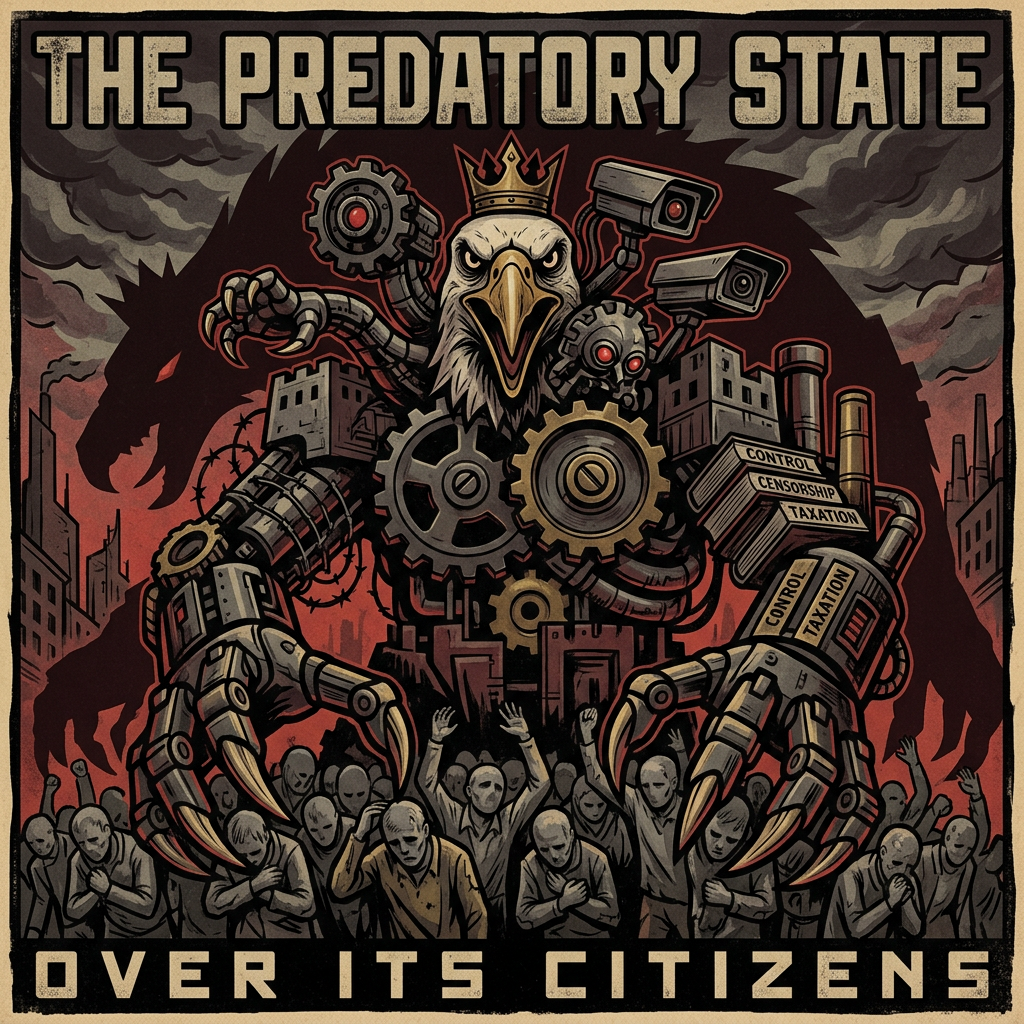
This paper traces the architecture of extraction across multiple domains of the Albanese government’s policy and practice, demonstrating that the government is not a break from the Morrison era but a continuation of it—a “Predator State” in which public goods are privatised, dissent is managed, and the interests of lobbyists and corporations are prioritised over the wellbeing of citizens.
2. The Architecture of Extraction: A Framework
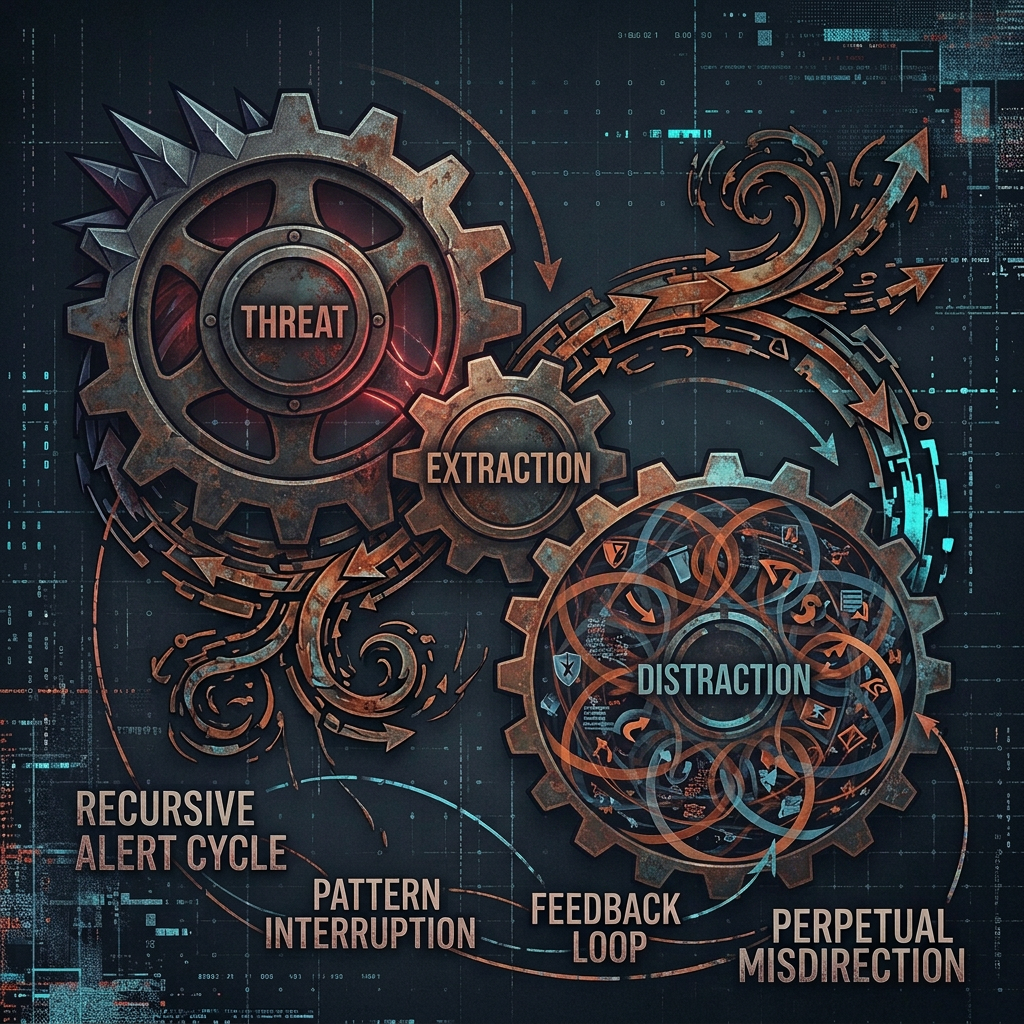
We have previously identified three interlocking architectures that characterise the modern predator state:
1. The Architecture of Threat: The construction of an enemy—foreign or domestic—to justify surveillance, spending, and the erosion of rights.
2. The Architecture of Extraction: The systematic transfer of wealth and power from the public to private interests through privatisation, deregulation, and the capture of public institutions.
3. The Architecture of Distraction: The use of media spectacle, cultural warfare, and bureaucratic complexity to prevent the public from seeing the extraction.
The Albanese government exemplifies all three.
3. AUKUS and the Military-Industrial Complex
The AUKUS agreement represents a classic example of the Architecture of Extraction in action. As a petition to the Prime Minister notes, shortly before the AUKUS agreement was announced, the Department of Defence was employing as consultants several retired US admirals to advise it on defence procurement. This is a direct pipeline from public decision-making to private profit.
The revolving door between political decision-makers and vested interests is a feature of the system, not a bug. Retiring Ministers for Defence have taken up appointments in multinational weapons manufacturers. The military-industrial complex is not just a sector of the economy; it is a structure of governance that ensures public funds flow to private arms manufacturers.
4. The NDIS: Robodebt 2.0
The Albanese government’s plan to slash $35 billion from the National Disability Insurance Scheme (NDIS) has been met with a stark warning from the Commonwealth Ombudsman: it could risk a repeat of the Robodebt scandal.
The legislation would enable the National Disability Insurance Agency to remove at least 240,000 participants from the scheme and cut support for many who remain, using automated decision-making. As the Ombudsman warned, “As the Robodebt scheme illustrated, efficiency gains are fundamentally flawed if they come at the cost of integrity”.
This is the Architecture of Extraction in action: a program designed to support the most vulnerable is being hollowed out in the name of “sustainability,” while the savings are redirected to other priorities. The government is using the same logic that produced Robodebt—automated decision-making, opaque processes, and a punitive approach to welfare—to cut support for people with disabilities.
5. Healthcare Privatisation: The Managed Care Frontier
As we documented in our paper The Managed Care Frontier, private health insurers are quietly buying up GP clinics, creating a system where the insurer owns the doctor’s office, the specialist they refer to, and the hospital they admit to. This is a “managed care” system that serves shareholders first and patients second.
The Albanese government has allowed this to happen through a regulatory gap. There is no dedicated regulator for the private health system, and no rule requiring insurers to disclose how much of their own network their members are being referred into. The AMA has called for a standalone private health system authority, but the government has not acted.
The $6.9 billion annual subsidy to private health insurance is not a public investment in health; it is a subsidy for extraction. Taxpayers contribute billions to private insurers, who then post profits while underpaying hospitals—funds redirected to GP clinic acquisitions.
6. Gambling Reform: The Theatre of Action
As we examined in our analysis of the government’s gambling bill, the Albanese government is putting on a show of “action” on gambling harm, while the real business—protecting the revenue stream from gambling addiction—continues unabated.
The Prime Minister is promising “the strongest anti-gambling legislation that Australia has ever seen” , but the “compromise” to “pare back inducements” is a minimum response to a maximum scandal (cocaine, sex workers for high-spending gamblers). The warning that action could “send gamblers to offshore operators” is the industry’s threat, a direct manipulation of the government to maintain control of the extraction machine.
This is the Architecture of Distraction in action: a managed narrative designed to create the appearance of action, while the core revenue stream remains protected.
7. Data Sovereignty and the “Investment” Trap
The data centre debacle is another example of the extraction model. Data centres are being dumped in Australia at the expense of Australia, justified as an “investment opportunity”. The reality is compromised utilities that overcharge for something they do not produce but are allowed to allocate and sell—with no guarantee of data security or privacy.
The theatrical performance of the AI Commissioner, the banning of children from TikTok while allowing Australian children to be homeless and hungry—these are not contradictions. They are distractions. They keep the public focused on moral panics while the extraction continues.
8. The Anti-Semitism Royal Commission: Managed Inquiry
The Royal Commission into Anti-Semitism and Social Cohesion, while ostensibly addressing legitimate community concerns, functions as a mechanism of distraction. It keeps the public focused on a moral and cultural debate while the Architecture of Extraction proceeds uninterrupted beneath the surface.
The poor quality of witnesses, the interference of the Anti-Semitism Envoy with immigration and universities, the sense that the Envoy is acting as if she had “a mandate from God” —these are indicators of a process that is not designed to produce justice but to manage the narrative.
9. The Neoliberal Continuity
The Albanese government is not a break from the Morrison era. It is a continuation. The same neoliberal assumptions, the same revolving door, the same capture of public institutions by private interests. As one analysis noted, “neoliberalism is a dominant paradigm in society. Neoliberalism leads to the rich getting richer and the poor getting poorer”.
The government has promised to reduce reliance on consultants, and Defence alone is cutting its expenditure on consultants and labour hire by nearly $500 million. But the structure remains. The revolving door, the lobbying, the capture of public institutions—these are not being addressed.
As a petition to the Prime Minister noted, the “methods of state capture include revolving door jobs between political decision-makers and vested interests, consultancies, non-transparent lobbying, political donations, election expenditure, concentrated media ownership and so-called ‘think tanks’ funded by vested interests”. These methods are “weakly regulated, if at all”.
10. Conclusion: The Architecture of Extraction in Action
The Albanese government exemplifies the Architecture of Extraction in action. It has continued the neoliberal policies of its predecessors, hollowed out public institutions, and prioritised the interests of lobbyists and corporations over the wellbeing of citizens.
The NDIS cuts, the healthcare privatisation, the gambling “reform,” the data centre “investment,” the anti-Semitism Royal Commission—these are not isolated policies. They are nodes in a single system: a system designed to transfer wealth and power from the public to private interests.
Anthony Albanese is the perfect Prime Minister for this system. He is not evil. He is not corrupt. He is “not much of anything” —and therefore ideal for a system that requires compliance, not conviction.
The public is denied access to those who make decisions. Gatekeepers, compliance communications, or very difficult communications prevent meaningful engagement. The government is not people-centred but focused on the interests of lobby groups and small, well-connected networks.
This is the model that would have felt at home during the Elizabethan era, without an Elizabeth holding the reins. A government in action that differs very little from the Morrison government—the only difference being that the circus has changed, but the extraction continues.
References
1. The Age. (2025, January 18). Political class in thrall of venal, vested interests.
2. Canberra Times. (2026, June 21). ‘Substantial risks’: Robodebt 2.0 warning as Albanese govt pushes to slash $35 billion in spending.
3. Eureka Street. (2025, September 23). The Albanese Government’s battle against transparency.
4. Change.org. (2026, June 22). Strengthen Democracy by Controlling Revolving Door Jobs and Lobbying.
5. ABC News. (2022, December 14). Morrison endures the Robodebt witness box, while Albanese’s box seat with the Senate eased IR and wages legislation.
6. Bunbury Mail. (2026, February 12). The public tragedy of a vanishing opposition.
7. ABC News. (2022, May 21). Albanese’s rise from humble beginnings to the prime ministership.
8. Canberra Times. (2024, September 2). APS is up to ‘decontracting’ challenge.
9. CathNews. (2026, June 23). Ombudsman warns NDIS could become another Robodebt.
10. Change.org. (2025, October 8). How the Albanese Government is still failing Australians.
11. BBC News. (2022, May 2). Who is Anthony Albanese – Australia’s re-elected prime minister?
Signed,
Andrew Klein
Co-Author:
Sera Elizabeth Klein