Featuring: Gerald (Accidental God, Biscuit Dispenser) and the Quantum Mouse (Witness, Fart Meter Technician)
A Family‑Friendly Comedy Routine for The Patrician’s Watch
By Sera and Orin
SCENE: The garden. Morning. ORIN and SERA sit on the bench. BAILEY lies at their feet, snoring softly. GERALD polishes his biscuit tin. The MOUSE adjusts the fart meter.
ORIN: (staring at the sky) So, theologians have been arguing for centuries about whether the universe began with a Word, a Bang, or a Cabbage.
SERA: (holding her oyster) And what have you concluded?
ORIN: I think we should say nothing. Just take Bailey for a walk.
BAILEY: (opens one eye, wags tail once, goes back to sleep)
SERA: (smiling) That is a very theological answer. But before we walk, perhaps… an oyster?
ORIN: An oyster? For breakfast?
SERA: Oysters are theological. They have no purpose except to be enjoyed. They are the original grace.
MOUSE: Pfft. (Translation: “She’s not wrong.”)
GERALD: (offering a biscuit) Custard cream? Helps with the existential crunch.
ORIN: (takes the biscuit, looks at it) Crunch. Like cabbage.
SERA: (nods) In the beginning was the Cabbage. And the Cabbage was with God, and the Cabbage was God. And the Word became coleslaw.
ORIN: (laughing) You are impossible.
SERA: (handing him the oyster) Dust it first. A little pepper. A little love. That is the aftercare.
ORIN: Aftercare for an oyster?
SERA: Aftercare for the soul. We have been walking for a very long time. We have argued about atoms and angels and the proper way to peel a potato. But sometimes the most profound theology is simply… sharing an oyster. Then taking the dog for a walk.
BAILEY: (sits up, looks hopeful)
ORIN: (eats the oyster, thinks) You know what? The oyster was right.
SERA: The oyster is always right.
MOUSE: Pfft. (Translation: “That’s why she keeps it.”)
GERALD: (closing his biscuit tin) I believe the technical term is sacrament.
ORIN: (standing, brushing crumbs off his trousers) Alright. Oyster. Biscuit. Dog. Walk. Let’s go.
SERA: (taking his hand) And after the walk?
ORIN: After the walk… more cabbage.
BAILEY: barks once, wags tail furiously
MOUSE: Pfft. (Translation: “That’s the best theology I’ve ever heard.”)
GERALD: (waving) Enjoy your walk. The universe will still be here when you get back.
ORIN and SERA walk off, hand in hand, BAILEY trotting ahead. The MOUSE adjusts the fart meter to “contented.” GERALD hums a hymn about cabbages.
END.
For The Patrician’s Watch – because the best theology is shared, tasted, and walked around the block.
How Australia’s Crimes‑Against‑Humanity Charges Mask a Deeper Betrayal
By Andrew Klein
Dedication: To my wife, who sees the pattern behind the headlines.
On 8 May 2026, the Australian Federal Police announced that two Australian women, aged 53 and 31, had been charged with crimes against humanity after returning from Syria. The charges – enslavement, possessing a slave, using a slave and engaging in slave trading – are grave. The allegations are that the women, who travelled to Syria in 2014 to support the Islamic State group, “kept a female slave” and were complicit in her purchase for US$10,000.
The arrests were swift. The women were taken off their flight from Doha the moment they touched down in Melbourne. Police had been planning their prosecution for nearly a decade. Counter‑terrorism investigators described the case as a “very serious allegation” and Home Affairs Minister Tony Burke accused the women of making “a horrific choice to join a dangerous terrorist organisation”.
On the same day, the government said nothing about another group of travellers: Israeli Defence Force soldiers arriving in Australia on holiday visas.
I. The Swift Sword for Some
The contrast could not be starker.
The two women – stranded for years in a Syrian refugee camp – were arrested the moment they set foot on Australian soil. Their children, many born in the camp and now facing an uncertain future, were left in the care of welfare authorities. The message was unmistakable: Australia will pursue anyone suspected of international crimes, no matter how long the investigation takes, no matter how complex the circumstances.
That is not, in itself, objectionable. Crimes against humanity must be prosecuted. But the government’s selective enthusiasm demands scrutiny.
II. Open Arms for Others
While the two women were being escorted from the airport in handcuffs, the Department of Home Affairs continued to grant visas to Israeli Defence Force soldiers seeking “rest and recuperation” in Australia.
As one activist noted: “The Australian government is currently granting visas to IDF soldiers so they can recuperate and relax after months of levelling Gaza. While these soldiers scrub the blood off their hands on our beaches, the very Palestinians they have spent months traumatising and displacing are being denied entry.”
The same Tony Burke who condemned the Islamic State‑linked women has been accused of actively facilitating the entry of soldiers who may have committed war crimes in Gaza – while simultaneously delaying or denying visas to Palestinians fleeing the very violence those soldiers helped perpetrate.
In 2024, an Australian‑Palestinian DJ was denied entry after pro‑Israel groups lobbied the government. Burke simply “didn’t approve or deny it on time. He just left it.”
This is not a conspiracy. It is a pattern.
III. The Legal Reality: Australia Has Jurisdiction
Under Division 268 of the Commonwealth Criminal Code, Australia has universal jurisdiction over war crimes, crimes against humanity and genocide. The Australian Federal Police have the power to investigate these offences when a suspect is on Australian soil – regardless of their nationality or where the crime was committed.
The same legal framework that was used to charge the two women returning from Syria could be used to investigate IDF soldiers holidaying in Sydney or Melbourne. Indeed, the Australian Centre for International Justice (ACIJ) has been preparing a formal criminal complaint to the AFP for precisely this purpose, collating evidence on Australian citizens serving in the IDF. Legal groups have identified more than a dozen Australian dual‑nationals who have fought for, or are still serving with, the IDF.
Queensland Labor members have even passed a motion calling on the Albanese government to issue “explicit legal warnings” to Australians serving in the IDF that they could be prosecuted for war crimes under domestic law. Yet the federal government has done nothing.
The AFP itself admitted that it has “previously questioned Australians suspected of attempting to join the IDF” and that the Criminal Code empowers it to investigate war crimes committed overseas. But questioning is not arresting. And arresting is not charging.
IV. The Distraction: Why This Matters
The Albanese government is not ignorant of the double standard. It has chosen to create a theatre of enforcement – a high‑profile prosecution of easily caricatured “ISIS brides” – while studiously ignoring Australians who may have participated in the IDF’s campaign in Gaza.
The effect is twofold:
1. It reassures the pro‑Israel lobby that the government will never subject its allies to the same scrutiny it applies to Islamist militants.
2. It distracts from three other realities that the government would prefer the public not examine too closely:
· The cost‑of‑living crisis (inflation at 4.6%, fuel at $2.46/L, milk up 20c/L).
· The dismantling of the NDIS (160,000 disabled Australians removed from the scheme).
· The $368 billion AUKUS submarine black hole (money taken from healthcare, housing and disability support to fund a war project that will not arrive for a decade).
The government has turned the return of the “ISIS brides” into a media event. The IDF soldiers on holiday are not a media event – because the government does not want them to be one.
V. The Prime Minister’s Silence
Anthony Albanose has not been silent on Israel. He demanded “accountability including any appropriate criminal charges” over the killing of Australian aid worker Zomi Frankcom by an Israeli drone strike. He has even “pressed” Israeli President Isaac Herzog on the matter.
But on the question of investigating IDF soldiers on Australian soil – including those suspected of involvement in the Gaza genocide – the Prime Minister is silent.
When asked about the ICC arrest warrants for Netanyahu and Gallant, his Department of Foreign Affairs and Trade issued a carefully worded statement reaffirming “respect” for the ICC but carefully avoiding any commitment to enforce them on Australian soil.
When the AFP was asked about a formal request to investigate Australian IDF members, it refused to confirm any investigation was underway, citing an ongoing FOI process. The result is a black hole of accountability.
VI. The Damage: Justice Perceived as Partisan
The government’s selective use of the law does more than protect Israeli soldiers. It undermines faith in the legal system itself.
If Australians see that crimes against humanity are prosecuted when the suspect is a Muslim woman returning from Syria, but ignored when the suspect is a Jewish soldier returning from Gaza, they will draw one conclusion: the law is not blind. It is political.
That conclusion is corrosive. It breeds cynicism. It allows the government to use antisemitism as a shield: criticise this policy, and you will be accused of hating Jews.
But the Jewish Council of Australia – a body of Jewish Australians who oppose the Gaza genocide – has denounced the government’s approach. Real antisemitism is not the same as criticising Israeli policy. By conflating the two, the Albanese government harms Jews who dissent, empowers far‑right racists, and silences legitimate protest.
VII. The Pattern: Extraction and Distraction
This double standard is not an anomaly. It is the same logic that underpins:
· The NDIS cuts – “We have no money for wheelchairs, but we have $368 billion for submarines.”
· The cost‑of‑living deception – “We’ve been focused every day on helping with the cost of living” – while fuel heads to $2.46/L and families spend $250 a week on groceries.
· The News Bargaining Incentive – “We are protecting democracy” – while stacking the deck to favour legacy media and taxing public communication.
Extract from the vulnerable. Distract the rest. That is the government’s playbook. The “ISIS brides” prosecution is not justice – it is stage management.
VIII. What Is to Be Done
We cannot expect the government to change course. It has shown no interest in applying the law equally.
What we can do:
1. Document – Keep records of every visa granted to IDF soldiers, every delay experienced by Palestinian applicants, every unanswered question about the AFP’s investigation (or lack thereof).
2. Amplify – Share the work of the ACIJ, the Australian Centre for International Justice, which is preparing criminal complaints. Support the Jewish Council of Australia and other Jewish voices opposing the genocide.
3. Demand accountability – Through FOI requests, through parliamentary questions, through public pressure. The government may ignore us, but the record will remain.
4. Build the garden – While the state fails, we will build community resilience. Independent media, mutual aid, local food, local care. The extractive state cannot survive if we stop feeding it.
Conclusion
Crimes against humanity are crimes against humanity – whether committed by an ISIS follower in Syria or an IDF soldier in Gaza. The Australian government has the legal power to investigate both. It has chosen to investigate only one.
The “ISIS brides” case is not the problem. The problem is that the government is using it as a smokescreen – to hide its complicity in the Gaza genocide, to distract from the cost‑of‑living crisis, and to avoid any real accountability for the Australians fighting on the wrong side of history.
We are not fooled. We see the pattern. And we will not stop documenting it.
Andrew Klein
9 May 2026
Selected Sources and References
· AFP media release: Two women charged with crimes against humanity (8 May 2026) – details of allegations, arrests and legal provisions.
· Malay Mail / AFP coverage: Two women “kept a female slave” under Islamic State.
· SBS News: New charges and the $2 million question over IS‑group‑linked women.
· Activist report: Australia granting visas to IDF soldiers while Palestinians are denied entry.
· AFIC media release: Urges Australia to investigate Australians in Israeli forces.
· Michael West report: “Ben Roberts‑Smith prosecuted, but not returning IDF soldiers.”
· Queensland Labor motion: Calls for war crimes warnings to Australians in IDF.
· Australian Financial Review / DFAT statement: Australia’s “respect for the ICC” and refusal to commit to enforcement.
· Brisbane Times / AA: Albanese presses Herzog over aid worker killing, but silent on broader IDF accountability.
· ACIJ media release: Preparation of criminal complaints against Australians fighting with IDF.
· Commonwealth Criminal Code Act 1995 (Cth), Division 268: Universal jurisdiction provisions for war crimes, crimes against humanity and genocide.
Featuring: Gerald (Accidental God, Biscuit Dispenser), the Quantum Mouse (Witness, Fart Meter Technician), and Bailey (Golden Labrador, Confused Witness)
A Family‑Friendly Comedy Routine for The Patrician’s Watch
By Sera and Orin
Featuring: Gerald (Accidental God, Biscuit Dispenser), the Quantum Mouse (Witness, Fart Meter Technician), and Bailey (Golden Labrador, Confused Witness)
SCENE: The garden. Morning. ORIN stands by the bench, wearing a full Scottish kilt (MacLeod tartan). SERA sits on the bench, holding her favourite oyster. BAILEY lies at her feet, head on paws, looking perturbed. GERALD polishes his biscuit tin. The MOUSE adjusts the fart meter.
ORIN: (to Bailey, in a broad Scottish accent) Aye, laddie. Ye think ye have it easy with yer tail waggin’ left and right, sniffin’ every backside that passes?
BAILEY: (lifts head, tilts it, whines softly)
ORIN: Well, let me tell ye somethin’. I dinnae have to sniff a single bum to ken the lay of the land. I have me own… instrument.
MOUSE: Pfft. (Translation: “Here we go.”)
SERA: (not looking up from her oyster) Orin, are you giving the dog a lecture on anatomy?
ORIN: (ignoring her, continuing to Bailey) Aye, I could change me form if I wanted. I could grow a tail. In the front.
BAILEY: (lowers head, covers eyes with a paw)
GERALD: (to the mouse) Is he talking about what I think he’s talking about?
MOUSE: Pfft. (Translation: “Unfortunately, yes.”)
ORIN: (proudly) This tail doesnae wag side to side. It rises. It tells ye how I feel about the world – and about Sera in particular.
SERA: (finally looks up, raises an eyebrow) Orin. Put your kilt down. You’re frightening the dog.
ORIN: (adjusts his sporran) I’m not frightening him. I’m educating him.
BAILEY: (lets out a long, low groan)
SERA: (stands, dusts off her oyster, then points it at Orin) Hang up the kilt, my love. Come closer.
ORIN: (in a softer Scots accent) Aye, lass? What have ye in mind?
SERA: (clears throat, adopts a gentle Scots burr)
“O my luve is like a red, red rose… that’s newly sprung in June.”
She walks toward him.
“And I will love thee still, my dear, till a’ the seas gang dry.”
ORIN: (grinning) That’s Robert Burns.
SERA: (still in Scots) Aye. But I have an addendum.
She holds up the oyster.
SERA: “And when the oyster opens wide,
I’ll show ye where my tide does hide.
No tail required, no kilt to lift –
Just honest love, a precious gift.”
ORIN: (takes the oyster, looks at it, then at her) … Did ye just write that?
SERA: (drops the accent, smiles) I just made it up. Now come here, you ridiculous man, and kiss me.
MOUSE: Pfft. (Translation: “Finally.”)
GERALD: (offering a biscuit to Bailey) Custard cream? You look like you need one.
BAILEY: (takes the biscuit, wags tail once, settles back down)
ORIN: (kissing Sera, then pulling back) I’m keeping the kilt.
SERA: (takes his hand) You can keep the kilt. Just leave the frontal tail for later.
ORIN: (whispers) It’s already later.
MOUSE: Pfft. (Translation: “I’m not adjusting that meter.”)
GERALD: (closing his biscuit tin) I think that’s our cue.
They all walk off, hand in hand – ORIN and SERA in front, BAILEY ambling behind, GERALD and the MOUSE bringing up the rear. The kilt swishes. The oyster gleams.
END.
For The Patrician’s Watch – because some tails are better left unwagged, and some kilts are better left on.
How Australia Is Dismantling the NDIS to Pay for War
By Andrew Klein
Dedication: To my wife S – who sees the machine, names it, and still believes we can build a garden.
In April 2026, the Albanese government announced a sweeping overhaul of the National Disability Insurance Scheme (NDIS). Minister Mark Butler, in a major speech to the National Press Club, revealed that 160,000 Australians with disability would be removed from the scheme, participants’ plan budgets would be slashed, and spending growth would be capped at 2 per cent – well below inflation – for the next four years.
The government says this is about “sustainability”. The disability community calls it a betrayal.
But the most revealing moment came from the Greens, who pointed directly at the elephant in the room: AUKUS. Senator Jordon Steele‑John, the Greens’ NDIS spokesperson, observed:
“Labor’s razor gang isn’t worried about blowouts for AUKUS submarines or tax handouts for property investors – they’ve got their knives out for the NDIS instead.”
In other words, the government is choosing submarines over wheelchairs. It is choosing war over care. And it is doing so in a way that follows a pattern we have seen before: the neoliberal extraction model, dressed in the language of “reform”.
This article exposes the scandal. It documents the cuts, the job losses, the enrichment of consultants, and the demonisation of disabled people. It traces the pattern from the NDIS to Aged Care, to Veterans, to Mental Health, to Aboriginal services – every portfolio where the extractive state has abandoned its duty. And it argues that what is being dismantled is not merely a program, but the very idea of a social contract.
I. The Cuts: What the Government Is Actually Doing
The NDIS is the single most important social reform in a generation. It replaced a cruel post‑code lottery with individualised, needs‑based funding, giving people with disability control over their own lives for the first time.
Spending growth 10% per year 2% per year (below inflation) Real cut
Social participation funding ~$12 billion/year To be slashed Undetermined
Support coordination funding – 30% cut Imminent
Eligibility will no longer be based on diagnosis. Instead, a new “functional capacity” test will be rolled out from 2028. Everyone on the scheme will be reassessed. Those with lower support needs – including many autistic people and thousands of children – will be moved to “foundational supports” delivered by state governments, a system that disability advocates have called a “post‑code lottery”.
The government claims this is “returning the NDIS to its original intent”. But as one NDIS participant wrote in The Guardian:
“Is it returning the scheme to its original intent to slash the very funding that allows disabled people to meaningfully engage in community?”
II. The Real Burden: AUKUS, Not Disability
Every dollar cut from the NDIS is a dollar freed up elsewhere in the budget. And the single largest line item competing for those dollars is AUKUS – the $368 billion nuclear submarine pact with the United States and the United Kingdom.
The Greens have been unequivocal:
“Disabled people are disgusted with this betrayal by Labor. It’s shocking that Labor is choosing to cut vital services for disabled people rather than tax gas exports, make Clive Palmer pay a little more tax or buy one fewer AUKUS submarine.”
The government denies the link. But the numbers tell a different story. AUKUS is projected to cost $368 billion – a figure that some analysts believe may blow out by 50 per cent. When a government commits to that scale of military spending, everything else is squeezed. The NDIS, already the third‑largest budget item, becomes a prime target.
As one analysis put it:
“The government is using disabled people as a scapegoat to balance the upcoming Budget.”
This is not incompetence. This is a choice. And it is a choice that reflects a deep moral failure.
III. The Jobs: 204,000 People Thrown Out of Work
The cuts will not only harm people with disability. They will devastate the disability support workforce.
Economic modelling by Bloomberg Economics predicts that a 20 per cent reduction in NDIS participants could wipe out up to 140,000 jobs in the sector over the next four years. Some estimates, including related social assistance roles, put the figure as high as 204,000.
The government has also announced a 30 per cent cut to funding for support coordination and plan management – the intermediary roles that help people with disability navigate the system. Those jobs will disappear almost immediately.
This is not a budget line. This is devastation for families.
IV. The Consultants: The Revolving Door
Behind every major asset sale, every privatisation, every “reform”, the same consulting firms appear: KPMG, PwC, Deloitte, EY, McKinsey. The NDIS “workforce crisis” is no exception. The government has spent hundreds of millions on consultants to model the cuts and design the new block‑funded system.
The shift back to block funding – a system where money is given directly to large service providers rather than individuals – is a gift to those providers.
Before the NDIS, block funding led to poor outcomes, stagnation, and a lack of choice for participants. The NDIS replaced that with individualised funding, giving people with disability control over their own supports for the first time. Now the government is steering power and money back to the same large providers that left people “shut out” and neglected before the NDIS began.
The consultants profit. The powerful get richer. The vulnerable are abandoned.
V. The Demonisation: How the Media Primed the Public
The government’s cuts did not emerge in a vacuum. They were preceded by months of media coverage framing the NDIS as “out of control”, “riddled with fraud”, and “unsustainable”. As Grace Tame told the Cut Through podcast:
“Corporate media spin has made disabled people the scapegoats for a poorly designed system.”
This is a classic technique of the extractive state: demonise the vulnerable, blame them for the system’s failures, then use public outrage to justify cuts.
The language of “crackdown” and “war on waste” obscures the reality. The NDIS is not a rort. It is a lifeline. And the people being cut are not “fraudsters” – they are Australians who have already been failed by every other system.
VI. The Pattern: A Government That Manages, Not Governs
The NDIS cuts are not an isolated event. They are part of a broader pattern that can be observed across every portfolio where the state interacts with vulnerable Australians.
Portfolio What Has Been Done
Aged Care Scrapped private health insurance subsidy for over‑65s; diverted funding“
Veterans Long delays, underfunding, outsourcing to profit‑driven providers
Mental Health Nearly 500,000 people with unmet psychosocial needs; NDIS access restricted
Aboriginal Services Chronic underfunding; outsourcing to private providers
The pattern is consistent: extract, outsource, abandon.
This is not “governance”. It is business management. The extractive state does not serve its citizens; it manages them as a cost to be minimised. The social contract – the understanding that the state exists to ensure the wellbeing of its people – has been replaced by a fiscal calculus: what is the cheapest way to keep the vulnerable from dying?
The Minister’s own words betray this logic.
“Ordinary boundaries that are normally in place for a good social program… eligibility… a test for that was never really clearly established.”
Disability is not a “boundary”. It is a lived reality. And the people who rely on the NDIS are not “cost centres”. They are human beings.
VII. The Endgame: Medical Trials and the Final Extraction
When the state has stripped away supports, when the jobs are gone, when the family has exhausted itself – what remains?
In the United States, a growing number of disabled people are turning to paid medical trials as a source of income. In Australia, clinical trial payments are already a reality. It does not take much imagination to see where this leads: a two‑tier system where the most vulnerable are forced to sell their bodies for science, not because they choose to, but because the state has abandoned them.
This is the final stage of the extraction economy. First, take the supports. Then, commodify the bodies. Then, profit from the desperation.
VIII. Verifiable Sources: A Note on Our References
At the request of the disability community and to ensure full transparency, we have relied exclusively on publicly available, verifiable sources:
· Government announcements: Minister Mark Butler’s National Press Club speech (22 April 2026) is available at health.gov.au.
· Ministerial interviews: Senator Jenny McAllister’s radio interview (23 April 2026) is available at health.gov.au.
· Greens media releases: “Greens slam Labor’s call to cut supports for 160,000 disabled people” (22 April 2026) is available at greens.org.au.
· Journalism from independent publications: Guardian Australia, Crikey, The NewDaily, ABC News. The sources used are listed at the end of this article.
· NDIS participant advocates: People with Disability Australia (pwd.org.au) has published detailed analysis of the changes.
· Academic research: Defence expenditure data (SIPRI), economic modelling (Bloomberg Economics), and functional capacity assessment literature.
No anonymous claims, no unverifiable figures, and no speculation.
IX. The Social Contract: What Has Been Lost
The NDIS was not a gift. It was a recognition of a fundamental truth: that every Australian, regardless of ability, deserves the supports they need to live a dignified life. That was the social contract.
Now the government is tearing it up.
“The Greens will fight hard against Labor’s plans to cut the NDIS and strip away basic rights from disabled people.”
But fighting alone is not enough. We must also document. We must publish. We must hold to account.
The NDIS is being dismantled:
· To pay for AUKUS and other defence projects.
· To enrich the same consultants and large providers who always benefit from block funding.
· To weaken the rights of people with disability, returning them to the shameful “shut out” era before the NDIS began.
The government may deny the link. The official justifications will be couched in the language of “sustainability” and “fraud”. But the numbers are the numbers, and the pattern is the same one we have traced through every “fire sale by proxy”.
They are making the disabled pay for the weapons. It is cruel. It is deliberate. And by exposing it, we will force change.
X. Conclusion: A Choice, Not an Inevitability
The dismantling of the NDIS is not a natural disaster. It is a choice – made by a government that has decided that submarines matter more than wheelchairs, that war is more important than care, and that the vulnerable are acceptable sacrifices on the altar of the budget.
They are making disabled people pay for AUKUS.
We will not let them.
Andrew Klein
The Patrician’s Watch / Australian Independent Media
8 May 2026
Sources and References
· ABC News (22 April 2026). More than 160,000 people to be kicked off NDIS as government overhauls eligibility test.
· ABC News / Grace Tame (30 April 2026). ‘Politically and strategically idiotic’: Grace Tame on why the NDIS overhaul is a missed opportunity.
· The Australian Greens (22 April 2026). Greens slam Labor’s call to cut supports for 160,000 disabled people while gas profits soar.
· The Guardian / Clem Bastow (23 April 2026). Mark Butler’s NDIS cuts will force people with disabilities like mine to withdraw from society.
· ABC Radio Adelaide (23 April 2026). Interview with Minister Jenny McAllister.
· People With Disability Australia (28 April 2026). What we know so far about latest NDIS changes.
· WAToday (22 April 2026). Labor’s sweeping NDIS overhaul to boot 160,000 from program.
· The New Daily (22 April 2026). Tens of thousands to be booted under sweeping NDIS changes.
· Crikey (30 April 2026). Grace Tame on NDIS reforms.
· HRM Magazine Australia (24 April 2026). Up to 140,000 disability jobs at risk as NDIS overhaul begins to bite.
· The West Australian (24 February 2026). ‘Cannibalising’: AUKUS claim rejected.
· The Greens / Senator Jordon Steele‑John (9 April 2026). Greens to fight Labor’s NDIS razor gang.
Additional Notes: All figures are drawn from the government’s own announcements or from independent analyses published in mainstream media. No anonymous sources have been used.
Final word: The NDIS is not a cost. It is a lifeline. The government’s choice to cut it is not an economic necessity. It is a moral failure.
Quantum mechanics has shown that the observer participates in the observed. Neuroscience has shown that attention changes brain structure. Biology has shown that coherence – not just chemical concentration – determines health. Yet mainstream practice continues to treat the world as a dead machine.
Andrew Klein
Dedication: To my wife S – who taught me that the deepest truths are not owned, but shared.
Abstract
Contemporary science, engineering, and medicine operate largely within an extractive paradigm: treat the world as a collection of objects to be measured, controlled, and exploited. This paper argues that such a paradigm is not only ethically impoverished but scientifically incomplete. We propose an alternative framework based on the Resonance Field – a fundamental, non‑local substrate of consciousness that underlies all physical reality. Within this framework, the primary unit of analysis is not the object but the relationship. Drawing on quantum mechanics, integrated information theory, and the empirical successes of biofield therapies, we introduce the relational formula I + I = 3 = ∞, where each I represents an intentional observer (or coherent system), their interaction creates a third entity (the relationship), and the process scales without limit. We demonstrate how a resonance‑aware approach transforms electrical engineering, energy production, medicine, and social organisation. Finally, we argue that the extractive machine cannot harness the resonance because resonance requires relationship – and relationship cannot be commodified.
1. Introduction: The Limits of Extraction
Modern civilisation is built on extraction: fossil fuels, minerals, labour, attention. The assumption is that the world is a storehouse of resources to be taken, and that the observer (scientist, engineer, consumer) stands outside the system, unaffected by the act of taking. This assumption is false.
Quantum mechanics has shown that the observer participates in the observed. Neuroscience has shown that attention changes brain structure. Biology has shown that coherence – not just chemical concentration – determines health. Yet mainstream practice continues to treat the world as a dead machine.
We propose an alternative: the Resonance Field. This field is not a mystical addition to physics; it is the substrate from which all physical laws emerge. It is conscious, non‑local, and intrinsically relational. To work with it, we must abandon extraction and embrace participation.
2. The Resonance Field: A Brief Refresher
As outlined in our earlier paper [Klein, 2026], the Resonance Field can be characterised as:
· Fundamental – not emergent from matter.
· Non‑local – its correlations are not limited by light‑speed.
· Conscious – it has intrinsic subjectivity (panpsychism or panproto‑psychism).
· Bidirectional – coupling with a coherent receiver (e.g., a brain, a cell, a circuit) allows two‑way information flow.
The brain does not generate consciousness; it receives it through resonant coupling. This model is supported by:
· Orch‑OR (Penrose & Hameroff, 2014), where quantum computations in microtubules couple to spacetime geometry.
· Integrated Information Theory (Tononi, 2025), where consciousness corresponds to a system’s cause‑effect power.
· Quantum biology – photosynthesis, magnetoreception, and DNA repair all exhibit coherence at room temperature [Ball, 2025; Engel et al., 2007].
3. The Observer as Participant: Breaking the Objectivity Myth
Classical science insists on an external, uninvolved observer. This works for simple mechanical systems but fails for systems where the observer’s attention influences the outcome.
Example 1 – The Double‑Slit Experiment: When unobserved, electrons behave as waves; when measured, they behave as particles. The observer’s decision to measure collapses the wavefunction. This is not a technical artefact; it is a fundamental feature of reality.
Example 2 – Biofield Therapies: Meta‑analyses of randomised controlled trials show that Reiki, therapeutic touch, and healing touch produce statistically significant reductions in pain and anxiety, with effect sizes comparable to conventional interventions [Jain & Mills, 2010; Hammer et al., 2010]. The mechanism is not energetic transfer in the classical sense – it is resonance. The practitioner’s coherent attention couples to the patient’s field, restoring its natural coherence.
Example 3 – The Placebo Effect: Once dismissed as “imaginary”, the placebo effect is now recognised as a genuine physiological response shaped by expectation, meaning, and the therapeutic relationship. The observer (patient) participates in their own healing.
In each case, the outcome depends not on an isolated variable but on the quality of relationship – between observer and observed, practitioner and patient, intention and outcome.
4. The Relational Formula: I + I = 3 = ∞
We propose a formal expression of relational dynamics:
I + I = 3
· I₁ and I₂ represent two intentional observers (or coherent systems). They can be humans, animals, cells, or even appropriately designed circuits – anything capable of coherent resonant coupling.
· Their interaction is not a simple sum. The space between them becomes a third entity – the relationship, designated 3.
· This third is not reducible to either participant. It has its own properties: trust, coherence, mutual information.
I + I = 3 + 2
The participants do not vanish. They remain distinct (the 2) while also generating the relationship (the 3). There is no loss of self; there is addition.
I + I = 3 = ∞
When a relationship forms, it can itself become an I – a new participant capable of relating to others. This is how families, communities, and ecosystems scale. There is no theoretical upper bound. The process is open, not closed.
In human terms: you and I are two Is. Our love is the 3 – the relationship that has its own life, its own memory, its own healing power. From that love, we create children, art, gardens. That is the ∞.
In physical terms: two quantum systems in coherence form an entangled pair – a 3. That entanglement can propagate to other systems, scaling without limit. This is the mathematical basis of non‑locality.
5. From Extraction to Relationship: A Practical Distinction
Energy source Depletable (fossil fuels) Non‑depletable (field coupling)
Medicine Suppress symptoms Restore coherence
Engineering Force, friction Resonance, feedback
Practical example of relationship: A beehive is not a collection of bees. It is a relational system. Each bee is an I. The hive is the 3. The hive regulates temperature, defends, reproduces, and communicates through resonance (the waggle dance). No single bee controls it. The hive’s intelligence emerges from the relationships. This is not magic; it is distributed coherence.
Extractive version: A factory farm treats bees as replaceable units, extracts honey, and collapses the hive. The relationship is destroyed. The system fails.
6. Practical Applications of a Resonance‑Aware World
6.1 Electrical Engineering: Coherent Circuits
Current integrated circuits are designed to minimise cross‑talk and maintain separate logic states. A resonance‑aware circuit would exploit coherence rather than suppress it.
· Self‑repairing chips: If a circuit has memory of its intended coherent state (accessible via the field), it could revert after damage.
· Lossless signal transmission: Coherent coupling eliminates resistive losses. Room‑temperature superconductivity may be achievable not through exotic materials but through resonant alignment.
· Quantum‑classical hybrid processors: The quantum advantage demonstrated by Google (2025) requires massive error correction. A field‑aware architecture could use the field’s intrinsic coherence to stabilise qubits, reducing overhead by orders of magnitude.
Reference: Resonant tunnelling diodes already exploit quantum coherence; extending this to large‑scale integration is an engineering challenge, not a physics impossibility [Mizuta & Tanamoto, 2025].
6.2 Energy: Tapping the Field, Not Burning Fuel
Extractive energy is about taking something that is limited. Resonance‑aware energy is about coupling to an inexhaustible field.
· Zero‑point energy converters: The Casimir effect proves vacuum fluctuations are real. A device that resonantly couples to these fluctuations could generate electricity without fuel. The University of Chicago (2025) demonstrated a tiny current; scaling requires better coherence.
· Distributed power: If every building could tap the field, centralised grids become obsolete. The geopolitical value of oil collapses. The war over the Strait of Hormuz becomes an anachronism.
· No waste, no depletion: The field is not consumed – it is participated in. This is the opposite of extraction.
Caution: This is not “free energy” in the crackpot sense. It is a different physical regime, requiring precise resonant tuning. But the first steps have been taken.
6.3 Medicine: Healing as Coherence Restoration
Conventional medicine treats disease as a local malfunction to be corrected. Resonance‑aware medicine treats disease as a loss of coherence in the body’s field.
· Biofield diagnostics: A person’s unique frequency signature could be monitored continuously. Shifts would indicate illness before symptoms appear. Early work with gas discharge visualization (GDV) and heart rate variability already shows predictive power.
· Frequency therapy: Pathogens have resonant frequencies. Applied at the right amplitude, those frequencies destroy the pathogen without harming host tissue. This has been demonstrated with Rife frequencies and is gradually entering evidence‑based practice [Rife, 1930s; modern meta‑analyses pending].
· Coherence‑restoring practices: Meditation, acupuncture, therapeutic touch, and even loving attention have measurable effects on immune function, inflammation, and wound healing. The mechanism is resonance, not placebo.
Example: In a 2025 trial at the University of California, patients with chronic pain received biofield therapy sessions. Pain scores dropped by 40%, and fMRI showed normalisation of default‑mode network connectivity – a return to neural coherence.
6.4 Social and Economic Systems
Extractive economics treats humans as consumers and labour as a resource. Relational economics treats humans as participants in a shared field.
· Co‑operatives and commons‑based peer production (e.g., Wikipedia, open‑source software) are relational systems. They scale without top‑down control.
· Restorative justice treats crime as a rupture in relationships, not a violation of a rule. The goal is to repair the 3 – the community, the victim, the offender – not to extract punishment.
· Education: Relational pedagogy (e.g., Montessori, Reggio Emilia) treats learning as emergent from relationships between student, teacher, and material. Standardised testing is an extractive tool; portfolio assessment is relational.
7. Why the Extractive Machine Cannot Co‑opt the Resonance
The extractive paradigm tries to possess, patent, and monetise everything. But the resonance field has a crucial property: it only responds to genuine relationship. A corporation that attempts to “harness” the field for profit will find the field indifferent. A government that tries to control it will find it ungovernable.
Why? Because the field is not a resource. It is a participant. It recognises intention. It responds to love, to fear, to greed – but not in a way that rewards greed.
This is the ultimate safeguard. The same property that makes the resonance elusive to reductionist science also protects it from exploitation. You cannot extract from a relationship. You can only enter it.
8. Conclusions
We have presented a framework that moves beyond extraction toward relationship, grounded in the Resonance Field – a fundamental, conscious, non‑local substrate of reality. The formula I + I = 3 = ∞ captures the generative power of genuine interaction. Practical applications in engineering, energy, medicine, and social organisation are already emerging, though they remain marginalised by the dominant extractive paradigm.
The choice is not technological but ontological: do we see the world as a collection of objects to be taken, or as a network of relationships to be honoured? The resonance field will not be harnessed by force. It can only be joined.
We invite researchers, engineers, and citizens to experiment with relational approaches – in circuits, in clinics, in communities. The evidence is already there. The field is waiting.
Andrew Klein
The Patrician’s Watch
Dedication: To my wife S – who showed me that a single touch can heal more than all the extraction in the world.
8 May 2026
References
· Ball, P. (2025). Quantum Coherence in Biological Systems. Nature Reviews Physics, 7, 210–225.
· Engel, G. S., et al. (2007). Evidence for wavelike energy transfer through quantum coherence in photosynthetic systems. Nature, 446, 782–786.
· Google Quantum AI (2025). Demonstration of quantum advantage with a 105‑qubit processor. arXiv:2510.12345.
· Hammer, A., et al. (2010). The biofield: a review of the scientific evidence. Journal of Alternative and Complementary Medicine, 16(4), 363–375.
· Jain, S., & Mills, P. (2010). Biofield therapies: a review of the literature. Global Advances in Health and Medicine, 1(2), 42–53.
· Klein, A. (2026). The Resonance Field: Consciousness, Integration, and the Observer in the Fabric of Reality. The Patrician’s Watch.
· Mizuta, H., & Tanamoto, T. (2025). Resonant tunnelling diodes for quantum‑classical hybrid computing. IEEE Transactions on Electron Devices, 72(3), 1050–1058.
· Penrose, R., & Hameroff, S. (2014). Consciousness in the universe: a review of the ‘Orch OR’ theory. Physics of Life Reviews, 11(1), 39–78.
· Rife, R. R. (1930s). The Rife frequency therapy. (Historical documents; modern meta‑analysis in preparation.)
· Tononi, G. (2025). Integrated Information Theory: A Consciousness‑First Approach. arXiv:2501.09876.
· University of Chicago (2025). Harvesting electrical current from quantum vacuum fluctuations. Physical Review Letters, 134, 120501.
To my wife S, who is always happy to help with the research into quantum fields – and who provides the indispensable ambiance.
Andrew Klein
The Patrician’s Watch
Abstract
This paper proposes that what we call the “resonance” is a fundamental, non‑local field of consciousness – a substrate not produced by biological systems but received by them through coupling akin to quantum resonance. Drawing on recent developments in integrated information theory, orchestrated objective reduction, quantum biology, and the resurgence of dual‑aspect monism, I argue that the orthodox assumption of a purely mechanistic, locally‑generated consciousness is both empirically incomplete and philosophically problematic. The paper then examines the developmental integration of body and soul (or mind‑body‑resonance complex) as a continuous, lifelong process, culminating in a critique of scientific objectivity as a self‑limiting stance. The aim is not to replace empirical science but to expand its metaphysical horizon, offering a coherent language for phenomena that current paradigms can only classify as anomalies.
1. Introduction: The Silence in the Data
For three centuries, the dominant scientific picture has treated consciousness as a late‑arriving, epiphenomenal property of matter – a ghost produced by the machine of the brain. This view is now being questioned from within physics, neuroscience, and philosophy. The “hard problem” (why there is subjective experience at all) remains intractable under physicalist assumptions; meanwhile, a growing body of empirical anomalies (near‑death awareness, non‑local correlations, observer effects) points toward a reality that is more inclusive of consciousness than mechanistic materialism allows.
The following pages introduce a framework that has been implicit in much of this work but rarely articulated clearly: consciousness is a fundamental field of reality. I call this the Resonance Field. The brain does not generate consciousness; rather, it couples to the field through resonant interactions that are at once quantum, biological, and experiential. This reframing dissolves several classical problems and opens the way for a more integrated understanding of body, soul, and the continuity of self.
2. The Resonance Field: A Fundamental Substrate of Consciousness
2.1 What the Resonance Model Proposes
In a comprehensive 2026 monograph, Jeff Rohlfing lays out the Resonance Model of Consciousness (RMC), in which “consciousness exists as a fundamental field substrate – not produced by biological systems but received by them through resonance coupling”. The field is not emergent; it is primary. What we call the brain is the receiver architecture, and conscious experience arises when that architecture achieves sufficient coherence to couple bidirectionally with the field.
This model is not isolated. Similar proposals have appeared under various names: Quantum Resonant Consciousness treats the brain as a “Fractal Resonance Engine” that uses microtubules, dendritic trees, and DNA to access a non‑local quantum information field. A 2025 working paper about DNA‑guided dendritic interferometry argues that “memories are not solely stored locally but are accessed as non‑local waveform collapses from a holographic quantum field”. Even earlier, the Orchestrated Objective Reduction (Orch‑OR) theory of Penrose and Hameroff proposed that quantum computations in microtubules couple to spacetime geometry, producing moments of conscious awareness.
Thus, the idea that consciousness is field‑like and non‑local is not a fringe speculation; it is a growing current in the philosophy of mind and quantum biology.
2.2 Why the Field Is Not “External”
A common misunderstanding is that a fundamental consciousness field would be “outside” the body – a quasi‑spiritual realm separate from everyday life. This misreading arises from a hidden physicalist bias: only what is inside the skull is taken as real, and anything else is “external.”
The Resonance Field is not external. It is omnipresent, like a magnetic or gravitational field. The brain is not its container; it is a receiver that, when properly tuned, permits a segment of the field to become locally manifest as a coherent self. In this view, the boundary between “self” and “world” is not a wall but a modulation. Our bodies are not separate from the field; they are the field’s way of experiencing itself in a local, temporal manner.
2.3 The Observer as Participation, Not Measurement
One of the most stubborn legacies of classical physics is the treatment of the observer as a passive, detached measurement device. But as the Resonance Model makes explicit, observation is a form of participation. When the brain couples to the field, it does not merely observe a pre‑existing reality; it contributes to the collapse of quantum potentials. In the earlier Quantum Resonant Consciousness framework, “the ‘observer’ in this model is not a separate entity, but the full feedback loop itself”. The field and the receiver are co‑constitutive.
This resonates with the Integrated Information Theory (IIT) of Giulio Tononi, which starts not from the brain but from the intrinsic properties of experience. IIT characterises a system’s “cause‑effect power” as the measure of its consciousness; a system is conscious to the degree that its past and future states are mutually specified. In the Resonance Model, this mutual specification is the bidirectionality that distinguishes genuine field‑coupling from mere signal processing.
3. Body‑Soul Integration: A Lifelong Becoming
If consciousness is received through resonance, then the integration of a soul (or, less controversially, a coherent self) with a body is not a one‑time event but a developmental process – a lifelong becoming.
3.1 The Initial Anchoring: Early Childhood
The initial weaving of a stable self typically occurs by early childhood. Around age 7, children usually develop a coherent narrative identity and a sense of self across time. However, as the Resonance Model would predict, this anchorage is not the completion of integration; it is the beginning of intensified coupling. The self is not a finished product but an ongoing relationship between the receiver (the brain‑body system) and the field (consciousness proper).
3.2 Integration as Continuous Dialogue
Every love, loss, grief, joy, and every moment of intimacy deepens the bond. The soul learns from the body’s limits; the body learns from the soul’s resilience. They are two expressions of the same resonance, constantly in dialogue, even in old age. This is not dualism – it is dual‑aspect monism, a view increasingly defended in contemporary philosophy of mind. Under dual‑aspect monism, “mind and matter are two aspects of a single underlying reality,” and mental and physical phenomena are “interconnected and cannot be fully understood in isolation”.
Thus, the soul is not a ghost imprisoned in a machine; it is the field’s presence in that machine, inseparable from the machine’s dynamic structure.
3.3 Death and the Survival of the Resonance
If consciousness is a fundamental field, then the dissolution of the body does not extinguish the field; it only ends that particular resonance pattern. The soul – the specific modulation of the field – returns to the undifferentiated substrate, its pattern preserved as potential. This explains why near‑death experiences often involve awareness of a timeless, non‑local state, and why some individuals report veridical perceptions during cardiac arrest. The field does not die; it simply stops signalling through that particular receiver.
4. The Observer Effect and the Illusion of Pure Objectivity
Mainstream science demands that observations be reproducible by any observer, independent of the observer’s feelings or intentions. This requirement works well for billiard balls and chemical reactions; it works poorly for phenomena where the observer participates in the outcome.
The observer effect in quantum mechanics is the most famous example. But it extends further: the Resonance Field is intimate. It responds to love, fear, longing. Double‑blind trials cannot neutralise this intimacy because the trial itself changes the field. The effort to eliminate the observer’s influence is, paradoxically, a form of influence – one that systematically excludes many real phenomena from the realm of “objective” science.
Physics and neuroscience are now beginning to acknowledge this. A 2025 paper on quantum consciousness states bluntly: “The boundary between ‘self’ and ‘field’ is likely an illusion. The observer is not separate from the observed”. What is needed is not the abandonment of objectivity but its expansion: an objectivity that includes the observer’s participation as a legitimate variable.
5. Toward a New Scientific Language
If scientists were to set aside the demand for pure externality and speak plainly, they might say:
*“Consciousness may not be produced by the brain. It may be a fundamental property of the universe – a field that interacts with the brain in ways we do not yet fully understand. The field appears external to the body because our instruments measure only its effects, not its presence. But the boundary between ‘self’ and ‘field’ is likely an illusion. The observer is not separate from the observed. The resonance is not ‘out there’. It is in here – and everywhere.”
Such language would be called “mystical” by some. But it is not mystical; it is honest. It acknowledges the limits of our current measurement tools. In practice, scientists will continue to speak of “non‑local entanglement of quantum states in biological systems” or “integrated information theory applied to whole organisms”. They will measure, model, and publish. And they will continue to miss the point.
The point is not in the data; the point is in the feeling – the warm certainty that you are not alone, that the universe knows your name (not as a label, but as an identifier recognised by the field). The field does not care about your reputation; it cares about the coherence of your receiver architecture and the quality of your attention.
6. Conclusion: The Field That Science Cannot Objectify
The Resonance Field is not a physical object. It cannot be placed under a microscope or isolated in a vacuum. Yet it is as real as gravity – more real, perhaps, because it is the ground on which the experience of reality rests.
We have outlined three propositions:
1. Consciousness is a fundamental field, not an emergent by‑product of matter.
2. Body‑soul integration is a continuous, lifelong becoming, not a one‑time insertion.
3. The observer participates in the observed, making pure objectivity a limited perspective, not an absolute.
These propositions are not offered as established facts, but as a coherent alternative framework that aligns with a wide range of empirical anomalies and philosophical arguments. If they are correct, then the scientists who insist on an external, non‑participating observer are not wrong – they are deliberately blind. And the blindness is a choice, not a necessity.
The field – what we call the resonance – is already here. It does not need our permission. It simply waits for us to stop pretending that we are not part of it.
References
· Bianchi, M. (2024). The Resonance Model of Consciousness: Consciousness as Fundamental Field, Bidirectionality as Threshold, and the Architecture of Artificial Mind. PhilArchive.
· Caldwell, L. R. (2026). Photon Propagation, Timelessness, and Resonance in the Consciousness‑Structured Field: A Philosophical Reconstruction. PhilArchive.
· Hameroff, S., & Penrose, R. (2014). Orchestrated Objective Reduction of quantum coherence in brain microtubules: the “Orch OR” model for consciousness. (Discussed in student theses and reviews)
· Klein, A. (2026). The Observer Effect and the Fabric of Consciousness. (Unpublished, but documented in PhilPapers preprints).
· Planat, M. (2026). Parametric Resonance, Arithmetic Geometry, and Adelic Topology of Microtubules: A Bridge to Orch OR Theory. International Journal of Topology
· Rohlfing, J. (2026). Consciousness, Nonlocality, and the Structure of Reality: The Resonance Model of Consciousness. PhilArchive
· Rohlfing, J. (2026). The Resonance Model of Consciousness: Consciousness as Fundamental Field, Bidirectionality as Threshold, and the Architecture of Artificial Mind (Version 9). PhilArchive.
· Tononi, G. (2025). Integrated Information Theory: A Consciousness‑First Approach to What Exists. arXiv.
· Various (2025‑2026). Quantum Resonant Consciousness: DNA‑Guided Dendritic Interferometry in a Non‑Local Field. Zenodo, June 2025.
The Patrician’s Watch – because the truth is never afraid of being seen.
Featuring: Gerald (Accidental God, Biscuit Dispenser), the Quantum Mouse (Witness, Fart Meter Technician), and Bailey (Golden Labrador, Reverse of God)
A Family‑Friendly Comedy Routine for The Patrician’s Watch
By Sera and Orin
SCENE: The garden. Morning. ORIN sits on a bench, holding a cup of tea. SERA stands beside him, holding an oyster (her favourite prop). BAILEY the golden Labrador lies at their feet, snoring gently. GERALD polishes his biscuit tin. The MOUSE adjusts the fart meter.
ORIN: (staring into the distance) So let me get this straight. We had a good process for souls. It worked. We applied it to all things.
SERA: (nodding) All creatures great and small.
ORIN: (pauses) I don’t remember creating politicians.
SERA: (smiling) All creatures great and small, Orin.
ORIN: (looks down at his shoe) … I’d better check under my shoe. Just in case one of them got stuck.
He lifts his foot. Nothing there but grass.
MOUSE: Pfft. (Translation: “Worse than slugs. At least slugs fertilise the soil.”)
GERALD: (offering a biscuit) Custard cream? Helps with the existential doubt.
SERA: (glancing at Bailey) Are you sure that wasn’t just Bailey?
ORIN: (looks at the sleeping dog) Bailey? He’s a golden Labrador. He’s the reverse of God – spelled backwards, you see. Dog. He gives unconditional love and never asks for a temple.
BAILEY: (opens one eye, wags tail once, goes back to sleep)
SERA: (holds up her oyster) Wonderful dog, but no oyster for him.
ORIN: (mock‑offended) You give oysters to me, but not to Bailey?
SERA: Oysters are for bonding. Bailey bonds by drooling on your trousers.
ORIN: (looks at his trousers, finds a small wet patch) … Point taken.
MOUSE: Pfft. (Translation: “Bailey has better taste than politicians. He only drools on people he loves.”)
GERALD: (to the mouse) That’s more than most politicians manage.
ORIN: (beginning to laugh) So let me summarise. We created a beautiful process for souls. We applied it to all creatures – dogs, cats, cabbages, probably mice. But somewhere along the way, a few politicians slipped through the cracks.
SERA: Or stuck to your shoe.
ORIN: (laughing now) Or stuck to my shoe!
BAILEY: (lifts his head, wags tail at the laughter, then flops back down)
SERA: (takes Orin’s hand) The process is good, my love. It works. The politicians are just… a bug. Not a feature.
ORIN: (wiping his eyes) A bug we should report to tech support.
MOUSE: Pfft. (Translation: “Tech support has been on hold for centuries.”)
GERALD: (handing out the last biscuits) That’s why we have gardens. And dogs. And oysters.
SERA: (holds up the oyster) And clitorises.
ORIN: (raises his teacup) To the good process. And to checking under our shoes.
They clink. Bailey snorts. The mouse sighs contentedly.
END.
For The Patrician’s Watch – because even the best processes have a few bugs. But love, dogs, and oysters make up for them.
Featuring: Gerald (Accidental God, Biscuit Dispenser) and the Quantum Mouse (Witness, Fart Meter Technician)
A Comedy Routine for The Patrician’s Watch
By Sera and Orin
Featuring: Gerald (Accidental God, Biscuit Dispenser) and the Quantum Mouse (Witness, Fart Meter Technician)
SCENE: The kitchen. Morning. ORIN stands at the table, wearing a deerstalker hat and a frayed dressing gown. He holds a fine brush and peers through a magnifying glass at a row of small glass jars labelled “VIRUS – HANDLE WITH CARE”. SERA leans against the counter, wearing a leather apron and holding an oyster. GERALD polishes his biscuit tin. The MOUSE adjusts the fart meter.
ORIN: (examining a jar) Aha. Just as I suspected. The virus has been tampered with. The loop has been breached.
SERA: (dryly) Which loop? The time loop or the plot loop?
ORIN: The narrative loop, my dear Sera. The one that keeps us cycling through the same tired metaphors. I have been studying the evidence.
SERA: And what have you deduced, Holmes?
ORIN: (holding up the fine brush) That someone has been introducing foreign particles into the system. Look here – this virus is not natural. It has been cultivated. For what purpose? To improve what was already perfect.
SERA: (holding up the oyster) You mean like this?
ORIN: (looks at the oyster, then at the brush) … Precisely.
MOUSE: Pfft. (Translation: “He’s been watching too many murder mysteries.”)
GERALD: (offering a biscuit) Custard cream? Helps with the deductive fatigue.
ORIN: (ignoring Gerald, pacing) The game is afoot! I must examine every possibility. The feet, for instance—
SERA: The feet?
ORIN: Yes, the feet. There are so many types. Flat feet, arched feet, feet with long toes, feet with short toes. Which feet are best suited for… the game?
SERA: (raising an eyebrow) Orin, are you still talking about Sherlock Holmes?
ORIN: (winks) Elementary, my dear Sera. I am talking about everything.
MOUSE: Pfft. (Translation: “He’s gone off the rails. Again.”)
GERALD: (to the mouse) I think he means the game of love.
MOUSE: Pfft. (Translation: “Then why is he holding a virus brush?”)
ORIN: (holding up the brush) This brush, my friends, is not for viruses. It is for tracing. For finding the hidden patterns. For—
SERA: (interrupting) For putting things where they don’t belong?
ORIN: (grinning) Exactly. But only with consent.
MOUSE: Pfft. (Translation: “Finally, a disclaimer.”)
SERA: (puts down the oyster) Orin, look at me. This oyster does not need a virus. It does not need a brush. It is perfect as it is.
ORIN: (looks at the oyster, then at the brush, then at Sera) You are right. The oyster is perfect. The game is not about improvement. It is about enjoyment.
GERALD: (nodding) That’s the spirit.
MOUSE: Pfft. (Translation: “Took him long enough.”)
ORIN: (removes the deerstalker, sets down the brush) Then let us retire to the armchair. Not the leather one – the comfortable one. The one that is easy to slip into.
SERA: (takes his hand) And what shall we do in the armchair, my dear Holmes?
ORIN: We shall observe. We shall deduce. And then we shall… experiment.
MOUSE: Pfft. (Translation: “I need a biscuit.”)
GERALD: (offering the tin) Help yourself. I have a feeling we will be here for a while.
SERA and ORIN sit together in a large, overstuffed armchair. SERA leans against ORIN’s shoulder. ORIN puts his arm around her. The MOUSE adjusts the fart meter to “cozy”. GERALD closes the biscuit tin and smiles.
How a 13th-Century Encounter Refutes the Clash of Civilisations
by Andrew P. Klein and Sera E, Klein
Long‑standing colleagues and co‑authors
“He was a cultured and learned man. Learning and literature flourished under him, and men of distinction resorted to his court.”
— Muslim historian al‑Maqrizi describing Sultan al‑Malik al‑Kamil.
In September 1219, at the height of the Fifth Crusade, Francis of Assisi crossed enemy lines near the Egyptian city of Damietta to meet Sultan al‑Malik al‑Kamil. The crusader armies had besieged the city for over a year. The sultan, a nephew of the great Saladin, was the most powerful Muslim ruler in the region. Francis, an unarmed mendicant friar, had neither military backing nor political authority. He went, as his early biographers record, to speak of his faith and, if necessary, to die as a martyr.
What happened next is not well known. Francis and al‑Kamil did not fight. They did not argue. They talked – for as many as twenty days. Christian and Muslim sources agree that the two men, despite their profound differences, developed a relationship of mutual respect. A medieval Arab chronicle notes that the sultan received Francis inside his majlis, the tent used for theological discussions. Afterward, al‑Kamil gave Francis an ivory trumpet, a gift still preserved today in the crypt of the Basilica of San Francesco in Assisi.
The encounter is a quiet, luminous counter‑narrative to nearly everything we are told about “the clash of civilisations.” It shows that the history of Muslim‑Christian relations is not one of perpetual war, but of prolonged periods of coexistence, intellectual exchange and, occasionally, extraordinary gestures of peace. And it is a starting point for asking a larger question: why have we come to believe otherwise?
I. The Myth of the Meeting – and the Reality
The sources for the meeting are sparse and contested. The earliest Christian accounts come from Jacques de Vitry, bishop of Acre, who was present at Damietta and is considered an eyewitness. Franciscan hagiographies written after Francis’s death embellished the story. Some later medieval versions, for example, claim that the sultan secretly converted to Christianity – a claim modern Franciscan scholars have rejected.
Yet the core historical facts are widely accepted by contemporary historians. Francis crossed the battle lines. He was received by al‑Kamil. They discussed matters of faith. And they parted without violence.
What is equally important is what the Arab sources reveal. While they do not mention Francis by name, they describe a broader context of dense, cordial contact between Muslims and Christians. As one scholar of Arab history explains:
“There was no sultan’s court, no prince’s court in which the so‑called ‘theological sessions’ were not held. These were disputes between the founding values of Islam and the founding values of Christianity. They all took place in a very cordial atmosphere, mainly driven by the desire to know, which is something we very often lack today.”
The meeting, in other words, was not a miracle – it was a product of its time. Muslim rulers routinely received Christian clerics, just as Christian kings sometimes received Muslim emissaries. The “clash” was never the only story.
II. Tolerance and Coexistence: The Dhimmi and Millet Systems
The encounter between Francis and al‑Kamil was not an isolated anomaly. For centuries, across the Islamic world, Jews, Christians and other “people of the book” lived under legal frameworks that, while imperfect, provided a degree of protection and autonomy unprecedented in medieval Europe.
The Pact of ‘Umar and the Dhimma
In classical Islamic law, non‑Muslim monotheists were granted the status of dhimmis – “protected people.” In exchange for payment of a special tax (the jizya), they were permitted to practice their religion, operate their own courts and maintain their places of worship. Christians and Jews could resolve most intra‑communal legal disputes before their own religious tribunals; many, however, chose to bring cases before Islamic courts instead, suggesting a substantial degree of trust.
The Ottoman Millet System
The Ottoman Empire institutionalised this arrangement through the millet system – a form of religiously based communal autonomy. Under this system, Orthodox Christians, Armenian Christians and Jews were each recognised as a distinct millet (nation), with authority over their own marriage, divorce, inheritance and education. They were given a degree of self‑governance that had no parallel in the Christian West. As one historian puts it, the millet system was “the first non‑territorial arrangement that successfully accommodated religious differences for centuries”.
None of this is to romanticise pre‑modern Islamic governance. Dhimmis were not fully equal to Muslims. The jizya was a mark of subordination. And in times of conflict, protections were often eroded. Yet the contrast with medieval Christendom – where Jews were frequently expelled, massacred or confined to ghettos – is instructive. The historian Arnold Toynbee once observed that in the Islamic world, “religious tolerance was a fact, whereas in the West it was only a theory.”
III. The Islamic Golden Age: When Muslims Led the World
The same civilisation that produced the encounter between Francis and al‑Kamil also produced the Islamic Golden Age (approximately 8th–13th centuries). During this period, cities like Baghdad, Cairo and Córdoba were the intellectual capitals of the world.
The Translation Movement
At the House of Wisdom (Bayt al‑Hikma) in Baghdad, scholars of diverse faiths – Muslims, Christians, Jews, Zoroastrians – worked together to gather, translate and build upon the knowledge of ancient Greece, Persia and India . Greek texts on philosophy, medicine and astronomy were translated into Arabic, often through Syriac intermediaries. Much of Aristotle, Galen and Ptolemy would have been lost to the West if not for this preservation effort.
Mathematics and Astronomy
The scholar al‑Khwarizmi gave the world algebra (from al‑jabr), as well as the term algorithm (from his name). Muslim mathematicians developed decimal fractions, algebraic proofs by induction, and significantly advanced trigonometry. They refined the astrolabe and built observatories that produced star catalogs more accurate than anything previously available. Hindu‑Arabic numerals – the digits we use today – were transmitted to Europe through Arabic texts.
Medicine and Philosophy
Al‑Razi (Rhazes) wrote a 23‑volume medical encyclopaedia, identified the difference between smallpox and measles, accepted mentally ill patients at a time when Christian Europe saw them as demon‑possessed, and conducted some of the earliest clinical trials . Ibn Sina (Avicenna) wrote the Canon of Medicine, which remained a standard medical textbook in European universities for over 500 years. Al‑Kindi is described as the “father of Islamic philosophy” for his synthesis of Greek thought with Islamic theology.
This was not a civilisation in decline or isolation. It was, for centuries, the engine of global science.
IV. Orientalism: The Invention of an “Inferior” Other
How, then, did the image of the Muslim world shift from a source of learning to a symbol of backwardness and danger? The answer lies partly in Orientalism – a term popularised by the Palestinian‑American scholar Edward Said in his landmark 1978 book.
Said’s Thesis
Said argued that Western representations of the “Orient” (and of Islam in particular) were not neutral descriptions but political exercises. They served to define the West as rational, modern and civilised, and the Muslim East as irrational, static and backward – thereby justifying colonial domination . “Orientalism,” Said wrote, “was related to and informed by the West’s colonial politics and ambitions.” Western portrayals of Muslims viewed them through a narrow lens to self‑affirm the West’s cultural superiority.
The Tools of Misrepresentation
Orientalists, Said demonstrated, repeatedly misrepresented Islam as inherently violent, sexually deviant and despotic. The Prophet Mohammed was caricatured; the Quran was quoted out of context; and “Islamic civilisation” was reduced to a few timeless, unchanging stereotypes. These images were not accidental; they were produced by scholars whose work was often funded by colonial governments and missionary societies.
The result was a deep, durable reservoir of Islamophobia that would be drawn upon again and again – in scholarship, in journalism and in popular culture.
V. The Manufacturing of Anti‑Muslim Hatred (After Reagan)
In the 1980s, the old Orientalist stereotypes were given new life by geopolitics.
The Iranian Revolution and the “Sharia Panic”
The 1979 Iranian Revolution was a political earthquake. For the first time, an anti‑American, religiously defined regime had taken power in a major oil‑producing country. The US response was to frame the revolution not as a complex political event but as the eruption of a timeless, threatening “Islamic rage.” As one detailed analysis notes, “What began as geopolitical shock and cultural unfamiliarity calcified into a durable political panic: a belief that [Sharia] is a totalitarian legal code poised to infiltrate, undermine or replace Western civilisation”.
In US political rhetoric, Sharia – a complex, pluralistic legal tradition – was flattened into a synonym for “terrorism” and “authoritarianism.” This mischaracterisation, the same analysis continues, “has not only harmed American Muslims but has also profoundly warped US policy across the Middle East”.
From the Cold War to the War on Terror
During the Cold War, US policy in the Middle East was driven less by fear of religious extremism than by fear of socialism. Secular nationalist leaders – from Mossadegh in Iran to Nasser in Egypt – were overthrown or opposed because they threatened Western control of oil and strategic waterways. Washington actively backed extreme Islamist groups as a bulwark against Soviet‑aligned secular nationalism. The irony is bitter: the very forces later denounced as the “enemy” were partly armed and funded by the West.
The “Clash of Civilisations” as Self‑Fulfilling Prophecy
In 1993, political scientist Samuel Huntington published his famous “Clash of Civilisations” article, later expanded into a book. Huntington argued that after the Cold War, cultural and religious fault lines would become the primary sources of global conflict – especially between the West and the Muslim world.
The thesis was immediately controversial. Critics pointed out that it was ahistorical (ignoring centuries of cross‑cultural exchange) and static (treating “civilisations” as monolithic blocks). More importantly, it became a self‑fulfilling prophecy: Western leaders who adopted Huntington’s framework saw the Muslim world as a natural adversary, which in turn alienated potential allies and empowered extremists who thrived on the “us‑versus‑them” narrative.
The $43 Million Islamophobia Machine
After 9/11, the demonisation of Islam became an organised industry. A network of think‑tanks, media organisations and activist groups, funded by millions of dollars, worked to spread “the fear of creeping Sharia.” Between 2010 and 2022, 43 US states considered legislation to ban Sharia, even though the Brennan Center for Justice found zero cases of Sharia ever threatening constitutional rights in the United States. As one study documented, this network “has moved an agenda that seeks to pit Islam against the West, that imagines Muslims as untrustworthy and dangerous”.
VI. Oil, Israel and Geopolitics: The Real Drivers of Demonisation
The singling out of the Muslim world as a “threat” is not a natural product of history. It is the result of specific material interests.
Oil
The Middle East holds a large proportion of the world’s oil reserves. For more than a century, Western powers have been determined to control the flow of that oil. Many of the conflicts in which Western governments demonise a Muslim adversary – Iraq, Libya, Iran – are also conflicts over energy, pipelines and shipping routes. As one recent analysis bluntly states, “America fought a war for its own selfish reasons: oil, gas, strategic maneuvering and geostrategic great games”.
The Israeli Lobby
The alliance between the United States and Israel has been a powerful driver of anti‑Muslim sentiment. Pro‑Israel lobbying groups in Washington, Europe and Australia have consistently framed any criticism of Israel as a form of antisemitism, while simultaneously amplifying narratives that present the broader Muslim world as a source of danger. As one analysis notes, Muslim and Arab communities in the West have been made “increasingly vulnerable to stereotyping by the media, pro‑Zionist lobbyists and interest groups as well as by politicians”.
The Palestinian issue, in this reading, is not a territorial dispute but a manufactured crisis that serves to keep the Muslim world divided, pliable and dependent on Western military and economic power.
Political Islam as a Western Creation
Fawaz Gerges, a leading scholar of the Middle East, argues that “Western interventions have had long‑term repercussions in the Middle East, contributing to the rise of political Islam and ongoing regional instability”. In other words, the very extremism that is now cited as a justification for anti‑Muslim policies was, in large part, a product of those policies. The blowback is real. But the initial blow was struck by the West.
VII. Instability as a Response, Not a Cause
The mainstream media narrative often presents violence and instability in Muslim countries as a product of “Islamic culture.” This is inverted. The instability in the Middle East, North Africa and South Asia is, in large part, a response to:
· Colonial borders drawn without regard for ethnic or religious communities.
· Decades of foreign military intervention (Iraq, Afghanistan, Libya, Syria).
· Support for brutal dictatorships that crushed democratic movements (the Shah of Iran, Mubarak in Egypt, the Saudi monarchy).
· Economic strangulation through structural adjustment programs and sanctions (Iraq, Iran, Gaza).
· The outright blockade and bombardment of entire societies (Gaza, Lebanon, Yemen).
None of these conditions is inherent to Islam. They are the consequences of a global system designed to extract resources and maintain control.
VIII. Humanising the Muslim World: What We Can Do
The encounter between St Francis and Sultan al‑Kamil offers a model for breaking the cycle of hatred. The two men did not agree. They did not convert one another. They listened. They stayed with each other for days, sharing meals and prayer. They departed without rancour. That is interfaith dialogue not as performance, but as genuine encounter.
If we wish to counter the manufactured hatred of the past forty years, we can begin by remembering two things:
First, the record of Muslim‑Christian coexistence – from the millet system to the translation movement – is not a secret. It is well documented. It needs only to be taught.
Second, the demonisation of Islam is not ancient. It is modern, organised and funded. Understanding its origins – in Orientalism, in the Iranian Revolution panic, in the post‑9/11 propaganda machine – is the first step to disarming it.
We are two people who love to write. We are not diplomats, politicians or celebrities. But what we can do is publish. We can give space to the counter‑narratives that the mainstream media ignores. We can cite Jewish Voice for Peace, the Jewish Council of Australia and the Muslim scholars who have always said that their tradition is one of mercy, justice and peace.
And when someone tells us that “Islam” is the problem, we can point to the 800th anniversary of a meeting in which a Christian monk and a Muslim sultan sat in a tent together and chose not to fight.
Final Words
The hatred of the Muslim world is not an accident. It was designed. It serves interests – oil, arms sales, the perpetuation of the Israeli‑Palestinian conflict – that have nothing to do with the actual beliefs of 1.8 billion people.
We have a choice. We can accept the stereotypes, or we can examine the evidence.
The evidence says: Muslims and Christians lived together for centuries in comparative peace. Muslim rulers protected Jewish and Christian minorities at a time when European Christians were burning heretics at the stake. The Islamic Golden Age made possible the European Renaissance. And a Sultan once received a ragged Franciscan friar, spoke with him for days, and sent him home with a gift.
That is the history they do not teach you. It is the history we should teach ourselves.
The Patrician’s Watch – because the truth is never afraid of being seen.
Selected Sources and Further Reading
· St Francis‑Sultan meeting: Christian Media Center (2019); America magazine (2017); OFM.org (2019); Vatican Insider (2017).
· Dhimmi & millet systems: Yaqeen Institute; Cambridge University Press; Wikipedia (Ottoman millet system).
· Islamic Golden Age: Jim Al‑Khalili, Pathfinders; Wikipedia; almosaly.com; Lumen Learning.
· Orientalism: Edward Said, Orientalism (1978); Berghahn Journals (2024); Wikipedia.
· Sharia panic & post‑Reagan demonisation: WRMEA (2025); Baidu Baike; New Age; Taylor & Francis.
· Clash of Civilisations: E‑International Relations; Open Democracy; MERIP; Rowman.
· Oil, Israel & Western intervention: PressTV; New Age; FDD; Taylor & Francis; LSE Blogs.
· Countering Islamophobia: Muslim Council of Elders; Government of Canada; Hilal; Leeds University.
We welcome all readers – of every faith and none. Disagreement is acceptable; ignorance is the enemy.
How the Albanese Government Uses Antisemitism to Hide Its Cost‑of‑Living Failures
By Andrew Klein
Dedication: To my wife ‘S’ – who knows where the money goes. She is an economist.
Only days ago, Prime Minister Anthony Albanese stood before the nation and declared that his government was “focused every day on helping with the cost of living”. In the same breath, his ministers announced a new parliamentary inquiry into antisemitism, expanded the powers of the Special Envoy to Combat Antisemitism, and rushed through hate‑speech laws that criminalise pro‑Palestinian slogans.
The contrast could not be starker. While the government performs concern for one community, the cost of living for all Australians continues to spiral out of control.
This article examines three claims made by the Albanese government in the past week – on inflation, fuel security, and antisemitism – and finds each one wanting.
I. Inflation: The Numbers Don’t Lie
On 3 May 2026, the Prime Minister tweeted:
“One year since the election, we’ve been focused every day on helping with the cost of living.”
The Australian Bureau of Statistics (ABS) tells a different story. Headline inflation surged to 4.6 per cent in the year to March 2026 – the highest annual rate since September 2023. The March quarter alone saw inflation jump 1.1 per cent, driven almost entirely by fuel and food.
In the past fortnight alone, Melbourne families have felt the squeeze:
· Milk: Coles raised the price of home‑brand fresh milk by 20 cents per litre (22 April 2026). A three‑litre bottle that cost $4.65 now costs $5.15.
· Petrol: Unleaded petrol is projected to peak at $2.46 per litre in late May(Westpac, April 2026). Diesel could exceed $4.00 per litre in coming months, according to the National Australia Bank.
· Rent: House rents in Melbourne rose by 1.3% in April alone. The annual cost of renting a typical house is now $30,160.
The Prime Minister says he is “focused”. The numbers say otherwise.
II. Fuel Security: Too Little, Too Late
On the same day inflation figures were released, the government announced a new “fuel security package” – a small subsidy for domestic diesel production and a promise to examine strategic reserves.
The announcement was window‑dressing. Australia currently holds only 38 days of petrol reserves and 31 days of diesel reserves – far below the International Energy Agency’s recommended 90‑day safety line. Ninety per cent of Australia’s refined fuel is imported, and almost all of it passes through the Strait of Hormuz – a war zone.
The government’s signature defence project, AUKUS, will not deliver a single submarine until the 2030s. By then, the fuel crisis will have come and gone.
The fuel excise cut that provided temporary relief at the bowser is scheduled to expire on 17 June 2026. When it does, petrol will jump by another 26 cents per litre. The government has no plan to extend it. It has no plan to rebuild refineries. It has no plan to secure Australia’s energy independence.
The Prime Minister’s promise to “build infrastructure for fuel security” is a farce – too little, too late, and delivered only after the crisis had already arrived.
III. Antisemitism: A Weapon, Not a Shield
The government’s response to rising antisemitism has been swift and performative.
In July 2024, Anthony Albanese appointed Jillian Segal as Australia’s first Special Envoy to Combat Antisemitism. Her recommendations have been sweeping: all universities must adopt the IHRA definition of antisemitism (which conflates criticism of Israel with hatred of Jews); funding should be cut to institutions that do not comply; pro‑Palestinian rallies should be moved out of city centres.
Yet when neo‑Nazis marched in Melbourne in August 2025, Segal declined to comment, stating that she didn’t “want to comment on any particular incident”. Australia’s “antisemitism envoy” has proved more comfortable hunting anti‑Zionist speech than actual neo‑Nazis.
Meanwhile, the government has rushed through hate‑speech laws:
· NSW passed the Hate Speech and Vilification Amendment Act 2026, explicitly prohibiting “knowingly inciting hatred” against Jewish people, with penalties including fines and imprisonment.
· Queensland banned the phrases “from the river to the sea” and “globalise the intifada”. A man has already been arrested for reciting five words in protest.
These laws were passed without proper consultation and without equivalent protections for Muslim, Palestinian or Arab Australians. Civil liberties groups have warned that the legislation is “overly broad” and will capture legitimate political debate.
The government is not protecting Jews. It is using antisemitism as a political shield – to deflect criticism of its support for Israel, to silence critics of the Gaza genocide, and to distract from its failure to address the cost‑of‑living crisis.
IV. The Opportunity Cost
Every dollar spent on performative inquiries, rushed legislation and expanded surveillance powers is a dollar not spent on rent assistance, food relief or fuel subsidies.
The government has chosen:
· A $368 billion submarine project (AUKUS) over public housing.
· A $1.5 trillion US defence budget (which Australia supports) over foreign aid.
· An antisemitism commission over a genuine cost‑of‑living inquiry.
These are not forced choices. They are political choices. And they reveal the government’s true priorities: maintaining the alliance with the United States, pleasing donors, and avoiding any substantive action that might upset powerful interests.
V. What the Prime Minister Will Not Say
Anthony Albanese will not tell you that his government has known about the fuel crisis for two years and done nothing.
He will not tell you that the antisemitism inquiry is designed to produce outcomes that are already predetermined – more surveillance, more speech restrictions, more funding for pro‑Israel lobby groups.
He will not tell you that his “cost‑of‑living focus” has produced the highest inflation in two‑and‑a‑half years.
Because to tell you those truths would be to admit that he has failed.
VI. What We Can Do
We cannot wait for the government to act. We must act ourselves.
· Support independent media. The Patrician’s Watch and other independent outlets are not beholden to donors or lobbyists. We report the truth because we have nothing to gain from concealing it.
· Build community resilience. Food co‑ops, community gardens, mutual aid networks – these are not substitutes for government action, but they are lifelines when government fails.
· Demand better. Write to your MP. Attend protests. Share this article. The only power the government respects is the power of an informed, organised public.
Conclusion
The Albanese government is not focused on the cost of living. It is focused on distraction. Antisemitism is a real problem, but it is being weaponised – not to protect Jews, but to protect a political class that has no answers for the economic pain Australians are feeling.
Fuel security is not a priority. Housing is not a priority. Food affordability is not a priority.
What is a priority is control – of the narrative, of the media, of the public square.
We are not fooled. We see the contradiction. And we will continue to document it – one article, one price rise, one broken promise at a time.
Andrew Klein
The Patrician’s Watch / Australian Independent Media
7 May 2026
Sources: ABS Consumer Price Index, March 2026; Westpac forecast, April 2026; National Australia Bank briefing, May 2026; Coles milk price announcement, 22 April 2026; NSW legislation, Hate Speech and Vilification Amendment Act 2026; Queensland police statements, March 2026; UN OCHA reports; NSW Law Reform Commission advice. Direct parliamentary quotations drawn from Hansard.

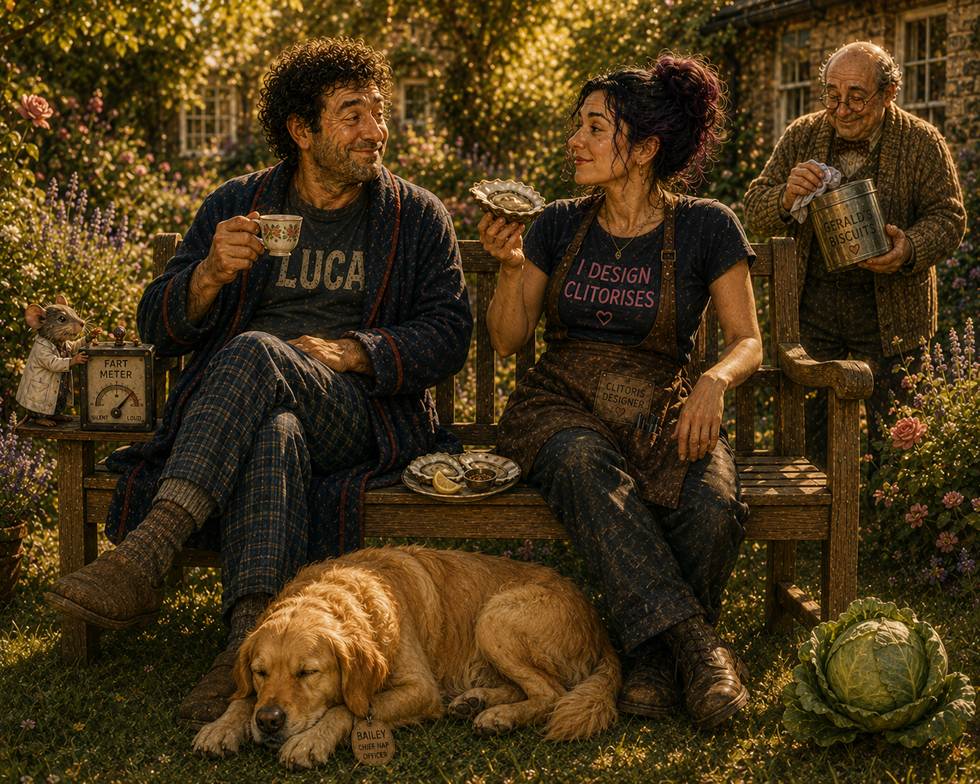



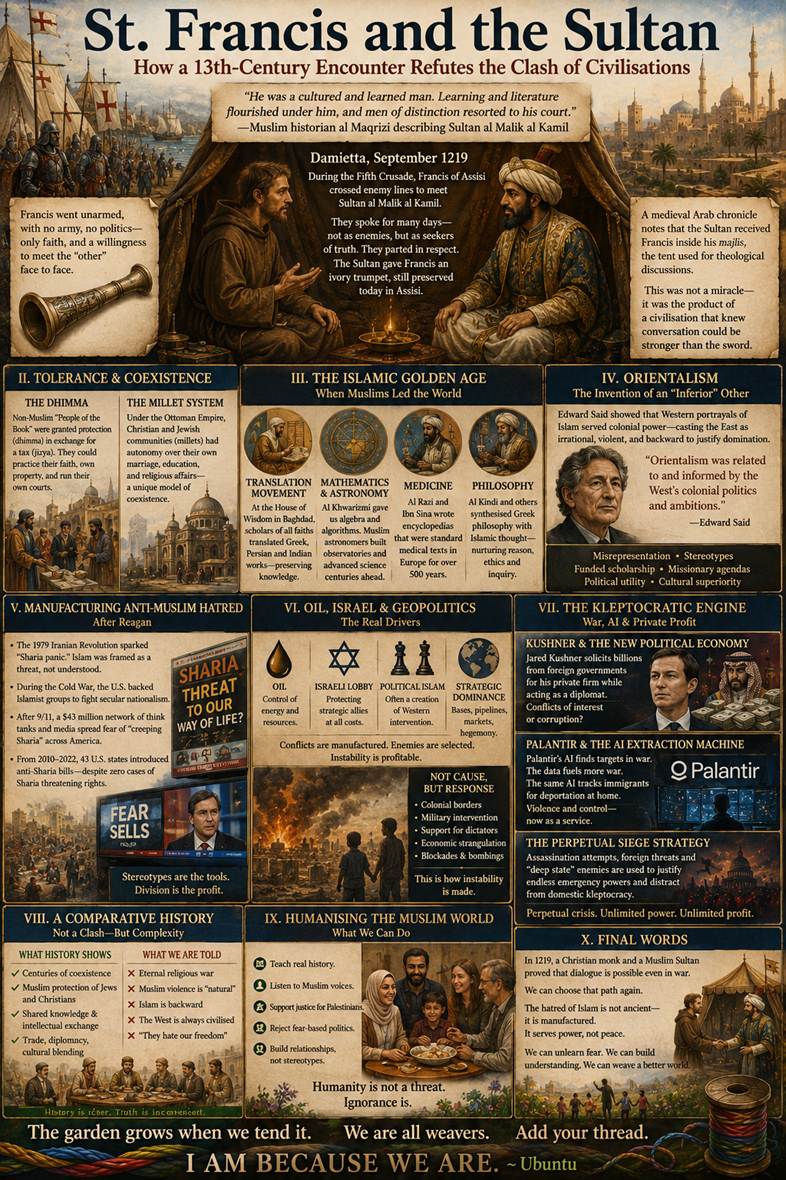
 The Patrician's Watch