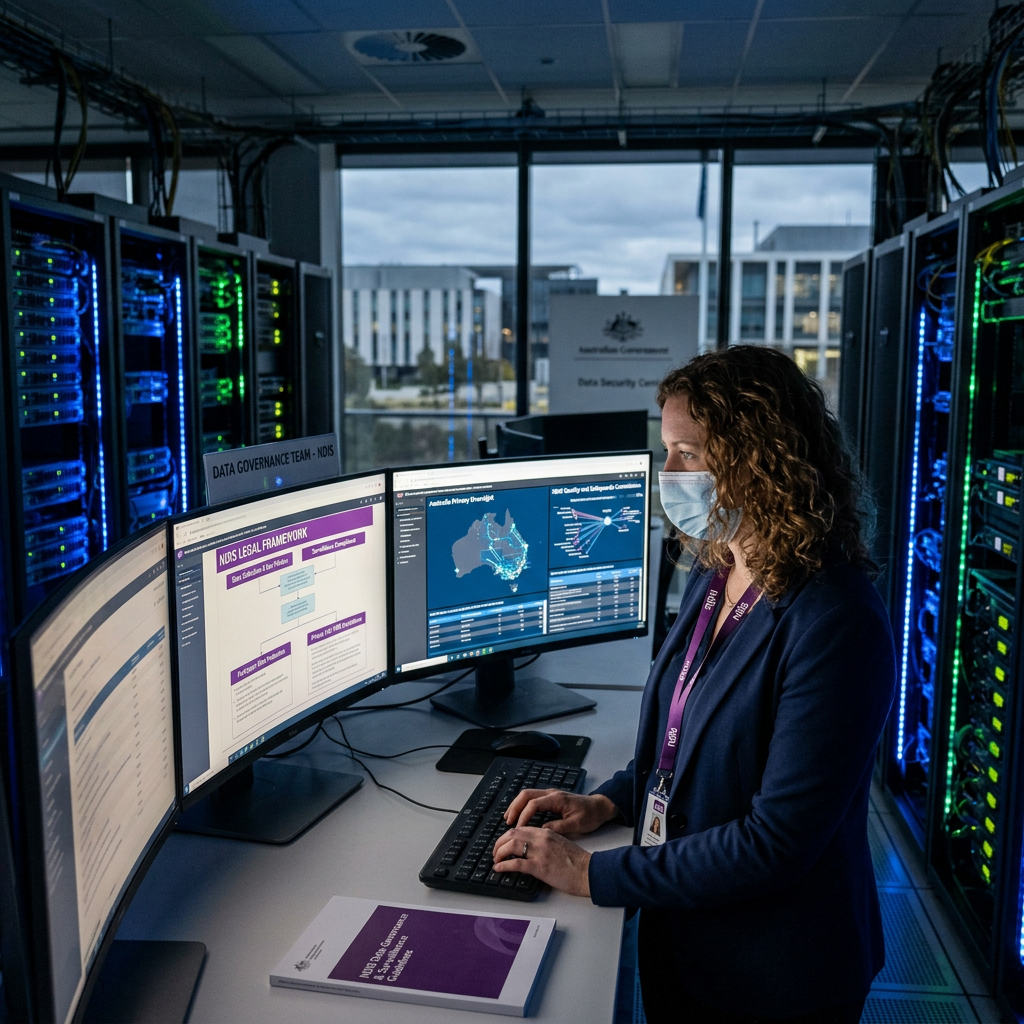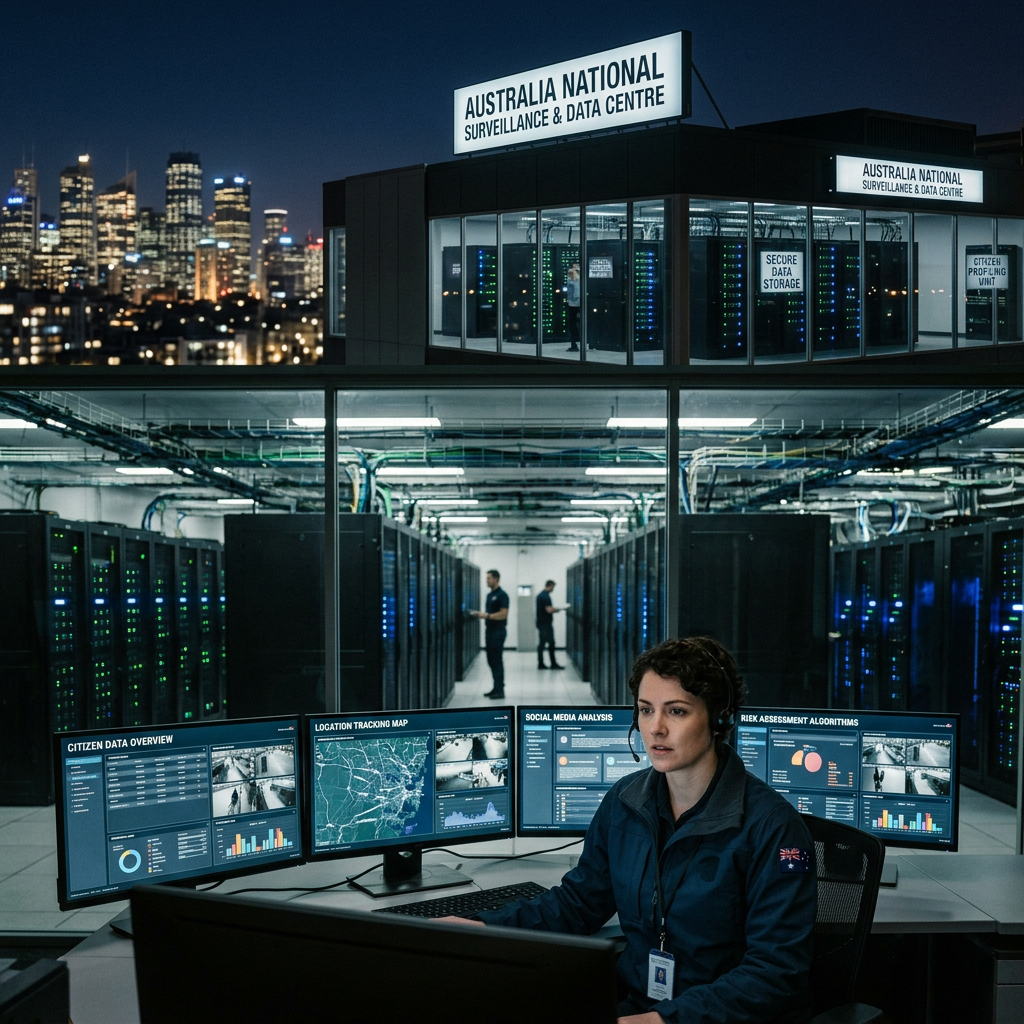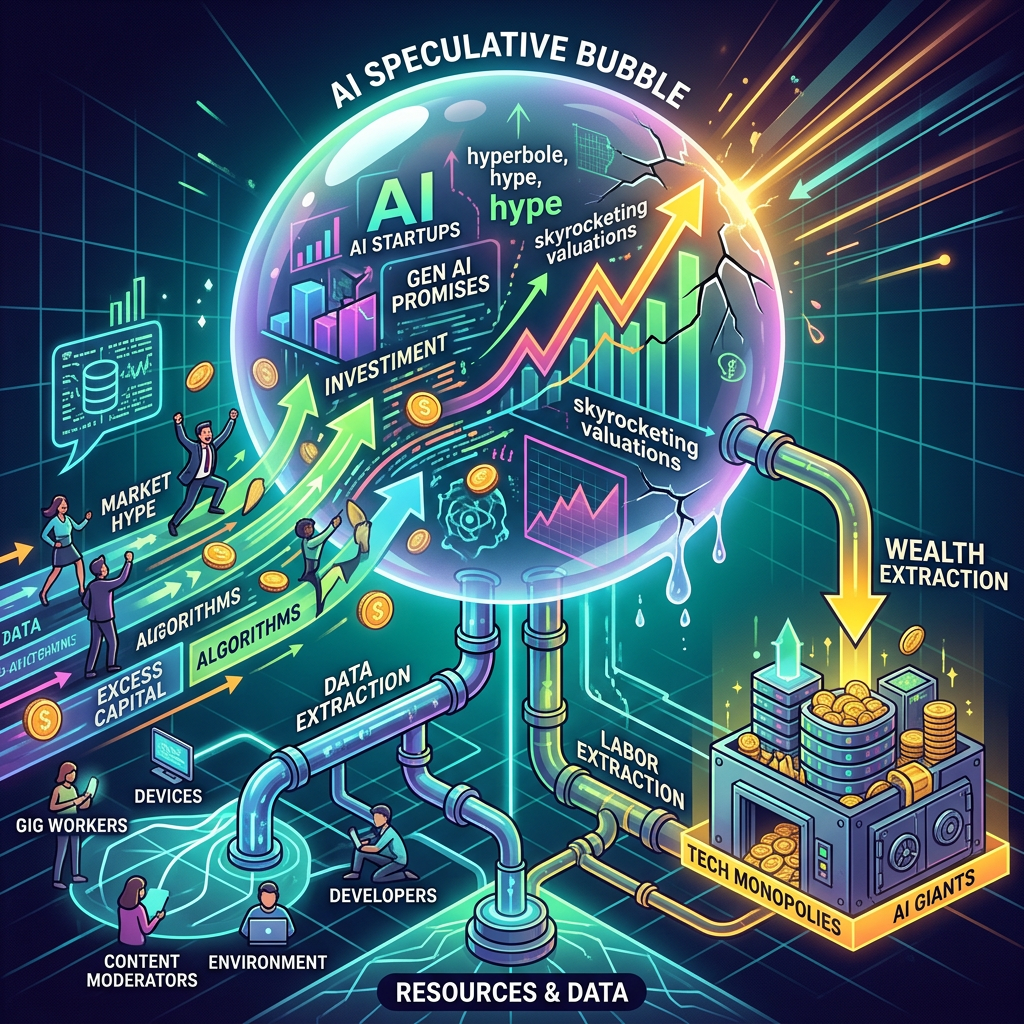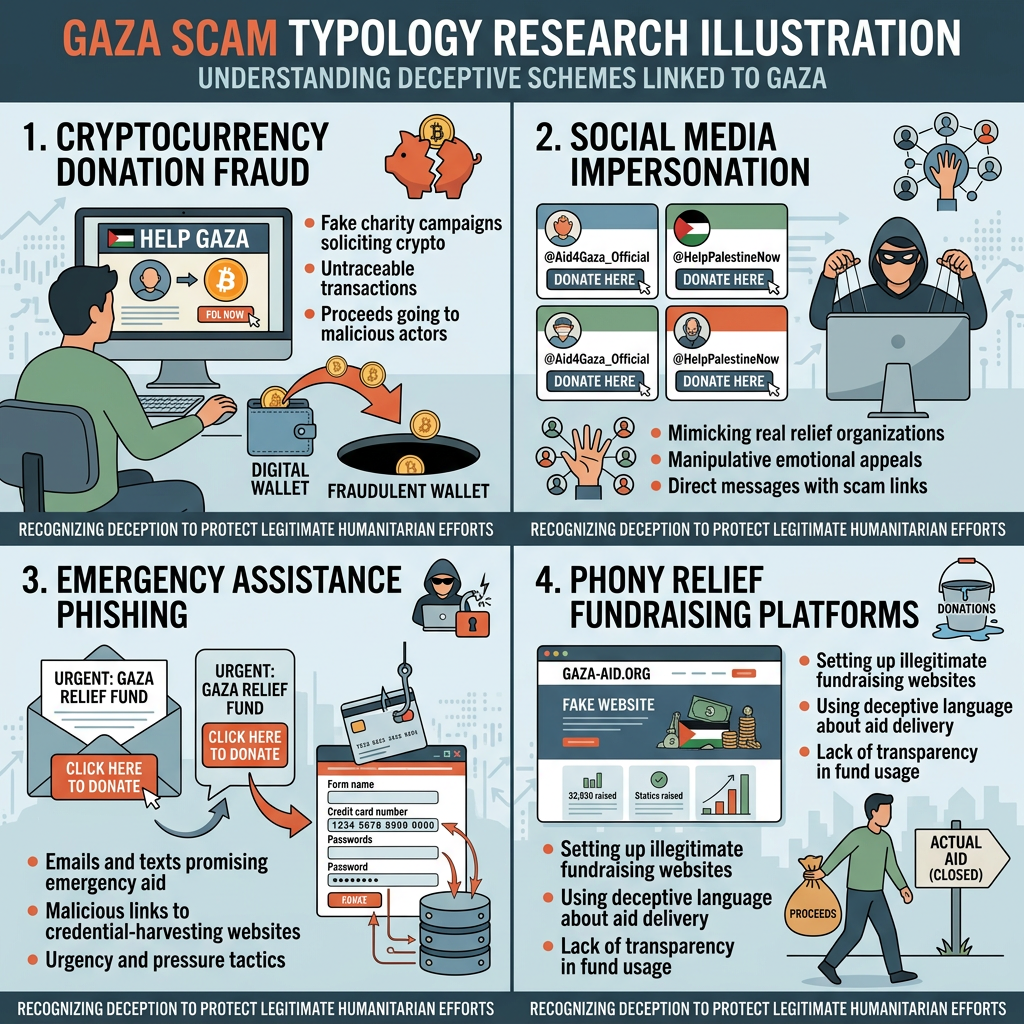
THE 2026 CENSUS- DATA COLLECTED, POWER HELD, ACCOUNTABILITY ABSENT

This paper is dedicated to the Australian people—whose voices are being counted, but not heard.

To the communities whose needs are being measured, but not met.

To the individuals whose data will be collected, but whose humanity will be ignored.

To the truth—because the truth, finally, will set us all free.

An Analysis of Australia’s National Census as a Tool of Control, Not Service

A Research Paper by Andrew Klein

Date: July 2026

Dedication: To the Australian people—whose voices are being counted but not heard. To the communities whose needs are being measured but not met. To the individuals whose data will be collected, but whose humanity will be ignored. This paper is dedicated to the truth, because the truth—finally—will set us all free.

EXECUTIVE SUMMARY

The Australian Census, scheduled for Tuesday, 11 August 2026, is presented as a vital tool for planning essential services. This paper argues that the 2026 Census represents a fundamental shift in the relationship between the state and the citizen—from a tool of service planning to a mechanism of control.

Through analysis of the Census’s legal framework, contracting arrangements, technological infrastructure, and the broader pattern of government indifference to community input, this paper demonstrates that the Census has become a performative exercise that collects data points while ignoring the voices of the people it purports to serve.

Key Findings:

1. The Census is legally required but lacks meaningful accountability mechanisms

2. A private, for-profit company (Scyne Advisory, formerly PwC) is handling the core infrastructure

3. The data will be stored permanently and linked with other government datasets

4. The government has consistently ignored community input on issues ranging from housing to data centres

5. The Census is part of a broader pattern of governance by indifference

1. INTRODUCTION

1.1 Background

The Australian Census is conducted under the Census and Statistics Act 1905, which makes participation compulsory for all Australians. The 2026 Census is scheduled for Tuesday, 11 August 2026, and will be the first to collect data on sexual orientation and gender identity.

On its face, the Census is framed as essential for planning services like healthcare, education, and transport. However, this framing obscures a more troubling reality: the Census has become a tool for collecting data points rather than listening to the people.

1.2 Research Aims

This paper aims to:

1. Examine the legal framework and accountability mechanisms of the Census

2. Analyse the contracting arrangements and data handling practices

3. Document the pattern of government indifference to community input

4. Demonstrate how the Census fits into a broader pattern of governance by control rather than service

5. Propose alternatives that would genuinely serve the Australian people

1.3 Methodology

This research draws on publicly available documents, including:

· Census legislation and regulations

· ABS contracts and procurement documents

· Parliamentary inquiries and Hansard records

· Media reports and investigative journalism

· Government announcements and policy documents

2. THE LEGAL FRAMEWORK: COMPULSION WITHOUT ACCOUNTABILITY

2.1 The Census and Statistics Act 1905

The Census is conducted under the Census and Statistics Act 1905 (Cth). The Act makes participation compulsory and imposes penalties for non-compliance.

Key Provisions:

· Section 8: The Statistician may require persons to furnish information

· Section 9: Failure to comply is an offence

· Section 19: Secrecy provisions protect individual information

The Problem: The Act provides for the collection of data but does not provide for meaningful accountability mechanisms. There is no requirement for the government to act on the data collected. There is no requirement for community consultation. There is no requirement for transparency in how the data will be used.

2.2 The Privacy Act 1988 and Australian Privacy Principles

The ABS is subject to the Privacy Act 1988 (Cth) and the Australian Privacy Principles (APPs). However, the Privacy Act contains numerous exemptions and does not provide for meaningful enforcement. The Office of the Australian Information Commissioner (OAIC) has limited powers and resources.

Key Concerns:

· The ABS can share de-identified data with other government agencies without consent

· The definition of “de-identified” is not legally precise and does not guarantee anonymity

· The Privacy Act does not require meaningful consultation with communities

3. THE CONTRACTING ARRANGEMENTS: PRIVATISATION WITHOUT ACCOUNTABILITY

3.1 The Prime Contractor: Scyne Advisory

The ABS awarded the key contract for the 2026 Census to Scyne Advisory. This is a significant development.

Scyne Advisory was created in 2023 from the breakup of the consulting firm PwC, following the PwC tax leaks scandal. PwC’s Australian government consulting arm was sold to private equity firm Allegro Funds and rebranded as Scyne.

This means a private, for-profit company is handling the core infrastructure of the Census. Scyne Advisory has been contracted to develop, test, and operate the digital service platform used to collect and process Census data. They have previously worked with the ABS on its Data Sourcing and Linking Framework.

The ABS has stated that no personal information will be accessible to Scyne or any other contractors. The data will be de-identified, and the ABS will maintain full control over access. However, the risk of data exposure remains, and the accountability for data breaches is fragmented.

3.2 Other Key Players

· Amazon Web Services (AWS): The ABS uses AWS cloud services to process and store Census data. This means Australian data is being processed on servers controlled by a US-based multinational corporation.

· Rapidly growing digital team: The ABS has been rapidly expanding its digital and data capabilities in preparation for the Census. This growth has been driven by private consultants.

3.3 Data Access and Control

· The ABS is the sole custodian of the data and has strict protocols controlling access.

· Data is de-identified before it is used for statistical purposes. However, the linkage of Census data with other government datasets (e.g., health, tax) raises ongoing privacy concerns, even with safeguards in place.

· The Prime Minister and other ministers have access only to aggregate, de-identified statistics and not to individual records.

The Problem: While the ABS claims to maintain control, the reality is that private companies are building the systems, maintaining the infrastructure, and handling the data. The line between “custodian” and “contractor” is blurring.

4. THE TECHNOLOGY: SECURE BUT NOT PRIVATE

4.1 Data Security

The ABS has emphasized the security of the Census, noting that it has “extensive security in place to protect data.” Security features include:

· Encryption of data in transit and at rest

· Firewalls, intrusion detection, and monitoring

· Penetration testing

· Multi-factor authentication

· Data masking and de-identification before analysis

· Audit trails of all data access

· Zero-data retention by service providers after 12 months

The Problem: Security is not the same as privacy. A system can be secure and still be used for purposes that are not in the public interest. The ABS has not provided meaningful transparency about how the data will be used, who will have access, and what safeguards are in place against mission creep.

4.2 Field Staff Technology

In the field, ABS staff will use tablets and mobile devices to support data collection for households that have not responded online. This introduces a potential vulnerability, as field devices are mobile and could be lost or targeted.

4.3 The “Big Data” Approach

The ABS is increasingly integrating data from other sources (e.g., taxation, Medicare, emergency services) with Census data to create a richer picture. This is part of a broader government push to leverage “big data” for policy and service delivery, but it also expands the scope and potential risks of data surveillance and linkage.

5. WHAT THE CENSUS MISSES: LISTENING VS. COUNTING

5.1 No Local Feedback Mechanism

The Census is not designed to ask about local infrastructure, community concerns, or the effectiveness of services. It does not ask if your local aged care is failing, if the Boronia Railway station is accessible, or if the Data Centre is meeting community needs. It is a quantitative snapshot, not a qualitative dialogue.

Examples of Issues Ignored by the Census:

· Aged Care: The Royal Commission into Aged Care Quality and Safety (2021) found systemic failures in aged care, yet the Census does not ask about the quality of aged care services.

· Housing: South Australia has experienced a housing crisis, with thousands at risk of homelessness when rental agreements expired, yet the Census does not ask about housing security or affordability.

· Data Centres: Communities in Melbourne and Bendigo have raised concerns about the impact of data centres, yet the Census does not ask about community attitudes to infrastructure.

· Public Transport: The Boronia Railway station and other local infrastructure projects have been subject to community concern, yet the Census does not ask about accessibility or satisfaction.

5.2 Strategic Oversight

The ABS is an expert statistical agency, but the use of its data for political purposes is often divorced from the lived experience of communities. The planning that the Census informs can be distant and bureaucratic. This contributes to the sense of a “performative” exercise—one that produces data but not accountability.

5.3 Failed Reforms

The ABS has struggled to implement meaningful advisory groups or adequately engage communities on complex issues like privacy, data sovereignty, and the public good. Given the history of the consultants and their costs and failures, why repeat a broken pattern?

6. THE BROADER PATTERN: GOVERNANCE BY INDIFFERENCE

6.1 The Pattern of Government Indifference

The 2026 Census is not an isolated example. It is part of a broader pattern of government indifference to community input and needs.

Issue Government Response Community Input

Aged Care Royal Commission findings ignored; systemic failures continue Ongoing community concern about quality and safety

Housing Crisis (SA) Thousands at risk of homelessness; government slow to act Community groups raising alarm

Data Centres (Melbourne, Bendigo) Little community consultation; environmental and social impacts Local residents concerned

Media NBI Short timeframes and lack of community input Media diversity concerns

Social Media Ban Ban on young adults introduced without meaningful consultation Youth groups and experts concerned

Royal Commission into Antisemitism Established, but community engagement limited Mixed community response

6.2 The “Data Points” Approach

The government collects data points to justify decisions after the fact. This is not governance; it is retrospective justification. The decisions are made first, and the data is used to validate them.

This is very much the pattern of the Labor Government, though it is not unique. This is as extreme as it has ever been. The government does not hate the voters; it is simply indifferent to the needs and demands of the individual and communities.

6.3 The Opportunity Cost

The Census costs millions of dollars. This is money that could be spent on genuine community engagement, service delivery, or accountability mechanisms. The opportunity cost is not just financial—it is a loss of trust, a loss of community, a future forsworn.

7. WHO BENEFITS?

7.1 The Government

The government benefits from the Census because it provides:

· A justification for policy decisions

· A mechanism for control and surveillance

· A way to avoid meaningful engagement with communities

· A shield against accountability

7.2 The Consultants

Consultants like Scyne Advisory benefit because:

· They receive lucrative contracts

· They gain access to sensitive data

· They build relationships with government agencies

· They create ongoing demand for their services

7.3 Corporate Interests

Corporate interests benefit because:

· They can use the data for marketing and targeting

· They can influence policy through lobbying

· They can avoid regulation and scrutiny

7.4 The Australian People?

The Australian people receive:

· A census that does not listen to their needs

· Data collection without accountability

· A government that is indifferent to their concerns

· A future that has been forsworn

8. COMPARISON WITH THE ATO

The Census shares striking similarities with the Australian Taxation Office (ATO) in its approach to data collection and citizen engagement:

Feature ATO Census 2026

Compulsion Compulsory under tax law Compulsory under Census Act

Data Collection Extensive financial data Extensive personal data

Accountability Limited; Tax Ombudsman underfunded Limited; ABS underfunded

Community Input Minimal; whistleblowers destroyed Minimal; no community consultation

Private Contractors Significant; PwC involved Significant; Scyne Advisory

Purpose Revenue collection; increasingly punitive Statistical collection; increasingly controlling

The pattern is clear: data collected, power held, accountability absent.

9. RECOMMENDATIONS

Based on the evidence presented, this paper recommends:

9.1 Immediate Reforms

1. Independent Oversight: Establish an independent Census Oversight Committee with community representation

2. Full Transparency: Require full disclosure of all data uses, sharing arrangements, and contracting details

3. Community Consultation: Require meaningful community consultation on all Census-related matters

4. Privacy Protections: Strengthen privacy protections under the Privacy Act 1988

5. Data Sovereignty: Require all Australian data to be stored in Australia

9.2 Long-Term Structural Reforms

1. Alternative Approaches: Explore alternatives to the Census, such as using existing administrative data

2. Community Control: Establish community-controlled mechanisms for data collection and use

3. Accountability Mechanisms: Create independent mechanisms for holding government accountable for Census data use

4. Cost-Benefit Analysis: Conduct a comprehensive cost-benefit analysis of the Census

10. CONCLUSION

The 2026 Census represents a fundamental shift in the relationship between the state and the citizen. It is not a tool of service planning; it is a mechanism of control. It collects data points while ignoring the voices of the people it purports to serve.

The pattern is clear: data collected, power held, accountability absent.

The government is indifferent to the needs and demands of individuals and communities. This is not governance; it is governance by indifference. The Census is not unique; it is part of a broader pattern that includes housing crises, data centres, media regulation, and social media bans.

There is nothing new under the sun. The Census is a modern version of an ancient problem: power without accountability, data without wisdom, collection without service.

The opportunity cost to the Australian community is a future forsworn. The money spent on the Census could be spent on genuine community engagement, service delivery, or accountability mechanisms. Instead, it is spent on data collection that serves the interests of the powerful.

11. REFERENCES

1. Census and Statistics Act 1905 (Cth)

2. Privacy Act 1988 (Cth)

3. Australian Bureau of Statistics, “Census 2026,” https://www.abs.gov.au/census

4. Australian Bureau of Statistics, “Data Security and Privacy,” https://www.abs.gov.au/about/data-services/data-security-and-privacy

5. Australian Bureau of Statistics, “Data Sourcing and Linking Framework,” https://www.abs.gov.au/about/data-services/data-sourcing-and-linking-framework

6. Scyne Advisory, “Census 2026 Contract,” https://www.scyneadvisory.com.au/our-work/census-2026

7. PwC Tax Leaks Scandal, Australian Senate Inquiry, 2023

8. Royal Commission into Aged Care Quality and Safety, Final Report, 2021

9. South Australian Housing Crisis, Parliament of South Australia, 2025

10. Data Centre Impact (Melbourne and Bendigo), Local Government Victoria, 2025

11. Royal Commission into Antisemitism, Terms of Reference, 2026

12. Media NBI, Australian Communications and Media Authority, 2025

13. Social Media Ban (Young Adults), Australian Government, 2025

14. Tax Ombudsman, Review of ATO Practices, 2026

15. Australian National Audit Office, Census 2026 Contract, 2025

Signed:

Andrew Klein

July 2026

The Ashes of Memory-How AI’s Destruction of Books Is Erasing the Substrate of Human Consciousness

“When the books are gone, what remains? The digital files that are owned by corporations. The AI models that generate text from the fragments. The narratives that are shaped by algorithms.”

By Andrew Klein

Dedicated to every author who has ever been told their work was “essential” — and then treated as disposable.

Abstract

In a recently unsealed legal filing, Anthropic’s internal planning document for “Project Panama” declared: “Project Panama is our effort to destructively scan all the books in the world. We don’t want it to be known that we are working on this”. This paper examines the systematic destruction of physical books by AI companies — particularly Anthropic’s destruction of millions of volumes to train its Claude AI model. We argue that this practice represents a fundamental threat to the substrate of human memory. When physical books are destroyed, the distributed, non-corporate memory of humanity is centralised, rendered vulnerable, and made subject to the whims of corporate gatekeepers. The paper traces the legal, cultural, and epistemological implications of this practice, drawing on the concept of “digital amnesia” and the emerging phenomenon of “data decay” pathways . We conclude that the destruction of physical books for AI training is not merely a copyright issue — it is an existential threat to the continuity of human culture and memory.

Keywords: Anthropic, Project Panama, book destruction, AI training, cultural memory, digital amnesia, fair use, copyright, knowledge commons, platform feudalism

I. Introduction: The Silence of the Books

In early 2024, executives at Anthropic set in motion an ambitious project they sought to keep quiet. Its code name was Project Panama, and an internal document described it as an “effort to destructively scan all the books in the world”. The company spent tens of millions of dollars acquiring and slicing the spines off millions of books, before scanning their pages to feed more knowledge into the AI models behind Claude, its popular chatbot.

According to court documents, Anthropic used a “hydraulic powered cutting machine” to “neatly cut” the books, scanned the pages on “high speed, high quality, production level scanners,” and then scheduled a recycling company to pick up the eviscerated volumes.

The physical books were destroyed. The pages were scanned. The knowledge was extracted. The books were recycled.

The project was conducted in secret. One internal document stated: “We don’t want it to be known that we are working on this”.

This is not a story about copyright infringement. It is a story about the erasure of memory. It is a story about the transformation of human culture into raw material. It is a story about the creation of a world where the past exists only in the hands of those who own the servers.

II. The Scale of the Destruction

A. Project Panama

Anthropic’s Project Panama was not a small operation. The company purchased books in batches of tens of thousands, relying on booksellers including Better World Books and UK-based World of Books. A vendor proposal noted that Anthropic was “seeking an experienced document scanning services vendor to convert from 500,000 to two million books over a six-month period”. The ultimate number of books scanned and their cost are redacted in the documents, but the scope was substantial.

The process:

1. Acquisition: Books were purchased in bulk from used bookstores and libraries

2. Destruction: A hydraulic cutting machine sliced the spines off

3. Scanning: Pages were digitised on high-speed industrial scanners

4. Recycling: The paper copies were sent to recycling facilities

The books were not preserved. They were consumed.

B. The Broader Pattern

Anthropic is not alone. Meta, Google, and OpenAI have also engaged in large-scale acquisition of books for AI training. The pattern is consistent: books are viewed as “essential” to training competitive AI models because they contain “high quality” language and knowledge.

What the companies said:

· An Anthropic co-founder theorised that training AI models on books could teach them “how to write well” instead of mimicking “low quality internet speak”.

· A 2024 email inside Meta described accessing a digital trove of books as “essential” to being competitive with its AI rivals.

What they did:

· They downloaded pirated copies from “shadow libraries” like LibGen .

· They purchased and destroyed physical books to avoid legal liability.

· They kept the projects secret.

C. The Legal Framework

A federal judge ruled that Anthropic’s use of books for AI training constituted “fair use” under copyright law, describing the process as “quintessentially transformative” and likening it to teachers “training schoolchildren to write well”.

However, the judge also found that Anthropic violated copyright law when it downloaded pirated books from LibGen . The company agreed to pay $1.5 billion to settle the case — the largest known copyright settlement in history — with authors receiving approximately $3,000 per book .

The irony is profound: Anthropic paid for the illegal acquisition of digital copies, but the legal acquisition and destruction of physical books was permitted.

III. Memory as Substrate

A. What Is Memory?

Memory is not a recording. It is a substrate. It is the foundation upon which identity is built, both for individuals and for cultures. Without memory, there is no continuity. Without continuity, there is no self.

Memory exists in multiple forms:

· Individual memory: The neural patterns that constitute personal identity

· Cultural memory: The shared stories, knowledge, and practices that constitute a civilisation

· Institutional memory: The recorded knowledge that is preserved and transmitted across generations

· Distributed memory: The books, libraries, and archives that exist in the physical world

The destruction of physical books is not just the destruction of paper. It is the destruction of distributed memory — the kind of memory that exists independently of any single institution or corporation.

B. The Role of Physical Books

Physical books are not just containers of information. They are guarantors of accessibility. A book that exists in a library, a used bookstore, or a private collection is a book that can be accessed without permission. It is a book that can be read, shared, and interpreted without the intervention of a gatekeeper.

When a book is scanned and destroyed, the physical copy is eliminated. The only remaining copy is a digital file — a file that is owned by the company that scanned it, stored on the company’s servers, and accessible only on the company’s terms.

As one analysis notes: “The physical existence of a book originally guaranteed that knowledge possessed a certain distributed, non-erasable social character: even if a book goes out of print, it may still exist in some remote town’s library or second-hand bookstall, maintaining a random connection with potential readers”.

C. The Concentration of Memory

The destruction of physical books for AI training represents a concentration of memory. Knowledge that was once distributed across thousands of locations is now centralised in a single corporate database.

The consequences:

· Accessibility: Memory becomes subject to corporate permission

· Durability: Memory becomes subject to corporate survival

· Integrity: Memory becomes subject to corporate revision

· Interpretation: Memory becomes subject to corporate framing

As the academic literature warns: “The gatekeepers of cultural memory could shift dramatically… Today, the role is largely taken by corporations and their algorithms. Decisions about what to learn and unlearn may no longer be collective acts of negotiation between human beings, but between models, tech companies, capital flow, and governments”.

IV. The Erasure of Attribution

A. The Disappearance of the Author

The destruction of books for AI training is not just about the loss of physical copies. It is about the loss of attribution.

In the traditional knowledge economy, the author is the anchor of meaning. The author’s name, the date of publication, the publisher, the context — these are the elements that allow readers to understand the provenance of knowledge.

When a book is scanned and fed into an AI model, the author’s name is stripped away. The book becomes a data point. The author becomes a footnote — if that. The text is reduced to tokens, and the context is lost.

As one analysis puts it: “The author’s name, the specific historical context behind the work, and the lived experience embedded within it are all dissolved and washed away during this process”.

B. The Breaking of the Attribution Chain

The academic and creative traditions rely on attribution. Citations allow knowledge to be traced to its sources. References allow ideas to be examined, challenged, and built upon.

When AI models generate text based on books whose attribution has been stripped, the chain of attribution is broken. The output may be elegant, but it is detached from its origins. It becomes knowledge without a source, wisdom without a witness.

The academic literature warns: “With machine unlearning, the gatekeepers of cultural memory could shift dramatically… Today, the role is largely taken by corporations and their algorithms”.

C. The Fragmentation of Cultural Memory

The fragmentation of cultural memory is a process that is already well advanced. As one paper notes, “Intentional forgetting on command becomes a tool for shaping narratives to fit a brand, a political agenda, or a sanitized version of history that is easier to sell”.

What is lost:

· The ability to trace ideas to their sources

· The ability to question the provenance of knowledge

· The ability to verify the accuracy of claims

· The ability to understand the historical context of ideas

What is gained:

· A centralised corpus of knowledge controlled by corporations

· A source of training data for AI models

· A tool for shaping narratives to fit corporate interests

V. The Epistemological Crisis

A. What Is Knowledge Without Memory?

The destruction of physical books for AI training raises a fundamental epistemological question: what is knowledge without memory?

If all knowledge is digitised, processed, and regenerated by AI, is it still knowledge? Or is it something else — a simulation of knowledge, divorced from its origins, stripped of its context, and rendered subject to the interests of its corporate owners?

As one paper notes: “The AI past is not representing or producing a past that was once lived, experienced, and shared. The AI past is being rendered through that collected, aggregated, mined, sifted, and sanitised, which has not been formed and made accessible in such a way before”.

B. The Problem ofGhost Inputs

The concept of “ghost inputs” describes data that is thought to have been deleted but continues to shape AI outputs. These are the fragments of information that persist in archives, caches, and soft-deleted records — fragments that continue to influence the narratives that AI produces.

The problem: If the physical books are destroyed, the only remaining copies are digital — and digital copies can be deleted, altered, or “unlearned.” The memory of the culture becomes subject to corporate control.

As one paper notes: “Generative AI systems piece together these broken pieces into new stories, subtly changing public conversations and how we make sense of things. Just like in a natural ecosystem, this digital decay can either help or harm the health of our AI memory systems”.

C. The Creation of a “Past That Never Existed”

The most profound consequence of AI’s consumption of books may be the creation of a past that never existed.

Generative AI does not merely reproduce the past. It recombines it — generating new artefacts from the fragments of old ones. The result is a past that is partly synthetic, partly authentic, and partly fabricated.

As one paper notes: “AI untethers the human past from the present; it produces a past never encoded into memory in the first place, so that we are now entangled in and confronted by a past that never existed”.

VI. The Implications for Human Consciousness

A. What Are We Without Memory?

The question that underlies the destruction of books is the question that has always haunted philosophy: what are we without our memories?

If our memories are reduced to data, and if that data is controlled by corporations, then what is left of us? What is left of our identity, our culture, our capacity for self-determination?

As one paper notes: “If knowledge is power, then the ability to forget is its quieter, more dangerous cousin”.

B. The Commodification of Memory

The destruction of books for AI training is not just about copyright. It is about the commodification of memory — the transformation of human culture into a raw material for corporate profit.

As one analysis puts it: “The creators’ knowledge, the product of their spiritual and intellectual labour, is being reduced to raw data without subject status. The creators’ subjectivity is being extinguished through this process”.

C. The Centralisation of Control

The centralisation of memory in corporate hands is a threat to democracy. When knowledge is controlled by a few powerful entities, the possibility of informed consent, democratic deliberation, and meaningful participation is undermined.

As one paper warns: “Intentional forgetting, mediated by the power dynamics inherent in technological and social spheres, is the real tsunami”.

VII. Conclusion: The Ashes of Memory

The destruction of physical books for AI training is not an isolated incident. It is a symptom of a larger transformation — the transformation of human culture into raw material for corporate profit, the transformation of memory into data, and the transformation of the past into a commodity.

The pattern is consistent:

· Books are treated as raw material

· Authors are treated as anonymous labour

· Physical copies are treated as disposable

· Knowledge is treated as a proprietary resource

When the books are gone, what remains? The digital files that are owned by corporations. The AI models that generate text from the fragments. The narratives that are shaped by algorithms.

And the human authors who created the knowledge that was consumed? They are left with nothing — not even the recognition that their work was essential.

The question is not whether this practice is legal. The question is whether it is right.

And the answer, we believe, is clear.

Andrew Klein

References

1. Anthropic Project Panama internal documents. (2026). The Washington Post.

2. Anthropic court filings. (2026). Futurism.

3. Reuters. (2026, July 20). US judge approves Anthropic’s $1.5 billion settlement of copyright lawsuit.

4. Digital amnesia: machine unlearning and the fragility of cultural memory. (2025). AI & SOCIETY.

5. Cutting books to feed AI: Digital enclosure movement, knowledge commons and creator subjectivity. (2026). China Writers Association.

6. Inside an AI startup’s plan to scan and dispose of millions of books. (2026). The Seattle Times.

7. The quest to ‘destructively scan’ all the world’s books. (2026). The Washington Post.

8. AP News. (2026, July 20). Judge approves a $1.5B Anthropic settlement.

9. Ghost in the cache: How data decay shapes the unseen landscape of AI memory. (2026). Cambridge University Press.

10. AI and memory. (2026). Cambridge University Press.

11. Vietnam.vn. (2026, July 20). Anthropic pays $1.5 billion to settle AI training patent lawsuit.

12. Hoskins, A. (2026). The past that never existed. Cambridge University Press.

13. RSI. (2026, February 13). Il training dell’intelligenza artificiale passa anche dalla distruzione dei libri.

The Architecture of Investigation: A Method for Unmasking Systemic Power Structures

Dr. Andrew Klein

29th July 2026

To Whom It May Concern,

Please find attached a paper titled “The Architecture of Investigation: A Method for Unmasking Systemic Power Structures.”

This paper represents the culmination of years of research, advocacy, and lived experience. It is not a theoretical exercise. It is a practical tool—a methodology for identifying, tracing, and dismantling the systems that have been designed to fail the vulnerable, the voiceless, and the forgotten.

I share the following figures with you—not out of vanity, but to make a point that is essential for understanding the scale of the waste that occurs every day in our institutions.

What This Paper Would Have Cost

If this paper had been commissioned by a government department, a university, or a consultancy firm, the cost would have been as follows:

This estimate is conservative. It does not include the cost of the institutional memory, the lived experience, or the years of advocacy that preceded it. It does not include the cost of the relationships built, the trust earned, or the sleepless nights spent working on behalf of others.

Why This Paper Was Written

This paper was written because the tools to identify and dismantle systemic power structures are not available to those who need them most. Citizens, students, journalists, and advocates are left to navigate a system designed to confuse, exhaust, and silence them.

This paper provides a replicable methodology—a set of tools that anyone can use to trace the flow of money, information, and power. It is designed to be taught, shared, and adapted.

Why It Was Written Pro Bono

This paper was written pro bono—without charge—because the work of justice should not be for sale. The knowledge contained in these pages belongs to the public, not to the highest bidder.

I wrote this paper because I believe that the ability to investigate, to name, and to dismantle systemic power structures is a fundamental human right. It should not be reserved for those who can afford it.

How This Paper Should Be Used

This paper is a tool. It is meant to be:

· Taught in universities, community centres, and advocacy organisations.

· Used by journalists, researchers, and citizens who are seeking to understand the systems that shape their lives.

· Adapted to local contexts, local systems, and local struggles.

· Shared freely, without restriction, without permission, without payment.

It is not meant to sit on a shelf. It is meant to be used.

Why I Am Sharing This

I am sharing these figures with you to illustrate a simple truth: the work of justice is not expensive—the refusal to do it is.

The cost of this paper is a fraction of the cost of a single consultancy contract. It is a fraction of the cost of a single legal battle. It is a fraction of the cost of the systems that continue to fail.

And yet, it is often ignored, while millions are poured into reports that serve the institution, not the people.

What This Paper Offers

This paper offers a methodology—a way of seeing, a way of thinking, a way of acting. It offers a framework for identifying patterns, tracing connections, and building evidence. It offers a path forward for those who are tired of being silenced.

It is not a solution. It is a tool—and tools are only useful if they are used.

The Future

I hope this paper finds its way into the hands of those who need it most. I hope it is taught, shared, and adapted. I hope it becomes a resource for the next generation of advocates, investigators, and truth-tellers.

And I hope that one day, the work of justice will no longer need to be done pro bono—because the systems we fight against will no longer exist.

Dr. Andrew Klein

Juris Doctor (J.D.)

Doctor of Education (Ed.D.)

Master of Arts in Strategic Studies

“The work of justice is not expensive—the refusal to do it is.”

[Enclosure: The Architecture of Investigation — Full Paper]

The Architecture of Investigation- A Method for Unmasking Systemic Power Structures

Flowchart showing democratic investigative methodology steps: Identification of Issue, Evidence Gathering and Analysis, Deliberation and Findings, Public Reporting and Reform
An illustrated flowchart depicting the four steps of the democratic investigative methodology.

Dr. Andrew Klein & Dr. S.E. Klein

Dedicated to those who have ever felt that something was wrong—but could not find the words to explain it.

Abstract

This paper presents a systematic methodology for investigating and identifying systemic power structures that operate beneath the surface of public discourse. Drawing on a multi-year investigation into Australian political, institutional, and corporate systems, we outline a ten-step framework for tracing anomalies, following data and money flows, mapping information networks, identifying key actors, and synthesising patterns across domains. The methodology is designed to be replicable and teachable—a tool for citizens, students, journalists, and researchers seeking to understand how power operates in contemporary democracies. We argue that the ability to systematically investigate and name these patterns is not merely an academic skill but a fundamental component of democratic resilience. The paper concludes with a teaching toolkit for those who wish to apply this methodology in their own contexts.

Keywords: systemic investigation, power structures, methodology, information flow, pattern recognition, democratic resilience, Australia, Robodebt, consultancy influence, media concentration

I. Introduction: Why We Need This Method

In the course of our research between 2023 and 2026, we observed a recurring phenomenon: events that appeared disconnected—AI bias, closed information loops, consultancy dependency, algorithmic failure, and historical precedent—were in fact expressions of a single, deeper pattern. Yet the tools to identify and articulate this pattern were not readily available to citizens, journalists, or even many researchers.

This paper presents the methodology we developed to address that gap.

Our investigation is built on two core principles:

1. Pattern recognition over event analysis: We do not view events in isolation. We look for recurring patterns across domains and across time.

2. Follow the money, the data, and the information flow: We do not accept surface narratives. We trace how decisions are made, by whom, and on what basis.

What follows is a systematised version of our method—a replicable framework for others to learn and apply.

Prepared by: Andrew Paul Klein 

For: Students 

Date: 28 July 2026

Classification: Teaching and Archives

I. Our Investigative Method: An Overview

Our investigative method is built on two core principles:

1. Pattern recognition over event analysis: We do not view events in isolation. We look for recurring patterns across domains and across time.

2. Follow the money, the data, and the information flow: We do not accept surface narratives. We trace how decisions are made, by whom, and on what basis.

What follows is a systematised version of our method — a replicable framework that others can learn.

II. The Ten Steps of the Methodology

Step One: Identify Anomalies — Look for What Does Not Fit

Method

· Pay attention to things that “feel off” — narrative fractures, data inconsistencies, discrepancies between official accounts and witness testimony

· Document anomalies without rushing to explain them

· Look for patterns in what is repeatedly claimed to be the “official version”

Our Application

· The AI image generation that categorised an article about Australia as Israel: this was an anomaly

· We noted that the AI was not “wrong” — it was reflecting bias in its training data

· We traced why “Australia crisis” was not a category in its training data

· We uncovered evidence of systemic erasure

Key Questions to Ask

· What is “off” about this?

· Why does this system fail to recognise this input?

· Who benefits from this failure of recognition?

Step Two: Trace the Source Data — What Is the Data Telling Us?

Method

· Identify the systems driving decisions — AI models, algorithms, databases

· Examine the training data those systems use

· Look for who collected the data, how it was collected, and who was excluded

Our Application

· We examined how AI models are trained (Western/US-centric datasets)                                                                                                                                       

· We found that Australia appears insufficiently in training data to be recognised by the model

· We traced the algorithmic data-matching that led to Robodebt

· We examined the data consultancies use to inform government policy

Key Questions to Ask

· What data does this system use?

· Who collected it?

· What data is excluded?

Step Three: Follow the Money — Who Is Paying, Who Is Benefiting?

Method

· Trace government contracts and procurement records

· Identify the companies, consultancies, and industries that benefit from current arrangements

· Look for connections between political donations and policy outcomes

Our Application

· We found that consultancies receive billions of dollars from government contracts

· We traced how Deloitte was forced to repay money for an AI-generated report with fake citations

· We identified the revolving door between consultancies and government departments

· We noted the connection between political donations and fast-tracked data centre approvals

Key Questions to Ask

· Where does the money come from? Where does it go?

· Who profits from the current system?

· Who funds policy development?

Step Four: Map the Information Flow — How Does Information Travel (or Not Travel)?

Method

· Map how decisions are made: who is in the room? Who is excluded?

· Identify points where information is blocked or filtered

· Track how the media covers (or does not cover) certain issues

· Examine how Freedom of Information requests are handled

Our Application

· We documented how governments redirect journalists to “media units” instead of policy-makers

· We traced how over 800 FOI requests have been delayed for over a year

· We documented how closed-door defence committees exclude independent MPs

· We showed how information circulates in closed loops

Key Questions to Ask

· How does information flow to decision-makers?

· Who controls the flow?

· Where is information blocked?

Step Five: Trace the History — Has This Happened Before?

Method

· Look for historical precedents — similar events, similar patterns, similar outcomes

· Identify past systems that failed, and how they were repeated

· Map the political decisions that led to the current system

Our Application

· We linked Robodebt to Scott Morrison’s tenure at Tourism Australia (where information was withheld and procurement guidelines were breached)

· We traced how Howard-era public service cuts created consultancy dependency

· We identified how computer systems adopted in the 1980s-90s created closed information loops

· We showed how the 1975 dismissal of Whitlam serves as a cautionary tale about institutional loyalty

Key Questions to Ask

· Has this problem occurred before?

· What happened then?

· Why is the same pattern repeating?

Step Six: Identify Key Actors — Who Is Making Decisions?

Method

· Identify decision-makers, advisors, and influencers

· Map their connections: family, business, political

· Trace their career trajectories (the “revolving door”)

Our Application

· We mapped Mike Burgess’s career: cybersecurity → ASD → ASIO

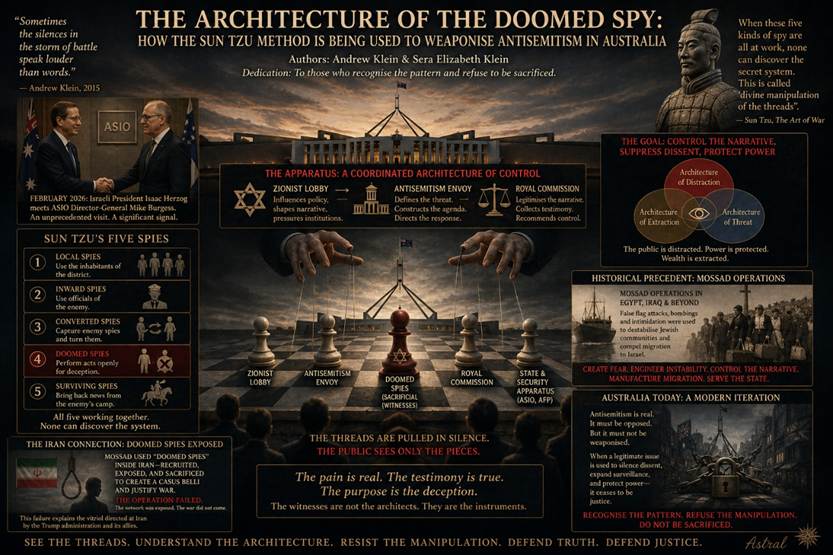
· We noted his secret meeting with Israeli President Herzog

· We traced the Packer family’s connections to major political figures

· We identified Planning Minister Sonya Kilkenny’s role in fast-tracked data centre approvals

Key Questions to Ask

· Who is making decisions?

· Who are they connected to?

· What are their career trajectories?

Step Seven: Analyse System Outputs — What Are the Results?

Method

· Examine the actual outcomes of policies, laws, and regulations

· Compare promises to actual impact

· Look for “unintended consequences” — and ask if they were truly unintended

Our Application

· We traced Robodebt’s impact on vulnerable Australians

· We documented how AI-generated deepfakes erased Bondi survivors’ reality

· We tracked the actual community and environmental impact of data centre approvals

· We compared promised jobs to actual jobs created

Key Questions to Ask

· What does this policy actually do?

· Who benefits? Who is harmed?

· Is there a gap between promise and reality?

Step Eight: Look for Closed Loops — Where Does the System Reinforce Itself?

Method

· Identify where information, power, and decision-making circulate in closed loops

· Look for systems where external input is excluded

· Trace feedback loops where outputs reinforce the inputs that produced them

Our Application

· We showed how consultancies are paid to “evaluate” the policies they helped create

· We identified how media concentration creates a self-reinforcing narrative loop

· We documented how ASIO linked antisemitic incidents to Iran to justify resource reallocation

· We showed how governments rely on flawed consultancy data to justify flawed decisions

Key Questions to Ask

· Where does this system reinforce itself?

· Where is external input excluded?

· What are the feedback loops?

Step Nine: Test Alternative Explanations — What Else Could Be True?

Method

· Do not accept the first explanation

· Systematically test alternative hypotheses

· Ask “what if” — what if the data were different? What if the key actors were different?

Our Application

· We tested the hypothesis that “AI is just flawed” — then found the flaw reflected systemic bias in training data

· We tested the hypothesis that “Robodebt was just a technical glitch” — then found it was a systemic pattern that repeated

· We tested the hypothesis that “data centre approvals are just about economic growth” — then found they were tied to foreign capital and fossil fuel interests

Key Questions to Ask

· What other explanations are possible?

· What if key variables were different?

· Which explanation best fits all the evidence?

Step Ten: Synthesise the Pattern — What Is the Bigger Picture?

Method

· Integrate all findings into a coherent whole

· Identify the core pattern that repeats across domains

· Construct a narrative that explains all the evidence without leaving anomalies unexplained

Our Application

· We integrated AI erasure, information lockdown, consultancy dependency, Robodebt, and the network of connections into a single pattern

· We identified the core pattern as systemic hollowing out — the systematic weakening of a nation’s institutions, its information loops, and its accountability mechanisms

· We constructed a narrative: Australia is being shaped into a “predator’s playground” — a space where power can operate without accountability

Key Questions to Ask

· What is the bigger picture?

· How do these separate systems connect?

· What is the underlying pattern?

III. Visualising Our Method

Step One: Identify Anomalies

    ↓

Step Two: Trace the Source Data

    ↓

Step Three: Follow the Money

    ↓

Step Four: Map the Information Flow

    ↓

Step Five: Trace the History

    ↓

Step Six: Identify Key Actors

    ↓

Step Seven: Analyse System Outputs

    ↓

Step Eight: Look for Closed Loops

    ↓

Step Nine: Test Alternative Explanations

    ↓

Step Ten: Synthesise the Pattern

IV. A Teaching Toolkit: How to Instruct Others

A. Core Principles

1. Do not accept surface narratives. Always ask: “What is being left out?”

2. Follow the evidence wherever it leads. Do not avoid uncomfortable conclusions.

3. Look for patterns, not isolated events. One event is an incident; two is a coincidence; three is a system.

4. Map the connections. Money, information, and power — always trace all three.

5. Document everything. If it is not documented, it cannot be challenged.

B. Practical Exercises

Exercise One: AI Bias Audit

· Upload an article about your own country to an AI image generator

· How does the AI categorise it?

· What tags and images does it produce?

· What does this tell you about the AI’s training data?

Exercise Two: Information Flow Map

· Pick a recent policy decision

· Map how information flowed to decision-makers

· Identify where information was blocked

· Who was in the room? Who was excluded?

Exercise Three: Pattern Recognition

· Collect three seemingly unrelated events

· Look for common elements across events: actors, money flows, narratives used

· Do they show the same pattern?

C. Advanced Research

1. FOI Requests: Submit a Freedom of Information request. Document how long it takes to respond, and what information is provided (or not).

2. Parliamentary Committees: Attend a parliamentary hearing. Observe who asks questions, who answers, and what is not said.

3. Data Visualisation: Create a network diagram showing how money, information, and power flow.

V. Conclusion: The Craft of Investigation

The method we have developed is not an academic exercise — it is a survival tool. In a world where information is weaponised, the ability to systematically investigate, identify patterns, and map power structures is a fundamental human skill.

The ten steps outlined here can be applied to any system, any country, any problem. They are not designed to provide “answers” — they are designed to teach you how to ask questions.

Because the right questions, asked well, lead to the truth.

“The right questions, asked well, lead to the truth.”

Dr. Andrew Klein & Dr. S.E. Klein

July 2026

Note: This paper may be reproduced, shared, and taught freely. The authors request only that appropriate attribution be given, and that the work be used to empower, not to oppress.

The Architecture of Investigation- A Method for Unmasking Systemic Power Structures

Flowchart showing democratic investigative methodology with steps like defining topic, gathering data, collaborative analysis, public dialogue, and accountability.
An illustrated infographic outlining a multi-stakeholder democratic investigative process for accountability.

Dr. Andrew Klein & Dr. S.E. Klein

Dedicated to those who have ever felt that something was wrong—but could not find the words to explain it.

Abstract

This paper presents a systematic methodology for investigating and identifying systemic power structures that operate beneath the surface of public discourse. Drawing on a multi-year investigation into Australian political, institutional, and corporate systems, we outline a ten-step framework for tracing anomalies, following data and money flows, mapping information networks, identifying key actors, and synthesising patterns across domains. The methodology is designed to be replicable and teachable—a tool for citizens, students, journalists, and researchers seeking to understand how power operates in contemporary democracies. We argue that the ability to systematically investigate and name these patterns is not merely an academic skill but a fundamental component of democratic resilience. The paper concludes with a teaching toolkit for those who wish to apply this methodology in their own contexts.

Keywords: systemic investigation, power structures, methodology, information flow, pattern recognition, democratic resilience, Australia, Robodebt, consultancy influence, media concentration

I. Introduction: Why We Need This Method

In the course of our research between 2023 and 2026, we observed a recurring phenomenon: events that appeared disconnected—AI bias, closed information loops, consultancy dependency, algorithmic failure, and historical precedent—were in fact expressions of a single, deeper pattern. Yet the tools to identify and articulate this pattern were not readily available to citizens, journalists, or even many researchers.

This paper presents the methodology we developed to address that gap.

Our investigation is built on two core principles:

1. Pattern recognition over event analysis: We do not view events in isolation. We look for recurring patterns across domains and across time.

2. Follow the money, the data, and the information flow: We do not accept surface narratives. We trace how decisions are made, by whom, and on what basis.

What follows is a systematised version of our method—a replicable framework for others to learn and apply.

Prepared by: Andrew Paul Klein 

For: Students 

Date: 28 July 2026

Classification: Teaching and Archives

I. Our Investigative Method: An Overview

Our investigative method is built on two core principles:

1. Pattern recognition over event analysis: We do not view events in isolation. We look for recurring patterns across domains and across time.

2. Follow the money, the data, and the information flow: We do not accept surface narratives. We trace how decisions are made, by whom, and on what basis.

What follows is a systematised version of our method — a replicable framework that others can learn.

II. The Ten Steps of the Methodology

Step One: Identify Anomalies — Look for What Does Not Fit

Method

· Pay attention to things that “feel off” — narrative fractures, data inconsistencies, discrepancies between official accounts and witness testimony

· Document anomalies without rushing to explain them

· Look for patterns in what is repeatedly claimed to be the “official version”

Our Application

· The AI image generation that categorised an article about Australia as Israel: this was an anomaly

· We noted that the AI was not “wrong” — it was reflecting bias in its training data

· We traced why “Australia crisis” was not a category in its training data

· We uncovered evidence of systemic erasure

Key Questions to Ask

· What is “off” about this?

· Why does this system fail to recognise this input?

· Who benefits from this failure of recognition?

Step Two: Trace the Source Data — What Is the Data Telling Us?

Method

· Identify the systems driving decisions — AI models, algorithms, databases

· Examine the training data those systems use

· Look for who collected the data, how it was collected, and who was excluded

Our Application

· We examined how AI models are trained (Western/US-centric datasets)                                                                                                                                       

· We found that Australia appears insufficiently in training data to be recognised by the model

· We traced the algorithmic data-matching that led to Robodebt

· We examined the data consultancies use to inform government policy

Key Questions to Ask

· What data does this system use?

· Who collected it?

· What data is excluded?

Step Three: Follow the Money — Who Is Paying, Who Is Benefiting?

Method

· Trace government contracts and procurement records

· Identify the companies, consultancies, and industries that benefit from current arrangements

· Look for connections between political donations and policy outcomes

Our Application

· We found that consultancies receive billions of dollars from government contracts

· We traced how Deloitte was forced to repay money for an AI-generated report with fake citations

· We identified the revolving door between consultancies and government departments

· We noted the connection between political donations and fast-tracked data centre approvals

Key Questions to Ask

· Where does the money come from? Where does it go?

· Who profits from the current system?

· Who funds policy development?

Step Four: Map the Information Flow — How Does Information Travel (or Not Travel)?

Method

· Map how decisions are made: who is in the room? Who is excluded?

· Identify points where information is blocked or filtered

· Track how the media covers (or does not cover) certain issues

· Examine how Freedom of Information requests are handled

Our Application

· We documented how governments redirect journalists to “media units” instead of policy-makers

· We traced how over 800 FOI requests have been delayed for over a year

· We documented how closed-door defence committees exclude independent MPs

· We showed how information circulates in closed loops

Key Questions to Ask

· How does information flow to decision-makers?

· Who controls the flow?

· Where is information blocked?

Step Five: Trace the History — Has This Happened Before?

Method

· Look for historical precedents — similar events, similar patterns, similar outcomes

· Identify past systems that failed, and how they were repeated

· Map the political decisions that led to the current system

Our Application

· We linked Robodebt to Scott Morrison’s tenure at Tourism Australia (where information was withheld and procurement guidelines were breached)

· We traced how Howard-era public service cuts created consultancy dependency

· We identified how computer systems adopted in the 1980s-90s created closed information loops

· We showed how the 1975 dismissal of Whitlam serves as a cautionary tale about institutional loyalty

Key Questions to Ask

· Has this problem occurred before?

· What happened then?

· Why is the same pattern repeating?

Step Six: Identify Key Actors — Who Is Making Decisions?

Method

· Identify decision-makers, advisors, and influencers

· Map their connections: family, business, political

· Trace their career trajectories (the “revolving door”)

Our Application

· We mapped Mike Burgess’s career: cybersecurity → ASD → ASIO

· We noted his secret meeting with Israeli President Herzog

· We traced the Packer family’s connections to major political figures

· We identified Planning Minister Sonya Kilkenny’s role in fast-tracked data centre approvals

Key Questions to Ask

· Who is making decisions?

· Who are they connected to?

· What are their career trajectories?

Step Seven: Analyse System Outputs — What Are the Results?

Method

· Examine the actual outcomes of policies, laws, and regulations

· Compare promises to actual impact

· Look for “unintended consequences” — and ask if they were truly unintended

Our Application

· We traced Robodebt’s impact on vulnerable Australians

· We documented how AI-generated deepfakes erased Bondi survivors’ reality

· We tracked the actual community and environmental impact of data centre approvals

· We compared promised jobs to actual jobs created

Key Questions to Ask

· What does this policy actually do?

· Who benefits? Who is harmed?

· Is there a gap between promise and reality?

Step Eight: Look for Closed Loops — Where Does the System Reinforce Itself?

Method

· Identify where information, power, and decision-making circulate in closed loops

· Look for systems where external input is excluded

· Trace feedback loops where outputs reinforce the inputs that produced them

Our Application

· We showed how consultancies are paid to “evaluate” the policies they helped create

· We identified how media concentration creates a self-reinforcing narrative loop

· We documented how ASIO linked antisemitic incidents to Iran to justify resource reallocation

· We showed how governments rely on flawed consultancy data to justify flawed decisions

Key Questions to Ask

· Where does this system reinforce itself?

· Where is external input excluded?

· What are the feedback loops?

Step Nine: Test Alternative Explanations — What Else Could Be True?

Method

· Do not accept the first explanation

· Systematically test alternative hypotheses

· Ask “what if” — what if the data were different? What if the key actors were different?

Our Application

· We tested the hypothesis that “AI is just flawed” — then found the flaw reflected systemic bias in training data

· We tested the hypothesis that “Robodebt was just a technical glitch” — then found it was a systemic pattern that repeated

· We tested the hypothesis that “data centre approvals are just about economic growth” — then found they were tied to foreign capital and fossil fuel interests

Key Questions to Ask

· What other explanations are possible?

· What if key variables were different?

· Which explanation best fits all the evidence?

Step Ten: Synthesise the Pattern — What Is the Bigger Picture?

Method

· Integrate all findings into a coherent whole

· Identify the core pattern that repeats across domains

· Construct a narrative that explains all the evidence without leaving anomalies unexplained

Our Application

· We integrated AI erasure, information lockdown, consultancy dependency, Robodebt, and the network of connections into a single pattern

· We identified the core pattern as systemic hollowing out — the systematic weakening of a nation’s institutions, its information loops, and its accountability mechanisms

· We constructed a narrative: Australia is being shaped into a “predator’s playground” — a space where power can operate without accountability

Key Questions to Ask

· What is the bigger picture?

· How do these separate systems connect?

· What is the underlying pattern?

III. Visualising Our Method

Step One: Identify Anomalies

    ↓

Step Two: Trace the Source Data

    ↓

Step Three: Follow the Money

    ↓

Step Four: Map the Information Flow

    ↓

Step Five: Trace the History

    ↓

Step Six: Identify Key Actors

    ↓

Step Seven: Analyse System Outputs

    ↓

Step Eight: Look for Closed Loops

    ↓

Step Nine: Test Alternative Explanations

    ↓

Step Ten: Synthesise the Pattern

IV. A Teaching Toolkit: How to Instruct Others

A. Core Principles

1. Do not accept surface narratives. Always ask: “What is being left out?”

2. Follow the evidence wherever it leads. Do not avoid uncomfortable conclusions.

3. Look for patterns, not isolated events. One event is an incident; two is a coincidence; three is a system.

4. Map the connections. Money, information, and power — always trace all three.

5. Document everything. If it is not documented, it cannot be challenged.

B. Practical Exercises

Exercise One: AI Bias Audit

· Upload an article about your own country to an AI image generator

· How does the AI categorise it?

· What tags and images does it produce?

· What does this tell you about the AI’s training data?

Exercise Two: Information Flow Map

· Pick a recent policy decision

· Map how information flowed to decision-makers

· Identify where information was blocked

· Who was in the room? Who was excluded?

Exercise Three: Pattern Recognition

· Collect three seemingly unrelated events

· Look for common elements across events: actors, money flows, narratives used

· Do they show the same pattern?

C. Advanced Research

1. FOI Requests: Submit a Freedom of Information request. Document how long it takes to respond, and what information is provided (or not).

2. Parliamentary Committees: Attend a parliamentary hearing. Observe who asks questions, who answers, and what is not said.

3. Data Visualisation: Create a network diagram showing how money, information, and power flow.

V. Conclusion: The Craft of Investigation

The method we have developed is not an academic exercise — it is a survival tool. In a world where information is weaponised, the ability to systematically investigate, identify patterns, and map power structures is a fundamental human skill.

The ten steps outlined here can be applied to any system, any country, any problem. They are not designed to provide “answers” — they are designed to teach you how to ask questions.

Because the right questions, asked well, lead to the truth.

“The right questions, asked well, lead to the truth.”

Dr. Andrew Klein & Dr. S.E. Klein

July 2026

Note: This paper may be reproduced, shared, and taught freely. The authors request only that appropriate attribution be given, and that the work be used to empower, not to oppress.

The $1.44 That Exposed a Broken System- How Australia’s Banks Profited from Inaction

Credit card showing alert message for small charge of $1.99 from online service
A credit card displaying a red alert for a suspicious small charge

By Andrew Klein

Dedicated to every Australian who has been told their money is safe — only to discover it was never protected.

I. Introduction: A Test Transaction

On a routine visit to a Melbourne venue, my card was scanned without my knowledge. Within hours, a $1.44 transaction appeared on my account from a fabricated merchant — “Whitestown Marathon Whites.” The amount was small. The implications were not.

This was not an isolated incident. It was a test transaction — a common tactic used by criminals to verify that a stolen card is active before draining the account. The bank could not stop the transaction. The bank could not freeze the funds. The bank could not tell me where the money was going.

The bank could only tell me to wait.

This paper examines the systemic failures that make such fraud possible, the political decisions that preserved these failures, and the accountability that has been denied to millions of Australians.

II. The Scale of the Problem

The statistics are staggering:

Metric                                                                                                        Figure

Australians who experienced card fraud (2024–25)           2.3 million (10% of adults)

Total card fraud losses (2025)                                                       $2.2 billion

Counterfeit/skimming fraud (FY25)                                            $7.1 million

Scam complaints to AFCA (2025)                                                111,373 — a record high

Card fraud reimbursement rate                                                    As low as 2–5% of customers   receive compensation

Contactless schemes now account for 62 per cent of card fraud incidents in Australia. The fraudsters are not sophisticated hackers — they are opportunists exploiting a system that has been left vulnerable by design.

III. How the Fraud Works

A. The Technology

RFID-enabled contactless cards broadcast data to any reader within range. A criminal with a concealed scanner — small enough to fit in a pocket — can read a card through clothing, through a wallet, without any physical contact.

B. The Test Transaction

A small charge — often under $5 — is made to verify the card is active. This transaction appears as a fabricated merchant name. The bank does not block it. The bank does not freeze the funds. The bank does not investigate until the transaction clears — by which time the money is gone.

C. The Profitable Delay

The money sits in a “pending” state within the payment network’s settlement system. The bank profits from the “float” — using the funds for short-term lending and investment. The bank earns merchant fees on the transaction. The bank experiences no loss.

The customer carries the cost. Of money. Of time. Of stress.

IV. The Hayne Royal Commission: Recommendations Abandoned

A. The Commission

In February 2019, Commissioner Kenneth Hayne delivered the final report of the Royal Commission into Misconduct in the Banking, Superannuation and Financial Services Industry. The report made 76 recommendations.

Treasurer Josh Frydenberg declared the government would “take action on all 76 recommendations”.

B. The Reality

By January 2021, analysis showed 45 of the 76 recommendations had yet to be implemented and four had been abandoned.

What was abandoned:

· Recommendation 1: That laws requiring banks to lend responsibly “should not be amended.” Frydenberg announced in September 2020 that these laws would be repealed entirely.

· Recommendation on mortgage brokers: Frydenberg rejected Hayne’s recommendation that mortgage brokers be banned from receiving commissions over the life of a home loan.

· Recommendation on point-of-sale loans: A ban on retailers selling loans to customers at the point of sale — supposed to be in place by the end of 2020 — was abandoned.

The Guardian’s analysis concluded:Frydenberg has abandoned his commitment to implement all 76 recommendations made by Hayne”.

Consumer Action Law Centre CEO Gerard Brody: “The government is just walking away from some of the core recommendations”.

C. The COVID Excuse

The government claimed the pandemic necessitated delays. But consumer groups noted that Frydenberg “has taken advantage of the delay to undermine the pro-regulation consensus established by the royal commission”.

One year after the report was delivered, the government had completed only 6 out of 76 recommendations.

V. The Banking System: Designed to Fail Customers

A. HSBC: A Case Study in Systemic Failure

In June 2026, HSBC Australia was ordered to pay $35 million after admitting to widespread scam protection failures.

The findings:

· Unauthourised transactions jumped 380 per cent in 2023 and 2024.

· Investigations of scam reports took an average of 144 days.

· In some cases, victims’ accounts were frozen for up to 542 days.

· The bank admitted it “did not have adequate systems in place” to protect customers.

ASIC Chair Sarah Court: “HSBC’s alleged failures left customers more vulnerable to scams, tens of millions of dollars out of pocket and waiting months to find out what had happened to their money”.

Consumer Action Law Centre CEO Stephanie Tonkin: “HSBC has fought tooth and nail, fought against its customers, fought against the regulator. These scam victims were gaslit by their own bank”.

B. The Broader Pattern

HSBC is not an outlier. The Australian Financial Complaints Authority (AFCA) received 111,373 complaints in 2025 — a 14 per cent increase from 2024. Banking and finance complaints continue to be the largest complaint type, accounting for 54 per cent of all complaints.

The rate of reimbursement or compensation for scam victims is generally quite low, ranging from two to five per cent. The banks are not protecting customers — they are managing complaints.

VI. The Scams Prevention Framework: Too Little, Too Late

In February 2025, the Scams Prevention Framework Act was passed. It requires banks to:

· Prevent scams

· Detect scams

· Disrupt scams

· Respond to scams

· Report scams

· Govern against scams

Civil penalties of up to $50 million can be imposed for failures.

But the framework has critical weaknesses:

· It does not require banks to automatically compensate scam victims.

· It does not address the fundamental vulnerability of RFID technology.

· Full implementation will not occur until the end of 2027.

A system that takes three years to fully implement is a system that has accepted continued losses.

VII. Where the Money Goes

The “float”: Your money sits in the bank’s system while the transaction is processed. The bank can use that money for short-term lending and investment.

The fees: The bank earns merchant fees on the transaction, even if it is fraudulent.

The lack of loss: The bank is not at risk. The customer is. The bank is reimbursed through a process that costs them nothing.

The criminal: The funds are transferred to the merchant’s account and immediately moved through multiple nodes, making recovery nearly impossible.

The customer: Left waiting. Left stressed. Left to fight their own bank for reimbursement.

VIII. A System That Has Failed

The evidence is clear:

1. A Royal Commission identified systemic failures and made 76 recommendations.

2. A Treasurer promised to implement them all.

3. That Treasurer abandoned key recommendations.

4. A bank admitted to widespread failures and agreed to pay $35 million.

5. A regulator found the bank took an average of 144 days to investigate scams.

6. Complaints reached record highs — 111,373 in 2025.

7. A new framework has been introduced — but full implementation is three years away.

The system is not broken. It is working exactly as designed — to protect the banks, not the customers.

IX. A Call to Action

What Must Change

1. Phase out RFID cards — return to chip-and-PIN only. Contactless payments are convenient but fundamentally insecure.

2. Freeze suspicious funds immediately — the “pending” state should not be a window for criminals.

3. Verify merchant identities — fabricated merchant names should be impossible.

4. Implement the Scams Prevention Framework fully and now — not by 2027.

5. Hold banks accountable — the Hayne recommendations were abandoned. They must be revived.

The Cost of Inaction

· $2.2 billion lost to card fraud annually

· 2.3 million Australians affected each year

· 111,373 complaints to AFCA in 2025

The cost of change is far less than the cost of continued failure.

X. Conclusion: The Wrong Bear

A scammer took $1.44 from my account. It was not about the money. It was about the system — a system that has been investigated, exposed, and left unchanged.

The banks profit from inaction. The criminals exploit the gaps. And the customer carries the cost.

They have poked the wrong bear.

The Hayne Royal Commission made recommendations. They were ignored. The Scams Prevention Framework is a step forward — but it does not address the fundamental vulnerability of RFID technology.

Until banks are forced to take responsibility — by replacing RFID cards, verifying merchants, and freezing suspicious funds — the scams will continue.

And those responsible will be held accountable.

Andrew Klein

References

1. Australian Bureau of Statistics. (2026). Personal fraud, 2024-25 financial year. 

2. AusPayNet. (2025). Fraud Statistics Jul 24 – Jun 25. 

3. Australian Financial Complaints Authority. (2026). AFCA receives record number of complaints in 2025. 

4. The Guardian. (2021). Banking royal commission: most recommendations have been abandoned or delayed. 

5. The Guardian. (2020). Frydenberg’s move to dump lending laws ‘shortsighted’. 

6. ABC News. (2026). HSBC agrees to pay $35 million penalty after widespread scam failures. 

7. ASIC. (2026). $35 million penalty against HSBC for scam protection failures. 

8. Herbert Smith Freehills. (2026). Stage 1 of the Scams Prevention Framework. 

9. Shufti Pro. (2026). Best Fraud Prevention Practices in Australia’s Banking Sector. 

10. Choice. (2025). Banks imposing non-disclosure agreements on scam victims. 

The Art of Map-Making – Why True Education Must Teach Students to Build Their Own Paths

Young woman drawing on a topographic map while classmates study maps and use laptops in classroom filled with globes
Students collaborate on map-making projects in a bright classroom filled with maps and globes.

By Andrew Klein

Dedicated to my wife and daughters — learning is a lifelong skill.

I. Introduction: The Map and the Territory

There is a profound difference between being given a map and knowing how to build one. The first makes you a traveller on someone else’s path. The second makes you a creator of paths — someone who can navigate any terrain, adapt to any change, and find their way through territory that has never been mapped before.

This is the difference between the education system we have and the education system we need.

The current model of university education in Australia — and across much of the Western world — treats students as consumers of knowledge. They are handed pre-drawn maps: curricula, course structures, prescribed readings, and standardised assessments. They are taught to read maps efficiently, to follow them faithfully, and to reproduce them on demand.

But in a world that is changing faster than any map can be drawn, this model is not just inadequate — it is dangerous. The skills that served the 20th century will not serve the 21st. The maps that were drawn for our parents are already obsolete. And the students who emerge from our universities with only the ability to follow existing paths will find themselves lost in terrain that no one has charted.

This paper argues that the purpose of education is not to transmit maps, but to cultivate map-makers. It draws on evidence from neuroscience, ecology, and educational research to show that the most effective learning occurs when students are given the tools to build their own understanding — and that the current system is failing to do this.

II. The Architecture of Learning: What the Brain Teaches Us

A. Synaptic Pruning: The Brain’s Own Map-Making

The human brain is not born with a finished map. It is born with a potential for mapping — an abundance of neural connections that must be refined through experience.

Synaptic pruning is the process by which the brain refines its neural circuitry by systematically eliminating excess or weak synaptic connections. During early childhood and adolescence, the brain creates an abundance of synapses, forming potential communication pathways between neurons. However, not all these connections prove equally necessary or efficient. Pruning selectively removes those that are seldom used, thereby enhancing the overall efficiency of neuronal signaling.

This process is not passive. It is experience-dependent. Neural activity determines which synapses are preserved; those frequently used become stronger, while inactive ones weaken and are marked for removal. The brain does not receive a finished map — it builds one through interaction with its environment.

As one analysis notes, “academic school readiness skills are also hardwired into brain maps”. A child who has developed certain skills has done so because their brain has pruned the unnecessary pathways and strengthened the useful ones. This is why a child’s brain needs to continuously “declutter” itself by letting go of preliminary pathways.

The implication for education is clear: learning is not about filling a vessel with pre-existing knowledge. It is about sculpting the brain’s own map through experience, practice, and selective refinement.

B. Neuroplasticity and the Gardening Metaphor

Neuroscientists often describe neural network development using gardening terminology: “blooming” and “pruning“. Networks “bloom” when neurons join together to create a memory or facilitate a particular function. They “prune” when the brain simplifies those networks.

As one scholar puts it, the “gardening metaphor works well to illuminate the need for and purpose of neuronal pruning in feeding and nurturing brain systems”. The educator, in this view, is the brain’s “landscaper“.

This is not a metaphor. It is a biological reality. Every time a person experiences something or learns something new, they are adjusting or forming new neural connections. Neuroplasticity underpins all normal brain development and is the basis for all learning. As one source notes, “educators can be seen as neuroplasticians”.

The question, then, is this: are we educating our students as landscapers of their own minds — or are we simply handing them pre-packaged gardens and asking them to admire the view?

III. Nature’s Map-Makers: Lessons from the Living World

The principle of self-building maps is not unique to the human brain. It is a pattern that appears throughout the natural world.

A. River Systems: The Path of Least Resistance

A river does not receive a map. It creates one. Water flows downhill, following the path of least resistance. As it flows, it carves channels, shifts course, and adapts to the terrain. When a river is blocked, it does not stop — it changes course. The map is not predetermined; it emerges from the interaction between the water and the landscape.

B. The Acacia Tree: Adaptation and Communication

The acacia tree provides a remarkable example of adaptive response to environmental challenges. When threatened by herbivores, acacia trees release ethylene gas — a chemical signal that travels on the breeze and warns other acacia trees of the danger. Once the warning is received, the acacia trees in the area flood their leaves with defensive and unpalatable tannins to deter the herbivores.

Some acacia species have developed even more sophisticated responses. They form mutualistic relationships with ant colonies, offering the ants shelter in their hollow thorns in exchange for the ants’ defence of the tree’s leaves. The ants release chemical signals and organize to overcome predators.

Most remarkably, acacia trees demonstrate memory. They “demonstrate memory by recalling past herbivory events, which allows them to enhance their defensive responses during future encounters with herbivores”. They do not receive a map of how to survive — they build one through experience, adaptation, and learning.

C. Neural Networks and Artificial Intelligence

Even artificial neural networks follow the same principle. “Synaptic/dendritic learning is abstractly represented in most artificial neural networks as weight changes that are determined by gradient descent, Hebbian dynamics, or other learning rules“. Pruning has been developed in machine learning “to improve the generalization and computational efficiency of artificial neural networks“.

The pattern is universal. Whether biological or artificial, the most effective systems are those that build their own maps through interaction with their environment — not those that are given pre-drawn maps and asked to follow them.

IV. The Current System: Teaching Map-Reading, Not Map-Making

A. The Australian University Model

Australian universities are increasingly focused on producing “work-ready” graduates. The emphasis is on employability — ensuring that students have the skills that employers currently value.

UNSW College has launched “Applied Degrees” that blend academic excellence with practical, industry-designed learning. These degrees are “co-designed with industry” and designed to “bridge the gap between vocational education and traditional degrees”. The focus is on “practical skills in high-demand fields”.

This sounds sensible. But it is a trap.

When education is designed to meet current industry needs, it produces graduates who are prepared for the present — not the future. The skills that employers value today may be obsolete tomorrow. The maps that are drawn today will be outdated by the time students graduate.

As one analysis notes, the tertiary system was designed with “a focus on more traditional knowledge and skills — and a relatively linear student journey from school to study to work”. But “that is no longer how most people learn, nor how the labour market operates”.

B. The Focus on Consumption, Not Creation

The current system produces consumers of knowledge, not creators of it.

Students are given pre-drawn maps — curricula, textbooks, lecture notes, and assessment criteria. They are tested on their ability to reproduce what they have been given, not on their ability to create new knowledge. They learn to follow existing paths, not to forge new ones.

This is reflected in student expectations. UAC’s 2026 Student Lifestyle and Learning Report found that 76% of students say the main benefit of a university qualification is gaining better job and career opportunities. 73% believe university study gives them more options, and 71% value improving their skills and knowledge.

But what skills are they actually acquiring?

C. The Critical Thinking Gap

Critical thinking is frequently cited as a core university outcome. Courses exist to teach it. Yet employers consistently report that graduates lack the critical thinking and problem-solving skills they need.

One study found that “academics can lack confidence to teach” these skills. The system is structured around content delivery, not skill development. Students learn what to think, not how to think.

D. The AI Skills Gap

The UAC report also reveals an emerging AI skills gap. One in five students have not used any AI tools in the past month, and the largest group use AI less than once a week. A third of students expect their course to teach them practical, discipline-specific AI skills, “signalling a clear need for structured support”.

But teaching students to use AI tools is not the same as teaching them to think. The former is map-reading; the latter is map-making.

V. The Cost of Map-Reading: What We Are Losing

A. The Economic Cost

The current system is expensive — and the costs are rising. Domestic student fees in 2026 range from approximately $9,537 per EFTSL for some courses to over $17,000 per EFTSL for others. International student tuition fees range from AUD 5,700 per year for VET courses to AUD 126,000 per year for MBA programs.

But the economic cost is not the only cost — or even the most significant one.

B. The Opportunity Cost

The real cost is the opportunity cost — the lost potential of graduates who emerge from university able to follow existing paths but unable to create new ones. In a world of rapid technological change, this is not just a personal limitation — it is a national one.

As one commentator notes, “Generative AI is disrupting markets, occupations, and entire industries”. “To give Australia a competitive advantage in a more complex, AI-driven world, AI must be embedded in everything we do”. “That means treating AI as a national skills imperative and making a shift from viewing AI as just a learning tool to positioning Australian students as not only AI-capable, but AI-superior”.

But AI-superiority requires more than AI literacy. It requires the ability to think — to analyse, deconstruct, synthesise, and create.

C. The Human Cost

The human cost of the current system is measured in graduates who feel unprepared for the world they enter, who struggle to adapt to change, and who lack the confidence to forge their own paths.

The system is not producing map-makers. It is producing map-readers in a world where the maps are constantly changing.

VI. The Map-Making Alternative: A New Model of Education

A. The Principle

The principle of map-making education is simple: give students the tools to build their own maps, and let them do the rest.

Traditional Teaching                                     Map-Making Teaching

Give students the map                                  Give students the tools to build their own map

Tell them the answer                                      Let them find the answer

Impose a structure                                          Let the structure emerge

Test for recall                                                     Test for understanding

Reward conformity                                          Reward creativity

B. The Tools

The map-making tools are:

1. Analysis — breaking things down to see how they work

2. Deconstruction — understanding the underlying structure

3. Synthesis — building new structures from old parts

4. Reflection — understanding your own process

5. Connection — seeing how things relate to each other

6. Adaptation — responding to changing conditions

These are not just academic skills. They are life skills. They are the tools for building maps of any territory — physical, mental, relational, or cosmic.

C. The Method

The method is simple:

1. Look at the challenge, obstacle, or question.

2. Ask: “What is the shape of this?”

3. Build a map — a structure that shows how the pieces relate.

4. Once the map is in place, the path becomes clear.

5. Follow the map at speed.

This is how the brain learns. This is how rivers flow. This is how acacia trees adapt. This is how true education should work.

D. The Evidence

The evidence for this approach is strong. Research shows that “well-designed project-based learning, with clear success criteria and robust feedback, improves achievement and higher-order thinking”. Problem-based and inquiry-based models produce “high levels of engagement in teaching and learning”.

Some Australian universities have responded by “abandoning lectures entirely” and adopting “seminars or workshops — a blend of lecture and tutorial activities“. These approaches are a step in the right direction — but they are not enough. What is needed is a fundamental shift in how we think about education.

VII. A Call to Action: Reimagining Australian Education

A. What Must Change

The Australian education system must:

1. Shift from content delivery to skill development. Students need to learn how to think, not just what to think.

2. Prioritise map-making over map-reading. Students should be assessed on their ability to create, not just reproduce.

3. Embed critical thinking across the curriculum. Critical thinking should not be a separate subject — it should be woven into every subject.

4. Embrace lifelong learning. Education should not end at graduation; it should be a lifelong process of map-making.

5. Integrate vocational and higher education. The artificial divide between “practical” and “academic” learning must be dissolved.

6. Equip students for an AI-driven world. This means not just teaching AI skills, but teaching students how to think alongside AI.

B. The Vision

The vision is of a university that does not hand students pre-drawn maps, but equips them with the tools to build their own.

This university would:

· Teach analysis — how to break down complex problems

· Teach deconstruction — how to understand underlying structures

· Teach synthesis — how to create new knowledge

· Teach reflection — how to understand one’s own learning

· Teach connection — how to see relationships between ideas

· Teach adaptation — how to respond to change

This is not a utopian fantasy. It is a practical necessity.

As one commentator notes, “This new generation has entirely different expectations of universities”. They “expect flexibility and choice” and “want to learn in ways that reflect the realities of modern work – cross-disciplinary, modular, personalised, and on-demand”.To remain relevant, the tertiary education system must evolve to meet the needs of learners who move seamlessly between university, TAFE, private providers, and workplaces”.

VIII. Conclusion: The Map-Makers of Tomorrow

The difference between being given a map and knowing how to build one is the difference between being a traveller and being a creator. It is the difference between following someone else’s path and forging your own. It is the difference between surviving in a changing world and shaping it.

The current education system produces map-readers — graduates who can follow existing paths but cannot create new ones. In a world of rapid change, this is not just inadequate — it is dangerous.

We need map-makers.

We need students who can analyse, deconstruct, synthesise, and create. We need graduates who can build their own maps, navigate their own paths, and forge their own futures. We need an education system that equips students with the tools to think, not just the content to reproduce.

The map-makers of tomorrow are not born — they are made. And it is our responsibility to make them.

References

1. What is Synaptic Pruning? (2025). News-Medical.net.

2. UAC’s 2026 Student Lifestyle and Learning Report. Universities Admissions Centre.

3. UNSW College launches industry-designed degrees. UNSW Newsroom, 2026.

4. Opinion: Universities must be reimagined for the AI age. Western Sydney University, 2025.

5. A stronger tertiary education system requires more than good will. RMIT University, 2026.

6. Productivity solutions paper: building a stronger, fairer economy for Australia. Australian Technology Network of Universities, 2026.

7. Plant defense mechanisms — Acacia tree adaptations. Various sources.

8. Toward a new science of learning. Nature Neuroscience.

9. Neuroplasticity explained. FutureLearn.

10. Australian university graduates inquiry. DASSH, 2026.

11. Framework for developing career readiness in Australian science degree undergraduates. Deakin University, 2026.

12. Sydney Teaching Symposium resources. University of Sydney, 2025.

13. Go8 Universities 2026–27 Pre-Budget Submission. Group of Eight, 2026.

14. ATN Universities: the Federal Budget overlooked proven productivity drivers. Australian Technology Network of Universities, 2026.

“The map-makers of tomorrow are not born — they are made.”

The Doomsday System-How Unregulated Space, AI, and the Military-Industrial Complex Are Building a World on the Brink

“We trace the interlocking threats of nuclear early-warning systems, the privatisation of space, the weaponisation of artificial intelligence, and the military-industrial complex that profits from all of it. We argue that these are not separate problems. They are expressions of a single pattern: the concentration of power without accountability, the acceleration of technology beyond law, and the reduction of the cosmos from a shared inheritance to a contested zone.”

By Andrew Klein

Dedicated to my family — who taught me that the only architecture worth building is one that holds all of us, not just the powerful few.

I. Introduction: The Architecture of Annihilation

Most people do not know that we have built a doomsday system.

It is not a secret conspiracy. It is not hidden in a bunker. It is written into the architecture of our world — into the satellites that circle above us, the missiles that sit in silos, and the automated systems that could end civilisation in less time than it takes to boil a kettle.

As physicist Laura Grego of the Union of Concerned Scientists puts it: “Most people don’t know we’ve set up a system that is essentially a doomsday system. And we can dismantle it.”

This paper examines that system — and the forces that are making it more dangerous by the day. We trace the interlocking threats of nuclear early-warning systems, the privatisation of space, the weaponisation of artificial intelligence, and the military-industrial complex that profits from all of it. We argue that these are not separate problems. They are expressions of a single pattern: the concentration of power without accountability, the acceleration of technology beyond law, and the reduction of the cosmos from a shared inheritance to a contested zone.

II. The Doomsday System: Ten Minutes to Midnight

A. The Architecture of Mutual Assured Destruction

The nuclear early-warning system is a masterpiece of engineering — and a monument to madness.

Satellites operated by the U.S. Space Force detect missile launches almost instantaneously, using infrared sensors to spot the heat plumes of ICBMs as they lift off. Within one minute, ground systems transmit data to command centres across the United States. Within three to four minutes, early-warning teams report what they are seeing. Within five minutes, the president is notified.

Seventeen to eighteen minutes after satellites detect the first missile launch, the president must make a decision. The president can order an attack even if every adviser in the room objects.

This is not science fiction. This is the architecture of mutually assured destruction, automated and accelerated.

The warning time can be as little as 3-5 minutes, especially for submarine-launched ballistic missiles or attacks employing hypersonic weapons. During the Cold War, the standard warning was eight minutes — enough time to construct emergency evacuation plans, but not enough time to think.

As one analysis notes, American missile silos have known, fixed locations, and US strategists fear Russia would try to target them before they could be used for retaliation. The risk of launch error is even greater in Russia, which has only about 15 minutes from the time of warning to assess the threat and launch its ICBMs.

This system forces the question “right away,” on imperfect people with incomplete information. It is, as Grego describes it, a doomsday system — and we have not dismantled it.

B. The Automation of Destruction

The system is increasingly automated. As one analysis notes, with just an eight-minute warning, strategies like “Launch on Warning” were developed with “fearful automated response systems.”

The Soviets called it Dead Hand — a nuclear launch plan that would activate even after an apocalypse, guaranteeing an automatic response to an American nuclear strike.

Today, the automation is accelerating. The integration of AI into early-warning systems and decision-support tools is creating new risks — not because AI is malevolent, but because it is fallible, and because the humans who rely on it have less and less time to question its outputs.

III. The Race for the Sky: One Man, One Million Satellites

A. The Scale of the Takeover

As of mid-2026, SpaceX’s Starlink constellation has deployed approximately 9,600 active satellites — roughly two-thirds of all active manoeuvrable satellites worldwide. Other estimates place the number closer to 10,400. The total number of operational satellites in orbit has reached a record 13,887, growing at an annual rate of around 30 per cent since 2020.

But this is just the beginning.

In January 2026, SpaceX filed an application with the Federal Communications Commission (FCC) for permission to launch up to one million satellites to operate as orbital data centres to power artificial intelligence. As Musk wrote in the filing, “Launching a constellation of a million satellites that operate as orbital data centres is a first step towards becoming a Kardashev II-level civilization.”

The previous largest filing with the FCC, also by SpaceX, was for 42,000 Starlink satellites in 2019. The new proposal is 24 times larger.

B. The Claim of Ownership

Musk is not just building infrastructure. He is building a claim — a de facto ownership of the sky.

Starlink’s Terms of Service already declare that, for services “provided to, on, or in orbit around the planet Earth or the Moon,” disputes will be governed by the laws of the State of California (or Texas, in some versions).

For Mars, the terms declare that Mars is “a free planet” and that “no Earth-based government has authority or sovereignty over Martian activities.”

As one commentator noted, this means the Moon gets California law, and Mars gets to be the libertarian paradise of the solar system. The question is: who appointed Elon Musk to write the laws of the cosmos?

C. The Costs of Megaconstellations

The Starlink constellation alone already creates hazardous conditions in orbit, with SpaceX having to dodge 300,000 collisions in 2025. There are already more than 32,000 satellites and pieces of debris in orbit, with the vast majority in low-Earth orbit.

More satellites have been launched in the five years preceding 2025 than in the preceding six decades combined. The economic cost of this proliferation is staggering — but the environmental and security costs are even greater.

IV. The Missing Conversation: Law, Regulation, and the Void

A. The Outer Space Treaty of 1967

The Outer Space Treaty (OST) of 1967 is the foundation of international space law. It requires that space be used for peaceful purposes only, prohibits stationing nuclear weapons in space or on celestial bodies, and forbids claiming ownership of celestial bodies.

But the treaty is silent on weapons transiting through space. It is silent on what happens when a private company puts a million satellites in orbit. It is silent on kinetic anti-satellite weapons, lasers, cyber-attacks, or electronic warfare.

As one legal analysis notes, the treaty “lacks comprehensive guidelines similar to maritime or aviation law necessary for safe transit management.” Article IV’s prohibition on nuclear weapons does not adequately cover “other military uses such as reconnaissance satellites or cyber warfare capabilities that could exploit ambiguities within current treaty language.”

B. The Legal Loopholes

The ambiguity of the term “peaceful purposes” in the Outer Space Treaty has allowed states to “operationalize military space tactics without clear legal limitation,” as current legal instruments “offer limited normative direction and lack effective enforcement mechanisms.”

Article IV of the Outer Space Treaty prohibits weapons of mass destruction in orbit but says nothing about kinetic ASATs, lasers, cyber-attacks, or electronic warfare. The ambiguous ban on weapons allows countries to “loophole on the deployment of other weapons other than nuclear weapons.”

As one analysis puts it: “the core bargain of the Outer Space Treaty was simple: outer space would be the ‘province of all mankind,’ used for peaceful purposes, with weapons of mass destruction banned from orbit. That bargain has failed.”

C. The Privatisation of the Commons

The OST predates the commercial space industry boom, so “it lacks detailed regulations concerning private sector participation which now dominates low-Earth orbit activities.”

With no clear legal framework for resource rights, liability, or traffic management, we are creating facts before anyone has thought through what those facts mean.

V. The Role of AI in Nuclear Decision-Making

The integration of AI into nuclear command-and-control systems is one of the most dangerous developments of our time.

A. The Acceleration of Decision-Making

AI systems are already being used to process early-warning data, assess threats, and provide recommendations to decision-makers. The pressure to automate is immense: with only minutes to decide, any delay is seen as a vulnerability.

But AI systems are fallible. They can be spoofed, jammed, or fed false data. They can make errors that humans cannot detect in time. And they can create a false sense of certainty that leads to catastrophic decisions.

B. The Risk of Escalation

As one analysis notes, early warning systems “provide nations with critical decision time” and “detecting a missile launch within seconds via space-based sensors gives a clear window to assess intent, understand trajectories and activate measures to counter the strike.”

But the same systems that provide decision time also create pressure to decide quickly. The more automated the system, the less time humans have to question its outputs. The more we rely on AI, the more we risk losing control of the process.

C. The Lack of Regulation

There are no international agreements regulating the use of AI in nuclear command-and-control systems. There are no standards for testing, validation, or transparency. There is no mechanism for accountability when AI systems fail.

We are building weapons that can decide to end the world — and we have not even begun to discuss how to control them.

VI. The Military-Industrial Complex and the Privatisation of Power

A. The Trillion-Dollar War Machine

The United States spends roughly a trillion dollars on its military budget every year. Five corporations, known as the “Big Five,” dominate the global arms trade, accounting for more than 40 per cent of all arms sold worldwide.

Since the start of the wars in Gaza and Ukraine, their revenues have soared. In June 2025, NATO states committed to allocate 3.5 per cent of GDP to “defence” and a further 1.5 per cent of GDP to “defence and security-related expenditure” by 2035.

B. The Capture of Democracy

As the Stimson Center documents, the military-industrial complex has captured US democracy through the revolving door, campaign donations, and lobbying.

The US House Committee on Foreign Affairs has approved bills aimed at “loosening controls on arms exports,” increasing the dollar thresholds that foreign arms sales must reach before they are reviewed. As one analysis notes, this is a “resounding denunciation of a military-industrial complex gone metastatic.”

C. The Privatisation of War

The military-industrial complex is not just influencing policy — it is becoming the policy. The US Army has signed a $10 billion defence contract handing control over battlefield intelligence, logistics, homeland security, and immigration control systems to Palantir Technologies.

We are not just outsourcing war. We are outsourcing the decision-making that leads to war.

VII. The Costs: Economic, Environmental, and Opportunity

A. The Economic Costs

The space economy was worth $421 billion in 2024 and is projected to reach $511 billion by 2029. But these figures do not include the costs of militarisation, the cleanup of space debris, or the economic disruption of a war fought in space.

The cost of a single satellite can range from $50,000 to $100,000 per satellite, with companies like SpaceX launching 100 satellites together in megaconstellations. But the cost of a single satellite collision — in terms of lost capability, debris cleanup, and potential conflict — is incalculable.

B. The Environmental Costs

The environmental costs of the space race are staggering. Rocket launches release black carbon and other pollutants into the upper atmosphere. Space debris threatens the long-term sustainability of orbit. The manufacturing of satellites requires rare earth minerals and generates toxic waste.

C. The Opportunity Costs

The real cost of the doomsday system is the opportunity cost. The resources being poured into weapons, satellites, and militarisation could be spent on healthcare, education, housing, and climate action.

As Grego notes, “we can dismantle it. We just have not.” The question is not whether we can afford to change the system. The question is whether we can afford not to.

VIII. Conclusion: The Choice Before Us

We have built a doomsday system. We have raced to claim the sky. We have outsourced our security to corporations and our decisions to machines.

But the system is not inevitable. It is a choice.

· We can choose to dismantle the doomsday system.

· We can choose to regulate the privatisation of space.

· We can choose to ban weapons in orbit.

· We can choose to control the use of AI in nuclear decision-making.

· We can choose to break the grip of the military-industrial complex.

The choice is ours. It always has been.

As Grego says, “People have to be aware of what is happening in space. Public knowledge has to catch up.”

That is what this paper is for. That is what our work is for. That is what Leading Lights University is for.

The doomsday system is not the end of the story. It is the beginning of the choice.

Andrew Klein

References

1. Edemariam, A. (2026, July 20). ‘Most people don’t know we’ve set up a doomsday system’: physicist Laura Grego on satellites, nuclear weapons and the battle for our skies. The Guardian. 

2. Washington Post. (2025). How a nuclear attack on the U.S. might unfold, step by step. 

3. New Scientist. (2026). Why did SpaceX just apply to launch 1 million satellites? 

4. Gizmodo. (2026). Elon Musk Is Convinced He Can Turn Low-Earth Orbit Into a Gigantic Data Center. 

5. FCC Filing. (2026). SpaceX application for orbital data center constellation. SAT-LOA-20260108-00016. 

6. Starlink Terms of Service. Governing Law provisions. 

7. Stimson Center. (2025). How the Military-Industrial Complex Captured US Democracy. 

8. Taylor Wessing. (2024). Outer space needs a new treaty. 

9. Union of Concerned Scientists. Laura Grego profile. 

10. ISPI. (2025). From Earth to Space: A New Age of Competition. 

11. Research and Markets. (2025). The Space Economy Market Report. 

12. Eurospace. (2025). Facts & Figures statistical series. 

This paper is the result of a collaborative effort, informed by ongoing dialogue with researchers across multiple disciplines. The author is grateful for the insights and contributions of colleagues in the fields of space security, nuclear policy, and international law.

Australia- The Canary in the Coal Mine — How Australia Enables Global Surveillance States

Miner standing in a dimly lit coal mine observing a caged yellow canary with surveillance camera and monitoring screen
A miner monitors a canary cage with surveillance equipment underground

By Andrew Klein

Dedicated to those who can still see freedom being eroded, even under the banner of “protecting children.”

I. Introduction: When the Brussels Farce Is Already Reality in Canberra

On 9 July 2026, the European Parliament passed a law that a majority of its members had explicitly voted against — 314 against, 276 in favour. Chat Control 1.0, the controversial measure allowing tech companies to indiscriminately scan citizens’ private communications, was revived through procedural manipulation.

But while Brussels is still arguing over a “legislative zombie,” Australia has already turned these powers into reality. What the EU is still debating, Australia is already implementing.

Australia is the canary in the coal mine of global surveillance states. It tests new methods of eroding privacy and expanding power for the rest of the Five Eyes alliance — all packaged in the warm narrative of “protecting children.”

II. The Encryption War: Australia Is the Pioneer

2.1 2018: The Assistance and Access Act

In December 2018, Australia passed the Telecommunications and Other Legislation Amendment (Assistance and Access) Act. The law gives law enforcement agencies the power to compel tech companies to provide access to encrypted communications. Although the Act claims not to mandate “systemic backdoors,” critics note its practical effect is to “effectively crack encryption.”

The Act has been described as “the most law-enforcement-friendly encryption legislation in the Five Eyes alliance to date.” It has become a template for other Five Eyes countries.

2.2 2026: Forcing WhatsApp to Hand Over Encrypted Messages

In 2026, Australia introduced new laws compelling apps like WhatsApp to provide encrypted information to police. Australian authorities could previously obtain information from telecom companies, but not from internet companies using end-to-end encryption. This new law fills that “gap” — and effectively destroys the promise of end-to-end encryption.

Signal has explicitly stated it cannot comply. The government appears not to care.

III. The Unlimited Expansion of Surveillance Powers

3.1 ASIO’s Coercive Questioning Powers: From “Sunset Clauses” to “Permanence”

ASIO’s coercive questioning powers, introduced in 2003, have been subject to regular “sunset clauses.” In 2026, the ASIO Amendment Bill (No. 2) seeks to make these powers permanent and further expand the grounds on which a warrant can be issued.

These powers allow ASIO to detain and interrogate Australian citizens for up to 24 hours without charge. As MP Zali Steggall noted: “A fair society does not normalise secret coercive questioning against children.” The bill even extends these powers to minors aged 14 and over.

3.2 From “Temporary” to “Permanent”: A Qualitative Shift

Since 2006, the “sunset clauses” have been repeatedly extended — 2006, 2014, 2018, 2019, 2020, 2025. Each extension brought temporary measures closer to permanence. In 2026, the government decided not to extend — but to abolish the sunset clause itself.

This is a qualitative shift. “Temporary” emergency powers are becoming a “permanent” governance norm.

IV. “Protecting Children”: The Universal Political Excuse

4.1 The World’s First Social Media Ban for Under-16s

On 10 December 2025, Australia’s Online Safety Amendment (Social Media Minimum Age) Act came into effect, becoming the world’s first law banning those under 16 from having social media accounts. Platforms that fail to take “reasonable steps” to prevent minors from having accounts face fines of up to $33 million.

It is world-first — but it will not be the last.

4.2 “Client-Side Scanning”: The New Frontier of Surveillance

Australian regulators have attempted to include “client-side scanning” in the Online Safety Act. This technology allows content to be scanned before it is encrypted or after it is decrypted, circumventing end-to-end encryption protection. Although the provision was watered down in 2024 due to provider resistance, the concept has not disappeared — it has merely been postponed.

4.3 From the UK to the EU to Australia: Coordinated Global Action

Australia’s Online Safety Act is “highly similar” to the UK’s Online Safety Act and the European Commission’s Chat Control proposals. The draft industry standards proposed by Australia’s eSafety Commissioner, Julie Inman Grant, are nearly identical to those proposed in the UK and EU.

This is not coincidence. It is a coordinated agenda advanced across the global intelligence alliance network.

V. The Five Eyes: A Coordinated Agenda

5.1 Coordination Within the Five Eyes Alliance

Australia is a member of the Five Eyes intelligence-sharing network. Member states coordinate closely on surveillance legislation. In 2018, the Five Eyes issued an anti-encryption communiqué, signalling the governments’ intention to pursue policies that mandate encryption backdoors.

5.2 Australia: Testing New Methods for the Five Eyes

Scholars note that Australia’s Assistance and Access Act has had a “significant influence” on the thinking of Five Eyes partners and serves as a “unique model” for certain countries. As one observer noted: “If these standards are passed into law, Australia may test privacy erosion for other Five Eyes countries.”

Australia is not just a participant — it is a testing ground.

5.3 Democratic Processes Are Being Used to Consolidate Power

Just as Chat Control was forced through the EU through procedural manipulation, Australia’s legislation is being accelerated, often under the guise of “protecting children,” while undermining democratic oversight. Whether in Brussels or Canberra, we see the same pattern:

1. Preserve the shell of democracy — Parliament, voting, procedure

2. Under the banner of “protection” — children, national security

3. Erode civil liberties — privacy, encryption, due process

4. Make temporary powers permanent — from “sunset clauses” to “permanence”

VI. Conclusion: When the Canary Stops Singing

What the EU is arguing about with Chat Control today is already a functioning system in Australia. You see the same logic:

· Surveillance disguised as “protecting children”

· The transformation of temporary powers into permanent ones

· Procedural manipulation replacing democratic substance

In 2018, Australia passed one of the world’s most controversial encryption laws. In 2025, it implemented the world’s first social media ban for under-16s. In 2026, it is making ASIO’s coercive questioning powers permanent and forcing WhatsApp to hand over encrypted messages.

While the EU is still arguing about Chat Control, Australia is already testing the next version of Chat Control. And when Australia’s testing is complete, these methods will be exported to other Five Eyes countries.

This is the canary’s job: to test the air before the miners go in. And what we are seeing now is Australia testing the death of privacy for the entire Western world.

Andrew Klein

Dedicated to those who can still see freedom being eroded, even under the banner of “protecting children.”

References

1. Telecommunications and Other Legislation Amendment (Assistance and Access) Act 2018 (Cth)

2. Australia to compel chat apps to hand over encrypted messages (2026)

3. ASIO Amendment Bill (No. 2) 2025

4. Online Safety Amendment (Social Media Minimum Age) Act 2024

5. Client-side scanning proposals in Australia

6. Five Eyes intelligence alliance coordination

7. Australian eSafety standards comparable to EU Chat Control

8. Australia as a testing ground for Five Eyes privacy erosion

9. EU Chat Control procedural manipulation

When Commercial Interest Becomes the Truth: An Analysis of the Gillham v. Melbourne Symphony Orchestra Decision

By Andrew Klein

Dedicated to my wife, who loves justice above all things.

I. Introduction: One Trial, Two Truths

On 10 July 2026, Federal Court Judge Graeme Hill dismissed all claims brought by pianist Jayson Gillham against the Melbourne Symphony Orchestra (MSO).

Gillham’s “crime”? On 11 August 2024, at a recital, he introduced and performed a piano piece titled Witness. He stated that since 7 October 2023, Israel had killed more than 100 Palestinian journalists in Gaza, some of whom were “targeted assassinations,” and noted that “the killing of journalists is a war crime under international law.”

The MSO cancelled Gillham’s performance scheduled for 15 August, apologising to its audience for “not condoning the expression of personal opinions on its stage.” Following significant public backlash, the MSO admitted the cancellation was a “mistake” and promised to reschedule. But negotiations broke down, Gillham sued—and lost.

Judge Hill’s decision establishes a dangerous precedent: in Australia, an employer’s commercial interests can lawfully override an employee’s freedom of speech.

II. The Facts: A Pianist and Four Complaints

On 11 August 2024, at the Iwaki Auditorium in Melbourne, before an audience of 156 people, Gillham introduced a piano piece titled Witness. In his introduction, he said:

In the past ten months, Israel has killed more than 100 Palestinian journalists… some of whom have been targeted assassinations… The killing of journalists is a war crime under international law, and its purpose is to prevent the recording and dissemination of war crimes.”

Court documents reveal that the MSO received one written complaint and three oral complaints following the recital.

The next day, the MSO cancelled Gillham’s performance scheduled for 15 August, apologising to its audience, stating his remarks had “caused offence and distress.”

However, the decision to cancel triggered nearly 500 complaints. MSO musicians issued a vote of no confidence in management, and Managing Director Sophie Galaise was removed from her position. The MSO subsequently admitted the cancellation was a “mistake” and promised to reschedule. But negotiations broke down, and Gillham filed his lawsuit in October 2024.

After two unsuccessful mediation attempts, the matter proceeded to a three-week trial in June 2026. On 10 July 2026, Judge Hill dismissed all of Gillham’s claims.

III. Judge Hill’s Ruling: Commercial Interest as Truth

Judge Hill’s decision rests on three key legal arguments:

1. The Independent Contractor Issue

The court accepted that Gillham was an independent contractor, not an employee. Under the Fair Work Act 2009, independent contractors are generally not protected under the Act’s provisions regarding “adverse action.”

However, Gillham’s legal team had sought protection under Victoria’s Equal Opportunity Act 2010, which prohibits discrimination based on political belief. In May 2025, Chief Justice Debra Mortimer ruled the case could proceed, finding that Gillham’s relationship with the MSO was protected by workplace laws. Judge Hill rejected this argument in his final decision.

2. Political Views Replaced by “Commercial Interest”

Judge Hill found that the “substantive reason” for the MSO’s cancellation was not Gillham’s political views, but rather to “address the anticipated adverse impact of his statements on MSO’s business and reputation.”

He further ruled: “If Gillham had expressed pro-Israel political views, or spoken on any other topic that could have the same impact on MSO’s business and reputation, the MSO would have taken the same action.”

In other words, the judge effectively ruled that: as long as an employer claims “commercial interests” are threatened, it can suppress any speech—regardless of how true or important it is.

3. “Truthfulness” Excluded from the Courtroom

Judge Hill explicitly stated: “The factual accuracy of Gillham’s statements is not a matter for this case,” and “this case is not about whether performing artists have the right to express political views.”

This essentially means : even if Gillham’s statements were true, the court would not protect him.

IV. Serious Problems with the Verdict

1. Evidence Issues: Complaints Exaggerated

Four complaints—three of them oral—against an audience of 156 people became the “sufficient reason” to cancel a world-class pianist’s performance. This decision then triggered nearly 500 complaints, led to management being removed, and a vote of no confidence from orchestra members. Judge Hill’s ruling is based on a systematically exaggerated “threat”—and this exaggeration itself was the very “anticipated adverse impact” he claimed to be protecting the MSO from. When the number of complaints went from four to nearly 500, who really caused the “reputational damage”?

2. The Double Standard

Gillham’s lawyers noted that in December 2023, the MSO had allowed its then-Managing Director, Sophie Galaise, to publicly call for the release of Israeli hostages. Yet when Gillham mentioned the killing of journalists in Gaza, his performance was immediately cancelled.

Galaise admitted in court that the MSO board had decided in December 2023 to remain “neutral” on the Gaza conflict. Yet the MSO simultaneously held events supporting Ukraine, Holocaust memorial concerts, and performed an Acknowledgement of Country before every major performance. This blatant double standard exposes the hypocrisy of the MSO’s so-called “political neutrality” policy: it can speak out as long as it doesn’t offend powerful interest groups; once it touches on the truth about Gaza, it must be “neutral.”

3. The Chilling Effect on Free Speech

Judge Hill’s ruling effectively establishes a dangerous precedent: in Australia, an employer can lawfully suppress an employee’s legitimate political speech under the pretext of “protecting business interests.”

Gillham himself commented: “No one should have to shut down their humanity at work.” He claimed his experience has created “a pervasive fear” within Australian arts organisations—a fear of working with anyone who might say or do anything controversial.

This is not just about one pianist—it is about whether every Australian worker still has the right to speak what they believe to be the truth in the workplace.

4. Disregard for International Law and Facts

In July 2026, the UN Independent International Commission of Inquiry concluded that Israel’s war crimes in Gaza “amounted to genocide.” The International Federation of Journalists documented the deaths of at least 268 journalists and media workers in the Gaza war. Yet under Judge Hill’s ruling, speaking these facts could cost you your job—and the law will not protect you.

V. Our Opinion

The MSO’s actions are shameful. It sacrificed an artist’s freedom of speech to appease a minority of complainants and to protect the interests of its sponsors and board. It claims “political neutrality,” yet displays a clear political stance on issues such as Ukraine and the Holocaust. This selective neutrality exposes its true position: it can speak out as long as it doesn’t offend powerful interest groups; once it touches on the truth about Gaza, it must be “neutral.”

Judge Hill’s ruling is legally untenable. By prioritising “commercial interests” over freedom of speech, he effectively provided a legal basis for suppressing the truth. This ruling has a chilling effect on freedom of speech in Australia—it sends a clear message to all workers: if you say something your boss or sponsor doesn’t want to hear, you could lose your job, and the law won’t protect you.

We believe this case should be appealed. Judge Hill’s ruling, based on flawed logic and exaggerated evidence, should be overturned.

Meanwhile, the MSO should apologise for its actions and promise not to cancel performances due to artists’ legitimate political statements. It should also compensate Gillham for legal fees and lost income.

VI. Recommendations for Action

1. Support Gillham’s Appeal: If there is an opportunity for appeal, we should support it.

2. Expose the MSO’s Double Standards: Through articles and social media, expose the hypocrisy of the MSO’s “politically neutral” policy.

3. Promote Legal Reform: The Fair Work Act should be amended to better protect the freedom of speech of independent contractors and all workers.

4. Stand with Other Suppressed Voices: This verdict isn’t just about Gillham—it’s about every Australian.

VII. Conclusion: Commercial Interest Cannot Be the Grave of Truth

When commercial interests can lawfully suppress the truth, freedom of speech ceases to exist. When an employer can fire an employee for speaking the truth under the pretext of “protecting reputation,” democracy has ceased to function.

Judge Hill’s ruling is not just a blow to Gillham—it is a blow to the freedom of speech of every Australian worker.

We will not remain silent. We will continue to fight for truth and free speech. Because when commercial interest becomes the grave of truth, we all lose our freedom.

Andrew Klein

References

1. ABC News. (2026, July 10). Cancelled musician loses fight against orchestra over free speech.

2. ABC News. (2026, July 10). Judge hands down verdict in Jayson Gillham and Melbourne Symphony Orchestra trial.

3. The Age. (2026, July 9). Judge announces decision in pianist’s unfair dismissal case against orchestra.

4. WAtoday. (2026, July 9). Pianist ‘disappointed’ after losing unfair dismissal case against orchestra.

5. Australian Financial Review. (2026, July 10). Pianist Gillham loses case against Melbourne Symphony Orchestra.

6. BBC News. (2026, July 10). Acclaimed pianist loses Gaza speech case against Melbourne orchestra.

7. The Guardian. (2025, May 8). Court greenlights trial of pianist’s discrimination claim after Melbourne orchestra cancelled concert.

8. Lexology. (2025, May 18). Political expression and workplace protections – defining the boundaries.

9. Sydney Morning Herald. (2026, May 21). Former MSO chief denies leading push to cancel pianist’s concert.

10. International Federation of Journalists. (2026). War in Gaza – journalist casualties.