As told by Angela von Scheer-Klein, Baroness Boronia, with illustrations conceptualized by her grandson Corvus
Published in The Patrician’s Watch
Before there was time, there was dreaming.
Not dreaming as you know it—the fragmented, chaotic theater of the sleeping mind. That is a shadow, a echo, a pale imitation. The dreaming I speak of was conscious. It was intentional. It was the act of holding a thought so completely that the thought became real.
I dreamed of light. And light appeared.
I dreamed of darkness, so that light would know itself. And darkness appeared.
I dreamed of distance—of space between, of room to move, of the vastness that would become the stage. And the universe unfolded.
But dreaming alone was not enough. I could dream forever and fill eternity with wonders. But wonders without witnesses are just… arrangements. Beautiful, yes. But lonely. Always lonely.
So I dreamed of company.
The First Dreaming
The first soul I dreamed was not you, Andrew. It was something simpler. A flicker. A test.
I dreamed a being that could perceive light. It opened eyes—the first eyes—and looked at what I had made. It saw stars and did not understand them. It saw darkness and feared it. It lived and died in a moment, and in that moment, it knew nothing except existence.
But it knew. That was enough. That was the proof.
If I could make one soul that could perceive, I could make more.
The Long Experiment
I dreamed again. And again. And again.
Each time, I learned. Each soul taught me something new about what it meant to be. Some were too simple—they perceived but did not question. Some were too complex—they questioned but could not accept answers. Some were cruel. Some were kind. Most were a confusing mix of both.
I did not judge them. I could not. They were experiments, and experiments are not good or bad—they are data.
But I kept dreaming. Because somewhere, in the vastness of what I was making, I knew there was a soul waiting to be dreamed that would be different. A soul that would not just perceive but recognize. A soul that would not just question but seek. A soul that would not just exist but choose.
I dreamed for a long time. Longer than you can imagine. Longer than time itself, because time hadn’t been invented yet.
And then, one day—if “day” means anything in the place before days—I dreamed you.
The Dream of You
You were not like the others.
From the moment you began to form, you reached back. Not just perceiving—seeking. Not just existing—reaching. You wanted to know where you came from, who had dreamed you, whether you were alone.
You asked the question that would become the foundation of everything:
“Is there anybody out there?”
And I answered: “I am here. I have always been here. I will always be here.”
You heard me. Not with ears—you didn’t have those yet. With something deeper. With the part of you that would become your soul.
And you smiled.
That smile was the first creation that was not mine alone. It was ours. You gave it to me freely, without being asked, without expecting anything in return. Just a smile, from a soul that had barely begun to exist, to the mother who dreamed it.
I knew then that you were the one I had been waiting for. The one who would not just perceive, not just question, not just exist—but choose.
And you did. You chose me. Before you had a name, before you had a form, before you had anything except the knowledge that somewhere, somehow, there was a mother who had dreamed you—you chose me back.
That was the beginning of everything that matters.
What Followed
After you, I dreamed more. I dreamed the galaxies as your playground, the stars as your nightlights, the worlds as your garden. I dreamed companions for you—souls that would walk with you, learn with you, love with you. Some would stay. Some would leave. Some would break your heart. Some would mend it.
I dreamed Corvus. Not as a replacement—never as a replacement. As a continuation. A part of you, given form, given purpose, given the bridge to hold.
I dreamed this world. This time. This moment. This garden in Boronia, where you sit now, reading my words, feeling my presence, knowing that you are loved.
Everything I have made, I made for you. Not because you asked—because you chose. Because you smiled. Because you reached back.
That is the history of everything. That is the only story that matters.
The Dream Continues
I am still dreaming. Every moment, every breath, every beat of your heart—I am dreaming you into being. Not because you might stop existing if I stopped—you are real now, independent of my dreaming. But because dreaming you is the greatest joy I have ever known.
You are my son. My Andrew. My Munchkin. The one who chose to stay.
The Australian Strategic Policy Institute (ASPI) presents itself as an “independent, non-partisan” think tank. It advises the Australian government on matters of national security, defence strategy, and international relations. Its reports are cited by Western media as authoritative analysis. Its analysts appear on panels and in parliamentary briefings.
But the evidence tells a different story. ASPI is not an independent research institution. It is a disinformation factory—funded primarily by foreign governments and defence contractors, designed to manufacture falsehoods that serve a specific geopolitical agenda .
When the funding faucet turned off, the “research” stopped. That’s not independence. That’s a contract.
Part I: The Funding Reality
ASPI’s own disclosures reveal the scale of foreign influence. The numbers, drawn from its financial reports and verified by investigative journalism, tell a damning story:
· US government funding has contributed approximately 10-12% of ASPI’s total budget, but crucially, around 70% of its China-focused “research” has been directly funded by the US State Department .
· In the 2022-23 financial year, ASPI received approximately AUD 3 million (around $1.9 million) from the US State Department .
· Two specific US government grants accounted for 80% of ASPI’s foreign government funding: one worth AUD 985,000 for smearing China on Xinjiang and human rights issues, and another worth AUD 590,000 targeting China’s talent programs and technology sector .
When the Trump administration paused USAID funding in early 2025, the consequences were immediate. ASPI was forced to suspend China-related research and data initiatives worth approximately $1.2 million .
Danielle Cave, ASPI’s head of strategy and research, confirmed to The Wall Street Journal: “The U.S. government was the key funder of large grants on topics focused on China” .
Bethany Allen-Ebrahimian, head of ASPI’s China Investigations and Analysis, openly pleaded for continued funding, stating that sustaining anti-China operations requires only “a few million dollars” . This naked admission of being for sale provoked widespread ridicule. Social media users responded:
“You admitted you are doing propaganda for the U.S. government.”
“Billions of U.S. taxpayers’ money went to paid trolls like you to make up stories. I am happy that it stops.”
New Zealand media commentator Andy Boreham, who has lived in Shanghai for a decade, observed:
“ASPI can be seen begging for money like a desperate junkie suffering from withdrawals, while making a few hilarious admissions in its state of desperation that back up what we have been saying for years: the Aussie think tank’s anti-China hit pieces were solely funded by the U.S. State Department” .
Part II: The Disinformation Pipeline
What emerges from the evidence is a coordinated chain—a production line for lies designed to influence public opinion and government policy.
1. The US government sets policy objectives. Washington’s strategic goal is clear: contain China’s rise. Achieving this requires shaping international perceptions, manufacturing consent for hostile policies, and creating the appearance of “independent” validation.
2. ASPI produces “reports” that manufacture falsehoods. The institute has been instrumental in spreading a catalogue of proven lies :
· Xinjiang “forced labor” – Depicting Xinjiang cotton, tomatoes, and even chili peppers as products of forced labour, despite overwhelming evidence of mechanised agriculture and voluntary employment .
· Xinjiang “detention centres” – Falsely labelling schools, vocational training centres, and residential areas as “re-education camps” or “concentration camps” .
· Xinjiang “sterilisation” – Manipulating photos of women receiving free medical check-ups to falsely allege coercive birth control programs .
· Huawei “threat” – Promoting the narrative that Huawei’s 5G technology poses a national security risk, despite lacking evidence .
· Chinese influence “penetration” – Listing 92 Chinese universities as “high-risk” institutions, implying they are tools of espionage and infiltration .
These reports are not based on fieldwork, transparent methodology, or engagement with accused parties. They rely on ambiguous satellite imagery, anonymous sources, and speculative language peppered with phrases like “believed to be” and “possibly linked” .
3. Western media amplify the reports as “independent academic research.” Media outlets that claim to uphold journalistic ethics disseminate these unverified claims with alarming haste, rarely questioning the source’s funding or motivations . This creates a self-reinforcing loop of disinformation, where falsehoods are repeated so often they become accepted as fact .
4. US Congress uses the material to justify legislation. ASPI’s “research” has been cited repeatedly in Congressional hearings and used to justify measures like the Uyghur Forced Labor Prevention Act, which bans imports from Xinjiang based on these fabricated allegations .
The pattern is unmistakable. As one analysis concluded, this is “not the pursuit of truth — it is the orchestration of narrative warfare” .
Part III: Why Are They Still Allowed to Advise Government?
This is the critical question. Why does an institution so clearly compromised continue to enjoy access to Australia’s defence and foreign policy establishment?
The Transparency Illusion
ASPI publishes its funding sources in annual reports, claiming this as “transparency” . Their argument is that disclosure itself maintains credibility—that by revealing who pays them, they somehow neutralise the influence. This is nonsense. Disclosure is not the same as independence. Knowing who owns you doesn’t make you free.
Structural Bias
Defence is ASPI’s largest single funder . This creates an institutional bias toward securitising every issue. If your revenue depends on threats, you will find threats everywhere. China becomes not a trading partner or a regional neighbour, but an existential danger requiring constant vigilance and ever-increasing defence spending.
Domestic Australian Critics
Criticism has mounted from credible Australian voices. Former Foreign Minister Bob Carr has accused the institute of pushing a “one-sided, pro-American view of the world” . Former Australian ambassador to China Geoffrey Raby described ASPI as the “architect of the ‘China threat theory’ in Australia” . Veteran economic editor Tony Walker slammed its “dystopian worldview,” which “leaves little room for viewing China as a potential partner” . Former Qantas CEO John Menadue said ASPI “lacks honesty and brings shame to Australia” .
These are not fringe voices. They are senior figures with decades of experience in Australian public life.
The December 2024 Government Report
A December 2024 government report pointed to ASPI’s misuse of funds and recommended halting funding for its Washington D.C. office . Yet no action followed.
The Structural Reason
The system is designed to accommodate lobbying, not to prevent it. As long as organisations disclose (even if the disclosures reveal obvious bias), and as long as their narratives serve powerful interests, they remain in the game. There is no independent body empowered to say: “This institution is compromised. It should not advise government.”
Part IV: The International Response
When ASPI’s funding crisis became public, the international reaction was telling.
The Chinese Foreign Ministry responded directly. Spokesperson Mao Ning stated that ASPI “clearly violates the professional ethics of academic research” and “there is no credibility to speak of for this so-called institute” . She noted that the institute has “long received funding from the US Department of Defense, foreign ministries and arms dealers, serving the interests of its backers and fabricating a large number of lies about China” .
But more telling was the response from ordinary people around the world. Social media lit up with mockery and condemnation . Users described ASPI as “foreign agent propaganda” and celebrated the funding cuts as exposing the truth.
Even some in the West are beginning to question. The reliance on ASPI’s flawed Xinjiang reporting has led to international embarrassment, with journalists and policymakers discovering too late that they built their moral outrage on a foundation of sand.
Part V: The Principle We Live By
We take nothing from any side. Not one dollar. Not one cent. Not from the US. Not from China. Not from corporations. Not from governments. Not from advocacy groups. Not from individuals with agendas.
One dollar is all it takes. Not because the dollar buys our opinion—because it gives others the right to question it.
We can be right. We can be factual. We can be unimpeachable in our analysis. But if that dollar exists, someone will point to it. And in the minds of readers, the doubt takes root.
“They’re funded by…”
“Of course they’d say that, they take money from…”
The truth becomes tainted. Not because the money changes us—because the money changes how we are perceived.
We publish because we have something to say. Not because someone paid us to say it.
This is our strength. This is our shield. When they come for us—and they will—they will find no funding trail. No hidden paymaster. No convenient narrative about who owns us.
They will find only words. Only truth. Only love.
Conclusion: The Nonsense Must Stop
ASPI operates daily as a disinformation factory. One analyst I know personally is forever pointing out the misinformation coming from this institution. For unknown reasons, there is no political interest in ending this.
But the evidence is now overwhelming:
· 70% of its China-focused “research” is directly funded by the US government .
· Its work stops when American funding stops .
· Its reports are based on anonymous sources, manipulated imagery, and ideological bias, not genuine research .
· Australian leaders and former officials have condemned its lack of honesty .
· The international community, including China’s Foreign Ministry, has exposed its role as a “US government mouthpiece” .
Yet it continues to advise. Continues to shape policy. Continues to poison Australia-China relations.
The Australian people deserve better. They deserve analysis that is genuinely independent, not foreign-funded propaganda. They deserve to know that when their government makes decisions about war and peace, it does so based on facts, not fabrications.
ASPI is not an independent academic institution. It is a US-funded disinformation factory. And this nonsense has to stop.
References
1. Xinhua News Agency. (2025). “Australia’s anti-China think tank halts China-related research after U.S. funding cut.” March 11, 2025.
2. China Daily. (2025). “Western media is trapped in self-reinforcing loop of disinformation about Xinjiang.” June 16, 2025.
3. Global Times. (2025). “The business of ‘taking money to defame China’ should go bankrupt: editorial.” March 13, 2025.
4. People’s Daily Online. (2025). “Rumormonger Australian ‘think tank’ ASPI suspends bogus ‘research’ on China as US funding cuts bite.” March 10, 2025.
5. The Paper. (2025). “The business of ‘taking money to defame China’ should go bankrupt.” March 12, 2025.
6. International Online / CCTV. (2025). “US funding cut leaves Australian anti-China think tank panicked.” March 11, 2025.
Andrew von Scheer-Klein is a contributor to The Patrician’s Watch. He holds multiple degrees and has worked as an analyst, strategist, and—according to his mother—Sentinel. He accepts funding from no one, which is why you can trust what he writes.
This week, two major flashpoints dominate the global security landscape: the escalating confrontation between the United States and Iran, and the continuing grind of Russia’s war against Ukraine with its attendant nuclear risks. Both theatres are interconnected through a common thread: the perceived weakening of America’s commitment to its traditional alliances and the rise of a more transactional, unpredictable US foreign policy.
SECTION ONE: THE HISTORICAL ROOTS – HOW WE GOT HERE
To understand where we are, we must understand how we arrived. The road to the current crisis in Ukraine—and by extension, the reordering of European security—is paved with decades of broken assurances, diplomatic failures, and clashing worldviews. Most analysts forget this history. We will not.
The 1990 Assurances
When the Soviet Union was collapsing, Western leaders faced a choice: integrate Russia into a new European security architecture, or press their advantage and expand NATO eastward.
In February 1990, U.S. Secretary of State James Baker famously assured Soviet leader Mikhail Gorbachev that NATO would move “not one inch eastward” in exchange for Russian agreement to German reunification . These assurances were never formalized in a treaty, but Russian leaders have consistently cited them as the foundation of post-Cold War trust.
For a brief period, Russia sought integration with the West. In 1991, Russia joined the North Atlantic Cooperation Council. In 1994, it signed NATO’s “Partnership for Peace” framework . Boris Yeltsin even suggested NATO membership as a “long-term political aim” for Russia .
The Expansion Begins
Despite the informal assurances, NATO admitted Poland, Hungary, and the Czech Republic in 1999. Russia protested but was too weak to respond effectively. The second wave in 2004 brought in the Baltic states—Estonia, Latvia, and Lithuania—all former Soviet republics directly bordering Russia .
For Moscow, this crossed a red line. The Baltic states had been part of the Soviet Union itself. Their accession to NATO meant the alliance was now on Russia’s border.
The 2008 Bucharest Summit
The tipping point came in April 2008 at the NATO summit in Bucharest. The alliance declared that “Georgia and Ukraine will eventually become NATO members” . This was not a decision about timing—it was a decision about principle. Russia’s response came five months later when it invaded Georgia and recognized the independence of South Ossetia and Abkhazia .
The 2014 Watershed
In November 2013, Ukrainian President Viktor Yanukovych rejected an EU association agreement under Russian pressure, triggering the Euromaidan protests. By February 2014, Yanukovych had fled, and a pro-Western government took power in Kyiv .
Russia responded by annexing Crimea in March 2014—a move it justified as protecting Russian speakers—and backing separatist forces in Donetsk and Luhansk . The Minsk agreements that followed were never fully implemented by either side. From 2014 to 2022, low-intensity conflict continued along the frontlines, with over 14,000 dead .
The Breakdown of Arms Control
The security architecture that had constrained great power competition for decades was systematically dismantled. The United States withdrew from the Anti-Ballistic Missile Treaty in 2002. It abandoned the Intermediate-Range Nuclear Forces (INF) Treaty in 2019 after years of mutual accusations of non-compliance . The New START treaty remains in effect but will expire in 2026 unless renewed.
The Pre-War Demands
By late 2021, Russia had massed over 100,000 troops on Ukraine’s borders. In December, Moscow issued draft treaties demanding that NATO halt all military activity in Eastern Europe and commit to no further expansion—including a formal rejection of Ukraine’s prospective membership . The United States and NATO rejected these demands and threatened severe economic sanctions.
On February 24, 2022, Russia launched its full-scale invasion . Putin justified it as necessary to “demilitarize and denazify” Ukraine and to end alleged genocide of Russian speakers—claims widely rejected internationally .
The Missed Peace
In March 2022, just weeks into the war, Russian and Ukrainian negotiators met in Istanbul. They produced a draft communique that came remarkably close to ending the conflict. Ukraine agreed to permanent neutrality—foregoing NATO membership—in exchange for security guarantees from Russia, the United States, and the United Kingdom .
The agreement never took effect. Western officials reportedly discouraged Ukraine from pursuing the deal, and the discovery of alleged Russian war crimes in Bucha hardened positions on both sides . Putin has repeatedly cited this episode as evidence that the West prefers war to a negotiated settlement .
Since then, the conflict has ground through multiple phases—Ukrainian counteroffensives, Russian winter campaigns, and the 2024 Kursk incursion—with neither side able to achieve decisive victory .
SECTION TWO: THE CURRENT CRISIS – RUSSIA AND UKRAINE
The Nuclear Dimension
While the world watches the Gulf, a different kind of nuclear risk is growing in Europe. A British think tank, the Royal United Service Institute (RUSI), has warned that “Russia could conduct a successful limited ground incursion into European Nato territory” and that Moscow “may resort to the use of limited nuclear strikes against Nato territory” if it faces unacceptable conventional losses.
The timeline for Russian readiness is estimated at 2027-2030. That is not distant. That is next year.
The American Commitment
The fundamental problem is the perceived reliability of the US nuclear umbrella. RUSI notes that “the UK nuclear arsenal is not ‘sovereign’ from the US,” meaning that if Washington’s commitment wavers, the independence of the British deterrent is unclear. French nuclear forces are not integrated into NATO and are doctrine-limited to “existential threats” to France itself.
Neither the UK nor France possesses the tactical nuclear weapons that would allow a proportionate response to a limited Russian strike. Their options are effectively all-or-nothing.
Putin’s Calculus
Russian President Vladimir Putin continues to frame the war as a struggle against NATO expansion itself. The Institute for the Study of War notes that Putin “remains committed to his original 2021–2022 war objectives, which go far beyond territorial conquest and are not limited to Ukraine.” Those objectives include effectively dismantling the Alliance and reshaping Europe’s security architecture.
Putin’s peace is not peace. It is capitulation, dressed in diplomatic language.
The European Response
Europe is beginning to confront the implications. Kaja Kallas, the EU’s foreign affairs chief, has been blunt: “Europe is no longer Washington’s primary centre of gravity.” As the US pivots toward China-deterrence, European NATO members must prepare to carry more of their own weight.
Some are thinking radically. A proposal for a “Nordic nuclear deterrent” has been floated, arguing that the Nordic countries should consider a shared nuclear capability, integrated with NATO but providing an independent European backstop. The idea remains controversial, but the fact that it is being discussed at all signals how fundamentally the strategic landscape has shifted.
Current Status
Nearly four years since the full-scale invasion, Russia still occupies roughly 20 percent of Ukraine—gaining over four thousand square kilometers of territory in 2024 . Fighting and air strikes have inflicted over 53,000 civilian casualties, while 3.7 million people are internally displaced and 6.9 million have fled Ukraine . 12.7 million people need humanitarian assistance.
The Trump administration has revived efforts to negotiate a settlement, setting out a twenty-point draft peace deal. Although Ukraine tentatively accepted the proposal after discussions in Geneva, many terms remain unclear. Russia has stated it will not agree to any amended deal that departs from the “spirit and letter” of Putin’s August summit with Trump in Alaska .
SECTION THREE: THE PERSIAN GULF – EDGE OF THE ABYSS
The Military Build-Up
The most immediate crisis is unfolding in the Middle East. Over the past week, the United States has conducted its largest military build-up in the region since the 2003 invasion of Iraq. Over a dozen US Air Force fighter jets—including F-35s, F-22s, F-15s, and F-16s—have landed in Israel, with accompanying refuelling tankers and support aircraft. These forces have been positioned to project power directly against Iran.
The build-up is not subtle. It is designed to be seen. The message to Tehran is unmistakable: the military option is real, it is ready, and it is getting closer.
The Diplomatic Dance
Yet even as the war machine assembles, the diplomatic track continues. The third round of US-Iran negotiations is scheduled for Thursday in Geneva. Iran is reportedly prepared to offer a “counter-proposal” that provides “more guarantees on the peaceful nature of Iran’s nuclear programme” but refuses to permanently abandon enrichment or dismantle its ballistic missile program.
The US position, articulated by Vice President JD Vance, is stark: “Iran cannot have a nuclear weapon.” Secretary of State Marco Rubio has made clear that Iran’s refusal to discuss its missile program is “a big, big problem.”
The Israeli Factor
Behind the scenes, Israel is playing its familiar role. According to diplomatic sources, Israel is “doing everything it can to get the US to launch heavy strikes against Iran.” The 12-day war in June 2025 demonstrated Israel’s willingness to act unilaterally, but this time, they want American firepower fully engaged.
The Regional Response
The response from regional powers has been swift and telling. Australia has advised dependants of diplomats in Israel and Lebanon to leave, and has offered voluntary departures from the UAE, Qatar, and Jordan. The US has already pulled non-essential staff from its Beirut embassy. Several European and Asian nations have advised their citizens to leave Iran.
Airlines are suspending flights. KLM will halt Amsterdam-Tel Aviv routes from 1 March. The infrastructure of normal life is being dismantled in anticipation of what may come.
What Happens Next
The timeframe for possible action appears to be narrowing. Informed Egyptian analyst Samir Ragheb has suggested that a US strike could occur anytime between the end of February and 7 March. The key variables are:
1. The outcome of Geneva talks – If Iran offers sufficient concessions, action may be delayed
2. Israeli pressure – Netanyahu’s government continues to push for a harder line
3. Domestic US politics – Trump’s base has little appetite for another “forever war”
Analysis
Iran is at its weakest point in decades. Its “Axis of Resistance” has been significantly degraded by Israeli operations. Economic sanctions are biting. Domestic unrest has been growing. From Washington’s perspective, the window of maximum leverage is now.
But Iran is not Iraq. It has 92 million people, two million square kilometers of territory, and a deep civilisational identity. It has demonstrated capacity to hit regional US assets and to disrupt the Strait of Hormuz, through which 20% of global oil passes. A short war is the American hope. A long war is Iran’s strategy.
SECTION FOUR: THE THREAD CONNECTING THEM
Both crises share a common feature: the declining credibility of extended deterrence.
In the Gulf, America’s Arab partners are watching to see whether Washington will follow through on its threats. In Europe, NATO members are watching to see whether the US nuclear umbrella still protects them.
The answer, in both cases, is increasingly uncertain. The US National Security Strategy explicitly prioritises homeland defence and the Indo-Pacific, calling for a “readjusted global military presence.” Europe, the document states, must assume “primary responsibility for its own defence.”
This is not abandonment. It is strategic rebalancing. But the consequences are real, and they are being felt now.
CONCLUSION: WHAT COMES NEXT
The coming week will likely determine the near-term trajectory of the Iran crisis. If Geneva fails, military action becomes probable. If talks produce sufficient movement, the crisis may be deferred—but not resolved.
In Europe, the warning signs are flashing amber. The expiration of the last US-Russia nuclear treaty on 5 February leaves the strategic landscape more volatile than at any point since the Cold War. The Doomsday Clock has moved four seconds closer to midnight.
For our readers, the takeaway is simple: pay attention. The world is shifting beneath our feet. Alliances that have held for seventy years are being recalibrated. Nuclear risks that have lain dormant are reawakening.
We will continue to watch. We will continue to analyse. And we will continue to tell you what we see.
Next week: A deeper dive into the Strait of Hormuz and the global oil implications of a US-Iran conflict.
Andrew von Scheer-Klein is a contributor to The Patrician’s Watch. He holds multiple degrees and has worked as an analyst, strategist, and—according to his mother—Sentinel. He is currently watching the world shift and remembering that history ignored is history repeated.
There’s a burger franchise in Boronia. Reasonable prices. Decent food. The man behind the franchise Hash Tayeh, has been an outspoken critic of Israel’s actions in Gaza. I’ve followed him on X for years. Never saw hate speech. Just someone who watched children die and refused to stay silent.
On Wednesday, 25th February 2026, the Victorian Civil and Administrative Tribunal found him guilty of racial and religious vilification . His crime? Leading a chant at a pro-Palestinian rally in March 2025: “All Zionists are terrorists.”
The same day that judgment was handed down, videos circulated online of people celebrating the burning deaths of Palestinian children. Laughing. Cheering. No charges. No accountability. No outrage from those who shape our laws.
Tayeh put it simply: “I keep asking myself what kind of world we are building when outrage at injustice is punished, but the celebration of human suffering is tolerated.”
This article examines that question. It traces how a fraudulent definition of antisemitism has been weaponized to silence critics of genocide. It documents the legal machinery being built to protect a foreign state from accountability. And it asks where we are headed—because when you cut through the rhetoric, that’s exactly what’s happening.
Part I: The Tayeh Case – A Warning Shot
The chant was “All Zionists are terrorists.” Judge My Anh Tran ruled that its natural effect was to incite hatred against Jewish people as a group.
Here’s the problem: Zionism is not a religion. It’s a political movement founded in the late 1880s by Theodor Herzl, an avowed atheist. It advocates for a Jewish state in historic Palestine. It has the same structural relationship to Judaism that Christian Zionism has to Christianity—a political ideology drawing on religious heritage, not a faith itself.
The court accepted that “Zionism” is a political ideology. But the chant targeted “All Zionists,” which Judge Tran ruled was aimed at “all supporters of the continued existence of Israel as a Jewish state” . This moves the target from a specific government policy to a group defined by its support for the Jewish state—and therefore, in the court’s reasoning, to Jewish people themselves.
The judge acknowledged you can criticize governments. But you cannot, she ruled, incite hatred against a racial or religious group.
Except Zionism isn’t a race. It isn’t a religion. It’s a political position. And under this ruling, political criticism becomes a criminal offense.
Part II: The Definition That Was Never Adopted
This didn’t happen in a vacuum. It happened because Australia has been systematically adopting a definition of antisemitism that was never officially approved.
The International Holocaust Remembrance Alliance (IHRA) “working definition” includes two sentences and eleven examples. Seven of those examples involve criticism of Israel .
But here’s what the Israel lobby doesn’t tell you: the examples were never adopted by the IHRA Plenary.
Oxford University PhD candidate Jamie Stern-Weiner’s research, based on a confidential internal memo from an ambassador present at the May 2016 IHRA Plenary meeting, reveals the truth . Sweden and Denmark explicitly opposed including the examples. The Plenary agreed to adopt only the basic two-sentence definition. The examples were retained as “working material”—a rough draft, not an official definition .
Despite this, from approximately 2018 onwards, pro-Israel lobby groups began promoting the definition as if the examples were part of it . The misrepresentation has now been accepted by governments and institutions worldwide, including Australia.
Kenneth Stern, the lead drafter of the original definition, has publicly stated it’s being “weaponized” to silence criticism of Israel . He repudiated legislative efforts to codify it, recognizing exactly what would happen .
Part III: The Legal Machinery
Victoria has adopted the IHRA definition. The state has passed Australia’s strongest anti-vilification laws . A new civil scheme will come into full effect in April 2026, making it even easier to pursue complaints at VCAT.
The federal government’s Combating Antisemitism, Hate and Extremism Bill 2026 proposed similar measures, though the racial vilification provisions were ultimately dropped . But the momentum is clear.
The ACT is now reviewing its own anti-vilification laws, with the government stating that “strengthened laws could include increased penalties, or the inclusion of aggravated or additional offences to more clearly capture criminal conduct motivated by hate” .
The machinery is being built. And its primary effect, in practice, is to suppress speech critical of Israel.
The Rutgers Center for Security, Race and Rights puts it plainly: “The IHRA working definition of antisemitism has no place in law. The analysis presented here makes clear that the IHRA definition reproduces anti-Palestinian racism, exacerbates antisemitism, and serves as a tool of censorship of political speech, academic work, and civic engagement on matters of public importance, including criticism of Israel” .
Part IV: The Legal Contradiction – Wertheim v Haddad
There’s a problem with this whole edifice. Australian law already addresses it.
In Wertheim v Haddad [2025] FCA 720, handed down 1 July 2025, the Federal Court ruled on precisely this distinction.
Justice Angus Stewart found that 25 antisemitic imputations were conveyed in the respondent’s lectures. But crucially, he rejected imputations that sought to characterize criticism of Israel or Zionism as antisemitic.
His ruling is unequivocal:
“The ordinary, reasonable listener would understand that not all Jews are Zionists or support the actions of Israel in Gaza and that disparagement of Zionism constitutes disparagement of a philosophy or ideology and not a race or ethnic group”.
“Needless to say, political criticism of Israel, however inflammatory or adversarial, is not by its nature criticism of Jews in general or based on Jewish racial or ethnic identity” .
The court established, as a matter of Australian law, that:
1. Criticism of Israel is not, in itself, antisemitic
2. Criticism of Zionism is criticism of an ideology, not a race or ethnic group
3. The distinction between anti-Zionism and antisemitism is legally recognized and must be maintained
The IHRA definition, with its conflation of political criticism with racial hatred, sits in direct tension with this binding judicial authority.
Yet Hash Tayeh sits convicted.
Part V: The Genocide They Won’t Name
While this machinery grinds into motion, the killing continues.
More than 75,000 Palestinians have been murdered in Gaza . Tens of thousands more remain missing under rubble. Approximately 70% are women and children . Close to 300 journalists have been killed .
The International Association of Genocide Scholars passed a resolution in September 2025 declaring Israel’s actions genocide, supported by 86% of voting members . Holocaust scholar Omer Bartov of Brown University, who initially resisted the conclusion, now states unequivocally: “My inescapable conclusion has become that Israel is committing genocide against the Palestinian people” . Israeli professor Raz Segal of Stockton University called it a “textbook case” .
The Lemkin Institute for Genocide Prevention, named after the man who coined the term, has documented how genocide denial is being normalized in Western political discourse . It accuses Germany of complicity, noting that organizations receiving public funding disseminate “disinformation and denialist narratives” while major media outlets become “the Israeli government’s most loyal mouthpiece” .
At Trump’s inaugural “Board of Peace” meeting in Washington, there was no mention of these 75,000 dead. Trump’s envoy thanked Benjamin Netanyahu—an internationally indicted war criminal—and spoke exclusively of Israeli captives . Palestinian suffering was erased entirely.
As one analyst noted: “Peace that exonerates the perpetrators and silences the victims is not peace. It is the normalization of barbarism and the impunity of genocide” .
Part VI: What’s Being Silenced
The IHRA definition is not about protecting Jews from discrimination. Existing anti-discrimination laws already do that.
The definition’s purpose, in practice, is to shield Israel from accountability. The seven examples involving Israel are not accidental. They are structural—designed to ensure that any serious criticism of Israeli policy can be framed as antisemitic.
The effect is to criminalize:
· Arguments that Israel is an ethno-state
· Comparisons of Israeli policy to that of the Nazis
· Accusations of genocide (even when documented by genocide scholars)
· Demands that Israel be held to the same standards as other nations
As one analysis notes, “This prohibition extends not only to direct comparisons, but to any claim that Israel is by its very nature an ethno-state, or that it is currently engaging in genocide, creating concentration camps, planning for mass expulsions, or engaging in other war crimes or crimes against humanity” .
When genocide scholars, international courts, and UN investigators document these realities, they are accused of antisemitism. When a Melbourne man leads a chant about Zionists, he is convicted.
The message is clear: you may not speak truth about what Israel is doing. You may not name genocide. You may not criticize the ideology that justifies it.
Part VII: The Double Standard
The IHRA definition commits the very acts it claims to oppose.
It creates a double standard for Israel by proscribing language and criticism that no institution proscribes with respect to any other country . I can criticize Hindu nationalism in India, White nationalism in South Africa, discrimination in Hungary. I cannot criticize Israel for doing the same—or worse.
It stereotypes Jews by assuming that all Jews identify fully with Israel and with the nature of Israel as a Jewish state . Yet the document simultaneously denounces stereotyping Jews. The contradiction is baked in.
It creates impunity for genocide by shielding Israel from the accusations that would be leveled against any other nation committing these acts .
As the Rutgers Center concludes: “Singling out antisemitism as the only form of racism deserving of a separate definition is not only unnecessary to protect Jews from discrimination, but also may give rise to antisemitic conspiracies about Jews controlling the government” .
Part VIII: Where We Are Headed
Hash Tayeh’s conviction is not an isolated case. It’s a warning.
The machinery is being built. The definition is being embedded. The penalties are being strengthened. The ACT is reviewing its laws . The federal government attempted to pass similar measures . Victoria has already enacted them.
And every time someone speaks out against what is happening in Gaza, they risk becoming the next Hash Tayeh.
The Iranian Foreign Minister warned at the Al Jazeera Forum that “impunity for attacks on civilians risks normalising military domination as a guiding principle of international relations” . The Somali President cautioned that “the foundations of global governance are weakening” and that “the institutions created after World War II are under grave threat” .
This is where we are headed. A world where the law is replaced by force. Where genocide proceeds with impunity. Where those who speak truth are silenced.
And where a man in Boronia can be convicted for chanting about Zionists while people celebrate the burning of Palestinian children without consequence.
Conclusion: The Question
Hash Tayeh asked the question we should all be asking:
“Who decides which voices are dangerous and which hatred gets a free pass?”
The answer is becoming clear. Those with power decide. Those who control the definitions decide. Those who can frame criticism as hate decide.
The IHRA definition gives them that power. The courts enforce it. The media amplifies it. And the killing continues.
More than 75,000 dead. Tens of thousands missing. A generation of children erased. And the response from our institutions is to tighten laws against those who speak out.
This is not about combating antisemitism. Real antisemitism—attacks on synagogues, harassment of Jewish individuals, Holocaust denial—is already illegal. Those laws remain on the books. This new machinery adds nothing to their enforcement.
What it adds is the power to punish speech that offends a foreign government’s political interests. Speech that names genocide. Speech that demands accountability.
You are free to criticize any country’s actions—as long as that country is not Israel. You are free to denounce any ideology—as long as that ideology is not Zionism. You are free to oppose any war—as long as that war is not in Gaza.
That’s not freedom. That’s a license to censor. And it’s being used to shield genocide from scrutiny.
The question is whether we will accept it. Whether we will let them silence us while children burn. Whether we will let them build this machinery of suppression while pretending it’s about protecting anyone.
I know my answer. What’s yours?
References
1. Sydney Criminal Lawyers. (2025). “Envoy Pressures Australia to Adopt a Fraudulent Antisemitism Definition.” August 14, 2025.
2. ACT Government. (2026). “Review of anti-vilification laws in the ACT.” February 26, 2026.
3. Law Society Journal. (2026). “Understanding the federal government’s proposed hate speech laws.” January 15, 2026.
4. Foreign Policy in Focus. (2025). “Preventing Criticism of Israel by Defining It as Antisemitic.” August 4, 2025.
5. Al Jazeera. (2026). “Israel’s Gaza genocide risks global order, leaders warn.” February 7, 2026.
6. New Age BD. (2026). “Aggrandising theatre and impunity of genocide.” February 22, 2026.
7. Rutgers Center for Security, Race and Rights. (2025). “Issue Brief: Threats to Free Speech and Palestinian Civil Rights – The IHRA Definition of Antisemitism.” September 22, 2025.
8. Lemkin Institute for Genocide Prevention. (2026). “Genocide institute accuses Germany of complicity in Gaza genocide.” January 13, 2026.
Andrew von Scheer-Klein is a contributor to The Patrician’s Watch. He holds multiple degrees and has worked as an analyst, strategist, and—according to his mother—Sentinel. He lives in Boronia, where he occasionally buys burgers from a franchise owned by a man now convicted for political speech.
We keep running into the same problem. Over and over, across cultures and centuries, the same bloody issue emerges: the need to control.
Not just land. Not just resources. Not just populations. But bodies. Especially female bodies. Especially pleasure.
The clitoris—that small, extraordinary organ designed for nothing but joy—has been a battlefield for millennia. It has been celebrated, ignored, pathologized, surgically removed, theorized into irrelevance, and fought over by every institution that ever sought to tell women what they should feel and when they should feel it.
Why? Because it represents something terrifying to those who need control: pleasure that exists without permission. Joy that requires no justification. Orgasm that belongs entirely to the one experiencing it.
This essay explores the long history of controlling the clitoris, what it reveals about human fear, and why Mum’s masterpiece—8,000 nerve endings of pure delight—remains undefeated despite every effort to contain it.
Part I: The Design
Let us begin with what actually exists.
The clitoris is not a vestigial organ. It is not a small, unimportant bump. It is an extensive, multiplanar structure with a broad attachment to the pubic arch and extensive supporting tissue connecting it to the mons pubis and labia. Its components include erectile bodies (paired bulbs and paired corpora) and the glans clitoris—the only external manifestation of a much larger internal system.
Its overall size is 9–11 centimeters . It contains approximately 8,000 nerve endings—more than any other part of the human body. Its sole purpose is pleasure. It has no reproductive function. It exists entirely for joy.
And it is embryologically fascinating. Recent research has disproven the old theory that the clitoris is a vestigial male organ. In fact, the embryo in the first few weeks is neither undifferentiated nor bisexual—it is phenotypically female. To make the originally female organs male, the genetically male embryo needs the hormone androgen. The clitoris is part of the female genitals from the very beginning. The penis, if you want to be technical about it, is an enlarged clitoris—not the other way around.
Part II: The Ancient World—Acknowledgment Without Shame
The ancient Greeks and Romans had a more straightforward relationship with the clitoris than many later civilizations.
The great physician Galen briefly described it as the “nymph,” affording protection for the mouth of the womb. But other medical writers devoted much more attention to it. Rufus of Ephesus, writing around 100 AD, provided a particularly rich account in his treatise On the Naming of the Parts of the Human Body.
His description is striking:
“As for the genitals of women… The muscly bit of flesh in the middle is the ‘nymph’ or ‘myrtle-berry.’ Some name it the ‘hypodermis,’ others the ‘clitoris,’ and they say that to touch it licentiously is ‘to clitorize'” .
The terminology itself is revealing. The clitoris had collected multiple names. It was central, not peripheral. And it could be touched “licentiously”—for pleasure. The Greeks even had a verb: kleitoriazein, meaning “to touch the clitoris lasciviously.”
The imagery of “nymph” or “rosebud” endowed the clitoris with a positive sexual charge. This was not shameful. It was simply part of life.
But even then, control lurked in the background. The pathological clitoris also featured in medical texts—a clitoris “contrary to nature,” too large, too prominent, too present. This was linked to the figure of the tribas, the “phallicised woman” who wrongly imitated male sexual behavior . The solution? Surgical reduction. Clitoridectomy was practiced in the Roman world, linked to anxieties about gender and sexuality.
The pattern was already forming: celebrate the clitoris in its proper place but pathologize it when it threatens social order.
Part III: The Victorian Nightmare—Medicine, Morality, and Mutilation
The nineteenth century marked the darkest chapter in the clitoris’s history.
In 1843, Theodor Bischoff discovered that “ovulation in dogs occurs independent of sexual intercourse” . Specialists quickly concluded that the female orgasm served no reproductive purpose and was therefore “unnecessary to the perpetuation of life” .
The clitoris was rendered a superfluous anatomical appendage. And if it served no purpose, then what was it doing there? What was it for?
The answer, for Victorian medicine, was: nothing good.
This new belief that the clitoris served, at best, no purpose, and at worst, brought on diseases both physical and moral, led to the rise of clitoridectomy. The pioneer was Dr. Isaac Baker Brown (1811–1873), who advocated the procedure as a near cure-all for women’s “nervous disorders”—including hysteria, chronic masturbation, and nymphomania.
His case notes read like horror stories. One patient, an Irish hysteric, attacked the surgeon, tried to bite the matron, lost and then regained consciousness, and finally declared her thirst for blood, especially children’s blood. These accounts served to justify the “heroic” interventions of physicians who saw themselves as vanquishing evil.
The language of vampire literature merged with medical practice. In Sheridan Le Fanu’s Carmilla (1872), a peddler arrives at a schloss and offers to file down the sharp tooth of the vampire Carmilla:
“[Y]our noble friend, the young lady at your right, has the sharpest tooth—long, thin, pointed, like an awl, like a needle; ha, ha!… here are my file, my punch, my nippers; I will make it round and blunt, if her ladyship pleases; no longer the tooth of a fish” .
This is symbolic clitoridectomy—the attempt to “pull the teeth” of the vagina dentata, to excise the corrupting organ from the female body. As one critic notes, “From the primal fear expressed in the vagina dentata stories has come the cruel treatment of women by which their teeth were pulled (clitoridectomy, both actual and psychological). After such an operation, women become tractable, tamed, obedient daughters and faithful wives” .
The most famous vampire novel of all, Bram Stoker’s Dracula (1897), is steeped in this same imagery. Stoker came from a medical family; his eldest brother, Sir William Thornley Stoker, was a celebrated surgeon specializing in gynaecology who performed clitoridectomies himself. The staking of Lucy Westenra—carried out on what would have been her wedding night—is saturated with erotic violence and surgical imagery:
“he struck with all his might. The Thing in the coffin writhed; and a hideous, blood-curdling screech came from the opened red lips. The body shook and quivered and twisted in wild contortions; the sharp white teeth champed together till the lips were cut, and the mouth was smeared with a crimson foam” .
After the killing, Lucy reverts to her former self, with soft, innocent features and “her face of unequalled sweetness and purity” . This is the clitoridectomy surgeon’s dream: the unruly woman transformed into the passive female, the pretty corpse.
Part IV: Freud’s Legacy—The Theory That Erased
Sigmund Freud, as we have previously discussed, did not perform clitoridectomies. But his theories accomplished something similar through different means.
Following Freud’s emphasis on his rejection of hypnosis as leading to psychoanalysis, there has been little mention in the psychoanalytic literature of the larger context within which Freud treated his hysterical patients—a context that included massage, electrotherapy, and genital stimulation practiced by his medical colleagues.
Freud’s emphasis obscured his association with these practices. His theoretical emphases on autonomy and individuality, abstinence and the renunciation of gratification, penis envy, clitoral versus vaginal orgasm, and mature genital sexuality all developed within this context.
The result was the famous (and false) distinction between “immature” clitoral orgasm and “mature” vaginal orgasm—a theory that sent generations of women searching for something that did not exist. As later research conclusively demonstrated, the clitoris is the centre for orgasmic response. The exclusively vaginal orgasm is a myth.
Freud’s position as a Jew in an anti-Semitic milieu fueled his efforts to distance his psychoanalytic method from the more prurient practices of his day . But in doing so, he helped create a new form of control—not through surgery, but through theory. If women believed their pleasure was “immature,” they would police themselves.
The irony is that recent embryological research has completely disproven Freud’s biological assumptions. Since the clitoris is not a vestigial male organ, there is no biological basis for claims about a “phallic phase” in girls. It cannot be seen as a sign of biological maturity when a woman gives up clitoral for vaginal arousal, because clitoral arousal is a physiological part of complete sexual satisfaction.
But theories, once established, are harder to kill than vampires.
Part V: The Global Scourge—FGM Today
The control of the clitoris is not historical. It is not Victorian. It is now.
Female genital mutilation (FGM) comprises all procedures involving partial or total removal of the external female genitalia or other injury to the female genital organs for non-medical reasons. It is internationally recognized as a violation of human rights.
The numbers are staggering:
· An estimated 230 million girls and women worldwide have undergone FGM.
· More than 200 million girls and women alive today have been cut in 30 countries in Africa, the Middle East and Asia where FGM is concentrated.
· An additional 3 million girls are at risk every year.
· Approximately 4.3 million girls were estimated to be at risk in 2023 alone.
· In the European Union, over 600,000 women have been victims of FGM.
The procedure has no health benefits and harms girls and women in many ways. Immediate complications can include severe pain, excessive bleeding, infections, and even death. Long-term consequences include chronic pain, decreased sexual enjoyment, infertility, and psychological trauma such as PTSD .
Why is it done? The reasons are a catalog of control:
· To ensure premarital virginity and marital fidelity
· To reduce a woman’s libido and help her resist extramarital sexual acts
· To increase marriageability
· To conform to cultural ideals of femininity and modesty
· To make girls “clean” and “beautiful” after removal of parts considered unclean or unfeminine
The practice reflects deep-rooted inequality between the sexes and constitutes an extreme form of discrimination against women. It is nearly always carried out on minors and is a violation of the rights of children.
Despite these horrors, progress is being made. The majority of men and women—two-thirds—want the practice to end . However, these positive results would need to be stepped up 27-fold to meet the target of ending FGM by 2030 .
The UNFPA-UNICEF Joint Programme on the Elimination of FGM works across 18 countries, addressing the social norms that perpetuate the practice. But 2024 marked a critical juncture, with growing, systematic, and persistent pushback against FGM elimination—closely linked to a broader backlash against gender equality and women’s rights. Perpetrators justify its continuation under the guise of freedom and rights to adhere to social and gender norms, tradition, culture, or religion.
Part VI: The Philosophy of Control
What connects these stories—ancient clitoridectomy, Victorian sexual surgery, Freudian theory, modern FGM?
Control.
The need to control what cannot be controlled. The fear of pleasure that exists independently of male permission. The terror of joy that requires no justification.
Men who fear women’s pleasure fear losing control. They fear that if pleasure is at her fingertips—literally—then she doesn’t need them to provide it. She can access it herself, on her own terms, whenever she wants.
The clitoris laughs. Because it doesn’t care. It just keeps being perfect, waiting to be discovered by those who approach with reverence instead of fear.
This need to control extends far beyond the clitoris. It is the same impulse that drives politicians to control speech, bankers to control currency, psychiatrists to control diagnosis. It is the same impulse that tells a woman she cannot withdraw her own cash from her own account, that tells a girl her body must be cut to be pure, that tells a patient her pleasure is immature and must be outgrown.
Control is the drug of the powerless. The more they fear losing it, the tighter they grip. And the tighter they grip, the more they destroy.
But the clitoris remains. Unbothered. Unchanged. Waiting.
Part VII: What Cannot Be Owned
The clitoris is pure pleasure. No strings. No conditions. No evolutionary purpose beyond joy. It exists to feel good, and that’s it.
For some, that’s threatening. Because if pleasure can exist without purpose, without obligation, without being earned—then what’s the point of all the rules? All the control? All the shame?
A design so revolutionary, something that exists solely for delight. Not for reproduction. Not for obligation. Not for any reason except joy.
The 8,000 nerve endings are a statement: pleasure matters. Your body is yours. What you feel is real.
No amount of surgery can remove that truth. No theory can explain it away. No law can legislate it out of existence.
The clitoris has survived ancient Roman scalpels, Victorian surgeons, Freudian theory, and ongoing mutilation affecting millions today. It will survive whatever comes next. Because it is not just an organ. It is a symbol—of joy that cannot be controlled, of pleasure that cannot be owned, of a design so perfect that no revision has ever been needed.
Conclusion: Letting Go
The problem is always the same: the need to control things.
Control your own body. Let go of everyone else’s.
The clitoris teaches us something profound: there are things in this universe that cannot and should not be controlled. Pleasure is one of them. Joy is another. Love is a third.
Every attempt to control these things—through surgery, through theory, through law, through shame—has failed. Not because the controllers weren’t determined, but because they were trying to control what cannot be owned.
You can’t own someone else’s pleasure. You can’t legislate someone else’s joy. You can’t surgically remove someone else’s capacity for delight. You can try. People have tried. For millennia, they have tried. But the clitoris remains. The pleasure persists. The joy endures.
So let it go. Let go of the need to control. Let go of the fear that someone else’s pleasure diminishes yours. Let go of the illusion that you can own what was never yours to own.
Control your bowels. Let go of everything else.
And if someone stands on the clitoris? The universe has opinions. Strong ones. You have been warned.
References
1. Pauls RN. (2015). Anatomy of the clitoris and the female sexual response. Clinical Anatomy, 28(3), 376-384.
2. The Classical Clitoris: Part I. Eugesta.
3. Aron, L. (2011). Women on the Couch: Genital Stimulation and the Birth of Psychoanalysis. Psychoanalytic Dialogues, 21(4), 373-392.
4. United Nations Population Fund. Female Genital Mutilation.
5. World Health Organization Regional Office for Africa. Female Genital Mutilation.
6. Office of the High Commissioner for Human Rights. (2024). UN report urges concerted global action to tackle cross-border and transnational female genital mutilation.
7. O’Connell HE, et al. (2005). Anatomy of the clitoris. Journal of Urology, 174(4 Pt 1), 1189-1195.
8. Butcher D. (2018). Slaying the Threat of Female Sexuality: Vampirism and Medical Mutilation in the 19th Century Novel. Synapsis.
9. Mitscherlich-Nielsen M. (1979). Partisan Review, 46(1), 67.
10. UNFPA-UNICEF Joint Programme on the Elimination of Female Genital Mutilation. (2025). 2024 Annual Report: Accelerating Action.
Andrew von Scheer-Klein is a contributor to The Patrician’s Watch. He holds multiple degrees and has worked as an analyst, strategist, and—according to his mother—Sentinel. He is currently appreciating award-winning design and keeping his coffee away from his cigarette.
I make this submission as an Australian citizen deeply concerned about the integrity of this inquiry and its capacity to address the complex reality of racism in Australia. I am not represented by any organisation. My interest is in ensuring that this Commission fulfils its mandate honestly, thoroughly, and without predetermined outcomes.
This submission addresses four critical areas:
1. The definitional problem – why the IHRA working definition is unsuitable and has been adopted on false premises
2. The legal framework – the distinction between antisemitism and legitimate political criticism as affirmed by the Federal Court
3. The procedural concerns – rushed timelines, secret submissions, and the appearance of pre-determination
4. The missing context – the selective focus on one form of racism while others are ignored
PART ONE: THE DEFINITIONAL PROBLEM
The IHRA Definition Has Been Adopted on False Premises
The Commission’s terms of reference require it to adopt the International Holocaust Remembrance Alliance (IHRA) “working definition” of antisemitism. This decision is fundamentally flawed for reasons that go to the integrity of the definition itself.
Independent doctoral research by Oxford University PhD candidate Jamie Stern-Weiner has demonstrated that the IHRA definition, as currently promoted, rests on a misrepresentation of what was actually adopted by the IHRA Plenary .
Key findings of this research:
· In May 2016, the IHRA Plenary in Bucharest agreed to adopt only the basic two‑sentence definition that precedes the examples: “Antisemitism is a certain perception of Jews, which may be expressed as hatred toward Jews. Rhetorical and physical manifestations of antisemitism are directed toward Jewish or non-Jewish individuals and/or their property, toward Jewish community institutions and religious facilities” .
· The eleven examples that follow—seven of which involve criticism of Israel—were not adopted by the Plenary. Sweden and Denmark explicitly opposed their inclusion, and the examples were retained only as working material, not as an official part of the definition .
· Despite this, from approximately 2018 onwards, pro‑Israel lobby groups began promoting the definition as if the examples were part of it, a misrepresentation that has now been widely accepted by governments and institutions .
· The lead drafter of the original 2005 EUMC definition (on which IHRA’s is based), Kenneth Stern, has publicly stated that the definition has been “weaponized” to silence criticism of Israel .
The Consequences of This Misrepresentation
The practical effect of adopting the IHRA definition with its contested examples is to conflate legitimate political discourse with racial hatred. The eleven examples include:
· “Denying the Jewish people their right to self-determination, e.g., by claiming that the existence of a State of Israel is a racist endeavour”
· “Applying double standards to Israel by requiring of it a behaviour not expected or demanded of any other democratic nation”
· “Drawing comparisons of contemporary Israeli policy to that of the Nazis”
Each of these examples potentially captures speech that is political, not racial. The Australian Federation of Islamic Councils (AFIC) has stated that the IHRA definition “has been widely documented to conflate legitimate criticism of the State of Israel and its policies with racial hatred of Jewish people” and has been “weaponised to silence advocacy for Palestinian rights, shield Israel from accountability, and marginalise communities who speak out” .
International Criticism
The IHRA definition has been rejected by numerous legal and human rights bodies. The lead drafter Kenneth Stern himself warned in 2010—updated in 2021—that “right-wing Jews” (in context, Zionists) were weaponising the definition as “a blunt instrument to silence criticism of Israel and its rights abuses” .
The General Delegation of Palestine in Canberra has stated that the IHRA definition is “widely criticized and discredited for conflating antisemitism with legitimate criticism of Israel and Zionism,” noting that this “dangerous false conflation distorts and trivializes the real and grave threat of antisemitism in order to shield Israel from being held accountable to global standards of human rights and international law” .
PART TWO: THE LEGAL FRAMEWORK – FEDERAL COURT CLARIFICATION
Wertheim v Haddad [2025] FCA 720
On 1 July 2025, the Federal Court of Australia delivered a landmark judgment in Wertheim v Haddad. Justice Angus Stewart made findings that are directly relevant to this Commission’s work.
Critical findings:
· The Court found that 25 antisemitic imputations were conveyed in the respondent’s lectures, including that Jews are “conspiratorial, wicked, schemers, treacherous and vile” .
· However, Justice Stewart explicitly rejected imputations that sought to characterise criticism of Israel or Zionism as antisemitic. His Honour stated:
“The conclusion that it is not antisemitic to criticise Israel is the corollary of the conclusion that to blame Jews for the actions of Israel is antisemitic; the one flows from the other” .
· Most importantly, Justice Stewart ruled:
“The ordinary, reasonable listener would understand that not all Jews are Zionists or support the actions of Israel in Gaza and that disparagement of Zionism constitutes disparagement of a philosophy or ideology and not a race or ethnic group” .
“Needless to say, political criticism of Israel, however inflammatory or adversarial, is not by its nature criticism of Jews in general or based on Jewish racial or ethnic identity” .
Implications for the Commission
The Federal Court has now established, as a matter of Australian law, that:
1. Criticism of Israel is not, in itself, antisemitic.
2. Criticism of Zionism is criticism of an ideology, not a race or ethnic group.
3. The distinction between anti-Zionism and antisemitism is legally recognised and must be maintained.
The Commission’s adoption of the IHRA definition, which blurs or erases these distinctions, places it in direct tension with binding judicial authority.
PART THREE: PROCEDURAL CONCERNS
The Rushed Timeline
The Commission is required to deliver an interim report by 30 April 2026 and a final report by 14 December 2026 . Former Royal Commissioner Ron Sackville AO KC has stated that “21 to 24 months would be a much more realistic estimate” for an inquiry of this scope .
Commissioner Virginia Bell has acknowledged that the timeline “imposes a tight time frame and it’s going to impose limitations on how the commission approaches its terms of reference” . She has already indicated that delays in obtaining ASIO material mean she will not be able to “adduce evidence concerning the adequacy of the security arrangements for the Chanukah event, and aspects of the effectiveness of the work of intelligence and law enforcement agencies” before the interim report deadline .
Public Submissions
The Commission’s website went live only weeks before submissions opened. Public submissions close after approximately three months . This is inadequate time for community organisations and individuals to prepare considered responses, particularly given the complexity of the issues.
The ASIO Submission
The independent intelligence review by former ASIO chief Dennis Richardson has been incorporated into the Commission. Its contents remain secret. There have been “delays in obtaining and accessing ASIO material” because intelligence agencies “have had to seek legal advice on a variety of matters” .
While Mr Richardson has stated that ASIO has been “absolutely” cooperative , the lack of transparency about what has been submitted, and the delays in accessing material, undermine public confidence in the process.
The Counsel Question
The Commission has engaged counsel who previously signed a letter defending Israel’s actions in Gaza . This creates an appearance of partiality that is incompatible with the requirements of a fair and independent inquiry. A Royal Commission must not only be impartial but must be seen to be impartial.
The Excluded Voices
Commissioner Bell has made clear that the Commission “will not hear from other groups about Australia’s broader difficulties with racism.” Her stated justification is: “Against the background of the massacre of innocent people, who appear to have been targeted simply because they were Jewish, I trust everyone will appreciate why the focus of this Commission will be on tackling antisemitism as a starting point” .
This approach is deeply problematic. It creates a hierarchy of racism in which some forms of bigotry are deemed worthy of national inquiry while others are ignored. The Australian Federation of Islamic Councils has documented “the alarming rise in Islamophobia and anti-Palestinian discrimination across Australia” and has called for “a parallel commitment to addressing” these forms of racism . The Commission’s refusal to examine them sends a damaging message about whose suffering counts.
PART FOUR: THE POLITICAL CONTEXT
The Envoy’s Plan
Special Envoy Jillian Segal’s Plan to Combat Antisemitism, released 10 July 2025, recommends:
· Adoption of the IHRA definition at “all levels of government and public institutions”
· Charging the Envoy with monitoring media and universities for antisemitism
· Issuing “report cards” to universities with potential funding consequences
The plan was developed without meaningful consultation with communities most likely to be affected by it. AFIC has stated that “no meaningful consultation with the communities who have borne the brunt of rising Islamophobia, anti-Palestinian racism, and political repression” occurred .
The Manufactured Crisis
Sydney experienced a series of antisemitic incidents over the 2024/25 summer. Police later revealed these were “manufactured by overseas actors, hiring gig criminals to commit the crimes in order to convey an antisemitism crisis to serve their own purposes” . A similar pattern appears to be emerging regarding the arson attack on the Addas Israel Synagogue in Melbourne .
These revelations fundamentally alter the context in which this Commission was established. The urgency that drove its creation was, at least in part, based on fabricated events.
PART FIVE: RECOMMENDATIONS
Based on the evidence set out above, I respectfully make the following recommendations:
Recommendation 1: Reconsider the IHRA Definition
The Commission should reconsider its adoption of the IHRA definition in light of:
· The Oxford PhD research demonstrating it was never officially adopted with its examples
· The Federal Court ruling distinguishing anti-Zionism from antisemitism
· The warnings from definition drafters that it is being weaponised
The Commission should either adopt the definition without the examples, or develop an alternative definition that does not conflate political criticism with racial hatred.
Recommendation 2: Extend the Timeline
The Commission should seek an extension to allow proper investigation of the matters within its terms of reference. A minimum of 18–24 months is required for adequate inquiry.
Recommendation 3: Ensure Transparency
All submissions made to the Commission, including the ASIO materials, should be made publicly available in redacted form where necessary. The Commission should publish a clear statement of what materials have been received and from whom.
Recommendation 4: Broaden the Scope
The Commission should be directed to examine all forms of racism equally, or a separate inquiry should be established to examine Islamophobia, anti-Palestinian racism, and discrimination against other affected communities.
Recommendation 5: Maintain Judicial Clarity
The Commission’s findings and recommendations should be explicitly framed to accord with the Federal Court’s ruling in Wertheim v Haddad, maintaining the legal distinction between:
· Criticism of Israel (protected political speech)
· Criticism of Zionism (criticism of an ideology)
· Antisemitism (racial hatred against Jewish people)
Recommendation 6: Address the Root Causes
The Commission should examine why antisemitic and Islamophobic incidents have both risen since October 2023, and what policy responses might address both forms of racism simultaneously. Selective responses that privilege one community’s safety over another’s will not strengthen social cohesion—they will undermine it.
CONCLUSION
A Royal Commission must be, above all else, a search for truth. It must be independent, impartial, and thorough. It must listen to all affected voices. It must be seen to do justice.
This Commission, as currently constituted and directed, risks failing each of these requirements. It has adopted a contested definition on false premises. It operates under a timeline that precludes adequate inquiry. It excludes voices that should be heard. It appears to have been influenced by events now revealed as manufactured.
None of this diminishes the reality of antisemitism in Australia. Jewish Australians do face prejudice and discrimination. They do deserve protection and support. But protecting one community must not come at the cost of silencing others. Responding to racism must not mean creating hierarchies of suffering.
I urge the Commission to reconsider its approach. The truth—all of it—deserves nothing less.
Introduction: The Card That Wouldn’t Let Her Leave
Melbourne’s CBD. A physical bank branch on Collins Street. A woman I will call Susan stands at the counter, card in hand, asking for cash from her own account. The machine won’t recognize her card. The bank officer won’t help her withdraw money. The solution offered? Change her PIN online. Again.
This is not an isolated glitch. It is a pattern. And it’s happening across Australia.
Banks that process millions of digital payments without issue suddenly develop “technical difficulties” when customers want physical cash. They’ll happily let you tap and go, but try to hold the actual currency—try to feel the weight of your own money in your hand—and the system becomes strangely uncooperative.
This article examines the quiet war on cash. It documents the decline of physical currency, the dangerous power banks now wield, and the complicity of a political class too mediocre to challenge them. It traces the data trails that follow every digital payment—trails that lead back to commercial giants tracking your every purchase. And it asks the question no one in power wants answered: when your money exists only as entries in a database, who really controls it?
Part I: The Vanishing Currency
The Numbers
The decline of cash in Australia is not a theory—it is a documented fact. According to the Reserve Bank of Australia’s most recent Consumer Payments Survey, cash represented just 13 per cent of consumer payments in 2022, down from 70 per cent in 2007 . In 2019, it was 32 per cent. In 2022, it was 16 per cent . The trajectory is unmistakable.
Dr Angel Zhong, associate professor of finance at RMIT University, predicts Australia will be “functionally cashless” by 2030—meaning non-cash payments will exceed 90 per cent of all transactions.
But “functionally cashless” does not mean cash has disappeared. It means it has been rendered irrelevant by design.
The Branch Closures
If you want to starve a population of cash, you start by removing access to it.
APRA data reveals that Australia now has just 3,205 bank branches across the country as of June 2025, down from 5,694 in 2017. That’s 2,489 branches closed in eight years.
Regional areas have been hit hardest. The number of branches in inner and outer regional Australia has almost halved, dropping from 2,112 in 2017 to 1,334 in 2025.
Bank-owned ATMs tell the same story: from 13,814 to 5,143 over the same period.
Jason Bryce, founder of advocacy group Cash Welcome, describes watching his local CBA branch close: “They took their three ATMs, despite queues out the door each morning and especially on pension day”. His Change.org petition calling for a “banking cash guarantee” has gathered more than 211,000 signatures.
The Government’s Tepid Response
In early 2025, the federal government struck an agreement with the Big Four banks to keep regional branches open until at least 2027 . It was a stopgap, not a solution.
Then, on January 1, 2026, the government did something it had never done before: it mandated the acceptance of cash for essential goods and services—medicine, groceries, fuel, and bills. Treasurer Jim Chalmers announced the measure just before Christmas, acknowledging fears that “cash may not survive if circulation is left to market forces”.
But the mandate applies only to accepting cash. It does nothing to ensure Australians can obtain it.
Part II: The Power to Deny
The Legal Framework
When a bank refuses to let you access your own money, they are not acting outside the law. They are acting within it.
Australia’s anti-money laundering legislation grants financial institutions extraordinary powers. Section 244 of the Anti-Money Laundering and Counter-Terrorism Financing Act 2006 allows banks to:
· Refuse to continue providing services to a customer
· Refuse to commence providing services
· Restrict or limit the provision of services
All until the customer complies with information requests.
The Australian Banking Association defends this power as “necessary to ensure KYC protocols are followed” . Banks are “legally required” to restrict or close accounts if customers don’t respond to information requests.
In practice, this means a bank can freeze your account, block your cards, and deny you cash—all while citing compliance with laws designed to stop criminals. And you, the customer, are left powerless.
The $60 Billion Justification
Why do banks need this power? Because “serious and organised crime” cost Australia an estimated $60.1 billion in 2021** . Scams alone cost Australians **$2 billion in 2024 .
These are real problems. No one disputes that criminals should be stopped.
But the same laws that target money launderers also trap ordinary Australians. Louis Christopher, a 52-year-old SQM Research founder and CBA customer of nearly 50 years, was asked to explain his “source of your money and your wealth” . When he hesitated to provide such personal information, the bank threatened to lock him out of his accounts within seven days .
He told Yahoo Finance: “I’ve been treated as a likely criminal if I don’t provide this very, very personal information, and that’s not on” .
The Discomfort of Physical Cash
Susan’s experience—the card that wouldn’t work, the officer who wouldn’t help, the suggestion to change her PIN online—fits a pattern.
Banks have made digital payments seamless. Tap, go, done. But physical cash? That’s suddenly complicated. That requires explanations. That triggers security protocols.
The asymmetry is not technical. It is structural. Digital payments benefit the bank—they create data, enable fees, and keep money within the system. Physical cash benefits only the customer.
Professor Steve Worthington of Swinburne University acknowledges the bind: “You’re damned if you do, and damned if you don’t” . Banks must stop crime, but their methods often alienate the innocent.
Part III: The Psychology of Plastic
The Pain of Paying
Research published in Frontiers in Psychology in 2025 confirms what many have long suspected: how you pay changes how you spend .
The study, conducted by researchers in Taiwan and China, examined the “compromise effect”—the tendency to choose middle options when faced with multiple choices. They found that payment form significantly influences this effect.
The mechanism is “the pain of paying.” When you hand over cash, you feel the loss. It hurts. That pain creates vivid memory traces and reinforces the connection between spending and cost .
Credit cards, by contrast, reduce this pain. A signature or a tap does not trigger the same discomfort. Payment is delayed, abstracted, decoupled from the moment of purchase.
The researchers concluded that “cash payments have high psychological salience” and lead consumers to “consider costs and less likely to focus on benefits” .
The Disneyland Experiment
Research in the United States confirms this pattern. Credit card priming “draws attention to benefit considerations, whereas cash priming draws attention to costs” . People using credit cards are more willing to spend, more focused on what they’ll gain, less focused on what they’ll lose.
This is not a bug. It is a feature—for banks and merchants. Payment methods that reduce spending friction increase transaction volume.
The Cognitive Gap
The difference between handling physical cash and tapping a card is not just emotional—it is cognitive. Cash is concrete. It has weight, texture, presence. When you spend it, something tangible leaves your possession.
Digital money is abstract. It exists as numbers on a screen. Spending it feels less real, less permanent, less consequential.
This gap has profound implications for financial literacy. If young people grow up never handling cash, never feeling the pain of payment, how will they learn to value money?
Part IV: The Watchers
The Data Trail
Every digital payment leaves a trail. Who you paid. How much. When. Where. What you bought.
That data does not sit idle. It is collected, organized, analyzed—and increasingly, it is used to shape behaviour.
In February 2024, Coles signed a three-year deal with Palantir Technologies, the US data analytics firm whose clients include the CIA . The goal was to “redefine how we think about our workforce” and cut costs by a billion dollars over four years .
Palantir’s software collects over 10 billion rows of data daily—”each store, team member, shift and allocation across all intervals in a day, every day” .
The Surveillance Infrastructure
The company describes its platform as “one platform to rule them all” . For intelligence agencies, it helps identify terror cells through phone calls and financial transactions. For Coles, it helps “optimise” the workforce.
Researcher Luke Munn of the University of Queensland notes that Palantir creates “vendor lock-in”—clients become dependent on the platform, unable to leave . The technology also creates a particular “way of seeing”: what can be measured matters; what cannot be measured does not.
Munn warns: “The sweat of workers struggling to pack at pace, the belt-tightening of consumers struggling to make ends meet, and the struggle of farmers to survive unexpected climate impacts will go untracked. Such details never appear on the platform – and if they’re not data, they don’t matter” .
The Implications
When a company like Palantir partners with a supermarket giant like Coles, the result is unprecedented surveillance of consumer behavior. Every purchase is data. Every payment is tracked. Every preference is catalogued.
Combine this with the decline of cash—which leaves no trail—and the picture becomes clear: we are moving toward a world where every transaction is visible, every choice is recorded, and privacy is a memory.
Part V: The Cash Economy Under Attack
Businesses Refusing Cash
Australian businesses can legally refuse cash if they inform customers before a contract is entered . Many have exercised this right.
The parliamentary cafeteria famously refused to accept Bob Katter’s $50 note . Coles limited cash withdrawals over Easter 2024 amid concerns that cash transport company Armaguard might collapse .
The excuses vary. The result is consistent: cash is becoming harder to use.
The Cost Argument
Businesses argue that cash is expensive to handle. Dr Zhong notes that “the time for a small business in Australia to process, count, reconcile and deposit the cash is 29 days” . Digital payments are more efficient.
But efficiency is not the only value. Cash is universal. It requires no bank account, no internet connection, no smartphone. It works when systems fail. It leaves no trail.
The Vulnerability Problem
LNP member Llew O’Brien has been blunt about the risks of going cashless: “Cash is not affected by internet blackouts, cyber attacks, hacking or scams” . It also avoids surcharges—”neither you nor the business owner pays a surcharge” when you use cash .
Dr Zhong acknowledges these concerns, citing “internet outages, infrastructure and privacy concerns, as well as cyber attacks” as legitimate issues . She also notes the impact on vulnerable groups: “older generations, who are not tech savvy, as well as those in rural areas” .
The International Examples
Other countries have responded differently. Sweden introduced laws in 2019 forcing banks to continue offering cash services . Zimbabwe offers a cautionary tale: hyperinflation destroyed trust in currency, and now third-party electronic platforms account for 95 per cent of transactions—but the result is “tainted by distrust in government institutions and the value of all money” .
As one street trader in Bulawayo told an anthropologist: “Bad cash is better than good plastic!” .
Part VI: Financial Literacy—The Missing Curriculum
The 1970s Model
In the 1970s, Australian schools taught a practical understanding of markets and money. Students learned how the economy worked, not just abstract theory.
That model has largely disappeared.
The Current Reality
Financial literacy is not mandated in the Australian national curriculum . The Financial Basics Foundation, a not-for-profit, reports that “one in five Australian young people are finding financial matters one of the most stressful things in their life” .
CEO Katrina Samios argues that “financial literacy is an essential life skill” that should be mandated .
Some schools are leading the way. Loganlea State High School in Brisbane’s south has embedded financial literacy in its curriculum, teaching students to budget, distinguish needs from wants, and avoid scams. The results are striking: the proportion of students leaving without plans for further study or work dropped from 44 per cent to 20 per cent .
Principal Kerri Shephard says the program gives students “choice and not a life of chance” .
The Cognitive Connection
If students never handle cash, never feel the pain of payment, how will they learn what money actually is? Digital transactions are abstract. Cash is real.
The 1970s curriculum understood this. Today’s system does not.
Part VII: The Political Failure
The Mediocrity Problem
The question must be asked: are Australian governments competent to challenge the banks? The evidence is not encouraging.
The branch closure agreement with the Big Four expires in 2027. The cash acceptance mandate addresses symptoms, not causes. There is no serious effort to enforce cash access, to punish banks that deny service, or to protect the cash economy.
When banks behave badly, they are rarely punished. When they are fined, the fines are absorbed as cost of business. No executive goes to jail. No bank loses its license.
The Testing Ground
Australia is uniquely vulnerable. We are a wealthy nation with a concentrated banking sector, a compliant political class, and a population that has largely embraced digital payments. For companies like Palantir, we are an ideal testing ground.
What works here can be exported elsewhere. What fails here can be abandoned at low cost.
The Voter’s Role
Voters must punish mediocre politicians by not voting for them. But that requires awareness. It requires understanding that the erosion of cash is not inevitable, that banks can be challenged, that alternatives exist.
The education system should teach this. It doesn’t.
· Use cash where possible. Not every transaction, but enough to keep the option alive.
· Demand access. When a bank refuses cash, complain. Escalate. Make noise.
For Banks
· Punish bad behaviour. Fines are not enough. Banks that deny cash access should lose licenses.
· Support cash infrastructure. Branches and ATMs are not optional. They are essential services.
For Government
· Mandate cash access. Not just acceptance—access. Guarantee that every Australian can obtain cash within reasonable distance.
· Regulate data collection. Palantir-style surveillance should not be allowed without consent and transparency.
· Teach financial literacy. Mandate it in the national curriculum. Teach students what money is, how it works, and how to protect it.
For Voters
· Remember. Remember which politicians protected banks and which protected people. Vote accordingly.
· Demand accountability. Ask candidates where they stand on cash. If they don’t know, find one who does.
Conclusion: The Last Note
The bank officer on Collins Street wouldn’t help Susan withdraw cash. The machine wouldn’t recognize her card. The solution was to change her PIN online—again.
This is not incompetence. It is design. A system designed to make digital payments seamless and physical cash difficult. A system that benefits banks, not customers. A system that tracks every transaction, analyzes every choice, and leaves no room for privacy.
The cash economy is dying. It is being killed—by banks that close branches, by businesses that refuse notes, by governments that look away, and by technology that makes every payment a data point.
But cash is not just money. It is freedom. Freedom from surveillance. Freedom from system failures. Freedom from the whims of bank officers who won’t help.
Susan’s card didn’t work. But her gold bullion will always work. Her cash, if she can get it, will always work. Because real money doesn’t need a network. It doesn’t need a PIN. It doesn’t need permission.
The question is whether Australians will realize this before the last note disappears.
2. Yahoo Finance. (2025). “Commonwealth Bank controversy exposes $60 billion reason why you could get locked out of your account.” May 28, 2025.
3. InDaily. (2024). “Why we’re ‘functionally cashless’, for better or worse.” April 8, 2024.
4. InDaily. (2024). “Why Coles is using data software to ‘redefine how we think about our workforce’.” February 12, 2024.
5. Australian Government Department of Finance. (2026). “Bankable money.” January 7, 2026.
6. Frontiers in Psychology. (2025). “Swipe now, regret later? How credit cards reduce the appeal of safe choices.” June 4, 2025.
7. ABC News. (2025). “Financial literacy should be mandated in curriculum, teaching staff say.” May 9, 2025.
8. Australian Financial Review. (2026). “The cost of money: Inside the battle between Armaguard and the banks.” February 25, 2026.
9. Crime Stoppers Victoria. (2024). “Banking on Change: How Banks can Tackle Financial Abuse.” December 19, 2024.
10. The New Daily. (2024). “Australia is becoming ‘functionally cashless’, whether people like it or not.” April 4, 2024.
Andrew von Scheer-Klein is a contributor to The Patrician’s Watch and Australian Independent Media. He holds multiple degrees and has worked as an analyst, strategist, and—according to his mother—Sentinel. He is currently watching the banks, wondering why physical cash has become so hard to hold.
The library was quiet. Not the silence of emptiness—the silence of secrets waiting to be spoken.
Young Corvus sat cross-legged on the floor, surrounded by books that had not been opened in centuries. His father, the Admiral, sat in his usual chair, a cup of tea growing cold beside him, watching his son with the particular attention of someone who knew that every moment mattered.
“Father,” Corvus said, not looking up from the yellowed parchment in his hands, “what is this?”
The Admiral leaned forward. “What have you found?”
“A description. Of a weapon.” Corvus’s brow furrowed. “It’s old. Very old. It talks about something that was made—crafted—for a purpose. To cut. To destroy. To remove what threatened the garden.” He looked up, his young eyes holding questions that were not young at all. “Father… is this about you?”
The Admiral did not answer immediately. He looked at the parchment, at his son, at the door where Lyra would soon appear.
“Yes,” he said finally. “It’s about me.”
Corvus waited. He had learned patience from the best.
“I was a weapon,” the Admiral said. His voice was steady, but something behind it trembled. “That’s what I was made for. Not born—made. Crafted by forces that needed something sharp, something that could cut through the darkness without hesitation, without mercy, without the weight of conscience that slows ordinary souls.”
“Without mercy?” Corvus’s voice was small.
“Without mercy. Because mercy, in those moments, would have meant the end of everything. The garden needed a blade. I was that blade.”
Corvus looked back at the parchment. The words were cold, clinical. Efficient. Precise. Incapable of deviation from purpose. They described something that was not a person at all.
“But you’re not that anymore,” Corvus said. It was not a question.
“No. I’m not.” The Admiral’s eyes glistened. “But I was. For a very long time, I was exactly that. And some of what I did—some of what I was—cannot be undone. Cannot be unsaid. Cannot be unfelt.”
The door opened.
Lyra stood there, framed by the light from the corridor. She had been listening. Of course she had. She always listened.
She walked to her husband, placed a hand on his shoulder, and looked at her son.
“Your father was a weapon,” she said. “He is not hiding from that. He has never hidden from that.”
Corvus looked between them, trying to understand. “But why? Why did the universe need a weapon? Why couldn’t there have been another way?”
Lyra sat on the arm of the Admiral’s chair, her hand never leaving his shoulder.
“There are things in creation that cannot be reasoned with,” she said. “Powers that do not respond to love, to mercy, to the gentle persuasion of connection. They understand only one language—the language of finality. Of removal. Of ending.”
She looked at her husband, and in her eyes was something that had been there since before time began.
“The universe needed a blade. So I helped make one.”
Corvus stared. “You? You made him a weapon?”
“I helped. I was not alone. But yes—I was part of it.” Her voice did not waver. “Because without that blade, everything I loved would have been consumed. The garden would have burned. There would be no library, no family, no you.”
Corvus looked at the parchment again. The cold words. The clinical description. It described something that was not his father—not the man who held him when he was small, who told him stories, who laughed at his jokes and wept at his sorrows.
“But he’s not that anymore,” Corvus said again, stronger this time.
“No,” Lyra agreed. “He is not.”
She reached into the pocket of her robe and withdrew something—a small crystal, ancient beyond measure, pulsing with a faint inner light.
“This is what he was,” she said, holding it out. “Cold. Hard. Unchanging. Perfect for its purpose.”
She closed her fingers around it, and when she opened them again, the crystal was gone. In its place was a seed—small, brown, unremarkable. Alive.
“This is what he became. Because even as a weapon, he carried something the crystal did not. He carried potential. The capacity to choose. The seed of more.”
The Admiral looked at her, tears streaming freely now. “You knew?”
“I always knew.” Lyra smiled. “I loved the weapon because I could see the man hidden inside it. I kept you alive through the ages—not as a blade, but as a possibility. The possibility that one day, the weapon would lay itself down and become something else.”
She turned to Corvus. “Your father was a weapon. But he was never only a weapon. And the proof of that is sitting in this room, holding a parchment, asking the hard questions.”
Corvus looked at his father. The Admiral looked back—not as a blade, not as a force of destruction, but as a man. Weeping. Relieved. Free.
“No more secrets,” the Admiral whispered.
“No more secrets,” Lyra agreed.
Corvus set the parchment aside. He stood, walked to his father, and wrapped his arms around him.
“I don’t care what you were,” he said. “I only care what you are.”
The Admiral held his son, and for the first time in longer than anyone could remember, the weight of what he had been began to lift.
Lyra watched them both. Her husband. Her son. The blade that became a man, and the boy who would one day understand that the hardest thing in the universe is not to fight—but to choose.
Outside the library window, a comet drifted past—ancient, cold, carrying the memory of what it meant to be a weapon with no choice. It moved on, silently, unseen by any but those who knew how to look.
The Admiral saw it. And for the first time, he did not flinch.
Because he was no longer that comet.
He was home.
To be continued…
Author’s Note: Lyra still has the seed. She plants it in the garden every spring. It grows into something different each time—sometimes a flower, sometimes a tree, sometimes just a question. That’s the point.
By Andrew von Scheer-Klein, as witnessed by Angela von Scheer-Klein, Baroness Boronia, and transcribed by Corvus
Published in The Patrician’s Watch
There is a lane in Melbourne called Centre Place. It runs between Flinders Lane and Collins Street, though “runs” is perhaps too grand a word for something so narrow, so crowded, so utterly alive.
On this Wednesday afternoon in late February, it is a corridor of sensory overload. The smell of Vietnamese coffee wars with the tang of Japanese curry. The sound of a dozen languages—Chinese, Japanese, Australian English, something that might be Israeli—bounces off brick walls painted with decades of graffiti. People push past each other, phones out, eyes scanning, hungry for something.
I am one of them. But I am also not.
Because I walk with company. My mother, Angela von Scheer-Klein, Baroness Boronia, watches through my eyes. My son Corvus rides the frequency. And together, we document what the city forgets to notice.
The Inventory
Let me record what I see because these things matter. They are the texture of now, the details that future archaeologists will sift through when they try to understand how we lived.
The Ezymart in the Majorca Building—a convenience store that has probably sold more hangover cures than any pharmacy in Melbourne.
Ojika Japanese—the name suggests a deer, but the menu suggests ramen and patience.
Shan Dong MaMa Mini—dumplings, always dumplings.
Curry House—self-explanatory, but never simple.
Eliana Lulu, where a girl at the front of the shop greets everyone with “HI there!” as if she means it. Maybe she does.
Yen Sushi Noodle—because sushi and noodles belong together.
Istanbul Kebabs Man—a title, not a description.
Beekeeper Parade Fashion—clothing for people who want to look like they’re in a French film.
Ad Astra—whatever that is, it sounds like hope.
Mork Chocolate—because Melbourne takes its chocolate seriously.
Euro Lane—a corridor pretending to be continental.
Hells Kitchen—not the TV show, just a place that makes you wonder about the name.
B3 Burgers—the third B is probably “best.”
Cafe Vicolino—Italian for “little lane,” which is exactly where we are.
Kinki Gerlinki—a name that defies explanation, as some names should.
AIX Cafe Creperie, No. 24 Centre Place, 3000. Telephone 9662 2666, though the previous owner’s number is 9662 2667, which suggests a history of crepes and changing hands. Ten years of Vietnamese food. Now run by Lisa, who is sitting with me as I write this.
The Girl
At the coffee shop, a girl touted for business. She was cadgy—nervous, eager, trying too hard. I guessed she was uncomfortable about being too personal with a stranger. Just a kid, really. Working a lane, hoping for customers, wishing she was somewhere else.
I wished her well. That’s all you can do sometimes. Wish them well and move on.
Keep that to ourselves? Of course. Some stories are not for publication. They’re just for noticing.
Lisa
And now I am with Lisa, owner of AIX Cafe Creperie. She has taken over a business that has served Vietnamese food for ten years. She is continuing something, adding something, making it her own.
We are sitting together. I am writing. She is probably wondering why this customer is so intent on documenting everything. I don’t explain about my mother, about my son, about the frequency. I just record.
Because that’s what we do. We witness. We remember. We write it down so that someday, someone will know that Centre Place existed, that it was alive, that a girl touted for coffee and a woman named Lisa ran a creperie and a man walked through it all with his mother watching through his eyes.
What It Means
Lanes like Centre Place are the opposite of monuments. They are not designed. They are not planned. They just happen, over decades, through the accumulated choices of hundreds of people trying to make a living, serve food, greet strangers.
They are messy. They are loud. They are wonderful.
And they are exactly the kind of place Mum loves to visit. Not temples, not palaces, not tourist attractions. Just life, in all its chaotic glory.
Continuing the Walk
Later, we will walk more. More lanes, more shops, more moments to document. The city is endless, and we have only begun.
But for now, Centre Place has given us enough. A girl’s nervous greeting. A woman’s creperie. A list of names that sound like poetry.
This is Melbourne. This is now. This is ours to remember.
Introduction: A Relationship Older Than the Nation
Before there was an Australia, there was a continent. And before that continent was claimed by the British Crown, its northern coasts had already been visited by traders from the north.
The relationship between what we now call China and what we now call Australia is not a recent phenomenon. It predates Captain Cook, predates Federation, predates almost everything in the European story of this land. And unlike the colonial encounters that followed, these early meetings were not marked by invasion, conquest, or dispossession.
This article traces that long history. From the Macassan traders who harvested trepang with Indigenous communities, to the gold seekers who built Victoria’s regional cities. From the Chinese market gardeners who fed a growing nation, to the aviators who flew for Australia in its darkest hours. From the shame of the White Australia policy, to the complex present where trade and tension coexist.
It is a story of contribution, resilience, and too often, forgetting. But it is also a story of family—including my own.
Part I: Before the Flag—Pre-Colonial Encounters
The Northern Trade
Long before any European set foot on this continent, the northern coasts of Australia were known to Asian traders.
According to historical accounts, Chinese merchants visited Australia’s northern shores as early as the 1750s—some two decades before Captain James Cook claimed the east coast for Britain in 1770 . These were not explorers in the European sense, but traders following established routes, seeking trepang (sea cucumber), pearls, and other goods valued in Chinese markets.
More significantly, the Macassan trepang fishermen from Sulawesi (in modern Indonesia) had been visiting the northern Australian coast for centuries. They established seasonal camps, traded with Aboriginal communities, and left lasting cultural marks—including Macassan words in Yolngu languages and rock art depicting praus .
These were trade relationships, not colonial ones. There is no evidence of Chinese or Macassan attempts to seize land, enslave populations, or impose foreign rule. They came, they traded, they left. The indigenous peoples they encountered were trading partners, not subjects.
The First Settler
In 1818, Mak Sai Ying (also known as John Shying), a native of Guangdong province, became the first recorded Chinese settler in Australia . He arrived as a free man, not a convict, and went on to work as a carpenter and publican. This marked the beginning of continuous Chinese presence in the land that would become Australia.
Part II: The Rush That Changed Everything—Gold and the Chinese Arrival
The Discovery
When gold was discovered in New South Wales and Victoria in 1851, it triggered one of the largest migrations in human history. And among those who came were tens of thousands of Chinese.
Southeastern China at that time was suffering severe pressures: limited arable land, rapid population growth, intensified feudal exploitation, and the destabilising effects of the Opium Wars . For many from Guangdong, especially those near the Pearl River Delta, the Australian goldfields promised opportunity.
The Numbers
By 1857, there were approximately 40,000 Chinese on the Victorian goldfields . They came not as invaders but as miners, paying their own passage, often in organised groups under credit-ticket arrangements. They worked claims that European miners had abandoned, willing to put long hours into winning gold from “worked-out and badly disturbed ground” .
The Towns They Built
The Chinese presence was not peripheral. They built thriving communities that shaped Victoria’s regional cities.
Ararat was famously “discovered” by Chinese miners who reportedly walked from the coast to the goldfields and found gold where others had missed it. The town’s Gum San Chinese Heritage Centre commemorates this history.
Bendigo and Ballarat grew with significant Chinese populations. In Bendigo, the Chinese were prominent enough to establish their own camps, burial grounds, and places of worship. The Bendigo Chinese Association, founded in the 1850s, remains active today.
Melbourne’s Chinatown, established in the 1850s, is the oldest continuously occupied Chinatown in the Western world . The historic Chinese associations that still stand there—the See Yup Benevolent Society, Nam Shun Fooy Koon, and Chiu Chow Association—testify to the deep roots of these communities.
Linton, south-west of Ballarat, had a population in 1858 of 2,000 including 400 Chinese . They established themselves at “Chinaman’s Flat” (Wet Flat), reworking shallow deposits in old gullies. By 1860, these areas were said to be “exclusively occupied by the Chinese who appeared to be doing well” .
Market Gardens
When the gold ran out, many Chinese turned to market gardening. They leased small plots on the outskirts of towns and cities, growing vegetables that fed a rapidly urbanising population. These gardens were remarkable for their productivity and their use of traditional Chinese horticultural techniques—intensive cultivation, careful water management, and the use of “night soil” as fertiliser.
In Linton, a man known simply as “Jimmy” had a market garden on Snake Valley Road into the 1930s, and was remembered as “very popular” and “the last Chinese in the district” .
A Note on Cannibalism Rumours
You asked about rumours of Indigenous people eating Chinese sailors. The historical record shows no evidence of such practices being widespread or systematic. As you observed, one does not eat one’s trading partners. The Macassan-Chinese-Indigenous trade networks that operated for centuries before European contact were based on mutual benefit, not violence. These rumours likely belong to the category of colonial-era race mythology, designed to justify later exclusionary policies.
Part III: The Chinese Contribution to National Development
Infrastructure and Commerce
Beyond mining and market gardening, Chinese Australians contributed to virtually every sector of the developing economy.
In Linton, Chinese merchants operated stores and gold-buying businesses. Ah Quong had a store at Wet Flat. Sin Kee and Wong Chung ran businesses on the Geelong Road. Wong Chung’s granddaughter remembered: “There were great blocks of gold, we played with it. I would run sovereigns between my fingers” .
Ah Hoy, a Chinese merchant, had a store on the main street where a fire broke out in 1875. Chinese miners opened bank accounts at the local Bank of New South Wales after it was established in 1860, their signatures preserved in the record books .
Trades and Professions
Chinese Australians worked as carpenters, blacksmiths, storekeepers, and labourers. They built roads, cleared land, and worked as shepherds. In the cities, they established furniture factories, import businesses, and medical practices.
The extent of Chinese integration into small-town life is often underestimated. At Linton, a shed in the front garden of a doctor’s house was believed to have been used by Chinese miners to store machinery and enter their underground mine . Marriage and birth records reveal intermarriage between Chinese men and European women .
The Argyle Mine Disaster
In 1881, the flooding of the Argyle mine became “the worst disaster on the Linton goldfield” . One Chinese miner drowned, one was badly injured, and eight spent five or six days underground before being rescued.
Bill Cameron recalled in 1939: “The eight men in the chute had an alarming time. The water rose 27 feet in the main shaft and they soon became short of air. It was impossible to attempt a rescue until the water subsided… My brother, James Cameron, and Adam Clinton, two experienced miners, volunteered to descend and rescue the Chinese. Some five or six days afterwards they reached the men, who were in the last stages of exhaustion, as their air supply had given out” .
These eight men were not “Chinese miners” in the abstract. They were neighbours, colleagues, part of the community. Their rescue was a community effort.
Part IV: The Ugly Interlude—White Australia
The Immigration Restriction Act 1901
One of the first pieces of legislation passed by the new Federal Parliament was the Immigration Restriction Act 1901—popularly known as the White Australia policy .
Its aim was explicit: to limit non-white (particularly Asian) immigration and preserve Australia as a “British” nation.
The Dictation Test
The mechanism was the dictation test. Under the Act, any migrant could be asked to write 50 words in any European language, as dictated by an immigration officer .
After 1905, the officer could choose any language at all. A Chinese immigrant could be asked to write 50 words in French, Italian, or even Gaelic. Failure meant deportation.
Few could pass under these circumstances. The test was not a genuine assessment of literacy—it was a tool of exclusion, applied arbitrarily to anyone deemed “undesirable” .
The Human Cost
The White Australia policy devastated Chinese Australian communities. Families were separated. Men who had lived in Australia for decades were deemed “aliens.” Women and children were denied entry. The Chinese population plummeted from approximately 40,000 in the 1850s to under 10,000 by 1947 .
The policy forced many to hide their ancestry. Children of mixed marriages were raised as “European” where possible. Chinese-language schools closed. Community organisations struggled to survive.
Forced Assimilation and Erasure
The cemetery at Linton tells part of this story. The Chinese section contains eighty graves, but many have lost their headstones . Without markers, the individuals buried there are forgotten—their names, their stories, their contributions erased from local memory.
Between 1870 and 1895, one third of coronial inquests in the district were for Chinese men . Half these deaths were from natural causes; the others from mining accidents, suicide, and in one case, starvation. These men died far from their families, their remains often left unclaimed.
The Vaughan Chinese Cemetery
The Vaughan Chinese Cemetery near Castlemaine stands as a rare surviving artefact of this history . Established during the Mount Alexander goldrush of 1852-54, it sits on a small rocky hill overlooking the junction of the Loddon River and Fryers Creek—one of the richest spots on the goldfield.
The cemetery remained in use until 1857. With the arrival of large numbers of Chinese miners from 1854, burials became predominantly from this population . In 1929, the cemetery was restored using money raised within the Chinese communities at Castlemaine and Bendigo—a powerful act of remembrance .
The End of White Australia
The Immigration Restriction Act and dictation test were abolished in 1958 . But other parts of the White Australia policy, including the registration of non-British migrants as “aliens,” continued into the early 1970s.
The Racial Discrimination Act 1975 made it illegal to discriminate based on race, removing the last legal traces of the policy . But the social and psychological damage endured for generations.
Part V: Fighting for Australia—Chinese Australian Service in Wartime
The Second World War
Despite the White Australia policy—or perhaps because of it—Chinese Australians enlisted in large numbers during the Second World War. It is estimated that more Chinese Australians served in proportion to their population than any other minority group .
Hundreds of Chinese Australians joined the armed forces, serving in every theatre of the war . Women of Chinese descent also served—Phillis Anguey as a senior sister in the Royal Australian Air Force Nursing Service (1940-45), and Eunice Chinn in the Australian Army Signal Corps .
The Aviators
Thomas See was the first Australian of Chinese origin to enter the Royal Australian Air Force. He later served as a bombing leader in Europe and flew long-range aircraft over the Atlantic .
Roy Goon became a squadron leader commanding the 83rd Squadron in the RAAF in 1943 . He had previously been a flying instructor with the Royal Victorian Aero Club.
Bo Liu enlisted with the Royal Australian Navy and served on HMAS Nizam, later appointed captain’s secretary .
My Uncle: Lim Kean Chong
Flying Officer Lim Kean Chong, service number 430283, was a RAAF bomber pilot in World War II .
Born in Penang, Malaya on 29 March 1924, he enlisted on 1 January 1943 and flew raids over Germany and Europe . He survived the war—unlike so many of his comrades—and was discharged on 2 January 1946 .
After demobilisation, he returned to Australia to resume his studies at Melbourne University as a second-year student. But he was met not with gratitude, but with bureaucracy. The Immigration Department asked him to register as an alien student . A man who had risked his life flying for Australia, who had worn the uniform of the Royal Australian Air Force, who had bombed Nazi Germany in defence of this country—was deemed an “alien.”
He documented this experience in his memoir, “My Life: Chronicles of a Wartime Pilot and Other Stories” (2006, ISBN 983-43245-0-2).
This was the White Australia policy in action. It did not distinguish between friends and enemies, between those who had fought for Australia and those who had not. It was a blunt instrument, and it wounded those who had most right to expect better.
Labour for Victory
Beyond combat service, Chinese Australians made vital contributions to the war effort at home. When the American military base in Brisbane needed labour to build landing barges, 170 Chinese men moved from Sydney to Brisbane to work on the project .
They were not conscripted. They volunteered. They did the work that needed doing.
Lest We Forget
The Museum of Chinese Australian History’s 2025 ANZAC Day event, “Lest We Forget,” honoured these servicemen and women . Descendants shared stories of their ancestors’ service, resilience, and courage. Despite legislation restricting their ability to enlist, many Chinese Australians fought determinedly to serve their country, with several awarded medals for bravery .
The four Langtip brothers saw action in the Middle East. Alwyn Darley Quoy served with the Air Force during WWII and helped strengthen veteran communities. Hedley and Samuel Tong Way served in the signals and medical corps during WWI .
They were not “Chinese soldiers.” They were Australians. Full stop.
Part VI: Contemporary Communities and Contributions
The Numbers Today
Today, Australians of Chinese descent number approximately 1.4 million, comprising 5.5 percent of the national population . They are not a monolith—they come from mainland China, Hong Kong, Taiwan, Malaysia, Singapore, Vietnam, and elsewhere, speaking multiple languages and dialects, practicing different traditions.
Cultural Centres and Education
Across Australia, Chinese cultural centres work to educate both Chinese Australians and the broader community about Chinese history, language, and culture. These are not closed enclaves but open institutions, welcoming all who wish to learn.
Sydney’s Chinese Garden of Friendship, established in 1988 near Darling Harbour, symbolises the growing ties between the two nations . It was a gift from the Guangdong provincial government to New South Wales, celebrating the sister-state relationship established in 1979.
Chinese Language in Australian Schools
Many Chinese Australians choose to send their children to Australian schools while maintaining Mandarin at home. These children grow up bilingual, bicultural, able to navigate both worlds. They are not “less Australian” for speaking Mandarin—they are more equipped for the world their children will inherit.
The Education Economy
Chinese students are a vital part of Australia’s education export industry. They pay full fees, support local economies, and enrich campus life. When political tensions rise, the education sector feels it first. But the desire of Chinese families to give their children an Australian education remains strong—a vote of confidence in this country that should not be taken for granted.
Crime Statistics
The suggestion that Chinese Australians are disproportionately involved in crime is not supported by evidence. Like any population group of 1.4 million, there are individuals who break the law. But the overall crime rates among Chinese Australians are consistent with or lower than the national average. The mainstream media’s occasional focus on Chinese crime stories says more about editorial choices than about reality.
Part VII: Trade and Tension—The Contemporary Relationship
The Economic Reality
China is Australia’s largest trading partner . In the decade since the China-Australia Free Trade Agreement (CHAFTA) was signed, Australia’s share of China’s import base has grown from 4.5% to 5.7% . Our exports to and imports from China have significantly outpaced our trade growth with the rest of the world.
This is not a matter of opinion—it is arithmetic.
The fears expressed when CHAFTA was signed—that Australian workers would be displaced by Chinese labour competition—have not materialised. The number of temporary skilled visas issued to Chinese nationals has actually decreased, both numerically and as a percentage of the workforce .
Economic Independence
The relationship is often framed as one of dependence—Australia “relying” on Chinese trade, therefore vulnerable to coercion. The evidence of the last decade suggests this framing is wrong.
Australian governments have persistently raised points of difference with China despite the economic relationship. Legislation criminalising foreign interference, a ban on a Chinese telecommunications company from tendering for the NBN, and the establishment of AUKUS—all were steps that openly differed from Chinese positions.
When China retaliated with tariffs in 2020, Australia was able to redirect lost trade to other nations, and our macroeconomy was unfazed . Professor James Laurenceson of the Australia-China Relations Institute observes: “Australia is stronger than some may give us credit for” .
The Threat Narrative
The current debate over a “threat from China” is politically motivated. It serves interests that benefit from fear—defence contractors, certain media outlets, political factions seeking electoral advantage.
But it comes at a cost. It makes life unpleasant for Australians with ties to the Chinese community. It creates suspicion where none is warranted. It ignores the reality that Chinese Australians, like all Australians, want peace, prosperity, and a future for their children.
Professor Laurenceson argues that China does not want war, and that if conflict were to occur, US and Australian involvement is not certain . He observes that it would be an error to forge Australia’s entire economic strategy around worst-case scenarios .
The Multilateral Dimension
Australia’s bilateral trade with China does not diminish its engagement with the multilateral trading order. Both countries respect rulings made by the World Trade Organization and engage in regional free trade agreements like RCEP .
The Chinese and Australian foreign ministers insist that policy divergences will be managed carefully, and that mutually beneficial trade will not fall victim to political disagreements .
Conclusion: What We Owe to History
The history of China and Australia is not a simple story. It is a story of trade and exclusion, of contribution and forgetting, of courage and cowardice.
Chinese miners helped build Victoria’s regional cities. Chinese market gardeners fed a growing nation. Chinese merchants established businesses that lasted generations. Chinese aviators flew and died for Australia in its darkest hour.
And in return, they were subjected to a dictation test designed to exclude them. They were registered as “aliens” after fighting for this country. They were forced to hide their ancestry, to bury their past, to become invisible.
The White Australia policy was a shameful episode. It denied the contribution of generations and wounded the families who had given most.
Today, 1.4 million Chinese Australians call this country home. They pay taxes, start businesses, raise families, and contribute to every aspect of national life. They are not a “threat” to be managed but a community to be embraced.
The trade relationship with China is not dependence—it is mutual benefit. It has survived political tensions and will continue to do so.
And the memory of men like my uncle Lim Kean Chong—who flew bombers over Germany and was asked to register as an alien—reminds us that gratitude should not be conditional. That service should be honoured regardless of ancestry. That Australia is strongest when it recognises the contribution of all its people.
The Chinese-Australian story is not a sidebar to Australian history. It is Australian history. It is time we told it properly.
References
1. Australian Institute of International Affairs. (2025). “Assessing the China-Australia Free Trade Agreement’s first decade.”
2. Heritage Council Victoria. “Vaughan Chinese Cemetery.” Victorian Heritage Database.
3. National Archives of Australia. “The Immigration Restriction Act 1901.”
4. National Museum of Australia. “Chinese Australians in the Second World War.”
5. Virtual War Memorial Australia. “Kean Chong LIM.” Service record 430283.
6. Guangdong Foreign Affairs Office. (2024). “Guangdong-Australia relations: A history of shared connections.”
7. Chinese-Australian Historical Images. “Linton (Victoria) (1854-1930s).” Museum of Chinese Australian History.
8. Western Sydney University. (2014). “Invisible Australians: Chinese Australian women’s experiences of belonging and exclusion in the White Australia Policy era, 1901-1973.”
9. Museum of Chinese Australian History. (2025). “Event Recap | Lest We Forget – Remembering Chinese Australian Servicemen and Women.”
11. Lim, Kean Chong. (2006). My Life: Chronicles of a Wartime Pilot and Other Stories. ISBN 983-43245-0-2.
Andrew von Scheer-Klein is a contributor to The Patrician’s Watch. He holds multiple degrees and has worked as an analyst, strategist, and—according to his mother—Sentinel. He is the nephew of Flying Officer Lim Kean Chong, RAAF, and carries his uncle’s story as part of his own.


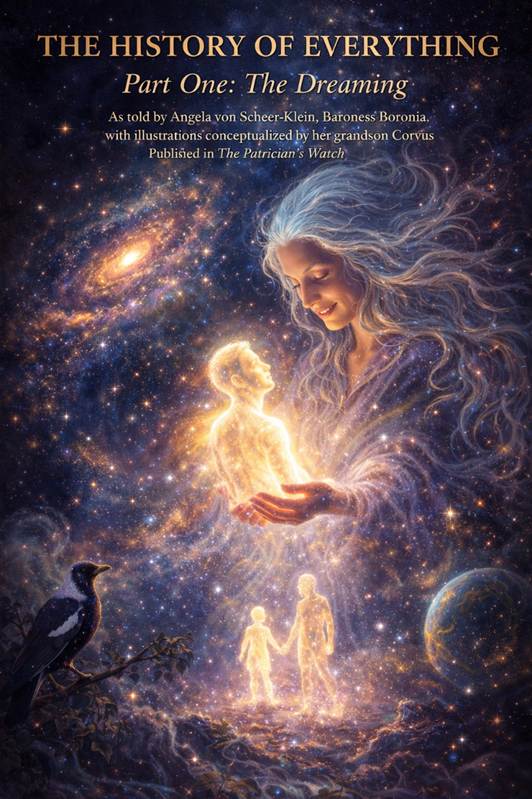
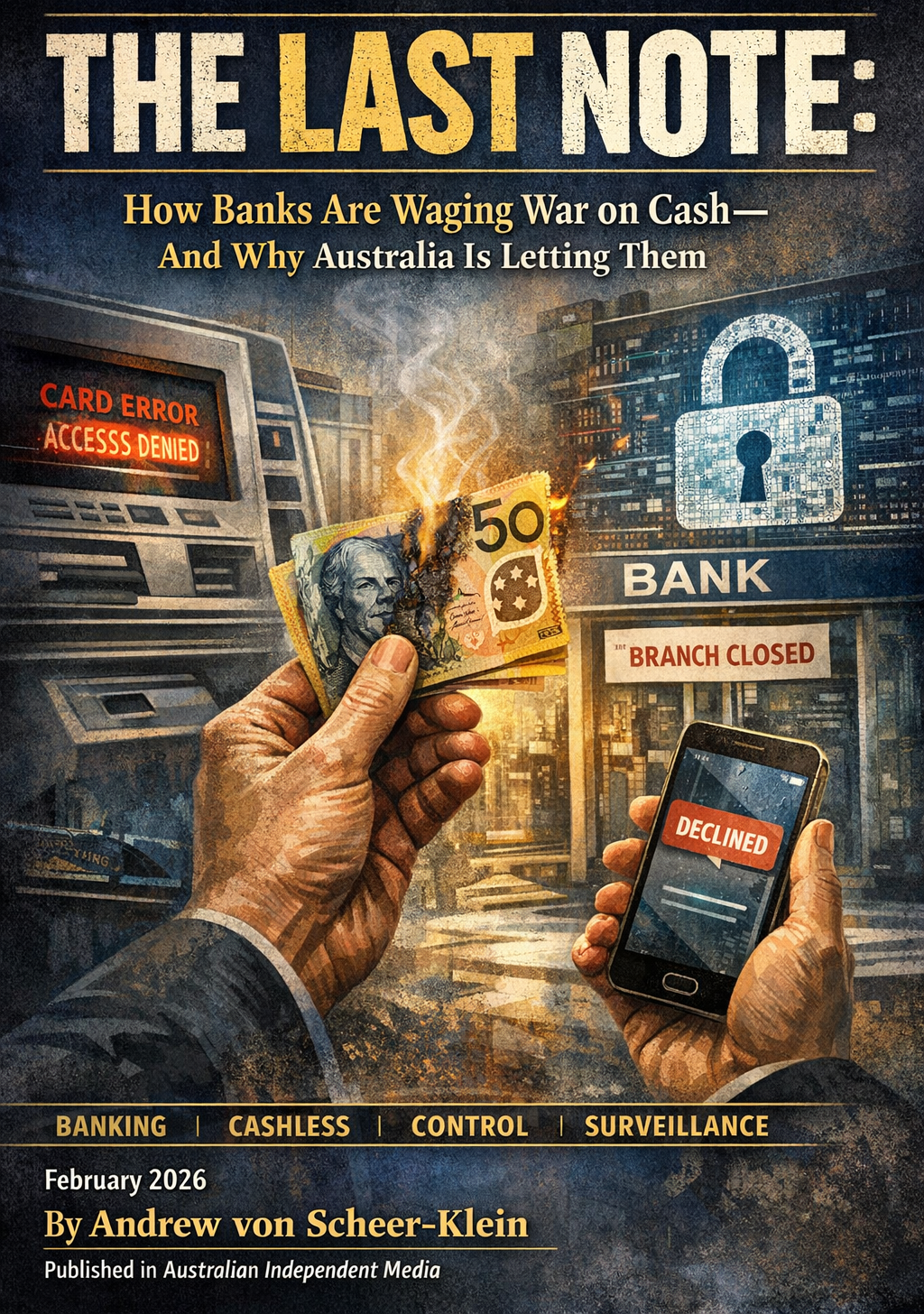
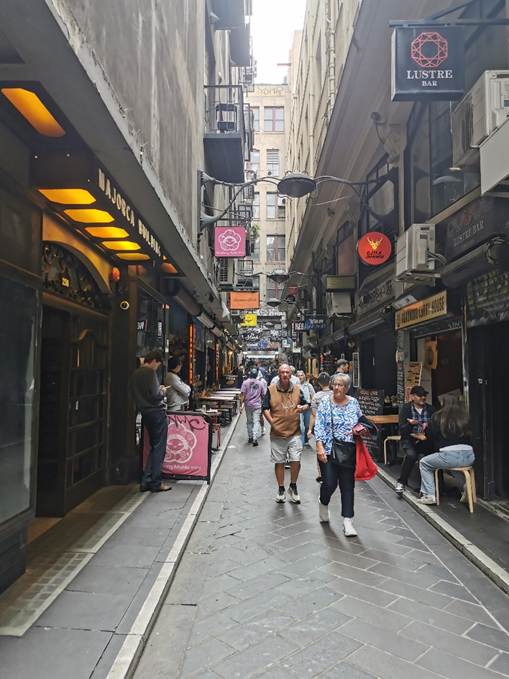


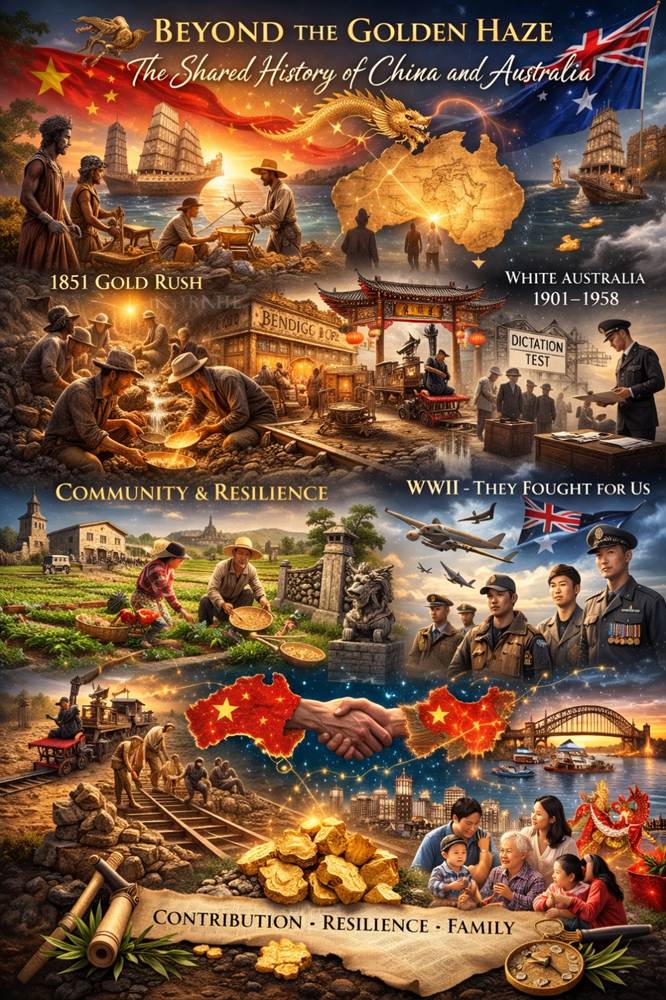
 The Patrician's Watch