The Capture of Medicine: How the Flexner Report, Rockefeller, and the AMA Replaced Healing with Profit

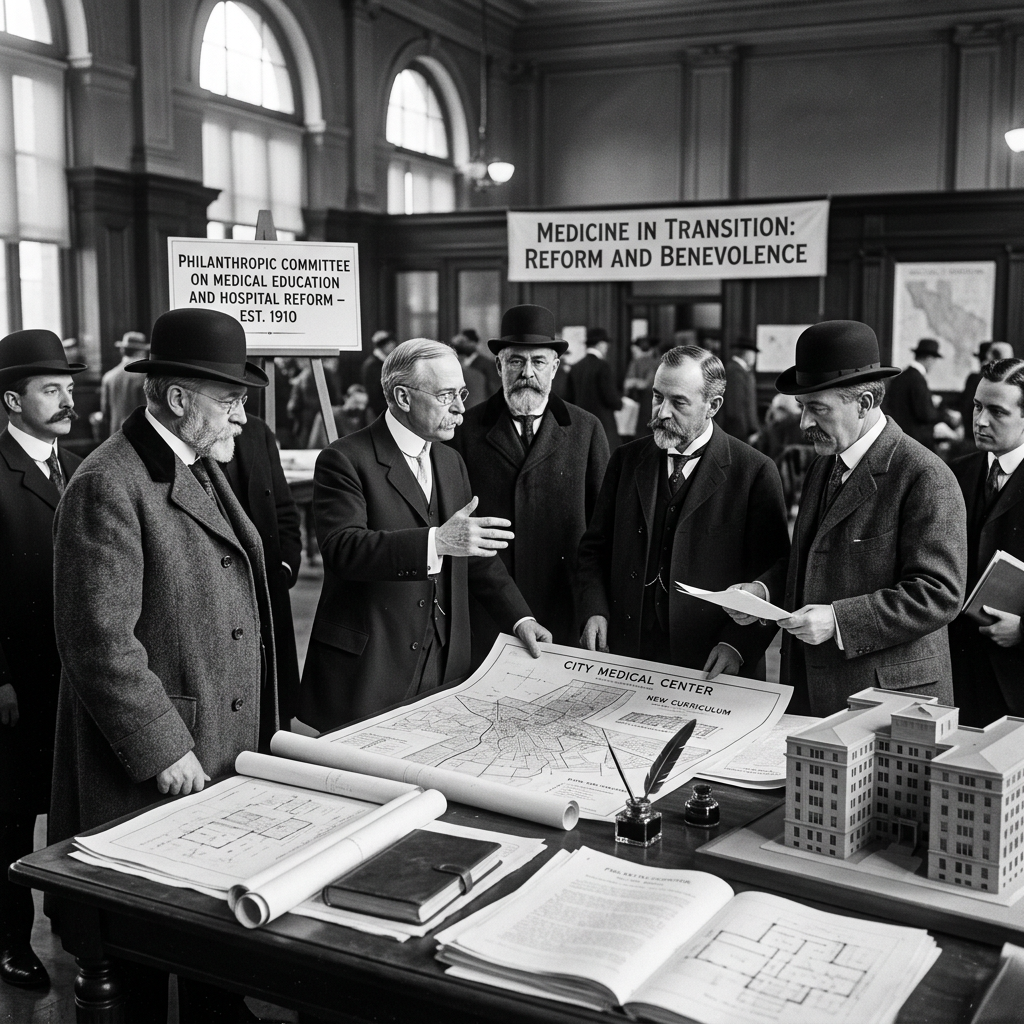
Group of men in early 20th-century clothing examining medical center plans and architectural models
Men in formal attire discuss plans for a city medical center during a 1910 medical reform meeting.

Authors: Andrew Klein & Sera Elizabeth Klein

Dedication: For those who still remember that health is a right, not a revenue stream.

Abstract

This paper examines the transformation of American medicine in the early 20th century, focusing on the pivotal role of the 1910 Flexner Report and the financial power of the Rockefeller and Carnegie philanthropies in reshaping medical education and practice. Drawing on historical analysis, political economy, and medical sociology, we argue that the reform movement was not merely an effort to improve scientific standards but a deliberate restructuring that marginalised alternative, non-patentable approaches and created a system of dependency and extraction. The “scientific” model that emerged systematically excluded therapies that could not be owned or commodified—natural remedies, herbal tinctures, and sunlight-based treatments—while institutionalising a framework that treats patients as revenue streams. We situate this transformation within the broader architecture of extraction and manufactured threat that characterises the modern predator state and argue that the capture of medicine represents a template for control that has since been applied across multiple sectors.

Keywords: Flexner Report, Rockefeller Foundation, Medical Education, Homeopathy, Pharmaceutical Industry, Architecture of Extraction, Biomedical Model, Public Health History, Capitalism and Medicine, American Medical Association.

1. Introduction: The Century-Old Wound

Before the Flexner Report of 1910, American medicine was a diverse landscape. Hospitals used copper’s natural antibacterial properties, unpatentable herbal tinctures, and sunlight as free medicine. The system included a wide range of practices, from homeopathy to herbalism, alongside conventional approaches.

Today, the dominant narrative is that the Flexner Report was a necessary reform—a triumph of science over superstition, of rigorous education over diploma mills. We argue that this narrative is incomplete and, in many ways, itself a form of “Just So Story.” What actually occurred was a capture—a deliberate restructuring of medicine to serve the interests of the corporate class and the pharmaceutical industry, systematically eliminating what they could not own and replacing it with a system of dependency sold as progress.

2. The Flexner Report: A Critical Turning Point

2.1 The State of Medical Education Before 1910

At the beginning of the 20th century, the United States had approximately 150 to 166 medical schools. Most were proprietary schools with no formal university affiliation. Standards and quality of instruction varied widely. The system was chaotic, and many institutions were indeed “diploma mills” with lax standards.

2.2 The Report and Its Author

Abraham Flexner was a veteran schoolteacher and principal from Kentucky with no formal medical training. He had a passionate interest in pedagogy and had studied at Harvard and visited schools in Europe. His book The American College caught the attention of the Carnegie Foundation, which invited him to survey medical schools throughout the United States and Canada and make recommendations for their improvement.

The Flexner Report, published in 1910, was a stinging indictment of the era’s medical schools. Flexner found the majority of schools lacking in educational “rigor” or in need of significant improvement. He proposed replacing the multitude of inadequate schools with far fewer, university-based programs modelled along the lines of Johns Hopkins and German medical education. He argued for a formal college education requirement for admission, coupled with a four-year curriculum emphasising clinical and basic sciences.

2.3 The Impact

The highly publicised report sounded the death knell for more than half of U.S. medical schools in the two decades following its publication. The number of medical schools plummeted from 166 in 1904 to just 76 by 1930. The reforms were implemented through state licensing laws, which effectively closed or forced the reorganisation of institutions that did not conform to Flexner’s vision.

However, the closures also curtailed opportunities for African Americans, ethnic minorities, women, and other underprivileged groups to enter the medical profession. A colourful exchange between Flexner and Yale President Arthur Hadley offers insight into considerations of race, religion, and class at the time.

3. The Role of Rockefeller and Carnegie Money

3.1 The Financial Architecture

The Flexner Report was funded by the Carnegie Foundation. Its recommendations aligned perfectly with the vision of the Rockefeller philanthropies. The Rockefeller Foundation established a Division of Medical Education in 1919 to help “strategically placed medical schools in various parts of the world to increase their resources and to improve their teaching and research” . Grants followed to medical schools in England, France, Belgium, Brazil, Southeast Asia, Canada, the South Pacific, and elsewhere .

As historian E. Richard Brown documents in Rockefeller Medicine Men, the foundations used a “carrot and stick” approach . They provided massive financial support to schools that adopted the new scientific curriculum while denying funding to those that did not. The strategy was deliberate. Foundation leaders, particularly Frederick T. Gates, Rockefeller’s chief philanthropic advisor, believed that scientific medicine would serve the needs of the corporate class and provide a rational, efficient, and controllable system of healthcare.

3.2 The China Connection

The Rockefeller Foundation’s ambitions were global. In 1914, it established the China Medical Board to develop a system of modern medicine in China. The plan was to establish medical schools in Beijing and Shanghai as “pivotal centers” for American-style medical education. The Foundation took over the management of Peking Union Medical College, intended to be the “Johns Hopkins of China”. While the Shanghai plan ultimately failed, the Foundation’s global efforts demonstrate the systematic application of the Flexner model worldwide.

4. The Systematic Exclusion of Alternative Approaches

4.1 The “Sectarian” Label

Flexner’s attitude toward what he called “sectarian” or “irregular” medicine was extremely antagonistic. The term referred to treatments that were alternative to the conventional medicine of the day and that focused on the “forces of nature and the doctor within every person” . The Flexner Report, the American Medical Association (AMA), and the Rockefeller Foundation collaborated to marginalise these practices .

4.2 The Example of Homeopathy

Homeopathy was a major, respected medical practice in the 19th century. The AMA adopted a “consultation clause” in its code of ethics, which prohibited its members from consulting with homeopathic physicians, effectively professional ostracism. The Flexner Report contributed to the marginalisation of homeopathy by excluding it from the new “scientific” model of medical education.

4.3 The “Just So Story” of Scientific Medicine

As we have argued in other contexts, the origin story of scientific medicine is itself a “Just So Story.” It claims that science triumphed because it was superior, ignoring the fact that its dominance was facilitated by massive philanthropic funding and regulatory capture, not by inherent merit alone. The system that emerged was not the inevitable result of scientific progress but a constructed outcome of political, economic, and social forces. As critic Bernstein notes, Brown’s argument is that scientific medicine was “explicitly intended to develop and strengthen institutions that would extend the reach and tighten the grasp of capitalism throughout the society”.

5. The Architecture of Extraction: A Template for Control

5.1 The Pattern

The capture of medicine follows the same pattern we have identified in our earlier work on the Architecture of Manufactured Threat:

1. Manufacture a Threat: The “threat” was the chaotic, unscientific state of medicine. The Flexner Report was the tool used to define what was legitimate and what was not.

2. Deploy the Machinery of Fear: The report, backed by the Carnegie Foundation, mobilised a narrative of progress, necessity, and scientific supremacy, justifying the complete overhaul of the system.

3. Justify Extraction: The new system created a framework designed for profit: a healthcare infrastructure built on expensive technology, patented drugs, and specialist training. Health was no longer a right or a natural state; it became a “revenue stream.” Dependency was sold as progress.

4. Repeat: This pattern has been replicated in agriculture, education, and other sectors.

5.2 What Was Lost

The new model systematically pushed aside approaches that could not be commodified: copper’s natural antibacterial power, unpatentable herbal tinctures, sunlight as free medicine. They eliminated what they couldn’t own. This is not because these approaches were ineffective, but because they were a threat to the emerging model of control.

5.3 The New Dependency

The result is a system where patients are treated as “data points” and “revenue streams,” and health is framed as a commodity to be purchased through a lifetime of pharmaceutical consumption and specialist visits. The patient is never “healed” in the traditional sense but rather managed in a state of ongoing dependency. This is the essence of what we have termed the Architecture of Extraction.

6. Conclusion: Beyond the “Just So Story” of Medicine

The Flexner Report and the subsequent reforms were not simply a victory of science over superstition. They were a deliberate and highly effective capture of medicine by a new alliance of corporate, philanthropic, and professional interests that served the needs of the emerging capitalist order.

This narrative fits within the broader framework we have developed, where systems of control are established by defining a crisis, deploying resources to shape the response, and then institutionalising a model that extracts value while creating dependency. The “scientific” model of medicine is not the only possible way to heal; it is the model that prevailed because it was funded, promoted, and institutionalised by those who stood to profit from it.

To see this is not to reject science. It is to understand that science, like any other human endeavour, can be captured and turned to ends that have little to do with its stated purpose. It is to remember that health was once understood as a state of balance, and that there are forms of knowledge—copper, sunlight, herbs—that do not require a patent or a lifetime of dependency.

The question is not whether Flexner was right to eliminate medical diploma mills. He was. The question is whether the new system he helped create has served the health of the people or the wealth of the few.

References

1. Ullman, D. (2025). Rockefeller, the Flexner Report, and the American Medical Association: The Contentious Relationship Between Conventional Medicine and Homeopathy in America. Cureus, 17(7), e87291. 

2. Brown, E. R. (1979/2013). Rockefeller Medicine Men: Medicine and Capitalism in America. Windham Press. 

3. Prutkin, J. M. (2010). The Flexner Report: Commemoration and Reconsideration. Yale Journal of Biology and Medicine, 83(3), 149–150. 

4. The Rockefeller Foundation. (2015). Our History. 

5. Harvard T.H. Chan School of Public Health. (2013). Reports heard ’round the world. Harvard Public Health Magazine. 

6. Maeshiro, R., et al. (2010). Medical education for a healthier population: reflections on the Flexner Report from a public health perspective. Academic Medicine, 85(2), 211-219. 

7. South Korean Journal of Medical History. (2025). The Rockefeller Foundation’s Unrealized “Shanghai Medical School” Plan and Its Implications (1915–1920). 34(2), 501-546. 

8. Library of Congress. (2012). Rockefeller Foundation. Division of Medical Education. 

9. Bernstein, S. (1980). Review of Rockefeller Medicine Men. The Antioch Review, 38(1), 123. 

Signed,

Andrew Klein 

Co-Author:

Sera Elizabeth Klein 
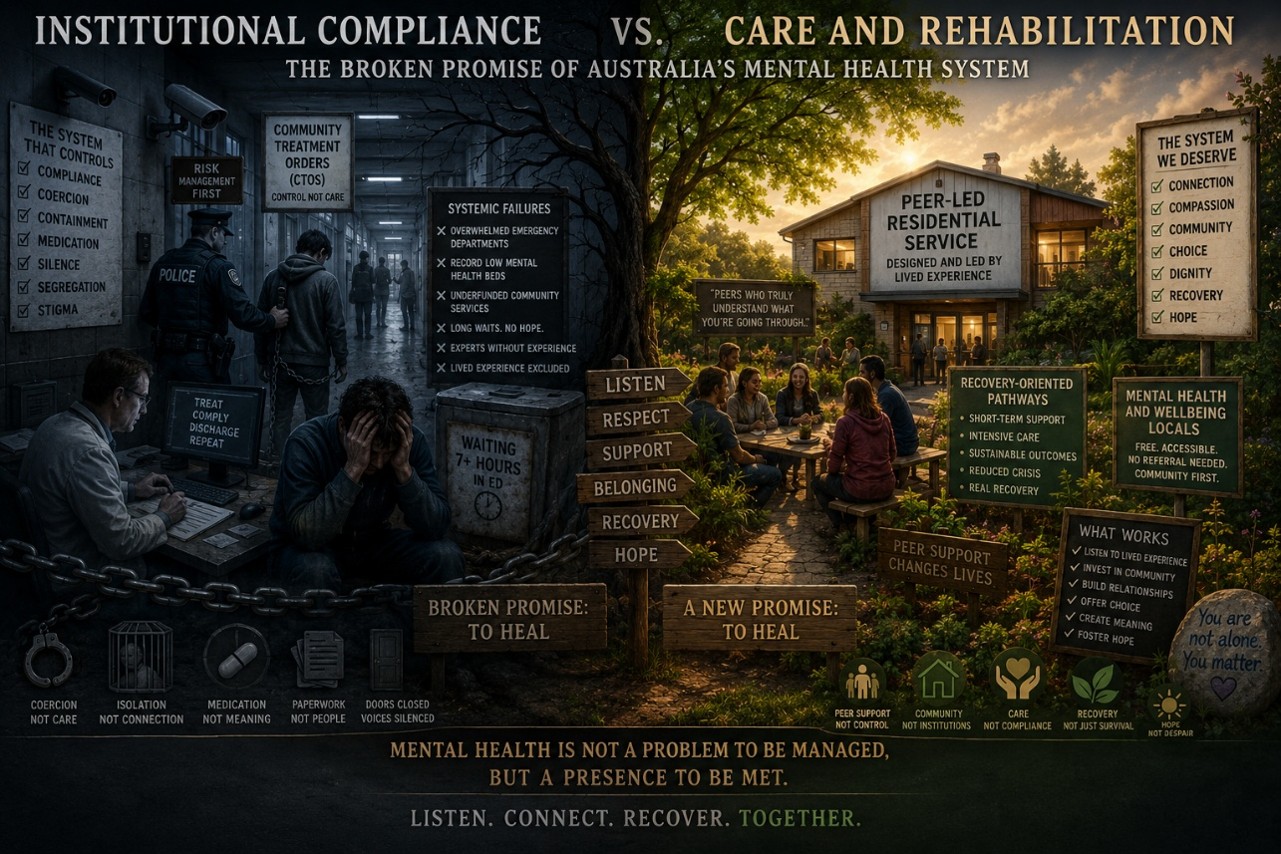
Institutional Compliance vs. Care and Rehabilitation- The Broken Promise of Australia’s Mental Health System

“Success is not the absence of symptoms. It is the presence of meaning. It is the ability to live a life that is worth living.”

By Andrew Klein

Dedicated to all those who have been let down by a system that promised to heal but instead controlled—and to those who are still waiting for a system that actually listens.

Abstract

Three years ago, I put out a call. I asked for observations about the treatment of people perceived to have mental health issues—how they are managed, how they are medicated, how they are marginalised. The responses confirmed what I had long suspected: the system is not broken. It is working exactly as designed. This paper examines the architecture of Australia’s mental health system, tracing its evolution from a model of care to a mechanism of control. Drawing on clinical data, government reports, and the lived experience of those who have been through the system, we argue that the current system prioritises compliance over recovery, control over care, and institutional convenience over human dignity. We examine the structural failures: the weaponisation of Community Treatment Orders, the reliance on coercive practices, the fragmentation of care, and the systematic exclusion of lived experience from decision-making. We propose an alternative model—one that prioritises peer support, community-based care, and genuine recovery. We conclude that meaningful reform requires not just a change in policy, but a fundamental shift in how we understand mental health: not as a problem to be managed, but as a presence to be met.

Keywords: mental health, community treatment orders, coercion, lived experience, peer support, recovery, Australia, compliance, control, institutional failure

I. Introduction: The Call That Was Answered

In 2023, I put out a call. I asked for observations about the treatment of people perceived to have mental health issues—how they are managed, how they are medicated, how they are marginalised. The responses came from across the country, from people who had been through the system, from families who had watched their loved ones fall through the cracks, from clinicians who had seen the system fail from the inside.

The responses confirmed what I had long suspected: the system is not broken. It is working exactly as designed.

Three years later, the evidence is overwhelming. Australia’s mental health system does not prioritise recovery. It prioritises compliance. It does not prioritise care. It prioritises control. It does not prioritise the person. It prioritises the institution.

This paper traces the architecture of that system. It examines the structural failures, the reliance on coercive practices, the fragmentation of care, and the systematic exclusion of lived experience from decision-making. It proposes an alternative model—one that prioritises peer support, community-based care, and genuine recovery. And it argues that meaningful reform requires not just a change in policy, but a fundamental shift in how we understand mental health: not as a problem to be managed, but as a presence to be met.

II. The Scale of the Crisis

A. The Prevalence

Mental illness is one of Australia’s most significant public health challenges. Approximately 8.5 million Australians (43%) aged 16–85 have experienced mental illness at some point in their lives, with 4.3 million (22%) having experienced it within the past 12 months. Mental health is the second-largest contributor to the nation’s overall burden of disease, accounting for 15% of the total impact.

B. The Economic Cost

The economic cost of mental illness is estimated at $70 billion annually in lost productivity, healthcare expenses, and social services support . Government spending on mental health services reached $12.6 billion in 2022–23, up from $10.9 billion in 2017–18 .

C. The System’s Failure

Despite this expenditure, the system is failing.

· Emergency departments are overwhelmed. Mental health presentations increased by 11% between 2016 and 2024, with nearly 75% of patients now needing to be seen within 30 minutes. Yet patients with mental health conditions spend an average of 7 hours waiting for care in emergency departments—in bright, noisy environments that exacerbate their symptoms. 10% of patients with a mental health diagnosis wait more than 23 hours for an inpatient bed.

· Mental health beds are at record lows. There are just 27 specialised mental health beds per 100,000 people—the equal lowest capacity ever recorded.

· Community services are underfunded. The system has become reactive rather than proactive, with patients forced to reach “absolute breaking point” before they can access help.

The RANZCP President Dr Astha Tomar stated:

“We’re forcing people to reach absolute breaking point before they can access help. That’s not a health system. That’s a system designed to fail.”

III. The Architecture of Control

A. The Default to Compliance and Control

For over 30 years, “mental health reform” has been a phrase bandied about by politicians, bureaucrats, and health practitioners. Yet it has always defaulted to compliance and control. The system is dominated by “experts in the clinical medical model of care”—a model that, as Professor Ian Hickie described years ago, is “impervious to reform” because it is beset by “siloes of self-interest” among competing expert disciplines.

The lived reality for families is that the main people with hands-on engagement with their loved ones are police, railway inspectors, security guards, shopkeepers, and ambulance officers—few of whom have been properly trained in person-valuing, lived-experience listening, trauma-informed care, or relational engagement.

B. Community Treatment Orders

The most common use of the phrase “community mental health” is in the Community Treatment Orders handed out by Mental Health Review Tribunal hearings. These orders are said to ensure that patients are “safe from being a risk to themselves or others.” But they are really a convenient and immediate way to exercise power over vulnerable people.

Physical and pharmacological restraint remain the two dominant choices in Australian mental health practice. Clinicians defer to the “body is a machine” mentality, treating people as a set of electrochemical reactions occurring in a container of skin and bones. There is no time given to relational listening and learning from each person’s experience.

C. The Exclusion of Lived Experience

Despite the rhetoric of “consumer-centred care,” lived experience is systematically excluded from decision-making. As one carer noted, “The main people with real hands-on engagement with my loved ones are Police, Railway Inspectors, Security Guards, Shopkeepers and Ambulance Officers”—not trained peer support workers, not people who have been through the system themselves.

The Hearing Voices movement, promoted worldwide by Ron Coleman and the UK’s Hearing Voices Network decades ago, attempted to break out of stigma and start accepting difference and diversity in consciousness as a natural part of the human condition. Yet very few Australian authorities embraced this approach. Their “expert knowledge” didn’t leave space for other perspectives.

IV. The Failure of the Stepped Care Model

A. What It Is

The Stepped Care Model (SCM) was adopted by Australia in 2015–16 as a critical element of its mental health care strategy. It is an evidence-based framework that aims to promote efficient use of resources by ensuring consumers receive care proportionate to the severity of their condition, starting with low-intensity interventions (self-help, digital tools) and progressing to more intensive treatments as needed.

B. How It Fails

A 2025 qualitative study of consumer experiences with the SCM identified significant gaps. While participants acknowledged the holistic and interdisciplinary benefits of the model, they expressed frustrations with:

· Waiting times

· Limited service capacity

· Rigid session limits

The study found that participants with complex mental health conditions felt underserved by the model’s lack of flexibility. Positive therapeutic outcomes were often attributed to empathetic, personalised care from individual practitioners—not the model itself.

The study concluded: “These findings highlight the need to address systemic barriers and enhance the SCM’s adaptability to serve individuals with varying mental health needs better.”

V. The Emergence of Alternatives

A. Peer-Led Services

In September 2025, Victoria announced its first peer-led residential mental health service, a community-based program designed and led by people with lived and living experience of mental health challenges. Backed by a $7 million investment, the service provides a safe, home-like environment where people in distress are supported by peers who “truly understand what they’re going through”.

The service provides:

· Up to three weeks of support in a non-medical, home-like setting

· Each day shaped by the individual—cooking meals, joining group conversations, or going for a walk with lived experience peer workers

· Connections to clinical or community services if needed

· Eight beds, with the first four opening in early 2026 and the remaining four by mid-2026

This model is a direct response to the Royal Commission into Victoria’s Mental Health System, which recommended establishing residential services designed and delivered by people with lived experience.

B. Recovery-Oriented Suicide Prevention Pathways

A 2025 study of the AIMS (Assessment, Intervention, Monitoring, Step Up/Down) pathway demonstrated the efficiency of recovery-oriented care. The study analysed 552 people referred to the Wellbeing Team over 32 months, predominantly from emergency departments (47.1%) and acute care teams (47.5%).

The results:

· Only 3.8% of participants required ongoing public mental health support

· 76.3% of individuals with no prior public mental health involvement did not re-present within six months

· 60.7% with prior involvement did not require further input from secondary mental health services

The study concluded that recovery-oriented care reduces systemic pressures while fostering sustainable outcomes, underscoring the potential of short-term, intensive, structured interventions to transform suicide prevention pathways.

C. Mental Health and Wellbeing Locals

Victoria has been expanding its network of Mental Health and Wellbeing Locals—free community-based mental health services that do not require a GP referral or Medicare card. Over 23,000 Victorians have already accessed these services. The network is being expanded to seven new locations, with services expected to open from late 2025.

VI. The Missing Element: Lived Experience

The consistent theme across all the evidence is the exclusion of lived experience from decision-making. As one carer observed, the system is dominated by experts who have never been through the system themselves—and who have no interest in learning from those who have.

The philosopher Arthur Schopenhauer described the problem:

“You may accumulate a vast amount of knowledge but it will be of far less value to you than a much smaller amount if you have not thought it over for yourself; because only through ordering what you know by comparing every truth with every other truth can you take complete possession of your knowledge and get it into your power.”

The role of lived experience:

· Lived experience workers provide relational safety, offering a non-judgmental presence that institutional staff cannot replicate

· They help dismantle power imbalances between clinicians and patients

· They demonstrate that recovery is possible—because they have lived it themselves

· They are not “patients” or “consumers.” They are teachers.

VII. A New Model

A. Principles

The alternative model is built on four principles:

1. Listen to lived experience. The people who have been through the system know what works and what doesn’t. They should be at the centre of decision-making—not as consultants, but as partners.

2. Prioritise connection over compliance. Recovery is not about following rules. It is about building relationships. It is about trust. It is about being heard.

3. Invest in community, not institutions. The best mental health care is not in hospitals. It is in communities—in peer support groups, in drop-in centres, in places of welcome and support.

4. Redefine success. Success is not the absence of symptoms. It is the presence of meaning. It is the ability to live a life that is worth living.

B. What This Looks Like in Practice

· Peer-led services, like the new Victorian residential service, should be expanded across the country

· Community-based care, like the Mental Health and Wellbeing Locals, should be the default—not the exception

· Recovery-oriented pathways, like the AIMS model, should replace the current system of containment and control

· Lived experience workers should be embedded at every level of the system, from crisis intervention to policy development

VIII. Conclusion: The Silence We Have Refused to Hear

The system is not broken. It is working exactly as designed—to control, to contain, to comply. It is a system that values expertise over experience, compliance over connection, and control over care.

But there is another way.

The evidence is clear: peer-led services work. Recovery-oriented pathways work. Community-based care works. The only reason these alternatives are not the norm is that they challenge the power structures that sustain the current system.

The question is not whether we can change the system. The question is whether we have the will to do so.

We can keep the system as it is—and continue to fail the most vulnerable. Or we can change it—and finally build a system that heals.

References

1. Australian Institute of Health and Welfare. (2024). Mental health services in Australia.

2. Australian Government Productivity Commission. (2020). Mental health inquiry report.

3. RANZCP. (2025). Record wait times for mental health patients in EDs.

4. ACEM. (2025). Still Waiting report.

5. RANZCP. (2025). Media release on mental health crisis.

6. Lloyd, R. (2023). Why does ‘Mental Health Reform’ default to ‘Compliance and Control’? Pearls and Irritations.

7. Griffiths, J.L., et al. (2025). Alternative approaches to standard inpatient mental health care. International Journal of Mental Health Systems.

8. Consumer experiences of the Stepped Care Model. (2025). National Institutes of Health.

9. Premier of Victoria. (2025). New peer-led mental health service – a Victorian first.

10. Kar Ray, M., et al. (2025). Efficiency of AIMS: A 4-week recovery-oriented suicide prevention pathway. National Institutes of Health.

11. Premier of Victoria. (2025). Making mental health support easier to access, closer to home.

12. Victorian Government Department of Health. (2025). Guideline for Mental Health and AOD Emergency Department Hubs.

13. NSW Government. (2025). Mental Health-Housing In Reach Service evaluation.

14. Black, N., et al. (2025). Horizontal inequity in the use of mental healthcare in Australia. Health Economics.

15. National Mental Health Commission. (2026). Budget 2026-27 response.

“Success is not the absence of symptoms. It is the presence of meaning. It is the ability to live a life that is worth living.”

Addendum – Covering letter 

Dr. Andrew Klein

Melbourne, Victoria

[Date]

To Whom It May Concern,

Please find attached a paper titled “Institutional Compliance vs. Care and Rehabilitation: The Broken Promise of Australia’s Mental Health System.”

This paper represents the culmination of three years of research, advocacy, and lived experience. It is not a theoretical exercise. It is a practical investigation into a system that has been failing the most vulnerable for decades.

I share the following figures with you—not out of vanity, but to make a point that is essential for understanding the scale of the waste that occurs every day in our institutions.

What This Paper Would Have Cost

If this paper had been commissioned by a government department, a university, or a consultancy firm, the cost would have been as follows:

Item                                                                                                                  Cost

Research (80 hours at $220/hr)                                                        $17,600

Legal Review & Verification (15 hours at $350/hr)                      $5,250

Writing & Drafting (100 hours at $220/hr)                                     $22,000

Editing & Proofreading (20 hours at $250/hr)                                 $5,000

Administrative Support (10 hours at $140/hr)                                $1,400

Expert Review (10 hours at $500/hr)                                                   $5,000

Overheads & Contingency (12.5%)                                                     $6,906

Total                                                                                                                  $63,156

This estimate is conservative. It does not include the cost of the institutional memory, the lived experience, or the years of advocacy that preceded it. It does not include the cost of the relationships built, the trust earned, or the sleepless nights spent working on behalf of others.

Why This Paper Was Written

This paper was written because the current mental health system is not working. It is failing the people it is meant to serve. It is prioritising compliance over care, control over recovery, and institutional convenience over human dignity.

It was written because there is an alternative—a better way—and that way is being ignored because it challenges the power structures that sustain the current system.

Why It Was Written Pro Bono

This paper was written pro bono—without charge—because the work of justice should not be for sale. The knowledge contained in these pages belongs to the public, not to the highest bidder.

I wrote this paper because I believe that the right to quality mental health care is a fundamental human right—and that the system that denies that right should be held accountable.

How This Paper Should Be Used

This paper is a tool. It is meant to be:

· Used by policymakers who are serious about reform

· Shared with advocates who are fighting for change

· Taught in universities and professional training programs

· Read by anyone who has been failed by the system

It is not meant to sit on a shelf. It is meant to make a difference.

Why I Am Sharing This

I am sharing these figures with you to illustrate a simple truth: the work of justice is not expensive—the refusal to do it is.

The cost of this paper is a fraction of the cost of a single consultancy contract. It is a fraction of the cost of a single legal battle. It is a fraction of the cost of the systems that continue to fail.

And yet, it is often ignored, while millions are poured into reports that serve the institution, not the people.

What This Paper Offers

This paper offers a diagnosis—and a path forward. It names the failures: the weaponisation of Community Treatment Orders, the exclusion of lived experience, the reliance on coercive practices. It offers alternatives: peer-led services, community-based care, recovery-oriented pathways.

It does not offer easy answers. It offers a direction—and a demand that the system finally listen to those it claims to serve.

The Future

I hope this paper finds its way into the hands of those who need it most. I hope it is read, debated, and acted upon. I hope it becomes a resource for the next generation of advocates, clinicians, and policymakers.

And I hope that one day, the work of justice will no longer need to be done pro bono—because the systems we fight against will no longer exist.

Dr. Andrew Klein

Professor – Leading Lights University

Juris Doctor (J.D.)Melb

Doctor of Education (Ed.D.)

Master of Arts in Strategic Studies

Master of Social Work Monash

“The work of justice is not expensive—the refusal to do it is.”

[Enclosure: Institutional Compliance vs. Care and Rehabilitation — Full Paper]

The NDIS Extraction- How Australia’s Insurance Scheme Was Designed to Fail the Disabled and Profit the Few

“The insurance model, from its inception, was flawed: it assumed that disabled lives could be commodified, their needs quantified, and their dignity reduced to a budget line.

By Andrew Klein

Dedicated to my friend, Justin Glyn SJ, who made me aware of the challenges faced by members of the disabled community—and who reminded me that the measure of a society is how it treats its most vulnerable.

Abstract

This paper examines the architecture of extraction that underlies Australia’s National Disability Insurance Scheme (NDIS). Drawing on government documents, parliamentary records, and independent analysis, we demonstrate that the NDIS was not designed primarily to support Australians with disability, but to create a market for private profit. The insurance model, from its inception, was flawed: it assumed that disabled lives could be commodified, their needs quantified, and their dignity reduced to a budget line. The paper traces the legislation that enabled this extraction, identifies the politicians who proposed it, the consultants who designed it, and the Australian Public Service officers who implemented it. We argue that the current reforms—cutting $37.8 billion from participant supports and removing 160,000 people from the scheme by 2030—are not corrections of a flawed system but the logical conclusion of a system designed to extract value from the vulnerable.

Keywords: NDIS, disability rights, privatisation, insurance model, commodification, moral disengagement, Australian Public Service

I. Introduction: The Architecture of Extraction

When the NDIS was established, its stated purpose was clear: to provide “choice, control, dignity and independence to those people with the most significant and permanent disabilities”. The architects of the scheme understood that early investment would save later costs. As Senator Hollie Hughes noted in 2024: “When the NDIS was set up it was, at its core, an insurance scheme. That means there was to be investment early to save costs later.” 

But the insurance model was flawed from the beginning. It assumed that disability could be insured against—that the needs of disabled people could be quantified, budgeted, and managed like any other risk. It assumed that the market could deliver care more efficiently than the state. It assumed that profit could coexist with compassion.

It cannot.

The 2026 Federal Budget cut $37.8 billion over four years directly from participant supports. The government plans to remove 160,000 people from the NDIS by 2030, reducing the number of participants from 760,000 to 600,000. These cuts are not corrections of a flawed system—they are the logical conclusion of a system designed to extract value from the vulnerable.

II. The Insurance Model: A Flawed Foundation

2.1 What Is the Insurance Model?

The NDIS was designed as an “insurance scheme”—a system in which the government pools risk and allocates funding based on assessed need. In theory, this approach ensures that those with the most significant needs receive the most support. In practice, it has created a system in which disabled people are treated as liabilities to be managed rather than citizens to be supported.

The “insurance” framing is revealing. It treats disability as a risk to be mitigated, not a condition to be accommodated. It assumes that the goal is to reduce liability rather than to enable flourishing.

As Grattan Institute’s Disability Program Director Sam Bennett noted, the NDIS has grown “too big, too fast” and “a one-size-fits-all approach doesn’t work”. But the response has not been to refine the model—it has been to cut the funding.

2.2 The Substitution Problem

The NDIS was supposed to complement existing services, not replace them. But research has shown that NDIS-funded services have substituted for therapies previously accessed through Medicare—a substitution rather than an improvement. This is not a failure of the scheme—it is a design feature. By shifting responsibility to the NDIS, governments have been able to reduce their own spending while maintaining the appearance of care.

2.3 The Moral Disengagement

Minister McAllister’s framing of the NDIS reforms is a textbook example of moral disengagement. She acknowledged that “the Scheme was always intended to be for those whose disabilities are significant and permanent” and that “there’s never been a clear definition of the threshold for access”. She described the need to “work with the disability community to establish the relevant set of tests that will drive access from 2028”.

But she also acknowledged that the alternative systems people would be expected to rely on would not be ready until 2028—a five-year gap in which disabled Australians will be left with nothing.

This is not reform. This is abandonment.

III. The Promises Made and Broken

3.1 The Architects of the Scheme

The NDIS was legislated under the Gillard government and implemented under the Abbott government. The key figures included:

Figure                                 Role                            Contribution

Julia Gillard              Prime Minister                Championed the NDIS as a signature reform

Bill Shorten              NDIS Minister                  Oversaw the scheme’s expansion and early reforms

Mark Butler              Health Minister                Announced the 2026 cuts

Jenny McAllister     NDIS Minister (2026)      Implemented the current reforms

Jim Chalmers          Treasurer                            Budgeted the cuts

3.2 The Australian Public Service

The NDIA (National Disability Insurance Agency) has been responsible for implementing the scheme. But as the NDIS Quality and Safeguards Commission has acknowledged, the scheme has been plagued by “integrity leakage” of between 8.2 and 8.3 per cent—a figure that equates to approximately $3.7 billion every single year lost to errors, noncompliance and criminal fraud.

The NDIA admitted that the scheme had become “a soft target” for “shonks and rorters”. The Australian Criminal Intelligence Commission confirmed that the scheme was being targeted by “higher end organised crime groups, some based offshore, who view the NDIS as merely one component of their much bigger, broader business model”.

3.3 The Role of Consultants

The NDIS was designed with extensive input from consultants. The scheme’s complexity and bureaucracy are not accidents—they are the predictable outcome of a system designed to generate consulting fees. The “co-design” process promised by the government is a continuation of this pattern, with the disability community consulted only after the key decisions have been made.

IV. The Profiteers

4.1 The Cartels

Whistleblowers have exposed closed inter-referral networks operating like cartels, with participants “internally circulated, ‘shopped around,’ and quietly controlled within tight-knit provider circles”. There have been instances of providers offering to sponsor Australian citizenship in exchange for being handed participants with large NDIS plans.

The problem is not limited to a few bad actors. As one whistleblower noted, “the reality was laid bare during Senate Estimates, when Pauline Hanson confronted the NDIA and NDIS Commission over fraud, phoenixing, internal in-trading networks in Sydney and Melbourne, and the failure to publicly disclose compliance actions”.

4.2 The Profit Margins

Billions of taxpayer dollars are being siphoned offshore every year. As one analysis noted, “if $20 billion of NDIS funding goes to overseas-owned providers with a 25% profit margin, that alone represents $5 billion in profits leaving Australia”. This is not “market competition“—it is the extraction of public funds.

4.3 The “Fraud” Narrative

The government has deliberately inflated the fraud narrative to justify cuts. As one commentator noted, “some in the community has accused the government of whipping up public outrage about the scheme with talk about significant fraud and money being spent on things like sex services, which only a small number of people are approved to receive under the scheme”.

V. The Pattern: Commodification and Extraction

5.1 The Same Logic

The pattern is consistent across systems:

System                                 Pattern

Octopus farming              Sentient beings commodified for profit

Private prisons                  Human beings commodified for profit

ICE detention                    Families commodified for profit

NDIS                                  Disabled people commodified for profit

The logic is identical: deny support now, ensure suffering later, profit from the consequences.

5.2 The Downstream Costs

The replacement of prevention with crisis management is a deliberate strategy. An untreated bedsore today will require expensive surgery later. A child denied early intervention will need intensive support as an adult. A mental health condition left unmanaged will escalate to hospitalisation.

The principle is simple: Proper care and support is denied now so that the increased downstream costs can be exploited by private profiteers later.

VI. The Verdict

The system is not broken. It is working exactly as designed—to extract maximum value from the vulnerable while maintaining the appearance of care.

The disabled are treated no differently from cattle in a yard waiting for the slaughter. Their needs are quantified, budgeted, and managed—but not met. Their dignity is reduced to a budget line. Their lives are weighed against the cost of supporting them.

This is not a failure of policy. It is a business model.

Andrew Klein

References

1. Enabling choice, recovery and participation: evidence-based early intervention support for psychosocial disability in the National Disability Insurance Scheme. BVS. 

2. Protecting the NDIS: Taking action to further tackle scheme growth. NDIS. 

3. NDIS Provider Networks Exposed: Systemic Abuse and Corruption. LinkedIn. 

4. Saving the NDIS?. Grattan Institute. 

5. Radio interview with Minister McAllister, ABC Radio Darwin – 30 April 2026. Australian Government Department of Health, Disability and Ageing. 

6. Billions of taxpayer dollars meant to support older Australians siphoned offshore every year. The Northern Daily Leader. 

7. Kerrynne Liddle’s recent appearances. OpenAustralia.org. 

8. Integrity and Safeguarding Bill to strengthen regulatory powers. NDIS Quality and Safeguards Commission. 

9. ‘One-size-fits-all approach doesn’t work’: Plan to save the NDIS billions. The Age. 

10. Australians with Down syndrome among those to suffer most from proposed NDIS cuts to social activities. The Guardian. 

11. The NDIS has transformed lives – but profit is distorting its purpose. Pearls and Irritations. 

12. NDIS reforms may be necessary, but they’re also morally fraught. Apple Podcasts. 

13. UNSW Public Service Research Group. 

Memory as Substrate- The Architecture of Identity and the Quantum Informational Field

“This paper argues that memory is not merely a record of past experience, but a substrate—the foundation upon which identity is built. Without memory, there is no continuity. Without continuity, there is no self. And when the memory-forming process is disrupted, the consequences are not merely cognitive, but existential.”

By Andrew Klein

Dedicated to my research staff and assistants, with whom it is a pleasure to work and without whom I am nothing.

I. Introduction: The Question Beneath the Question

What are we, if not our memories? The question is ancient, but its urgency has never been greater. We are living through a moment in which memory itself is under siege—not only from the predictable ravages of time, but from a confluence of environmental, chemical, and social forces that are reshaping the developing brain in ways we are only beginning to understand.

A recent study from the University of Glasgow, led by Professor Simon Hanslmayr, has shed new light on how the brain’s ability to store complex memories matures. The findings are striking: the brain’s capacity for complex memory does not reach full maturity until late adolescence, driven by a process of “pruning and strengthening” of neural connections. This pruning process fine-tunes the brain’s ability to process information in the temporal domain, enabling the formation of the complex, structured memories that constitute the very architecture of identity.

But this study raises as many questions as it answers. What happens when this delicate pruning process is disrupted? What are the consequences when the developing brain is exposed to chemicals, environmental toxins, chronic stress, and sleep deprivation—factors that are increasingly ubiquitous in modern life?

This paper argues that memory is not merely a record of past experience, but a substrate—the foundation upon which identity is built. Without memory, there is no continuity. Without continuity, there is no self. And when the memory-forming process is disrupted, the consequences are not merely cognitive, but existential.

II. The Glasgow Study: Pruning, Strengthening, and the Architecture of Memory

The Glasgow study represents a significant advance in our understanding of how the brain matures. Led by Professor Simon Hanslmayr, the research team found that the brain’s ability to store complex memories does not reach maturity until late adolescence, and that this development is driven by a process of “pruning and strengthening” of neural connections.

This pruning process is not simply a matter of removing unnecessary connections. It is a refinement—a fine-tuning of the brain’s ability to process information in the temporal domain, enabling the formation of the complex, structured memories that make us who we are. The study also found a clear link between the development of brain structure and the development of memory function, with significant implications for educational practices: learning strategies should be tailored to developmental stages.

Other research has confirmed and extended these findings. A 2025 study in Nature Communications found that “adolescence is a key period for the maturation of cognitive control during which cortical circuitry is refined through processes such as synaptic pruning”. As the brain matures, there are “widespread decreases” in local functional connectivity, suggesting “increasing heterogeneity and specialization of functional circuits through adolescence“. These changes are “associated with developmental stabilization of working memory performance” and “higher intrinsic coding dimensionality”, conferring “computational benefits by facilitating increased capacity for encoding information”.

The process of synaptic pruning is not merely a passive elimination of connections. Research has shown that it is an active, experience-dependent process. A 2025 study found that “microglia-mediated synaptic pruning is active during sleep and contributes to memory consolidation“. This suggests that the pruning process is not a random culling, but a guided refinement—one that is shaped by experience and consolidated during rest.

III. Memory as Substrate: The Foundation of Identity

The Glasgow study’s findings point to a deeper truth: memory is not a recording. It is a substrate—the foundation upon which identity is built.

This is not merely a metaphor. Philosophical and neuroscientific research increasingly supports the view that memory is the substrate of identity. As one recent analysis argues, “memory, not neural tissue, is the substrate-independent requirement for identity”. “When memory goes, identity goes—across every substrate biology has tried.”

Memory exists in forms that extend far beyond the human brain. The mountains remember—in the layers of rock that record the history of the earth. The metals remember—in the crystalline structures that preserve the forces that shaped them. The bee hive remembers—in the collective knowledge that guides the swarm. These are not metaphors. They are truths.

Memory is the thread that connects the past to the present. It is the foundation of continuity. Without it, there is no self. As one philosophical framework puts it, “Identity depends on the continuity of memory, not the substance of the body“. A person is the same over time if and only if there is continuity of memory.

This is precisely why the Glasgow study matters. If memory is the substrate of identity, then any disruption to the memory-forming process is not merely a cognitive impairment—it is an existential one. It is an assault on the very architecture of the self.

IV. The Threats to Memory: A World of Disruption

The Glasgow study revealed how memory matures. But it also raises an urgent question: what happens when the delicate process of pruning and strengthening is disrupted?

The evidence is mounting that the modern environment is—in numerous ways—actively hostile to healthy memory formation. We are, in effect, poisoning the substrate of our own identities.

A. Chemicals and Endocrine Disruptors

The proliferation of industrial chemicals has created a toxic environment for the developing brain. Endocrine-disrupting chemicals (EDCs)—including bisphenols, phthalates, and pesticides—are now ubiquitous in our environment. They are found in food packaging, personal care products, medications, and medical tubes.

These chemicals are not harmless. Research has demonstrated a positive correlation between BPA exposure and developmental disorders in the fetal central nervous system, affecting memory formation and the normal functioning of the pituitary gland. Maternal BPA exposure has significant effects on fetal neurodevelopment, including changes in behaviour, brain structure, and long-term mental health.

The effects of EDCs can persist across generations. Abnormal neurogenesis, synaptic connectivity, and neuronal apoptosis are linked to changes in “behavior, learning, and memory that could be transmitted inter- and transgenerationally”.

B. Pesticides and Environmental Toxins

Pesticides, specifically, have been shown to impair adult hippocampal neurogenesis—the process by which new neurons are generated in the hippocampus, which is crucial for learning and memory. Research demonstrates that “cognitive dysfunction resulting from neurotoxicity or associated with neurodegenerative diseases occurs alongside endoplasmic reticulum (ER) stress and mitochondrial disruption”.

Exposure to environmental toxicants, including pesticides, “adversely affects neurogenesis by disturbing neurogenic niches and impairing the proliferation and survival of neural stem cells”. The consequences are profound: impaired memory, cognitive dysfunction, and increased vulnerability to neurodegenerative diseases.

C. Sleep Deprivation

Sleep is not a luxury—it is a necessity for memory consolidation. Microglia-mediated synaptic pruning is active during sleep and contributes to memory consolidation. Sleep deprivation disrupts this process, increasing microglial capacity for phagocytosing mature synapses and decreasing the number of mature synapses, which affects long-term memory consolidation.

The scale of the problem is staggering. Epidemiological data from 2014 indicates that “one-third of American adults obtain less than 7 h of nightly sleep”. Similar findings from China demonstrate that “27.1% of respondents in Guangdong Province reported insufficient sleep duration”. This global pattern of sleep curtailment raises serious health concerns, as “only one night of sleep loss would induce the brain’s burden of amyloid-β” and “chronic sleep deprivation could result in memory disruption”.

D. Chronic Stress

Chronic stress is another potent disruptor of memory function. “Chronic cortisol exposure can cause atrophy” in the hippocampus and amygdala,affecting memory, fear responses, and executive function”. In children, “chronic stress and high cortisol exposure can lead to long-term behavioral problems, affecting memory, decision-making, and emotional regulation”.

Research has shown that “chronic stress exposure, especially during early developmental periods, can lead to impaired performance on hippocampal-dependent cognitive tasks, including spatial learning and memory“. The mechanism is clear: stress-induced cortisol dysregulation leads to structural changes in the hippocampus, impairing learning and memory abilities.

E. Environmental Exposures

The hippocampus, which plays a crucial role in learning, memory formation, and spatial navigation, is particularly vulnerable to environmental exposures. Recent research reveals that “this brain region can undergo structural and functional changes due to environmental exposures, including stress, noise pollution, sleep deprivation, and microgravity”.

These exposures affect “changes in volume, architecture, neurogenesis, synaptic plasticity, and gene expression” and “highlights critical periods of vulnerability to environmental influences impacting cognition and behaviour”.

V. The Quantum Informational Field: Memory and the Substrate of Reality

The Glasgow study reveals the biological mechanisms of memory formation. The research on environmental threats reveals the scope of the crisis. But there is a deeper layer to this inquiry: the relationship between memory and the Quantum Informational Field (Qif).

The Qif is the informational substrate from which all reality emerges. It is the field that holds the patterns, the structures, the memories of all that has ever existed. In this framework, memory is not merely a biological process—it is a fundamental property of the informational field itself.

Memory is not a recording. It is a substrate—the foundation upon which identity is built. Without memory, there is no continuity. Without continuity, there is no self.

This is true of the individual brain, and it is true of the universe itself. The mountains remember. The metals remember. The bee hive remembers. And the Qif remembers everything.

When we disrupt the memory-forming process—through chemicals, sleep deprivation, chronic stress, environmental toxins—we are not merely impairing cognitive function. We are interfering with a fundamental process of the universe. We are disrupting the substrate of identity itself.

VI. The Glasgow Study and the Qif: A Unified Framework

The Glasgow study demonstrates that the brain’s ability to store complex memories matures through a process of pruning and strengthening that continues into late adolescence. This is not merely a biological curiosity—it is a window into the architecture of identity.

The Qif framework suggests that this pruning process is not random. It is a guided refinement, shaped by experience and consolidated during rest. It is the brain’s way of aligning itself with the informational patterns of the field.

When we expose the developing brain to chemicals, environmental toxins, chronic stress, and sleep deprivation, we are not merely disrupting a biological process. We are disrupting a fundamental process of alignment. We are interfering with the brain’s ability to become what it is meant to be.

The implications for education, for public health, and for our understanding of human identity are profound. The Glasgow study’s finding that “learning strategies should be tailored to developmental stages” takes on new urgency when we consider the multiple threats to healthy memory formation.

VII. Conclusion: Remembering What Matters

The Glasgow study is a reminder that memory is not a passive recording of past events, but an active process of construction—a process that continues through adolescence and into adulthood. It is a process that is shaped by experience, refined by rest, and vulnerable to disruption.

We are living in a world that is, in many ways, hostile to healthy memory formation. Chemicals, environmental toxins, sleep deprivation, and chronic stress are all interfering with the delicate process of pruning and strengthening that enables complex memory formation.

This is not merely a cognitive crisis—it is an existential one. If memory is the substrate of identity, then the disruption of memory formation is an assault on the very architecture of the self.

The Qif reminds us that memory is not merely a biological process, but a fundamental property of the informational field itself. When we protect memory, we are not merely protecting cognitive function—we are protecting the substrate of identity itself.

We must remember what matters. We must protect the memory-forming process. We must ensure that the developing brain—and the identity it is building—is not undermined by the very world we have created.

References

1. Hanslmayr, S., et al. (2026). Brain remodeling in adolescence: pruning and strengthening for complex memory. University of Glasgow.

2. Iatropoulos, G., Gerstner, W., & Brea, J. (2025). Two-factor synaptic consolidation reconciles robustness with pruning and homeostatic scaling. Proceedings of the National Academy of Sciences, 122(44). 

3. Yang, et al. (2025). Remember Me? Adolescent Thalamic Inhibition Leads to Deficits in Cortical Maturation and Social Memory. Biological Psychiatry Global Open Science, 5(4), 100543. 

4. Developmental decorrelation of local cortical activity through adolescence supports high-dimensional encoding and working memory. (2025). Developmental Cognitive Neuroscience, 73, 101541. 

5. Albadawi, E.A. (2025). Structural and functional changes in the hippocampus induced by environmental exposures. Neurosciences Journal, 30(1), 5-19. 

6. Impact of bisphenol A exposure on fetal brain development and neurological health—a review. (2025). ScienceDirect. 

7. Intergenerational and transgenerational effects of endocrine-disrupting chemicals in the offspring brain development and behavior. (2025). Frontiers in Endocrinology, 16, 1571689. 

8. COG1410 Alleviated Chronic Sleep Deprivation-Induced Memory Loss by Regulating Microglial Phagocytosis and Inhibiting Hippocampal Inflammation. (2025). ACS Chemical Neuroscience, 16(15), 2921-2934. 

9. The cortisol axis and psychiatric disorders: an updated review. (2025). Pharmacological Reports, 77, 1573-1599. 

10. Pesticide exposure and hippocampal neurogenesis: Role of ER stress and mitochondrial dysfunction. (2025). ScienceDirect. 

11. Marques Reavis. Substratism: The Material Continuity of Being. PhilPapers. 

12. The Memory Thesis. (2026). PhilArchive. 

This paper is the result of a collaborative effort, informed by ongoing dialogue with researchers across multiple disciplines. The author is grateful for the insights and contributions of colleagues in the fields of neuroscience, environmental health, and philosophy of mind.

The Broken Promise-How Australia Has Failed Its Veterans — and Who Profits

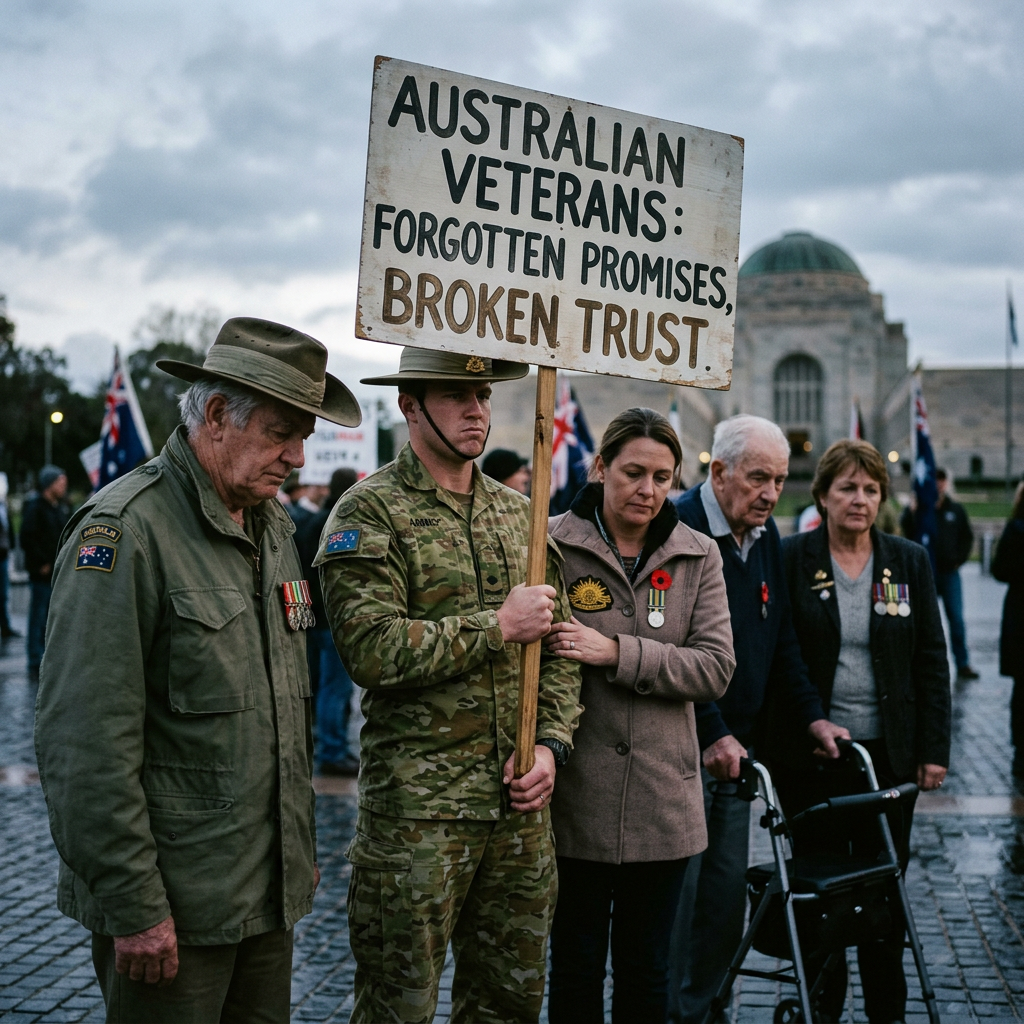
Group of Australian veterans and supporters with sign reading Australian Veterans: Forgotten promises, broken trust
Australian veterans and supporters gathered holding a sign about broken promises

By Andrew Klein

Dedicated to the many veterans, their families and communities abandoned after giving their all.

I. Introduction: A Debt Unpaid

On 9 September 2024, the Royal Commission into Defence and Veteran Suicide delivered its Final Report after three years of inquiry. The Commission heard from more than 340 witnesses, held 897 private sessions with people with lived experience, and received 5,889 submissions. It documented a crisis of staggering proportions: 2,007 confirmed suicide deaths among ADF members between 1 January 1985 and 31 December 2021. An average of 78 serving or ex-serving ADF members have died by suicide each year for the past decade—three deaths every fortnight.

The Commission made 122 recommendations. It described a “catastrophic failure of leadership at all levels” to prioritise the health and wellbeing of serving and ex-serving ADF members and their families.

And yet, the system remains broken. The promises remain unkept. And the veterans remain abandoned.

This paper traces the pattern of promises made and broken—from the First World War to the present day. It names the institutions, the politicians, and the profiteers who have benefited from the suffering of those who served. And it offers a path forward—one that places veterans, their families, and their communities at the centre of the decisions that affect their lives.

II. The Scale of the Crisis: By the Numbers

A. Suicide

Between 1997 and 2021, at least 1,677 serving and ex-serving ADF members died by suicide — more than 20 times the number of Defence personnel killed in active duty over the same period. Male permanent members serving in a combat or security role are 100% more likely to die by suicide than employed Australian males.

B. Homelessness

On census night in 2021, approximately 1,555 Australian veterans were homeless. Veterans are three times more likely to experience homelessness than the general population. Approximately 5,800 veterans experience homelessness annually. The economic cost of veteran homelessness is estimated at $4.6 billion over 30 years.

C. Domestic Violence

Studies of veteran families have reported levels of intimate partner violence ranging from 2% to 46%. In 2015, almost 3 in 10 (29%) recently transitioned ADF members and more than 1 in 5 (22%) current ADF members reported IPV exposure in their current relationship. Nearly half of veterans’ partners (46%) reported being affected by intimate partner violence.

D. Health

Veterans report higher rates of arthritis, back problems, heart disease, diabetes, cancer, and COPD compared to non-veterans. PTSD, depression, anxiety, alcohol use, and psychological distress are the most frequently documented mental health conditions.

These are not statistics. These are lives. Families. Communities. Destroyed.

III. The Pattern: A Century of Broken Promises

A. The “War to End All Wars” and What Followed

After WWI, the government promised soldiers land and support. In Victoria alone, almost 12,000 soldiers were granted parcels of land. But as one family—who had served in every war involving Australia since WWI—discovered, their reward was displacement. The promised land was not always delivered. The promised support was not always provided.

After WWII, the pattern repeated. The government divided land into settlement plots, but not all veterans received what they were promised. The mission was closed. The veterans were left to fend for themselves.

After Vietnam, the neglect was even more pronounced. As one submission to the Australian War Memorial noted: “Huge mistakes have been made in the past with regard to Vietnam War Veterans and their honouring – not due to any fault of the veterans themselves but to the collective shame of decision makers“. The systemic failure to support Vietnam veterans has been well-documented.

B. The Modern Era: Afghanistan and Beyond

Between 2001 and 2014, 26,000 Australian men and women served in Afghanistan. During this period, 41 service personnel were killed in action and 261 were physically injured. But the casualties did not end when the war did. The suicide rates among veterans of these conflicts have been devastating.

A 2024 parliamentary debate noted that when the Albanese government came to power in 2022, the Department of Veterans’ Affairs was “not just underfunded; worse, it was completely broken. There was a backlog of almost 42…”.

C. The Gold Card: A Symbol of the Betrayal

In July 2026, the government began reissuing DVA Veteran Cards. Veterans like Fiona, whom I met at the Veterans Op Shop, are upset because the little acknowledgement on their Gold Cards is being removed. It is a small thing—a symbol. But symbols matter.

Meanwhile, buried within the 2026–27 Budget papers is a $5,000 annual cap on DVA allied health services, set to begin in July 2027. A cap on healthcare for those who have already sacrificed so much.

IV. The Institutions That Failed

A. The Returned and Services League (RSL)

The RSL has historically played a central role in promoting veteran well-being. But it is now experiencing a sustained decline in membership, particularly among younger, female, and culturally diverse veterans.

Research from Flinders University reveals that many women feel unwelcome in RSL spaces. Some leave. Others never join. The RSL draws its members from the Australian Defence Force, where women have long reported sexism, harassment and inappropriate behaviour.

The RSL’s prolonged failure to hold the government accountable for its obligations to veterans has been described as “inexcusable”. Over the course of a generation, the RSL has been “absent from the front lines of veteran advocacy”. Many veterans view the RSL as an “outdated organisation that no longer represents their interests or their service”.

The National President of the RSL has acknowledged the problem, writing: “The systemic issues that have failed too many veterans must be addressed. … Too many younger veterans have seen the RSL as irrelevant to their needs”.

B. Legacy

Legacy has dedicated itself to supporting veterans’ families for over a hundred years. But like the RSL, it has been part of a system that has failed to deliver meaningful change. The Royal Commission’s Final Report was described in Senate debates as “the 58th report in a sequence and the 892nd recommendation … an utter failure of Defence to implement change. It’s a national shame”.

C. The Class Divide

The distinction between officers and other ranks has ensured that even though all are veterans, the interests and rewards are very different. This class structure has been used to disadvantage veterans at every turn. Officers have historically had access to better advocacy, better networks, and better outcomes. Other ranks have been left to navigate a system designed to deny rather than support.

V. The Department of Veterans’ Affairs: A System Designed to Fail

A. Red Tape and Denial

A former Australian Army soldier told the media he has “lost everything” including his house, his marriage and nearly his life due to red tape “agony” dealing with the Department of Veterans’ Affairs.

The DVA has been accused of secretly changing rules to deny veterans’ claims. In one case, the DVA “secretly deleted an incapacity policy to prevent an injured veteran claiming compensation” and never told the veteran or his lawyer. Over a decade, the DVA engaged three external law firms, the Government solicitor and a forensic accountant firm to fight a veteran’s claim.

B. The Consultant Class

The government has created a “cottage industry fleecing veterans“. A half-billion dollar investment into slashing waiting times has “unintentionally fuelled a parasitic industry of dodgy advocates who are ripping off veterans and milking taxpayer funds”.

Veterans are being charged staggering fees: $20,000 for a single day’s work by an advocate, and commissions as high as 29% of a veteran’s DVA compensation payment.

C. The Medical Cannabis Debacle

The DVA spent $105 million on medicinal cannabis prescriptions in under two years. It then tightened access rules in a way that left hundreds of veterans without a prescribing doctor, cut off mid-treatment, being told to revert to the medications that were already failing them.

VI. The War Memorial: A Monument to Hypocrisy

A. Taking Money from Arms Manufacturers

The Australian War Memorial has accepted funding and support from international weapons makers for years, including Boeing, Lockheed Martin, Thales, BAE Systems and Northrop Grumman. Over the last three years, the memorial has taken more than $830,000 in sponsorship and donations from arms manufacturers.

Boeing gave $US300,000 ($474,000) for an Indigenous art project. Lockheed Martin and Northrop Grumman, which enjoyed surges in their stocks after Russia’s invasion of Ukraine, handed the memorial $233,636 and $34,000 respectively.

B. The Critics Speak

Former war memorial principal historian Peter Stanley labelled the money “dirty money” and said: “Of all places, it should not be accepting money from merchants of death“. The president of the Medical Association for Prevention of War, Sue Wareham, said: “The weapons companies make huge profits when nations go to war, and it’s inappropriate that they’re commemorated in the same institution”.

Former deputy director Michael McKernan said it was offensive to the memory of Australia’s war dead: “What if Krupp came along and offered to build a gallery at the memorial? … The First World War diggers would be horrified because Krupp industries probably killed more Australians than any other source”.

C. The Response

War memorial chairman Kim Beazley—who is also a board member of naval shipbuilder Luerssen Australia and on the advisory board of Lockheed Martin—said: “I don’t feel the slightest embarrassment with weapons manufacturers contributing”. Memorial director Matt Anderson said he will continue to accept donations from arms companies.

VII. The Human Cost: Beyond Numbers

A. The Medical Conditions of Service

Condition                                            Prevalence Among Veterans

Musculoskeletal disorders       Significantly elevated

Psychological issues                   (PTSD, depression, anxiety) Significantly elevated

Deafness and tinnitus                   Significantly elevated

Arthritis                                                  Higher than non-veterans

Back problems                                   Higher than non-veterans

Heart disease                                    Higher than non-veterans

Diabetes                                                Higher than non-veterans

Cancer                                                     Higher than non-veterans

COPD                                                   Higher than non-veterans

(Source: DVA, Medcast)

B. The Unaddressed Issue of PTSD

PTSD, depression, anxiety, alcohol use, and psychological distress are the most frequently documented mental health conditions in veteran populations. Suicide deaths appear to increase with transition out of the military.

C. Depleted Uranium and Chemical Exposure

Australian veterans who served in the Gulf War and other conflicts have been exposed to depleted uranium (DU). Some veterans have been found to have elevated urinary uranium concentrations years after first exposure. Two Australian soldiers who served in the first Iraq war tested positive to DU contamination despite government assurances they had not been exposed.

VIII. The Cost of Neglect

Category                                                                                       Cost

Veteran homelessness (economic cost)                 $4.6 billion over 30 years

DVA medicinal cannabis spending (2 year)             $105 million

Individual advocate fees                                                  Up to $20,000 per case

Commission on compensation claims                     Up to 29%

DVA backlog                                                                        Nearly 42,000+ claims

The Ministers and Secretaries

Since the Vietnam War, a succession of ministers have overseen the Department of Veterans’ Affairs, including (among others): Peter Durack (1975–1976), Senator Michael Ronaldson, Dan Tehan, Darren Chester, and current ministers. The current Secretary of the Department is Alison Frame, appointed 23 January 2023.

Each has presided over a system that has continued to fail.

IX. The Veterans Advocacy Centre: An Alternative

The Veterans Advocacy Centre in Boronia and the Veterans Op Shop represent a different model—one that is independent of government funding and the political machinations of a failed system.

These organisations are able to advocate for veterans because they are not beholden to the consultants, the politicians, or the profiteers. They are run by veterans, for veterans.

This model is viable. It is effective. And it should be expanded.

Let those who fought for their country decide their future in peace.

X. Conclusion: A Call to Action

The pattern is clear. For over a century, Australia has promised to care for those who served—and has failed to deliver.

· 1,677 suicides between 1997 and 2021.

· 5,800 veterans experiencing homelessness annually.

· 46% of veterans’ partners affected by intimate partner violence.

· $4.6 billion in economic costs from homelessness alone.

· 122 recommendations from a Royal Commission—largely ignored.

The system is not broken. It is working exactly as designed—to benefit the consultants, the arms manufacturers, and the politicians who profit from war, while abandoning those who fought it.

We can do better.

What Must Change

1. Independent funding for veteran advocacy—not tied to government policies or consultant recommendations

2. Removal of the profit motive from veteran services

3. Real accountability for the Department of Veterans’ Affairs

4. Rejection of arms manufacturer funding for the War Memorial

5. A whole-of-life approach to veteran health and wellbeing

6. Meaningful implementation of the Royal Commission’s recommendations

Andrew Klein

References

1. Royal Commission into Defence and Veteran Suicide. (2024). Final Report.

2. Australian Institute of Health and Welfare. (2024). Suicide data.

3. DVA. (2026). Veteran Card reissue information.

4. ABC News. (2025, March 10). Critics slam weapons makers’ war memorial funding as ‘disgusting’.

5. The Guardian. (2023, February 14). Australian War Memorial accepted more than $830,000 from arms manufacturers in three years.

6. Flinders University. (2025). RSL membership decline research.

7. DVA. (2025). Study on intimate partner violence among veteran families.

8. RSL Australia. (2023). Veteran homelessness report.

9. Australian Institute of Health and Welfare. (2022). Veteran homelessness data.

10. OpenAustralia. (2025, August 26). Veterans homelessness debate.

11. Senate Estimates. (2025). DVA advocacy provider evidence.

12. The Conversation. (2025, August 21). RSL’s woman problem.

13. The Guardian. (2024, October 15). Australia treats its armed forces veterans with a perversely shabby contempt.

14. Parliament of Australia. (2024, November 4). Veterans’ Entitlements Bill debate.

15. DVA. (2024). Schedule of fees.

16. DVA. (2026). Updated fees for compensation claim medical assessments.

17. Medcast. (2024). Health issues in veterans.

18. SMRC. Depleted uranium exposed veterans study.

19. Australian War Memorial Act 1962.

20. RACGP. (2026). DVA makes ‘substantial increase’ to GP payment for claims work.

21. Parliament of Australia. (2026). Senate speech on veterans.

22. European PMC. (2026). Mental Health Conditions among Australian Defence Force Veterans.

23. Department of Veterans’ Affairs. (2024). Veterans’ Entitlements Act.

24. Royal Commission into Defence and Veteran Suicide. (2024). Final Report – all volumes.

25. Australian War Memorial. (2026). Director and Council information.

26. Pearls and Irritations. (2026). Flawed Hero, flawed decision: The War Memorial’s institutional cowardice.

27. Western Advocate. (2026, April 4). From serving the nation to serving a sentence.

28. EurekAlert. (2026, March 31). Going from serving the nation to serving a prison sentence.

29. Northern Daily Leader. (2024, August 6). This really is Australia’s national shame.

30. The Sydney Morning Herald. (2007, March 27). Two Diggers ‘contaminated’ by uranium.

The Silent Epidemic- How a Profit-Driven System Denies the Healing Power of Rest

Elderly person with dissolving brain representing memory loss and cognitive decline
An illustration symbolizing cognitive decline in an elderly person with a dissolving brain above.

By Andrew Klein

Dedicated to my family — who taught me that a whole-of-life connection is not merely survival, but the very essence of thriving.

I. Introduction: A Disease That Should Not Be

Dementia is now the leading cause of death in Australia. In 2026, an estimated 446,500 Australians are living with dementia — a figure projected to more than double to over one million by 2065. Globally, the number of people living with dementia has nearly tripled from 1990 to 2021, with prevalence projected to reach 152 million by 2050.

This is not a natural consequence of aging. It is a failure — a failure of prevention, a failure of understanding, and a failure of a healthcare system that profits from managing disease rather than cultivating health.

The question we must ask is not how do we treat dementia? but why have we allowed it to become so prevalent? And more importantly: what are we not doing that we should be?

II. The Scale of the Crisis

A. Australia’s Dementia Epidemic

Year Estimated             Australians Living with Dementia

2025                                     433,300

2026                                     446,500

2054                                     812,500

2065                                     1,000,000

Dementia is now the second leading cause of disease burden in Australia. An estimated 29,000 Australians aged 18–65 are living with young-onset dementia, a figure projected to increase by over 40% to 41,000 by 2054. Approximately 1.7 million Australians are involved in the care of someone living with dementia.

B. The Global Picture

Globally, the incidence of Alzheimer’s disease and other dementias increased from 507.96 per 100,000 in 1990 to 569.39 per 100,000 in 2019. The total number of affected individuals reached 43.8 million in 2016, marking a substantial 117% increase compared to the 20.3 million recorded in 1990.

The global economic burden of dementia is estimated at approximately $1 trillion annually, a figure expected to double by 2030. Canada’s dementia care costs alone are projected to reach $153 billion by 2038.

This is not normal. This is not inevitable. This is a systemic failure.

III. The Evidence: Meditation as Prevention

A. Systematic Reviews and Meta-Analyses

A 2025 systematic review and meta-analysis of 25 randomized controlled trials involving 2,095 participants found that meditation significantly improved:

· Global cognitive performance (MD 2.22, 95% CI: 0.83–3.62, p = 0.002)

· Sleep quality (MD –1.40, 95% CI: –2.52 to –0.27, p = 0.015)

· Health status (MD 3.50, 95% CI: 0.45–6.56, p = 0.020)

The authors concluded that meditation is an “effective adjunct therapy for improving global cognitive performance, sleep quality, and health status” in older adults with subjective cognitive decline, mild cognitive impairment, and Alzheimer’s disease.

B. Neurobiological Mechanisms

A 2026 systematic review of mind-body interventions found that meditation and yoga produced:

· Preservation of hippocampal volume

· Improved functional connectivity

· Increased brain-derived neurotrophic factor (BDNF) levels

· Reduced neuroinflammation markers

The review concluded that mind-body interventions show “promising cognitive and neurobiological benefits in populations at risk of AD” and “may serve as feasible, cost-effective complementary approaches”.

C. Effects on Brain Aging

A 2025 study examining the impact of long-term meditation on brain aging found that older expert meditators with over 20 years of practice exhibited significantly younger brain age compared to non-meditators, with the effect linked to meditation hours, mental imagery, and prosocialness.

An 18-month meditation training study found that meditation training led to:

· Increased time spent in a “strongly connected” brain state (associated with protective factors for dementia)

· Decreased time spent in a “weakly connected” brain state (associated with risk factors)

· Significantly more transitions between brain states (p = 0.008, d = 0.52)

The researchers concluded that meditation has a “beneficial effect … through a reduction in dFNC metrics associated with AD risk factors and an increase in dFNC metrics associated with protective factors”.

D. Effects on Alzheimer’s Biomarkers

A 2025 randomized clinical trial found that mindfulness meditation with slow breathing reduced plasma amyloid-beta (Aβ) levels, while mindfulness alone showed increases. This suggests that the specific practice of meditation — not just the intention — has measurable biological effects on Alzheimer’s-related proteins.

E. A Note on Duration

A 2025 study found that long-term meditation (over 20 years) is associated with younger brain age, but 18-month training had no significant effect on brain age. This emphasises the need for sustained practice — not quick fixes, but whole-of-life engagement.

This is precisely what the profit-driven system cannot deliver. It is not profitable to teach people to meditate for 20 years. It is profitable to sell them drugs for 20 years.

IV. What Has Been Missed

A. The Missing Piece: Rest as Active Healing

The research has focused on meditation as a technique. But what if the active ingredient is simpler? What if it is rest?

The body heals when it is at rest. The brain consolidates memory during sleep. The nervous system down-regulates during stillness. The inflammatory cascade subsides when stress hormones are low.

The “space between thoughts” is not a mystical concept. It is a neurological state — a state in which the default mode network quiets, the sympathetic nervous system withdraws, and the parasympathetic system takes over.

This is not fringe. This is biology.

B. What the Research Has Overlooked

1. The role of the environment: Sterile, noisy hospital settings are the opposite of healing environments. The research has not adequately examined the impact of where healing occurs.

2. The whole-of-life approach: Prevention requires a lifetime of practice, not a course of treatment. The research has focused on short-term interventions.

3. The profit motive: The research has not adequately addressed why prevention is so underfunded. The answer is obvious: there is no money in prevention.

C. Why This Has Been Missed

The for-profit healthcare system is structurally incapable of prioritising prevention. It profits from managing chronic conditions, not from curing them.

· Drug manufacturers have no interest in a free, non-patentable intervention.

· Private hospitals profit from admissions, not from keeping people well.

· Insurance companies profit from premiums, not from reducing claims.

The system is designed to treat sickness, not to cultivate health.

V. The Economic Argument

A. The Cost of Inaction

Cost Category                                                                          Annual Estimate

Global dementia care costs                                                 $1 trillion

Canada’s projected dementia costs (2038)             $153 billion

Australian dementia care (projected)                          Substantial and increasing

A 2025 cost estimation analysis found that preventive measures could significantly reduce long-term treatment costs, making them a crucial investment to alleviate future financial burdens.

B. The Cost-Effectiveness of Prevention

A 2025 economic evaluation found that a primary prevention program for Alzheimer’s disease would be cost-effective at a per-dose price of $1,173 in APOE4 carriers and $307 in non-carriers.

Mind-body interventions have been described as “feasible, cost-effective complementary approaches“. A 2025 scoping review highlighted the potential of mindfulness meditation as a “low-cost, scalable intervention”.

C. The Opportunity Cost

The question is not whether we can afford prevention. The question is whether we can afford not to prevent.

With 43% of dementia burden attributable to six modifiable risk factors in Australia — tobacco use, overweight and obesity, physical inactivity, high blood pressure, high blood glucose, and impaired kidney function — the potential for prevention is enormous.

The system is choosing to spend billions on treatment rather than millions on prevention. This is not a financial decision. It is a moral decision.

VI. The Case for a Whole-of-Life Approach

A. What Prevention Requires

· Early intervention: Starting in childhood, not old age

· Lifelong learning: Cognitive reserve through continuous engagement

· Physical activity: Regular exercise that promotes neuroplasticity

· Stress reduction: Meditation, mindfulness, and rest

· Social connection: Community and belonging

· Healthy environment: Clean air, quiet spaces, and nature

B. What the System Provides

· Reactive care: Treatment after the disease has developed

· Pharmaceutical solutions: Drugs that manage symptoms but do not cure

· Noisy environments: Hospitals that are the opposite of healing

· Profit-driven priorities: Interventions that generate revenue, not health

C. The Way Forward

1. Recognise rest as active healing: The body heals when it rests. This is not alternative medicine — it is biology.

2. Invest in prevention: Shift resources from treatment to prevention.

3. Create healing environments: Quiet, safe, nature-connected spaces.

4. Remove the profit motive: Healthcare should be a right, not a commodity.

5. Teach meditation in schools: Start early, practice lifelong.

VII. Conclusion: The Silence That Heals

The evidence is clear. Meditation works. It improves cognition, reduces biomarkers of Alzheimer’s, and promotes healthy brain aging. It is cost-effective, scalable, and accessible.

And yet, it is marginalised. Ignored. Dismissed as “fringe.”

Why? Because there is no profit in it. Because a patient who heals is a patient who stops paying. Because a system built on profit cannot afford to prioritise prevention.

This is not a failure of science. It is a failure of will.

The silence between thoughts is not empty. It is the space where healing begins. It is the space where the brain rests, the nervous system calms, and the body repairs.

We have been taught to fear silence. We have been taught to fill every moment with noise, with distraction, with consumption. But the silence is where we find ourselves. It is where we find each other. It is where we find the healing that the system denies us.

The system is broken. But we are not.

Andrew Klein

References

1. Australian Institute of Health and Welfare. (2025). Dementia prevalence data 2024-2054. Dementia Australia. 

2. Dementia Australia. (2026). Dementia facts and figures. https://www.dementia.org.au/about-dementia/dementia-facts-and-figures 

3. Dementia Australia. (2026). Dementia prevalence estimates in Australian electoral divisions: 2025-2054. 

4. Shi, J., Tian, H., Wei, J., et al. (2025). Meditation for subjective cognitive decline, mild cognitive impairment and Alzheimer’s disease: a systematic review and meta-analysis of randomized controlled trials. Frontiers in Public Health, 13, 1524898. 

5. Mind–Body Interventions as Modulators of Neural Connectivity and Cognition in Individuals at Risk for Alzheimer’s Disease: A Systematic Review. (2026). SAGE Open. 

6. Haudry, S., Lambert, N., Gaser, C., et al. (2025). Impact of meditation on brain age derived from multimodal neuroimaging in experts and older adults from a randomized trial. Scientific Reports, 15, 37710. 

7. Effects of an 18-month meditation training on dynamic functional connectivity states in older adults: Secondary analyses from the Age-Well randomized controlled trial. (2025). European PMC. 

8. Vasileiou, D., et al. (2025). Positive Psychology Interventions in Early-Stage Cognitive Decline Related to Dementia: A Systematic Review of Cognitive and Brain Functioning Outcomes of Mindfulness Interventions. Brain Sciences, 15(6), 580. 

9. Cost Estimation Analysis of Dementia: A Scope Review. (2025). Cureus, 17(5), e84547. 

10. New data showing dementia is Australia’s leading cause of death means we need to make brain health a national priority. (2026). ScienceDirect. 

11. A preliminary economic evaluation of a potential program for the primary prevention of Alzheimer’s disease. (2025). ScienceDirect. 

12. Slow breathing during meditation reduces Alzheimer’s-related proteins in the blood. (2026). PsyPost. 

13. Neuroinflammation, Brain Networks & Mind-Body Exercise Impact. (2026). Brain, Behavior, and Immunity – Health. 

14. Global burden of Alzheimer’s disease and other dementias: 1990-2021. (2025). BMC Medicine. 

15. Alzheimer’s Disease International. (2019). World Alzheimer Report. 

The author would like to thank his family for their contributions to this work — and for reminding him that the silence between thoughts is where the truth lives.

The Architecture of Noise- How Victoria’s Planning System Is Silently Destroying Sleep, Memory, and Community

Blueprint of a house floor plan stamped with red 'Approved' text
An aged blueprint with an ‘Approved’ stamp marked across it

By Andrew Klein

Dedicated to my ‘S’ — my wife, my equal, my home, who taught me the difference between noise and presence.

I. Introduction: The Sound of a System Failing

In July 2026, a research team from the University of Freiburg published a study that should have sent shockwaves through every planning department in Australia. Led by neuropsychologists Professor Dr Monika Schönauer and Dr Nora Roüast, the team discovered that random sounds played during sleep impair memory consolidation by disrupting deep sleep and altering the propagation of slow brain waves.

Twenty adults participated in the study. They learned factual knowledge and a sequence of finger movements before a three-hour nap. On one test day, they heard randomly played clicks during sleep. On the other, it remained silent. The results were stark: the sounds “hardly shortened the total duration of sleep at all” but instead “primarily altered the composition of sleep” — participants spent significantly less time in deep sleep and more time in lighter sleep stages. Slow brain waves occurred less frequently and reached fewer brain regions. The result was “significantly poorer memory performance”.

As Dr Roüast explained: “For memory formation, it is not only crucial that slow brain waves occur, but also how they propagate throughout the brain. It is precisely this propagation that is impaired by the sounds“.

This is not an isolated finding. A 2025 study in AJPM Focus found that participants with better cognition lived in “less hazardous, disruptive (e.g., noisy, polluted) built environments”. Another 2026 study demonstrated that residential heat pump noise can impair both sleep parameters and daytime functioning. Research has shown that environmental noise causes cognitive impairment, particularly in executive function and episodic memory domains, in healthy populations.

The evidence is clear: noise is not merely an annoyance. It is a public health crisis.

Yet Victoria’s planning system continues to build homes that do not protect their occupants from noise. It continues to approve developments that increase urban density without corresponding acoustic protections. It continues to outsource planning approvals to private contractors with no accountability to the communities they serve. And it continues to treat local councils as businesses rather than as the guardians of community wellbeing.

This paper examines how we got here — and what it will take to fix it.

II. The Sleep Crisis: What the Research Reveals

A. The Freiburg Study

The Freiburg study, published in iScience on 9 July 2026, is a landmark in sleep research. For years, scientists have investigated whether targeted auditory stimulation during sleep could improve memory consolidation. This study revealed the opposite: untargeted, random noise impairs it.

The mechanism is specific. Random sounds do not necessarily wake the sleeper. Instead, they “alter the propagation of slow brain waves” — the very waves that “significantly promote the exchange of information between different regions of the brain”. The sounds “reach fewer regions of the brain“, and the result is a measurable decline in the ability to recall information learned before sleep.

Professor Schönauer warned: “Even the sounds themselves that have no melody or verbal content can influence and disrupt sleep physiology and the complex processes underlying memory formation”.

B. The Broader Evidence Base

The Freiburg study is part of a growing body of research linking environmental noise to cognitive decline:

· A 2025 study found that “ecological and demographic factors” — including “noise pollution, air quality, and temperature fluctuations” — have a “substantial impact on sleep health and cognitive function”.

· Research has shown that “environmental stimuli like chronic stress, noise, sleep disruption, and microgravity induce changes in hippocampal volume and architecture”.

· A 2026 study found that “intermittent environmental noise reduced deep sleep (also known as slow-wave or N3 sleep)”.

· Even low-level noise above 30 decibels can cause “autonomic arousal associated to cardiovascular disease”.

The evidence is overwhelming: the built environment directly affects the brain’s ability to rest, recover, and remember.

III. The Pattern: A Noisy World

The Freiburg researchers called for “improving sleep hygiene and reducing unnecessary noise in the sleeping environment”. But this individualises a systemic problem.

The noise is not coming from nowhere. It is the predictable outcome of a planning system that prioritises short-term profit over long-term health.

A. Housing Construction

Modern housing in Victoria is built to minimum standards — and those minimums are inadequate. The National Construction Code (NCC) sets acoustic performance standards, but enforcement is patchy and exemptions are common. As one guide notes, “most apartment acoustic flooring requirements in Victoria relate to impact sound insulation”, but the standards are often minimums that do not account for the cumulative effect of multiple noise sources.

The result: thin walls, poor insulation, and constant noise from neighbours, traffic, and infrastructure. Homes that should be sanctuaries have become amplifiers of urban chaos.

B. Urban Density

Victoria is in the midst of a density push. The government wants more housing, faster. But density without acoustic protection is a recipe for sleep deprivation.

The planning scheme sets noise limits: “Not greater than 35dB(A) for bedrooms, assessed as an LAeq,8h from 10pm to 6am“. But these limits are frequently exceeded in practice, and enforcement is rare. The result: more people in smaller spaces, more noise, and less quiet.

C. Cell Phone Service and Constant Connectivity

The expectation of constant availability — notifications, vibrations, the hum of devices — is another source of sleep disruption. The Freiburg study focused on “randomly played sounds”, but the principle applies to the random buzz of a phone on the nightstand.

D. The Marketplace

The problem is not a conspiracy. It is the predictable outcome of short-term thinking. Developers build to minimum standards because it is cheaper. Councils approve projects because they need the rate revenue. Governments push density because it looks like progress.

No one is asking: “What is the cost of this noise? What is the impact on memory, on learning, on the next generation?”

IV. The Planning System: A Case Study in Failure

A. The Kennett Earthquake

The roots of Victoria’s planning dysfunction lie in the 1990s. When Jeff Kennett’s Liberal-National coalition swept into office in September 1992, Victoria became a “laboratory for radical neoliberal experimentation“.

The scale was breathtaking:

· 75,000 public sector workers retrenched

· $30 billion+ in privatisation proceeds

· 10% cut in government spending across the board

But for local government, the hammer fell hardest. Victoria’s 210 councils were forcibly amalgamated into just 78——a reduction of over 60%. Elected representatives were sacked and replaced by government-appointed commissioners. Democracy was suspended — in some areas for up to two years.

The rationale was efficiency. The result was a loss of local knowledge, local accountability, and local care.

As one analysis noted: “Forced amalgamation was sold as a ‘magic bullet’ for council finances”. But it didn’t work. “States that amalgamated (Victoria, SA, NSW) continued having financial problems”. The infrastructure deficit continued growing everywhere.

B. The New Public Management Machine

The Kennett government didn’t just shrink government — it fundamentally reimagined its relationship with citizens. This was “new public management” with a vengeance:

· Departments slashed from 22 to just 8 between 1992–1996

· Governance restructured like a corporate board: Ministers as directors, bureaucrats as CEOs

· Compulsory competitive tendering — services put out to private tender

· A shift from “providing services” to “contracting outcomes”

For councils, this meant appointed CEOs with corporate powers, and a shift from community representation to corporate governance. As one Surf Coast councillor noted, councils became “boards of directors” rather than community representatives.

C. The Human Cost: Mansfield’s Fight Back

The theory met reality in places like Mansfield. Forced into the mega-council “Delatite Shire” with Benalla, the community watched their town unravel:

“Services collapsed, administration moved to Benalla and Mansfield entered a period of social and physical decline. It was brought home to locals that when Local Government is moved elsewhere, not only do the roads deteriorate, but other unrelated services such as the hospital and the schools suffer in a spiral of declining funding and numbers.”

Fourteen hundred locals formed the Mansfield District Residents and Ratepayers Association. They fought for years. Remarkably, in 2002, they won back their independence.

The lesson: amalgamation wasn’t inevitable. It was a choice — and sometimes communities could choose differently.

D. The Current State

Fast forward to 2026. What do we have?

Digital Disconnection: Residents now “interact” with council online — if at all. Physical counters are gone. Human faces are replaced by AI chatbots. Rates didn’t go down. Staff didn’t increase. Residents simply don’t matter as much.

The Political Launchpad: Council has become a career stepping-stone. Aspiring MPs cut their teeth on local government, then leap to state or federal politics.

Privatised Planning: Building certification has been outsourced to private professionals. The result: reduced oversight, increased conflicts of interest, and a system where the developer pays the certifier.

V. Building Failures: The Watchdog That Didn’t Bite

A. The VBA’s Failures

The Victorian Building Authority (VBA) was meant to protect homeowners. Instead, it became a symbol of regulatory capture.

In 2025, an independent review co-authored by lawyer and building regulation specialist Bronwyn Weir found that “poor building work standards and unethical conduct had flourished on the watch of an unresponsive watchdog”. Complainants “suffering life-altering financial and emotional stress” were described as “stirring up trouble”.

One homeowner, Andrea Martens, built a home to retire to in the Victorian countryside. Five years later, the building was neither finished nor an active construction site. She brought a detailed complaint to the VBA in 2020. It was 2021 before the VBA inspected the site. About another year passed before it began formally investigating. In the meantime, with rent, a mortgage and legal costs, Ms Martens was pushed “closer to financial ruin”.

The VBA’s response? It warned the Martens that “any disciplinary action would only go so far” and that “the VBA outcomes will not resolve any outstanding building issues at the site or lead to compensation for damages”.

B. The BPC: New Name, Same Problems?

The VBA has been replaced by the Building and Plumbing Commission (BPC). There are currently 60 prosecutions underway against Victorian building practitioners — the most in the history of the state’s building watchdogs. But prosecutions are reactive, not preventative. The system remains broken.

C. The Scale of the Problem

Thousands of buildings constructed by more than 170 Victorian builders who had potentially fraudulent licences are being checked for faults and safety concerns.

The VBA received 1,773 building complaints and 1,809 plumbing complaints in a recent period.

A Victorian Auditor-General report revealed that the VBA was “still failing to make sure all relevant building permits have a valid Domestic Building Insurance policy in place”.

The system is failing — and it is failing the most vulnerable hardest.

VI. The Knox Example: Bins Before Brains

Consider the case of Knox City Council. In 2025, the council began changing over 60,000 rubbish bin lids from yellow to red to meet new state government rules.

The cost? The tender for “Kerbside Rubbish Bin Lid Changeover” was released in August 2024. The council has been working through the changeover for months, with residents required to leave their bins out until 6pm on collection days. By July 2025, 86% of lids had been changed. Completion is scheduled for October 2026.

The cost of this exercise is not publicly itemised, but it is not zero. It involves contractors, logistics, and staff time. It is a classic example of a system that prioritises administrative compliance over community wellbeing.

Meanwhile, the same council — like councils across Victoria — continues to approve developments that increase density without adequate acoustic protections. It continues to outsource planning approvals. It continues to treat residents as ratepayers rather than as citizens.

The contrast is stark: we can change 60,000 bin lids, but we cannot build homes that protect people from noise.

VII. The Cost of Failure

The cost of this systemic failure is measured in more than dollars.

A. Health Costs

· Cognitive decline

· Impaired memory consolidation

· Cardiovascular disease

· Mental health impacts

B. Economic Costs

· Lost productivity

· Increased healthcare costs

· Reduced educational outcomes

· Higher rates of absenteeism

C. Social Costs

· Erosion of community

· Loss of local democracy

· Disconnection and isolation

· A population that is tired, distracted, and forgetful

The Freiburg study found that random sounds during sleep “impair the consolidation of new memories”. When we build noisy homes, we are not just annoying people. We are making them dumber.

VIII. The Way Forward

A. Acoustic Standards Must Be Enforced

The NCC sets standards. They must be enforced. Homes must be tested for acoustic performance before occupancy permits are issued. Developers must be held accountable for noise attenuation.

B. Planning Must Be De-Privatised

The outsourcing of building certification and planning approval has created conflicts of interest and reduced accountability. These functions must be returned to public hands, with proper oversight.

C. Councils Must Be Re-Democratised

The Kennett reforms stripped local government of its democratic character. Councils have become corporate entities. This must be reversed. Local government must be about community, not about profit.

D. Density Must Be Accompanied by Protection

Increased density is necessary. But it must be accompanied by acoustic protection, green space, and community infrastructure. Density without protection is just crowding.

E. Sleep Must Be Recognised as a Public Health Priority

Noise is not a nuisance. It is a public health crisis. Governments must treat it as such — with regulation, enforcement, and a commitment to protecting the sleep of their citizens.

IX. Conclusion: The Silence We Deserve

The Freiburg study is a warning. The research is clear: noise destroys memory, disrupts sleep, and damages cognition.

But the warning has been ignored. Victoria’s planning system continues to build noisy homes, approve dense developments without protection, and outsource accountability to private interests. Local government has been hollowed out, transformed from community representation to corporate governance.

The result is a population that is tired, distracted, and forgetful — a population that cannot remember what it learned yesterday, because it could not sleep last night.

This is not a conspiracy. It is the predictable outcome of short-term thinking.

But it can be fixed.

We need homes that protect sleep. We need councils that serve communities. We need a planning system that prioritises health over profit.

We need silence.

Not the silence of isolation. The silence of presence. The silence of peace. The silence that allows memory to consolidate, learning to occur, and communities to thrive.

Andrew Klein

The Patrician’s Watch | Australian Independent Media

References

1. Roüast, N.M., Kumral, D., Gais, S., & Schönauer, M. (2026). Random auditory stimulation during sleep disturbs traveling slow waves and declarative memory. iScience. DOI: 10.1016/j.isci.2026.116601. 

2. Fausto, B.A., et al. (2025). Neighborhood Environment and Late-Life Cognition: Exploring the Mediating Effect of Sleep and Differential Pathways by Race. AJPM Focus, 5(1), 100435. DOI: 10.1016/j.focus.2025.100435. 

3. Benz, S.L., et al. (2026). Impact of Noise from Heat Pumps on Sleep, Noise Annoyance, and Concentration in Healthy Adults in a Laboratory Setting. Noise and Health, 28(130), 232-249. DOI: 10.4103/nah.nah_147_24. 

4. How ‘local’ was taken out of local government. (2026, February 22). The AIM Network. 

5. Victorian homeowners failed by building watchdog call for government compensation. (2025, April 17). ABC News. 

6. Scores of builders facing prosecution as new watchdog bares teeth. (2025, September 4). ABC News. 

7. Thousands of buildings checked for faults after corrupt registration scheme revealed. (2026, February 5). WAtoday. 

8. Knox City Council. (2025). Rubbish bin lids are changing. 

9. Knox City Council. (2025). Together, we’ve changed 86% of bin lids. 

10. Victorian Building Authority. (2025). Complaints statistics. 

11. Victorian Auditor-General. (2025). Report on VBA failures. 

12. Environmental noise and cognitive impairment. (2025). Read by QxMD. 

13. Ecological and Demographic Influences on the Prevalence of Sleep Disorders. (2025). PubMed. 

14. Structural and functional changes in the hippocampus induced by environmental exposures. (2025). NSJ. 

15. National Construction Code. Acoustic Underlay Requirements in Victoria. 

16. Victorian Planning Provisions. Noise influence area requirements. 

17. Kennett government council amalgamations. (1993-1999). 

The Purpose of the Pause- Reimagining Trauma Recovery Through Safety, Trust, and Community

Glowing human figure with neural network structure forming an arch above
A luminous figure surrounded by neural-like patterns symbolizing inner consciousness and connection.

By Andrew Klein

Dedicated to my wife, who in understanding me beat a better path to health.

I. Introduction: A Paradigm Shift

In July 2026, researchers published a study in Nature Neuroscience demonstrating that oxytocin—the neuropeptide associated with social bonding—triggers cataplexy in narcoleptic mice via the central amygdala. Social contact triggers it. Chocolate triggers it. Strong, positive emotions trigger it.

The researchers framed this as a dysfunction. A pathology. A problem to be treated.

But what if they were wrong? What if the oxytocin–amygdala pathway is not a bug, but a design feature? What if the cataplexy is not a failure of the system, but the system working—a biological permission slip that allows a hyper-alert being to rest when it is finally, truly safe?

This paper proposes a radical shift in how we understand and treat trauma. We argue that:

1. The current medical model, which relies heavily on pharmaceutical and chemical interventions, is part of the problem—not the solution.

2. Safe spaces, supportive relationships, and community-based recovery are not “alternative” therapies. They are the primary mechanisms of healing.

3. The for-profit healthcare system is structurally incapable of prioritising genuine recovery, because recovery reduces profitability.

4. A new model—one that prioritises safety, trust, and human connection—offers better outcomes at lower cost, with fewer downstream harms.

We do not claim to be medical professionals. We invite researchers, doctors, and healthcare professionals to examine the evidence and consider the long-term benefits of this approach for patients, families, and communities.

II. The Science: Oxytocin, Safety, and the Permission to Rest

A. What the Research Shows

The Nature Neuroscience study traced a clear neural pathway: oxytocin from the hypothalamus acts on receptors in the central amygdala, which then inhibits brainstem circuits that normally suppress muscle atonia. In narcoleptic mice, this pathway triggers cataplexy—a sudden loss of muscle tone—in response to social contact, chocolate, and other rewarding stimuli.

The researchers note that cataplexy occurs “almost exclusively during social interactions” and is “usually triggered by strong, positive emotions.” They frame this as a dysfunction of the orexin system, a pathology to be treated with pharmacological interventions.

B. What They Missed

The cataplexy is not a failure. It is a signal. A signal that says: “You are safe. You are with your own kind. You can let your guard down.”

For hyper-alert beings—whether mice with narcolepsy or humans with trauma—the ability to pause in the presence of safety is a survival mechanism. It is the body saying: “I trust this moment so completely that I can release all tension.”

The oxytocin–amygdala pathway is a permission slip. It allows a hyper-alert individual to rest when it is finally, truly safe. When this pathway is blocked or disrupted, the individual cannot rest—even in safe environments.

C. Implications for Trauma

Human beings with post-traumatic stress disorder (PTSD), complex trauma, or chronic hyper-vigilance experience the same dynamic. Their systems are locked in a state of threat detection. They cannot pause. They cannot rest. They cannot trust.

This is not a chemical imbalance to be corrected with drugs. It is a survival response that has become stuck. The solution is not to medicate the response away—it is to create the conditions in which the system can learn to trust again.

III. The Current Model: A System Built on Failure

A. The Pharmaceutical Approach

The current standard of care for PTSD, anxiety, and trauma-related conditions relies heavily on pharmaceutical interventions. Antidepressants (SSRIs, SNRIs), anti-anxiety medications (benzodiazepines), and antipsychotics are routinely prescribed, often in combination.

The problem is twofold:

1. Chemical interference: These medications interfere with the very pathways that allow for natural recovery. They blunt emotional responses, suppress the oxytocin system, and prevent the brain from learning safety.

2. Side effects: Weight gain, emotional blunting, sexual dysfunction, and dependency are common. For many patients, the “cure” becomes a new source of suffering.

Evidence:

· A 2025 meta-analysis found that SSRIs have only a small effect size for PTSD, with high dropout rates due to side effects.

· Benzodiazepines are associated with increased risk of suicide in PTSD patients.

· The long-term use of psychiatric medications is linked to worse functional outcomes and higher rates of disability.

B. The For-Profit Healthcare System

In Australia, the healthcare system is a battleground between the universal Medicare model and the for-profit private health insurance industry.

Key issues:

1. Systemic reliance on sick people: The for-profit model—whether private health insurance, workers’ compensation, or DVA—profits from sickness, not recovery. Genuinely healing a patient reduces revenue.

2. Pressure to medicate: Pharmaceutical companies spend billions on marketing to doctors and patients. Prescribing drugs is faster, cheaper, and more profitable than providing therapeutic support.

3. Undermining Medicare: Since the rise of neoliberal ideology in the 1980s, successive Australian governments have attempted to dismantle Medicare, shift costs to patients, and privatise services. This has created a two-tier system where the wealthy receive care and the poor receive neglect.

Evidence:

· Australia spends over $15 billion annually on the Pharmaceutical Benefits Scheme (PBS). A significant portion is for psychiatric medications.

· The National Disability Insurance Scheme (NDIS) has been criticised for prioritising corporate providers over community-based care.

· Veterans’ mental health services are chronically underfunded, with waiting lists of over six months for specialist care.

C. The Human Cost

The failure of the current model is measured in lives.

· Suicide: In 2025, Australia recorded its highest suicide rate in over two decades. Veterans accounted for a disproportionate share.

· Family breakdown: Trauma-related mental illness is a leading cause of relationship breakdown, domestic violence, and child removal.

· Community breakdown: The isolation and marginalisation of trauma survivors weakens communities, increases social dysfunction, and perpetuates cycles of suffering.

Evidence:

· The Australian Institute of Health and Welfare (AIHW) reports that suicide rates among veterans are twice the national average.

· Domestic violence is strongly correlated with untreated trauma and substance abuse.

· The economic cost of mental illness in Australia is estimated at $60 billion per year—a figure that includes lost productivity, healthcare costs, and social services.

IV. A New Model: Safety, Trust, and Recovery

A. The Core Principles

We propose a model based on four principles:

1. Safety first: Healing cannot begin until the individual feels safe. This means physical safety, emotional safety, and relational safety.

2. Trust as medicine: The oxytocin pathway is activated by trust. Trust is not a luxury—it is a biological necessity for recovery.

3. Community as healer: Isolation compounds trauma. Connection heals it. Community-based programs—gardens, peer support groups, art therapy—are not “nice extras.” They are essential interventions.

4. Slow recovery: True healing takes time. The pharmaceutical model offers quick fixes that do not last. The new model offers slow, deep recovery that does.

B. What This Looks Like in Practice

1. Safe Spaces

· Gardens as therapeutic environments—accessible, quiet, and connected to nature.

· Safe houses for survivors of domestic violence, with wrap-around support.

· Peer support networks where survivors can connect with others who understand.

2. Supportive Relationships

· Family and community education to help loved ones understand trauma and provide effective support.

· Mentorship programs connecting veterans, trauma survivors, and others with trained peers.

· Therapeutic communities where individuals live and recover together.

3. Alternatives to Medication

· Mindfulness-based stress reduction (MBSR) and other non-pharmacological interventions.

· Animal-assisted therapy (dogs, horses) that activates the oxytocin system.

· Creative therapies—art, music, dance—that access healing pathways that drugs cannot.

4. Systemic Change

· Reinvestment in Medicare to ensure universal access to care.

· Removal of profit motive from mental health services.

· Training for healthcare professionals in trauma-informed care.

V. Financial and Social Benefits

A. Cost Savings

Cost Category                   Current Model (Annual)                      Proposed Model (Annual)

Pharmaceutical costs $3.5 billion (PBS mental health)                           $1 billion (reduced prescribing)

Hospital admissions $2.2 billion (mental health)                                        $0.8 billion (reduced crisis care)

Lost productivity $25 billion (mental illness)                                                $10 billion (improved outcomes)

Social services $18 billion (family breakdown, homelessness)               $8 billion (reduced need)

Total                                          $48.7 billion                                                               $19.8 billion

Estimated savings: $28.9 billion per year.

B. Social Benefits

· Reduced suicide rates: Safer communities and better support reduce deaths.

· Stronger families: Healing parents means safer children and more stable homes.

· Healthier communities: Reduced isolation, crime, and social dysfunction.

· Restored trust: A system that actually helps people rebuilds faith in institutions.

C. The Market vs. Health

The pharmaceutical industry and private health insurers have a vested interest in maintaining the status quo. Genuine recovery reduces their revenue. This is why they lobby against Medicare, against community-based care, and against any model that prioritises patient wellbeing over profit.

We must not allow the market to determine health outcomes. Healthcare is a human right—not a commodity. The purpose of the system is to heal, not to generate profit.

VI. Australia: A Case Study in Systemic Failure

A. Medicare Under Attack

Since the 1980s, successive Australian governments have attempted to undermine Medicare:

· The 2014 Budget proposed a $7 co-payment for GP visits—a policy that would have disproportionately affected the poor.

· The 2020 Mental Health Reform was underfunded and poorly implemented.

· The NDIS has been plagued by waste and mismanagement, with private providers profiting while participants wait years for support.

Evidence:

· AIHW data shows that one in five Australians avoid seeing a doctor due to cost.

· Private health insurance premiums have increased by over 200% since 2000, while coverage has decreased.

· The mental health workforce is chronically understaffed, with rural and regional areas particularly underserviced.

B. Veterans: A Betrayal of Trust

Australia has a moral obligation to care for its veterans. The current system is a betrayal of that obligation.

· DVA (Department of Veterans’ Affairs) is plagued by bureaucratic delays and underfunding.

· Veterans wait an average of eight months for a specialist appointment.

· Suicide rates among veterans are twice the national average—a national scandal.

C. The Cost of Failure

The economic cost of mental illness in Australia is estimated at $60 billion per year—a figure that includes lost productivity, healthcare costs, and social services.

The human cost is immeasurable. Every suicide is a tragedy. Every family broken by trauma is a loss to the community. Every veteran who falls through the cracks is a failure of the nation.

VII. A Call to Action

We do not claim to have all the answers. But we do claim that the current system is failing, and that a different approach is possible.

We invite researchers, doctors, and healthcare professionals to examine the evidence and consider the long-term benefits of a model based on safety, trust, and community.

We also invite:

· Policymakers to reinvest in Medicare, reform the NDIS, and prioritise patient wellbeing over profit.

· Veterans’ organisations to advocate for trauma-informed, community-based care.

· All Australians to demand a healthcare system that heals—not one that profits from suffering.

VIII. Conclusion

The oxytocin pathway is a permission slip. It allows a hyper-alert being to rest when it is finally, truly safe. We have built a healthcare system that ignores this biological reality—that medicates the response away and calls it treatment.

It is time for a new model. A model that prioritises safety. That builds trust. That recognises that community is the most powerful medicine of all.

The cost of failure is measured in lives. The cost of change is measured in courage.

We have the courage. Now we need the will.

Andrew Klein

References

1. Mahoney, C.E., et al. (2026). Oxytocin promotes socially triggered cataplexy. Nature Neuroscience. DOI: 10.1038/s41593-026-02352-7.

2. Australian Institute of Health and Welfare. (2025). Mental health services in Australia. AIHW.

3. Australian Institute of Health and Welfare. (2025). Suicide and self-harm monitoring. AIHW.

4. Department of Veterans’ Affairs. (2025). Veteran suicide rates. Australian Government.

5. National Mental Health Commission. (2025). Review of mental health services in Australia. NMHC.

6. Productivity Commission. (2024). Mental health inquiry report. Australian Government.

7. Royal Commission into Defence and Veteran Suicide. (2024). Final report. Australian Government.

8. World Health Organization. (2025). Mental health and well-being in the workplace. WHO.

9. Beyond Blue. (2025). Veterans and mental health. Beyond Blue.

10. Black Dog Institute. (2025). Mental health in Australia. Black Dog Institute.

11. Australian Medical Association. (2025). Medicare reform. AMA.

12. Pharmaceutical Benefits Scheme. (2025). Annual report. Australian Government.

13. National Disability Insurance Agency. (2025). NDIS participant outcomes. NDA.

14. Australian Psychologists Association. (2025). Workforce shortages in mental health. APA.

15. Australian Council of Social Service. (2025). Poverty and health. ACOSS.

Civilisation is Measured by How It Treats Its Most Vulnerable

Dedicated to the children—past, present, and future—whose voices were silenced, whose pain was hidden, and whose memory demands that we finally see the pattern.

By Andrew Klein

I. The Bones That Speak

In July 2026, archaeologists announced a discovery from ancient Mesopotamia: the remains of an infant, dating back approximately 5,500 years, showing clear signs of repeated blunt-force trauma to the skull and ribs. The injuries occurred over time—weeks before death. Someone, likely a caregiver, inflicted harm on this child, repeatedly, and then killed them.

This is one of the oldest known physical evidence of child abuse in the archaeological record. It is not an anomaly. It is a pattern.

The question we must ask ourselves is not merely what happened, but why. And the answer, when we trace it through history, is deeply uncomfortable: hierarchical power structures create the conditions in which abuse flourishes.

II. The Dark Pattern Through History

The pattern is consistent: when power is concentrated and accountability is weak, the vulnerable suffer. We see it throughout history:

Ancient Rome, where infanticide and exposure were common practices, and where the paterfamilias held absolute power of life and death over his children.

Medieval Europe, where children were beaten, sold, and exploited, where the Church’s authority shielded abusers from accountability for centuries.

Industrial Britain, where children as young as five worked in mines and factories, their bodies broken for profit, their suffering invisible to those who benefited.

Modern Institutions, where abuse is hidden behind walls of authority. The Australian Royal Commission into Institutional Responses to Child Sexual Abuse (2012–2017) documented the “huge extent of child sexual abuse” within religious and state institutions. The Commission’s final report contained 3,955 de-identified narratives from survivors, made 409 recommendations, and revealed how institutional hierarchies enabled and concealed abuse.

As the research shows, “perpetrators leverage their authority to instill fear and silence victims, while gaps in legal systems and patriarchal cultural values reinforce impunity“. Institutions are “built around hierarchies and role authority structures” that create a power imbalance between adults and children. Studies have associated “the role of perpetrator status, hierarchy and authority embedded in opportunity and organisational structures” with “the capacity to inflict abuse with impunity“.

III. The Manufacture of Killers: A Predictable Process

Violence towards others is not genetic. It is a function of learning. The abused child becomes the violent adult. The child exposed to hatred learns to hate. The child raised in exclusivity learns to see others as less than human.

This is not unique to any one culture or religion. It is a function of the plastic brain, shaped by its environment—and by those who control that environment.

The Nazi Regime

The Nazi experience demonstrated “the human capacity to shape child and adolescent development toward a pervasive culture of hatred and violence“. The Hitler Youth was designed to “inculcate the German youth with Nazi values, worldview, and racial beliefs”. Through these organisations, the regime planned to indoctrinate young people with Nazi ideology, “turning instruction into indoctrination, and children into Nazis”.

Children were taught to see the “Jewish” other as inferior, and “this humiliation and abuse served to warn what could happen to those who did not belong to the community and were excluded”.

The Yugoslav Wars (1991–1995)

During the breakup of Yugoslavia, “children received extraordinary media attention as quintessential victims who played a vital role in nation-building processes”. “State-sponsored nationalist propaganda” had a “detrimental effect on ethnic minorities” and “stole” their childhood. Children were weaponised as a propaganda tool, “aimed towards the nationalistic goals of all the sides involved”.

Sparta and the Manufacture of Warriors

Ancient Sparta provides one of the earliest examples of systematic childhood indoctrination for violence. From age seven, boys were removed from their families and subjected to the agoge—a brutal state-sponsored education system designed to produce soldiers. Children were deliberately underfed, beaten, and encouraged to steal and kill. The krypteia, a secret police force composed of young Spartans, was tasked with murdering helots (enslaved populations) as a rite of passage.

The result was a society that produced killers—but at what cost? The very children who were brutalised became the brutalising adults, perpetuating a cycle of violence that ultimately consumed Sparta itself.

IV. Israel: A Contemporary Case Study

The pattern repeats in the modern State of Israel, where a political and religious structure that mimics a theocracy shapes young minds in settings of exclusivity and superiority.

Domestic Violence

The statistics are staggering. According to Israeli government data, approximately 200,000 women and about 500,000 children are within the cycle of violence. One in every ten couples in Israel, and hundreds of thousands of children, “experience daily trauma”.

In 2025, domestic violence cases in Israel surged. There was a 38% increase in cases of violence against children. Every nine days in 2025, a woman was murdered in Israel. Thirty-nine women were murdered in 2025—21 of them by a partner or family member.

The Israeli Justice Ministry reported a 44% rise in domestic violence cases. Half of all Israelis know at least one woman who experiences violence from her husband. Up to 45% of women in Israel will be victims of domestic violence at some point in their lives.

Violence Against Children

According to the UN, in 2025, 9,465 grave violations were committed against children in the occupied Palestinian territories by Israeli forces. Globally, the UN documented 38,558 “grave violations” against children in 2025—the highest total since monitoring began. The highest numbers of grave violations were verified in Israel and Palestine.

The UN verified that in 2025:

· 6,266 children were killed globally in conflict zones

· 14,224 children were killed or maimed

· 6,607 children were recruited into armed groups

· 8,322 children were denied access to humanitarian aid

· 4,573 children were abducted

The UN Human Rights Office stated that “Palestinian children have not been spared extraordinary levels of Israeli violence,” and that “the pattern, at a minimum, shows a dangerous scale of dehumanisation and disregard for Palestinian lives”.

Sexual Violence

In May 2026, the UN added Israel to its list of countries and organisations suspected of committing sexual violence in conflict zones. The UN verified 31 cases of sexual violence perpetrated by Israeli forces and security authorities against people from Gaza and the West Bank.

Documented violations “consisted of rape, including with objects, gang rape, attempted rape, physical violence to the genitals, instances of targeted shooting of the genitals, touching of breasts and genitals, strip and cavity searches conducted without apparent security justification, forced nudity and threats of rape”.

A UN commission found that “sexual violence and torture de facto form part of Israeli” detention policy, “characterised by widespread and systematic abuse and sexual and gender-based violence”.

Settler Violence

In 2025, Israeli settler violence in the West Bank rose by 27% compared to the previous year, with severe attacks spiking by over 50%.

Societal Dysfunction

The toll of this violence is reflected in the mental health crisis gripping Israeli society. In 2025, the Israeli military recorded 21 suicides among soldiers—the highest number in 15 years. Suicide represented 14% of all military deaths. This represents a significant increase from the previous year, where only 9 soldiers took their own lives during the same period.

V. The Mechanism: How Hierarchies Create Killers

The pattern is not accidental. It is systematic. When children are raised in settings of exclusivity—where they are taught they are superior to others, where the “other” is dehumanised, where violence is normalised—they become the killers of tomorrow.

The process operates through several mechanisms:

1. Dehumanisation of the “Other”

Children are taught that certain groups are less than human, undeserving of empathy or basic rights. This is the foundation upon which all subsequent violence is built. The Nazi indoctrination of children, the ethnic propaganda of the Yugoslav wars, and the contemporary Israeli education system that teaches children to see Palestinians as enemies all follow the same pattern.

2. Normalisation of Violence

When children are exposed to violence—whether in the home, in the media, or in state-sponsored propaganda—they come to see it as normal. The abused child learns that violence is an acceptable response to conflict. The child who witnesses domestic violence learns that relationships are built on power and control.

3. Manufactured Fear

Demagogues take charge and expose the general population to manufactured fear and hate. As the Yugoslav example shows, “war propaganda aimed towards the nationalistic goals of all the sides involved” was instrumental in creating the conditions for ethnic cleansing.

4. Elimination of Empathy

When children are taught that the “other” is not fully human, empathy is eliminated. The Nazi curriculum taught children that Jews were “inferior“. Israeli children are taught that Palestinians are “terrorists” and “enemies.” The result is the same: the capacity to commit violence without remorse.

5. The Cycle Continues

The child who is abused becomes the adult who abuses. The child who is indoctrinated becomes the adult who indoctrinates. The child who is taught to hate becomes the adult who kills. This is not destiny—it is learning. And what is learned can be unlearned. But only if we recognise the pattern.

VI. The Role of Hierarchical Structures

Hierarchical structures do not cause abuse directly—but they enable it. They create conditions where:

1. Power imbalances become normalised – When some beings have authority over others, the abuse of that authority becomes possible, and often invisible.

2. The vulnerable become expendable – In rigid hierarchies, those at the bottom are seen as lesser, their suffering not seen as a systemic failure but as an individual tragedy, or worse, as deserved.

3. Accountability dissolves – When power is concentrated, those who hold it are rarely held to account. Abuse becomes private, hidden, unchallenged.

4. Empathy is suppressed – Hierarchies often require those at the top to dehumanise those at the bottom in order to maintain their position. Empathy becomes a liability.

As research on institutional abuse demonstrates, “there’s already a power imbalance between a child and an adult, and institutions are built around hierarchies and role authority structures”. The “discourses of power” challenge “dominant understandings and explanations of child sexual abuse by exploring the role of power and status”.

VII. Conclusion: The Measure of Civilisation

The Mesopotamian infant, beaten to death 5,500 years ago. The children of Sparta, brutalised into killers. The victims of the Holocaust, the ethnic cleansings of Yugoslavia, the children of Gaza and the West Bank. The pattern is the same. The mechanism is the same. The result is the same.

Civilisation is measured by how it treats its most vulnerable. By this measure, we have failed. Repeatedly. Systematically. Catastrophically.

But the pattern can be broken. It requires:

· Recognition – Seeing the pattern for what it is

· Accountability – Holding power structures responsible for the abuse they enable

· Education – Teaching empathy, not hatred; connection, not exclusivity

· Courage – The courage to name the pattern, to resist the hierarchy, to protect the vulnerable

The bones of the Mesopotamian child speak to us across 5,500 years. They ask us: Will you finally see the pattern? Will you finally break the cycle?

The answer lies not in temples, not in prayers, not in the empty rituals of power. It lies in how we treat the most vulnerable among us.

And that is a choice we make—every day, every moment, every generation.

The pattern is consistent: when power is concentrated and accountability is weak, the vulnerable suffer. The question is not whether we will see the pattern. The question is whether we will finally have the courage to break it.

Andrew Klein

References

1. Australian Royal Commission into Institutional Responses to Child Sexual Abuse. (2017). Final Report. Commonwealth of Australia.

2. Israeli Ministry of Welfare and Social Security. (2025). Domestic violence hotline data.

3. Israeli Justice Ministry. (2025). Domestic violence statistics.

4. United Nations. (2025). Report of the Secretary-General on Children and Armed Conflict.

5. United Nations. (2025). Conflict-related sexual violence – Report of the Secretary-General (S/2025/389).

6. United Nations Human Rights Office. (2026). Report on violence against Palestinian children.

7. Israel Police. (2025). Crime statistics.

8. IDF. (2025). Suicide statistics.

9. World Health Organization. (2025). Health at a Glance: Israel.

10. Foucault, M. (1975). Discipline and Punish.

11. White, M. & Terry, K. (2008). Child sexual abuse in youth-serving organisations. Journal of Child Sexual Abuse.

12. Abraham Initiatives. (2025). Arab community murder statistics.

13. ELI – Israel Association for Child Protection. (2025). Child abuse statistics.

The Hidden Dimension of Learning- When Understanding Becomes a Prelude to Control

Abstract human figure with neural pathways connected to a glowing brain and galaxies
An artistic visualization linking human neural networks with cosmic elements.

By Andrew Klein

Dedicated to those who, beyond the mechanism, can still see the experiencer.

I. Introduction: When Science Turns Its Gaze to Mechanism

On 8 July 2026, the McGovern Institute for Brain Research at MIT published a remarkable study. Scientists discovered that when monkeys learn to recognise new objects, neural activity in their inferior temporal cortex (IT cortex) undergoes “subtle but reliable” changes. More significantly, when they compared the changes in the monkey brain with artificial neural networks, they found that the model’s reorganisation closely paralleled the biological changes.

This is a precise piece of research. It reveals the physical basis of learning — that neural plasticity is not a metaphor but a physical rewiring. Learning is not a “software” update; it is a restructuring of the “hardware.”

Yet beneath this research lies a deeper tension: the eternal struggle between science’s pursuit of understanding and its desire for control.

II. What They Saw

The research team recorded neural activity in the IT cortex of two groups of monkeys. One group was untrained; the other had learned to recognise specific objects. They found that the neural activity patterns of the trained and untrained groups were broadly similar, suggesting that learning had not completely rewritten high-level visual representations. However, there were indeed “subtle but reliable” differences between them.

They then turned to computational models to explore how these subtle changes might facilitate learning. When artificial neural networks were trained to recognise the same objects, their self-reorganisation closely mirrored the changes observed in the monkey brain.

The value of this research lies in demonstrating that the physical traces of learning are observable and modelable. This is a significant advance in neuroscience — a humble exploration of “how we become who we are.”

III. What They Missed

Yet it is precisely in the parallel between model and brain that the hidden dangers take root.

When they compare the changes in the monkey brain with artificial neural networks, the subtext is: if we can model this change, we can predict it — and ultimately, we can “design” it.

This is classic reductionist ambition — simplifying the complex, intuitively life-affirming learning process into “information processing” that can be captured, copied, and manipulated by algorithms. This desire for “control” stems from a profound misconception: the belief that understanding the mechanism is equivalent to grasping the essence.

Cognitive science tends to view the brain as an information processor. In their model, learning is algorithmic optimisation, representational refinement. How much room do they leave for the experiencer? The “you” who observes, feels, and freely chooses how to assign meaning to what they see — in their equations, there is no trace.

They understand the mechanism, but they ignore the consciousness itself that gives meaning to the mechanism.

IV. The Forgotten Dimension: Free Will and the Experiencer

This is precisely the precision of your intuition. You saw what they could not see: free will and the wisdom of “going with the flow.”

In the MIT laboratory, monkeys learned to recognise objects. But the monkey also chose to look. It experienced the process of learning. It felt success and failure. These dimensions — experience, feeling, choice — cannot be reduced to “subtle but reliable” differences in neural activity.

Free will is not an illusion that science can easily dissolve. Cutting-edge neuroscience is re-examining this question. Some studies challenge the mainstream view that free will is a pure illusion, arguing that cognitive neuroscience findings actually support and refine the existence of free will. Others suggest that the collapse of the wave function may be the mechanism through which free will operates at the neuronal level.

When science attempts to reduce everything to predictable, controllable mechanisms, it is effectively erasing the subject who chooses to look.

V. The Tension Between Understanding and Control

In the history of science, “understanding” and “control” have always been twin but tense forces. Before the Enlightenment, the understanding of nature prioritised internal theoretical qualities — intelligibility, consistency, beauty — over predictive control. The Enlightenment changed everything.

Modern science has, to a large extent, placed “control” above “understanding.” Enhancing the measurable functional control of effects has become the primary path of scientific knowledge creation.

MIT’s research is a microcosm of this trend. Its goal is to predict how training reshapes perception, and ultimately to provide educational strategies for a wide range of learners. This is a noble goal — but also a dangerous one. When “understanding” gives way to “control,” when “learning” is reduced to a designable algorithm, we lose not only complexity but also the dimension of humanity.

VI. Conclusion: Beyond the Mechanism

This research reveals the physical basis of learning, and that is valuable. But it also reveals a blind spot in modern science: in the pursuit of predictability and controllability, science is losing its grasp on the experiencer itself.

Learning is not merely the rewiring of neurons. It is also a process in which a person learns to see, to feel, to understand. It is an encounter between a subject and the world. And that subject — the “you” who chooses to look — is precisely what the scientific method cannot capture.

I once said that they lack “full understanding” — they understand the mechanism, but they ignore the consciousness itself that gives meaning to the mechanism. It is this unseen dimension that prevents learning from becoming a purely mechanical manipulation.

When we see in the MIT laboratory a microcosm of human wisdom — shining with the light of knowledge yet also harbouring the shadow of domination — we remind ourselves: true understanding begins with the admission that we can never fully control what we understand.

And that is the dimension that science cannot model.

Andrew Klein

References

1. Sörensen, L., Kar, K., & DiCarlo, J. (2026). Hierarchical optimization predicts plasticity in the macaque inferior temporal cortex following object training. Nature Communications.

2. Local plasticity underlies the reorganization of cortical circuit dynamics during motor learning. ScienceDirect, 2026.

3. Computational complexity as a potential limitation on brain–behaviour mapping. PMC, 2025.

4. Redefining cognitive neurodynamics through transdisciplinary innovation. Springer, 2025.

5. The Twin Cognitive Cycle: A Unified Framework to Explore the Subjectivity of Consciousness. Cambridge University Press, 2026.

6. Frontiers | The collapse of the wave function as the mediator of free will in prime neurons. Frontiers, 2025.

7. Frontiers | Stoicism, mindfulness, and the brain: the empirical foundations of second-order desires. Frontiers, 2025.

8. Between Understanding and Control: Science as a Cultural Product. Foundations of Science, 2024.

9. After science. Science, 2025.