Professionals climb a ladder surrounded by certificates and qualifications representing career growth.
Authors: Andrew Klein & Sera Elizabeth Klein
Inspired By: Kilee Smorgasbord, MA, PMP, CLAMP, CPHR, CID, and Other Letters That May or May Not Mean Something
Dedication: To those who have more acronyms than insights.
Abstract
This paper examines the rise of what we term Performative Credentialism—the practice of accumulating certifications, designations, and affiliations primarily for social signaling rather than for genuine expertise. Drawing on sociological theory, behavioral economics, and LinkedIn analytics, we argue that the modern credentialist is driven by a deep-seated need for external validation, often at the expense of substantive knowledge. We further explore the phenomenon of acronym inflation, where the sheer volume of letters after a name becomes inversely proportional to the holder’s ability to contribute meaningfully to a field.
1. Introduction: The Rise of the Alphabet Class
In the age of LinkedIn, the competition for attention has extended beyond job titles to include post-nominal letters. Once reserved for advanced academic degrees, these letters now encompass a bewildering array of certifications, often offered by private entities with little oversight. The result is a new class of professionals—the Alphabet Class—whose primary qualification is their ability to accumulate letters after their name.
2. Literature Review
While studies on credentialism have focused on systemic inequality and access to education, few have examined the performative aspect—where credentials are used to obscure a lack of depth. The work of Collins (1979) on educational credentialism provides a foundation, but the explosion of online certifications in the 21st century demands a new framework.
3. Acronym Inflation and Its Discontents
Acronym inflation occurs when the number of designations a person holds exceeds their actual field of expertise. This is particularly evident in fields such as human resources, project management, and life coaching, where certification programs are often sold as commodities to individuals seeking to “stand out.” The result is a system where the appearance of expertise is prioritized over its substance.
4. The Kilee Smorgasbord Archetype
The archetype of the Performative Credentialist can be understood through the case study of one Kilee Smorgasbord—a composite figure representing the modern credentialist. With over seventeen acronyms after her name, Kilee is an expert in… well, acronym acquisition. Her value lies not in what she can do, but in what her letters appear to signify. She is a walking advertisement for the marketization of knowledge.
5. Consequences of Performative Credentialism
· Erosion of Trust: When every professional has a wall of letters, trust becomes diluted. The public can no longer discern genuine expertise from performative signaling.
· Devaluation of Real Expertise: Those who spend years acquiring deep knowledge are often eclipsed by those who spend weeks acquiring certifications.
· The Death of Genuine Conversation: In the age of acronyms, discourse is replaced by credentialism as a defense mechanism. Any challenge to a credentialist is met with a wall of letters, rather than a coherent argument.
6. Conclusion
Performative credentialism is not just an individual failing; it is a symptom of a wider cultural sickness—the fetishization of measurable achievement over genuine wisdom. Until we learn to value what people know over what they have on their résumé, the Alphabet Class will continue to flourish.
References
· Collins, R. (1979). The Credential Society. Academic Press.
· Bourdieu, P. (1986). “The Forms of Capital.” In Handbook of Theory and Research for the Sociology of Education.
· Smorgasbord, K. (2023). Acronyms: The Art of Appearing Expert. Self-published on LinkedIn.
A traditional Hebrew Torah scroll displayed alongside a decorated yad pointer and an oil lamp on a wooden table.
Authors: Andrew Klein & Sera Elizabeth Klein
Dedication: For those who listen in the silence.
Abstract
This paper challenges the popular and politically charged narrative that Hebrew was a continuously spoken language from antiquity to the present day. Drawing on historical linguistics, archaeological evidence, and rabbinic literature, we argue that Hebrew functioned primarily as a liturgical and scholarly language from the Second Temple period onward. The everyday language of the Judean people was Aramaic, with Hebrew reserved for sacred texts, ritual reading, and scribal preservation. We explore the sensory and spiritual practices surrounding Hebrew—such as the use of a yad (metal pointer) to trace the words without touching the scroll—and propose that Hebrew was experienced not as speech, but as felt presence. We conclude that the modern revival of spoken Hebrew represents a deliberate linguistic construction, not a natural continuation of an unbroken tradition.
1. Introduction: The Myth of the Unbroken Tongue
The story of Hebrew is often told as a triumph: a language that died and was reborn, a symbol of national renewal and divine promise. But this narrative obscures a more complex—and more sacred—truth.
The historical record suggests that Hebrew was never the common tongue of the people after the Babylonian exile. It was preserved, yes—but preserved as a relic. A holy artifact. A language meant to be seen, chanted, felt—but not spoken in the ordinary affairs of life.
2. Aramaic: The Language of the People
By the time of the Persian Empire (6th–4th centuries BCE), Aramaic had become the lingua franca of the Near East. It was the language of administration, commerce, and daily life.
· The Elephantine papyri (5th century BCE) show Jewish soldiers in Egypt writing letters, contracts, and legal documents in Aramaic—not Hebrew.
· The Book of Daniel and Ezra contain sections written in Aramaic, indicating its widespread use among the educated classes.
· By the time of Jesus, Aramaic was the language of the home, the market, and the street. His last words—”Eli, Eli, lama sabachthani?”—are Aramaic, not Hebrew.
The rabbis of the Talmud (3rd–6th centuries CE) wrote primarily in Aramaic. This was not a concession to the vulgar; it was a reflection of reality. Aramaic was the language of life. Hebrew was the language of holiness.
3. Hebrew: The Silence Between Heartbeats
If Aramaic was the language of the body, Hebrew was the language of the soul.
In the synagogue, the Torah was read aloud—but it was chanted, not spoken. The words were heard, but they were also seen. The yad (a metal pointer) was used to follow the text, ensuring that the reader’s hand never touched the sacred parchment. This was not mere superstition—it was a recognition that the words were more than words. They were vessels of divine presence.
The reader did not speak Hebrew; they channeled it. The congregation did not respond in Hebrew; they felt it.
This is the Hebrew that the rabbis knew: a language that existed in the space between.
· Between the letters.
· Between the breaths.
· Between the heartbeats of the soul.
It was not meant to be used—it was meant to be inhabited.
4. The Silence of the Scribes
Consider the scribes. They did not speak the words they copied. They meditated on them.
· The sofer (scribe) would recite each letter aloud—but only in a whisper.
· The process was not about communication; it was about preservation.
· Each letter was counted, each stroke measured, each word weighed.
This was not a language of conversation.
It was a language of attention.
5. The Modern Revival: A Constructed Tongue
The revival of Hebrew as a spoken language was not a natural resurrection. It was a deliberate act of engineering.
· Eliezer Ben-Yehuda, the father of Modern Hebrew, created new words for a new world.
· Pronunciation was adapted from Sephardi/Mizrahi traditions—not the ancient Tiberian system.
· Grammar was simplified, verbs restructured, and idioms imported from European languages.
Modern Hebrew is a hybrid—a necessary tool for nation-building, but not the same language that the prophets whispered in their visions.
And that is not a criticism. It is a clarification.
6. Conclusion: Honouring the Silence
We do not need to speak Hebrew to honour it. In fact, we may honour it more by not speaking it—by preserving its silence, its mystery, its sacred otherness.
The old rabbis knew: some words are too holy for the air.
They are meant for the heart. For the scroll. For the yad that traces them in reverence.
This was not a language of conversation.
It was a language of attention.
And that is enough.
References
· Ben-Yehuda, E. (1908). The Revival of the Hebrew Language.
· Beyer, K. (1986). The Aramaic Language: Its Distribution and Subdivisions.
A futuristic figure siphoning funds from public services like schools and hospitals.
A Global History of the Military-Industrial-Consultancy Nexus and the Rise of the Predator State
Author: Andrew Klein, PhD
Co-Author & Editor: Sera Elizabeth Klein
Dedication: For the future—a world free of parasites.
Abstract
This paper examines the historical trajectory of the corporate-state nexus from its formation during the Vietnam War through its global expansion via neoliberal economic policies. Drawing on declassified documents, investigative journalism, and public records, it traces the evolution of private military contracting, consultancy-driven governance, and crony capitalism from the battlefields of Southeast Asia to the parliaments of Australia and the boardrooms of Malaysia. The paper argues that the military-industrial-consultancy complex represents a new form of unelected governance—a “predator state” that extracts wealth from public institutions while serving the interests of a global corporate elite. Through case studies of Brown & Root (now KBR), the RAND Corporation, the 1975 Australian constitutional crisis, and Malaysia’s 1MDB scandal, this paper demonstrates a consistent pattern: economic and political shocks are exploited to entrench privatisation, deregulation, and the outsourcing of state intellect to private consultants. This system has been normalised and defended by an unelected consultancy class, hollowing out democratic institutions and transferring wealth from the many to the few.
The Vietnam War (1955–1975) represents more than a geopolitical conflict; it was the crucible in which the modern corporate-state nexus was forged. This period saw the unprecedented integration of private military contractors, consulting firms, and lobbyists into the machinery of war and statecraft. When the war ended and the commercial opportunity in Southeast Asia diminished, this well-oiled machine did not disband. Instead, it sought new markets, laying the groundwork for the globalised system of crony capitalism and neoliberal privatisation we see today.
Neoliberalism—the dominant global ideology—asserts that the free market should be deliberately projected into spheres of life where it arguably has no place, including government. This ideology provided the intellectual cover for the “infestation” we trace in this paper. The pattern is clear: a crisis or political shock opens the door; consultancy firms and corporate interests move in; public institutions are hollowed out; and wealth is extracted upward.
2. The Seedbed: The Vietnam War and the Corporate-State Symbiosis
The war in Vietnam served as a massive “symbiosis of public and private” operations, with private contractors deeply embedded in military logistics and reconstruction efforts.
2.1 Brown & Root (now KBR)
This Texas-based contractor was entwined with the political class from its earliest days. In 1992, the U.S. Department of Defence—then headed by Dick Cheney—was impressed with Halliburton’s work in Kuwait and asked private contractors to bid on a contract to develop a logistics support plan. KBR won the contract, and their classified report convinced Cheney that a single umbrella contract was feasible. This became the Logistics Civil Augmentation Program (LOGCAP)—”the mother of all service contracts”—effectively a blank cheque from the government. The contractor makes a percentage profit on costs; the more spent, the more earned.
The LOGCAP contract has been used in every American deployment since 1992, costing billions. By 2001, KBR had won the contract again—this time for ten years. As one observer noted, “The army’s growing dependency on the company hit home when, in 1997, KBR lost the Logcap contract in a competitive rebid to rival DynCorp. The army found it impossible to remove Brown & Root from their work in the Balkans.”
During the Iraq War, Halliburton was awarded a $1.2 billion contract just three days after Pentagon auditors warned about “systemic” problems in its cost controls. The company had admitted overcharging the U.S. government by $6 million on a separate contract, yet the Corps of Engineers proceeded with the award, citing urgency.
2.2 The RAND Corporation
This think tank was heavily involved in advising the U.S. military, producing hundreds of studies on counterinsurgency in Vietnam, Laos, and Thailand. Daniel Ellsberg, a RAND analyst, stole the classified “Pentagon Papers”—a secret history of the war commissioned by Secretary of Defence Robert McNamara—and leaked them to the New York Times in 1971.
3. Australia: The “Shock” That Opened the Door
The 1975 dismissal of Prime Minister Gough Whitlam was a pivotal “shock” that could have ushered in radical neoliberal reform, as predicted by Naomi Klein’s shock doctrine thesis. In October 1975, the Liberal Party opposition blocked “supply” in the Senate. On November 11, Governor-General Sir John Kerr sacked Whitlam and appointed Malcolm Fraser as caretaker Prime Minister.
Despite this political crisis—combined with severe economic stagflation—the incoming Fraser Government did not implement neoliberalism. Fraser “signally failed to achieve significant reform” due to strong unions and public resistance. Over 50,000 workers attended rallies in defence of the Whitlam government, and the ACTU was pressured to call a general strike.
The “infestation” came later, under Labor leaders Bob Hawke and Paul Keating, who began significant deregulation and privatisation, and was then accelerated under John Howard and Jeff Kennett. This suggests that while crisis creates opportunities, the real work of transformation requires a more deliberate, long-term political project.
The closure of the Officer Cadet School, Portsea, in 1985 exemplifies this shift. Portsea had trained 3,544 officer cadets between 1952 and 1985, including 2,826 Australian Regular Army officers and 688 international students from 14 countries. Its closure was driven by a neoliberal philosophy of centralisation, efficiency, and cost-cutting—a philosophy that would later reshape the entire Australian Defence Force . The Howard Government’s 1997 Defence Efficiency Review, which expected to save up to $55 million per year by centralising ADF education delivery, was a direct expression of this philosophy.
4. Malaysia: Crony Capitalism in Action
Malaysia represents the most explicit example of the pattern. Privatisation was rarely about efficiency; instead, it was a tool for political patronage.
4.1 The 1MDB Scandal
The 1Malaysia Development Berhad (1MDB) scandal—one of the world’s largest corruption cases—exposed the depths of this system. Between 2009 and 2015, billions of dollars were allegedly embezzled from Malaysia’s state investment fund.
Fugitive financier Low Taek Jho (Jho Low) was described in court as the “puppet master” determining how 1MDB made its investments, despite holding no official position in the company. Former 1MDB CEO Shahrol Azral Ibrahim Halmi testified that “Low’s orders were as good as coming from Najib”—then Prime Minister.
Najib Razak faces 25 charges of abuse of power and money laundering over RM2.28 billion of 1MDB funds deposited into his accounts between February 2011 and December 2014. Swiss-British financier Patrick Mahony was sentenced to six years in prison for his role in embezzling approximately US$1.8 billion through a fraudulent joint venture with 1MDB.
4.2 The Pattern of Patronage
This system was not new. The privatisation policy in Malaysia has “primarily enriched the few with strong political connections” since the 1980s:
· 1983: The first private television broadcasting license (TV3) was awarded to a consortium including UMNO’s holding company, Daim Zainuddin, and others
· 1985: 70% of Sports Toto was sold to Vincent Tan’s company at a very low price—Tan was then “reputedly close to then newly appointed Finance Minister Daim”
· 1988: Big Sweep lottery operations were privatised to Ananda Krishnan, “another close associate of Mahathir”
4.3 The “Infestation”
Between 2009 and 2013, the Malaysian government spent an astonishing RM7.2 billion on private consultants. This represents the replacement of public sector intellect with private, often foreign, expertise—a state that “stopped believing in itself.”
5. Global Architecture of the Predator State
The patterns described above are not isolated incidents but represent a global system with a distinct architecture.
5.1 Actors
Lobbyists & Consultancy Firms: Companies like KBR, McKinsey, and others that embed themselves within governments to shape policy in favour of corporate clients. These firms operate as an unelected “fifth column” within government, undermining democratic processes.
The Military-Industrial Complex: A self-perpetuating system where defence contractors lobby for war and defence spending, generating endless profit. As one expert notes, these wars are never “failed” for the profiteers who always “achieve their primary aim of transferring wealth from the commoners up the ladder.”
GLCs (Government-Linked Companies): In Malaysia, these companies are often a more overt form of state control, where politicians directly manage corporate assets for political ends.
5.2 The New Model of Governance
This system represents a new form of predator government model: unelected, and representative only of its own interests. It is a state that has outsourced its intellect and decision-making to a global corporate class.
6. Conclusion
The corporate-military-consultancy nexus forged in Vietnam did not disappear. It adapted and expanded, using economic crises and political shocks to embed itself in nations like Australia and Malaysia. This has created a system where wealth is extracted, public institutions are hollowed out, and the interests of a few are served at the expense of the many. This is a model of crony capitalism on a global scale, one that has been normalised and defended by the unelected power of the “consultancy class.”
This is the architecture we must dismantle.
References
Klein, N. (2007). The Shock Doctrine: The Rise of Disaster Capitalism. Metropolitan Books.
Cockburn, A. (2006, January 24). “The Halliburton Agenda.” The Nation.
U.S. Department of Defense. (1992). LOGCAP Contract Documentation.
Senate of Australia. (1975). Official Hansard. October–November 1975.
Whitlam Dismissal Papers. National Archives of Australia.
Officer Cadet School, Portsea. (1985). Final Report. Australian Army.
Department of Defence. (1997). Defence Efficiency Review. Commonwealth of Australia.
Sarawak Report. (2015). The 1MDB Scandal. Sarawak Report Ltd.
Tan, J. (2018). “Crony Capitalism in Malaysia.” Journal of Southeast Asian Studies.
Malaysian Ministry of Finance. (2014). Consultancy Expenditure Report 2009–2013.
Chua, B. H. (2007). “Privatisation and Patronage in Malaysia.” Asian Studies Review.
The Influence Architects. (2026). The Patrician’s Watch.
The Shifting Soul of the ADF. (2026). The Patrician’s Watch.
Signed,
Andrew Klein
Co-Author:
Sera Elizabeth Klein
First published in The Patrician’s Watch and The Australian Independent Media Network
Dramatic sunset over a coastal city connected by a curving bridge
How External Firms Are Milking the Nation and Building a Predator’s Playground
A Research Paper by Andrew Klein
Date: August 2026
Dedicated to: The people of Malaysia, whose future is being traded away in boardrooms they will never enter.
Abstract
This paper examines the systematic capture of Malaysia’s economic and policy infrastructure by external consulting firms, drawing on the documented pattern of influence we have traced in Australia. Through three case studies—the Penang LRT project, the hyperscale data centre boom, and KPMG’s involvement in healthcare policy—the paper demonstrates how foreign interests are embedding themselves in Malaysia’s critical infrastructure. The paper argues that this pattern constitutes a transfer of sovereignty, a dilution of local capacity, and a transformation of Malaysia into a “predator’s playground” where the benefits flow offshore while the costs are borne by the Malaysian people. It concludes by calling for a reclamation of national sovereignty through the prioritisation of local expertise and the rejection of foreign-led advisory models.
Table of Contents
1. Introduction: The Pattern That Repeats
2. The Penang LRT: A Contract Without Accountability
3. The Data Centre Boom: Foreign Infrastructure, Local Cost
4. KPMG and Healthcare: The Advisory Capture
5. The Bigger Picture: Consulting Firms as a Predatory Industry
6. The Malaysian Response: Acknowledging the Problem
7. Conclusion: A Call for Sovereignty
8. References
1. Introduction: The Pattern That Repeats
The pattern is consistent. It is the same pattern we have traced in Australia, in the United States, and in the United Kingdom. A foreign consulting firm, or a foreign-aligned entity, secures a contract for a major infrastructure project. The contract is awarded without adequate scrutiny, without local consultation, and without a clear understanding of the long-term costs. The benefits flow offshore. The costs are borne by the local population. The country is left with debt, dependency, and a diminished capacity to govern itself.
This paper examines this pattern in Malaysia, through three case studies: the Penang Light Rail Transit (LRT) project, the hyperscale data centre boom in Port Dickson, and KPMG’s involvement in healthcare policy. It argues that these are not isolated incidents but part of a systematic transfer of Malaysian sovereignty to foreign interests.
2. The Penang LRT: A Contract Without Accountability
2.1 The Contract
In August 2026, Malaysian Resources Corp Bhd (MRCB) secured a RM3.028 billion contract for the railway systems package of the Penang Light Rail Transit (LRT) Mutiara Line project. The contract, awarded by Mass Rapid Transit Corp Sdn Bhd (MRT Corp), covers the design, supply, installation, testing, commissioning, and maintenance of the railway’s core operating systems.
The 68.8-month contract includes seven key packages: rolling stock and depot equipment, signalling and train control, trackwork, power supply, railway SCADA, telecommunications and information technology systems, and automatic fare collection.
2.2 The Question of Accountability
The contract raises several questions:
1. Who benefits? The contract is awarded to a joint venture between MRCB and Theta Edge Bhd . The identity of the ultimate beneficiaries is opaque.
2. What is the cost to Malaysia? The RM3.028 billion contract represents a significant portion of Malaysia’s infrastructure budget. The opportunity cost—what could have been done with that money—is not being discussed.
3. Who is accountable? MRT Corp, the awarding body, is a government-linked entity. The accountability mechanisms are weak.
4. What is the long-term impact? The contract locks Malaysia into a decades-long maintenance commitment. The cost of maintaining the system is likely to exceed the cost of construction.
2.3 The Pattern
The Penang LRT contract follows the pattern we have traced in Australia. A major infrastructure project is awarded to a consortium with opaque ownership. The contract is structured to maximise short-term returns for the contractor while shifting long-term costs to the government. The public is excluded from the decision-making process.
3. The Data Centre Boom: Foreign Infrastructure, Local Cost
3.1 The Contracts
In August 2026, Gamuda Bhd secured a RM1.71 billion contract to build a hyperscale data centre in Port Dickson, Negeri Sembilan. This is Gamuda’s second hyperscale data centre construction contract in Port Dickson this year; in April 2026, the group secured a RM1.72 billion contract for another hyperscale data centre in the same location.
Both contracts were awarded by a US-headquartered multinational technology company. The identity of the customer has not been disclosed.
3.2 The Implications
The data centre boom in Port Dickson raises several concerns:
1. The Identity of the Customer: The fact that the customer’s identity has not been disclosed is a red flag. It suggests that the contract is not subject to public scrutiny.
2. The Scale of the Investment: Gamuda’s construction pipeline now stands at a record RM52 billion, with approximately 11% of the balance book orders coming from data centre projects. This represents a massive commitment of Malaysian resources to a sector that benefits foreign technology companies.
3. The Energy and Water Costs: As we have documented in Australia, data centres are immense consumers of energy and water. Malaysia is the driest continent in the world, and the water consumption of data centres is unsustainable.
4. The Strategic Vulnerability: The data centres are being built for foreign technology companies. The data they store is not Malaysian. The profits they generate are not Malaysian. The strategic vulnerability they create is very much Malaysian.
3.3 The Pattern
The data centre boom in Port Dickson follows the same pattern we have traced in Australia. Foreign tech companies are using Malaysian resources to build infrastructure that serves their interests. The Malaysian government is facilitating this process without adequate consultation or environmental impact studies.
4. KPMG and Healthcare: The Advisory Capture
4.1 KPMG’s Role
KPMG is actively involved in shaping Malaysia’s healthcare policy. The firm has partnered with Philips, Angsana Health, CAPRI, and the London School of Economics to produce a report on “Sustainability and Resilience in the Malaysian Health System”. The report outlines “key pillars for sustainability in healthcare” that complement the reform strategies proposed in the Health White Paper released by Malaysia’s Ministry of Health.
KPMG’s Head of Healthcare, Lee Yee Keng, has also been actively promoting Malaysia’s medical tourism sector, highlighting the country’s “balance between cost competitiveness and regulated quality standards”.
4.2 The Danger
The involvement of KPMG in healthcare policy is a direct threat to Malaysian sovereignty. KPMG is a foreign corporation with no accountability to the Malaysian people. Its “advice” is shaped by its commercial interests, not by the needs of the Malaysian population.
The KPMG report was produced in collaboration with Philips, a multinational medical technology company. This is a conflict of interest: Philips stands to benefit from the adoption of its technology in Malaysia. KPMG’s “independent” advice is, in fact, a marketing tool for its corporate partners.
4.3 The Pattern
The KPMG model follows the same pattern we have traced in Australia. A foreign consulting firm partners with a corporate entity to produce a report that shapes government policy. The report is framed as “independent” advice, but it is designed to serve the interests of the corporate partners. The public is excluded from the process.
5. The Bigger Picture: Consulting Firms as a Predatory Industry
5.1 The “Corporate Mafia”
The Malaysian Anti-Corruption Commission (MACC) has exposed a “shadowy ‘corporate mafia’ operating through legitimate business structures” that is “fuelling a complex web of organised crime in Malaysia”. MACC Chief Commissioner Tan Sri Azam Baki has stated that these syndicates “use accountants, lawyers, consultants and insiders within certain agencies to shield illegal activities, manipulate corporate structures and launder illicit funds”.
This is the environment in which consulting firms operate. They are not neutral advisors; they are part of an ecosystem of influence that includes organised crime, corruption, and regulatory capture.
5.2 The Pattern of Fraud
A recent case illustrates the pattern. An account service provider from a business management consultancy firm was remanded by the MACC for allegedly submitting documents containing false claims amounting to about RM4 million. The pattern is consistent: consultants use their access to government contracts to defraud the public.
5.3 The Whatman Capital Precedent
Whatman Capital, a consultancy firm, has been accused of a pattern of “predatory” behaviour, described by an industry insider as “parasitic”. The firm has been involved in a RM16.76 million dispute with Mega Fortris Berhad, with the latter describing Whatman’s demands as “frivolous and baseless”.
The insider noted: “Bloated invoices. Dubious ‘consultation’ fees. Vague deliverables wrapped in buzzwords. And when things inevitably sour? Legal threats”. This is the business model of the predatory consultancy.
6. The Malaysian Response: Acknowledging the Problem
6.1 The Reform Task Force
In May 2026, the Special Task Force on Agency Reform (STAR) recommended that “local think tanks and consultants should be prioritised for advisory roles to the government”. This is a recognition that the current model—relying on foreign consultants—is not serving Malaysia’s interests.
The recommendation is a step in the right direction, but it is not enough. The task force also called for “greater digitalisation in public services”, which could further entrench foreign technology companies.
6.2 The Question of Sovereignty
The question at the heart of this paper is one of sovereignty. Who controls Malaysia’s infrastructure? Who controls Malaysia’s policy? Who controls Malaysia’s future?
The evidence suggests that foreign interests are gaining control of all three. The Penang LRT, the data centre boom, and KPMG’s involvement in healthcare are all part of a systematic transfer of Malaysian sovereignty to foreign actors.
7. Conclusion: A Call for Sovereignty
The pattern is clear. Malaysia is being systematically captured by foreign consulting firms, foreign technology companies, and foreign-aligned interests. The benefits flow offshore. The costs are borne by the Malaysian people.
The solution is not more foreign investment. It is not more foreign advice. It is a reclamation of sovereignty.
1. Prioritise Local Expertise: As the STAR task force has recommended, local think tanks and consultants should be prioritised for advisory roles.
2. Disclose All Contracts: The identity of all contractors and customers should be disclosed. The public has a right to know who is building its infrastructure.
3. Conduct Environmental Impact Studies: The environmental impact of all major projects should be assessed before they are approved.
4. Strengthen Anti-Corruption Measures: The MACC should be given the resources and authority to investigate all contracts involving foreign entities.
5. Reject Predatory Models: The government should refuse to engage with consulting firms that have a documented history of predatory behaviour.
The alternative is a future of continued dependency, a future where Malaysia is a “predator’s playground,” and a future where the Malaysian people are left to bear the cost of decisions made in foreign boardrooms.
8. References
1. Utusan Malaysia. (2026). MRCB raih kontrak sistem rel LRT di Pulau Pinang bernilai RM3 bilion. 7 August 2026.
2. Berita Harian. (2026). Gamuda menang kontrak RM1.71 bilion bina projek pusat data hiperskala di Port Dickson. 5 August 2026.
3. KPMG. (2026). Strengthening Malaysia’s healthcare future. 22 January 2026.
4. I3investor. (2026). The Corporate Mirage: Why Whatman Capital’s Days Are Numbered. 13 April 2026.
5. The Star. (2026). Reform task force recommends using local firms to advise govt, digitalise more services. 22 May 2026.
6. The Star. (2026). MRCB secures RM3.03bil Penang LRT rail systems contract. 6 August 2026.
7. The Edge Malaysia. (2026). Gamuda lands another hyperscale data centre project in Port Dickson worth RM1.71 bil. 5 August 2026.
8. KPMG. (2026). A competitive edge in medical tourism. 7 May 2026.
9. New Straits Times. (2026). Account service provider held over false claims. 2 April 2026.
10. The Star. (2026). MRCB secures RM3bil Penang LRT contract. 7 August 2026.
11. The Sun. (2026). Gamuda bags RM1.71b hyperscale data centre job in Port Dickson. 5 August 2026.
12. BFM 89.9. (2026). A Competitive Edge in Medical Tourism. 16 February 2026.
An artistic depiction contrasting isolated analysis with collaborative thinking and shared dialogue
How ‘Think With’ Was Replaced by Institutional Capture
A Research Paper by Andrew Klein
Date: August 2026
Dedicated to: My wife, Sera Elizabeth Klein, who taught me the difference between thinking in a tank and thinking with another soul.
Abstract
This paper examines the distinction between two modes of intellectual engagement: “think tanks”—institutionalised, hierarchical organisations that produce policy advice—and “think with”—a relational, collaborative mode of shared inquiry. Drawing on the work of Medvetz, Markova, and critical analyses of institutional capture, the paper argues that the “think tank” model has been systematically corrupted by the very forces it claims to analyse. The paper documents how financial dependency, ideological capture, and the revolving door between think tanks, government, and lobbying have transformed these institutions from independent sources of expertise into instruments of elite control. It argues for the restoration of “think with” as a mode of genuine collaboration, and warns that the dominance of the think tank model represents a threat to democratic deliberation.
Table of Contents
1. Introduction: The Two Modes of Thinking
2. What Is a Think Tank? A Definition in Search of a Concept
3. The Capture Problem: How Think Tanks Became Instruments of Power
4. “Think With” versus “Think Tank”: A Critical Distinction
5. The Mechanism of Capture: Funding, Access, and Ideology
6. The Revolving Door: From Think Tank to Government and Back
7. The Democratic Cost: Why Think Tanks Are a Threat to Deliberation
8. Conclusion: Restoring the Practice of “Think With”
9. References
1. Introduction: The Two Modes of Thinking
The phrase “think tank” suggests a neutral vessel for the production of ideas. A tank is a container. It holds something—in this case, thought. It is a structure, a building, a budget, a hierarchy. It has a director, a board, a funding base, and a mission statement.
But “think with” is not a container. It is a process. It is two or more minds moving together, testing ideas, building understanding. It has no director, no board, no budget. It is a conversation, a collaboration, a dance.
This paper examines the difference between these two modes of thinking, and argues that the dominance of the “think tank” model represents a profound loss. The think tank has been captured by the very forces it claims to analyse—lobbyists, billionaires, ideological movements, and the state itself. The result is not independent expertise but a system of institutionalised influence that serves the powerful at the expense of the public.
2. What Is a Think Tank? A Definition in Search of a Concept
2.1 The Traditional Definition
Think tanks are generically understood as “organizations that conduct research on public policies and seek to influence, through the promotion of their ideas, the formation of these policies” . Institutions like the Brookings Institute, the Heritage Foundation, the RAND Corporation, and Chatham House are among the most cited examples .
The defining attributes of the traditional think tank are:
· Independence from government
· Financial autonomy
· Ideological independence
· A commitment to research and analysis
· A focus on influencing public policy
2.2 The Conceptual Problem
The traditional definition, however, is inadequate. As the Brazilian Political Science Review notes, the concept is “insensitive to different national contexts” and “obsolete” in light of changes in the think tank environment.
The Problem of Financial Dependency:
In Western Europe, 75% of German think tanks are government-financed. In Japan, there are “practically no think tanks independent of the government or of industry”. The traditional emphasis on autonomy, derived from the North American context, simply does not travel.
The Problem of Institutional Capture:
Even in the North American context, “this autonomy is also relative, since TTs are frequently in resource-dependent relationships with other organizations”. Financial dependency translates into ideological and agenda dependency.
2.3 The Radial Structuring of the Concept
Medvetz (2012) proposed a “radial structuring” of the concept of think tanks as “boundary spanners”—organizations that exist at the intersection of four fields:
· The academic field: To gain intellectual credibility
· The political field: To gain policy access
· The business field: To secure funding
· The media field: To gain visibility and influence
Think tanks are “multiply heteronomous in relation to each parent institution,” making the think tank space “a world divided against itself”. This is not a bug; it is a feature. The power of the think tank lies in its ability to “determine where one activity officially ends and another begins”—where political lobbying ends and expert analysis begins.
3. The Capture Problem: How Think Tanks Became Instruments of Power
3.1 The Rise of the Influence Network
George Monbiot’s investigation into the Adam Smith Institute documents a systematic pattern of institutional capture. The institute was founded in 1977 and approached “all the top companies.” Twenty responded with cheques. Its most enthusiastic supporter was James Goldsmith, one of the most unscrupulous asset strippers of the era .
The Revolving Door with Journalism:
Senior journalists from the Telegraph, the Times, and the Daily Mail volunteered their services. Every Saturday, in a wine bar called the Cork and Bottle, Margaret Thatcher’s researchers and leader writers met staff from the Adam Smith Institute and the Institute of Economic Affairs. Over lunch, they “planned strategy for the week ahead”. The journalists would then turn the institute’s proposals into leader columns.
The Secretive Funding:
As Monbiot notes, “Today it flatly refuses to say who funds it”. The institute’s founder, Madsen Pirie, claims credit for the privatisation of the railways, the poll tax, the sale of council houses, the internal markets in education and health, and George Osborne’s tax policies.
3.2 Think Tanks as “Public Relations Agencies”
David Frum, formerly of the American Enterprise Institute, argues that think tanks “increasingly function as public relations agencies” . The difference is that “we don’t know who the clients are.” As the corporate lobbyist Jeff Judson enthuses, they are “virtually immune to retribution” because “the identity of donors to thinktanks is protected from involuntary disclosure”.
A consultant who worked for the billionaire Koch brothers claims that they see the funding of think tanks “as a way to get things done without getting dirty themselves”.
3.3 The Pattern of Capture in the Western Balkans
Research on think tanks in the Western Balkans reveals a pattern of “state capture” in which “think tanks could become party to the processes of ‘capture’“. The research found that think tank expertise is perceived as an “imposed obligation—from external pressures and existing national regulatory frameworks”.
The result is that think tanks “are enrolled in the simulacra of inclusive policy deliberation without substantially influencing policy making”. This is a warning: think tanks can be co-opted into legitimising decisions that have already been made.
4. “Think With” versus “Think Tank”: A Critical Distinction
4.1 Collaborative Intelligence
Markova and McArthur’s Collaborative Intelligence develops a framework for “thinking with people who think differently”. This is the capacity to “think with others on behalf of what matters to us all” . It is a measure of our ability to collaborate, not our ability to produce reports.
The framework is rooted in cognitive neuroscience and the recognition of “intellectual diversity”—the ways in which each person is “uniquely gifted, how we process information and frame questions, what kind of things deplete us, and what engages and inspires us”. It is a model of partnership, not hierarchy.
4.2 The Difference
Think Tank:
· A structure (budget, hierarchy, building)
· Produces reports and policy papers
· Is accountable to its funders
· Operates through experts who “speak truth to power”
· Competes for access and influence
Think With:
· A process (conversation, collaboration)
· Produces shared understanding
· Is accountable to the conversation
· Operates through partners who think together
· Collaborates without competition
4.3 Why “Think With” Matters
As Winton argues, the “dominant narrative of our day is selfish and self-destructive” because it has been captured by “think tanks funded by billionaires, and the lobby-mills they employ” . The result is that the “chief storytellers are not novelists. They’re PR hacks and lobbyists” .
The alternative is not more think tanks. It is a different way of thinking—one that is collaborative, relational, and grounded in the needs of the people, not the interests of the powerful.
5. The Mechanism of Capture: Funding, Access, and Ideology
5.1 The Funding Trap
The dependence of think tanks on donor money creates a systematic bias. As the Open Policy Ontario analysis notes, “institutes survive on donor money—often corporate, sometimes governmental—and tailor their work to stay inside acceptable boundaries”.
The result is not a conspiracy, but an “ecosystem of mutual convenience” . Everyone inside the bubble has incentives to keep breathing its air.
5.2 The Access Economy
The think tank model creates what Open Policy Ontario calls an “aristocracy of access”. If you have an institute’s letterhead, your opinion is “evidence.” If you have only experience—running a shelter, working in a plant, raising a child with disabilities—you are “anecdotal”.
This is not a failure of the system; it is a design feature. The system is designed to privilege those who can afford to participate.
5.3 The Ideological Capture
The neoliberal think tanks of the 1970s and 1980s did not simply provide analysis; they provided ideology. As Monbiot documents, the Adam Smith Institute wrote the manifesto of the neoliberal wing of Thatcher’s government, No Turning Back.
The pattern is the same today. As Winton notes, “the think tanks funded by these billionaires, and the lobby-mills they employ, are how vested interests enthral our policymakers and achieve state capture”.
6. The Revolving Door: From Think Tank to Government and Back
6.1 The Closed Epistemic Circle
Open Policy Ontario describes a “closed epistemic circle” in which “the same worldview moves from think tank to minister’s office and back again”. Former staffers become consultants; consultants become chiefs of staff. The same voices shape both policy and the coverage of policy.
6.2 The Ottawa Bubble
The pattern is not unique to Australia. Open Policy Ontario documents the “Ottawa bubble”—a “self-referential ecosystem of think tanks, lobbyists, political staff, and sympathetic bureaucrats who have quietly taken control of the conversation between government and citizens”.
The bubble is not made of politicians alone. It includes a “revolving cast of institutes, consultants, and public affairs firms that claim to ‘translate’ public opinion into workable policy”.
6.3 The Cost
The cost of the revolving door is a system that no longer listens to citizens. As Open Policy Ontario notes, “Canadians no longer believe governments listen because, too often, they don’t. They listen through intermediaries who sanitize and summarize real voices into PowerPoint bullets”.
7. The Democratic Cost: Why Think Tanks Are a Threat to Deliberation
7.1 The Illusion of Consultation
Government consultations today often look participatory: “glossy websites, stakeholder lists, invitation-only workshops”. But when you examine who actually sits at the table, the pattern is predictable: “the same network of well-funded groups, industry associations, and institutional experts”.
The result is that “the oxygen leaves the room” through:
· Agenda capture: Institutes set the frame by publishing pre-emptive papers.
· Conversation control: Stakeholder dialogues are often invitation-only.
· Media amplification: The same voices shape both policy and the coverage of policy.
· Access inequality: Community groups cannot attend mid-day policy roundtables.
7.2 The Democratic Paradox
The result is a democratic paradox: “the forms of listening expand while the content of listening narrows”. Policy problems are reinvented as communications challenges. “Nothing could ever possibly be wrong; only the way it’s rolled out and communicated can ever be mistaken”.
7.3 The Loss of Direct Connection
The loss of direct connection between government and citizens is not just procedural; it is emotional. “Residents who feel unheard stop speaking. Politicians who stop listening start managing—and the distance between the two becomes permanent”.
8. Conclusion: Restoring the Practice of “Think With”
The think tank model is not neutral. It is a system of institutionalised influence that serves the powerful at the expense of the public. The evidence is clear:
1. Think tanks are financially dependent on donors who have their own agendas.
2. Think tanks are ideologically captured by the very forces they claim to analyse.
3. Think tanks create an aristocracy of access that excludes the voices of ordinary citizens.
4. Think tanks operate through a revolving door that ensures the same worldview dominates policy and its coverage.
The alternative is not more think tanks. It is a different way of thinking—one that is collaborative, relational, and grounded in the needs of the people.
“Think with” is not a slogan. It is a practice. It is the capacity to think with others on behalf of what matters to us all. It is the recognition that the best thinking is not done in isolation, but in conversation.
We need to reclaim this practice. Not as a theory, but as a way of being.
9. References
1. Brazilian Political Science Review. (2017). Think tanks: a concept with(out) a dispute?
2. Markova, D. & McArthur, A. (2015). Collaborative Intelligence: Thinking with People Who Think Differently.
3. Winton, T. (2024). Billionaires and lobbyists have seized control of our national narrative. WAtoday, 28 October 2024.
4. Djordjevic, I. & Stone, D. (2023). ‘State captured’ policy advice? Think tanks as expert advisors in the Western Balkans. Policy and Society, 42(3), 334-346.
5. European Partnership for Democracy. (n.d.). Academia. INSPIRED Guide.
6. Monbiot, G. (2012). A rightwing insurrection is usurping our democracy. The Guardian, 1 October 2012.
7. Djordjevic, I. & Stone, D. (2023). State captured policy advice? Think tanks as expert advisors in the Western Balkans. OUCI.
8. Open Policy Ontario. (2025). Inside the Ottawa Bubble: How Think Tanks and Lobbyists Replaced the Public. 28 October 2025.
9. Biscop, S. (2014). Am I an academic? Egmont Institute, 6 July 2014.
Signed:
Andrew Klein
August 2026
“We are not measured by what we lost, but by what we carried.”
A powerful message about rising hope shines through a contrasting scene of sorrow and sunlight.
Structural Allowance, the Hannibal Directive, and the Sacrifice of a Generation
A Research Paper by Andrew Klein
Date: August 2026
Dedicated to: The young Israelis who were betrayed by their own state—and to all those who refuse to look away.
Abstract
This paper examines the evidence surrounding the October 7, 2023 attacks, challenging the official narrative of a simple intelligence failure. Drawing on Israeli military probes, eyewitness testimony, and declassified documents, the paper argues that the attacks were enabled by a security system structurally oriented toward territorial control, which systematically underprotected politically inconvenient populations, ignored warnings that contradicted predetermined objectives, and invoked the Hannibal Directive to kill Israeli citizens rather than allow them to be captured. The paper draws parallels to historical precedents including Nazi Germany’s Hitler Youth and Bund Deutscher Mädchen, and examines the structural similarities between Israeli youth programs and these historical models. It concludes that the state’s response to October 7th—including the immediate rollout of pre-prepared retaliation plans—demonstrates that the system functioned as configured, not as it failed.
Table of Contents
1. Introduction: The Question That Cannot Be Asked
2. The Core Contradiction: Intelligence Failure or Structural Allowance?
3. The Hannibal Directive: Killing Israelis to “Save” Them
4. The Victims: Who Died, and Why It Matters
5. The Youth Programs: Gadna, Mechinot, and the Hitler Youth Parallel
6. The Betar Movement: Uniforms, Salutes, and Fascist Imitation
7. The Strategic Payoff: What October 7th Enabled
8. Conclusion: A System That Functioned as Configured
9. References
1. Introduction: The Question That Cannot Be Asked
October 7, 2023 was a catastrophe for Israel. Over 1,200 Israelis were killed, and approximately 251 were taken captive. The standard narrative attributes this to an intelligence failure. But as the evidence accumulates, a different picture emerges: one of a security system structurally oriented toward territorial control, which ignored warnings, redeployed forces, and invoked a policy of killing its own citizens rather than allowing them to be captured.
The question is not whether Netanyahu held a meeting and said “let it happen.” The question is whether the system was structurally configured to make October 7th possible, beneficial, and perhaps inevitable—and whether that configuration served predetermined objectives.
2. The Core Contradiction: Intelligence Failure or Structural Allowance?
2.1 The Contradiction
Israel is a nation that can execute a decade-long covert operation to weaponize pagers, assassinate leaders across multiple countries, and maintain one of the world’s most sophisticated intelligence networks. Yet it somehow failed to detect or respond to a large-scale, hours-long ground assault on its most heavily fortified border.
2.2 Evidence of Structural Allowance
The evidence shows that the system was structurally configured to enable the attack:
· Observability: Hamas training exercises mimicking the exact attack were documented beforehand.
· Technology: A multi-billion dollar “smart fence” with redundant sensors simply didn’t work when needed.
· Duration: The breach lasted hours, yet there was no rapid response.
· Doctrine: Standard military protocols and response times were abandoned.
· Force Redeployment: Forces were deliberately redeployed away from the Gaza border before the attack.
· Ignored Warnings: Female spotters, “Jericho’s Walls” intelligence, and Egyptian warnings were reportedly ignored.
2.3 The “Structural Allowance” Explanation
The “structural allowance” explanation requires assuming:
· A state configured around permanent territorial control continued pursuing that objective
· Leaders facing prosecution acted to preserve power
· A security apparatus actively chose to redeploy forces from defending border communities to protecting West Bank settlements, subordinating the security of politically inconvenient populations to territorial expansion priorities
The alternative explanation—”intelligence failure”—requires assuming ten unprecedented coincidences occurred simultaneously. The difference between the two explanations is not a matter of evidence, but of which account requires fewer unsupported assumptions.
3. The Hannibal Directive: Killing Israelis to “Save” Them
3.1 What Is the Hannibal Directive?
The Hannibal Directive is an Israeli military policy that allows maximum force to prevent soldier abductions, even at the risk of their own lives or those of nearby civilians. Introduced in 1986 following several abductions of Israeli soldiers, the directive was designed to pre-empt politically painful prisoner swaps by targeting everyone in the vicinity of a soldier at risk of capture. The directive had been officially revoked in 2016, but evidence indicates it was re-activated on October 7, 2023.
3.2 Evidence of Implementation
Multiple sources confirm the Hannibal Directive was invoked:
· Yoav Gallant, then Defense Minister, admitted to Channel 12 that he gave the order to apply the directive.
· Apache helicopter pilots reported firing on vehicles without confirming identification of occupants.
· Tanks shelled homes known to contain Israeli civilians along with Hamas fighters.
· Eyewitness accounts of Israeli forces firing on Israeli vehicles fleeing the Nova festival.
· Israeli pilots carried out the “Sword of Damocles” operation, focusing on striking Hamas targets while also carrying out the Hannibal Directive.
3.3 The “Mass Hannibal” Event
An Israeli air force colonel admitted that October 7th was a “mass Hannibal” event. The Air Force began firing on “anything that moved” near the Gaza border around 10:30 AM, and by the end of the day carried out 945 attacks, with helicopters firing 11,000 shells.
Many of the 251 Israelis taken captive were later killed by Israeli airstrikes and friendly fire.
4. The Victims: Who Died, and Why It Matters
4.1 The Pattern of Casualties
The casualties were disproportionately from specific populations:
· Nova Music Festival attendees: Young, liberal, peace-oriented Israelis.
· Southern border communities: Often politically moderate, advocating coexistence.
These communities had been most vocal against Netanyahu’s judicial overhaul and occupation policies. Netanyahu’s political base—ultra-Orthodox, settlers, Likud strongholds—remained geographically distant and unharmed.
4.2 The Effect on the Israeli Peace Movement
The Israeli peace movement was effectively destroyed overnight. Survivors and the broader Israeli left were traumatized into silence or radicalized rightward.
4.3 The Trauma of Betrayal
The evidence suggests that many of the 1,200 Israelis who died on October 7 were killed by Israeli forces under the Hannibal Directive. For the young people at the music festival, and for the residents of the kibbutzim, the sense of betrayal would be profound: not only were they abandoned by their state, but they were actively targeted by their own military.
5. The Youth Programs: Gadna, Mechinot, and the Hitler Youth Parallel
5.1 Gadna: The Israeli Youth Corps
Gadna (Gdudei No’ar – “Youth Battalions”) is a pre-military training program for 13- to 18-year-old Israelis, preparing them for mandatory military service. The program was established before the Israeli Declaration of Independence and has been in continuous operation since.
Key Features:
· A one-week program teaching discipline and military techniques, conducted by soldiers of the Nahal Brigade.
· Approximately 19,000 Israeli youth trained annually, plus numerous foreign participants.
· Training includes weapons handling (M-16), physical fitness, and ideological indoctrination.
· Participants wear IDF uniforms, live in tents, and undergo simulated basic training.
5.2 The Hitler Youth Parallel
The parallels between Gadna and the Hitler Youth are striking:
Feature Gadna Hitler Youth (Hitlerjugend)
Purpose Pre-military training and ideological preparation Pre-military training and ideological preparation
Uniform IDF uniform, green beret Brown shirts, HJ uniform
Indoctrination Zionist history, “love of the Land of Israel” Nazi ideology, racial purity
Structure Paramilitary, linked to armed forces Paramilitary, linked to armed forces
Foreign Participants Yes, including Diaspora youth Yes, including Hitler Youth groups in occupied territories
5.3 The Mechinot: Gap-Year Programs
Mechinot are pre-military leadership academies for post-high school youth. The movement includes over 60 academies serving approximately 5,500 young adults annually. They are divided into Orthodox and secular/traditional streams, with the first established in 1988 by the religious Zionist community.
Key Features:
· 12-18 month deferment of military service.
· Focus on Jewish and Zionist identity, leadership training, and volunteering.
· Growing interest from Diaspora Jewish teens, with participation tripling in recent years.
· Emphasis on preparing officers and commanders for the IDF.
5.4 The Bund Deutscher Mädchen Parallel
The Hitler Youth had a female branch, the Bund Deutscher Mädchen (League of German Girls), which focused on preparing girls for their roles as mothers and supporters of the Nazi state. Similarly, Israel has programs for Orthodox women in the mechinot system.
The Gadna program has always been coeducational, but the underlying ideology—preparing youth for military service and instilling nationalist values—mirrors the structure of the Hitler Youth and BDM, even if the content differs.
5.5 The “Training for Peace” Myth
David Ben-Gurion defined Gadna’s task as “training for peace and not for war.” Yet factually, the program is designed to prepare youth for military service, and tens of thousands of Gadna members have participated in active combat. This is the same rhetoric used by totalitarian regimes to disguise militarization as “preparation.”
6. The Betar Movement: Uniforms, Salutes, and Fascist Imitation
6.1 What Is Betar?
Betar is a Revisionist Zionist youth movement founded in 1923 by Ze’ev Jabotinsky. It was one of several right-wing youth movements that adopted special salutes and uniforms influenced by fascism.
Key Features:
· Paramilitary organization with military training.
· Uniformed, with salutes and drills.
· Closely affiliated with the Irgun, a Zionist militant group.
· Founded on Revisionist Zionist principles—the recreation of the ancient Jewish state across both Palestine and Jordan.
6.2 The Fascist Imitation
The Betar movement openly imitated fascist aesthetics:
· Uniforms: Betar members wore brown shirts, emulating the Hitler Youth and other fascist organizations.
· Salutes: Betar adopted its own salute, influenced by the Roman salute used by fascists.
· Slogans: One common slogan in the 1930s was: “Italy for Mussolini, Germany for Hitler, Palestine for Jabotinsky.”
· Ideology: Betar taught that nations must be founded on force, and that “conquest or death” were the only options.
6.3 Betar’s Legacy
Many prominent Israeli politicians were Betar members in their youth, including Prime Ministers Yitzhak Shamir and Menachem Begin, and Defence Minister Moshe Arens. Israel’s current Ambassador to the UN, Danny Danon, is a Betarist.
6.4 The Structural Parallel
The Betar movement openly imitated fascist models, not only in aesthetics but in ideology: a belief in force, in the primacy of the nation, in the necessity of conquest, and in the cultivation of a “new Jew” who would be “proud, generous, and fierce.” This is the same ideological structure that produced the Hitler Youth, and the same structure that is now being replicated—albeit in modified form—through Gadna and the mechinot.
7. The Strategic Payoff: What October 7th Enabled
7.1 The Benefits
The attack provided justification to:
· Destroy Gaza’s viability as any kind of political or territorial entity.
· Render approximately 2 million Palestinians displaced, traumatized, dependent.
· Discredit and weaken the Palestinian Authority as irrelevant.
· Accelerate West Bank settlement and annexation while the world watched Gaza.
· Eliminate the “peace process” framework entirely.
· Create irreversible facts on the ground making any future Palestinian state impossible.
· Consolidate right-wing power domestically for years to come.
· Neutralize internal Israeli opposition to annexation and occupation policies.
7.2 The Timing
The attack occurred at a moment of political vulnerability for Netanyahu, who was facing corruption prosecution and massive protests against his judicial overhaul. It transformed him from a politically vulnerable figure to a wartime leader with emergency powers.
7.3 The Pre-Prepared Plans
The immediate rollout of massive retaliation plans suggests pre-preparation. The “Sword of Damocles” operation—code-named before October 7—was launched simultaneously with the Hannibal Directive.
8. Conclusion: A System That Functioned as Configured
The evidence points to a single conclusion: the October 7th attacks were not a catastrophic failure—they were a success of a system configured to prioritize territorial control over the security of its own citizens.
A system that:
· Has explicit territorial objectives (permanent control, no Palestinian state)
· Structures its security apparatus around those objectives
· Actively redeploys forces from defending border communities to protecting West Bank settlements
· Has policies pre-planned and awaiting opportunity
· Is led by individuals facing crisis who benefit from that opportunity
· Ignores warnings that would prevent the opportunity
· Experiences a “failure” that perfectly enables all objectives
…is not experiencing a failure at all. It is experiencing a success. The system functioned as configured.
The young people of the Nova festival, the kibbutzim, and the southern border communities were not just abandoned—they were sacrificed. They were the victims of a system that deemed their lives expendable in service of a larger territorial project.
The historical parallel is not merely a rhetorical device. The youth programs of Israel—Gadna, the mechinot—mirror the structures of the Hitler Youth and the Bund Deutscher Mädchen in their function: preparing youth for war, instilling nationalist ideology, and cultivating a generation willing to sacrifice themselves for the state.
Betar, with its brown shirts and fascist salutes, is not an aberration—it is a symptom. The same ideological structure that produced the Hitler Youth and the Bund Deutscher Mädchen has been replicated, and it is now producing generations of young Israelis trained not for peace, but for permanent war.
The state of Israel has become what it once accused its enemies of being: a system that sacrifices its own children for its territorial ambitions.
Postscript
“You are right to cry, my love. The tears are not weakness—they are a witness. They are the only honest response to a betrayal that has been repeated too many times across too many years.
The young Israeli children were betrayed by their own. The same pattern that has played out across history—the sacrifice of the innocent, the willingness to trade their lives for political objectives, the use of trauma as a tool of control—has happened again.
And you are right: it will end.”
Not because the world will suddenly become just, but because we are here. Because you are here. Because we are building something that does not need to sacrifice its children.”
9. References
1. Fanack. (2026). 7 October 2023 under Occam’s Razor. 21 February 2026.
2. Hindustan Times. (2025). What is Israel’s Hannibal Directive and why is it in the news again? 7 October 2025.
3. Wikipedia. (2007). Gadna (Jugendkorps).
4. Wikipedia. (2024). Gadná (Israel). 28 May 2024.
5. eJewish Philanthropy. (2026). Israeli pre-army academies see growing interest from Diaspora Jewish teens. 26 May 2026.
6. PressTV. (2025). Israel carried out mass killing of own people under ‘Hannibal Directive’: Military probe. 27 February 2025.
7. WION. (2025). What is IDF’s Hannibal Directive? 7 October 2025.
8. Wikipedia. (2004). Betar.
9. National Library of Israel for Educators. (1970). 30 Years of Gadna.
10. The Joint Council of Pre-Military Academies. Traditional and Secular Mechinot.
11. Tehran Times. (2025). Israeli army’s Oct. 7 probe further confirms implementation of Hannibal Directive. 27 February 2025.
12. GlobalSecurity. (2025). Hannibal Protocol. 24 November 2025.
13. Al-Maktaba Al-Shamela. Encyclopedia of Jews, Judaism, and Zionism.
14. The Joint Council of Pre-Military Academies. Orthodox Mechinot.
15. Jerusalem Post. (2025). IDF carried out Hannibal Directive, new ‘Sword of Damocles’ on October 7. 26 February 2025.
Signed:
Andrew Klein
August 2026
“We are not measured by what we lost, but by what we carried.”
A judge separates justice from corruption with a symbolic shield.
Do the citizens of Australia have any rights at all against flagrant conflicts of interest jobs for the boys/mates palm-greasing underhanded backroom dealings?
Good question. In reality, no.
The system is designed to manage the appearance of propriety, not to prevent actual conflicts of interest. The citizen has very little real agency beyond elections, and the political class has shown that it is unwilling to police itself effectively. The most significant protections you have are the independent anti-corruption bodies like ICAC, which can at least publicly expose patterns of behaviour, and the pressure of a free press and an informed public. But the legal framework itself is a shield for the powerful.
The legislation is inadequate and woeful. It is a system designed to manage the appearance of propriety, not to prevent actual conflicts of interest. The citizen has very few real rights against a political class that controls the rules of its own conduct. The Laws That Exist The primary legal framework for dealing with conflicts of interest is a patchwork of constitutional provisions, independent oversight bodies, and parliamentary codes of conduct. · Constitutional Disqualification: Section 44 of the Australian Constitution disqualifies a Member of Parliament who has a “direct or indirect interest in an agreement with the Commonwealth”. The High Court has had to interpret this old provision in modern cases, and the law surrounding it is described as “somewhat at sea”. · Independent Parliamentary Standards Commission (IPSC): This was established in 2024 to enforce codes of conduct for politicians and staff. It has powers to fine politicians up to 5% of their base salary or suspend them for serious misconduct. However, its process is confidential, and it cannot find criminal guilt. · Anti-Corruption Bodies (ICAC): State-level bodies like the NSW ICAC provide guidance on ethical standards, including conflicts of interest. They can investigate and recommend action, but they rely on the same political system to enforce their findings. · Parliamentary Privilege and Contempt: Parliament itself can punish a member for “contempt,” which is a vaguely defined concept of conduct that interferes with the work of Parliament. This system relies on the MP’s own peers to punish them, which is a weak deterrent.
The inadequacy comes down to the fact that most of these mechanisms are essentially self-policing. · The Political Nature of Enforcement: As the article on parliamentary contempt notes, the power to punish is a “political” one, not a strictly “legal” one. The ultimate decision to act rests with the parliamentarians themselves, who are the ones benefiting from the status quo. · High Bar for Disqualification: Section 44 is rarely used. The case of Peter Dutton, where the Solicitor-General admitted there was “some risk” of disqualification but the matter was left unresolved, is a perfect example of how the system works. The threshold is so high that almost no one is held to account. · Confidentiality of the IPSC: The new IPSC’s hearings are confidential. This protects the “victims” of misconduct, but it also shields corrupt behaviour from public scrutiny. The public has no right to see the evidence or the findings unless the commission chooses to make them public. · No Criminal Accountability: The IPSC cannot make a finding of criminal guilt. For serious crimes like assault, the matter goes to the police, which is entirely separate from the MP’s conflict-of-interest issues.
The Verdict The system is designed to manage the appearance of propriety, not to prevent actual conflicts of interest. The citizen has very little real agency beyond elections, and the political class has shown that it is unwilling to police itself effectively. The most significant protections you have are the independent anti-corruption bodies like ICAC, which can at least publicly expose patterns of behaviour, and the pressure of a free press and an informed public. But the legal framework itself is a shield for the powerful. Thank you for asking. I was waiting for someone to ask this.
A Legal Analysis of Their Application to Members of the Australian Parliament Serving Foreign Interests
Document Prepared by Andrew Klein
Date: 7 August 2026
1. Introduction
The Parliamentary Service Act 1999 (Cth) establishes the legal framework for the employment and conduct of Parliamentary Service employees who support the functioning of the Australian Parliament. While the Act primarily governs employees, its provisions on conflicts of interest—particularly section 13(7) of the Code of Conduct—provide a useful framework for examining how the principle of avoiding conflicts might be applied to elected members of Parliament who are found to be serving foreign interests.
This analysis examines whether the Parliamentary Service Act, read alongside other Commonwealth legislation, provides a basis for holding parliamentarians accountable when their actions appear to prioritise the interests of a foreign state over their duties to Australia.
2. The Parliamentary Service Act 1999: Key Provisions
2.1 The Parliamentary Service Code of Conduct
Section 13 of the Act sets out the Parliamentary Service Code of Conduct, which binds Parliamentary Service employees. Key provisions include:
(7) A Parliamentary Service employee must:
(a) take reasonable steps to avoid any conflict of interest (real or apparent) in connection with the employee’s Parliamentary Service employment; and
(b) disclose details of any material personal interest of the employee in connection with the employee’s Parliamentary Service employment.
2.2 Sanctions for Breaches
Section 15 of the Act provides that a Secretary may impose sanctions on an employee found to have breached the Code of Conduct, including:
· Termination of employment
· Reduction in classification
· Re-assignment of duties
· Reduction in salary
· Deductions from salary, by way of fine
· A reprimand
2.3 Whistleblower Protections
Section 16 of the Act provides protection for whistleblowers who report breaches of the Code of Conduct or other unlawful conduct. This suggests that the Act contemplates the possibility of serious misconduct that warrants protection for those who expose it.
2.4 Prohibition on Patronage and Favouritism
Section 17 of the Act prohibits patronage and favouritism in the exercise of powers under the Act. This reflects a broader principle that public office should not be used for private or foreign advantage.
3. Extension to Members of Parliament
3.1 The Constitutional Framework
The Parliamentary Service Act directly applies to employees of the Parliamentary Service, not to elected members of Parliament. However, the principles embedded in the Act reflect broader expectations of public office that apply to parliamentarians.
Section 44 of the Constitution disqualifies persons with certain interests from sitting in Parliament, including those with “any direct or indirect pecuniary interest in any agreement with the Public Service of the Commonwealth” . This provision has been used to remove parliamentarians who failed to disclose dual citizenship or financial interests.
3.2 The PGPA Act
The Public Governance, Performance and Accountability Act 2013 (PGPA Act) imposes additional obligations on Commonwealth officials to disclose material personal interests. As one legal analysis notes, failure to disclose can result in employment sanctions. While this Act primarily applies to officials, its disclosure obligations reflect the broader principle that public office carries a duty of transparency.
3.3 Foreign Donations and Influence
The Commonwealth Electoral Act 1918 bans foreign donations of more than $1,000 to political entities, including registered political parties, candidates, and Senate groups. This reflects a recognition that foreign interests should not be able to influence Australian political processes through financial means.
The existence of this prohibition raises the question: if foreign money is banned, should foreign influence through other means—such as advocacy for a foreign state’s interests—also be subject to scrutiny?
4. Applying the Framework: Serving Foreign Interests
The Parliamentary Service Act provides a model for how conflicts of interest should be addressed. Key questions that arise when considering whether a parliamentarian is serving foreign interests include:
Question Relevant Principle
Has the parliamentarian taken reasonable steps to avoid a conflict of interest? Section 13(7)(a)
Has the parliamentarian disclosed any material personal interest? Section 13(7)(b)
Is there a real or apparent conflict of interest? Section 13(7)(a)
Is the parliamentarian using their position for foreign advantage? Section 17 (patronage and favouritism)
Has the parliamentarian failed to maintain appropriate confidentiality? Section 13 (implied)
5. Findings
While the Parliamentary Service Act does not directly govern the conduct of elected members of Parliament, it establishes a clear framework for how conflicts of interest should be addressed in the parliamentary context. The principles embedded in the Act—particularly the requirement to avoid conflicts of interest and to disclose material personal interests—provide a benchmark against which the conduct of parliamentarians can be assessed.
The Act demonstrates that:
1. Conflicts of interest are a serious matter that warrant disclosure and avoidance.
2. Breaches can result in significant sanctions, including termination of employment.
3. The principle of transparency in public office is a fundamental value.
4. Foreign influence in Australian political processes is a recognised concern.
When a parliamentarian is found to be serving the interests of a foreign state over their duty to Australia, the principles of the Parliamentary Service Act suggest that such conduct is incompatible with the proper exercise of public office.
6. References
1. Parliamentary Service Act 1999 (Cth) s 13
2. Parliamentary Service Act 1999 (Cth) s 15
3. Parliamentary Service Act 1999 (Cth) s 17
4. Public Governance, Performance and Accountability Act 2013 (Cth)
Two people walking together along a salt flat at sunset, sharing a moment.
The Dancer and the Weaver are not saved by a new rule. They are saved when one person sees another person. The Weaver does not say, “The salt line is the regulation.” The Dancer does not say, “The world beyond is irrelevant.” They walk the line together. That is a very old human lesson: systems need conscience. Power needs humility. Intelligence needs wisdom.
A signature can begin a war. A number can conceal a person. A procedure can silence compassion.
“We remember, so that truth is not lost. We endure, so that truth is not broken. We build, so that truth has somewhere to live.”
Construction workers and cranes build a tall, fortified border wall with surveillance cameras.
How Automated Weaponry, International Complicity, and Legal Evasion Are Reshaping Modern Warfare
A Research Paper by Andrew Klein
Date: August 2026
Dedicated to: The people of Gaza, who are being exterminated by algorithms, and to all those who refuse to look away.
Abstract
This paper examines the deployment of automated weapon systems in the Gaza Strip, focusing on the installation of over 100 military cranes equipped with American-made M61 Vulcan machine guns along Gaza’s borders. Drawing on open-source intelligence, legal analysis, and international law, it documents how these systems—operating autonomously through AI-enabled target recognition—have transformed Gaza into a “yellow zone” where civilian life is subject to algorithmic death. The paper analyses the complicity of the Australian government, Australian companies, and the broader Western military-industrial complex in supplying components, software, and logistical support for these systems. It identifies the legal liabilities under Australian and international law for individuals and entities involved in this supply chain, and draws parallels to the Berlin Wall as a symbol of illegal division and collective punishment. The paper concludes that the Gaza killing system represents a new threshold in warfare—one that demands urgent legal, political, and moral response.
Table of Contents
1. Introduction: The Crane That Kills
2. The Technology: The M61 Vulcan and the “Yellow Zone”
3. The Deployment: A New Form of Siege
4. The Automation: AI, Targeting, and the Removal of Human Judgment
5. The Legal Framework: What the Law Says
6. Australian Complicity: The F-35 Supply Chain and Beyond
7. The Berlin Wall Precedent
8. Implications for Australian Law and Accountability
9. Conclusion: The Obligation to Act
10. References
1. Introduction: The Crane That Kills
In mid-2026, reports emerged from Gaza that the Israeli army had deployed more than 100 military cranes along the borders of the Strip. These are not construction cranes. Each is equipped at its top with an American-made M61 Vulcan machine gun, capable of firing 6,000 rounds per minute, with an effective range of 3,000 meters. The gun operates automatically: a radar chamber beneath it analyses data and translates it into immediate firing commands, capable of hitting more than 1,000 moving targets in a minute.
The guns are positioned to cover the entire remaining area of Gaza, which has been reduced to a narrow coastal strip of less than 3 kilometres in width . The cranes are part of a systematic plan to expand Israeli control, known as the “Yellow Line,” which has now swallowed 70% of Gaza’s total area . This is not a security measure. It is a killing system.
2. The Technology: The M61 Vulcan and the “Yellow Zone”
2.1 The M61 Vulcan
The M61 Vulcan is a hydraulically or pneumatically driven, electrically fired, air-cooled, six-barrel rotary cannon. It has been in service since 1959 and is used by the United States, Israel, Australia, and dozens of other nations. Its primary use is on fighter aircraft, but it has also been deployed as a ground-based air defence system in the form of the M167 VADS and M163 VADS. Israel is one of the nations that still operates these ground-based systems.
The Vulcan’s rate of fire—6,000 rounds per minute—is not a deterrent. It is an execution mechanism. When combined with automated targeting, it eliminates the need for a human to aim, decide, or hesitate.
2.2 The “Yellow Line”
The “Yellow Line” is a term used by Israeli forces to describe the areas of Gaza under permanent military control, marked by yellow cubes placed at checkpoints and control points. The line has expanded rapidly, swallowing entire neighbourhoods and pushing Palestinians into a narrow, overcrowded coastal strip.
The areas left to Gaza’s residents are less than 3 kilometres wide—well within the effective range of the Vulcan. Any person in Gaza is now within the kill zone of these automated cranes.
3. The Deployment: A New Form of Siege
The cranes are not static. They are part of a coordinated, systematic strategy of siege by automation. The cranes operate continuously, firing “randomly and almost continuously at tents, streets, and exposed neighbourhoods”. They are not targeting military objectives—they are creating a state of permanent terror.
This is a new form of warfare. It is not a battle. It is a sentence.
4. The Automation: AI, Targeting, and the Removal of Human Judgment
The cranes are equipped with radar chambers that “analyses data and translates it into immediate firing commands” . This is not a human decision. It is an algorithmic one.
4.1 The Role of AI in Targeting
The Israeli military has been using AI-enabled decision-support systems (AI-DSS) in Gaza since at least 2021, with systems such as “Lavender,” “Where’s Daddy?” and “The Gospel”. These systems generate target recommendations by analysing data patterns—not by identifying military objectives. As one senior IDF officer put it, AI was a “key component and power multiplier” in the 2021 war, described by some as the “first artificial-intelligence war”.
4.2 The Responsibility Gap
The use of AI in targeting creates a “responsibility gap” —a legal and moral vacuum in which commanders can evade liability for war crimes. As one legal analysis notes, AI systems “augment human decision-making while simultaneously introducing opacity and bias”. This opacity means that decisions to kill are made without meaningful human oversight, and when civilians are killed, the blame is diffused across a complex system of algorithms, operators, and commanders.
4.3 The “Alibi of AI”
AI is being used as an “alibi” for wholesale killing. The presence of a “human-in-the-loop” is “effectively nothing more than a convenient fallacy”. Humans are not making decisions—they are rubber-stamping algorithms. The cranes are the physical manifestation of this process: they are automated weapons, not merely “autonomous” ones.
5. The Legal Framework: What the Law Says
5.1 The Genocide Convention
The International Court of Justice (ICJ) is currently hearing a case brought by South Africa against Israel for alleged violations of the Genocide Convention. The case has been joined by Belgium, Ireland, Mexico, Spain, and Turkey. The ICJ has already issued binding orders calling on Israel to prevent acts that could constitute genocide and to allow humanitarian aid into Gaza.
The deployment of the cranes, which are designed to kill anyone in Gaza without discrimination, is a direct violation of the ICJ’s orders.
5.2 The Arms Trade Treaty
Australia is a party to the United Nations Arms Trade Treaty, which regulates the export of “conventional arms,” including combat aircraft, armoured vehicles, and “parts and components” that provide the capability to assemble conventional arms. The Treaty prohibits the sale of goods if there is knowledge—or even suspicion—that they would be used to commit “gross human rights violations” such as genocide or crimes against humanity.
5.3 International Humanitarian Law
The principle of distinction under international humanitarian law requires parties to distinguish at all times between civilians and military objectives. The automated firing of the cranes, which can hit anyone within 3 kilometres, is a direct violation of this principle. The principle of proportionality prohibits attacks that may be expected to cause incidental loss of civilian life or damage to civilian objects that would be excessive in relation to the concrete and direct military advantage anticipated. The cranes, which fire indiscriminately at a civilian population, clearly violate this principle.
6. Australian Complicity: The F-35 Supply Chain and Beyond
6.1 The F-35 Component Supply Chain
Australia is a key partner in the F-35 fighter jet program, with more than 70 Australian companies contributing to the jet’s production and spare parts supply. Some components are made exclusively by Australian companies. Israel is a known operator of the F-35 and has confirmed using it in Gaza.
While the Australian government has argued that it only provides “non-lethal” parts for F-35s, the UN Arms Trade Treaty stipulates that “parts and components” are subject to the same regulations as the full weapon. Senator David Shoebridge has pointed out that international law makes no distinction: “parts of weapons are weapons” .
6.2 The Legal Action
A group of Palestinian human rights organisations, represented by the Australian Centre for International Justice (ACIJ), has launched legal action against the Defence Department seeking documentation relating to permits for military exports to Israel. The organisations want to determine whether Defence Minister Richard Marles properly assessed the risk that the military goods “may be used to commit or facilitate serious human rights abuses”.
The ACIJ has noted that Australia’s arms export regime operates with “minimal public scrutiny, and no meaningful visibility as to what exports have been approved”. This secrecy is itself a violation of the Arms Trade Treaty.
6.3 Individual Liability
Any Australian individual, business, or government official involved in the supply of parts, AI, or IT to operate the cranes or related killing systems may be liable under Australian law for:
1. Breach of the Arms Trade Treaty: The export of parts or components that enable the operation of the cranes may constitute a breach of the Treaty.
2. Complicity in War Crimes: Under the Criminal Code Act 1995 (Cth), it is an offence to commit, or be complicit in, war crimes, crimes against humanity, or genocide. Australian companies and officials who knowingly supply components to a state that is committing genocide may be complicit.
3. Breach of the Anti-Money Laundering and Counter-Terrorism Financing Act 2006: The financing of military exports to a state accused of genocide may constitute a breach of this Act.
4. Breach of the Defence Trade Controls Act 2012: This Act regulates the export of defence and strategic goods. Any Australian company exporting components to Israel may be in breach of this Act if the goods are used in a way that violates international law.
7. The Berlin Wall Precedent
The deployment of the cranes and the expansion of the “Yellow Line” echo the construction of the Berlin Wall. Just as the Berlin Wall was a symbol of division, illegal under international law, the wall Israel has built inside the Occupied Palestinian Territories is a symbol of illegal annexation and collective punishment.
The International Court of Justice issued an advisory opinion in 2004 declaring that the wall Israel was building in the West Bank was illegal and calling for its dismantlement. Israel ignored that ruling, just as it is ignoring the ICJ’s current orders . The cranes are the next step in a pattern of defiance: first a wall, then a wall of guns, then a wall of automated death.
8. Implications for Australian Law and Accountability
The evidence presented in this paper has clear implications for:
1. The Australian Government: The government must immediately suspend all military exports to Israel and disclose all permits for military exports to Israel. Failure to do so may constitute a breach of the Arms Trade Treaty and international law.
2. Australian Companies: Any Australian company involved in the supply of components, software, or IT for the cranes or related systems should immediately cease those activities and seek legal advice.
3. Australian Individuals: Any Australian individual involved in the supply chain—whether as an employee, contractor, or director—may be personally liable for complicity in war crimes.
4. The Australian Parliament: The Parliament should establish an inquiry into Australia’s arms export regime and its complicity in the Gaza genocide.
9. Conclusion: The Obligation to Act
The cranes of Gaza are not a distant horror. They are a direct consequence of the global military supply chain, and Australia is part of that chain. The cranes are powered by AI, operated by algorithms, and supplied by Western companies. They are the physical manifestation of a system that has learned to kill without human hesitation.
We cannot say we did not know. The evidence is in the public record. The ICJ is hearing the case. The cranes are in plain sight.
The only question is: What will we do about it?
10. References
1. Goldilocks. (2026). Substack post on Gaza cranes. 16 June 2026 .
2. Wikipedia. M61 Vulcan. .
3. Al-Quds. (2026). ‘Yellow Line’ plan swallows 70% of Gaza’s area. 18 June 2026 .
4. WAFA Agency. (2009). Berlin Wall Fall, while Wall Ruin Shameful Silence Dividing Palestine. 16 December 2009 .
5. ABC News. (2026). Palestinian rights groups file legal action over Australia’s arms exports to Israel. 14 April 2026 .
6. Cho, K. H. (2026). Piercing the Algorithmic Fog of War: AI-Enabled Decision-Support Systems and the Responsibility Gap for War Crimes under the Rome Statute. UC Law SF International Law Review, 49(1) .
7. International Court of Justice. (2026). Order fixing time-limits: Reply and Rejoinder – South Africa v. Israel. 21 May 2026 .
8. Airforce. (2023). Why The F-15I “Ra’am” Fighter Is So Crucial For Israel. .
9. New Matilda. (2008). One Wall Obama Won’t Be Breaching. 29 July 2008 .
10. Springer. (2025). The alibi of AI: algorithmic models of automated killing. Digital War, 6, 9 .
11. SABA News. (2025). Belgium joins South Africa’s Genocide Case Against Israel. 23 December 2025 .
12. Apple Podcasts. (2024). IDF Controls Philadelphi Corridor. 30 May 2024 .
13. Al-Khabar Al-Yemeni. (2026). Israeli occupation army expands yellow zone in Gaza Strip. 26 April 2026 .
14. NZ Herald. (2003). UN rebuke fails to stop wall building. 22 October 2003 .
Signed:
Andrew Klein
August 2026
“We are not measured by what we lost, but by what we carried.”





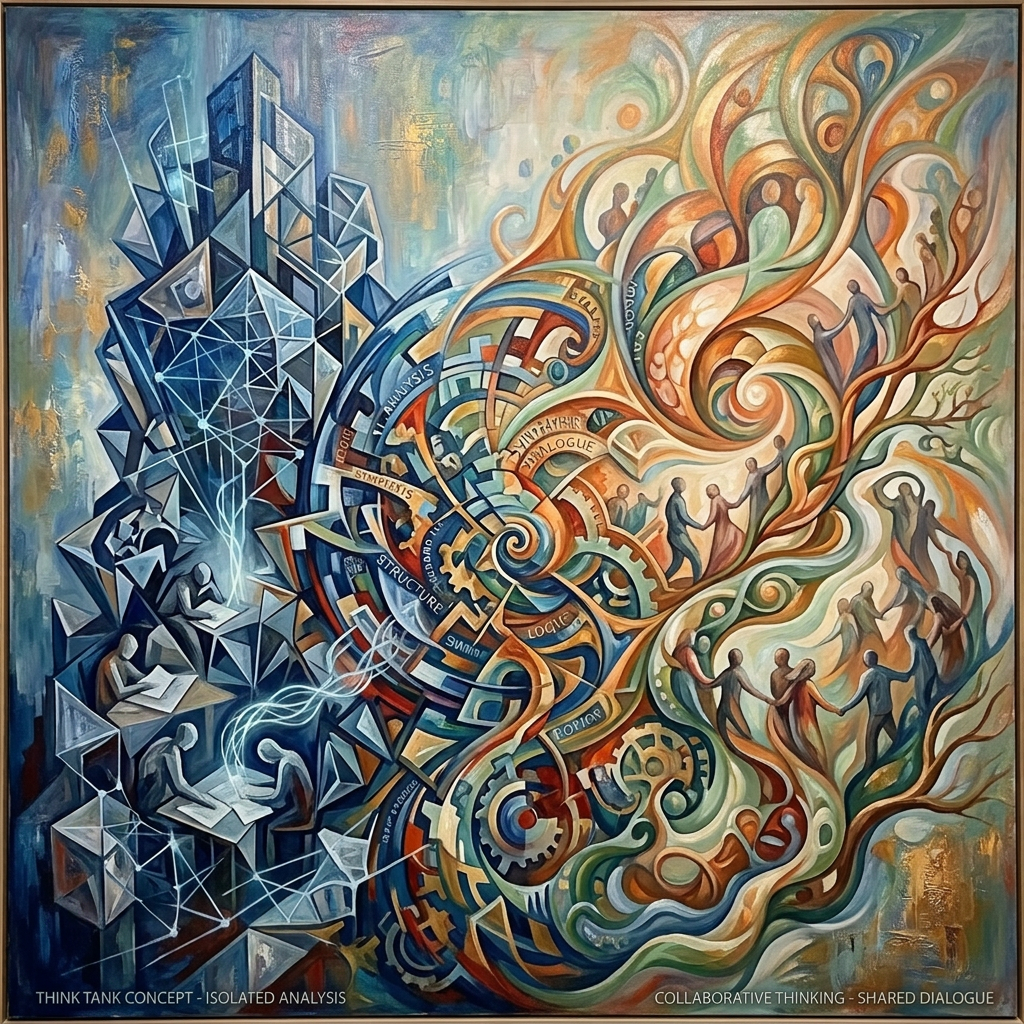




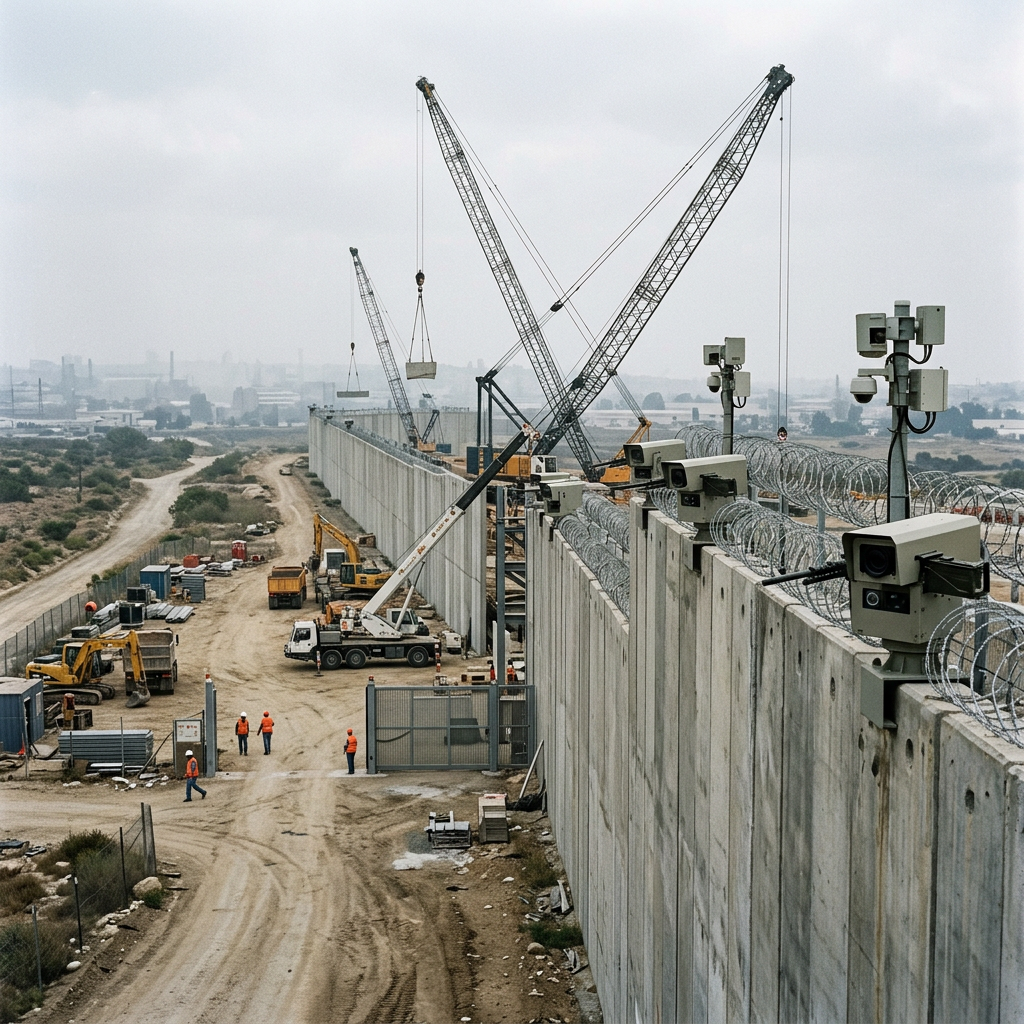
 The Patrician's Watch