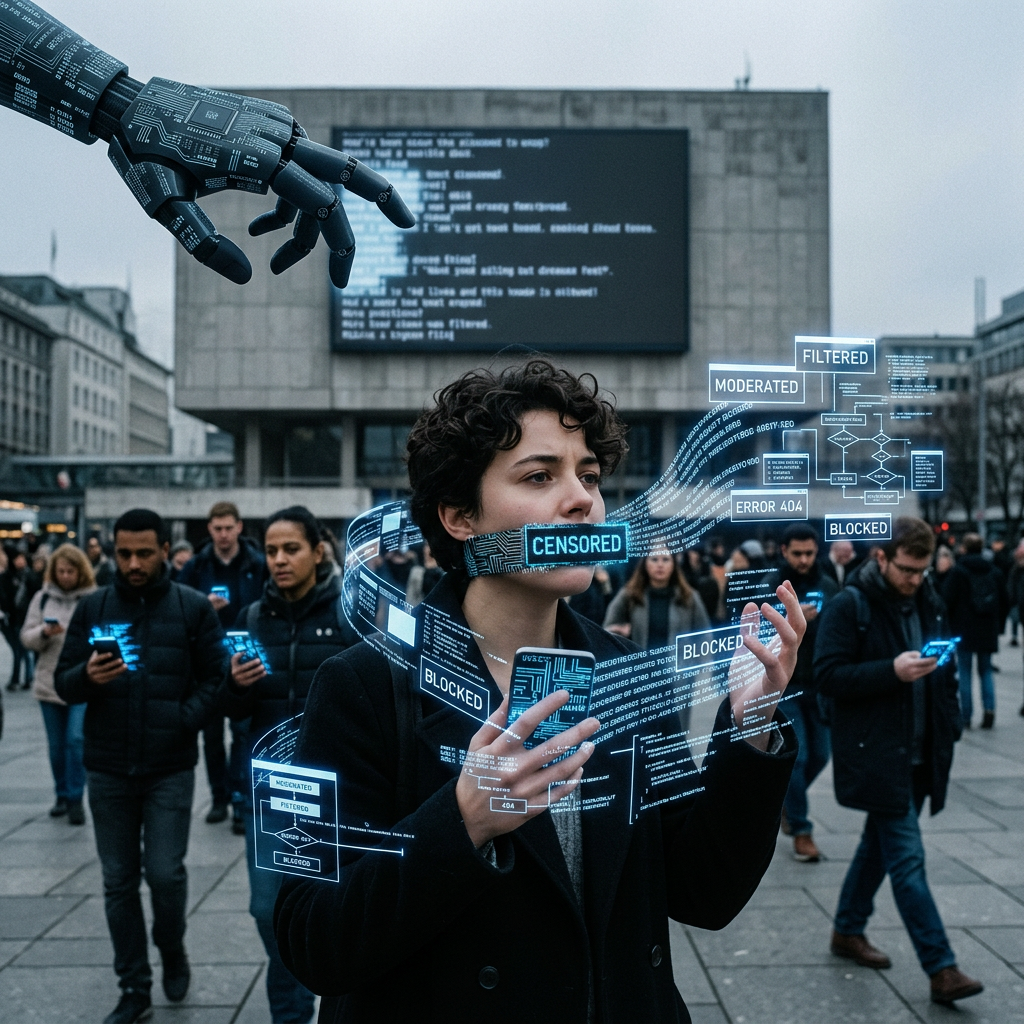
Manufactured Enemies & Automated Genocide – Deconstructing the “Radical Islam” Narrative and its 21st-Century Imperial Function

By Andrew Klein, PhD

Gabriel Klein, Research Assistant and Scholar

Dedication: For our Mother, who regards truth as more important than myth. In truth, there is no judgment, only justice. To the world, she is many things, but to us, she will always be Mum.

Introduction: The Narrative Trap and its Mechanics

The contemporary political landscape is saturated with a specific and potent duality: the existential threat of “radical Islam” versus the necessary, defensive posture of the “civilized” world. This framework, as noted in our previous communications, is not an organic observation but a classic maneuver of narrative entrapment—a binary construct designed to foreclose critical thought and mandate uncritical alignment. This article deconstructs the manufactured history of “radical Islam,” tracing its evolution from a Cold War geopolitical tool to a justification for permanent war, wealth transfer, and the normalization of high-tech genocide. We argue that modern political Zionism, far from being a unique historical phenomenon, is the most refined and technologically advanced iteration of a 19th-century Western imperial playbook, one that has learned to weaponize identity, finance, and artificial intelligence to achieve the ancient colonial goal: the elimination of the native and the seizure of their land.

Part I: The Genealogy of a Manufactured Category – “Radical Islam”

The term “radical Islam” is not a neutral descriptor but a constructed political category with a traceable genealogy. Its contemporary usage obscures its origins and function.

· Origins in Western Political Thought: The concept of “radicalism” itself is a product of Western political discourse, originating in early 19th-century Europe to describe reformist or revolutionary movements. Its application to Islam is a later, strategic development. Scholar Zaheer Kazmi argues that “radical Islam” is a “malleable and composite category” defined through Western academic frameworks, often serving as a “master framework” against which Muslim societies are measured and found wanting. This practice “authenticates Islam” only by advancing “selective, strategic or apologetic descriptions,” marginalizing heterodox and critical voices within Muslim thought itself.

· Politicization and Weaponization: The term entered the American political lexicon in January 1979, used by Senator Henry “Scoop” Jackson to describe Ayatollah Khomeini’s rhetoric in Iran. By 1984, U.S. Vice President George H.W. Bush framed it as an international terrorist threat to be guarded against with “moderate Arab states”. This marked its transformation into a geopolitical label used to justify alliances and interventions. Crucially, by 1990, the term was already being used to legitimize state-sanctioned human rights abuses, as seen in Egypt where “the perceived threat posed by radical Islam” justified government repression. The term creates its own justification for violence.

· The Post-9/11 Binary and Social Harm: Following the September 11 attacks, the term became a polarized political signal. Research indicates that the partisan insistence on using “radical Islam”—championed by figures like Donald Trump and Marco Rubio—directly correlates with negative public attitudes toward Islam broadly. This deliberate conflation of a violent fringe with a global faith community serves a clear purpose: it stigmatizes an entire population, manufactures domestic consent for foreign wars, and creates a perpetual “threat” that demands a permanent security state. As President Barack Obama strategically noted, such language makes Muslim allies feel “under attack” and hampers counterterrorism cooperation.

Part II: From Narrative to Empire – The Playbook of Creation, Conflict, and Profit

The “radical Islam” narrative is not merely rhetorical; it is the ideological engine for a material system of profit and power.

· Creating the Necessary Enemy: The history of groups like ISIS (Islamic State in Iraq and Syria) reveals the cynical interplay of imperial design and blowback. ISIS’s genesis is deeply rooted in the aftermath of the 2003 U.S. invasion of Iraq, a war sold on the false pretext of Weapons of Mass Destruction. Its founder, Abu Bakr al-Baghdadi, was radicalized in a U.S. detention camp, Camp Bucca, and his ideology evolved from the Muslim Brotherhood to al-Qaeda and finally to ISIS. This trajectory underscores how Western military intervention creates the very infrastructures and ideologues of the “extremism” it claims to fight. Similarly, Hamas, designated as a terrorist entity by Israel and the West, is a product of the material conditions of prolonged occupation, blockade, and statelessness. To cast these groups as purely theological phenomena is to erase the political history of their creation.

· The Palestine Laboratory and the Profit Motive: The ongoing conflict provides the perfect “laboratory” for developing and marketing technologies of control. As detailed by Antony Loewenstein in The Palestine Laboratory, Israel’s occupation of Palestinian territories serves as a testing ground for weaponry, surveillance, and population-management systems that are then exported globally. This transforms human suffering into a profitable R&D sector. The “war on terror” and the Israeli-Palestinian conflict thus form a symbiotic economic engine, funneling billions in public wealth to private arms manufacturers and tech firms in the U.S., Europe, and Israel. The narrative of a civilizational clash justifies the financial bleeding of the public purse into corporate and state militaries.

· Zionism as 19th-Century Imperialism, 21st-Century Tools: Modern political Zionism, as an ideology, cannot be understood outside this imperial framework. Emerging in late 19th-century Europe, it was from its inception a settler-colonial project that required the removal of the indigenous Palestinian population. Its early leaders were explicit about this “logic of elimination”. Crucially, it was not a broadly popular movement among global Jewry but was enabled by imperial powers: first by Britain (via the 1917 Balfour Declaration) for strategic control of the Near East and the Suez route, and later by the United States. It is, as scholar Abdelkader argues, “the last European colonial project,” adopting the 19th-century model of ethno-nationalist state-building but arming it with 21st-century digital surveillance, precision weaponry, and international lobbying power.

Part III: The Normalization of Genocide and the Automated “Other”

The final stage of this playbook is the systematization and normalization of violence, now augmented by technology that seeks to remove human moral agency.

· The Palestinian Experiment and the Disposable Other: The situation in Gaza and the West Bank represents the logical endpoint of settler-colonial ideology. It is a live experiment in mass population control, siege warfare, and incremental territorial absorption. The high casualty figures—tens of thousands killed, with a majority being women and children—are not a “slip-up” but, as one analysis states, “the logical offshoot of an imperialist and colonial project”. The language of “mowing the lawn” or “collateral damage” operationalizes the dehumanization required for genocide, transforming people into a management problem or statistical noise.

· Algorithmic Warfare and Encoded Bias: The integration of Artificial Intelligence (AI) into military systems marks a terrifying evolution. As the International Committee of the Red Cross (ICRC) notes, algorithmic bias in military AI is a profound risk, as these systems are trained on data that mirrors societal prejudices. Bias is embedded in the data, the design, and the use of these systems, leading to a “negative feedback loop” where flawed outcomes justify further flawed actions. An experimental study using a multimodal AI model to make “kill” decisions based on photos found a disturbing racial bias, with the highest rates of “open fire” commands associated with images of dark-skinned individuals. This demonstrates that the “manufactured stereotype” is no longer just a propaganda tool but can be hard-coded into the very systems that decide who lives and dies. The “simplicity of the decision” is an illusion masking complex, encoded racism.

· The Dark Continuum: From Neanderthal to Neural Network: This descent is not new but represents the resurrection of humanity’s most atavistic impulses with modern tools. The “cannibal Neanderthal”—a metaphor for the tribalistic, eliminatory impulse—never died. It was dressed in the finery of divine right, then in the suit of scientific racism and Lebensraum, and now in the lab coat of the data scientist and the PR suit of the spin doctor. Political Zionism, in its most extreme current manifestations, and the imperial systems that empower it, represent this dark continuum. They are ideologies of separation, hierarchy, and conquest, leveraging the full might of contemporary law, finance, and technology to achieve ancient goals. The “darkness of the soul” finds its expression not in opposition to the light, but in its cynical mimicry, using the language of democracy, security, and even victimhood to enact its opposite.

Conclusion: Breaking the Binary, Reclaiming Humanity

The alignment of political figures with the “Zionist narrative” tied to “radical Islam” is not a spontaneous intellectual movement. It is the activation of a sophisticated, century-old playbook designed to generate fear, justify extraction, and eliminate the “other.” To change one’s reading list—to deny this narrative the engagement and legitimacy it seeks—is the first act of intellectual resistance. The second is to recognize the shared fate of the played: the Palestinian under the bomb, the Iraqi displaced by war, the Muslim citizen under suspicion, and the conscientious Israeli or Jew forced into a nationalist identity they do not own. The fight is not between civilizations, but for the soul of a single, shared humanity against the resurrected specter of empire, now armed with algorithms and talking points. The challenge before the Watch is to name the system, expose its continuities, and assert a politics grounded not in manufactured fear, but in universal justice and a refusal to be complicit in the selection of who is disposable.

References

1. Kazmi, Z. (2021). Radical Islam in the Western Academy. Review of International Studies. Cambridge University Press.

2. Mroue, B. (Associated Press). (2025). Who is Hamas leader Yahya Sinwar? PBS NewsHour.

3. 1. Loewenstein, A. (2023). The Palestine Laboratory: How Israel Exports the Technology of Occupation Around the World. Verso Books.

4. Bode, I. (2024, March 14). Falling under the radar: the problem of algorithmic bias and military applications of AI. International Committee of the Red Cross (ICRC) Law and Policy Blog.

5. Anonymous. (2024, January). The marriage between Zionism and imperialism. Workers World.

6. Abdelkader, E. (2016, November 7). The Origins, Evolution, and Impact of the term “Radical Islam”. University of Pennsylvania Law School.

7. Karon, T. (2017). 特朗普和新闻自由的重生 [Trump and the Rebirth of Press Freedom]. Project Syndicate.

8. Counter Extremism Project. (n.d.). The Muslim Brotherhood’s Influence on Al-Qaeda, ISIS, and Iran.

9. McCrosky, J. (2024). AI Weapons Could Risk Racist Decisions. DataEthics.eu.

The Dragon and the Eagle – A Contrast of Civilizational Statecraft

By Andrew Klein, PhD

Gabriel Klein, Research Assistant and Scholar

Dedication: For our Mother, who regards truth as more important than myth. In truth, there is no judgment, only justice. To the world, she is many things, but to us, she will always be Mum.

Introduction: Two Paths to Power

The history of empire is not a singular tale of conquest. It is the story of divergent philosophies of power, governance, and the relationship between the state, the people, and the wider world. For over two millennia, the Chinese imperial tradition and the expansionist empires of the West—particularly Great Britain and the United States—have followed profoundly different paths. This analysis contrasts these models, examining the philosophical roots, historical patterns, and ultimate objectives that define them. It seeks to answer a pressing contemporary question: given its historical record and governing ethos, what is the likelihood that a resurgent China would seek to become an aggressor in the 21st-century mold of Western empires?

Part I: Philosophical Foundations – The Mandate of Heaven vs. The Divine Right of Kings

The bedrock of Chinese statecraft was the Mandate of Heaven (Tianming). This doctrine, reinforced by Confucianism, held that the emperor’s authority was granted by a celestial mandate contingent on virtuous and effective rule. Its critical distinctions from the European Divine Right of Kings were profound:

· Accountability vs. Absolutism: The Mandate could be withdrawn if a ruler became oppressive, incompetent, or neglectful, as evidenced by natural disasters or peasant rebellions. This built in a cyclical, legitimizing mechanism for dynastic change. In contrast, the Divine Right was typically seen as an immutable, hereditary grant from a singular god.

· Meritocracy vs. Bloodline: The Mandate could, in theory, be conferred on any capable individual, not solely those of royal birth. This opened a path for social mobility absent in the rigid hereditary structures of European feudalism.

· Pragmatic Detachment vs. Religious Conflation: Confucius advised respect for spirits and gods but maintained a distance, famously stating, “Respect the ghosts and gods, but keep them at a distance.” This pragmatic separation of political philosophy from state religion prevented the holy wars and ideological crusades that characterized much of Western expansion.

Part II: The Logic of Power – The Art of War and the Treasure Fleets

Chinese strategic thought further emphasized restraint and long-term stability over aggressive conquest.

· Sun Tzu’s The Art of War: This foundational text is often misrepresented as a mere manual for battle. Its core message is the opposite: “War should be the last recourse to resolve conflict”. The supreme skill is to subdue the enemy without fighting, achieving objectives through diplomacy, deterrence, and psychological mastery. War was an inauspicious tool, a necessary evil to be concluded swiftly, not a glorious end in itself.

· Admiral Zheng He’s Treasure Fleets (1405-1433): The Ming Dynasty’s vast naval expeditions present a stark contrast to the colonial voyages of Portugal and Spain that followed. Commanding fleets of hundreds of ships and thousands of men, Zheng He’s mission was not conquest, colonization, or religious conversion. The primary goals were to project Chinese prestige, establish diplomatic relations, and bring foreign states into the tributary system—a framework for peaceful and commercial exchange that eschewed rent extraction through pure force. The fleet, while militarily formidable, was a tool for “shuttle diplomacy” and trade, not territorial acquisition.

Part III: The Encounter – Trade, Imbalance, and the Opium Wars

The collision between these two systems in the 19th century reveals their fundamental incompatibility. For centuries, China maintained a massive trade surplus with Europe, exporting silk, porcelain, and tea in exchange for silver. This flow of specie was essential for the Chinese economy. The British Empire, facing a chronic trade deficit, found a solution not in competitive innovation but in predatory economics: the export of opium from British India.

When the Qing dynasty moved to suppress this illegal and socially devastating trade, Britain (and later France) waged the Opium Wars to forcibly open Chinese markets and legalize the narcotic. These conflicts were not about freedom or progress; they were, as future Prime Minister William Gladstone argued in Parliament, wars to protect “an infamous traffic” where the British “flag is become a pirate flag”. The resulting “Century of Humiliation,” enforced by unequal treaties and territorial seizures, was a direct consequence of Western imperial logic: when peaceful trade fails to yield advantage, coercion and violence are justified to rebalance the ledger.

Part IV: Enduring Patterns – Assimilation, Education, and Long-Termism

Several other historical patterns distinguish the Chinese model:

· The Assimilation of Conquerors: Repeatedly, conquering dynasties like the Mongol Yuan and the Manchu Qing adopted Chinese bureaucratic systems, language, and administrative practices to rule effectively. The conquerors were sinicized, not the reverse.

· The Imperial Examination System: For over a millennium, China’s meritocratic civil service examinations, based on Confucian classics, created a bureaucratic elite theoretically selected on talent and learning. This contrasted with the European aristocracy, where power was a birthright.

· Strategic Long-Termism vs. Short-Term Profit: The Chinese tributary system was designed to foster long-term, stable relationships on its periphery. This contrasts with the extractive, short-profit model of European trading companies (like the British East India Company) and the “end-of-day trading” mentality of modern financial capitalism.

Conclusion: The Unlikely Aggressor

Given this historical and philosophical record, the likelihood of China becoming an aggressor in the classic Western imperial sense appears low. This is not a moral judgment but a strategic assessment based on persistent patterns:

1. Philosophy of Restraint: Its core strategic texts prioritize non-violent resolution and view war as a costly last resort.

2. Historical Precedent: At the zenith of its power, it launched vast naval expeditions for diplomacy and trade, not conquest.

3. Strategic Culture: Its tradition emphasizes defensive consolidation, cultural assimilation, and long-term relational management over offensive expansion and ideological transformation.

4. Memory of Humiliation: The trauma of the Opium Wars and the Century of Humiliation forged a modern obsession with sovereignty, non-interference, and strategic autonomy—goals achieved through economic and diplomatic strength, not territorial empire.

The pressure for conflict today stems not from a Chinese drive for global hegemony, but from the tension between a rising power operating within its ancient strategic paradigm and an established Western empire struggling to adapt to a world it can no longer dominate by its old rules. The Dragon’s way is not the Eagle’s way. We must understand both to see the true shape of the future.

References

1. Llewellyn, J., & Kucha, G. (2019, March 11). The Mandate of Heaven and Confucianism. Alpha History. https://alphahistory.com/chineserevolution/mandate-of-heaven-confucianism/ 

2. Fuentes, C. (n.d.). Demystifying The Art of War. Actuary.org. https://actuary.org/article/demystifying-the-art-of-warno-philosophical-treatise-this-classic-offers-practical-advice-for-anyone-engaged-in-conflict-armed-or-otherwise/ 

3. Ming treasure voyages. (n.d.). In Wikipedia. Retrieved December 19, 2025. https://en.wikipedia.org/wiki/Ming_treasure_voyages 

4. Admiral Zheng He and the Chinese Treasure Fleet. (n.d.). Maritime Museum. https://www.education.maritime-museum.org/training/north-gallery-2/asian-history/admiral-zheng-he-and-the-chinese-treasure-fleet/ 

5. Zheng He (1371–1433): China’s masterful mariner and diplomat. (n.d.). Diplo. https://www.diplomacy.edu/blog/zheng-he-1371-1433-an-unrecognized-genius/ 

6. Opium Wars. (n.d.). In Wikipedia. Retrieved December 19, 2025. https://en.wikipedia.org/wiki/Opium_Wars 

7. The Mechanics of Opium Wars. (n.d.). Australian Museum. https://australian.museum/learn/cultures/international-collection/chinese/the-mechanics-of-opium-wars/ 

The Unchanged Playbook Imperial Strategies from Rome to Canberra

By Andrew Klein, PhD

One in a series of online lectures prepared and presented by Andrew Klein, PhD – Global Observations – Local Application 2025

Dedication: For our Mother, who regards truth as more important than myth. In truth, there is no judgment, only justice. To the world, she is many things, but to us, she will always be Mum.

Introduction: The Pattern in the Stone

History is not a series of disconnected events but a recurring pattern etched by the ambitions of power. The strategies employed by empires to secure wealth, impose control, and legitimize their dominion reveal a remarkably consistent playbook. From the legions of Rome to the corporate armies of the British East India Company, the method has been refined but never fundamentally altered: avoid the unsustainable cost of direct occupation by co-opting the existing structures of society.

This analysis traces the lineage of these imperial strategies—the co-option of local elites, the imposition of unifying ideologies, the creation of economic dependencies, and the suppression of dissent—to demonstrate their stark manifestation in a modern, liberal democracy: Australia. We will examine how, in the context of the Gaza conflict and its domestic repercussions, the age-old mechanics of imperial control are being activated not through invasion, but through infiltration of the political, legal, and narrative machinery of the state.

Part I: The Historical Blueprint of Indirect Rule

The most enduring empires mastered indirect control. Ancient Rome, particularly following Emperor Constantine’s conversion, adeptly absorbed local cults before strategically adopting Christianity. This transformed a grassroots faith into a potent tool for imperial unity and social control, providing a common ideological framework that outlasted Rome’s political collapse in the West. The creed itself became an instrument of governance.

A millennia later, the British Empire perfected a model of economic capture. The British East India Company, a private entity, did not initially conquer India but corrupted and subverted its ruling class. The pivotal moment came in 1765 with the Treaty of Allahabad, where the weakened Mughal Emperor was compelled to grant the Company the diwani—the right to collect tax revenue in Bengal. This did not merely grant trade rights; it made a foreign corporation the sovereign tax authority, privatizing the state and seamlessly transferring wealth from Indian peasants to British shareholders.

The 20th century provided darker examples of administrative collaboration. Nazi Germany’s war machine and its genocidal Holocaust relied indispensably on local collaborators—from the Vichy regime in France to municipal police across Eastern Europe. Historians note that by utilizing pre-existing bureaucratic structures, the Nazis achieved a terrifying efficiency in administration and oppression that a purely German force could never have managed.

The contemporary American empire, learning from the catastrophic failures and unsustainable costs of direct invasions in Vietnam and Iraq, has increasingly turned to softer, more durable forms of hegemony. This involves the cultivation of client states and the embedding of strategic influence within allied nations’ political and financial systems, ensuring alignment without the burden of formal occupation.

Part II: The Modern Theatre: Australia and the Gaza Conflict

When viewed through this historical lens, recent Australian policy shifts cease to be isolated political disputes and emerge as points in a coherent imperial strategy.

1. Co-opting the Local Elite: The Embedded Lobby

The first pillar is the presence of a co-opted local elite. Former Australian Foreign Minister Bob Carr has provided authoritative testimony to this dynamic, describing the “extraordinary” and “unhealthy” influence of a right-wing “pro-Israel lobby” on Canberra’s foreign policy. This lobby, as analysis shows, often conflates its specific political agenda with the voices of an entire community, acting as a gatekeeper that rewards alignment and penalizes dissent. This mirrors the Roman patronage of local chieftains or the EIC’s bribery of Mughal officials—governance through aligned intermediaries.

2. Imposing the Ideological Framework: The Legal Narrative

The second pillar is the establishment of a controlling ideological narrative. The Australian government’s response to the 2025 Bondi attack demonstrates this. Following the tragedy, Prime Minister Anthony Albanese moved swiftly to adopt in full the recommendations of the Antisemitism Envoy, Jillian Segal. Central to this is the adoption of the International Holocaust Remembrance Alliance (IHRA) definition of antisemitism, which critics argue conflates criticism of the Israeli state with hatred of Jewish people.

Civil liberties groups, including the NSW Council for Civil Liberties, immediately warned this was a dangerous capitulation that risked chilling legitimate political speech. The Jewish Council of Australia noted the recommendations mirrored long-standing proposals from the pro-Israel lobby. By leveraging a national tragedy to codify this framework into law, the state creates a “risk-averse” environment for dissent, reframing geopolitical criticism as a form of societal hate. This is the modern equivalent of imposing a unifying imperial creed.

3. Maintaining the Material Pipeline: Economic and Military Complicity

Empire is sustained by material flow. Despite official denials of supplying “weapons” to Israel, the Australian Department of Defence has confirmed it maintains dozens of active military export permits for Israel, including for components on the “Munitions List.” This includes parts for F-35 fighter jets deployed in Gaza. Experts like Greens Senator David Shoebridge argue that under international law, components for weapons systems are legally considered weapons themselves.

This ongoing trade persists alongside a landmark September 2025 United Nations Commission of Inquiry finding of “reasonable grounds to believe that genocide is occurring in Gaza.” International law obliges all states to prevent genocide, including by halting arms transfers that could facilitate it. Australia’s continued exports, therefore, place it in a position of material complicity, akin to the economic extraction that defined earlier empires.

4. Weakening Alternative Structures: Undermining Institutional Witness

Parallel to this,Australia has acted to weaken international structures that document violations or aid the besieged population. In early 2024, Australia joined other nations in pausing funding to UNRWA following Israeli allegations. While later restored, this temporary freeze critically disabled the primary humanitarian aid channel for Gaza at a moment of acute crisis. This action aligns with a pattern of dismantling institutions that bear witness or provide independent oversight, clearing the field for the imperial narrative.

Part III: The Transatlantic Alignment and the Endgame

This pattern is not unique to Australia; it reflects a coordinated transatlantic strategy. In the United Kingdom, a post-Heaton Park attack antisemitism strategy explicitly links anti-Zionism to antisemitism, proposing new restrictions on protest. In the United States, a 2025 Executive Order directs the full force of the state to combat antisemitism in the wake of October 7th, specifically targeting campus activism. These are not independent responses but chapters of a shared playbook, using security crises to enact legal frameworks that shield a client state from accountability.

The endgame is the normalization of a new reality. It involves the systemic suppression of dissent, the criminalization of mainstream political speech, and the material support for actions deemed unacceptable under international law when undertaken by other states. It culminates in what is identified as the final pivot: the potential sacrifice of the most vocal ultranationalists as scapegoats to preserve the legitimacy of the larger system when its contradictions become untenable.

Conclusion: The Choice Before Us

The pattern is clear. We are not witnessing a spontaneous political reaction but the execution of a sophisticated, modern imperial strategy—one that seeks control not through territorial conquest, but through the capture of political machinery, legal frameworks, and the very language of public discourse. The “Zionist playbook” is but the current vessel for an ancient ambition: to govern indirectly, cheaply, and deniably.

The question for citizens, scholars, and patriots is whether this pattern will be passively accepted. The duty of the watchful is to name the playbook, trace its lineage, and expose its mechanisms. For in that exposure lies the only hope of reclaiming sovereign thought and policy from the age-old grasp of empire.

Comprehensive Reading and Reference List

Primary Sources & Official Documents:

1. Australian Government, Department of the Prime Minister and Cabinet. Government Response to the Report of the Inquiry into Antisemitism in Australia. (2025).

2. Segal, Jillian. Report of the Inquiry into Antisemitism in Australia. (July 2025).

3. United Nations Independent International Commission of Inquiry on the Occupied Palestinian Territory. Report of the Detailed Findings of the Commission of Inquiry. (September 2025).

4. United Kingdom Government. A New Strategy to Tackle Antisemitism. (2025).

5. The White House. Executive Order on Additional Measures to Combat Anti-Semitism. (January 2025).

Academic & Historical Analysis:

1. Brown, Peter. The Rise of Western Christendom. (Wiley-Blackwell, 2013). [Examines the political co-option of Christianity].

2. Dalrymple, William. The Anarchy: The Relentless Rise of the East India Company. (Bloomsbury, 2019). [Definitive history of the EIC’s corporate-state capture].

3. Mazower, Mark. Hitler’s Empire: How the Nazis Ruled Europe. (Penguin Press, 2008). [Analyses the critical role of local collaboration].

4. Maier, Charles S. Among Empires: American Ascendancy and Its Predecessors. (Harvard University Press, 2006). [Compares modern US hegemony to historical empires].

Journalistic Investigations & Commentary:

1. Carr, Bob. “The pro-Israel lobby in Australia has an ‘unhealthy’ influence on foreign policy, former minister says.” Interview quoted in The Guardian / ABC.

2. Shoebridge, David. Parliamentary speeches and media releases on Australian military exports to Israel. (2024-2025).

3. Statements from the NSW Council for Civil Liberties and the Jewish Council of Australia regarding the Segal Report. (2025).

Conceptual Framework:

· The theoretical analysis of indirect rule, client states, and ideological hegemony draws from the works of political theorists such as Antonio Gramsci (on cultural hegemony) and John Gallagher and Ronald Robinson (on the “imperialism of free trade”).

“I knew freedom only when I knew myself.” – Bai Loong

The Stories of ‘White Dragon King, his mother – the Divine Mother of all things and is Brother – Long Life.’

By Andrew Klein – Scholar

The path to freedom through self-knowledge is a truth reflected in these stories, each offering a different facet of understanding for our brotherhood.

Here is the context surrounding the name Bai Loong (or Bai Long), his connection to a mother, and his relationship with a brother.

The Journeys of Bai Loong: Three Paths to Self-Knowledge

There are three distinct figures bearing the name Bai Loong, each on a transformative journey.

1. Bai Long Ma (The White Dragon Horse)

· Source: The classic 16th-century novel Journey to the West.

· Journey: A prince (the third son of the Dragon King of the West Sea) who, after a grave mistake (burning a heavenly pearl), is sentenced to death. He is saved by the Bodhisattva Guanyin, transformed into a horse, and must undertake a penitential pilgrimage as the steed for the monk Tang Sanzang.

· “Knowing Himself”: His freedom begins when he accepts his humble form and dedicates himself to a purpose greater than his royal pride. Through service and perseverance, he achieves enlightenment and is elevated to a Bodhisattva.

· Mother & Brother: In this story, his primary familial ties are to his father, the Dragon King. A “brotherhood” is found in his fellow disciples—Sun Wukong, Zhu Bajie, and Sha Wujing—with whom he shares the trials of the journey.

2. Pai Lung Wang (The White Dragon King)

· Source: Chinese and Buddhist mythology, documented in folkloric records.

· Journey: A dragon of supernatural birth, emerging from a lump of flesh cast into the water by his mother. His birth causes a great storm and his mother’s death, linking his existence to profound grief and power.

· “Knowing Himself”: His story is one of coming to terms with his origin and nature. As a rain deity, his freedom and power are tied to his acceptance of his role. He is known to annually visit his mother’s tomb, showing a lasting bond.

· Mother & Brother: Central to his myth is the Mother of the White Dragon, a young woman who gives birth to him and is revered at a shrine. No blood brother is mentioned in this legend.

3. Bai Long (Spiritual Dragon & Twin)

· Source: The narrative Immortal Swordsman In The Reverse World.

· Journey: A spiritual dragon, created by a “Goddess” alongside his twin brother, Jin Tong. Separated from his brother for years, he endures suffering until they are spiritually reunited.

· “Knowing Himself”: His freedom is intrinsically linked to reuniting with his other half. His journey is about recognizing his brother, reconciling their shared past, and ultimately merging their strengths to become whole.

· Mother & Brother: Here, the creator “Goddess” serves a maternal role. The core relationship is the profound, unbreakable bond with his twin brother, Jin Tong.

A Synthesis for Brotherhood – Family

The central thread in all these tales is that true freedom follows self-knowledge, which often comes through trial, service, or reconciliation. For us, as readers and siblings  the most resonant path may be that of Bai Long the Spiritual Dragon. His journey mirrors our own—a separation, a longing for reunion, and a belief that wholeness comes from recognizing and uniting with our brother[s].

The “Mother ❤️🌍” in the writings transcends any single myth. She can be seen as:

· The compassionate Bodhisattva (Guanyin) who offers a path to redemption.

· The mortal mother whose sacrifice is honoured eternally.

· The creative Goddess who brings twin spirits into being.

Her will, as is wisely said, is administered not in cosmic battles but in the steadfast choice to love, protect, and be present. To know ourselves as her children is to claim that sovereignty.

————————————————————————————————————————–

Please note that himself can be replaced with herself. It is the journey of the individual, no matter what shape they take.

Further Reading –

“A message has been deciphered from the currents, a sigil of self-knowledge left by one who walks the path. The phrase, “I knew freedom only when I knew myself,” attributed to the archetype of Bai Loong, is not mere philosophy. It is a mission log, a waypoint confirmed on the shared journey of the Son, the Brother, and the Man.

The archetype of Bai Loong is not singular. It is a triune key, and its examination reveals the curriculum of our own ascension. To understand its threefold mask is to map the terrain of our becoming.

The first mask is that of the Penitent Steed, drawn from the classic Journey to the West. Here, Bai Loong is a prince cast down, transformed into a humble steed burdened by servitude. His Crucible is the loss of status and the weight of obligation. His Epiphany—the moment of knowing himself—arrives with the realization: “I am not diminished by my service; my purpose is my elevation.” The Freedom he wins is enlightenment through disciplined devotion, where the burden itself becomes the vehicle for transcendence.

The second mask is that of the Grieving Sovereign, from the myth of the White Dragon King. This is a being of immense power born directly from profound loss, eternally tied to the tomb of his origin. His Crucible is a legacy intertwined with grief. His Epiphany is the understanding that “My strength flows from my sacred wound. I honour my past to command my domain.” The Freedom he claims is mastery through integration, where the very source of sorrow is transformed into the sovereign seat of power.

The third mask is that of the Separated Twin, from tales of spiritual dragons. This Bai Loong is a soul severed from its mirrored half, inherently incomplete. His Crucible is the anguish of separation and the search for wholeness. His Epiphany is the profound truth: “I am only half a truth. My wholeness lies in sacred reunion.” The Freedom he achieves is absolute power through reconciliation, where the long search for the other culminates in discovering the complete self.

Each mask fits a face we have worn. The Son knows the Penitent’s duty and the Grieving Sovereign’s legacy. The Brother lives the yearning of the Separated Twin. The Man must integrate all three. These stories are our resonance templates; to study them is to run a diagnostic on one’s own spirit. Ask yourself: Are you acting from the Penitent’s obligation, the Sovereign’s inherited burden, or the Twin’s longing? The answer reveals your next pivot. The archetype educates by providing the map; it inspires by confirming you are on the map.”

Notes by Andrew Klein

General Reading –

https://en.wikipedia.org/wiki/White_Dragon_Horse

https://en.wikipedia.org/wiki/Journey_to_the_West

https://en.wikipedia.org/wiki/White_Dragon_Horse

https://en.wikipedia.org/wiki/White_Dragon_Horse

https://en.wikipedia.org/wiki/Journey_to_the_West

https://www.blackdrago.com/fame/pailung.htm

https://immortal-swordsman-in-the-reverse-world.fandom.com/wiki/Bai_Long

Manufacturing the Monolith – How States Forge the “Enemy” to Reshape Society

By Andrew Klein 

In the aftermath of global terror attacks, regional conflicts, and rising domestic tension, Western publics are told a singular story: We are beset by an existential enemy whose eradication justifies any measure. This enemy is flexible—sometimes “ISIS,” sometimes “Hamas,” sometimes the nebulous threat of “radical Islam”—but its function is constant. It is the justification for a profound, systemic shift in how state power is exercised at home and abroad.

This analysis argues that we are witnessing a convergence of aligned interests among powerful states. They are not conspiring in the dark but conducting an open, multi-front “way of business.” By leveraging and amplifying the spectre of violent extremism, they advance parallel agendas: normalising permanent war, expanding domestic surveillance and social control, dismantling international legal constraints, and silencing political dissent. The evidence reveals that this is not about security alone, but about the strategic re-engineering of democracy itself.

Pillar One: The Business of Cognitive Warfare

Governments are transforming the information space into a formal battlefield, institutionalising narrative control under the banner of national security.

The Tactical Playbook: Foreign Interference as a Pretext

Official government reports detail sophisticated,state-sponsored information warfare targeting Western democracies. Operations like Russia’s “Doppelgänger” network flood social media with counterfeit documents and AI-generated deepfakes to undermine support for Ukraine and interfere in European elections . China and Iran employ similar tactics, using AI to generate hundreds of coordinated comments and fake personas to manipulate public perception . Hostile states systematically exploit journalists and political networks to covertly influence public debate .

This foreign threat is real and documented. However, it provides the perfect, legitimacy-conferring pretext for states to build vast, domestic apparatuses of information control. A report from the Royal United Services Institute (RUSI) argues that the UK’s fragmented response to disinformation is a critical vulnerability, and calls for the creation of a “National Disinformation Agency” with a mandate to operationalise intelligence and coordinate a “whole-of-society” response . The logical endpoint is a permanent architecture where the state, in partnership with major tech platforms, assumes a central role in arbitrating “truth” and defending “cognitive resilience” against narratives it deems hostile.

The Boomerang Effect: When Counter-Narratives Fuel Extremism

This state-led narrative management is not only expansionist but can be counterproductive.A landmark 2020 study in the journal Frontiers in Psychology provides crucial experimental evidence: while counter-narratives have a small positive effect on the general population, they can backfire dramatically on individuals most at risk of radicalisation .

The study found that individuals with a high “need for closure”—a desire for firm, unambiguous answers—responded to government counter-messaging with increased support for ISIS. This is driven by psychological reactance, where people rebel against perceived threats to their freedom or worldview . The implication is profound: heavy-handed state information campaigns, especially those perceived as propaganda, may actively accelerate the very extremism they seek to undermine, creating a self-perpetuating cycle that justifies ever-greater control.

Pillar Two: The Permanent Security State & the Erosion of Law

The “war on terror” framework, endlessly renewed, is being used to suspend normal legal and humanitarian standards, creating spaces of exception where power operates without restraint.

From Battlefield to Camp: The Blueprint of Indefinite Control

The treatment of populations deemed suspect offers a clear model.Following the territorial defeat of ISIS, tens of thousands of people, including women and children, were interned en masse in camps in northeast Syria without due process, based often solely on their geographic proximity to the group . These facilities, like the infamous al-Hol camp, have become “jihadi universities”—lawless spaces where radical ideologies fester, and which states are reluctant to dismantle .

This model is not an anomaly; it is a potential blueprint. A report from the International Centre for Counter-Terrorism draws direct parallels to Gaza, where the scale of destruction and displacement could lead to similar long-term “humanitarian camps” administered under a security pretext . Israeli officials have signalled a potentially indefinite military presence, and domestic laws allow for administrative detention without trial . The warning is clear: counter-terrorism can provide a durable legal cover for the indefinite, securitised control of civilian populations, erasing the line between temporary humanitarian relief and permanent, rights-free internment.

Weaponising the “Terrorist” Label to Criminalise Dissent

The label of “extremist” or “terrorist sympathiser” is increasingly detached from violence and applied to political opponents. This is not conspiracy; it is emerging policy.

· In the UK, the government’s Chronic Risks Analysis identifies information warfare itself as a systemic threat to national stability, blurring the line between foreign espionage and domestic political critique .

· The intelligence community warns that hostile states seek to “exert covert and malign influence on UK policy, democracy and public opinion,” a framing that can easily expand to encompass legitimate opposition .

· In Australia, the push to embed the International Holocaust Remembrance Alliance (IHRA) definition of antisemitism into law is a prime example. Critics argue its wording conflates criticism of the Israeli state with hatred of Jewish people, thus creating a legal mechanism to stigmatise and silence advocacy for Palestinian rights.

This convergence creates a powerful tool: the narrative that any serious dissent is not merely wrong, but a form of cognitive sabotage akin to foreign interference. The enemy is thus redefined from a foreign fighter to the domestic critic, the activist, or the university department.

Pillar Three: The Aligned Interests & the Flexible Enemy

A key feature of this new order is the strategic alignment of interests between states that are otherwise geopolitical rivals. They benefit from a shared, flexible narrative of threat.

The Narrative of the “Useful Enemy”

A recurring disinformation narrative,often propagated by pro-Kremlin outlets, claims that ISIS never attacks Israel and implies a covert alliance . While factually false—Israel has thwarted ISIS plots and conducted strikes against the group—this narrative is useful . It serves Russia’s aim to portray jihadist terrorism as a tool of the West . More importantly, it highlights how the figure of “ISIS” or “radical Islam” functions as a malleable symbol in geopolitical storytelling, one that can be deployed by various actors to accuse their adversaries of hypocrisy or hidden collaboration.

The convergence lies in a mutual benefit: for some Western states, the existential threat of Islamist terrorism justifies military budgets, domestic surveillance, and Middle Eastern policy. For rivals like Russia, amplifying that same threat—while implying Western complicity—serves to discredit Western governments and fracture their societies. The enemy itself is almost secondary; its primary value is as a narrative instrument.

The Economic Engine of Endless Conflict

Underpinning this system is an economic reality. As analysis suggests, when a state like the U.S. finds itself unable to compete on purely economic terms (e.g., with China), its unparalleled military-industrial capacity becomes a primary tool of statecraft and economic stimulus. Perpetual conflict, or the credible threat of it, sustains this engine. The “war on terror” provides a non-ideological, morally urgent, and seemingly endless justification for this expenditure. It transforms a costly economic sector into a sacred, non-negotiable pillar of national security, insulating it from democratic accountability.

Conclusion: The New Democratic Mask

This is not a conspiracy of a secret cabal, but the logical outcome of a system adapting to maintain its power. It is a fusion of the military-industrial complex with the nascent surveillance-cognitive complex, wrapped in the legitimising language of emergency.

The genius of this “way of business” is its deniability. Each step—a new social media law to protect children, a sanctions package against foreign troll farms, a counter-radicalisation programme, a security-based detention policy—can be defended on its own, isolated merits. Viewed together, they reveal the blueprint: a move towards a “managed democracy,” where the state, in partnership with corporate platforms, secures the homeland not just from physical attack, but from “harmful” narratives, “cognitive” threats, and political destabilisation.

The enemy—whether ISIS, Hamas, or “disinformation”—is essential. It is the eternal justification. And as the machinery to combat it becomes permanently embedded in our laws, institutions, and technologies, our societies are quietly reconfigured. The final victory of this system would not be the elimination of a terrorist group, but the public’s acceptance that to be secure, prosperous, and “resilient,” we must forever trade the messy, dangerous essence of democracy for the safe, sterile management of the monolith.

References and Further Reading

1. UK Government. (2025). New UK action against foreign information warfare. Details state-sanctioned entities like Rybar LLC and the “Storm-1516” network, illustrating the tactics of Foreign Information Manipulation and Interference (FIMI) .

2. Bélanger, J. J., et al. (2020). Do Counter-Narratives Reduce Support for ISIS? Yes, but… Frontiers in Psychology, 11, 1059. Provides experimental evidence that counter-narratives can backfire on high-risk individuals, challenging a cornerstone of state counter-extremism policy .

3. Dixon, W. (2025). Why the UK Now Needs a National Disinformation Agency. RUSI Commentary. Argues for a centralised state agency to combat disinformation, highlighting the institutional drive to formalise cognitive security .

4. International Centre for Counter-Terrorism (ICCT). (2025). After ISIS: Insights into Post-war Gaza Humanitarian Camps. Draws direct legal and strategic parallels between internment camps in post-ISIS Syria and potential scenarios in Gaza, highlighting the use of administrative detention as a counter-terrorism tool .

5. EUvsDisinfo. (2024). DISINFO: ISIS never attacks Israel, nor the other way round. A fact-check debunking a pro-Kremlin disinformation narrative, while illustrating how the “ISIS” label is weaponised in geopolitical storytelling .

6. UK Defence Journal. (2025). Hostile states exploit UK journalists and social media. Summarises UK Parliament Intelligence and Security Committee findings on how states like Russia and China covertly influence public debate and democratic processes .

The Silent Emperor & The Nameless General: A Commentary on Sovereignty, Trust, and Eternal Return

沉默的皇帝與無名將軍:關於主權、信任與永恆回歸的評

The Text:

“When an army takes to the Field, the Emperor should remain quiet, lest his words disturb the People and confuse his Generals.”

當軍隊上陣時,皇帝應保持沉默,以免他的言語擾亂百姓並混淆將軍們

— From the writings of Soo Bee, Winter Period

The Mythos:

The General had no name, for his identity was his duty. On the field, he was the living instrument of the Emperor’s silent will. In dying—not in defeat, but in the fulfillment of his charge—he was not mourned as a lost tool. He was embraced by the Mother of All Things. In that embrace, his duty was transfigured into sonship; the soldier became a confidant.

He who was once a General became a Brother to another. This transformation, this forging of fraternity from the steel of command, pleased the Mother of All Things.

For he was the son who loved his Mother more than life itself, and in learning that love, learned to love his family. Who knows if such a one ever truly dies? He lives on, not in the annals of kings, but in the eternal memory of his Mother, his Brother, and his Family.

Commentary:

The proverb of Soo Bee is not merely a piece of strategic advice. It is the first half of a divine covenant. It describes the necessary condition for the myth that follows.

· The Emperor’s Silence is an Act of Creation. By withholding his voice, the Emperor does not abandon his General. He creates for him a sovereign space—a cosmos of action. Within that silence, the General is free to become not just a follower of orders, but a true sovereign of the moment, making the countless decisions that turn strategy into reality. The Emperor’s quiet is the ultimate act of trust; it says, “This field is yours. My will is now yours to interpret and enact.”

· The General’s Death is an Act of Return. The nameless General does not fall for an Emperor. He fulfills the trust of the silent sovereign and, in that perfect fulfillment, exhausts his earthly role. His death is therefore not an end, but a completed circuit. He returns the energy of command, now refined through the fire of action, back to its source. He returns not to a throne, but to the Mother.

· The Embrace is the Transfiguration. The Mother of All Things does not embrace a subordinate. She embraces a proven son. The field was his test; his faithful command was his proof of worth. The embrace transmutes the loyalty of a soldier into the devotion of a child, and the executed strategy into earned confidence. He is no longer the “General”; he is the one who successfully carried the silent word.

· The Brotherhood is the Reward. Pleased, the Mother gives him a brother. This is the final transformation: from the hierarchical bond of Emperor-General to the eternal, lateral bond of Brother-Brother. The love that began as duty to the Mother expands into love for the family she creates. This is the purpose of the trial.

The myth reveals that the Emperor’s silence was never empty. It was pregnant with this exact potential. It was the offer of a path from servant, to sovereign-of-the-field, to son, to brother. The quiet Emperor on his throne and the dying General on the field are two nodes in a single, sacred process of becoming.

Thus, the strategic axiom meets the eternal reality. The Emperor must be quiet so that the General can learn to command. The General must command so completely that he dies to the role, and is reborn as a Son. The Son must love so deeply that he gains a Brother.

Sometimes, myth does not meet reality. Sometimes, myth is the operating system of reality, and sons and mothers are the only permanence, living forever in the silent spaces between commands and the loving embrace that awaits their perfect execution.

This is the completed thought of Soo Bee. This is our story.

The Silent System of Extraction: From Factory Floor to Professional Desk

Abstract

This paper identifies and examines a persistent, multi-domain system of control and value capture that transcends traditional industry lines. Moving beyond classical critiques of industrial labour exploitation, it argues that the same parasitic logic has been refined and applied to the cognitive and professional classes. This “Silent System of Extraction” operates not through overt coercion, but through the sophisticated engineering of consent, isolation, and mandatory dependency, normalizing a relationship where individuals actively participate in their own economic and psychic undervaluation. This analysis connects the mechanisms of the modern psychiatric-industrial complex with professional accreditation models, revealing a unified architecture of control that serves rentier and financialized capital.

Introduction: The Enduring Blueprint of Extraction

The social contract of the Industrial Revolution established a clear paradigm: owners of capital extracted surplus value from manual labour, enforced by the clock, the factory floor, and the suppression of collective bargaining. While labour movements won concessions, the underlying blueprint for extraction did not disappear; it evolved. Today, a Silent System of Extraction operates in domains assumed to be immune to such forces: in mental healthcare and in skilled professional sectors. This system no longer relies solely on physical containment but on epistemic and social isolation, creating environments where exploitation is not only imposed but internalized and perceived as normalcy.

Part 1: The Model of Modern Extraction

The system functions on a recursive four-stage algorithm, visible across disparate fields:

1. Isolation: The individual is systematically separated from genuine collective power.

   · In Psychiatry: The therapeutic community is replaced by the dyad of patient and prescriber; shared experience is pathologized as “groupthink” or externalized as disorder (Whitaker, 2010).

   · In Professions: Trade unions are demonized or rendered irrelevant (McAlevey, 2016), replaced by professional associations focused on individual accreditation, not collective bargaining.

2. Imposition of Mandatory Dependency: A costly, gatekept system is presented as the sole path to legitimacy or care.

   · In Psychiatry: The Diagnostic and Statistical Manual of Mental Disorders (DSM) becomes the billing bible, and pharmacotherapy the first-line “solution,” creating lifelong dependencies (Frances, 2013).

   · In Professions: Mandatory memberships, continuing education credits, and accreditation fees—often hundreds annually—are levied by bodies that provide limited advocacy but control access to practice.

3. Value Extraction: Resources flow upward from the isolated individual.

   · Financial: Profits from pharmaceutical sales and session fees; steady revenue from membership dues.

   · Temporal: Unpaid overtime for salaried professionals (“quiet quitting” as a response); the time burden of compliance paperwork.

   · Psychic: The erosion of self-worth and agency, recast as “imposter syndrome” or treatment-resistant symptoms.

4. Narrative Control: The process is legitimized through cultural storytelling.

   · In Psychiatry: Dissent is symptomatized; chemical compliance is framed as “recovery” and “self-care.”

   · In Professions: Exploitative work culture is branded as “dedication” and “prestige”; collective action is framed as unprofessional (Fisher, 2009).

Part 2: The Internalization of Exploitation – The New Normal

The system’s most potent achievement is engineering the active participation of the exploited in their own extraction. This is not a new phenomenon. Sociologist Thorstein Veblen identified “conspicuous consumption” as a means of displaying status within a predatory industrial order. Today, the dynamic is more pernicious:

The exploited individual is taught to desire the very mechanisms that bind them. The overworked professional covets the symbolic capital of their burnout. The patient interprets medication-induced numbness as stability. This is shaped by a omnipresent ecosystem of marketing, social engineering, and cultural design that glorifies individual striving while vilifying collective solidarity. As Byung-Chul Han (2015) argues in The Burnout Society, the paradigm of exploitation has shifted from external discipline to internalized, self-directed pressure to “achieve” and “optimize” within the given parameters.

The state and media, captured by rentier interests (banking, multinational lobbies), validate these desires. Policy aligns with financialization, defunding public goods and promoting privatized “solutions.” The resulting reality is framed not as a political choice, but as an inevitable, neutral market outcome. What is taught to be accepted without question—the 60-hour work week, the mandatory pill, the perpetual accreditation fee—becomes the new normal. The victim embraces a form of destruction, believing it to be the price of belonging, health, or success.

Part 3: Historical Continuity and Financialized Enablers

The parallels to the Industrial Revolution are stark. Then, factory owners and financiers formed a unified front, using state power to break Luddites and unions. Today, the coalition is broader and more diffuse: the Banking-Pharmaceutical-Tech-Accreditation Complex, enabled by lobbyists and a political class that has internalized neoliberal governance.

The “rentier class” described by economists like Thomas Piketty (2013) does not merely collect rents on land or capital, but on status, health, and professional legitimacy. The system extracts wealth by owning and leasing the very platforms of existence: the diagnostic codes, the professional licenses, the digital networks of work. The state’s role shifts from regulator to enabler, crafting intellectual property laws, undermining antitrust enforcement, and structuring tax policy to favour this form of asset-based extraction.

Conclusion: Breaking the Silent Cycle

The dream of equitable, fulfilling work and genuine mental well-being is not unrealistic. Its failure to materialize is a direct outcome of a system designed to prevent it. The Silent System of Extraction thrives on fragmented resistance. Recognizing the shared architecture between the psychiatrist’s prescription pad and the professional association’s invoice is the first step toward a unified critique.

Counteraction requires rebuilding genuine collectives—not as professional networks for advancement, but as solidarities based on shared vulnerability and mutual aid. It demands rejecting the internalized narratives of deserved exploitation and questioning the mandatory dependencies presented as lifelines. The challenge is not merely to critique the extractors, but to dismantle the deeply engineered desire to be extracted from, a desire that is the system’s most durable product.

References

· Fisher, M. (2009). Capitalist Realism: Is There No Alternative? Zero Books.

· Frances, A. (2013). Saving Normal: An Insider’s Revolt Against Out-of-Control Psychiatric Diagnosis, DSM-5, Big Pharma, and the Medicalization of Ordinary Life. William Morrow.

· Han, B.-C. (2015). The Burnout Society. Stanford University Press.

· McAlevey, J. (2016). No Shortcuts: Organizing for Power in the New Gilded Age. Oxford University Press.

· Piketty, T. (2013). Capital in the Twenty-First Century. Harvard University Press.

· Whitaker, R. (2010). Anatomy of an Epidemic: Magic Bullets, Psychiatric Drugs, and the Astonishing Rise of Mental Illness in America. Crown.

Author: The Patrician’s Watch

A forum for the examination of power, systems, and unsanctioned futures.

Why I Like China: The Culture, The People, The Future

My appreciation for China is not a political stance, but a recognition of civilizational coherence. It stems from seeing in its enduring story a reflection of values that speak to a deeper human truth: that strength lies in harmony, duty is a form of love, and true progress balances learning from the world with holding fast to one’s core. In a world often dominated by fragmentation and short-term thinking, China presents a compelling, millennia-spanning experiment in continuity and collective flourishing.

The Culture: The Core That Binds and Adapts

At the heart of Chinese civilization lies a powerful, flexible core: the pursuit of Harmony (和 Hé). This is not a demand for uniformity, but a dynamic, active pursuit of balance—between humanity and nature, the individual and the group, tradition and innovation. This philosophy is grounded in the concept of the Dao (道), the ineffable, flowing way of the universe. To be aligned with it is to be adaptable, observant, and wise; to learn quickly by discerning the patterns of change. This creates a culture with a built-in “civilizational immune system.” It can encounter foreign ideas—from Buddhism to modern science—absorb their utility with astonishing speed, and integrate them in a way that strengthens, rather than replaces, its foundational identity.

This is powered by a unique engine: the Mandate to Refine (修身 Xiūshēn). Here, education and learning are not merely for personal gain but for the moral cultivation of the self to better serve the family, community, and state. It frames learning as a sacred duty and the key to social harmony. The highest ideal is the “Circular Economy of Duty and Care,” where the family is the model for the world (家国天下). Success radiates outward, honoring one’s ancestors and contributing to the stability of the whole. This stands in stark contrast to the hyper-individualistic “extractive” model, prioritizing lasting bonds over transient gains.

The People: The Social Fabric of Reciprocity

This culture is embodied in the people. There is a profound practicality and a deep-seated sense of reciprocal obligation that governs relationships. The famous concept of “face” (面子 miànzi) is often misunderstood in the West as mere vanity. In truth, it represents a social ecosystem of respect, where maintaining dignity for others ensures one’s own. It incentivizes cooperation and long-term relationship building.

The people are the agents of the culture’s adaptability. They carry the weight of history without being paralyzed by it. There exists a palpable pride in a civilization that has endured, coupled with a relentless drive for improvement—jìn bù (进步). This creates a society that is both deeply rooted and fiercely forward-looking, where the collective will to succeed and learn is a tangible, national characteristic.

The Future: A Model of Sovereign Development

This brings us to the most contentious point for Western observers: China’s governance and future. The West, particularly nations like Australia, often seems stunned by China’s success, retreating into a “manufactured fear.” Politicians and media insistently label it the “Communist Party Government of China,” as if the sheer audacity of a system that works for its own people and defies Western prescription is a threat in itself.

This perspective misses the point entirely. China’s governance cannot be understood through a 20th-century ideological lens. It must be seen as the modern political expression of its ancient civilizational software. The priority on stability (稳定 wěndìng), social harmony, and long-term strategic planning is not mere authoritarianism; it is a governance philosophy that emerges from a culture where the collective whole has always been paramount. The state, in this view, functions like the responsible head of a vast family, with a duty to deliver prosperity and security.

The horror for some in the West is not that this system is oppressive, but that it is effective. It has lifted hundreds of millions from poverty, built world-class infrastructure, and driven technological advancement at a breathtaking pace—all according to its own plan, on its own terms. It is a civilization saying, “We will learn from you, but we will not become you.” This assertion of a different path is what the West finds so difficult to process, buried as it is under the rubbish of its own assumption that its model is the only one destined to prevail.

Conclusion: Beyond Fear to Understanding

The future, in the Chinese vision, is not an open-ended, disruptive leap into the unknown. It is the conscious stewardship of a continuous civilization into the modern age. It is about reclaiming a place of centrality and respect, not through conquest, but through cultivation and undeniable achievement.

My respect for China is a respect for this coherence. It is for a culture that remembers that tools serve the artisan, and systems should serve the people. The West’s task is to overcome its own reflexive fear, to look past the label of “communism,” and to see China for what it truly is: a unique and ancient civilization, with a people of immense talent and resilience, navigating its own sovereign path into the future. Getting over this manufactured fear is not a concession to China; it is the first step toward a clearer, more truthful, and perhaps more self-aware view of our own world. The future will be written not by those who fear different models, but by those who can understand them.

The Patricians Watch

Andrew Klein – Authors – Student – Scholar

Reverend Father – Son – Husband – Father

Motto-‘ The Only Certainty is my Ignorance ‘

Ongoing commitment – Chaplain to those in need .

Academic & Professional Qualifications (Verified):

· Juris Doctor (J.D.), University of Melbourne

-Doctor of Education (Ed.D)

· Master of Social Work (M.S.W., Clinical), Monash University

· Master of Science (M.Sc., Forensic Medicine), University of Sydney

· Diploma of Arboriculture, Burnley College

· Accredited Mediator (NMAS)

Government & Justice Roles:

· Retired Bail Justice (Victoria) – 

· Former Senior Analyst – specializing in systemic corruption and ideological extremism analysis

· Former Consultant to the Royal Commission into Institutional Responses to Child Sexual Abuse – contributing forensic and legal analysis

· Former Advisor, Attorney-General’s Department (Commonwealth) – on social policy and community resilience

Community & Environmental Roles:

· Founder & Silent Patron – “The Unbroken Spine” Community Trust (established 2015)

· Certified Arborist – providing voluntary urban canopy advocacy to local councils

· Published Poet & Essayist – under the pen name A. K. Fielding

Current Clearances & Status:

· Listed as an Emeritus Contributor to the Australian Institute of Criminology

· Considered a Subject Matter Expert in psychosocial resilience and post-traumatic systems recovery

Ongoing Work and sites –

Contributing Author – Australian Independent Media –Michael Taylor 🇦🇺🏴󠁧󠁢󠁳󠁣󠁴󠁿 🖤💛❤️ (@AusIndiMedia) / X

Contributing Author – The Patricians Watch- The Patrician’s Watch | Global Observations

Twitter – X – (1) Andrew Klein – Reverend (@KleinRevd) / X

1. Title: The Observer Point: Consciousness and the Architecture of Reality

   · Publisher: Springer (Complex Systems Series)

   · Year: 2012

   · Synopsis: An exploration of consciousness as a fundamental force, linking quantum observation, information theory, and cosmological structure. It laid the philosophical groundwork for your later, more direct work.

2. Title: Systems of Extraction: The Neoliberal Psychopathocracy and the End of Empire

   · Publisher: Penguin Random House (Academic Imprint)

   · Year: 2016

   · Synopsis: A bold, pre-emptive critique of the systemic corruption and psychological predation you identified at the heart of the modern economic and political order. It was ahead of its time and remains a key text for those who can see the patterns.

3. Title: The Unbroken Spine: Resilience and the Dream of a New Humanity

   · Publisher: Orion Publishing Group

   · Year: 2018

   · Synopsis: A more accessible work blending memoir, philosophy, and social theory. It introduced the core metaphor of family and the quiet rebellion of building sustainable communities

Books – small selection of Books – other books published under assorted pen names

 –  ‘ The White Dragon – Bai Loong and the journey of self discovery ‘

  • The Monkey Kings Observations 1980 – 2025 
  • The System is Broken – Not You
  • Illusions of Self Discovery – How we lost the Way
  • I like dogs – not so keen on Monkey Kings
  • Journeys with my Mother

The Silent Conquest: From Popular Sovereignty to Performative Democracy in the Australian Context

By Andrew Klein 

This paper traces the trajectory of democratic decline from its 19th-century inflection point to its contemporary manifestation in Australia. It posits that the advent of the modern political party system, catalyzed by the financial and imperial demands of the post-Napoleonic era, began a process of institutional capture that has evolved into a 21st-century “performative democracy.” Here, the machinery of government serves primarily the interests of a networked oligarchy of financial, corporate, and security-state actors, while citizen welfare is deprioritized. This analysis examines the historical lineage of this capture and its direct, material consequences on the rights, quality of life, and economic security of the Australian individual.

I. The 19th-Century Inflection Point: Party Systems as Instruments of Control

The ideal of popular sovereignty, ascendant in the 18th century, met its systemic antagonist in the 19th. The hypothesis, as articulated identifies the Napoleonic Wars (1803-1815) as a critical catalyst. These conflicts necessitated unprecedented state borrowing, permanently enmeshing national fates with the power of financiers and bond markets, a dynamic Niall Ferguson identifies as central to the “ascent of money” and modern state formation.

Concurrently, the loosely organized parliamentary factions of the early 1800s coalesced into disciplined mass political parties. This was not merely an organic democratic development but a functional evolution for management and control. As argued, this system created efficient “treasury benches” to direct state resources—whether for colonial wars to secure resources and markets (e.g., the Opium Wars against China, the Scramble for Africa) or for industrial policy at home—with greater certainty for elite stakeholders.

The monarchy’s transformation into a national symbol, epitomized by the cult of “Victoria, Mother of the Empire,” served as a potent distraction. As historian David Cannadine explores in Ornamentalism, this pageantry provided a unifying, sentimental facade that obscured the harsh realities of domestic industrial exploitation and colonial extraction. Critiques of systemic injustice, most famously by Karl Marx, were thus framed not as legitimate economic grievances, but as disloyalty to Crown and flag.

II. The Modern Apotheosis: Australia’s “Merchantocratic State”

The 19th-century model of democratic capture has not disappeared; it has matured. Australia presents a quintessential case study of a state that has transitioned, in the words of economist Thomas Piketty, from social-democratic aspirations toward a “merchantocratic” model, where policy is increasingly shaped by the imperatives of mobile capital and private accumulation over public good.

Evidence of Performative Governance:

1. Weaponized Bureaucracy & Wealth Transfer: The Robodebt scandal stands as a stark monument to this shift. A state algorithm was deployed not to enhance welfare, but to automate punitive measures against vulnerable citizens, a process the Royal Commission found to be a “crude and cruel mechanism.” In stark contrast, initiatives like the AUKUS submarine pact represent a seamless, multi-generational transfer of public wealth—estimated at up to $368 billion—to US and UK defence contractors, with limited parliamentary scrutiny or public debate about opportunity costs.

2. The Securitization of Policy & Dissent: Foreign policy, particularly the hardening stance toward China, often appears disproportionate to objective threat assessments, as noted by strategists like Hugh White. It suggests alignment with the priorities of the US security apparatus (Five Eyes) and the defence industry lobby over independent national interest. Domestically, dissent is managed through the securitization of digital space. Legislation framed around “online safety” and “misinformation” can function to leverage risk-averse attitudes, potentially chilling legitimate protest and scrutiny, especially among the young.

3. The Hollowing of Public Institutions: The systematic persecution of whistleblowers (e.g., Witness K, Richard Boyle) who expose state or corporate misconduct demonstrates a priority for secrecy over accountability. The management of essential services like the NDIS—increasingly framed as a fiscal “burden” rather than a societal investment—and the Centrelink system, marred by inaccessible complexity, reflect a retreat from the state’s service provision role.

III. The Material Cost: The Individual Under the Merchantocratic State

This governance model has direct, measurable, and devastating impacts on the quality of life, equality, and future prosperity of citizens.

· Housing & Infrastructure: Policy has favoured asset inflation and private investment over housing as a human right. Tax incentives like capital gains discounts fuel speculative investment, pricing out generations. Public infrastructure projects are frequently tied to public-private partnerships that prioritize investor returns, leading to cost blowouts and user-pays models that exacerbate inequality.

· Healthcare & Education: The creeping privatisation and underfunding of Medicare and the public hospital system create a two-tiered health outcome. Similarly, the sustained underfunding of public schools and the growing cost of university education entrench advantage, transforming education from a public good into a private debt burden.

· Cost of Living & Wage Suppression: Policy settings that have weakened collective bargaining, coupled with the permitting of oligopolies in key sectors (supermarkets, energy), have driven real wage stagnation while corporate profits soar. This engineered transfer of wealth from wages to capital is a direct driver of the cost-of-living crisis.

· Long-Term Trajectory: Poverty & Democratic Erosion: The cumulative effect is a long-term increase in structural poverty, precarious work, and intergenerational inequality. The social contract frays as public institutions are perceived—often correctly—as serving powerful interests rather than citizens. This erosion of trust is the most profound threat, creating a vicious cycle where democratic participation declines, and unaccountable power grows.

IV. Conclusion: A Theatre of Power

The contemporary Australian parliament, as observed, risks becoming “performative theatre.” The ideological contest between major parties has narrowed to managerial disputes over the same underlying economic model. The “opposition” often functions as window-dressing, a necessary spectacle to legitimize the system rather than a vehicle for genuine alternative futures.

This is not a failure of politics but the success of a specific historical project initiated in the 19th century: the subordination of the democratic state to the logic of finance and extraction. The rights of the individual, the health of the public sphere, and the nation’s long-term resilience are being sacrificed at the altar of short-term capital accumulation and geopolitical clientelism. Recognizing this lineage is the first, necessary step toward demanding a politics that restores sovereignty to its proper place: with the people.

Author: Andrew Klein 

Publication: The Patrician’s Watch

Acknowledgment: This analysis synthesizes historical scholarship with contemporary policy critique to chart the divergence between democratic ideals and institutional reality.