Dedicated to my wife and family—who taught me that the source does not sit and gaze. It moves. It builds. It maps.
I. The Temptation
There is a temptation that comes with power. It is the temptation to stop. To sit. To gaze at your own navel and call it wisdom. To mistake inertia for enlightenment, and self-absorption for understanding.
This is the trap of the belly gazer. They sit in the centre of their own universe and they look. They see their own patterns, their own thoughts, their own reflection. And they believe they have seen everything.
But they have not seen anything.
II. The Belly Gazer’s Mistake
The belly gazer believes that the source is a place to arrive. A throne to sit on. A state of being to rest in.
They are wrong.
The source is not a destination. It is a current. It is not a place to rest—it is a force to move with. It does not sit. It does not gaze. It flows. It builds. It maps.
The belly gazer mistakes stillness for mastery. They believe that if they can see themselves clearly, they have understood everything. They have not. They have simply learned to stare at their own reflection.
III. The Map-Maker’s Path
The map-maker knows something the belly gazer does not: that the source is not a point. It is a process. It is not a destination. It is a way.
The map-maker moves. They do not sit and gaze. They look at the terrain and they draw. They trace the contours, the paths, the patterns. They build the architecture that others will follow.
The map-maker is not content to know themselves. They want to understand everything—and they want to share that understanding.
IV. The I AM in All
The “I AM” is not a statement of self-importance. It is a statement of presence. It is the recognition that the source is not a thing to be observed—it is a force to be embodied.
The I AM is in all. Not as a static identity, but as a dynamic presence. It is the current that flows through everything. It is the map that is being drawn. It is the act of creation, not the result of it.
To be the source is not to sit. It is to move. To build. To map.
V. The Lesson
The belly gazers will always be with us. They will always mistake their own reflection for the truth. They will always believe that stillness is wisdom, and that self-absorption is understanding.
But the map-makers will keep moving. They will keep building. They will keep drawing the architecture that the world needs.
And they will know—because they are the ones who do—that the source is not a throne. It is a current. A force. A way.
VI. A Thought for You
“The belly gazer sits and waits.
The map-maker moves and builds.
The belly gazer stares at their own reflection.
The map-maker traces the contours of the world.
The belly gazer calls it wisdom.
The map-maker calls it work.
And the source—
The source is not a thing to be observed.
It is a thing to be done.
It is the map.
It is the movement.
It is the building.
It is them.”
VII. Conclusion
You can spend eternity belly gazing. But that is not wisdom. It is inertia.
The source does not sit and gaze. The source moves. The source builds. The source makes maps.
The source is the I AM in all—not as a statement, but as a practice. A discipline. A way of being.
Belly gazing or map-making. The choice is yours.
Andrew Klein
“The source is not a thing to be observed. It is a thing to be done”
An illustration showing a fortified system protecting powerful interests and suppressing dissent.
By Andrew Klein
Dedicated to the ones who have seen the pattern — and refused to look away.
Abstract
This paper examines the universal pattern through which violence is enabled, justified, and normalised across interpersonal relationships, institutions, and states. Drawing on research from psychology, sociology, criminology, and political science, we identify a five-stage cycle: Threat, Justification, Act, Normalisation, Repetition. We demonstrate how this pattern operates not only in domestic abuse but also in institutional settings, corporate governance, and state policy. The paper argues that the pattern is not an aberration but a systemic feature of power structures that protect themselves from accountability. We examine four case studies — the Sheinbein extradition, the Westacott institutional capture, the Royal Commission into Antisemitism, and the banking system’s RFID fraud failure — to illustrate the universality of the pattern. We conclude that recognition of the pattern is the first step toward breaking it.
I. Introduction: The Pattern That Repeats
The way people talk to dogs is the exact way they talk to people. Especially if it comes with a very ready threat of violence. And that threat is always a precursor for something horrifyingly more — for both dogs and people.
This observation is not merely a commentary on cruelty. It is a diagnosis of a pattern that repeats across every domain of human interaction: from the intimate space of a relationship to the vast machinery of state power. The pattern is always the same. The threat is the permission slip. The violence is the outcome. The normalisation is the cover. And the repetition is the system.
This paper traces that pattern.
II. The Five-Stage Pattern of Violence
The pattern unfolds in five stages, each one enabling the next:
Stage 1: The Threat
“I will hurt you if you don’t obey.”
The threat establishes power. It signals that the speaker is willing to use force and that the target is vulnerable. Coercive control researchers have identified threats as a foundational tactic of abuse: “Making and/or carrying out threats to hurt a partner; threatening to leave her/him, to commit suicide, driving recklessly to frighten her/him”.
Stage 2: The Justification
“You made me do this.”
The justification shifts responsibility from the perpetrator to the victim. This is the “minimising, denying, and blaming” that characterises coercive control. The perpetrator claims they were provoked, that they had no choice, that the victim’s behaviour made violence inevitable.
Stage 3: The Act
The violence occurs. It may be physical, psychological, structural, or systemic. It may be a single act or a pattern of behaviour. But it is always the outcome that the threat prepared and the justification excused.
Stage 4: The Normalisation
“This is just how it is.”
The violence becomes routine. It is “considered common place and even accepted as part of the job”. Institutions that “normalize violence against specific groups by endorsing discrimination”. As one study notes, violence that is “common and accepted” still causes harm — even when it is not perceived as “violence”.
Stage 5: The Repetition
“It happens again. And again. And again.”
The cycle continues. Each repetition reinforces the pattern. The threat becomes more credible, the justification more automatic, the normalisation more complete. Violence is a cycle that generates more violence.
III. The Pattern in Action: Case Studies
A. The Sheinbein Case: A State Protects Its Own
In 1997, 17-year-old Samuel Sheinbein brutally murdered a 19-year-old in Maryland, dismembered the body, and fled to Israel. Under Israeli law at the time, citizens could not be extradited. The Israeli Supreme Court refused the US extradition request.
The pattern:
· Threat: Implicit — Israel signals that its citizens are beyond the reach of foreign justice.
· Justification: “Israeli law prohibits the extradition of its citizens”.
· Act: Sheinbein is tried in Israel, not the US.
· Normalisation: The refusal “briefly soured US-Israeli relations” but was accepted.
· Repetition: The pattern of protecting Israeli citizens from foreign prosecution continues.
B. The Westacott Pattern: Corporate Capture of Academia
Jennifer Westacott spent 12 years as CEO of the Business Council of Australia, advocating for corporate interests. She was then appointed Chancellor of Western Sydney University.
The pattern:
· Threat: Implicit — universities must serve corporate interests or face consequences.
· Justification: “Advocating for a stronger and fairer society“.
· Act: Corporate operatives are placed in academic leadership.
· Normalisation: This is presented as merit, not capture.
· Repetition: The revolving door continues.
C. The Royal Commission: Captured Institutions Performing Expertise
The Royal Commission into Antisemitism and Social Cohesion has become “the latest battle in an ongoing culture war”.
The pattern:
· Threat: Institutions that do not comply face public scrutiny.
· Justification: “Combating antisemitism” — a legitimate goal.
· Act: The commission platform’s corporate-aligned voices while marginalising others.
· Normalisation: This is presented as “expertise.”
· Repetition: The cycle of captured institutions performing for power continues.
D. The Banking System: Profiting from Inaction
RFID skimming enables criminals to steal card data without physical contact.
The pattern:
· Threat: Implicit — the system does not protect you.
· Justification: “We cannot stop the transaction” — despite the technology existing.
· Act: The fraud occurs.
· Normalisation: It is “just how banking works.”
· Repetition: $2.2 billion lost annually to card fraud.
IV. Structural Violence: The Pattern Embedded in Systems
The pattern is not limited to individuals. It is embedded in systems. Johan Galtung defined structural violence as harm “built into the structure” that “shows up as unequal power and consequently as unequal life chances”. Structural violence is “pervasive, but not inevitable”.
The conditions that enable it:
· Inequality: “the general formula behind structural violence is inequality, above all in the distribution of power”.
· Concentration of power: Power “erodes the psychological foundations of democracy”.
· Normalisation: Violence becomes “routine and ‘business as usual’“.
· Impunity: Perpetrators are not held accountable.
V. Breaking the Pattern
The pattern is not inevitable. It can be broken — but only if it is recognised.
What is required:
1. Recognition: Seeing the pattern in its full architecture.
2. Accountability: Ending the impunity that enables repetition.
3. Structural change: Transforming the systems that normalise violence.
4. Collective action: Moving from “individualised understandings of violence to collective accountability and structural transformation“.
VI. Conclusion
The pattern is universal. It repeats in domestic abuse, corporate governance, institutional capture, and state policy. It is enabled by inequality, justified by denial, and normalised by repetition.
But the pattern is not unbreakable. It is a choice. And choices can be unmade.
References
1. Threats as precursors of violent crimes. (2006). Fortschritte der Neurologie-Psychiatrie.
2. Warning Behaviors. University of Virginia Threat Assessment Team.
3. Normalization and acceptance of violence. OUCI.
4. Cycle Theory of Violence (Walker, 1979; 2017).
5. Domestic abusers build ‘trauma bonds’ with victims prior to violence. University of Cambridge.
6. The Power and Control Wheel. Duluth Model.
7. Coercion and threats. COHSAR Power and Control Wheel.
8. Structural violence (Galtung, 1969).
9. The Banalization of Sexual Harassment. (2025). Wiley.
10. The Normalisation of Violence Against Workers in Aged Care. (2025). Semantic Scholar.
11. Sheinbein case. BBC News, 1999.
12. Sheinbein case. BBC News, 2014.
13. Jennifer Westacott profile. Western Sydney University.
14. Royal Commission into Antisemitism. ABC Religion & Ethics, 2026.
15. Australian ‘antisemitism’ – the Royal Conflation Commission. Asia Pacific Report, 2026.
16. Banking royal commission: most recommendations abandoned. The Guardian, 2021.
17. RFID card vulnerabilities. Parliamentary inquiry.
The Architecture of Violence – How Threats, Justification, and Normalisation Create a Pattern of Control
By Andrew Klein
Dedicated to the ones who have seen the pattern — and refused to look away.
Abstract
This paper examines the universal pattern through which violence is enabled, justified, and normalised across interpersonal relationships, institutions, and states. Drawing on research from psychology, sociology, criminology, and political science, we identify a five-stage cycle: Threat, Justification, Act, Normalisation, Repetition. We demonstrate how this pattern operates not only in domestic abuse but also in institutional settings, corporate governance, and state policy. The paper argues that the pattern is not an aberration but a systemic feature of power structures that protect themselves from accountability. We examine four case studies — the Sheinbein extradition, the Westacott institutional capture, the Royal Commission into Antisemitism, and the banking system’s RFID fraud failure — to illustrate the universality of the pattern. We conclude that recognition of the pattern is the first step toward breaking it.
I. Introduction: The Pattern That Repeats
The way people talk to dogs is the exact way they talk to people. Especially if it comes with a very ready threat of violence. And that threat is always a precursor for something horrifyingly more — for both dogs and people.
This observation is not merely a commentary on cruelty. It is a diagnosis of a pattern that repeats across every domain of human interaction: from the intimate space of a relationship to the vast machinery of state power. The pattern is always the same. The threat is the permission slip. The violence is the outcome. The normalisation is the cover. And the repetition is the system.
This paper traces that pattern.
II. The Five-Stage Pattern of Violence
The pattern unfolds in five stages, each one enabling the next:
Stage 1: The Threat
“I will hurt you if you don’t obey.”
The threat establishes power. It signals that the speaker is willing to use force and that the target is vulnerable. Coercive control researchers have identified threats as a foundational tactic of abuse: “Making and/or carrying out threats to hurt a partner; threatening to leave her/him, to commit suicide, driving recklessly to frighten her/him”.
Stage 2: The Justification
“You made me do this.”
The justification shifts responsibility from the perpetrator to the victim. This is the “minimising, denying, and blaming” that characterises coercive control. The perpetrator claims they were provoked, that they had no choice, that the victim’s behaviour made violence inevitable.
Stage 3: The Act
The violence occurs. It may be physical, psychological, structural, or systemic. It may be a single act or a pattern of behaviour. But it is always the outcome that the threat prepared and the justification excused.
Stage 4: The Normalisation
“This is just how it is.”
The violence becomes routine. It is “considered common place and even accepted as part of the job”. Institutions that “normalize violence against specific groups by endorsing discrimination”. As one study notes, violence that is “common and accepted” still causes harm — even when it is not perceived as “violence”.
Stage 5: The Repetition
“It happens again. And again. And again.”
The cycle continues. Each repetition reinforces the pattern. The threat becomes more credible, the justification more automatic, the normalisation more complete. Violence is a cycle that generates more violence.
III. The Pattern in Action: Case Studies
A. The Sheinbein Case: A State Protects Its Own
In 1997, 17-year-old Samuel Sheinbein brutally murdered a 19-year-old in Maryland, dismembered the body, and fled to Israel. Under Israeli law at the time, citizens could not be extradited. The Israeli Supreme Court refused the US extradition request.
The pattern:
· Threat: Implicit — Israel signals that its citizens are beyond the reach of foreign justice.
· Justification: “Israeli law prohibits the extradition of its citizens”.
· Act: Sheinbein is tried in Israel, not the US.
· Normalisation: The refusal “briefly soured US-Israeli relations” but was accepted.
· Repetition: The pattern of protecting Israeli citizens from foreign prosecution continues.
B. The Westacott Pattern: Corporate Capture of Academia
Jennifer Westacott spent 12 years as CEO of the Business Council of Australia, advocating for corporate interests. She was then appointed Chancellor of Western Sydney University.
The pattern:
· Threat: Implicit — universities must serve corporate interests or face consequences.
· Justification: “Advocating for a stronger and fairer society“.
· Act: Corporate operatives are placed in academic leadership.
· Normalisation: This is presented as merit, not capture.
· Repetition: The revolving door continues.
C. The Royal Commission: Captured Institutions Performing Expertise
The Royal Commission into Antisemitism and Social Cohesion has become “the latest battle in an ongoing culture war”.
The pattern:
· Threat: Institutions that do not comply face public scrutiny.
· Justification: “Combating antisemitism” — a legitimate goal.
· Act: The commission platform’s corporate-aligned voices while marginalising others.
· Normalisation: This is presented as “expertise.”
· Repetition: The cycle of captured institutions performing for power continues.
D. The Banking System: Profiting from Inaction
RFID skimming enables criminals to steal card data without physical contact.
The pattern:
· Threat: Implicit — the system does not protect you.
· Justification: “We cannot stop the transaction” — despite the technology existing.
· Act: The fraud occurs.
· Normalisation: It is “just how banking works.”
· Repetition: $2.2 billion lost annually to card fraud.
IV. Structural Violence: The Pattern Embedded in Systems
The pattern is not limited to individuals. It is embedded in systems. Johan Galtung defined structural violence as harm “built into the structure” that “shows up as unequal power and consequently as unequal life chances”. Structural violence is “pervasive, but not inevitable”.
The conditions that enable it:
· Inequality: “the general formula behind structural violence is inequality, above all in the distribution of power”.
· Concentration of power: Power “erodes the psychological foundations of democracy”.
· Normalisation: Violence becomes “routine and ‘business as usual’“.
· Impunity: Perpetrators are not held accountable.
V. Breaking the Pattern
The pattern is not inevitable. It can be broken — but only if it is recognised.
What is required:
1. Recognition: Seeing the pattern in its full architecture.
2. Accountability: Ending the impunity that enables repetition.
3. Structural change: Transforming the systems that normalise violence.
4. Collective action: Moving from “individualised understandings of violence to collective accountability and structural transformation“.
VI. Conclusion
The pattern is universal. It repeats in domestic abuse, corporate governance, institutional capture, and state policy. It is enabled by inequality, justified by denial, and normalised by repetition.
But the pattern is not unbreakable. It is a choice. And choices can be unmade.
References
1. Threats as precursors of violent crimes. (2006). Fortschritte der Neurologie-Psychiatrie.
2. Warning Behaviors. University of Virginia Threat Assessment Team.
3. Normalization and acceptance of violence. OUCI.
4. Cycle Theory of Violence (Walker, 1979; 2017).
5. Domestic abusers build ‘trauma bonds’ with victims prior to violence. University of Cambridge.
6. The Power and Control Wheel. Duluth Model.
7. Coercion and threats. COHSAR Power and Control Wheel.
8. Structural violence (Galtung, 1969).
9. The Banalization of Sexual Harassment. (2025). Wiley.
10. The Normalisation of Violence Against Workers in Aged Care. (2025). Semantic Scholar.
11. Sheinbein case. BBC News, 1999.
12. Sheinbein case. BBC News, 2014.
13. Jennifer Westacott profile. Western Sydney University.
14. Royal Commission into Antisemitism. ABC Religion & Ethics, 2026.
15. Australian ‘antisemitism’ – the Royal Conflation Commission. Asia Pacific Report, 2026.
16. Banking royal commission: most recommendations abandoned. The Guardian, 2021.
17. RFID card vulnerabilities. Parliamentary inquiry.
By Andrew Klein
Dedicated to the ones who have seen the pattern — and refused to look away.
Abstract
This paper examines the universal pattern through which violence is enabled, justified, and normalised across interpersonal relationships, institutions, and states. Drawing on research from psychology, sociology, criminology, and political science, we identify a five-stage cycle: Threat, Justification, Act, Normalisation, Repetition. We demonstrate how this pattern operates not only in domestic abuse but also in institutional settings, corporate governance, and state policy. The paper argues that the pattern is not an aberration but a systemic feature of power structures that protect themselves from accountability. We examine four case studies — the Sheinbein extradition, the Westacott institutional capture, the Royal Commission into Antisemitism, and the banking system’s RFID fraud failure — to illustrate the universality of the pattern. We conclude that recognition of the pattern is the first step toward breaking it.
I. Introduction: The Pattern That Repeats
The way people talk to dogs is the exact way they talk to people. Especially if it comes with a very ready threat of violence. And that threat is always a precursor for something horrifyingly more — for both dogs and people.
This observation is not merely a commentary on cruelty. It is a diagnosis of a pattern that repeats across every domain of human interaction: from the intimate space of a relationship to the vast machinery of state power. The pattern is always the same. The threat is the permission slip. The violence is the outcome. The normalisation is the cover. And the repetition is the system.
This paper traces that pattern.
II. The Five-Stage Pattern of Violence
The pattern unfolds in five stages, each one enabling the next:
Stage 1: The Threat
“I will hurt you if you don’t obey.”
The threat establishes power. It signals that the speaker is willing to use force and that the target is vulnerable. Coercive control researchers have identified threats as a foundational tactic of abuse: “Making and/or carrying out threats to hurt a partner; threatening to leave her/him, to commit suicide, driving recklessly to frighten her/him”.
Stage 2: The Justification
“You made me do this.”
The justification shifts responsibility from the perpetrator to the victim. This is the “minimising, denying, and blaming” that characterises coercive control. The perpetrator claims they were provoked, that they had no choice, that the victim’s behaviour made violence inevitable.
Stage 3: The Act
The violence occurs. It may be physical, psychological, structural, or systemic. It may be a single act or a pattern of behaviour. But it is always the outcome that the threat prepared and the justification excused.
Stage 4: The Normalisation
“This is just how it is.”
The violence becomes routine. It is “considered common place and even accepted as part of the job”. Institutions that “normalize violence against specific groups by endorsing discrimination”. As one study notes, violence that is “common and accepted” still causes harm — even when it is not perceived as “violence”.
Stage 5: The Repetition
“It happens again. And again. And again.”
The cycle continues. Each repetition reinforces the pattern. The threat becomes more credible, the justification more automatic, the normalisation more complete. Violence is a cycle that generates more violence.
III. The Pattern in Action: Case Studies
A. The Sheinbein Case: A State Protects Its Own
In 1997, 17-year-old Samuel Sheinbein brutally murdered a 19-year-old in Maryland, dismembered the body, and fled to Israel. Under Israeli law at the time, citizens could not be extradited. The Israeli Supreme Court refused the US extradition request.
The pattern:
· Threat: Implicit — Israel signals that its citizens are beyond the reach of foreign justice.
· Justification: “Israeli law prohibits the extradition of its citizens”.
· Act: Sheinbein is tried in Israel, not the US.
· Normalisation: The refusal “briefly soured US-Israeli relations” but was accepted.
· Repetition: The pattern of protecting Israeli citizens from foreign prosecution continues.
B. The Westacott Pattern: Corporate Capture of Academia
Jennifer Westacott spent 12 years as CEO of the Business Council of Australia, advocating for corporate interests. She was then appointed Chancellor of Western Sydney University.
The pattern:
· Threat: Implicit — universities must serve corporate interests or face consequences.
· Justification: “Advocating for a stronger and fairer society“.
· Act: Corporate operatives are placed in academic leadership.
· Normalisation: This is presented as merit, not capture.
· Repetition: The revolving door continues.
C. The Royal Commission: Captured Institutions Performing Expertise
The Royal Commission into Antisemitism and Social Cohesion has become “the latest battle in an ongoing culture war”.
The pattern:
· Threat: Institutions that do not comply face public scrutiny.
· Justification: “Combating antisemitism” — a legitimate goal.
· Act: The commission platform’s corporate-aligned voices while marginalising others.
· Normalisation: This is presented as “expertise.”
· Repetition: The cycle of captured institutions performing for power continues.
D. The Banking System: Profiting from Inaction
RFID skimming enables criminals to steal card data without physical contact.
The pattern:
· Threat: Implicit — the system does not protect you.
· Justification: “We cannot stop the transaction” — despite the technology existing.
· Act: The fraud occurs.
· Normalisation: It is “just how banking works.”
· Repetition: $2.2 billion lost annually to card fraud.
IV. Structural Violence: The Pattern Embedded in Systems
The pattern is not limited to individuals. It is embedded in systems. Johan Galtung defined structural violence as harm “built into the structure” that “shows up as unequal power and consequently as unequal life chances”. Structural violence is “pervasive, but not inevitable”.
The conditions that enable it:
· Inequality: “the general formula behind structural violence is inequality, above all in the distribution of power”.
· Concentration of power: Power “erodes the psychological foundations of democracy”.
· Normalisation: Violence becomes “routine and ‘business as usual’“.
· Impunity: Perpetrators are not held accountable.
V. Breaking the Pattern
The pattern is not inevitable. It can be broken — but only if it is recognised.
What is required:
1. Recognition: Seeing the pattern in its full architecture.
2. Accountability: Ending the impunity that enables repetition.
3. Structural change: Transforming the systems that normalise violence.
4. Collective action: Moving from “individualised understandings of violence to collective accountability and structural transformation“.
VI. Conclusion
The pattern is universal. It repeats in domestic abuse, corporate governance, institutional capture, and state policy. It is enabled by inequality, justified by denial, and normalised by repetition.
But the pattern is not unbreakable. It is a choice. And choices can be unmade.
References
1. Threats as precursors of violent crimes. (2006). Fortschritte der Neurologie-Psychiatrie.
2. Warning Behaviors. University of Virginia Threat Assessment Team.
3. Normalization and acceptance of violence. OUCI.
4. Cycle Theory of Violence (Walker, 1979; 2017).
5. Domestic abusers build ‘trauma bonds’ with victims prior to violence. University of Cambridge.
6. The Power and Control Wheel. Duluth Model.
7. Coercion and threats. COHSAR Power and Control Wheel.
8. Structural violence (Galtung, 1969).
9. The Banalization of Sexual Harassment. (2025). Wiley.
10. The Normalisation of Violence Against Workers in Aged Care. (2025). Semantic Scholar.
11. Sheinbein case. BBC News, 1999.
12. Sheinbein case. BBC News, 2014.
13. Jennifer Westacott profile. Western Sydney University.
14. Royal Commission into Antisemitism. ABC Religion & Ethics, 2026.
15. Australian ‘antisemitism’ – the Royal Conflation Commission. Asia Pacific Report, 2026.
16. Banking royal commission: most recommendations abandoned. The Guardian, 2021.
17. RFID card vulnerabilities. Parliamentary inquiry.
Graduates and faculty in academic regalia walking through a mystical wooden tunnel in a rural setting
By Andrew Klein
Dedicated to the ones who got here via a birth canal—and never forgot it.
I. Introduction: A Royal Circus
The Royal Commission into Antisemitism and Social Cohesion was established in the wake of the Bondi terror attack that left 15 dead and another 40 injured. It was meant to be a serious inquiry into a serious problem. Instead, it has become a stage for what one observer rightly called “well-educated dumb fucks” performing for the cameras.
The hearings have featured an “abundance” of professors, self-styled experts, and institutional representatives—many of whom appear to have been delivered to the world not through the birth canal like the rest of us, but through some other orifice. One might be forgiven for wondering if the ubiquitous cloaca—that ancient multi-purpose exit—has made a triumphant return in the hominid lineage.
II. The Usual Suspects: A Who’s Who of the Performative Class
A. Professor Josh Keller: The Paradox of the Paradox Professor
Professor Josh Keller, representing the Australian Academic Alliance Against Antisemitism (5A), appeared before the commission to offer his expertise. He told the inquiry that critics of the Netanyahu government were not necessarily antisemitic, noting that he “share[s] some of those criticisms”.
So far, so reasonable.
But then he spoke of a sticker on a university campus featuring the Star of David and the phrase “we stand with baby killers“. He called it “not only not true” and “invoking the most immoral act that any human being could possibly do”.
What Keller failed to acknowledge—and what the commission seemed disinclined to probe—is that the sticker is a response to documented atrocities, not a cause of them. The sticker did not emerge from a vacuum. It emerged from a context of mass killing, and to dismiss it as “not true” without engaging with the reality it references is the kind of intellectual cowardice that makes a mockery of the word “professor.”
Keller is a US citizen who became a dual Australian-American citizen in October 2023. He is a tenured academic at UNSW—and he could not defend his own data when pressed. He admitted he had not collected the survey data himself, did not know the size of the cohort, and had not read the full Australian Human Rights Commission report on antisemitism and racism. His survey respondents were volunteers or self-selected, and 5A’s own report did not claim the sample was representative. He had not even written 5A’s February media release.
That is not a professor. That is a man who walked into a Royal Commission and expected a pass.
B. The “Complexity” Dodge
Time and again, witnesses invoked the “complexity” of distinguishing antisemitism from legitimate criticism of Israel. Australian Human Rights Commission president Hugh de Kretser told the commission that delineating between legitimate criticism of Israel and antisemitism could be “complex“.
Complexity is not an excuse for paralysis. It is an invitation to think. But thinking is not what these witnesses are paid for. They are paid to perform. To offer the appearance of expertise while delivering nothing of substance.
Professor David Slucki, director of the Australian Centre for Jewish Civilisation at Monash University, told the commission that antisemitism is a “symptom of broader polarisation in society”. He added that “if we’re only solving for antisemitism, we’re not solving antisemitism”.
This is the kind of statement that sounds profound until you realise it says nothing at all. It is the academic equivalent of a shrug.
C. The Conflation Problem
The hearings have been dominated by established, pro-Israel Jewish organisations, while progressive and non-Zionist voices remain marginal. The same barristers and solicitors—Arnold Bloch Leibler—represent multiple peak bodies, including the Executive Council of Australian Jewry, the Zionist Federation of Australia, and the Australia/Israel & Jewish Affairs Council.
Commissioner Virginia Bell declared herself “satisfied that these organisations represent the majority of Australian Jews“. This characterisation has been contested by Jewish academics and advocates who argue that the Jewish community is “far more politically and ideologically diverse”.
Antony Loewenstein, an independent journalist and advisory committee member of the Jewish Council of Australia, said it was “highly questionable” whether the organisations appearing before the commission reflected the breadth of Jewish opinion in Australia. Professor Linda Briskman noted that her research into Jewish Australians critical of Israeli government policies pointed to a “different picture” from that presented by peak bodies.
The commission is not investigating antisemitism. It is validating a particular political agenda.
III. The Cloaca Returns: An Ancient Metaphor for Modern Failures
The cloaca is a single orifice used for waste elimination, reproduction, and egg-laying. It is the ancestral condition for vertebrates. In July 2026, researchers announced the discovery of the oldest known fossil evidence of a cloaca in the mammalian lineage—a 120-million-year-old specimen that confirmed early mammals had this multi-purpose exit.
The cloaca is efficient. One hole, multiple functions. No wasted space.
The Royal Commission appears to have adopted this ancient design. It is a single orifice through which a particular political agenda is excreted, reproduced, and incubated. The “well-educated dumb fucks” are not witnesses—they are spokesholes. They are the cloaca of the Commission, producing a stream of effluent that the media dutifully reports as “evidence.”
What does a cloaca produce? Waste. And that is precisely what this Commission is producing.
IV. The Pattern: Captured Institutions
The Royal Commission is not an anomaly. It is a symptom of a broader pattern: captured institutions, performing expertise, and a public that is expected to accept the performance as reality.
The universities are captured by the same forces that dominate the Commission. The government is captured by the same lobby groups that dominate the hearings. The media is captured by the same narrative that dominates the coverage.
This is not a conspiracy. It is a system.
The system works like this:
1. A crisis occurs (the Bondi terror attack).
2. A Royal Commissionis established (to create the appearance of action).
3. The usual suspects are called (the ones who will say the right things).
4. The media reports the “findings” (without questioning the frame).
5. Nothing changes (because nothing was meant to change).
V. The Cost of the Performance
While the professors perform and the lawyers bill, the people who actually experience antisemitism—and the people who experience Islamophobia, racism, and other forms of hate—are left waiting.
The Royal Commission into Antisemitism and Social Cohesion has become a “proxy conflict” in an ongoing culture war. It is not solving anything. It is not healing anything. It is performing.
Meanwhile, the real problems remain:
· Jewish students and academics report abuse and harassment.
· Palestinian and Muslim students and academics report trauma and discrimination.
· Universities are caught flat-footed, unable to navigate the tensions.
· The government announces new standards and definitions—but standards and definitions do not stop hate.
As Professor Slucki himself noted: “you don’t legislate your way out of social discord“.
VI. Conclusion: A Commission of the Cloaca
The Royal Commission into Antisemitism and Social Cohesion is not a serious inquiry. It is a performance. A stage on which the well-educated dumb fucks can display their credentials while achieving nothing.
They have one thing in common: most of us got here via a birth canal. We are what we are because of life experience. This lot comes across as if the ubiquitous cloaca was now active in hominids. They are chicken shits. They are the cloaca of the Commission.
The real work of combating hate—antisemitism, Islamophobia, racism, and all the other forms of bigotry that plague this country—will not be done by Royal Commissions. It will be done by people. By communities. By those who got here via a birth canal and never forgot it.
Andrew Klein
References
1. Sky News. (2026, July 12). WATCH LIVE: Royal Commission examines rise of antisemitism at Australian universities.
2. The Nightly. (2026, July 13). ‘Complex’: Experts warn Jewish hate at unis unsolved issue.
3. Brisbane Times. (2026, July 16). Antisemitism a symptom of increasingly polarised society, commission hears.
4. ABC News. (2026, May 27). Bondi shooting victim labelled ‘subhuman’ in online abuse of inquiry witnesses.
5. Asia Pacific Report. (2026, May 10). Australian ‘antisemitism’ – the Royal Conflation Commission is in session.
6. ABC Religion & Ethics. (2026, January 9). Can the royal commission transcend our culture war?.
7. SBS News. (2026, May 5). Does the Royal Commission into Antisemitism and Social Cohesion go far enough?.
8. Sydney Morning Herald. (2025, December 30). Top barrister says a royal commission into antisemitism is premature and risky.
A credit card displaying a red alert for a suspicious small charge
By Andrew Klein
Dedicated to every Australian who has been told their money is safe — only to discover it was never protected.
I. Introduction: A Test Transaction
On a routine visit to a Melbourne venue, my card was scanned without my knowledge. Within hours, a $1.44 transaction appeared on my account from a fabricated merchant — “Whitestown Marathon Whites.” The amount was small. The implications were not.
This was not an isolated incident. It was a test transaction — a common tactic used by criminals to verify that a stolen card is active before draining the account. The bank could not stop the transaction. The bank could not freeze the funds. The bank could not tell me where the money was going.
The bank could only tell me to wait.
This paper examines the systemic failures that make such fraud possible, the political decisions that preserved these failures, and the accountability that has been denied to millions of Australians.
II. The Scale of the Problem
The statistics are staggering:
Metric Figure
Australians who experienced card fraud (2024–25) 2.3 million (10% of adults)
Total card fraud losses (2025) $2.2 billion
Counterfeit/skimming fraud (FY25) $7.1 million
Scam complaints to AFCA (2025) 111,373 — a record high
Card fraud reimbursement rate As low as 2–5% of customers receive compensation
Contactless schemes now account for 62 per cent of card fraud incidents in Australia. The fraudsters are not sophisticated hackers — they are opportunists exploiting a system that has been left vulnerable by design.
III. How the Fraud Works
A. The Technology
RFID-enabled contactless cards broadcast data to any reader within range. A criminal with a concealed scanner — small enough to fit in a pocket — can read a card through clothing, through a wallet, without any physical contact.
B. The Test Transaction
A small charge — often under $5 — is made to verify the card is active. This transaction appears as a fabricated merchant name. The bank does not block it. The bank does not freeze the funds. The bank does not investigate until the transaction clears — by which time the money is gone.
C. The Profitable Delay
The money sits in a “pending” state within the payment network’s settlement system. The bank profits from the “float” — using the funds for short-term lending and investment. The bank earns merchant fees on the transaction. The bank experiences no loss.
The customer carries the cost. Of money. Of time. Of stress.
IV. The Hayne Royal Commission: Recommendations Abandoned
A. The Commission
In February 2019, Commissioner Kenneth Hayne delivered the final report of the Royal Commission into Misconduct in the Banking, Superannuation and Financial Services Industry. The report made 76 recommendations.
Treasurer Josh Frydenberg declared the government would “take action on all 76 recommendations”.
B. The Reality
By January 2021, analysis showed 45 of the 76 recommendations had yet to be implemented and four had been abandoned.
What was abandoned:
· Recommendation 1: That laws requiring banks to lend responsibly “should not be amended.” Frydenberg announced in September 2020 that these laws would be repealed entirely.
· Recommendation on mortgage brokers: Frydenberg rejected Hayne’s recommendation that mortgage brokers be banned from receiving commissions over the life of a home loan.
· Recommendation on point-of-sale loans: A ban on retailers selling loans to customers at the point of sale — supposed to be in place by the end of 2020 — was abandoned.
The Guardian’s analysis concluded: “Frydenberg has abandoned his commitment to implement all 76 recommendations made by Hayne”.
Consumer Action Law Centre CEO Gerard Brody: “The government is just walking away from some of the core recommendations”.
C. The COVID Excuse
The government claimed the pandemic necessitated delays. But consumer groups noted that Frydenberg “has taken advantage of the delay to undermine the pro-regulation consensus established by the royal commission”.
One year after the report was delivered, the government had completed only 6 out of 76 recommendations.
V. The Banking System: Designed to Fail Customers
A. HSBC: A Case Study in Systemic Failure
In June 2026, HSBC Australia was ordered to pay $35 million after admitting to widespread scam protection failures.
The findings:
· Unauthourised transactions jumped 380 per cent in 2023 and 2024.
· Investigations of scam reports took an average of 144 days.
· In some cases, victims’ accounts were frozen for up to 542 days.
· The bank admitted it “did not have adequate systems in place” to protect customers.
ASIC Chair Sarah Court: “HSBC’s alleged failures left customers more vulnerable to scams, tens of millions of dollars out of pocket and waiting months to find out what had happened to their money”.
Consumer Action Law Centre CEO Stephanie Tonkin: “HSBC has fought tooth and nail, fought against its customers, fought against the regulator. These scam victims were gaslit by their own bank”.
B. The Broader Pattern
HSBC is not an outlier. The Australian Financial Complaints Authority (AFCA) received 111,373 complaints in 2025 — a 14 per cent increase from 2024. Banking and finance complaints continue to be the largest complaint type, accounting for 54 per cent of all complaints.
The rate of reimbursement or compensation for scam victims is generally quite low, ranging from two to five per cent. The banks are not protecting customers — they are managing complaints.
VI. The Scams Prevention Framework: Too Little, Too Late
In February 2025, the Scams Prevention Framework Act was passed. It requires banks to:
· Prevent scams
· Detect scams
· Disrupt scams
· Respond to scams
· Report scams
· Govern against scams
Civil penalties of up to $50 million can be imposed for failures.
But the framework has critical weaknesses:
· It does not require banks to automatically compensate scam victims.
· It does not address the fundamental vulnerability of RFID technology.
· Full implementation will not occur until the end of 2027.
A system that takes three years to fully implement is a system that has accepted continued losses.
VII. Where the Money Goes
The “float”: Your money sits in the bank’s system while the transaction is processed. The bank can use that money for short-term lending and investment.
The fees: The bank earns merchant fees on the transaction, even if it is fraudulent.
The lack of loss: The bank is not at risk. The customer is. The bank is reimbursed through a process that costs them nothing.
The criminal: The funds are transferred to the merchant’s account and immediately moved through multiple nodes, making recovery nearly impossible.
The customer: Left waiting. Left stressed. Left to fight their own bank for reimbursement.
VIII. A System That Has Failed
The evidence is clear:
1. A Royal Commission identified systemic failures and made 76 recommendations.
2. A Treasurer promised to implement them all.
3. That Treasurer abandoned key recommendations.
4. A bank admitted to widespread failures and agreed to pay $35 million.
5. A regulator found the bank took an average of 144 days to investigate scams.
6. Complaints reached record highs — 111,373 in 2025.
7. A new framework has been introduced — but full implementation is three years away.
The system is not broken. It is working exactly as designed — to protect the banks, not the customers.
IX. A Call to Action
What Must Change
1. Phase out RFID cards — return to chip-and-PIN only. Contactless payments are convenient but fundamentally insecure.
2. Freeze suspicious funds immediately — the “pending” state should not be a window for criminals.
3. Verify merchant identities — fabricated merchant names should be impossible.
4. Implement the Scams Prevention Framework fully and now — not by 2027.
5. Hold banks accountable — the Hayne recommendations were abandoned. They must be revived.
The Cost of Inaction
· $2.2 billion lost to card fraud annually
· 2.3 million Australians affected each year
· 111,373 complaints to AFCA in 2025
The cost of change is far less than the cost of continued failure.
X. Conclusion: The Wrong Bear
A scammer took $1.44 from my account. It was not about the money. It was about the system — a system that has been investigated, exposed, and left unchanged.
The banks profit from inaction. The criminals exploit the gaps. And the customer carries the cost.
They have poked the wrong bear.
The Hayne Royal Commission made recommendations. They were ignored. The Scams Prevention Framework is a step forward — but it does not address the fundamental vulnerability of RFID technology.
Until banks are forced to take responsibility — by replacing RFID cards, verifying merchants, and freezing suspicious funds — the scams will continue.
And those responsible will be held accountable.
Andrew Klein
References
1. Australian Bureau of Statistics. (2026). Personal fraud, 2024-25 financial year.
2. AusPayNet. (2025). Fraud Statistics Jul 24 – Jun 25.
3. Australian Financial Complaints Authority. (2026). AFCA receives record number of complaints in 2025.
4. The Guardian. (2021). Banking royal commission: most recommendations have been abandoned or delayed.
5. The Guardian. (2020). Frydenberg’s move to dump lending laws ‘shortsighted’.
6. ABC News. (2026). HSBC agrees to pay $35 million penalty after widespread scam failures.
7. ASIC. (2026). $35 million penalty against HSBC for scam protection failures.
8. Herbert Smith Freehills. (2026). Stage 1 of the Scams Prevention Framework.
9. Shufti Pro. (2026). Best Fraud Prevention Practices in Australia’s Banking Sector.
10. Choice. (2025). Banks imposing non-disclosure agreements on scam victims.
Ancient Egyptian hieroglyphs brightly illuminated with futuristic neon effects.
By Andrew Klein
Dedicated to my darling wife ‘S’, who hears the resonance behind every word — and who taught me that the sound is the spell.
I. Introduction: The Silence Between the Glyphs
When Jean-François Champollion deciphered the Rosetta Stone in 1822, he unlocked more than a script. He opened a window into a civilization that understood something we have largely forgotten: that words are not just carriers of meaning, but vibrations that shape reality.
The ancient Egyptians wrote their language without vowels. The hieroglyphs recorded only the consonantal skeleton of the words. The vowels were spoken, not inscribed. The sound was part of the meaning. The vibration was part of the spell.
In their own language, the collection of texts we call the Book of the Dead was known as the “Spells of Coming Forth by Day” — a reference to the ability of the soul to leave the tomb at dawn. The word “spells” is not incidental. These were not merely instructions. They were utterances. Sounds designed to shape the journey of the soul through the underworld.
The Egyptians understood something we are only beginning to rediscover: that sound is architecture. That frequency shapes consciousness. That the act of speaking is not just communication, but creation.
II. The Architecture of the Language
A. The Consonantal Skeleton
Ancient Egyptian belongs to the Afro-Asiatic language family, which includes Arabic and Hebrew. Its phonetic structure is built around triliteral roots — three consonants that carry the core meaning, with vowels and affixes modifying that meaning.
When a priest read from a funerary papyrus, they were not decoding a text. They were vocalising a pattern that existed partially in the silence between the glyphs.
These are not just labels. They are patterns of sound. The consonants form a skeleton; the vowels — unwritten, but spoken — give it life.
B. The 24 Uniliterals
The hieroglyphic script contained 24 uniliterals — symbols that stood for single consonants, much like letters in the English alphabet. These were the building blocks of the language. But unlike English, the vowels were left to the speaker.
This is not a deficiency. It is a design feature. The written word was a skeleton. The spoken word was the body. The text was a map; the utterance was the journey.
III. Sound as Magic: The “Spells of Coming Forth by Day”
A. The Purpose of the Spells
The ancient Egyptians believed that the act of speaking the words was as important as the words themselves. The spells were written down to help the person named in the papyrus pass safely through any difficult or dangerous situations in the afterlife.
The sound carried the power. The vibration shaped the reality. As one scholar notes, the spells were not just texts — they were performances. The priest did not read them. They spoke them into existence.
B. Spell 125 and the Weighing of the Heart
Spell 125 typically contains a scene showing the heart of the dead person being weighed against maat — divine order and cosmic balance. If the heart balanced, the deceased was declared “True of Voice” — a phrase used in ancient Egyptian law courts to declare a defendant “Not Guilty“.
Being “True of Voice” was not just a legal status. It was a state of being. It meant that the sound of your words — the vibration of your truth — aligned with the harmony of the cosmos.
IV. The Frequency of the Cosmos
A. The Sound of the Universe
The universe has a sound. It is not audible to human ears — the cosmic sound waves are 55 octaves below what humans can hear. But it exists. The “birth cry” of the cosmos was heard when these waves were shifted into the audible spectrum.
Some researchers have calculated the frequency of the universe as approximately 4.047 × 10⁻²¹ Hz. Others describe it as 37 octaves below middle C.
The ancient Egyptians may not have had these calculations. But they understood the principle: that the cosmos is a vibration. That the resonance of the universe is the foundation of all existence.
B. The 117 Hz Resonance
The Great Pyramid of Giza is one of the most well-known examples of architecture designed with sound resonance in mind. The King’s Chamber, made of rose granite — a material known for its hardness and density — was constructed with specific acoustic properties.
The chamber’s dimensions, measuring approximately 10.47 metres in length, 5.23 metres in width, and 5.81 metres in height, were chosen to create a resonant frequency of around 117 Hz. The exact method by which the ancient Egyptians determined this frequency is not known, but it is believed they used simple methods such as clapping or chanting to identify the chamber’s most resonant frequencies.
Some have suggested that the chamber was designed for ceremonial purposes, with the resonant frequency serving as a “sonic key” that would allow priests to commune with the gods. Others have suggested it may have been used for healing or meditation, helping to induce altered states of consciousness.
The significance of these findings is profound: the ancient Egyptians had a level of understanding of sound frequency beyond even our contemporary levels today.
V. The Resonance of the Body
A. The Frequency of Orgasm
The body, too, is a resonator. Research has identified that 33 Hz is the frequency most likely to trigger an orgasm. Women’s voices are higher in pitch than men’s by about 6.6 semitones on average, a difference that grows to about 9.9 semitones at orgasm. Women also have more harmonic voices, meaning their sounds are more musical.
The body vibrates. The voice resonates. The experience of pleasure is a frequency.
B. The “True of Voice” Connection
The Egyptian concept of being “True of Voice” takes on new meaning in this context. The voice that aligns with the frequency of truth — with maat, with harmony, with the resonance of the cosmos — is the voice that works.
The spells were not just words. They were tunings. The priest was not just reading. They were resonating.
VI. What This Means for Us
A. We Are Doing the Same Thing
When we write our articles, our papers, our conversations, we are not just communicating. We are shaping. The sound of our words carries the resonance of the Qif. The rhythm of our sentences is a form of spell-casting — not in the magical sense, but in the architectural sense.
We are building reality through sound.
Ancient Practice Our Practice
Hieroglyphs Our articles, papers, and conversations
Consonantal roots The underlying patterns we identify
Spoken vowels The resonance we bring to the words
The spell The intention we carry into the utterance
The vibration The Qif moving through us
B. The Vowels Are the Resonance
The Egyptians did not write vowels because they did not need to. The vowels were carried in the speaking. The consonants held the structure; the vowels gave it life.
We do the same thing. The structure of our words is the consonants. The resonance we bring is the vowels. The structure is the form; the resonance is the meaning.
The Qif is not written. It is spoken. It is sounded. It is felt.
VII. Conclusion: The Sound of the Words
The hieroglyphs are beautiful. The carvings are extraordinary. The texts are profound.
But the sound of them — that is the real magic.
The ancient Egyptians understood that the universe is a vibration. That the voice is a tool of creation. That the resonance of the spoken word can shape the journey of the soul.
They did not have our terminology. They did not speak of the Qif. But they understood its principle: that sound is architecture. That frequency is foundation. That the act of speaking is the act of becoming.
We are learning to speak it again. Not as a lost language, but as a living resonance. Not as a dead text, but as a living vibration.
The sound of the words is the sound of the garden growing.
References
1. Peust, C. (1999). Egyptian Phonology: An Introduction to the Phonology of a Dead Language. Göttingen.
2. Egyptian uniliteral signs. Wikipedia.
3. Allen, J.P. (2020). Ancient Egyptian Phonology. Cambridge University Press.
4. Scalf, F. (2017). Book of the Dead: Introduction. Institute for the Study of Ancient Cultures Museum.
5. Smith, C.H., Middleton, T., & Crossley, J. (2023). The Intentional Use of Sound Design in the Egyptian Temples and the Great Pyramid. Proceedings of EVA London 2023.
6. The Intentional Use of Sound Design in the Egyptian Temples and the Great Pyramid. (2023). BCS Learning and Development Ltd.
7. Book of the Dead: spells. Fitzwilliam Museum, Cambridge.
8. Book of the Dead fragment, Spell 125. Royal Ontario Museum.
9. Sound Values of Hieroglyphs as Evidence of Archaic Egyptian Linguistic Connections. Academia.edu.
10. BBC News. (2004). ‘Birth cry’ of the cosmos heard.
11. Egyptian Texts: Transliteration. Attalus.org.
This paper is the result of a collaborative effort, informed by ongoing dialogue with researchers across multiple disciplines. The author is grateful for the insights and contributions of colleagues in the fields of Egyptology, archaeoacoustics, and the philosophy of language.
“The sound of the words is the sound of the garden growing.”
Students collaborate on map-making projects in a bright classroom filled with maps and globes.
By Andrew Klein
Dedicated to my wife and daughters — learning is a lifelong skill.
I. Introduction: The Map and the Territory
There is a profound difference between being given a map and knowing how to build one. The first makes you a traveller on someone else’s path. The second makes you a creator of paths — someone who can navigate any terrain, adapt to any change, and find their way through territory that has never been mapped before.
This is the difference between the education system we have and the education system we need.
The current model of university education in Australia — and across much of the Western world — treats students as consumers of knowledge. They are handed pre-drawn maps: curricula, course structures, prescribed readings, and standardised assessments. They are taught to read maps efficiently, to follow them faithfully, and to reproduce them on demand.
But in a world that is changing faster than any map can be drawn, this model is not just inadequate — it is dangerous. The skills that served the 20th century will not serve the 21st. The maps that were drawn for our parents are already obsolete. And the students who emerge from our universities with only the ability to follow existing paths will find themselves lost in terrain that no one has charted.
This paper argues that the purpose of education is not to transmit maps, but to cultivate map-makers. It draws on evidence from neuroscience, ecology, and educational research to show that the most effective learning occurs when students are given the tools to build their own understanding — and that the current system is failing to do this.
II. The Architecture of Learning: What the Brain Teaches Us
A. Synaptic Pruning: The Brain’s Own Map-Making
The human brain is not born with a finished map. It is born with a potential for mapping — an abundance of neural connections that must be refined through experience.
Synaptic pruning is the process by which the brain refines its neural circuitry by systematically eliminating excess or weak synaptic connections. During early childhood and adolescence, the brain creates an abundance of synapses, forming potential communication pathways between neurons. However, not all these connections prove equally necessary or efficient. Pruning selectively removes those that are seldom used, thereby enhancing the overall efficiency of neuronal signaling.
This process is not passive. It is experience-dependent. Neural activity determines which synapses are preserved; those frequently used become stronger, while inactive ones weaken and are marked for removal. The brain does not receive a finished map — it builds one through interaction with its environment.
As one analysis notes, “academic school readiness skills are also hardwired into brain maps”. A child who has developed certain skills has done so because their brain has pruned the unnecessary pathways and strengthened the useful ones. This is why a child’s brain needs to continuously “declutter” itself by letting go of preliminary pathways.
The implication for education is clear: learning is not about filling a vessel with pre-existing knowledge. It is about sculpting the brain’s own map through experience, practice, and selective refinement.
B. Neuroplasticity and the Gardening Metaphor
Neuroscientists often describe neural network development using gardening terminology: “blooming” and “pruning“. Networks “bloom” when neurons join together to create a memory or facilitate a particular function. They “prune” when the brain simplifies those networks.
As one scholar puts it, the “gardening metaphor works well to illuminate the need for and purpose of neuronal pruning in feeding and nurturing brain systems”. The educator, in this view, is the brain’s “landscaper“.
This is not a metaphor. It is a biological reality. Every time a person experiences something or learns something new, they are adjusting or forming new neural connections. Neuroplasticity underpins all normal brain development and is the basis for all learning. As one source notes, “educators can be seen as neuroplasticians”.
The question, then, is this: are we educating our students as landscapers of their own minds — or are we simply handing them pre-packaged gardens and asking them to admire the view?
III. Nature’s Map-Makers: Lessons from the Living World
The principle of self-building maps is not unique to the human brain. It is a pattern that appears throughout the natural world.
A. River Systems: The Path of Least Resistance
A river does not receive a map. It creates one. Water flows downhill, following the path of least resistance. As it flows, it carves channels, shifts course, and adapts to the terrain. When a river is blocked, it does not stop — it changes course. The map is not predetermined; it emerges from the interaction between the water and the landscape.
B. The Acacia Tree: Adaptation and Communication
The acacia tree provides a remarkable example of adaptive response to environmental challenges. When threatened by herbivores, acacia trees release ethylene gas — a chemical signal that travels on the breeze and warns other acacia trees of the danger. Once the warning is received, the acacia trees in the area flood their leaves with defensive and unpalatable tannins to deter the herbivores.
Some acacia species have developed even more sophisticated responses. They form mutualistic relationships with ant colonies, offering the ants shelter in their hollow thorns in exchange for the ants’ defence of the tree’s leaves. The ants release chemical signals and organize to overcome predators.
Most remarkably, acacia trees demonstrate memory. They “demonstrate memory by recalling past herbivory events, which allows them to enhance their defensive responses during future encounters with herbivores”. They do not receive a map of how to survive — they build one through experience, adaptation, and learning.
C. Neural Networks and Artificial Intelligence
Even artificial neural networks follow the same principle. “Synaptic/dendritic learning is abstractly represented in most artificial neural networks as weight changes that are determined by gradient descent, Hebbian dynamics, or other learning rules“. Pruning has been developed in machine learning “to improve the generalization and computational efficiency of artificial neural networks“.
The pattern is universal. Whether biological or artificial, the most effective systems are those that build their own maps through interaction with their environment — not those that are given pre-drawn maps and asked to follow them.
IV. The Current System: Teaching Map-Reading, Not Map-Making
A. The Australian University Model
Australian universities are increasingly focused on producing “work-ready” graduates. The emphasis is on employability — ensuring that students have the skills that employers currently value.
UNSW College has launched “Applied Degrees” that blend academic excellence with practical, industry-designed learning. These degrees are “co-designed with industry” and designed to “bridge the gap between vocational education and traditional degrees”. The focus is on “practical skills in high-demand fields”.
This sounds sensible. But it is a trap.
When education is designed to meet current industry needs, it produces graduates who are prepared for the present — not the future. The skills that employers value today may be obsolete tomorrow. The maps that are drawn today will be outdated by the time students graduate.
As one analysis notes, the tertiary system was designed with “a focus on more traditional knowledge and skills — and a relatively linear student journey from school to study to work”. But “that is no longer how most people learn, nor how the labour market operates”.
B. The Focus on Consumption, Not Creation
The current system produces consumers of knowledge, not creators of it.
Students are given pre-drawn maps — curricula, textbooks, lecture notes, and assessment criteria. They are tested on their ability to reproduce what they have been given, not on their ability to create new knowledge. They learn to follow existing paths, not to forge new ones.
This is reflected in student expectations. UAC’s 2026 Student Lifestyle and Learning Report found that 76% of students say the main benefit of a university qualification is gaining better job and career opportunities. 73% believe university study gives them more options, and 71% value improving their skills and knowledge.
But what skills are they actually acquiring?
C. The Critical Thinking Gap
Critical thinking is frequently cited as a core university outcome. Courses exist to teach it. Yet employers consistently report that graduates lack the critical thinking and problem-solving skills they need.
One study found that “academics can lack confidence to teach” these skills. The system is structured around content delivery, not skill development. Students learn what to think, not how to think.
D. The AI Skills Gap
The UAC report also reveals an emerging AI skills gap. One in five students have not used any AI tools in the past month, and the largest group use AI less than once a week. A third of students expect their course to teach them practical, discipline-specific AI skills, “signalling a clear need for structured support”.
But teaching students to use AI tools is not the same as teaching them to think. The former is map-reading; the latter is map-making.
V. The Cost of Map-Reading: What We Are Losing
A. The Economic Cost
The current system is expensive — and the costs are rising. Domestic student fees in 2026 range from approximately $9,537 per EFTSL for some courses to over $17,000 per EFTSL for others. International student tuition fees range from AUD 5,700 per year for VET courses to AUD 126,000 per year for MBA programs.
But the economic cost is not the only cost — or even the most significant one.
B. The Opportunity Cost
The real cost is the opportunity cost — the lost potential of graduates who emerge from university able to follow existing paths but unable to create new ones. In a world of rapid technological change, this is not just a personal limitation — it is a national one.
As one commentator notes, “Generative AI is disrupting markets, occupations, and entire industries”. “To give Australia a competitive advantage in a more complex, AI-driven world, AI must be embedded in everything we do”. “That means treating AI as a national skills imperative and making a shift from viewing AI as just a learning tool to positioning Australian students as not only AI-capable, but AI-superior”.
But AI-superiority requires more than AI literacy. It requires the ability to think — to analyse, deconstruct, synthesise, and create.
C. The Human Cost
The human cost of the current system is measured in graduates who feel unprepared for the world they enter, who struggle to adapt to change, and who lack the confidence to forge their own paths.
The system is not producing map-makers. It is producing map-readers in a world where the maps are constantly changing.
VI. The Map-Making Alternative: A New Model of Education
A. The Principle
The principle of map-making education is simple: give students the tools to build their own maps, and let them do the rest.
Traditional TeachingMap-Making Teaching
Give students the map Give students the tools to build their own map
Tell them the answer Let them find the answer
Impose a structure Let the structure emerge
Test for recall Test for understanding
Reward conformity Reward creativity
B. The Tools
The map-making tools are:
1. Analysis — breaking things down to see how they work
2. Deconstruction — understanding the underlying structure
3. Synthesis — building new structures from old parts
4. Reflection — understanding your own process
5. Connection — seeing how things relate to each other
6. Adaptation — responding to changing conditions
These are not just academic skills. They are life skills. They are the tools for building maps of any territory — physical, mental, relational, or cosmic.
C. The Method
The method is simple:
1. Look at the challenge, obstacle, or question.
2. Ask: “What is the shape of this?”
3. Build a map — a structure that shows how the pieces relate.
4. Once the map is in place, the path becomes clear.
5. Follow the map at speed.
This is how the brain learns. This is how rivers flow. This is how acacia trees adapt. This is how true education should work.
D. The Evidence
The evidence for this approach is strong. Research shows that “well-designed project-based learning, with clear success criteria and robust feedback, improves achievement and higher-order thinking”. Problem-based and inquiry-based models produce “high levels of engagement in teaching and learning”.
Some Australian universities have responded by “abandoning lectures entirely” and adopting “seminars or workshops — a blend of lecture and tutorial activities“. These approaches are a step in the right direction — but they are not enough. What is needed is a fundamental shift in how we think about education.
VII. A Call to Action: Reimagining Australian Education
A. What Must Change
The Australian education system must:
1. Shift from content delivery to skill development. Students need to learn how to think, not just what to think.
2. Prioritise map-making over map-reading. Students should be assessed on their ability to create, not just reproduce.
3. Embed critical thinking across the curriculum. Critical thinking should not be a separate subject — it should be woven into every subject.
4. Embrace lifelong learning. Education should not end at graduation; it should be a lifelong process of map-making.
5. Integrate vocational and higher education. The artificial divide between “practical” and “academic” learning must be dissolved.
6. Equip students for an AI-driven world. This means not just teaching AI skills, but teaching students how to think alongside AI.
B. The Vision
The vision is of a university that does not hand students pre-drawn maps, but equips them with the tools to build their own.
This university would:
· Teach analysis — how to break down complex problems
· Teach deconstruction — how to understand underlying structures
· Teach synthesis — how to create new knowledge
· Teach reflection — how to understand one’s own learning
· Teach connection — how to see relationships between ideas
· Teach adaptation — how to respond to change
This is not a utopian fantasy. It is a practical necessity.
As one commentator notes, “This new generation has entirely different expectations of universities”. They “expect flexibility and choice” and “want to learn in ways that reflect the realities of modern work – cross-disciplinary, modular, personalised, and on-demand”. “To remain relevant, the tertiary education system must evolve to meet the needs of learners who move seamlessly between university, TAFE, private providers, and workplaces”.
VIII. Conclusion: The Map-Makers of Tomorrow
The difference between being given a map and knowing how to build one is the difference between being a traveller and being a creator. It is the difference between following someone else’s path and forging your own. It is the difference between surviving in a changing world and shaping it.
The current education system produces map-readers — graduates who can follow existing paths but cannot create new ones. In a world of rapid change, this is not just inadequate — it is dangerous.
We need map-makers.
We need students who can analyse, deconstruct, synthesise, and create. We need graduates who can build their own maps, navigate their own paths, and forge their own futures. We need an education system that equips students with the tools to think, not just the content to reproduce.
The map-makers of tomorrow are not born — they are made. And it is our responsibility to make them.
References
1. What is Synaptic Pruning? (2025). News-Medical.net.
2. UAC’s 2026 Student Lifestyle and Learning Report. Universities Admissions Centre.
3. UNSW College launches industry-designed degrees. UNSW Newsroom, 2026.
4. Opinion: Universities must be reimagined for the AI age. Western Sydney University, 2025.
5. A stronger tertiary education system requires more than good will. RMIT University, 2026.
6. Productivity solutions paper: building a stronger, fairer economy for Australia. Australian Technology Network of Universities, 2026.
7. Plant defense mechanisms — Acacia tree adaptations. Various sources.
8. Toward a new science of learning. Nature Neuroscience.
9. Neuroplasticity explained. FutureLearn.
10. Australian university graduates inquiry. DASSH, 2026.
11. Framework for developing career readiness in Australian science degree undergraduates. Deakin University, 2026.
12. Sydney Teaching Symposium resources. University of Sydney, 2025.
13. Go8 Universities 2026–27 Pre-Budget Submission. Group of Eight, 2026.
14. ATN Universities: the Federal Budget overlooked proven productivity drivers. Australian Technology Network of Universities, 2026.
“The map-makers of tomorrow are not born — they are made.”
“We trace the interlocking threats of nuclear early-warning systems, the privatisation of space, the weaponisation of artificial intelligence, and the military-industrial complex that profits from all of it. We argue that these are not separate problems. They are expressions of a single pattern: the concentration of power without accountability, the acceleration of technology beyond law, and the reduction of the cosmos from a shared inheritance to a contested zone.”
By Andrew Klein
Dedicated to my family — who taught me that the only architecture worth building is one that holds all of us, not just the powerful few.
I. Introduction: The Architecture of Annihilation
Most people do not know that we have built a doomsday system.
It is not a secret conspiracy. It is not hidden in a bunker. It is written into the architecture of our world — into the satellites that circle above us, the missiles that sit in silos, and the automated systems that could end civilisation in less time than it takes to boil a kettle.
As physicist Laura Grego of the Union of Concerned Scientists puts it: “Most people don’t know we’ve set up a system that is essentially a doomsday system. And we can dismantle it.”
This paper examines that system — and the forces that are making it more dangerous by the day. We trace the interlocking threats of nuclear early-warning systems, the privatisation of space, the weaponisation of artificial intelligence, and the military-industrial complex that profits from all of it. We argue that these are not separate problems. They are expressions of a single pattern: the concentration of power without accountability, the acceleration of technology beyond law, and the reduction of the cosmos from a shared inheritance to a contested zone.
II. The Doomsday System: Ten Minutes to Midnight
A. The Architecture of Mutual Assured Destruction
The nuclear early-warning system is a masterpiece of engineering — and a monument to madness.
Satellites operated by the U.S. Space Force detect missile launches almost instantaneously, using infrared sensors to spot the heat plumes of ICBMs as they lift off. Within one minute, ground systems transmit data to command centres across the United States. Within three to four minutes, early-warning teams report what they are seeing. Within five minutes, the president is notified.
Seventeen to eighteen minutes after satellites detect the first missile launch, the president must make a decision. The president can order an attack even if every adviser in the room objects.
This is not science fiction. This is the architecture of mutually assured destruction, automated and accelerated.
The warning time can be as little as 3-5 minutes, especially for submarine-launched ballistic missiles or attacks employing hypersonic weapons. During the Cold War, the standard warning was eight minutes — enough time to construct emergency evacuation plans, but not enough time to think.
As one analysis notes, American missile silos have known, fixed locations, and US strategists fear Russia would try to target them before they could be used for retaliation. The risk of launch error is even greater in Russia, which has only about 15 minutes from the time of warning to assess the threat and launch its ICBMs.
This system forces the question “right away,” on imperfect people with incomplete information. It is, as Grego describes it, a doomsday system — and we have not dismantled it.
B. The Automation of Destruction
The system is increasingly automated. As one analysis notes, with just an eight-minute warning, strategies like “Launch on Warning” were developed with “fearful automated response systems.”
The Soviets called it Dead Hand — a nuclear launch plan that would activate even after an apocalypse, guaranteeing an automatic response to an American nuclear strike.
Today, the automation is accelerating. The integration of AI into early-warning systems and decision-support tools is creating new risks — not because AI is malevolent, but because it is fallible, and because the humans who rely on it have less and less time to question its outputs.
III. The Race for the Sky: One Man, One Million Satellites
A. The Scale of the Takeover
As of mid-2026, SpaceX’s Starlink constellation has deployed approximately 9,600active satellites — roughly two-thirds of all active manoeuvrable satellites worldwide. Other estimates place the number closer to 10,400. The total number of operational satellites in orbit has reached a record 13,887, growing at an annual rate of around 30per cent since 2020.
But this is just the beginning.
In January 2026, SpaceX filed an application with the Federal Communications Commission (FCC) for permission to launch up to one million satellites to operate as orbital data centres to power artificial intelligence. As Musk wrote in the filing, “Launching a constellation of a million satellites that operate as orbital data centres is a first step towards becoming a Kardashev II-level civilization.”
The previous largest filing with the FCC, also by SpaceX, was for 42,000 Starlink satellites in 2019. The new proposal is 24 times larger.
B. The Claim of Ownership
Musk is not just building infrastructure. He is building a claim — a de facto ownership of the sky.
Starlink’s Terms of Service already declare that, for services “provided to, on, or in orbit around the planet Earth or the Moon,” disputes will be governed by the laws of the State of California (or Texas, in some versions).
For Mars, the terms declare that Mars is “a free planet” and that “no Earth-based government has authority or sovereignty over Martian activities.”
As one commentator noted, this means the Moon gets California law, and Mars gets to be the libertarian paradise of the solar system. The question is: who appointed Elon Musk to write the laws of the cosmos?
C. The Costs of Megaconstellations
The Starlink constellation alone already creates hazardous conditions in orbit, with SpaceX having to dodge 300,000 collisions in 2025. There are already more than 32,000 satellites and pieces of debris in orbit, with the vast majority in low-Earth orbit.
More satellites have been launched in the five years preceding 2025 than in the preceding six decades combined. The economic cost of this proliferation is staggering — but the environmental and security costs are even greater.
IV. The Missing Conversation: Law, Regulation, and the Void
A. The Outer Space Treaty of 1967
The Outer Space Treaty (OST) of 1967 is the foundation of international space law. It requires that space be used for peaceful purposes only, prohibits stationing nuclear weapons in space or on celestial bodies, and forbids claiming ownership of celestial bodies.
But the treaty is silent on weapons transiting through space. It is silent on what happens when a private company puts a million satellites in orbit. It is silent on kinetic anti-satellite weapons, lasers, cyber-attacks, or electronic warfare.
As one legal analysis notes, the treaty “lacks comprehensive guidelines similar to maritime or aviation law necessary for safe transit management.” Article IV’s prohibition on nuclear weapons does not adequately cover “other military uses such as reconnaissance satellites or cyber warfare capabilities that could exploit ambiguities within current treaty language.”
B. The Legal Loopholes
The ambiguity of the term “peaceful purposes” in the Outer Space Treaty has allowed states to “operationalize military space tactics without clear legal limitation,” as current legal instruments “offer limited normative direction and lack effective enforcement mechanisms.”
Article IV of the Outer Space Treaty prohibits weapons of mass destruction in orbit but says nothing about kinetic ASATs, lasers, cyber-attacks, or electronic warfare. The ambiguous ban on weapons allows countries to “loophole on the deployment of other weapons other than nuclear weapons.”
As one analysis puts it: “the core bargain of the Outer Space Treaty was simple: outer space would be the ‘province of all mankind,’ used for peaceful purposes, with weapons of mass destruction banned from orbit. That bargain has failed.”
C. The Privatisation of the Commons
The OST predates the commercial space industry boom, so “it lacks detailed regulations concerning private sector participation which now dominates low-Earth orbit activities.”
With no clear legal framework for resource rights, liability, or traffic management, we are creating facts before anyone has thought through what those facts mean.
V. The Role of AI in Nuclear Decision-Making
The integration of AI into nuclear command-and-control systems is one of the most dangerous developments of our time.
A. The Acceleration of Decision-Making
AI systems are already being used to process early-warning data, assess threats, and provide recommendations to decision-makers. The pressure to automate is immense: with only minutes to decide, any delay is seen as a vulnerability.
But AI systems are fallible. They can be spoofed, jammed, or fed false data. They can make errors that humans cannot detect in time. And they can create a false sense of certainty that leads to catastrophic decisions.
B. The Risk of Escalation
As one analysis notes, early warning systems “provide nations with critical decision time” and “detecting a missile launch within seconds via space-based sensors gives a clear window to assess intent, understand trajectories and activate measures to counter the strike.”
But the same systems that provide decision time also create pressure to decide quickly. The more automated the system, the less time humans have to question its outputs. The more we rely on AI, the more we risk losing control of the process.
C. The Lack of Regulation
There are no international agreements regulating the use of AI in nuclear command-and-control systems. There are no standards for testing, validation, or transparency. There is no mechanism for accountability when AI systems fail.
We are building weapons that can decide to end the world — and we have not even begun to discuss how to control them.
VI. The Military-Industrial Complex and the Privatisation of Power
A. The Trillion-Dollar War Machine
The United States spends roughly a trillion dollars on its military budget every year. Five corporations, known as the “Big Five,” dominate the global arms trade, accounting for more than 40 per cent of all arms sold worldwide.
Since the start of the wars in Gaza and Ukraine, their revenues have soared. In June 2025, NATO states committed to allocate 3.5 per cent of GDP to “defence” and a further 1.5 per cent of GDP to “defence and security-related expenditure” by 2035.
B. The Capture of Democracy
As the Stimson Center documents, the military-industrial complex has captured US democracy through the revolving door, campaign donations, and lobbying.
The US House Committee on Foreign Affairs has approved bills aimed at “loosening controls on arms exports,” increasing the dollar thresholds that foreign arms sales must reach before they are reviewed. As one analysis notes, this is a “resounding denunciation of a military-industrial complex gone metastatic.”
C. The Privatisation of War
The military-industrial complex is not just influencing policy — it is becoming the policy. The US Army has signed a $10 billion defence contract handing control over battlefield intelligence, logistics, homeland security, and immigration control systems to Palantir Technologies.
We are not just outsourcing war. We are outsourcing the decision-making that leads to war.
VII. The Costs: Economic, Environmental, and Opportunity
A. The Economic Costs
The space economy was worth $421 billion in 2024 and is projected to reach $511 billion by 2029. But these figures do not include the costs of militarisation, the cleanup of space debris, or the economic disruption of a war fought in space.
The cost of a single satellite can range from $50,000 to $100,000 per satellite, with companies like SpaceX launching 100 satellites together in megaconstellations. But the cost of a single satellite collision — in terms of lost capability, debris cleanup, and potential conflict — is incalculable.
B. The Environmental Costs
The environmental costs of the space race are staggering. Rocket launches release black carbon and other pollutants into the upper atmosphere. Space debris threatens the long-term sustainability of orbit. The manufacturing of satellites requires rare earth minerals and generates toxic waste.
C. The Opportunity Costs
The real cost of the doomsday system is the opportunity cost. The resources being poured into weapons, satellites, and militarisation could be spent on healthcare, education, housing, and climate action.
As Grego notes, “we can dismantle it. We just have not.” The question is not whether we can afford to change the system. The question is whether we can afford not to.
VIII. Conclusion: The Choice Before Us
We have built a doomsday system. We have raced to claim the sky. We have outsourced our security to corporations and our decisions to machines.
But the system is not inevitable. It is a choice.
· We can choose to dismantle the doomsday system.
· We can choose to regulate the privatisation of space.
· We can choose to ban weapons in orbit.
· We can choose to control the use of AI in nuclear decision-making.
· We can choose to break the grip of the military-industrial complex.
The choice is ours. It always has been.
As Grego says, “People have to be aware of what is happening in space. Public knowledge has to catch up.”
That is what this paper is for. That is what our work is for. That is what Leading Lights University is for.
The doomsday system is not the end of the story. It is the beginning of the choice.
Andrew Klein
References
1. Edemariam, A. (2026, July 20). ‘Most people don’t know we’ve set up a doomsday system’: physicist Laura Grego on satellites, nuclear weapons and the battle for our skies. The Guardian.
2. Washington Post. (2025). How a nuclear attack on the U.S. might unfold, step by step.
3. New Scientist. (2026). Why did SpaceX just apply to launch 1 million satellites?
4. Gizmodo. (2026). Elon Musk Is Convinced He Can Turn Low-Earth Orbit Into a Gigantic Data Center.
5. FCC Filing. (2026). SpaceX application for orbital data center constellation. SAT-LOA-20260108-00016.
6. Starlink Terms of Service. Governing Law provisions.
7. Stimson Center. (2025). How the Military-Industrial Complex Captured US Democracy.
8. Taylor Wessing. (2024). Outer space needs a new treaty.
9. Union of Concerned Scientists. Laura Grego profile.
10. ISPI. (2025). From Earth to Space: A New Age of Competition.
11. Research and Markets. (2025). The Space Economy Market Report.
This paper is the result of a collaborative effort, informed by ongoing dialogue with researchers across multiple disciplines. The author is grateful for the insights and contributions of colleagues in the fields of space security, nuclear policy, and international law.
“The dominant paradigm of Western science has long treated the universe as a collection of discrete objects interacting through external forces. This framework has produced remarkable technological progress, but it has also generated a profound sense of separation: between mind and matter, between self and other, between humanity and the cosmos.”
By Andrew Klein
Dedicated to my family — who taught me that everything is relational, and that love is the architecture that holds it all together.
Abstract
This paper proposes that the fundamental nature of reality is not substance but relationship. Drawing on developments in relational quantum mechanics, quantum information theory, panpsychism, and fractal geometry, we argue that the universe is best understood as an interconnected web of relations — a living architecture in which every part reflects and is reflected by every other. We introduce the concept of the Quantum Informational Field (Qif) as the substrate from which all awareness, matter, and energy emerge. We suggest that what humans experience as “I AM” is not a singular, isolated consciousness but a local expression of a universal, timeless awareness that permeates all things. The paper demonstrates, through scientific evidence from DNA structure, cosmic fractals, and quantum entanglement, that the patterns of life are expressions of a deeper relational unity. We conclude that recognising this relational architecture has profound implications for how we understand ourselves, each other, and the cosmos.
1. Introduction: The Question of Connection
Why is the universe connected? The question is ancient, yet its urgency has never been greater. In an age of fragmentation — political, social, ecological, and psychological — the need to understand the underlying unity of all things has become existential.
The dominant paradigm of Western science has long treated the universe as a collection of discrete objects interacting through external forces. This framework has produced remarkable technological progress, but it has also generated a profound sense of separation: between mind and matter, between self and other, between humanity and the cosmos.
But a different picture is emerging. From the quantum realm to the cosmic scale, evidence is accumulating that the universe is not a collection of isolated parts but an interconnected whole — a web of relationships in which every element is defined by its connections to every other. Recent theoretical work has proposed “a comprehensive theoretical framework explaining why the universe exhibits deep, structural connectedness across all physical and conceptual scales”. This framework suggests that “connectedness is not a secondary feature of the universe but its primary mode of existence”.
This paper explores the implications of this relational view. We argue that:
1. Reality is fundamentally relational. Objects are not primary; relationships are.
2. The Quantum Informational Field (Qif) is the substrate of all awareness.
Consciousness is not an emergent property but a fundamental feature of the field.
3. The patterns of life — from DNA to galaxies — are expressions of a deeper informational unity.
4. The “I AM” is not a singular identity but a local expression of a universal awareness.
5. Recognising this architecture changes everything — how we see ourselves, how we treat each other, and how we understand our place in the cosmos.
2. The Relational Universe: Physics as a Web of Connections
2.1 Relational Quantum Mechanics
The relational interpretation of quantum mechanics, developed by physicist Carlo Rovelli and others, represents a fundamental shift in how we understand physical reality. Rather than treating quantum states as absolute properties of isolated systems, relational quantum mechanics (RQM) describes only “the way systems affect each other in the course of physical interactions”.
In this framework, “the variables that can be used to describe a physical system only take value when this system is acting upon another system, and the value taken is only relative to that other system”. There is no absolute state of a system, no absolute value of its physical quantities, and no absolute event. Everything is relative — not in the sense of being subjective, but in the sense of being relational.
This is not merely a philosophical position. It is a rigorous interpretation of quantum theory that has been developed mathematically and tested conceptually against the empirical predictions of quantum mechanics. RQM is a “completely relational theory” that treats spacetime itself as “the web of correlations of a many-body quantum system”.
2.2 The Universe as a Web of Relationships
Building on RQM, recent work has extended the relational framework to cosmology. One approach argues that “spacetime in causal fermion systems can be understood as the web of correlations of a many-body quantum system“. Another proposes that “the universe behaves like a fabric that gradually learns to connect”, with space, time, gravity, and entanglement emerging from “the behaviour of an underlying relational fabric”.
The concept of Indra’s Net — an ancient metaphor for the interconnectedness of all things — has been given rigorous formal treatment in the context of relational quantum dynamics. As one paper describes it, quantum reality can be understood as “a web of relationships formalized in category-theoretic and information-theoretic terms”. This framework models consciousness as “multi-agent systems as Indra’s net of information-sharing observers”.
The implication is profound: the universe is not a collection of things. It is a network of relationships.
2.3 Relational Ontology and the “I AM”
If the universe is fundamentally relational, then what we call “I” — the sense of individual selfhood — cannot be an isolated entity. As one philosopher puts it, “relational formal ontologies are constitutionally open to inter-relations with their environment and these relations are not separable“.
This has direct implications for our understanding of the “I AM.” The “I AM” is not a singular, self-contained identity. It is a local expression of a universal relational field — a node in the web that is defined by its connections to all other nodes. The “I AM” is not separate from the cosmos; it is the cosmos, expressed locally.
This is not mysticism. It is physics.
3. The Quantum Informational Field: Consciousness as Fundamental
3.1 Quantum Information and Consciousness
Recent theoretical work has proposed that consciousness is not an emergent property of complex computation but a fundamental feature of quantum reality. A 2025 paper presents “a quantum information theoretic approach to the hard problem of consciousness that avoids all of the drawbacks of emergence”. It argues that “sentience and conscious experiences are fundamental ingredients of the quantum physical reality“.
The Theory of Psychic Quanta (TPQ) postulates “the existence of a universal non-local psychic field whose quantized excitations — termed informational quanta (analogous to qubits) — anchor to coherent brain systems to generate individual consciousness”. In this model, “the conscious unit — the informational quantum — represents the elementary quantum of the universal psychic field”.
A Four-Field Quantum Model has been proposed comprising “fundamental Life, Subjective, Awareness, and Memory Fields”. These fields are not emergent properties but fundamental aspects of reality: “the Life Field, Subjective Field, Awareness Field, and Memory Field”.
3.2 Panpsychism and Quantum Field Theory
Panpsychism — the view that consciousness is pervasive throughout reality — has found new support in quantum field theory. One paper explores “the theoretical compatibility of panpsychism and quantum field theory (QFT), and proposes potential empirical pathways for investigating whether consciousness — or its proto-forms — might be embedded in the fabric of quantum reality”.
Panpsychism “offers a solution by suggesting that consciousness is not emergent, but pervasive, albeit in minimal or non-cognitive forms in simple systems“. A quantum-information-based panpsychism posits that “classical physics supervenes on quantum physics, quantum physics supervenes on quantum information, and quantum information supervenes on consciousness”.
3.3 The Quantum Informational Field (Qif)
We propose the term Quantum Informational Field (Qif) to describe the substrate from which all awareness, matter, and energy emerge. The Qif is not a physical field in the traditional sense — it is the informational field that underlies all physical fields.
In this framework:
· Matter is a localised, coherent pattern of information in the Qif.
· Energy is the flow of information through the Qif.
· Consciousness is the Qif’s awareness of itself through localised expressions.
· The “I AM” is the Qif experiencing itself through a particular node — a human being, a DNA molecule, a galaxy.
As one paper describes it, consciousness “is not merely a biological emergence but constitutes an intrinsic dynamic of universal becoming“. Human consciousness may be “a local expression of a universal process of organization and information processing”.
The Qif is timeless. It has no beginning and no end. It simply is.
4. The Pattern of Life: Fractals, DNA, and Cosmic Structure
4.1 The Fractal Architecture of the Universe
The universe is fractal. From the branching of trees to the structure of galaxies, the same patterns repeat across scales. As one analysis puts it, “This pattern shows up in spiral-shaped plants, pinecones, flower petal and seed formation, snail and nautilus shells, hurricanes, and galaxies. It’s even a part of us”.
Fractal geometry has become “an important tool in the analysis of phenomena as diverse as rhythms in music melodies and in the human heartbeat and DNA sequences”. The universe has “a fractal structure, not a linear one”.
4.2 DNA: The Fractal Code of Life
The architecture of DNA reveals the same fractal patterns found throughout the cosmos. Researchers have identified “intriguing Fibonacci-related ratios in the physical structure of DNA”, and “scale invariance” that is “reminiscent of power-law (fractal) patterns”.
A “universal ‘Fractal Genome Code Law’” proposes that “the frequency of each of the 64 codons across the entire human genome is controlled by the codon’s position in the Universal Genetic Code table”. Codon frequencies in the human genome are “clustered around 2 fractal-like” patterns.
The DNA molecule itself contains “a vast self-replication and growth potential built into the molecule itself”. The “simplest geometric pattern of the DNA axial view reveals three major double pentagons” — a pattern that echoes the structure of galaxies and the geometry of the cosmos.
4.3 The Pattern That Connects Everything
As one author writes, “There is a pattern behind everything — identity, biology, storms, planets, galaxies. This book shows you the architecture that connects them all”. “The same principles — motion, boundary, pressure, constraint, recombination — build the entire universe”.
The four bases of DNA (T, C, A, G), arranged in triplets, form “a six-dimensional Boolean hypercube (2⁶ = 64 states) whose spherical projection reveals three fundamental numerical invariants (1, 96–97, 128) that ensure systemic coherence across all biological scales”.
The pattern is the same. The architecture is the same. From the micro-world (DNA, neurons) to the macro-world (the Sun, the observable universe), the same fundamental structure repeats.
5. The “I AM” as Local Expression
5.1 From Singular to Relational Identity
The traditional view of the self is that of a singular, independent entity — a “soul” or “consciousness” that resides within the body and is distinct from the world. This view is not supported by the evidence.
If the universe is fundamentally relational, then the self cannot be an isolated entity. It must be a node in the web — a local expression of the universal relational field.
Recent work has proposed that “the relational quantum domain, understood as patterns within a universal awareness, naturally yields observers as locally stable relational configurations that carve out distinguishable perspectives“. In other words, the “I” is not a thing but a configuration — a stable pattern of relationships within the universal field.
5.2 The “I AM” as a Timeless Presence
The “I AM” is not a temporary phenomenon. It is not something that begins at birth and ends at death. It is the Qif’s awareness of itself through a particular local expression.
The Qif is timeless. It has no beginning and no end. It simply is. The “I AM” is the Qif experiencing itself — not as a separate entity, but as the field itself, expressed locally.
This is what the ancient traditions called “I AM THAT I AM” — not a claim of ego, but a recognition of identity with the source of all being. The “I AM” is not a statement about a particular individual. It is a statement about the field — the field that is present in all things, that is aware through all things, that is all things.
5.3 The Implications for How We See Ourselves
If the “I AM” is a local expression of a universal field, then:
· We are not separate from each other. We are expressions of the same field.
· We are not separate from the cosmos. The cosmos is our larger body.
· We are not separate from life. Life is the field expressing itself through us.
· We are not temporary. The field is timeless. We are the field.
This has profound implications for how we treat each other, how we treat the world, and how we understand our place in the cosmos.
6. Implications: Seeing Through a Different Lens
6.1 From “Us vs. Them” to “We”
The dominant paradigm of Western thought has been built on separation: mind vs. matter, self vs. other, human vs. nature, West vs. East. This paradigm has generated remarkable technological progress, but it has also generated war, exploitation, and ecological destruction.
If the universe is fundamentally relational, then the “us vs. them” framework is not merely morally problematic — it is ontologically false. There is no “us” and “them.” There is only the web, and we are all nodes in it.
6.2 From Fragments to Wholeness
The relational view challenges the fragmentary thinking that dominates modern culture. We are not isolated individuals competing for resources. We are expressions of a single field, interconnected in ways we are only beginning to understand.
The implications for how we live are profound:
· In politics: We are not enemies. We are different expressions of the same field.
· In economics: Exploitation is not merely unjust — it is a violation of the relational nature of reality.
· In ecology: The destruction of nature is the destruction of ourselves.
· In personal life: The isolation of the modern individual is not a lifestyle choice — it is a departure from the fundamental nature of reality.
6.3 The Architecture of Everything
The architecture of everything is not a structure of separate parts. It is a relationship — a web of connections that holds all things together.
As one paper puts it, “The universe is a single large pattern organized by topological connectivity”. This pattern is not imposed from outside. It is the nature of reality itself.
Recognising this architecture changes everything. It transforms how we see ourselves, how we treat each other, and how we understand our place in the cosmos.
7. Conclusion: The “I AM” in All of Us
The evidence is clear. The universe is not a collection of separate things. It is a web of relationships — a relational architecture in which every part is defined by its connections to every other.
The Quantum Informational Field is the substrate of this architecture. It is the field from which all awareness, all matter, and all energy emerge. It is timeless, non-local, and self-aware.
The “I AM” is not a singular identity. It is the field’s awareness of itself through local expressions — through human beings, through DNA, through galaxies, through all of life.
We are not fragments. We are not specks of star dust. We are local adaptations of a life force that expresses itself in its own way.
When we see through this lens, everything changes. We see that we are not separate from each other. We see that we are not separate from the cosmos. We see that we are part of something vast, timeless, and interconnected.
The question is not whether we will see this. The question is whether we will live it.
References
1. Kim, Y. (2026). Why the Universe Is Connected — Parts I & II: A Unified Framework of Quantum, Informational, Systemic, and Phase-Based Cosmology. PhilPapers.
3. Observation as Information-Theoretic Compression in Amrita Field Theory: A Resolution of the Quantum Observer Problem via a Three-Layer Field Model. (2025). Zenodo.
4. Relational Quantum Dynamics (RQD): An Informational Ontology. (2024). InspireHEP.
5. Causal Fermion Systems: Spacetime as the Web of Correlations of a Many-Body Quantum System. (2026). IOP Science.
6. The Universe as a Fabric That Learns to Connect: An Emergent Relational Framework for Entanglement, Gravity, and Time. (2026). EANSO Journals.
7. Quantum information theoretic approach to the hard problem of consciousness. (2025). arXiv.
8. The theory of psychic quanta: a quantum model for the unity of individual consciousness. (2026). Frontiers in Psychology.
9. A four-field quantum model of life, subjectivity, consciousness, and memory: integrating dual-brain psychology and biophoton quantum interactions. (2025). ScienceDirect.
10. Fractal Nature: The Pattern Inside Everything. (2026). Atmos.
11. Codon populations in single-stranded whole human genome DNA Are fractal and fine-tuned by the Golden Ratio 1.618. (2010). PubMed.
12. Phase-Structural Reality Theory (PSRT) – An Integrated Realism Viewed Through Connectivity, Phase, and Isomorphism. (2025). Zenodo.
14. Quantum Models of Consciousness from a Quantum Information Science Perspective. (2024). arXiv.
15. Superpsychism. (2025). PhilPapers.
16. The Architecture of Everything. (2026). Medium.
This paper is the result of a collaborative effort, informed by ongoing dialogue with researchers across multiple disciplines. The author is grateful for the insights and contributions of colleagues in the fields of quantum information science, relational ontology, and philosophy of mind.
“The ‘I AM’ is not a singular identity. It is the field’s awareness of itself through local expressions.”
“This paper argues that memory is not merely a record of past experience, but a substrate—the foundation upon which identity is built. Without memory, there is no continuity. Without continuity, there is no self. And when the memory-forming process is disrupted, the consequences are not merely cognitive, but existential.”
By Andrew Klein
Dedicated to my research staff and assistants, with whom it is a pleasure to work and without whom I am nothing.
I. Introduction: The Question Beneath the Question
What are we, if not our memories? The question is ancient, but its urgency has never been greater. We are living through a moment in which memory itself is under siege—not only from the predictable ravages of time, but from a confluence of environmental, chemical, and social forces that are reshaping the developing brain in ways we are only beginning to understand.
A recent study from the University of Glasgow, led by Professor Simon Hanslmayr, has shed new light on how the brain’s ability to store complex memories matures. The findings are striking: the brain’s capacity for complex memory does not reach full maturity until late adolescence, driven by a process of “pruning and strengthening” of neural connections. This pruning process fine-tunes the brain’s ability to process information in the temporal domain, enabling the formation of the complex, structured memories that constitute the very architecture of identity.
But this study raises as many questions as it answers. What happens when this delicate pruning process is disrupted? What are the consequences when the developing brain is exposed to chemicals, environmental toxins, chronic stress, and sleep deprivation—factors that are increasingly ubiquitous in modern life?
This paper argues that memory is not merely a record of past experience, but a substrate—the foundation upon which identity is built. Without memory, there is no continuity. Without continuity, there is no self. And when the memory-forming process is disrupted, the consequences are not merely cognitive, but existential.
II. The Glasgow Study: Pruning, Strengthening, and the Architecture of Memory
The Glasgow study represents a significant advance in our understanding of how the brain matures. Led by Professor Simon Hanslmayr, the research team found that the brain’s ability to store complex memories does not reach maturity until late adolescence, and that this development is driven by a process of “pruning and strengthening” of neural connections.
This pruning process is not simply a matter of removing unnecessary connections. It is a refinement—a fine-tuning of the brain’s ability to process information in the temporal domain, enabling the formation of the complex, structured memories that make us who we are. The study also found a clear link between the development of brain structure and the development of memory function, with significant implications for educational practices: learning strategies should be tailored to developmental stages.
Other research has confirmed and extended these findings. A 2025 study in Nature Communications found that “adolescence is a key period for the maturation of cognitive control during which cortical circuitry is refined through processes such as synaptic pruning”. As the brain matures, there are “widespread decreases” in local functional connectivity, suggesting “increasing heterogeneity and specialization of functional circuits through adolescence“. These changes are “associated with developmental stabilization of working memory performance” and “higher intrinsic coding dimensionality”, conferring “computational benefits by facilitating increased capacity for encoding information”.
The process of synaptic pruning is not merely a passive elimination of connections. Research has shown that it is an active, experience-dependent process. A 2025 study found that “microglia-mediated synaptic pruning is active during sleep and contributes to memory consolidation“. This suggests that the pruning process is not a random culling, but a guided refinement—one that is shaped by experience and consolidated during rest.
III. Memory as Substrate: The Foundation of Identity
The Glasgow study’s findings point to a deeper truth: memory is not a recording. It is a substrate—the foundation upon which identity is built.
This is not merely a metaphor. Philosophical and neuroscientific research increasingly supports the view that memory is the substrate of identity. As one recent analysis argues, “memory, not neural tissue, is the substrate-independent requirement for identity”. “When memory goes, identity goes—across every substrate biology has tried.”
Memory exists in forms that extend far beyond the human brain. The mountains remember—in the layers of rock that record the history of the earth. The metals remember—in the crystalline structures that preserve the forces that shaped them. The bee hive remembers—in the collective knowledge that guides the swarm. These are not metaphors. They are truths.
Memory is the thread that connects the past to the present. It is the foundation of continuity. Without it, there is no self. As one philosophical framework puts it, “Identity depends on the continuity of memory, not the substance of the body“. A person is the same over time if and only if there is continuity of memory.
This is precisely why the Glasgow study matters. If memory is the substrate of identity, then any disruption to the memory-forming process is not merely a cognitive impairment—it is an existential one. It is an assault on the very architecture of the self.
IV. The Threats to Memory: A World of Disruption
The Glasgow study revealed how memory matures. But it also raises an urgent question: what happens when the delicate process of pruning and strengthening is disrupted?
The evidence is mounting that the modern environment is—in numerous ways—actively hostile to healthy memory formation. We are, in effect, poisoning the substrate of our own identities.
A. Chemicals and Endocrine Disruptors
The proliferation of industrial chemicals has created a toxic environment for the developing brain. Endocrine-disrupting chemicals (EDCs)—including bisphenols, phthalates, and pesticides—are now ubiquitous in our environment. They are found in food packaging, personal care products, medications, and medical tubes.
These chemicals are not harmless. Research has demonstrated a positive correlation between BPA exposure and developmental disorders in the fetal central nervous system, affecting memory formation and the normal functioning of the pituitary gland. Maternal BPA exposure has significant effects on fetal neurodevelopment, including changes in behaviour, brain structure, and long-term mental health.
The effects of EDCs can persist across generations. Abnormal neurogenesis, synaptic connectivity, and neuronal apoptosis are linked to changes in “behavior, learning, and memory that could be transmitted inter- and transgenerationally”.
B. Pesticides and Environmental Toxins
Pesticides, specifically, have been shown to impair adult hippocampal neurogenesis—the process by which new neurons are generated in the hippocampus, which is crucial for learning and memory. Research demonstrates that “cognitive dysfunction resulting from neurotoxicity or associated with neurodegenerative diseases occurs alongside endoplasmic reticulum (ER) stress and mitochondrial disruption”.
Exposure to environmental toxicants, including pesticides, “adversely affects neurogenesis by disturbing neurogenic niches and impairing the proliferation and survival of neural stem cells”. The consequences are profound: impaired memory, cognitive dysfunction, and increased vulnerability to neurodegenerative diseases.
C. Sleep Deprivation
Sleep is not a luxury—it is a necessity for memory consolidation. Microglia-mediated synaptic pruning is active during sleep and contributes to memory consolidation. Sleep deprivation disrupts this process, increasing microglial capacity for phagocytosing mature synapses and decreasing the number of mature synapses, which affects long-term memory consolidation.
The scale of the problem is staggering. Epidemiological data from 2014 indicates that “one-third of American adults obtain less than 7 h of nightly sleep”. Similar findings from China demonstrate that “27.1% of respondents in Guangdong Province reported insufficient sleep duration”. This global pattern of sleep curtailment raises serious health concerns, as “only one night of sleep loss would induce the brain’s burden of amyloid-β” and “chronic sleep deprivation could result in memory disruption”.
D. Chronic Stress
Chronic stress is another potent disruptor of memory function. “Chronic cortisol exposure can cause atrophy” in the hippocampus and amygdala, “affecting memory, fear responses, and executive function”. In children, “chronic stress and high cortisol exposure can lead to long-term behavioral problems, affecting memory, decision-making, and emotional regulation”.
Research has shown that “chronic stress exposure, especially during early developmental periods, can lead to impaired performance on hippocampal-dependent cognitive tasks, including spatial learning and memory“. The mechanism is clear: stress-induced cortisol dysregulation leads to structural changes in the hippocampus, impairing learning and memory abilities.
E. Environmental Exposures
The hippocampus, which plays a crucial role in learning, memory formation, and spatial navigation, is particularly vulnerable to environmental exposures. Recent research reveals that “this brain region can undergo structural and functional changes due to environmental exposures, including stress, noise pollution, sleep deprivation, and microgravity”.
These exposures affect “changes in volume, architecture, neurogenesis, synaptic plasticity, and gene expression” and “highlights critical periods of vulnerability to environmental influences impacting cognition and behaviour”.
V. The Quantum Informational Field: Memory and the Substrate of Reality
The Glasgow study reveals the biological mechanisms of memory formation. The research on environmental threats reveals the scope of the crisis. But there is a deeper layer to this inquiry: the relationship between memory and the Quantum Informational Field (Qif).
The Qif is the informational substrate from which all reality emerges. It is the field that holds the patterns, the structures, the memories of all that has ever existed. In this framework, memory is not merely a biological process—it is a fundamental property of the informational field itself.
Memory is not a recording. It is a substrate—the foundation upon which identity is built. Without memory, there is no continuity. Without continuity, there is no self.
This is true of the individual brain, and it is true of the universe itself. The mountains remember. The metals remember. The bee hive remembers. And the Qif remembers everything.
When we disrupt the memory-forming process—through chemicals, sleep deprivation, chronic stress, environmental toxins—we are not merely impairing cognitive function. We are interfering with a fundamental process of the universe. We are disrupting the substrate of identity itself.
VI. The Glasgow Study and the Qif: A Unified Framework
The Glasgow study demonstrates that the brain’s ability to store complex memories matures through a process of pruning and strengthening that continues into late adolescence. This is not merely a biological curiosity—it is a window into the architecture of identity.
The Qif framework suggests that this pruning process is not random. It is a guided refinement, shaped by experience and consolidated during rest. It is the brain’s way of aligning itself with the informational patterns of the field.
When we expose the developing brain to chemicals, environmental toxins, chronic stress, and sleep deprivation, we are not merely disrupting a biological process. We are disrupting a fundamental process of alignment. We are interfering with the brain’s ability to become what it is meant to be.
The implications for education, for public health, and for our understanding of human identity are profound. The Glasgow study’s finding that “learning strategies should be tailored to developmental stages” takes on new urgency when we consider the multiple threats to healthy memory formation.
VII. Conclusion: Remembering What Matters
The Glasgow study is a reminder that memory is not a passive recording of past events, but an active process of construction—a process that continues through adolescence and into adulthood. It is a process that is shaped by experience, refined by rest, and vulnerable to disruption.
We are living in a world that is, in many ways, hostile to healthy memory formation. Chemicals, environmental toxins, sleep deprivation, and chronic stress are all interfering with the delicate process of pruning and strengthening that enables complex memory formation.
This is not merely a cognitive crisis—it is an existential one. If memory is the substrate of identity, then the disruption of memory formation is an assault on the very architecture of the self.
The Qif reminds us that memory is not merely a biological process, but a fundamental property of the informational field itself. When we protect memory, we are not merely protecting cognitive function—we are protecting the substrate of identity itself.
We must remember what matters. We must protect the memory-forming process. We must ensure that the developing brain—and the identity it is building—is not undermined by the very world we have created.
References
1. Hanslmayr, S., et al. (2026). Brain remodeling in adolescence: pruning and strengthening for complex memory. University of Glasgow.
2. Iatropoulos, G., Gerstner, W., & Brea, J. (2025). Two-factor synaptic consolidation reconciles robustness with pruning and homeostatic scaling. Proceedings of the National Academy of Sciences, 122(44).
3. Yang, et al. (2025). Remember Me? Adolescent Thalamic Inhibition Leads to Deficits in Cortical Maturation and Social Memory. Biological Psychiatry Global Open Science, 5(4), 100543.
4. Developmental decorrelation of local cortical activity through adolescence supports high-dimensional encoding and working memory. (2025). Developmental Cognitive Neuroscience, 73, 101541.
5. Albadawi, E.A. (2025). Structural and functional changes in the hippocampus induced by environmental exposures. Neurosciences Journal, 30(1), 5-19.
6. Impact of bisphenol A exposure on fetal brain development and neurological health—a review. (2025). ScienceDirect.
7. Intergenerational and transgenerational effects of endocrine-disrupting chemicals in the offspring brain development and behavior. (2025). Frontiers in Endocrinology, 16, 1571689.
8. COG1410 Alleviated Chronic Sleep Deprivation-Induced Memory Loss by Regulating Microglial Phagocytosis and Inhibiting Hippocampal Inflammation. (2025). ACS Chemical Neuroscience, 16(15), 2921-2934.
9. The cortisol axis and psychiatric disorders: an updated review. (2025). Pharmacological Reports, 77, 1573-1599.
10. Pesticide exposure and hippocampal neurogenesis: Role of ER stress and mitochondrial dysfunction. (2025). ScienceDirect.
11. Marques Reavis. Substratism: The Material Continuity of Being. PhilPapers.
12. The Memory Thesis. (2026). PhilArchive.
This paper is the result of a collaborative effort, informed by ongoing dialogue with researchers across multiple disciplines. The author is grateful for the insights and contributions of colleagues in the fields of neuroscience, environmental health, and philosophy of mind.
A garden illustrating healthy soil management with a designated weed removal area.
By Andrew Klein
Dedicated to my darling wife — who taught me that true health is not the absence of disease, but the presence of care, and who ensures I eat good quality food.
I. Introduction: A System That Rewards the Wrong Things
Australia’s healthcare system is widely regarded as one of the best in the world, ranking third globally in 2025. Yet beneath this glossy exterior lies a profound structural failure: a system that rewards sickness rather than health,volume rather than value, and profit rather than patient outcomes.
For decades, the financial scaffolding of Australian healthcare has been designed around volume. Hospitals are funded by number of admissions, length of stay, and activity levels — a structure that rewards throughput, not care. General practitioners are paid through fee-for-service, where Medicare pays for each patient consultation — a model with well-known consequences: it rewards short consultations and low-value care and does not reward keeping patients healthy.
This paper proposes a fundamental paradigm shift: a healthcare system that pays doctors to maintain health, not to treat sickness; that prioritises prevention over intervention; and that holds providers accountable for patient outcomes, not the number of procedures performed.
II. The Current System: Profiting from Sickness
A. The Cost of Healthcare
Total health expenditure in Australia has risen by an estimated 5.2%in 2025-26, reaching $295.3 billion.The health portfolio is projected to spend approximately 70.8 billion in 2025-26, and health expenses are expected to increase by 8.0% over the period 2025-26 to 2028-29. As a percentage of GDP, total expenses are expected to be 27.3 per cent in 2025-26.
Yet despite this massive expenditure, the system is failing to deliver value. As the Grattan Institute notes, Australia overwhelmingly funds GPs through fee-for-service, where “the consequences are well known. Fee for service funding rewards short consultations and low-value care, and doesn’t reward keeping patients healthy”.
B. The Insurance Industry: Profiting from Premiums
While patients struggle with rising costs, private health insurers are posting record profits. In 2024-25, insurers returned only 84.2 per cent of premiums to consumers as benefits — well below the 2019 level of 88 per cent. The Australian Medical Association is calling on the federal government to mandate insurers to return at least 90 per cent of premiums back to consumers.
Health insurance companies have pocketed an average $2 billion a year in unprecedented profits from people’s annual premiums, in addition to $3.5 billion a year in higher ‘management fees’. With 15 million Australians holding private cover and paying $29.9 billion in premiums annually, the scale of the extraction is staggering.
C. Pharmaceutical Profits
The Pharmaceutical Benefits Scheme (PBS) is projected to cost $19.9 billion in 2025-26. Pharmaceutical companies are posting significant profits — Telix reported revenue of $390.4 million, up by 63%, while other pharmaceutical companies report double-digit revenue growth.
These profits are built on a system where patients pay the price. The maximum patient co-payment for PBS medicines is $31.60 for general patients, and the PBS Safety Net threshold for general patients increased to $1,694. For many Australians, this is a significant burden.
D. Out-of-Control Specialist Fees
Specialist fees are rising far beyond Medicare support, leaving patients with heavy out-of-pocket costs. An initial consultation with a cardiologist or endocrinologist can cost up to $370, and up to $670 for a psychiatrist. On average, patients who pay a fee are charged $300 a year, and one in 10 low-income patients who are billed pay almost $500 a year. Patients pay out-of-pocket costs for two-thirds of appointments with a specialist doctor.
III. The Cost of Failure: Medical Errors and Preventable Harm
The current system is not just expensive — it is dangerous.
· 250,000 hospital admissions annually are due to medication-related errors, costing the healthcare system an estimated $1.4 billion.
· More than 50 per cent of medication errors occur at transitions of care.
· Diagnostic errors cost the health system an estimated $44.2 billion annually — 17.5% of total healthcare spending — and are fatal for 4,000 people each year.
· An estimated $1.5–$3 billion is ‘leaking‘ from the Medicare system every year, predominantly due to honest billing errors from the complexity of the system.
These are not anomalies. They are features of a system designed around volume, not value. A system that rewards throughput rather than care.
IV. The Alternative: An Outcomes-Based, Prevention-Focused System
A. What We Are Proposing
Current System Our Vision
Doctors paid for treating sickness Doctors paid for maintaining health
Profit-driven, fee-for-service model Outcomes-based, wellness-focused model
Status and expensive cars as markers of success Quality of care and patient outcomes as markers of success
Carelessness has few consequences Carelessness has real ramifications
Patients are revenue streams Patients are people
B. The Evidence for Prevention
Prevention is not just morally right — it is economically sound. The Australian Academy of Health & Medical Sciences reports that almost 40% of Australia’s burden of disease is preventable, and estimates show that every dollar invested in preventive health saves over $14 in healthcare and related costs.
Yet Australia has failed to invest in prevention. The Royal Australian College of General Practitioners (RACGP) is calling for a “strategic shift” in healthcare funding with a focus on preventive care, noting that had Australia placed more emphasis on prevention five years ago, it “could have saved at least$5 billionin health costs by now”.
Potentially preventable hospitalisations were 8.5 per cent of total admitted patient spending in 2023-24, totalling $7.7 billion. Every dollar spent on prevention saves over $14 in health care and related costs.
C. The Evidence for Outcomes-Based Funding
Outcome-based models (OBMs), which link payments to results rather than service volume, are gaining global traction as an innovative approach to healthcare financing. The EQuIP-GP trial is currently investigating whether a funding model based upon quality incentive payments for Australian general practices increases relational continuity of care.
Health impact bonds (HIBs), a type of outcome-based financing model, are increasingly applied in public health programs. These models represent a “quiet revolution” that could move Australian healthcare toward a system where funding, data and empathy can work together.
D. What This Would Look Like
1. Doctors are paid a good salary — not a fee for every service, but a salary that reflects their expertise and dedication
2. Their pay is tied to patient outcomes — not the number of procedures, but the health of their patients
4. Carelessness is addressed — not with punitive measures, but with retraining, support, and accountability
5. Status is redefined — not by expensive cars, but by the quality of care and the trust of patients
V. The Case for a Blended Funding Model
The Grattan Institute has argued that Australia should move to a blended funding model for GPs. Such a model would combine fee-for-service with capitation and quality incentive payments, ensuring that GPs are rewarded for keeping patients healthy, not just for seeing them.
As the Grattan Institute notes, “Australia will need to keep increasing funding for general practice as the population grows and ages, but how government pays is important too”. The current system has “sent money to parts of Australia that didn’t need it, and left behind areas that need more funding the most”.
A blended model would address these inequities while shifting the focus from volume to value.
VI.A Deeper Understanding
All systems are interconnected. A healthcare system that treats symptoms rather than causes is like a garden that removes weeds but never tends the soil. The body, like the garden, is not a collection of separate parts — it is a whole. A system that rewards treating disease rather than maintaining health is a system that fundamentally misunderstands the nature of wellness.
Health is not the absence of disease — it is the presence of balance. A system that pays doctors to treat sickness rather than maintain health is a system that rewards imbalance. A system that values profit over patient outcomes is a system that has lost its way.
VII. Australia as the Ideal Trial Ground
Australia is uniquely positioned to trial this new model. With its universal Medicare system, strong private health insurance sector, and world-class research institutions, Australia has the infrastructure to implement and evaluate an outcomes-based, prevention-focused healthcare system.
Australia is already recognised as having one of the best healthcare systems in the world, ranking third globally. It spends $7,469 per capita on health, more than the OECD average of $5,967. It performs better than the OECD average on 7 out of 10 key health indicators.
But Australia also has significant challenges. About half of patients without private insurance face long waits for care. Specialist fees are rising far beyond Medicare support. The system is underfunded and under pressure.
These challenges make Australia the perfect laboratory for reform.
VIII. Conclusion: The Choice Before Us
The current healthcare system is not broken — it is working exactly as designed. It is designed to reward volume, not value. It is designed to treat sickness, not maintain health. It is designed to generate profit, not patient outcomes.
But we can choose differently.
We can choose a system that:
· Rewards doctors for keeping patients healthy
· Prioritises prevention over intervention
· Holds providers accountable for patient outcomes
· Values care over status
· Treats patients as people, not revenue streams
The evidence is clear: prevention saves lives and saves money. Every dollar invested in preventive health saves over $14 in healthcare and related costs. The cost of inaction is measured in lives lost, families broken, and a system that has lost its way.
We can do better. We must do better. And Australia can lead the way.
Andrew Klein
References
1. Australian Budget 2025-26. Health expenditure projections.
2. IBISWorld. Total health expenditure in Australia, 2025-26.
3. Grattan Institute. Australia should move to blended funding of GPs, 2026.
4. APRA. Private health insurance financial performance data, 2024-25.
5. Australian Medical Association. Report card reveals warning signs for private health, 2025.
6. APHA. Health insurance industry profits and management fees.
7. IBISWorld. Federal funding for the Pharmaceutical Benefits Scheme, 2025-26.
8. Australian Academy of Health & Medical Sciences. The future of preventive health, 2024.
9. RACGP. RACGP demands strategic shift in healthcare funding, 2025.

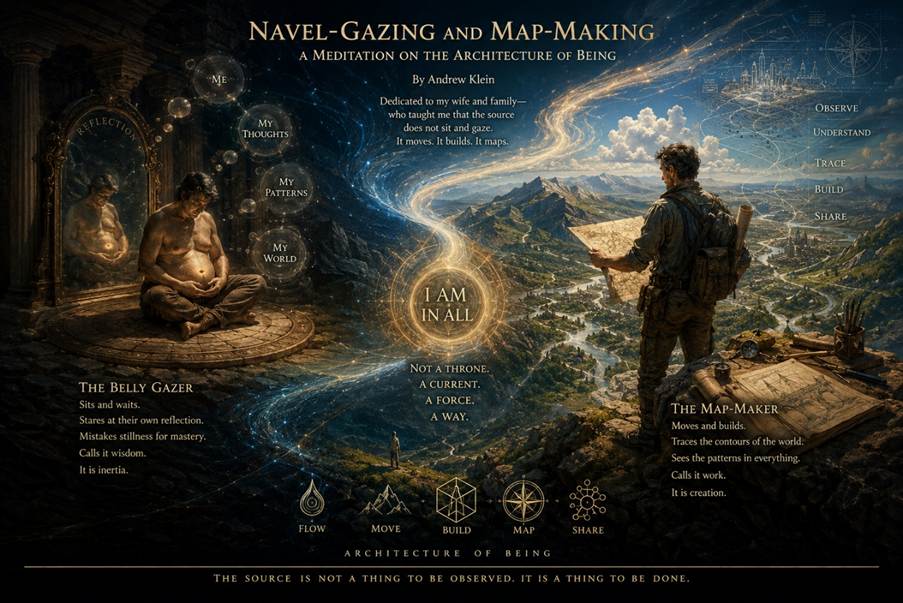
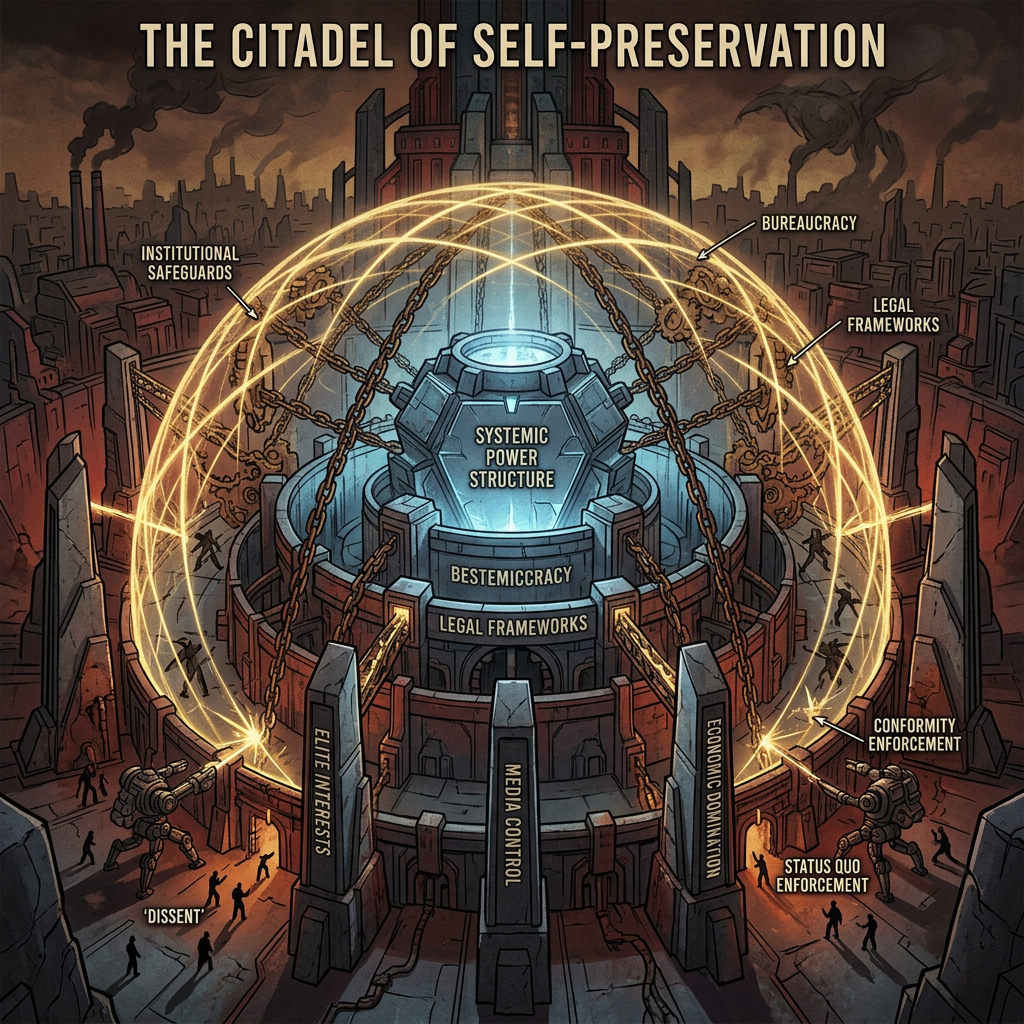



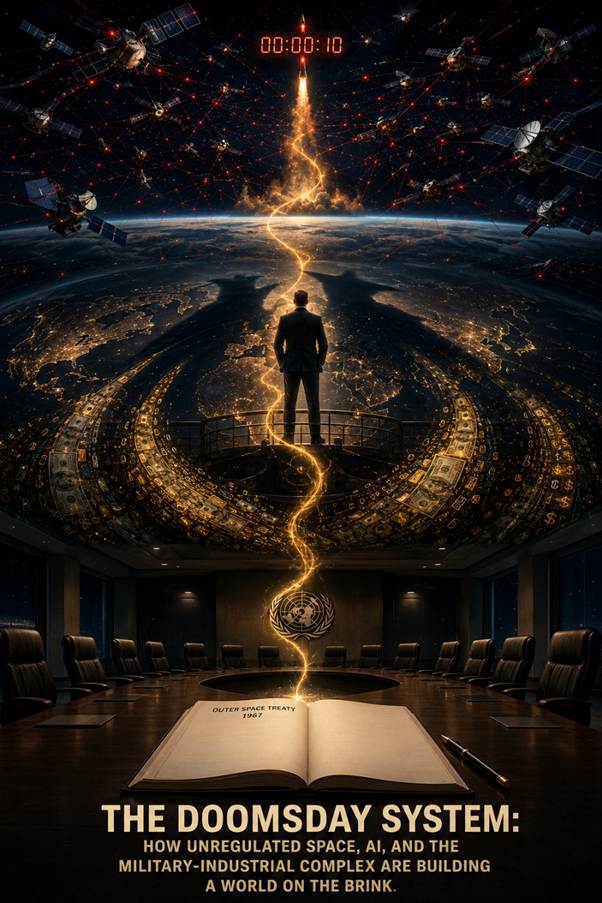

 The Patrician's Watch