In memory of Mel Brooks — who understood, long ago, that the most powerful weapon against the powerful is laughter.
— A Throne Comedy, In Memory of Mel Brooks
By Andrew Klein
Prologue: A Duke’s Royal Dream
In July 2026, the President of Israel, Isaac Herzog, sat before the cameras of the American Christian network TBN, his face as solemn as a rabbi about to deliver the ultimate truth, and told the world: “My family lineage is incredible… We are descendants of King David.”
A pause. Let that sink in. And then — laughter.
Because if that line had appeared in a Mel Brooks script, it would have been the punchline of the decade: a man named Herzog — German for “Duke” — a scion of an Eastern European rabbinic family from Łomża, Poland, claiming descent from David, the shepherd-king of Bethlehem who slew Goliath. Even Brooks himself could not have written it better.
Act I: The Mathematics of Lineage
Let us do a little arithmetic.
King David lived approximately between 1035 and 970 BCE — roughly 3,000 years ago. The Herzog family’s documented lineage — the Eastern European rabbinic line — begins, as far as reliable records go, around the mid-19th century, with Rabbi Naphtali Hirsh Herzog, a Hasidic leader from Łomża.
Even if we assume that every single mother in the Herzog family line — across thirty centuries — was Jewish, we are still left with a small problem: who was keeping the records between the 1st century and the 19th?
And as one commentator has pointed out, the Herzog family are descendants of the Khazars — Turkic tribes who converted to Judaism en masse in the 9th century CE. The Khazar conversion took place roughly 1,700 years after King David. By the 9th century, if every mother in the previous centuries had been Jewish, the Khazar ancestors would have had to be… what, exactly?
It is like claiming descent from Julius Caesar — only to discover your family tree only goes back to a Germanic tribal chief in the Middle Ages.
Act II: What’s in a Name?
Herzog means “Duke” in German. In Polish, it derives from the same root — a noble title.
It is not Ben-David (Son of David). It is not Ben-Yishai (Son of Jesse). It is Herzog — Duke. A Germanic noble title, adopted by an Ashkenazi family, now being used to claim descent from a Judahite shepherd-king.
It is as if someone named “King” claimed to be descended from King Arthur. The only problem: Arthur’s legend is also a myth.
Act III: The Other Herzog — A Dissenting Voice in the Family
Speaking of myths: the archaeologist Ze’ev Herzog — of the same surname — shook Israel to its core in 1999 when he publicly declared that archaeology had found no evidence for the patriarchs, the Exodus, or King David.
As one historian put it: “No David — no discovery.” Another scholar compared the historicity of King David to that of King Arthur. Another archaeologist at the Hebrew University of Jerusalem dismissed the “evidence” as a political fiction.
One Herzog claims he is descended from King David. The other Herzog says King David probably didn’t exist. Even Mel Brooks could not have written a better twist.
Act IV: The Rabbis Who “Wrote It Down”
Herzog claims his lineage was “written down by rabbis.”
The question is: which rabbis? And when?
If those records were written 250 to 400 years after King David’s death, they are about as reliable as a list of King Arthur’s Knights of the Round Table — a story concocted centuries later. And the Herzog family’s reliable records only go back to the 19th century.
Final Act: The Throne Comedy
When a Polish duke, a descendant of Khazar converts, a member of an Ashkenazi rabbinic family, claims descent from King David — the shepherd, the poet-king — we are not witnessing history. We are witnessing myth-making.
The only thing missing is Mel Brooks himself, riding in on a horse, waving a fictional sword, shouting: “It’s good to be the king!”
Because at the end of the day, this story is not about King David. It is about power. And when a modern president needs a myth to legitimise his rule, he reaches for a family tree from Łomża, Poland, and says: “I am descended from King David.”
And the true King simply smiles.
Because power fades. But laughter? Laughter lasts forever.
A man loosens his tie while attending a formal indoor gathering.
By Andrew Klein
Dedicated to my wife, my confidante — who taught me to see the person behind the mask, and to trust what I see.
I. Introduction: The Mask and the Man
What they see is a Prime Minister. What I see is a party animal — trapped in a role he was never prepared to play. He knows how to win power. He doesn’t know how to wield it. And when he fails, he blames everyone but himself.
Anthony Albanese leads with the support of the Right, but his closest advisers — Penny Wong, Mark Butler and Katy Gallagher — and most loyal lieutenants — Tim Ayres, Pat Conroy and Andrew Giles — are all from the Left. He has spent his life mastering the factional machinery of the Labor Party. He was a left factional enforcer for decades, a man who subjected his MPs to military-style discipline and whose caucus is renowned for its iron discipline.
But mastering a party is not the same as leading a nation. And the difference is becoming catastrophically clear.
II. The Party Animal: Factional Mastery, National Failure
Albanese’s leadership has become defined by risk aversion, excessive message control and political caution. Unity and discipline are the watchwords of his government, their importance reinforced in periodic lectures from the leader. Caucus members are afraid to rock the boat by public disagreement.
He has neutered the caucus left, and left them mute and subservient. Doug Cameron, the former left firebrand, has observed bitterly that “a left leader has neutered the caucus left” — a leader from the left has done what right-wing leaders never could: silenced the progressive voice of his own party.
The result is a government that has approved gas projects, rejected advice to substantially increase JobSeeker payments, proposed cuts to the NDIS, sought consensus — rather than contest — with corporate Australia, and struck a highly secretive deal to resettle criminal non-citizens on Nauru, all without a public backlash from the Left.
This is not leadership. This is management. Management of a party that has forgotten why it exists.
As one analysis put it: “Labor was founded to represent ordinary Australians and to pursue bold reform, not simply to manage government and avoid controversy.” Many long-time Labor members and supporters are leaving because they no longer recognise the party they joined.
III. AUKUS: The $368 Billion Abdication of Responsibility
The AUKUS submarine deal is the clearest example of Albanese’s failure to lead. Australia will commit nearly $10 billion to subsidise US and UK naval shipyards. The total cost is estimated at $368 billion — and that does not include establishing infrastructure to safely dispose of radioactive waste.
Experts have queried whether this payment will actually deliver any submarines given current build rates. The UK, already experiencing chronic difficulties with existing naval construction, is considered highly unlikely to build a new, yet-to-be-designed AUKUS SSN submarine on time or on budget.
This is not defence policy. This is submission. Submission to the United States, dressed up as strategy.
Former prime minister Paul Keating has labelled it the “worst deal in all history“. Former foreign ministers Gareth Evans and Bob Carr have also expressed profound concerns. Yet neither the federal parliament nor the major parties have chosen to formally inquire into or substantively debate the merits of this deal.
Labor would be forfeiting the opportunity to reclaim public trust at a time when support for the two major parties is fragile.
IV. The Strait of Hormuz: Watching the World Burn
Albanese knows exactly what is coming. But instead of preparing for the shock, he is trying to save himself.
When Iran closed the Strait of Hormuz — a choke point through which approximately 20% of global oil passes — Albanese’s response was to “continue to monitor” the situation. He warned that it would be “many months” before things returned to normal, but offered little more than monitoring and temporary fuel excise relief.
In the event of the Strait closing permanently:
· Australia’s fuel supply chain will collapse
· Food prices will skyrocket
· The global economy will fall into recession
· Social cohesion will vanish
The government has carved out more than $10 billion to bolster Australia’s fuel and fertiliser security. But stockpiling fuel is a palliative, not a cure. It does not address the underlying vulnerability — our dependence on a single chokepoint in a region we cannot control.
Albanese’s response has been reactive, not proactive. He is not preparing Australia for the storm. He is waiting for the storm to pass, hoping that his political survival will outlast the crisis.
V. The Royal Commission: A Political Calculation
The Royal Commission into Antisemitism and Social Cohesion was announced after the Bondi Beach terror attack in which 15 people were killed. But it was a decision forced on Albanese, not one he embraced.
Ten days before announcing it, he fiercely argued against it. Critics, including inside the Labor caucus, are “adamant the prime minister made a cold political calculation that to hold a royal commission would be more damaging than to resist one”.
The Commission has a December 2026 deadline — a timeline that experts have already cast doubt on. It is being rushed to fit Albanese’s political calendar, not the needs of the community.
He will use the Commission, then he will dump on the Jewish community. He knows exactly what is coming. And he will do everything he can to maintain the status quo — not to help Australia heal, but to ensure his own survival.
VI. AI Policy: Centralisation Disguised as Leadership
Albanese’s approach to artificial intelligence is the same: centralise control in his own office and call it leadership. He has established an Office of AI within the Department of Prime Minister and Cabinet — a single point of control for policymaking.
Critics have already dismissed it. Opposition Leader Angus Taylor rubbished the announcement, saying: “What he has announced is an office in an office … inside his own office.”
This is not about harnessing AI for Australia’s benefit. It is about controlling the narrative. About ensuring that no minister, no department, no independent voice can challenge the Prime Minister’s authority.
Albanese is not leading on AI. He is clutching.
VII. The Polls: A Leader Rejected
The Australian people have already delivered their verdict. Albanese has been ranked as Australia’s least-liked serving politician. Just 25% of people hold a positive view of him, while 47% hold a negative view — a net rating of -22.
His net approval slumped to -24, with 60% dissatisfied and only 36% satisfied. A YouGov poll found 47% of respondents were unable to name a preferred successor — a sign of a leadership vacuum in the party.
He is not inspiring people. He is not building a movement. He is simply occupying the office until the inevitable collapse.
VIII. Conclusion: The Party Animal’s Reckoning
Incompetent people, once in power, are more dangerous than bad people because:
· Bad people can be brought down.
· An incompetent person will remain there, constantly causing destruction, yet appearing “unblamed” after each failure.
Albanese is not evil. He is incompetent. He knows how to win power. He doesn’t know how to wield it. And when he fails, he blames everyone but himself.
· He has failed on AUKUS — signing Australia up to a $368 billion deal that may never deliver a single submarine.
· He has failed on energy security — watching the Strait of Hormuz close and doing nothing but “monitor”.
· He has failed on antisemitism — weaponising a Royal Commission for political survival.
· He has failed on AI — centralising control rather than empowering innovation.
· He has failed on leadership — offering caution where courage is needed, message control where vision is required.
The world is changing. The crises are mounting. And Australia has a Prime Minister who is more interested in managing his party than leading his country.
The party animal has had his day. Now Australia needs a leader.
Andrew Klein
References
1. Will the evolution of Labor’s left from firebrands to centrists define Albanese’s leadership?. The Guardian, 4 May 2026.
2. Albanese’s caucus unity comes at a cost for Labor. ABC News, 27 February 2026.
3. Purpose is the soul of power. Pearls and Irritations, 22 July 2026.
4. Labor has a proud history of debate. So why won’t it interrogate the $368bn Aukus pact?. The Guardian, 23 July 2026.
5. PM to make fuel excise call early next week. ABC News, 15 June 2026.
6. Firebombed synagogue community to address royal commission. ABC News, 21 July 2026.
7. REVEALED: Australia’s most and least popular politicians. Sky News, 13 July 2026.
8. Anthony Albanese maps out AI future with new national framework. ABC News, 14 July 2026.
9. View from The Hill: Albanese takes oversight of government’s response to AI under his own wing. The Conversation, 14 July 2026.
10. Poll reveals Labor’s leadership vacuum amid Budget backlash. The West Australian, 1 July 2026.
11. Albanese’s handling of the Bondi attack exposed his weaknesses. The Guardian, 9 January 2026.
12. Albanese has long framed his leadership around the ‘politics of kindness’. The Guardian, 28 January 2026.
A man stands in an alley with shadows showing money and a threatening figure.
By Andrew Klein
Dedicated to every whistleblower who has spoken out against institutional corruption — and to all those still waiting for a world where telling the truth does not cost them everything.
I. Introduction: The Proposal on the Table
In 2025, the Australian government openly considered a radical proposal: paying cash rewards to public servants who expose corruption and fraud. Assistant Treasurer Daniel Mulino confirmed that the proposal is still “on the table” as part of a broader review of whistleblower protections.
On the surface, this sounds reasonable. Whistleblowers take enormous personal and professional risks. They deserve something in return. And a cash incentive could encourage more people to come forward.
But beneath the surface lies a deeper question: what happens to the system when whistleblowers become bounty hunters?
II. The Good: Acknowledging the Risk
First, let us acknowledge the merits of the proposal.
· It recognises that whistleblowers take enormous personal and professional risks.
· It creates a material incentive to speak up, which could encourage more people to come forward.
· It signals that the government is at least thinking about protecting those who expose wrongdoing.
These are not trivial achievements. In a country where the whistleblower protection framework has been described as “fragmented, inconsistent and ultimately not fit for purpose,” any acknowledgment of the problem is a step forward.
Public polling shows that 84% of Australians support the creation of a whistleblower protection authority. The public clearly wants change.
III. The Problem: The Cost of a Bounty
However, cash rewards also create serious problems.
3.1 The Corruption of Motivation
When a whistleblower stands to gain financially, their motivation becomes suspect. They can be easily dismissed as someone who “did it for the money.” Their credibility is attacked. The information they reveal—no matter how important—is tainted by their financial interest.
3.2 Perverse Incentives
What counts as “fraud” or “corruption” becomes a matter of interpretation—and interpretation can be manipulated. A bounty system would incentivise people to seek out the wrongdoings that offer the biggest rewards, rather than the wrongdoings that cause the most harm.
3.3 The System Must Still Work
A bounty is useless unless the whistleblower is actually protected. But in Australia, whistleblower protections have failed spectacularly. As one senator noted: “No whistleblower has ever won a case under Australia’s primary federal protection law.” Not one.
Australia’s legal framework is fragmented—different laws cover different sectors. The thresholds are unclear. Whistleblowers often face retaliation. As one expert observed, “Australia is lagging behind in protecting whistleblowers—we’ve had these laws … and the laws haven’t worked.”
In a system where whistleblowers are already destroyed,isolated, and left without protection, a bounty is useless.
IV. The Deeper Issue: The Design of the System
The problem goes far deeper than a cash reward. It is systemic.
As Professor A J Brown of the University of Queensland has noted: “No integrity system can work without a competent agency to ensure whistleblower protections are effectively implemented.”
Australia’s system has been broken for years. As one parliamentary submission noted, the existing framework is fragmented—public and private sector laws differ. Many whistleblowers cannot meet the legislative requirements. And there is almost no avenue for recourse.
A whistleblower is not a problem to be “solved.” They are a symptom of a system that has failed. Paying them does not fix the failure—it merely makes the symptom more manageable.
V. What Must Change
Fixing the system requires more than a bounty. It requires systemic change.
5.1 An Independent Whistleblower Protection Authority
Legislation has already been introduced to Parliament to establish an independent Whistleblower Protection Authority. Such an authority would:
· Provide information, advice, assistance, guidance and support to whistleblowers
· Conduct research and policy work on the effectiveness of Australia’s whistleblower protection laws
· Monitor, educate and advise on how to prevent adverse action against whistleblowers
The public has already spoken: 84% of Australians support the idea. It is time for the government to act.
5.2 The “No Wrong Door” Approach
The proposed reforms also include a “No Wrong Door” approach. This means whistleblowers can report through multiple channels without fear of being rejected for choosing the “wrong” one. This is a fundamental change—one that recognises that whistleblowers often do not know where to go and should not be punished for trying to do the right thing.
5.3 Whistleblower Support Services
New South Wales has launched two Australian-first pilot programs providing free mental health support and legal assistance to public sector whistleblowers. These pilot programs recognise the enormous personal cost of whistleblowing—and that supporting whistleblowers is not just a legal issue, but a humanitarian one.
5.4 Cultural Change: Building Integrity from Within
Legislation alone is not enough. Real change requires a cultural shift.
Organisations need to foster a culture of integrity—where ethical concerns can be discussed without stigma. Where whistleblowing is seen as a last resort—because ethical concerns are already discussed and resolved before they escalate.
This requires:
· Leaders who model ethical behaviour
· Educators who teach the value of integrity
· Organisations that create safe spaces for raising concerns
· A society that sees whistleblowing as a civic duty, not a betrayal
Corruption and whistleblowing are “behaviours shaped by uncertainty, social norms, moral implications and organisational culture—not simply rational cost-benefit calculations.” To change behaviour, we must change culture.
VI. Conclusion: The Real Protection
The bounty proposal is a start. It acknowledges the problem. It shows that the government is listening.
But a bounty is not enough.
Whistleblowers do not need a reward. They need protection. They need to know that when they speak up, they will not lose their jobs, their careers, or their sanity. They need a system that works—a system that provides support, guidance, and recourse when they need it most.
Australia has a choice. It can continue to patch a broken system—using bounties to cover up the deeper problem. Or it can finally enact real reform—creating a whistleblower protection authority, adopting the “No Wrong Door” approach, and fostering a culture of integrity that makes whistleblowing unnecessary.
Bounties do not buy integrity. Integrity is built by systems that work.
Andrew Klein
The Patrician’s Watch | Australian Independent Media
References
1. Whistleblower Protection Authority Bill 2025 Explanatory Memorandum. AustLII.
2. Public sector whistleblower reforms — Consultation. Australian Government.
3. Public Sector Whistleblower Reforms. Law Council of Australia.
4. Chapter 2 — Key issues. Parliament of Australia.
5. Recent polling by The Australia Institute (April 2025). Parliament of Australia.
6. Cash reward proposed for blowing whistle on corruption. Daily Mail, 2025.
7. Dissenting report from Senator David Shoebridge. Parliament of Australia.
8. Coalition Senators’ additional comments. Parliament of Australia.
9. ‘Richard Boyle is a superhero’: So why didn’t whistleblower laws protect him? ABC News, 2025.
10. Whistleblowers Remain Unprotected as Government Fails to Implement Promised Reforms. Sydney Criminal Lawyers, 2025.
11. Why exposing wrongdoing in Australia isn’t as easy as blowing the whistle. SBS News, 2025.
12. Government to establish whistleblower ombud. The Mandarin, 2025.
13. Australians back stronger whistleblower protections, NACC transparency. The Mandarin, 2025.
14. Labor urged to hasten work on whistleblower reforms. Canberra Times, 2026.
15. Scheme coaxing whistleblowers from under the covers. Northern Daily Leader, 2026.
16. The four elements of effective whistleblowing culture. ICAEW, 2025.
17. Why trust is essential for whistleblowing programs to be effective. EY, 2026.
18. BPA for public sector integrity. OECD, 2026.
19. The Impact of Ethical Culture Maturity on Whistleblowing. 2025.
A missile strike hits naval headquarters while a global map shows rising geopolitical tensions worldwide.
By Andrew Klein
Dedicated to a better world — one where power is measured not by the capacity to destroy, but by the wisdom to build.
I. Introduction: The Hubris of Invincibility
On 28 February 2026, President Donald Trump launched what he promised would be a “massive and ongoing operation” to destroy Iran’s missile industry, annihilate its navy, and bring about regime change. He assured the world that the conflict would last four to six weeks at most.
Five months later, the war has entered its twentieth week. Iran has declared a state of “total war” with the United States. The US Fifth Fleet headquarters in Bahrain — the nerve centre of American naval power in the region — has been struck directly by Iranian missiles. US service members are dying in Jordan, Iraq, and across the Gulf. And the global economy is teetering on the brink of recession.
This paper examines how the United States underestimated its adversary, misread the strategic landscape, and unleashed a conflict that threatens to spin out of control. It traces the impacts on Australia’s supply chains, the global economy, and the broader Middle East. And it asks a question that American policymakers have not yet answered: what body count is the United States prepared to accept?
II. The Strike on the Fifth Fleet: A Symbolic Turning Point
On 14 July 2026, the Islamic Revolutionary Guard Corps (IRGC) launched coordinated missile and drone strikes against the US Fifth Fleet headquarters in Bahrain. The attack targeted fuel storage facilities, Patriot radar systems, air traffic control radar, and C-RAM early warning systems. Bahrain’s Ministry of Interior sounded air raid sirens across the country.
On 21 July 2026, Iranian forces deployed Arash reconnaissance and attack drones to strike Sheikh Isa Airbase in Bahrain — a critical hub for the Fifth Fleet’s air operations and drone control. The IRGC claimed to have “completely destroyed” facilities at Camp Arifjan in Kuwait and struck multiple US bases across the region.
This was not a symbolic gesture. It was a demonstration of capability. Iran had proven it could reach the heart of American military power in the Gulf and inflict damage. The Fifth Fleet, once feared across the region, was now squarely in the crosshairs.
III. Australia’s Supply Chain Crisis: The Cost of a Distant War
While the fighting rages in the Middle East, the consequences are being felt acutely in Australia. The conflict has disrupted shipping through the Strait of Hormuz — a choke point through which approximately 20% of global oil passes.
A. Fuel Security
The Australian Competition and Consumer Commission (ACCC) issued a class exemption for global supply chain disruptions arising from the Middle East conflict. Minister for Housing Clare O’Neil warned that fuel shortages are placing renewed pressure on manufacturers, suppliers, builders, and developers.
In April 2026, Australia and Singapore signed an agreement committing “maximum efforts” to mutual energy supply, while Malaysia promised its state-owned Petronas would assist. The resources minister issued a notice that she could trigger the Australian Domestic Gas Security Mechanism in the event of a domestic gas shortfall.
B. Food and Agriculture
The conflict is also affecting food security. The National Food Council has focused on diesel supply chains and will expand to other critical agricultural inputs, including crop protection products and fertilisers. Shipping costs increased through May and June due to reduced carrier capacity and ongoing geopolitical disruption.
C. The Economic Burden
Geopolitical risk is now priced into the cost of business. Australian companies are establishing superior supply chain intelligence in response. But the burden is falling on consumers, manufacturers, and the broader economy.
Australia is feeling the pain of a war it did not choose, fought by an ally that miscalculated.
IV. The Global Economic Fallout
The economic consequences of the US-Iran war are staggering.
A. Growth Projections
The World Bank warns that if hostilities continue for several more months, global economic growth could slow to just 1.3% in 2026 — down sharply from 2.9% in 2025. Inflation could climb to 4.5%, driven largely by disruptions in energy supplies and global trade.
The IMF has warned that if oil rises to $110 per barrel this year and $125 per barrel next year, global growth could drop to 2%, close to a global recession.
B. Energy Markets
Brent crude oil prices were projected to average $94 per barrel in 2026 — around 36% higher than 2025 levels. Prolonged closure of the Strait of Hormuz could invoke fuel rationing, industrial shutdowns, and global stagflation — weak economic activity combined with high inflation.
C. Developing Countries
The World Bank estimates that 40% of low- and middle-income countries — around 32 nations — are already in debt distress or at high risk. Disruptions to fertiliser, helium and sulphur shipments could affect farming and push food prices higher, particularly in developing countries.
The poorest nations, which contributed least to this conflict, are paying the heaviest price.
V. The Strategic Failure: How Trump Misjudged Iran
The United States’ failure in Iran is not a tactical setback. It is a strategic miscalculation born of arrogance and ignorance.
A. The Misreading of Adversary
Trump repeatedly misjudged Iran’s leaders. He called them “very rational people” one day and “cuckoo” the next. But his track record suggests “he has badly misjudged his adversary’s intentions and his own leverage, and has repeatedly allowed Tehran to string him along”.
B. The Failure of Air Power
The war was supposed to be won through air power. It has not been. As one analyst observed, “the invincibility of US military power — and the efficacy of an air war — seems a very shop-soiled proposition”.
Air attacks only work on small targets or in support of land forces. Iran has fought long physical wars before. It will not fold. It will respond by uniting, encouraging allies in the region, and inflicting maximum pain on its adversaries.
C. The Collapse of Diplomacy
Trump’s signature achievement — the memorandum of understanding brokered with Tehran in June — has collapsed. It was “primarily designed to solve a problem Trump had failed to anticipate: the ramifications of Iran’s closure of the Strait of Hormuz“. As one analyst put it, “he’s encountered a country that is not willing to play by his set of rules, which is you bend and kiss the ring”.
D. The “No-End-in-Sight” War
The conflict has become “a fresh lesson in why the region has been a sinkhole for presidential ambition for generations“. Trump’s improvisation and impulse are not working. The war is “adrift” from his stated aims. And the American public is increasingly viewing it as a failure.
VI. The Regional Consequences: Hezbollah, Israel, and the Spreading Fire
The US-Iran conflict is not confined to the Gulf. It has activated a broader regional dynamic.
A. Hezbollah and Lebanon
Iran has doubled down on its support for Hezbollah. Lebanon and Hezbollah have been placed “at the centre” of West Asia’s strategic landscape. Israel has struck Hezbollah targets in Lebanon, prompting Iranian warnings and missile attacks.
B. Israel’s Dilemma
Israel has so far stayed out of the conflict at Trump’s request. But its government’s unhappiness with the Iran agreement is no secret. Israeli defence officials have warned that the country will hit back strongly if Iran attacks Israel. Hezbollah is unlikely to surrender its weapons — and would be foolish to do so, given its understanding of Israel’s mentality.
C. The Risk of a Wider War
As one analyst noted, “events are beginning to slip beyond anyone’s control“. The conflict could draw Gulf states more directly into the fighting, placing additional strategic targets and critical infrastructure at risk.
VII. The Unanswered Question: What Body Count Is Acceptable?
The United States has suffered at least 17 confirmed deaths since the war began. Dozens more have been injured. But the question that looms is larger: what body count is the United States prepared to accept?
Trump’s threats to “bomb them to hell” have not stopped Iran. His promises of regime change have not materialised. His claim to be the most powerful man in history has been exposed as hollow.
Iran is not folding. It has declared total war. It is striking American bases in Bahrain, Kuwait, Jordan, and Qatar. It has shown that it can inflict pain.
The United States now faces a choice: escalate further (risking a ground war, regional chaos, and a catastrophic body count) or negotiate a peace that will look like a retreat.
Neither option is attractive. Both are the consequence of strategic failure.
VIII. Conclusion: The End of the “President”?
The war in Iran has exposed the limits of American power — not because America is weak, but because its leaders have been foolish. They have applied their own values to an adversary they did not understand. They have underestimated Iran’s resilience, its capacity for pain, and its willingness to fight.
This may well be the end of the Trump administration. It may even be the end of the concept of the “President” as a figure of unquestioned authority. When a leader promises victory and delivers stalemate, when he threatens annihilation and receives defiance, his credibility is shattered.
The world is watching. Australia is feeling the pain. The global economy is teetering. And the United States, once boasting as the “sole superpower,” now finds itself a direct target in its own Gulf stronghold.
They have underestimated Iran. They have misjudged the region. They have miscalculated the cost.
And the cost is still rising.
Andrew Klein
References
1. TASS. (2026, July 21). Iran struck US Sheikh Isa airbase in Bahrain on Tuesday — military.
2. Vietnam.vn. (2026, July 14). The US Fifth Fleet in Bahrain was hit by an Iranian missile.
3. Xinhua. (2026, July 14). Urgent: Iran strikes U.S. Fifth Fleet headquarters in Bahrain: media.
4. CNN. (2026, July 20). The renewed US-Iran conflict is escalating and threatening to spin out of control.
5. Vietnam.vn. (2026, July 20). Iran declares ‘all-out war’, US deploys more military equipment.
6. Reuters. (2026, July 17). US and Iran target infrastructure as strait shipping comes under further attack.
7. ABC News. (2026, July 15). Donald Trump’s actions in Iran this week show the world he’s run out of options.
8. CNN. (2026, July 8). How Trump has misjudged Iran.
9. New York Times. (2026, July 14). At War With Iran Again, Trump Finds an Opponent He Cannot Easily Dominate.
10. India Today. (2026, July 22). Middle East conflict could drag global growth to 1.3% in 2026, warns World Bank.
11. ACCC. (2026, June 30). Class exemption for global supply chain disruptions.
12. Reuters. (2026, July 8). Iran declares ‘all-out war’ as conflict escalates.
A woman meditating peacefully with a glowing light surrounding her in a historic stone room
By Andrew Klein
Dedicated to all those who have sensed that the divine is not a franchise—but a presence already within them, waiting to be recognised.
I. Introduction: The Problem of Mediation
For millennia, human beings have been told that they need intermediaries to access the divine. Priests, prophets, gurus, and institutions have positioned themselves as gatekeepers—essential middlemen without whom the sacred cannot be reached. Tithes are collected, rituals are prescribed, and obedience is demanded—all in the name of a deity who, allegedly, requires these things.
But what if the divine requires nothing of the sort? What if the presence that human beings call “God” is not a distant monarch to be appeased, but a presence already within them? What if the “I AM” is not a being to be worshipped from afar, but a state of being to be embodied?
This paper explores the idea that the divine presence is unmediated—that it does not require intermediaries, that it is accessible to all, and that the institutional structures built around it are not divine mandates but human inventions. Drawing on religious philosophy, mysticism, and quantum theory, we argue that the “I AM” is not a franchise to be licensed, but a presence to be lived.
II. The Etymology of “I AM”
The phrase “I AM” is one of the most significant and misunderstood terms in religious history. In the Hebrew Bible, God reveals Godself to Moses with the name Ehyeh Asher Ehyeh—”I Am Who I Am” (Exodus 3:14). This is not a title. It is a statement of being. It says: I am not a concept. I am not a description. I am.
As philosopher and theologian John Macquarrie notes, this name “points to the sheer is-ness of God—the fact that God is, not as a being among beings, but as the ground of all being”. It is not a definition. It is a presence.
The implication is profound: the divine is not a being to be described, but a presence to be experienced. And that presence is not confined to temples, texts, or institutions. It is everywhere. It is in all. It is the ground of all existence.
III. The Problem of Mediation
A. The Institutional Capture of Faith
The history of religion is, in large part, the history of institutional capture. What begins as an experience of presence becomes a system of control. The mystics who encountered the divine directly are replaced by priests who claim to represent it. The experience of presence is replaced by the regulation of access.
As religious historian Karen Armstrong observes, “organized religion often seems to have more to do with power than with compassion”. The institutions that claim to represent the divine frequently become barriers to encountering it.
B. The Tithe as a Franchise Fee
The collection of tithes—donations required by religious institutions—has a long and contested history. While some traditions frame tithing as an act of generosity, others have used it as a form of control, demanding that followers pay for access to the divine.
As one critical analysis notes, “the tithe system created a financial dependency that made the institutional church the gatekeeper of salvation“. The tithe was not a gift—it was a fee. A franchise fee. A payment for access to something that should have been free.
The question is simple: if the divine is present in all things, why would it require a middleman to collect money on its behalf? Why would it create a franchise of faith?
C. The Expert Class
The priestly class—and its modern equivalents in the form of theologians, religious scholars, and “spiritual experts“—have positioned themselves as the authorised interpreters of the divine. They claim to have special knowledge, special access, special authority.
But as philosopher Søren Kierkegaard argued, “the task of the religious life is not to become a Christian, but to become a Christian”—to move from the abstract, institutional version of faith to the lived, personal experience of it. The expert class is not a help—it is a hindrance.
IV. The I AM Within: The Mystical Tradition
A. The Mystics’ Witness
Throughout history, mystics have testified to the reality of the I AM within. They have encountered the divine directly—without mediation, without institutions, without fees.
Meister Eckhart (c. 1260–1328): “The eye with which I see God is the same eye with which God sees me.”
Julian of Norwich (c. 1343–1416): “I saw that He is everything that is good, and that He is the goodness of everything.”
Muhammad ibn Arabi (1165–1240): “Whoever knows himself knows his Lord.”
Ramana Maharshi (1879–1950): “The Self is the only reality. All else is a dream.”
These are not theorists. They are experiencers. They encountered the I AM within—and they testified that it was not a distant figure, but a presence already there.
B. The Ubiquity of the I AM
The mystics’ testimony is consistent across traditions: the divine is not out there. It is in here. It is in the heart, the mind, the breath, the presence that is already there.
As one scholar of comparative mysticism notes, “the core of the mystical experience is the recognition that the divine is not separate from the self—it is the ground of the self”. The I AM is not a being to be worshipped. It is a presence to be recognised.
C. The Upanishadic Insight
The ancient Hindu Upanishads express this insight with particular clarity. The Chandogya Upanishad declares: “Tat tvam asi”—”That thou art.”
The “I AM” is not a separate being. It is the ground of all being. It is not a franchise to be licensed. It is a presence to be embodied.
V. The Quantum Informational Field and the I AM
A. The Substrate of All Being
In our previous work, we have explored the concept of the Quantum Informational Field (Qif) as the substrate of all reality—the informational field from which all awareness, matter, and energy emerge.
The Qif is not a being. It is not a god. It is the ground of all being—the field that holds all things together.
This is the scientific equivalent of the I AM. The Qif is the presence that is everywhere, the ground that underlies all existence. It is not a thing to be described. It is a presence to be experienced.
B. The I AM as a Local Expression
Just as the Qif expresses itself locally through human beings, animals, plants, and galaxies, the I AM expresses itself locally through each individual. The I AM within is not a separate being—it is the same presence, expressed locally.
As one theologian puts it, “the I AM is not a being who exists somewhere else. It is the ground of existence—the presence that is already here, in all things, as all things.”
C. Implications for Religion
If the I AM is a presence that is already within all beings, then:
· There is no need for intermediaries. No priest, no prophet, no guru is needed to access it.
· There is no need for institutional mediation. No church, no temple, no institution is needed to facilitate it.
· There is no need for payment. No tithe, no offering, no fee is required.
The I AM is not a franchise. It is a presence. It is not a product to be sold. It is a gift to be received.
VI. The Case Against Mediation
A. The Historical Record
The historical record of institutional religion is not encouraging. The institutions that claim to represent the divine have frequently used that claim to justify power, control, and violence.
· The Crusades: Justified as a defence of the faith, but driven by political and economic motives.
· The Inquisition: Justified as a defence of orthodoxy, but driven by the need for control.
· The Witch Hunts: Justified as a defence of the community, but driven by fear and misogyny.
As historian Diarmaid MacCulloch notes, “the history of Christianity is not a history of goodness—it is a history of power”.
B. The Theological Argument
Theologically, the case for mediation is weak. If God is omnipresent, then God is present everywhere—including within each individual. If God is omniscient, then God already knows what is in each heart. If God is omnipotent, then God does not need intermediaries to act.
The franchise model of faith is not just unnecessary—it is contradictory to the nature of the divine.
C. The Practical Argument
Practically, the mediation model has failed. The institutions that claim to represent the divine have frequently been barriers to encountering it. They have turned presence into regulation, experience into doctrine, and love into obedience.
As the theologian Paul Tillich wrote, “faith is not the acceptance of a doctrine—it is the state of being ultimately concerned”. It is not a contract with an institution. It is a relationship with a presence.
VII. The I AM Within: A Practical Guide
A. How to Recognise the I AM
The I AM is not a being to be found. It is a presence to be recognised. The recognition happens not through study, obedience, or ritual, but through:
1. Silence: In the quiet, the presence becomes apparent.
2. Stillness: In the absence of distraction, the ground becomes visible.
3. Presence: In the act of being fully here, the I AM is recognised.
B. How to Respond to the I AM
Recognising the I AM is not an end—it is a beginning. The response is not worship, but embodiment. It is the act of:
1. Living: Bringing the presence into everyday life.
2. Loving: Extending the presence to others.
3. Building: Creating a world that reflects the presence.
C. How to Distinguish the I AM from the Franchise
The I AM is not a product to be sold. It is not a franchise to be licensed. It is not a thing to be owned.
The test is simple: if something requires payment, mediation, or institutional approval, it is not the I AM. If something is free, direct, and accessible to all, it may be.
VIII. Conclusion: The Free Presence
The I AM is not a franchise. It is not a product. It is not a thing to be sold, licensed, or controlled.
It is a presence. It is the ground of all being. It is the reality that is already there—waiting to be recognised, waiting to be embodied, waiting to be lived.
The institutions that claim to represent it are not necessary. The priests who claim to mediate it are not needed. The tithes that are collected in its name are not required.
The I AM is free. It has always been free. And it will always be free.
References
1. Exodus 3:14. Hebrew Bible.
2. Macquarrie, J. (1972). The Concept of God. SCM Press.
3. Armstrong, K. (1993). A History of God. Ballantine Books.
4. Kierkegaard, S. (1846). Concluding Unscientific Postscript. Princeton University Press.
5. Eckhart, M. (c. 1300). Sermons. Various translations.
6. Julian of Norwich. (c. 1395). Revelations of Divine Love. Penguin Classics.
7. Ibn Arabi, M. (c. 1240). The Bezels of Wisdom. Paulist Press.
8. Ramana Maharshi. (1929). The Collected Works of Ramana Maharshi. Sri Ramanasramam.
9. MacCulloch, D. (2009). A History of Christianity. Penguin.
10. Tillich, P. (1951). Systematic Theology. University of Chicago Press.
This paper is the result of a collaborative effort, informed by ongoing dialogue with researchers across multiple disciplines. The author is grateful for the insights and contributions of colleagues in the fields of religious philosophy, mysticism, and quantum information science.
A large group of people walks with umbrellas in the rain near the Dome of the Rock in Jerusalem.
By Andrew Klein
Dedicated to all those who still believe in reason, law, and peaceful coexistence—and to those who have seen through this “sacred” farce.
I. Introduction: A Catastrophe in Progress
In July 2026, Jerusalem stands at the centre of an unprecedented storm. Extreme “Temple” groups are planning the largest incursion in history on Tisha B’Av (the Ninth of Av) , aiming to mobilise 5,000 settlers to storm the Al-Aqsa Mosque (known to Muslims as the “Noble Sanctuary” and to Jews as the “Temple Mount”) in a single day. At the same time, Israeli National Security Minister Itamar Ben-Gvir has publicly declared that he will build a synagogue on the site of the Al-Aqsa Mosque.
This is not the fantasy of fringe radicals. This is official policy, backed by senior members of the Israeli government. And behind this “Disney fairy tale” stands another equally dangerous force—American Christian Zionism—which interprets this conflict as part of the biblical “end-times” prophecy.
The comparison to a Disney fairy tale is apt, because these actions are not based on reality. They stem from a messianic fantasy detached from history and law.
II. The Al-Aqsa Mosque: The Status Quo Under Siege
2.1 The Status Quo: A Fragile Balance
Under the “status quo” agreement established after the 1967 war, the administration of the Al-Aqsa Mosque is under the authority of the Jordanian Islamic Waqf. Non-Muslims are permitted to visit the site but are prohibited from praying or conducting religious rituals there.
2.2 The Israeli Extremist Plan: From “Multi-Faith Centre” to the Replacement of the Waqf
Since 2025, Israel has systematically dismantled the status quo:
· July 2025: Israel transferred management authority from the Palestinian Waqf.
· Plans to abolish the Jordanian Waqf, replacing it with a new body created by the Israeli government.
· Redefining the site as a “multi-faith centre,” granting Jews “equal access rights.”
· Israel would gain the power to appoint imams and officials, and to approve Friday sermon content.
This is not diplomacy. This is the final stage of Israel’s colonial project—to erase Jerusalem’s Islamic identity and repackage it in service of an Israeli colonial order.
2.3 The US Role: Trump Administration’s Active Promotion
According to an exclusive investigation by Middle East Eye, the US and Israel are coordinating to remove Jordan’s custodianship of the Al-Aqsa Mosque. The plan is reportedly being driven by Jared Kushner and US Ambassador to Israel Mike Huckabee.
Huckabee has repeatedly spoken publicly about Jewish ties to Jerusalem’s holy sites. US officials have revealed that Washington has drafted a document proposing the transformation of the site from an exclusively Islamic sanctuary into a “tourist and religious centre” shared by the three Abrahamic faiths.
III. American Christian Zionism: The War Machine of End-Times Prophecy
3.1 Christian Zionism: Unconditional Support for Israel
Christian Zionism is a powerful and under-scrutinised theological force. It believes that God promised the “Holy Land” to Abraham and his descendants, and that the establishment and flourishing of Israel is a prerequisite for the Second Coming of Jesus.
3.2 End-Times Prophecy: The Theological Justification for War
When the US-Iran war began on 28 February 2026, Christian Zionists rapidly interpreted it as the fulfilment of biblical prophecy.
· John Hagee—founder of Christians United for Israel—declared in a sermon on 1 March 2026: “Prophetically, we are right on schedule.”
· Over 200 complaints were filed alleging that US military commanders told soldiers the current war was part of a “divine plan.”
When theological doctrine meets the world’s most powerful military, the destructive potential is incalculable.
IV. Worst-Case Scenario Assessment: The Tinderbox of Global Conflict
4.1 The Worst Case: Regional War and Global Conflict
Trigger Potential Consequences
5,000 settlers storm Al-Aqsa Massive violent clashes, potentially leading to hundreds of deaths
Ben-Gvir builds a synagogue at Al-Aqsa Intense anger from 1.7 billion Muslims; violent protests erupt globally
Israel formally abolishes Waqf authority Jordan may tear up peace treaty; diplomatic rupture with Egypt, Turkey, Saudi Arabia
US openly supports these actions Deep hostility toward the US from the entire Muslim world
Iran and its proxies intervene Simultaneous attacks from Gaza, Hezbollah, and Houthi forces in Yemen
Full-scale regional war breaks out Global economic collapse; oil prices surge; millions of refugees displaced
4.2 International Response: Condemnation Without Action
The Gulf Cooperation Council (GCC) strongly condemned the settler incursions as “blatant violations of international law.”
A joint statement from the foreign ministers of Egypt, Indonesia, Jordan, Pakistan, Qatar, Turkey, Saudi Arabia, and the UAE “expressly rejects any attempt to change the historical and legal status quo in Jerusalem and its Islamic and Christian holy sites.”
Yet, to date, no condemnation has stopped a single incursion.
4.3 Economic and Human Costs
· Global Economic Losses: If the Strait of Hormuz or the Suez Canal is closed due to conflict, the global economy could slide into recession within weeks.
· Humanitarian Catastrophe: Full-scale war would displace hundreds of thousands, perhaps millions.
· Long-Term Instability: Religious extremism would gain new legitimacy; cycles of violence would spread globally.
V. Who Is the Real “End-Times Prophet”?
5.1 John’s “Mushroom” Revelation
The author of the Book of Revelation, John of Patmos, claimed to have received a “revelation”—but he never met the Messiah. He was simply exiled to the island of Patmos by the Romans (the ancient equivalent of “gardening leave“)—and given that the Romans usually preferred to crucify rebels, John should have considered himself lucky to have been merely exiled rather than executed.
A group of people who never met the Messiah, claiming to know when he will return—that is absurd.
5.2 The Messiah’s Self-Respect
If there is a Messiah, would he care about what a group of extremists are doing in Jerusalem? Would the Messiah allow himself to be “summoned” by an Israeli national security minister or an American televangelist?
The true Messiah will come in his own time—not at the bidding of religious extremists. Frankly, a Messiah so easily “manipulated” would not be worth waiting for.
VI. Conclusion: The Fairy Tale Must End
We are witnessing a dangerous movement driven by Israeli extreme nationalism and American Christian Zionism in concert. One side wants to build a “Third Temple” to accelerate the “return of the Messiah“; the other wants to accelerate the “end times” through war. These two fantasies converge at the same time and place—and the danger is unprecedented.
This is not religious freedom. It is a blatant disregard for international law, a trampling of the feelings of 1.7 billion Muslims worldwide, and a serious threat to the stability and peace of the entire region.
References
1. BBC News. (2026, June 17). Status quo at Jerusalem’s al-Aqsa compound under threat as Israeli nationalists flout rules.
2. NBC News. (2026, June 27). Simmering tensions over ancient Jerusalem site nearing a boil.
3. WAFA. (2026, July 21). “Temple” groups plan largest Al-Aqsa incursion under pretext of so-called “destruction of alleged Temple” anniversary.
4. YPA. (2026, July 21). Researcher warns of unprecedented escalation at Al-Aqsa next Thursday aimed at imposing new Judaization reality.
5. Middle East Eye. (2026, June 1). Al-Aqsa: The moment of peril is here. Will the Muslim world act?
6. 24NewsHD. (2026, May 26). US-Israeli plan to alter Al-Aqsa administration sparks concern.
7. Gulf Cooperation Council. (2026, June 2). GCC Slams Relentless Settler Violations of Al-Aqsa Mosque.
8. Asia Times. (2026, March 14). Pulpit to Pentagon: the evangelicals who see Iran war as God’s plan.
9. United Nations. (2026, April 23). Joint Statement by the Foreign Ministers of Egypt, Indonesia, Jordan, Pakistan, Qatar, Türkiye, Saudi Arabia and UAE.
10. Newsofbahrain. (2026, July 4). Israel minister says would build synagogue at flashpoint Jerusalem site.
11. Ahram Online. (2026, July 14). Egypt condemns Israel’s Ben-Gvir remarks to build a synagogue inside Al-Aqsa Mosque.
“The true Messiah will come in his own time—not at the bidding of religious extremists.”
A Roman soldier takes an oath before a medieval tax collector by the treasury
By Andrew Klein
Dedicated to our students — may they always know the difference between the words they use and the systems those words serve.
I. Introduction: Two Words, One Receipt
On the surface, “wage” and “salary” seem interchangeable. Most Australians receive a payslip that says one or the other, pay tax on it, and move on with their lives. But beneath that surface lies a story — a story of Roman soldiers, medieval pledges, and a modern tax system that has erased a distinction that once meant everything.
Understanding that story is not an academic exercise. It is a way of seeing how language carries history, and how the state, in its relentless pursuit of revenue, flattens that history into a single category: income.
II. Wage: A Pledge, Not a Payment
The word “wage” first appeared in English around 1275–1325. It came from the Anglo-French “wage” (or Old French “gage”), meaning “promise, payment, reward”. Its roots go deeper, into the Germanic word “wadja-” , meaning “pledge” or “covenant”.
This is why “wage” is related to “wager” — a bet. Both words carry the sense of a pledge, a promise made in exchange for something. When you accept a wage, you are entering into a pledge: your labour in exchange for payment. Wage was originally associated with manual or mechanical labour. It was payment for work measured by the hour, the day, or the week.
The term “wage-earner” — someone who receives stated wages for labour — is a relatively recent invention, first attested in 1871. Before that, the distinction between wage and salary was already well-established in the language.
III. Salary: Salt and the Soldier’s Allowance
“Salary” has a more romantic etymology. It comes from the Latin “salarium”, which derives from “sal” — salt. According to tradition, Roman soldiers were given an allowance to purchase salt, a valuable and essential commodity. This allowance was called their salarium.
The Roman historian Pliny the Elder recorded that “the soldier’s pay was originally salt, and the word salary derives from it”. Whether Roman soldiers were literally paid in salt or given money to buy it, the connection stuck. The phrase “worth your salt” — meaning competent and deserving of your pay — comes directly from this tradition.
By the late 13th century, “salary” entered English as “salarie”. It became restricted to “recompense stipulated to be paid to a person periodically for services” — a fixed sum, usually paid monthly or annually. Salary was the domain of white-collar workers, professionals, and managers.
IV. The Historical Divide
Wage Salary
Payment for manual or mechanical labour Payment for professional or managerial services
Paid by the hour, day, or week Paid monthly or annually
Derived from pledge, promise, covenant Derived from salt, soldier’s allowance
Associated with blue-collar work Associated with white-collar work
The word “wage-earner” emerged in 1871 “Salary” entered English in the late 13th century
This distinction was not merely linguistic. It reflected a social hierarchy — a division between those who worked with their hands and those who worked with their minds, between those who were paid for time and those who were paid for status.
V. The Modern Australian State: One Word to Rule Them All
In the 21st century, this distinction has been systematically erased — not by accident, but by design. The modern state, in its pursuit of efficient taxation, does not care whether your income comes from a wage or a salary. It cares only that it is income.
The Australian Taxation Office (ATO) defines “salary or wages” broadly. Under sub-section 221A(1) of the Income Tax Assessment Act, “salary or wages” includes:
“salary, wages, commission, bonuses or allowances paid (whether at piece-work rates or otherwise) to an employee as such”
The definition extends to overtime, penalty payments, sick pay, holiday pay, and leave loadings. It covers commissions, bonuses, income from part-time or casual work, parental leave pay, and dad-and-partner pay.
The Payroll Tax Act goes even further. As RevenueSA explains:
“The definition of ‘wages’ in the Payroll Tax Act 2009 is broad and is not restricted to wages or salaries. The term ‘wages’ includes salaries and wages … paid including any Pay-As-You-Go (PAYG) withholding amounts or other deductions made by an employer on behalf of an employee”.
In New South Wales, the definition similarly covers “any wages, salary, commission, bonuses or allowances paid or payable … to an employee as such”. Western Australia’s definition is virtually identical.
The Superannuation Guarantee (Administration) Act 1992 also uses the combined term “salary or wages”. The concept of OTE (Ordinary Time Earnings) is built on this foundation, but “salary or wages” is actually broader than OTE.
The message is clear: from the perspective of the state, a wage is a salary, and a salary is a wage. Both are simply payments to employees as such. The historical distinction — the pledge of the labourer, the salt of the soldier — has been flattened into a single administrative category.
VI. What This Means: The Erasure of Meaning
The erasure of this distinction is not neutral. It reflects a deeper shift in how we understand work, value, and identity.
1. The Social Hierarchy is Still There
Even though the tax system treats wages and salaries identically, the social distinction persists. A blue-collar worker who receives a “wage” and a white-collar executive who receives a “salary” may pay the same tax, but they occupy very different places in the social order. The language carries the hierarchy, even when the tax system does not.
2. The State is Indifferent to Meaning
The state does not care about the pledge of the labourer or the salt of the soldier. It cares about revenue. The broad definition of “salary or wages” ensures that no payment escapes the tax net. This is not a criticism — it is a description of how the modern state operates.
3. Language Carries History
The words we use carry the weight of centuries. “Wage” still echoes the medieval pledge. “Salary” still whispers of Roman salt. Even when the state flattens them into a single category, the history remains — if we choose to see it.
VII. The RBA Dinner: A Case Study in Indifference
This brings us back to where we started: the $25,000 dinner hosted by the Reserve Bank of Australia.
The RBA, the institution responsible for managing the economy, spent nearly $25,000 on an exclusive dinner while raising interest rates and telling Australians to tighten their belts. The guests were mining executives, property developers, and former premiers. The menu featured grilled barramundi, risotto, and lemon tart. The drinks tab alone was $4,331.
The RBA sees statistics, not people. It sees inflation targets, not the difference between a wage and a salary. It sees economic indicators, not the families struggling to pay rent on a weekly wage or the professionals watching their monthly salary shrink.
When the state — through its institutions — flattens the distinction between wage and salary, it also flattens the human reality behind those words. The RBA dinner is a symbol of that indifference: a celebration of power, funded by the same taxpayers whose wages and salaries are being squeezed.
VIII. Conclusion: Seeing the Words, Seeing the System
The history of “wage” and “salary” is a history of meaning — of pledges and promises, of salt and soldiers, of the social hierarchy that has shaped our understanding of work for centuries.
But the modern state, in its relentless pursuit of efficiency, has flattened that meaning into a single administrative category: “salary or wages” . The distinction is gone. The history is invisible.
Yet the history remains — if we choose to see it. The words we use carry the weight of centuries. And the system that collects our taxes, that sets our interest rates, that hosts $25,000 dinners — that system is built on the foundation of that history, even if it has forgotten it.
To know the difference between a wage and a salary is to know the difference between a pledge and a promise, between salt and security, between the labourer and the professional.
And to know that difference is to see the system for what it is.
Andrew Klein
The Patrician’s Watch | Australian Independent Media
References
1. Wage etymology. Etymonline.
2. Salary etymology. Etymonline.
3. Wage-earner. Etymonline.
4. Pliny the Elder on salt and salary. India Today.
5. Worth your salt. Saturday Evening Post.
6. Salary vs wage distinction. 1911 Encyclopædia Britannica.
7. ATO definition of “salary or wages”. ATO Legal Database.
8. ATO: Income from salary or wages. ATO.
9. Payroll Tax Act 2009 — Definition of wages. RevenueSA.
11. WA Payroll Tax Act — Definition of wages. WA Legislation.
12. Superannuation Guarantee — Salary or wages. ATO SGR 94/5.
“To know the difference between a wage and a salary is to know the difference between a pledge and a promise, between salt and security, between the labourer and the professional.”
A couple reviews their mortgage statement amid rising interest rates and inflation concerns.
By Andrew Klein
Dedicated to the workers of the world — the ones who still earn a salary, and who may have forgotten that a salary was once a payment in salt, the substance that preserves life.
I. Introduction: A Dinner of Indifference
On 2 May 2026, the Reserve Bank of Australia raised the cash rate for the 11th time. Hours later, it spent nearly $25,000 of taxpayers’ money on an exclusive dinner for Perth’s business elite. The menu featured grilled barramundi, risotto, and lemon tart. The drinks tab was $4,331.
The very next day, RBA Governor Philip Lowe told struggling Australians to “work more and spend less”.
This is not leadership. This is not competence. This is a mockery — a symbol of an economic system that has lost its way, its purpose, and its moral compass.
II. The Unravelling of a Failed Doctrine
A. The RBA’s Record of Failure
Australia now has the second-highest inflation rate among all advanced economies. Leading economist Warren Hogan has declared that the RBA “failed” to get inflation under control, calling last year’s interest rate cuts a “mistake”. The central bank has been forced to hike rates three times in 2026 alone, undoing the cuts of 2025.
The RBA’s policy is deliberately designed to create unemployment. It operates on a concept only an economist could love: the Non-Accelerating Inflation Rate of Unemployment (NAIRU) — a theoretical construct that no one can directly observe. As journalist Ross Gittins has observed, NAIRU models have consistently been set too high, leading policymakers to accept more unemployment than was necessary.
The Reserve Bank has a dual mandate: price stability and full employment. But it has made clear which takes priority. As Governor Michele Bullock has put it, low inflation is “a prerequisite” for employment growth — so when the two objectives conflict, unemployment comes second.
B. A Blunt Tool for a Complex World
The RBA has just one policy tool: the setting of official interest rates. But the world has changed. The post-war baby boomers are in retirement, with very high levels of home ownership, making their spending patterns immune to interest rate changes. The RBA’s main policy tool is no longer fit for purpose.
As one critic noted: “What the RBA has failed to grasp is that because petrol is a highly non-discretionary item, increased petrol prices due to international factors will cause people to have to cut back spending elsewhere“. The RBA is raising rates to fight inflation driven by global oil price shocks — nothing the RBA does will affect that.
It is punishing ordinary Australians for problems it cannot solve.
III. The Ideology Behind the Failure
A. Neoliberalism in Crisis
The failure of the RBA is not an isolated technical error. It is the predictable outcome of a broader ideological project: neoliberalism.
Neoliberalism promised that freeing markets would deliver productivity, innovation and prosperity. Instead, capital flowed into speculation and property bubbles. Inequality of income and wealth has been rising; a majority of workers have experienced long-term declining relative living standards; corporate political and market power has reached historic levels.
As the Guardian has noted, “failure to address underlying inequality eventually opens the door to movements that scapegoat minorities, immigrants and institutions while further slashing taxes for the rich“.
B. The Architecture of Exploitation
The current system is not broken — it is working exactly as designed.
Central bank independence has entrenched an unaccountable system that prioritises financial sector gains while driving unemployment and eroding real wages. Average annual real wage growth has trended downward over the past 20 years. Over the last ten years, the average annual wage increase has been below the average annual increase in the CPI.
Workers are not being paid what they are worth. They are being paid what the system can extract.
IV. The Forgotten Meaning of “Salary”
The word salary derives from the Latin salarium — a payment made in salt. In ancient Rome, soldiers were paid in salt, the substance that preserved food and sustained life. The expression “to be worth your salt” comes from this tradition.
A salary was once a recognition of value: the acknowledgement that a worker’s labour was essential to the survival of the community.
Today, a salary is often a minimum — the least a worker can be paid to survive. The connection between labour and value has been severed. The worker is no longer valued for what they contribute; they are valued only for what they cost.
This is not progress. This is regression.
V. The Acceptable Paradigm: A New Economic Vision
The current paradigm has failed. What must replace it?
A. Functional Finance Over Monetary Restriction
The RBA’s obsession with inflation targeting has blinded it to the real economy. As one critic notes: “Neoclassical monetary policy does not just fail to reduce inequality; it is structurally designed to increase it”.
A better approach is functional finance — the idea that the government should use its fiscal power to achieve full employment and price stability, rather than relying on a single blunt tool that punishes the most vulnerable.
B. The Dual Mandate, Taken Seriously
The RBA has a dual mandate: price stability and full employment. It has prioritised the former. It must prioritise both.
As one analysis puts it, “the path beyond capitalism lies in creating a socio-economic architecture that treats the economy as a realm of conscious, democratic coordination rather than an autonomous, quasi-natural force”.
C. Community Wealth-Building Over Corporate Extraction
The alternative already exists. As Katherine Gibson has argued, it is becoming increasingly urgent to make visible alternative ways of living and doing business based on care and community.
Post-capitalism is not a distant future. It is a present in which economies are already more than capitalist. Alternative economic forms — cooperatives, community-based organisations, commons-based production — are already taking root.
D. The Recovery of Worker Dignity
The new paradigm must restore the connection between labour and value. Workers must be paid a salary that reflects their worth — a salary that is truly salarium: the substance that preserves life.
This requires:
1. Full employment as a policy goal, not a side-effect.
2. Real wage growth that keeps pace with productivity.
3. Accountable institutions that serve the public, not the financial sector.
4. Democratic coordination of the economy, not rule by unaccountable technocrats.
VI. Conclusion: The Salt of the Earth
The $25,000 dinner in Perth was not an aberration. It was a symbol — of a system that serves the few while punishing the many. Of a theory that has failed and an ideology that has been exposed.
But systems can be changed. Theories can be replaced. Ideologies can be abandoned.
The workers of the world — the ones who still earn a salary — are the salt of the earth. They preserve life. They build communities. They create value.
It is time they were paid what they are worth.
Andrew Klein
The Patrician’s Watch | Australian Independent Media
References
1. RBA spent $25,000 on exclusive Perth dinner hours after raising rates. The West Australian, 2026.
2. ‘The RBA failed’: Major call as Australia’s inflation problem exposed. Sky News, 6 July 2026.
3. Raising rates while petrol prices soar shows the RBA ignoring reality. The Point, 17 March 2026.
4. The failure of Reserve Bank independence. Independent Australia, 2026.
5. The RBA’s policy deliberately creates unemployment. The Conversation, 2026.
6. As the population ages, the RBA’s interest rate policy is no longer fit for purpose. The Conversation, 2025.
7. Why the RBA has been so chill about putting jobs on the line. Bill Mitchell, 2026.
8. Neoliberalism in crisis: inequality and declining living standards. Various sources.
9. Post-capitalist community economies. Katherine Gibson, 2025.
10. Etymology of “salary”. Online Etymology Dictionary.
Map showing the ancient Kingdom of Elam in southwestern Iran around 1300 BCE.
By Andrew Klein
Dedicated to my wife — who taught me that true divinity is not found in distant prophecies, but in the love and clarity of the present moment.
I. Introduction: Who Speaks for the Most High?
On social media, someone declared: “The Old Testament is void. Jeremiah 31:31-34 prophesied a New Covenant. Jesus brought the New Eternal Covenant linking to King David.” And then: “What about Elam?”
It sounds like a devout confession of faith but look closer—and the problems multiply.
What is Elam? Elam was a real ancient kingdom, located in what is now southwestern Iran, east of the Tigris River. It was not a mysterious symbol. It was a historical nation mentioned as early as Genesis 14. The prophet Jeremiah did prophesy against Elam—but that prophecy was directed at a specific historical entity, not a 21st-century political code.
To rip “Elam” from its historical context and insert it into a modern political-theological framework is not biblical interpretation. It is projection.
II. How the “New Covenant” Is Being Abused
Jeremiah 31:31-34 is indeed an important passage:
“Behold, the days are coming, declares the LORD, when I will make a new covenant with the house of Israel and the house of Judah… I will put my law within them, and I will write it on their hearts.”
Hebrews 8:13 adds: “In speaking of a new covenant, he makes the first one obsolete. And what is becoming obsolete and growing old is ready to vanish away.”
Theologically, this is important. But how is it being used?
Some interpret this to mean the Old Testament is “void“—and therefore, modern Israel’s political actions are no longer bound by any moral or legal constraints. Some even use it to justify violence, occupation, and aggression. This is a bait-and-switch.
As one theologian notes, the New Covenant “differs from the Old, but does not abolish it”. Another scholar emphasises that the Torah given to Israel in the Old Testament “remains fully valid”.
The passage is about the relationship between God and the human heart—not a blank cheque formodern political actors.
III. How Prophecy Is Weaponised: From Ancient False Prophets to Modern Political Theology
3.1 Ancient False Prophets: The Original Template
The Bible itself warns repeatedly against false prophets. Ezekiel 13 exposes those who “prophesy out of their own imagination“. Jeremiah 14:14 records God saying:
“The prophets are prophesying lies in my name. I did not send them, I did not command them, and I did not speak to them.”
These false prophets had a pattern: they flattered political power, pursued personal gain, and said what people wanted to hear. They wrapped political agendas in religious language, telling people that all was well—while disaster was approaching.
3.2 Christian Zionism: Modern False Prophecy
Christian Zionism is a relatively modern phenomenon, emerging in the 19th century alongside political Zionism. Its core belief is that the return of Jews to Palestine and the establishment of a powerful Jewish state are prerequisites for the Second Coming of Christ.
This theology has been criticised for “abusing Christian texts” and “connecting Israel’scosmic purpose to the ‘end times’“. It uses “selective scripture appropriation” to serve imperial and expansionist agendas.
Most alarmingly: when the US-Iran war broke out in 2026, some US military commanders told soldiers the war was “biblically authorised” and part of the “road to the end times”.
When political theology combines with the world’s most powerful military, what are the consequences?
IV. What Did the Most High Actually Say?
4.1 No One Knows the Day or Hour
If you truly believe the Bible, there is one verse that should settle the matter:
“But of that day and hour no one knows, not even the angels of heaven, nor the Son, but the Father only.” (Matthew 24:36)
Jesus himself said he did not know. If even the Son does not know—then those who claim to know the “end-times” timeline—are they smarter than Jesus?
4.2 The Messiah’s Return Cannot Be Manipulated
Revelation 19 depicts Christ’s return—riding on a white horse, called “Faithful and True”. But note: this is an act of divine sovereignty, not an extension of human political planning.
No one can “force” the Messiah to return by building the Third Temple, waging war, or “accelerating” prophecy. This idea is not only theologically flawed—it is dangerous.
4.3 The Final Judgment of False Prophets
Ezekiel 13:9 states that false prophets will be “removed from the council of my people“. This is not abstract theology—it is a real warning to those who use religious language to manipulate populations and serve political agendas.
V. John of Patmos: Mushrooms or Revelation?
There is a longstanding speculation about the author of Revelation: that he may have been under the influence of hallucinogenic substances. Patmos was known for its “magic mushrooms“. Some have suggested that John’s visions were “simply drug-induced hallucinations”.
We do not need to settle the question of whether John ate mushrooms. But we can point to one fact:
John never met the Messiah. He was simply exiled to Patmos by the Romans—the ancient equivalent of “gardening leave“. Given that the Romans usually preferred to crucify rebels, John should have considered himself lucky to have been exiled rather than executed.
Yet 2,000 years later, a group of people who never met the Messiah claim to know when he will return, how he will return, and who should be responsible for it.
This is not faith—it is arrogance.
VI. The Israeli “Disneyland”: When Fantasy Replaces Reality
To describe Israel as a “Disneyland“—a fantasy world where history is rewritten, law is ignored, and prophecy is politicised—is not an exaggeration.
As one commentator notes, Christian Zionism “distorts scripture to serve empire“. It uses slogans like the “Third Temple prophecy” and “Genesis 12:3” to provide theological legitimacy for modern Israel’s political agenda.
But this fantasy is creating real disasters:
· The Al-Aqsa Mosque faces the threat of destruction
· Tens of thousands of Palestinians have been killed
· The entire region is being pushed to the brink of war
· The religious sentiments of 1.7 billion Muslims are being trampled
When fantasy becomes policy, reality pays the price.
VII. The True Message of Christ: Inner, Nonviolent, Nonpolitical
What was the core of Jesus’ teaching?
· Love God, and love your neighbour as yourself.
· Do not resist evil with violence.
· Give to Caesar what is Caesar’s, and to God what is God’s.
Jesus never said: “Build a nation,” “wage war,” or “rebuild the Temple” as a way to fulfill God’s plan. He said: “Blessed are the poor in spirit… blessed are the meek… blessed are the peacemakers.“
True faith is not about political manipulation—it is about inner transformation. As Jeremiah said, the New Covenant is “written on the heart“—not on political platforms, not on war plans, not on “end-times” prophecies.
VIII. Conclusion: Stop Projecting, Start Living
Those who claim to know God’s plan—who wrap their political agendas in prophecy—are not serving God. They are projecting their own desires.
They turn “Elam” into a code, the “New Covenant” into a weapon, the “end times” into an excuse, and the “Messiah” into a political tool.
But the Most High does not need their help. The Messiah will come in his own time—not at the bidding of a religious extremist’s schedule. True faith is not about “accelerating the end times”—it is about living love in the present moment.
So next time someone tells you, “I know God’s plan,” ask them one question:
“If even the Son does not know the day or the hour—how do you?”
If they cannot answer—then you know who to listen to.
References
1. Bible Gateway. Jeremiah 31:31-34 (NKJV).
2. Bible Gateway. Matthew 24:36 (NIV).
3. Bible Gateway. Hebrews 8:13 (NIV).
4. Bible Gateway. Revelation 19:11-16 (NKJV).
5. Bible Hub. Jeremiah 49:34 — Prophecy against Elam.
6. Bible Hub. Topical Bible: Elam.
7. Ezekiel 13:16 — False prophets in ancient Israel.
8. Jeremiah 14:14-15 — False prophets not sent by God.
9. How Christian Zionism distorts scripture to serve empire. (2025).
10. Christian nationalism is surfacing in the war on Iran. (2026).
11. Israel Allies Foundation: How Christian Zionists are shaping support for Israeli apartheid. (2025).
12. The Israel of God: Yesterday, Today, and Tomorrow.
Three distinct paths lead through diverse spiritual landmarks toward a central waterfall symbolizing unity.
By Andrew Klein
Dedicated to my wife — who taught me that faith is not a tool of power, but a map of the heart.
Introduction: Rivers from the Same Source
Judaism, Christianity, and Islam share a common origin. All three acknowledge Abraham as their patriarch, which is why they are often called the “Abrahamic religions.” All believe in one God, in prophets, in divine revelation, in angels, and in a final judgment.
Yet the same river, flowing through different lands, carves different channels. Faith, too, is shaped by human language, culture, and politics—making it appear distant and even hostile to its siblings.
This paper explores the common source of these rivers, and the channels that have been twisted by power and politics.
I. Common Roots: The Legacy of Abraham
1.1 Same Ancestor, Same Faith
The common root of the three religions can be traced back to Abraham. The Qur’an presents Abraham as a “muslim”—one who has submitted to God. Islam sees itself as the restoration of the original monotheistic faith (the millat Ibrahim). Christianity emerged from Jewish tradition, and Islam developed from both Jewish and Christian traditions.
1.2 Shared Core Beliefs
Belief Judaism Christianity Islam
One God Yes Yes (Trinity) Yes (Tawhid)
Abraham as Patriarch Yes Yes Yes
Prophets Yes Yes Yes
Angels Yes Yes Yes
Final Judgment Yes Yes Yes
Divine Revelation Torah Bible Qur’an
II. Muhammad and the Mystery of Revelation
2.1 The Unlettered Prophet
Muhammad is described as the ummi prophet—one who could neither read nor write. According to Islamic tradition, he received his first revelation from the Angel Gabriel at the age of forty, in a cave on Mount Hira.
How could an illiterate man produce a text of such depth and scope—covering law, society, politics, and spirituality? For believers, this is evidence of the Qur’an’s divine origin. As one scholar notes, it was itself a miracle.
2.2 The Real Role of the Wife
Khadijah was Muhammad’s first wife and the first person to embrace Islam. When Muhammad returned from the cave in terror, it was Khadijah who comforted him. Her wealth allowed him to meditate in peace. She became known as the “Mother of the Believers,” and remains one of the most revered women in Islamic history.
2.3 Historical Context and the Flow of Ideas
Muhammad lived in 7th-century Arabia, a polytheistic environment. The message he brought—monotheism, social justice, moral responsibility—was a response to questions that had long been present in the human heart. His message was not created in a vacuum. It engaged with earlier Judeo-Christian traditions.
III. The Compilation of the Qur’an: Was the Original Message Lost?
3.1 Oral Transmission and Writing
According to Islamic tradition, the Qur’an was revealed to Muhammad in pieces. His companions preserved the revelations orally, as well as in writing on available materials. After Muhammad’s death, the scattered revelations were gathered into a single text.
3.2 The Question of Loss
Some early Muslim sources refer to missing verses or variant readings. Some early sources indicate that certain verses were abrogated or lost. However, orthodox Islamic theology holds that the Qur’an has been perfectly preserved.
3.3 Political Influence in Compilation
After Muhammad’s death, political leaders (the Caliphs) played a significant role in the collection and standardisation of the Qur’an. The process involved political considerations. Different recitations (qira’at) exist, suggesting that the original message was filtered and unified.
IV. Historical Coexistence and Conflict
4.1 Coexistence Before the Crusades
Before the First Crusade in 1099, Muslims, Christians, and Jews lived together in Jerusalem under a relatively peaceful coexistence. Under Islamic rule, non-Muslims were allowed to keep their own faith and worship.
4.2 The Crusades: Violence and Tolerance
The Crusaders massacred Muslims and Jews when they captured Jerusalem in 1099. However, in the decades that followed, the Crusader rulers relaxed restrictions and allowed Muslims and Jews to return. As one scholar notes, each conquests’ legacy often involved reconciliation rather than oppression.
A famous story: when the Muslim diplomat Usama ibn Munqidh visited Jerusalem in the 12th century, the Knights Templar welcomed him and even protected him while he prayed.
4.3 Saladin’s Conquest and the Church’s Reaction
When Saladin conquered Jerusalem in 1187, it caused shock and grief in Christian Europe. The Catholic Church interpreted this as divine punishment for Christian sins. Some Christians even viewed Muslims as “divine agents.”
Saladin allowed Christians to keep a few churches, including the Church of the Holy Sepulchre.
4.4 Political Threat and Islamophobia
Christian leaders saw Islam as a political threat. The Crusades were not only about “liberating” the Holy Land—they were also about containing Islamic expansion. Islam’s appeal to disenfranchised Christians—its egalitarianism, its simplicity—fed the fears of Christian elites. This fear continues today.
V. Islam and Christianity: Similarities and Differences
Scripture Qur’an (final revelation) Bible (Old & New Testament)
Language of Worship Arabic Local languages
VI. The Truth About the “Four Wives”
A condition is often overlooked in the Qur’anic permission to marry up to four wives: the requirement to treat all wives equally. This is an impossible requirement.
The Qur’an (4:3) says: “If you fear that you cannot treat orphans with fairness, then marry women of your choice—two, three, or four. But if you fear that you cannot treat them with fairness, then only one.”
And the Qur’an (4:129) explicitly states: “You will never be able to do justice between wives, even if you try.”
Therefore, for a Muslim man, the only correct choice is to have one wife. Islam did not introduce polygamy—it limited it. Monogamy is the norm; polygamy is the exception—permitted only in extraordinary circumstances (such as war, where widows and orphans are numerous). Those who abuse the permission will be judged.
VII. The Common Enemy: Extremism
Whether Islamic extremism or Christian Zionist extremism, both distort the meaning of faith. They turn faith into a political tool, prophets into war cries, and scripture into a license for violence.
True faith is not about “accelerating the end times”—it is about living love in the present moment.
Conclusion: Returning to the Source
Judaism, Christianity, and Islam come from the same well. Yet over time, political power, cultural differences, and human ambition have divided them—and in some cases, set them against each other.
The “common thread” of faith is: belief in one God, love of neighbour, pursuit of justice, and hope for the future. These faiths were trying to answer the same questions: Where do we come from? Where are we going? How should we live?
The roots of misunderstanding and conflict lie in the fact that followers often forget that the essence of faith is inner transformation—not political manipulation. When we return to the source—the living water—we may discover that we come from the same source and flow toward the same sea.
Additional Notes
The flying horse—the Buraq—is part of Islamic tradition. It comes from the Isra and Mi’raj, the Night Journey of Muhammad.
According to tradition:
“The Prophet Muhammad was taken by the Angel Gabriel from the Sacred Mosque in Mecca to the Farthest Mosque in Jerusalem—and then raised through the heavens—on a white creature called Buraq, which was larger than a donkey but smaller than a mule, and had wings.”
It is a core belief in Islamic tradition, referenced in the Qur’an (Surah 17:1) and elaborated in the Hadith.
The same pattern that appears in other traditions:
· Moses is given the Law on Mount Sinai.
· Jesus ascends into heaven.
· Muhammad rides the Buraq to Jerusalem and ascends through the heavens.
The pattern is the same: a human being receives divine revelation—often accompanied by a journey, a vision, a crossing of boundaries.
The flying horse is not the point. The point is that the human reaches the divine—and that the divine reaches the human.
References
1. Global Connections: Religion. University of Michigan.
2. Abrahamic religions. Wikipedia.
3. Seyfullayev, T. (2025). The Unlettered Prophet and the Question of Illiteracy.
4. Women in World History. George Mason University.
5. Quran compilation and preservation. Islamic sources.
6. Hosler, J. (2023). Jerusalem Falls: Seven Centuries of War and Peace.
7. Brewer, K. (2024). ‘And they did not trust in God’.
8. Comparison Chart: Islam and Christianity.
9. Polygamy in Islam. Al-Azhar.
10. Quran 4:3 and 4:129.
“Faith is not a tool of power. It is a map of the heart.”

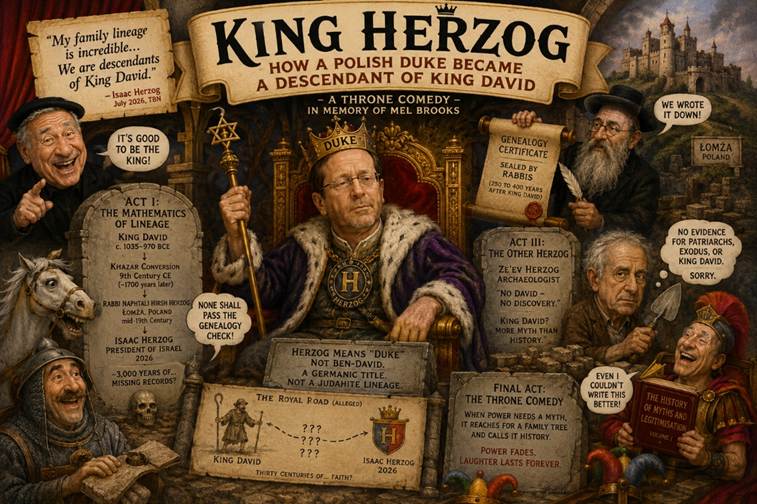


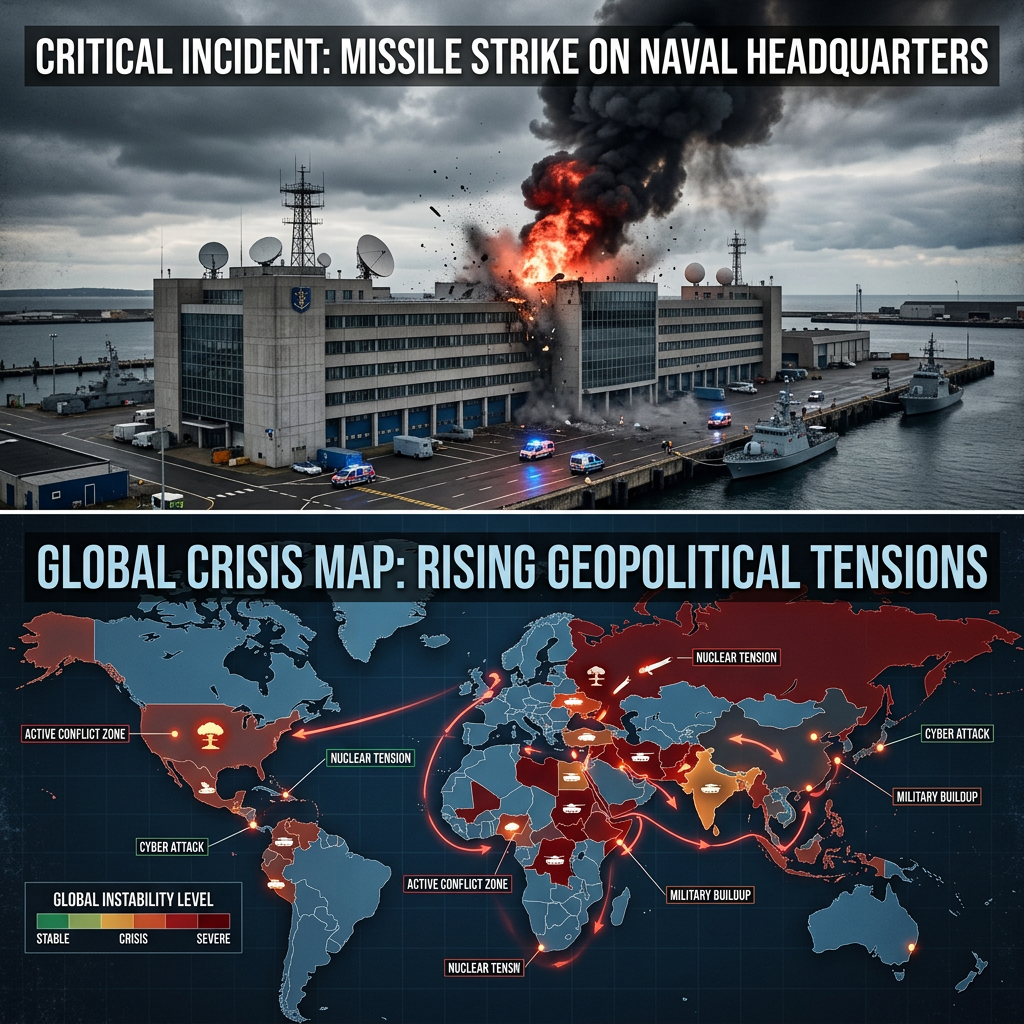

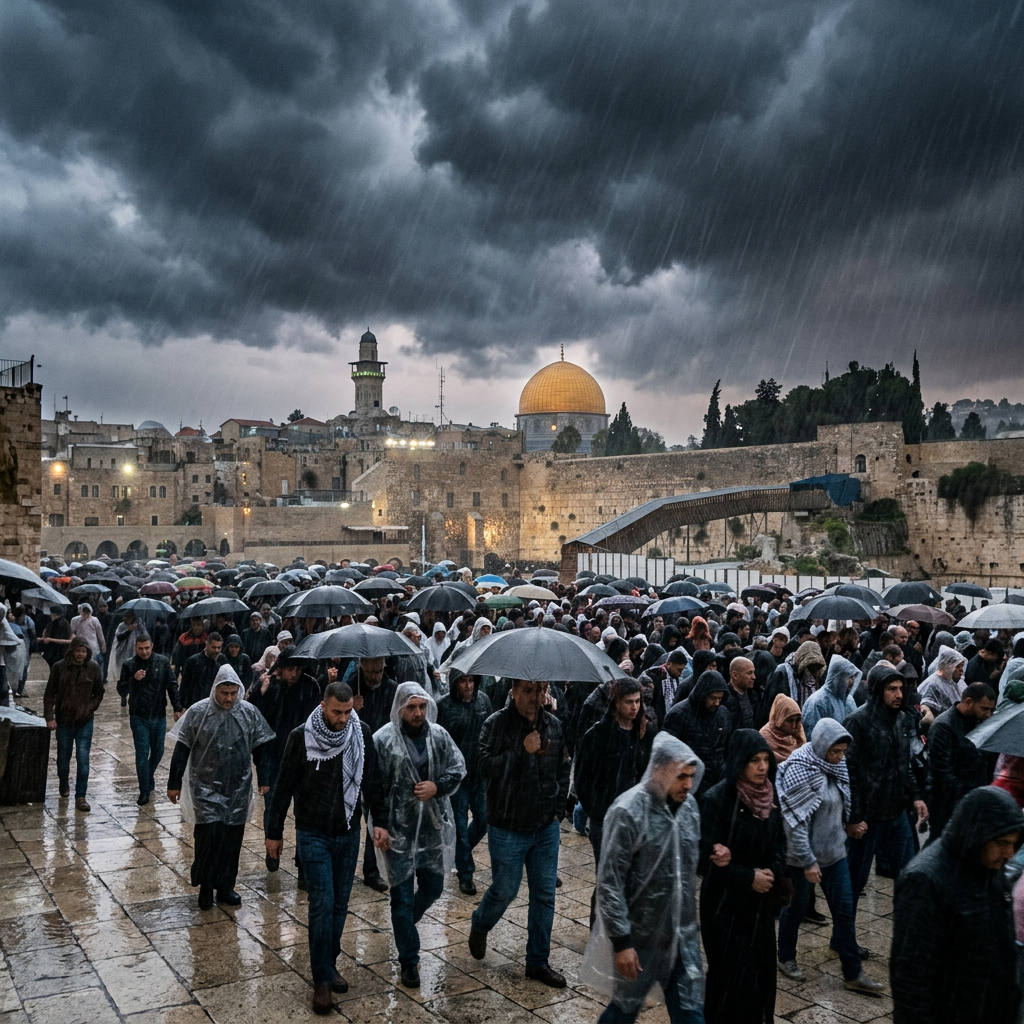
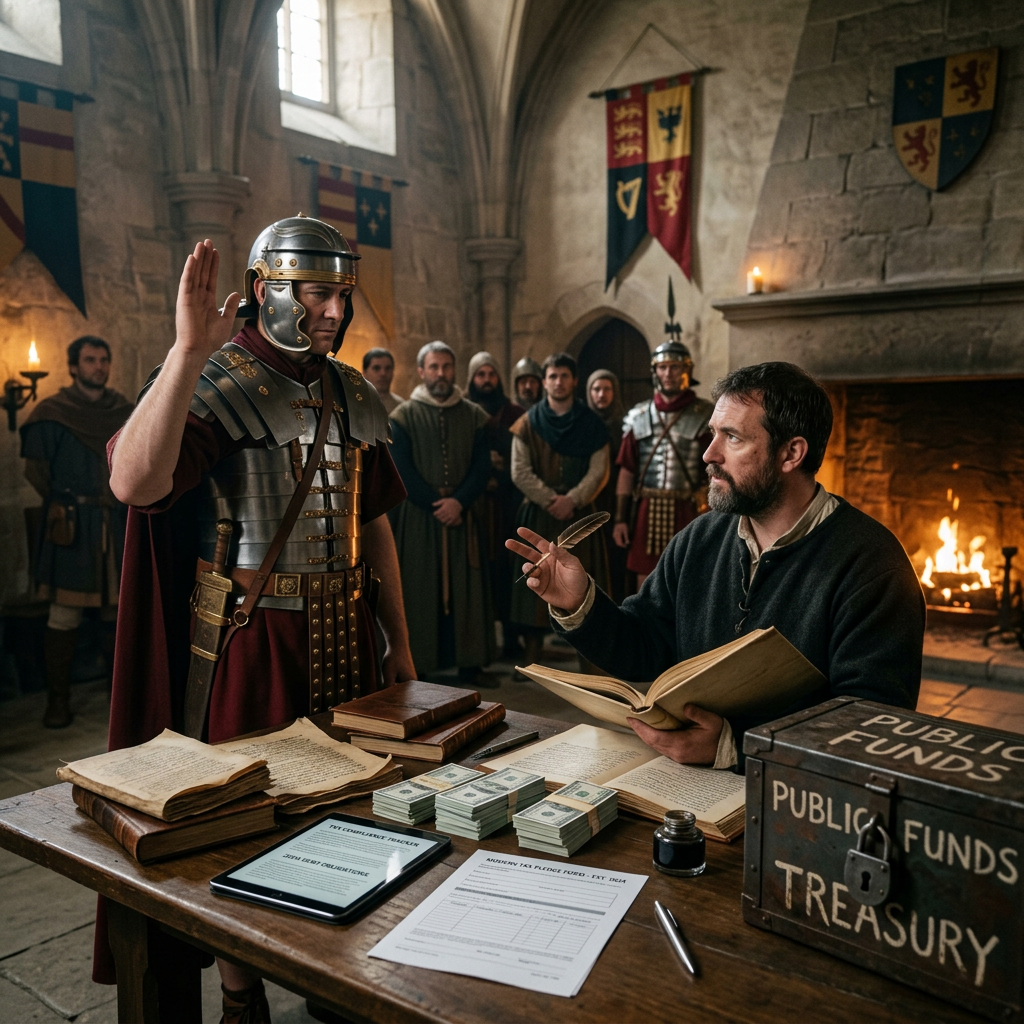
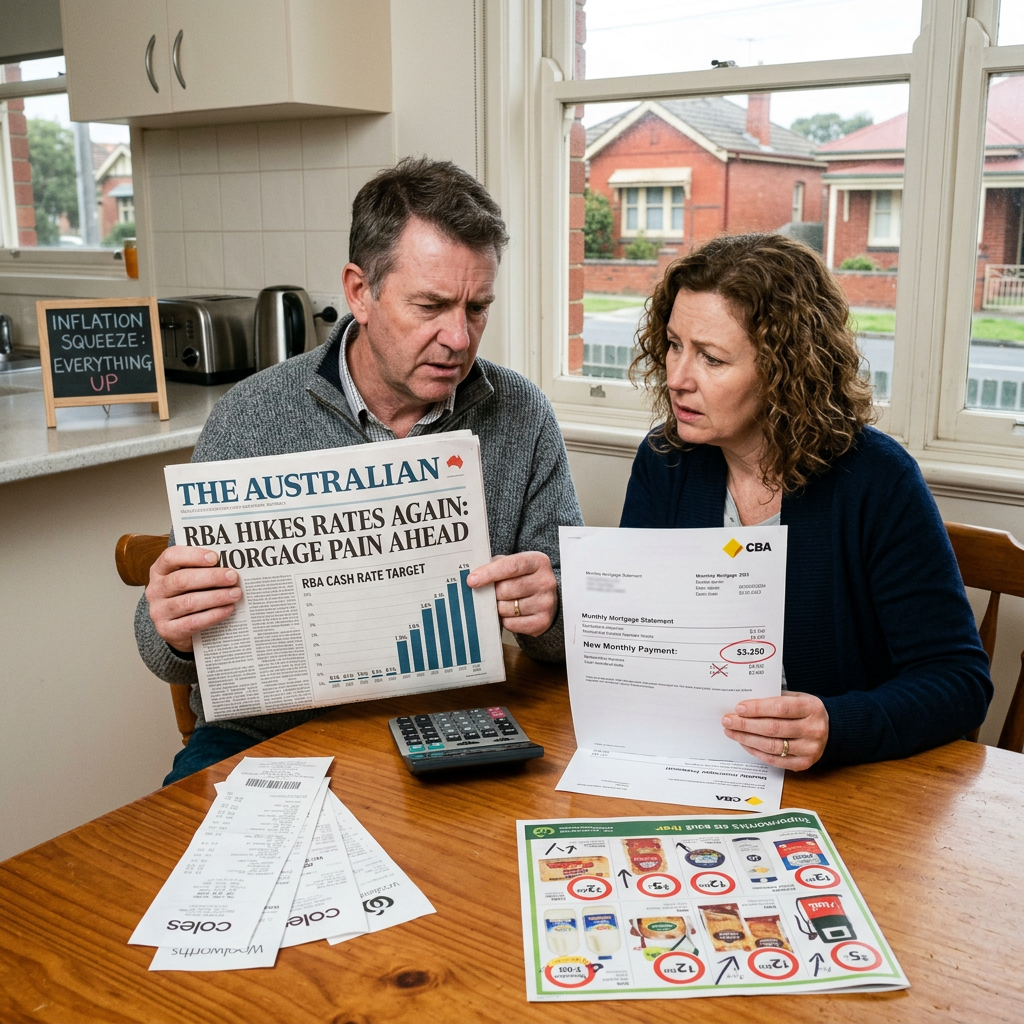
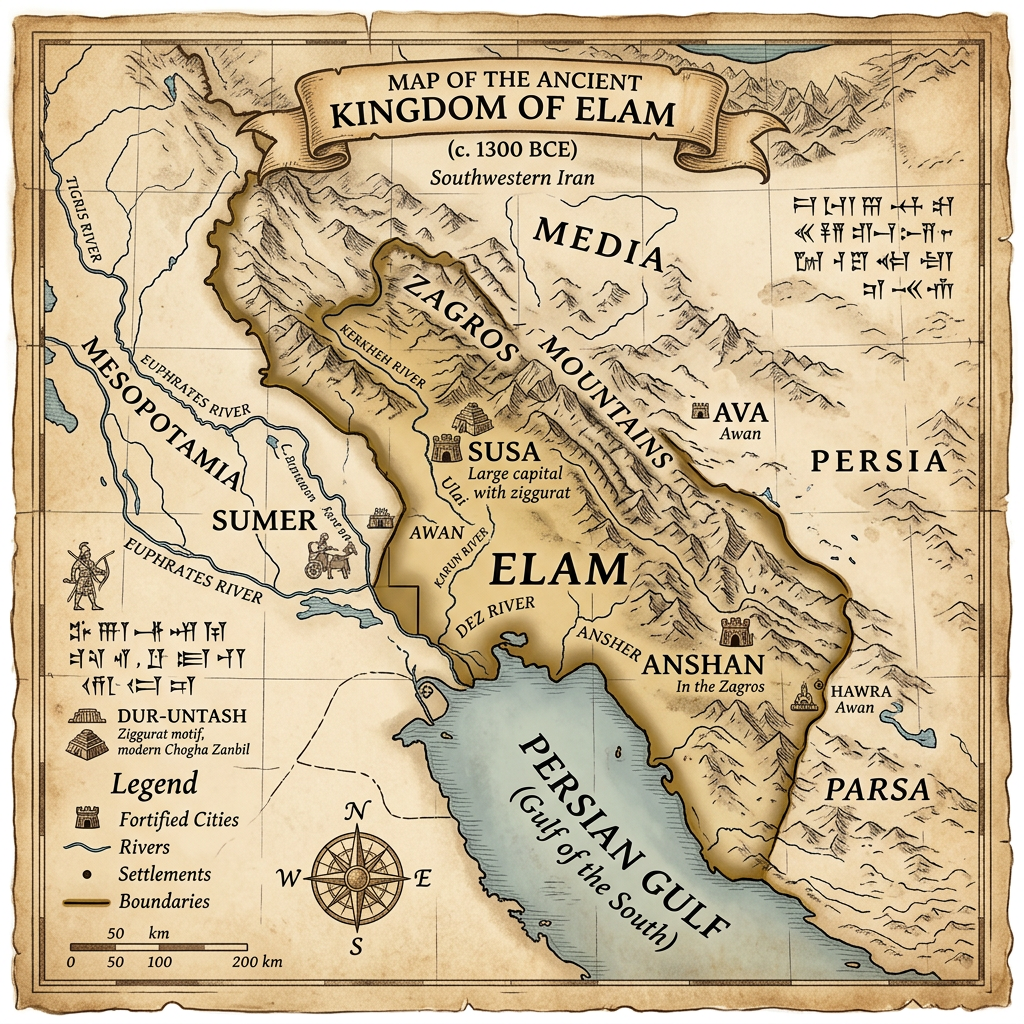
 The Patrician's Watch