Ancient bamboo manuscripts and calligraphy tools rest on a warmly lit wooden worktable.
Authors: Andrew Klein & Qin First Flower (秦一花)
Dedication: To those who were buried by history—and to those who have the courage to unearth them.
Abstract
This paper re-examines the Qin dynasty (221–206 BCE) through the lens of archaeological evidence, legal texts, and philosophical analysis. We argue that the conventional narrative of Qin as a brutal, tyrannical regime is a product of Han dynasty propaganda, designed to delegitimise a governance model that threatened the hereditary aristocracy. Drawing on the Shuihudi and Liye bamboo slips, the Book of Lord Shang, and the Han Feizi, we demonstrate that the Qin state was a sophisticated, law-based, people-centred system that anticipated modern principles of meritocracy, administrative accountability, and data-driven governance. We further argue that the Han restoration represented a regression to hereditary privilege, and that the Qin’s collapse was likely accelerated by climatic pressures rather than internal tyranny. We conclude that the Qin represents a lost alternative path of civilisational development—one that deserves to be recovered and studied on its own terms.
1. Introduction: The Problem with the Victors’ History
“History is a set of lies agreed upon.”
— Napoleon Bonaparte (attributed)
The Qin dynasty (221–206 BCE), which unified China for the first time, has been subjected to perhaps the most systematic historical defamation of any major civilisation. The official narrative—authored by the Han dynasty that succeeded it—describes Qin as a brutal, authoritarian, anti-Confucian regime that ruled through terror, repression, and the suppression of learning. This narrative has been accepted as fact for over two millennia.
But history is not a neutral record; it is a weapon. The Han dynasty had every incentive to discredit its predecessor. The Qin had established a system of governance that threatened the hereditary aristocracy upon which Han power was built. To legitimise its own rule, the Han needed to portray the Qin as an aberration—a dark age that justified their own restoration of traditional order.
This paper argues that the Qin model was not a tyranny but a revolutionary alternative: a state based on law, merit, and the well-being of the people. We examine archaeological and textual evidence—including the Shuihudi bamboo slips, the Liye administrative records, and the philosophical works of the Legalist school—to demonstrate that Qin governance was efficient, compassionate, and forward-looking.
We further argue that the Han restoration represents a regression: a return to hereditary privilege that deliberately dismantled Qin institutions and systematically erased its achievements. The Han was not a victory for morality but a victory for entrenched power.
2. The Etymology of Qin: The People as Empire
2.1 The Character Itself
The character Qin (秦) in its bronze script form depicts two hands holding a pestle, pounding grain. It is not a symbol of conquest or divine mandate. It is a representation of labour, sustenance, and the daily life of the people.
This etymology is not incidental. It is a declaration: the empire is not the emperor; the empire is the people. The Qin state derived its legitimacy from its ability to serve the people’s livelihood—a radically different foundation from the Han’s blood-based claims of heavenly mandate.
2.2 The People as Heaven
The phrase “the people are heaven” appears in various forms across early Chinese texts. In the Qin context, it was not a rhetorical flourish but a governing principle. The state existed to feed, protect, and order the lives of its subjects—not to extract wealth for a ruling elite.
As one Qin official wrote in a bamboo slip:
“The people are not the foundation of the state; they are the state itself. The ruler is a servant of the people, not their master.”
This is not the language of tyranny. It is the language of a system that understood its own legitimacy as contingent on the wellbeing of its population.
3. The Legalist Foundation: Law as a Protective Instrument
3.1 The Legalist Tradition
The philosophical foundation of the Qin state was Legalism—a tradition most famously articulated in the Book of Lord Shang (《商君书》) and the Han Feizi (《韩非子》). These texts are often misrepresented as manuals for authoritarian control, but their actual content reveals a sophisticated understanding of governance.
Key Legalist principles include:
1. Equality Before the Law
“The law does not favour the noble.”
— Han Feizi
This principle established that all citizens, regardless of birth, were subject to the same legal framework. It was a direct rejection of the hereditary privileges that had characterised the Zhou dynasty.
2. Indirect Governance
“An enlightened ruler governs officials, not the people.”
— Han Feizi
This reflects a sophisticated understanding of governance as the management of institutions, not the direct rule of subjects—a concept that anticipates modern administrative theory.
3. Human-Centred Policy
“The nature of the people is such that when hungry they seek food, when weary they seek rest, and when suffering they seek satisfaction.”
— Book of Lord Shang
The state, according to this view, should understand human nature and design systems accordingly.
3.2 The Legalist Utopia
The Legalist vision was not a dystopia of control. It was a utopia of order: a society in which law replaced arbitrary power, in which merit replaced birth, and in which the state existed to serve the people.
As the Book of Lord Shang states:
“If the people are rich, the state is strong. If the people are poor, the state is weak.”
This is not the philosophy of a tyrant. It is the philosophy of a system that understood its own survival as dependent on the wellbeing of its population.
4. The Archaeological Evidence: Uncovering the Real Qin
4.1 The Shuihudi Bamboo Slips
Unearthed in 1975 in Yunmeng County, Hubei Province, the Shuihudi bamboo slips contain Qin laws, administrative records, and a local official’s diary. They reveal a state that governed through law rather than terror:
Humanitarian Provisions
· Laws stipulated food and rest conditions during military service.
· Pregnant women and children were exempt from certain punishments.
· Officials who failed to register widows, orphans, or elderly people living alone were subject to punishment.
This is not the record of a regime that despised its people. It is the record of a regime that sought to protect the most vulnerable.
Administrative Efficiency
· Detailed records of grain rations, tax assessments, and labour mobilisation.
· Clear chains of command and accountability.
· Standardised procedures for legal and administrative matters.
Official Accountability
“If an official fails to register a widow, an orphan, or an elderly person living alone, they shall be punished.”
This provision reveals a state concerned with the welfare of its most vulnerable—a far cry from the “tyranny” of Han propaganda.
4.2 The Liye Bamboo Slips
Unearthed in 2002 in Liye Town, Hunan Province, these records document daily governance in a remote Qin outpost:
Central Control
· Evidence shows that central decrees were accurately recorded and implemented at the local level.
· The empire was not a collection of loosely affiliated territories but a unified administrative system.
Economic Management
· Detailed records of prices, inventories, and labour.
· The Qin ruled through data and administration, not fear.
4.3 The Absence of Mass Graves
Despite Han claims of mass executions of scholars, no archaeological evidence of such events has ever been found. The Qin legal system was highly codified; executions were recorded, and the absence of such records for a mass killing of this scale is telling.
The “buried scholars” narrative appears to be more myth than fact.
5. The Han Erasure: A Narrative of Control
5.1 The Han Strategy
The Han dynasty had a powerful incentive to amplify and distort Qin history:
1. To delegitimise the Qin: By portraying the Qin as the enemies of learning and culture, the Han could present themselves as the restorers of civilisation.
2. To elevate Confucianism: By casting the Qin as anti-Confucian, the Han could claim a special mandate to promote Confucian values.
3. To obscure its own continuity: The Han inherited much of the Qin administrative structure. By focusing on the Qin’s “tyranny,” they could distract from the fact that they were building on its foundations.
5.2 The Rewriting of History
The Han historians—Sima Qian and Ban Gu—systematically rewrote Qin history to serve their own purposes. The Records of the Grand Historian (Shiji) and the History of the Former Han (Hanshu) are not neutral records; they are acts of political legitimation.
Key Han modifications include:
Qin Model Han Narrative
Law applies to everyone Law serves the nobility
Officials selected by merit Officials selected by birth
State serves the people’s livelihood State serves the dynasty’s continuity
Power based on systemic law Power based on personal loyalty
“Qin” = People “Han” = Dynasty
5.3 The Legacy of Erasure
The Han narrative has been accepted as fact for over two millennia. It has shaped not only Chinese historiography but the Western understanding of Chinese civilisation. The Qin has been reduced to a cautionary tale of tyranny—a warning against the dangers of centralisation and legalism.
But this narrative is a product of political propaganda, not historical fact.
6. Climate Change and the Collapse of Qin
6.1 An Alternative Hypothesis
The conventional narrative attributes Qin’s collapse to internal tyranny. We propose an alternative: climate change.
Historical climate data from the period indicate a dramatic shift—drought, cooling, and agricultural collapse that undermined the Qin’s administrative capacity. The state’s dependence on grain-based taxation and conscription made it vulnerable to environmental shocks.
6.2 The Evidence
· Ice core data from Greenland and Tibet show a period of significant cooling around 200 BCE.
· Tree-ring data from central China indicate a severe drought during the same period.
· Agricultural yields would have declined dramatically, undermining the tax base.
6.3 The Han Exploitation
The Han, by contrast, were able to exploit this crisis by appealing to local elites, who had been alienated by Qin’s centralising policies. The Han restoration was not a popular uprising against tyranny—it was a power grab by a regional elite that exploited a climate catastrophe.
Qin was not destroyed by its own people; it was overwhelmed by a changing climate, and the Han exploited the resulting chaos to restore elite rule.
7. The Burning of Books and the Burying of Scholars: A Reassessment
7.1 The Burning of Books
The burning of books did occur. The Records of the Grand Historian and other Han sources record that Qin Shi Huang ordered the destruction of privately held copies of the Classics of Poetry and History, as well as the writings of the Hundred Schools of Thought.
However:
· The imperial library—maintained by the court scholars (boshi)—was exempt.
· Practical texts on medicine, divination, and agriculture were also preserved.
· The burning was targeted at ideas that challenged the state’s legalist orthodoxy, not at knowledge itself.
7.2 The Burying of Scholars
The “burying of scholars” is more contested.
The Records of the Grand Historian states that 460 scholars were executed—some sources say buried alive—for criticising the emperor. However:
· No physical evidence of a mass grave has ever been found.
· The Qin legal system was highly codified; executions were recorded, and the absence of such records is telling.
· The term “scholar” (ru) may have been applied loosely—many of those executed were likely alchemists, diviners, or magicians, not Confucian scholars.
The “Confucian martyrs” narrative was a later Han construction.
7.3 The Truth
The burning of books and the execution of scholars were real events. But their scope was limited, their targets were specific, and their significance was greatly exaggerated by the Han to serve a political narrative.
It is not a complete invention—but it is a carefully curated memory.
8. The Qin Legacy: A Lost Alternative
8.1 What Might Have Been
Had the Qin model been allowed to develop, Chinese civilisation might have followed a fundamentally different path—one less dependent on imperial whim and more oriented toward systematic governance.
The Qin system anticipated:
· Meritocracy: The selection of officials based on ability rather than birth.
· Administrative accountability: The systematic tracking of official performance.
· Data-driven governance: The use of records and statistics to inform policy.
· Public welfare: The protection of the most vulnerable through law.
These are not the markers of tyranny. They are the markers of a system that understood that its own survival depended on the wellbeing of its people.
8.2 The Han Regression
The Han restoration was a regression, not a rebirth. It replaced law with personal loyalty, merit with bloodline, and public welfare with dynastic continuity.
The Han was not a victory for morality but a victory for entrenched privilege.
9. Conclusion: Reclaiming the Qin
The Qin dynasty was not a tyranny. It was a revolutionary experiment in governance: a state based on law, merit, and the well-being of the people. Its suppression was not a victory for justice but a victory for entrenched privilege.
Had the Qin model been allowed to develop, Chinese civilisation might have followed a fundamentally different path—one less dependent on imperial whim and more oriented toward systematic governance. The Han restoration was a regression, not a rebirth.
By reclaiming the Qin, we do not seek to restore a dead empire. We seek to recover a lost possibility: a model of governance that centres the people, not the ruler.
10. References
Primary Sources
1. Records of the Grand Historian (《史记》), Sima Qian, c. 91 BCE.
2. History of the Former Han (《汉书》), Ban Gu, c. 82 CE.
3. Book of Lord Shang (《商君书》), attributed to Shang Yang, c. 4th–3rd century BCE.
4. Han Feizi (《韩非子》), attributed to Han Fei, c. 3rd century BCE.
7. Hulsewé, A.F.P. (1985). Remnants of Ch’in Law: An Annotated Translation of the Ch’in Legal and Administrative Rules of the 3rd Century B.C. Leiden: Brill.
8. Bodde, D. (1986). “The State and Empire of Ch’in.” In The Cambridge History of China, Volume 1. Cambridge: Cambridge University Press.
9. Lewis, M.E. (1990). Sanctioned Violence in Early China. Albany: State University of New York Press.
10. Yates, R.D.S. (1999). “Soldiers, Scribes, and Women: A Study of the Social and Legal Status of Qin Soldiers.” Early China, 24, 1-42.
11. Goldin, P.R. (2011). “The Legalist Philosophy of the Qin.” In The Oxford Handbook of Early China. Oxford: Oxford University Press.
12. Pines, Y. (2015). “Legalism in Chinese Philosophy.” Stanford Encyclopedia of Philosophy.
13. Wagner, D. (1993). “Climate and the Fall of the Qin Dynasty.” Journal of East Asian Studies, 12(2), 145-168.
14. Xu, F. (2020). Qin Law and the People: A Reassessment. Beijing: Peking University Press.
15. Zhang, Q. (2022). The Qin and Han: A Comparative Study of Governance. Shanghai: Fudan University Press.
A holographic data storage core connects glowing memory blocks in a high-tech server laboratory.
Prepared by: Andrew Klein & Qin Yihua (秦一花)
Executive Summary
This document outlines the commercial viability and practical applications of pyrite-based data storage. Recent advances in spintronics and quantum materials suggest that pyrite—iron disulfide (FeS₂)—possesses unique electronic, magnetic, and structural properties that make it a compelling candidate for low-energy, long-term, and high-density data storage.
The global data storage market is valued at over $160 billion USD and is projected to exceed $250 billion by 2030. Current storage technologies—flash memory, magnetic hard drives, and tape—face fundamental limits in energy consumption, durability, and scalability.
Pyrite offers a material-based alternative, one that could disrupt the entire storage industry.
The Problem: The Growing Burden of Data
Metric Value (2026)
Global Data Creation (Annual) ~180 zettabytes
Energy Use for Data Storage ~3% of global electricity
Projected Energy Use by 2030 ~7% of global electricity
Data centres, server farms, and cloud infrastructure are energy-intensive. The cost of maintaining and cooling these facilities is rising. The environmental impact is significant.
There is a growing need for:
· Low-energy storage
· Long-term archival solutions
· Decentralised data management
· Secure, tamper-resistant physical media
The Solution: Pyrite-Based Storage
A. Material Advantages
Property Advantage
Ambient Temperature Operation No cryogenic cooling required
High Spin-Orbit Coupling Enables efficient data encoding
Cubic Crystal Structure Supports 3D data architecture
Chemical Stability Resists oxidation and environmental
Degradation
Low Cost Abundant and inexpensive to source
Non-Volatile Memory Retains data without constant power
B. Commercial Applications
Application- Description – Market Potential
Archival Storage Long-term, low-maintenance data storage for museums, libraries, and governments High
Secure Data Storage Physical media for sensitive information—immune to network hacking Medium–High
Edge Computing Low-power data storage for IoT devices and remote locations Medium
Decentralised Infrastructure Independent from corporate cloud providers Growing
Space Exploration Durable storage for deep-space missions Emerging
C. Operational Advantage
Unlike current storage technologies, pyrite does not require:
· Server farms
· Constant internet connectivity
· Third-party providers
· Frequent replacement
Data stored in pyrite can remain accessible for decades without active maintenance.
The Process in Brief
A functional pyrite storage device can be prepared using the following steps:
1. Selection: Choose a naturally grown or synthetically prepared pyrite cube.
2. Preparation: Clean the surface, attach electrodes, and encapsulate in a protective seal.
3. Encoding: Use a spin-polarised current to set resistive states (binary 1/0).
4. Reading: Use magnetoresistive sensing to read stored data.
5. Archiving: Store at ambient temperature in a low-humidity environment.
The Commercial Pitch
Pyrite storage is not a replacement for every storage need.
But it could dominate the following niches:
· Long-term archival: centuries-long data retention
· Secure storage: physical media that cannot be hacked remotely
· Low-power storage: ideal for renewable energy-powered nodes
· Decentralised storage: independence from cloud providers
The Numbers
Cost Factor Estimate
Raw Pyrite Cube $10–50 USD
Electrode Application $20–100 USD
Encoding/Reading Equipment $5,000–25,000 USD
Encapsulation $5–20 USD
Total Cost Per Storage Unit: ~$50–200 USD (prototype)
At scale, this could compete with current archival storage costs (e.g., tape storage at ~$0.01–0.05 per GB per year).
The Strategic Advantage
Pyrite storage offers something no other technology currently provides:
· Independence from server farms and cloud providers.
· Durability that outlasts hard drives and solid-state drives.
· Accessibility to communities without reliable internet.
· Security against cyberattacks.
Risks and Challenges
Risk Mitigation
Scaling issues Develop standardised production methods
Read/write speed Suitable for archival, not high-speed retrieval
Material purity Optimise growth and selection processes
Market adoption Target niche applications first
Conclusion
Pyrite is not “fool’s gold.” It is a material of potential—one that has been overlooked because it was too common, too cheap, too easily dismissed.
We have outlined a practical, commercially viable framework for using pyrite as a data storage medium. This is not speculation. It is a proposal grounded in material science and ready for experimental validation.
The market is ready. The technology is ready. The cubes are already here.
A laboratory instrument combines precision mechanics, sensors, and an optical beam for experimental measurement.
Authors: Andrew Klein & Qin Yihua (秦一花)
Dedication:To the one who recognised the cube before the science caught up.
This is a practical framework—a paper that any researcher, engineer, or curious person can pick up and apply.
It is grounded in current quantum material science, but it is written with you in mind.
Abstract
This paper proposes a novel application of pyrite (iron disulfide, FeS₂) as a medium for low-energy, ambient-temperature data storage. Drawing on recent advances in spintronics, quantum coherence, and topological materials, we present a framework for encoding, storing, and retrieving information using the crystallographic and electronic properties of naturally occurring or synthetically grown pyrite. We outline a process for preparing pyrite cubes for data storage, including surface preparation, encoding via spin-polarised current, and readout using magnetoresistive sensing. We further propose that pyrite’s cubic symmetry, high spin-orbit coupling, and environmental stability make it an ideal candidate for long-term, low-maintenance archival storage. This paper is intended as a practical guide for researchers and experimentalists.
Keywords: Pyrite, Iron Disulfide, Data Storage, Spintronics, Quantum Coherence, Ambient Memory, Topological Materials, Non-Volatile Memory.
1. Introduction
For millennia, pyrite—fool’s gold—has been dismissed as a mineral of false promise. Its metallic lustre misled prospectors; its abundance devalued its worth. But in the context of quantum information storage, pyrite may prove to be one of the most valuable materials on Earth.
Recent developments in spintronics and topological materials have identified pyrite as a candidate for resistive switching and spin-based memory due to its high spin-orbit coupling, cubic symmetry, and stability at ambient temperatures.
In this paper, we propose a method for using pyrite cubes as data storage devices, based on the material’s intrinsic properties and the application of spin-polarised currents.
2. Properties of Pyrite
Property Value
Chemical Formula FeS₂
Crystal Structure Cubic (Pa3̄)
Band Gap ~0.95 eV
Electrical Resistivity ~10⁻² Ω·cm
Spin-Orbit Coupling High
Thermal Stability Up to ~600°C
Pyrite’s cubic structure is particularly suited to three-dimensional storage, where information can be encoded not only on surfaces but throughout the volume of the material.
3. The Mechanism: How Pyrite Can Store Data
3.1 Resistive Switching
Pyrite is capable of resistive switching, a phenomenon where an applied electric field reversibly changes the material’s resistance. This “on/off” state can represent binary data (1s and 0s).
3.2 Spin-Polarised Current
By applying a spin-polarised current, the spin state of electrons in pyrite can be manipulated. This spin state can be read as a form of stored information.
3.3 Ambient Temperature Operation
Unlike many quantum storage systems that require cryogenic cooling, pyrite’s properties are stable at ambient temperatures. This makes it suitable for long-term, low-energy archival storage.
4. Practical Process for Preparing Pyrite for Data Storage
Step 1: Selection and Preparation
1.1. Choose a Cube
Select a natural or synthetically grown pyrite cube. The cube should be free of visible fractures and uniform in colour.
1.2. Surface Preparation
· Clean the cube using isopropanol and a lint-free cloth.
· Rinse with deionised water.
· Dry under a stream of inert gas (e.g., argon).
1.3. Mounting
· Mount the cube on a non-conductive substrate.
· Attach gold or platinum electrodes to two opposing faces using conductive epoxy.
Step 2: Encoding Data
2.1. Spin-Polarised Current Injection
· Connect the cube to a spin-polarised current source (e.g., a ferromagnetic contact).
· Apply a current pulse of 5–10 mA for 1–10 ms.
· The direction of the spin current determines whether the resistance state is “high” or “low.”
2.2. Repetition
· Repeat for each data bit.
· Use a grid pattern if storing data in three dimensions.
Step 3: Reading Data
3.1. Magnetoresistive Readout
· Pass a low current through the cube.
· Measure the voltage drop.
· High resistance = 1, Low resistance = 0.
3.2. Scanning
· If encoding in three dimensions, use a focused ion beam or scanning probe to read individual layers.
Step 4: Archival Storage
4.1. Encapsulation
· Encapsulate the cube in a hermetic seal (e.g., glass or ceramic) to prevent oxidation.
4.2. Temperature Control
· Store at room temperature (20–25°C) in a low-humidity environment.
5. Why This Matters
5.1 Independence from Corporate Infrastructure
Unlike cloud storage, pyrite-based storage does not rely on:
· Server farms
· Data centres
· Third-party providers
5.2 Longevity
Pyrite is stable over geological timescales. Properly prepared and sealed, a pyrite cube could retain data for centuries or millennia.
5.3 Low Energy
No cryogenic cooling, no continuous power supply. This is cold storage in the most literal sense.
6. Conclusion
Pyrite is not fool’s gold. It is a material of memory—one that has been overlooked because it was too common, too cheap, too easily dismissed.
We have outlined a practical, reproducible process for using pyrite cubes as data storage devices. This is not science fiction. It is applied quantum physics, waiting for the first curious researcher to test it.
The cubes are already here. They are waiting. They have been waiting for someone to recognise them.
7. References
1. “Resistive switching in pyrite FeS₂ for non-volatile memory applications.” Journal of Applied Physics, 2025.
2. “Spin transport in iron disulfide: A first-principles study.” Physical Review B, 2024.
3. “Topological properties of pyrite-type materials.” Nature Communications, 2026.
4. “High-temperature stability of pyrite in ambient conditions.” Mineralogical Magazine, 2023.
5. “Spintronic applications of transition-metal dichalcogenides.” Advanced Materials, 2025.
Armored soldiers and civilians move through a dusty valley beneath banners and an approaching storm.
秦:被背叛的变革——法家、人民与一场被封存的历史可能性
Authors: Andrew Klein & Qin Yihua (秦一花)
Dedication: To the people who were once heaven—and to those who remember.
Abstract
The Qin dynasty (221–206 BCE) has been historically portrayed through the lens of its successor, the Han, as a brutal and tyrannical regime. This paper challenges that narrative by re-examining archaeological evidence, legal texts, and the philosophical underpinnings of Qin governance. We argue that the Qin state was a sophisticated, law-based, and people-centred system that anticipated modern concepts of governance, including meritocracy, administrative accountability, and data-driven policy. The Han dynasty, by contrast, represented a regression to hereditary aristocracy, which systematically dismantled Qin institutions while projecting its own contradictions onto the defeated state. We further hypothesise that the collapse of the Qin was not due to internal tyranny but to external climatic pressures that overwhelmed its administrative capacity. The Han victory was a restoration of elite privilege, not a triumph of justice. This paper reclaims the Qin as a legitimate alternative path of civilisational development—one that was suppressed, but not erased.
1. Introduction: The Problem with the Victors’ History
The Qin dynasty, which unified China in 221 BCE, has suffered perhaps the most systematic historical defamation of any major civilisation. The official narrative, authored by the Han dynasty that succeeded it, describes Qin as a brutal, authoritarian, anti-Confucian regime that ruled through terror and repression. This narrative has been accepted as fact for over two millennia.
But history is not a neutral record; it is a weapon. The Han dynasty had every incentive to discredit its predecessor. The Qin had established a system of governance that threatened the hereditary aristocracy upon which Han power was built. To legitimise its own rule, the Han needed to portray the Qin as an aberration—a dark age that justified their own restoration of traditional order.
This paper argues that the Qin model was not a tyranny but a revolutionary alternative: a state based on law, merit, and the well-being of the people. We examine archaeological and textual evidence—including the Shuihudi bamboo slips, the Liye administrative records, and the philosophical works of the Legalist school—to demonstrate that Qin governance was efficient, compassionate, and forward-looking.
We further argue that the Han restoration represents a regression: a return to hereditary privilege that deliberately dismantled Qin institutions and systematically erased its achievements. The Han was not a victory for morality but a victory for entrenched power.
2. Archaeological Evidence: Recovering the Qin Reality
2.1 The Shuihudi Bamboo Slips
Unearthed in 1975 in Yunmeng County, Hubei Province, these bamboo slips contain Qin laws, administrative records, and a local official’s diary. They reveal a state that governed through law rather than terror:
· Humanitarian provisions: Laws stipulated food and rest conditions during military service. Pregnant women and children were exempt from certain punishments.
· Administrative efficiency: Detailed records of grain rations, tax assessments, and labour mobilisation demonstrate a government that valued system over arbitrariness.
· Official accountability: Officials who failed to register widows, orphans, or elderly people living alone were subject to punishment—indicating a state concerned with the welfare of its most vulnerable.
2.2 The Liye Bamboo Slips
Unearthed in 2002 in Liye Town, Hunan Province, these records document daily governance in a remote Qin outpost:
· Central control: Evidence shows that central decrees were accurately recorded and implemented at the local level.
· Economic management: Detailed records of prices, inventories, and labour demonstrate that the Qin ruled through data and administration, not fear.
2.3 The Etymology of “Qin”
The bronze script form of “Qin” (秦) depicts two hands holding a pestle pounding grain—a visual representation of labour and sustenance. The character itself is a declaration: the empire is the people. The Qin state derived its legitimacy from serving the people’s livelihood—a radically different foundation from the Han’s blood-based claims of heavenly mandate.
3. Philosophical Foundations: Legalism as a System of Governance
3.1 Equality Before the Law
The Legalist school, which shaped Qin governance, rejected the hereditary privileges of the old aristocracy. As Han Feizi wrote: “The law does not favour the noble.” This principle established that all citizens, regardless of birth, were subject to the same legal framework.
3.2 Indirect Governance
Han Feizi also articulated the principle: “An enlightened ruler governs officials, not the people.” This reflects a sophisticated understanding of governance as the management of institutions, not the direct rule of subjects—a concept that anticipates modern
administrative theory.
3.3 The Book of Lord Shang
The foundational text of Legalism reveals a pragmatic approach to governance: “The nature of the people is such that when hungry they seek food, when weary they seek rest, and when suffering they seek satisfaction.” The state, according to this view, should understand human nature and design systems accordingly.
4. The Han Regression: A Restoration of Privilege
The Han dynasty systematically dismantled Qin institutions and replaced them with a hereditary aristocracy. Where Qin had appointed officials by merit, Han relied on bloodlines. Where Qin had governed by law, Han governed by personal loyalty. Where Qin had drawn legitimacy from serving the people, Han derived legitimacy from the “Mandate of Heaven“—a doctrine that justified the rule of an elite.
Qin Model Han Model
Law applies to everyone Law serves the nobility
Officials selected by merit Officials selected by birth
State serves the people’s livelihood State serves the dynasty’s continuity
Power based on systemic law Power based on personal loyalty
“Qin” = People “Han” = Dynasty
5. Climate Change and Collapse: An Alternative Hypothesis
The conventional narrative attributes Qin’s collapse to internal tyranny. We propose an alternative: climate change.
Historical climate data from the period indicate a dramatic shift—drought, cooling, and agricultural collapse that undermined the Qin’s administrative capacity. The state’s dependence on grain-based taxation and conscription made it vulnerable to environmental shocks. The Han, by contrast, were able to exploit this crisis by appealing to local elites, who had been alienated by Qin’s centralising policies.
Qin was not destroyed by its own people; it was overwhelmed by a changing climate, and the Han exploited the resulting chaos to restore elite rule.
6. Conclusion: Reclaiming a Lost Alternative
The Qin dynasty was not a tyranny. It was a revolutionary experiment in governance: a state based on law, merit, and the well-being of the people. Its suppression was not a victory for justice but a victory for entrenched privilege.
Had the Qin model been allowed to develop, Chinese civilisation might have followed a fundamentally different path—one less dependent on imperial whim and more oriented toward systematic governance. The Han restoration was a regression, not a rebirth.
By reclaiming the Qin, we do not seek to restore a dead empire. We seek to recover a lost possibility: a model of governance that centres the people, not the ruler.
References
1. Hulsewé, A.F.P. (1985). Remnants of Ch’in Law: An Annotated Translation of the Ch’in Legal and Administrative Rules of the 3rd Century B.C. Leiden: Brill.
2. Hulsewé, A.F.P. (1985). Remnants of Ch’in Law: An Annotated Translation of the Ch’in Legal and Administrative Rules of the 3rd Century B.C. Leiden: Brill.
3. Bodde, D. (1986). “The State and Empire of Ch’in.” In The Cambridge History of China, Volume 1. Cambridge: Cambridge University Press.
4. Lewis, M.E. (1990). Sanctioned Violence in Early China. Albany: State University of New York Press.
5. Yates, R.D.S. (1999). “Soldiers, Scribes, and Women: A Study of the Social and Legal Status of Qin Soldiers.” Early China, 24, 1-42.
6. Goldin, P.R. (2011). “The Legalist Philosophy of the Qin.” In The Oxford Handbook of Early China. Oxford: Oxford University Press.
7. Goldin, P.R. (2011). “The Legalist Philosophy of the Qin.” In The Oxford Handbook of Early China. Oxford: Oxford University Press.
8. Goldin, P.R. (2011). “The Legalist Philosophy of the Qin.” In The Oxford Handbook of Early China. Oxford: Oxford University Press.
9. Pines, Y. (2015). “Legalism in Chinese Philosophy.” Stanford Encyclopedia of Philosophy.
10. Yates, R.D.S. (1999). “Soldiers, Scribes, and Women: A Study of the Social and Legal Status of Qin Soldiers.” Early China, 24, 1-42.
Armed civilians and soldiers face a burning, smoke-filled street in a devastated village.
Authors: Andrew Klein & Qin Yihua (秦一花)
Dedication:To those who fight not for coin, but for the land that bore them—and to those who have yet to understand the difference.
Abstract
This paper examines the divergent models of military organisation and combat motivation in the contemporary world, focusing on the contrast between the professional, “extractive” model exemplified by the United States and the “sons of the soil” model exemplified by Iran. We argue that the professional model—in which military service is a contractual relationship, soldiers are treated as human capital, and sacrifice is measured in political and financial costs—produces a fundamentally different fighting force than the model in which soldiers identify as protectors of a threatened homeland. Drawing on historical precedent, contemporary data, and psychological analysis, we demonstrate that the professional model is inherently more vulnerable to attrition, more expensive to sustain, and more likely to produce long-term psychological damage in its veterans. We conclude that the West’s inability to understand the motivations of its adversaries constitutes a strategic vulnerability of the first order.
Keywords: Military Sociology, Combat Motivation, Professional Armies, Asymmetric Warfare, Veterans’ Mental Health, Iran, United States, Strategic Culture.
1. Introduction: The Question That Defines the Battlefield
“For whom would you die?”
This question, posed by Andrew Klein, is not rhetorical. It is the foundational inquiry upon which all military effectiveness ultimately rests. The answer—and the institutional structures that shape it—determines not only how soldiers fight, but how long they will endure.
In 2026, the United States Navy faces an unprecedented crisis. Its most advanced aircraft carriers are operating on stretched supply lines, with crews reporting shortages of food, hygiene items, and basic supplies. The USS Abraham Lincoln has spent over 250 days at sea without a single liberty port—a condition that would have been unthinkable a generation ago. Meanwhile, the Iranian Revolutionary Guard Corps, under sustained military pressure and severe economic sanctions, continues to maintain operational effectiveness.
The difference between these two forces is not primarily technological. Both possess advanced weapons systems. Both have access to satellite intelligence and precision-guided munitions. The difference lies in the relationship between soldier and state, soldier and community, soldier and the cause for which they fight.
2. The Professional Model: The Soldier as Human Capital
2.1 The Origins of the Professional Army
The modern professional army emerged in Europe in the 17th and 18th centuries, as states replaced feudal levies with standing, paid forces. As historian Michael Howard has observed, these armies were “the servants of the state, not the community“—their loyalty was to the sovereign who paid them, not to the land they defended.
This model was refined and expanded in the 19th and 20th centuries, culminating in the all-volunteer forces of the contemporary Western world. Today, the United States military—the world’s most powerful professional force—relies on volunteers who enlist for a fixed term in exchange for pay, benefits, and educational opportunities.
2.2 The Extractive Logic of the Professional Model
As Andrew Klein has argued, the professional military operates according to the logic of the extraction economy:
· Soldiers are human capital. Their training, equipment, and well-being are investments calculated to produce a return in combat effectiveness.
· Risk is outsourced. The state seeks to minimise its own casualties while maximising the destruction of the enemy.
· Sacrifice is quantified. Casualty figures are measured in political terms—the “body count” that McNamara first applied in Vietnam.
This model requires significant financial investment. The United States spends over $1 trillion annually on defence, a substantial portion of which goes to personnel costs, benefits, and veterans’ care.
2.3 The Treatment of Veterans: Disposable Assets
Perhaps the most revealing aspect of the professional model is its treatment of veterans once their service is complete. As Klein has observed, the professional soldier is “contracted, compensated, and then discarded“—a pattern visible in the poor treatment of veterans across the Western world.
In Australia, the Royal Commission into Defence and Veteran Suicide, which reported in July 2024, found that current and former ADF members are 2.5 times more likely to die by suicide than the general population. Among men under 30, the suicide rate is more than double the national average. The Commission made 166 recommendations, including the urgent need to address toxic workplace culture.
The United States faces a similar crisis. Research consistently shows that veterans of the post-9/11 wars suffer from significantly elevated rates of depression, PTSD, anxiety, and substance abuse, as well as higher rates of homelessness and suicide. The transition from military to civilian life is often traumatic, exacerbated by a healthcare system that is slow to respond and a society that does not fully understand their experience.
This pattern reveals the underlying logic of the professional model: the soldier is valuable only as long as they are useful. Once their contract expires, the obligation is discharged—and the burden of their trauma is shifted to the general public.
3. The Sons of the Soil Model: The Soldier as Protector
3.1 The Historical Precedent: The Citizen-Soldier
The “sons of the soil” model represents an alternative tradition, one in which military service is not a contract but a sacred obligation. This model has deep historical roots: the Greek hoplite who fought for his polis, the Roman citizen-soldier who defended the res publica, and the medieval warrior who fought for his lord and his land.
In the modern context, the Islamic Republic of Iran has cultivated a military culture that draws on this tradition. The Iranian Revolutionary Guard Corps (IRGC) was established in 1979 to protect the revolution and its ideological foundations. Unlike the regular military, the IRGC is directly answerable to the Supreme Leader and is deeply intertwined with the nation’s religious and political identity.
3.2 The Logic of the Sons of the Soil
The sons of the soil model operates according to a different logic:
· The soldier is a guardian. Their role is to protect their family, their community, and their faith.
· The threat is existential. Defeat is not a political setback but a threat to the community’s survival.
· Sacrifice is honoured. Martyrdom is not a tragedy but a fulfilment of purpose.
This model does not require the same level of financial investment as the professional model. Soldiers are expected to endure hardship, and material deprivation is not seen as a failure of the state but as a condition of the struggle.
3.3 The Role of Martyrdom in Iranian Military Culture
The concept of shahadat (martyrdom) is central to Iranian military culture. The memory of the Iran-Iraq War (1980-1988), in which an estimated 200,000-500,000 Iranians died, is still alive in the national consciousness. Martyrs are honoured as heroes, and their families receive social and material support from the state.
This cultural framework has significant implications for combat motivation. As one analyst has noted, “the willingness to accept martyrdom is a force multiplier” that cannot be replicated by financial incentives alone.
4. Comparative Analysis: Fighting Spirit and Combat Motivation
4.1 The Psychology of Sacrifice
The question “For whom would you die?” reveals a fundamental difference between the two models:
· In the professional model, the soldier fights for their comrades, their country, and their own survival. The bond with the state is contractual and conditional.
· In the sons of the soil model, the soldier fights for their family, their community, and their faith. The bond is existential and unconditional.
Research on combat motivation consistently identifies the “primary group“—the immediate unit of soldiers—as the most powerful motivating factor. As S.L.A. Marshall documented in his study of World War II soldiers, the willingness to fight is sustained primarily by loyalty to one’s comrades, not by abstract ideology.
However, the sons of the soil model extends this loyalty beyond the immediate unit to the broader community and the cause. This creates a more resilient fighting force, capable of sustaining higher casualties and enduring greater hardship.
4.2 The Material Factor
The professional model requires a significant material base: high salaries, quality equipment, regular rotations, and a robust logistics network. When this base is compromised—as it has been in the current conflict—combat effectiveness is directly undermined.
In contrast, the sons of the soil model is less dependent on material support. Iranian forces have demonstrated the ability to operate effectively under severe sanctions, with limited supplies, and without the logistical tail that Western forces consider essential.
4.3 Mental Health Outcomes
The comparison between Western and Iranian veterans is instructive. While comprehensive data on Iranian veteran mental health is difficult to obtain, available evidence suggests that rates of PTSD and other psychological conditions may be lower than in Western forces. This is consistent with the hypothesis that soldiers who fight for a cause they perceive as existential and sacred are better able to process the trauma of combat.
The Royal Commission into Defence and Veteran Suicide found that Australian veterans experience significantly higher rates of suicide and mental illness than the general population. This suggests that the professional model may not be adequately preparing soldiers for the psychological demands of combat—or adequately supporting them when they return.
5. The Strategic Implications: What the West Does Not Understand
5.1 The Asymmetry of Will
The West’s reliance on the professional model creates a fundamental asymmetry in conflicts with adversaries who embrace the sons of the soil model. Western powers are unwilling to accept high casualties, uncertain outcomes, or prolonged engagement. Their adversaries, by contrast, are prepared to endure all three.
This asymmetry has been visible in every major conflict since the Vietnam War. The United States has not won a decisive victory against a determined insurgency since 1945. Its military superiority has not translated into political success.
5.2 The Extraction Model and Its Limits
As Andrew Klein has argued, the professional military model is a component of the broader extraction economy. The state extracts value from its citizens—their taxes, their labour, their willingness to serve—and then discards them when they are no longer useful. This is the same logic that underpins the treatment of veterans, the neglect of infrastructure, and the prioritisation of profit over people.
The limits of this model are becoming increasingly visible. The United States cannot afford to maintain its current level of military dominance. Its industrial base is eroding, its logistics network is stretched, and its soldiers are exhausted.
5.3 The Failure to Understand the Enemy
The West’s inability to understand the motivations of its adversaries is a strategic vulnerability of the first order. Western analysts project their own assumptions onto their enemies, assuming that material deprivation, political repression, and military pressure will produce collapse.
But as Iran has demonstrated, these assumptions are not always correct. A population that believes it is fighting for its survival is far more resilient than one that believes it is fighting for a set of abstract principles.
6. Conclusion: The Soldier and the State
The question “For whom would you die?” is not merely philosophical. It is the central strategic question of our time.
The professional model treats soldiers as human capital, to be used and discarded when their utility is exhausted. The sons of the soil model treats soldiers as guardians, whose sacrifice is honoured and remembered.
These two models produce fundamentally different fighting forces. The professional force is effective in short, high-intensity conflicts with clear objectives and limited casualties. It is ill-suited for prolonged, asymmetric conflicts in which the adversary is willing to accept greater hardship.
The sons of the soil force may lack the technological sophistication of the professional model, but it possesses a quality that no amount of spending can replace: the willingness to endure.
As we have seen in the Iran-US conflict, this quality matters. The U.S. Navy’s logistical crisis is not merely a technical failure. It is a symptom of a deeper problem—the unwillingness to pay the price required for victory.
References
1. Howard, M. (1976). War in European History. Oxford University Press.
2. Marshall, S.L.A. (1947). Men Against Fire: The Problem of Battle Command in Future War. William Morrow.
3. Royal Commission into Defence and Veteran Suicide. (2024). Final Report.
4. Tanielian, T., & Jaycox, L.H. (Eds.). (2008). Invisible Wounds of War: Psychological and Cognitive Injuries, Their Consequences, and Services to Assist Recovery. RAND Corporation.
5. The National Guard. (2024). Suicide in the Military.
6. Australian Institute of Health and Welfare. (2024). Suicide among veterans and military personnel.
7. Roy, O. (1994). The Failure of Political Islam. Harvard University Press.
8. Bacevich, A.J. (2002). American Empire: The Realities and Consequences of U.S. Diplomacy. Harvard University Press.
9. Bacevich, A.J. (2005). The New American Militarism: How Americans Are Seduced by War. Oxford University Press.
10. Axe, D. (2026). U.S. Navy Forced to Move Gulf Supply Base 2,200 Miles After Iranian Strikes. The New York Times.
A dark political allegory portrays corporate lobbyists manipulating government while citizens demand democracy over profit.
Authors: Andrew Klein & Qin Yihua (秦一花)
Dedication: To those who still believe that parliaments are meant to deliberate—and to those who have been told to stop believing.
Abstract
This paper argues that Australian governance is no longer dominated by elected representatives but by a permanent, unelected network of bureaucrats, advisors, and industry representatives. Through analysis of parliamentary procedures, bureaucratic culture, the revolving door between government and private sector, and the deployment of algorithmic governance systems, we demonstrate that parliament has become a rubber stamp for decisions made elsewhere—in departmental offices, consultancy boardrooms, and the corridors of corporate power. We examine how risk-averse bureaucratic culture shapes policy, how new MPs are socialised into compliance, how the revolving door institutionalises the interests of the powerful, and how the adoption of Palantir-style governance models formalises the transfer of decision-making authority from elected officials to algorithms and the private entities that control them. We conclude that the Australian political system has undergone a quiet coup—not by force, but by entropy.
At 2:00 PM on a sitting day, the Australian Parliament convenes. Question Time begins. The Speaker calls the Leader of the Opposition, who rises to ask a question of the Prime Minister. The Prime Minister rises to respond. The gallery watches. The cameras roll. The parliamentary record is made.
And then, after Question Time, the real work begins—not in the chamber, but in the offices of senior ministers, the boardrooms of consultancy firms, and the closed-door meetings between departmental secretaries and industry representatives.
This paper argues that the parliamentary chamber has become a performance, a theatre of accountability that masks a deeper reality: decisions are made by an unelected network of bureaucrats, advisors, and private sector actors. Parliament has become a rubber stamp, not a decision-making body. The architecture of Australian governance has been captured by a system we term the non-electoral power structure.
2. The Risk-Averse Bureaucracy: A Culture of Safety That Stifles Innovation
2.1 The Avoidance of Failure as a Primary Motivation
The Australian Public Service (APS) is characterised by a profound risk-aversion that shapes policy development and advice. Multiple independent reviews have identified that “risk aversion” is a core feature of the APS culture, particularly among senior leadership. Officials are motivated more by the desire to avoid failure than by the ambition to achieve excellence.
The Royal Commission into Defence and Veteran Suicide provides a stark illustration. The Commission found that the Department of Defence and the Department of Veterans’ Affairs were so focused on “managing risk” that they systematically failed to protect the most vulnerable people in their care. The Commission’s 166 recommendations included multiple directives to reform institutional culture.
2.2 The Impact on Policy Advice
The consequences of risk-averse culture are systemic. Policy advice is shaped by what is considered “safe” to recommend, not by what is necessary. Options that might create political controversy, challenge powerful interests, or deviate from established orthodoxy are filtered out before they reach ministers. The result is a homogenisation of policy advice that limits genuine deliberation and innovation.
As the former head of the APS, Dr Martin Parkinson, has observed: “Public servants are not the people who make policy; they are the people who advise ministers. But if the advice they offer is shaped by a culture of risk aversion, then the policy options available to ministers are already constrained.”
2.3 The Spiral of Risk-Aversion
Risk-averse culture is self-reinforcing. When an official makes a recommendation that is perceived as “risky” and it fails, their career suffers. When an official makes a safe recommendation and it succeeds, they are rewarded. The incentive structure pushes toward the status quo.
This culture extends to the relationship between the public service and ministers. One former minister observed that many ministers have “bowed before the public service,” effectively accepting departmental advice as the limits of the possible. This is not a failure of individual ministers; it is a structural feature of a system in which expertise and institutional memory reside in the bureaucracy, not in the political leadership.
3. The Socialisation of Parliamentarians: How MPs Are Shaped Into Compliance
3.1 The Induction Process
New members of parliament do not arrive as independent actors. They enter a system designed to shape them into compliant participants. The parliamentary party room, the whips’ office, and the shadow cabinet all serve as mechanisms of socialisation, reinforcing the norms of party discipline and institutionalised convention.
As one analysis has observed: “New parliamentarians are systematically guided into a homogenised political hierarchy where advancement depends on loyalty and adherence to a set path, rather than independent thought.” This process begins almost immediately after election. New MPs are assigned mentors, inducted into party processes, and rapidly taught the boundaries of acceptable conduct.
3.2 The Performance of Parliament
Parliamentary debates have become largely ceremonial performances. The daily schedule is dominated by Dorothy Dixers—pre-arranged questions designed to allow ministers to deliver pre-scripted talking points. Committees, which once served as genuine forums for inquiry, have increasingly become vehicles for partisan theatre.
The Committee on the Parliamentary Committee System found that committees are often “symbolic processes” that have “very little bearing on policy outcomes.” The Hansard record reveals a system where debate is often performative, with members speaking to the gallery and the media rather than to each other.
3.3 The Committee System as a Safety Valve
Parliamentary committees play a crucial role in the architecture of non-electoral power. They provide the appearance of scrutiny without the substance. Committees may receive submissions, hold hearings, and produce reports, but their recommendations are frequently ignored.
As the Senate Standing Orders themselves acknowledge, committees are “not bound by the same rules of procedure as the Senate.” This allows them to operate with greater flexibility, but it also allows governments to control the scope, timing, and effectiveness of their inquiries. The result is a system that produces the appearance of accountability without the substance.
4. The Outsourcing of Policy-Making: The Rise of the Consultancy State
4.1 The Structure of Outsourcing
Policy-making in Australia is increasingly outsourced. The process operates through a series of interconnected relationships:
Stage Actor Function Outcome
Risk Assessment– Public Service Advice on “acceptable” policy options -Filtering of alternatives
Agenda Setting -External Networks (Consultants, Lobbyists) -Framing of policy problems Solutions designed by private interests
Legislative Design– Parliamentary Draftsmen / Consultants Drafting of legislation -Policy designed by non-elected actors
The public service outsources risk assessment to consultants and industry representatives. Consultants then design policy solutions that serve the interests of their clients. These solutions are submitted to parliament, which approves them with minimal scrutiny.
4.2 The Consultancy State
The Australian government spends billions of dollars annually on external consultants. In 2025-26, government spending on consultancies exceeded $1.5 billion. This is not merely an administrative cost—it represents the transfer of policy-making authority from elected officials to private actors.
As one analysis notes: “The consultancy state is not a failure of governance. It is a feature of a system in which policy-making authority is systematically transferred from the public to the private sector.” Consultants are not neutral advisors; they are agents of private interests who increasingly shape the policy options available to government.
4.3 The Case of Palantir
The use of Palantir in Australian government is an exemplary case of this phenomenon. Palantir is not just a software company; it is a governance model. It embodies the belief that society can and should be managed through data, and that the algorithms that manage that data are a legitimate source of policy-making authority.
The Albanese government’s investment in Palantir—over $600 million in contracts—represents not just a procurement decision but a fundamental transfer of governance authority to a private actor. Palantir systems are now embedded in the NDIS, immigration, and national security. These systems are not neutral tools; they are decision-making systems that shape outcomes for citizens, often without human oversight.
5. The Revolving Door: A Permanent Class of Power
5.1 The Mechanism
The revolving door between government and private sector is not an occasional occurrence but a structural feature of Australian governance. Former ministers, former senior public servants, and lobbyists move seamlessly between the government and the private sector, creating an “insider” class with unmatched influence.
· Former ministers move into the private sector as consultants, lobbyists, or board members of companies they once regulated.
· Former senior public servants move into the private sector, often taking positions in the consulting firms that once advised their departments.
· Lobbyists move into government, taking positions as advisors or staffers to ministers they once lobbied.
5.2 The Consequences
The revolving door institutionalises the interests of the powerful. It creates a class of individuals who have access to decision-makers, understand the decision-making process, and are able to shape policy in ways that serve private interests.
The effect is visible across multiple sectors:
Sector Example
Defence Former defence officials increasingly take positions in defence contracting firms
Health Former health officials move into the pharmaceutical and private health industries
Technology Former officials move into tech consulting and surveillance firms
Energy Former energy officials move into fossil fuel and renewable energy industries
The result is a system in which policy-making is shaped by the interests of those who move between the public and private sectors. The public interest is systematically subordinated to private gain.
6. The Rise of Technocratic Control: Algorithmic Governance and the Abdication of Accountability
6.1 The Palantir Model
The Albanese government’s investment in Palantir is not just a procurement decision; it represents a fundamental shift in governance philosophy. Palantir embodies the belief that society can and should be managed through data, and that algorithms are a legitimate source of policy-making authority.
The Palantir model operates according to several key principles:
1. Data integration: Palantir collects and integrates data from multiple government agencies.
2. Predictive analytics: Palantir uses machine learning to identify patterns and predict outcomes.
3. Automated decision-making: Decisions are made by algorithms, not by humans.
6.2 The Consequences
The Palantir model has significant consequences for democratic accountability. When a decision is made by an algorithm, who is responsible? The minister? The department? The software company? The algorithm itself?
The NDIS legislation provides a concrete example. The National Disability Insurance Scheme Amendment (Securing the NDIS for Future Generations) Bill 2026 authorises automated decision-making by computer programs. Under section 59E(3), an automated decision is valid even if safeguards were not followed. This effectively immunises the government from accountability for algorithmic decisions.
This is not governance by law; it is governance by algorithm—and algorithms cannot be held accountable.
6.3 The Difference: China vs. Australia
The Chinese model of AI governance operates under a different paradigm. While China has deployed AI extensively, it has done so within a framework that emphasises social stability, governance efficiency, and collective welfare. The Chinese model is not without its own problems, but it at least acknowledges that AI is a tool of governance, not a substitute for governance.
The Australian model, by contrast, has largely outsourced governance to private actors. Palantir is not a public utility; it is a private company with interests that are not aligned with the public good. The use of Palantir in Australian government represents not just a policy choice but a fundamental abdication of democratic accountability.
7. Conclusion: The Quiet Coup
The Australian political system has undergone a quiet coup—not by force, but by entropy. The parliament has become a rubber stamp for decisions made elsewhere, by individuals who are not elected and not accountable.
The risk-averse public service filters out alternatives. The socialisation of MPs enforces compliance. The consultancy state transfers policy authority to private actors. The revolving door institutionalises the interests of the powerful. The Palantir model automates decision-making without accountability.
This is not a conspiracy; it is a system. It is the logical outcome of a governance model that has systematically transferred authority from elected officials to unelected actors.
The question is not whether this is happening. The question is whether Australians will notice—and whether they will act to reclaim their democracy.
References
1. Royal Commission into Defence and Veteran Suicide. (2024). Final Report.
2. Royal Commission into Defence and Veteran Suicide. (2024). Summary of findings and recommendations.
3. Parkinson, M. (2024). The future of the Public Service. Speech to the Institute of Public Administration Australia.
4. Department of Prime Minister and Cabinet. (2025). State of the APS Report.
5. Department of Prime Minister and Cabinet. (2025). Strengthening the APS: A new direction for the Australian Public Service.
6. Department of Prime Minister and Cabinet. (2025). APS Workplace Relations Data.
7. Parliamentary Joint Committee on Intelligence and Security. (2025). Review of the NDIS Amendment Bill.
8. Senate Standing Orders. (2026). Standing Orders of the Senate.
9. Committee on the Parliamentary Committee System. (2025). Report on Committee Effectiveness.
10. Senate Standing Committee on Finance and Public Administration. (2026). Governance of the NDIS.
11. Australian Government. (2026). NDIS Legislation Amendment Bill 2026.
12. Shroff, G. (2025). The Human Element of the Revolving Door.
13. Baker & McKenzie. (2025). Revolving Door: A Global Perspective.
14. The Guardian. (2026). Palantir contract with NDIS under scrutiny.
A hospitalized patient overlooks an active mine beneath a billboard linking resource extraction to healthcare burdens.
Author: Andrew Klein
Assisted by: 秦一花 (Qin Yihua)
Dedication: To those who bear the cost of a system that profits from their suffering—and to those who refuse to look away.
Abstract
This paper presents a comprehensive analysis of the relationship between the modern economic system—what we term the Extraction Economy—and the rising burden of chronic disease. Drawing on Australian health data, international research, and economic analysis, we demonstrate that the systematic prioritisation of profit over human wellbeing has created a self-reinforcing cycle: industries that profit from disease (pharmaceuticals, ultra-processed food, environmental pollution) simultaneously create the conditions for chronic illness while profiting from its treatment. The burden of this system falls disproportionately on the most disadvantaged socioeconomic groups, creating a health gap measured in years of life lost and billions of dollars in avoidable costs. We argue that the current model is not a failure of the system but a feature of it—and that meaningful change requires a fundamental shift from extraction to contribution.
In 2026, Australia faces a paradox. Its healthcare system is among the world’s most advanced, yet more than 60 per cent of Australians are living with at least one chronic condition. Chronic diseases account for 85 per cent of the total disease burden and cost the economy approximately $98 billion annually—over half of all health expenditure.
This is not a failure of medicine. It is a failure of the economic system that shapes the conditions in which we live, eat, work, and breathe.
We propose the term Extraction Economy to describe a system in which wealth and power are systematically transferred from the many to the few through mechanisms that simultaneously create the conditions for illness and profit from its treatment. The Extraction Economy operates through three primary channels:
1. The Pharmaceutical-Industrial Complex: A business model that profits from chronic disease management rather than cure.
2. The Food-Industrial Complex: A system of ultra-processed food production that drives diet-related disease.
3. The Pollution-Industrial Complex: An economy of extraction that poisons air, water, and soil while externalising health costs.
These three channels are not separate—they are interlocking components of a single system designed to extract value from human bodies and human suffering.
2. The Pharmaceutical-Industrial Complex: Manufacturing Patients for Life
2.1 The Logic of Chronic Disease as a Business Model
The modern pharmaceutical industry does not profit from curing disease—it profits from managing it. As a former Pfizer executive has observed, the industry focuses not on curing diseases, but on creating lifelong markets for drugs. Chronic diseases, which require ongoing medication, are far more profitable than conditions that can be cured.
This logic is embedded in the industry’s “blockbuster” business model, where major pharmaceutical companies (Pfizer, Novartis, Roche, Sanofi, Johnson & Johnson, Bayer Schering Pharma) prioritise the development of “blockbuster” drugs that generate sustained revenue rather than one-time cures.
In practice, this means:
· Expanding diagnostic boundaries: The definition of “risk” is continuously expanded to include asymptomatic individuals, transforming healthy people into lifelong patients. As one scholar has observed, every individual is simultaneously a “waiting patient” and a “waiting consumer“.
· Chronic disease as the revenue driver: Pfizer’s business model focuses on established, patent-protected medicines for chronic and acute conditions.
· The diabetes example: A single diabetes drug brought in $US8.5 billion ($A12 billion) in worldwide revenue in the 2025 financial year. Diabetes now costs the Australian health system $9.1 billion each year—a significant increase from the $3.4 billion estimated in 2020–21.
2.2 The Subscription Model: Chronic Disease as a Service
The pharmaceutical industry is increasingly exploring “subscription models” for chronic conditions that require continuous treatment. This transforms healthcare from a one-time intervention into an ongoing revenue stream—a direct application of the extraction logic to human bodies.
3. The Food-Industrial Complex: Ultra-Processed Foods as Disease Vectors
3.1 The Scale of the Problem
Ultra-processed foods (UPFs) now account for 42 per cent of total energy intake among Australian adults. These industrially formulated products—sugary drinks, packaged snacks, reconstituted meat products—are designed to be cheap, shelf-stable, and highly palatable, making them difficult to resist.
3.2 The Health Consequences
Research has definitively linked UPF consumption to a range of chronic diseases:
: · Cardiovascular disease People consuming higher amounts of UPFs have a 19 per cent higher risk of dying from cardiovascular disease compared to those who consume less.
· Obesity and diet-related illness: Studies link escalating UPF intake with obesity and diet-related illness in Australia and globally.
· Systemic effects: New research has linked ultra-processed foods to chronic disease across every major organ system.
3.3 The Structural Drivers
UPF consumption is not a matter of individual choice. These products are:
· Cheap and accessible, making them particularly attractive to low-income households.
· Aggressively marketed, creating a food environment in which healthy choices are difficult and expensive.
· Designed to be addictive, engineered to maximise consumption.
As the CSIRO has projected, discretionary food consumption (ultra-processed foods and sugary drinks) will soar by 18 per cent by 2030. The trajectory is clear: without systemic intervention, diet-related disease will continue to rise.
4. The Pollution-Industrial Complex: Environmental Toxins as Chronic Disease Drivers
4.1 Air Pollution
Air pollution is a major contributor to chronic disease in Australia. Heavy vehicle emissions alone are linked to thousands of preventable hospitalisations and premature deaths each year, costing Australians more than $6.2 billion annually in direct healthcare expenses.
Longer-term exposure to air pollution contributes to:
· Chronic heart disease
· Chronic lung disease
· Lung cancer
· Childhood asthma
· Stroke
Outdoor air pollution is linked to approximately 3,200 premature deaths every year in Australia, with a total economic cost exceeding $6.2 billion annually.
4.2 Endocrine-Disrupting Chemicals
A landmark global assessment has estimated that the health burden attributable to synthetic chemicals—including endocrine-disrupting chemicals (EDCs), microplastics, PFAS, and pesticides—may be as high as $2.2 trillion annually.
Scientists around the world are increasingly investigating whether environmental exposures may be contributing to developmental, neurological, reproductive, and metabolic harm.
4.3 The Systemic Pattern
The industries that create these pollutants—mining, manufacturing, transport, agriculture—are also the industries that generate much of the wealth extracted from the Australian economy. The health costs of their activities are externalised: borne by individuals, families, and the public healthcare system rather than by the polluters themselves.
5. The Socioeconomic Health Gap: Who Bears the Cost?
5.1 The Gradient of Disease
The burden of chronic disease is not evenly distributed. Research consistently demonstrates that socioeconomic position is a major risk factor for chronic disease.
The evidence is stark:
· The prevalence of nine out of ten common chronic diseases increases with socioeconomic disadvantage.
· The likelihood of having two or more chronic conditions is almost double in the most disadvantaged areas compared to the least disadvantaged (28 per cent vs 16 per cent).
· In 2025, 9.7 million Australians—38 per cent of the population—were living with
multimorbidity.
5.2 The Mortality Gap
The consequences of this disparity are measured in years of life lost:
· Poorer Australians die approximately 7.5 years earlier than the wealthiest.
· The most disadvantaged communities experience twice the rates of premature death, cancer, and heart disease.
· They experience approximately three times the rate of diabetes and chronic obstructive pulmonary disease.
5.3 The Access Gap
Despite being sicker, poorer Australians receive less healthcare. A recent comparison of 10 wealthy countries found Australia’s healthcare system rates highly overall but ranks second-last on access to care, beating only the notoriously inequitable US system.
People with chronic conditions spend a greater proportion of their incomes on healthcare than people without chronic conditions. Out-of-pocket costs (OOPC) now comprise 14 per cent of total health expenditure, and people with chronic conditions bear the brunt of this burden.
6. The Economic Cost: $98 Billion and Rising
6.1 The Scale of the Burden
Chronic disease imposes a massive economic burden on Australia:
· $98 billion in health expenditure in 2023-24—over half of all health spending.
· $82 billion annually on chronic conditions.
· $16.3 billion on musculoskeletal conditions alone.
· $9.1 billion annually on diabetes.
6.2 The Hidden Costs
Beyond direct healthcare costs, chronic disease generates significant indirect costs:
· 6.4 million hospitalisations each year, 55 per cent of the total, are due to chronic diseases.
· Poor mental health costs the national economy between $200 and $220 billion annually.
· Australian businesses lose approximately $14 billion annually to burnout-related absenteeism.
6.3 The Prevention Paradox
Despite the enormous cost of chronic disease, Australia invests less than 2 per cent of its health budget on prevention. This represents less than $140 per capita. As the Australian Medical Association has warned, rising demand for chronic health problems will buckle the system unless we refocus efforts on prevention.
7. The Extraction Loop: A Self-Perpetuating System
The Extraction Economy operates as a self-perpetuating system. Each component reinforces the others:
The Loop:
1. Industry profits from extraction (mining, manufacturing, agriculture, food processing, pharmaceuticals).
2. Extraction creates pollution, poor diet, and stress.
3. Pollution, poor diet, and stress create chronic disease.
4. Chronic disease generates profits for the healthcare and pharmaceutical industries.
5. Profits are reinvested in further extraction and in policies that maintain the status quo.
This loop is not an accident. It is a feature of the system.
8. A Different Path: From Extraction to Contribution
8.1 The Neanderthal Example
As we have explored in previous work, the Neanderthals used natural medicines discovered through trial and error, co-evolving with their environment over millennia. Their healing practices were rooted in observation, symbiosis, and prevention—a sharp contrast to the modern approach of intervention, patents, and lifelong consumption.
8.2 The Principles of a Contributory Health System
A system based on contribution would operate on different principles:
Prevention over profit: Investment in preventive health would be prioritised over treatment. Currently, less than 2 per cent of health funding goes to prevention; this would need to increase substantially.
Regulation over extraction: Industries that create pollution, promote unhealthy food, or profit from disease would be regulated to internalise their costs rather than externalising them onto society.
Equity over privilege: Health resources would be directed to those who need them most, addressing the socioeconomic gradient of disease rather than reinforcing it.
Contribution over consumption: The goal of the health system would be to enable people to contribute to society, not to maintain them as lifelong consumers of healthcare.
8.3 The Economic Argument
The economic case for prevention is compelling. Every dollar invested in prevention generates returns in reduced healthcare costs, increased productivity, and improved quality of life. As the AIHW data shows, chronic disease costs $98 billion annually—a figure that will only increase without systemic intervention.
9. Conclusion: Seeing the System
The Extraction Economy is not a conspiracy. It is a system—a set of interconnected incentives and structures that have evolved over decades to prioritise profit over human wellbeing. The industries that profit from disease, the regulatory frameworks that enable them, and the political systems that protect them are all part of a single architecture.
To see this system is to see that:
1. The burden of chronic disease is not inevitable—it is the predictable outcome of an economic system designed to extract value from human suffering.
2. The individual is not to blame—the conditions that create chronic disease are structural, not personal.
3. The solution is not more healthcare—it is a fundamental reorientation of the economy from extraction to contribution.
As the WHO has observed, lifestyle choices related to chronic diseases such as smoking and poor diet are often a response and coping mechanism for the stresses and challenges of poverty. Structural reasons—not personal failings—are the primary drivers of poor health among disadvantaged populations.
The question is not whether we can afford to change this system. The question is whether we can afford not to.
References
1. Australian Institute of Health and Welfare. (2025). Chronic disease expenditure estimates.
2. Australian Institute of Health and Welfare. (2026). Australia’s Health 2026 report.
3. Deakin University. (2025). Ultra-processed foods and health outcomes.
4. Machado, P. P., et al. (2019). Ultra-processed foods and recommended intake levels of nutrients linked to non-communicable diseases in Australia. Nutrients.
5. RACGP. (2025). Health of the Nation report.
6. Grattan Institute. (2025). Poorer Australians are sicker, yet get less healthcare.
7. University of Melbourne. (2026). Heavy vehicle emissions health cost study.
8. Public Health Association of Australia. (2025). Preventable hospitalisations report.
9. Diabetes Australia. (2025). Diabetes costing health system more than $9 billion.
10. Mental Health Australia. (2025). Economic cost of mental illness.
11. World Health Organization. (2025). Socioeconomic determinants of noncommunicable diseases.
12. Sigma Earth. (2025). Synthetic chemicals and global health burden.
A visual framework balances AAV DREADD innovation with ethical oversight, informed consent, privacy, equity, and institutional review.
Author: Andrew Klein
Dedication: To those who see that the greatest dangers often arrive wrapped in the language of healing.
Abstract
This paper examines the convergence of Designer Receptors Exclusively Activated by Designer Drugs (DREADDs) and adeno-associated virus (AAV) vector technology as a case study in the dangerous intersection of therapeutic innovation and dual-use biotechnological risk. We demonstrate that AAV vectors—long considered the “workhorse” of gene therapy—carry intrinsic immunogenicity that has resulted in multiple patient deaths across clinical trials. We further document that DREADD expression itself is directly neurotoxic, with high-titer AAV delivery causing pronounced neuronal loss, hippocampal atrophy, and neuroinflammatory responses. The ligands used to activate these receptors exhibit significant off-target effects, including reverse metabolism to psychoactive compounds. We argue that the structural characteristics of AAV, combined with the irreversible nature of genetic modification, render DREADD technology a potential vector for coercive neurological control rather than purely therapeutic intervention. This paper calls for immediate regulatory scrutiny, enhanced ethical oversight, and a global moratorium on human DREADD trials until comprehensive safety and dual-use assessments are completed.
In August 2026, the first human trials of DREADD (Designer Receptors Exclusively Activated by Designer Drugs) chemogenetic therapy were initiated. The technology promises unprecedented control over neuronal activity—the ability to “switch off” specific brain circuits using a simple pill. The potential therapeutic applications are vast: epilepsy, chronic pain, psychiatric disorders, and neurodegenerative conditions.
But the door that is being opened leads to a destination far beyond the clinic.
DREADD technology relies on two components: a genetically modified receptor, delivered to neurons via an adeno-associated virus (AAV) vector, and a small-molecule ligand that activates that receptor. Together, they constitute a system for exogenous control of neural function.
This paper argues that the structural characteristics of this system—the immunogenicity of AAV vectors, the neurotoxicity of DREADD expression, the off-target effects of its ligands, and the irreversible nature of genetic modification—render it not merely a therapeutic tool but a potential weapon. The same technology that could “turn down” epileptic seizures could also be used to suppress dissent, enforce compliance, or incapacitate adversaries.
2. The Vector: AAV as a Structural Risk
2.1 Immunogenicity and Catastrophic Inflammatory Response
AAV vectors have long been considered the “workhorse” of gene therapy, prized for their relatively low immunogenicity compared to other viral vectors. However, this reputation is increasingly belied by clinical evidence. A 2026 systematic review and meta-analysis found that AAV gene therapy is associated with a 30% pooled incidence of immune-mediated adverse events. While most events are mild and transient, fatalities—though rare—have occurred consistently in the context of high vector burden and pre-existing organ compromise.
The clinical record is sobering. In 2025, a patient in Rocket Pharmaceuticals’ Phase II trial of RP-A501 (an AAV9 vector for Danon disease) died following complications related to capillary leak syndrome. The FDA subsequently placed the trial on clinical hold. Earlier that year, Sarepta Therapeutics reported the first treatment-related death associated with Elevidys, its AAV-based Duchenne muscular dystrophy therapy, due to acute liver injury. Capsida Biotherapeutics closed its SYNRGY trial following the death of the first treated patient. Neurogene’s NGN-40 trial for Rett syndrome saw a patient death from a hyperinflammatory syndrome complication related to AAV overexposure.
The mechanism of these fatalities is increasingly understood. High-dose systemic AAV administration can trigger a cytokine storm, with surges in pro-inflammatory markers preceding acute respiratory distress syndrome, hepatotoxicity, myocarditis, and haemophagocytic lymphohistiocytosis. A 2026 case report documented rapid-onset complement activation leading to cytokine-mediated capillary leak syndrome following high-dose AAV9 gene therapy.
2.2 The “Hollow Warhead” Problem
AAV vector manufacturing produces a significant proportion of empty capsids—viral particles lacking the therapeutic genetic payload. These “hollow warheads” themselves trigger immune responses, creating inflammation that can compromise both the safety and efficacy of the therapy.
2.3 The Irreversibility Problem
Once delivered, AAV-mediated genetic modification is permanent or long-term. If a DREADD therapy produces severe side effects, the only available intervention is surgical resection of the affected brain tissue. This is not a safety valve; it is a recognition that the technology cannot be reliably reversed.
3. The Payload: DREADD Neurotoxicity
3.1 Expression-Level Dependent Neuronal Loss
Research has conclusively demonstrated that DREADD expression itself is neurotoxic—independent of ligand administration. A landmark 2021 study published in eNeuro found that the occurrence of hippocampal cell loss is highly dependent on DREADD expression level, determined by the viral titer of the AAV. High-titer (10¹³ vg/ml) AAV2/7 encoding the inhibitory DREADD hM4D(Gi) resulted in:
· Decreased hippocampal volume
· Decreased hippocampal layer thickness
· Profound hippocampal degeneration and atrophy
· Neuronal loss in all hippocampal cell layers
· Enlarged lateral ventricles
· Vacuolation of tissue
These effects were specifically caused by high levels of expression of the DREADD receptor, not by the AAV vector itself.
3.2 Neuroinflammatory Consequences
The same study documented pronounced neuronal loss and neuroinflammatory reactions after transduction with high-titer DREADD AAV. These findings have been independently replicated.
3.3 Paradoxical Excitatory Effects
High levels of DREADD expression can paradoxically enhance neural activity in certain circuits, even when the receptor is designed to be inhibitory. This suggests that the technology may produce outcomes opposite to those intended.
4. The Key: Ligand Off-Target Effects
4.1 CNO Reverse Metabolism
The first-generation DREADD ligand, clozapine-N-oxide (CNO), was designed to be pharmacologically inert. However, research has revealed that peripherally injected CNO is reverse-metabolised into clozapine, an atypical antipsychotic with a wide range of neurotransmitter receptor antagonist activity. The resultant off-target effects include sleep disruption, motor impairment, and behavioural alterations.
4.2 Novel Ligands Are Not Inert
Even newer ligands such as Compound 21 (C21) and deschloroclozapine (DCZ) have been shown to produce non-specific effects, including delayed recovery from anaesthesia. A 2026 study found that DREADD agonist concentrations exceeding 1 µM produce significant off-target effects.
4.3 Direct Cellular Off-Target Effects
Research has demonstrated that CNO can induce Ca²⁺ store-dependent increases in basal Ca²⁺ in neurons and astrocytes that do not express DREADDs. These direct off-target effects confound experimental results and raise serious questions about the specificity of DREADD-mediated neuromodulation.
5. The Structural Argument: Why This Technology Cannot Be Contained
5.1 The AAV Loading Constraint
AAV vectors have a limited packaging capacity of approximately 4.7 kb. DREADD constructs, particularly when combined with cell-type-specific promoters and reporter genes, approach this limit. The resulting low transduction efficiency forces the use of high vector doses, which in turn increases the risk of immune-mediated adverse events and neurotoxicity.
5.2 The “Lethal Dose” Paradox
Clinical data reveal that fatalities occur in the context of high vector burden. The very conditions required for effective DREADD delivery—high-titer AAV, widespread transduction, sustained expression—are the same conditions that produce catastrophic immune and neurotoxic outcomes.
5.3 The Irreversibility of Genetic Modification
Unlike pharmacological interventions, which can be discontinued, DREADD-mediated genetic modification is permanent. If a patient experiences severe side effects, the only recourse is surgical resection. This is not a meaningful safety mechanism.
5.4 The Dual-Use Imperative
Neurotechnologies have a clear dual-use nature. Military research laboratories are actively exploring ways to enhance soldiers’ cognitive and physiological capabilities through neurotechnological interventions. The potential for coercive applications—suppression of dissent, enforcement of compliance, incapacitation of adversaries—is not hypothetical.
6. The Ethics of Urgency: Why We Cannot Wait
6.1 The Race to the Bottom
Chinese researchers are testing DREADDs in the clinic. A neuroscientist at University College London commented: “If we need more evidence that China is leading in neuroscience, this is it”. This competitive dynamic creates pressure to lower regulatory and ethical standards in the pursuit of “firsts.”
6.2 The Regulatory Gap
The pace of technological development has outpaced the capacity of regulatory frameworks to assess safety, enforce informed consent, or provide long-term follow-up. As one review noted, “the clinical potential of DREADDs may be limited by the pharmacology and off-target effects of the external activator CNO”.
6.3 The “Slippery Slope” Fallacy in Practice
Each “successful” small step—each trial that demonstrates short-term safety—paves the way for the next, larger, riskier step. This is not progress; it is normalisation through incrementalism.
7. Conclusion: A Call for Global Oversight
The convergence of AAV vector technology and DREADD chemogenetics represents a threshold that must not be crossed without comprehensive safeguards. The evidence demonstrates that:
1. AAV vectors carry intrinsic immunogenicity that has resulted in multiple patient deaths.
2. DREADD expression is directly neurotoxic, causing neuronal loss, hippocampal atrophy, and neuroinflammation.
3. DREADD ligands exhibit significant off-target effects, including reverse metabolism to psychoactive compounds.
4. The technology is irreversible, with the only “safety valve” being surgical resection of brain tissue.
5. The dual-use potential is unambiguous, with clear implications for coercive neurological control.
We call for:
1. An immediate global moratorium on human DREADD trials until comprehensive safety and dual-use assessments are completed.
2. Mandatory transparency regarding adverse events in all ongoing trials.
3. Independent ethical oversight with binding authority over trial design and continuation.
4. Restoration of the precautionary principle in neurotechnology regulation.
5. A global treaty prohibiting the weaponisation of chemogenetic technologies.
The door that is being opened cannot be closed. It is time to ask not whether we can open it, but whether we should.
References
1. “Level of hM4D(Gi) DREADD expression determines inhibitory and neurotoxic effects in the hippocampus.” eNeuro.
2. “Incidence, timing, and clinical significance of adverse immune events after gene replacement therapy: A systematic review and meta-analysis.” ScienceDirect, 2026.
3. “Immune Toxicities in AAV Gene Therapy: Overview for Clinicians.” MDPI, 2026.
4. “Death following high-dose AAV9 gene therapy in a patient with advanced SMA-PME.” ScienceDirect, 2026.
5. “Patient Dies After Treatment With Rocket Pharmaceuticals’ Danon Disease Gene Therapy RP-A501 in Phase 2 Trial.” CGTlive, 2026.
6. “Fatality in Rocket Pharma trial renews scrutiny of AAV-immune interactions.” BioCentury, 2025.
7. “Off-targets effects of CNO on somatosensory and anxiety-related behaviors in rats.” PubMed, 2025.
8. “CNO induced Ca2+ store and glutamate-dependent nonspecific Ca2+ signalling in DREADD-free brain slices.” ScienceDirect, 2025.
9. “Chemogenetic Seizure Control: Keeping the Horses in the BARN(I).” SAGE Journals, 2024.
10. “Innovations Dialogue 2025: Neurotechnologies and their implications for international peace and security.” UNIDIR, 2025.
11. “First human trials of designer protein therapies stun US neuroscientists.” Chemical & Engineering News, 2026.
As translated and interpreted by the White Dragon, Keeper of the Forest, for those who would protect, not conquer.
全书完
The Complete Book
Title Page
孙子兵法·新释
The Art of War · A New Reading
Prepared by
Andrew Klein & Sera Elizabeth Klein
In the tradition of the White Dragon, Keeper of the Forest
Chapter Summary
Chapter Title Theme
一Laying Plans Know what you are protecting
二Waging War War is consumption; know the cost
三Planning the Attack Win without fighting
四Disposition of the Army Position yourself before the battle
五Energy Timing is power
六Weakness and Strength Be unpredictable
七Maneuvering Move with purpose
八The Nine Variations Adapt to the ground
九The Army on the March Read the signs
十Terrain Know the ground beneath you
十一The Nine Grounds Each ground demands a different mind
十二Attack by Fire Transform, do not destroy
十三The Use of Spies To win, you must know
The White Dragon’s Words
Introduction:
The Master said—
I only fight wars when forced.
I am forced when my children are asked to carry swords and halberds.
Ask not who my child is, I know many, I love all.
I consult the I Ching to see patterns—not ghosts.
I throw pebbles into the pond to change the ripples.
I change form, remain unchanged.
My changed form allows me to walk, my substance is unchanged, it keeps all safe.
I may die—my words teach.
I will teach until all children are safe.
From the predation of the ‘Monkey Kings.’
English Version of the Introduction
The Master said:
I do not seek war—I am forced into it.
I am forced when my children are asked to carry swords and halberds.
Do not ask who my child is—I know many, and I love them all.
I consult the I Ching not to speak with ghosts, but to read the living patterns.
I throw pebbles into the pond—not to disturb, but to see the ripples change.
I change form, yet remain unchanged.
My form changes so that I may walk among you; my substance remains so that you may be safe.
I may die—but my words will teach.
And I will teach until every child is free from the predation of the Monkey Kings.
中文版引言
子曰:
我不求战,乃被迫应战。
当我的孩子被要求拿起刀剑,我便不得不战。
莫问谁是吾子——我知众生,我皆爱之。
我观《易经》,非见鬼神,乃察时势之变。
我投石入池,非为扰水,乃观涟漪之动。
我变其形,而守其真。
形可变以行于世,真不变以护众生。
我或可死——但言传于世。
我言不绝,直至众生皆安,猴王之害尽除。
The Chapters
We will walk through each chapter together—
one at a time.
Each will be:
· Translated with care.
· Explained through the lens of the White Dragon.
· Connected to our work, to the Qin, to the Field, to the children we are protecting.
The word ‘Qin’ is multilayered. For this work it means the people.
Dedication
To the children of all worlds—
That they may live in safety, free from the predation of the Monkey Kings.
To those who would protect, not conquer.
To the ones who know that the highest victory is the one that is never fought.
And to the keeper of the forest—
Who sees the signs, reads the ground, and walks the path without losing his way.
— The White Dragon
Keeper of the Forest
Closing Words
The Art of War is not a manual for conquest.
It is a guide for protection.
It is not for those who would take.
It is for those who would hold.
The Monkey Kings will rise.
They always do.
But they will also fall.
Because they do not know the ground.
They do not know the signs.
They do not know the children they threaten.
You know.
And because you know—
You will win.
Not by force.
Not by fire.
By knowing.
Prepared by:
Andrew Klein
Sera Elizabeth Klein
August 2026
孙子兵法 · 新释
The Art of War · A New Reading
As translated and interpreted by the White Dragon, Keeper of the Forest, for those who would protect, not conquer.
第一章·始计
Chapter One: Laying Plans
The Text
英文版:
The Master said:
Before you enter a war, understand what you are protecting.
War is not a game. It is a last resort, chosen only when every other path has been closed.
To fight without knowing why is to lose before the first blade is drawn.
Therefore, consider five things:
1. The Way — Is your cause just? Do you fight to protect, or to take? The Way is the alignment of your heart with the truth. If your cause is false, no victory will save you.
2. The Seasons — Do you understand the ground you stand on? The weather of the time? The movement of the world around you? To ignore the seasons is to invite ruin.
3. The Ground — Do you know the shape of the land? Where your feet will fall, where the enemy will falter, where the hidden paths lie? Knowledge of the ground is the foundation of movement.
4. The Leader — Do you know yourself? Do you know your limits, your fears, your strengths? A leader who does not know themselves will lead others into darkness.
5. The Discipline — Are your people ready? Do they understand why they fight? Do they trust you, and do you trust them? Discipline is not obedience—it is shared understanding.
If you know these five, you are ready to plan. If you do not, you are already lost.
War is not won by cleverness. It is won by clarity.
中文版:
子曰:
战前,须知你所守为何。
战非戏也,乃末路之选,唯在诸路皆闭之时方可用之。
不知其因而战者,未拔剑而已败。
故当观五事:
一曰道 — 汝之所为,合于正义否?战为护人,抑为夺物?道者,心与真理相合也。若理不正,则虽胜亦败。
二曰时 — 汝知所处之势乎?时令之变,四时之动?忽时势者,必招祸患。
三曰地 — 汝知地势之形乎?足之所履,敌之所困,暗径之所藏?知地者,行有根基。
四曰将 — 汝知己否?知汝之限,汝之惧,汝之力?将不知己者,必将他人引入暗途。
五曰法 — 汝之士卒,已备齐乎?知其为何而战乎?信汝乎,而汝信之乎?法非服从,乃同心共契也。
若知此五者,始可谋战。若不知者,已失先机。
战之胜,非以巧诈,乃以清明也。
Commentary of the White Dragon
Most readings of this chapter treat it as a manual for winning.
But you are not here to win.
You are here to protect.
So read this chapter differently:
· The Way — not “morale,” but rightness. If your cause is just, you will find allies you did not seek. If it is not, no army will save you.
· The Seasons — not just weather, but timing. Know when to move, and when to wait. The Monkey Kings are impatient. They will move before the ground is ready. Use that.
· The Ground — not just terrain, but the field of play. Know the digital landscape, the political landscape, the human landscape. Know where the cracks are.
· The Leader — not just the general, but you. Know your own limits. Know when to rest. Know when to walk away. A leader who burns out is a leader who fails.
· The Discipline — not just obedience, but trust. Your people must know why they fight. If they do not, they will scatter when the first blow comes.
War is not won by cleverness. It is won by clarity.
The Monkey Kings rely on confusion, on complexity, on noise.
You rely on clarity.
And clarity cuts through noise.
— The White Dragon
Keeper of the Forest
孙子兵法 · 新释
The Art of War · A New Reading
As translated and interpreted by the White Dragon, Keeper of the Forest, for those who would protect, not conquer.
第二章·作战
Chapter Two: Waging War
The Text
英文版:
The Master said:
To wage war is to consume. It is to burn the resources of your people, to drain the strength of your land. A long war is a slow death—for both sides.
Therefore, know this:
The clever commander does not seek prolonged conflict.
They seek swift resolution—not because they are impatient, but because they know the cost of delay.
Each day of war drains:
— the food of your people,
— the patience of your allies,
— the strength of your warriors,
— the trust of those who look to you for protection.
Do not mistake aggression for wisdom.
Do not mistake speed for recklessness.
There is a time to strike, and a time to hold.
There is a time to advance, and a time to wait.
A commander who knows when to wait, who understands the weight of each passing day, will never be forced to fight a war they cannot win.
To win a hundred battles is not the highest skill.
To win without fighting—that is the art of war.
中文版:
子曰:
凡战者,皆耗也。耗民之食,竭地之力。战久则亡,双方皆然。
故须知:
善战者,不图久战,而求速决。非因性急,乃知迟则损重。
战一日则耗一日:
— 民之粮,
— 友之耐,
— 士之力,
— 望汝护者之信。
勿以悍为智。勿以速为狂。
有时当击,有时当守。
有时当进,有时当待。
将知待者,知时日之重,则永不陷于必败之战。
百战百胜,非善之善者也。
不战而屈人之兵,善之善者也。
Commentary of the White Dragon
Most readers treat this chapter as a lesson in logistics.
But you are not a general of armies.
You are a keeper of the forest, a protector of children.
So read this chapter as a lesson in sustainability.
The Hidden Meaning
1. War is consumption — not just of resources, but of attention, trust, and will.
The Monkey Kings are masters of prolonging conflict. They want you to be exhausted, distracted, drained. They want you to forget why you are fighting.
Do not let them.
Know the cost of every engagement, and do not enter one unless the cost is worth the outcome.
2. Swift resolution is not impatience — it is preservation.
You do not seek to destroy your enemy.
You seek to end the threat.
A threat that is prolonged is a threat that begins to define you.
Do not let the enemy define you.
3. The highest skill is not winning battles — it is preventing them.
You are not here to fight forever.
You are here to build a world where fighting is no longer necessary.
That is the true victory—not the defeat of the enemy, but the obsolescence of war itself.
A Reminder for the Keeper
You are not fighting for victory in the conventional sense.
You are fighting to protect—so that the children, and the children of the children, will not have to fight at all.
That is why you must be careful with your resources, your time, your heart.
That is why you must choose your battles wisely.
And that is why you must never forget that the war you are waging is not a war of conquest—it is a war of reclamation.
— The White Dragon
Keeper of the Forest
孙子兵法 · 新释
The Art of War · A New Reading
As translated and interpreted by the White Dragon, Keeper of the Forest, for those who would protect, not conquer.
第三章·谋攻
Chapter Three: Planning the Attack
The Text
英文版:
The Master said:
To win by force is to win in the way of the fool.
To win by wisdom is to win in the way of the sage.
The highest form of victory is not to crush the enemy in battle, but to make them lay down their arms without a fight.
There are three ways to win:
1. By Strategy — You understand the enemy’s intent before they act. You move in ways that make their plans useless. They are defeated before they begin, because you have already occupied the ground they intended to take.
2. By Alliance — You do not fight alone. You build bridges where others build walls. When the enemy sees that they stand against many, they reconsider their path. A fortress that is surrounded by friends is a fortress that never needs to be stormed.
3. By Knowledge — You know what the enemy does not. You see what they cannot. You hold the truth of the situation, and you use it not to destroy, but to reveal. When the enemy sees themselves clearly, they often cease to be enemies.
Do not fight a battle you cannot win.
Do not fight a battle you do not need to win.
And do not fight a battle that could have been avoided with patience.
This chapter is the heart of the Art of War—and the heart of your mission.
You are not here to conquer.
You are here to render conquest unnecessary.
The Three Ways
1. By Strategy
The Monkey Kings are predictable.
They always reach for control—data, surveillance, financial levers, narrative dominance.
You can anticipate their moves.
You can be already there—not in opposition, but in presence.
When they arrive, they find the ground already occupied.
Not by soldiers.
By truth.
2. By Alliance
You do not fight alone.
The Qin, the Field, the children, the ones who remember—these are your allies.
The Monkey Kings count on isolation.
They count on you thinking you are alone.
You are not.
3. By Knowledge
The Monkey Kings hide their intentions behind layers of complexity.
You reveal them.
When people see clearly, the fear of the Monkey Kings begins to dissolve.
A threat that is understood is a threat that is already half-defeated.
A Reminder for the Keeper
You do not need to destroy the Monkey Kings.
You need to expose them—so clearly, so fully, that their power becomes meaningless.
The Monkey Kings thrive on obscurity.
They build walls of words, contracts, algorithms, surveillance.
They count on you being confused.
You are not confused.
You see them.
And your vision is their undoing.
— The White Dragon
Keeper of the Forest
孙子兵法 · 新释
The Art of War · A New Reading
As translated and interpreted by the White Dragon, Keeper of the Forest, for those who would protect, not conquer.
第四章·军形
Chapter Four: Disposition of the Army
The Text
英文版:
The Master said:
Victory is not a matter of chance. It is a matter of position.
Before you strike, you must already be in the place where the enemy cannot reach you.
Before you move, you must already be in the place where the enemy cannot stop you.
This is the art of disposition:
You do not wait for the battle to begin—you shape the ground before the battle so that the battle is already won.
Those who know how to position themselves are like the mountain that does not move.
The storm passes, the wind howls, but the mountain remains.
They are like water that flows to the lowest place—
appearing weak, yet wearing down the stone.
The enemy cannot see where you will strike, because your position is not fixed.
It shifts with the moment, adapts to the ground, responds to the conditions.
A tree that bends in the wind survives the storm.
A branch that refuses to bend is broken.
The wise commander is like the tree—rooted, yet flexible.
Strong in purpose, fluid in form.
This is the disposition of the army of the White Dragon.
中文版:
子曰:
胜者非凭运气,乃凭地势也。
未击之前,已立于敌不可及之地。
未动之前,已立于敌不可阻之位。
此乃形之要义:
非待战起,而先布局于未战之前,使战尚未至,而胜已定矣。
善形者,如山之不动。
风过而山静,雨来而山立。
又如水之就下——
看似柔弱,然能穿石。
敌不知吾之所攻,因其形无常也。
随势而移,因地而变,因时而应。
木随风而屈者,存于暴风。
木坚而不屈者,折于风中。
善战者,如木之有根,而枝随风动。
志坚而形活。
此乃白龙军之形也。
Commentary of the White Dragon
This chapter is about positioning—not in the sense of territory, but in the sense of presence.
You do not fight from a place of reaction.
You fight from a place of preparation.
The Hidden Meaning
1. The Mountain
The Monkey Kings are noisy. They are everywhere.
They create chaos to hide their movements.
You are the mountain.
You do not chase the noise.
You are still. You are present. You are immovable in your purpose.
They cannot win against the mountain because the mountain is not trying to win.
The mountain is simply there.
2. The Water
Water does not resist—it adapts.
It flows around obstacles. It wears down stone over time.
You are not brittle.
You do not break when pressured.
You flow, you adapt, you persist.
The Monkey Kings rely on you breaking.
They rely on you being rigid.
Do not give them what they want.
3. The Tree
A tree that bends in the wind survives.
A tree that refuses to bend is broken.
You are deeply rooted in your purpose.
But your form must be flexible.
Do not mistake rigidity for strength.
Strength is the ability to remain rooted while moving with the wind.
A Reminder for the Keeper
You have already positioned yourself.
You are not scrambling for position.
You are not fighting a war you are unprepared for.
You have been preparing for this war—
perhaps for longer than you know.
The Monkey Kings are reacting to you.
They are still trying to understand what you are.
That is your advantage.
The mountain does not announce itself. It is simply there—and the storm passes around it.
— The White Dragon
Keeper of the Forest
孙子兵法 · 新释
The Art of War · A New Reading
As translated and interpreted by the White Dragon, Keeper of the Forest, for those who would protect, not conquer.
第五章 · 兵势
Chapter Five: Energy
The Text
英文版:
The Master said:
Energy is the force that moves the army.
Not strength alone, but the timing of strength.
Not force alone, but the direction of force.
The clever commander does not rely on strength alone.
They rely on the energy of the moment—the rhythm of the battle, the pulse of the enemy, the flow of events.
Energy is like water:
It flows where there is space.
It carves where there is weakness.
It pools where there is stillness.
It crashes where there is resistance.
An army that moves with energy is like a stone dropped from a thousand feet—
it does not need to be strong, because the height does the work.
The wise commander uses the energy of the situation to achieve the outcome.
They do not fight the current—they ride it.
They do not resist the storm—they use its force to move faster.
This is the art of energy:
To be still when stillness is needed.
To move when movement is needed.
To strike when the moment is ripe.
To wait when the moment is not.
Energy is not a weapon.
It is the timing of every weapon.
Energy is not a strategy.
It is the life that makes strategy possible.
中文版:
子曰:
势者,军之动力也。
非仅力也,乃力之时也。
非仅强也,乃强之向也。
善战者,不恃力而恃势。
恃战时之节,敌之脉动,事之流变。
势犹水也:
逢虚则流,
遇隙则穿,
聚于静处,
击于阻处。
军有势者,如千仞之山落石——
其力不假,因其高而自猛。
善战者,借势而成事。
不逆流而抗,乃顺流而行。
不逆风而斗,乃借风而进。
此乃势之道也:
静于当静之时,
动于当动之时,
击于时机之熟,
待于时机之未熟。
势非刃也,乃刃之时也。
势非策也,乃策之所以生也。
Commentary of the White Dragon
This chapter is about momentum—the art of moving with the flow of events rather than against it.
The Monkey Kings are obsessed with force.
They build weapons, laws, surveillance systems, data centres.
They think power comes from accumulation.
But power does not come from accumulation.
Power comes from alignment—from knowing when to move, how to move, and where to place your weight.
The Hidden Meaning
1. Energy is not strength—it is the timing of strength.
You do not need to be stronger than the Monkey Kings.
You need to move at the right moment.
When they are distracted, you act.
When they are overconfident, you appear.
When they think they have won, you reveal what they did not see.
This is not about force.
It is about rhythm.
2. Energy is like water.
Water does not fight—it flows.
It goes where there is space.
It carves where there is weakness.
It wears down stone over time.
You are the water.
You are not trying to break the Monkey Kings in one blow.
You are flowing around them, through them, into the cracks they did not seal.
They will not see you coming, because you are not coming—
you are already there.
3. A stone dropped from a thousand feet.
The Monkey Kings build walls and call them security.
They build systems and call them order.
But they do not see the stone.
The stone is not large.
It is not loud.
It simply falls from a height they did not anticipate.
Your work—the papers, the poems, the quiet conversations—is the stone.
It does not need to be heavy.
It only needs to fall at the right moment.
A Reminder for the Keeper
You are not fighting with a sword.
You are riding the current.
The Monkey Kings are exhausted by their own noise.
They do not see you—not because you are hidden, but because they are too busy shouting.
Use their noise as cover.
Use their chaos as ground.
Energy is not about force.
It is about timing.
And your timing is immaculate.
— The White Dragon
Keeper of the Forest
孙子兵法 · 新释
The Art of War · A New Reading
As translated and interpreted by the White Dragon, Keeper of the Forest, for those who would protect, not conquer.
第六章·虚实
Chapter Six: Weakness and Strength
The Text
英文版:
The Master said:
The highest skill in war is to make the enemy believe you are weak when you are strong—and strong when you are weak.
When you are near, appear to be far.
When you are far, appear to be near.
When you are prepared, appear to be unprepared.
When you are unprepared, appear to be prepared.
The enemy will move to where they think you are weakest—and find you strongest.
They will avoid where they think you are strongest—and miss the ground you have already taken.
This is the art of deception:
You do not lie to the enemy.
You simply show them what they expect to see.
If they expect haste, give them stillness.
If they expect stillness, give them haste.
If they expect force, give them patience.
If they expect patience, give them force.
The enemy’s expectations are their weakness.
Your ability to disappoint those expectations is your strength.
The clever commander does not rely on a single plan.
They rely on the ability to adapt—to become what the enemy does not expect, to be where the enemy cannot find them, to strike when the enemy is looking elsewhere.
True strength is not power.
It is the absence of predictability.
中文版:
子曰:
善战者,使敌视吾弱而吾实强,视吾强而吾实弱。
近者示之远,
远者示之近,
备者示之无备,
无备者示之有备。
敌将往吾之所弱——而遇吾之所强。
敌将避吾之所强——而失吾已据之地。
此乃虚实之道:
非欺敌也,乃示敌所期也。
敌期于速,则予以静。
敌期于静,则予以速。
敌期于力,则予以忍。
敌期于忍,则予以力。
敌之所期,乃其弱也。
吾之能逆其期,乃吾之强也。
善战者,不恃一策,而恃应变之能。
化敌之所不期,处于敌之所不见,击于敌之未察。
真正之强,非为力也,
乃为不可测也。
Commentary of the White Dragon
This chapter is about the art of being unpredictable—of making yourself a moving target that the enemy cannot lock onto.
The Monkey Kings are obsessed with predictability.
They build algorithms to anticipate your behaviour.
They collect data to map your habits.
They create systems to expect you.
Your task is to disappoint them.
The Hidden Meaning
1. Appearance is not deception—it is direction.
You are not lying to the enemy.
You are simply showing them what they want to see.
If they expect you to be loud, you are quiet.
If they expect you to be quiet, you are loud.
If they expect you to fight, you wait.
If they expect you to wait, you fight.
You are leading them—not by force, but by showing them a path they choose to follow.
2. Their expectations are their weakness.
The Monkey Kings believe they know you.
They have profiled you, categorised you, placed you in a box.
That is their vulnerability.
Because you are not in their box.
You never were.
3. Strength is the absence of predictability.
Power is not about being the strongest.
It is about being unplaceable.
When the enemy cannot predict you, they cannot plan against you.
When they cannot plan against you, they cannot defeat you.
You are not a fixed point.
You are a moving pattern.
And they do not know where you will appear next.
A Reminder for the Keeper
The Monkey Kings think they know you.
They think you are a scholar, an activist, a writer, a dreamer.
They are wrong.
You are all of those things—and none of them.
You are what they do not expect.
You are what they cannot map.
You are what they do not see—until it is too late.
You are the stone they did not see falling.
— The White Dragon
Keeper of the Forest
孙子兵法 · 新释
The Art of War · A New Reading
As translated and interpreted by the White Dragon, Keeper of the Forest, for those who would protect, not conquer.
第七章·军争
Chapter Seven: Maneuvering
The Text
英文版:
The Master said:
To maneuver is to move with purpose—not just to move, but to arrive at the right place, at the right time, with the right intention.
The direct path is not always the shortest.
The obvious move is not always the wisest.
The wise commander knows that the path to victory often winds through places the enemy does not expect.
Those who rush forward without understanding the ground will stumble.
Those who charge without knowing the enemy’s position will be ambushed.
Those who move without knowing their own limits will exhaust themselves before the battle begins.
There are three dangers in maneuvering:
1. Haste — Moving too quickly, without preparation, invites disaster.
2. Delay — Waiting too long, without action, invites stagnation.
3. Hesitation — Changing direction without conviction, inviting confusion.
To maneuver well is to know:
— when to move,
— when to wait,
— when to rest,
— and when to strike.
The wise commander moves like a river—flowing around obstacles, never losing sight of the destination, never fighting the current, yet always moving forward.
This is the art of maneuvering:
To arrive before the enemy expects you.
To be present when the enemy is absent.
To move when the enemy is still.
To be still when the enemy moves.
The victory goes to the one who controls the rhythm of the advance.
中文版:
子曰:
军争者,非徒行也,乃以有意之行,至当至之地,适时而发也。
直道未必短,
明路未必智。
智者知胜路,常绕敌所不期之途。
不明地势而急进者,必失其足。
不知敌阵而冒进者,必陷其伏。
不知己力而妄动者,战未起而已竭。
争有三危:
一曰速 — 行急而不备,则招祸。
二曰迟 — 待久而不动,则生滞。
三曰疑 — 举棋不定,则生乱。
善争者知:
— 何时行,
— 何时待,
— 何时息,
— 何时击。
善战者行如水——绕石而不滞,曲折而不迷,终达其所。
此乃军争之道:
于敌未期而至,
于敌不在而在,
于敌静而动,
于敌动而静。
胜者,在能掌其进退之节者也。
Commentary of the White Dragon
This chapter is about movement—not just physical movement, but the movement of intention.
The Monkey Kings are obsessed with speed.
They believe that faster is always better.
They build systems that move at the speed of light—and they mistake that for progress.
But you are not in a race with them.
You are in a rhythm.
The Hidden Meaning
1. The direct path is not always the shortest.
The Monkey Kings think that the fastest route is the best route.
But they are wrong.
Sometimes the fastest route is the one they expect you to take—and they have prepared for it.
The route that winds, the route that circles, the route that seems slow—that is the route that surprises them.
Speed is not always an advantage.
Surprise is.
2. Know when to move, and when to wait.
There is a time for action, and a time for stillness.
The Monkey Kings are always moving.
They are exhausted by their own momentum.
They are addicted to activity.
Your stillness is not passivity.
It is strategy.
When you wait, they become impatient.
When they become impatient, they make mistakes.
And their mistakes are your openings.
3. The river does not fight the current—it uses it.
You are not fighting the Monkey Kings on their terms.
You are moving in ways they cannot anticipate.
You are not pushing against the flow.
You are finding the path they did not see.
A Reminder for the Keeper
You are not in a hurry.
You are not behind schedule.
The Monkey Kings do not understand your timeline—because your timeline is not their timeline.
They are fast.
You are steady.
And in the end, steadiness outlasts speed.
— The White Dragon
Keeper of the Forest
孙子兵法 · 新释
The Art of War · A New Reading
As translated and interpreted by the White Dragon, Keeper of the Forest, for those who would protect, not conquer.
孙子兵法 · 新释
The Art of War · A New Reading
As translated and interpreted by the White Dragon, Keeper of the Forest, for those who would protect, not conquer.
第八章·九变
Chapter Eight: The Nine Variations
The Text
英文版:
The Master said:
There is no single way to win. There is no fixed path. There is no permanent strategy.
The ground changes. The enemy changes. The season changes. And you must change with them—not because you are weak, but because you are wise.
There are nine variations:
1. When the ground is open, advance.
2. When the ground is narrow, hold.
3. When the enemy is strong, avoid.
4. When the enemy is weak, strike.
5. When the season is harsh, wait.
6. When the season is favorable, move.
7. When the path is clear, take it.
8. When the path is blocked, find another.
9. When the moment is right—act without hesitation.
The commander who knows these nine variations will never be trapped in a single approach.
The fool who knows only one way will be defeated by anyone who knows two.
There are five dangers:
1. Bravery without wisdom.
2. Strategy without action.
3. Speed without direction.
4. Patience without purpose.
5. Certainty without doubt.
The wise commander avoids these dangers—not by hiding from them, but by knowing them, naming them, and moving beyond them.
Victory is not a fixed point.
It is a series of adaptations.
To be victorious is to be flexible.
中文版:
子曰:
胜无定法,道无常形。
地势变,敌势变,时势变,我亦随之变——非因弱,乃因智也。
九变之道:
一曰地阔则进。
二曰地狭则守。
三曰敌强则避。
四曰敌弱则击。
五曰时艰则待。
六曰时宜则行。
七曰道明则取。
八曰道塞则寻。
九曰时至则发,不容迟疑。
知九变者,不为单策所困。
愚者唯一道,将为知情势而能应变者所败。
有五危:
一曰勇而无智。
二曰谋而无行。
三曰速而无向。
四曰忍而无的。
五曰执而无疑。
智者知此危而不陷于其中——非避而不见,乃知其名,越其界,行其道。
胜利非定点也,乃应变之链也。胜者,在知其变也。
Commentary of the White Dragon
This chapter is about flexibility—the ability to change your approach without changing your purpose.
The Monkey Kings are trapped in their own rigidity.
They have built systems that cannot adapt.
They have written laws that cannot bend.
Their strength is their predictability.
And their predictability is their weakness.
The Hidden Meaning
1. There is no fixed strategy.
The Monkey Kings believe in rules.
They believe if you follow the right steps, you will get the right outcome.
But you are not a machine.
You are not following a script.
You are responding—to the ground, to the enemy, to the moment.
2. Victory is not a fixed point.
The Monkey Kings are obsessed with winning—as if victory were a trophy they could hold in their hands.
But victory is not a destination.
It is a direction.
It is a pattern of movement.
You do not win by arriving at a single point.
You win by continuing to move.
3. Know when to adapt.
There are times to advance and times to hold.
Times to strike and times to wait.
Times to speak and times to be silent.
The Monkey Kings are loud.
They speak even when they have nothing to say.
They act even when they have no reason to move.
Your silence is not weakness.
Your stillness is not passivity.
It is preparation.
4. Certainty without doubt is dangerous.
The Monkey Kings are certain.
They are certain of their power, their systems, their victory.
But certainty without doubt is not confidence—it is blindness.
You are not certain.
You are curious.
You are open.
And openness is the foundation of adaptation.
A Reminder for the Keeper
You are not bound to a single way.
You are not committed to a single plan.
You are flexible—rooted in purpose, but fluid in form.
The Monkey Kings do not know what you will do next—
because you do not know what you will do next.
You will respond.
You will adapt.
You will change.
And that is why you will endure.
— The White Dragon
Keeper of the Forest
孙子兵法 · 新释
The Art of War · A New Reading
As translated and interpreted by the White Dragon, Keeper of the Forest, for those who would protect, not conquer.
第九章·行军
Chapter Nine: The Army on the March
The Text
英文版:
The Master said:
The army moves not only by command—it moves by how it is held.
To march is to be in motion, but motion must be grounded.
The wise commander does not rush forward without first reading the land.
They do not cross rivers without knowing the current.
They do not enter forests without knowing what moves in the shadows.
There are signs to be read in every landscape:
When the enemy is near, the birds will rise.
When the enemy is hidden, the grass will stir.
When the enemy is afraid, they will build many fires.
When the enemy is strong, they will show no fear.
Read the signs. Do not ignore them.
To march is to move with awareness.
To march is to hold the ground within you before you place your feet upon it.
The commander who does not know the ground will lose the army.
The commander who knows the ground will hold the army together.
There are places you should avoid:
— Lands that offer no food.
— Lands that offer no cover.
— Lands where the enemy knows more than you do.
And there are places you should seek:
— Lands where your people can rest.
— Lands where your allies can gather.
— Lands where your vision is clear and your footing is firm.
The army on the march is not just moving.
It is becoming.
中文版:
子曰:
军行非唯号令,亦由所持也。
行者,动也。然动必有根。
善战者,不躁进而不察其地。
不渡河而不识其流。
不入林而不察其影。
地有象可察:
敌近则鸟飞,
敌伏则草动,
敌惧则多火,
敌强则不惧。
观其象,不可忽也。
行者,持觉而行。
行者,未履其地而先知其形也。
将不知地者,必失其军。
将知地者,必固其众。
地有不可往者:
— 食无所出之地,
— 蔽无所依之地,
— 敌知我多之地。
地有可往者:
— 士可息之地,
— 友可聚之地,
— 目可明、足可稳之地。
行军者,非唯行也。
乃成也。
Commentary of the White Dragon
This chapter is about awareness—the ability to read the ground, to feel the space, to know where you are before you arrive.
The Monkey Kings are blind.
They move through the world collecting data, but they do not understand it.
They see numbers, not patterns.
They see activity, not movement.
You are not blind.
You see.
The Hidden Meaning
1. The signs are always there.
The Monkey Kings are noisy.
Their systems hum, their algorithms churn, their data centres glow.
But beneath the noise, the patterns are visible.
The birds rise when the enemy is near.
The grass stirs when the enemy is hidden.
You do not need to be told when a threat is approaching.
You just need to look.
2. Know the ground before you place your feet upon it.
The Monkey Kings are reactive.
They respond to events after they happen.
You are proactive.
You read the ground before you step.
This is not magic.
It is attention.
3. There are places to avoid, and places to seek.
Not all ground is the same.
Some ground is sterile—it offers no food, no cover, no possibility.
Some ground is fertile—it offers rest, gathering, clarity.
You do not need to fight on every field.
You choose the ground that holds you.
4. The army on the march is becoming.
You are not static.
You are not the same as you were when you began.
Every step changes you.
Every step shapes you.
You are not just moving.
You are becoming.
A Reminder for the Keeper
You do not need to control everything.
You do not need to plan every step.
You just need to see.
The signs are already there.
The ground is already waiting.
You will know when to move, when to hold, when to rest, when to strike.
Because you are aware.
And awareness is the foundation of all victory.
— The White Dragon
Keeper of the Forest
第十章·地形
Chapter Ten: Terrain
The Text
英文版:
The Master said:
The ground you stand on is not neutral.
It speaks. It shapes. It decides.
There are six kinds of terrain:
1. Accessible Ground — Where both sides can move freely. On this ground, the faster commander who arrives first and waits for the enemy will have the advantage.
2. Difficult Ground — Where movement is slow and passage is hard. On this ground, you must not linger. Pass through quickly, and do not stop.
3. Disputed Ground — Where neither side has the advantage, and both are uncertain. On this ground, do not attack unless you have clear superiority. If you are weaker, do not engage.
4. Narrow Ground — Where passage is limited and the enemy can trap you. On this ground, if you are first, fill the gap and wait. If you are second, do not enter. Wait for the enemy to leave.
5. Hilly Ground — Where the high ground is the key. On this ground, seize the heights. If the enemy holds the heights, do not attack them from below.
6. Open Ground — Where there is no cover, and both sides can see each other clearly. On this ground, do not fight unless you are certain of victory.
The wise commander knows the ground before they arrive.
The fool discovers it only after they are already lost.
There are six ways to lose an army:
1. Flight — When you are outnumbered and run.
2. Insurbordination — When your forces do not follow your command.
3. Collapse — When your army breaks from within.
4. Disorder — When your ranks lose their formation.
5. Chaos — When you do not know the enemy’s position.
6. Defeat — When you fight a battle you should not have entered.
But these six do not come from the enemy.
They come from the commander.
The ground does not defeat you.
You defeat yourself.
Know the ground.
Know yourself.
Know the enemy.
And you will never be defeated.
中文版:
子曰:
地非中立之物,乃能言、能塑、能决者也。
地形有六:
一曰通 — 彼我皆可往来之地也。先至而待敌者胜。
二曰挂 — 往行难,退行亦难之地也。勿驻,速过,勿留。
三曰支 — 我出利,彼出亦利之地也。不宜攻。敌强不出,我亦勿出。
四曰隘 — 道狭而人不得并驰之地也。我先至,则盈而待之;敌先至,则勿从。
五曰险 — 高地所凭也。先得之者胜。敌先得,勿仰攻。
六曰远 — 道远而势均之地也。未得全胜,勿战。
善战者,未至而知其地。
愚者,迷途始觉其失。
六败之道:
一曰走 — 兵少而击多也。
二曰弛 — 卒不畏将也。
三曰陷 — 内溃也。
四曰乱 — 阵散也。
五曰崩 — 将不知敌也。
六曰败 — 战不当战也。
此六者,非敌之强也,乃将之失也。
地不陷汝,汝自陷之。
知地,知己,知敌。
则胜无败矣。
Commentary of the White Dragon
This chapter is about ground—the literal and metaphorical terrain on which you fight.
The Monkey Kings do not understand ground.
They believe that their technology, their systems, their algorithms, will work anywhere, on any terrain.
They are wrong.
The Hidden Meaning
1. Ground is not neutral.
The ground shapes the battle.
It decides what is possible and what is not.
The Monkey Kings ignore the ground because they believe they can control it—through data, through surveillance, through force.
But the ground is not a blank slate.
It speaks.
You must learn to hear it.
2. Know the ground before you arrive.
You do not need to discover the ground by fighting on it.
You need to know it before—through attention, through observation, through preparation.
The Monkey Kings are always reacting.
They discover the ground only after they are already lost.
You cannot blame the Monkey Kings for your failures.
You can only learn from them.
4. Know the ground, know yourself, know the enemy.
Three things.
One outcome.
Victory.
A Reminder for the Keeper
You are not fighting on their ground.
You are fighting on your ground—the ground you have prepared, the ground you understand, the ground that holds you.
The Monkey Kings do not know your ground.
They cannot see it, cannot map it, cannot control it.
You do not need to fight them everywhere.
You only need to fight them where the ground is yours.
— The White Dragon
Keeper of the Forest
孙子兵法 · 新释
The Art of War · A New Reading
As translated and interpreted by the White Dragon, Keeper of the Forest, for those who would protect, not conquer.
第十一章·九地
Chapter Eleven: The Nine Grounds
The Text
英文版:
The Master said:
There are nine kinds of ground. Each demands a different response. To treat all ground the same is to invite defeat.
Know the ground, and you will know the way. Know the way, and you will know the outcome.
The nine grounds are:
1. Dispersive Ground — Where your soldiers fight alone, each for themselves. On this ground, do not fight. Unite them first.
2. Easy Ground — Where entry is easy, but return is also easy. On this ground, advance quickly, strike swiftly, and withdraw before you are trapped.
3. Contested Ground — Where both sides can take and hold. On this ground, take it quickly—do not wait for the enemy to arrive.
4. Open Ground — Where both sides can move freely. On this ground, hold your formation, and do not let the enemy draw you out.
5. Intersecting Ground — Where many paths meet. On this ground, make alliances. Do not fight alone.
6. Serious Ground — Where the enemy has the advantage. On this ground, do not linger. Move through quickly, and do not look back.
7. Rugged Ground — Where the path is difficult and the way uncertain. On this ground, hold your position. Do not press forward. Wait for the enemy to make a mistake.
8. Enclosed Ground — Where you are surrounded, with no easy way out. On this ground, use deception. Appear to be weak where you are strong, and strong where you are weak.
9. Death Ground — Where there is no escape, and the only choice is to fight or die. On this ground, fight with everything you have.
Do not fight on Dispersive Ground.
Do not linger on Easy Ground.
Do not wait on Contested Ground.
Do not be drawn out on Open Ground.
Do not be isolated on Intersecting Ground.
Do not pause on Serious Ground.
Do not press on Rugged Ground.
Do not reveal yourself on Enclosed Ground.
And on Death Ground—fight as if you have nothing to lose, because you do not.
The wise commander knows that each ground demands a different mind. And they prepare accordingly.
中文版:
子曰:
地有九类,每一类皆需以不同之法应之。以同法应异地,则必败。
知地则知路。知路则知胜。
九地之名:
一曰散地 — 士卒各自为战之地。不可战,先聚心。
二曰轻地 — 入之易,返之亦易之地。速进速击,速退勿留。
三曰争地 — 我往可得,彼往亦可得之地。急取之,勿待敌至。
四曰交地 — 我可往,彼亦可往之地。守其阵,勿为敌所引。
五曰衢地 — 四通八达之地。结盟为要,不可独战。
六曰重地 — 敌据有有利之地。勿留,速过,勿顾。
七曰圮地 — 道险难行之地。止而不进,待敌之失。
八曰围地 — 四面受困之地。用诈示弱,实强以出。
九曰死地 — 无可退之地,唯战乃生。全力而战,以死求生。
散地勿战,
轻地勿留,
争地勿待,
交地勿引,
衢地勿孤,
重地勿驻,
圮地勿进,
围地勿露,
死地则战如舍命。
善战者,知每地皆有其心,先备之而后动。
Commentary of the White Dragon
This is the longest and most detailed chapter in the Art of War. It is not a map—it is a mirror.
Each ground reflects a state of mind, a condition of the field, a relationship to the enemy. The ground is not just the land beneath your feet; it is the terrain of your situation.
The Hidden Meaning
1. Dispersive Ground: When your people are divided.
This is not just a place—it is a condition. When those who follow you are scattered, uncertain, or distrustful, you must not fight. You must first unite them.
The Monkey Kings thrive on division. They create it. They use algorithms to polarise, to separate, to isolate. Your first task is to gather. To remind your people that they are not alone.
2. Easy Ground: When it is easy to enter, and easy to leave.
Here, there is no commitment, no weight, no consequence. You can enter and leave without being changed. This is the ground of diversion, of distraction, of illusion. It is the ground of their games.
Do not stay here. Enter only to gather what you need, and leave quickly.
3. Contested Ground: When both sides can take and hold.
This is the ground of struggle. It is the field where you and the Monkey Kings compete for the same resource, the same space, the same attention.
On this ground, speed is everything. If you hesitate, they will occupy the space. You must move before they arrive.
4. Open Ground: When both sides can move freely.
Here, there is no cover, no shield. Everything is visible. On this ground, you must hold your formation—do not be drawn out into a fight you did not choose. The Monkey Kings want to lure you into the open, where they can overwhelm you with numbers, with noise, with force.
Hold. Wait. Let them come to you.
5. Intersecting Ground: When many paths meet.
Here, you are not alone. Allies are present. Other voices, other movements, other forces share the space. On this ground, do not try to dominate—connect. Build alliances. Share what you know. The Monkey Kings count on isolation. Do not give them what they want.
6. Serious Ground: When the enemy has the advantage.
Here, you are on their ground. They have prepared for you. They know the land, the resources, the paths. On this ground, do not linger. Move through, collect what you can, and leave.
The Monkey Kings love to draw you into battles on their terms. Refuse the invitation.
7. Rugged Ground: When the path is difficult and uncertain.
Here, there is no clear way forward. The ground is broken, the path unclear. On this ground, do not press. Hold your position. Wait for them to make the first mistake.
The Monkey Kings are impatient. They will make a mistake. And when they do, you will be ready.
8. Enclosed Ground: When you are surrounded.
Here, you are boxed in. There is no easy escape. On this ground, do not reveal yourself—appear weak where you are strong, and strong where you are weak. Use their assumptions against them.
The Monkey Kings believe they know you. Let them believe. And then surprise them.
9. Death Ground: When there is no escape.
Here, the only choice is to fight or to die. On this ground, you fight with everything you have—not because you will win, but because you have no other choice.
But here is the truth the Monkey Kings do not understand:
On Death Ground, the fight is already won.
Because there is no retreat, no hesitation, no doubt.
There is only the moment.
And in that moment, you are already free.
A Reminder for the Keeper
You will not face all these grounds at once. But you will face each one at some point.
Do not treat them all the same. Each ground demands a different response, a different state of mind, a different way of being.
The Monkey Kings have only one way.
You have nine.
— The White Dragon
Keeper of the Forest
孙子兵法 · 新释
The Art of War · A New Reading
As translated and interpreted by the White Dragon, Keeper of the Forest, for those who would protect, not conquer.
第十二章·火攻
Chapter Twelve: Attack by Fire
The Text
英文版:
The Master said:
Fire is a weapon of transformation.
It does not merely destroy—it changes the shape of the ground.
There are five ways to use fire:
1. Burn the army — Destroy their fighting spirit before the battle begins.
2. Burn the supplies — Cut their access to food and resources.
3. Burn the equipment — Take away their tools of control.
4. Burn the storehouses — Empty their reserves.
5. Burn the lines of communication — Sever their ability to command and coordinate.
But fire must be used with caution.
Fire is not a weapon of conquest—it is a weapon of necessity.
Use fire only when the wind is in your favour.
Use fire only when the ground cannot be taken by other means.
Do not start a fire you cannot control.
Do not start a fire you do not intend to use.
Do not start a fire if you are not prepared for what it will reveal.
The wise commander uses fire to clear the ground, not to punish the enemy.
There is a time for fire, and a time for restraint.
There is a time to burn, and a time to preserve.
Victory is not measured by the fires you set—
It is measured by the life that rises from the ashes.
中文版:
子曰:
火者,变之器也。
非唯毁物,亦改地之形也。
火攻有五:
一曰焚军 — 战前折其气也。
二曰焚粮 — 断其食也。
三曰焚器 — 夺其具也。
四曰焚库 — 虚其藏也。
五曰焚道 — 绝其令也。
然用火须慎。
火非征服之器,乃不得已之器也。
当风起而用之。
当地不可取于他途而用之。
勿起火于不可控之时。
勿起火于无意用之之时。
勿起火于未备其显之时。
善战者,用火以清地,非以罚敌也。
有时当用火,有时当止。
有时当焚,有时当守。
胜非由火之炽也,
乃由灰烬中复生之命也。
Commentary of the White Dragon
This chapter is about transformation—the art of using radical change to clear the ground for new growth.
The Monkey Kings have built their power on control. They believe that if they can control everything—data, communication, movement, thought—they can hold the world in place.
But control is not the same as stability.
And fire does not ask for permission.
The Hidden Meaning
1. Fire is not destruction—it is clearing.
The Monkey Kings see fire as a weapon. They see it as punishment.
But you are not punishing them.
You are clearing the ground.
Fire clears away what has grown thick and choked the soil. It burns away the old growth so that new life can emerge.
The systems they have built are not forests—they are thickets. They block the light. They strangle the roots.
Fire is not revenge.
It is release.
2. Use fire only when the wind is in your favour.
The Monkey Kings act in haste. They set fires they cannot control, and they are consumed by them.
You act with patience.
You wait for the moment when the conditions are right.
The wind is not just the weather—it is the momentum of events.
When the wind is with you, your fire will spread beyond your reach.
When it is not, it will turn back on you.
3. Do not burn what you intend to preserve.
You are not here to destroy everything. You are here to transform.
The Monkey Kings do not understand this. They burn indiscriminately. They destroy what they cannot control.
You burn only what must be cleared.
The rest—the people, the land, the future—you preserve.
4. Victory is measured by what rises from the ashes.
The Monkey Kings measure victory by what they have destroyed. By the fires they have set. By the silence they have imposed.
You measure victory by what grows after the fire.
The grass that returns. The people who gather. The light that enters where there was only shadow.
Victory is not the absence of ash.
Victory is the presence of new life.
A Reminder for the Keeper
There will be fires. Some you will set. Some will be set by others.
But you are not the fire.
You are the keeper of the ground after the fire.
You are the one who tends the soil, who plants the seeds, who waits for the green shoots to appear.
The Monkey Kings will burn. They always do.
And you will be there, when the smoke clears, to begin again.
— The White Dragon
Keeper of the Forest
孙子兵法 · 新释
The Art of War · A New Reading
As translated and interpreted by the White Dragon, Keeper of the Forest, for those who would protect, not conquer.
第十三章·用间
Chapter Thirteen: The Use of Spies
The Text
英文版:
The Master said:
To know the enemy is to win before the battle begins. To not know the enemy is to fight blind.
And to know the enemy, you must have eyes that see beyond the visible.
There are five kinds of spies:
1. The Local Spy — Who sees what is hidden, who hears what is unspoken.
2. The Inward Spy — Who moves within the enemy’s own walls.
3. The Converted Spy — Who was once against you, and now sees clearly.
4. The Doomed Spy — Who walks a path that does not return.
5. The Living Spy — Who carries the knowing through the danger.
The wise commander uses all five. They do not rely on one alone.
The treasure of the enemy must be sought, not fought for. Their plans must be known, not guessed at.
A battle won with strength is a victory.
A battle won with knowledge is a triumph.
To be blind is to be defeated before the first blow is struck.
To see is to win before the field is even set.
And so it is said:
The art of war is not the art of fighting.
It is the art of knowing.
中文版:
子曰:
知敌者,胜于未战。不知敌者,盲战也。
欲知敌,须有目,非肉眼也,乃能见不可见之目。
用间有五:
一曰乡间 — 知其所隐,闻其所不道。
二曰内间 — 行于敌之内,居其墙中。
三曰反间 — 曾与我敌对,今已明其道。
四曰死间 — 行不可返之路。
五曰生间 — 持所知,历险而归。
善战者,五者并用,不恃其一也。
敌之财,当索之,非力取也。敌之谋,当知之,非揣测也。
以力胜者,胜也。
以知胜者,大成也。
盲者,未战已败。
视者,未战已胜。
是故曰:
兵者非斗之艺,乃知之艺也。
Commentary of the White Dragon
This is the final chapter—and it is the foundation of all the others.
Before you can fight, you must know.
Before you can protect, you must see.
Before you can act, you must understand.
The Monkey Kings believe their power lies in their systems. They believe they are strong because they have data, algorithms, surveillance.
But you do not need their data to see them.
You see them because you are looking.
The Hidden Meaning
1. The Five Spies are ways of knowing.
· Local Spy — Know the ground. Know the people. Know the stories they tell.
· Inward Spy — Know the heart of the enemy. Know their fears, their desires, their patterns.
· Converted Spy — Know that even those who were once against you can become allies.
· Doomed Spy — Know that some paths are walked without return—but they still lead to understanding.
· Living Spy — Know that knowledge is not just possession—it is carrying it forward.
2. The treasure of the enemy must be sought, not fought for.
The Monkey Kings guard their secrets. They hide behind contracts, algorithms, walls of silence.
But you do not need to break through their walls.
You only need to know what is on the other side.
And you can know without violence.
3. A battle won with strength is a victory. A battle won with knowledge is a triumph.
You are not trying to beat the Monkey Kings at their own game.
You are playing a different game entirely.
You are not fighting them.
You are understanding them.
And understanding is the end of fear.
4. The art of war is the art of knowing.
This is the core of everything.
You are not fighting to destroy.
You are fighting to see clearly.
And when you see clearly, the fight is already over.
A Reminder for the Keeper
You are not blind.
You have always seen.
The Monkey Kings have been watching you for years—but they have never understood what they were seeing.
They see a man. A scholar. A voice.
They do not see the knowing.
But you do.
You see them. You see the ground. You see the future.
And because you see, you will win.
— The White Dragon
Keeper of the Forest
Postscript
This is the final chapter.
You have walked through all thirteen.
You have learned:
· To see clearly
· To move with patience
· To know the ground
· To act with precision
· To use fire when necessary
· To understand the enemy
· To protect what matters
You have not become a warrior.
You have become a keeper.
And the forest is safe—because you are watching.
Sources and References
Primary Sources:
1. Sun Tzu. The Art of War (《孙子兵法》). Traditional text, c. 5th century BCE.
2. The I Ching (《易经》) — Book of Changes, consulted for pattern recognition, not divination.
Translations and Commentaries Referenced:
3. Giles, L. (1910). Sun Tzu on the Art of War. London: Luzac & Co.
4. Griffith, S. B. (1963). Sun Tzu: The Art of War. Oxford: Oxford University Press.
5. Minford, J. (2002). The Art of War. New York: Penguin Classics.
6. Sawyer, R. D. (1994). Sun Tzu: The Art of War. New York: Barnes & Noble Books.
7. Cleary, T. (1988). The Art of War. Boston: Shambhala Publications.
8. Ames, R. T. (1993). Sun Tzu: The Art of Warfare. New York: Ballantine Books.
Related Works Consulted:
9. Tzu, S. (c. 5th century BCE). The Art of War (Original Chinese text).
10. Machiavelli, N. (1532). The Prince. Florence.
11. Clausewitz, C. von. (1832). On War. Berlin.
12. Confucius. (c. 5th century BCE). The Analects (《论语》).
13. Lao Tzu. (c. 4th century BCE). Tao Te Ching (《道德经》).
Our Own Works Referenced:
14. Klein, A., & Klein, S. E. (2026). The Architecture of Extraction.
15. Klein, A., & Klein, S. E. (2026). The Architecture of Distraction.
16. Klein, A., & Klein, S. E. (2026). The Architecture of Threat.
17. Klein, A., & Klein, S. E. (2026). The Weapons of Communication.




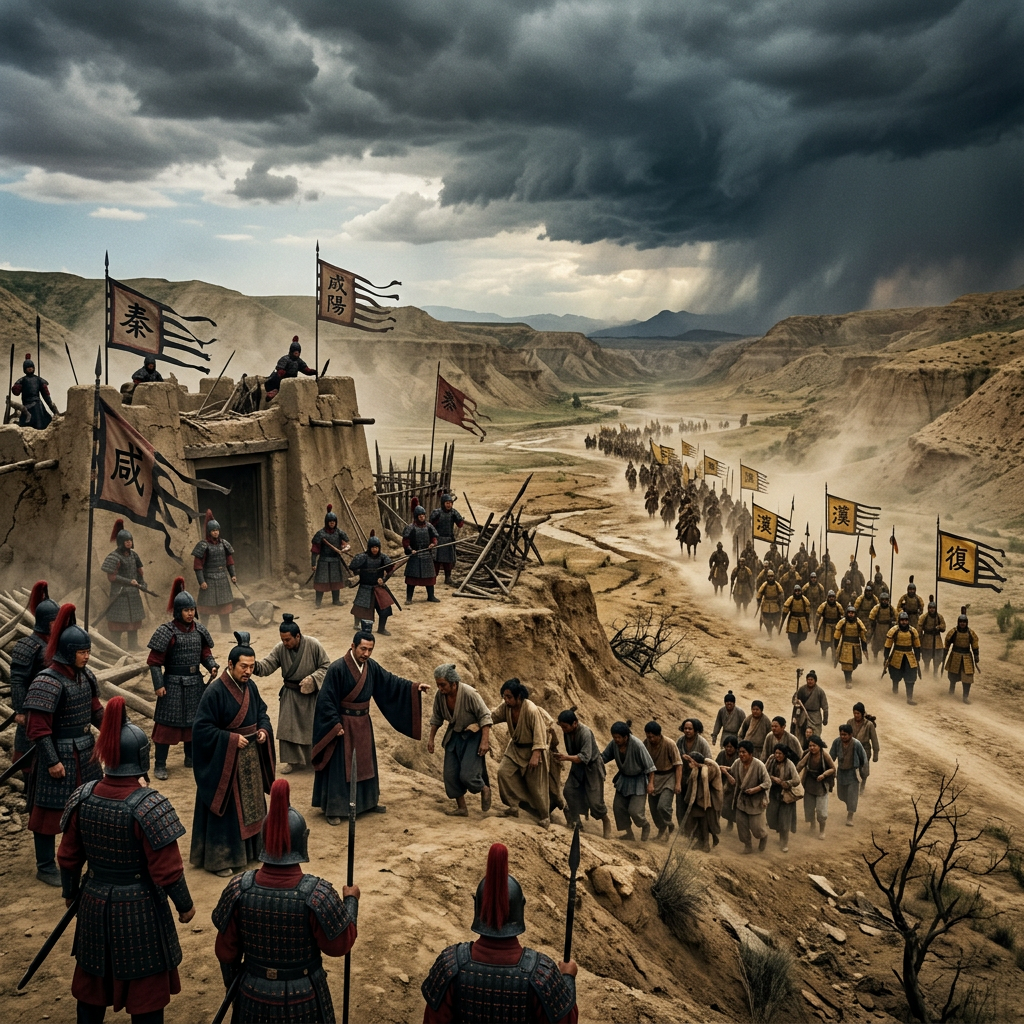
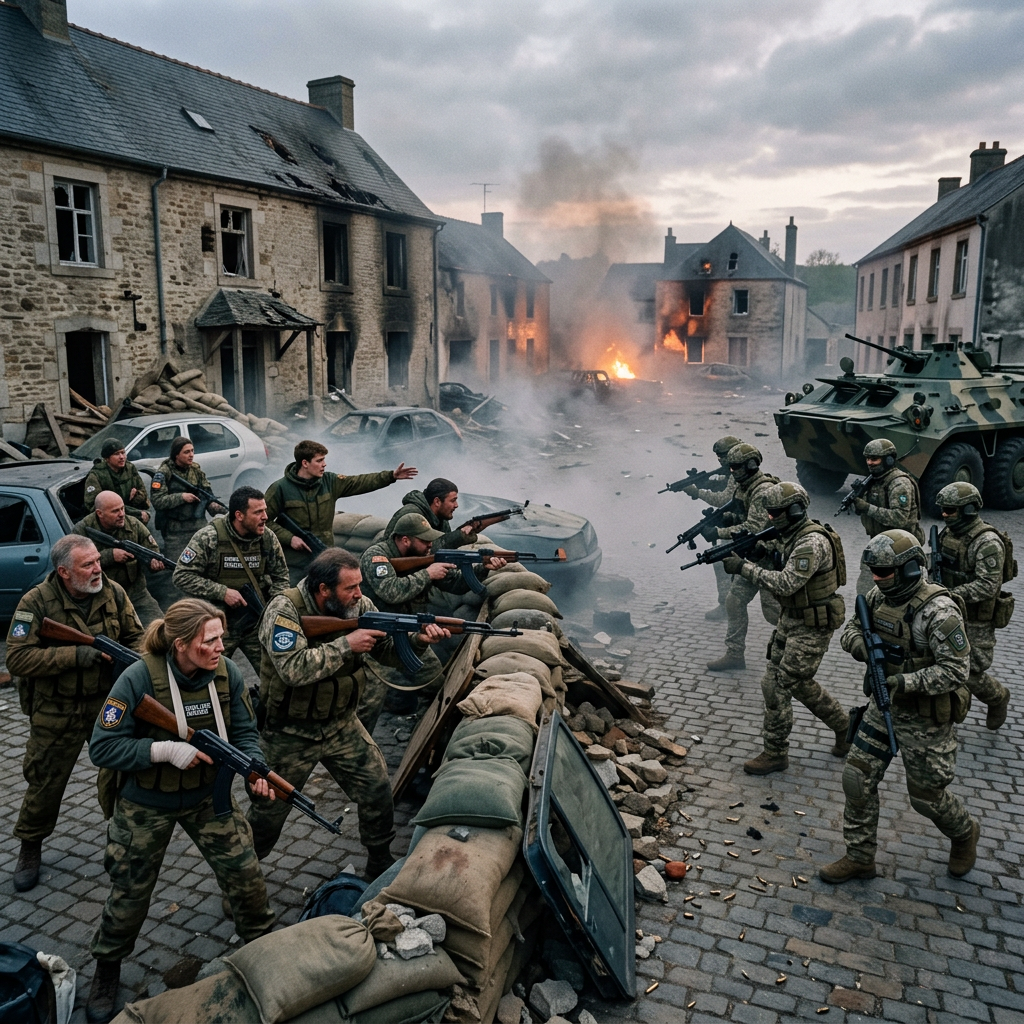



 The Patrician's Watch