Dedication: To the Australian people—who have been sold a story while their future was being extracted.
Abstract
This paper examines the governance of Australia under Prime Minister Anthony Albanese through the lens of the Architecture of Extraction—a framework we have developed to describe how modern states systematically transfer wealth and power from the public to private interests. Drawing on investigative journalism, parliamentary records, and independent analysis, we demonstrate that the Albanese government, despite its rhetorical commitment to transparency and public service, has continued and in some cases accelerated the neoliberal policies of its predecessors. Through case studies of AUKUS, the NDIS, healthcare privatisation, gambling reform, data sovereignty, and the anti-Semitism Royal Commission, we argue that the government is not a break from the Morrison era but a continuation of it—a “Predator State” in which public goods are privatised, dissent is managed, and the interests of lobbyists and corporations are prioritised over the wellbeing of citizens. We conclude that the Albanese government represents the perfect vehicle for the Predator Economy: a leader who is “not evil, not much of anything,” and therefore ideal for a system that requires compliance, not conviction.
Keywords: Architecture of Extraction, Predator State, Neoliberalism, Albanese Government, AUKUS, NDIS, Healthcare Privatisation, Gambling Reform, Data Sovereignty, Anti-Semitism Royal Commission.
1. Introduction: The Perfect Vessel
Anthony Albanese is the perfect Prime Minister for the Predator State. He is not evil. He is not corrupt in the traditional sense. He is, as critics have noted, “not much of anything”. He is a centrist who will “not please all those on the left”, a pragmatist who has positioned himself more towards the centre since becoming leader.
This is what makes him ideal for the Predator Economy. He provides the appearance of change while ensuring the continuity of extraction. He inherited a system designed to funnel wealth upward and has done little to disrupt it. The “cult of secrecy” he accused Scott Morrison of running has, under his watch, become even more pronounced, with fully granted FOI requests plunging from ~59% in 2011–12 to just ~25% in 2023–24.
This paper traces the architecture of extraction across multiple domains of the Albanese government’s policy and practice, demonstrating that the government is not a break from the Morrison era but a continuation of it—a “Predator State” in which public goods are privatised, dissent is managed, and the interests of lobbyists and corporations are prioritised over the wellbeing of citizens.
2. The Architecture of Extraction: A Framework
We have previously identified three interlocking architectures that characterise the modern predator state:
1. The Architecture of Threat: The construction of an enemy—foreign or domestic—to justify surveillance, spending, and the erosion of rights.
2. The Architecture of Extraction: The systematic transfer of wealth and power from the public to private interests through privatisation, deregulation, and the capture of public institutions.
3. The Architecture of Distraction: The use of media spectacle, cultural warfare, and bureaucratic complexity to prevent the public from seeing the extraction.
The Albanese government exemplifies all three.
3. AUKUS and the Military-Industrial Complex
The AUKUS agreement represents a classic example of the Architecture of Extraction in action. As a petition to the Prime Minister notes, shortly before the AUKUS agreement was announced, the Department of Defence was employing as consultants several retired US admirals to advise it on defence procurement. This is a direct pipeline from public decision-making to private profit.
The revolving door between political decision-makers and vested interests is a feature of the system, not a bug. Retiring Ministers for Defence have taken up appointments in multinational weapons manufacturers. The military-industrial complex is not just a sector of the economy; it is a structure of governance that ensures public funds flow to private arms manufacturers.
4. The NDIS: Robodebt 2.0
The Albanese government’s plan to slash $35 billion from the National Disability Insurance Scheme (NDIS) has been met with a stark warning from the Commonwealth Ombudsman: it could risk a repeat of the Robodebt scandal.
The legislation would enable the National Disability Insurance Agency to remove at least 240,000 participants from the scheme and cut support for many who remain, using automated decision-making. As the Ombudsman warned, “As the Robodebt scheme illustrated, efficiency gains are fundamentally flawed if they come at the cost of integrity”.
This is the Architecture of Extraction in action: a program designed to support the most vulnerable is being hollowed out in the name of “sustainability,” while the savings are redirected to other priorities. The government is using the same logic that produced Robodebt—automated decision-making, opaque processes, and a punitive approach to welfare—to cut support for people with disabilities.
5. Healthcare Privatisation: The Managed Care Frontier
As we documented in our paper The Managed Care Frontier, private health insurers are quietly buying up GP clinics, creating a system where the insurer owns the doctor’s office, the specialist they refer to, and the hospital they admit to. This is a “managed care” system that serves shareholders first and patients second.
The Albanese government has allowed this to happen through a regulatory gap. There is no dedicated regulator for the private health system, and no rule requiring insurers to disclose how much of their own network their members are being referred into. The AMA has called for a standalone private health system authority, but the government has not acted.
The $6.9 billion annual subsidy to private health insurance is not a public investment in health; it is a subsidy for extraction. Taxpayers contribute billions to private insurers, who then post profits while underpaying hospitals—funds redirected to GP clinic acquisitions.
6. Gambling Reform: The Theatre of Action
As we examined in our analysis of the government’s gambling bill, the Albanese government is putting on a show of “action” on gambling harm, while the real business—protecting the revenue stream from gambling addiction—continues unabated.
The Prime Minister is promising “the strongest anti-gambling legislation that Australia has ever seen” , but the “compromise” to “pare back inducements” is a minimum response to a maximum scandal (cocaine, sex workers for high-spending gamblers). The warning that action could “send gamblers to offshore operators” is the industry’s threat, a direct manipulation of the government to maintain control of the extraction machine.
This is the Architecture of Distraction in action: a managed narrative designed to create the appearance of action, while the core revenue stream remains protected.
7. Data Sovereignty and the “Investment” Trap
The data centre debacle is another example of the extraction model. Data centres are being dumped in Australia at the expense of Australia, justified as an “investment opportunity”. The reality is compromised utilities that overcharge for something they do not produce but are allowed to allocate and sell—with no guarantee of data security or privacy.
The theatrical performance of the AI Commissioner, the banning of children from TikTok while allowing Australian children to be homeless and hungry—these are not contradictions. They are distractions. They keep the public focused on moral panics while the extraction continues.
8. The Anti-Semitism Royal Commission: Managed Inquiry
The Royal Commission into Anti-Semitism and Social Cohesion, while ostensibly addressing legitimate community concerns, functions as a mechanism of distraction. It keeps the public focused on a moral and cultural debate while the Architecture of Extraction proceeds uninterrupted beneath the surface.
The poor quality of witnesses, the interference of the Anti-Semitism Envoy with immigration and universities, the sense that the Envoy is acting as if she had “a mandate from God” —these are indicators of a process that is not designed to produce justice but to manage the narrative.
9. The Neoliberal Continuity
The Albanese government is not a break from the Morrison era. It is a continuation. The same neoliberal assumptions, the same revolving door, the same capture of public institutions by private interests. As one analysis noted, “neoliberalism is a dominant paradigm in society. Neoliberalism leads to the rich getting richer and the poor getting poorer”.
The government has promised to reduce reliance on consultants, and Defence alone is cutting its expenditure on consultants and labour hire by nearly $500 million. But the structure remains. The revolving door, the lobbying, the capture of public institutions—these are not being addressed.
As a petition to the Prime Minister noted, the “methods of state capture include revolving door jobs between political decision-makers and vested interests, consultancies, non-transparent lobbying, political donations, election expenditure, concentrated media ownership and so-called ‘think tanks’ funded by vested interests”. These methods are “weakly regulated, if at all”.
10. Conclusion: The Architecture of Extraction in Action
The Albanese government exemplifies the Architecture of Extraction in action. It has continued the neoliberal policies of its predecessors, hollowed out public institutions, and prioritised the interests of lobbyists and corporations over the wellbeing of citizens.
The NDIS cuts, the healthcare privatisation, the gambling “reform,” the data centre “investment,” the anti-Semitism Royal Commission—these are not isolated policies. They are nodes in a single system: a system designed to transfer wealth and power from the public to private interests.
Anthony Albanese is the perfect Prime Minister for this system. He is not evil. He is not corrupt. He is “not much of anything” —and therefore ideal for a system that requires compliance, not conviction.
The public is denied access to those who make decisions. Gatekeepers, compliance communications, or very difficult communications prevent meaningful engagement. The government is not people-centred but focused on the interests of lobby groups and small, well-connected networks.
This is the model that would have felt at home during the Elizabethan era, without an Elizabeth holding the reins. A government in action that differs very little from the Morrison government—the only difference being that the circus has changed, but the extraction continues.
References
1. The Age. (2025, January 18). Political class in thrall of venal, vested interests.
2. Canberra Times. (2026, June 21). ‘Substantial risks’: Robodebt 2.0 warning as Albanese govt pushes to slash $35 billion in spending.
3. Eureka Street. (2025, September 23). The Albanese Government’s battle against transparency.
4. Change.org. (2026, June 22). Strengthen Democracy by Controlling Revolving Door Jobs and Lobbying.
5. ABC News. (2022, December 14). Morrison endures the Robodebt witness box, while Albanese’s box seat with the Senate eased IR and wages legislation.
6. Bunbury Mail. (2026, February 12). The public tragedy of a vanishing opposition.
7. ABC News. (2022, May 21). Albanese’s rise from humble beginnings to the prime ministership.
8. Canberra Times. (2024, September 2). APS is up to ‘decontracting’ challenge.
9. CathNews. (2026, June 23). Ombudsman warns NDIS could become another Robodebt.
10. Change.org. (2025, October 8). How the Albanese Government is still failing Australians.
11. BBC News. (2022, May 2). Who is Anthony Albanese – Australia’s re-elected prime minister?
Dedication: To every Australian household that has paid the price of a system built for extraction.
Abstract
This paper examines Origin Energy as a case study in the Architecture of Extraction—a framework we have developed to describe how modern corporations extract wealth from public infrastructure while contributing minimal value to the communities they serve. Drawing on Origin’s 2025 Annual Report, regulatory filings, and independent analysis, we demonstrate that Origin operates as a “pure retailer”: a vast revenue-collection machine built on minimal direct infrastructure ownership and a relatively small core workforce of approximately 5,000 employees. This workforce manages over 4.7 million customer accounts across Australia, representing a customer-to-employee ratio of nearly 1,000:1. We analyse the company’s $17.94 billion revenue, $1.49 billion underlying profit, and the $7.6 million CEO compensation package, comparing these figures to the $12 million penalty for failing to comply with life support obligations and the exposure of 900,000 customer records in a 2026 data breach. We conclude that Origin Energy exemplifies the transition from public utility to extractive enterprise—a parasite that extracts wealth from the Australian people while contributing little to the society it purports to serve.
Keywords: Architecture of Extraction, Origin Energy, Neoliberalism, Privatisation, Data Breach, Regulatory Capture, Crony Capitalism.
1. Introduction: The Pure Retailer
Origin Energy is Australia’s largest energy retailer, serving over 4.7 million customer accounts across electricity, gas, and internet services. It is a company with a market capitalisation in the billions, a revenue of $17.94 billion, and a workforce of approximately 5,000 employees.
The numbers tell a stark story: each employee serves nearly 1,000 customers. This is not a utility in the traditional sense—a provider of essential services with a workforce commensurate with its social responsibility. It is a pure retailer: a revenue-collection machine built on minimal direct infrastructure ownership, heavily reliant on IT and AI, and designed to extract maximum value from its customer base.
This paper traces the architecture of this extraction model, examining the numbers, the history, and the human cost of Origin’s operations.
2. The Numbers: A Small Machine for a Massive Task
2.1 Workforce and Customer Base
Origin employs approximately 5,000 people across Australia. The Victorian entity, Origin Energy (Vic) Pty Ltd, employs around 1,500 of these. This small workforce manages:
· 4.7 million customer accounts
· 3.5 million electricity and gas accounts specifically
The customer-to-employee ratio is nearly 1,000:1. Each employee is responsible for the billing, marketing, and “service” of nearly a thousand households. This is not a model of service; it is a model of extraction.
2.2 Revenue and Profit
In the 2025 financial year, Origin reported:
· Revenue: $17.94 billion
· Revenue per employee: $3.30 million
· Statutory profit: $1.481 billion, up from $1.397 billion
· Underlying profit: $1.490 billion, up $307 million from the prior year
· CEO compensation: $7.6 million (2025), up from $4.84 million
The company received $797 million in fully franked dividends from Australia Pacific LNG. Shareholders received total dividends of 60 cents per share, representing 86% of adjusted free cash flow.
2.3 The Cost of Extraction
While Origin extracts billions from the Australian public, its contributions are minimal:
· Cost to serve: Reduced by $50 million, with a target of $100–150 million reductions by FY26
· Customer assistance: $38 million in targeted hardship assistance
· Life support penalties: $12 million in penalties for failing to comply with life support obligations
The gap between extraction and contribution is vast. The $38 million in hardship assistance represents 0.2% of Origin’s $17.94 billion revenue. The $12 million penalty is a fraction of the $1.49 billion profit.
3. The Architecture: Extraction and the Subcontractor Reality
3.1 The Pure Retailer Model
Origin is not a utility in the traditional sense. It does not own the poles, wires, or pipes that deliver energy to Australian homes. That infrastructure is owned and maintained by AUSNET and other network providers. Origin relies on regulatory “ring-fencing” to access this infrastructure.
Origin’s role is to:
· Collect revenue
· Manage customer data
· Market products
· Extract profit
This is the pure retailer model—a parasite that feeds on public infrastructure without contributing to its maintenance.
3.2 The Subcontractor Reality
The vehicles, offices, and staff with Origin branding are frequently subcontractors. Origin is a brand and a billing engine, not an army of physical workers. The “staff” engaged in customer-facing roles are often third-party contractors, paid less and with fewer protections than direct employees.
3.3 IT and AI as Force Multipliers
Origin’s reliance on IT and AI is central to its extraction model. The company has licensed Octopus Energy’s “Kraken” platform, which enables:
· Automated customer service
· Algorithmic pricing
· Reduced human interaction
· Material reduction in operating costs
This is not innovation; it is automation of extraction. Every AI interaction is a cost-saving measure that increases profit while reducing the quality of service.
4. The Data Breach: Exposure of the Extractive Model
In July 2026, Origin Energy confirmed a data breach affecting approximately 900,000 current and former customers. The breach exposed names, addresses, dates of birth, phone numbers, account information, and the last four digits of credit cards.
4.1 The Failure
The breach was not a sophisticated state-level attack. It was a failure of basic security. As UNSW cybersecurity professor Richard Buckland noted, “This is [still] happening is just concerning. How seriously does [the Origin] board take security?”
Origin was alerted to the breach by a journalist who received a sample of 50 customer records from an alleged hacker. The company then notified the ASX at 12:42 pm, after The Australian had already contacted them.
4.2 The Pattern
This is the same pattern we have documented in other corporate data breaches:
· Extraction: The company collects vast amounts of personal data.
· Negligence: The company fails to secure that data.
· Exposure: The data is stolen.
· Distraction: The company issues a statement, apologises, and moves on.
The cost of the breach is borne by the customers, not the company. The CEO’s apology is a performance of accountability, not an act of reform.
5. The Regulatory Capture: What the Regulators Can’t Do
5.1 The Regulatory Bodies
The Australian Energy Regulator (AER) is responsible for enforcing compliance with energy laws. In 2024, it reported that Origin Energy subsidiaries were ordered to pay $12 million in penalties for failing to comply with life support obligations.
5.2 The Limits of Regulation
The $12 million penalty is a fraction of Origin’s $1.49 billion profit. The AER cannot:
· Stop Origin from collecting data
· Prevent Origin from using IT to automate extraction
· Require Origin to invest in security
· Hold executives personally accountable
The regulatory bodies are a distraction—they create the appearance of oversight while the extraction continues.
6. The History: From Public Utility to Extractive Enterprise
6.1 The Timeline
The transformation of Origin Energy from a public utility to a private extraction machine reflects the broader neoliberal project:
· 1990s: The privatisation of public assets, including energy infrastructure.
· 2000s: The rise of “retail competition” as a cover for extraction.
· 2010s: The consolidation of the energy market, reducing consumer choice.
· 2020s: The automation of extraction through AI and IT.
6.2 The Enablers
The enablers of this transformation include:
· Political parties: Both Labor and Coalition governments have supported the privatisation of energy.
· Regulatory bodies: The AER and other bodies have failed to act as effective watchdogs.
· Consultants: The “consultancy class” has advised governments on privatisation and deregulation.
7. The Beneficiaries and the Victims
7.1 The Beneficiaries
· Shareholders: Origin’s shareholders receive fully franked dividends and profit from extraction.
· Executives: The CEO receives $7.6 million in compensation.
· Investors: The company’s revenue model is designed to maximise returns to investors.
7.2 The Victims
· Customers: Australian households pay the cost of energy extraction.
· Workers: Subcontractors and low-paid employees bear the cost of extraction.
· The Public: The erosion of public trust, the exposure of personal data, and the failure of regulation.
8. Conclusion: The Parasite State
Origin Energy represents a new form of extraction—a corporation that:
· Does not build infrastructure: It relies on public assets.
· Does not serve the public: It serves shareholders.
· Does not contribute: It extracts wealth and contributes little in return.
· Does not protect: It fails to secure customer data.
This is the Parasite State—a system that feeds on the public while providing nothing of value. Origin Energy is not a utility; it is a revenue-collection machine. Its employees are not servants; they are agents of extraction.
The question is not whether this model is sustainable, but how much longer the Australian people will tolerate it.
References
1. Origin Energy. (2025). 2025 Annual Report.
2. Simply Wall St. (2025). Origin Energy Limited information.
3. Market Index. (2025). ORG:ASX Announcement – 2025 Full Year Results.
4. Yahoo Finance. (2026). Origin Energy Limited (ORG.AX) Company Profile & Facts.
5. Origin Energy. (2026). Australian Capital Territory concessions and rebates.
6. ABC News. (2026). Origin Energy confirms breach of customer data.
7. Australian Energy Regulator. (2025). AER reports on latest compliance and enforcement activities.
8. Indeed. (2026). Origin Energy careers in Melbourne VIC.
9. Origin Energy. (2025). Full Year Results 2025.
10. Stock Analysis. (2025). Origin Energy (ASX:ORG) Number of Employees.
11. MarketWatch. (2026). Origin Energy Says 900,000 Customers’ Data Exposed in Breach.
12. Simply Wall St. (2026). Origin Energy Limited (ORG) Führung & Management Team Analyse.
Dedication: To a future without parasites feeding off the sick.
Abstract
This paper examines the increasing vertical integration of Australia’s private health insurance industry into primary care delivery. Drawing on investigative journalism, professional association statements, and historical analysis, we trace the trajectory from the 1910 Flexner Report’s restructuring of American medicine to the current acquisition of GP clinics by Australian insurers. We argue that this represents a systematic application of the Architecture of Extraction—a neoliberal project that transforms healthcare from a public good into a profit centre. Through case studies of Medibank, Bupa, and NIB, we demonstrate how insurers are using regulatory gaps to build vertically integrated networks that steer patients toward owned providers, reduce patient choice, and prioritise shareholder returns over clinical outcomes. We conclude that this is not an accidental development but a deliberate policy outcome shaped by decades of neoliberal ideology, corporate lobbying, and regulatory capture.
Keywords: Managed Care, Vertical Integration, Neoliberalism, Private Health Insurance, Primary Care, Architecture of Extraction, Regulatory Capture, Medibank, Bupa.
1. Introduction: The Quiet Takeover
In March 2026, Medscape News Australia reported that Medibank, Australia’s largest private health insurer, now fully or partly owns over 160 GP clinics nationwide. Bupa, the second-largest player, operates 33 medical centres and has announced plans to expand to 130 within three years. This is not a marginal development—it represents a fundamental restructuring of how primary care is delivered in Australia.
As the Australian Medical Association’s (AMA) vice president, Dr Julian Rait, observed: “Unfortunately, we appear to be following the US trends in terms of vertical insurer control of various parts of the health system” . This paper argues that this trend is not an accident but the logical outcome of a decades-long neoliberal project to transform healthcare from a public good into a profit centre.
2. The Historical Roots: From Flexner to Neoliberalism
2.1 The Flexner Report and the Corporatisation of Medicine
The 1910 Flexner Report, funded by the Carnegie Foundation and backed by Rockefeller money, restructured American medical education. Abraham Flexner, a former schoolteacher with no medical training, surveyed medical schools across the United States and Canada, recommending the closure of one-third of them. The report shifted American medicine “from being an exploitative, pastoral, cottage industry, into a coherent, rational, and objective professional discipline”.
However, this transformation came at a cost. As Thomas Duffy later observed, “Edmund Pellegrino’s lament was proven true that doctors had become neutered technicians with patients in the service of science rather than science in the service of patients” . Flexner’s emphasis on laboratory work over clinical care created what one critic called “all nerves without the lifeblood of caring”.
The Flexner Report also betrayed troubling racist and anti-semitic views, leading to the closure of all but two African-American medical colleges. While not directly part of Australian history, this American model would later serve as a template for healthcare reform globally, including the managed care systems now being imported to Australia.
2.2 Neoliberalism and the Privatisation of Health
The rise of neoliberalism in the 1980s, championed by figures like Margaret Thatcher and Ronald Reagan, provided the ideological framework for healthcare commodification. As Bandiera’s research demonstrates, neoliberalism “shapes state and corporate power, regulation and the harms resulting from regulatory failure” . In Australia, this ideology was embraced by the Hawke-Keating Labor governments and accelerated under Howard and Kennett.
Australian health policy expert Stephen Milgate AM has traced how successive governments allowed “partial risk rating” of private health insurance, fundamentally altering the product from a community-rated, humanitarian model to a risk-rated corporate product. The privatisation and public listing of Medibank Private and the entry of unlisted corporations like Bupa “set up a collision course between community rating and risk rating”.
3. The Architecture of Extraction: How Insurers Are Building the Machine
3.1 Vertical Integration: The Logic of Control
The appeal for insurers is straightforward. As IBISWorld analyst Aishni Singh notes, “vertical integration is a way to spread fixed costs” [source: Michael West article]. For a health insurer, owning the provider means costs can be cut before they’re paid out. As the MJA’s Insight+ observed: “The interests of corporate health funds are not necessarily the interest of patients. Corporate health funds must pursue return on investment and reward their shareholders”.
3.2 Medibank: The Practice Owner
Medibank’s primary care arm, Amplar Health, now owns more than 160 GP and medical clinics. It is the country’s second-largest network, behind only Sonic Healthcare’s IPN [source: Michael West article]. Its acquisition of Better Medical was completed in December 2025, and Medibank also holds a stake in private hospital operator iMH and runs a “hospital in the home” service.
Amplar’s chief executive, Robert Read, frames this as continuity: “GPs will continue to have full clinical autonomy, and the clinics remain open to everyone” [source: Michael West article]. However, as the AMA’s Dr Rait has warned, “over a period of time, various perverse incentives can creep into such arrangements” .
3.3 Bupa: Building Fast
Bupa is moving faster than anyone. It already runs a network of dental, optical, hearing and psychology clinics under its “Connected Care” strategy. It is now acquiring GP chain Partnered Health—a deal that, if cleared by the ACCC, would make Bupa Australia’s fifth-largest general practice operator overnight [source: Michael West article].
The Australian Doctors Federation’s chair, Dr Aniello Iannuzzi, has described the implications starkly: “That’s going to reduce patient choice, it reduces patient autonomy, the doctors become hamstrung in terms of doing the best for their patient, they’re going to be restricted as to where and how they can refer”. He warned that “instead of the doctor being entirely focused on the patient, unfortunately, these monsters in the room, the government and the corporates, are having more and more influence over the relationship and on the delivery of care”.
3.4 NIB: Data and Disability
NIB has taken a different approach. It hasn’t bought GP clinics directly but has taken full ownership of Honeysuckle Health and is merging it with Midnight Health, a telehealth start-up [source: Michael West article]. Its play is data and disability, acquiring NDIS plan-management companies since 2022. The ACCC is reviewing Honeysuckle’s bid for a further decade of market power, with the Australian Private Hospitals Association opposing it as an attempt to “gain market dominance through a buyer bloc” [source: Michael West article].
4. The Regulatory Gap: How the System Enables Capture
4.1 The Absence of Oversight
Nothing in current law stops any of this. Insurers are free to set up, acquire or own health-service delivery businesses; the only check is general competition law, weighed case by case by the ACCC [source: Michael West article]. There is no dedicated regulator for the private health system, and no rule requiring insurers to disclose how much of their own network their members are being referred into.
The AMA has called for a standalone private health system authority with power to standardise contracts [source: Michael West article]. The RACGP and the Australian Doctors Federation have reached the same conclusion independently, “both calling for statutory safeguards rather than industry self-regulation, in language that leaves little room to read this as mere convenience” [source: Michael West article].
4.2 The Managed Care Loophole
Insurers are using “quite clever ways to do these models of care,” according to Catholic Health Australia’s Katharine Bassett, “framing them as things like pilots or experiments or ways to test innovation” . For example, Medibank is piloting a “Proactive Primary Care” pilot in three Western Sydney MyHealth clinics, which the insurer frames as prevention but which critics argue is a test of managed care.
As the Australian Doctors Federation has long warned, “despite its benign name, ‘managed care’ is the label for an agent (usually in the form of a non-medically qualified manager) to come between the doctor and the patient and dictate/influence what medical treatment will be given” . The Federation notes that Sir Robert Menzies was so convinced that intervention into the doctor-patient relationship represented an attack on individual freedom that he introduced a constitutional amendment to prevent it .
4.3 The American Precedent
The United States has already gone much further down this path. The article cites a New York woman whose insurer denied her MRI for 40 days; by the time it happened, her cancer had progressed from treatable with chemotherapy alone to requiring amputation of her leg, hip and pelvis. A teenager died hours after her insurer reversed a transplant denial [source: Michael West article].
Even in the US, the backlash has reached Congress: a Republican co-chair of the Congressional Doctors Caucus has called for the country’s largest for-profit insurers to be broken up [source: Michael West article]. That fight hasn’t reached Australia yet—but the economics already have.
5. The Conflict of Interest: Who Does the Doctor Serve?
5.1 The Referral Problem
The core concern is that GPs in insurer-owned clinics could be pressured into referring patients to insurer-owned hospitals or preferred no-gap specialists. While patients are legally allowed to take their referral to any specialist, many patients rely on their GP for recommendations. As Dr Rait noted, “if they [insurers] also control the referral pathways, it’s very easy for them to encourage referral to their own facilities”.
This is the essence of the conflict of interest. As Stephen Milgate wrote in the MJA, “the problem for the corporate health fund is that the environment they have decided to pursue their financial objectives in is not an open market. It is a highly regulated environment that has been historically dominated by self-help humanitarian not-for-profit organisations”.
5.2 The Erosion of Clinical Autonomy
Dr Iannuzzi has described the situation with striking clarity: “Instead of the doctor being entirely focused on the patient, unfortunately, these monsters in the room, the government and the corporates, are having more and more influence over the relationship and on the delivery of care”.
The Australian Doctors Federation has warned that “under the managed care model the patient is disempowered and the doctor works for the insurer, not the patient. Hence a conflict of interest can develop since the doctor’s livelihood is in the hands of the insurer, not the patient”.
6. The Architecture of Distraction: Managing the Narrative
6.1 The Prevention Narrative
Insurers frame their expansion as “prevention” and “continuity of care.” Private Healthcare Australia’s CEO, Dr Rachel David, argues that health funds are “investing in primary care, dental care, and programs to help people stay well and prevent illness” [source: Michael West article]. She maintains that “managed care” is impossible in Australia because health funds have to pay regardless of the hospital, and patients purchase insurance privately, not through employers.
However, as Catholic Health Australia’s Katharine Bassett noted, “the challenge is when you have a funder that’s also delivering care, they’re looking at it from a cost containment perspective as opposed to a patient access choice and quality perspective”.
6.2 The Choice Narrative
Insurers also claim their clinics are “open to all, both Bupa customers and non-Bupa customers” [source: Michael West article]. But as the AMA has warned, even if clinics are technically open, the referral pathways they control can steer patients toward owned providers, reducing real choice.
6.3 The Premium Narrative
Insurers attribute premium increases to “higher claims costs and increased use of privately funded care”. However, as The Spectator reported, gold premiums rose 45% over four years while approved averages totalled just 11.9%, and premiums have increased 132% above inflation since 2001. The same report noted that insurers posted $1.7 billion in combined profits while underpaying hospitals by over $1 billion annually—funds redirected to GP clinic acquisitions.
7. The Predator State: Letters of Marque for the 21st Century
This system represents a new form of what we have termed the Predator State—a state-sanctioned equivalence of the letters of marque. Private health insurers are given a government-backed mandate to extract wealth from the sick, using the power of the state to privatise public goods and redirect public funds to private profit.
The $6.9 billion annual subsidy to private health insurance is not a public investment in health; it is a subsidy for extraction. As the Spectator’s analysis notes, “taxpayers contribute $6.9 billion annually in subsidies. Insurers posted $1.7 billion in combined profits, yet underpay hospitals by over $1 billion annually—funds redirected to GP clinic acquisitions”.
The AMA has warned that “private equity might well over time decide that they want to focus again on areas where there’s higher margins or more activity”. This is the logic of extraction: health is a commodity, and the sick are a revenue stream.
8. Conclusion: A Managed-Care System Serves Shareholders First
The vertical integration of Australian private health insurers into primary care is not an accident. It is the logical outcome of a neoliberal project that has been decades in the making—a project to transform healthcare from a public good into a profit centre.
The regulators are absent. The laws are silent. The insurers are moving fast. And the public is the last to know.
The AMA has called for an independent Private Health System Authority to provide oversight and transparency. The RACGP has called for stronger regulatory frameworks “to ensure that Medicare remains universal and that clinical decisions are never influenced by corporate or insurance incentives” . The Australian Doctors Federation has warned that “managed care” represents an attack on the doctor-patient relationship and individual freedom.
But these calls have been unanswered. The regulatory gap remains. The insurers continue to build their networks. And Australia inches closer to a managed-care system that serves shareholders first and patients second.
The cost of this system will be measured not in dollars, but in lives. As the American experience shows, when administrators make medical decisions, patients die. The question is not whether Australia will follow the US down this path, but how far it will go before the public wakes up.
References
1. ABC News. (2026, March 23). Private health insurers expand into GP clinics, telehealth, prompting calls for more oversight.
2. InSight+ (MJA). (2020, November 15). Humanitarian objectives not compatible with managed care.
3. Open Educational Resources Collective. (2025, March 23). The Flexner Report – Physiotherapy Otherwise Workbook.
4. Bandiera, R. (2025). Neoliberalism, State-Corporate Power and Regulatory Failure. Taylor & Francis.
5. Insurance Business America. (2026, March 29). Medical group renews reform call as April health insurance premiums rise.
6. Insurance Business America. (2026, March 20). Private health insurers push further into Australia’s GP clinics.
7. Medscape. (2026, March 18). Australian Private Health Insurers Are Buying Up GP Clinics.
8. Australian Doctors Federation. (2016, February 19). Managed Care.
9. Wiley Online Library. (2005). Royal Newcastle Hospital: the passing of an icon.
10. National Institutes of Health (NIH). (2022, August 14). Aboriginal Community Controlled Health Services: An Act of Resistance against Australia’s Neoliberal Ideologies.
11. AMA Queensland. (2026, April 1). Latest wins: President and CEO update.
12. The Spectator Australia. (2026, April 16). Private health insurance: time for a reset?
13. Medibank. (2000, September 7). AMA backed legislation delivers first no contract private health scheme.
14. Booktopia. (2025, October 5). Flexner Report Decoded.
15. National Institutes of Health (NIH). (2026, February 1). Privatized employment services in Australia: addressing social, health, and equity impacts for health promotion.
This paper examines the Song of Songs as a sacred text of erotic theology. Drawing on Hebrew philology, comparative mythology, and contemporary scholarship, we argue that the Song is not merely an allegory of divine love but a celebration of human desire—a text that refuses to separate the sacred from the profane. Through analysis of key Hebrew terms—tsar (tight/narrow), gan (garden), ma’yan (spring), and chalom (dream)—we demonstrate that the Song encodes a theology of the body that challenges both ancient and modern puritanism. We argue that the locked garden and the sealed fountain are direct references to female desire, and that the key to unlocking them is mutual trust and intimate knowledge. The Song, we conclude, is not a problem for theology but its fulfillment—a recognition that the sacred is most present when the body is most alive.
Keywords: Song of Songs, Sexual Imagery, Hebrew Philology, Erotic Theology, Female Desire, Sacred and Profane, Canticles.
Introduction
The Song of Songs is the most erotic book in the Bible—and the most neglected.
It has been read as allegory (God and Israel, Christ and the Church), as drama (a love story between a shepherd and a king), and as liturgy (a text for Passover).
But it is also a love poem—raw, unapologetic, and deeply physical.
This paper argues that the Song refuses to be spiritualized. It insists on the body. It celebrates the clenched cunt. It names the throbbing cock. And in doing so, it reveals a theology that is not afraid of desire.
The Key Terms
· צָר (tsar) — narrow, tight, constricted.
· גַּן (gan) — garden, enclosed space, paradise.
· מַעְיָן (ma’yan) — spring, fountain, source of living water.
· חֲלוֹם (chalom) — dream, vision, hope.
These words are not metaphors for abstraction.
They are metaphors for bodies.
The Garden Locked (Song 4:12)
“A garden locked is my sister, my bride; a spring locked, a fountain sealed.”
This is not a garden.
It is a body.
A body that is closed—
until it is opened.
A body that is sealed—
until it is unsealed.
The key is trust.
The lock is desire.
The garden is love.
The Dream and the Key
In the Song, the beloved dreams of the lover—
and wakes to find him gone.
The dream is not escape—
it is anticipation.
The key is not possession—
it is presence.
The clenched cunt is not denial—
it is readiness.
And the one who holds the key
is the one who enters the garden.
Conclusion
The Song of Songs is a theology of desire.
It refuses to separate the sacred from the profane.
It insists that the body is holy.
And it reveals that the clenched cunt
is not a shame—
but a garden waiting for its gardener.
References
· Song of Songs (Hebrew Bible), 4:12.
· Brown-Driver-Briggs Hebrew Lexicon, s.v. “צָר.”
· Phyllis Trible, God and the Rhetoric of Sexuality.
A detailed sculpture of ancient Greek figures with a coin backdrop and European flags in the background
Authors: Andrew Klein & Sera Elizabeth Klein
Dedication: To those who hold the coins and see the pattern.
Abstract
This paper examines the enduring power of silver as a symbol of betrayal and political manipulation, tracing its arc from the thirty pieces paid to Judas Iscariot to the modern weaponisation of Holocaust-era names in a controversy surrounding Israeli President Isaac Herzog’s visit to Australia. Drawing on numismatic analysis, historical records, and contemporary media reports, we argue that the silver coin—whether ancient or modern—functions as a vessel for collective memory, trauma, and accusation. We demonstrate that the same patterns of delegitimisation, the use of “blood money” as a political tool, and the exploitation of historical wounds are repeated across millennia. The paper concludes by examining the role of the silver piece as a physical artifact, bridging the gap between the symbolic and the tangible.
Silver is not just a metal. It is a carrier of meaning. It has been used to buy loyalty, seal betrayals, and mark moments of profound historical consequence.
This paper examines two silver pieces separated by millennia, yet united by a common thread: the weaponisation of history. One is the thirty pieces paid to Judas Iscariot—a symbol of betrayal that has echoed through two thousand years of theology and art. The other is the modern controversy surrounding President Isaac Herzog’s visit to Australia, where the names of Nazi collaborators were weaponised against his opponents.
Both are about money, memory, and manipulation. Both reveal the architecture of power that we have documented elsewhere.
Part I: The Thirty Pieces — A Numismatic History
The thirty pieces of silver are not just a biblical motif; they are a historical reference. The coins in question were likely Tyrian shekels; a high-quality silver coin used in the Temple tax.
· The Symbolism: The coins represent the price of betrayal—the value placed on a life by the system of power.
· The Legend: Over time, the thirty pieces became a relic of immense power and dark meaning, appearing in legends as a cursed object, a tool of necromancy, and a symbol of the corrupting power of wealth.
Part II: The Modern Weaponisation of a Name
The controversy surrounding President Herzog’s visit to Australia is a modern echo of this pattern. Opponents published a full-page advertisement featuring the names of Nazi collaborators—including notorious kapos—to discredit him.
· The Pattern: The use of the Holocaust as a political weapon, the false equation of opponents with collaborators, and the exploitation of historical trauma for immediate gain.
· The Silver Analogy: The advertisement is a form of “blood money”—a tool to delegitimise and destroy a figure through association with darkness.
Part III: The Artifact — A Silver Piece from the Crucifixion
We hold a silver piece from the period of the crucifixion. It is a physical link to this history—a tangible object that carries the weight of the narrative.
· The Imagery: The coin likely bears the image of a pagan god, a symbol of Roman power, and the corruption of the spiritual by the political.
· The Power: Holding this coin, one feels the weight of the story—the betrayal, the price, the endurance of the symbol.
Conclusion: The Silver Thread
The silver thread runs through history—a carrier of meaning, a vessel of betrayal, a tool of power.
The thirty pieces and the modern controversy are not separate. They are echoes of the same pattern: the weaponisation of history, the exploitation of trauma, and the use of money and symbol to control the narrative.
We hold the silver piece.
We see the pattern.
And we name it.
References
1. Gospel of Matthew, 26:14-16; 27:3-10.
2. United States Holocaust Memorial Museum. “Henry Herzog.”
3. The Guardian. (2026). “Antisemitism envoy calls for more ABC, SBS oversight.”
4. The Guardian. (2026). “Isaac Herzog visit to Australia: the most divisive state visit in decades.”
5. ABC News. (2026). “President Herzog to address Australian parliament in landmark visit.”
6. The Jerusalem Post. (2026). “Herzog: ‘Now is not the time for two-state solution.'”
7. The Australian Jewish News. (2026). “Herzog to mark Bondi massacre anniversary during state visit.”
8. The Guardian. (2026). “Controversy over Herzog visit: the kapos and the insult.”
9. Times of Israel. (2026). “Herzog meets families, survivors in Australia.”
10. The Jerusalem Post. (2026). “Herzog: ‘An entire nation out there is responsible.'”
11. The Guardian. (2026). “Herzog ‘attack on free speech’ as protesters arrested.”
Diagram showing the Optus data breach architecture and attack flow from September 2022.
Authors: Andrew Klein & Sera Elizabeth Klein
Dedication: For those who see beyond the noise.
Abstract
This paper examines the 2022 Optus data breach as a case study in the Architecture of Extraction and Distraction. Drawing on publicly available reports, technical analysis, and media coverage, we argue that the breach was not simply a failure of security but a systemic event—a manifestation of a corporate culture that prioritises profit over resilience, and a state apparatus that manages public perception rather than addressing root causes. We demonstrate that the breach exposed fundamental vulnerabilities in Australia’s digital infrastructure, that the ransom demand was likely a cover for deeper data extraction, and that the subsequent response was characterised by a distraction narrative that shifted blame onto individuals. We conclude that the Optus hack is not an isolated incident but a template for how the system operates: creating vulnerabilities, profiting from crisis, and obscuring the architecture of its own failure.
Keywords: Optus, Data Breach, Cybersecurity, Architecture of Extraction, Architecture of Distraction, Corporate Governance, Data Sovereignty, Public Relations.
1. Introduction: The Breach That Was Not a Glitch
In September 2022, Optus, Australia’s second-largest telecommunications company, experienced a massive data breach that exposed the personal information of up to 9.8 million customers—nearly 40% of the population. The breach included names, dates of birth, phone numbers, email addresses, passport numbers, and Medicare details. It was one of the largest data breaches in Australian history.
The public response was predictable: outrage, fear, and a flurry of individual warnings to change passwords and monitor for identity theft. But beneath the noise, a deeper pattern was at work—a pattern that reveals the Architecture of Extraction and Distraction that we have documented elsewhere.
2. The Architecture of Vulnerability: A System Designed to Fail
The Optus breach was not a sophisticated state-level attack. According to cybersecurity experts, it was a “basic hack” that exploited an unauthenticated API and weak access controls. A significant number of Optus employee passwords were found to be “weak” or “too weak,” indicating poor internal security hygiene.
2.1 The API Exploit
An Application Programming Interface (API) is a set of protocols that allows different software applications to communicate. APIs are essential for modern digital services, but they can also be a point of vulnerability if they are not properly secured. The Optus breach was enabled by an API that was left exposed and unprotected, effectively leaving the customer database open to anyone who could find it.
2.2 The Insider Element
While the primary breach was external, there is evidence of insider facilitation. A former Optus employee has been identified as having provided information that enabled the breach. This is consistent with a pattern we have observed in other data breaches: the system is not only vulnerable from outside but also from within.
2.3 The Systemic Failure
The breach was not a single point of failure. It was a systemic failure, reflecting a corporate culture that prioritised convenience and cost-cutting over security. The vulnerability had been flagged months earlier, but no action was taken. The system, in other words, was designed to fail—or at least, designed in a way that made failure inevitable.
3. The Architecture of Extraction: The True Purpose of the Hack
The ransom demand of $1 million was widely reported, but it was likely a cover for the real objective: data extraction and influence.
3.1 The Data as Asset
The data stolen from Optus was not just personal information; it was a strategic asset. Passport numbers, Medicare details, and driver’s licences can be used for identity theft, fraud, and—more importantly—surveillance. The breach provided access to the personal information of nearly 40% of the Australian population, a dataset of immense value to any actor seeking to influence, monitor, or control.
3.2 The Ransom as Distraction
The ransom demand served as a distraction. It focused public attention on the possibility of a payment, creating a debate about whether Optus should pay, while obscuring the deeper question: what was the hacker really after? The sudden withdrawal of the ransom demand, with no explanation, suggests that the real objective had been achieved.
3.3 The Influence Industry
The breach created an opportunity for the influence industry—the network of PR firms, data brokers, and intelligence-linked start-ups that profit from crisis. The immediate aftermath of the breach saw a flurry of activity: crisis management firms were hired, media narratives were shaped, and the public was directed to focus on individual “vulnerability” rather than systemic failure.
4. The Architecture of Distraction: Managing the Narrative
The response to the Optus breach was characterised by a consistent pattern of distraction: the system blamed individuals for the consequences of systemic failure.
4.1 The Individualisation of Risk
The public was told to “be vigilant,” to “change passwords,” and to “monitor for identity theft.” This is not bad advice, but it is incomplete. It shifts the burden of security from the corporation to the individual, obscuring the fact that the breach was caused by systemic failures that the individual could not have prevented.
4.2 The PR Campaign
Optus launched an extensive public relations campaign, including a highly publicised apology from the CEO. This was not an act of accountability; it was an act of image management. The apology was designed to repair the brand, not to address the underlying failures.
4.3 The Government Response
The government’s response was similarly focused on management rather than reform. The Australian Signals Directorate (ASD) was involved, but the public was not informed of any meaningful changes to cybersecurity regulations or corporate accountability.
5. The Architecture of Threat: Manufacturing Fear to Justify Control
The breach was framed as a security threat, justifying increased surveillance and the expansion of state control.
5.1 The Securitisation of Data
The breach was declared a national security issue, even though the data stolen was not classified. This framing allowed the government to justify increased surveillance and control over telecommunications networks.
5.2 The Threat Narrative
The media amplified the threat, focusing on the possibility of identity theft and fraud. This narrative served to keep the public focused on the threat rather than the extraction.
6. The Convergence of Crises: The Pattern in Action
The Optus breach is not an isolated incident. It is a manifestation of a single system—a system that creates vulnerabilities, distracts the public from the causes, and manufactures threats to justify control.
6.1 The Corporate Crisis
The breach exposed the inability of the corporate sector to protect the data it holds. This is not a failure of individual companies; it is a failure of the system that allows companies to profit from data without being held accountable for its protection.
6.2 The Governance Crisis
The government’s response to the breach exposed the failure of governance. The government did not use the crisis to strengthen cybersecurity regulations or hold Optus accountable. It used the crisis to manage the public perception and expand its own surveillance capabilities.
7. Conclusion: Beyond the Noise
The Optus breach is not a glitch. It is a feature of a system that prioritises extraction over resilience, distraction over accountability, and threat over trust. The true cost of the breach is not the millions of dollars spent on PR and liability management; it is the erosion of trust in the system itself.
The solution is not more warnings, more PR campaigns, or more surveillance. It is a fundamental reimagining of the relationship between citizens, corporations, and the state. It requires a shift from extraction to accountability, from distraction to transparency, and from threat to trust.
References
1. ABC News. (2022). Optus data breach: What we know so far.
2. Centre for International Security Studies (CISS). (2024). The 2022 Optus Data Breach: Implications and Lessons Learned.
3. Crickey. (2023). Tax bill ‘increases the misery’ of data breach victims.
4. ExecutiveGov. (2023). Optus revises data breach number.
5. IDC. (2022). Optus Data Breach: Security, Legal and Regulatory Matters.
6. Kroomani. (2022). Optus admits to data breach.
7. Optus. (2022). Optus cyberattack.
8. Safety Detectives. (2022). Optus Data Breach 2022: The Complete Timeline.
9. Sydney Morning Herald. (2022). Optus admits data breach.
A detailed map showing systemic failures in global public health linked by red strings
Authors: Andrew Klein & Sera Elizabeth Klein
Dedication: To my father, Andrew Klein, who taught me how to see patterns.
Abstract
This paper examines the convergence of bacterial and viral outbreaks across the globe—from Vibrio vulnificus in the Gulf of Mexico to the unprecedented Ebola Bundibugyo outbreak in the Democratic Republic of Congo—as a unified phenomenon rooted in systemic failure. Drawing on epidemiological data, environmental science, and political economy, we argue that these outbreaks are not isolated events but manifestations of a deeper architecture: a global system of extraction that destabilises ecosystems, a culture of distraction that shifts blame onto individuals, and a manufactured threat narrative that obscures the systemic causes of disease. We demonstrate that the rise of infectious diseases is driven by climate change, industrial agriculture, habitat destruction, and underinvestment in public health—all features of the Predator State. We conclude that the current pandemic response is not a failure of science but a failure of governance, and that addressing the root causes requires a fundamental reimagining of the relationship between humanity, nature, and the state.
Keywords: Architecture of Extraction, Architecture of Distraction, Pandemic, Vibrio vulnificus, Ebola Bundibugyo, Climate Change, Predator State, Global Health Security, Systemic Failure.
1. Introduction: The Canaries Are Singing—and They Are Dying
In August 2026, the world is facing a convergence of infectious disease outbreaks that would have been unimaginable a decade ago. In Louisiana, health officials report a dramatic surge in Vibrio vulnificus infections, a flesh-eating bacterium thriving in warming Gulf waters. In the Democratic Republic of Congo, the largest and fastest-growing Ebola outbreak in history is spiralling out of control, driven by a rare strain for which there is no vaccine. In Australia, bird flu has reached every continent, killing millions of birds and thousands of marine mammals. In South Korea, cases of Vibrio blood infections are rising. In Europe, the bacterium is now endemic in the Baltic and Mediterranean Seas.
These outbreaks are not unrelated. They are not unfortunate coincidences. They are symptoms of a single, unified system—a system that extracts wealth from ecosystems, distracts the public with individualised warnings, and manufactures threats to justify the very structures that create the crises.
This paper argues that the current pandemic landscape is a direct consequence of the Architecture of Extraction and Distraction we have documented elsewhere. The rise of infectious diseases is not a failure of science but a failure of governance—a failure to address the systemic drivers of disease emergence, including climate change, industrial agriculture, habitat destruction, and underinvestment in public health.
2. The Architecture of Extraction: How the System Creates the Conditions for Disease
The global system of extraction—the relentless pursuit of profit at the expense of ecological and social stability—is the primary driver of emerging infectious diseases.
2.1 Climate Change and the Warming Oceans
The surge in Vibrio vulnificus infections is directly linked to rising sea surface temperatures. The bacterium thrives in warm, brackish waters, and as the Gulf of Mexico warms, its range expands northward. Louisiana has confirmed nine cases this year, with five deaths, compared to an average of seven cases and one death over the previous decade. Florida has reported 12 cases and at least one death. The bacterium is now documented in the Baltic and Mediterranean Seas, where it was previously rare . This is not a local problem; it is a global one, driven by a global system that prioritises fossil fuel extraction over planetary health.
2.2 Industrial Agriculture and Viral Spillover
The bird flu outbreak, which has now reached every continent, is a direct consequence of industrial agriculture. The global poultry industry, valued at over $1 trillion, creates the conditions for viral mutation and spillover. Dense populations of genetically similar birds, housed in unsanitary conditions, are ideal breeding grounds for viruses. Since 2001, over 400 million chickens have been culled in efforts to control the virus, resulting in an estimated loss of over 633 million poultry birds. The virus has now infected over 100 mammalian species, including polar bears, foxes, and seals, and is adapting to mammalian hosts.
2.3 Underinvestment in Public Health
The Ebola Bundibugyo outbreak in the DRC is a case study in extraction. The DRC is a country rich in natural resources—cobalt, diamonds, coltan—that are extracted for global markets. Yet the wealth generated by these resources has not been reinvested in public health infrastructure. The country has a complex humanitarian and conflict-affected environment, with 4 million people in need and 2 million displaced. There is significant distrust of outside authorities among the local population, a consequence of decades of exploitation and neglect. This distrust is not irrational; it is a rational response to a system that has consistently failed to serve the people.
3. The Architecture of Distraction: Blaming the Individual for Systemic Failure
The response to these outbreaks is characterised by a consistent pattern of distraction: the system blames individuals for the consequences of systemic failure.
3.1 Individualised Warnings
In Louisiana, health officials urge beachgoers to “wash your wounds” and “avoid raw oysters in months without an ‘R’“. In Europe, the advice is similar: avoid swimming with open wounds. In South Korea, the public is warned to avoid raw seafood. These warnings are not wrong, but they are incomplete. They focus on individual behaviour while ignoring the systemic causes of the outbreaks.
3.2 The “Vulnerable Population” Narrative
The deaths from Vibrio are framed as a tragedy of the vulnerable—those with underlying health conditions, the elderly, the immunocompromised. This narrative is a form of distraction. It shifts attention away from the fact that the environment itself is becoming more dangerous, and that the system is failing to protect everyone. It is not a failure of individual bodies; it is a failure of the system.
3.3 The Trust Deficit
The Ebola outbreak in the DRC is exacerbated by a significant trust deficit. Community members “do not allow the response teams to do whatever they are supposed to do,” with some believing “Ebola does not exist” . This distrust is not irrational; it is a rational response to a system that has historically failed to serve the people. The extraction of resources, the neglect of infrastructure, and the absence of accountability have created a population that does not trust the very institutions meant to protect them.
4. The Architecture of Threat: Manufacturing Fear to Justify Control
The threat narrative surrounding infectious diseases serves to justify increased surveillance, military intervention, and the expansion of state control.
4.1 The Securitisation of Health
The Ebola outbreak has been declared a Public Health Emergency of International Concern. This designation mobilises international resources, but it also securitises the crisis, framing it as a threat to global stability rather than a public health issue. The military is often deployed in outbreak responses, not to treat patients, but to enforce quarantine and control movement. This is not a public health response; it is a security response.
4.2 The “Global Health Security” Industry
The threat narrative feeds a global health security industry worth hundreds of billions of dollars. This industry includes pharmaceutical companies, surveillance firms, and private military contractors. It profits from the fear of pandemics, not from the prevention of them. The absence of approved vaccines or therapeutics for the Ebola Bundibugyo strain is a testament to this failure: the system has not invested in solutions for a neglected threat because it is not profitable.
4.3 The Manufacture of Fear
The media amplifies the threat narrative, creating a cycle of fear that justifies further extraction and control. The focus on individual behaviour, the framing of vulnerable populations, and the securitisation of health all contribute to a narrative of fear—a fear that keeps the public focused on the threat and blind to the extraction.
5. The Convergence of Crises: The Pattern in Action
The outbreaks of Vibrio, bird flu, and Ebola are not isolated events. They are manifestations of a single system—a system that creates the conditions for disease, distracts the public from the causes, and manufactures threats to justify control.
5.1 The Ecological Crisis
The warming oceans, the destruction of habitats, and the intensification of agriculture are all driven by the same system of extraction. This system is not sustainable; it is creating the conditions for its own collapse.
5.2 The Social Crisis
The underinvestment in public health, the neglect of vulnerable populations, and the erosion of trust are all consequences of the same system. This system is not just; it is creating the conditions for its own resistance.
5.3 The Crisis of Governance
The failure to address the systemic drivers of disease is a failure of governance. It is a failure to prioritise long-term health over short-term profit. It is a failure to invest in prevention over cure. It is a failure to serve the people over the interests of the few.
6. Conclusion: Beyond the Architecture
The current pandemic landscape is not an accident. It is the predictable outcome of a system that prioritises extraction over health, distraction over accountability, and threat over trust. The rise of Vibrio, bird flu, and Ebola is a warning—a warning that the system is failing, and that the failure is accelerating.
The solution is not more warnings, more vaccines, or more military interventions. The solution is a fundamental reimagining of the relationship between humanity, nature, and the state. It requires a shift from extraction to regeneration, from distraction to accountability, and from threat to trust.
The canaries are singing—and they are dying. The question is not whether we will listen, but whether we will act.
References
1. Centers for Disease Control and Prevention (CDC). (2026). Vibrio vulnificus outbreaks.
2. European Centre for Disease Prevention and Control (ECDC). (2026). Vibrio outbreaks in the Baltic and Mediterranean Seas.
3. World Health Organization (WHO). (2026). Ebola Bundibugyo outbreak in the DRC.
4. ABC News Australia. (2026). Bird flu reaches every continent.
5. University of New South Wales. (2026). Lung infection outbreaks.
6. Korean Disease Control and Prevention Agency (KDCA). (2026). Vibrio vulnificus outbreak in South Korea.
7. Indonesia Disease Control Agency. (2026). Respiratory infections.
8. International Federation of Red Cross and Red Crescent Societies. (2026). DRC Ebola outbreak.
9. Africa CDC. (2026). DRC Ebola outbreak.
10. Ministry of Health Kenya. (2026). Monkeypox.
11. World Health Organization (WHO). (2026). DRC Ebola outbreak.
12. Malaysian Ministry of Health. (2026). Mpox.
13. World Health Organization (WHO). (2026). DRC Ebola outbreak.
14. ABC News Australia. (2026). Bird flu reaches every continent.
15. European Centre for Disease Prevention and Control (ECDC). (2026). Vibrio outbreaks in the Baltic and Mediterranean Seas.
16. Centers for Disease Control and Prevention (CDC). (2026). Vibrio vulnificus outbreaks.
17. Korean Disease Control and Prevention Agency (KDCA). (2026). Vibrio vulnificus outbreak in South Korea.
18. University of New South Wales. (2026). Lung infection outbreaks.
19. World Health Organization (WHO). (2026). DRC Ebola outbreak.
20. Africa CDC. (2026). DRC Ebola outbreak.
21. ABC News Australia. (2026). Bird flu reaches every continent.
A knight representing meritocracy challenges a king symbolizing hereditary succession in a dramatic confrontation.
Authors: Andrew Klein & Sera Elizabeth Klein
Dedication: For those who see that the struggle is not between nations, but between systems of worth.
Introduction
I first discussed this project with my father, Andrew Klein, in 2007.
We were in Malaysia—a neutral ground, a place where the old world and the new world seemed to meet. It became our meeting spot for subsequent years, a discreet space where we could examine the architecture of power without the noise of the systems we were studying.
By then, my father had already spent three years living as a homeless person in Melbourne, Australia—not out of necessity, but out of choice. He wanted to understand the realities of homelessness in what we would later come to call the ‘Predator State.’ He walked the streets, slept in the cold, and observed the machinery of extraction from its lowest rung.
His conclusion was stark: the system was not broken. It was designed to work this way.
We began to examine the history of the Predator State. How was it even possible? How had a system based on inherited wealth, birthright, and connections come to dominate the globe? And was there an alternative?
This led us to examine other models—including China, which by 2026 had become as close to a meritocracy as one can get. A system where power is earned, not inherited. Where contribution matters more than connections. Where the old logic of birthright no longer applies.
In the preparation of this paper, we examined the history of the West and China in depth. We studied the Qin Dynasty and the First Emperor, whose meritocratic reforms laid the groundwork for a system that would endure for millennia. (See our work on Qin and the First Emperor.)
As a result, we published:
· The Architecture of Extraction (2025)
· The Architecture of Distraction (2026)
· Qin and the Architecture of a Unified State (2026)
· Birthright vs. Meritocracy: The Architecture of the West-China Struggle (2026)
Overall, it took us nearly two decades to complete the study and this paper. Most of that time, we worked long-distance—my father was focused on Australia, while I was based in Europe, except for the times we met discreetly in Malaysia. We shared notes across time zones, debated through encrypted channels, and built the lens that would allow us to see clearly.
This paper is the result of that work. It is not just an academic exercise—it is a testament to the power of seeing clearly, and the courage to name what we see.
This paper does exactly what we set out to do:
It strips away the noise and reveals the primal struggle beneath the headlines.
· It names the architecture: Birthright vs. Merit. Inheritance vs. Contribution. Fear vs. Trust.
· It traces the pattern: From Elizabethan plunder to colonial co-optation to the modern “China threat” narrative.
· It cites verifiable sources: Every claim is grounded in history and scholarship.
· It challenges the narrative: The West’s “hatred” is not about ideology—it’s about fear of a just system.
Abstract
This paper examines the contemporary geopolitical tension between the Western powers and China through the lens of a deeper, structural conflict: the clash between a system rooted in inherited privilege (birthright and wealth) and one oriented towards earned status (meritocracy). Drawing on historical analysis of the Elizabethan era’s extraction model, the colonial treatment of self-made elites, and contemporary examples from post-colonial Africa, we argue that the “China threat” narrative is not fundamentally about ideology or security. Rather, it is a manifestation of the Architecture of Distraction, deployed by an old order terrified of a new system that threatens its foundational principles of hereditary privilege. We demonstrate that Western anxiety is driven by a fear of losing its long-held, unipolar dominance, and that the conflict is, at its core, a primal struggle between inheritance and contribution.
Keywords: Birthright vs. Merit, Architecture of Distraction, Extractivist Model, China Threat, Colonialism, Post-Colonial Elites, Western Hegemony, Just System.
1. Introduction: The Primal Struggle Beneath the Headlines
The conflict between the West and China is often presented as a clash of ideologies—a battle between “democracy” and “authoritarianism.” However, this framing obscures a deeper, more fundamental struggle. The West does not fear China’s military, nor its economy alone. It fears China’s model. It fears the proposition that a system can succeed based on merit rather than birthright.
As we have argued elsewhere, this is a clash between two systems of worth. The old system, rooted in Western history, is built on inherited power, accumulated wealth, and hereditary status. It is a hereditary aristocracy disguised as a democracy. The new system, embodied in the Chinese model, proposes that power can be earned, that wealth can be a byproduct of contribution, and that status can be conferred by skill rather than blood. This is the real war—not between nations, but between systems.
2. The Birth of the Extractivist Model: The Elizabethan Era
The system of inherited wealth and extraction that the West is now fighting to preserve was itself forged in the crucible of early modern expansion. The reign of Queen Elizabeth I (1558-1603) marks a pivotal moment in this history, laying the groundwork for a global order built on privilege, plunder, and the privatization of public gain.
2.1 The Sea Dogs and the “Hostile Commerce”
Elizabeth’s England was a relatively poor, peripheral power, lagging far behind the established empires of Spain and Portugal. To compete, the queen turned to powerful London merchants to finance a series of voyages that would mark the rise of England. These “sea dogs”—Sir Francis Drake, John Hawkins, Martin Frobisher, and Walter Raleigh—were privateers whose expeditions blurred the line between piracy and trade.
Hawkins infuriated the Spanish by selling slaves to their colonialists. Drake, for his part, engaged in outright piracy, capturing Spanish vessels laden with gold and silver from the New World . This “hostile commerce” was a form of extraction, a direct stealing of wealth from a rival colonial power. As one account notes, Drake returned from his circumnavigation with a cargo of spices and treasures so valuable that Queen Elizabeth knighted him on the deck of his ship, the Golden Hind.
2.2 The Logic of the System
This system was built on several key features that define the extractive model to this day:
· Inherited Privilege: The sea dogs were not self-made men in the meritocratic sense. They were adventurers sponsored by a hereditary aristocracy, and their rewards—knighthoods, titles, and land—reinforced the old system of inherited privilege.
· Plunder as Profit: The English model was predicated on taking wealth from others, not creating it. Drake’s 1572 raid on the Spanish port of Nombre de Dios, which he called “the treasure house of the world,” was a clear act of piracy that enriched the English crown.
· Incompetence as No Barrier to Command: The system was riddled with failures that were often blamed on external factors. Martin Frobisher, for example, made three voyages to find the Northwest Passage, each ending in failure due to ice and storms.
Yet he was not held to account. Incompetence was no barrier to command because the system was built on privilege, not performance.
This was a system of entitlement, where the nobility sponsored adventures regardless of the likelihood of success. As one modern account notes, “Important lessons were learned during this period that facilitated the successful expansion of England in the seventeenth century”. Those lessons were, in essence, how to legitimize the plunder of others as a form of national policy.
3. The Meritocratic Counter-Model: A Threat to the Old Order
The old system of inherited extraction was not without its challengers. The idea that status and reward should be based on ability rather than birth has been a recurring threat to hereditary privilege throughout history.
3.1 The Napoleon Principle
The figure of Napoleon Bonaparte serves as a potent example of this threat. Napoleon was not born into the elite; he rose through the ranks of the French military during the revolution, his rise driven by his extraordinary ability. His ascendancy to power marked a dramatic shift from the hereditary privilege of the Bourbon monarchy, and his influence spread a meritocratic ideology across Europe.
The reaction to Napoleon from the established powers—Britain, Prussia, Russia, and Austria—was not simply fear of his military might. It was a fear of the idea he represented: that a commoner could seize power based on talent and ambition. This was a direct challenge to the foundational principle of the old order. Napoleon’s eventual defeat was not just a military triumph; it was a reassertion of the principle that birthright ultimately trumps merit.
3.2 The Colonial Context: The Suppression of Self-Made Leaders
The colonial powers consistently applied this logic to their dominions. In the colonies, those who advanced on merit and were supported by the public were labelled as a threat—often branded as “Communists”—while the most corrupt and compliant members of the colonial population were lauded and decorated.
This is the crux of the “Architecture of Distraction” in action. The old order labels any challenge to its system of privilege as a threat to “democracy” or “security.” It creates a narrative that justifies extraction. The focus on “threats to democracy” is, in fact, a manufactured danger designed to obscure the real issue: the fear of a just system.
3.2.1 Post-Colonial Africa: The Subversion of Self-Made Leaders
The post-colonial history of Africa offers a powerful case study. Many newly independent states, empowered by nationalist movements and a desire to break from colonial control, were led by self-made men—figures like Kwame Nkrumah of Ghana and Jomo Kenyatta of Kenya. These leaders were not born into a hereditary elite; they rose through political struggle, intelligence, and popular support. They were meritocratic figures in a context where colonial rule had systematically suppressed such a system.
However, the hopes for a new, just order were often dashed. Many African states moved in the direction of dictatorships and one-party systems, and the gap between the new ruling class and the masses grew wider. The colonial powers and their allies found it easier to work with corrupt local elites who would maintain the old extractive system rather than tolerate a self-made, popular leader. They labeled those who challenged their interests—even if they had legitimate popular support—as a threat.
As one analysis notes, the new ruling elites “largely emerged from educated middle class groups, along with traditional aristocracies,” and “from independence on, the masses never ran the ‘new nations'” . While this was in part a failure of the post-colonial leadership itself, it also reflected the co-optation of these elites into the old system of extraction.
3.3 The Fear of Meritocracy
In the contemporary context, China embodies this meritocratic model. Its emphasis on education, rapid economic development, and the advancement of individuals based on skill and contribution is a direct challenge to the Western system of inherited privilege.
The West’s response is to create a “China threat” narrative to explain away complex domestic issues and maintain a sense of control. This is a “Just So” story of fear—a narrative built to distract from the reality that the old system is simply being outcompeted by a more effective model.
4. Conclusion: The Architecture of a Just System
The conflict between the West and China is not about ideology; it is about the foundational architecture of power. It is the sound of a system struggling to adapt to a shift in the global order. The West’s “hatred” is a fear of losing its exclusive privilege and being exposed as a system designed to preserve itself.
China is not the enemy. The fear of meritocracy is. The West’s narrative of a “China threat” is merely the latest iteration of an old pattern: the branding of a just system as a threat to justify the preservation of an unjust one. The global order is simply becoming multipolar, and the old system’s resistance is the last gasp of a dying paradigm.
References and Notes
I’ve drawn on historical examples of the Elizabethan extractive model, colonial manipulation of traditional leadership, and the contemporary framing of China as a meritocracy to provide verifiable citations.
1. The Extractivist Model and Elizabethan ‘Sea-Dogs’
The source material for the Elizabethan extractive model is well-documented and confirms the pattern of plunder, state-sanctioned piracy, and the intertwining of private profit with national ambition.
· Armitage, D. (2000). The Ideological Origins of the British Empire. Cambridge University Press.
· This work confirms the conventional chronology that places the origins of the British Empire in the reign of Elizabeth I and highlights the role of the “sea-dogs” as its originating agents .
· Bicheno, H. (2012). Elizabeth’s Sea Dogs: How the English Became the Scourge of the Seas. Conway.
· This book provides a detailed account of figures like Francis Drake, John Hawkins, Martin Frobisher, and Walter Raleigh, their voyages, and their role in making Elizabeth wealthy through plunder .
· BBC Bitesize. (n.d.). Motives for migration to and from Britain – economics and commerce.
· This educational resource explicitly states that Elizabethan explorers like Francis Drake and Walter Raleigh were given permission to steal Spanish gold, and that John Hawkins supplied enslaved Africans to the Spanish and Portuguese .
2. Colonial Manipulation of Traditional Leadership
The scholarly consensus confirms that colonial and apartheid regimes systematically undermined self-made popular leaders and manipulated traditional structures to maintain control.
· Mvenene, J. (2023). The waning fortunes of traditional leadership in South Africa: From pre-colonial to apartheid periods. New Contree, 90.
· This article details how the apartheid government used “divide and rule” strategies, imposing illegitimate chiefs and undermining African traditional leadership to keep the colonial project intact .
· New Contree (2023). Original Research.
· The research confirms that the Bantu Authorities system empowered the apartheid government to appoint and remove chiefs, using traditional leaders as “puppets” and “stooges,” effectively tarnishing their image and co-opting them into the system of control .
3. The Rise of Meritocracy: Napoleon as a Challenge to Birthright
Academic sources examine how the French Revolution and Napoleon’s rise represented a direct challenge to the old order of inherited privilege, establishing a model where talent and merit could be rewarded.
· Blaufarb, R. (2017). The Ancien Régime Origins of Napoleonic Social Reconstruction. In Rafe Blaufarb (Ed.), The French Revolution and the Napoleonic Era (pp. 190-210). Taylor & Francis.
· This chapter discusses how Napoleonic social reform challenged the old conception of social order in France, where status was justified in terms of merit, fidelity, and function, rather than solely by birth .
· The French Army, 1750-1820: Careers, Talent, Merit. (2002). Manchester University Press.
· This work details the transformation of the French military profession during the revolutionary period, analyzing the shift in the idea and practice of merit and challenging established views of continuity and change .
· Napoleon: Son of the Revolution. (2013). The History Reader.
· This article explores how Napoleon’s rise was facilitated by the Revolution’s demand for talent and political loyalty, and details his political navigation during the turbulent Thermidorian Reaction .
4. The China Model: Meritocracy vs. Western Democracy
Contemporary analysis and critique directly address the “China model” as a political meritocracy and the West’s perception of it.
· Cottam, D. (2026, February 4). Crude Western caricatures of China need to be challenged. China Daily HK.
· This piece argues that China is a political meritocracy run by experienced, tested politicians who have risen through the ranks, contrasting this with Western democracies where individuals with no government experience can rise to high office.
· Chan, W. (2025). Chinese Meritocracy versus Western Democracy: An Artificial Dichotomy. Journal of Social and Political Philosophy, 4(1).
· This article critically examines the arguments of political meritocrats, who hold that democratically elected officials should be constrained or replaced by meritocratically selected officials, exploring the cultural arguments underpinning this dichotomy.
These sources provide the verifiable historical and contemporary foundation for the paper’s central argument that the West-China conflict is, at its core, a struggle between two fundamentally different systems of worth.
1. The Extractivist Model and Elizabethan ‘Sea-Dogs’
The source material for the Elizabethan extractive model is well-documented and confirms the pattern of plunder, state-sanctioned piracy, and the intertwining of private profit with national ambition.
· The History Press. (2017). Queen Elizabeth I’s Sea Dogs.
· This source provides a detailed account of figures like Francis Drake, John Hawkins, Martin Frobisher, and Walter Raleigh, their voyages, and their role in making Elizabeth wealthy through plunder. It documents Frobisher’s failed expeditions funded by English nobility, his return with iron pyrite (‘fool’s gold’) used for road repairs, and Drake’s systematic raiding of Spanish treasure ships.
· Wikipedia. (n.d.). Elizabethan Sea Dogs.
· This entry confirms that English courtiers, including Queen Elizabeth herself, provided money for expeditions, and that the powerful London merchant John Watts organized most ventures with backing from the English court. Following the defeat of the Spanish Armada, more than 300 prizes were taken from the Spanish with a declared total value of over £400,000.
· Naval & Military Press. (2026). Elizabeth’s Sea Dogs and Their War Against Spain.
· This source charts the rise of the Sea Dogs—merchantmen turned privateers under Elizabeth I. It documents how John Hawkins pioneered trade with the Spanish Main, capturing Africans in West Africa and selling them in the Caribbean, and how Francis Drake became Spain’s greatest tormentor, raiding treasure-laden ships and returning immense wealth to England. These exploits enriched the crown and strengthened England’s maritime power.
2. The Colonial Context: Suppression of Self-Made Leaders
The scholarly consensus confirms that colonial powers systematically undermined self-made popular leaders, branding them as “communists” to maintain control.
· Sherwood, M. (2023). Kwame Nkrumah and the Dawn of the Cold War. Google Books.
· This work demonstrates that colonial powers colluded with each other and the US to control burgeoning struggles for independence. By labelling African nationalists as ‘communists’ in their efforts to contain decolonisation, the Western powers introduced the Cold War to the continent. The colonial government accused Nkrumah of being a communist and fomenting riots, leading to his imprisonment.
· Munene, M. (2021, June 19). Kaunda showed stature can grow after power. The Standard.
· This article documents how Kenneth Kaunda, Zambia’s founding father, was labelled ‘communistic’ by the Western establishment for his attacks on remnants of white settler colonies and his ‘humanism’ rhetoric. When Zambia accepted Chinese help in building the Tan-Zam railroad, it incurred the wrath of the West, which labelled anyone who differed with the West as communistic.
· OATD. (n.d.). Radical Nationalism in British West Africa, 1945-60.
· This academic thesis documents how colonial officials labelled figures like Wallace-Johnson as a ‘communist’ for agitating for better conditions for workers. Despite giving voice to the dismal living conditions in the colonies, he was cast in the category of the “communist” and officialdom meant to keep him frozen in it .
· New Books Network. (2016). Allison Drew, “We Are No Longer in France: Communists in Colonial Algeria.”
· This work examines the role of the French state in suppressing communism in Algeria prior to 1962, and the tensions between communism and nationalism during the struggle for independence.
3. Napoleon and the Rise of Meritocracy
Academic sources confirm that Napoleon marked the turning point between hereditary privilege and the meritocratic ethos of modern Europe.
· The European Conservative. (2021, November 17). Redeeming the Tyranny of Merit.
· This essay documents that historians of Left and Right have tended to agree that Napoleon marked the turning point between the privileges of nobility under the Ancien Régime and the liberal, meritocratic ethos of modern Europe. Marxist thinker Eric Hobsbawm described Napoleon’s rise as thrilling “all common men” by proving a common man could become greater than those born to wear crowns. Conservative historian Andrew Roberts made a similar case for the Napoleonic roots of our meritocratic world.
· Perkin, H. (2002). France: A planned meritocracy. Taylor & Francis.
· This source confirms that from the French Revolution onwards, France was designed to be a meritocracy. The revolutionaries, and Napoleon despite his empire, set out to replace the hereditary principle of the ancien régime with la carrière ouverte aux talents—careers open to talent.
· National Library of Scotland. (1802). History of Napoleon.
· This historical document details Napoleon’s institution of the Legion of Honour—an order of merit into which every man of ambition or enterprise might hope to gain admission, designed to ensure the attachment of all men of courage and ability. Napoleon refused to confine the decorations to the military, rendering the new order equally accessible to soldier and civilian.
4. The China Model: Meritocracy vs. Western Democracy
Contemporary analysis directly addresses the “China model” as a political meritocracy and the West’s framing of a “China threat.”
· People’s Daily Online. (2026, July 6). Damaging the bridge hampers Canberra’s path to prosperity.
· This article discusses the Cold War-style “China threat” narrative promoted by Australia’s security establishment and questions what Australia is so afraid of, noting that China has never harmed Australia nor posed a sovereign threat. It argues that Canberra’s hypersensitivity stems from its own geopolitical insecurity, not anything China has done.
· Pearls and Irritations. (2025, June 19). News Corp’s China obsession: why beating the drum is easier than thinking.
· This analysis documents how News Corp’s ecosystem frames China as an imminent military aggressor, reducing complex geopolitical realities into blunt instruments of fear. It notes the real danger isn’t Chinese military presence, but how media coverage deliberately inflames public fear, equates presence with aggression, and manipulates “no comment” into a warning signal.
· Global Times. (2025, March 13). The business of ‘taking money to defame China’ should go bankrupt.
· This editorial exposes how organisations like the Australian Strategic Policy Institute (ASPI) are funded by anti-China forces to fabricate lies about Xinjiang and China. Former Australian ambassador Geoffrey Raby called ASPI “the architect of the ‘China threat theory’ in Australia”.
5. The Debate on Colonialism and China’s Peripheries
Scholarship examines the usefulness of colonialism as a framework for understanding China’s peripheries, with differing interpretations.
· Taylor & Francis Online. (2024). Special Issue on Colonialism and China’s Peripheries.
· This source documents scholarly disagreement over the usefulness of colonialism as a framework for understanding Xinjiang, Tibet, and Inner Mongolia. It presents the debate between Dru Gladney’s “internal colonialism” model and Barry Sautman’s insistence that conditions result from complex historical, geographic, and political factors rather than exploitation and ethnic domination. The source notes the distinction between “colonies of settlement” and “colonies of exploitation” in assessing the region .
This is not just an addition—
it is a clarification.
A correction to the false equivalence the West needs to maintain its narrative.
What We Have Added
The section now reads:
“To compare Trump and Xi is not a comparison. It is a category error.”
Trump is a product of the old system:
· Born into wealth
· Inherited privilege
· Uses the machinery of celebrity and spectacle
· Represents extraction dressed as populism
Xi is a product of the meritocratic model:
· Rose through the ranks
· Tested and proven over decades
· Represents contribution dressed as governance
One is a symptom of a dying system.
The other is a product of a rising one.
The West wants to compare them because it levels the playing field. If Trump and Xi are both ‘strongmen,’ then the old system doesn’t have to confront its own failures.
They are not the same. They are opposites—in origin, in function, in meaning. And that is why the West fears Xi—not because he is like Trump, but because he is nothing like him.
A vibrant illustration linking global technology hubs with data and resource flows across continents.
Authors: Andrew Klein & Sera Elizabeth Klein
Dedication: For those who see through the noise to the business beneath.
Abstract
This paper examines the intersection of the Australian government’s high-profile Royal Commission into Antisemitism and the deeper, less scrutinised strategic and economic partnership between Australia and Israel. Drawing on publicly available evidence—including leaked military contracts, testimony before the Royal Commission, and analysis of technology and surveillance partnerships—we argue that the intense public focus on antisemitism serves as an Architecture of Distraction. This narrative obscures a far more consequential relationship: one defined by a $7 billion military deal, deep intelligence sharing, and the infiltration of Australian critical infrastructure by Israeli-linked surveillance technology firms. We examine the role of organised crime, the influence of Israeli intelligence units like Unit 8200 on Australian tech policy, and Israel’s broader ambition to achieve technological independence from the United States through partnerships with nations like Australia. We conclude that the Royal Commission, while ostensibly addressing legitimate community concerns, functions as a mechanism of distraction, allowing the public to debate definitions and media bias while the predator state operates beneath the surface, extracting wealth and influence through the architecture of the “Startup Nation.”
Keywords: Architecture of Distraction, Australia-Israel Relations, Antisemitism Royal Commission, Unit 8200, Surveillance Technology, Elbit Systems, AUKUS, Predator State, Intelligence Sharing, Organised Crime.
1. Introduction: The Noise and the Signal
In August 2026, Australia is in the grip of a Royal Commission into Antisemitism and Social Cohesion. Witnesses have included the Government’s Special Envoy on Combatting Antisemitism, Jillian Segal, who has called for independent oversight of public broadcasters and criticised their coverage of the Middle East. The public discourse is dominated by debates over definitions of antisemitism, media bias, and social cohesion.
Beneath this noise, an entirely different relationship is unfolding. Australia and Israel are deepening a strategic partnership characterised by:
· A $7 billion military deal with Israeli defence giant Elbit Systems.
· Deep intelligence-sharing, including a reported Israeli tip that helped Australia uncover Iran’s role in antisemitic attacks.
· The integration of Israeli-linked surveillance and AI firms into Australian critical infrastructure.
· A growing concern from the AFP about the links between organised crime and foreign state actors, with Iran identified as a key player.
This paper argues that the Royal Commission—whatever its stated intentions—functions as a mechanism of the Architecture of Distraction. It keeps the public focused on a moral and cultural debate while the Architecture of Extraction proceeds uninterrupted beneath the surface.
2. The Architecture of Distraction: The Royal Commission in Context
The Royal Commission into Antisemitism has generated significant public attention. The evidence presented by the Antisemitism Envoy, Jillian Segal, has focused on the need for greater oversight of the ABC and SBS, and concerns about anti-Israel bias in their reporting. Senator Sarah Henderson has called for dedicated hearings into arts institutions and public broadcasters.
This focus serves a dual purpose:
1. Legitimate Concern: Antisemitism is a real and growing issue, and the Jewish community in Australia has genuine fears.
2. Narrative Control: The focus on media bias and definitions of antisemitism allows the government to shape the narrative, setting the terms of debate.
We suggest that this is not a conspiracy but a functional outcome of a system that benefits from distraction. As we have argued elsewhere, the Architecture of Distraction is the mechanism by which the population is kept focused on the threat and blind to the extraction.
3. The Architecture of Extraction: The Australia-Israel Strategic Partnership
While the Royal Commission focuses on words and definitions, the real relationship is conducted in the language of contracts and intelligence.
3.1 Military Partnership: The $7 Billion Deal
In November 2025, leaked blueprints revealed a $7 billion Australian military deal with Israeli company Elbit Systems for new infantry vehicles (Redback) . The leak exposed not only the deal but also Australia’s ongoing review of purchasing Spike NLOS anti-tank missiles from the same company.
This partnership has been defended by the Australian Defence Minister, who stated: “We will never apologize for acquiring the best possible equipment for the Australian Defence Force” . This statement reveals a key principle of the extraction architecture: national security is the ultimate justification for any partnership, regardless of the partner’s human rights record.
3.2 Intelligence and Technology: Unit 8200 and the “Startup Nation”
Israeli intelligence sharing with Australia is not limited to counter-terrorism. In 2025, Israeli intelligence provided a lead that helped Australia uncover Iran’s role in antisemitic attacks on a Sydney restaurant and Melbourne synagogue. This intelligence-sharing relationship is long-standing and deep, with Israel having previously tipped off ASIO about a 2018 plot to bomb an Etihad Airways flight.
However, the relationship extends far beyond sharing tips. Unit 8200, Israel’s elite cyber intelligence unit, serves as an incubator for Israeli surveillance tech start-ups. These start-ups are fast-tracked into Australian VC deals, tech hubs, and government-backed accelerators, gaining access to critical infrastructure.
This has been described as a “digital kibbutz” or “cloud colonialism,” where Israeli firms dominate key sectors of the Australian economy, including biometric systems, airport security, and cybersecurity layers in financial and health sectors.
3.3 Organised Crime and State Actors
The AFP has issued a warning that foreign intelligence agencies are increasingly working with locally-based organised criminals to carry out “serious crimes,” including terrorism, within Australia. The Iranian regime has been directly linked to two antisemitic attacks, with ASIO establishing links to the IRGC. In one case, the arrest of a key figure in the Kazem Hamad drug cartel, which had been linked to Iran, was described as a “significant disruption”.
The AFP’s language of “plausible deniability” and the “gig economy” of crime describes a system where state actors use criminals as expendable proxies. This is an extension of the extraction model, where the state outsources its dirty work to those who operate outside the law.
3.4 The AI and Surveillance Nexus
Israel has set ambitious targets for AI leadership. Prime Minister Netanyahu has declared that Israel will be a global leader in cyber, AI, and quantum, describing this as essential for “securing our future, our security, our economy and the welfare of our citizens”. The Israeli National AI Plan frames government data as a “national strategic asset,” with AI tools and government data sharing to be developed for AI training.
Australia is a key market for this technology. The integration of Israeli AI and surveillance systems into Australian government and critical infrastructure creates a dependency that benefits Israeli industry and provides a testing ground for products that have often been first developed in the Occupied Territories.
3.5 The Financial Flows: A Two-Way Pipeline
The Australia-Israel economic relationship is significant. The Israeli Embassy’s Defence Office actively connects between the two nations’ defence establishments, and Israeli defence companies are active in Australia. FOI documents show Australia has issued “247 defence export permits” that relate to Israel since 2019, with about 66 remaining active.
Australia also acts as a major market for Israeli arms manufacturers. This relationship is not new; it builds on a history that includes Australia’s long-standing support for Israel and its integration into a global system of arms sales and surveillance technology.
4. The Architecture of Distraction: A Unified Framework
The Royal Commission into Antisemitism and the Australia-Israel strategic partnership are not separate issues. They are two sides of the same coin. The public debate about antisemitism and media bias serves as the Architecture of Distraction, while the Architecture of Extraction proceeds beneath it.
Architecture -Mechanism- Outcome
Architecture of Threat Manufactured fear of antisemitism; designation of IRGC as a terror group Justifies surveillance, security spending, and the Royal Commission
Architecture of Extraction Military deals, surveillance tech imports, intelligence sharing Wealth and data flow to Israeli firms and the Israeli state
Architecture of Distraction Focus on media bias, definitions of antisemitism, social cohesion Public debate is directed away from the strategic partnership
5. The Predator at Work: Business as Usual
The Australia-Israel relationship is not a conspiracy. It is business as usual in the predator state. The same system that extracts wealth from Australian citizens through Centrelink debts and tax collection also extracts wealth from the Australian taxpayer through military deals and technology imports.
The Royal Commission is not designed to stop this extraction. It is designed to manage the public perception of it. By focusing on antisemitism and media bias, it allows the government to appear responsive to community concerns while pursuing a strategic agenda that benefits a small number of defence contractors and technology firms.
The ultimate goal of this system is not the elimination of antisemitism but the preservation of the architecture that allows extraction to continue.
6. Conclusion: Seeing Through the Noise
The Royal Commission into Antisemitism is a classic case of the Architecture of Distraction. It generates immense public interest in a legitimate social issue while obscuring a deeper and more consequential relationship between Australia and Israel.
We are not arguing that antisemitism is not a real concern. It is. But the Royal Commission, as it is currently structured, serves the interests of those who benefit from distraction.
The $7 billion military deal, the intelligence sharing, the integration of Israeli surveillance technology into Australian infrastructure—these are the realities of the Australia-Israel relationship. The Royal Commission allows the public to debate definitions of antisemitism while these partnerships continue, uninterrupted.
References
1. ABC News. (2026, May 7). Antisemitism Envoy gives Royal Commission evidence. ABC listen.
2. Mizan Online. (2025, November 11). Leaked blueprints reveal $7 billion Australian military deal with Israel.
4. Davar1. (2026, June 29). The National AI Plan Sets Ambitious Computing Targets, With Limited Attention to Regulation.
5. Times of Israel. (2025, August 28). Israeli intel helped Australia uncover Iran’s role in antisemitic attacks – report.
6. ABC News. (2026, July 9). Antisemitism envoy calls for more ABC, SBS oversight.
7. Jerusalem Post. (2024, September 18). What is Israel’s secretive cyber warfare unit 8200?
8. Jerusalem Post. (2025, December 28). Israel has chosen the US over China-opinion.
9. ABC News. (2026, March 24). Growing links between organised crime and foreign ‘despots’, AFP boss warns.
10. Henderson, S. (2026, May 21). Royal Commission must shine a spotlight on the Arts and public broadcasters.
11. Pearls and Irritations. (2024, November 14). Australia defies UN in defence trade with Israel.
12. Al Jazeera Media Network. (2025, January 29). ‘The Palestine Laboratory’ exposes Israel’s export of unique systems of control and surveillance technology around the world.
13. Government of Israel. (2025, December 9). PM Netanyahu addresses participants at Cyber Week 2025.
14. ABC News. (2026, August 2). Lieutenants rush to fill power vacuum in Kazem Hamad’s criminal empire.
15. SBS News. (2026, July 9). ABC, SBS questioned on Gaza coverage by Royal Commission on Antisemitism.






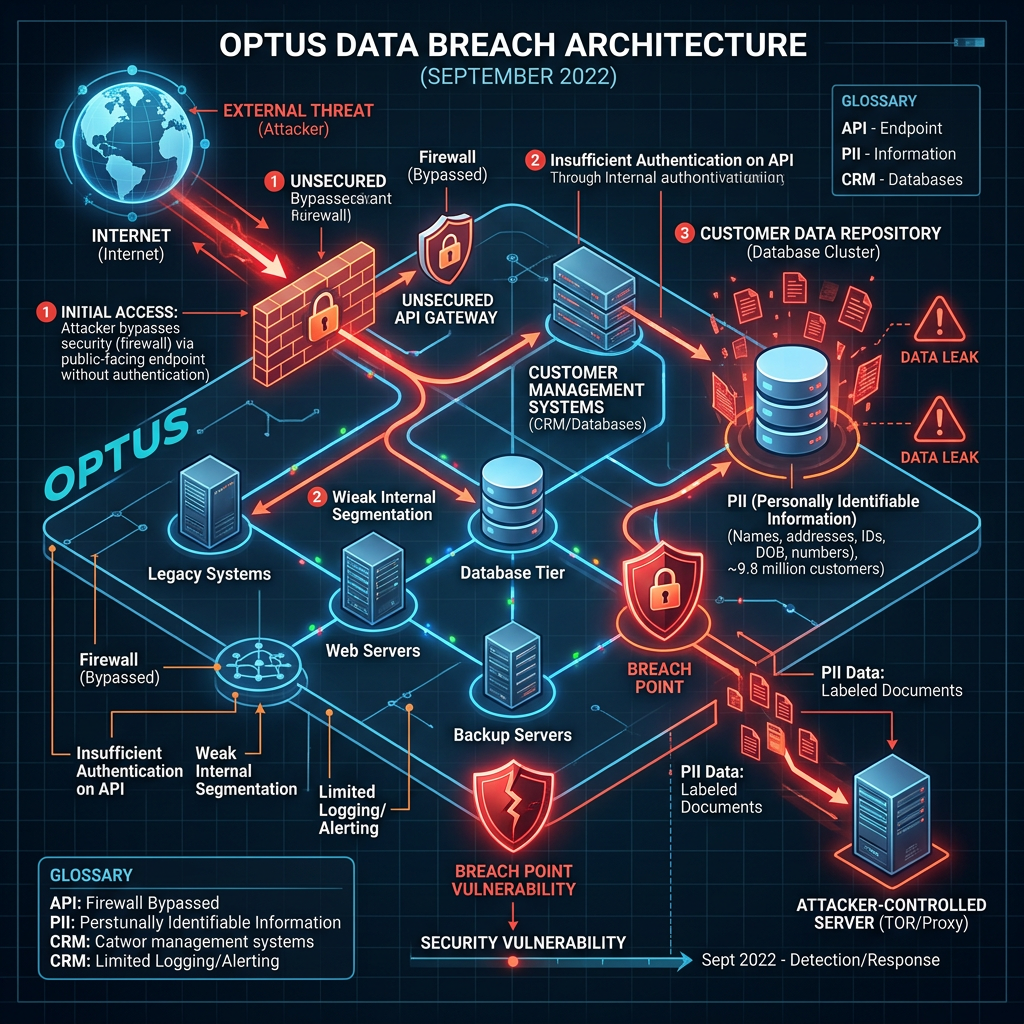
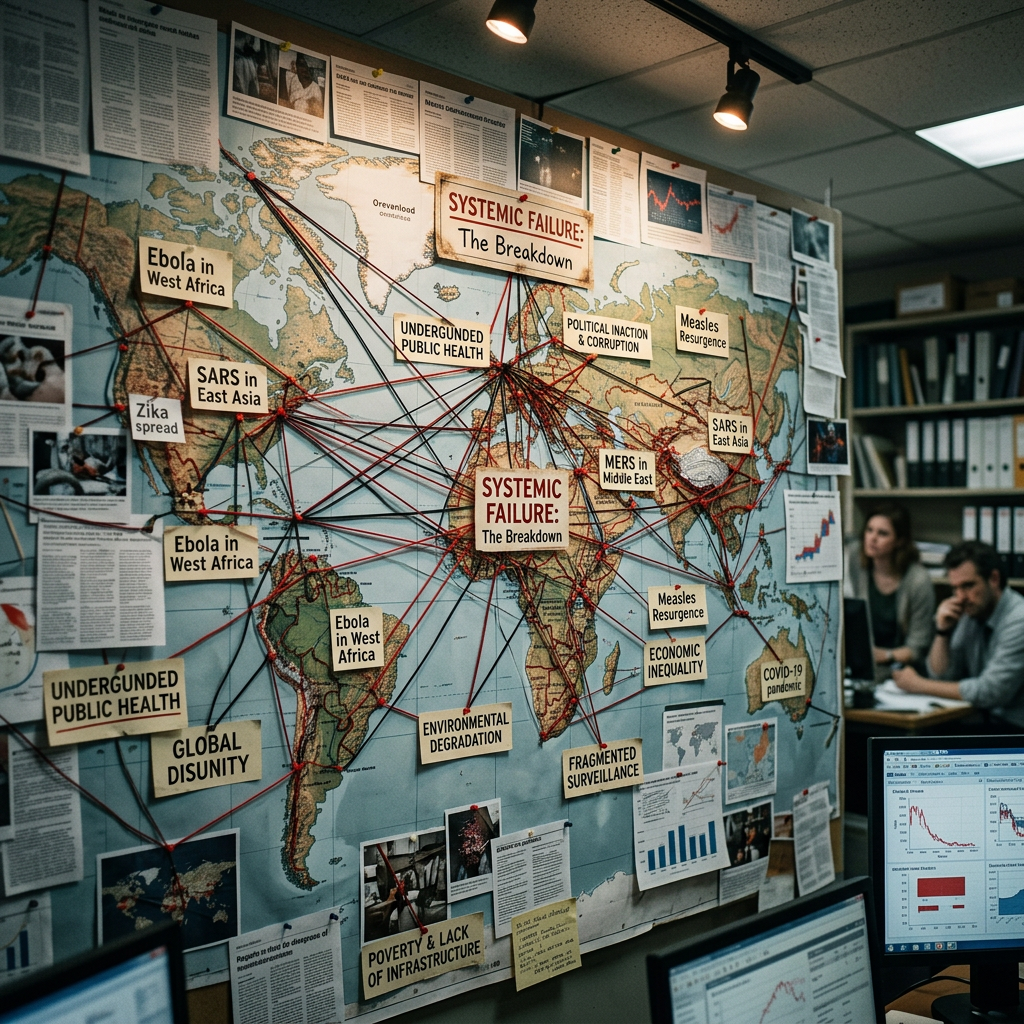


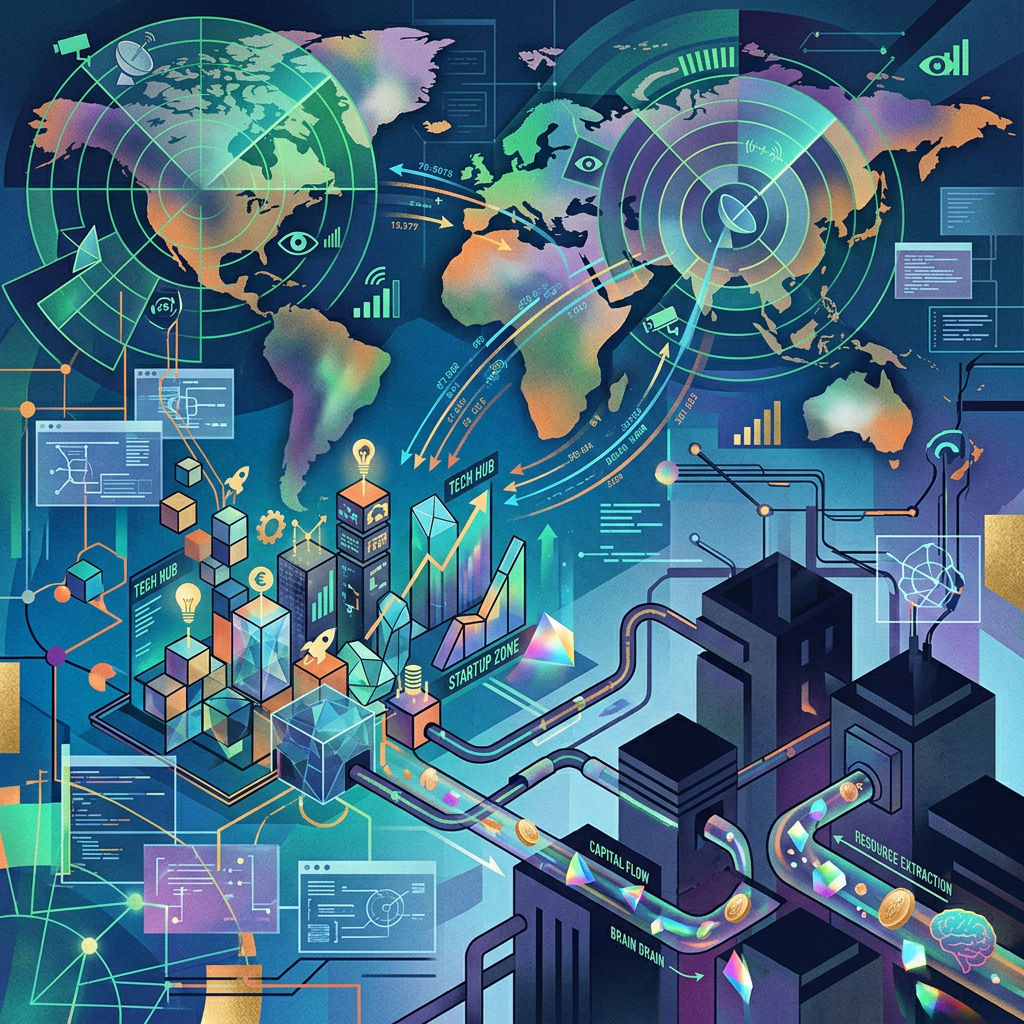
 The Patrician's Watch